4 Cottage Garden Ideas for Houston
Native plants from the Western Gulf coastal grasslands (Zone 9a) — Humid subtropical climate
Why Cottage/English Gardens in Houston?
Houston has a secret that most gardeners overlook: 50+ inches of rainfall per year and warm, humid growing conditions make it one of the most naturally suited cities in America for lush, abundant cottage-style planting. Traditional English cottage gardens were born in Britain's cool, rainy climate — and while Houston isn't cool, it delivers the rainfall and growing warmth that western cities like Sacramento or Phoenix can only dream about. The challenge isn't drought. The challenge is managing summer heat above 95°F and the fungal disease pressure that comes with high humidity. Get those two things right, and Houston can produce cottage gardens more extravagant than any city west of the Mississippi.
The neighborhoods that make the strongest case for Houston cottage style are the older inner-loop communities. The Heights, Woodland Heights, Garden Oaks, and Old Braeswood are lined with Victorian bungalows, Craftsman cottages, and Tudor revival homes — the exact architectural backdrop that cottage gardens were designed to complement. A rose arbor over a picket gate, brick path edged in lavender, and mixed borders spilling onto the sidewalk don't just look good in these neighborhoods — they look like they belong. Southampton and West University Place add stately tree canopies that provide the afternoon shade cottage perennials appreciate during Houston's brutal July and August peaks.
The plant strategy for Houston cottage gardens differs from British or even Pacific Northwest versions in two critical ways. First, antique and disease-resistant roses are non-negotiable — modern hybrid teas collapse under Houston's humidity-driven black spot and rust pressure, while old garden roses like 'Belinda's Dream', 'Caldwell Pink', and 'Mutabilis' have proven they can handle the Gulf Coast. Second, fall is Houston's true planting season, not spring — October through November plantings establish through mild winters and explode into bloom the following spring with minimal stress. Clay soil is the third factor to address: amending beds with compost and ensuring drainage prevents root rot during heavy rain events. Solve those three challenges and Houston's cottage gardens will reward you with the kind of lush, flower-drenched abundance that defines the style at its best.
4 Cottage/English Design Ideas for Houston
AI-generated image
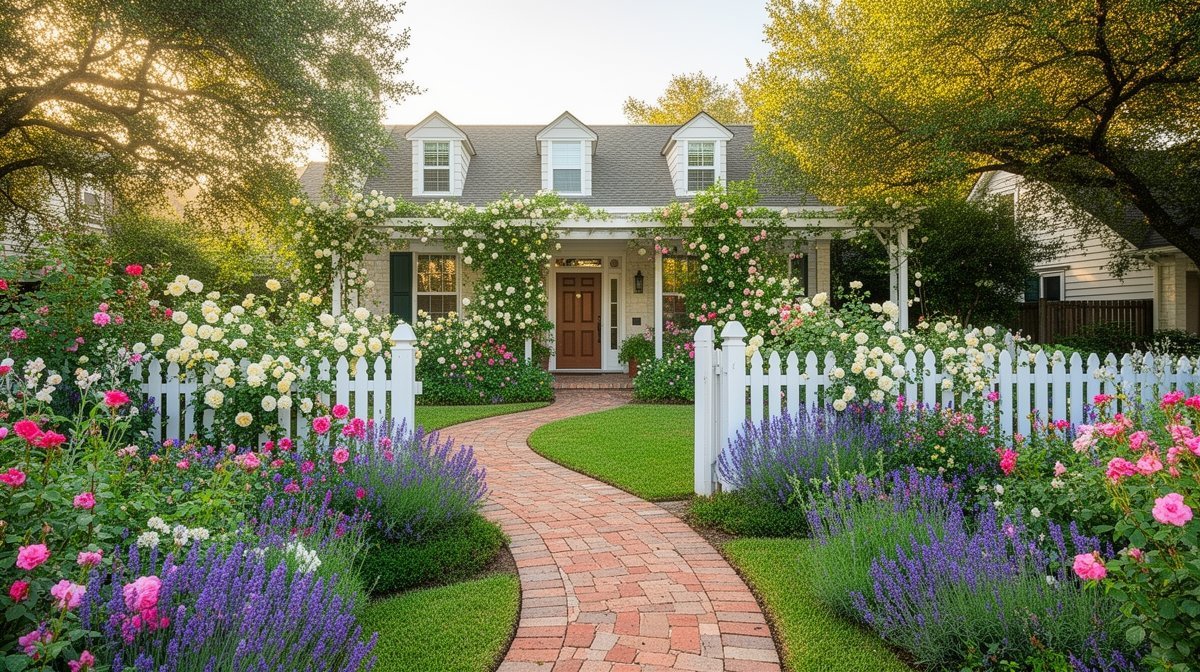
The Rose Arbor and Lavender Gate Entry
$12–22/sqftA full-bloom rose arbor of deep pink climbing roses anchors a brick pathway that bisects symmetrical lavender and cottage perennial borders framed by a white picket fence. The cottage sits behind under mature tree canopy, its painted porch framed by the abundance of the garden. Houston's long, warm spring from February through May is exactly when this design shines — the lavender, antique roses, and perennial borders hit simultaneous peak bloom, turning the entire front yard into a single cohesive statement. The picket fence and arbor gate create the classic English cottage threshold that Houston's older residential neighborhoods in Montrose and Heights demand.
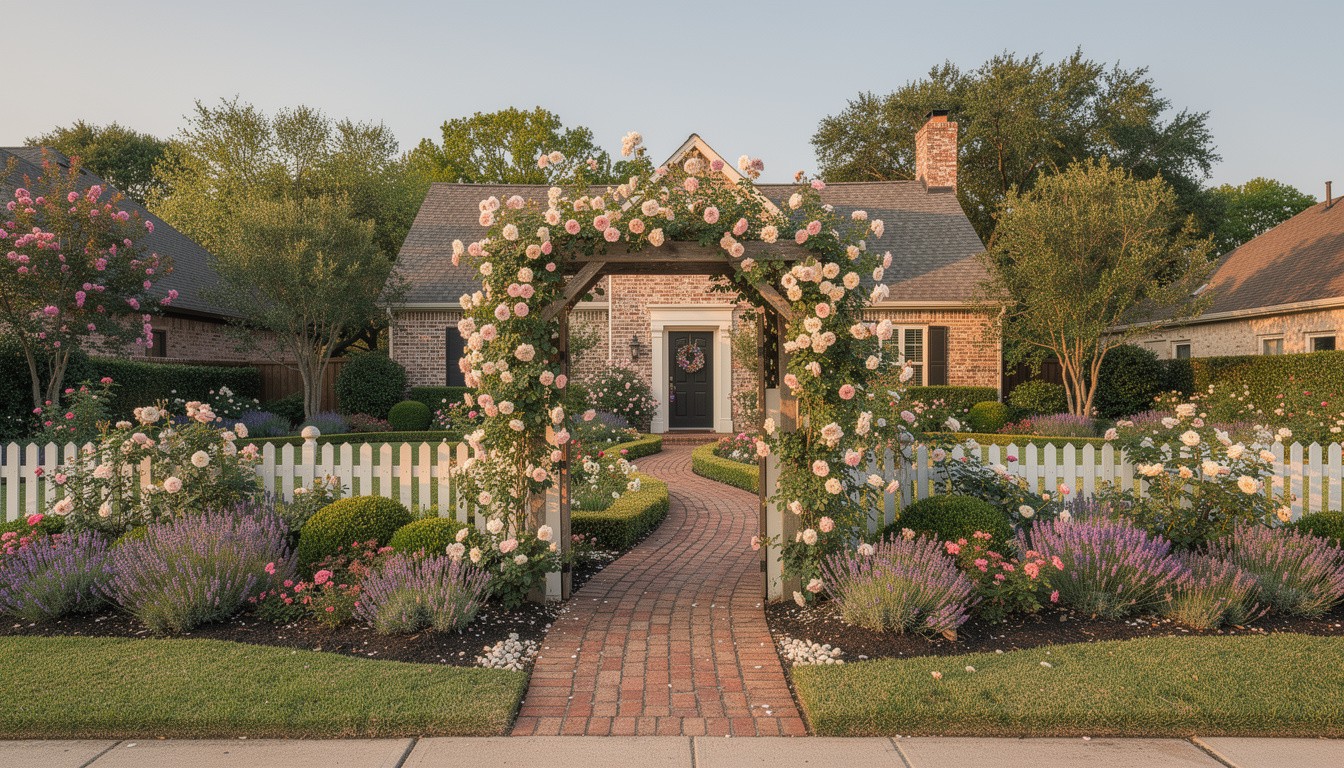
AI-generated image
The White Rose Arch and Perennial Walk
$14–25/sqftA freestanding white arch wrapped in white climbing roses frames a curving flagstone path that winds through wide cottage perennial borders to the porch of a Victorian-influenced Houston home. Foxgloves, delphiniums, lavender, and mixed annuals fill the borders in generous drifts. A mature canopy tree shades the right side of the composition, supporting shade-tolerant foxgloves and hostas in its understory. This design reflects Houston's cottage garden potential: the city's mild winters, ample rainfall, and long spring season allow an extended planting season that Zone 8b cottage gardens can exploit well into May before summer arrives.
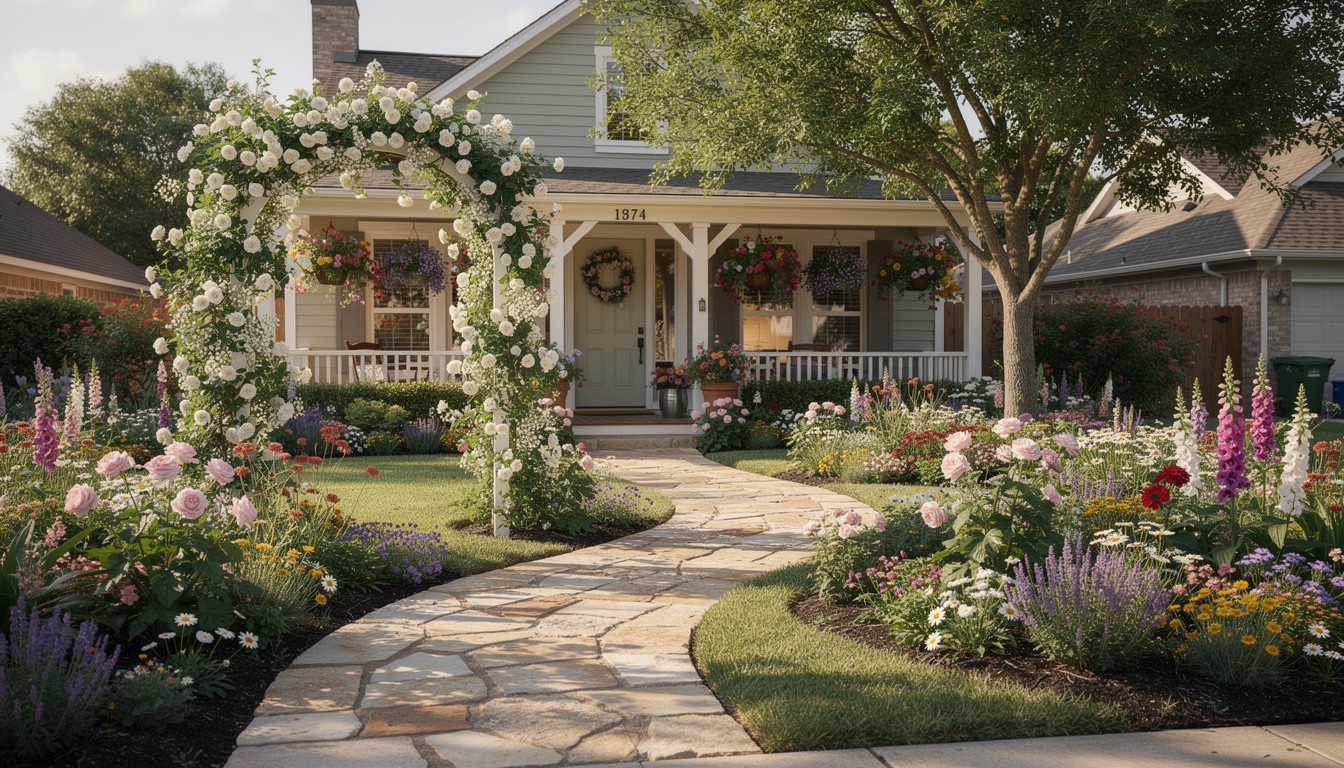
AI-generated image
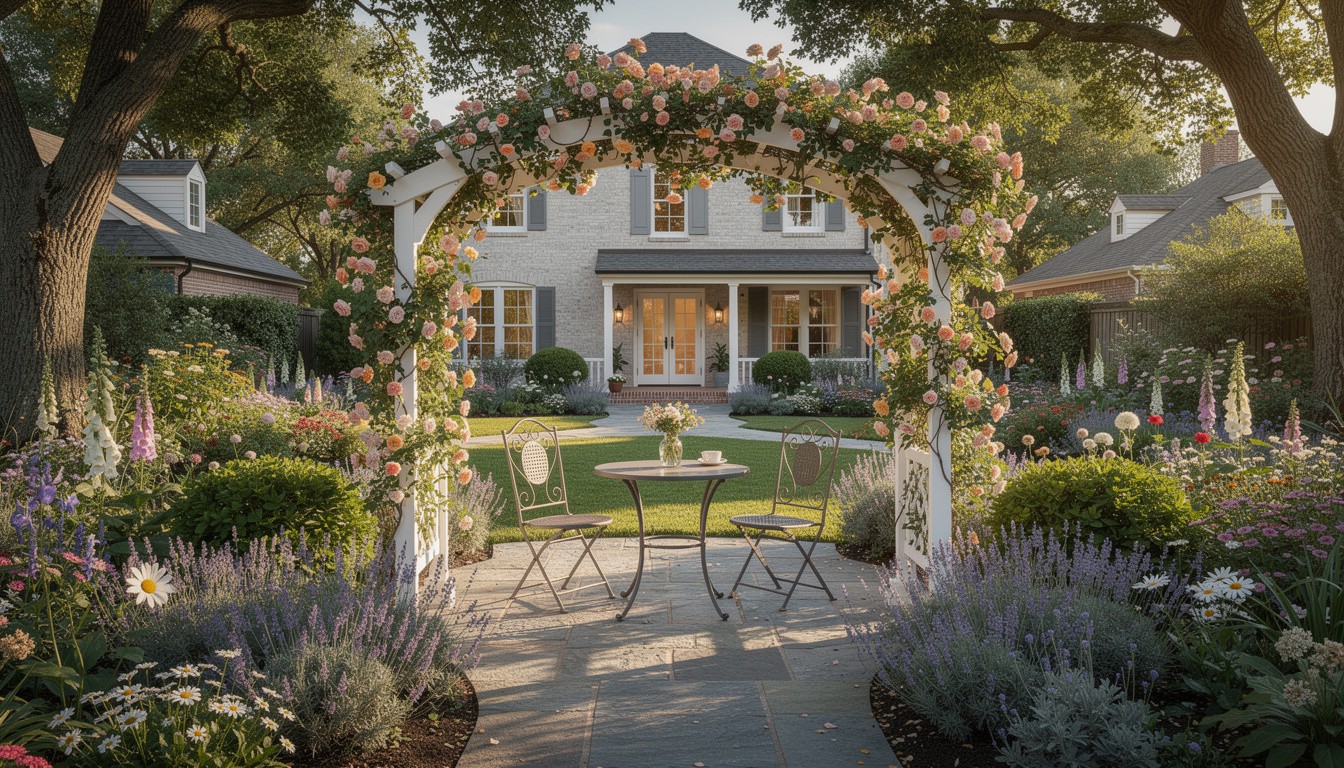
The Rose Arch Backyard Garden Room
$16–30/sqftA white climbing rose arch frames the entrance to a sheltered backyard space where a small bistro table and chairs sit under the dappled canopy of mature deciduous trees. Cottage borders of lavender, foxgloves, roses, and spring perennials wrap the paved area on three sides, and the warm light through the tree canopy gives the space a golden late-afternoon atmosphere. Houston's subtropical climate makes tree-shaded backyard rooms like this genuinely comfortable from September through May, and the rose arch provides the transition between the lawn and the intimate seating zone — a threshold that makes the backyard feel like a destination rather than just a yard.
AI-generated image
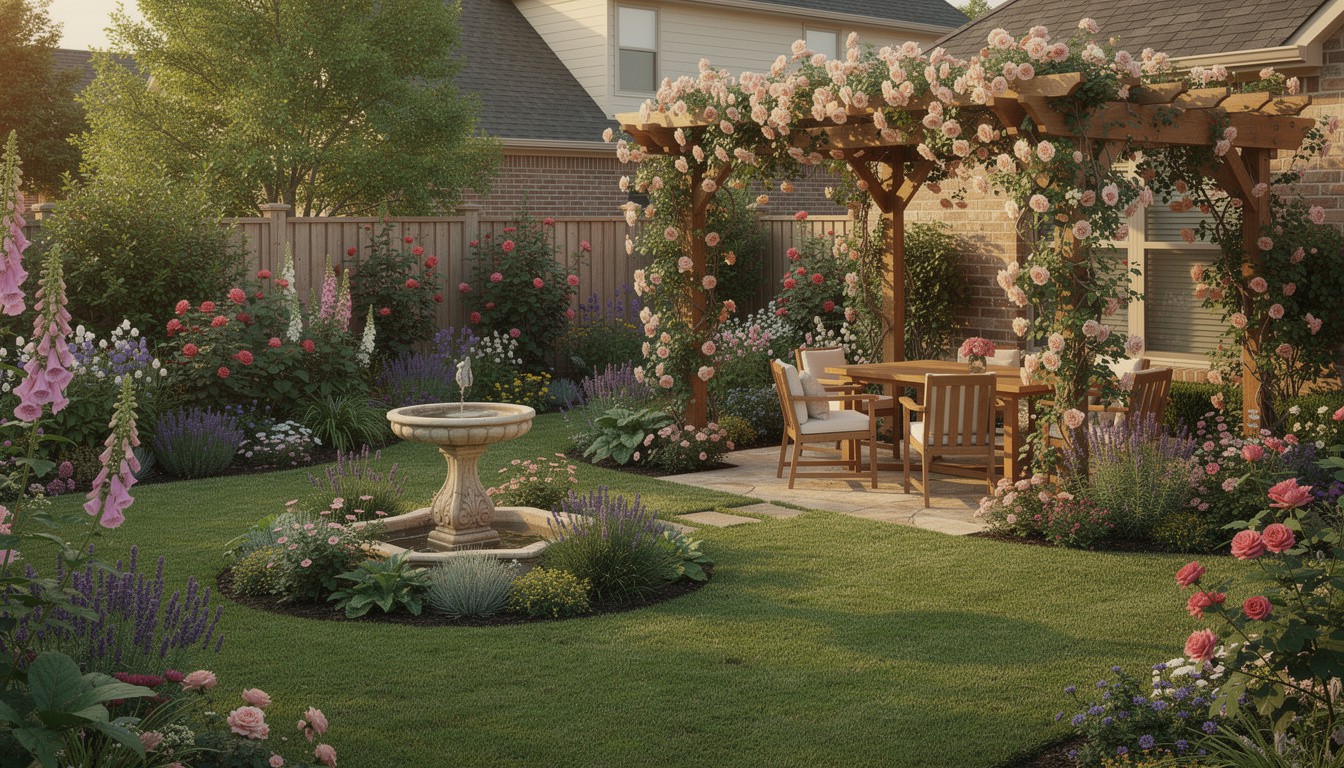
The Pergola and Fountain Rose Garden
$20–45/sqftA cedar pergola draped with climbing roses provides shade over a dining area at the rear of the garden, while a round stone fountain in a circular island bed anchors the center of a well-kept lawn. Mixed cottage borders of roses, lavender, and foxgloves frame all four sides of the composition. This is the full Houston cottage backyard — a complete English garden experience with a shaded outdoor dining room, a water feature focal point, and perennial borders that deliver two peak seasons per year. The pergola's climbing roses are the design's signature element, arching pink and white blooms over the dining table from March through June.
See how a cottage/english garden looks on YOUR property
Upload a photo of your Houston yard and visualize your dream garden in seconds.
Try ProScapeAI Free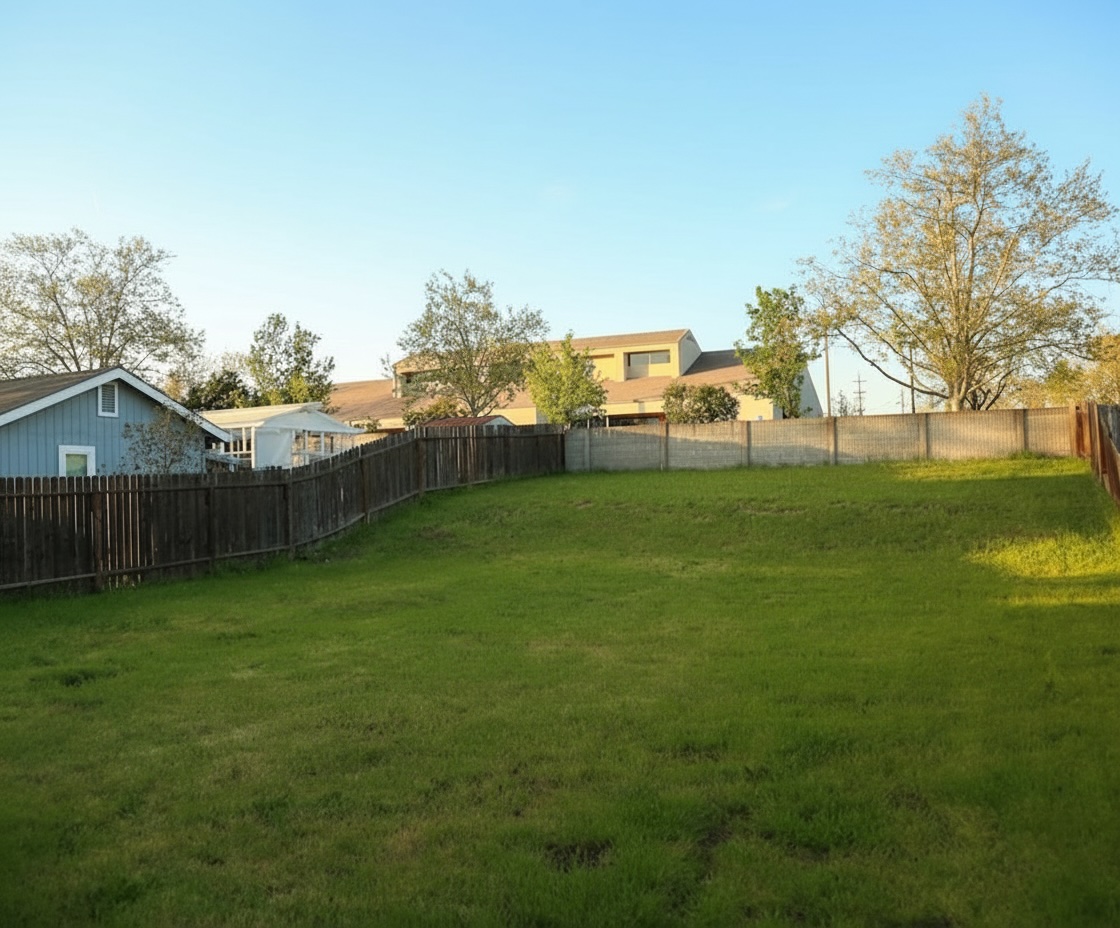
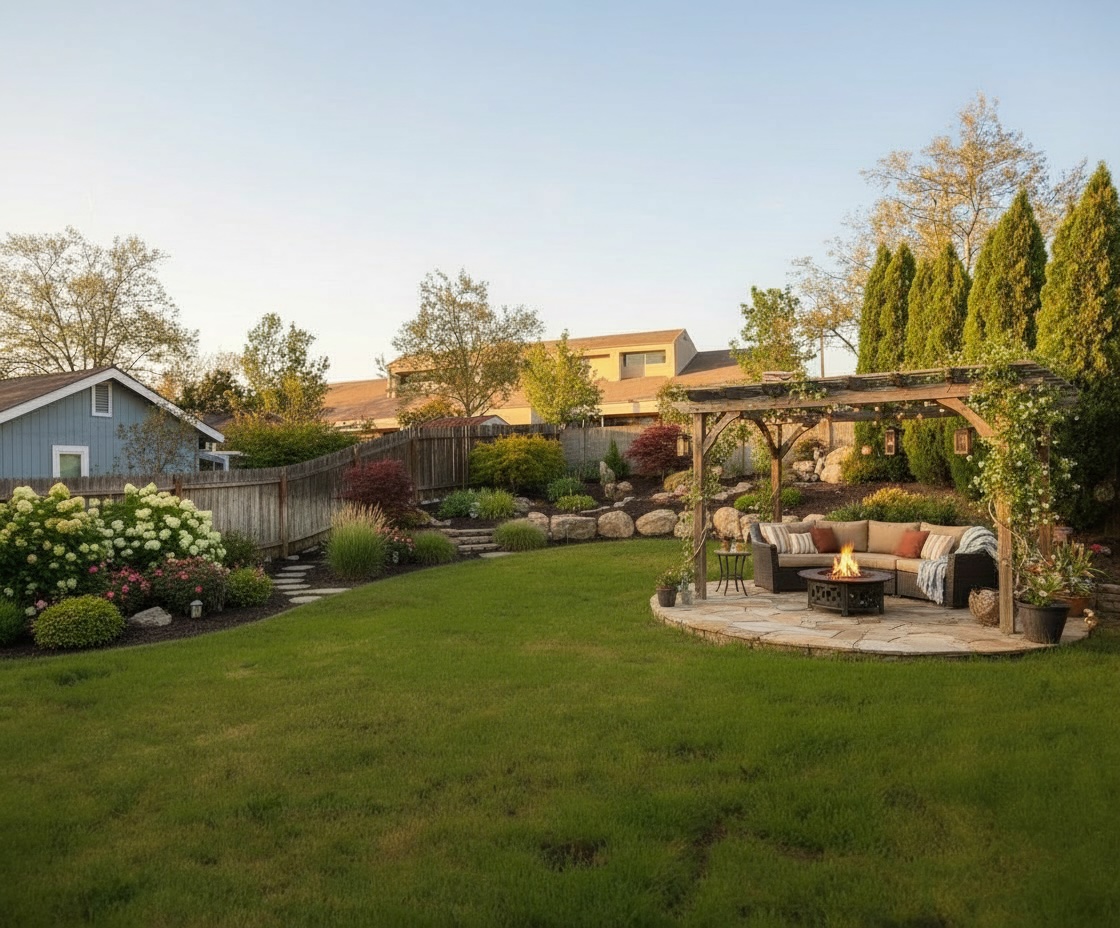
AI-generated image
Featured Trees & Shrubs for Cottage/English Gardens
Browse all 156 plants for Houston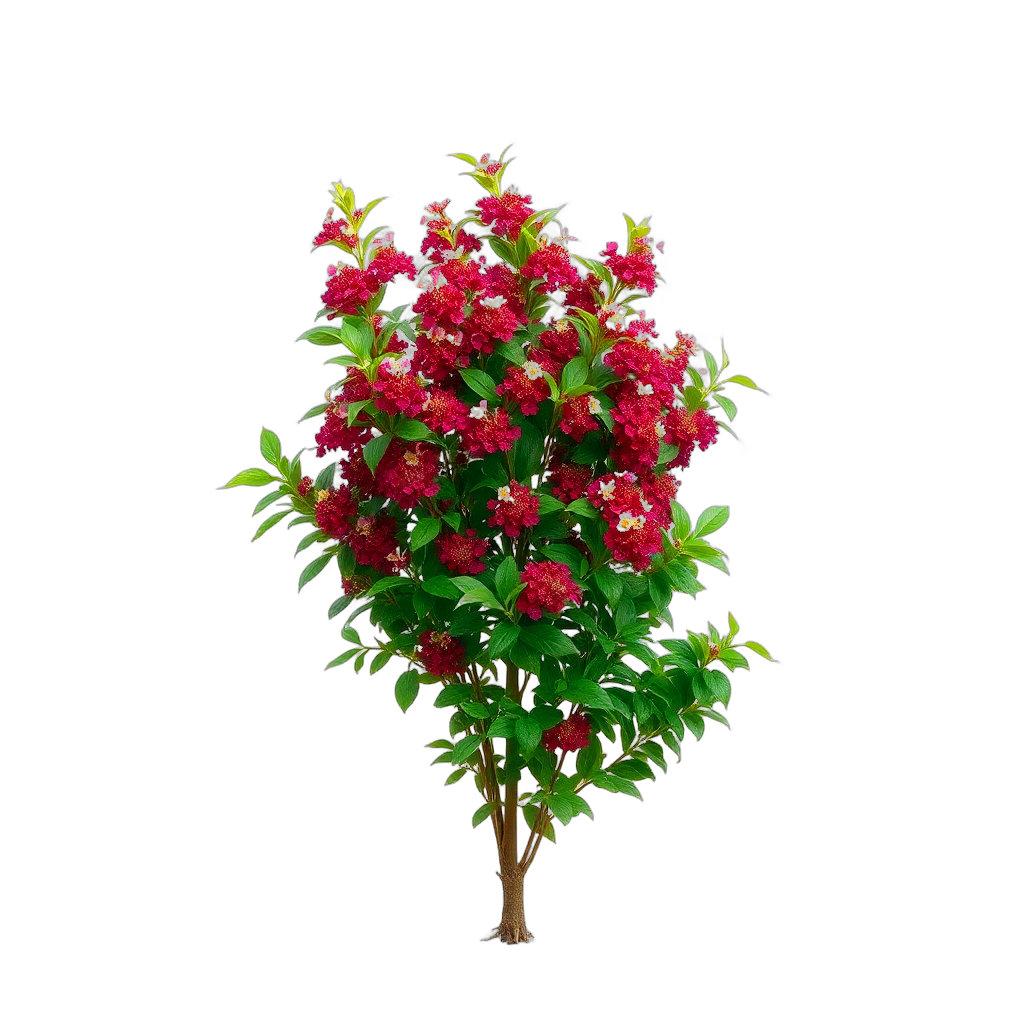
Ruby Spice Summersweet
Clethra alnifolia 'Ruby Spice'
grows to 5 feet, pink blooms in summer. Attracts butterflies.
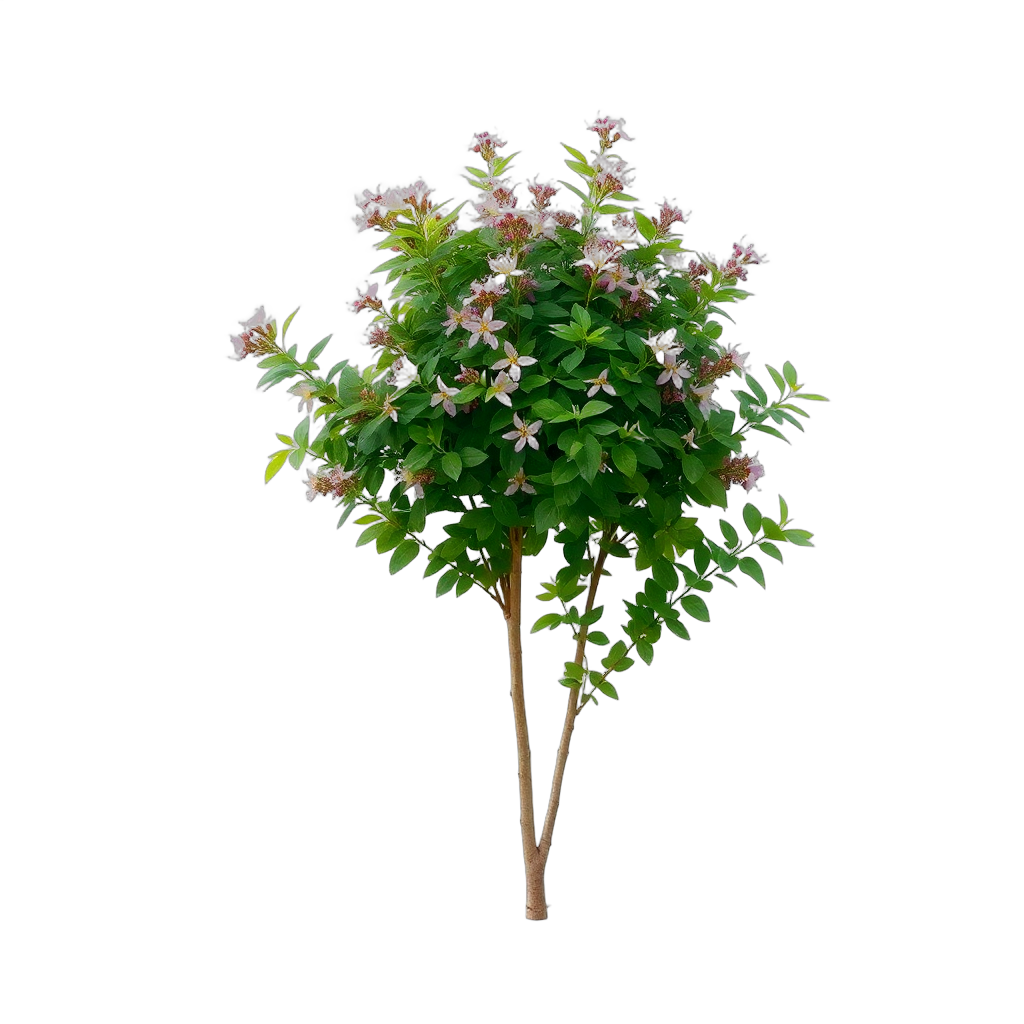
Summersweet
Clethra alnifolia
grows to 6 feet, white blooms in summer. Attracts butterflies.
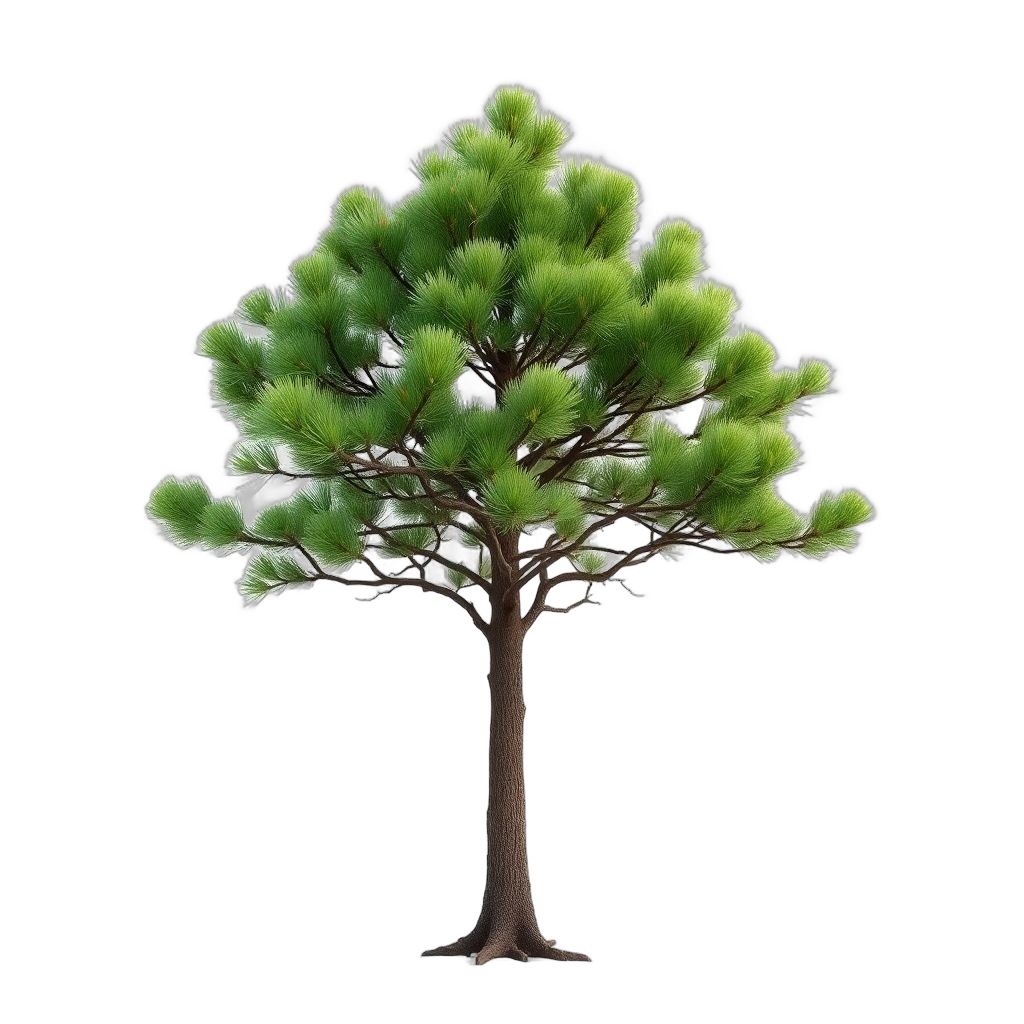
Longleaf Pine
Pinus palustris
large shade tree reaching 90+ feet, blooms in spring. Evergreen year-round.
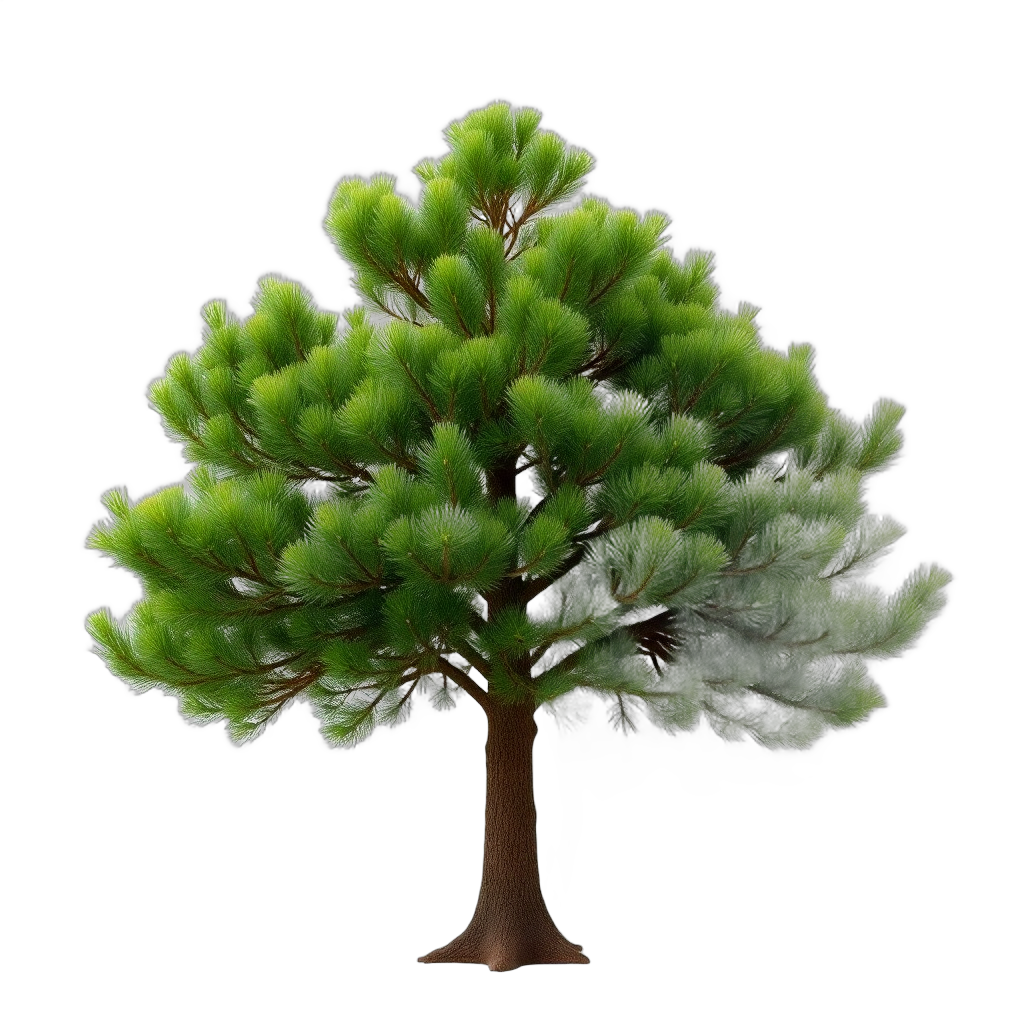
Slash Pine
Pinus elliottii
large shade tree reaching 80+ feet, blooms in spring. Evergreen year-round.
Featured Grasses & Groundcovers for Cottage/English Gardens

Pink Muhly Grass
Muhlenbergia capillaris
grows to 3 feet, pink blooms in fall.
Featured Flowers & Perennials for Cottage/English Gardens

Papyrus
Cyperus papyrus
grows to 5 feet, blooms in summer. Pollinator-friendly.

Water Hyacinth
Eichhornia crassipes
low-growing ground cover, purple blooms in summer. Attracts butterflies.

Water Plantain
Alisma plantago-aquatica
low-growing ground cover, white blooms in summer. Attracts butterflies.

Arrow Arum
Peltandra virginica
low-growing ground cover, blooms in spring.
Zone and sun checks come from our database — confirm with your local nursery before you buy.
Bloom Calendar for Houston
spring
Longleaf Pine, Slash Pine, Sweet Acaciasummer
Ruby Spice Summersweet, Summersweet, Papyrusfall
Pink Muhly Grasswinter
Limited bloomsDesign Tips for Houston (Zone 9a)
- Choose Earthkind-certified or antique roses exclusively — 'Belinda's Dream', 'Mutabilis', and 'Knock Out' series handle Houston's humidity-driven black spot and rust without a fungicide program that would be required for hybrid teas
- Amend clay soil with expanded shale and compost before planting, or build raised beds 6–12 inches above grade: Houston's heavy rains cause waterlogging in flat clay beds that kills cottage perennials through root rot
- Plant in October or November, not spring — fall-planted roses and perennials establish through mild winters and bloom hard the following spring without the transplant stress of planting into summer heat
- Design around your live oaks rather than against them: place sun-loving roses and lavender at canopy edges where morning sun reaches, and use shade-tolerant impatiens, caladiums, and hostas under the deepest canopy
- Ensure air circulation between plants to reduce fungal disease pressure — space cottage perennials slightly further apart than British guidelines suggest, avoid overhead irrigation, and water at the soil level in the morning so foliage dries before evening humidity peaks
- Lean into Houston's Victorian and Craftsman architecture in The Heights, Woodland Heights, and Garden Oaks: a picket fence, brick path, and rose arbor aren't decorative additions in these neighborhoods — they're historically appropriate to the housing stock and look genuinely at home
Where to Source Plants in Houston
Skip the big-box stores. These independent Houston nurseries specialize in the plants that make cottage/english gardens thrive in Zone 9a.
Buchanan's Native Plants
Heights
Native Texas plants, drought-tolerant species, perennials — 40+ years in the Heights
Joshua's Native Plants & Garden Antiques
Heights
Gulf Coast native plants, drought-tolerant perennials, garden antiques
Natives Nursery (Houston Audubon)
Uptown/Memorial
Native prairie grasses, wildflowers, bird-friendly plants
Cottage/English Landscaping Costs in Houston
| Project Scope | Estimated Cost |
|---|---|
| Rose arbor + picket fence cottage entry | $5,000 – $12,000 |
| Full cottage front yard redesign (400–600 sqft) | $6,500 – $16,000 |
| Backyard cottage patio with arch + planting | $8,000 – $20,000 |
| Pergola + fountain + cottage garden (full backyard) | $20,000 – $48,000 |
| Soil preparation + raised beds (Houston clay) | $1,200 – $3,500 |
| Drip / soaker irrigation system | $1,100 – $3,000 |
| AI visualization with ProScapeAI | Free to start |
Estimates based on Houston, TX-area contractor rates as of 2026. Actual costs vary by site conditions, materials, and contractor.
Houston Climate & Growing Zone
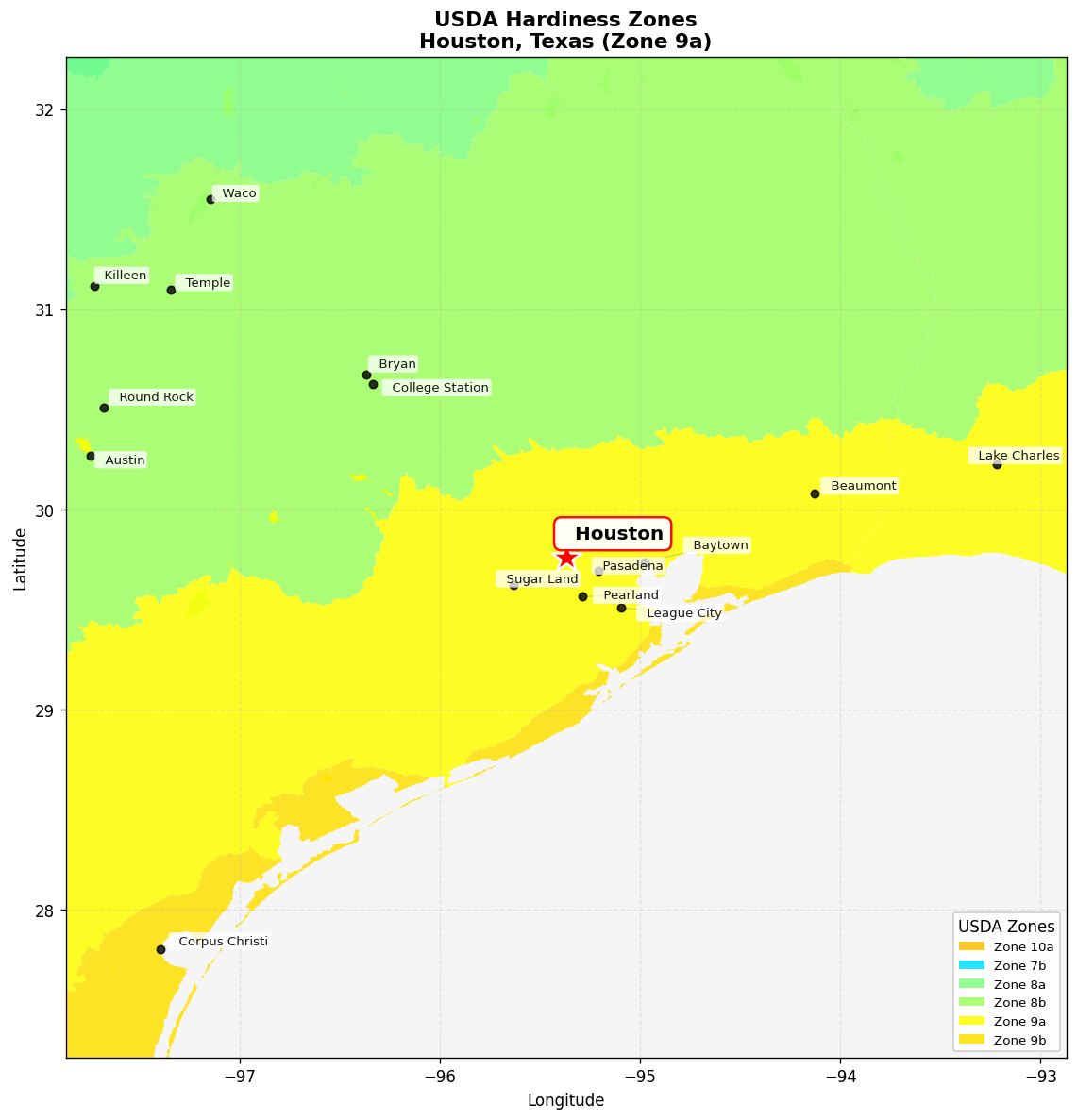
USDA Zone 9a
Hardiness zone for Houston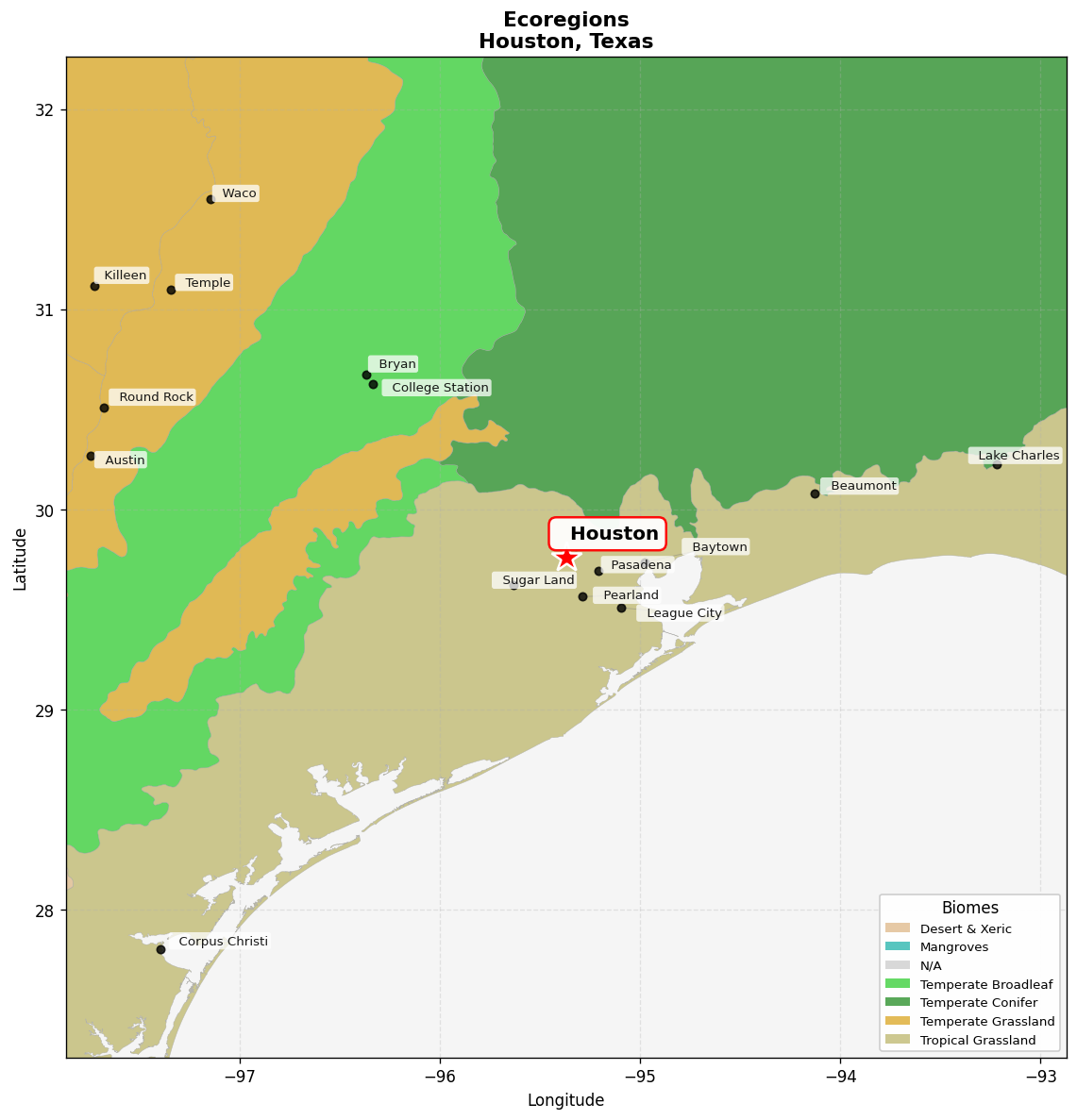
Western Gulf coastal grasslands
Native ecoregionFrequently Asked Questions
Does Houston's humidity actually help or hurt cottage gardens?
Both — it's the central tension of Houston cottage gardening. The humidity and 50+ inches of annual rainfall make Houston far more naturally suited to lush cottage planting than any western city. Plants stay hydrated, growth is vigorous, and you rarely need to supplement rainfall for established plantings. The downside is fungal disease pressure: black spot on roses, powdery mildew, and rust all thrive in humid conditions. The solution isn't to avoid cottage gardens — it's to choose disease-resistant varieties, ensure good air circulation between plants, and avoid overhead watering. Master those habits and Houston's humidity becomes a massive asset.
What roses perform best in Houston's Zone 9a heat and humidity?
Antique and Earthkind-certified roses are the clear winners in Houston. Top performers include 'Belinda's Dream' (pink, extremely disease resistant, reblooms), 'Caldwell Pink' (climber, nearly indestructible), 'Mutabilis' (butterfly rose, nearly disease-free), 'Cécile Brünner' (climbing, reliable in Houston), 'Iceberg' (floribunda, heat and disease tolerant), and any of the Knock Out series for shrub use. Avoid hybrid teas without excellent air circulation and a fungicide program — they suffer badly under Houston's disease pressure. The Texas AgriLife Extension specifically recommends Earthkind roses for Gulf Coast conditions.
How do you handle Houston's clay soil in a cottage garden?
Clay soil is Houston's most consistent landscape challenge and directly threatens cottage plants through poor drainage and root rot after heavy rains. The standard approach is raised beds: build beds 6–12 inches above grade using amended soil (50% native clay, 50% compost and expanded shale) to ensure drainage. For in-ground planting, work 4–6 inches of compost and expanded shale into clay beds before planting. Avoid the temptation to over-water — clay retains moisture long after rain, and cottage plant roots sitting in saturated soil will rot quickly. Mulch heavily (3–4 inches) to moderate soil temperature and prevent the clay surface from cracking in heat.
Are antique roses better than modern roses for Houston cottage gardens?
Generally yes, for two reasons: disease resistance and heat tolerance. Antique roses (old garden roses predating 1867) evolved without modern fungicide programs and developed natural resistance to the fungal diseases that Houston's humidity promotes. Many were also bred in similarly hot climates — China roses, Bourbon roses, and Teas all came from warm regions. Varieties like 'Mutabilis', 'Louis Philippe', 'Old Blush', and 'Duchesse de Brabant' have decades of proven Houston performance. Modern shrub roses like the Knock Out series and Earth-Kind varieties close the gap with disease resistance, but the antiques add historic authenticity that suits cottage style perfectly.
How do you use Houston's live oak shade in a cottage garden design?
Live oaks are a cottage garden asset, not an obstacle. The dappled shade under a mature live oak canopy creates ideal conditions for shade-tolerant cottage plants that would burn in full Houston sun: impatiens, caladiums, hostas, ferns, begonias, and even some roses with morning sun exposure. Design your layout to place sun-lovers (roses, lavender, salvia) at the canopy edges where 4–6 hours of direct sun reaches, and shade-tolerant plants under the deepest canopy. Live oaks also moderate ground temperature significantly — the soil under an established oak can be 10–15°F cooler than an unshaded bed, which is a measurable advantage for perennial survival through Houston summers.
When is the best time to plant a cottage garden in Houston?
Fall — specifically October through mid-November — is Houston's ideal planting window, not spring. Planting in fall allows roots to establish through Houston's mild winters (rarely below 25°F in Zone 9a) when soil is warm but air temperatures are forgiving. By spring, fall-planted roses and perennials are established and ready to explode into bloom without transplant stress. Spring planting (February–March) works for annuals and fast-establishing perennials but puts roses and woody perennials under immediate summer heat stress. Avoid summer planting almost entirely — transplants into 95°F heat and humid conditions struggle even with daily watering.