4 English Cottage Garden Ideas for Eugene, OR | Zone 8b Design
Native plants from the Willamette Valley oak savanna (Zone 8b) — Mediterranean (warm summer) climate
Why Cottage/English Gardens in Eugene?
Eugene was practically built for cottage gardening. The Craftsman bungalows of the Friendly Area and College Hill, the Queen Anne and Italianate houses of the East Skinner Butte Historic District, and the tight 1920s–1940s lots around Fairmount and the Whiteaker all hand you the one thing a cottage garden needs most: a modest, human-scaled facade with a porch worth framing. In this city a rose arch over a picket gate reads as local vernacular rather than costume, and Eugene has been proving the point in public for a century — the Owen Memorial Rose Garden on the Willamette holds more than 4,500 roses across 400-plus varieties, and the 12-acre rhododendron garden at Hendricks Park shows how happily broadleaf evergreens carry a shaded Eugene border through a grey January.
The climate is the real advantage here. Eugene sits in USDA Zone 8b — winter lows of 15–20°F — inside a warm-summer Mediterranean (Csb) pattern, and it collects about 40.8 inches of rain a year, nearly all of it between November and April. That long, cool, damp spring is exactly why plants that sulk almost everywhere else in America are effortless in Eugene: Delphinium elatum 'Pacific Giant' reaches six feet in an ordinary border, Digitalis purpurea 'Camelot Rose' self-sows into every gap in the gravel, and Helleborus x hybridus 'Winter Jewels' — a strain bred on Central Road in west Eugene — carries the whole garden from January into March. The catch arrives on schedule in July. Normal July rainfall in Eugene is 0.32 inches and August is 0.39 inches, so from roughly the Fourth of July to the end of September a cottage border is either a fully irrigated garden or a brown one. Design the drip lines before you design the plant list, and remember that the June 2021 heat dome pushed Eugene to 111°F — site your Hydrangea macrophylla 'Nikko Blue' and your hostas where the house shades them after 2 p.m.
Then there is the soil, which kills more Eugene cottage perennials by drowning them in February than by freezing them. The south-hills lots along Fairmount, Laurel Hill and Crest Drive sit on Jory and Bellpine clay loams over basalt; the valley floor through Santa Clara, River Road and Bethel runs to Malabon and Coburg silty clay loams with a winter perched water table, and the ground out toward the West Eugene Wetlands is genuinely hydric. The fix is unglamorous and non-negotiable: build borders up 8–12 inches with compost and coarse grit rather than excavating planting holes into clay, which behave like unlined buckets from November to April. Lavender is the tell — Lavandula angustifolia 'Hidcote' set at grade in Eugene clay is a two-year plant, while the same cultivar on a raised gritty berm is a ten-year plant. Choose disease-resistant roses for the same reason: a wet Willamette spring is black-spot weather, so Rosa 'Darlow's Enigma' and Rosa 'Olivia Rose Austin' will outperform a fussier hybrid tea every year.
Finally, the local rules. The City of Eugene requires on-site stormwater treatment once a project adds or replaces 1,000 square feet or more of impervious surface within a 12-month period, which is easy to trip with a generous brick path plus a patio — and usefully, rain gardens and stormwater planters can count toward the site's required landscape area, so drainage and design can be one line item instead of two. Household water comes from EWEB off the McKenzie River and there are no routine summer bans, but summer irrigation is still the biggest running cost of a Eugene cottage garden. Budget mentally for slugs as well: a wet Willamette Valley spring is a slug hatchery, and emerging delphinium shoots and the crowns of Leucanthemum x superbum 'Becky' are the first casualties every April.
4 Cottage/English Design Ideas for Eugene

The Picket Gate and Rose Arch
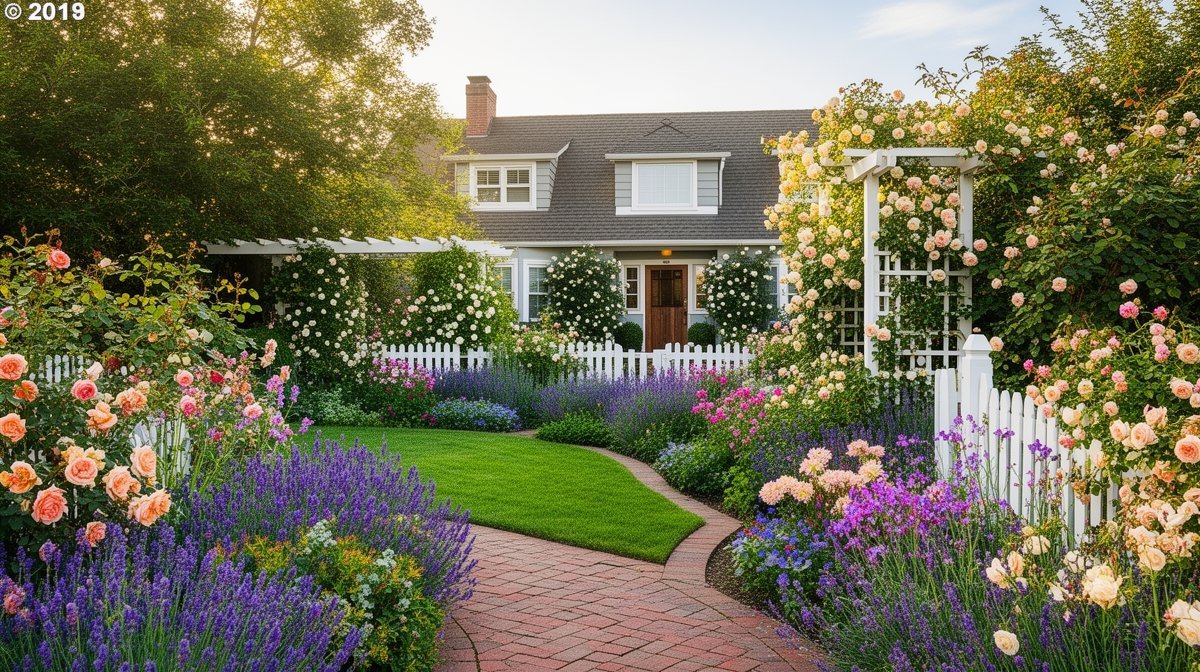
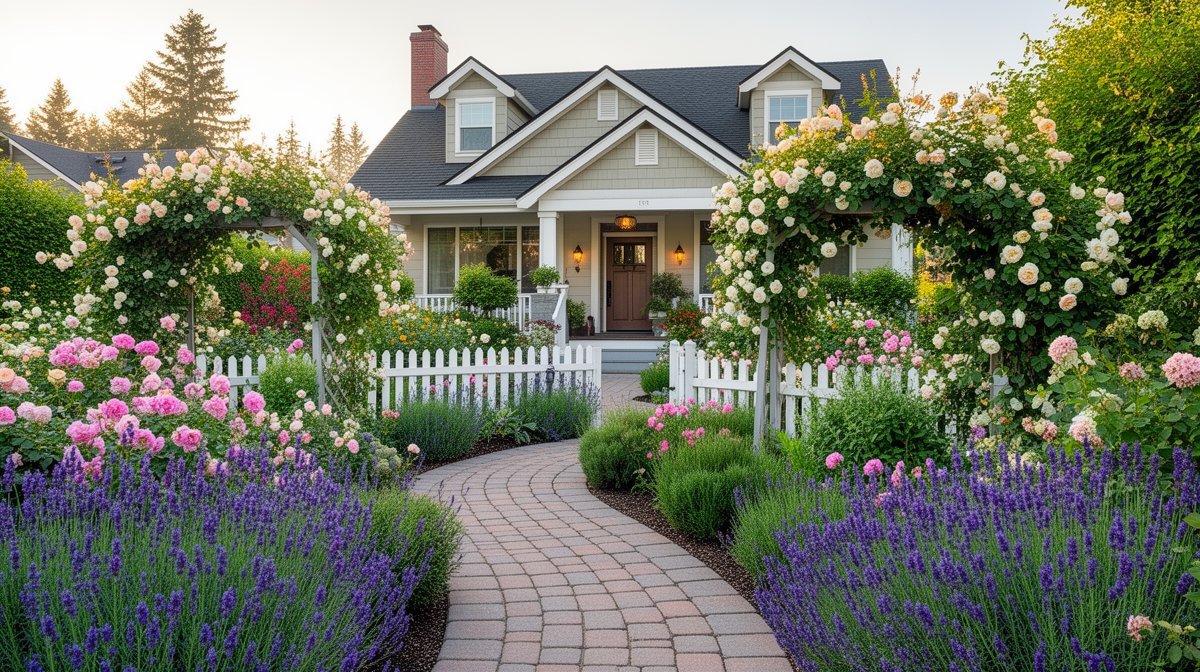
$16-30/sqftA cream gambrel-roofed cottage with a dark shingle roof and a deep porch sits behind a low white picket fence, and the whole design turns on one gesture: a rose arch over the gate, smothered in blush and white blooms, that you physically walk through to reach the door. A curving red brick path swings from the gate to the porch steps instead of running straight, which is what keeps the front garden feeling longer than it is. Both sides of the brick are packed with lavender in full purple flower and repeated bushes of pink, red and white roses, with clipped evergreen globes anchoring the corners and a pink-leaved maple ghosting through the morning fog on the left. Hanging baskets on the porch posts pull the flower colour up onto the house. It is the classic Eugene misty-morning picture, and it works because every plant in it genuinely wants a cool wet winter.

The Full-Depth Bungalow Border
$14-26/sqftA Craftsman bungalow on a narrow city lot gives up its front lawn almost entirely. A white rose-covered arbour marks the middle of a flagstone walk, and on either side the borders run four to five feet deep and are built in layers: spires of pink, white and violet foxglove and delphinium at the back, drifts of white Shasta daisy and pink phlox through the middle, and low mounds of lavender, catmint and hardy geranium spilling over the stone edge. A huge mature shade canopy on the right throws afternoon shadow across half the bed, so the planting shifts to shade-tolerant material under the drip line. Neighbouring houses sit close on both sides, which is exactly why the deep planting works — it gives the entry sequence privacy without a single foot of fence.

The Rose Pergola Terrace
$28-48/sqftBehind a two-storey cream farmhouse, a heavy rustic timber pergola with lattice side panels is buried under apricot climbing roses and frames a circular flagstone terrace. The furniture is deliberately small — one white cast-iron bistro table and two chairs, a potted geranium in the middle — so the plants stay the subject. A tidy oval of lawn separates the terrace from the house, and the terrace is ringed by deep mixed borders: foxglove and delphinium spires at the back, lavender and salvia through the middle, and silver mounds of lamb's ear and artemisia catching the low evening light. A small carved stone fountain sits at the border edge on the right, which in Eugene doubles as the bird bath that keeps the garden busy through the dry months.

The Birdbath Lawn Room
$18-34/sqftA more family-usable version of the same idea. A white-painted pergola over a paver patio holds a six-seat teak dining table, and the rest of the yard stays as a clean oval of lawn so children and dogs get their space. The design earns its charm from the edges: a classic pedestal stone birdbath sits in a mulched island bed dead centre in the grass, with sparrows already using it, and the perimeter beds are deep, curved and stuffed with pink and purple foxglove spires, lavender, white daisies and lavender-blue catmint. Pink climbing roses run along the pergola and a clipped dark hedge screens the neighbour's fence. A slim ornamental tree at the house corner and a single clipped evergreen dome keep some structure once the perennials are cut back in November.
See how a cottage/english garden looks on YOUR property
Upload a photo of your Eugene yard and visualize your dream garden in seconds.
Try ProScapeAI Free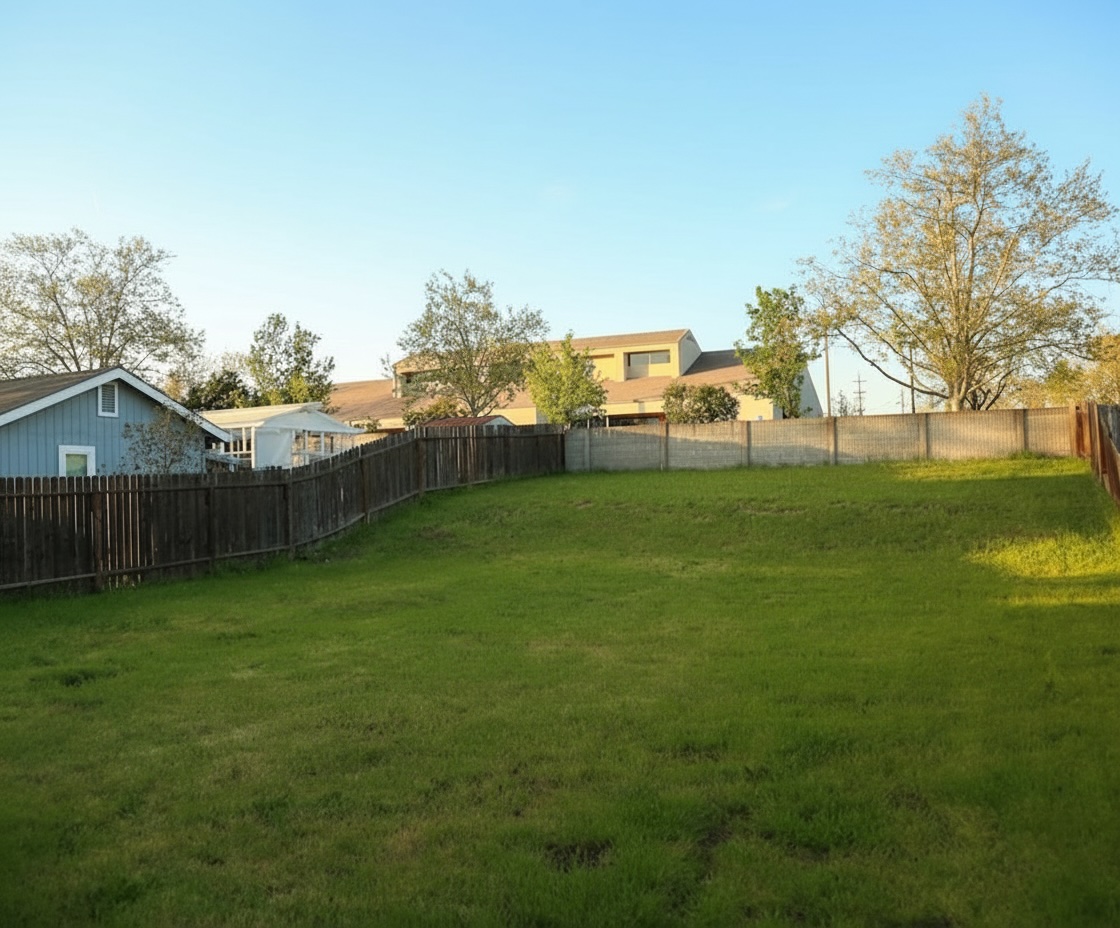
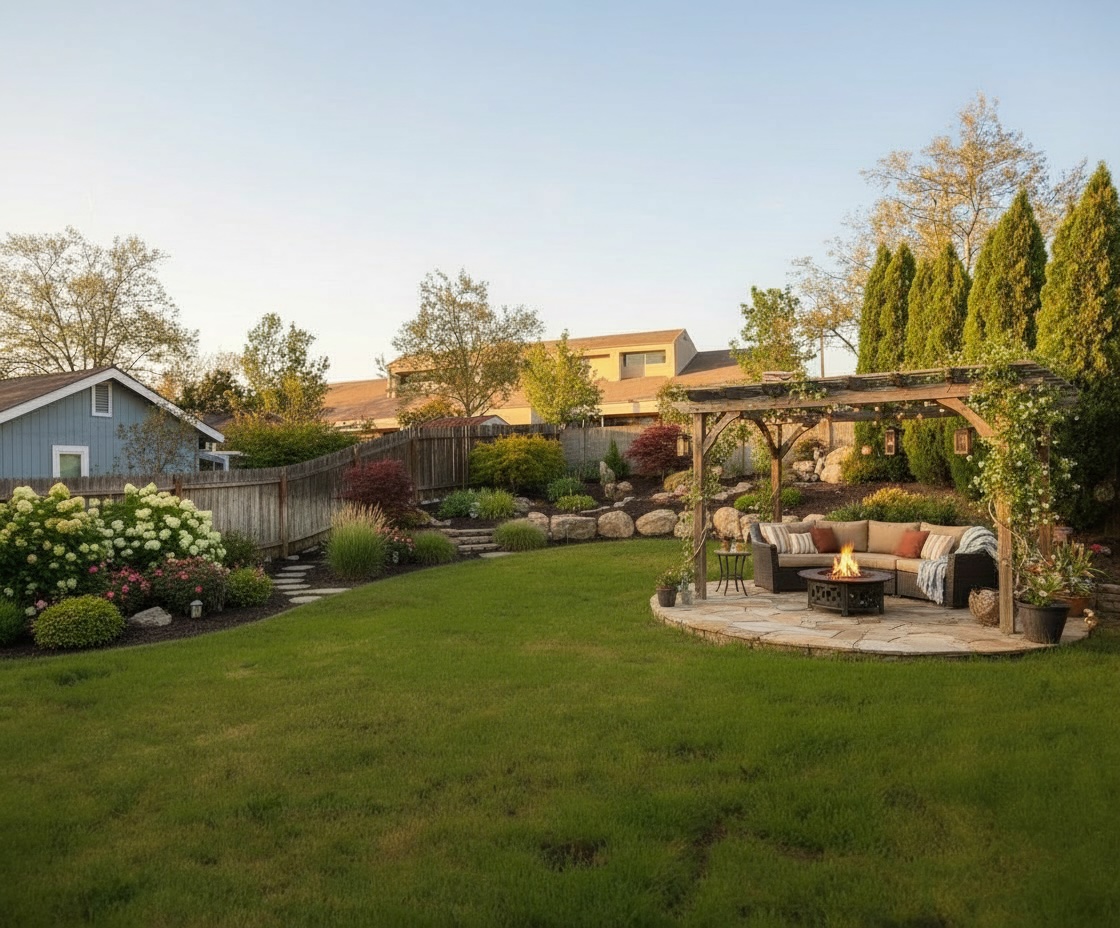
Featured Trees & Shrubs for Cottage/English Gardens
Browse all 151 plants for Eugene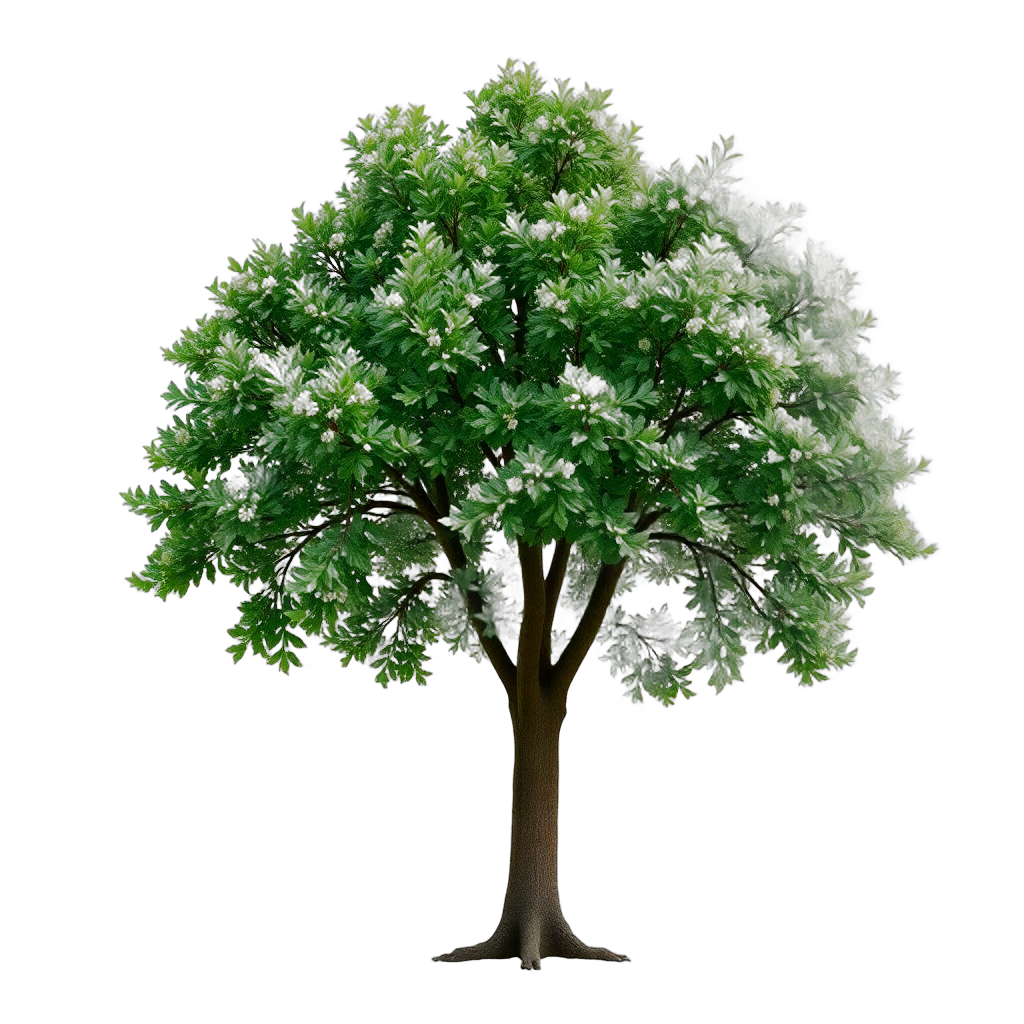
Oregon White Oak
Quercus garryana
large shade tree reaching 65+ feet, blooms in spring. Yellow fall color.
Featured Flowers & Perennials for Cottage/English Gardens

Water Lettuce
Pistia stratiotes
low-growing ground cover, white blooms in summer. Evergreen year-round.

Tussock Sedge
Carex stricta
low-growing ground cover, blooms in spring. Brown fall color.

Umbrella Sedge
Cyperus alternifolius
grows to 4 feet, blooms in summer. Evergreen year-round.
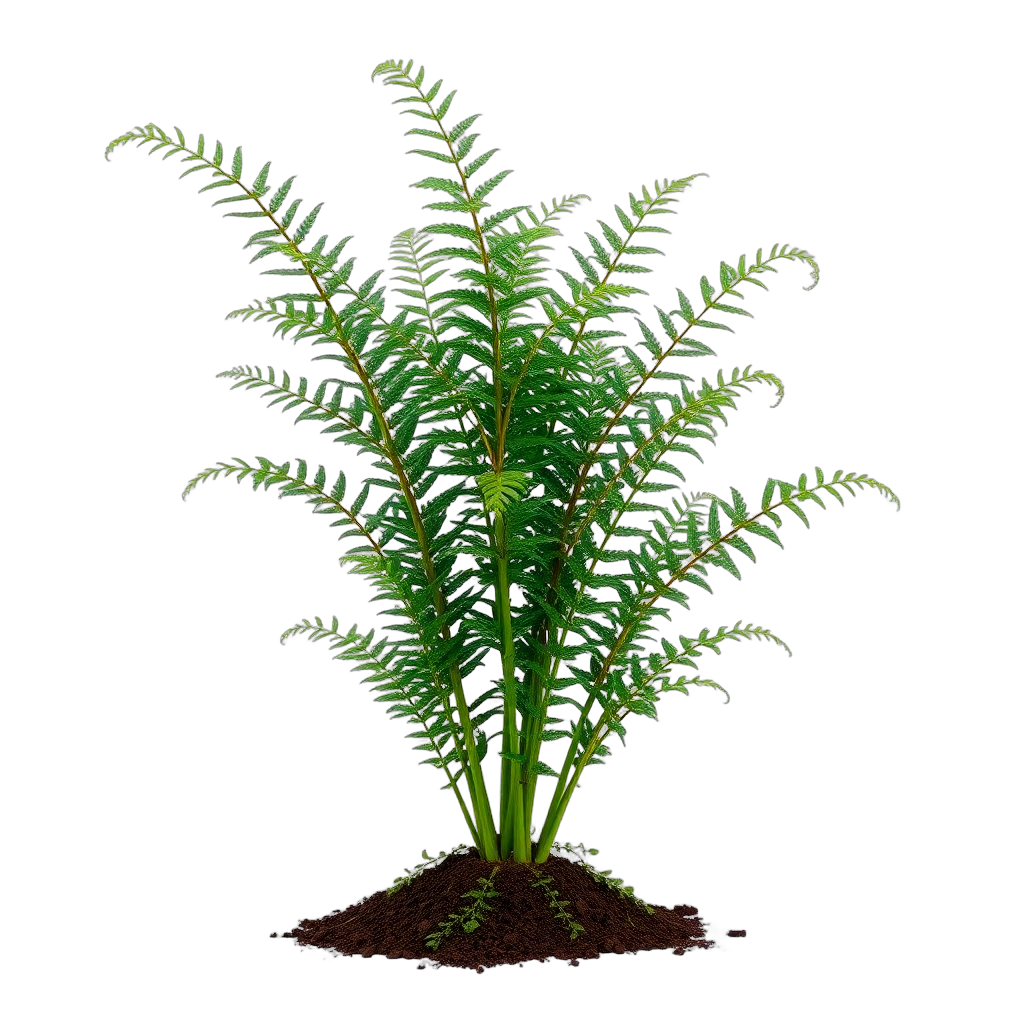
Deer Fern
Blechnum spicant
low-growing ground cover, blooms in none. Evergreen year-round.
Zone and sun checks come from our database — confirm with your local nursery before you buy.
Bloom Calendar for Eugene
spring
Oregon White Oak, Tussock Sedge, Austrian Speedwellsummer
Water Lettuce, Umbrella Sedge, Alpine Sea Hollyfall
Autumn Snakerootwinter
Limited bloomsDesign Tips for Eugene (Zone 8b)
- Mound every border 8-12 inches above grade with compost and crushed rock — in Eugene the killer is a February water table, not a January cold snap, and a raised gritty berm turns Lavandula angustifolia 'Hidcote' from a two-year plant into a ten-year one
- Buy roses on disease resistance before fragrance: Rosa 'Darlow's Enigma', Rosa 'Olivia Rose Austin' and Rosa 'New Dawn' stay clean through a wet Willamette spring, while a classic hybrid tea will be defoliated by black spot most years
- Plant in October, not May — a Eugene autumn planting roots through the wet winter and meets its first dry July already established, and nursery stock is cheaper and better sized in the autumn
- Design the drip irrigation into the first drawing: normal July rainfall here is 0.32 inches and August is 0.39 inches, so a cottage border is an irrigated garden for a full quarter of the year no matter how romantic it looks
- Use Helleborus x hybridus 'Winter Jewels', Sarcococca confusa and Polystichum munitum to hold the borders through the grey season — Eugene gardens are looked at through a window from November to March, and evergreen structure is what makes that view worth having
- Pull mulch two inches back from every crown and bait with iron phosphate in mid-March, before the delphinium and hosta shoots break, rather than after the slugs have already found them
- Keep a clipped element in every view — a Buxus 'Green Velvet' globe, a low Ilex crenata hedge, a picket line — because a Eugene cottage border grows fast and lush in a 40-inch rain year and needs something rigid to lean against
Where to Source Plants in Eugene
Skip the big-box stores. These independent Eugene nurseries specialize in the plants that make cottage/english gardens thrive in Zone 8b.
Gray's Garden Center
West Eugene (W 6th Ave)
Independent Eugene-Springfield nursery specializing in locally grown plants; deep benches of roses, perennials, shrubs and trees for Zone 8b
Johnson Bros Garden Market
North Eugene (Coburg Road)
Second-generation family-run five-acre nursery; the Willamette Valley destination for perennials, shrubs, trees and vegetable starts
Down To Earth Home, Garden & Gift
Downtown Eugene (Olive Street)
Locally owned since 1977 in the historic Farmers Union building; specialty plant nursery plus the largest seed selection in Lane County and organic soil amendments
Doak Creek Native Plant Nursery
South Eugene (Marlow Road)
Container-grown Northwest natives chosen for butterfly, bee and bird habitat; the local source for Willamette Valley oak-savanna and prairie species
Eugene Backyard Farmer
Downtown Eugene (Washington Street)
Neighborhood garden centre and feed store; seeds, starts, soil amendments, bee packages and edible-garden supplies
Cottage/English Landscaping Costs in Eugene
| Project Scope | Estimated Cost |
|---|---|
| Front-yard cottage border conversion (300-500 sqft, soil build-up and planting) | $6,000 - $14,000 |
| Brick or flagstone entry path with picket fence and rose arch | $9,000 - $20,000 |
| Timber pergola over a flagstone terrace (250-350 sqft) | $18,000 - $38,000 |
| Full backyard cottage garden with lawn, deep borders and irrigation | $25,000 - $60,000 |
| Drip irrigation and smart controller for planted beds | $2,500 - $6,000 |
| Raised gritty berm soil preparation (per 100 sqft of border) | $250 - $600 |
| AI visualization with ProScapeAI | Free to start |
Estimates based on Eugene, OR-area contractor rates as of 2026. Actual costs vary by site conditions, materials, and contractor.
Eugene Climate & Growing Zone
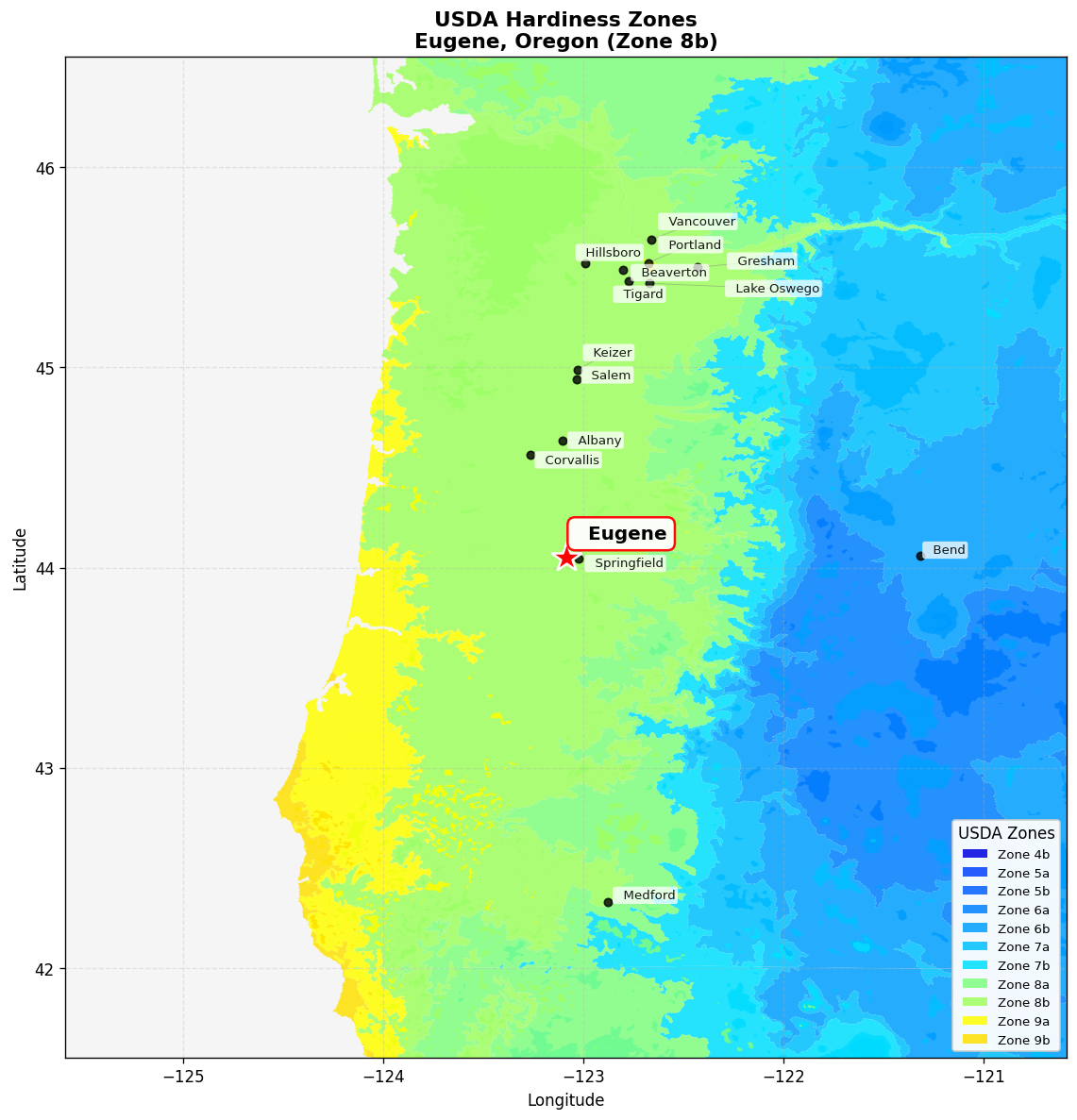
USDA Zone 8b
Hardiness zone for Eugene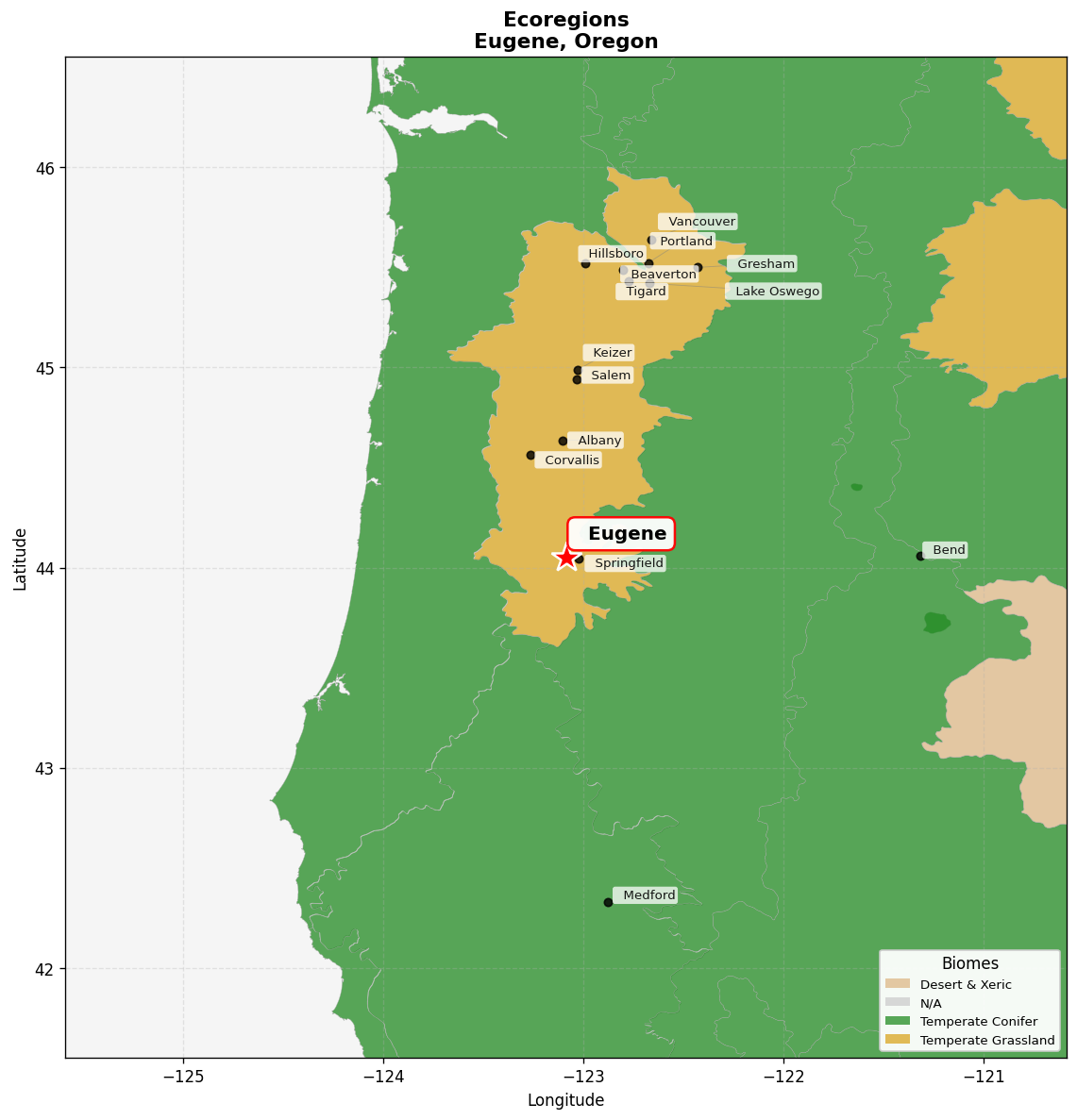
Willamette Valley oak savanna
Native ecoregionFrequently Asked Questions
How much does a cottage garden cost in Eugene?
A front-yard cottage conversion of 300-500 square feet — turf removal, 8-12 inches of imported compost and grit, a brick or flagstone path, roses, lavender and a full perennial layer — typically runs $6,000-14,000 installed in Eugene. Add a picket fence and rose arch and expect another $4,000-9,000. A full backyard with a pergola, patio, lawn, deep borders and drip irrigation lands between $25,000 and $60,000. Oregon labour rates sit above the national average, so the plants are rarely the expensive part: soil preparation, hardscape and irrigation are. Doing your own planting after paying a crew for grading and hardscape typically cuts 25-35 percent off the total.
Which roses actually survive Eugene's wet spring without black spot?
Pick for disease resistance first and fragrance second, because a Willamette Valley March is black-spot and powdery-mildew weather. Rosa 'Darlow's Enigma' is the local benchmark — a Pacific Northwest seedling, near-immune, shade-tolerant and fragrant. Rosa 'Olivia Rose Austin', Rosa 'Sally Holmes', Rosa 'New Dawn' and the thornless Rosa 'Zephirine Drouhin' all hold clean foliage through a Eugene season. Prune in late February to open the centre for air movement, water at the roots rather than overhead, and clear fallen leaves in autumn. The Owen Memorial Rose Garden downtown is a free, honest demonstration bed — walk it in June and note which varieties look clean.
Will foxgloves and delphiniums really perform here, or do they need staking?
They perform better in Eugene than almost anywhere in the country, because they want the exact cool damp spring the Willamette Valley hands them for free. Digitalis purpurea 'Camelot Rose' and Digitalis 'Dalmatian Peach' will self-sow and behave as reliable short-lived perennials. Delphinium elatum 'Pacific Giant' regularly clears six feet, and at that height it does need staking — set the rings in early April before the shoots are knee-high, because valley wind and a heavy May rain will flatten an unstaked spike in one afternoon. Cut spent delphinium spikes to the base in early July and most Eugene gardens get a lighter second flush in September.
What do I do about Willamette Valley clay before planting?
Build up, do not dig down. A hole excavated into Jory, Bellpine, Malabon or Coburg clay fills with water from November to April and behaves like an unlined bucket, and root rot in a wet winter kills far more Eugene perennials than a Zone 8b cold snap ever does. Mound your borders 8-12 inches above grade with a mix of compost and quarter-ten crushed rock or pumice, and steepen that further — 12-18 inches with 40 percent grit — anywhere Lavandula angustifolia 'Hidcote', Salvia nemorosa 'Caradonna' or bearded iris are going. Never rototill wet clay in February; you will smear it into a pan that takes years to recover. Wait for a dry stretch in late April or work in September.
How bad are slugs in Eugene, and what actually works?
Bad enough to be a design consideration, not an afterthought. A wet Willamette Valley spring is a slug hatchery, and the first casualties every April are emerging Delphinium and Hosta shoots and the crowns of Leucanthemum x superbum 'Becky'. Three things genuinely help: pull mulch back two inches from every crown so slugs have nowhere damp to sit against the plant, apply iron-phosphate bait in mid-March before the first shoots break rather than after the damage, and lean the design toward plants they ignore — Lavandula, Nepeta, Salvia, Stachys byzantina, Digitalis and hardy Geranium are all essentially slug-proof. That is most of a cottage garden already.
When is the best time to plant a cottage garden in Eugene?
October and early November are the best window by a wide margin. Roots establish through the mild wet winter, and by the time July arrives the plant has already found water. Late February through mid-April is the second window and the only sensible one for bare-root roses and fruit trees. Avoid planting from late June onward: with normal July rainfall of 0.32 inches and August at 0.39 inches, anything installed in midsummer is on life support until the rains return in October. Last frost in Eugene is usually mid-April and first frost around the third week of October, giving roughly 180 frost-free days.
Do I need a permit, and are there watering restrictions in Eugene?
Planting, borders, mulch and ordinary path work need no permit. The threshold that catches people is stormwater: the City of Eugene requires on-site treatment once a project adds or replaces 1,000 square feet or more of impervious surface within a 12-month period, which a generous brick path plus a patio can reach faster than expected. Rain gardens and stormwater planters can be credited toward required landscape area, so it is worth designing them in rather than bolting them on. Retaining walls above a certain height and any roofed structure are separately permitted — confirm details with the city before you build. EWEB supplies household water from the McKenzie River and does not impose routine summer bans, but a smart controller on drip will meaningfully cut the July and August bill.