4 Modern Landscape Ideas for Greenville, NC | Zone 8a, Low-Maintenance
Native plants from the Mid-Atlantic US coastal savannas (Zone 8a) — Humid subtropical climate
For a modern garden in Greenville, NC, a zone 8a city with a humid subtropical climate, start with Muhlenbergia capillaris, Lagerstroemia 'Natchez' and Yucca filamentosa 'Color Guard', the plants this guide's first design is built on.
Why Modern/Minimalist Gardens in Greenville?
Modern landscaping works in Greenville because the city's newer neighborhoods are mostly flat, open lots with brick and fiber-cement homes and plain rooflines. Straight edges, repeated plants and a restrained palette suit the long, low frontages of Cherry Oaks, Forest Hills and the newer streets around Winterville, and a small number of well-chosen shapes is easier to maintain than a busy bed.
Heat and rain decide the plant list. NOAA's 1991–2020 normals for Greenville give a January average low of 33.0°F, a July average high of 90.4°F, about 53 inches of annual rain and 3.3 inches of snow. Zone 8a lets evergreen structure plants hold through winter, so a modern design can look finished in January. Muhlenbergia capillaris, Pennisetum alopecuroides 'Hameln', Panicum virgatum 'Northwind', Ilex crenata 'Sky Pencil' and Distylium 'Vintage Jade' deliver clean lines without needing summer water once established. Plants that struggle are sun-baked desert species such as agave and Mediterranean lavenders, which rot in humid summers, so use Yucca filamentosa 'Color Guard' for spiky form instead.
Greenville sits on the flat Coastal Plain, so drainage drives the hardscape. Poured pads and tight gravel edges shed water, but standing water around crowns is the main risk in a 53-inch rain year. Grade beds away from the foundation, raise planting areas a few inches, and use steel edging to hold gravel and mulch lines crisp. Test the soil through the Pitt County Cooperative Extension office, since Coastal Plain soils are commonly acidic and sandy to loamy, a good match for Illicium 'Florida Sunshine' and Loropetalum chinense 'Ruby'.
Use a short plant palette repeated in masses, and plan for July heat: shade a patio with a pergola or a Lagerstroemia 'Natchez' canopy, and install drip irrigation rather than sprinklers to keep foliage dry. Fall is the best planting season here. Check setback, fence-height and drainage rules with the City of Greenville, and with your homeowners association where one applies, before building walls or raised planters.
4 Modern/Minimalist Design Ideas for Greenville
AI-generated image
The Grass and Gravel Front Yard
$14–30/sqftA brick ranch in Forest Hills loses most of its lawn to a wide bed of Muhlenbergia capillaris drifts, edged with weathered steel and a pea-gravel band along the walk. A single Lagerstroemia 'Natchez' stands off the corner for summer shade and winter bark. The grasses peak pink in October and the gravel keeps mowing off the walk edge.
Try this on your yard: The Grass and Gravel Front YardAI-generated image
The Evergreen Structure Entry
$18–38/sqftA two-story brick home in Cherry Oaks gets a clean entry court: a wide concrete walk, three clipped Distylium mounds along the foundation, and a pair of Ilex crenata 'Sky Pencil' columns flanking the door. Low switchgrass fills the gap between the mounds and the walk. The palette stays green in January, and shearing happens twice a year.
Try this on your yard: The Evergreen Structure EntryAI-generated image
The Pergola Patio With Raised Planters
$32–65/sqftA rear patio of large-format concrete pavers sits under a flat-roofed pergola on a Westhaven brick ranch, facing south-west where afternoon sun is hardest. Raised steel planters hold grasses and Yucca on the north side, and a Lagerstroemia screens the neighbor's fence. Drainage runs under the paver edge into a gravel strip.
Try this on your yard: The Pergola Patio With Raised PlantersAI-generated image
The Rain Garden Courtyard
$20–40/sqftA low corner of a flat Greenville yard becomes a shallow rain garden fed by the downspout, ringed with a clipped hedge and a straight gravel path. Switchgrass and Itea hold the wet center, while Illicium keeps the dry rim green. The design turns drainage trouble into the focal point, and plants root in soil that stays moist.
Try this on your yard: The Rain Garden CourtyardSee how a modern/minimalist garden looks on YOUR property
Upload a photo of your Greenville yard and visualize your dream garden in seconds.
Try ProScapeAI Free

AI-generated image
Featured Flowers & Perennials for Modern/Minimalist Gardens
Browse all 150 plants for Greenville
Water Lettuce
Pistia stratiotes
low-growing ground cover, white blooms in summer. Evergreen year-round.
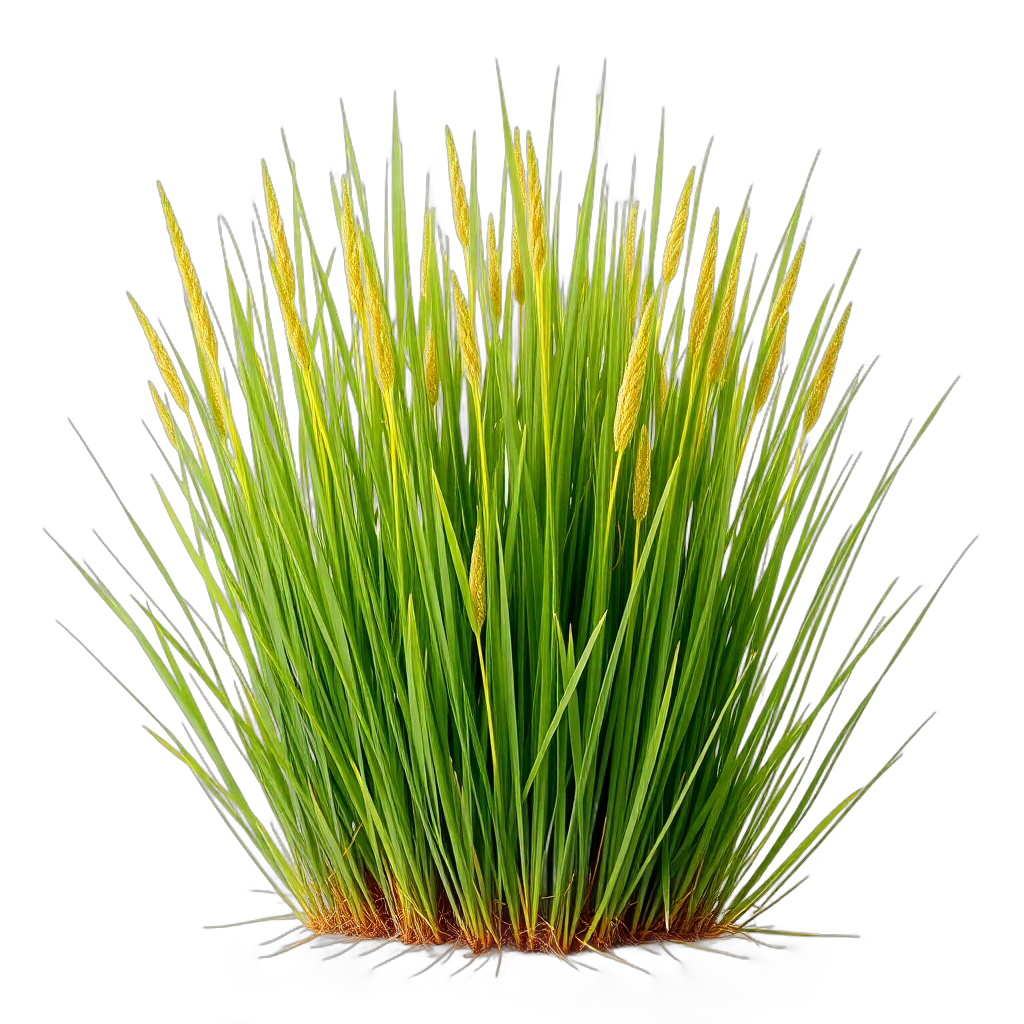
Bowles' Golden Sedge
Carex elata 'Aurea'
low-growing ground cover, blooms in none.

Tussock Sedge
Carex stricta
low-growing ground cover, blooms in spring. Brown fall color.

Umbrella Sedge
Cyperus alternifolius
grows to 4 feet, blooms in summer. Evergreen year-round.
Zone and sun checks come from our database — confirm with your local nursery before you buy.
Bloom Calendar for Greenville
spring
Tussock Sedge, Austrian Speedwell, Banana Yuccasummer
Water Lettuce, Umbrella Sedge, Alpine Sea Hollyfall
Autumn Snakerootwinter
Limited bloomsDesign Tips for Greenville (Zone 8a)
- Group plants in masses of five or more: Muhlenbergia capillaris reads as one bold shape in October rather than a scatter of tufts
- Use evergreen structure plants like Distylium 'Vintage Jade' and Ilex crenata 'Sky Pencil' so the yard looks finished through 33.0°F January lows
- Grade beds away from the foundation and raise planting areas a few inches: a 53-inch rain year on flat Coastal Plain ground leaves water standing
- Skip agave and true lavender; use Yucca filamentosa 'Color Guard' and Lavandula × intermedia 'Phenomenal' sparingly in raised, gravel-mulched beds
- Shade a south- or west-facing patio with a pergola or a Lagerstroemia 'Natchez', since July highs average 90.4°F
- Install drip rather than sprinklers to keep foliage dry and cut disease in humid summers
- Test soil through Pitt County Cooperative Extension before amending; Coastal Plain soils are often acidic, which suits Illicium 'Florida Sunshine' and Loropetalum chinense 'Ruby'
Where to Source Plants in Greenville
Skip the big-box stores. These independent Greenville nurseries specialize in the plants that make modern/minimalist gardens thrive in Zone 8a.
Carolina Seasons Nursery
North Greenville (NC Highway 903 North)
Independent retail nursery with annuals, perennials, roses, ornamental grasses, shade and flowering trees, evergreen and flowering shrubs, fruit and nut plants, and mulch
Plant & See Nursery
Winterville
Family garden center with annuals, perennials, trees and shrubs, succulents, tropicals, soils and amendments, and pottery
Modern/Minimalist Landscaping Cost Ranges
| Project Scope | Estimated Cost |
|---|---|
| Concrete patio, broom finish (200 sqft) | $2,100–$2,500 |
| Low-voltage landscape lighting (6 fixtures) | $1,200–$2,000 |
| Composite decking boards, surface only on existing framing (200 sqft) | $4,700–$5,800 |
| AI visualization (ProScapeAI) | Free to start |
National average installed ranges for 2026 from our landscaping price list (Homewyse and other published sources). Prices in Greenville, NC vary with site, materials and contractor, so get two or three local quotes.
Greenville Climate & Growing Zone
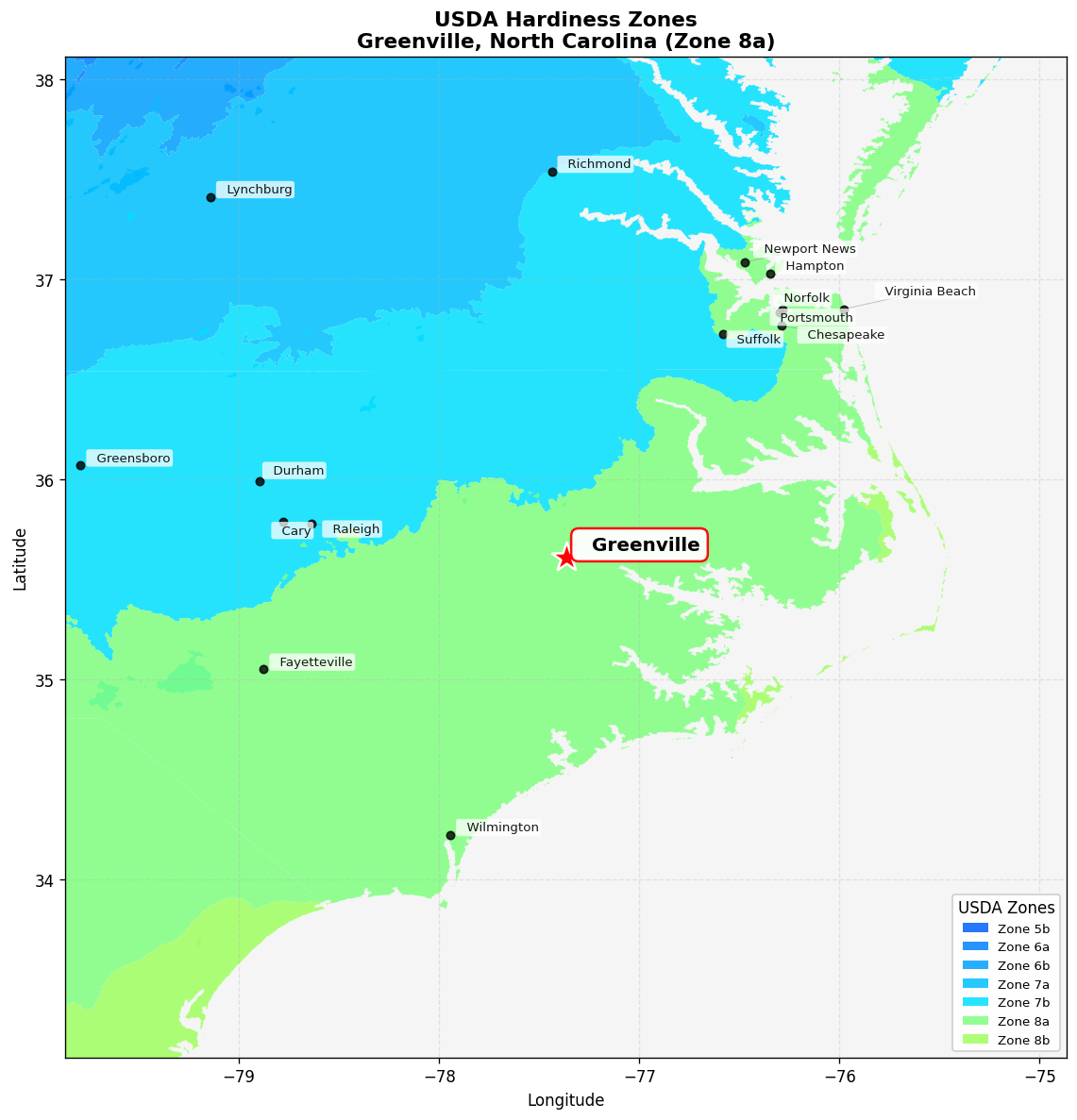
USDA Zone 8a
Hardiness zone for Greenville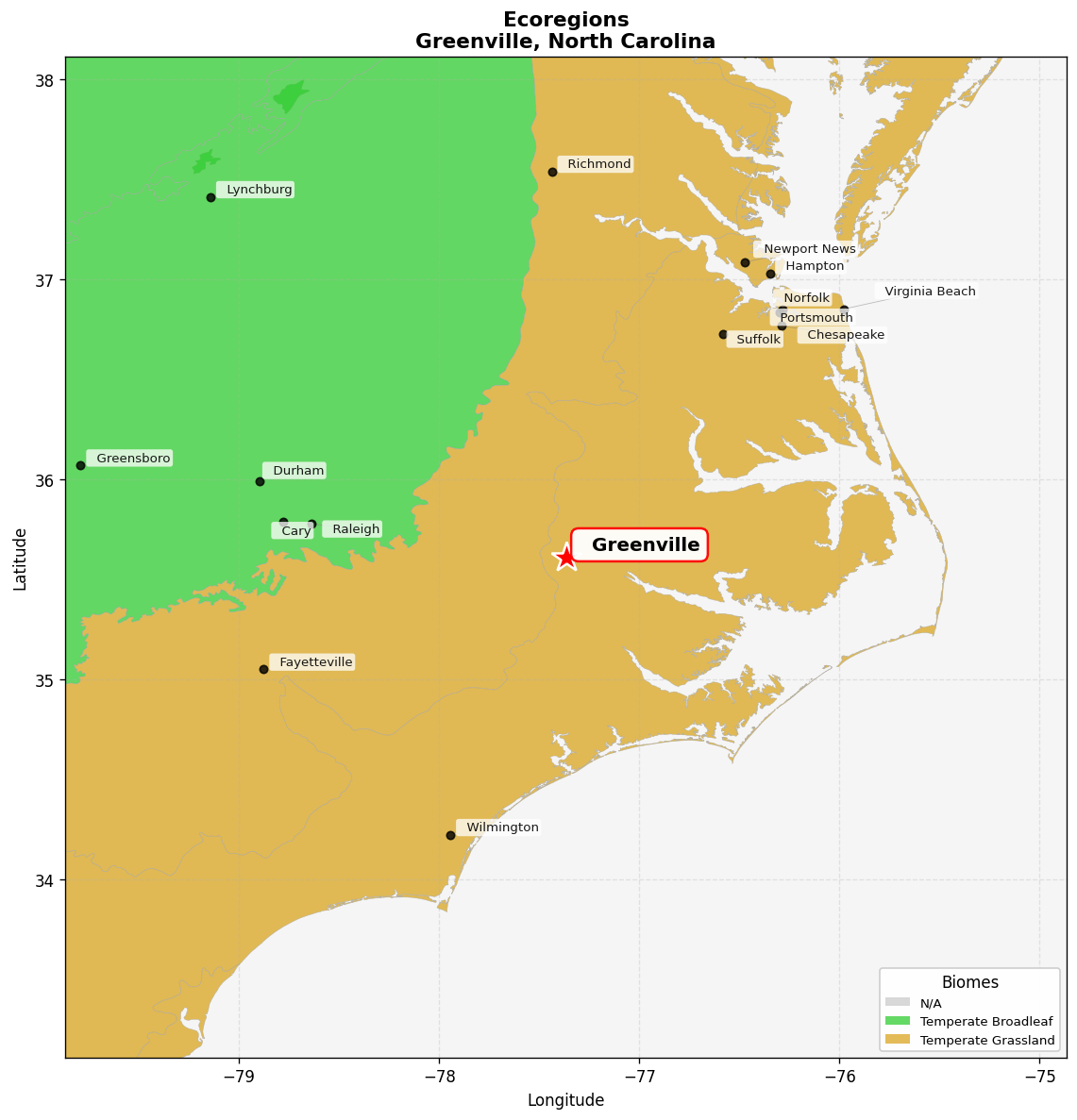
Mid-Atlantic US coastal savannas
Native ecoregionFrequently Asked Questions
How much does modern landscaping cost in Greenville, NC?
The final price depends on the size of the yard, the materials you pick and who does the work, so ask local contractors for written quotes. Collect two or three local quotes, as pricing varies with site access and soil prep.
Is a modern landscape low maintenance in Greenville's climate?
Mostly. Muhlenbergia capillaris and Pennisetum alopecuroides 'Hameln' need a single late-winter cutback, and Distylium 'Vintage Jade' needs shearing about twice a year. The main chores are weeding gravel and mulch lines in the humid season and refreshing pine bark mulch every year or two.
What plants survive Greenville's heat and humidity?
NOAA's 1991–2020 normals show a July average high of 90.4°F and about 53 inches of rain a year. Muhlenbergia capillaris, Panicum virgatum 'Northwind', Yucca filamentosa 'Color Guard', Ilex vomitoria 'Nana' and Lagerstroemia 'Natchez' handle both. Desert agaves and true Mediterranean lavenders usually rot in the humidity.
When should I plant in Greenville?
Fall, from October to early December, is the best window because the soil is warm and the rain returns. March to April works too. January lows average 33.0°F, so winters are mild enough for roots to grow. Avoid midsummer installs unless you can irrigate by drip.
Do I need a permit or HOA approval?
Walls, raised planters, pergolas and added paving may fall under city zoning, setback and drainage rules, and many subdivisions have HOA covenants. Confirm requirements with the City of Greenville planning office and your HOA before construction.
How do I deal with standing water on a flat lot?
Grade beds away from the foundation, raise planting areas 4–8 inches, and choose plants that tolerate wet winters, such as Itea virginica 'Henry's Garnet', Panicum virgatum 'Shenandoah' and Juncus effusus 'Spiralis'. A rain garden at the low corner turns runoff into a design feature.
Does modern style work with a brick ranch?
Yes. Brick ranches have long, low lines that suit repeated grasses and clipped evergreens. Keep the palette to three or four plants, such as Muhlenbergia capillaris, Distylium 'Vintage Jade' and Ilex crenata 'Sky Pencil', and repeat them in masses.



