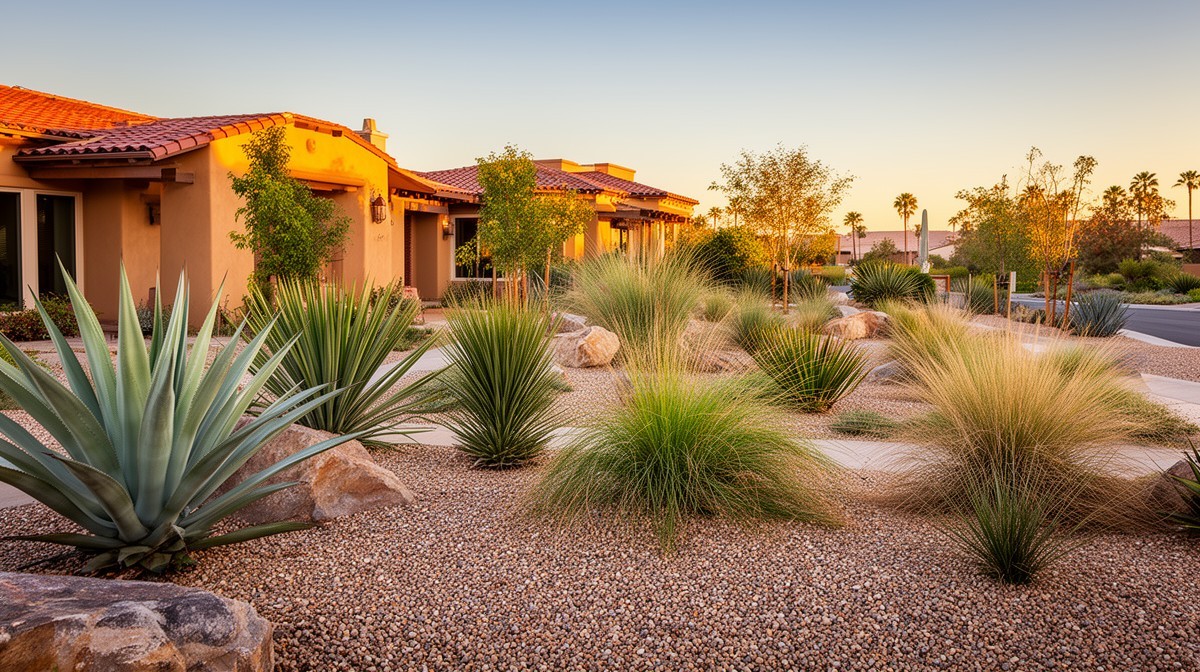
4 Desert Garden Ideas for Huntington Beach, CA | Coastal Xeriscape Design in Zone 10b
Native plants from the California coastal sage and chaparral (Zone 10b) — Cold semi-arid climate
Why Desert/Xeriscape Gardens in Huntington Beach?
Huntington Beach is close to a best-case scenario for a desert garden, with one asterisk. Zone 10b here is functionally frost-free — winter lows sit around 38–42°F — so Agave attenuata, Aloe arborescens, Euphorbia tirucalli 'Sticks on Fire' and Aeonium arboreum 'Zwartkop' never need frost cloth, unlike Palm Springs or the high desert where one January freeze turns a twenty-year agave to mush. Rainfall is genuinely desert-grade: roughly 12 inches a year, essentially all of it November through March, followed by a bone-dry April-to-October stretch that xeric planting was built for. The ground cooperates too. Most of the city sits on the sandy Bolsa–Metz coastal plain, so Agave ovatifolia, Dasylirion wheeleri and Dudleya brittonii go in at grade instead of on the raised, gravel-amended mounds that clay-soil cities demand. Ranch tracts around Bolsa Chica–Heil, Newland, Yorktown and Oak View convert cleanly, and so do the bigger lots in Seacliff and Edwards Hill.
The asterisk is the marine layer. May Gray and June Gloom park damp 62°F air over the coast most summer mornings, and true Sonoran plants that want dry radiant heat sulk in it: Echinocactus grusonii golden barrels etch and pick up corky scab, Ferocactus and Mammillaria rot at the crown, and Parkinsonia 'Desert Museum' grows leggy and blooms thinly west of Beach Boulevard. What thrives instead are the plants evolved for salt fog — Dudleya brittonii and Dudleya edulis off the local bluffs, Leymus condensatus 'Canyon Prince' from the Channel Islands, Senecio mandraliscae, Aloe 'Blue Elf', Agave americana var. marginata, Rhus integrifolia and Eriogonum fasciculatum 'Warriner Lytle'. Within a half mile of the sand, salt aerosol riding the onshore southwest breeze scorches thin-tissue plants like Agave victoriae-reginae and most Echeveria; waxy, leathery, glaucous foliage wins. Inland of Goldenwest the palette reopens and Hesperaloe parviflora 'Brakelights' and Opuntia santa-rita finally color up properly.
The money math is the easiest part. Turf-removal rebates through Metropolitan's SoCal Water$mart start at $2 per square foot, and MWDOC adders have pushed Orange County payouts to $3–5 per square foot in past funding cycles — pre-approval with photos of living grass is required, so apply before you demo. Trading 800 sqft of fescue that wants roughly 40 inches of supplemental water a year for a gravel-and-agave court needing 6–10 inches shows up fast on a tiered HB Water Division bill. Budget against Orange County labor, which runs 20–35% above national averages, and respect the sand: it drains beautifully but holds nothing, so every bed gets inline drip and 3 inches of crushed gravel mulch.
4 Desert/Xeriscape Design Ideas for Huntington Beach
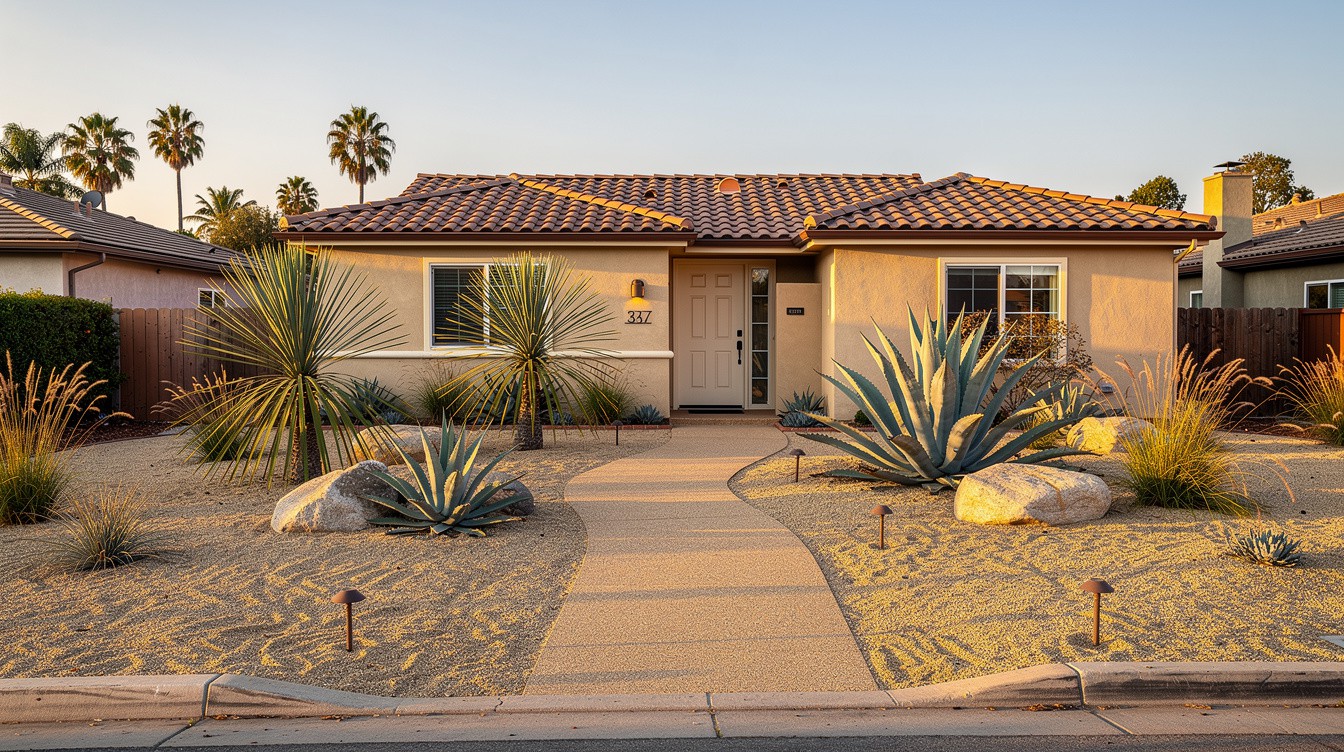
The Boulder-and-Blade Front Court
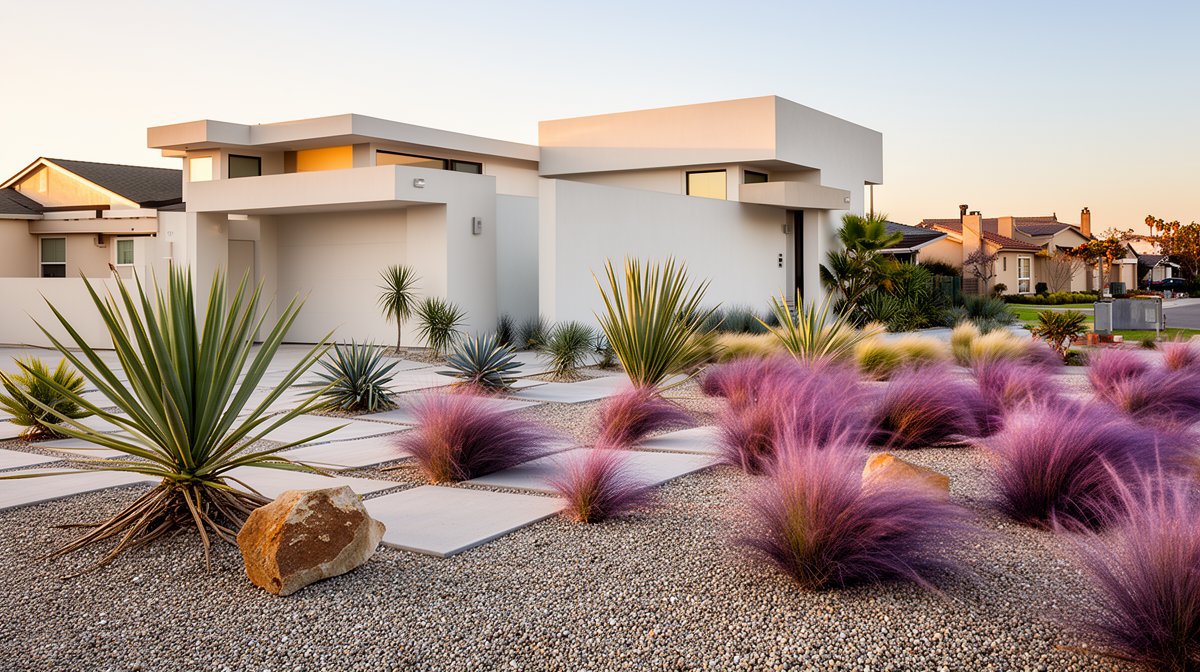
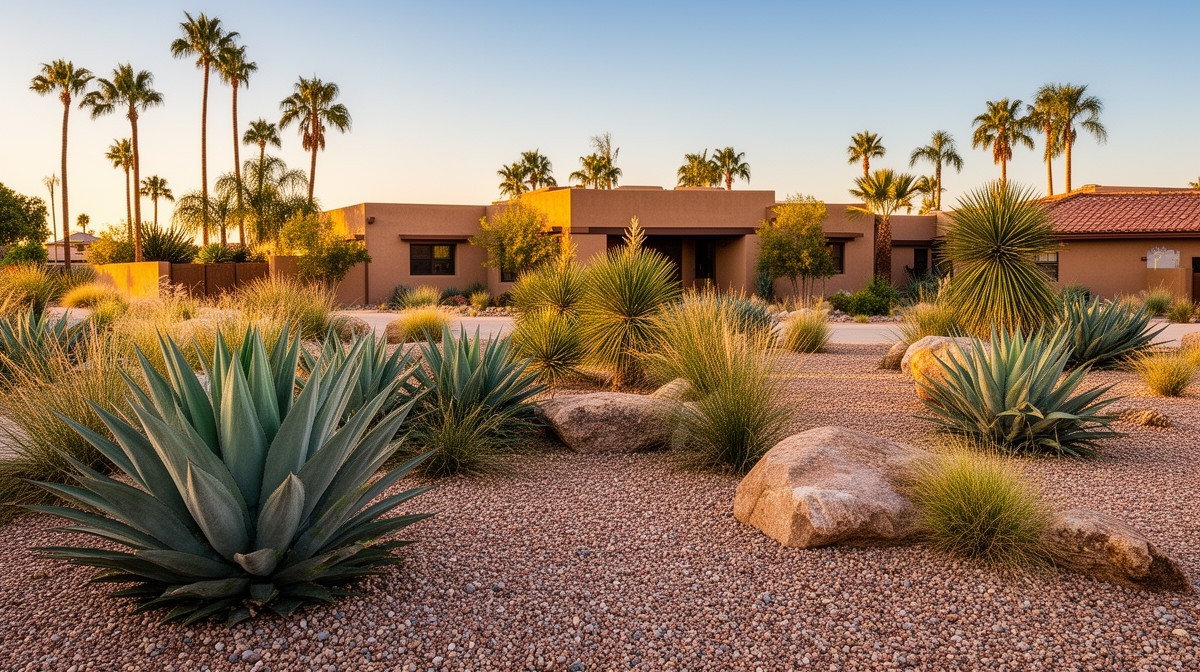
$9–18/sqftA single-story Spanish-tile ranch in warm sand stucco with the lawn gone entirely, replaced by a raked field of gold decomposed granite. An exposed-aggregate walkway curves from the sidewalk to the door, and the whole composition rests on three moves: a pair of Yucca rostrata 'Sapphire Skies' flanking the facade like blue starbursts, a hulking Agave americana var. marginata anchored against Sunset Gold boulders on the right, and a lower Agave 'Blue Glow' tucked into granite on the left. Muhlenbergia rigens and Leymus condensatus 'Canyon Prince' feather the fence lines and catch the low evening light, while low bronze path lights wash the DG at night. Every plant here shrugs off the salt breeze off Bolsa Chica, and once established the whole yard runs on winter rain plus a monthly summer drip cycle.
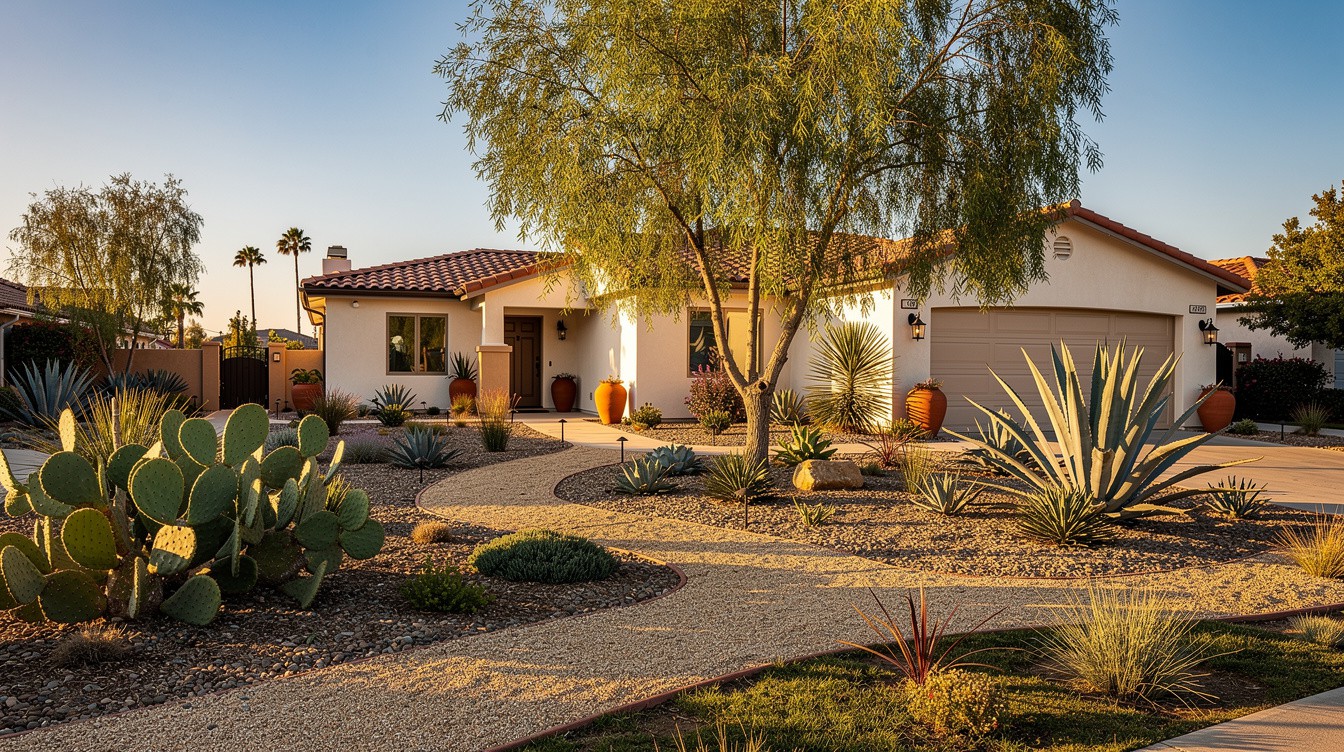
The Olla & Opuntia Dry Wash
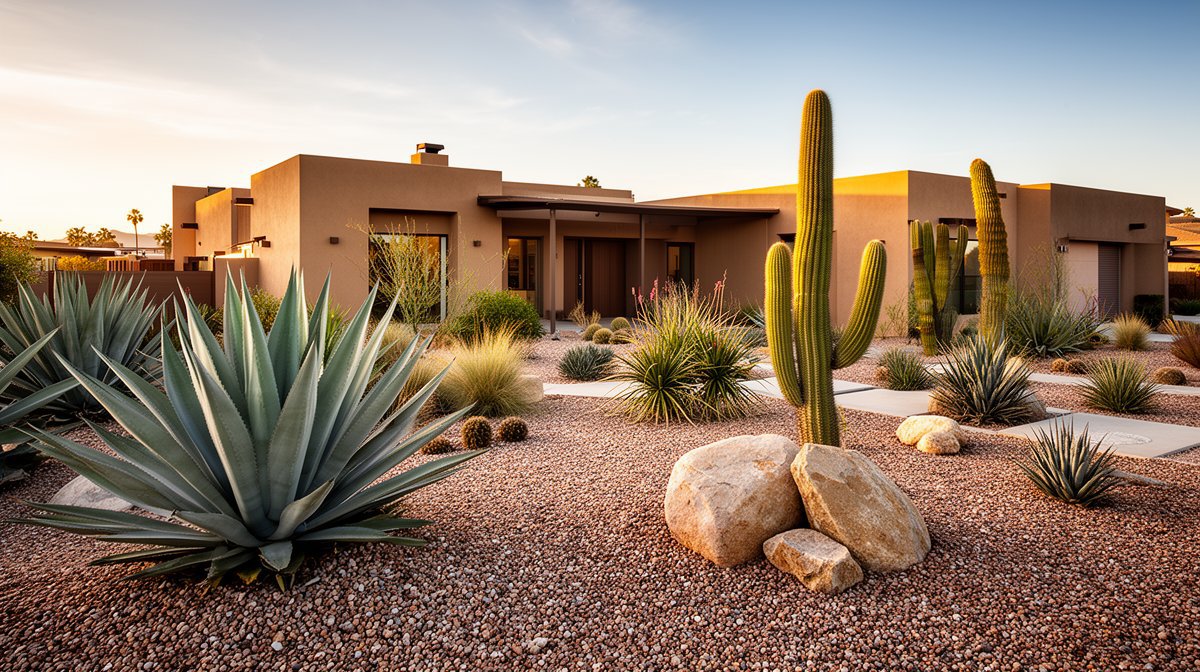
$12–24/sqftA wider Mediterranean frontage where the driveway, entry and garage are all stitched together by looping decomposed granite paths and a cobble dry creek that actually does something — it carries the November-through-March runoff off the roof and away from the slab. A Chilopsis linearis 'Bubba' desert willow throws filtered shade over the middle of the yard, a sprawling colony of Opuntia ficus-indica commands the left corner, and a fan of variegated Agave americana holds the garage side. Glazed terracotta ollas in burnt orange sit at the door and along the drive as color anchors instead of flowers. Low mounds of Lavandula 'Goodwin Creek Grey' and Santolina soften the gravel, Cordyline 'Red Star' spikes punch through the foreground, and steel edging keeps the DG out of the cobble.
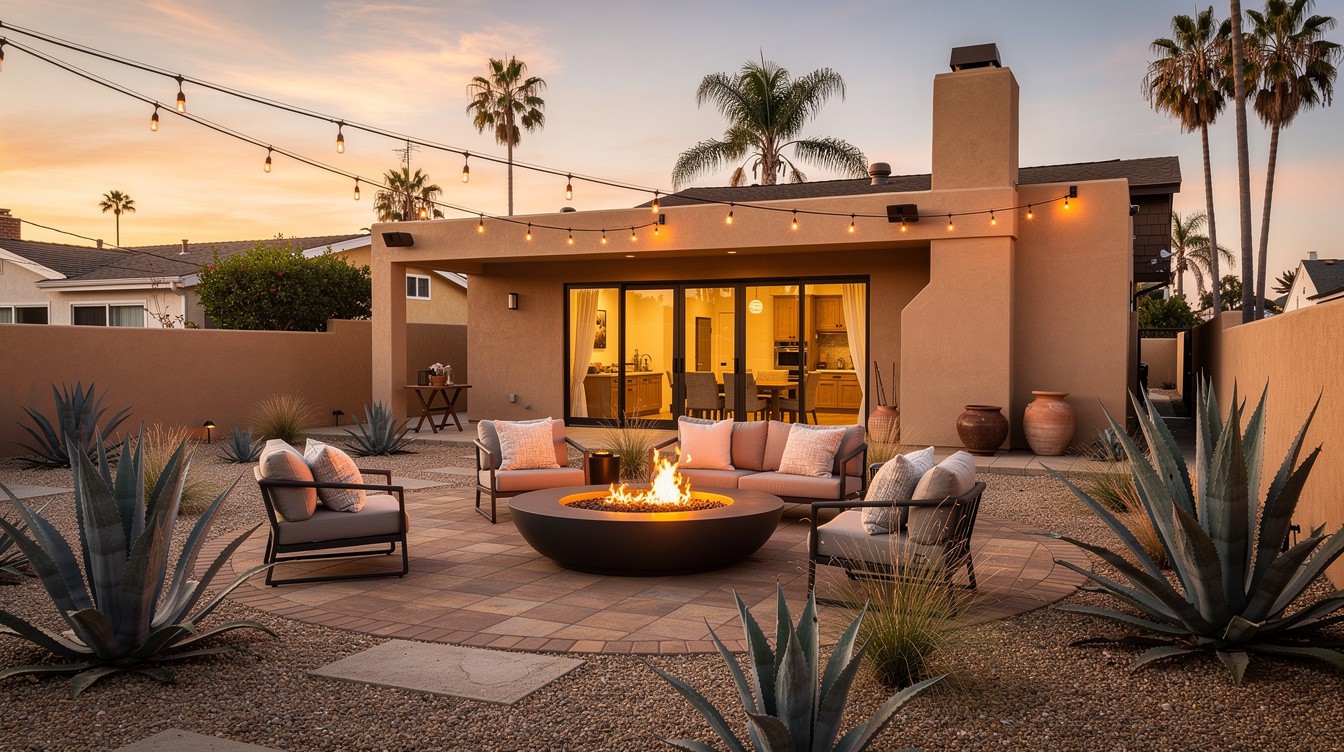
The Agave Ring Fire Court
$22–40/sqftA back patio walled in tan stucco for privacy, with a circular travertine-toned paver court floating in a sea of crushed gravel. Dead center sits a matte-black round gas fire bowl on lava rock, ringed by a low sectional and two lounge chairs, with bistro string lights strung from the roofline to the perimeter wall. The planting is deliberately sparse and enormous: six mature Agave americana positioned like sculpture right at the gravel edge, backed by Muhlenbergia rigens plumes, Agave attenuata in the sheltered corners, and a pair of tall terracotta urns against the house. Sliding glass doors dump the kitchen straight onto the pavers. In Huntington Beach's mild evenings this room stays usable roughly ten months a year, and nothing in it needs more than a monthly deep soak.
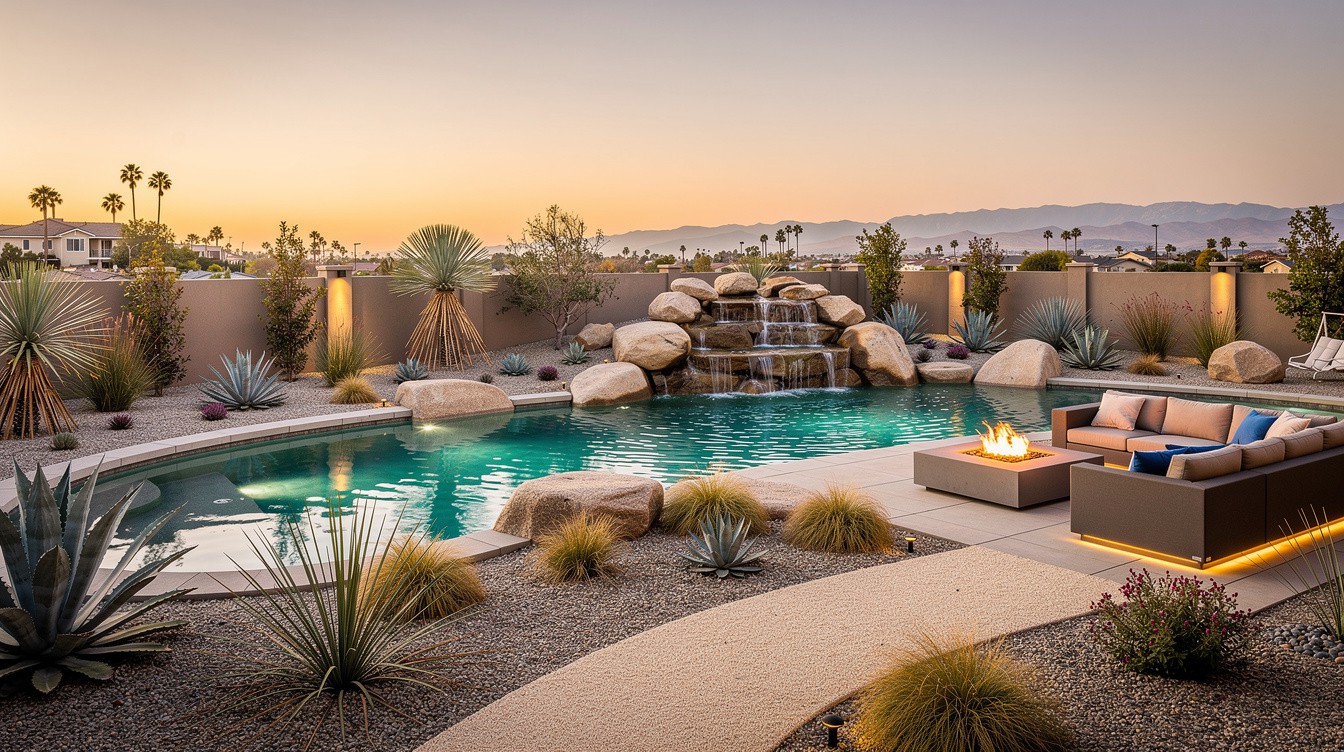
The Boulder Falls Pool Oasis
$50–110/sqft (pool area inclusive)The resort version: a freeform pebble-finish pool with a stacked granite boulder waterfall spilling into the deep end, wrapped by a pale broom-finished concrete deck and a wide apron of gravel instead of turf. A floating linear gas fire table sits beside an LED-underlit sectional at the pool's edge, and the planting reads as a curated desert bluff — Yucca rostrata standing sentinel along the back wall, Agave ovatifolia and Agave parryi scattered through the gravel, Muhlenbergia rigens and Nassella tussocks softening the coping line, and Dasylirion wheeleri catching the uplights. Stucco privacy walls with wall-wash lighting close the room off from neighbors. The gravel apron is the smart part: it cuts deck heat, drains splash-out instantly in the sandy soil, and keeps chlorine off anything that would resent it.
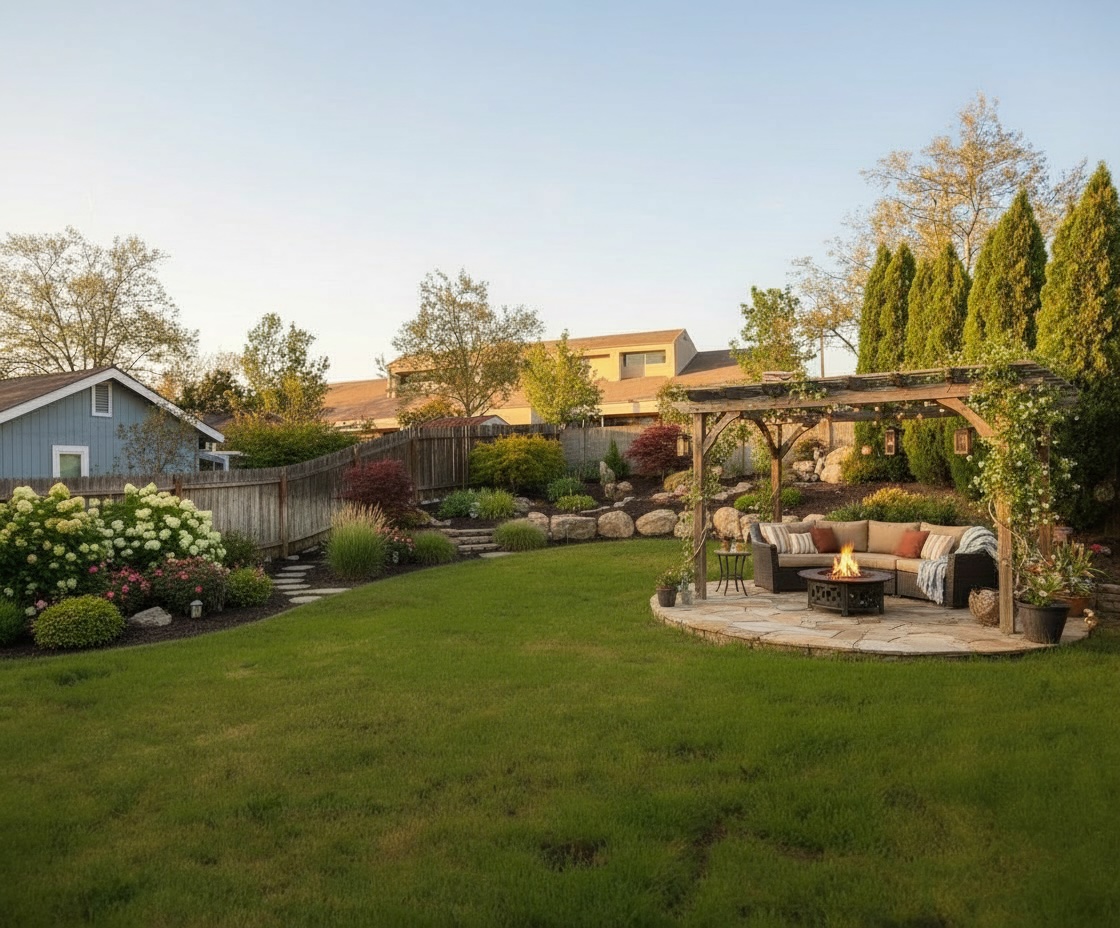
See how a desert/xeriscape garden looks on YOUR property
Upload a photo of your Huntington Beach yard and visualize your dream garden in seconds.
Try ProScapeAI Free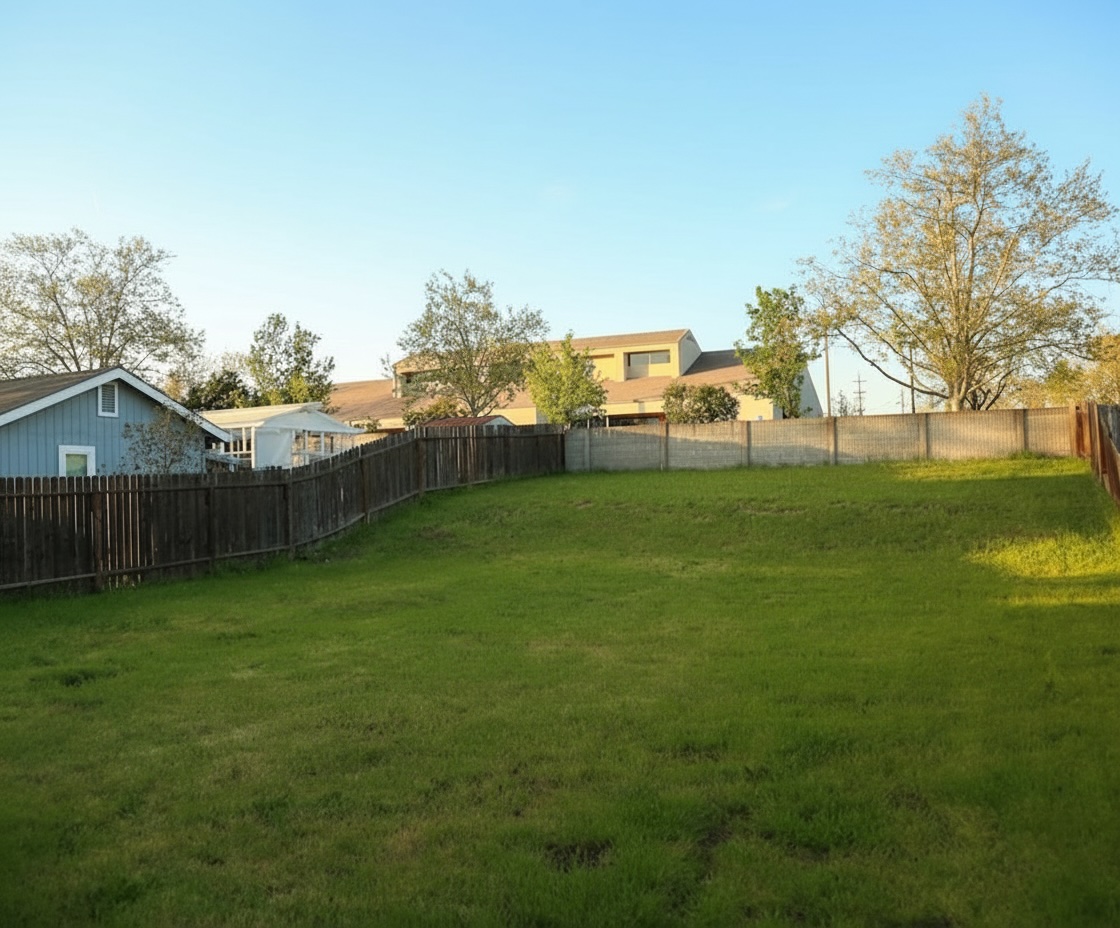
Featured Trees & Shrubs for Desert/Xeriscape Gardens
Browse all 115 plants for Huntington Beach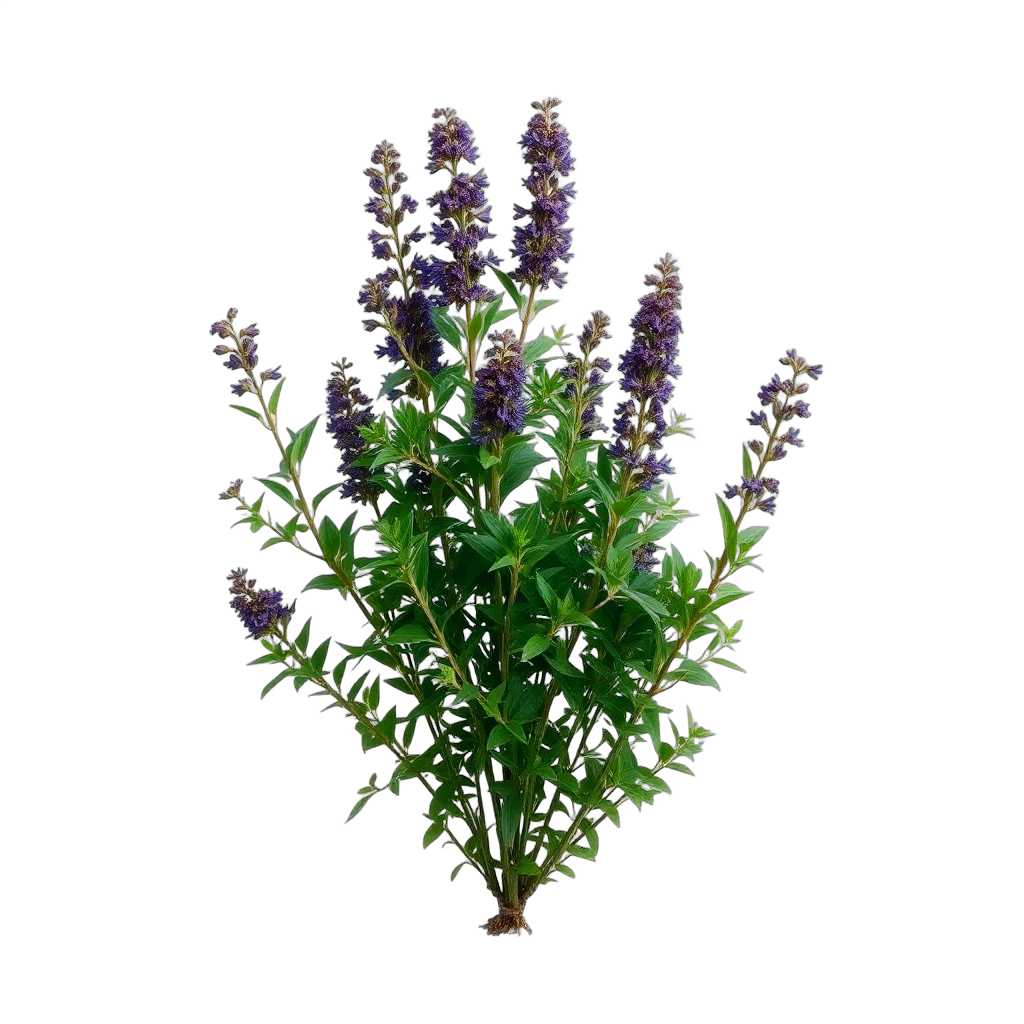
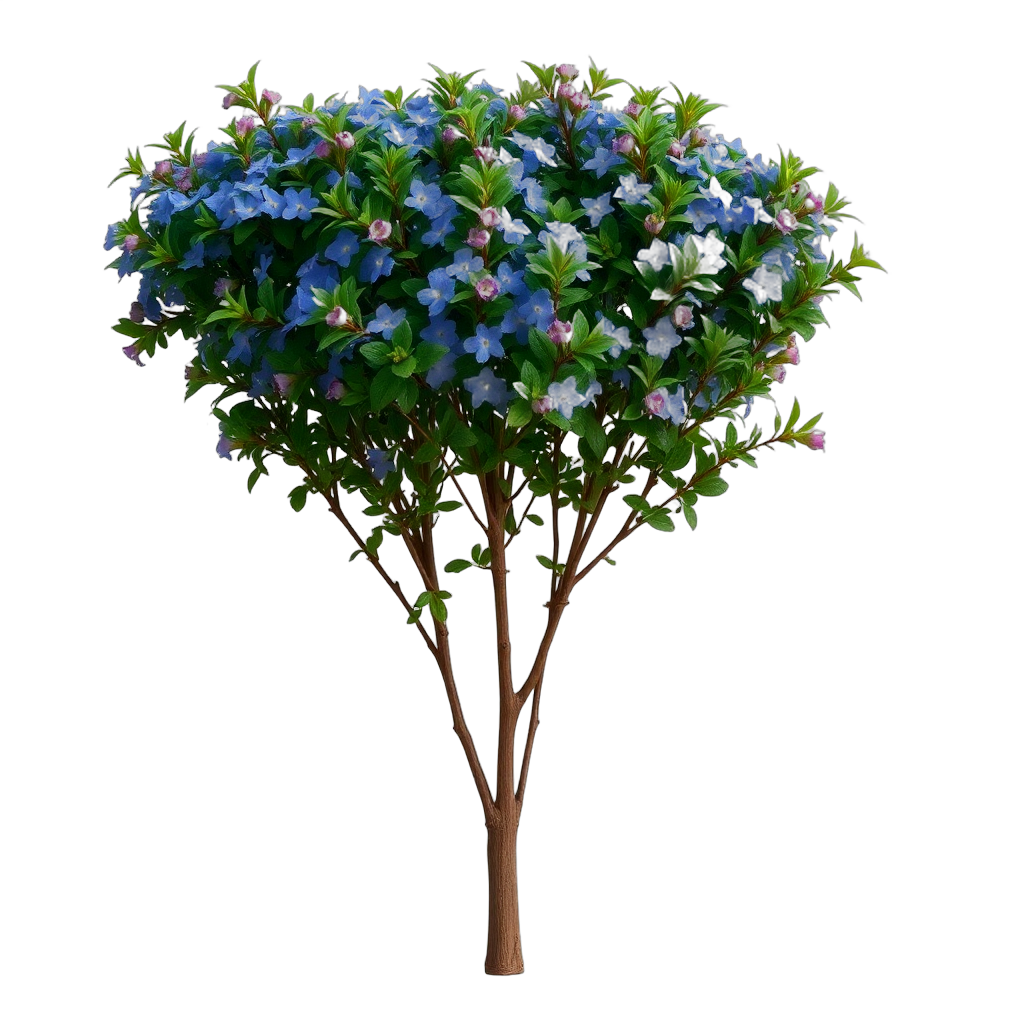
Black Sage
Salvia mellifera
grows to 4 feet, white blooms in spring. Attracts butterflies.
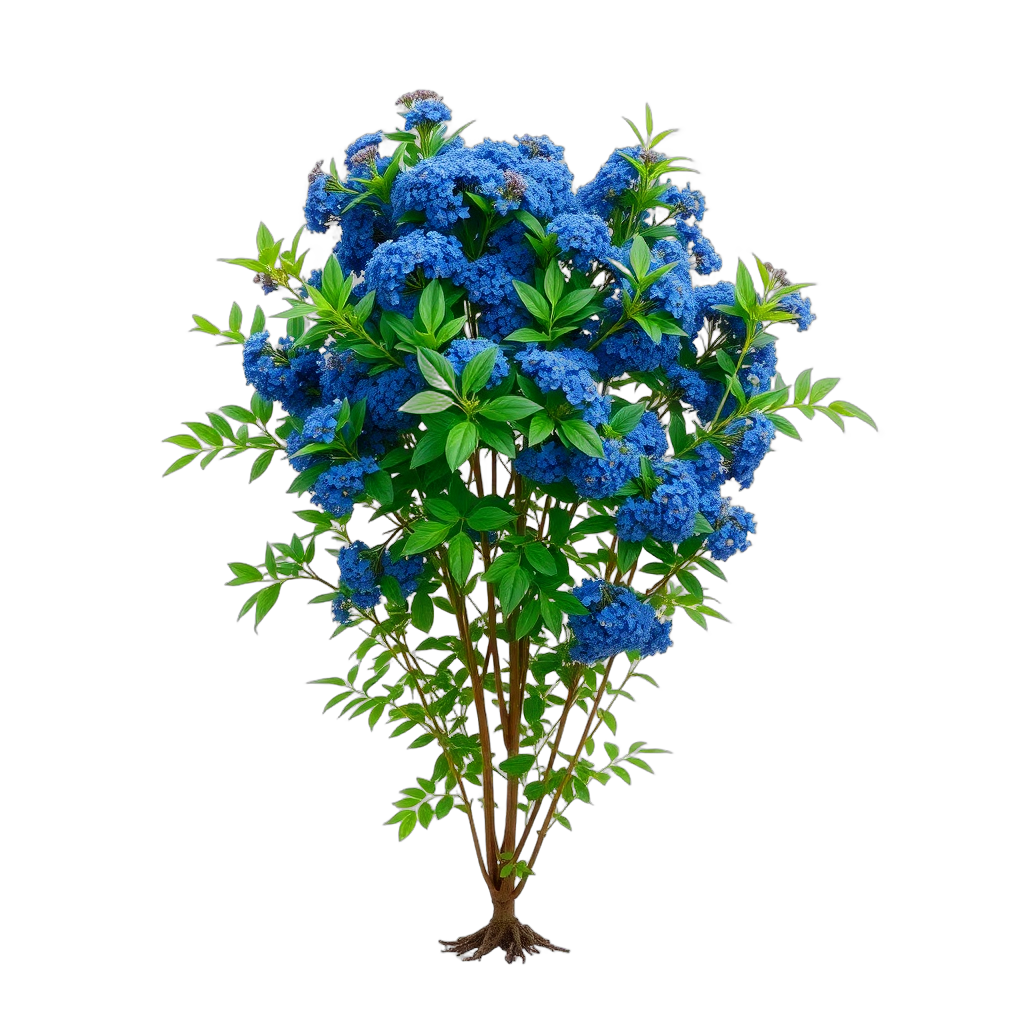
Blue Blossom
Ceanothus thyrsiflorus
medium-sized at 12 feet, blue blooms in spring. Attracts butterflies.
Blue Elderberry
Sambucus cerulea
medium-sized at 15 feet, white blooms in spring. Attracts butterflies.
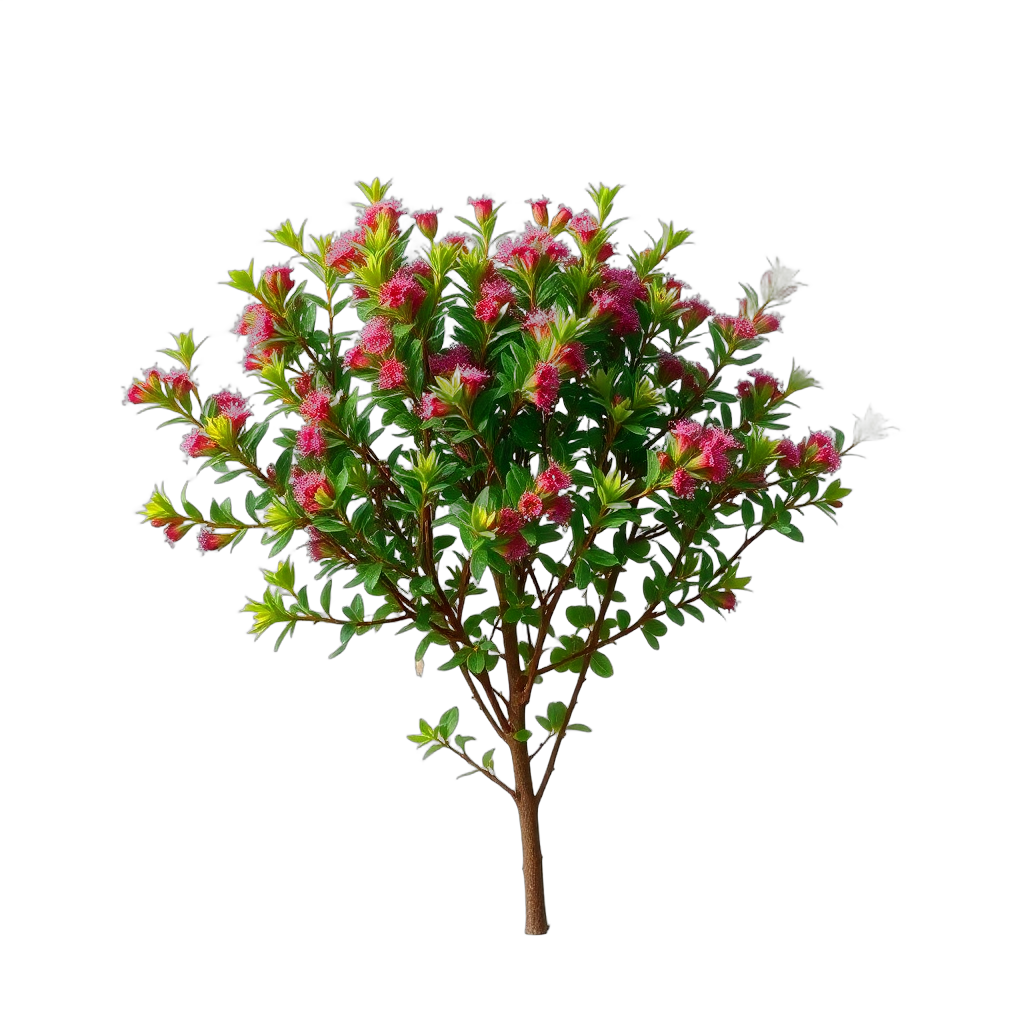
Buckbrush
Ceanothus cuneatus
medium-sized at 7 feet, white blooms in spring. Attracts butterflies.
Featured Grasses & Groundcovers for Desert/Xeriscape Gardens
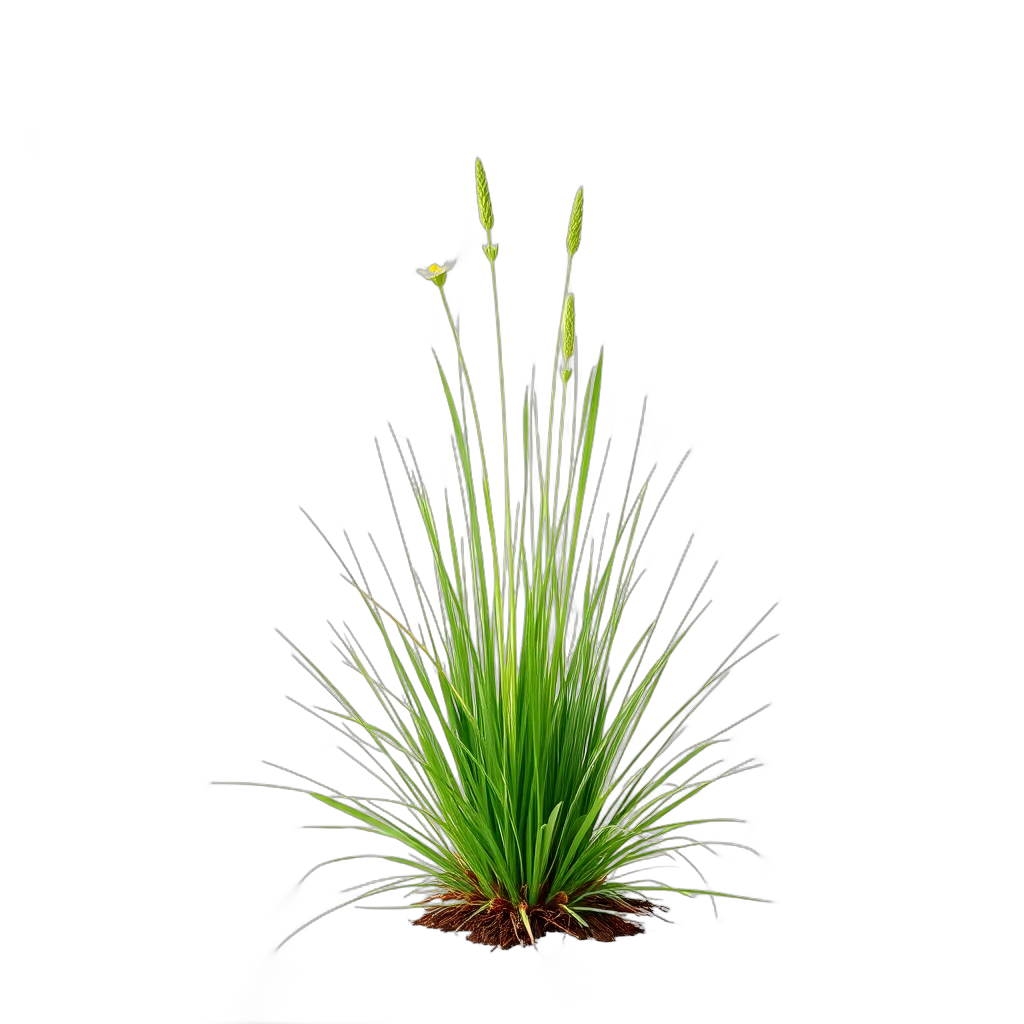
California Brome
Bromus carinatus
low-growing ground cover, blooms in spring. Yellow fall color.
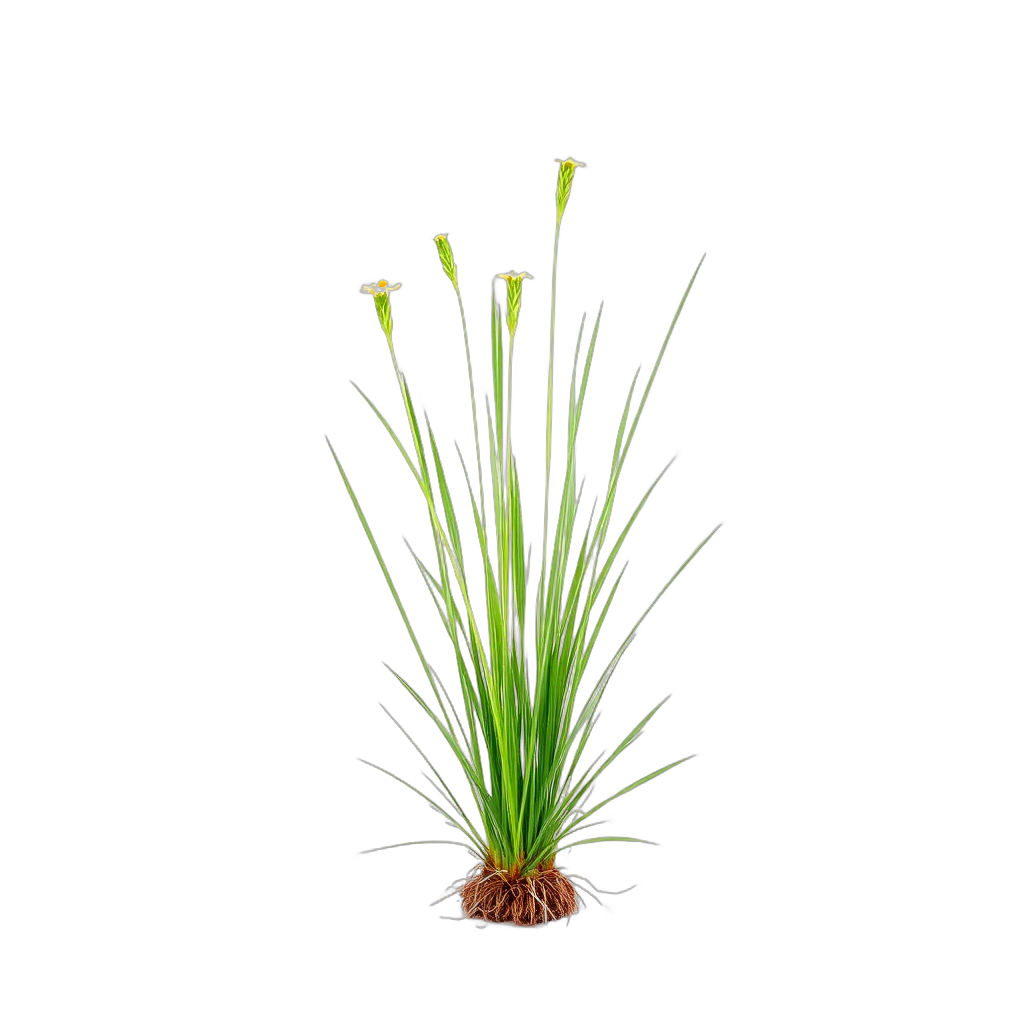
California Melic
Melica californica
low-growing ground cover, blooms in spring.
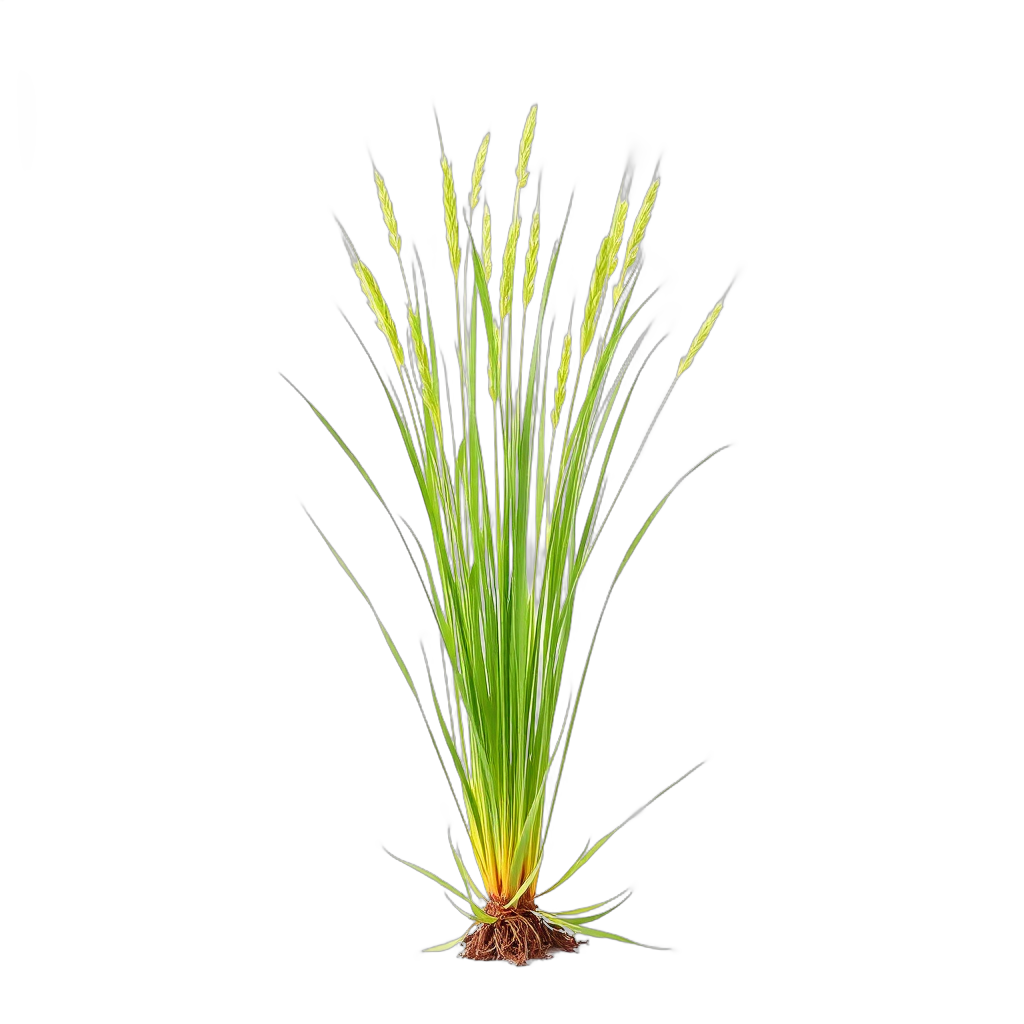
California Oatgrass
Danthonia californica
low-growing ground cover, blooms in spring. Yellow fall color.
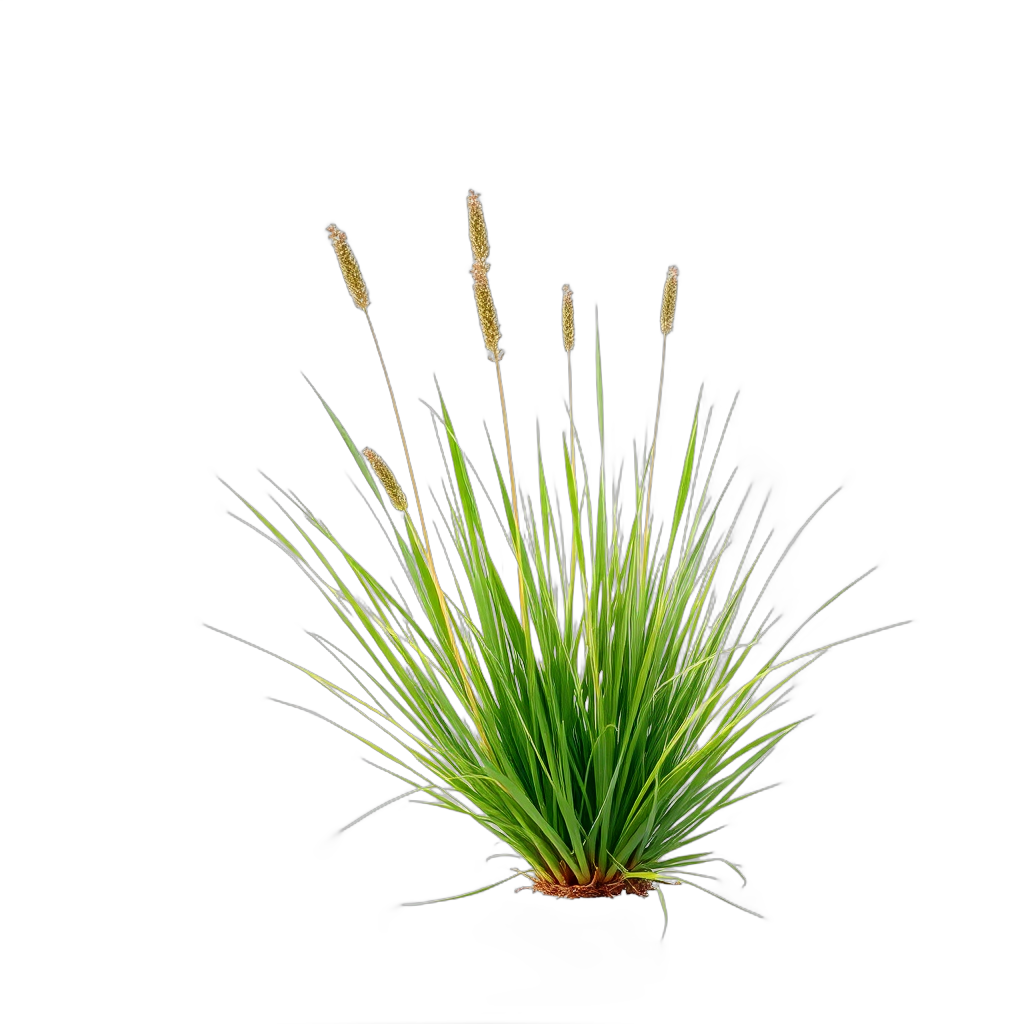
Deer Grass
Muhlenbergia rigens
grows to 3 feet, yellow blooms in fall. Evergreen year-round.
Featured Flowers & Perennials for Desert/Xeriscape Gardens
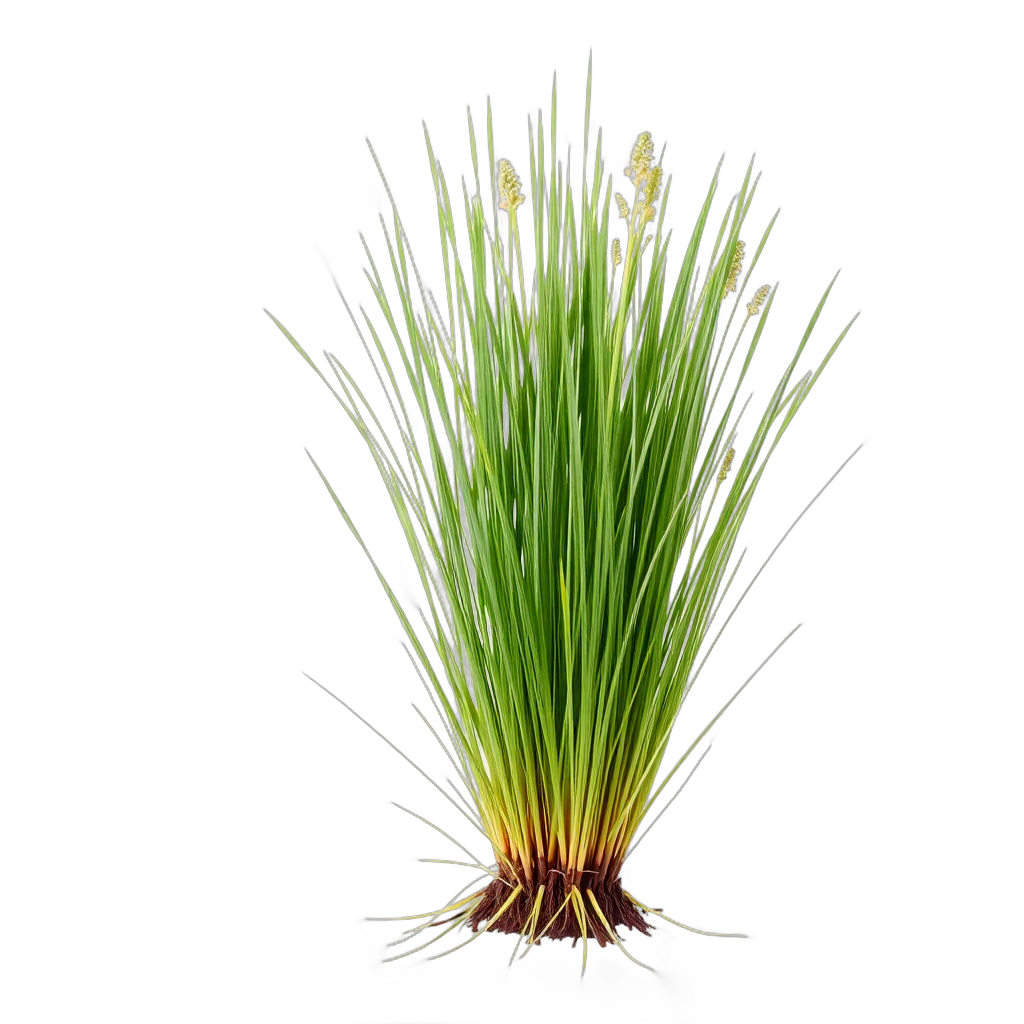
California Gray Rush
Juncus patens
low-growing ground cover, blooms in summer. Evergreen year-round.
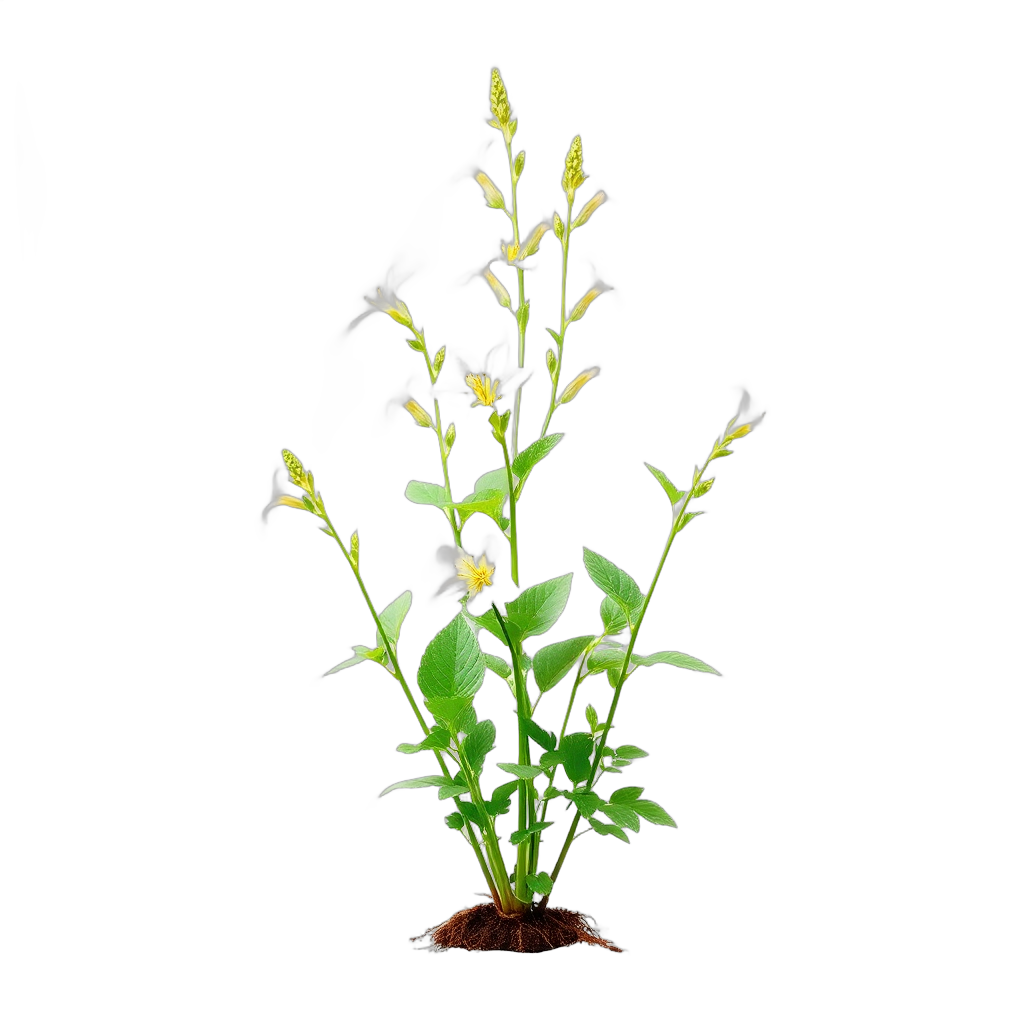
Beach Evening Primrose
Camissonia cheiranthifolia
low-growing ground cover, yellow blooms in spring. Attracts butterflies.
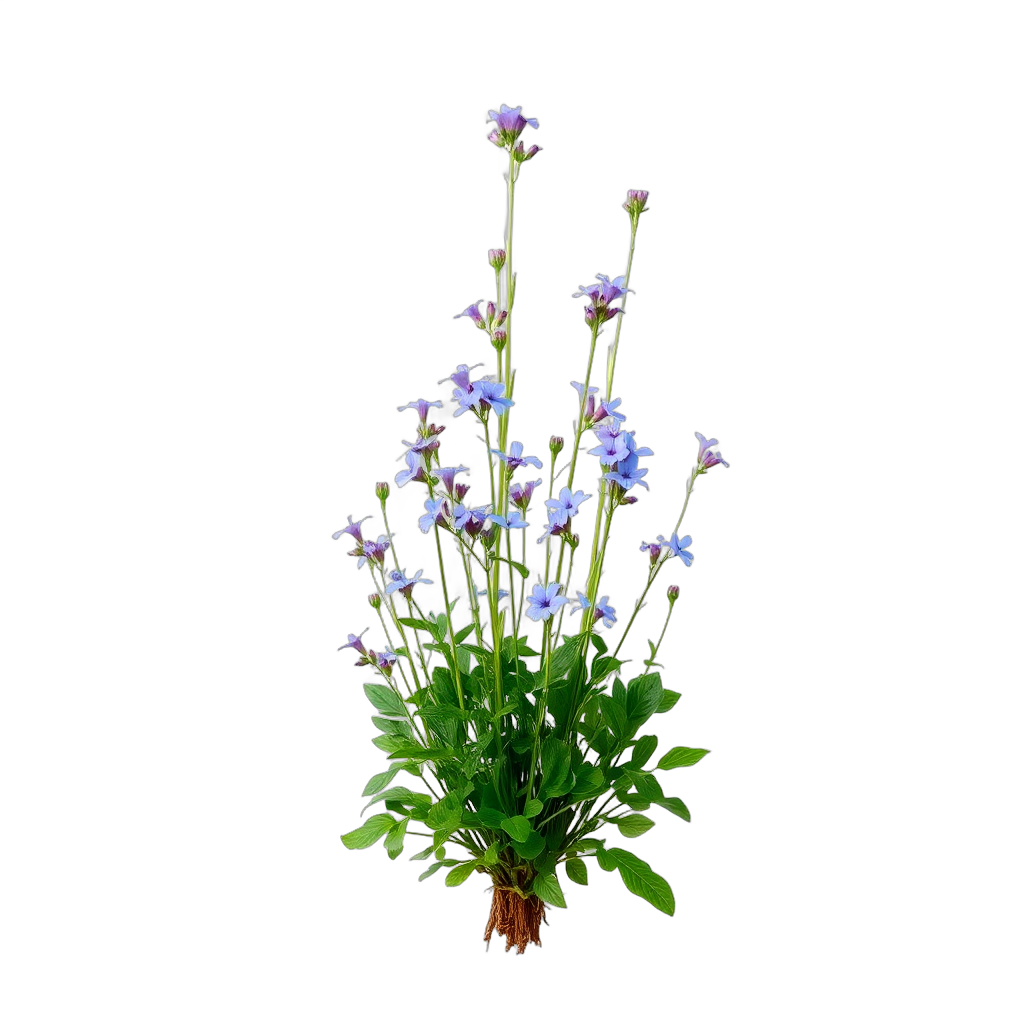
Blue Dicks
Dichelostemma capitatum
low-growing ground cover, blue blooms in spring. Pollinator-friendly.
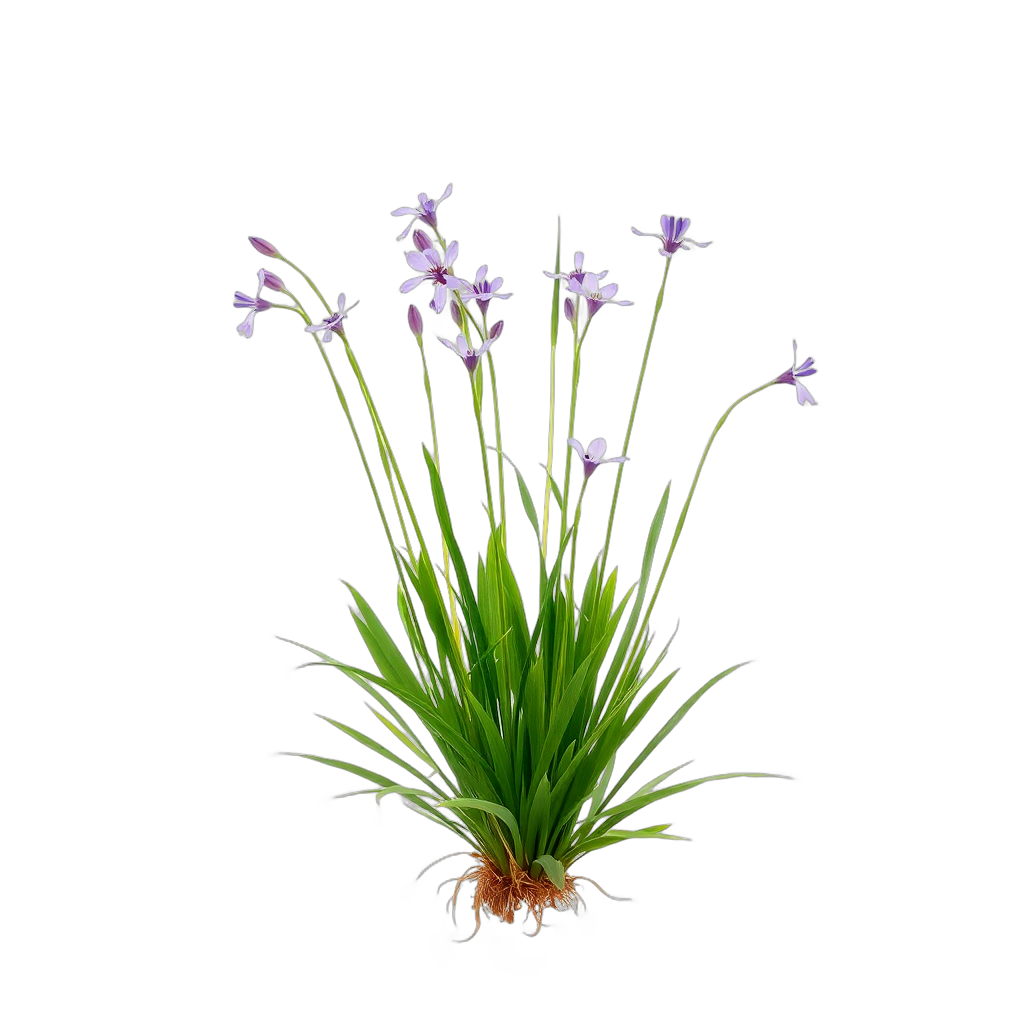
Blue-Eyed Grass
Sisyrinchium bellum
low-growing ground cover, blue blooms in spring. Attracts butterflies.
Bloom Calendar for Huntington Beach
spring
Beach Evening Primrose, Blue Dicks, Blue-Eyed Grasssummer
California Gray Rush, Hooker's Evening Primrose, Hummingbird Mintfall
California Fuchsiawinter
Limited bloomsDesign Tips for Huntington Beach (Zone 10b)
- Apply for the SoCal Water$mart turf rebate before you touch the lawn — MWDOC requires pre-approval with photos of living grass, and homeowners who demo first forfeit $1,600–4,000 on a typical 800 sqft HB front yard
- Buy three big specimens instead of thirty small ones: one 24-inch box Agave ovatifolia or a 15-gallon Yucca rostrata carries a whole front yard, and in frost-free Zone 10b it will never need protection or replacement
- Within a half mile of the sand, build the palette from salt-fog natives — Dudleya brittonii, Rhus integrifolia, Eriogonum fasciculatum 'Warriner Lytle' and Leymus condensatus 'Canyon Prince' — and save Agave victoriae-reginae and collector Echeveria for a sheltered inland-facing courtyard
- Skip the golden barrels near the coast; the May–July marine layer causes scabbing and crown rot on Echinocactus grusonii. Use Opuntia ficus-indica, Aloe striata and Cotyledon orbiculata 'Silver Waves' for the same fat-form contrast without the fungal risk
- Mulch with 3 inches of 3/8-inch crushed gravel, not bark: HB's sandy soil dries out fast, gravel holds soil moisture without trapping humidity against agave crowns, and it will not float away in a February downpour
- Plant October through December so winter's 12 inches of rain does your establishment watering for free — there is no frost window to schedule around in Zone 10b, and anything planted in July–September will cost you a full dry season of hand-watering
Where to Source Plants in Huntington Beach
Skip the big-box stores. These independent Huntington Beach nurseries specialize in the plants that make desert/xeriscape gardens thrive in Zone 10b.
Vazquez Nursery
Beach Boulevard
Family-owned nursery with indoor and outdoor plants, soil, and landscape supplies.
Roger's Gardens
Corona del Mar (Orange County)
Renowned independent garden center with plants, seasonal displays, and home and garden decor.
Desert/Xeriscape Landscaping Costs in Huntington Beach
| Project Scope | Estimated Cost |
|---|---|
| Front yard xeriscape conversion (turf demo + DG/gravel + boulders + drip, ~600 sqft) | $6,000 – $14,000 |
| Specimen plants and boulders (Yucca rostrata, mature agaves, 24–36in granite) | $150 – $600 each |
| Cobble dry creek bed with steel edging (30–50 linear ft) | $2,500 – $6,500 |
| Paver fire court with gas fire bowl and string lighting | $18,000 – $40,000 |
| Pool with boulder waterfall + full gravel desert surround | $110,000 – $260,000 |
| AI visualization with ProScapeAI | Free to start |
Estimates based on Huntington Beach, CA-area contractor rates as of 2026. Actual costs vary by site conditions, materials, and contractor.
Huntington Beach Climate & Growing Zone
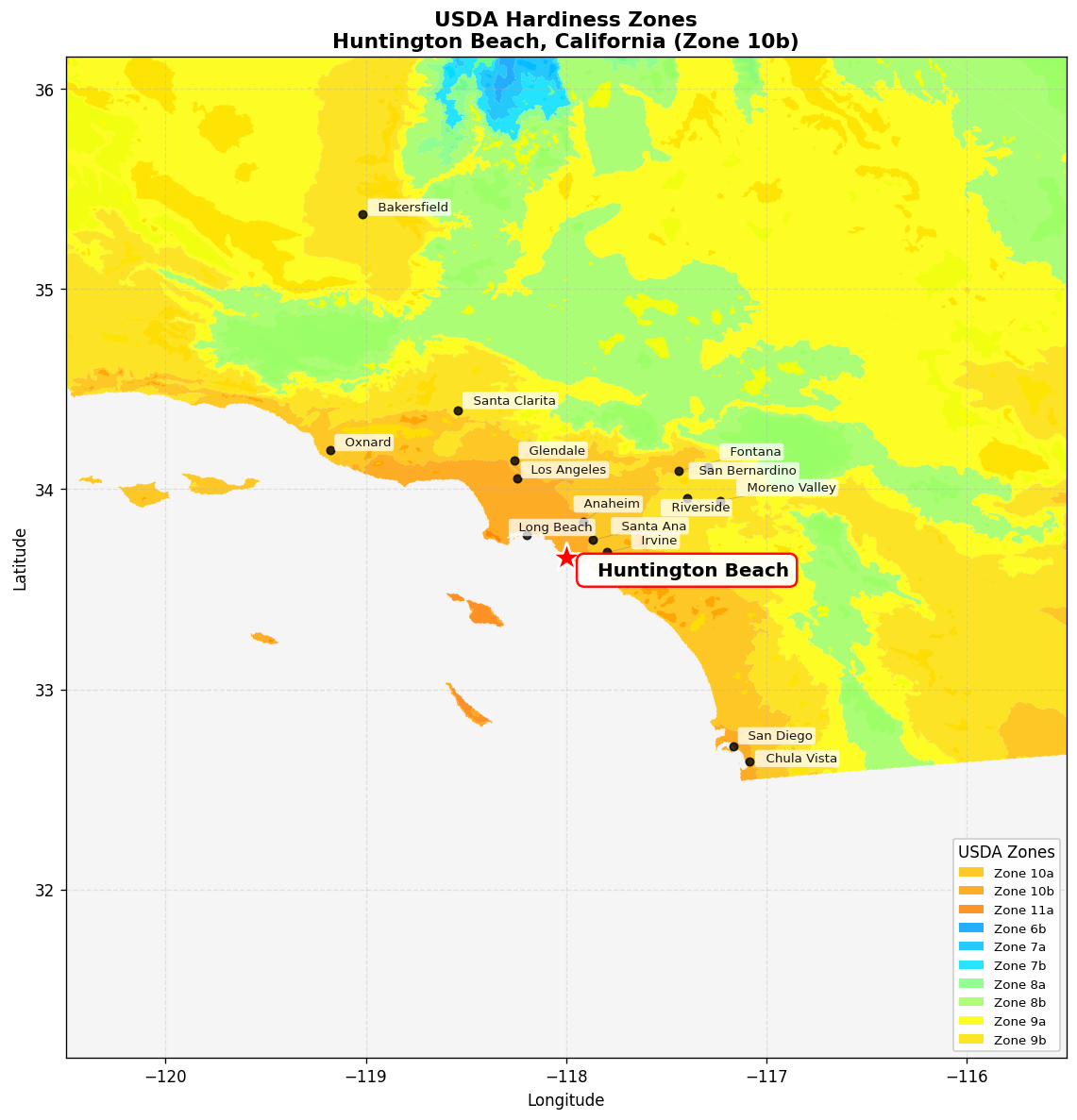
USDA Zone 10b
Hardiness zone for Huntington Beach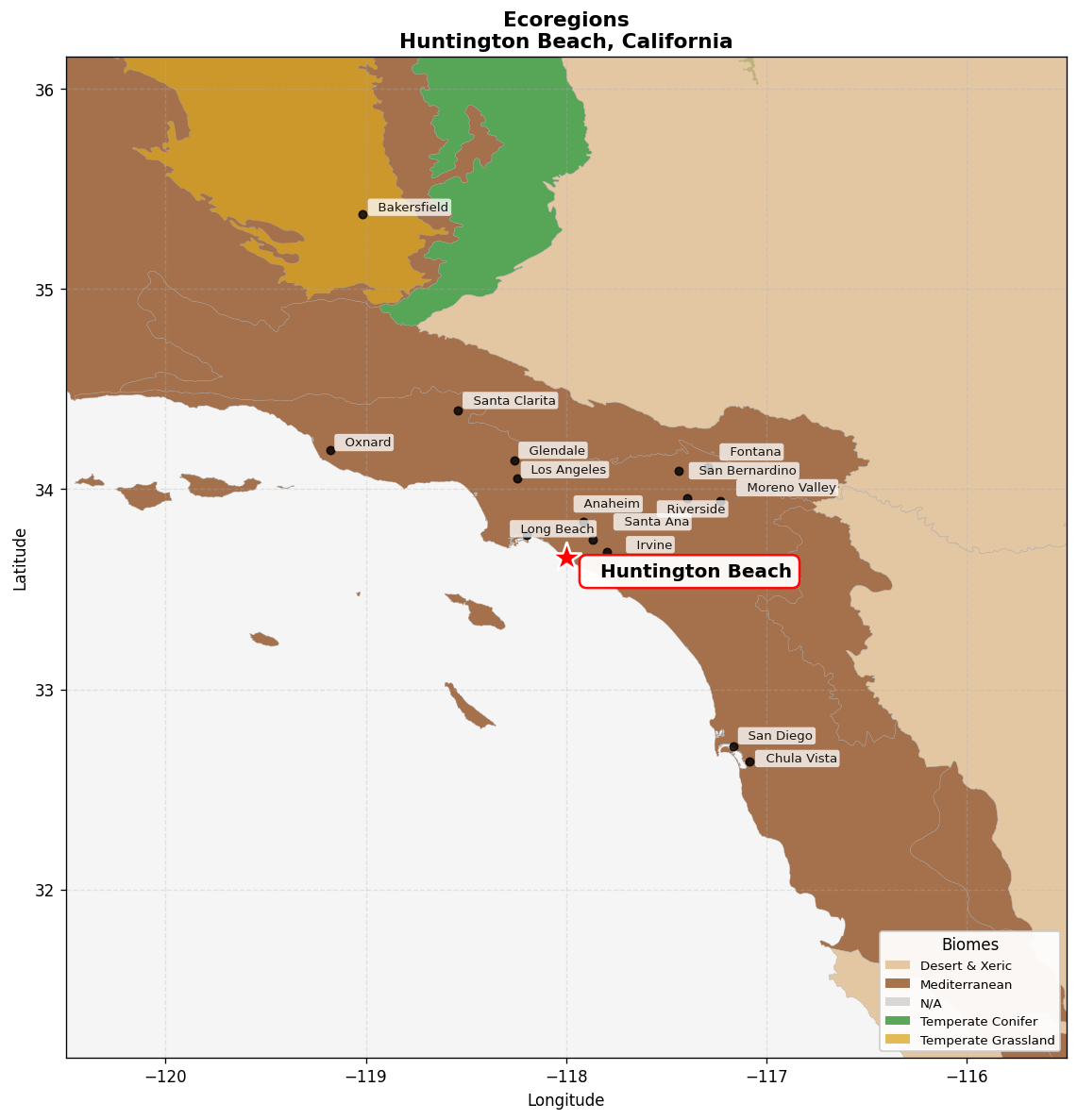
California coastal sage and chaparral
Native ecoregionFrequently Asked Questions
How much does a desert or xeriscape yard cost in Huntington Beach?
Plan around Orange County labor, which runs 20–35% above national averages. A full front-yard conversion on a typical 600 sqft HB lawn — turf demo, 3 inches of decomposed granite, steel edging, boulders, drip retrofit and a real plant list — runs $6,000–14,000 installed. Add a specimen layer and the number moves: a 15-gallon Yucca rostrata is $250–600, a 24-inch box Agave ovatifolia or a mature Agave americana var. marginata runs $150–400, and Sunset Gold boulders land at $150–600 each delivered and set. A gravel patio with a gas fire bowl is $18,000–40,000; a pool-and-gravel backyard like the boulder-waterfall build is $110,000–260,000. Rebates claw back $2–5 per square foot of turf removed, which on an 800 sqft lawn is $1,600–4,000 off the top.
Which desert plants handle salt spray in Huntington Beach, and which ones scorch?
Within about a half mile of the sand — Downtown, the numbered streets, Sunset Beach, the Harbour — the onshore southwest breeze carries real salt aerosol. Proven performers: Agave americana var. marginata, Agave attenuata, Agave ovatifolia, Aloe arborescens, Aloe 'Blue Elf', Aloe striata, Senecio mandraliscae, Aeonium arboreum 'Zwartkop', Cotyledon orbiculata 'Silver Waves', Yucca gloriosa, Leymus condensatus 'Canyon Prince', Rhus integrifolia and the local bluff natives Dudleya brittonii and Dudleya edulis, which literally grow in salt fog. The ones that burn or spot: Agave victoriae-reginae, most Echeveria hybrids, Agave 'Kissho Kan' and other thin-tissue collector agaves, plus Euphorbia tirucalli 'Sticks on Fire', which survives but loses its red near constant salt. Rule of thumb — waxy, glaucous, leathery foliage wins; thin, matte, tightly-cupped rosettes lose.
Do cacti and golden barrels actually work in the June Gloom marine layer?
Some do, many don't, and this is the biggest difference between coastal and inland desert gardening. From May into July the marine layer holds damp 62°F air over Huntington Beach most mornings, and globular cacti that want dry radiant heat suffer: Echinocactus grusonii golden barrels etch and develop corky scab, Ferocactus and Mammillaria rot at the crown, and Opuntia santa-rita never develops its purple blush without heat and cold stress. What does work coastal is the flat-padded and columnar crowd — Opuntia ficus-indica thrives here, as do Cereus peruvianus and Pachycereus marginatus in a raised gravel bed. If you want barrels near the beach, mound them 8–12 inches in pure pumice and crushed rock and site them on a hot, south- or west-facing wall. Inland of Beach Boulevard the gloom burns off earlier and the whole cactus palette gets easier.
What lawn-removal rebates are available to Huntington Beach homeowners?
Huntington Beach is served by the city's own Water Division, a member agency of MWDOC and Metropolitan. Turf replacement rebates go through Metropolitan's SoCal Water$mart program, historically $2 per square foot base, with MWDOC and regional adders pushing Orange County totals to $3–5 per square foot in past funding cycles. There are also separate rebates for weather-based smart controllers, rotating sprinkler nozzles and rain barrels. Two rules people trip over: you must apply and get pre-approval with photos of living, irrigated turf before you remove anything, and the finished landscape usually has to hit a minimum plant coverage at maturity and cannot be sheet plastic under rock. Funding is cyclical, so confirm current per-square-foot rates before you budget.
Does Huntington Beach's sandy soil need amending for a desert garden?
Mostly no — and that is a genuine local advantage. The Bolsa–Metz sandy coastal plain drains fast, so Agave ovatifolia, Dasylirion wheeleri, Yucca rostrata and Dudleya brittonii can be planted at native grade with no mound and no gravel backfill, which is impossible in clay-soil inland cities. Two exceptions: low pockets near the Bolsa Chica wetlands and parts of Huntington Harbour have a high water table and saltier, heavier ground, where you mound 8–12 inches and blend in pumice. The real issue with sand is the opposite of drainage — it holds neither moisture nor nutrients. Run inline drip on every bed, water new plantings weekly through their first two summers, then taper to monthly, and top with 3 inches of crushed gravel to slow evaporation. Skip rich compost around succulents; it encourages soft growth that rots in the marine humidity.
Do I need a permit, and is an all-gravel front yard allowed in Huntington Beach?
Planting, gravel conversions and drip irrigation need no permit. You do need one for retaining walls over 4 feet, pools and spas, patio covers, and gas or electrical runs for a fire feature. Two local wrinkles matter here. First, properties in the Coastal Zone — generally seaward of Palm Avenue, plus Huntington Harbour and the Bolsa Chica edge — may need a Coastal Development Permit for grading or structures, which adds review time. Second, the HB Zoning Ordinance regulates landscape improvements in the front setback and expects living plant coverage, so a wall-to-wall rock yard with three agaves in it can fail review; design for roughly half the area covered by plants at maturity. Corner lots also have sight-distance limits, which is a real constraint when you are planting 6-foot Yucca rostrata near a driveway. Confirm current requirements with the Community Development Department before pouring anything.