4 English Cottage Garden Ideas for Joliet, IL (Zone 5b) Landscape Design
Native plants from the Central US forest-grasslands transition (Zone 5b) — Humid continental (hot summer) climate
Why Cottage/English Gardens in Joliet?
Joliet was built for the cottage garden and mostly forgot about it. The Cathedral Area and Upper Bluff historic districts are full of Queen Anne porches, American Foursquares and 1920s bungalows sitting on 40- to 50-foot lots with deep front setbacks — exactly the proportions an English cottage border was invented to fill. The city's signature Joliet-Lemont dolomite shows up everywhere as foundation stone, retaining walls and church facades, and that warm cream limestone is the perfect foil for pink and apricot roses. Newer subdivisions on the west side — Wesmere, Lakewood Falls, Crystal Lawns, Hunters Crossing — have the opposite problem: wide, shallow, identical front yards where a picket fence, a rose arbor and a loose lavender edge do more for curb appeal than any amount of shrub-and-mulch foundation planting.
Joliet sits squarely in USDA Zone 5b, meaning design winters bottom out somewhere between -15°F and -10°F, and that number decides your whole rose list. The tender hybrid teas that carry English gardens will not reliably survive a Will County February without burial. What does survive, unprotected, are the Canadian Explorer and Buck roses: Rosa 'William Baffin' will climb 8 feet up an arbor and shrug off -30°F, 'John Cabot' and 'Quadra' give you the same repeat-blooming cane roses, and Rosa 'New Dawn' is the classic pale-pink climber that holds on through Zone 5b when it is sited on a south or west wall. For the border, David Austin's hardiest — 'Olivia Rose Austin' and 'Gertrude Jekyll' — plus Rosa 'Bonica' and 'The Fairy' will carry June through hard frost. Lavender is the other Zone 5b trap: Lavandula angustifolia 'Munstead' and 'Hidcote' are the cold-hardy ones, and Lavandula x intermedia 'Phenomenal' is the variety bred specifically to survive wet Midwestern winters. Joliet averages about 38 inches of precipitation and roughly 30 inches of snow a year, with a growing season near 170 days from an early-May last frost to a mid-October first frost.
Will County soil is the best farmland in America and the worst drainage in the Midwest, simultaneously. Drummer silty clay loam and Elliott silt loam are deep, black, phosphorus-rich prairie mollisols that grow perennials beautifully — and hold water like a bathtub from November to April, which is what actually kills lavender, Salvia and Dianthus here, not the cold. On top of that, the dolomite bedrock under the Des Plaines valley pushes soil pH to 7.2-8.0 across much of the city, so acid-lovers sulk: bigleaf hydrangeas turn chlorotic yellow, and blue Hydrangea macrophylla will simply bloom pink. Build lavender and rose beds up 8-12 inches with compost and coarse grit, plant Hydrangea paniculata 'Limelight' instead of macrophylla, and lean on the prairie natives that evolved in this exact soil — Echinacea purpurea 'Magnus', Rudbeckia fulgida 'Goldsturm', Baptisia australis and Phlox paniculata 'Jeana' all read as pure cottage while being completely at home in Joliet clay.
Water is the constraint no other Chicago-area city takes as seriously as Joliet does. The deep sandstone aquifer the city has drawn from for a century is running out, which is why Joliet is spending well over a billion dollars to pipe in Lake Michigan water. In the meantime the water conservation ordinance is in force year-round: lawn sprinkling is allowed only between 6-10 a.m. and 6-10 p.m., with even-numbered addresses watering on even days and odd-numbered addresses on odd days. That is a strong argument for shrinking turf and widening beds. A deeply mulched cottage border with established Nepeta x faassenii 'Walker's Low', Perovskia atriplicifolia and Achillea 'Moonshine' needs a fraction of the water a bluegrass lawn does after year two, and it looks better on the four days a month you are not allowed to run a sprinkler anyway.
4 Cottage/English Design Ideas for Joliet

The Rose Arbor and Picket Fence Entry
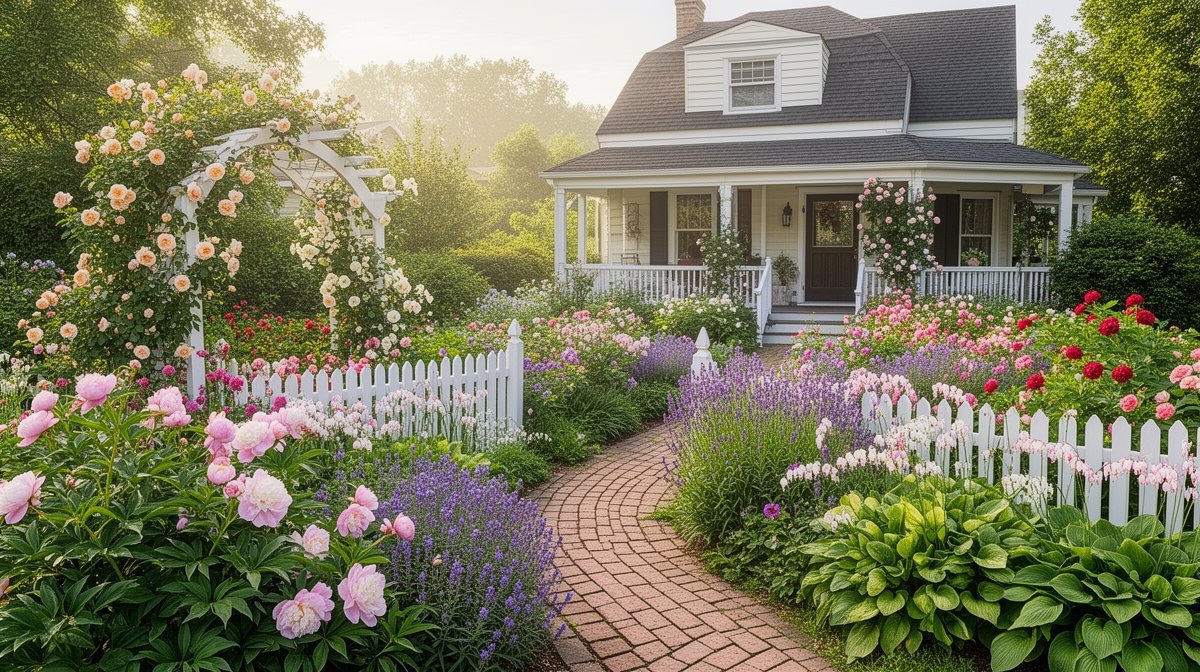
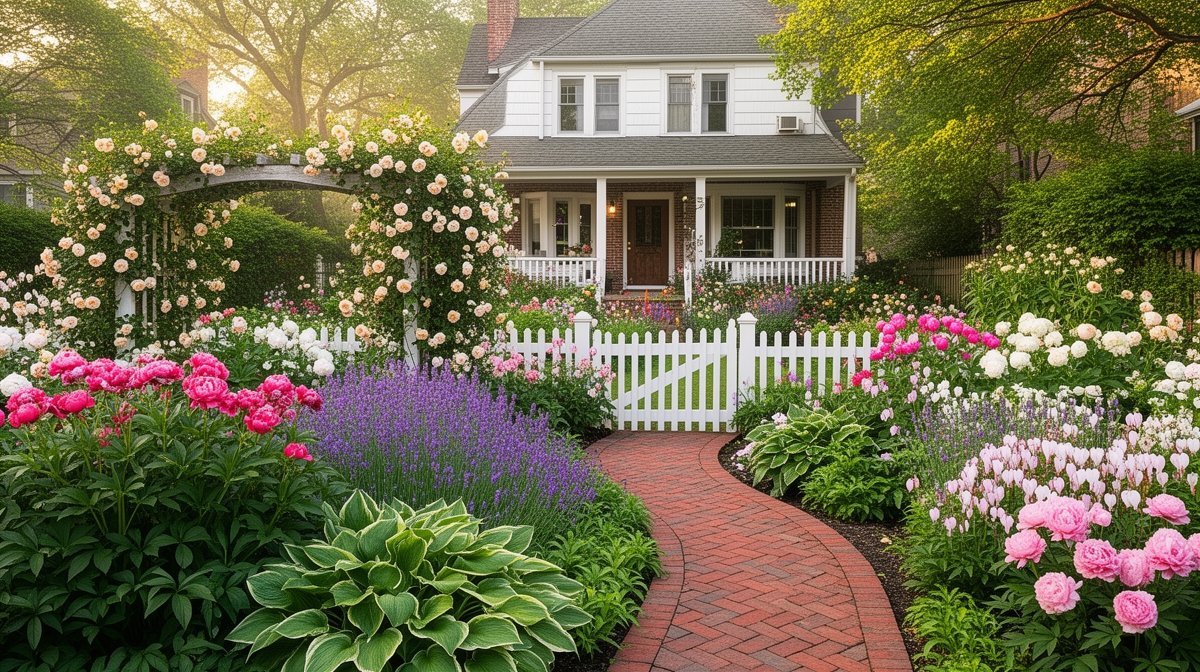
$14-26/sqftA cream cottage with a dark shingle roof and black shutters, fronted by a white arbor that carries a mass of pale-pink climbing roses right over the front walk and up onto the porch roof. A low white picket fence with a swing gate runs the width of the lot, and a straight red brick paver path runs from the gate to the front door. The planting is simple and repeated: a continuous ribbon of lavender hugging the fence line on both sides, big blush shrub roses behind it, and window boxes of pink geraniums under the double-hung windows. It is the most photographed kind of front yard in the Cathedral Area, and it is essentially three plants used with conviction.

The Curving Stepping-Stone Cottage Border
$11-20/sqftA porch-front house on a newer street, softened by two white structures — a rose-covered arch at the sidewalk and a slim trellis obelisk mid-bed — with a curving flagstone stepping-stone path threading between them. The beds on either side are packed full and layered by height: foxglove spires at the back, coneflower and black-eyed Susan in the middle, lavender and low pink roses spilling over the stone. A mature shade tree keeps a mulch ring in the lawn on the right. The lesson here is the curve: a serpentine path through deep beds makes a 25-foot front yard feel three times its actual depth.

The Bistro Patio Under a Rose Arch
$22-38/sqftA flagstone terrace off the back of a two-story colonial, centered on a tall white iron arch smothered in pink and apricot roses that frames the back door beyond. Two white cast-iron bistro chairs and a small round table sit under the arch; matched stone pedestal urns bookend the space on either side. The surrounding borders are the real work — waist-high foxglove spires in pink and white, deep drifts of lavender running along the patio edge, peonies and old roses filling the middle, and a clipped hedge closing the back. A narrow band of lawn is left between the patio and the house so the terrace reads as a room, not a slab.

The Pergola Dining Garden with a Birdbath Island
$16-30/sqftA white pergola attached to the back of the house shelters a six-seat wood dining table, its posts wrapped in pale-pink climbing roses. From there a sweep of lawn curves out to a deep, planted perimeter along the wood privacy fence: roses in coral, cream and blush, drifts of lavender and salvia, foxglove punctuation, and yellow and magenta filler carrying the color into late summer. A cast-stone pedestal birdbath anchors an island bed cut into the lawn, which is what breaks the rectangle of a standard Joliet back yard and makes you walk around it. Curved, deeply mulched bed edges do the rest.
See how a cottage/english garden looks on YOUR property
Upload a photo of your Joliet yard and visualize your dream garden in seconds.
Try ProScapeAI Free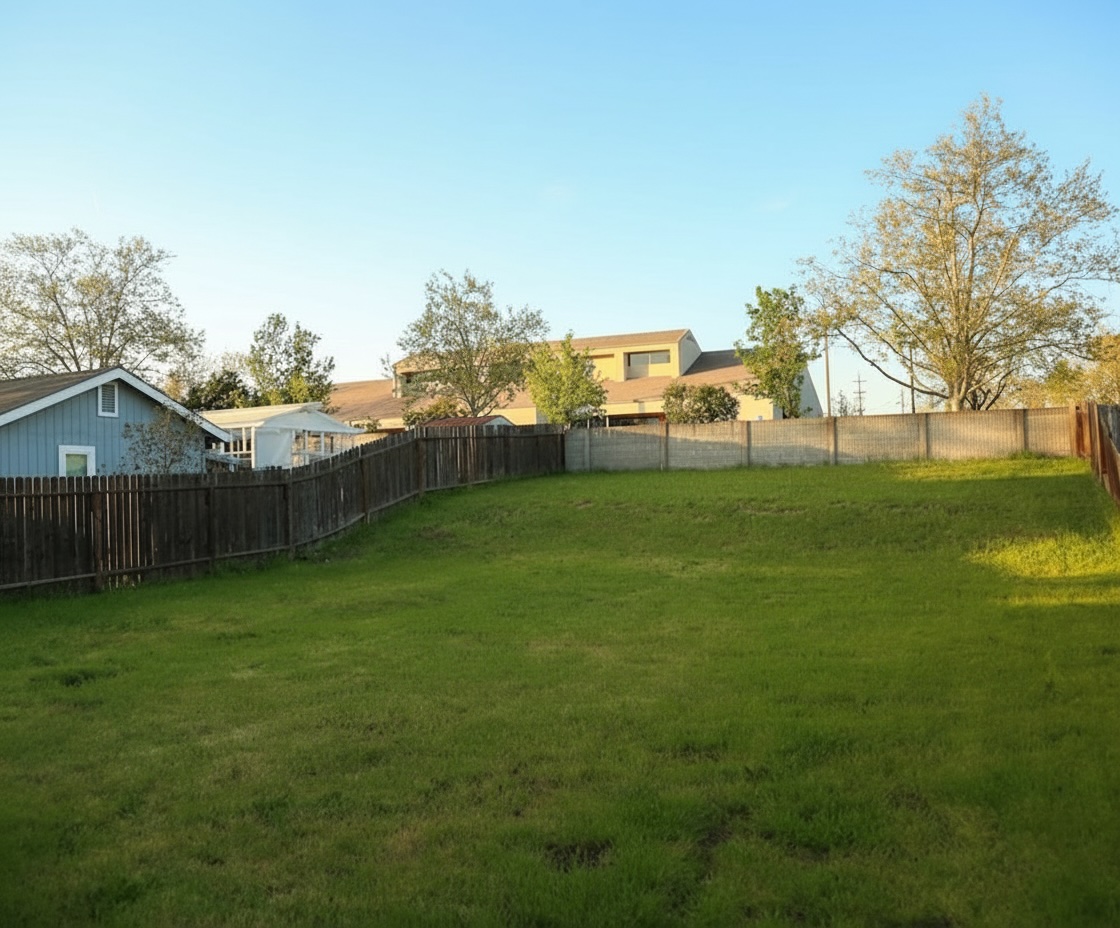
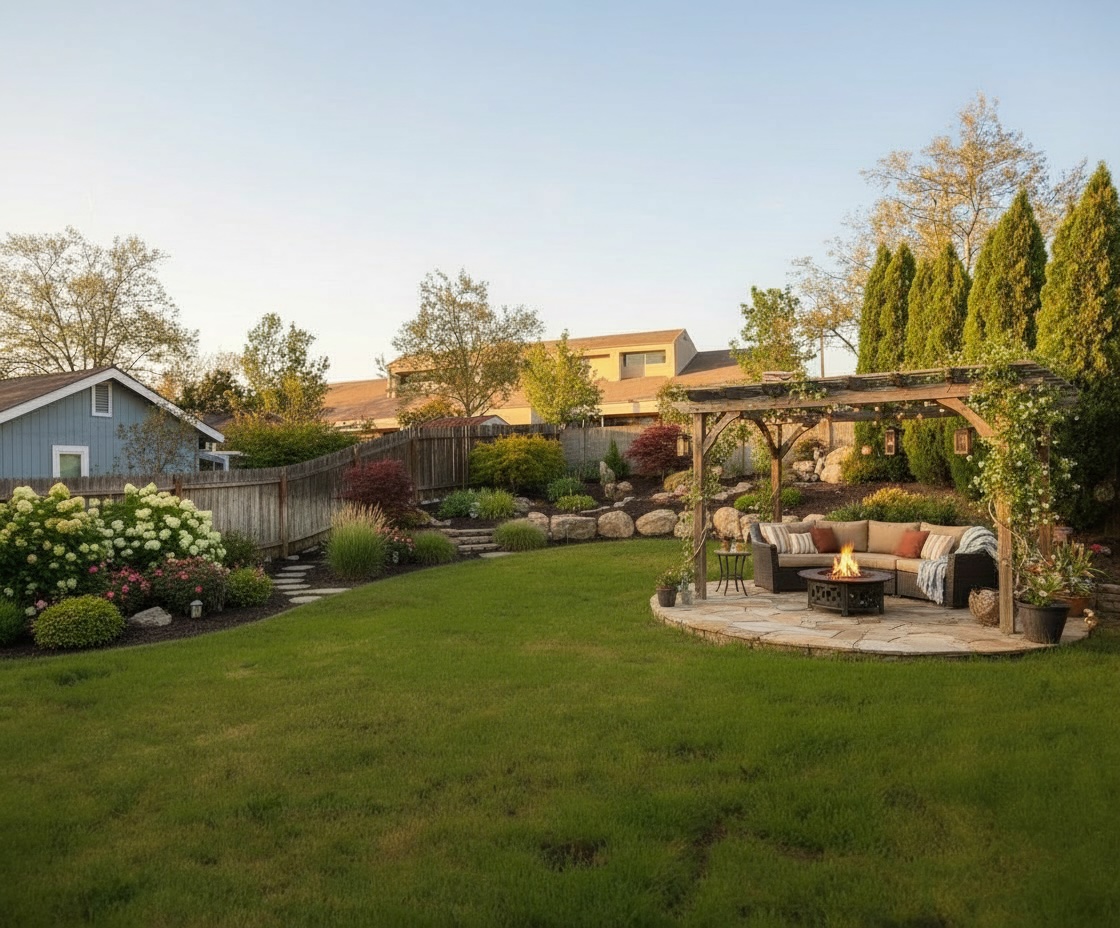
Featured Trees & Shrubs for Cottage/English Gardens
Browse all 168 plants for Joliet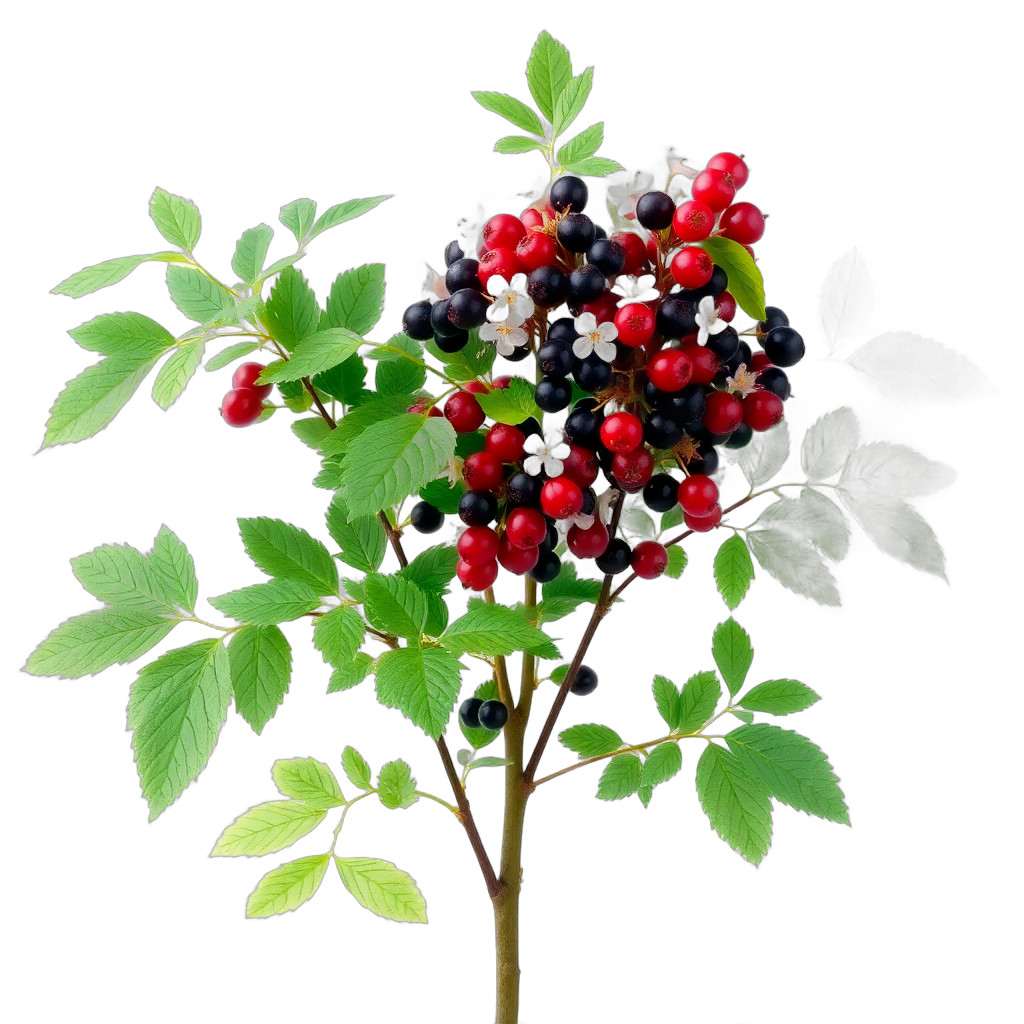
American Black Currant
Ribes americanum
grows to 5 feet, white,yellow blooms in spring. Attracts hummingbirds.
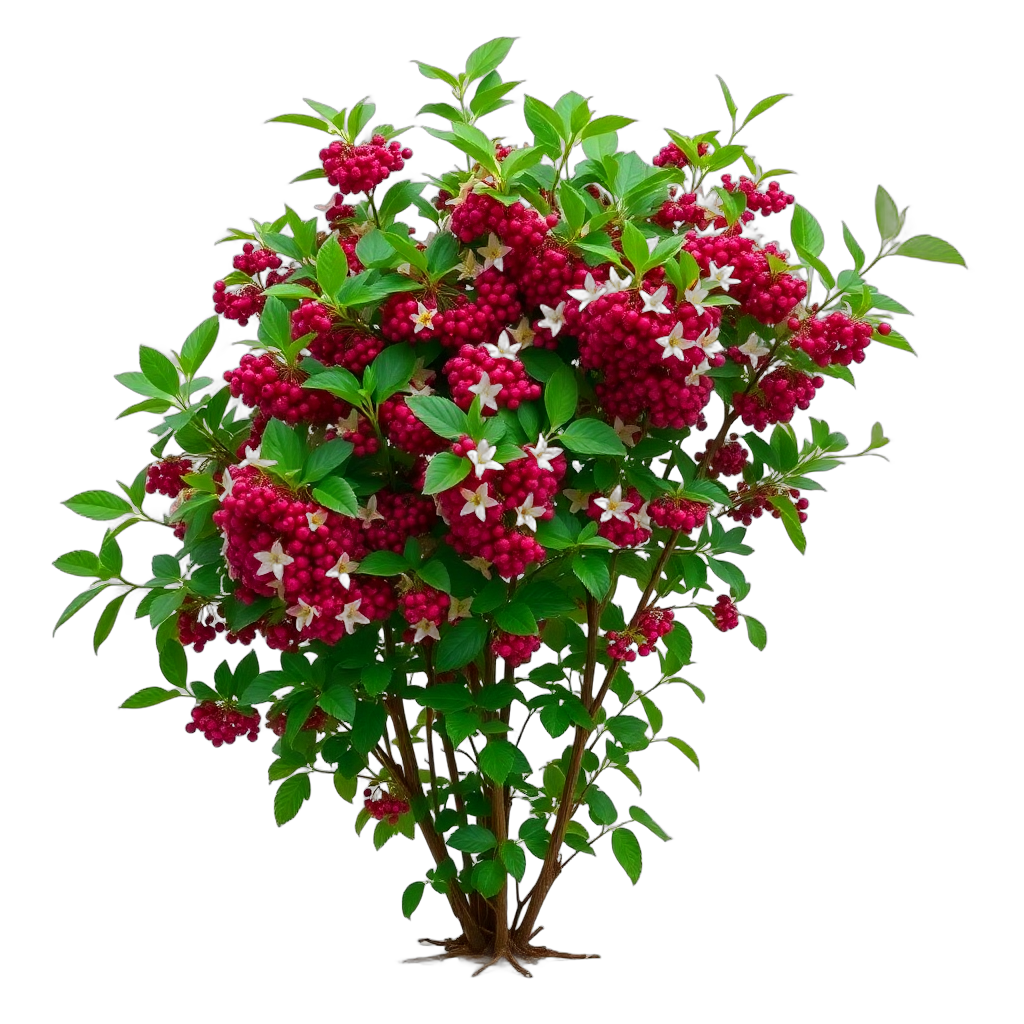
Clove Currant
Ribes odoratum
grows to 6 feet, yellow blooms in spring. Attracts hummingbirds.

Fragrant Sumac
Rhus aromatica
grows to 4 feet, yellow blooms in spring. Attracts butterflies.

Golden Currant
Ribes aureum
grows to 6 feet, yellow blooms in spring. Attracts hummingbirds.
Featured Grasses & Groundcovers for Cottage/English Gardens
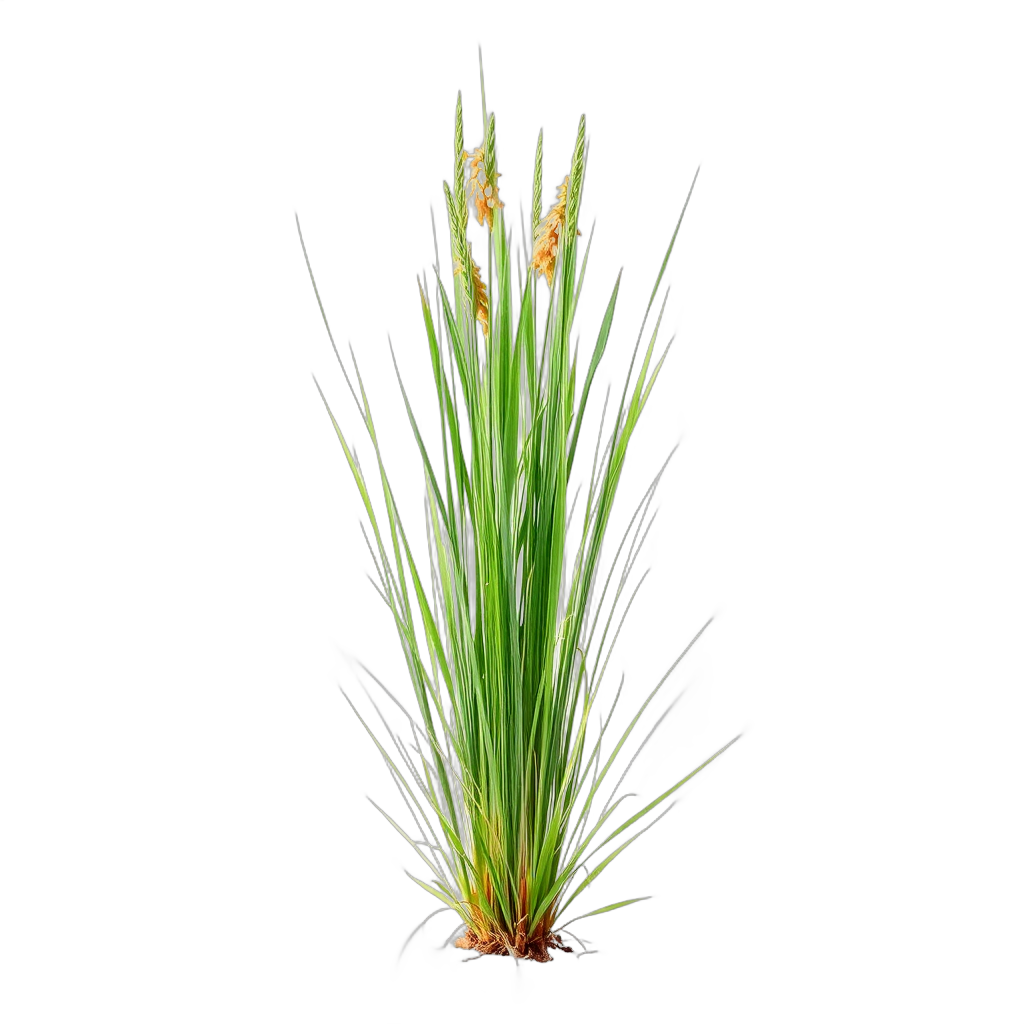
Eastern Gamagrass
Tripsacum dactyloides
grows to 6 feet, blooms in summer. Yellow fall color.
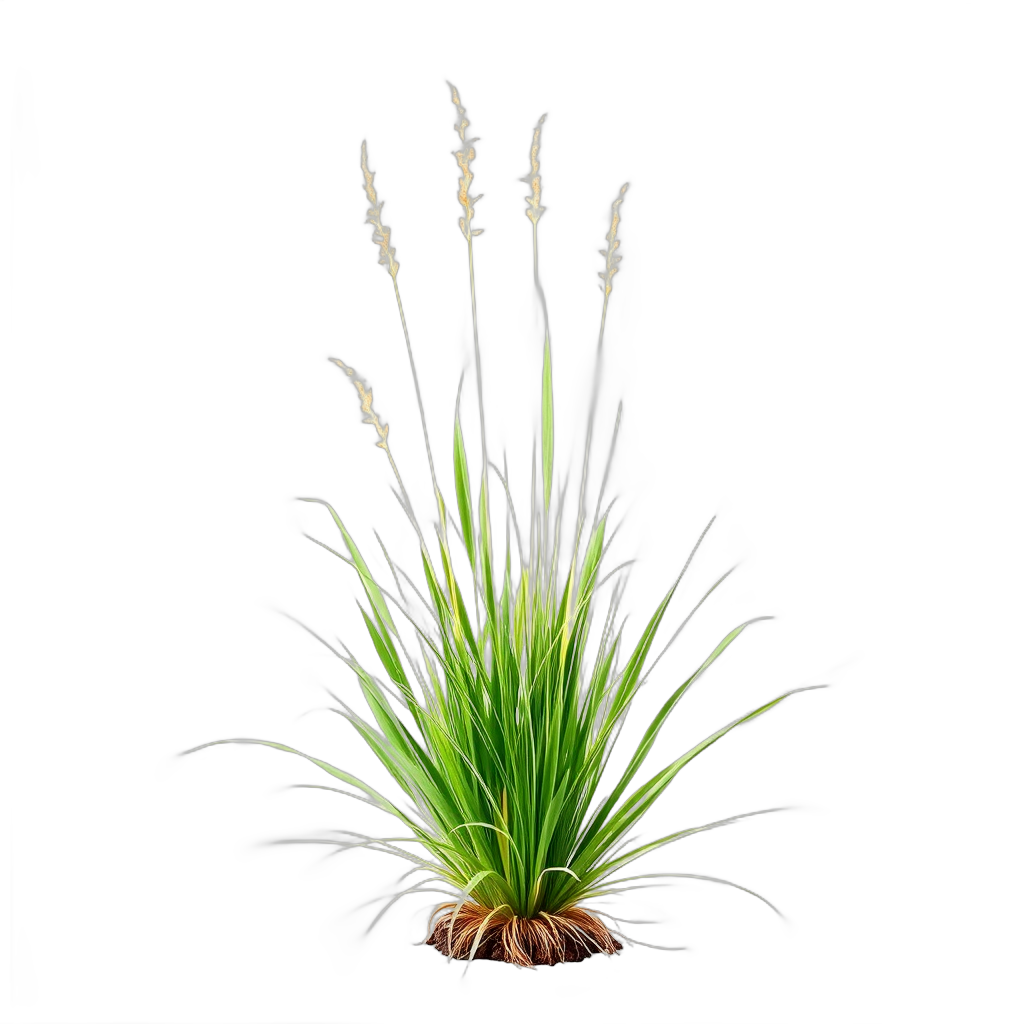
Northern Sea Oats
Chasmanthium latifolium
grows to 4 feet, blooms in fall. Bronze fall color.
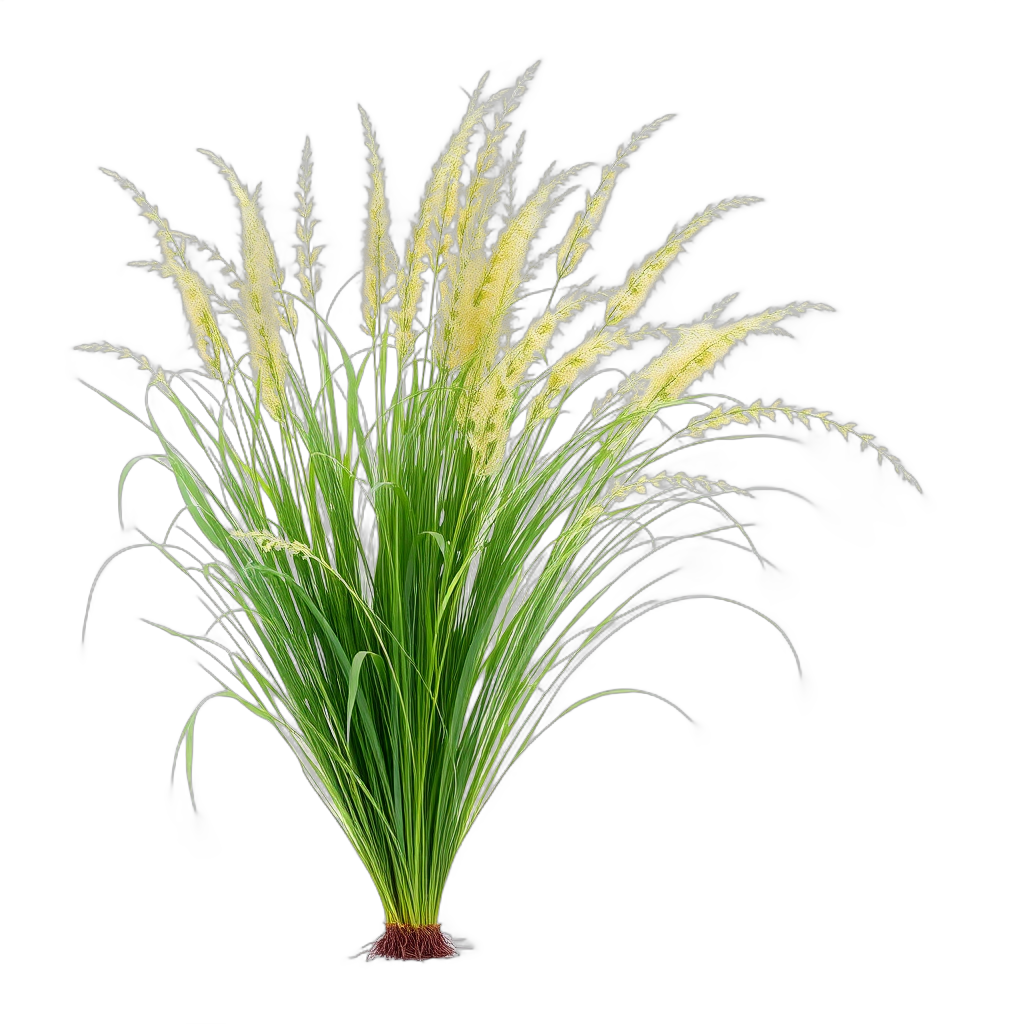
Adagio Maiden Grass
Miscanthus sinensis 'Adagio'
low-growing ground cover, pink blooms in summer. Orange fall color.
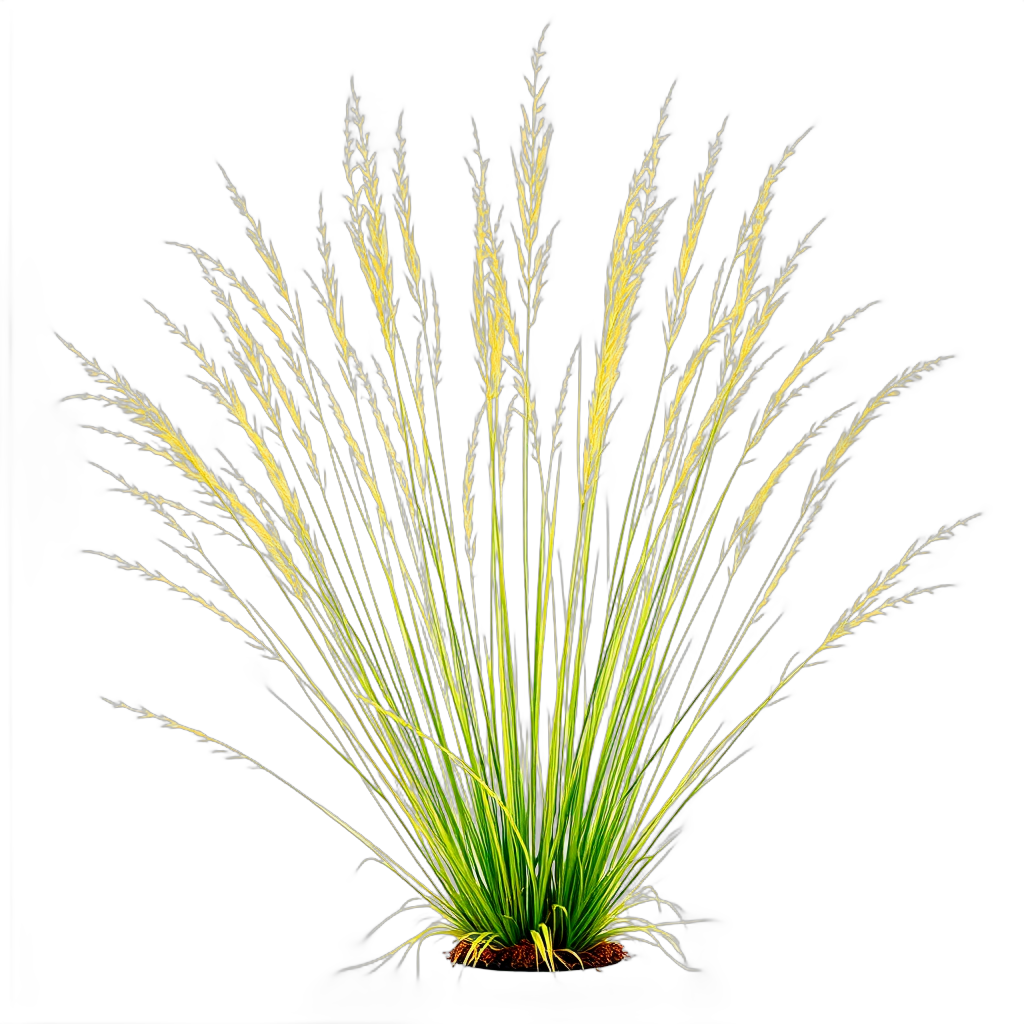
All Gold Japanese Forest Grass
Hakonechloa macra 'All Gold'
low-growing ground cover, blooms in summer.
Featured Flowers & Perennials for Cottage/English Gardens
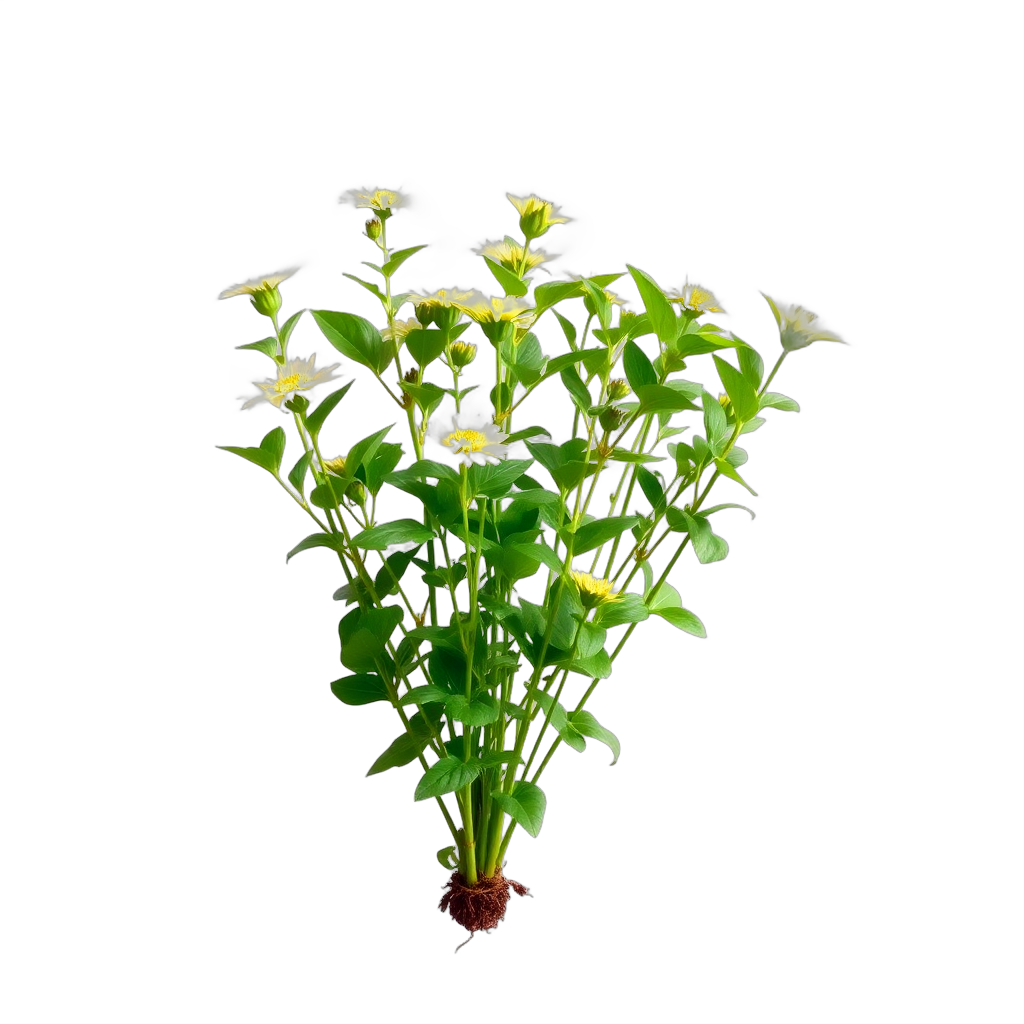
Cup Plant
Silphium perfoliatum
medium-sized at 7 feet, yellow blooms in summer. Attracts butterflies.
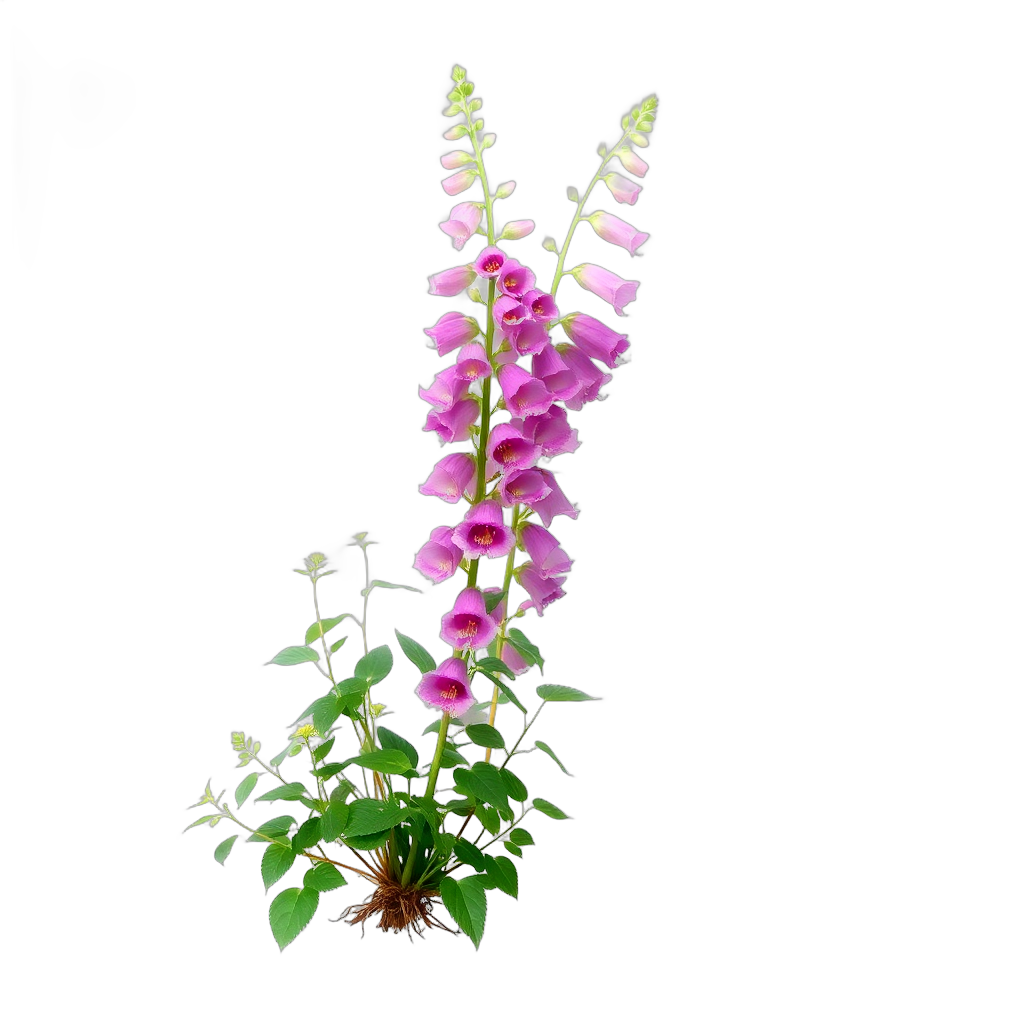
Foxglove Beardtongue
Penstemon digitalis
grows to 3 feet, white blooms in spring. Attracts hummingbirds.
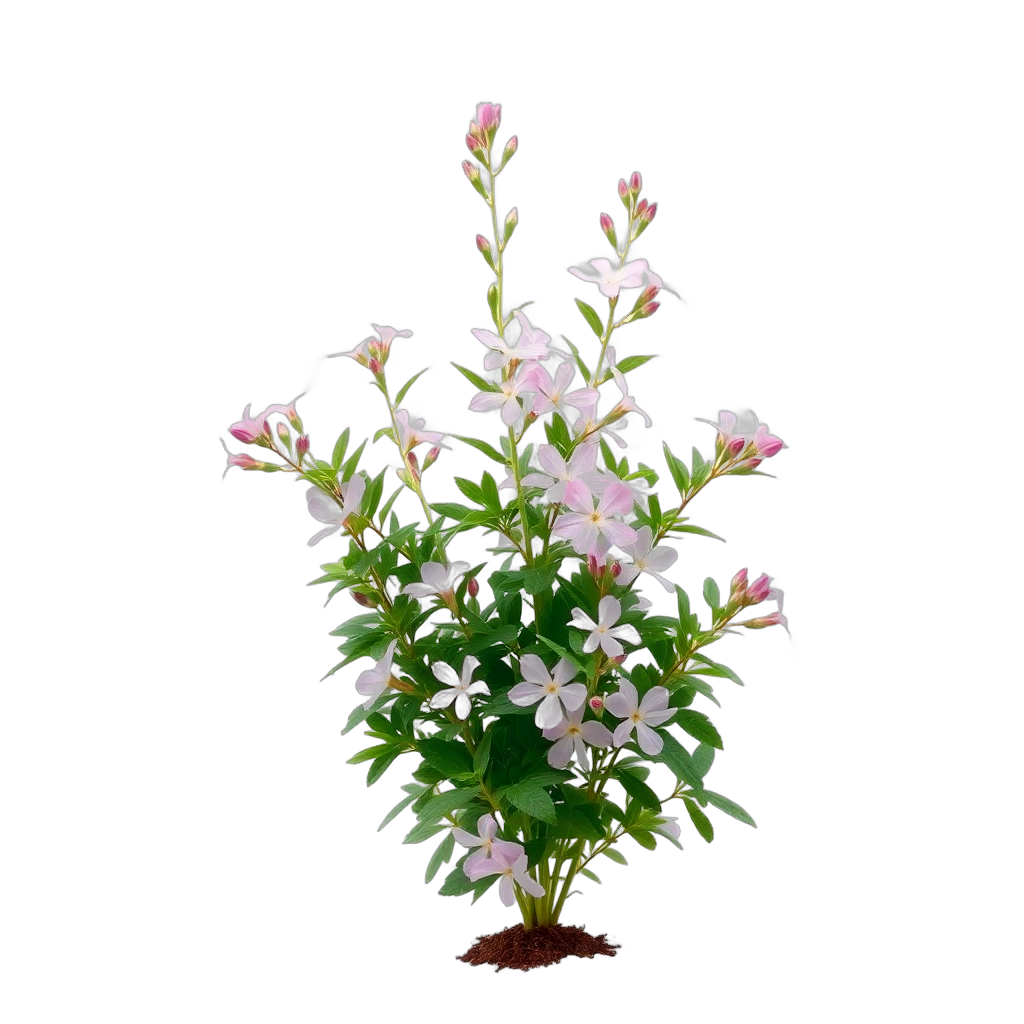
Garden Phlox
Phlox paniculata
grows to 3 feet, multi blooms in summer. Attracts hummingbirds.

Gloriosa Daisy
Rudbeckia hirta
low-growing ground cover, yellow blooms in summer. Attracts butterflies.
Zone and sun checks come from our database — confirm with your local nursery before you buy.
Bloom Calendar for Joliet
spring
Foxglove Beardtongue, American Black Currant, Clove Currantsummer
Cup Plant, Garden Phlox, Gloriosa Daisyfall
Northern Sea Oatswinter
Limited bloomsDesign Tips for Joliet (Zone 5b)
- Raise every lavender, Dianthus and Salvia bed 8-12 inches above grade with compost and coarse grit — Will County's Drummer and Elliott clay holds winter water, and wet crowns kill far more cottage plants here than the -10°F lows do
- Choose own-root Zone 4 roses over grafted hybrid teas: Rosa 'William Baffin' on the arbor and 'Olivia Rose Austin' or 'Bonica' in the border give you a real English look with zero November mounding and no graft to lose in a hard winter
- Plan for alkaline soil from the start — pH 7.2-8.0 over Joliet-Lemont dolomite means Hydrangea paniculata 'Limelight' instead of macrophylla, Amsonia and Baptisia australis instead of azaleas, and chelated iron only as a rescue, never as a strategy
- Blend prairie natives into the cottage palette rather than importing an all-English list: Echinacea purpurea 'Magnus', Rudbeckia fulgida 'Goldsturm', Phlox paniculata 'Jeana' and Monarda 'Jacob Cline' read as pure cottage but were built for this ecoregion and this clay
- Design for the watering ordinance — 6-10 a.m. and 6-10 p.m. on your address-parity days only — by shrinking turf, widening beds, and running a simple drip line on a timer to the roses; established borders then carry themselves through August
- Give the garden winter bones: Buxus 'Green Velvet' or 'Green Gem' spheres, a picket fence, and a bare rose arch are what your garden looks like for the four months a year Joliet is under snow, so place them first and plant around them
- Set every pergola, arbor and fence post footing to the 42-inch Will County frost depth; a rose-covered arbor that heaves and racks after two winters will take the roses with it when you rebuild it
Where to Source Plants in Joliet
Skip the big-box stores. These independent Joliet nurseries specialize in the plants that make cottage/english gardens thrive in Zone 5b.
Allied Nursery & Garden Center
South Joliet
Family-run since 1992, growing shrubs in their own hoop houses; strong Proven Winners and First Editions shrub and perennial selection plus an expanding native range
The Fields on Caton Farm
Crest Hill (Caton Farm Road)
Small family-owned retail garden center set inside a 210-acre working nursery, with a 5-acre display garden — the best place locally to see mature roses, peonies and perennials before buying
Alsip Home & Nursery
Frankfort (La Grange Road)
Independent since 1969; acres of trees and shrubs plus greenhouses of annuals they grow themselves — the deepest rose and cottage-perennial bench within a 20-minute drive of Joliet
The Growing Place
Naperville / Aurora
Long-established independent garden center known for an unusually deep perennial bench, container design services, and staff who know Zone 5b clay planting
Cottage/English Landscaping Costs in Joliet
| Project Scope | Estimated Cost |
|---|---|
| Front yard cottage border conversion (400-600 sqft, planted) | $6,000 - $14,000 |
| Cedar picket fence with gate (per linear foot, installed) | $30 - $55/lf |
| Rose arbor or trellis arch, installed and planted | $900 - $2,800 |
| Flagstone bistro terrace (200-300 sqft) | $6,500 - $14,000 |
| Cedar pergola over dining pad (frost-depth footings) | $9,000 - $20,000 |
| Full back yard cottage garden with lawn reshaping and island beds | $18,000 - $45,000 |
| AI visualization with ProScapeAI | Free to start |
Estimates based on Joliet, IL-area contractor rates as of 2026. Actual costs vary by site conditions, materials, and contractor.
Joliet Climate & Growing Zone
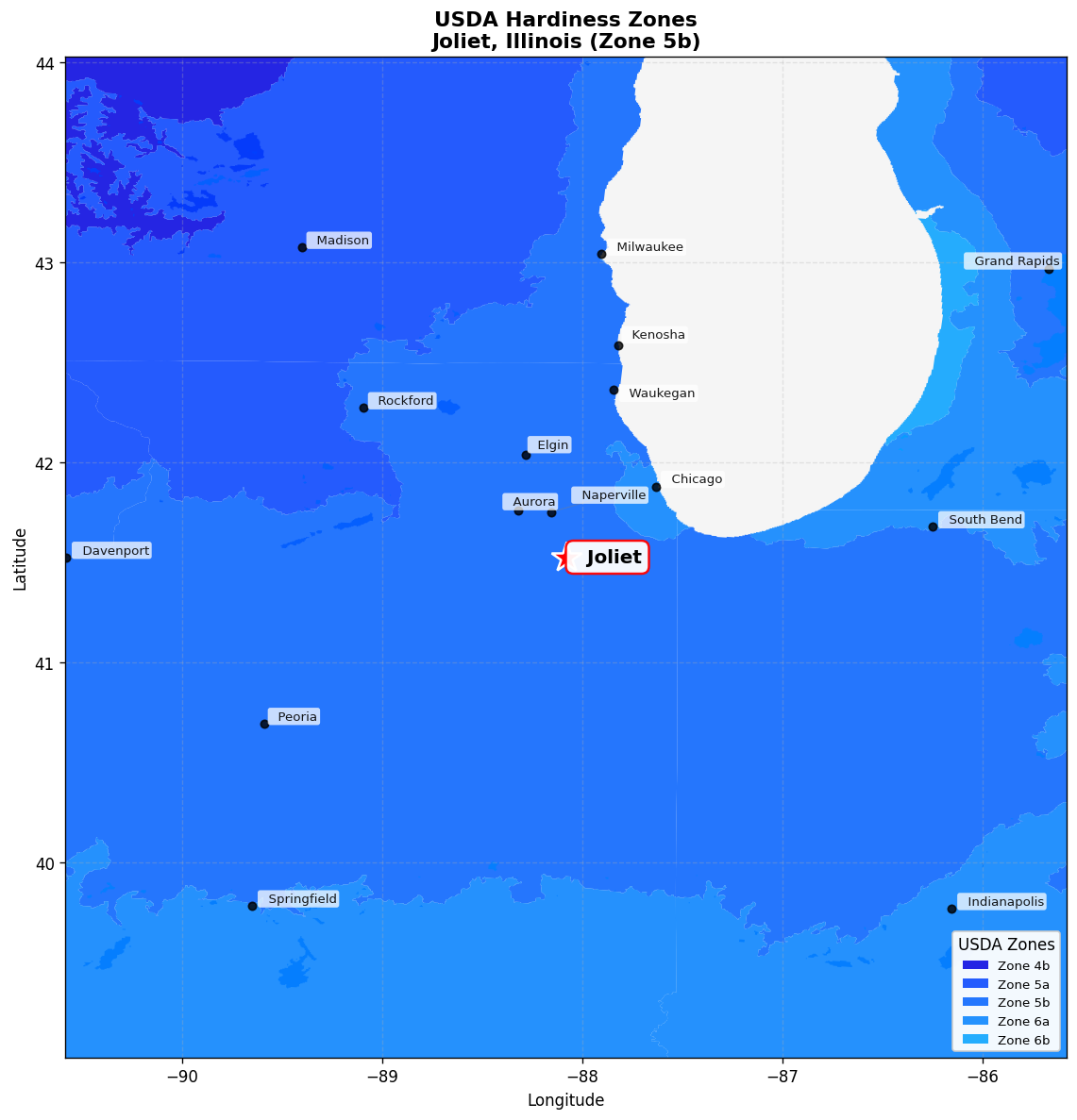
USDA Zone 5b
Hardiness zone for Joliet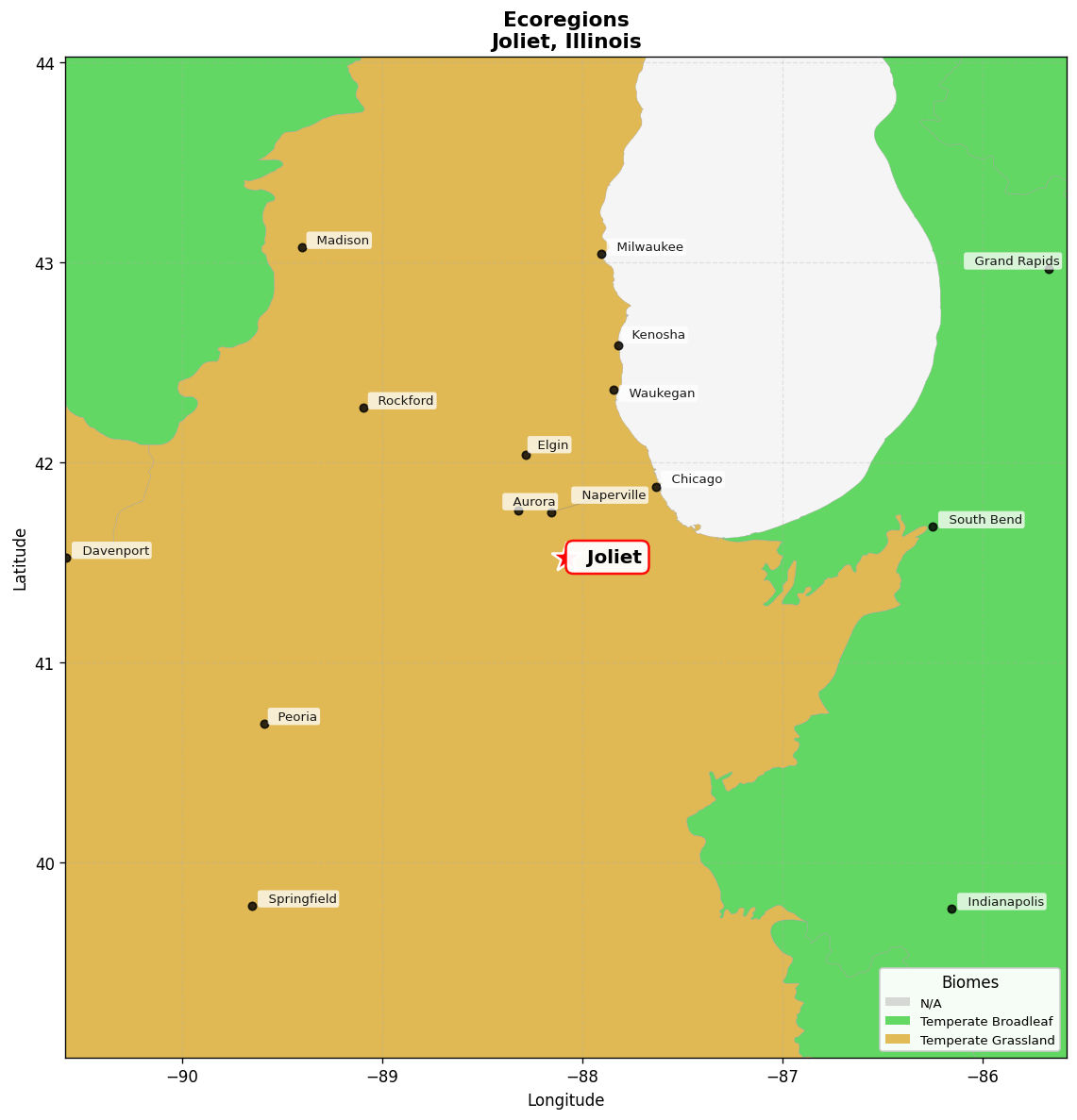
Central US forest-grasslands transition
Native ecoregionFrequently Asked Questions
How much does a cottage garden cost in Joliet?
Will County installation pricing sits close to the Chicago metro average and above downstate. A front-yard cottage conversion for a typical 400-600 sqft area — bed prep, edging, a rose arbor, and 60-90 perennials and shrubs — runs about $6,000-14,000 installed. A picket fence adds $30-55 per linear foot in cedar. A flagstone bistro terrace of 200-300 sqft runs $6,500-14,000, and a cedar pergola over a dining pad runs $9,000-20,000 depending on span and footing depth. Doing it in phases is normal here: most homeowners plant the front border one autumn and add hardscape the next.
Which roses actually survive a Joliet winter without protection?
Stick to Zone 4-hardy own-root roses and skip grafted hybrid teas unless you intend to mound them every November. The Canadian Explorer series is the safest bet: Rosa 'William Baffin' is hardy to roughly -30°F and will cover an arbor, and 'John Cabot', 'Quadra' and 'Champlain' repeat all season. Among English roses, 'Olivia Rose Austin' and 'Gertrude Jekyll' are the reliable Zone 5b performers. Rosa 'New Dawn' handles Joliet on a protected south or west wall, and shrub roses 'Bonica', 'The Fairy' and 'Iceberg' need nothing beyond a spring cut-back to live wood.
Will lavender survive here, and what do I have to do to keep it alive?
Lavender dies in Joliet from winter wet, not winter cold. Drummer and Elliott clay loams hold water all winter, and the crown rots. Three fixes: plant only Lavandula angustifolia 'Munstead' and 'Hidcote' or the Midwest-bred Lavandula x intermedia 'Phenomenal'; build the bed up 8-12 inches with compost and coarse limestone grit; and mulch with pea gravel rather than shredded bark right around the crown. Do not cut lavender back in fall — wait until you see green buds break in late April. Done that way, plants routinely go eight to ten years here.
My hydrangeas never turn blue and the leaves go yellow. Why?
Joliet-Lemont dolomite bedrock puts most of the city's soil at pH 7.2-8.0. At that pH, aluminum is locked up so Hydrangea macrophylla blooms pink no matter what you do, and iron becomes unavailable so leaves go chlorotic yellow with green veins. Rather than fighting it with annual sulfur, design around it: Hydrangea paniculata 'Limelight', 'Little Lime' and 'Quick Fire' are indifferent to alkaline soil and bloom on new wood, which also means a -10°F February never costs you a season of flowers the way it does with macrophylla.
When can I plant, and when is the last safe frost date?
Joliet's average last spring frost lands in the first ten days of May and the first fall frost around mid-October, giving roughly a 170-day season. Perennials, roses and shrubs go in best from mid-April through May, or — better for establishment — from early September through mid-October, when the soil is still warm and fall rain does the watering. Tender annuals such as Cosmos and Zinnia should wait until after Mother's Day. Avoid planting into July and August: 85-90°F days plus the watering ordinance make establishment genuinely hard.
What are Joliet's lawn watering rules, and how do they affect a new garden?
Joliet's water conservation ordinance runs year-round. Sprinkling is permitted only from 6-10 a.m. and from 6-10 p.m., and only on days matching your address — even-numbered houses on even days, odd on odd. Newly laid sod can get a temporary permit; new beds generally cannot, so hand-watering with a hose or drip line is the practical route for the first eight weeks. It is also the strongest reason to build a cottage garden here at all: once established, Nepeta 'Walker's Low', Perovskia atriplicifolia, Echinacea purpurea and Achillea 'Moonshine' get through a normal Joliet summer on rainfall alone.
Do I need a permit for a fence, arbor, or patio in Joliet?
Planting, mulch, edging and bed work need no permit. Fences do require a City of Joliet permit and must meet front-yard height and setback limits, so check before you buy pickets. Patios at grade, pergolas, decks and any structure with footings also require a permit, and footings must reach the 42-inch Will County frost depth or the structure will heave within a few winters. Historic districts including the Cathedral Area have additional review for visible exterior changes. Verify current requirements with the City of Joliet before ordering materials.