4 Cottage Garden Ideas for Little Rock, AR | English-Style Landscape Design in Zone 8a
Native plants from the Ozark Mountain forests (Zone 8a) — Humid subtropical climate
Why Cottage/English Gardens in Little Rock?
Little Rock may be the most underrated cottage garden city in the South. The 1920s Craftsman bungalows of Hillcrest, the stately older homes of The Heights, and the restored Victorians of the Quapaw Quarter were practically built for picket fences, rose arbors, and billowing perennial borders — this housing stock predates the suburban lawn, and cottage-style landscaping simply returns these streets to the look they were designed around. Add the mature oak and pecan canopy that shades so much of midtown, and you have the dappled-light, enclosed-garden feel that English designers spend fortunes trying to fake.
The climate does most of the heavy lifting. Zone 8a winters (lows of 10–15°F) are mild enough for evergreen boxwood structure, hardy roses, and year-round garden bones, while roughly 50 inches of annual rain keeps a cottage border lush without the irrigation bills of the West. The honest trade-off is summer: July afternoons in Pulaski County average around 92°F with serious humidity, so the classic English palette needs local translation. English lavender sulks in wet clay — plant 'Phenomenal' lavender in raised, gravel-amended beds or swap in catmint, which gives the same violet haze with none of the drama. Delphiniums fail here; larkspur seeds itself happily in their place. Foxgloves grow beautifully but behave as fall-planted biennials that bloom in the glorious April–May window before the heat arrives. Roses, on the other hand, are a genuine Little Rock strength — the city has grown them seriously for generations, and modern disease-resistant shrub and climbing roses shrug off the humidity that ruins fussier varieties.
The soil under most Little Rock gardens is acidic clay, rockier as you climb the Ouachita foothill ridges through Hillcrest, Walton Heights, and the west side. Clay holds fertility but drains slowly, so the cottage gardener's best local habit is building beds up with compost rather than digging down. The reward for getting it right is a nearly ten-month garden: spring bloom starts in March, roses repeat until Thanksgiving, and installation costs in central Arkansas run well below national metro averages, which means a full storybook front yard here costs what a modest planting refresh does on either coast.
4 Cottage/English Design Ideas for Little Rock
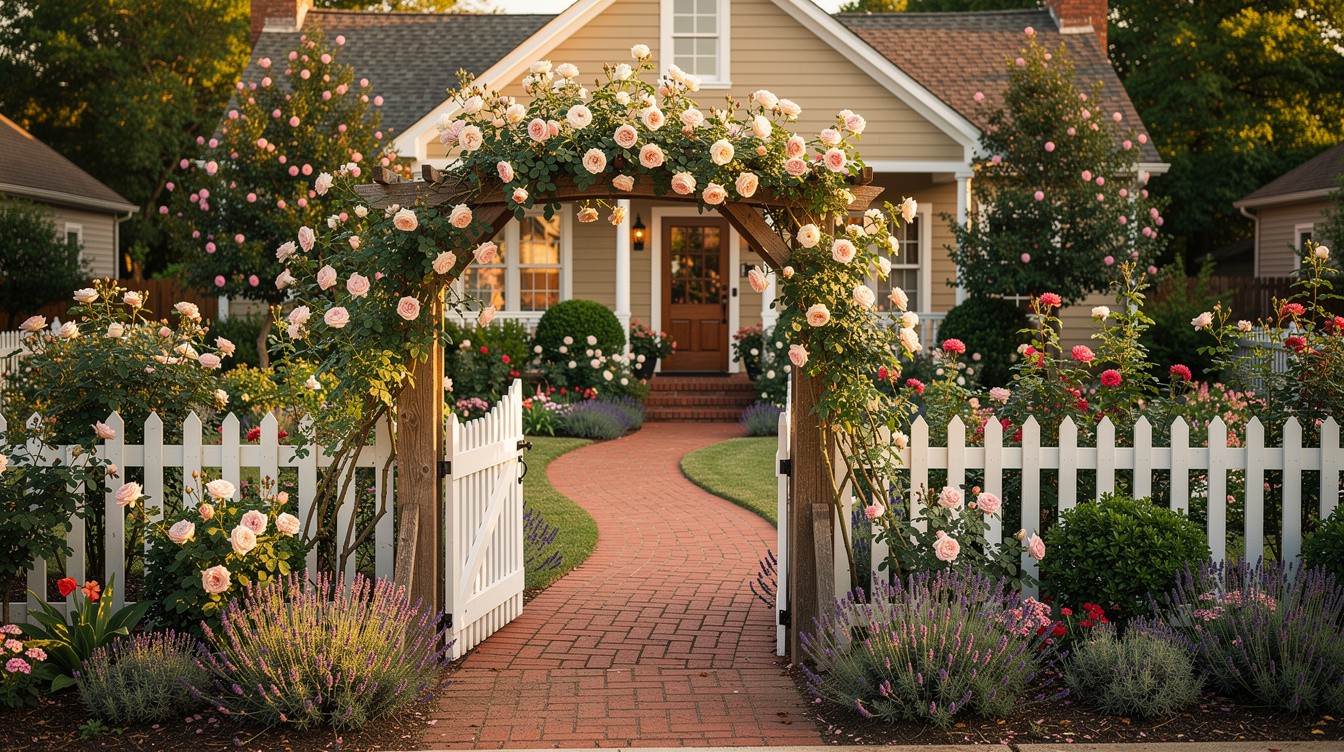
The Kavanaugh Rose Gate
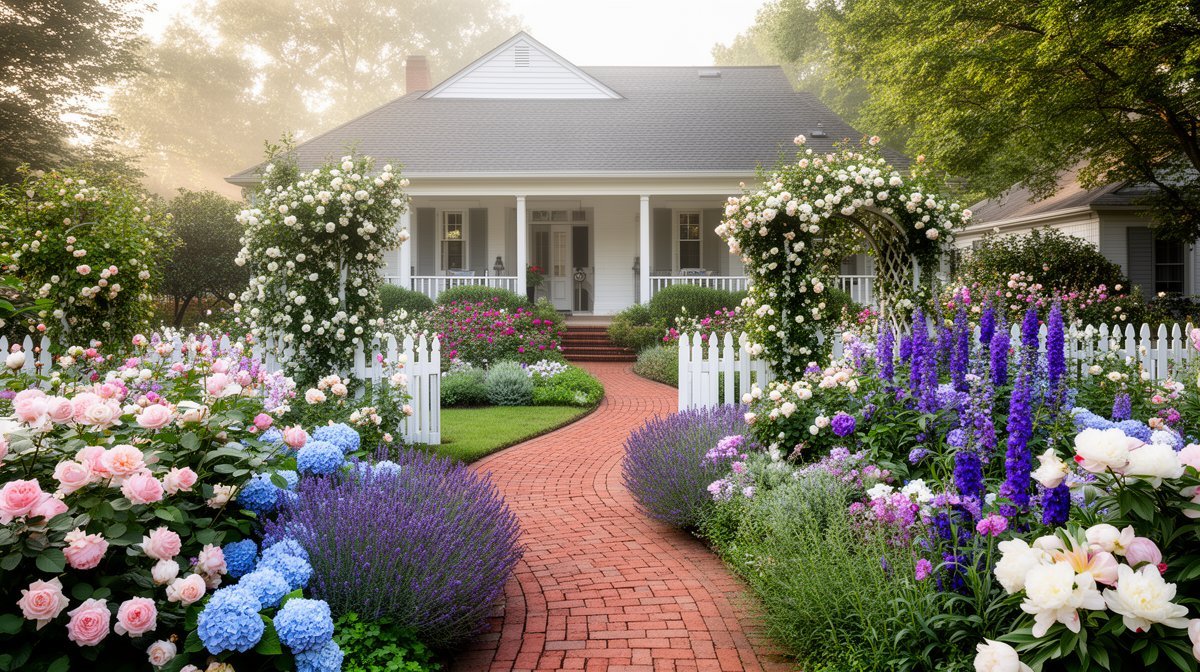
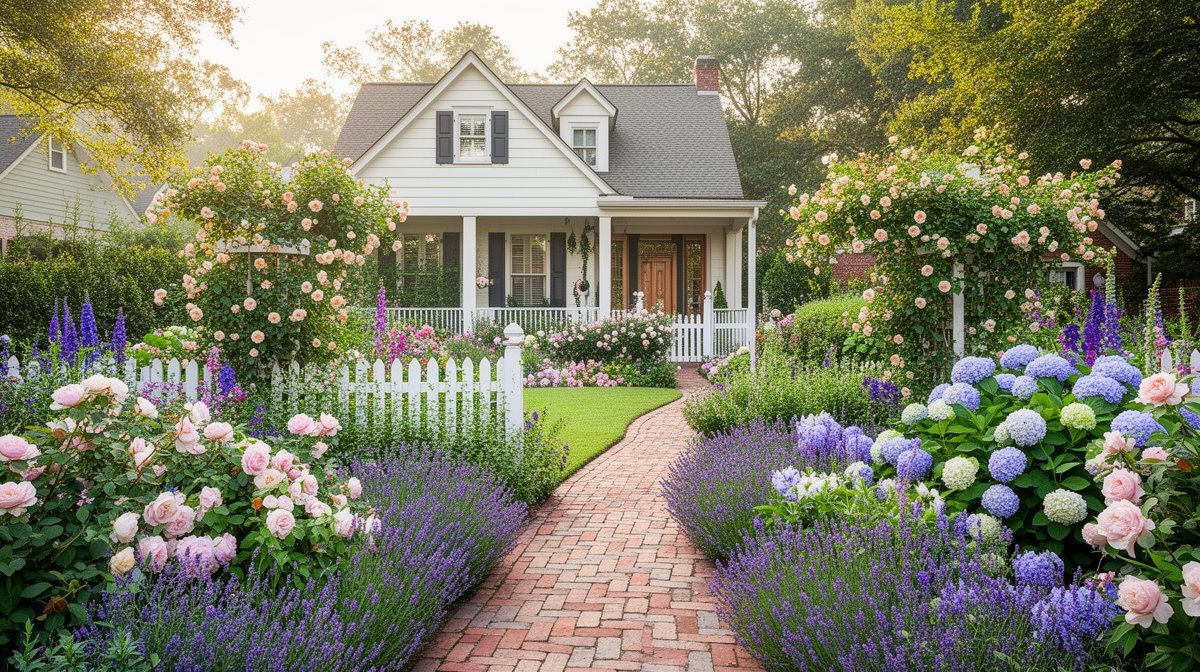
$10–18/sqftA beige-sided cottage fronted by a low white picket fence, with a weathered timber arbor smothered in blush and cream climbing roses arching over the front gate. A curving red-brick path leads from the gate to the porch steps, edged the whole way with lavender-toned catmint drifts and repeat-blooming shrub roses in pink and crimson, while clipped boxwood balls hold the foundation line by the door. It is the definitive cottage formula — fence, arch, curved path, roses — and the brick pavers echo the historic sidewalks of Little Rock's older neighborhoods.
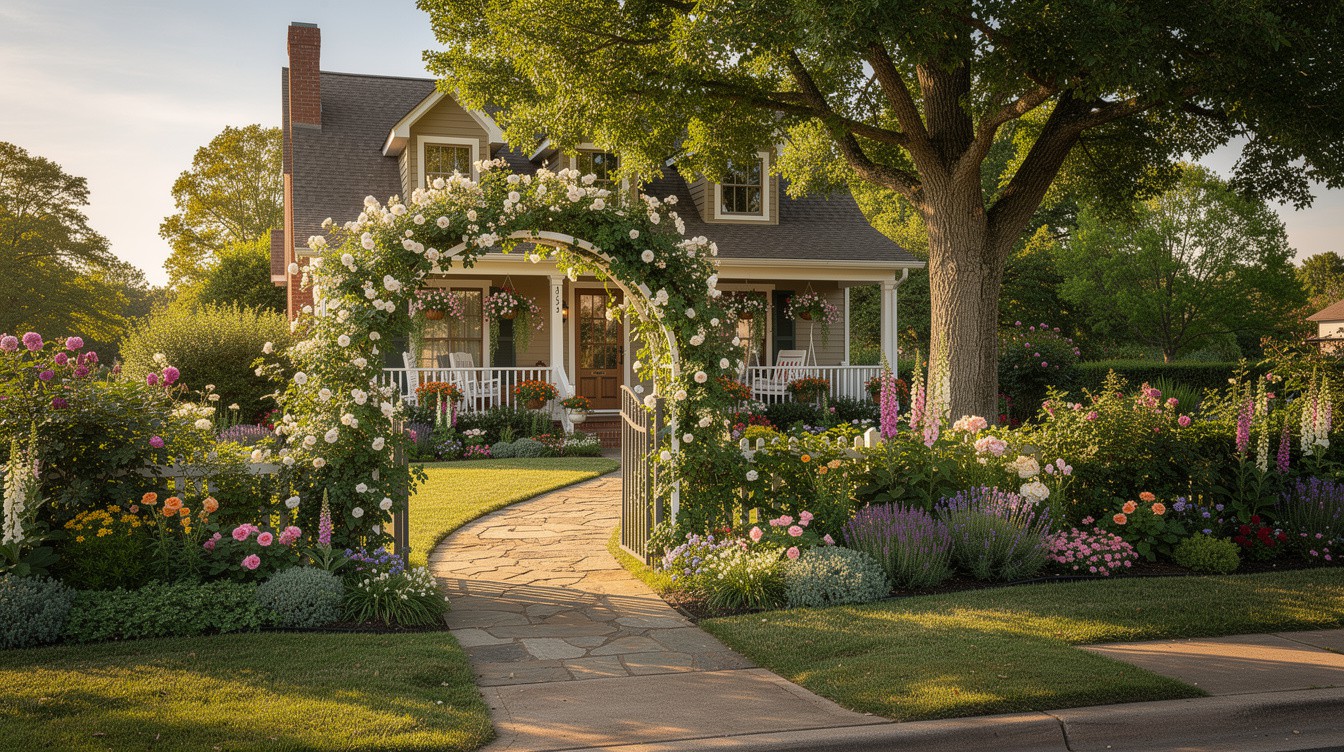
The Heights Storybook Entry
$12–20/sqftA two-story gabled home with a brick chimney nearly disappears behind a grand arch of white climbing roses spanning the flagstone front walk, entered through a slim iron gate. Under the shade of a mature oak — pure Heights streetscape — deep double borders spill foxgloves, peonies, zinnias, and silvery lamb's ear toward the lawn, and the front porch does its part with white rockers and hanging baskets of trailing annuals. The design leans on layered height: knee-level perennials, waist-high roses, the arch overhead, then the oak canopy above everything.
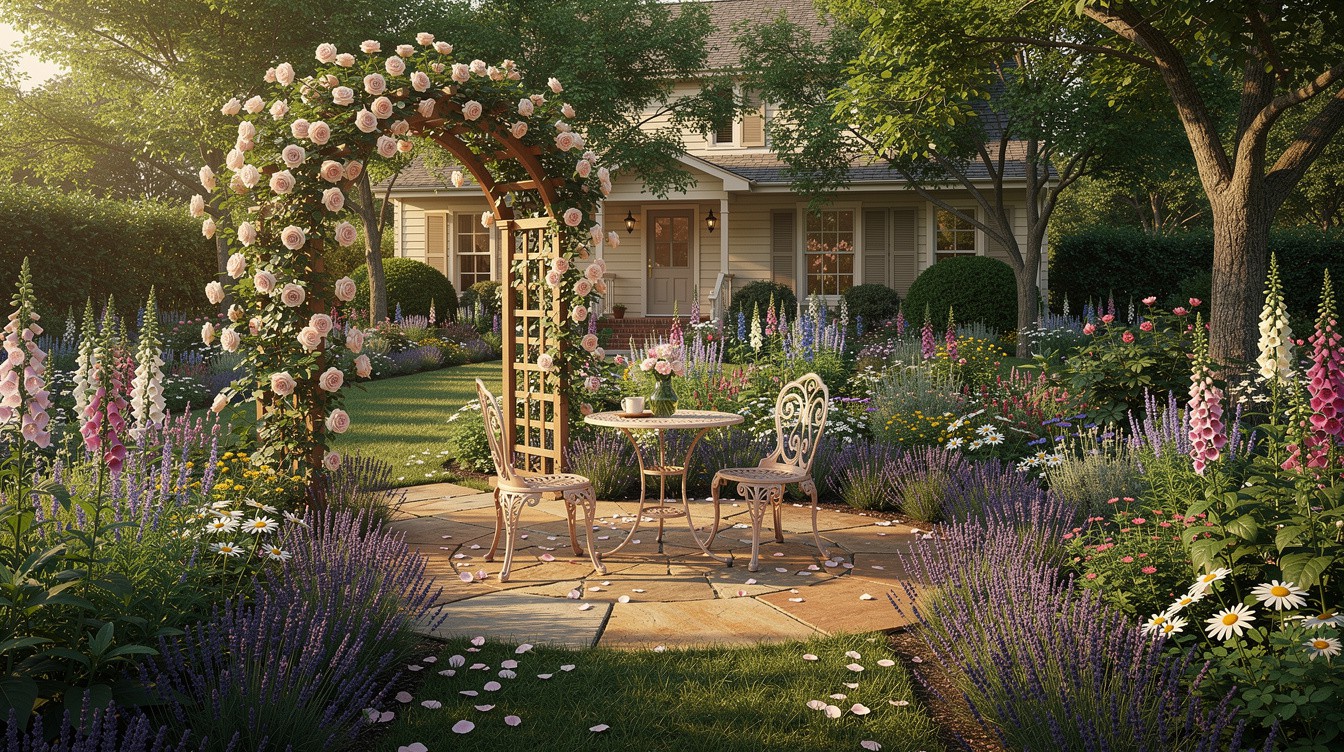
The Teacup Terrace
$15–25/sqft (patio zone)A small circular flagstone patio sits in the middle of the back garden like a room with flower walls — a rose-covered arch and trellis on one side, waves of purple-spiked perennials and pink foxgloves pressing in on every other. A cream wrought-iron bistro set for two, a vase of cut roses from the garden, scattered petals on the stone: the whole scene is built from a modest patio budget and generous planting. Because the seating area is stone rather than lawn, it stays usable through Little Rock's wet spring while the borders around it hit their April–May peak.
The Pergola Supper Garden
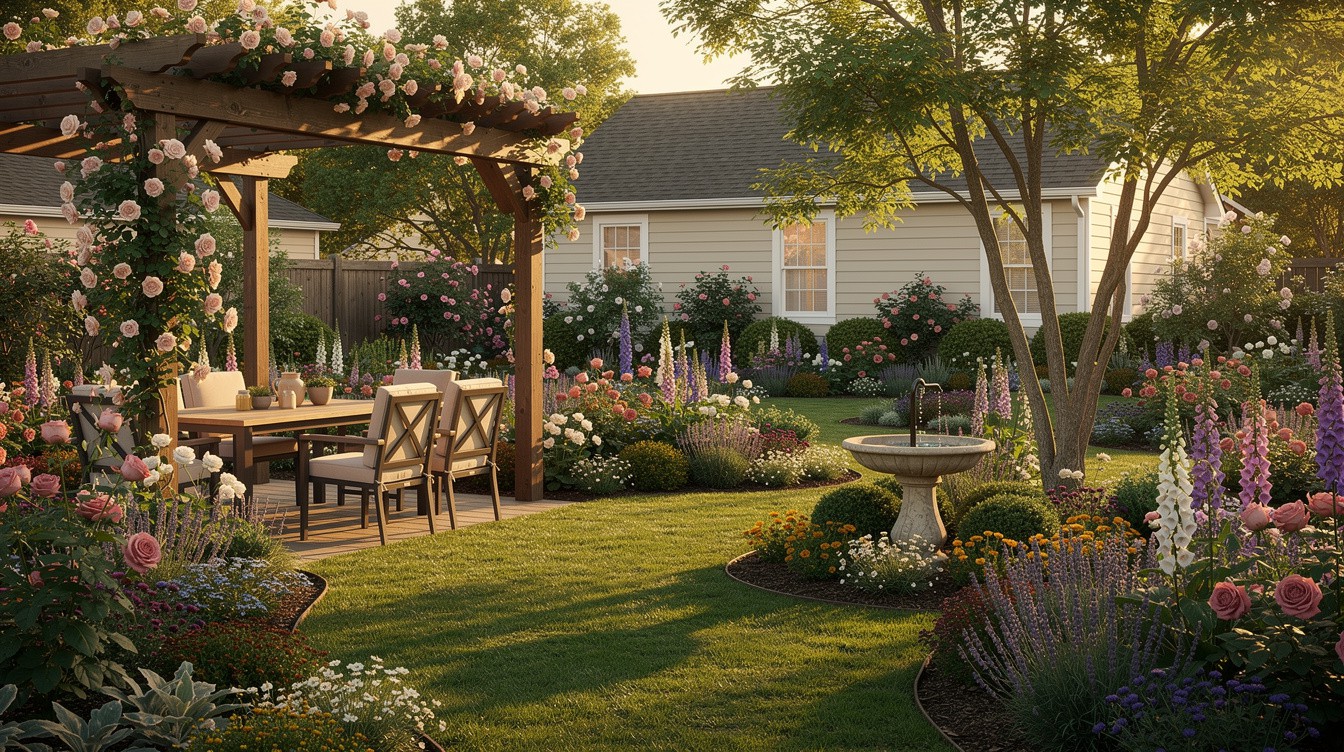
$18–30/sqft (pergola and dining zone)A timber pergola draped end-to-end in pale pink climbing roses shelters a full outdoor dining table on a paver pad, looking across a neat lawn to a classic stone birdbath fountain ringed with boxwood spheres and marigolds. Deep mixed borders wrap the entire yard — roses, foxgloves, catmint, marigolds, white alyssum — so every seat at the table faces flowers instead of fence. This is the cottage backyard scaled for entertaining: the pergola gives shade from June heat, and the fountain adds the water sound that makes a humid Arkansas evening feel ten degrees cooler.
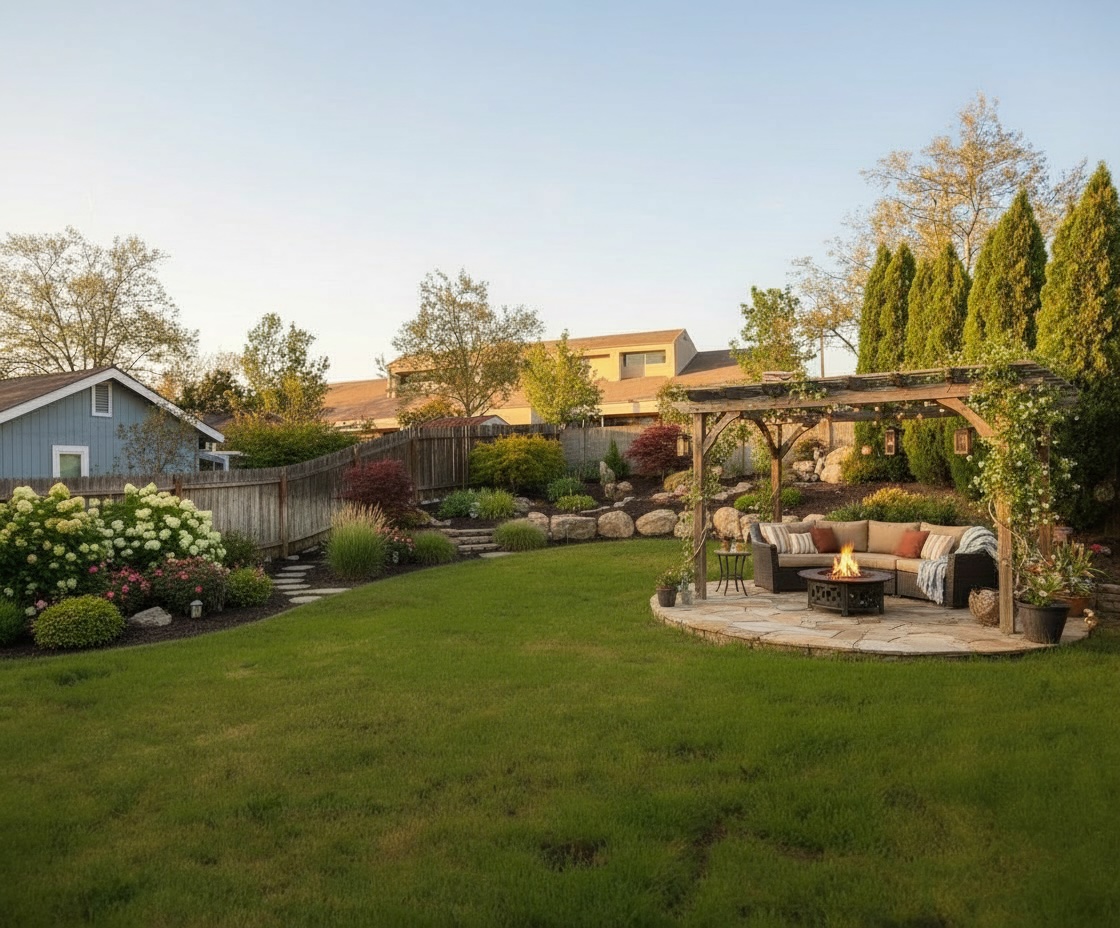
See how a cottage/english garden looks on YOUR property
Upload a photo of your Little Rock yard and visualize your dream garden in seconds.
Try ProScapeAI Free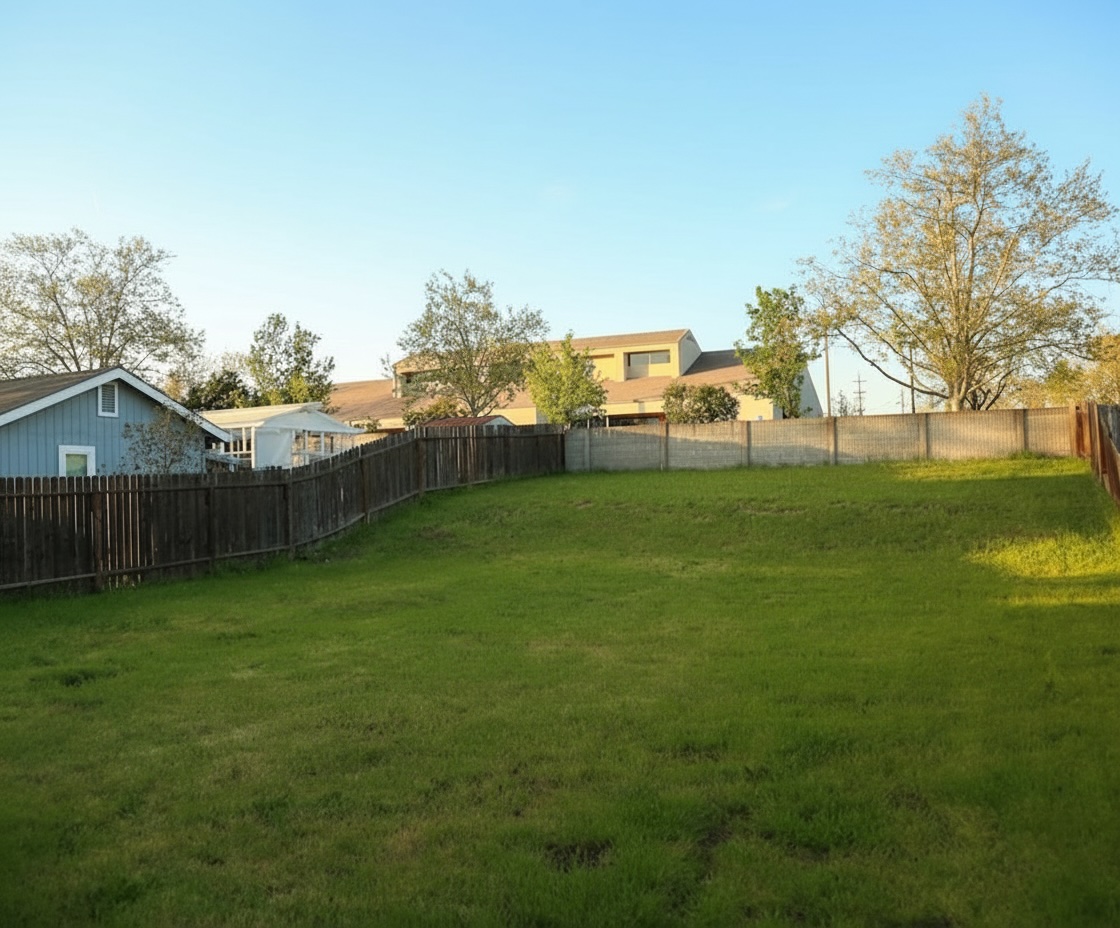
Featured Trees & Shrubs for Cottage/English Gardens
Browse all 154 plants for Little Rock
Vernal Witch Hazel
Hamamelis vernalis
medium-sized at 8 feet, yellow blooms in spring. Pollinator-friendly.
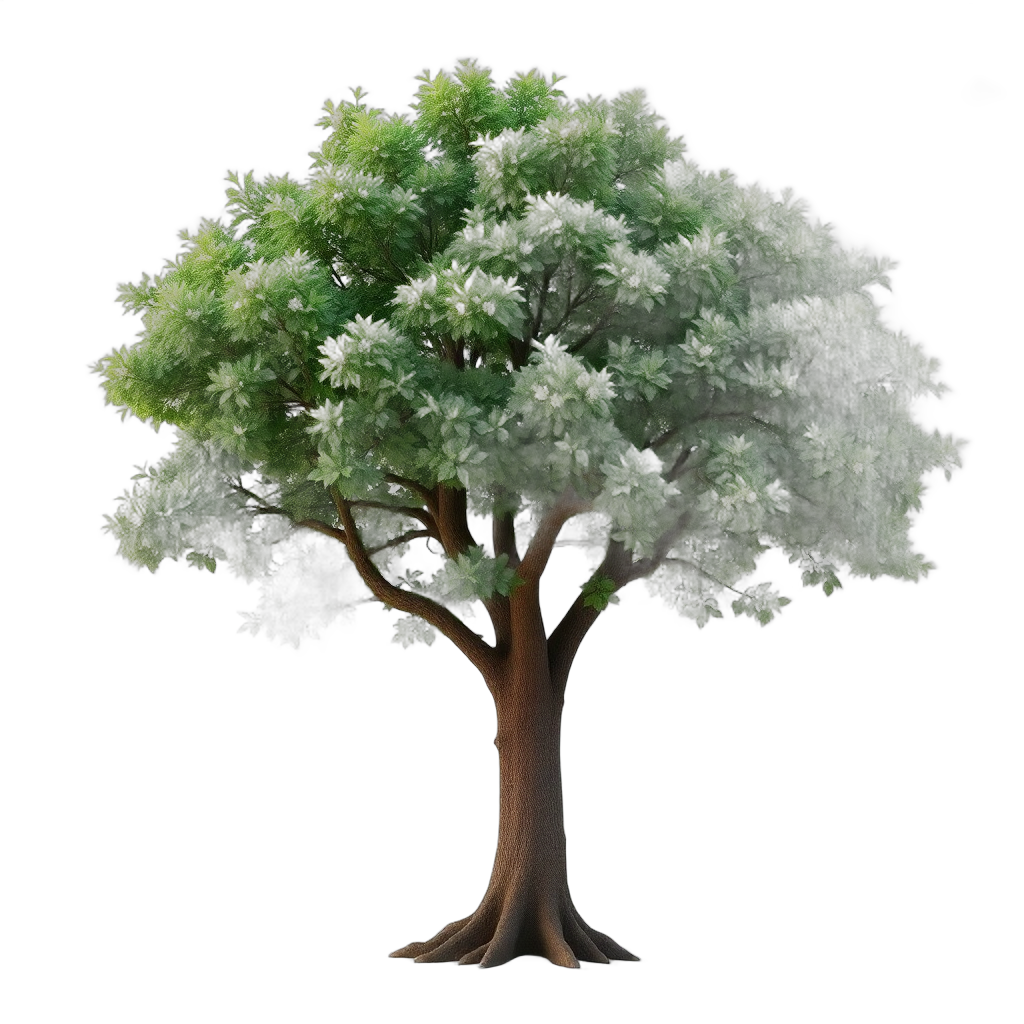
Shingle Oak
Quercus imbricaria
large shade tree reaching 55+ feet, blooms in spring. Yellow,red fall color.
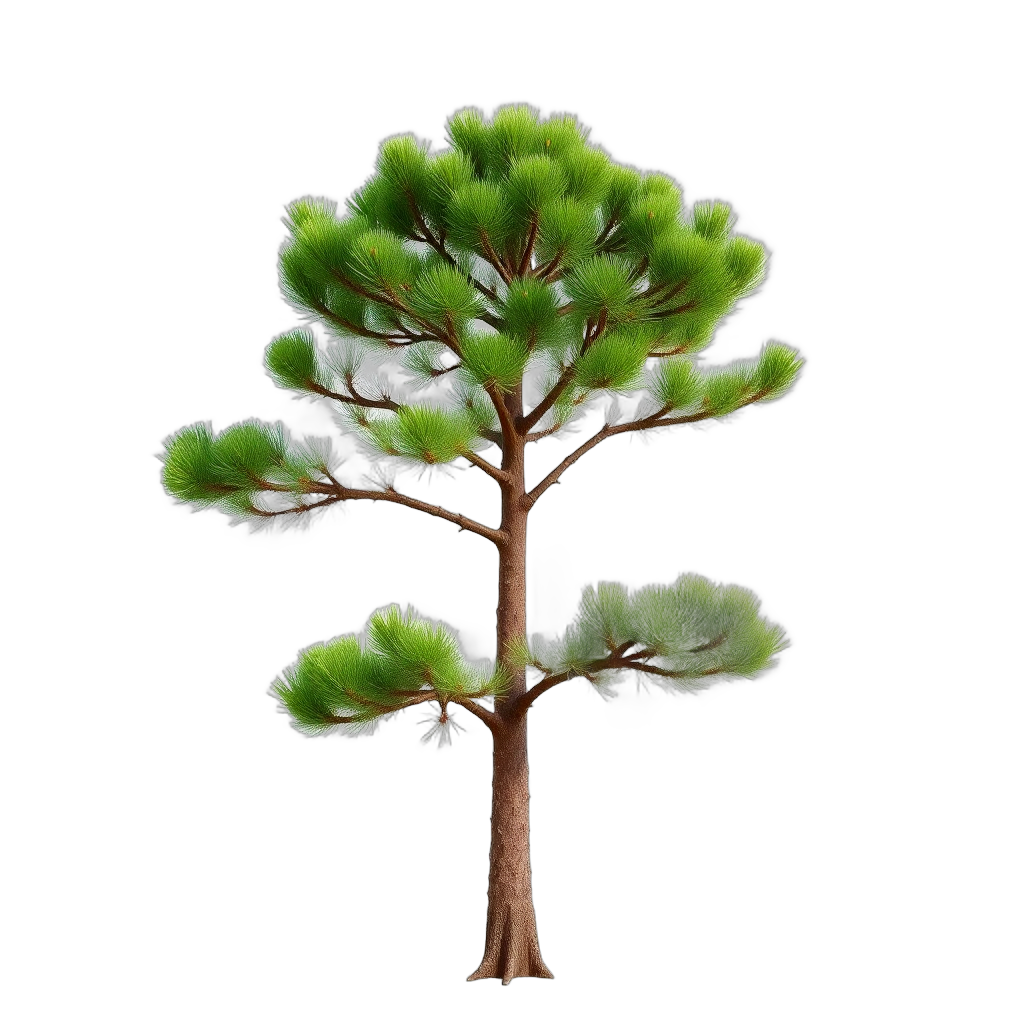
Shortleaf Pine
Pinus echinata
large shade tree reaching 70+ feet, blooms in spring. Evergreen year-round.

Southern Magnolia
Magnolia grandiflora
large shade tree reaching 70+ feet, white blooms in spring. Evergreen year-round.
Featured Grasses & Groundcovers for Cottage/English Gardens

Anceps Bamboo
Yushania anceps
medium-sized at 12 feet, blooms in none. Evergreen year-round.
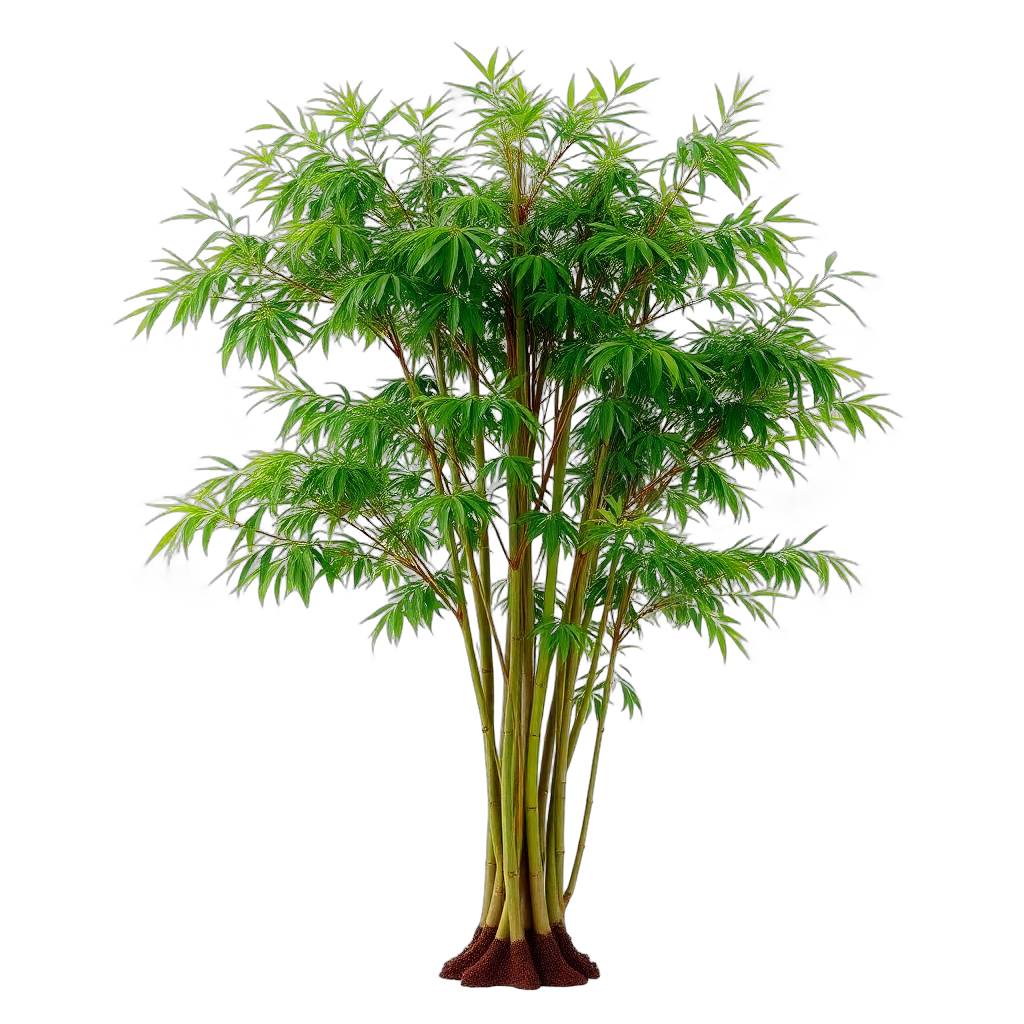
Arrow Bamboo
Pseudosasa japonica
medium-sized at 15 feet, blooms in none. Evergreen year-round.
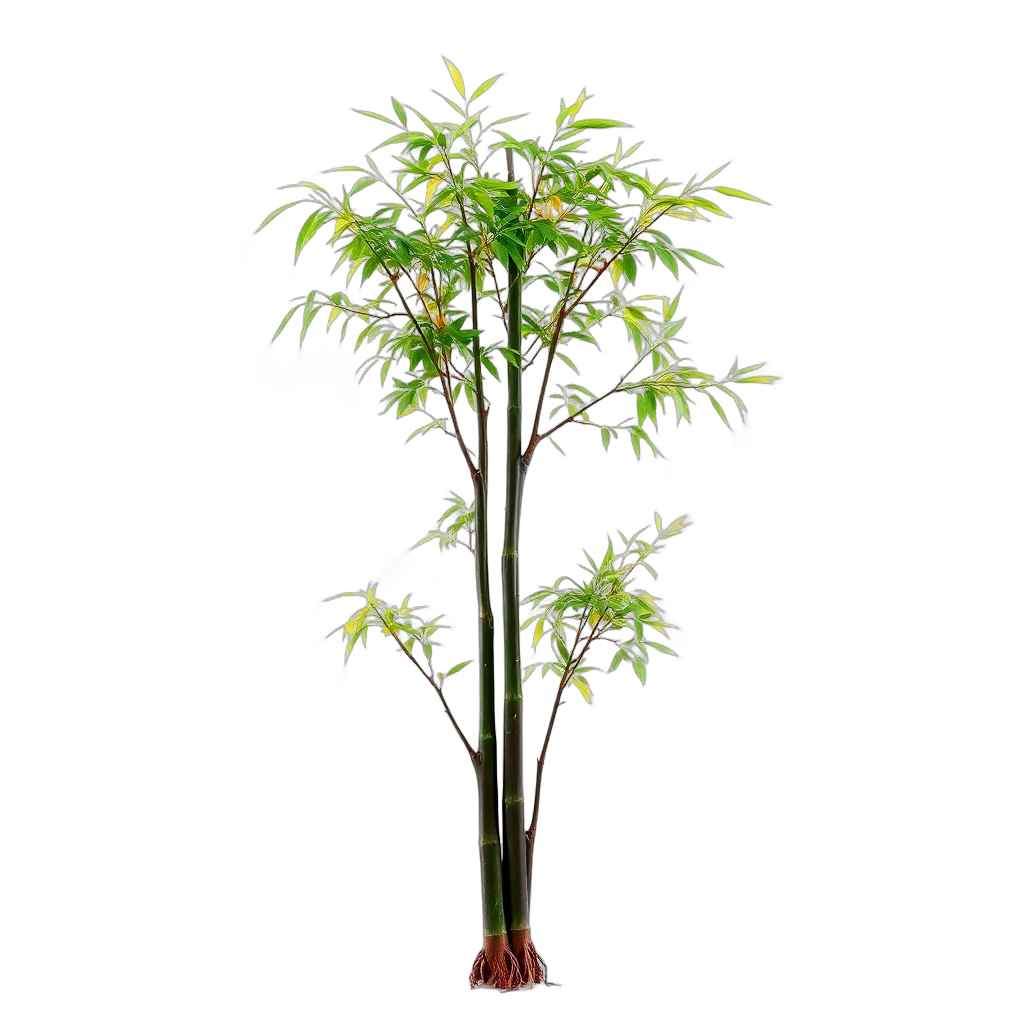
Black Bamboo
Phyllostachys nigra
reaches 25 feet tall, blooms in none. Evergreen year-round.
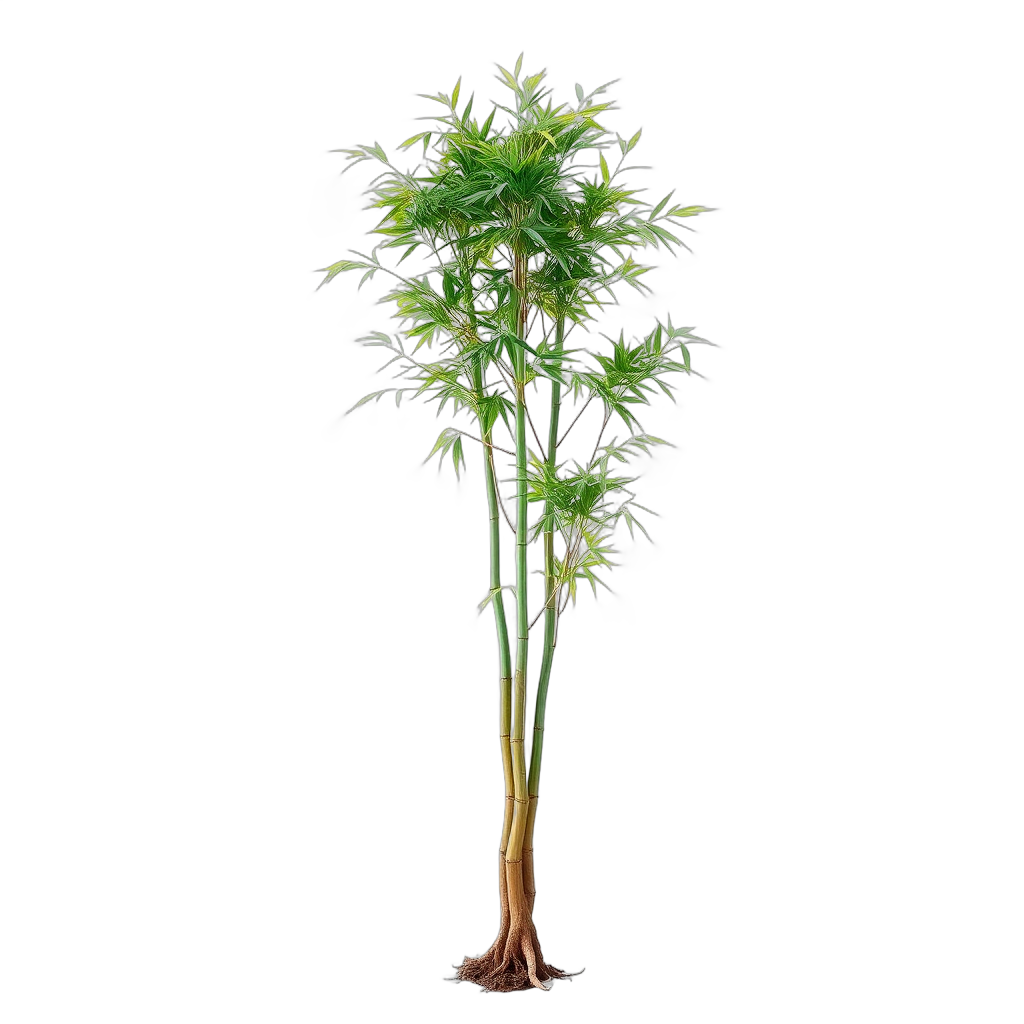
Blue Bamboo
Borinda papyrifera
reaches 20 feet tall, blooms in none. Evergreen year-round.
Featured Flowers & Perennials for Cottage/English Gardens

Tussock Sedge
Carex stricta
low-growing ground cover, blooms in spring. Brown fall color.

Umbrella Sedge
Cyperus alternifolius
grows to 4 feet, blooms in summer. Evergreen year-round.
Bloom Calendar for Little Rock
spring
Vernal Witch Hazel, Shingle Oak, Shortleaf Pinesummer
Umbrella Sedgefall
Limited bloomswinter
Limited bloomsDesign Tips for Little Rock (Zone 8a)
- Build borders UP with compost rather than digging into Little Rock's acidic clay — raised, mounded beds drain the 50-inch rainfall that otherwise rots lavender, dianthus, and anything silver-leafed
- Plant foxgloves, larkspur, and poppies in October, not spring — in Zone 8a they establish over the mild winter and deliver the April–May cottage crescendo before summer heat shuts them down
- Choose disease-resistant roses and water at the roots, never overhead — black spot thrives in Arkansas humidity, and drip irrigation plus airflow spacing beats any spray program
- Use catmint as your workhorse 'lavender' and oakleaf hydrangea as your signature shrub — both are bulletproof in Pulaski County clay, and oakleaf is an Arkansas native that gives blooms, fall color, and winter bark
- Plan a summer relay: zinnias, cosmos, and salvias take the baton in June when English-style perennials pause, keeping borders full through the 90°F months until roses rebloom in fall
- Work with the mature oak canopy instead of removing it — high-limbed shade is what keeps a Little Rock cottage garden (and its gardener) alive in August, and hellebores plus hydrangeas make the shaded layers as lush as the sunny ones
Where to Source Plants in Little Rock
Skip the big-box stores. These independent Little Rock nurseries specialize in the plants that make cottage/english gardens thrive in Zone 8a.
Hocott's Garden Center
Hillcrest
Locally owned garden center and landscaping business offering plants, trees, and shrubs since 1939.
The Good Earth Garden Center
West Little Rock (Cantrell Road)
Full selection of shrubs, trees, annuals, perennials, and a stone yard, with landscape design services.
Cantrell Gardens
Cantrell Road
Little Rock's premier garden center since 1963, known especially for roses.
Cottage/English Landscaping Costs in Little Rock
| Project Scope | Estimated Cost |
|---|---|
| Front yard cottage makeover (picket fence + arbor + borders) | $6,000 – $14,000 |
| Brick or flagstone garden path (100–200 sqft) | $2,500 – $7,000 |
| Cedar pergola with paver dining pad | $7,000 – $18,000 |
| Full backyard cottage garden (patio, pergola, deep borders) | $15,000 – $35,000 |
| Perennial and rose border, professionally planted (per 100 sqft) | $800 – $2,000 |
| AI visualization with ProScapeAI | Free to start |
Estimates based on Little Rock, AR-area contractor rates as of 2026. Actual costs vary by site conditions, materials, and contractor.
Little Rock Climate & Growing Zone
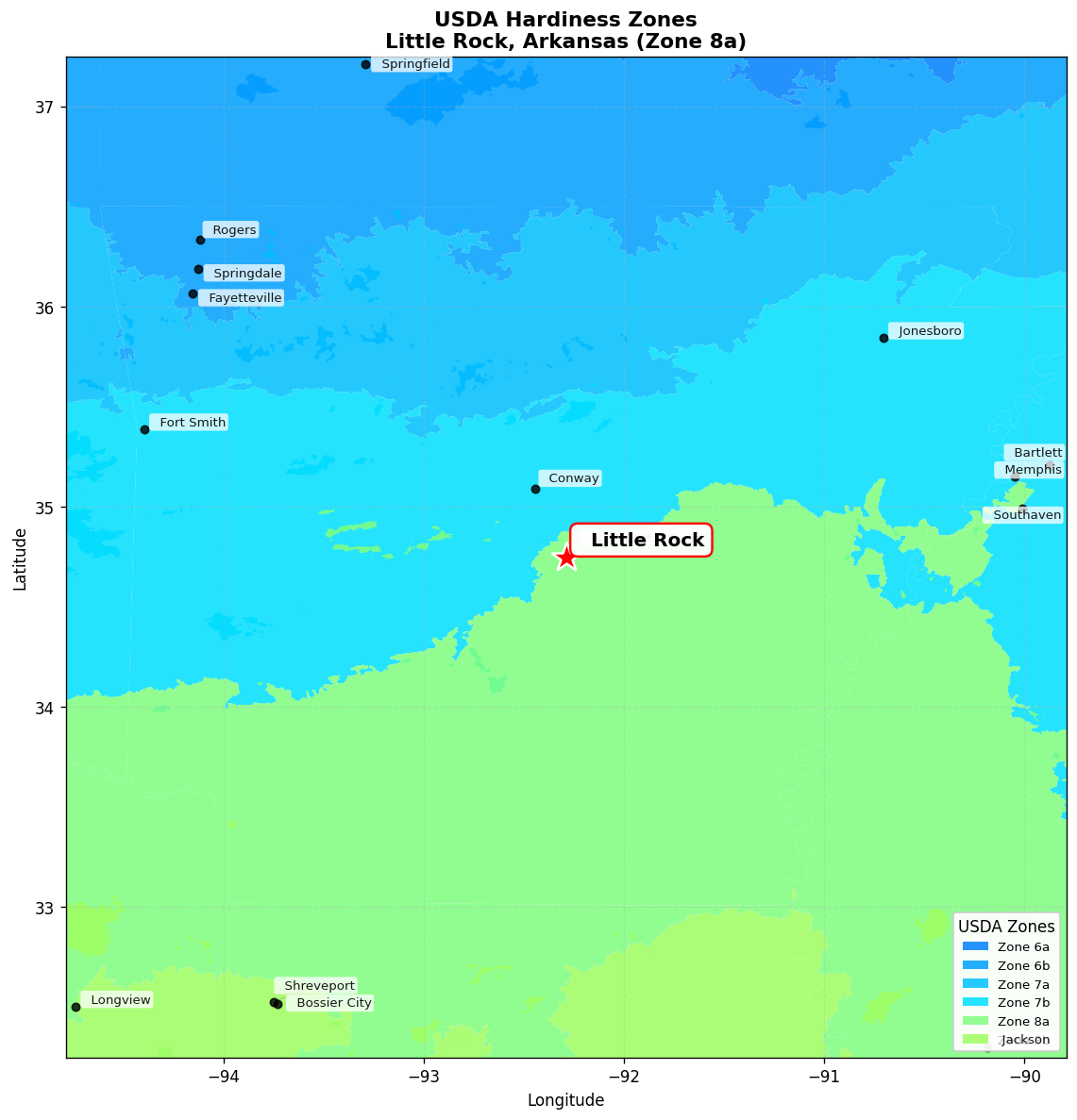
USDA Zone 8a
Hardiness zone for Little Rock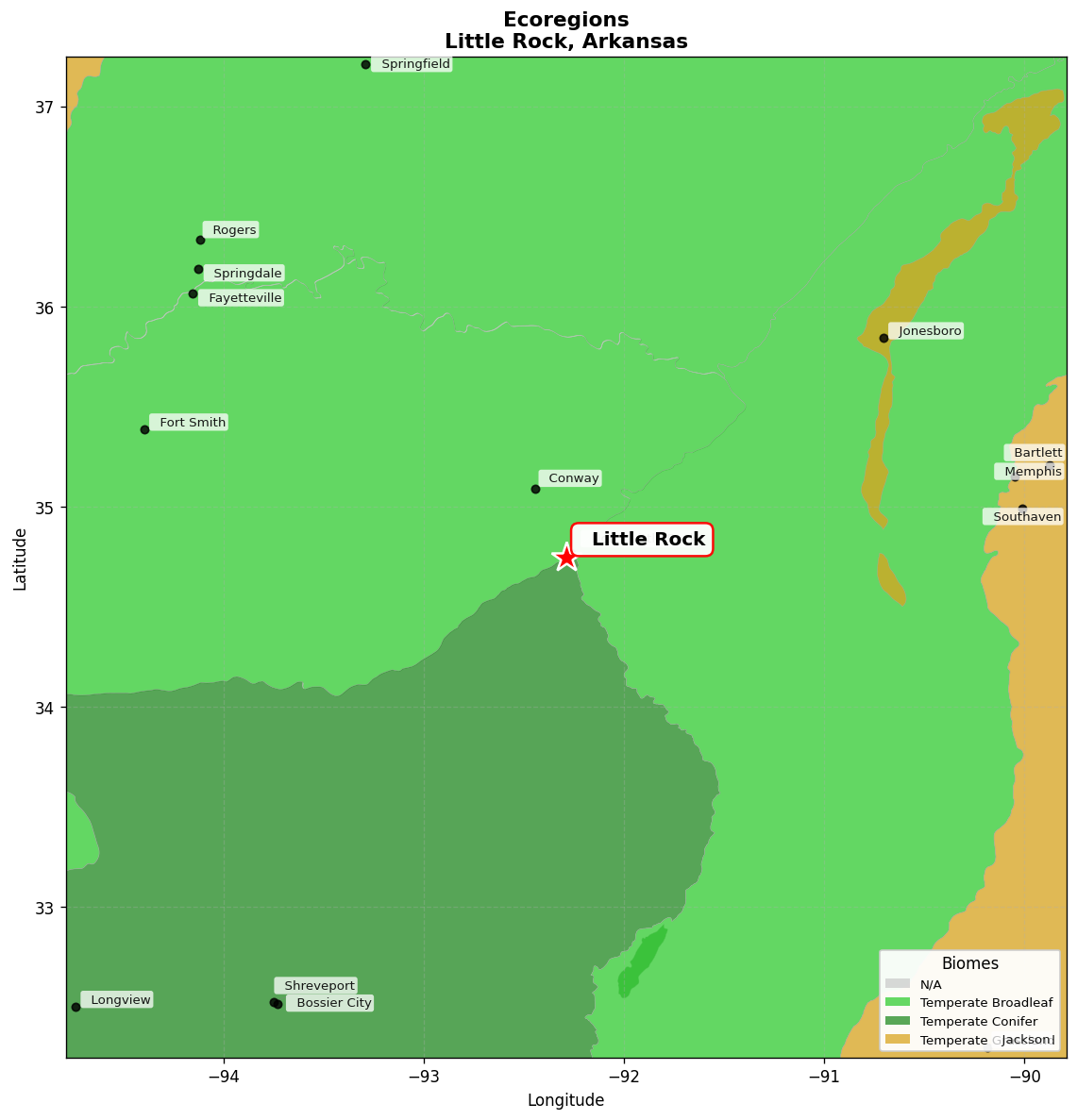
Ozark Mountain forests
Native ecoregionFrequently Asked Questions
How much does a cottage garden cost to install in Little Rock?
Central Arkansas labor and material costs run 15–25% below national metro averages, which makes cottage style — a planting-heavy look — especially affordable here. A picket fence, arbor, and planted front-yard makeover for a typical Hillcrest bungalow lot runs $6,000–14,000 installed. A backyard with a flagstone patio, pergola, and deep borders lands between $15,000 and $35,000. Because cottage gardens are mostly plants rather than hardscape, phased DIY versions are very realistic: many Little Rock gardeners build the fence and arbor professionally, then fill borders themselves over two or three seasons for a fraction of the cost.
Does English lavender survive Little Rock's humidity?
True English lavender (Lavandula angustifolia) usually declines within a couple of summers here — the killer is 50 inches of rain landing on clay soil, which rots the roots. Two fixes work: plant the hybrid 'Phenomenal' lavender, bred specifically for humid climates, in beds raised 6–8 inches and amended with pea gravel or expanded shale; or substitute catmint ('Walker's Low' or 'Cat's Meow'), which delivers the same silvery foliage and violet bloom haze while thriving in Arkansas conditions. Most local designers do a mix — a few lavender plants in the best-drained spots, catmint carrying the look everywhere else.
Which roses handle Arkansas heat and humidity best?
Little Rock is genuinely good rose country if you choose disease-resistant varieties. Knock Out and Drift series are nearly indestructible border fillers; for the romantic cottage look, David Austin varieties like 'Olivia Rose Austin' and old reliables like 'New Dawn' (climber) and 'Zéphirine Drouhin' (thornless climber, tolerates part shade) perform well. The main enemy is black spot in humid summers, so give roses morning sun, spacing for airflow, and drip rather than overhead watering. Rose rosette disease is present in Arkansas — buy from reputable local nurseries and remove any rose showing witches'-broom growth immediately.
When should I plant a cottage garden in Little Rock?
October and November are the gold-standard planting months — shrubs, roses, and perennials root through the mild wet winter and face their first summer already established. Fall is also when foxgloves, larkspur, and poppies must go in to bloom the following spring. Early spring (late February–April) is the second window for perennials and container roses. Avoid installing new plants June through mid-September; even with irrigation, establishing plants in 92°F humidity is a losing battle. Hardscape — paths, fences, arbors, pergolas — can be built year-round since central Arkansas frost depth is shallow.
What grows in the shade under Little Rock's big oak trees?
Mature oak and pecan canopy is one of midtown Little Rock's greatest assets, and cottage style adapts to it well. Under high shade, use hellebores, hostas, ferns, columbine, hardy begonias, and oakleaf hydrangea — Arkansas's own native hydrangea and arguably the best cottage shrub for the region. Foxgloves and hollyhocks bloom well in morning-sun edges. Full-sun classics like roses and peonies need at least six hours of direct light, so reserve the sunniest strip — usually along the street or driveway — for them and let the shade layers take over closer to the house.
Do I need a permit for a fence, arbor, or pergola in Little Rock?
Front-yard picket fences in Little Rock are limited to 4 feet in most residential zones (6 feet in side and rear yards) and generally need a simple fence permit from the city. Arbors and open garden structures under about 120 square feet typically don't require a building permit, but attached or larger pergolas do. If your home sits in a designated historic district — the MacArthur Park and Governor's Mansion districts in the Quapaw Quarter are the big ones — exterior changes visible from the street, including fences, need Historic District Commission approval first. Plantings themselves never require permits.