4 Cottage Garden Ideas for Springfield, MO | English Border Design for Zone 6b
Native plants from the Ozark Highlands mixed forests (Zone 6b) — Humid subtropical climate
Why Cottage/English Gardens in Springfield?
Springfield is built for cottage gardens in a way that few Midwestern cities are. The 1910s–1920s bungalows, foursquares and Tudor cottages of Rountree and Phelps Grove sit on deep, narrow lots with front porches and short setbacks — the exact geometry an English border was invented for, and the neighborhoods' mature street canopy of sugar maple and pin oak gives borders the dappled afternoon light that keeps foxgloves and hydrangeas from frying in August. Newer Galloway Village infill and the wide lots out in Nixa and Ozark trade the historic architecture for room, which is where full picket-fenced front gardens and rose arbors go in.
Zone 6b is the real advantage here — winter lows of roughly -5°F to 0°F give Springfield gardeners the chilling hours that classic cottage plants demand and that gardeners three hours south simply cannot deliver. Peonies like Paeonia 'Festiva Maxima' and 'Coral Charm' settle in for fifty years, bearded iris and Narcissus 'Thalia' naturalize, and Digitalis purpurea 'Camelot Rose' reseeds itself down a border year after year. Roughly 45 inches of rain a year, spread evenly, means an established border rarely needs irrigation past its first summer — though the flash droughts that hit in late August will test anything planted shallow. Choose disease-resistant cultivars for the humidity: Rosa 'New Dawn' and 'William Baffin' on arbors, Rosa 'Olivia Rose Austin' and 'Knock Out' in beds, and Phlox paniculata 'Jeana' instead of the mildew-prone old strains.
The constraint nobody warns you about is underfoot. Springfield sits on the Ozark Plateau, where six to eighteen inches of cherty silt loam lies directly over Burlington limestone bedrock — you will hit rock with a spade, and the karst beneath it means water either sheets off or vanishes into fractures. The answer is to stop digging and start building: 10–14 inch raised borders of screened topsoil over the native chert give roses and peonies the root run they need, and the limestone's near-neutral to alkaline pH is a gift to Lavandula x intermedia 'Phenomenal', Nepeta 'Walker's Low' and Dianthus while ruling out azaleas and blueberries, which go chlorotic. Plan for ice, too — the January 2007 storm shredded the city's canopy, so skip Callery pear and brittle silver maple in favor of Amelanchier x grandiflora 'Autumn Brilliance' and Cercis canadensis 'Oklahoma'. Southwest Missouri labor rates keep the whole thing 20–30% under national metro pricing.
4 Cottage/English Design Ideas for Springfield
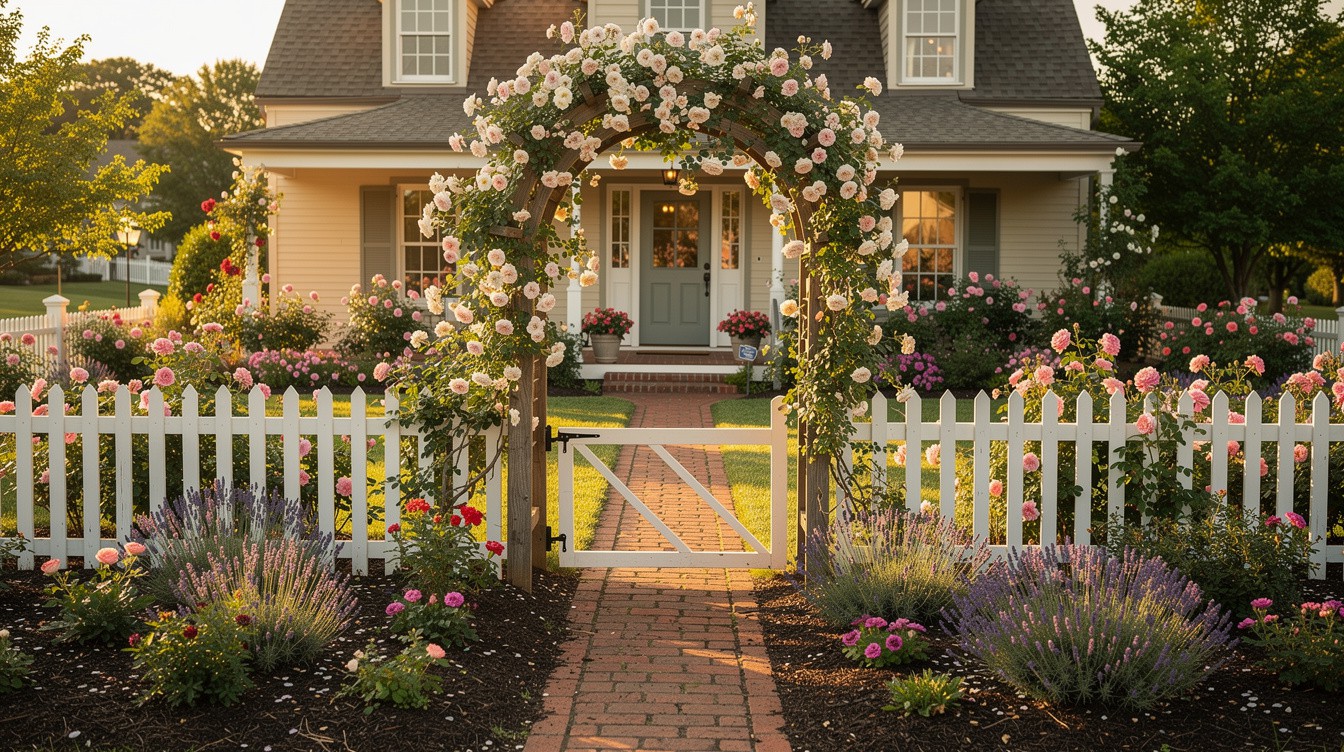
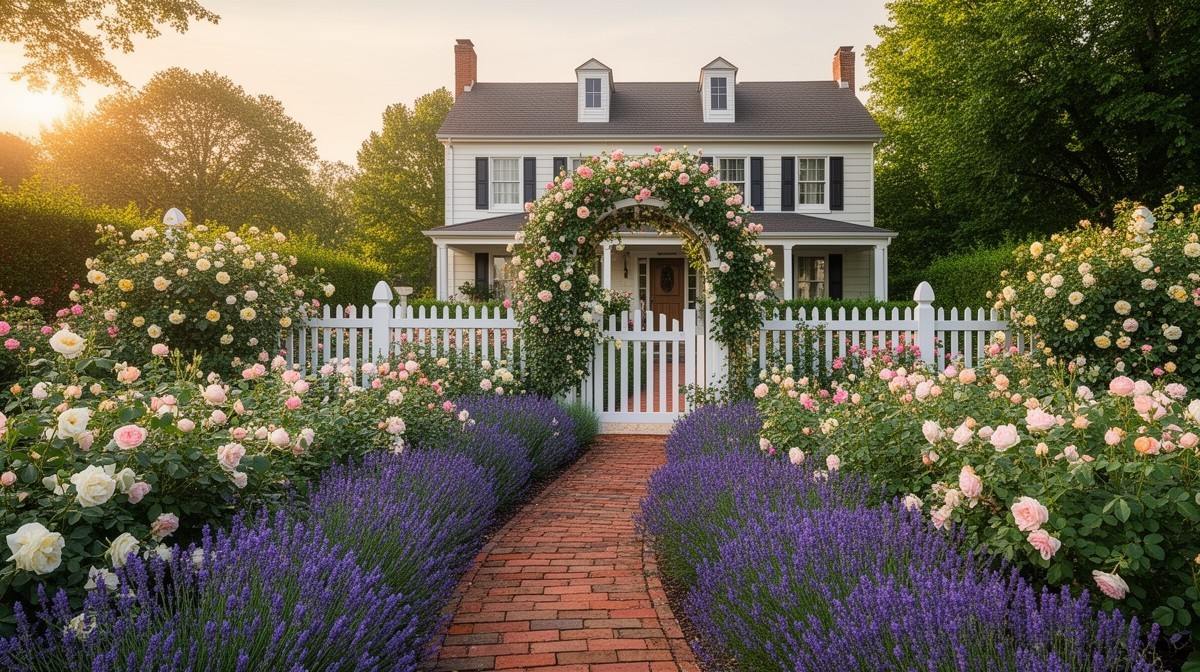
The Rose Arbor and Picket Front
$14–26/sqftA cedar arbor straddles the front walk under a canopy of blush climbing roses, with a low white picket fence running the full frontage and a running-bond brick paver path leading to the door. The planting is layered in three tiers: mounded lavender and dianthus spilling over the mulch line at the fence base, shrub roses and peonies filling the middle at hip height, and climbers trained up the arbor posts and the fence corners. Because the beds are built up eight to twelve inches above the cherty native grade, drainage is sharp enough that lavender genuinely overwinters here instead of rotting out in February.
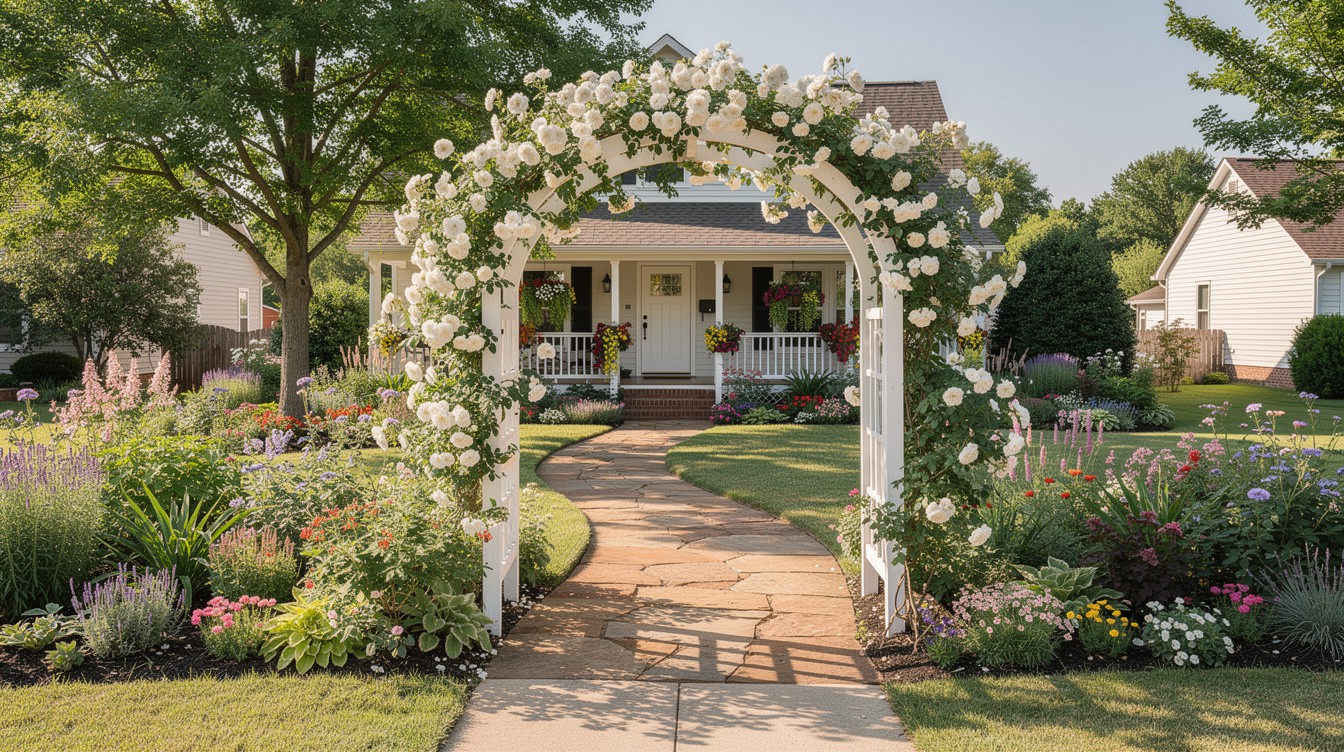
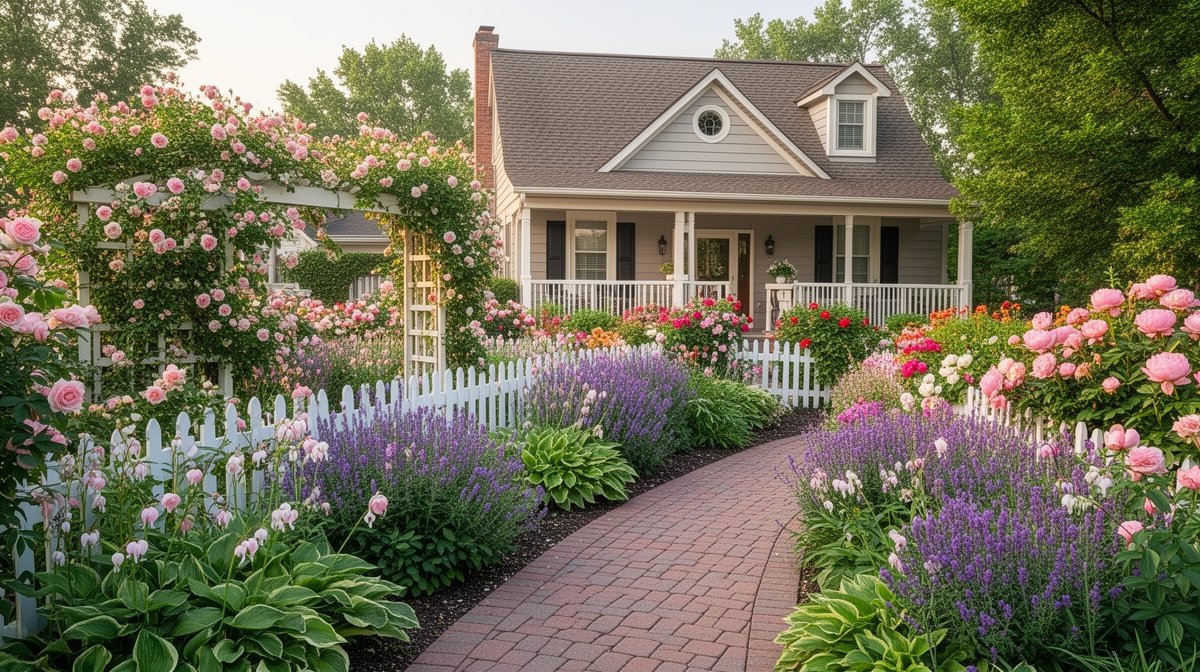
The Flagstone Ramble
$16–30/sqftAn irregular Ozark flagstone path curves off the public sidewalk, passes beneath a white-painted arbor smothered in cream climbing roses, and disappears toward a covered porch — a deliberate three-second delay that makes a modest front yard feel like a garden you enter rather than cross. Deep mixed borders press in on both sides, built in vertical layers so nothing reads as a foundation planting: spires of salvia and veronica behind low mounds of hardy geranium, hostas and Heuchera villosa 'Autumn Bride' taking the shaded pocket under the existing maple, and a lawn ribbon kept only as a mowing strip.
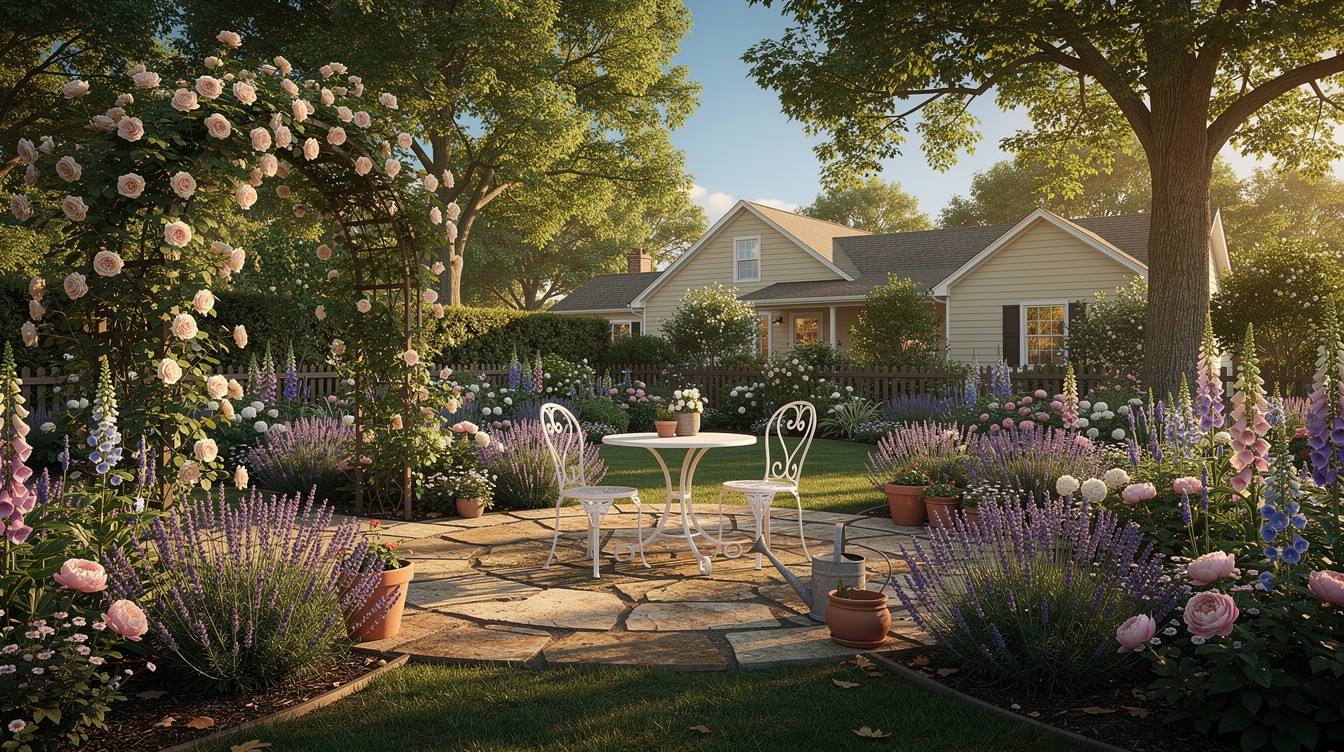
The Flagstone Tea Circle
$18–32/sqftA circular flagstone terrace just big enough for a bistro table and two chairs sits at the center of a fully enclosed back garden, with a metal rose arbor marking the entry from the side yard. The borders around it are the point: a back wall of foxglove and delphinium spires against the fence, a middle band of peonies and roses, and a continuous lavender and catmint edge softening the stone. Terracotta pots and a galvanized watering can sit on the flagstone as intentional props. The circle geometry is what makes it work on a compact Springfield lot — a round patio reads as generous at 12 feet across where a square would read as cramped.
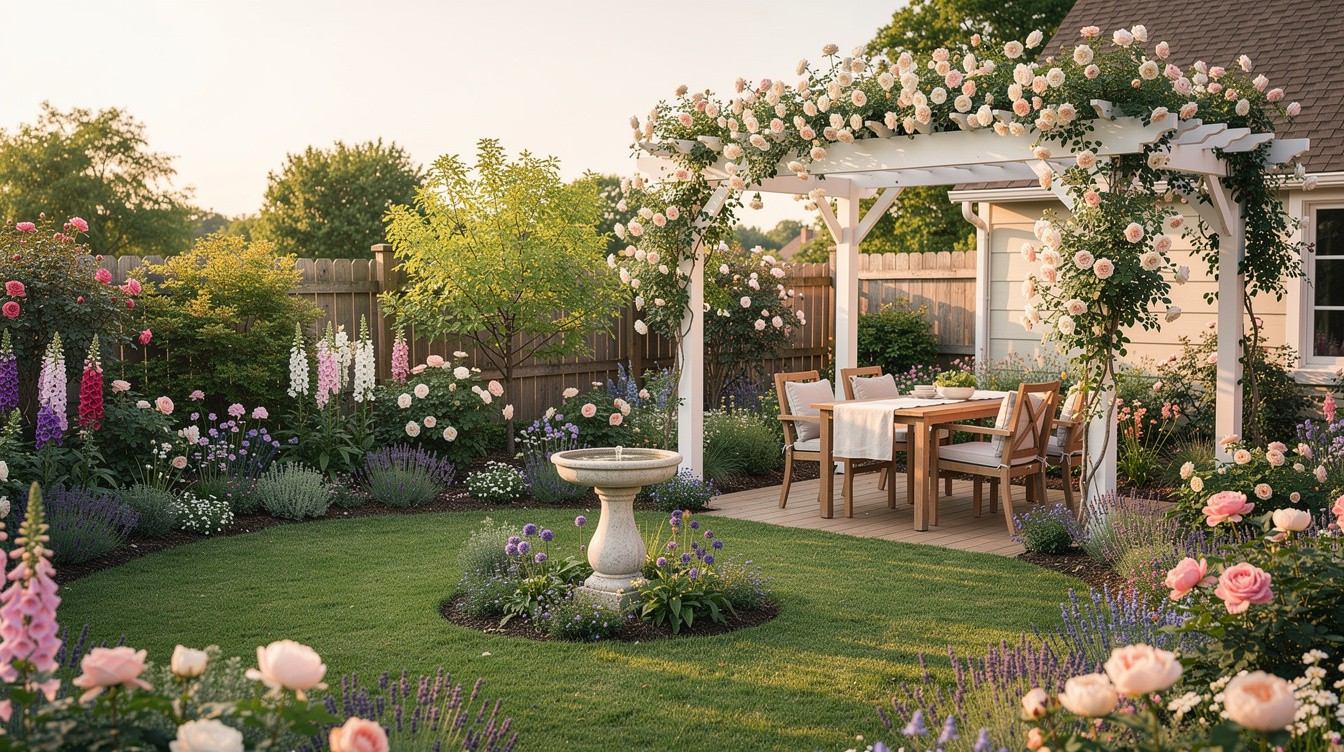
The Rose Pergola Dining Garden
$22–40/sqftA white pergola attached to the back of the house carries a mature blush climber right across its beams, throwing filtered shade over a hardwood dining table for six — the single most-used square footage in any Springfield backyard from April to October. Out on the lawn, a stone birdbath sits in a circular island bed of alliums, catmint and low perennials, giving the eye a destination and keeping the turf shape curved rather than rectangular. Deep borders run the wooden privacy fence on three sides, with a small ornamental tree breaking the fence line so the garden never feels boxed in.
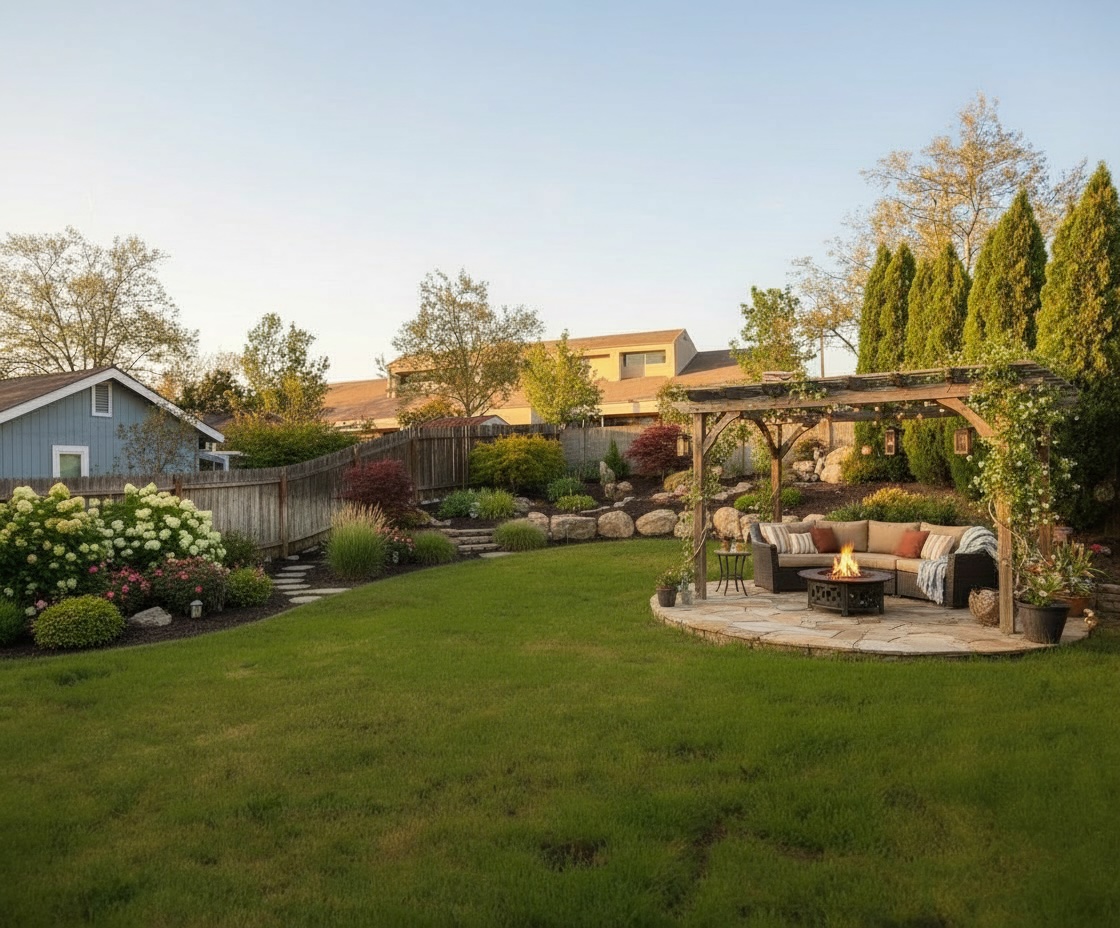
See how a cottage/english garden looks on YOUR property
Upload a photo of your Springfield yard and visualize your dream garden in seconds.
Try ProScapeAI Free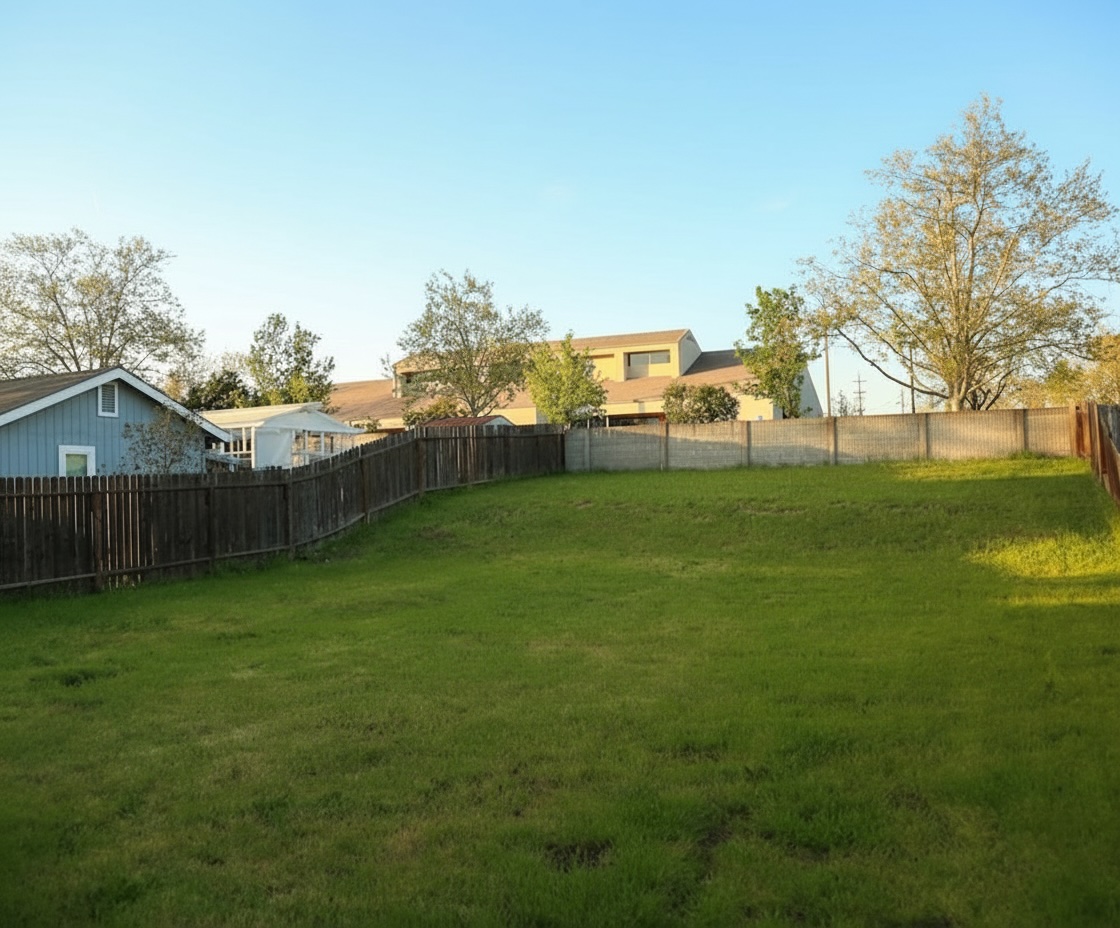
Featured Trees & Shrubs for Cottage/English Gardens
Browse all 21 plants for Springfield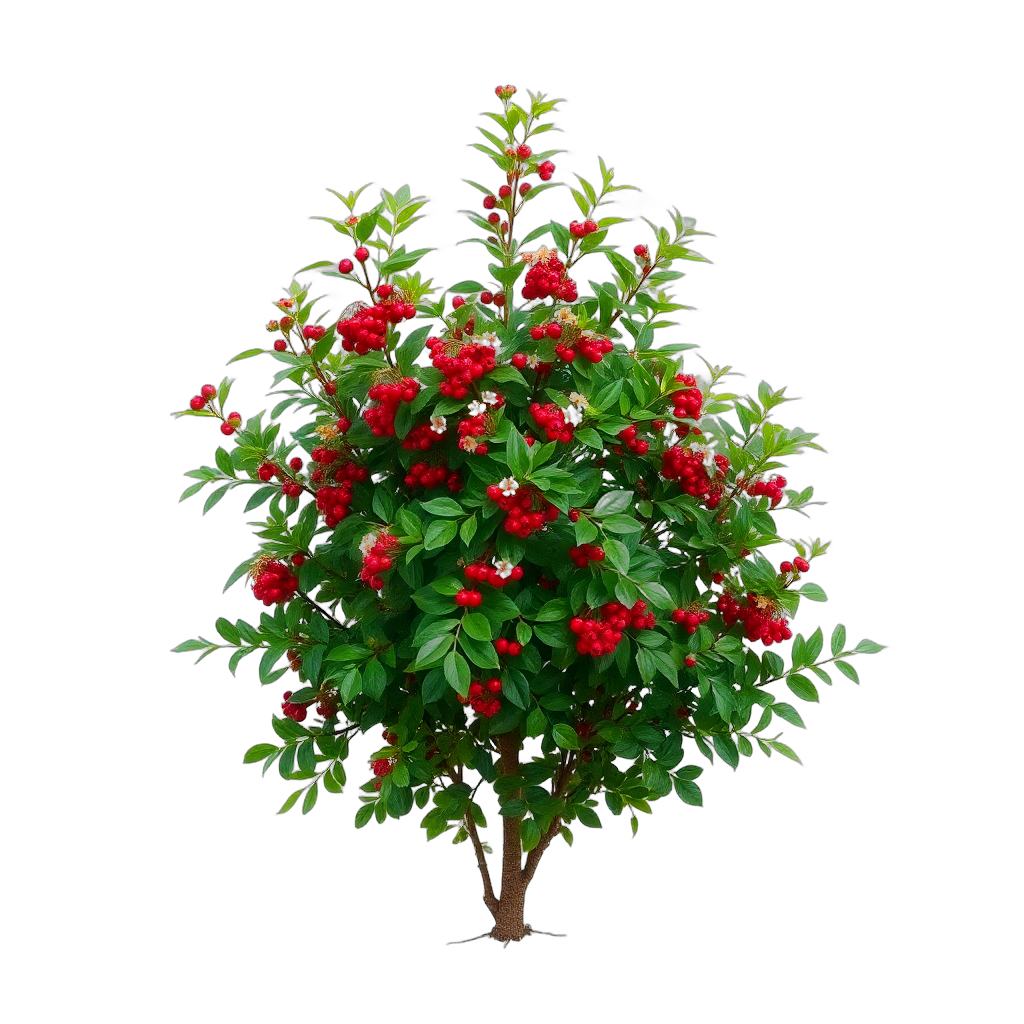
Coralberry
Symphoricarpos orbiculatus
grows to 6 feet, pink blooms in summer. Pollinator-friendly.

Fragrant Sumac
Rhus aromatica
grows to 4 feet, yellow blooms in spring. Attracts butterflies.

Vernal Witch Hazel
Hamamelis vernalis
medium-sized at 8 feet, yellow blooms in spring. Pollinator-friendly.

Black Locust
Robinia pseudoacacia
large shade tree reaching 50+ feet, white blooms in spring. Attracts butterflies.
Featured Grasses & Groundcovers for Cottage/English Gardens

Kentucky Bluegrass
Poa pratensis
low-growing ground cover, blooms in spring. Brown fall color.
Featured Flowers & Perennials for Cottage/English Gardens

Threadleaf Coreopsis
Coreopsis verticillata
low-growing ground cover, yellow blooms in summer. Attracts butterflies.

Water Plantain
Alisma plantago-aquatica
low-growing ground cover, white blooms in summer. Attracts butterflies.

Anemone Clematis
Clematis montana
reaches 20 feet tall, white,pink blooms in spring. Attracts hummingbirds.

Chinese Trumpet Vine
Campsis grandiflora
reaches 25 feet tall, orange,red blooms in summer. Attracts hummingbirds.
Bloom Calendar for Springfield
spring
Fragrant Sumac, Vernal Witch Hazel, Black Locustsummer
Threadleaf Coreopsis, Coralberry, Water Plantainfall
Purple Passionflowerwinter
Limited bloomsDesign Tips for Springfield (Zone 6b)
- Build borders up, never down — 10 to 14 inches of screened topsoil over Springfield's cherty limestone gives roses and peonies real root volume and turns the drainage problem into an advantage for Lavandula x intermedia 'Phenomenal' and Dianthus 'Firewitch'
- Let the limestone pick your palette: the near-neutral to alkaline pH that kills azaleas is exactly what catmint, lavender, dianthus, Baptisia australis and Echinacea paradoxa (the Ozark glade coneflower) evolved on, so lean into that plant list instead of fighting the geology
- Pick climbing roses that survive ice loads — Rosa 'William Baffin' and 'New Dawn' hold their canes through Springfield ice storms, while tender climbers get stripped off the arbor the way the January 2007 storm stripped the city's canopy
- Give every border a mildew-resistant backbone: Phlox paniculata 'Jeana', Monarda 'Jacob Cline' and Salvia nemorosa 'Caradonna' hold up through humid July nights, while old garden phlox and fussy hybrid teas turn gray by August
- Weave Missouri natives into the classic English look — Amsonia hubrichtii for gold fall color, Baptisia australis for the lupine effect that lupines won't deliver here, Aster oblongifolius 'Raydon's Favorite' for October, and Heuchera villosa 'Autumn Bride' for dry shade under the maples
- Mulch deep in late November and pull it back in March: a 3-inch hardwood layer buffers the freeze-thaw cycling that heaves shallow-rooted perennials out of thin Ozark soil, which is the single most common cause of overwintering losses in Greene County
Where to Source Plants in Springfield
Skip the big-box stores. These independent Springfield nurseries specialize in the plants that make cottage/english gardens thrive in Zone 6b.
Wickman's Garden Village
South Fort Avenue
90+ year family business offering a nursery, garden center, greenhouse, and landscape design.
Schaffitzel's Flowers & Greenhouses
East Atlantic
Historic greenhouse-based florist and nursery offering plants and custom arrangements.
Carson's Nurseries
South Campbell
Full-service nursery with landscape trees, annuals, perennials, shrubs, and an extensive rock yard.
Cottage/English Landscaping Costs in Springfield
| Project Scope | Estimated Cost |
|---|---|
| Front cottage garden (picket fence, arbor, brick walk, layered borders) | $9,000 – $18,000 |
| Single deep perennial border, 4ft x 30ft, raised soil + ~60 plants | $2,500 – $5,000 |
| Flagstone tea circle patio with surrounding borders | $6,000 – $14,000 |
| Cedar rose pergola over a rear dining terrace | $8,000 – $20,000 |
| Raised border soil build-up over chert (per cubic yard, delivered + placed) | $70 – $130 |
| AI visualization with ProScapeAI | Free to start |
Estimates based on Springfield, MO-area contractor rates as of 2026. Actual costs vary by site conditions, materials, and contractor.
Springfield Climate & Growing Zone
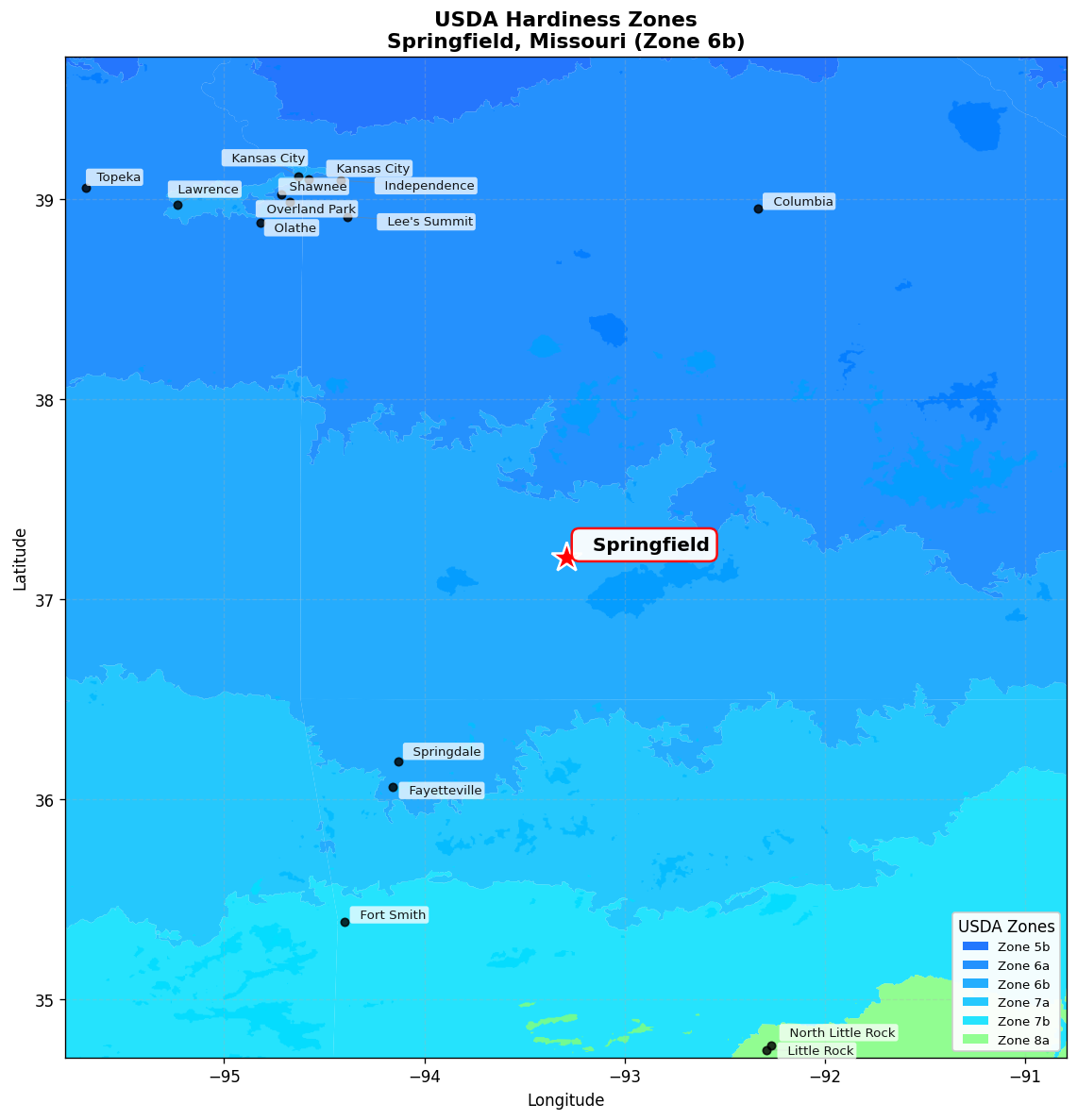
USDA Zone 6b
Hardiness zone for Springfield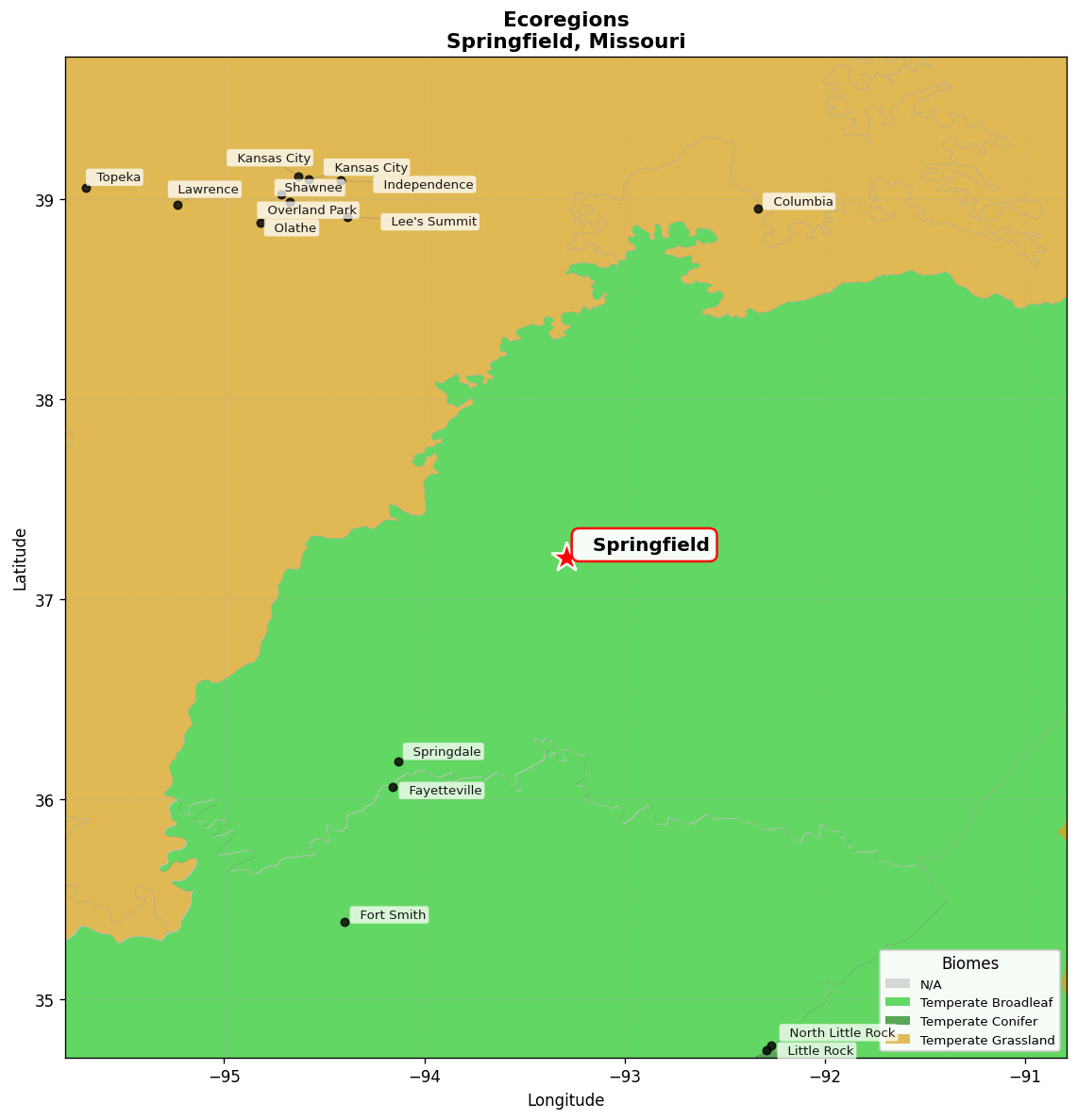
Ozark Highlands mixed forests
Native ecoregionFrequently Asked Questions
How much does a cottage garden cost in Springfield, MO?
Southwest Missouri labor runs 20–30% under national metro rates, which is why full cottage installs are attainable here. A picket-fenced front garden with brick walk, arbor and layered borders on a typical 600 sqft Rountree frontage lands at $9,000–18,000 installed. A single deep perennial border, 4 feet by 30 feet with raised soil and roughly 60 plants, runs $2,500–5,000. A flagstone tea circle with surrounding borders is $6,000–14,000. Doing your own planting and hiring out only the flagstone and arbor typically cuts the total by 40%.
Will lavender, roses and peonies actually survive Springfield winters?
Yes, and Zone 6b is the reason. Winter lows of -5°F to 0°F deliver the chilling hours peonies and bearded iris require, so Paeonia 'Festiva Maxima' and 'Coral Charm' will outlive the house. Roses need cultivar discipline against the humidity — Rosa 'New Dawn', 'William Baffin', 'Olivia Rose Austin' and the Knock Out series are the reliable performers, while fussy hybrid teas blackspot badly. Lavender is the one that fails, and the cause is always winter wet, not cold: plant Lavandula x intermedia 'Phenomenal' in a raised bed with a gravel collar at the crown and it sails through.
How do I plant a border when I hit limestone six inches down?
Stop digging and build up. Springfield's Ozark Plateau soils are cherty silt loams sitting on Burlington limestone bedrock, often only 6–18 inches down, and trying to excavate a bed just creates a rock-lined bathtub that drowns roots. Instead, kill the turf, break up whatever soil you have with a broadfork, and build a 10–14 inch raised border of screened topsoil blended with compost and pea gravel on top. Local rock yards sell chert and limestone screenings by the yard cheaply. Deep-rooted natives like Amsonia hubrichtii and Baptisia australis will find their own way into the bedrock fractures over time.
Which plants should I avoid because of Springfield's alkaline soil?
Anything that demands acid soil will go chlorotic over that limestone bedrock — skip azaleas, rhododendrons, blueberries, pin oak and Ilex glabra, all of which yellow between the veins and slowly decline no matter how much fertilizer you throw at them. Substitute Hydrangea arborescens 'Annabelle' and Hydrangea quercifolia 'Alice' for the acid-loving shrubs, Quercus muehlenbergii or Quercus shumardii for pin oak, and Viburnum carlesii for the spring-fragrance slot. Note that Hydrangea macrophylla will bloom pink here rather than blue, and no amount of soil acidifier holds the color for long.
When should I plant a cottage garden in Springfield?
Late September through early November is the best window — soil is still warm, fall rains do the watering, and perennials root all winter to hit spring already established. Mid-March through late April is the second window, keeping in mind Springfield's average last frost falls around April 15 and a mid-April cold snap is routine. Avoid planting from late June through August: the flash droughts and 95°F stretches that end Springfield summers kill more new perennials than winter ever does. Bare-root roses and peonies go in during the dormant window from November to March.
Do I need a permit, and what about sinkholes?
Planting beds, arbors under most size thresholds and gravel or flagstone paths need no permit in the City of Springfield. Fences, retaining walls above 4 feet and any roofed structure do, and Nixa, Ozark and Republic each run their own reviews with different thresholds. The karst issue is the local one worth taking seriously: Greene County has thousands of mapped sinkholes, and grading or stormwater work inside a designated sinkhole drainage basin triggers additional city review. Never direct a downspout, French drain or patio runoff toward a depression in your yard — in karst country that goes straight to the aquifer.