4 Desert Garden Ideas for Lubbock, TX | Zone 7b West Texas Shortgrass Prairie Xeriscape
Native plants from the Western shortgrass prairie (Zone 7b) — Cold semi-arid climate
Why Desert/Xeriscape Gardens in Lubbock?
Lubbock sits on the western shortgrass prairie ecoregion of the South Plains of Texas — a landscape defined by the Llano Estacado’s vast flat tableland, native buffalo grass, blue grama, and a surprising diversity of drought-adapted shrubs, wildflowers, and cacti that have evolved to thrive in the region’s extreme conditions. This is a landscape of blue sky, strong wind, and vivid seasonal contrast — spring wildflowers emerging from the bare brown earth, summer thunderstorms that green the plains overnight, and the extraordinary autumn displays of native grasses turning copper and gold across the flat horizon.
Lubbock averages only 18–20 inches of rainfall annually and experiences frequent summer drought with temperatures regularly exceeding 100°F. Strong, persistent winds make evapotranspiration rates extremely high — landscapes require either drought-tolerant native plants or expensive irrigation to survive. The South Plains’ water supply depends on the declining Ogallala Aquifer, making water conservation in landscaping a genuine long-term economic and community issue for every Lubbock homeowner.
Lubbock’s neighborhoods — Tech Terrace, Maxey Park, Leawood, and the Monterey area — feature mid-century ranch homes and newer suburban construction that are well-suited to the horizontal, sparse beauty of a shortgrass prairie xeriscape design. The region’s native plant palette — prairie grasses, cenizo (Texas sage), yucca, prickly pear, and the seasonal wildflowers of the Llano Estacado — creates landscapes of remarkable arid beauty.
4 Desert/Xeriscape Design Ideas for Lubbock
The Shortgrass Prairie Front Yard
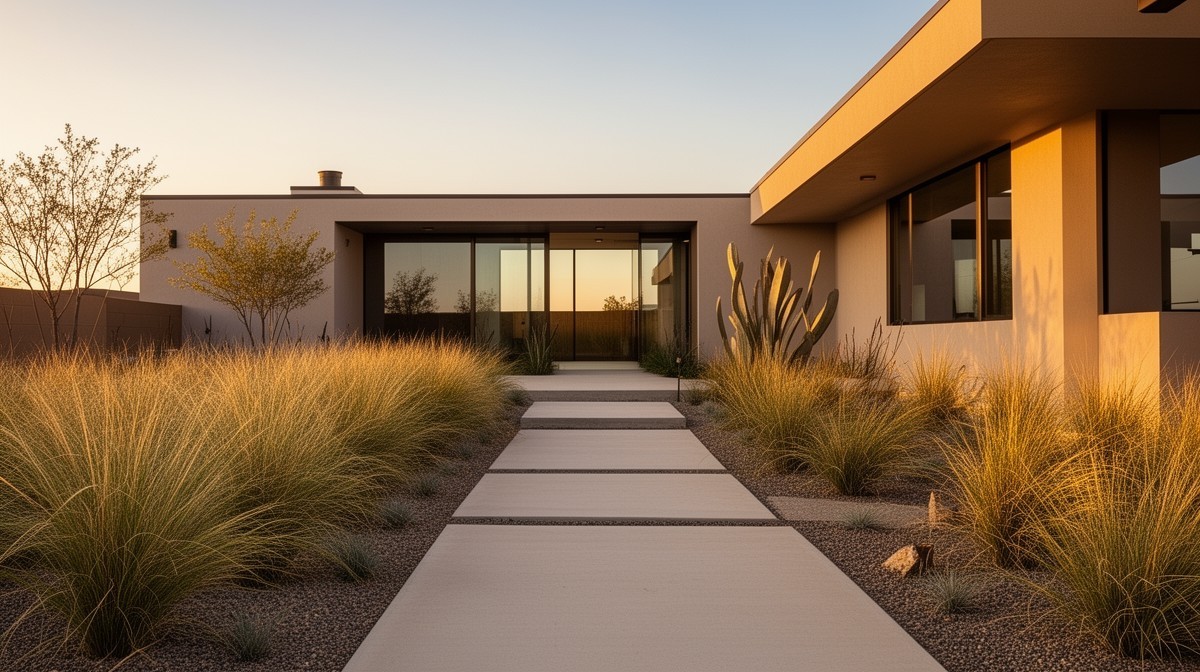
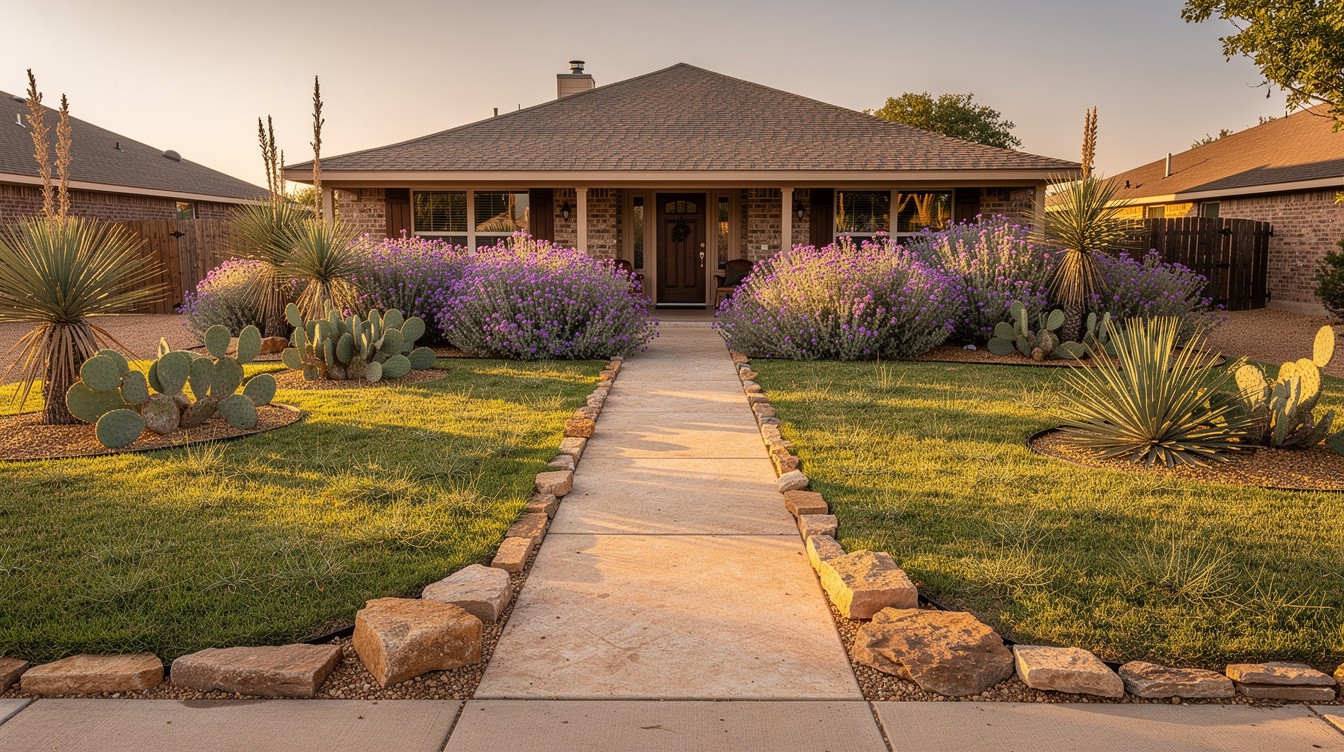
$4–10/sqftA Lubbock front yard transformed from thirsty turf to a South Plains native landscape: native buffalo grass (Buchloe dactyloides) or blue grama grass covers the lawn areas in a low-water native turf alternative. A bold mass planting of cenizo (Texas sage, Leucophyllum frutescens) creates the signature shrub layer — exploding in purple after every rain. Native prickly pear cactus clusters and yucca (Spanish dagger) add bold sculptural forms at corners and accent points. Decomposed granite in warm golden-buff covers any non-planted areas. A simple limestone or concrete path from the sidewalk to the front entry is edged in rough caliche or flat limestone. When summer rain arrives and the entire cenizo explodes in simultaneous purple bloom, this front yard creates a neighborhood spectacle unique to the South Plains.
The Agave and Yucca Sculpture Garden
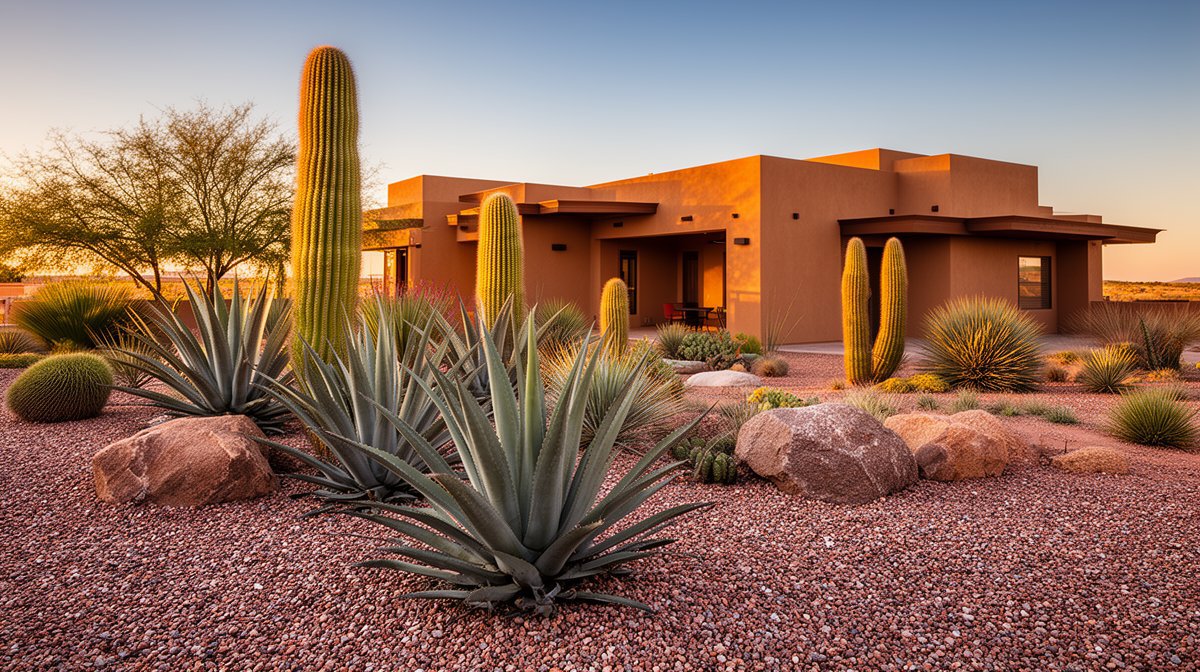
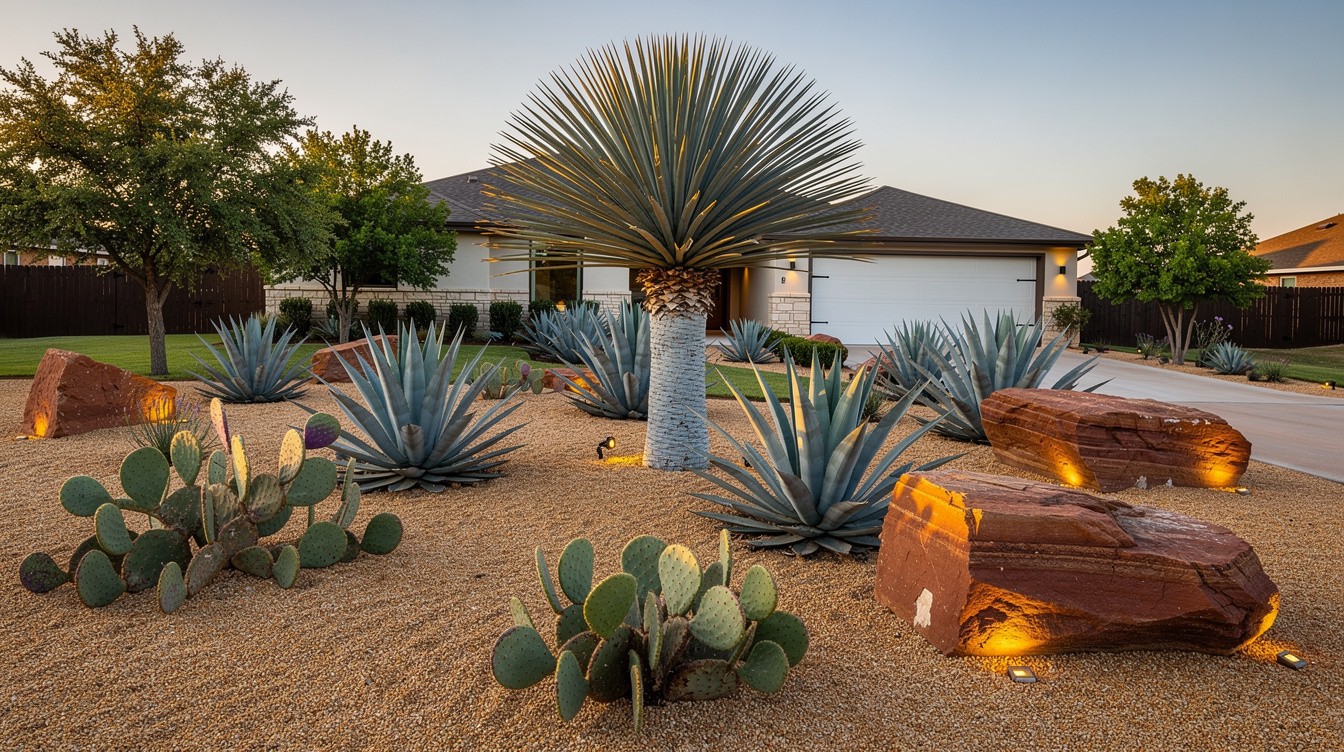
$5–12/sqftA Lubbock front or side yard designed as a xeriscape sculpture garden: large specimen yucca (Yucca rostrata, beaked yucca, with its beautiful blue-grey trunk and palm-like crown) anchors the center. Agave parryi clusters create mid-ground sculptural forms. Native Opuntia prickly pear in several species creates informal low-height forms. Placed Permian red sandstone boulders (sourced locally from West Texas quarries) add warm color and natural mass to the composition. A fine golden DG groundplane ties the elements together. Low-voltage LED uplighting on the yucca specimens and boulders creates a dramatic evening display. This design captures the full sculptural quality of West Texas desert plants and reads as striking from across the street.
The Sheltered Lubbock Courtyard
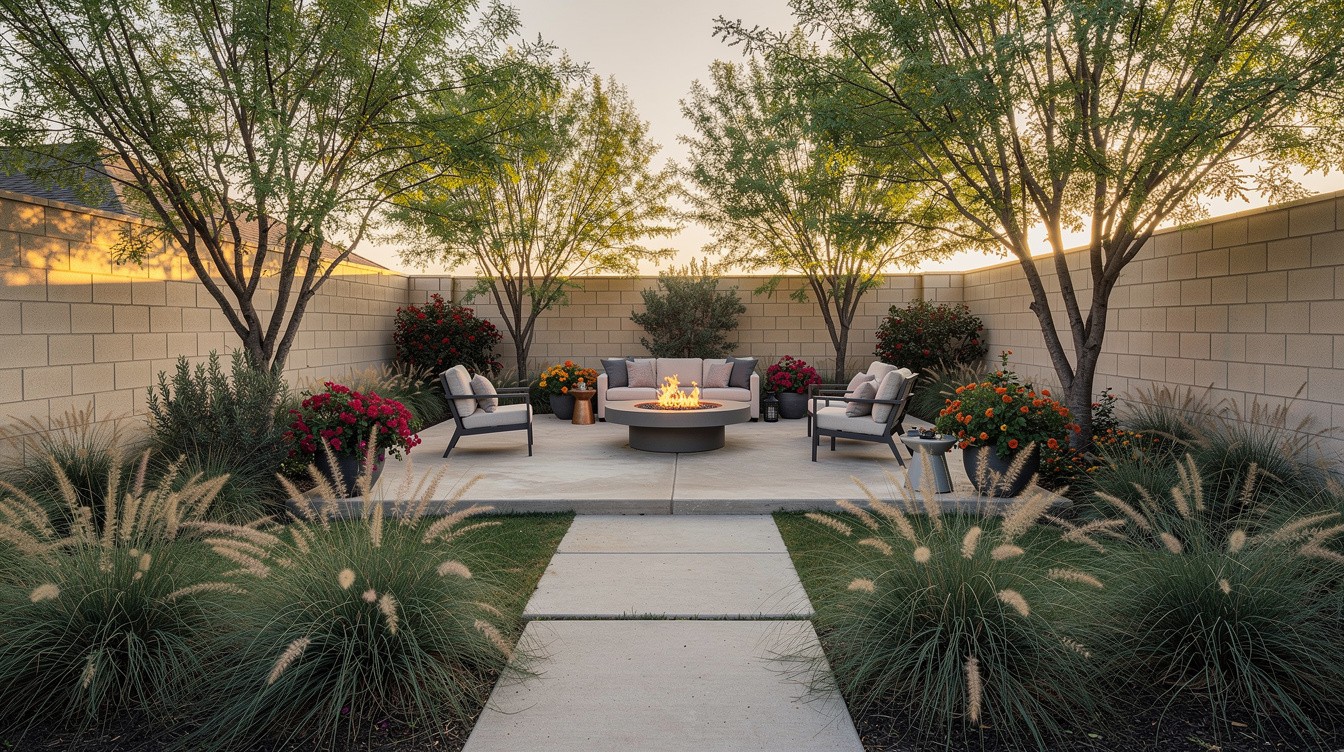
$12–25/sqftA Lubbock backyard designed as a windbreak courtyard for protection from the South Plains’ persistent west wind: a masonry or CMU wall on the west and north sides creates a wind-protected outdoor room. Inside the courtyard, a simple concrete or flagstone patio holds a gas fire pit for cool-weather evenings. Texas ebony or retama (Jerusalem thorn) trees provide shade from the intense summer sun. Container plantings of bougainvillea, rosemary, and ornamental peppers add color and fragrance within the sheltered space. Native grasses — gulf muhly and blue grama — create movement and texture along the courtyard walls. The wind protection transforms Lubbock’s backyard from an exposed, uncomfortable space into a genuinely usable outdoor room through March–May and September–November.
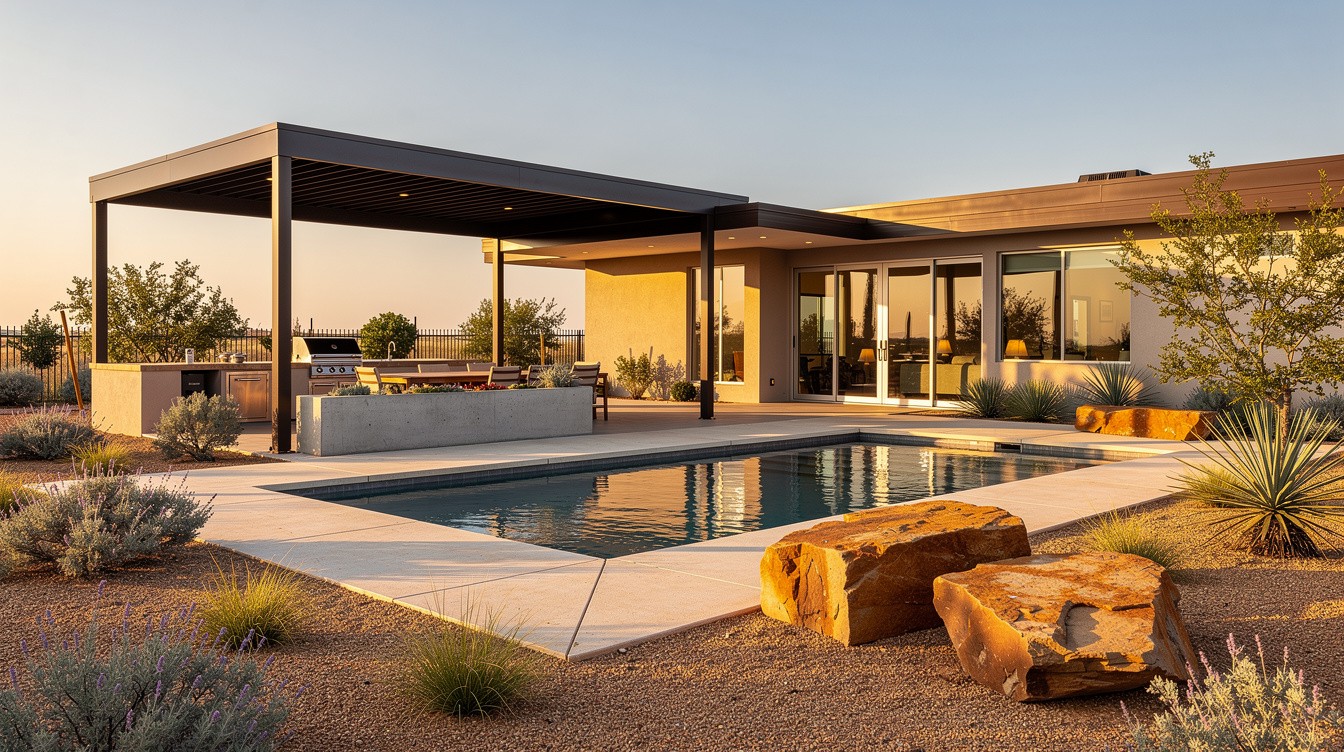
The Desert-Modern Pool and Landscape
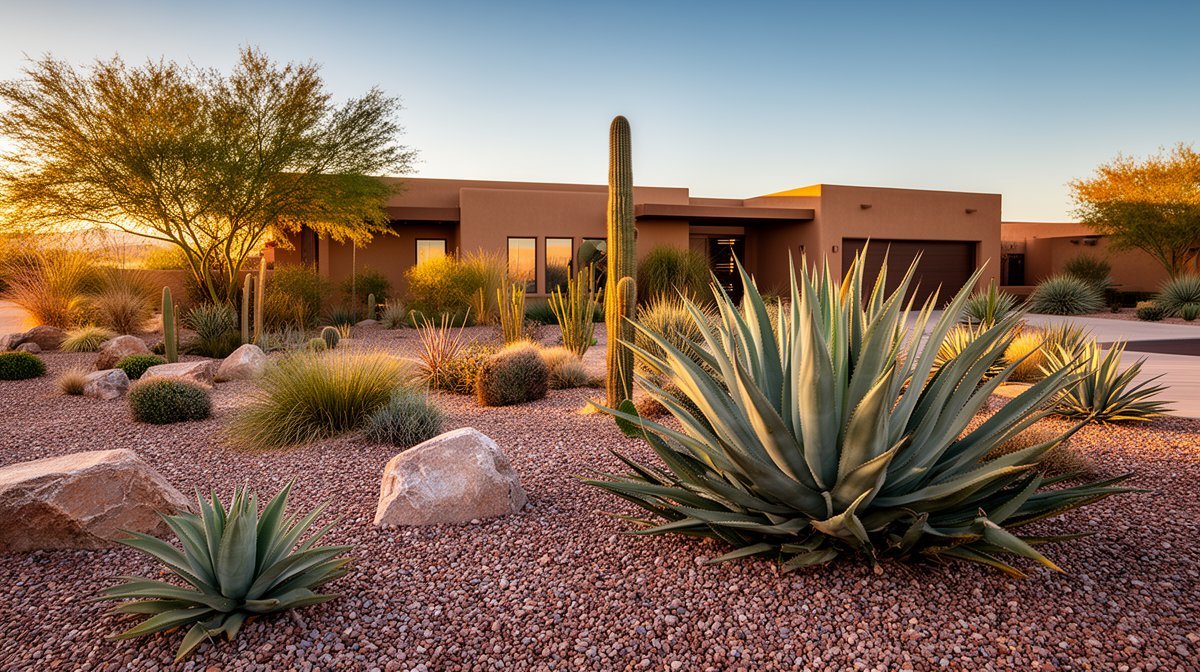
$25–55/sqft (complete pool surround area)A premium Lubbock backyard combining a pool with a West Texas desert-modern landscape: a rectangular pool with a concrete or travertine deck is used from May through September. A solid patio cover (Alumawood or steel) provides essential shade from Lubbock’s intense summer sun. Native cenizo, yucca, and native grasses frame the pool perimeter in DG groundplane. Placed West Texas sandstone boulders add warm regional character. An outdoor kitchen with stainless and concrete finishes anchors the covered dining area. The entire landscape outside the pool deck is native-planted and needs essentially no irrigation after the first establishment season, creating a pool landscape with very low ongoing maintenance costs.
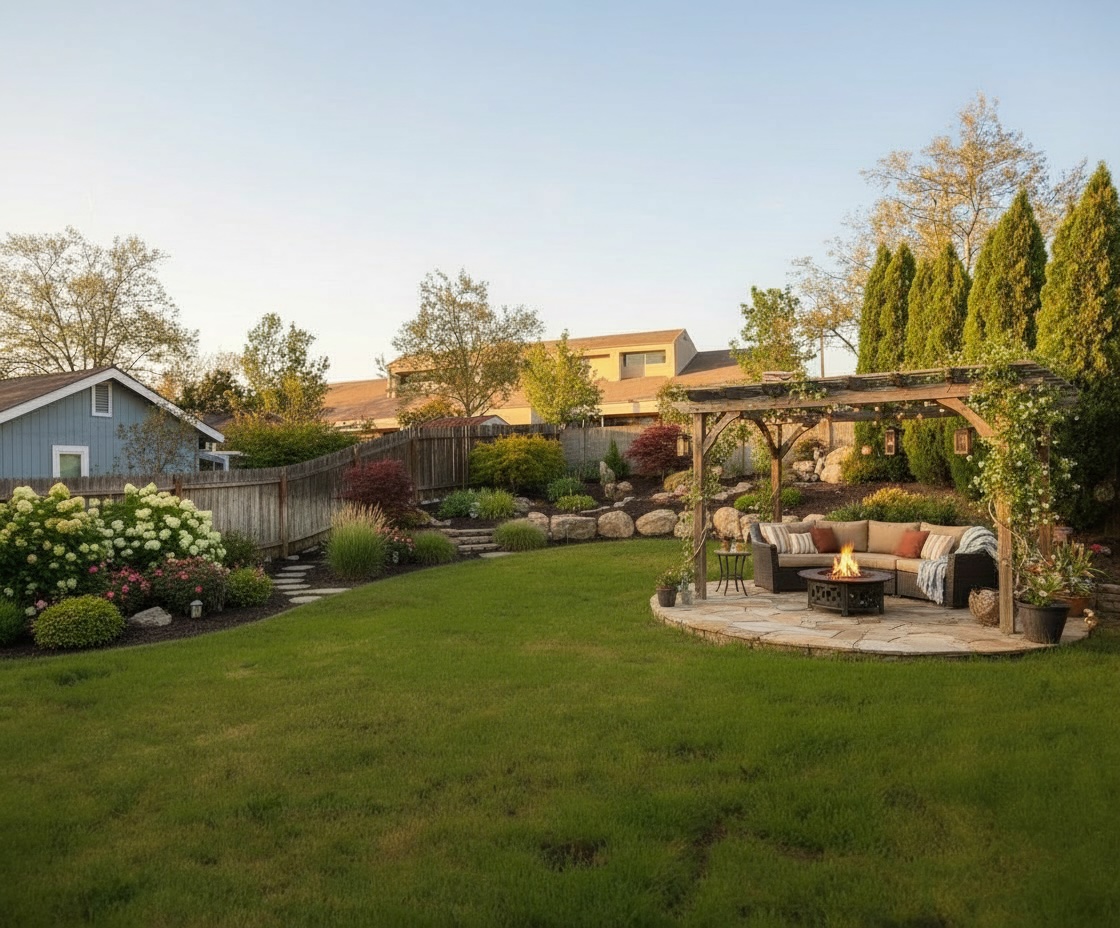
See how a desert/xeriscape garden looks on YOUR property
Upload a photo of your Lubbock yard and visualize your dream garden in seconds.
Try ProScapeAI Free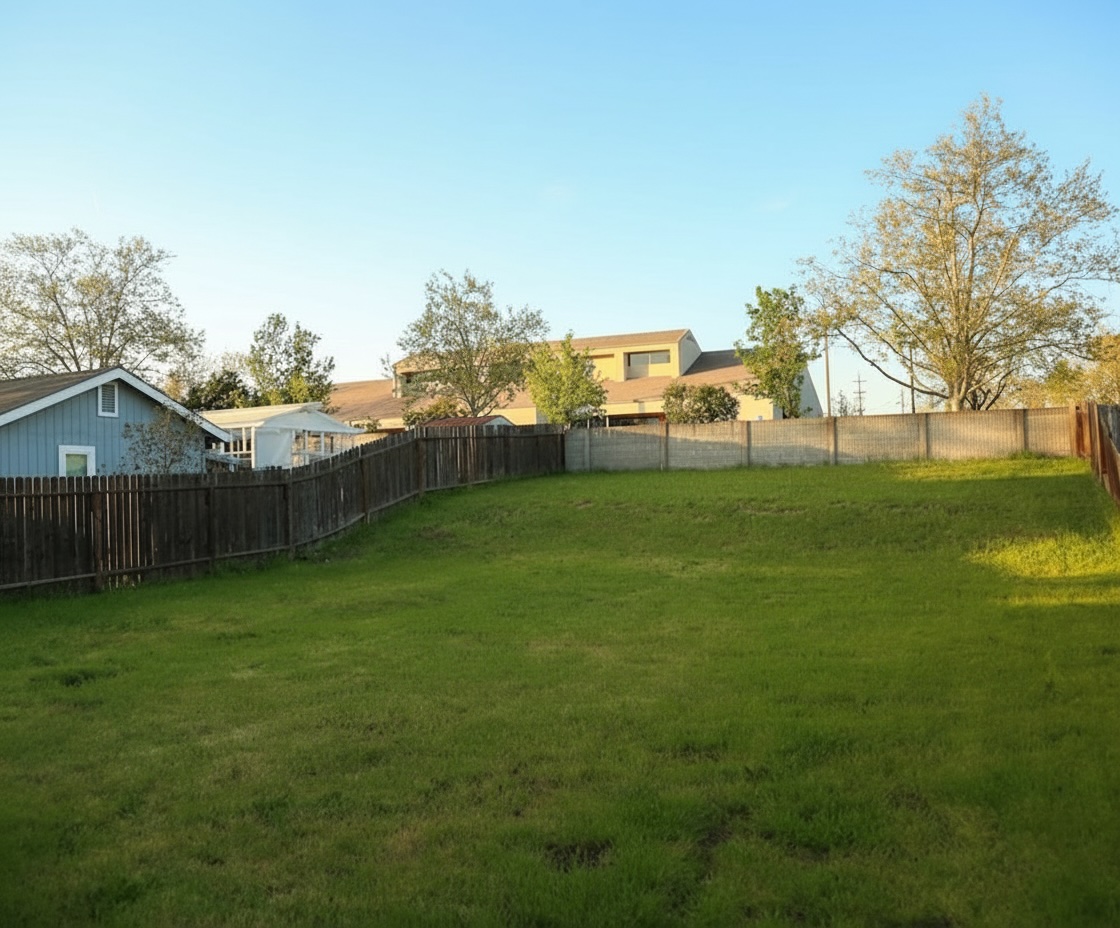
Featured Trees & Shrubs for Desert/Xeriscape Gardens
Browse all 160 plants for Lubbock
Golden Currant
Ribes aureum
grows to 6 feet, yellow blooms in spring. Attracts hummingbirds.

Cabbage Palm
Sabal palmetto
reaches 40 feet tall, white,yellow blooms in spring. Pollinator-friendly.

Windmill Palm
Trachycarpus fortunei
reaches 20 feet tall, yellow blooms in spring. Pollinator-friendly.
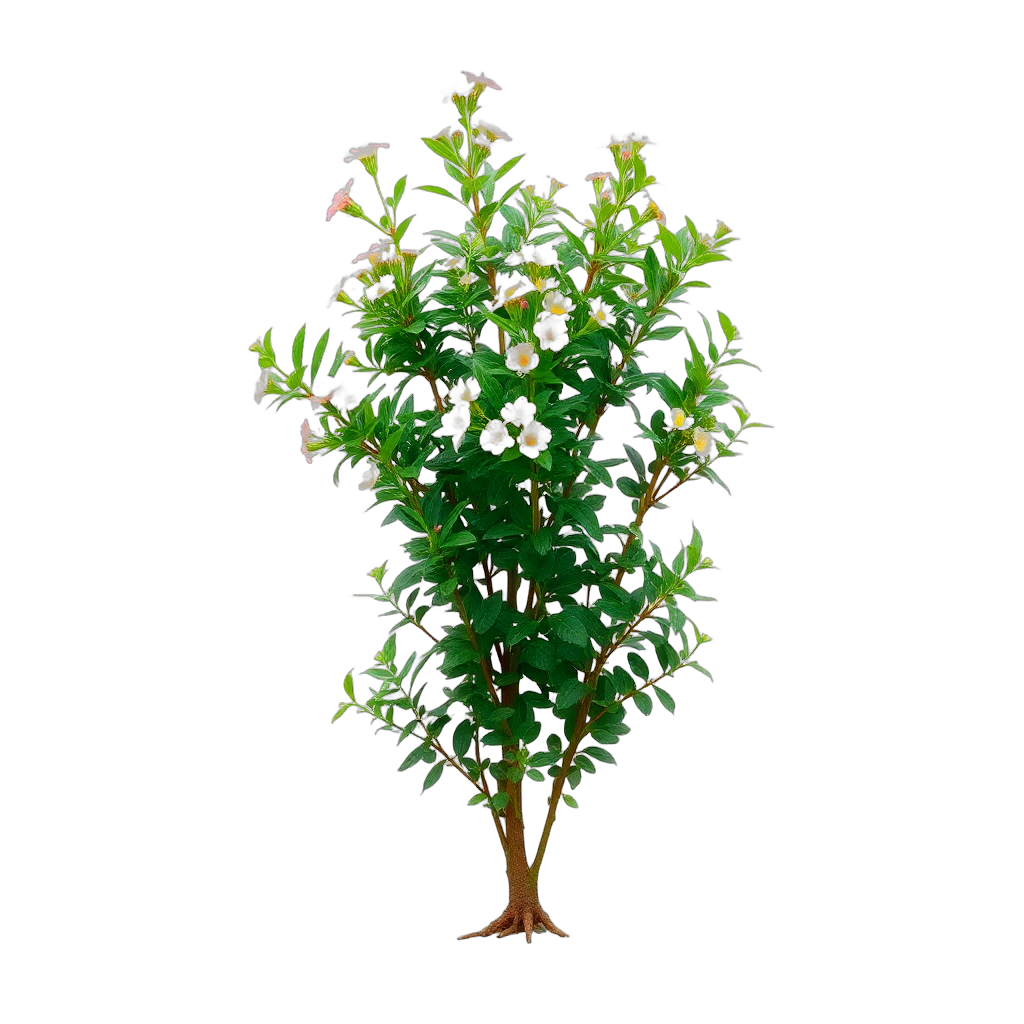
Abbotswood Potentilla
Potentilla fruticosa 'Abbotswood'
low-growing ground cover, white blooms in summer. Attracts butterflies.
Featured Grasses & Groundcovers for Desert/Xeriscape Gardens
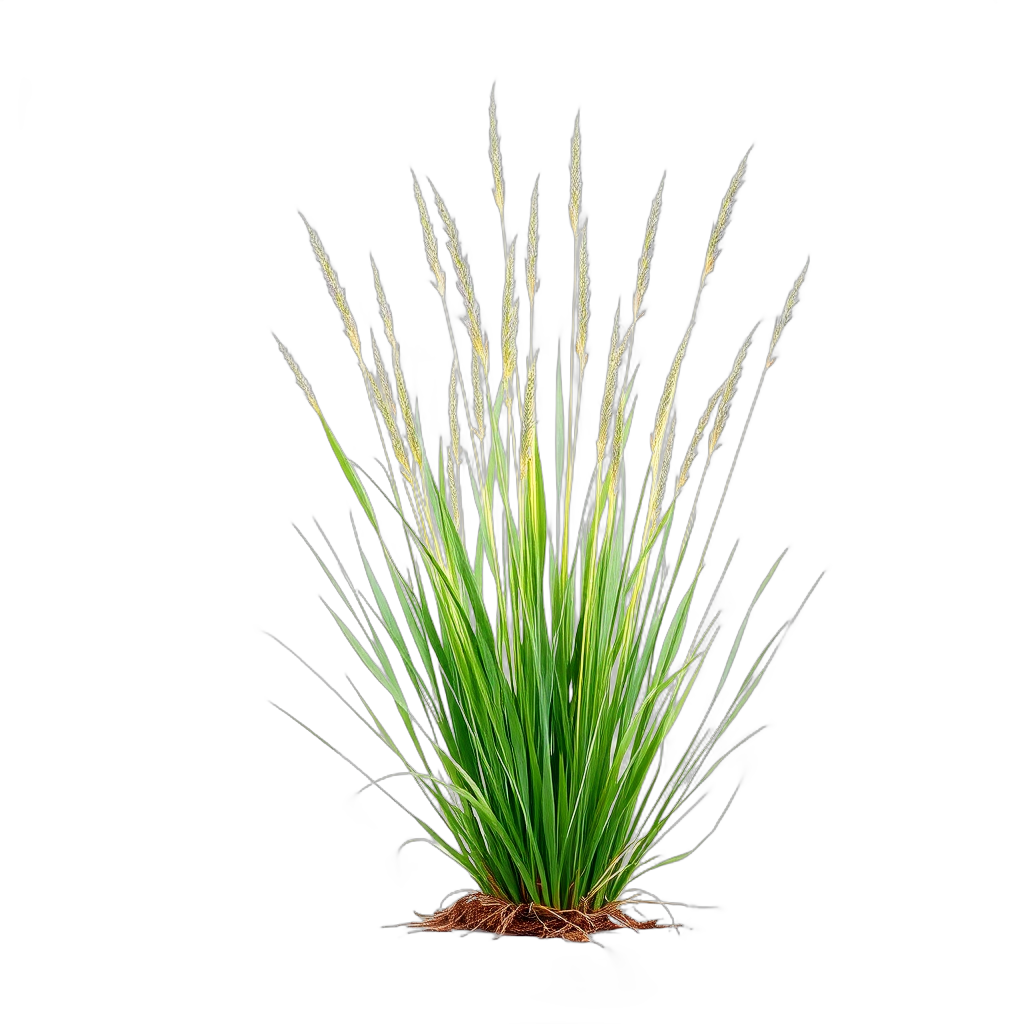
Blue Grama Grass
Bouteloua gracilis
low-growing ground cover, purple blooms in summer. Yellow fall color.
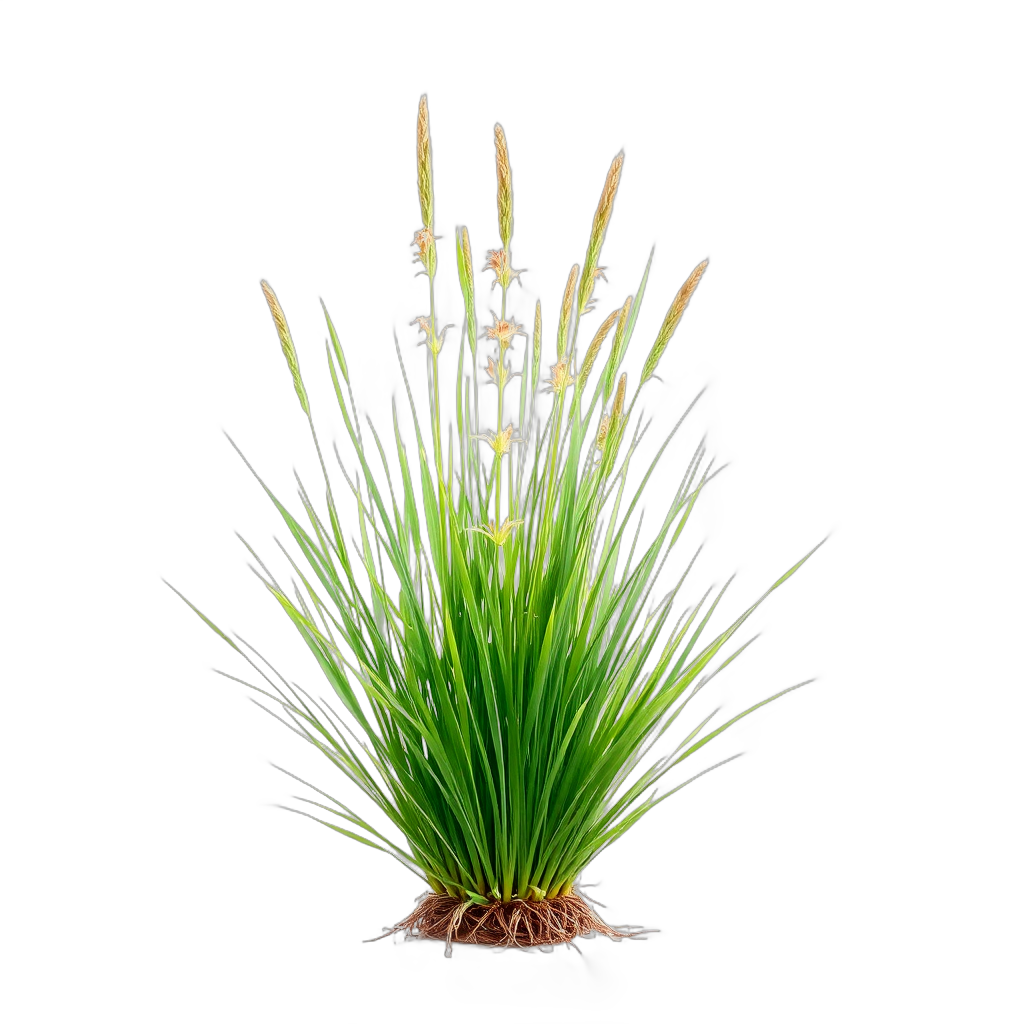
Buffalo Grass
Buchloe dactyloides
low-growing ground cover, blooms in summer. Yellow fall color.
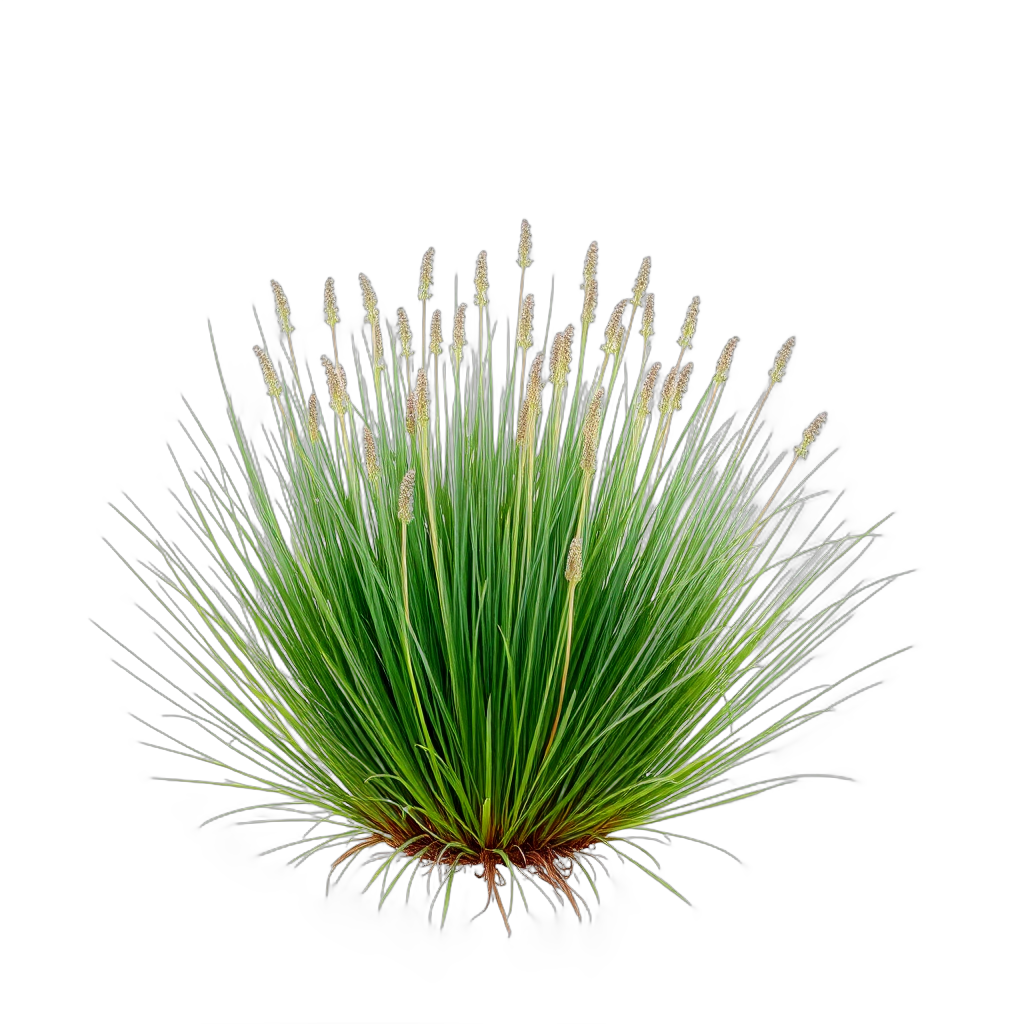
Little Bluestem
Schizachyrium scoparium
grows to 3 feet, blooms in summer. Red,burgundy fall color.
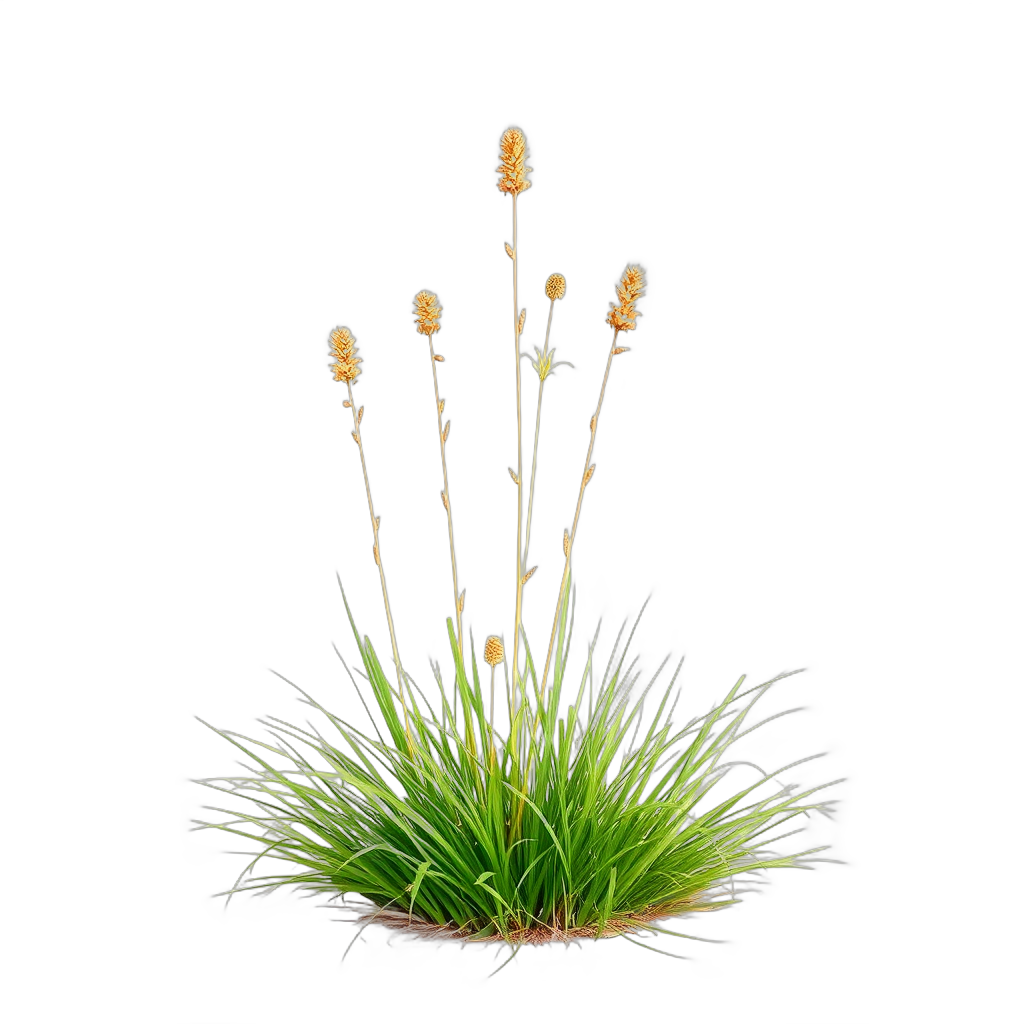
Sand Dropseed
Sporobolus cryptandrus
low-growing ground cover, blooms in summer. Orange fall color.
Featured Flowers & Perennials for Desert/Xeriscape Gardens
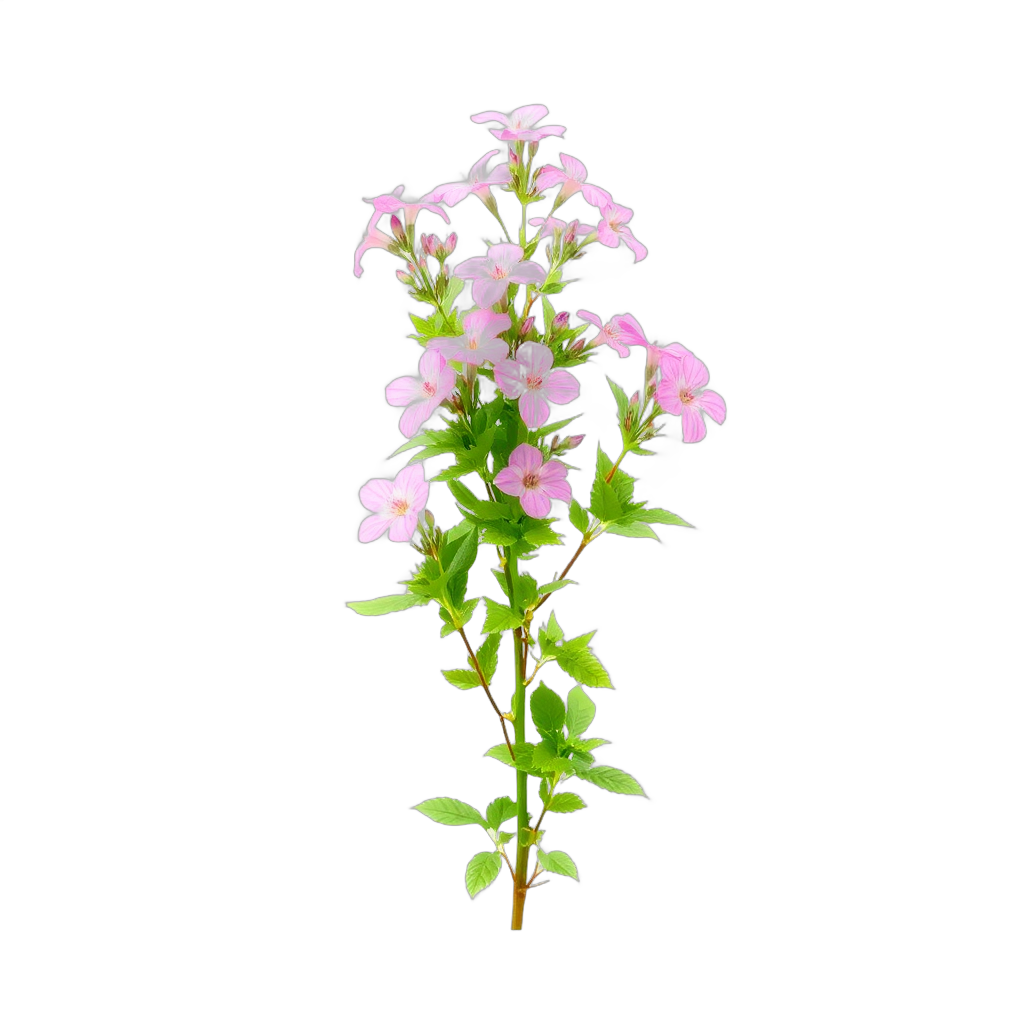
Hood's Phlox
Phlox hoodii
low-growing ground cover, white blooms in spring. Attracts butterflies.
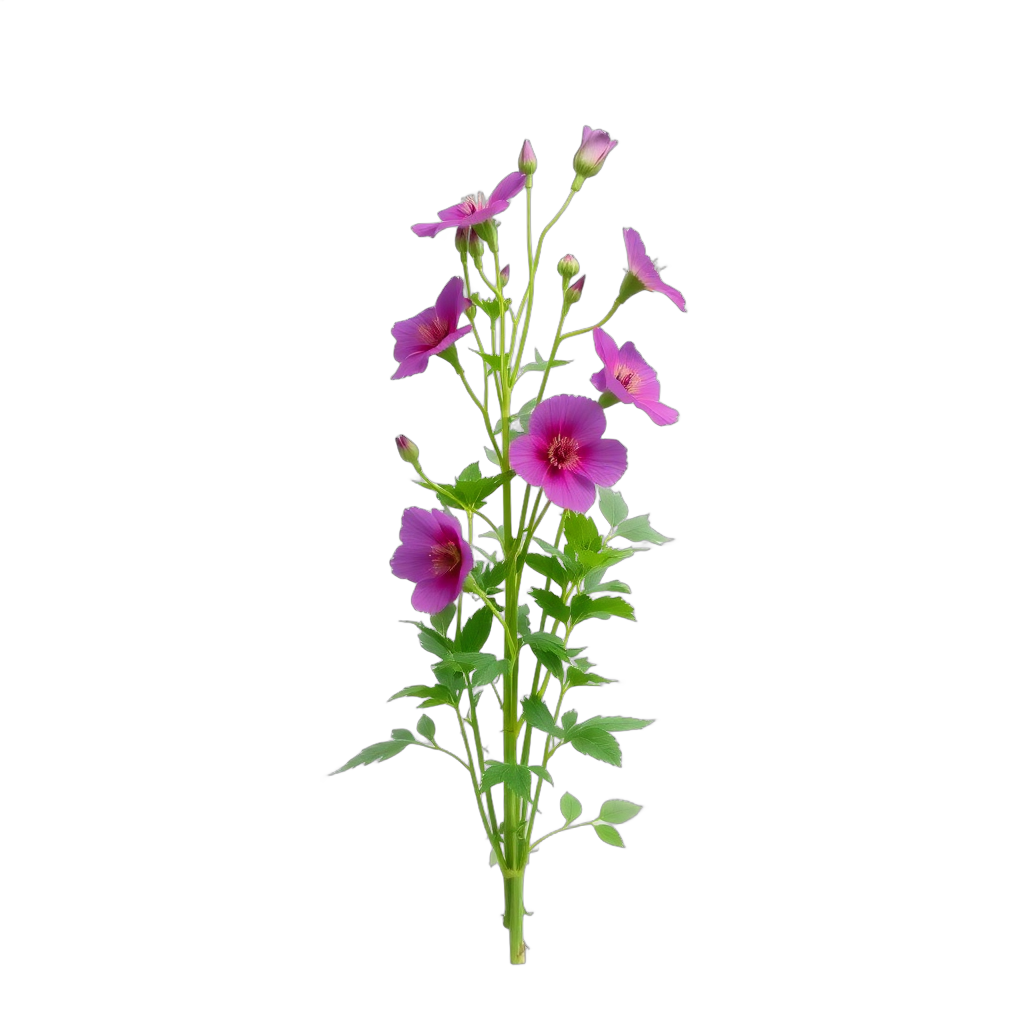
Purple Poppy Mallow
Callirhoe involucrata
low-growing ground cover, purple blooms in summer. Attracts butterflies.
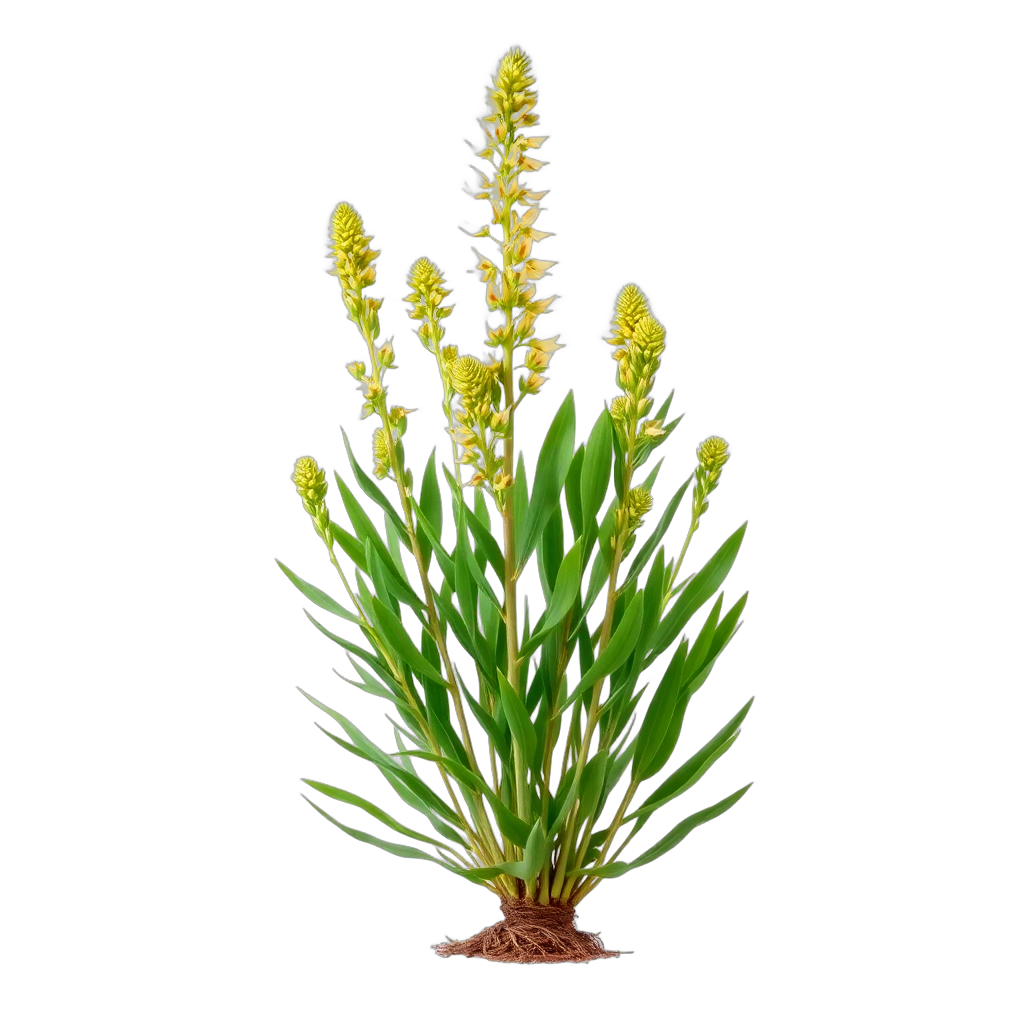
Soapweed Yucca
Yucca glauca
low-growing ground cover, white blooms in spring. Pollinator-friendly.
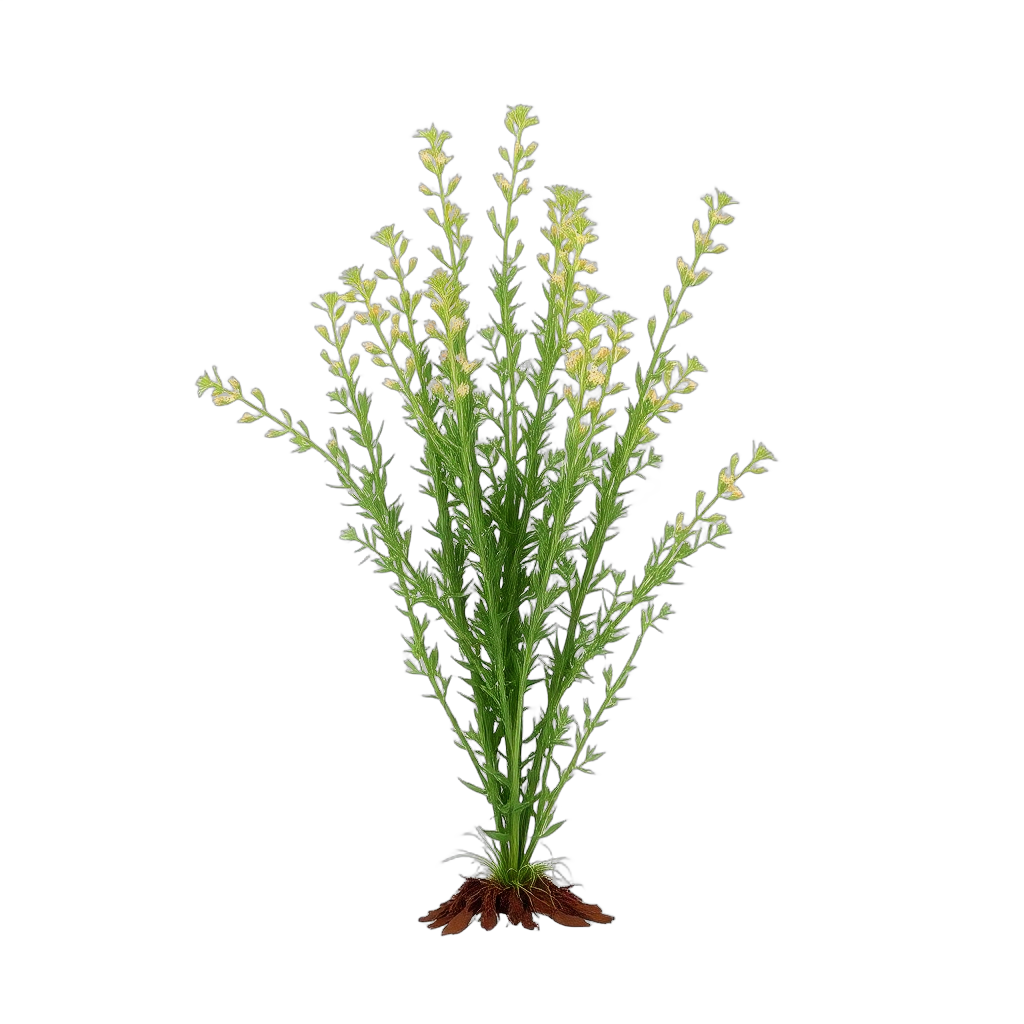
White Sage
Artemisia ludoviciana
low-growing ground cover, white blooms in summer. Fragrant.
Zone and sun checks come from our database — confirm with your local nursery before you buy.
Bloom Calendar for Lubbock
spring
Hood's Phlox, Soapweed Yucca, Golden Currantsummer
Purple Poppy Mallow, White Sage, Blue Grama Grassfall
Anise Sagewinter
Limited bloomsDesign Tips for Lubbock (Zone 7b)
- Plant cenizo (Texas sage) as the signature shrub of any Lubbock xeriscape — it needs zero irrigation after establishment and erupts in brilliant purple within 24–48 hours of every significant rainfall; a mass of cenizo in bloom after a summer thunderstorm is one of the most spectacular plant displays available anywhere in West Texas
- Use Permian red sandstone from West Texas quarries as boulder and accent material in any Lubbock xeriscape design — the warm red-brown color is regionally authentic, contrasts beautifully with blue-grey yucca and silver-grey cenizo foliage, and connects the landscape to the Llano Estacado’s geological character
- Plant buffalo grass plugs in April–May in Lubbock for the fastest establishment — the warm soil and increasing day length accelerate runner spread, and a spring-planted buffalo grass lawn fills in by August with a single deep-soak irrigation per week during the establishment period
- Install a drip irrigation system on a smart weather-based controller for any Lubbock xeriscape planting — even native South Plains plants need establishment irrigation through the first summer; after establishment, set the controller to water only during actual drought periods rather than on a fixed schedule
- Add LED uplighting on yucca rostrata (beaked yucca) specimens in any Lubbock modern xeriscape — the architectural palm-like form with blue-grey leaves on a sculptural trunk is extraordinarily beautiful when backlit against Lubbock’s dark South Plains sky, creating a landscape focal point visible from the street
- Build masonry windbreak walls on the west and northwest sides of any Lubbock patio or outdoor seating area — the South Plains’ persistent west winds are the most significant factor reducing outdoor comfort in Lubbock, and a 6-foot masonry wall creates a dramatically calmer microclimate that transforms patio usability in spring and fall
Where to Source Plants in Lubbock
Skip the big-box stores. These independent Lubbock nurseries specialize in the plants that make desert/xeriscape gardens thrive in Zone 7b.
Little Red Nursery
Lubbock
Lubbock’s premier garden center for 50+ years; voted Best Garden Center in Texas by Southern Living; indoor and outdoor plants
King Nursery
Lubbock
Wide variety of perennials, annuals, shrubs, and trees selected for Lubbock’s South Plains climate
Tree World Nursery
Lubbock
Quality trees and shrubs at excellent prices; highly rated by Lubbock gardeners for selection and service
Gardener’s Outlet
Lubbock
Locally owned; 90% of plants grown on-site; herbs, vegetables, annuals, perennials, trees, and shrubs for Lubbock conditions
Tom’s Tree Place
Lubbock
Family-owned landscape design-build company since 1950; trees, shrubs, and complete landscape services
Desert/Xeriscape Landscaping Costs in Lubbock
| Project Scope | Estimated Cost |
|---|---|
| Front yard turf-to-xeriscape with buffalo grass and cenizo (800–1,200 sqft) | $3,500 – $10,000 |
| Masonry windbreak walls (west/north courtyard sides, 40 linear feet) | $4,000 – $12,000 |
| Concrete or flagstone patio (200–350 sqft) | $2,500 – $7,000 |
| Solid patio cover or Alumawood shade structure (16x20 ft) | $5,000 – $15,000 |
| West Texas sandstone boulder placement (5–7 medium boulders) | $800 – $2,500 |
| Full backyard xeriscape redesign with pool surround | $10,000 – $28,000 |
| AI visualization with ProScapeAI | Free to start |
Estimates based on Lubbock, TX-area contractor rates as of 2026. Actual costs vary by site conditions, materials, and contractor.
Lubbock Climate & Growing Zone
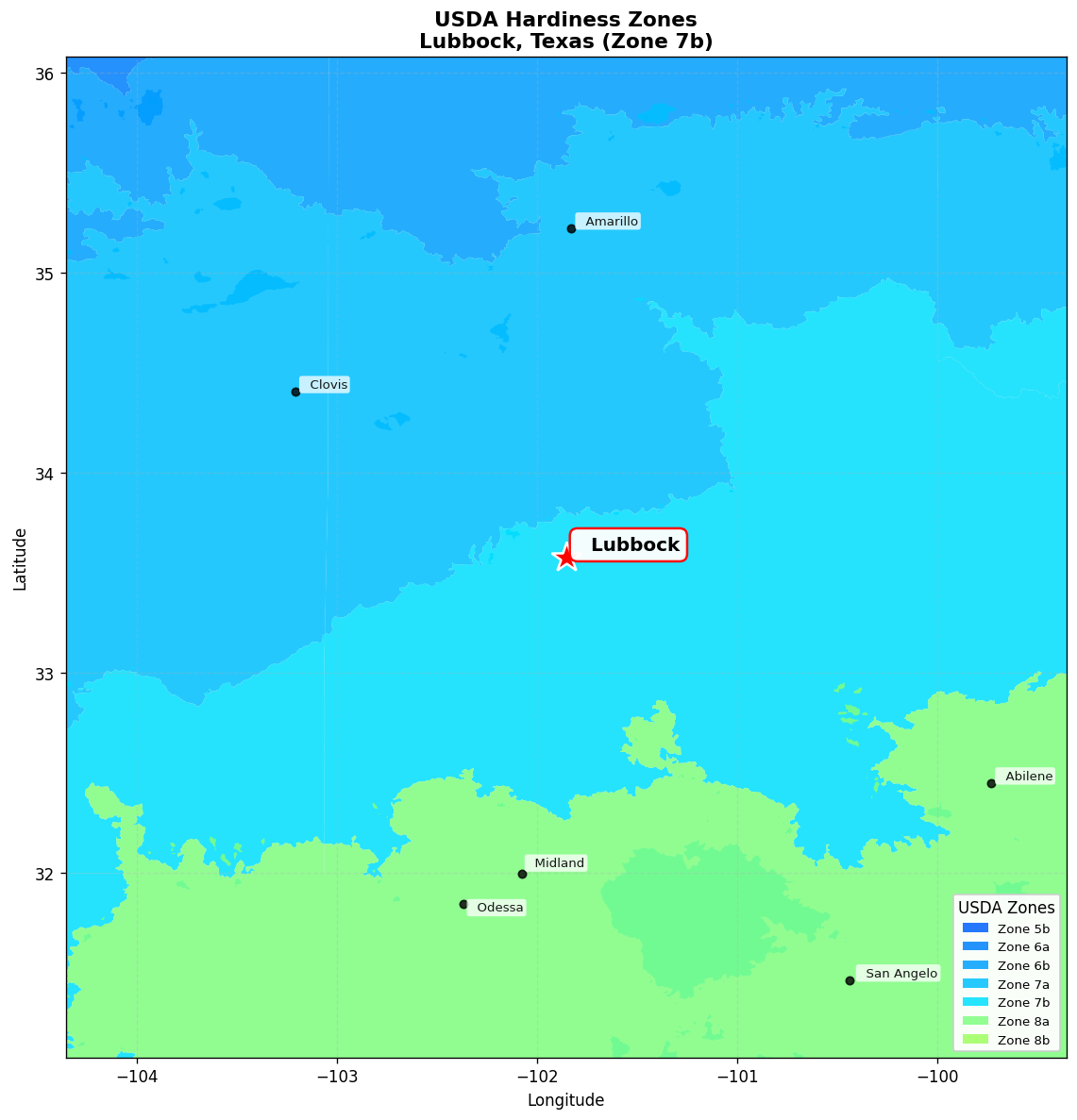
USDA Zone 7b
Hardiness zone for Lubbock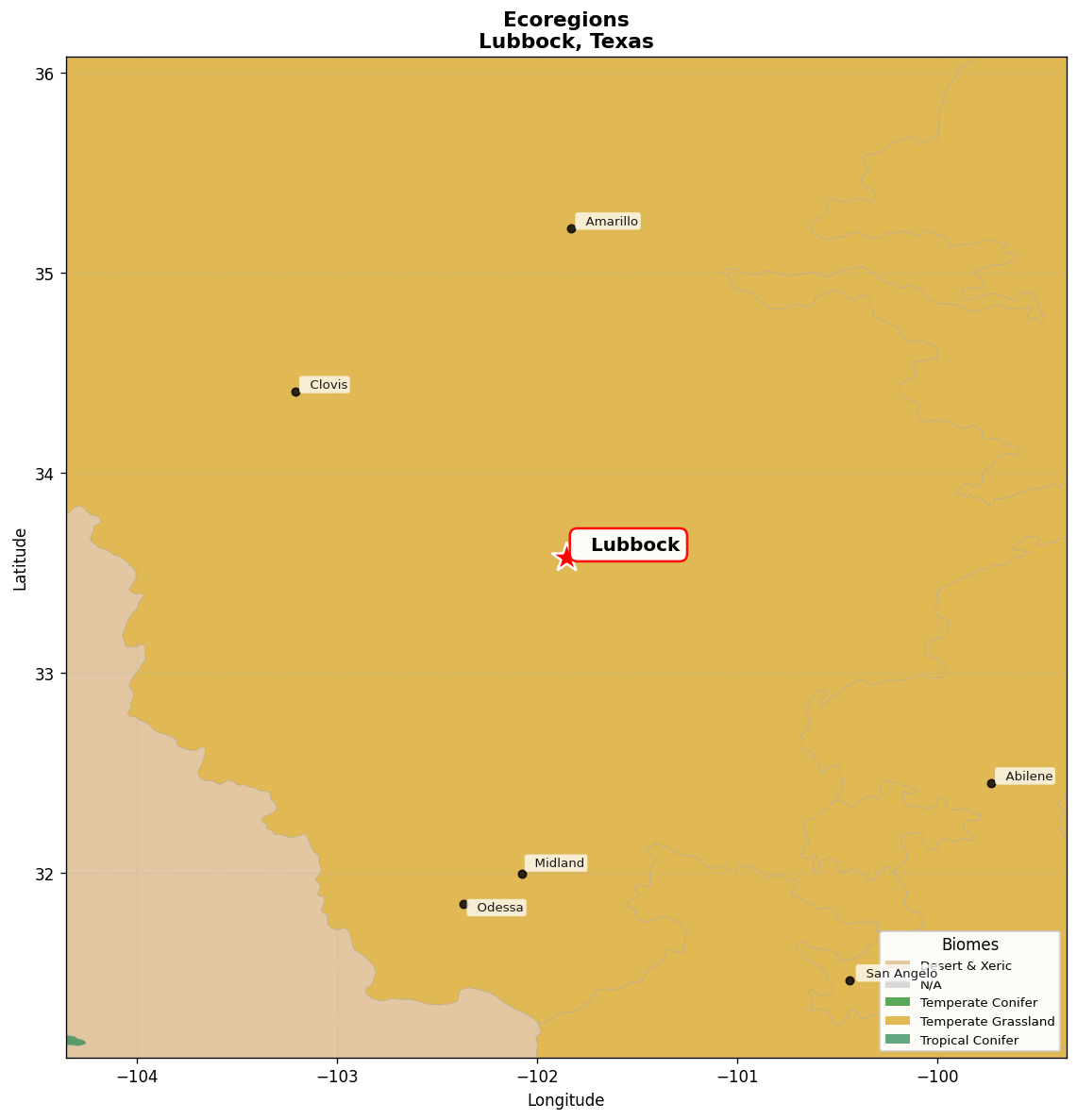
Western shortgrass prairie
Native ecoregionFrequently Asked Questions
What plants survive Lubbock’s extreme heat and drought?
Lubbock’s extreme climate (100°F+ summers, 20-inch rainfall, persistent wind) requires tough plant selection. Proven survivors: cenizo/Texas sage (extremely drought tolerant, stunning purple bloom after rain), yucca (Spanish dagger, beaked yucca — essentially indestructible), native prickly pear (zero water after establishment), buffalo grass (native turf that goes dormant rather than dying in drought), blue grama (fine-textured native grass, drought tolerant), blackfoot daisy (blooms year-round in mild periods), desert willow (small tree, pink flowers, heat tolerant), retama / Jerusalem thorn (yellow-flowering drought-tolerant tree). All native shortgrass prairie plants are essentially water-independent after establishment.
How much does xeriscaping cost in Lubbock?
Lubbock xeriscaping costs are among the most affordable in Texas. Basic DG and plant installation: $4–9 per square foot. A designed front yard xeriscape with native plants and boulders (800–1,200 sqft) costs $4,000–12,000. A courtyard or patio project (300–500 sqft) runs $5,000–15,000. Pool surround renovation is $8,000–20,000. Full backyard design-build project is $10,000–25,000. Lubbock labor costs are significantly below Dallas, Austin, or Houston for comparable work. Little Red Nursery and King Nursery can provide plant pricing; local Lubbock landscape contractors provide installation quotes.
What is native buffalo grass and why use it in Lubbock?
Buffalo grass (Buchloe dactyloides) is the native shortgrass prairie grass of the Llano Estacado — it covered the South Plains before the plow era. As a lawn alternative, buffalo grass requires: no irrigation (survives on Lubbock’s 18-20 inch annual rainfall), no fertilizer (native-adapted soils), minimal mowing (reaches only 4–6 inches), and tolerates Lubbock’s extreme heat and cold (Zone 3–10). It goes summer-dormant and brown during drought, then greens up after rain — a natural drought response, not a failure. Compared to St. Augustine or bermuda turf, buffalo grass saves 40,000–60,000 gallons of water per year per typical Lubbock yard. Buy certified female/sterile buffalo grass plugs or sod from local nurseries.
Does Lubbock have a xeriscape rebate program?
Lubbock Power & Light and the City of Lubbock have periodically offered water conservation rebates. The South Plains Underground Water Conservation District also offers water conservation programs relevant to Lubbock residents concerned about Ogallala Aquifer depletion. Check with Lubbock Power & Light’s customer service and the City of Lubbock Water Resources Department for current conservation incentive programs. Texas A&M AgriLife Extension Lubbock County (806-775-1680) provides free xeriscape design guidance and native plant recommendations specific to the South Plains region.
How do I handle Lubbock’s persistent west winds in landscape design?
Lubbock’s South Plains location creates persistent west and southwest winds that are the city’s primary outdoor comfort challenge. Design strategies: (1) Plant windbreaks of native shrubs (cenizo, yucca, skunkbush sumac) on the west and northwest property boundaries. (2) Build masonry courtyard walls on the windward sides of patio areas. (3) Position outdoor seating on the east or south sides of the house or a windbreak. (4) Use solid patio covers rather than pergolas — pergolas don’t block wind. (5) Select trees with strong branch attachment — desert willow, Texas ebony, retama — rather than brittle fast-growing species. The prevailing winds are most intense March–May, somewhat calmer June–September.
What are the best design plants for a Lubbock shortgrass prairie xeriscape?
The South Plains native plant palette creates genuinely beautiful xeriscape designs. Grasses: buffalo grass (lawn), blue grama (fine-textured accent), gulf muhly (pink cloud in fall), sideoats grama (arching seed heads). Wildflowers: blackfoot daisy (year-round bloom), plains coreopsis (yellow in spring), prairie verbena (purple groundcover), Indian blanket (summer orange-red). Shrubs: cenizo/Texas sage (the essential South Plains shrub), skunkbush sumac (fall orange-red), saltbush (silver foliage, drought tolerant). Cacti/succulents: native prickly pear, horse crippler cactus (low, bowl-shaped), Spanish dagger yucca. Trees: desert willow (spring-fall bloom), retama, honey mesquite. All zero-irrigation after establishment.