4 English Cottage Garden Ideas for Manchester, NH | Lilacs and Hardy Roses for Zone 5b
Native plants from the Northeast US Coastal forests (Zone 5b) — Humid continental (warm summer) climate
Why Cottage/English Gardens in Manchester?
Manchester has better bones for a cottage garden than most people give it credit for. The Victorians and Colonial Revivals of the North End, the Capes and bungalows on the West Side and Rimmon Heights, and the brick worker housing around the Millyard all suit a picket fence, a rose over the gate and a border spilling onto the walk. Small city lots help: a 30 by 20 foot front yard planted deep looks finished, where the same plants scattered across a big suburban lawn just look sparse. And this is the Granite State, so the paths, steps and edging can be the real local stone instead of something trucked in from away.
The climate is kinder to English plants than you would think, as long as you pick for the cold. Zone 5b means winter lows of -10 to -15°F, about 41 inches of precipitation a year spread fairly evenly, and roughly 60 inches of snow. July nights are cool, which delphiniums like: Delphinium elatum 'Magic Fountains' and the New Millennium hybrids grow taller and live longer here than they ever do in Virginia. The weak spot is roses. Tender hybrid teas die back to the snow line most winters, so build the rose layer on Canadian Explorer and Parkland roses such as Rosa 'John Cabot', 'William Baffin' and 'Morden Blush', which are hardy well below anything Manchester throws at them. Peonies like Paeonia 'Sarah Bernhardt' and 'Festiva Maxima' need real winter chill and get it here, and the common lilac, Syringa vulgaris, is the New Hampshire state flower for a reason.
Plan for acid soil. Along the Merrimack and on much of the East Side you get sandy, fast-draining glacial outwash; elsewhere it is stony till full of cobbles. Both run acidic, often pH 5.0–5.5, which suits lavender poorly and hydrangeas and lady's mantle fine. Lavandula angustifolia 'Hidcote' and 'Munstead' do well in the sandy spots if you lime to about 6.5 and skip the bark mulch at their crowns. Nepeta × faassenii 'Walker's Low' is the easier choice for a lavender-blue edge and shrugs off both soil types.
The season is short. Last frost lands around mid-May and first frost around late September to early October, so a cottage border here peaks hard from June to August. Plan for that burst, then give the border winter structure with Hydrangea paniculata 'Limelight' heads and standing seed heads, because snow covers it for four months.
4 Cottage/English Design Ideas for Manchester

AI-generated image
The North End Picket Border
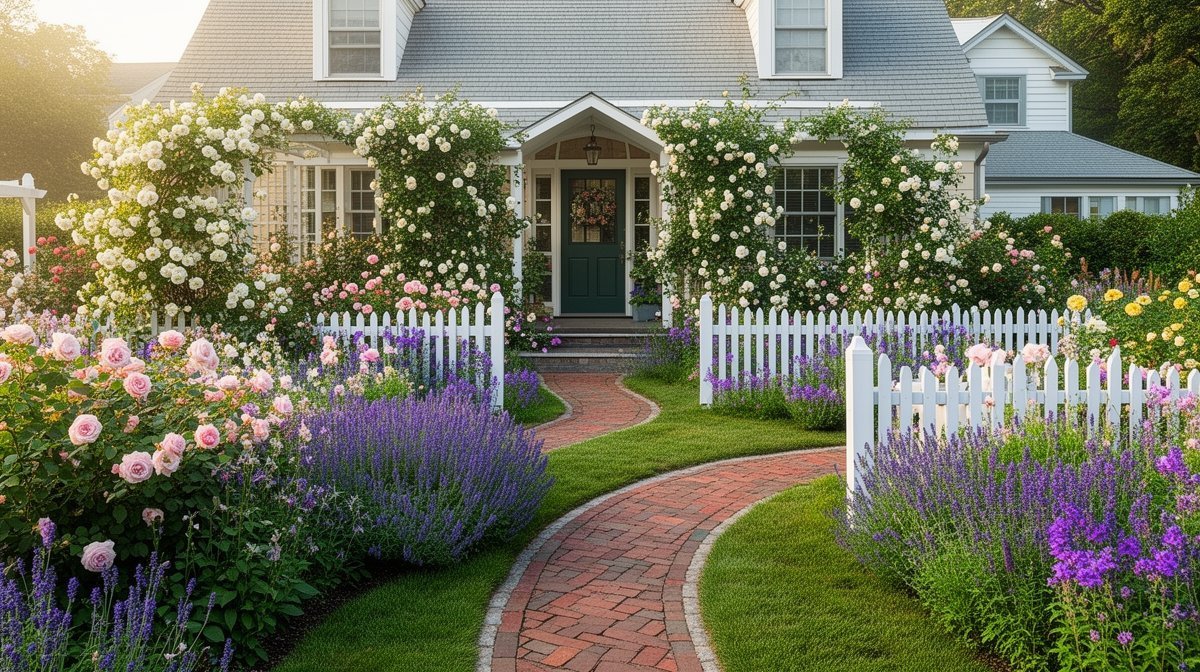
$16–30/sqftA white picket fence fronts a two-story Queen Anne with a deep porch, and a 6-foot border runs the full length inside it, tall delphiniums and hollyhocks at the back against the fence, peonies and phlox in the middle and catmint spilling over a granite cobble edge. A pink climbing rose arches over the gate. The bed faces south to the street so the tall spires get full sun from late morning on.

AI-generated image
The Granite-Step Cottage Path
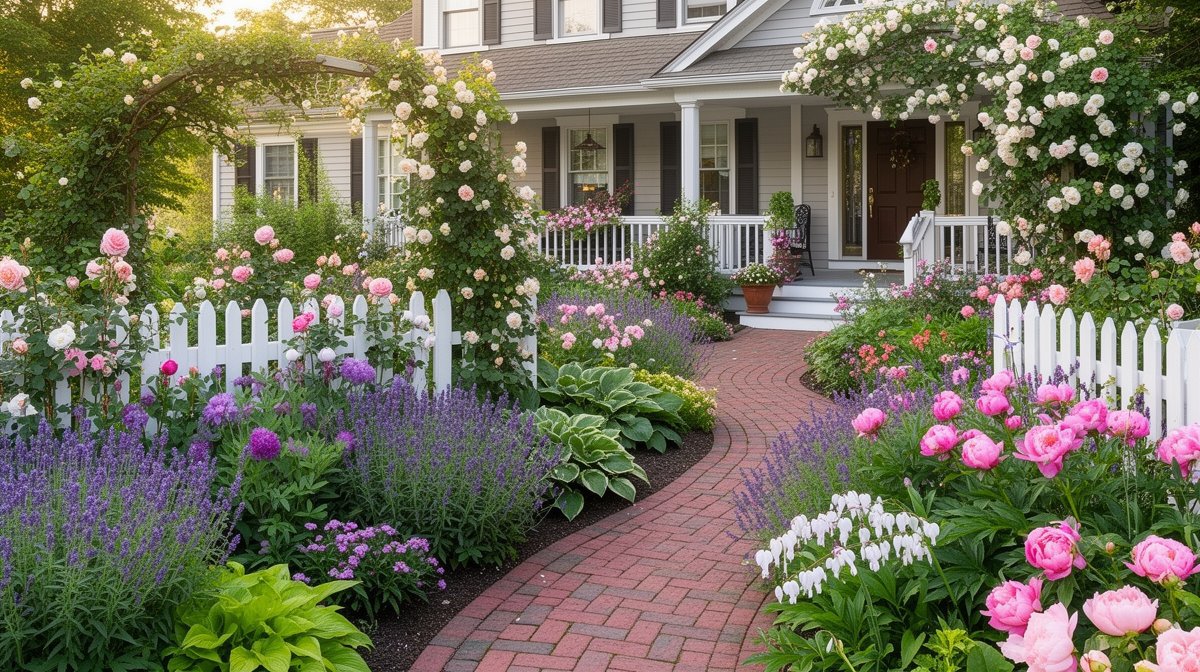
$22–40/sqftOn a sloped West Side lot, a Cape Cod house is reached by a curving path of flat fieldstone with three granite slab steps, and planting crowds right up to the stone on both sides. Lady's mantle and hardy geranium soften every joint while foxgloves and Annabelle hydrangeas take the part-shade under an old maple. It turns an awkward bank into the best part of the yard.

AI-generated image
The Lilac and Rose Backyard Room
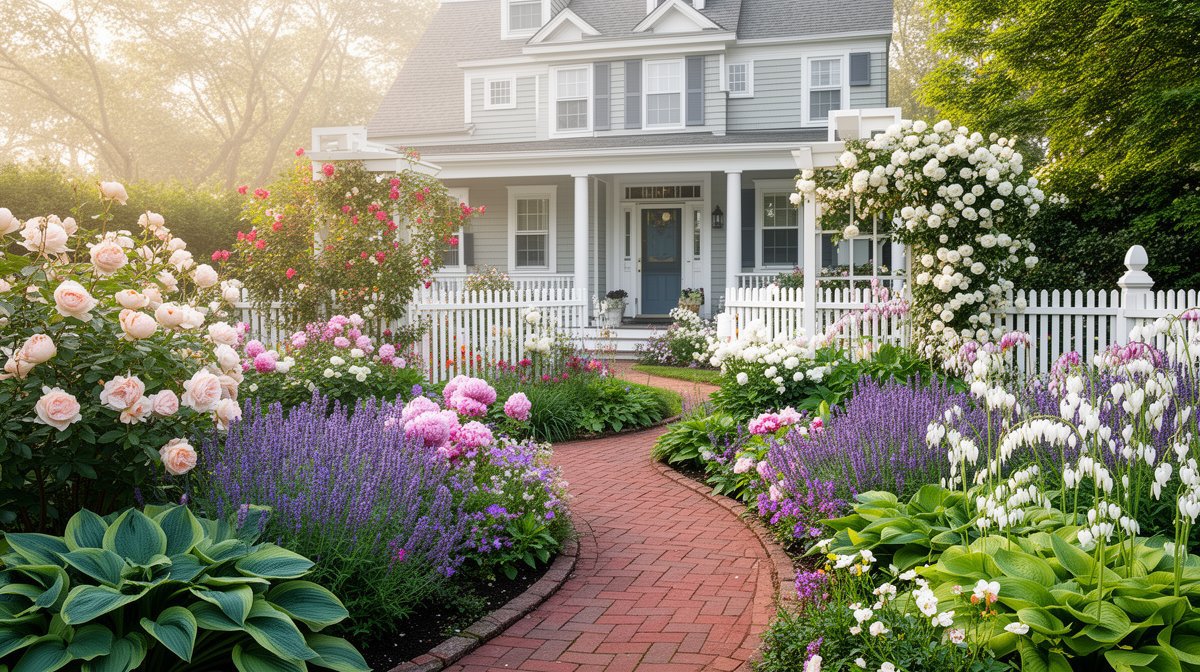
$14–26/sqftBehind a 1920s Colonial, a square of lawn is enclosed by a lilac hedge on two sides and a brick-edged mixed border on the third, with a bench under a rose-covered arbor facing west for evening sun. The border layers old-fashioned shrub roses with salvia and catmint, and early bulbs fill the gaps before the perennials wake up in May.

AI-generated image
The Three-Decker Front Strip
$12–22/sqftA narrow front yard in front of a triple-decker near the Millyard becomes a raised bed behind a low granite curb, planted thick so it reads like an English village front garden from the sidewalk. Short, tough, salt-tolerant cottage plants sit nearest the street where the plow throws its spray, with taller daylilies and hydrangea against the porch.
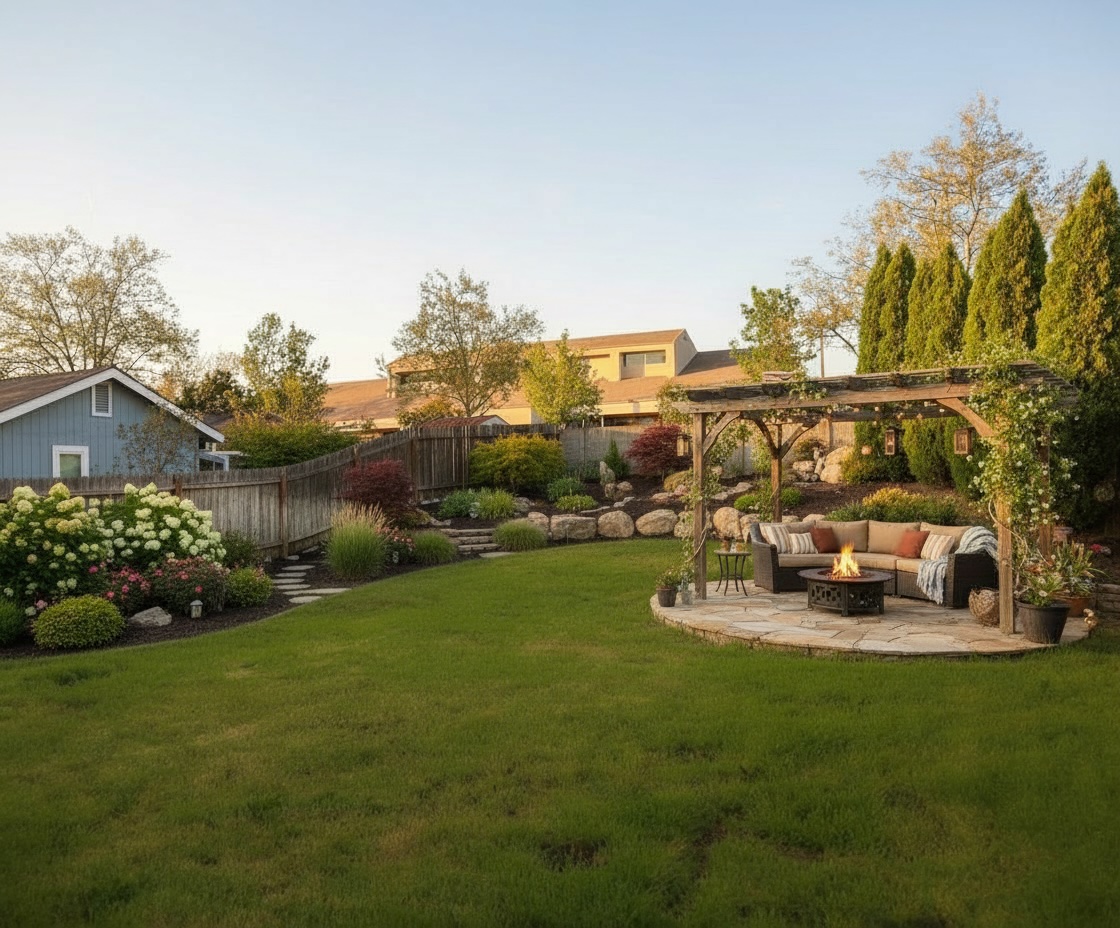
See how a cottage/english garden looks on YOUR property
Upload a photo of your Manchester yard and visualize your dream garden in seconds.
Try ProScapeAI Free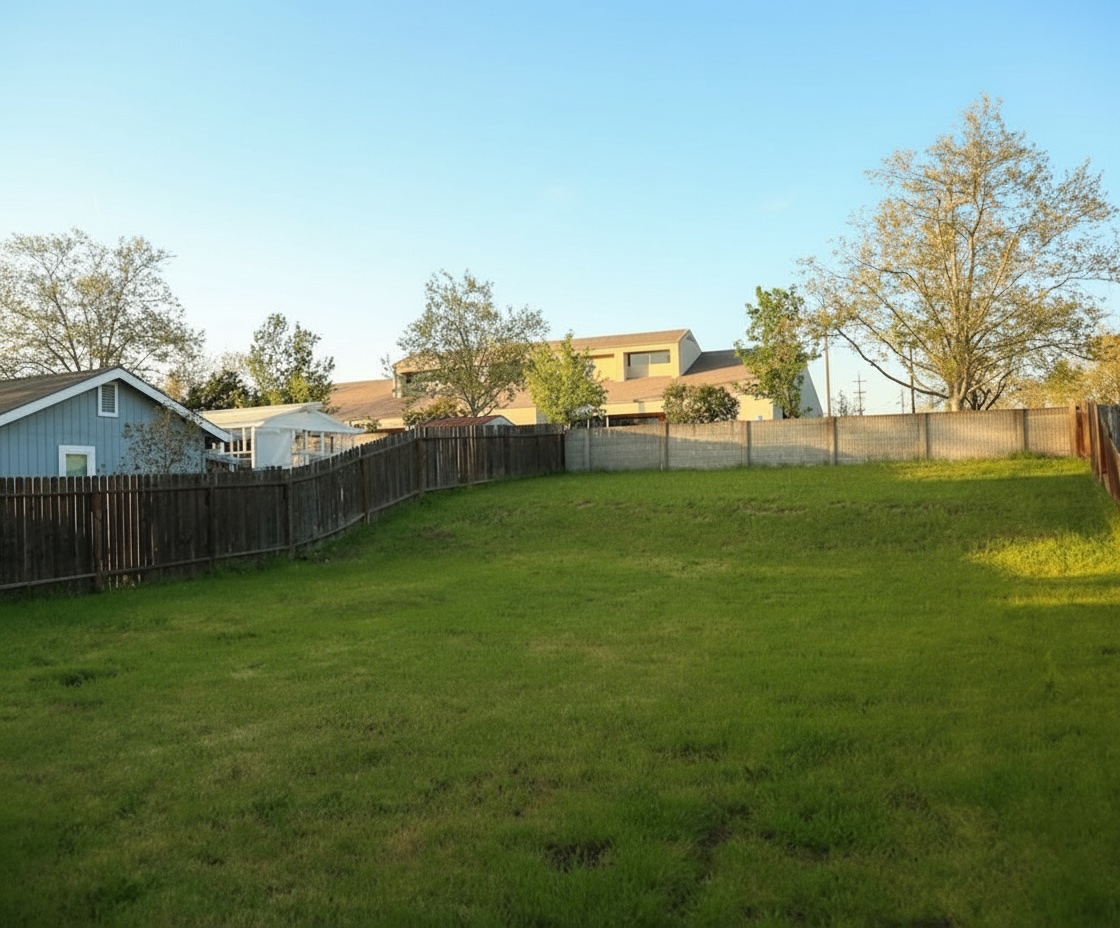
AI-generated image
Featured Trees & Shrubs for Cottage/English Gardens
Browse all 179 plants for Manchester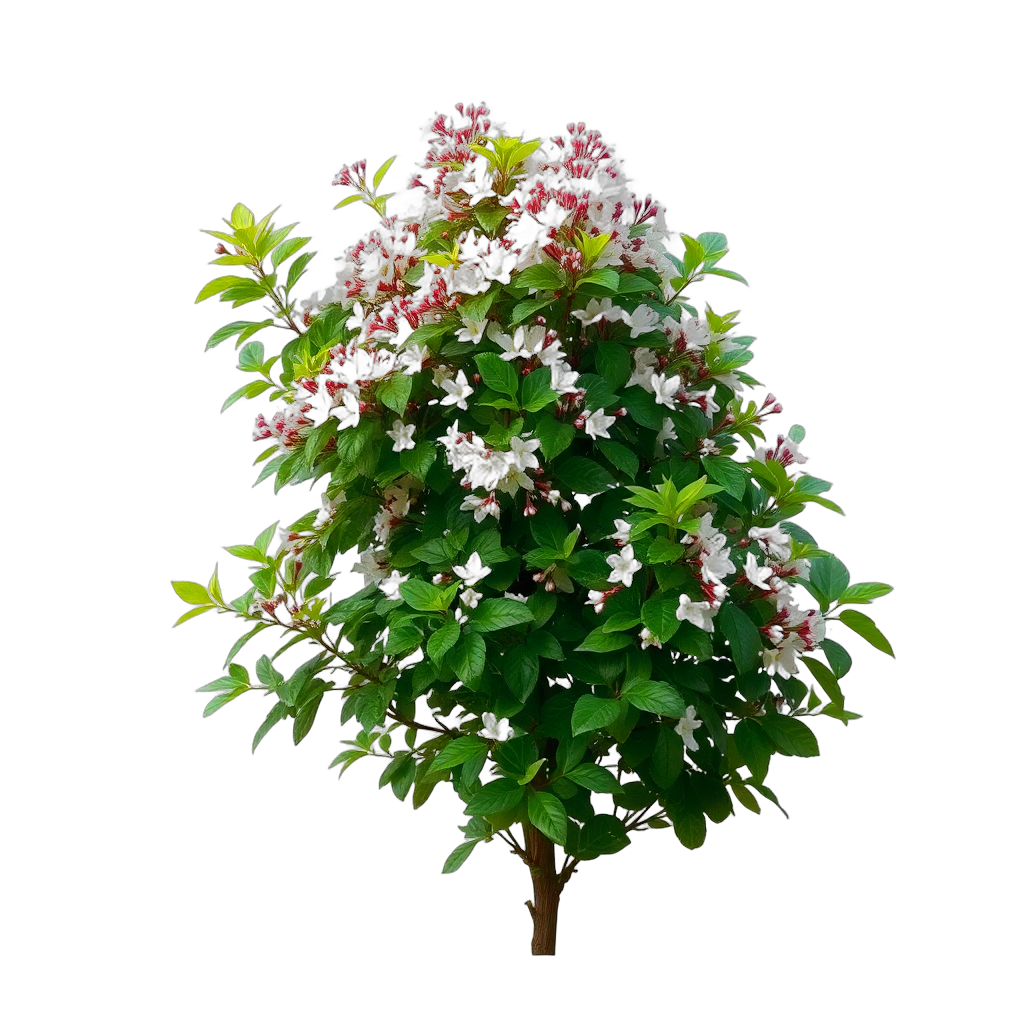
Arrowwood Viburnum
Viburnum dentatum
medium-sized at 10 feet, white blooms in spring. Pollinator-friendly.
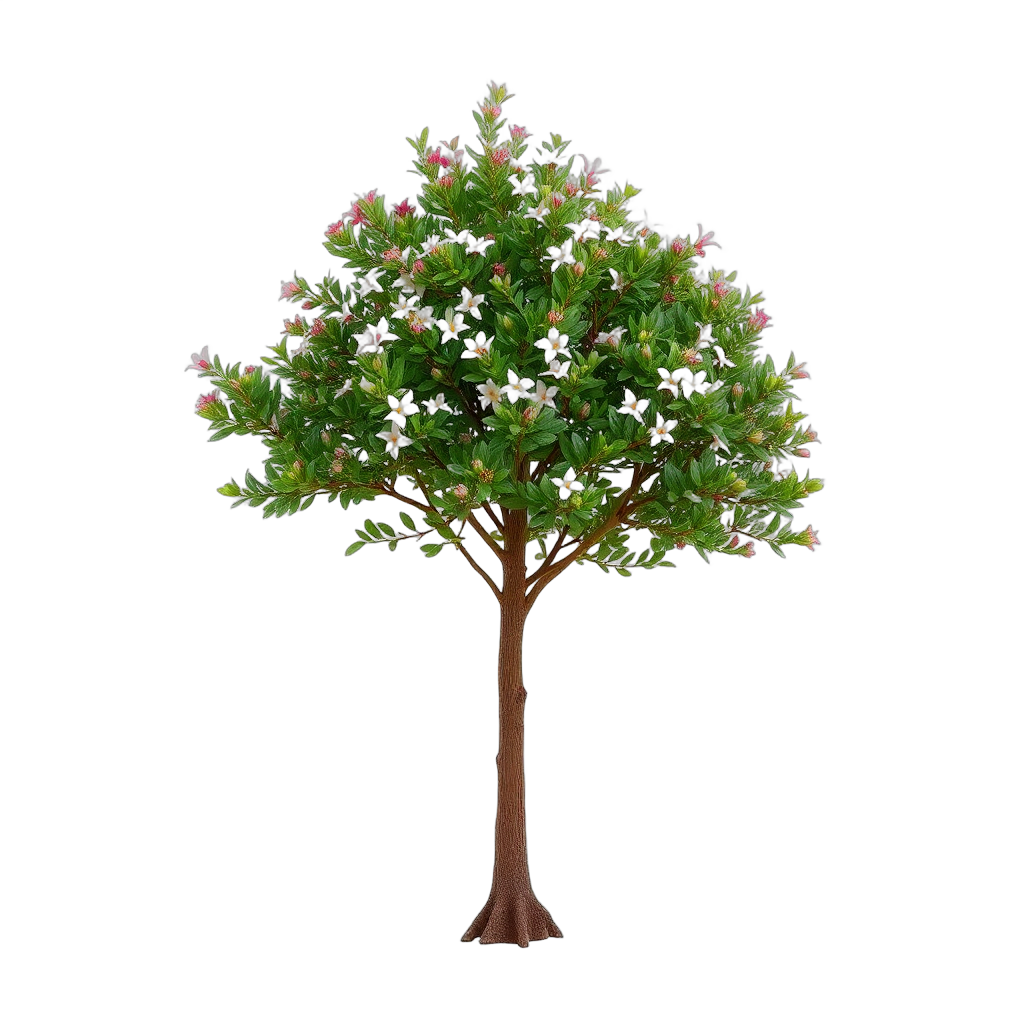
Coastal Leucothoe
Leucothoe axillaris
grows to 3 feet, white blooms in spring. Evergreen year-round.
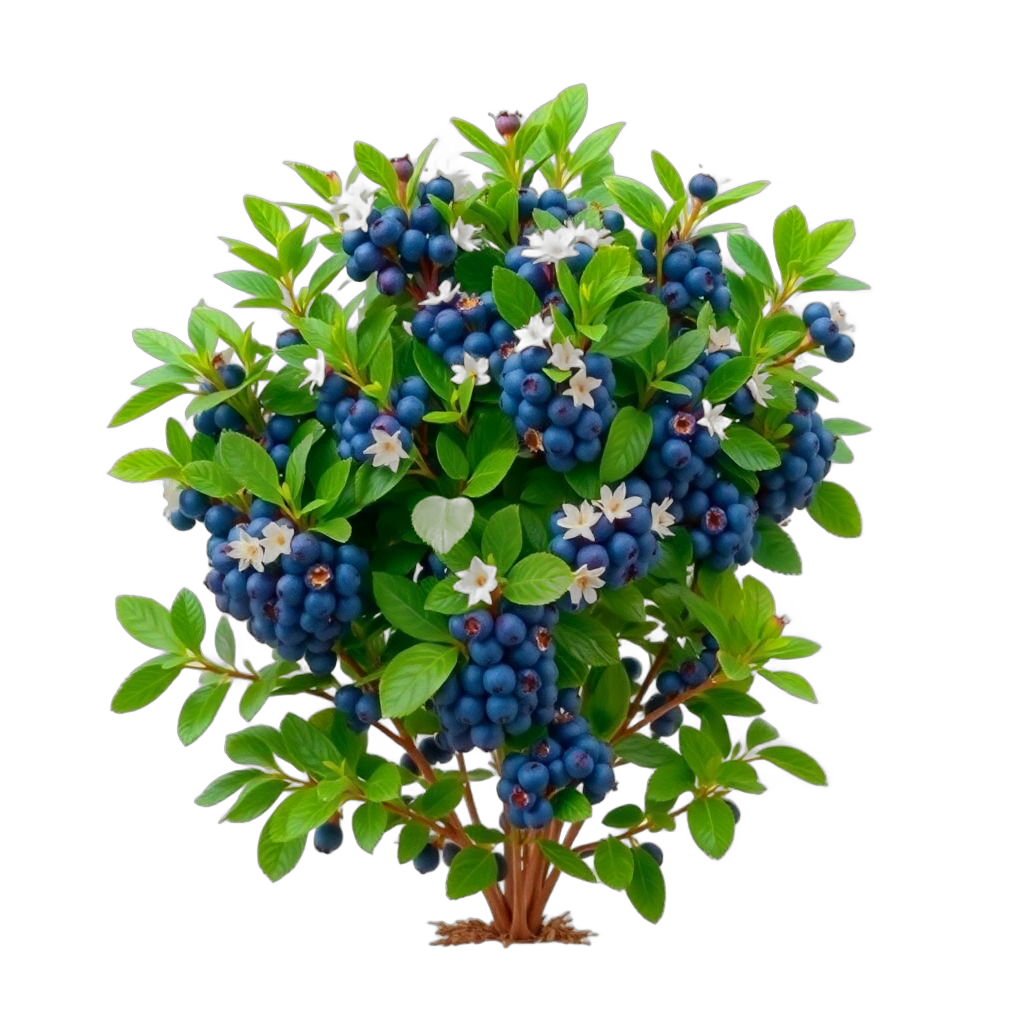
Highbush Blueberry
Vaccinium corymbosum
medium-sized at 7 feet, white blooms in spring. Attracts butterflies.

Inkberry
Ilex glabra
medium-sized at 8 feet, white blooms in spring. Pollinator-friendly.
Featured Grasses & Groundcovers for Cottage/English Gardens
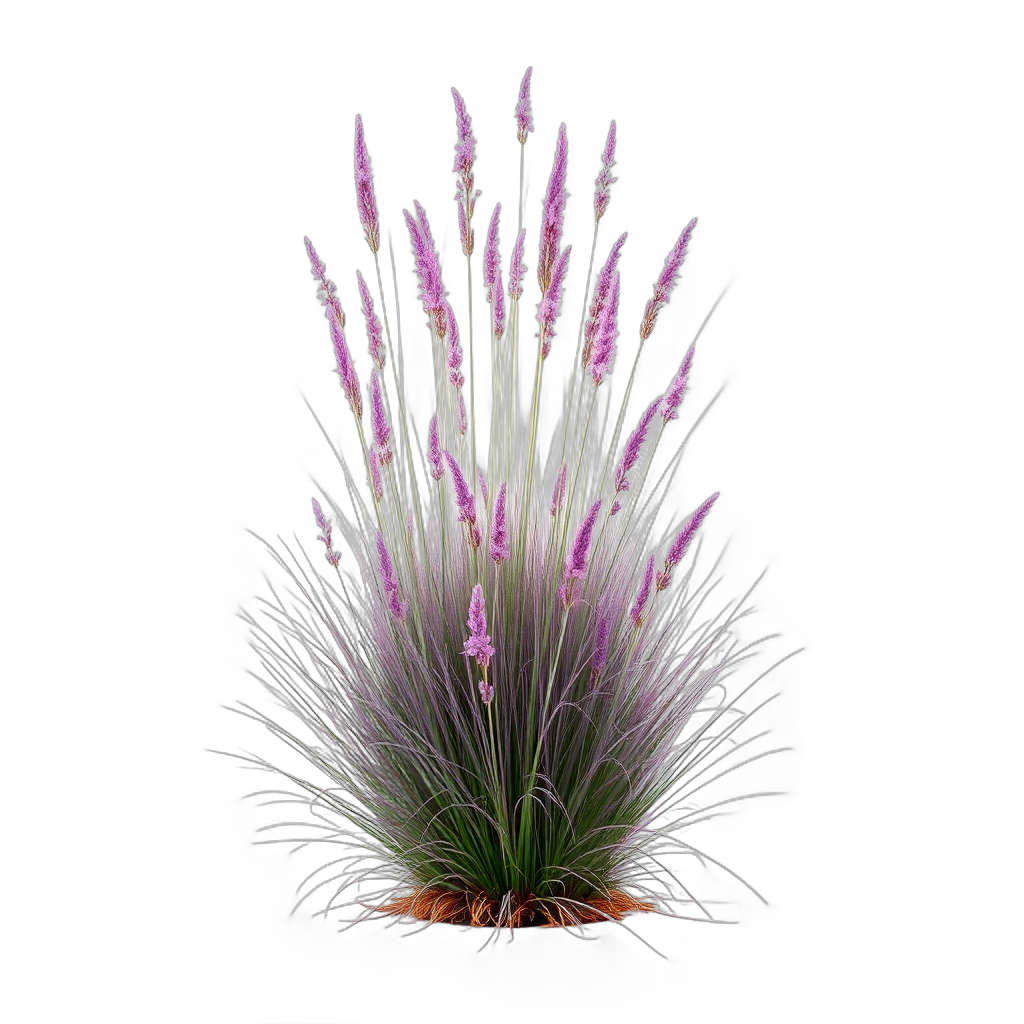
Purple Love Grass
Eragrostis spectabilis
low-growing ground cover, purple blooms in fall. Orange fall color.
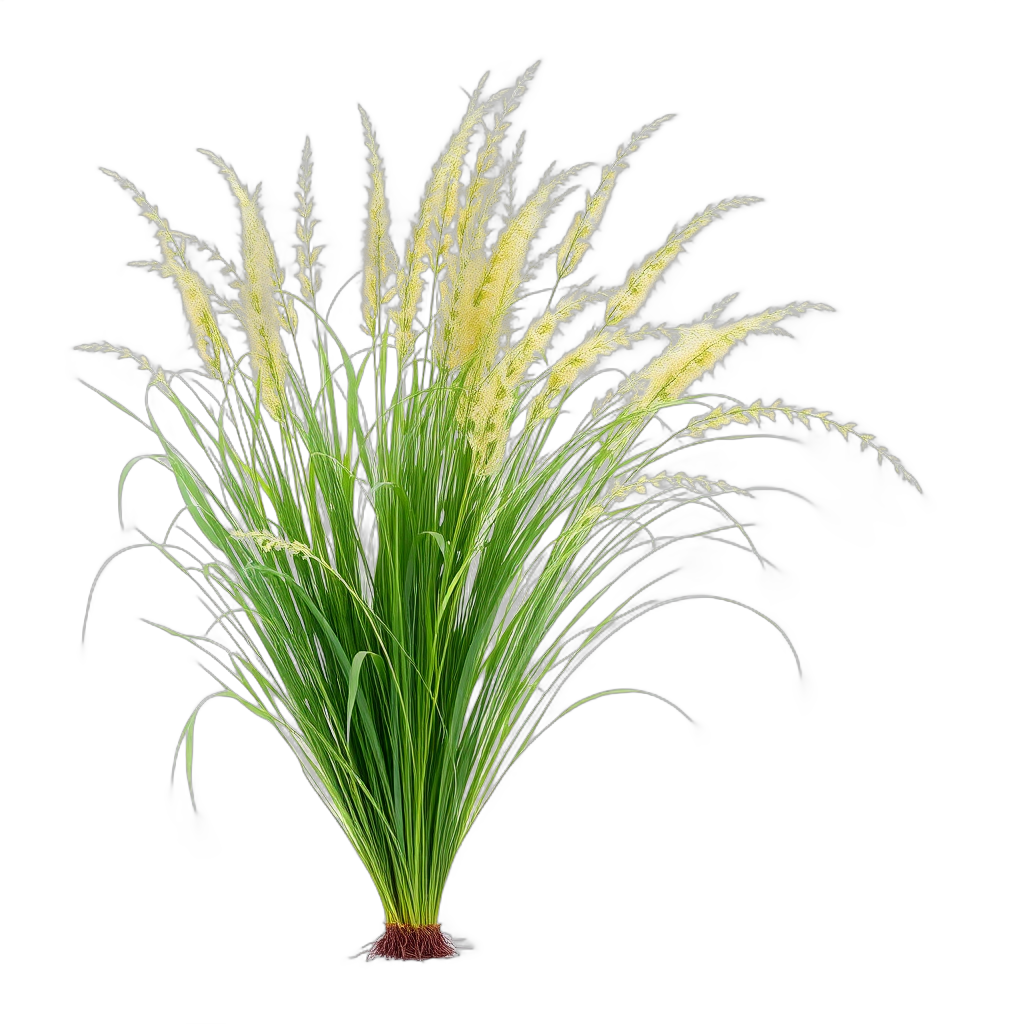
Adagio Maiden Grass
Miscanthus sinensis 'Adagio'
low-growing ground cover, pink blooms in summer. Orange fall color.
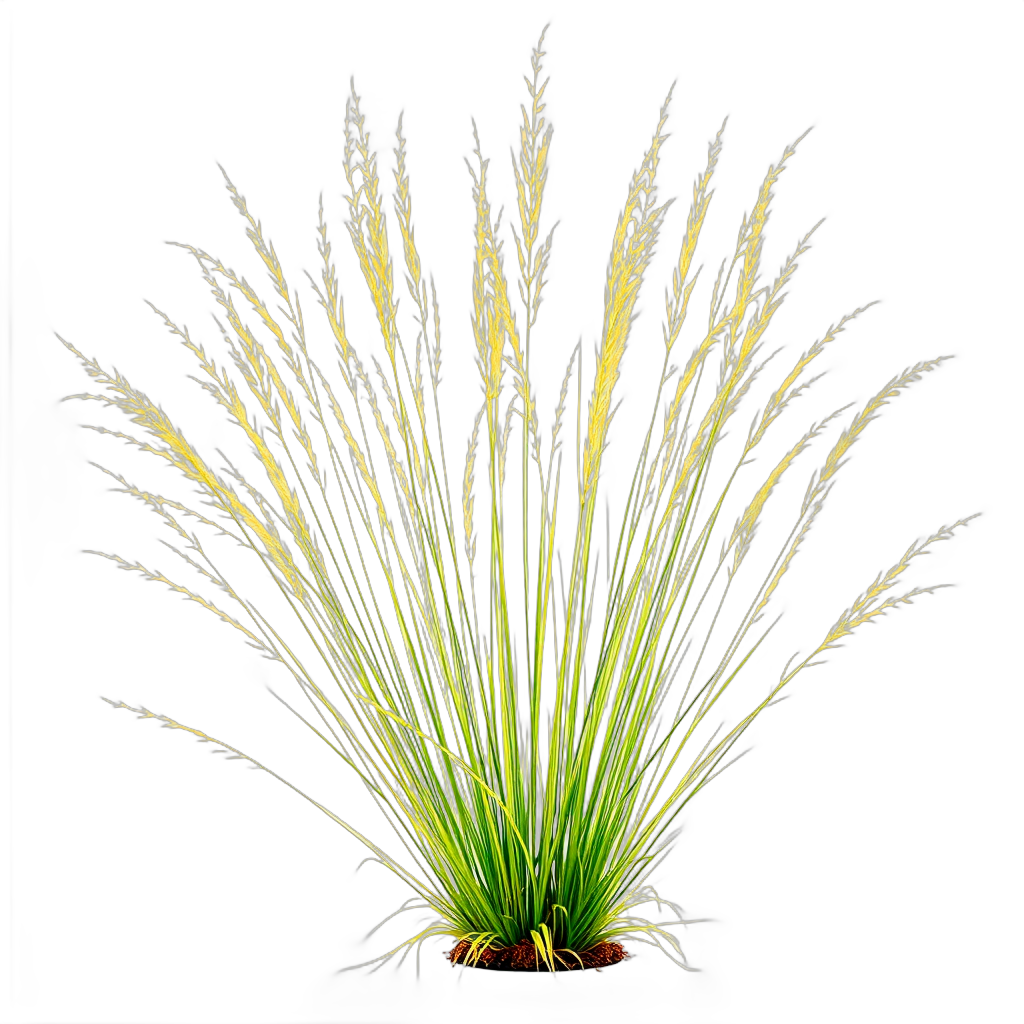
All Gold Japanese Forest Grass
Hakonechloa macra 'All Gold'
low-growing ground cover, blooms in summer.

Arrow Bamboo
Pleioblastus chino
medium-sized at 10 feet, blooms in none. Evergreen year-round.
Featured Flowers & Perennials for Cottage/English Gardens
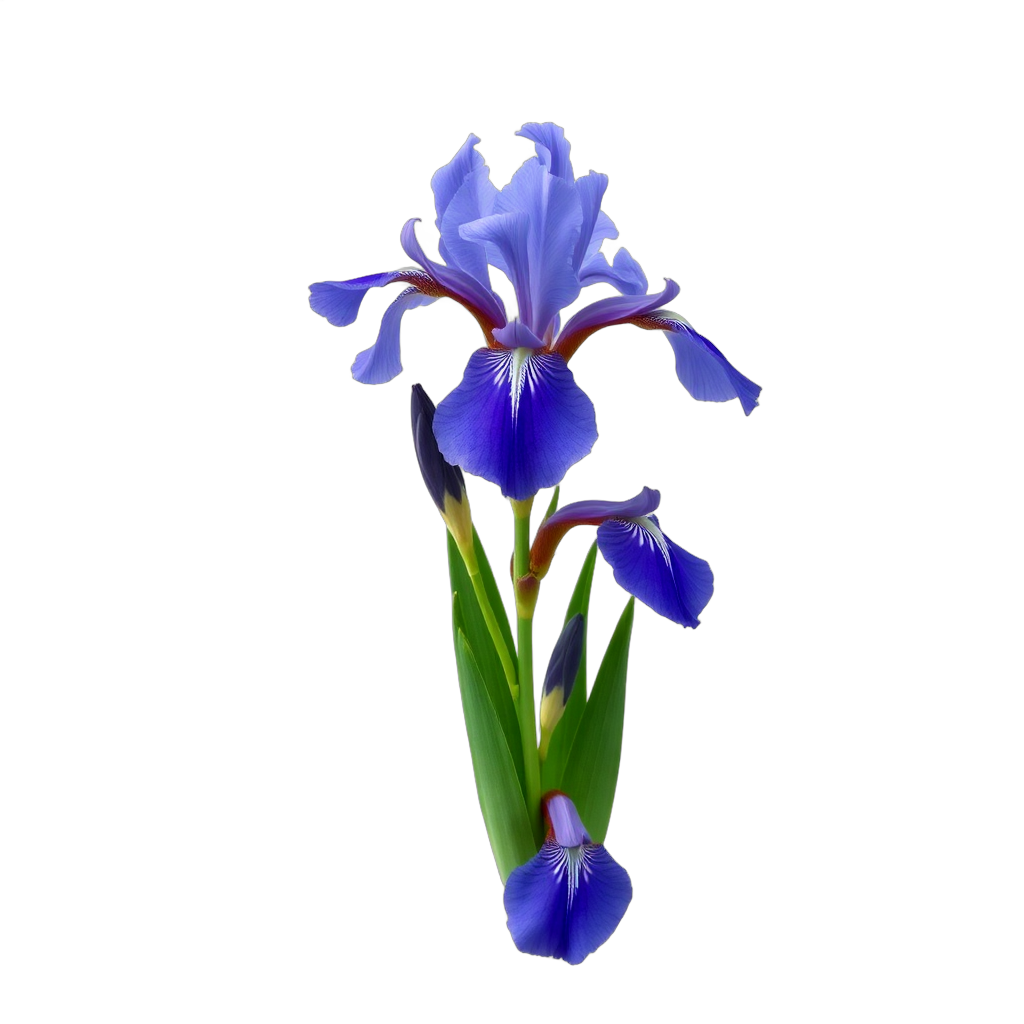
Blue Flag Iris
Iris versicolor
low-growing ground cover, purple blooms in spring. Attracts butterflies.

New York Ironweed
Vernonia noveboracensis
grows to 6 feet, purple blooms in fall. Attracts butterflies.
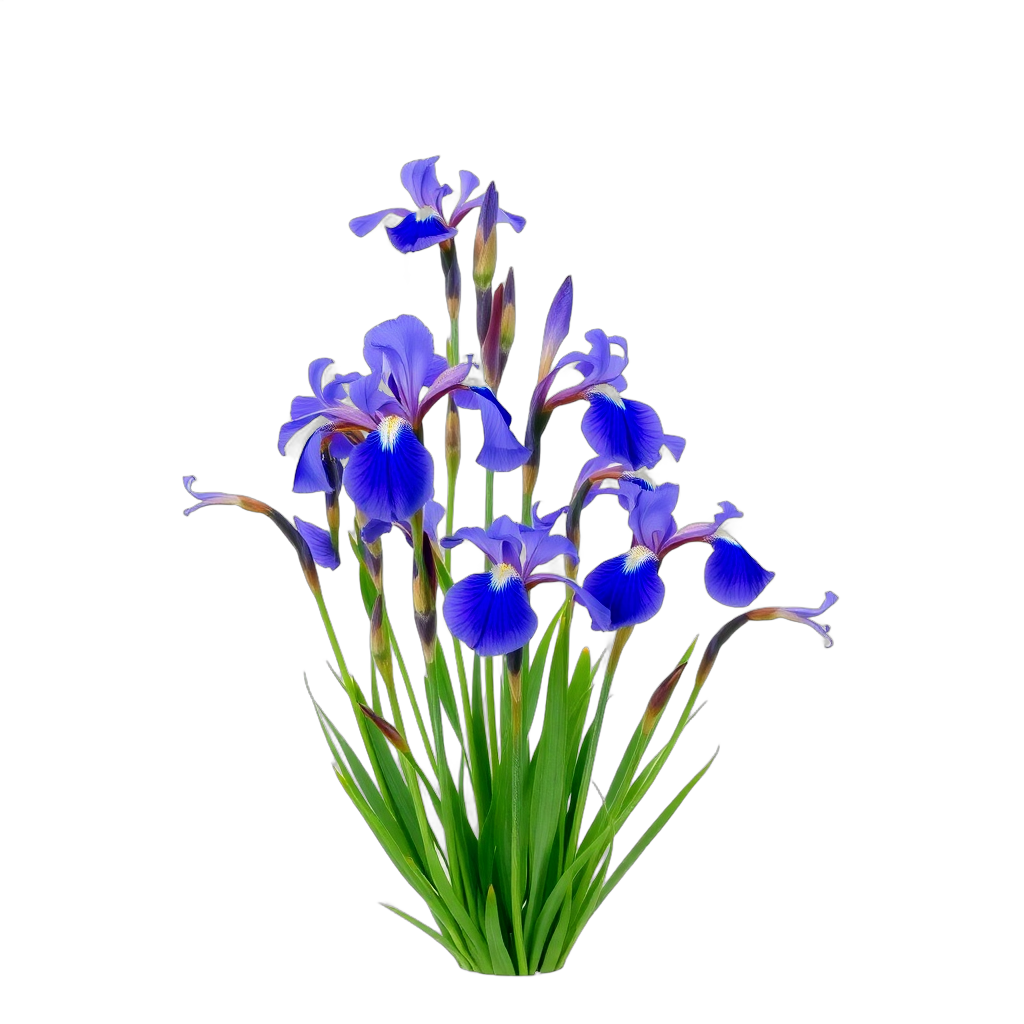
Southern Blue Flag
Iris virginica
low-growing ground cover, blue blooms in spring. Attracts butterflies.

Eastern Prickly Pear
Opuntia humifusa
low-growing ground cover, yellow blooms in summer. Attracts butterflies.
Zone and sun checks come from our database — confirm with your local nursery before you buy.
Bloom Calendar for Manchester
spring
Blue Flag Iris, Southern Blue Flag, Arrowwood Viburnumsummer
Ruby Spice Summersweet, Summersweet, Eastern Prickly Pearfall
New York Ironweed, Purple Love Grasswinter
Limited bloomsDesign Tips for Manchester (Zone 5b)
- Set every fence post and arbor footing at 48 inches, the frost depth builders use in southern New Hampshire, or frost heave will tilt your picket line in two winters
- Build the rose layer on Explorer and Parkland roses such as 'John Cabot', 'William Baffin' and 'Morden Blush'; they come back from the roots after a -15°F winter, where hybrid teas do not
- Lean into delphiniums: Manchester's cool summer nights grow 'Magic Fountains' better than most of the country, but stake them in early June before the first thunderstorm
- Get a soil test before you plant; Manchester's sandy and till soils sit around pH 5.0–5.5, so lime for lavender and catmint, and leave hydrangea and lady's mantle beds as they are
- Keep salt-sensitive plants out of the first few feet along the street; put Hemerocallis 'Happy Returns' and Nepeta 'Little Titch' at the curb where plow spray lands
- Use real granite: reclaimed curbing, slab steps and fieldstone from the dig cost less over time than concrete pavers, which heave and crack in New Hampshire freeze-thaw
- Plan for winter structure, since snow covers the border for months; leave Hydrangea 'Limelight' heads and Rudbeckia 'Goldsturm' seed heads standing until April
Where to Source Plants in Manchester
Skip the big-box stores. These independent Manchester nurseries specialize in the plants that make cottage/english gardens thrive in Zone 5b.
Demers Garden Center
South Mammoth Road (Route 28A), Manchester
Family-run garden center with 56+ years in the trade: annuals, perennials, herbs, trees and shrubs, home-grown mums, plus bulk soil, mulch and stone
Osborne's Farm & Garden
Hooksett (just north of Manchester)
Farm and garden store with greenhouses: lawn and garden supplies, plants, wild bird feeding; also stores in Concord and Belmont
Springlook Farm
Derry (about 12 miles southeast)
Garden center with a wide perennial range from natives and pollinator plants to unusual varieties, trees and shrubs, bulk loam, compost and stone, pavers and landscape design
Cottage/English Landscaping Costs in Manchester
| Project Scope | Estimated Cost |
|---|---|
| Front cottage border with soil prep and perennials (300 sqft) | $4,500 – $9,000 |
| Painted cedar picket fence with gate (60 linear ft) | $3,500 – $7,000 |
| Granite or fieldstone path with slab steps (150 sqft) | $4,000 – $9,000 |
| Cedar rose arbor on frost-depth footings, installed | $1,200 – $3,500 |
| Full backyard cottage garden with lilac hedge and borders (1,200 sqft) | $18,000 – $38,000 |
| Soil test, lime and compost amendment for sandy lots (500 sqft) | $600 – $1,500 |
| AI visualization (ProScapeAI) | Free to start |
Estimates based on Manchester, NH-area contractor rates as of 2026. Actual costs vary by site conditions, materials, and contractor.
Manchester Climate & Growing Zone
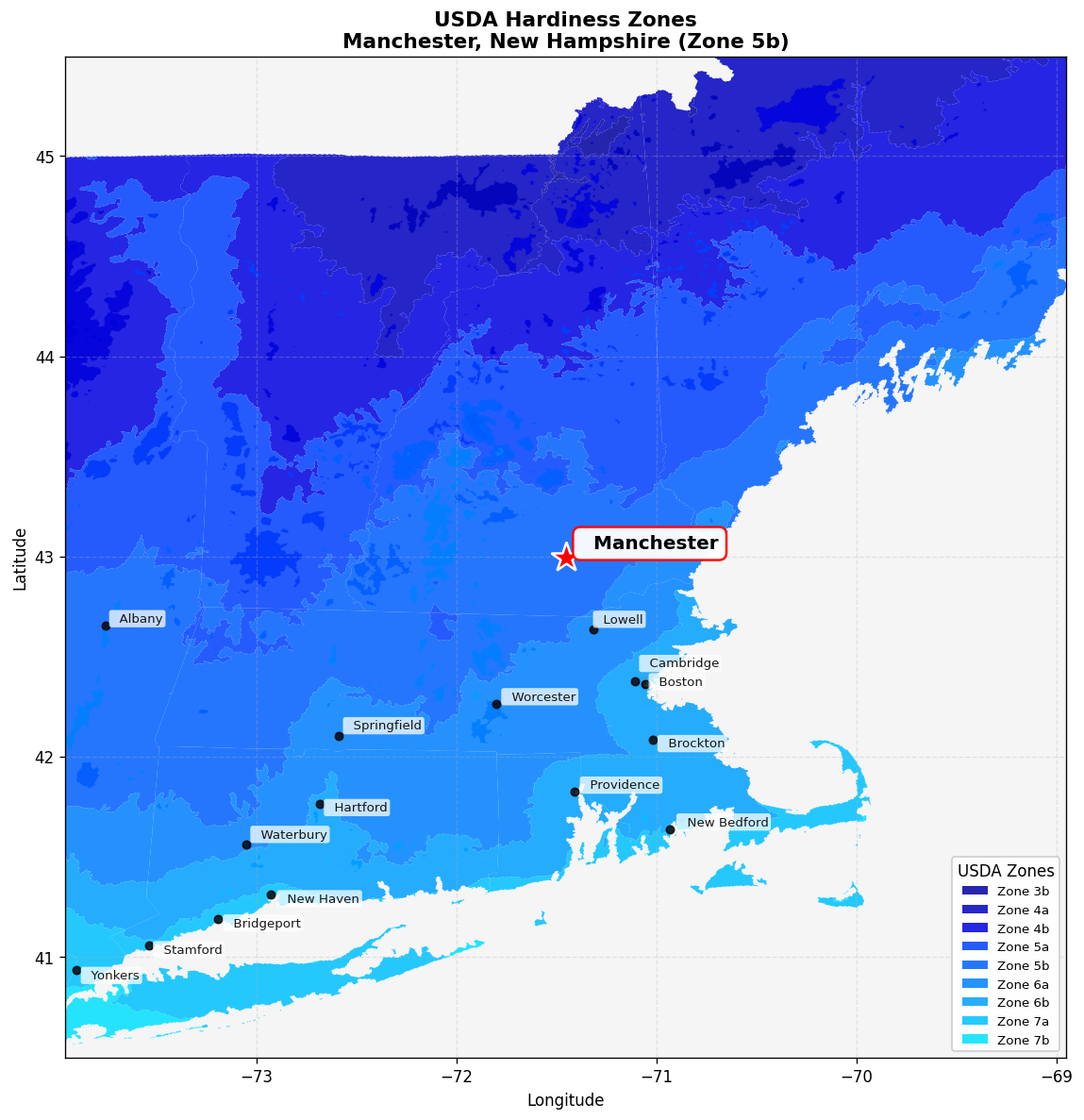
USDA Zone 5b
Hardiness zone for Manchester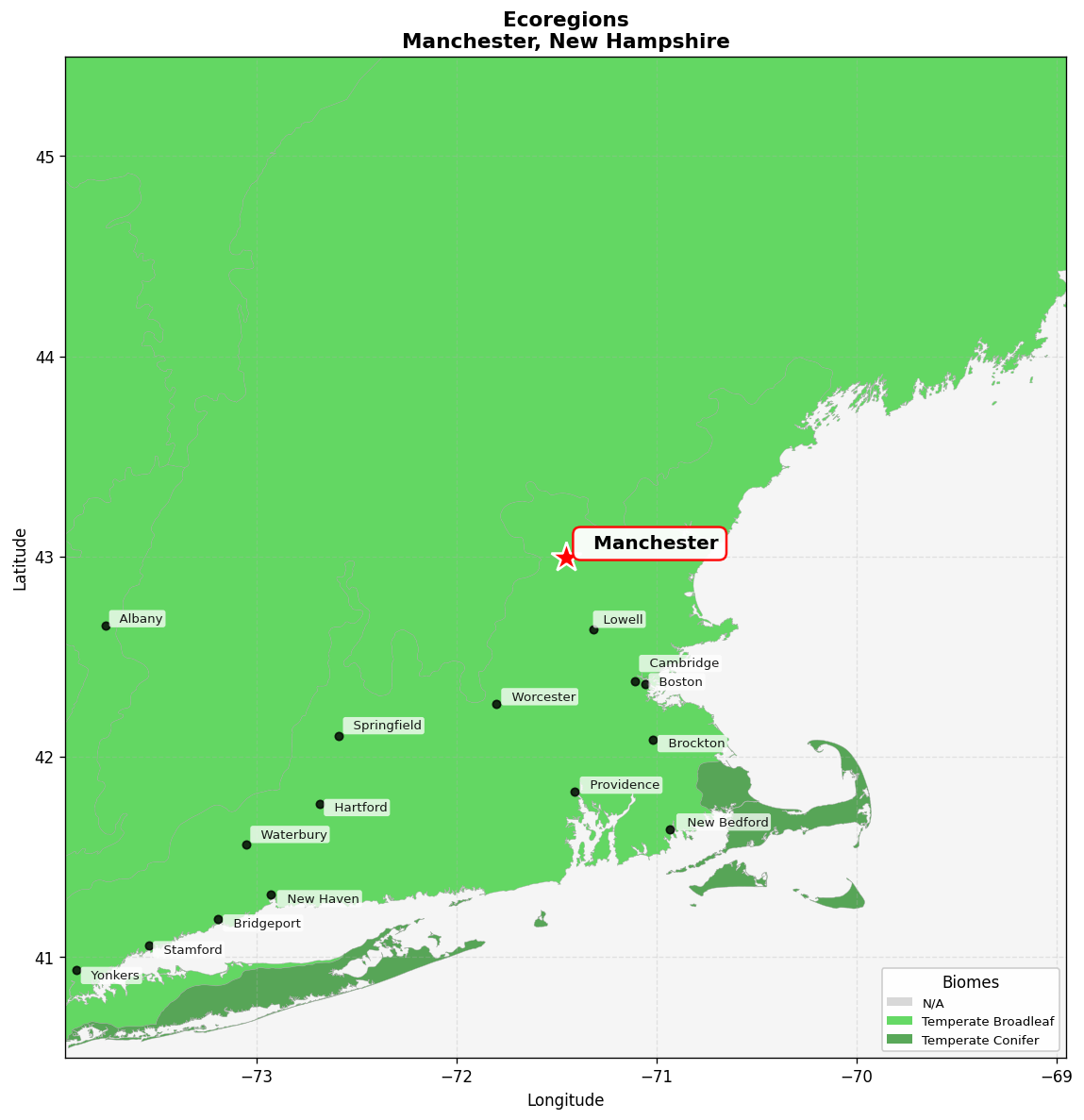
Northeast US Coastal forests
Native ecoregionFrequently Asked Questions
How much does an English cottage garden cost in Manchester, NH?
Most Manchester cottage projects land between $12 and $40 per square foot installed, depending on how much stone goes in. A 300 sqft front border with soil prep, perennials and edging usually runs $4,500–9,000. Add a picket fence and an arbor and a front yard reaches $10,000–20,000. Southern New Hampshire crews generally bill around $60–90 per hour per person, and hitting cobbles and ledge in the till is the most common budget surprise, so ask for a digging contingency line.
Is a cottage garden a lot of work in a New Hampshire climate?
Less than in hot climates, because cool nights mean fewer fungal problems. Expect a big cleanup in April, staking delphiniums in June, deadheading through July and a fall cut-back of anything floppy. Leave Rudbeckia 'Goldsturm' seed heads and Hydrangea 'Limelight' flowers standing for winter interest and the birds. Plant the bed densely so it shades out weeds, and mulch with shredded leaves rather than thick bark.
When should I plant a cottage garden in Manchester?
Plant perennials and shrubs from about mid-May, after the last frost, through mid-September, so roots settle before the ground freezes. Late August to mid-September is the best window for peonies like 'Sarah Bernhardt' and for dividing iris and phlox. Plant tulip and allium bulbs in October. Bare-root roses such as 'John Cabot' go in as soon as the soil can be worked in late April or May.
Do I need a permit, and are there watering restrictions?
Planting beds, paths and edging do not need a building permit. Fences, structures with footings and retaining walls over 4 feet can, so check with the city's building department before you build an arbor or wall. Manchester Water Works draws from Lake Massabesic and has asked customers for voluntary outdoor-water cutbacks in dry years, so check the utility's current notice before installing irrigation. A deep, established cottage bed with mulch rarely needs watering after its first summer.
Which classic English cottage plants survive Manchester winters, and which do not?
Delphinium, peony, lilac, catmint, phlox, foxglove, hollyhock and lady's mantle are all happy at -15°F. The losers are tender hybrid tea and many David Austin roses, which die back hard, and Hydrangea macrophylla, which survives but often fails to flower after a cold winter. Use Explorer roses like 'William Baffin' and 'John Cabot' and Parkland roses like 'Morden Blush' instead, and swap bigleaf hydrangea for Hydrangea arborescens 'Annabelle' or Hydrangea paniculata 'Limelight'.
My Manchester soil is pure sand. Can I still grow a lush border?
Yes. Sandy outwash near the Merrimack drains fast and runs acidic, around pH 5.0–5.5. Work 3–4 inches of compost into the top 8–10 inches, add lime based on a soil test (UNH Extension runs them), and top-dress with compost every spring. Sandy beds do suit Lavandula 'Munstead', Nepeta 'Walker's Low' and Salvia 'Caradonna', which rot in heavy clay elsewhere.