4 Modern Landscape Ideas for Naperville, IL | Zone 5b Garden Design
Native plants from the Central US forest-grasslands transition (Zone 5b) — Humid continental (hot summer) climate
Why Modern/Minimalist Gardens in Naperville?
Modern landscape design has a genuine foothold in Naperville, and it is coming from two directions at once. On the older streets near downtown — East Highlands, the fringes of the Historic District, parts of Cress Creek — teardown-and-rebuild has been steadily replacing 1,800 sqft ranches with flat-roofed, glass-fronted two-stories that make the neighbouring foundation shrubs look like a costume from another decade. At the same time, the 1950s and 60s subdivisions Naperville built during its first growth spurt — Moser Highlands, Ranchview, Sector G — are full of genuine mid-century ranches with low horizontal rooflines and clerestory windows, now being bought by owners who actually want that language back. Both call for the same landscape answer: fewer plant species, larger masses, one honest hardscape material, and a groundplane that reads as a composition rather than a collection.
The climate sets hard limits that Phoenix and Los Angeles modern gardens never have to respect. Naperville is USDA Zone 5b — winter lows of -15°F to -10°F — with roughly 38 inches of rain, about 30 inches of snow, July highs near 84°F, and a hot-summer humid continental Dfa pattern that swings from soaking spring to a dry, hot August. The good news is that the sculptural, architectural planting modern design depends on is native here: this is the Central US forest-grasslands transition, so Sporobolus heterolepis, Schizachyrium scoparium 'Standing Ovation', Panicum virgatum 'Northwind' and Bouteloua gracilis 'Blonde Ambition' are not exotic imports but local prairie plants that give you texture, movement and winter structure for free. The bad news is the desert half of the modern catalogue. Agave americana and most Echeveria are summer visitors here, not residents — they go in pots and come into the garage in October. Where you want that silhouette permanently, Yucca filamentosa 'Color Guard', Agave parryi var. neomexicana and the genuinely native Opuntia humifusa hold the same shape through a Naperville winter, provided the bed is raised and drains sharply.
Everything hard you build sits on Wisconsin-age glacial till over dolomite limestone, and that dictates the details. Topsoil is excellent prairie silt loam — Drummer and Plano series — but the subsoil is dense clay that holds water and heaves, and the pH usually reads 7.2–7.8. So: any post-supported structure, pergola or fence needs footings at the local frost depth, commonly 42 inches in northern Illinois; every patio and walk needs 6–8 inches of compacted CA-6 base rather than a slab poured on graded clay; and every planting bed is better bermed above grade than dug into it. The alkalinity also quietly edits the plant list. Skip pin oak and Acer x freemanii 'Autumn Blaze', both reliable chlorosis victims in DuPage soil, and use Quercus bicolor, Gymnocladus dioicus 'Espresso' or Acer x freemanii 'Sienna Glen' when you want a single sculptural tree in a clean lawn panel.
Naperville has drawn Lake Michigan water through the DuPage Water Commission since 1992, and a seasonal sprinkling ordinance runs from roughly mid-May into mid-September, restricting lawn watering to odd or even days matched to your house number with a ban through the hottest midday hours — confirm the current rules with the city before you specify a controller. That ordinance is one of the strongest arguments for modern design here: replace turf with gravel court, concrete and massed prairie grass and the irrigation question largely disappears after year one. Two more local realities belong in the plan. De-icing salt from the driveway and public walk will burn anything soft planted along those edges, so hold Buxus 'Green Velvet' back and put Sporobolus heterolepis or Perovskia atriplicifolia 'Little Spire' in the salt zone. And snow has to go somewhere — leave a designed dump area at the end of the drive instead of discovering in January that the plow pile lands on your best steel-edged bed.
4 Modern/Minimalist Design Ideas for Naperville

The Concrete Spine Front Walk
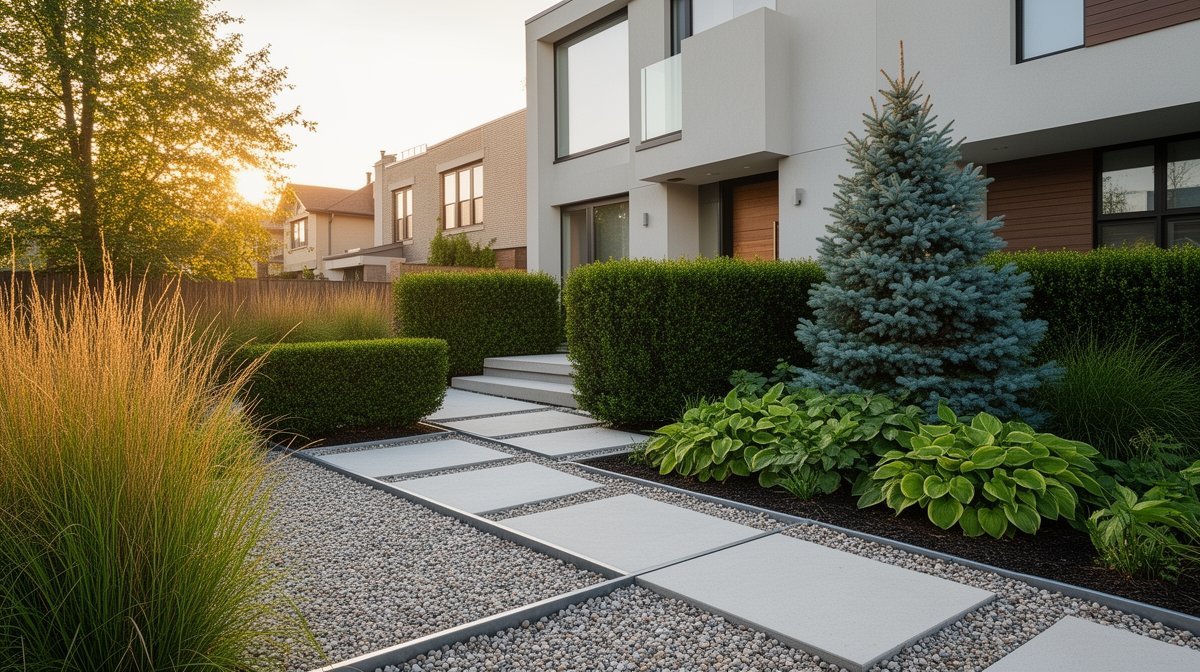
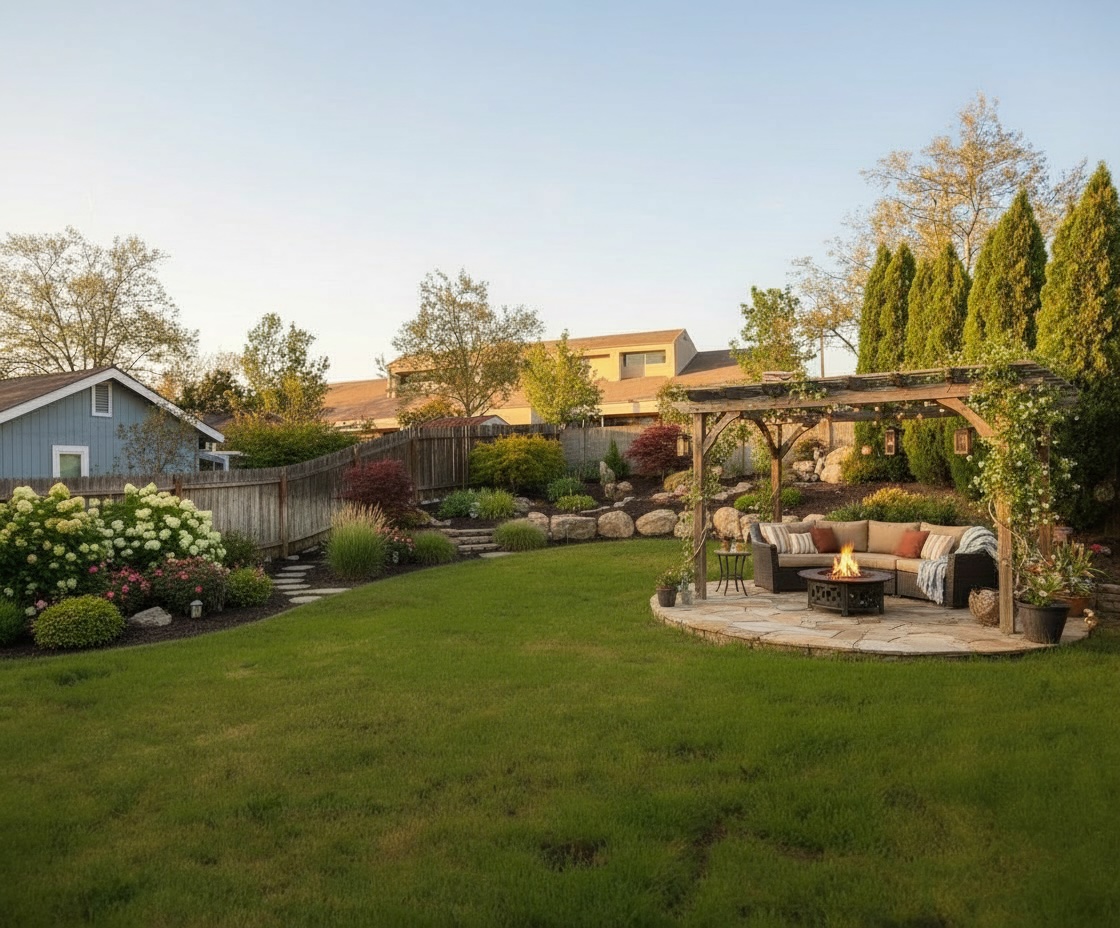
$14–26/sqftA contemporary two-story in warm grey siding with floor-to-ceiling glass and a dark-framed entry, approached along a single wide ribbon of poured concrete broken by clean sawcut joints — no curves, no stepping stones, no fuss. The lawn is deliberately kept as two flat green panels either side, and all the drama is delivered by four low, generous beds set right against the walk: big airy clumps of upright feather reed grass and fine-textured prairie dropseed, threaded with masses of lavender-blue catmint spilling over the concrete edge. Tight green mounds run along the foundation to hold the line under the glass, and a mature maple to the right throws the long shadows that make the whole composition read at sunset. It is a design that costs relatively little and gets its power entirely from repetition and restraint.

The Mid-Century Gravel Court
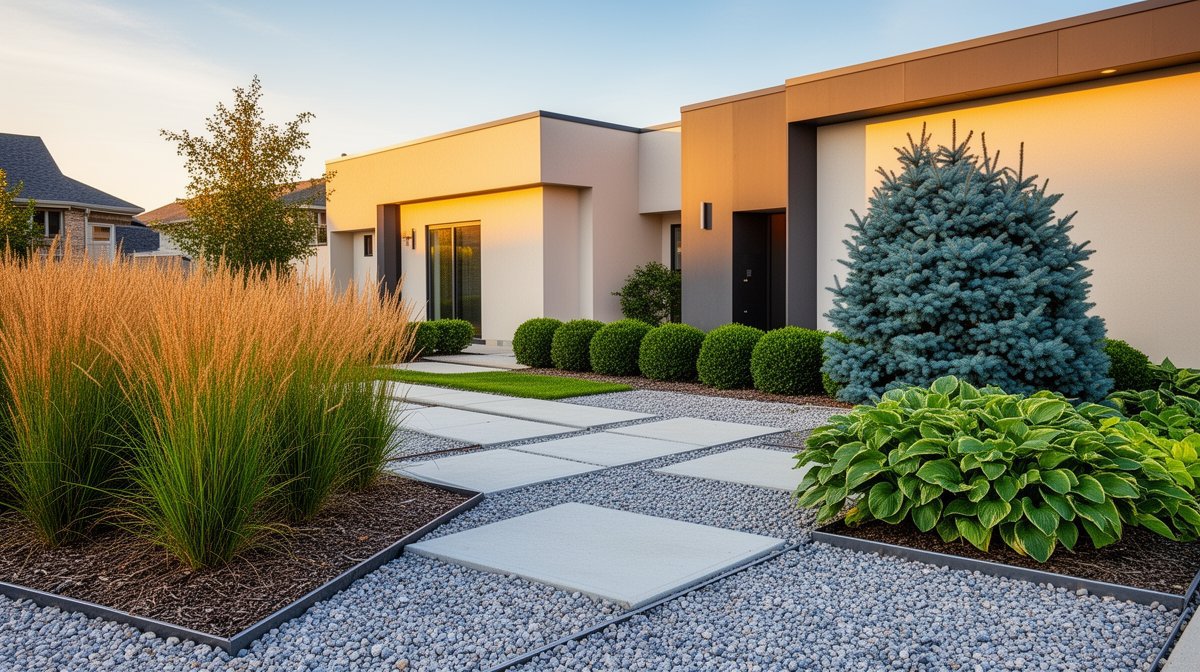
$12–24/sqftA white stucco mid-century ranch with a low overhanging roofline, clerestory band windows and a dark recessed entry, fronted by a front yard where the lawn has been removed entirely and replaced with a wide field of golden gravel. A single rectangular bed edged in weathering steel floats in the middle of it, planted with a rhythmic run of big blue-green rosettes and spiky architectural forms rising behind them, with a rust-red accent grass breaking the blue. The same silver-and-blue palette repeats in low drifts along the house and out to the property edge. One honest Naperville note on this look: the largest Agave americana rosettes in a photograph like this are container plants here, wheeled into a garage each October. Built with the hardy substitutions listed below, on a raised sharply drained bed, it holds the identical silhouette through a Zone 5b winter.

The Fire Bowl Lawn Terrace
$20–40/sqftA rectangular concrete terrace floats at the corner of a white modern house with black window frames and a wall of sliding glass, furnished with two low sofas and an armchair around a round gas fire bowl. A single young shade tree grows straight up through the paving, catenary string lights sweep overhead from the roofline to a post out in the lawn, and the terrace edges are softened not by a fence but by generous mounded clumps of fine green grass that blur where the hardscape stops and the lawn begins. Beyond it, a low black aluminium fence keeps the borrowed view of open ground intact instead of walling it off. This is the design that turns a Naperville back yard into a usable outdoor room from April through the first hard November frost.

The Pool Deck at Blue Hour
$45–90/sqft (pool area inclusive)Photographed at dusk, a long single-story white modern house with a dark flat fascia and a full wall of glass glows from inside while a rectangular pool sits centred on the axis, water lit pale blue. The deck is a broad plane of pale concrete laid in a sawcut grid that runs right to the water's edge, with a lounge grouping set on the far side facing the house. The planting is deliberately thin and used as light-catching texture: narrow gravel strips at the deck perimeter carry backlit tufts of tall grass, low bollards and in-grade uplights wash the paving, and a dark clipped hedge closes the property line. It is the most expensive design on this page and the most disciplined — three materials, one water shape, one plant texture.
See how a modern/minimalist garden looks on YOUR property
Upload a photo of your Naperville yard and visualize your dream garden in seconds.
Try ProScapeAI Free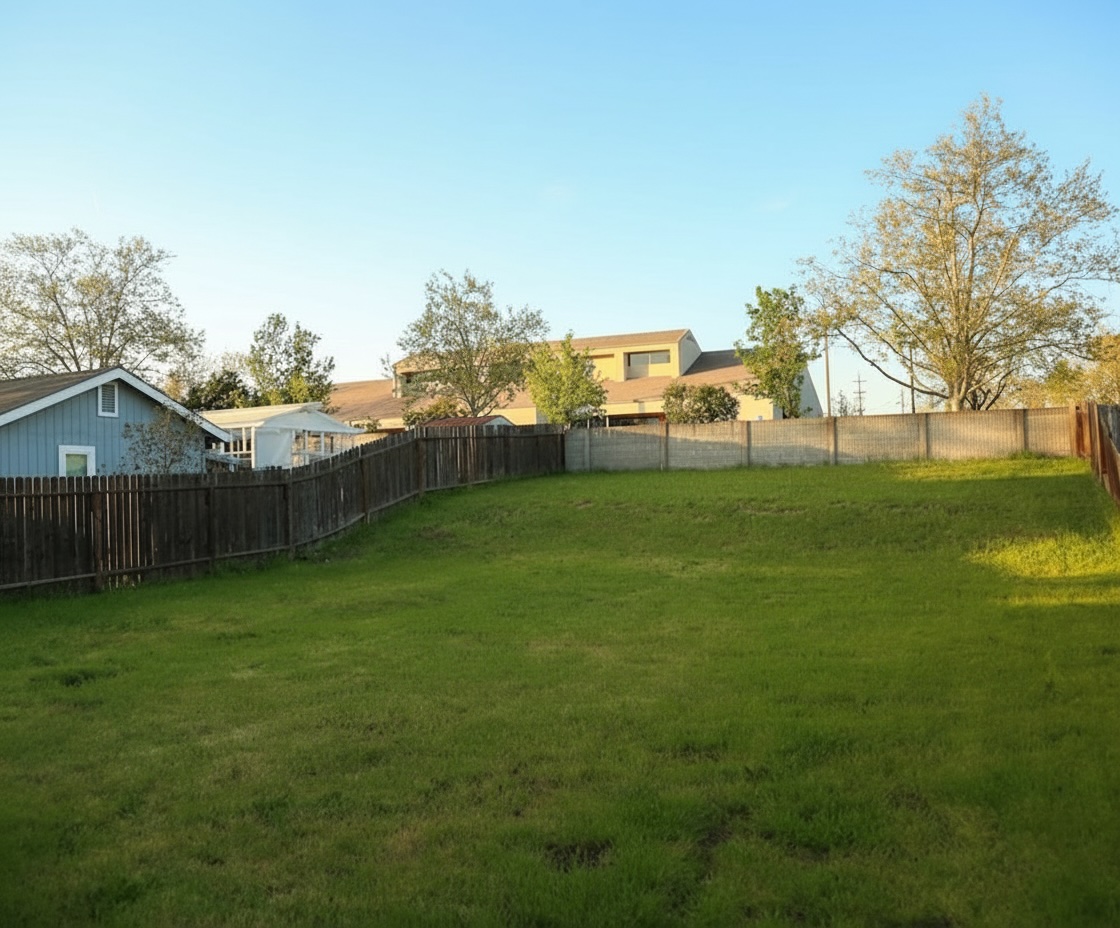
Featured Trees & Shrubs for Modern/Minimalist Gardens
Browse all 168 plants for Naperville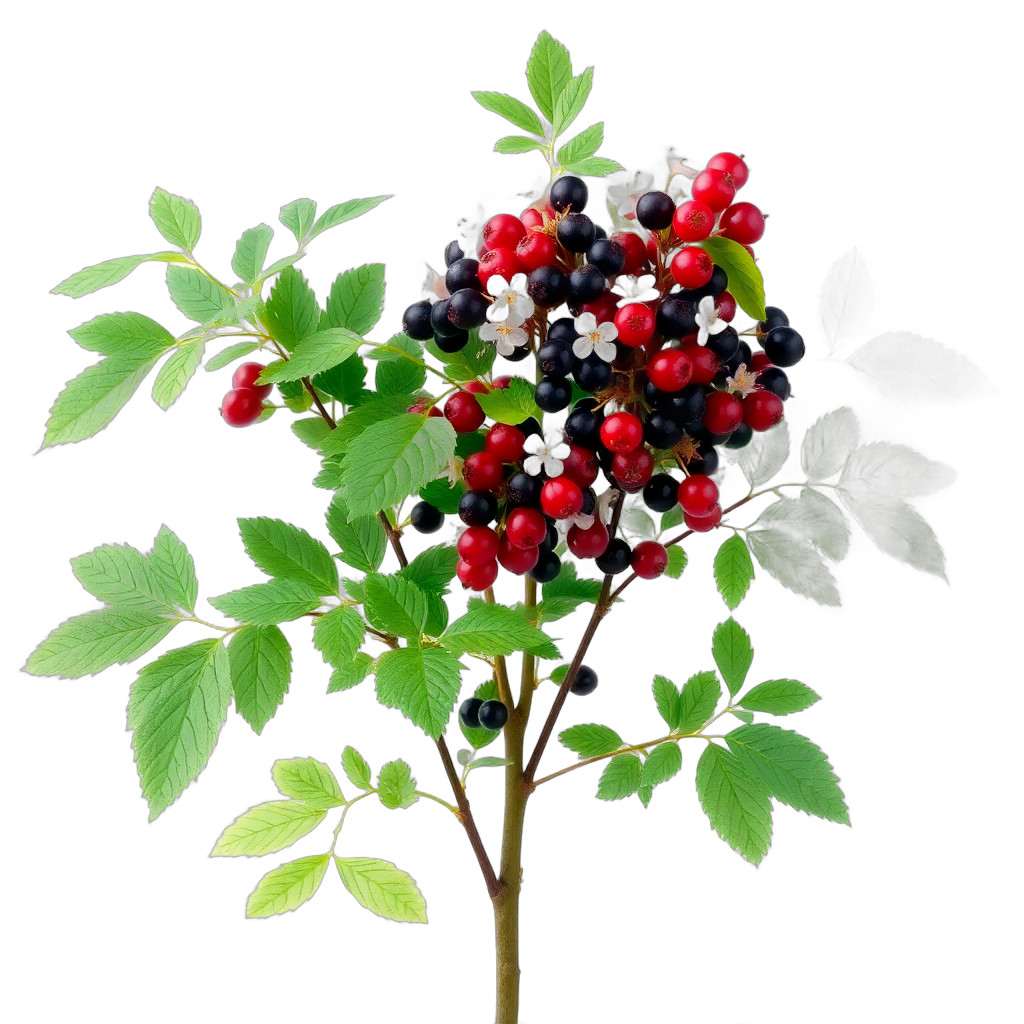
American Black Currant
Ribes americanum
grows to 5 feet, white,yellow blooms in spring. Attracts hummingbirds.
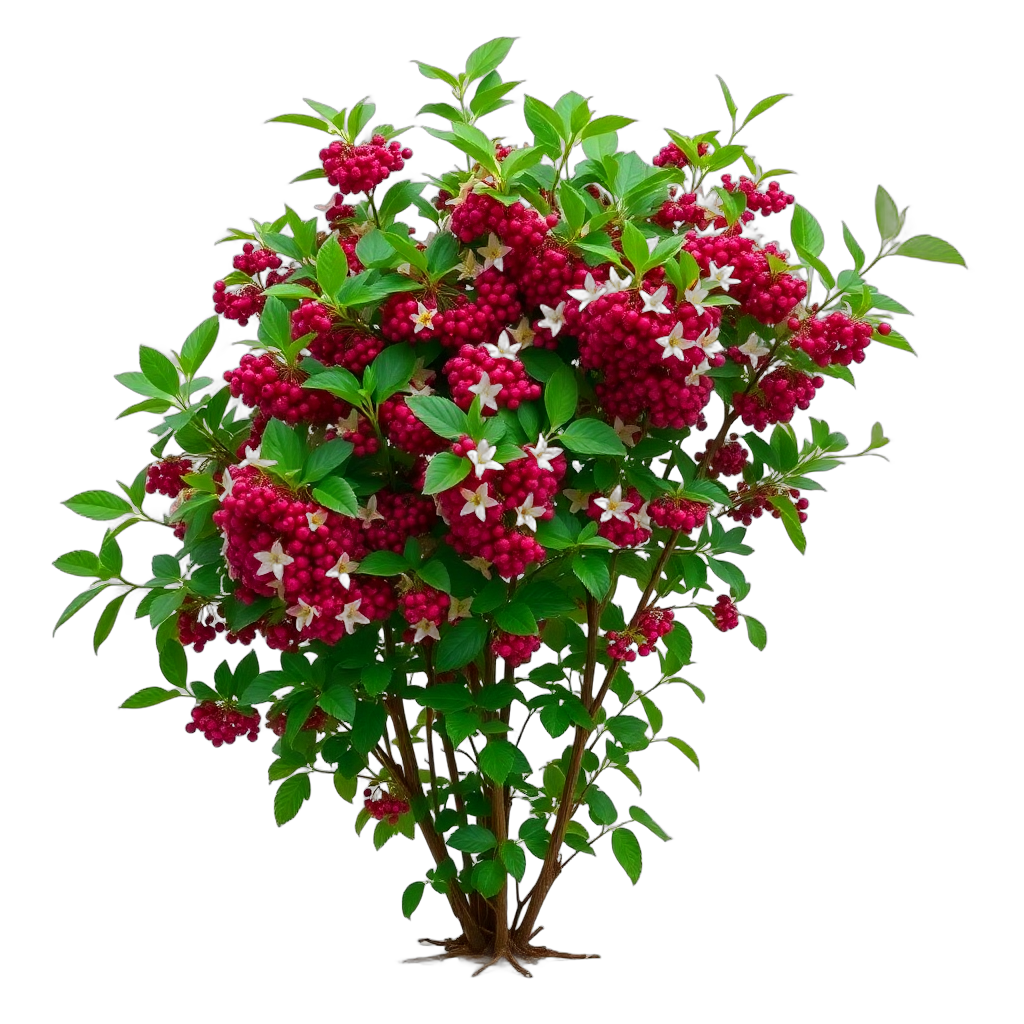
Clove Currant
Ribes odoratum
grows to 6 feet, yellow blooms in spring. Attracts hummingbirds.

Fragrant Sumac
Rhus aromatica
grows to 4 feet, yellow blooms in spring. Attracts butterflies.
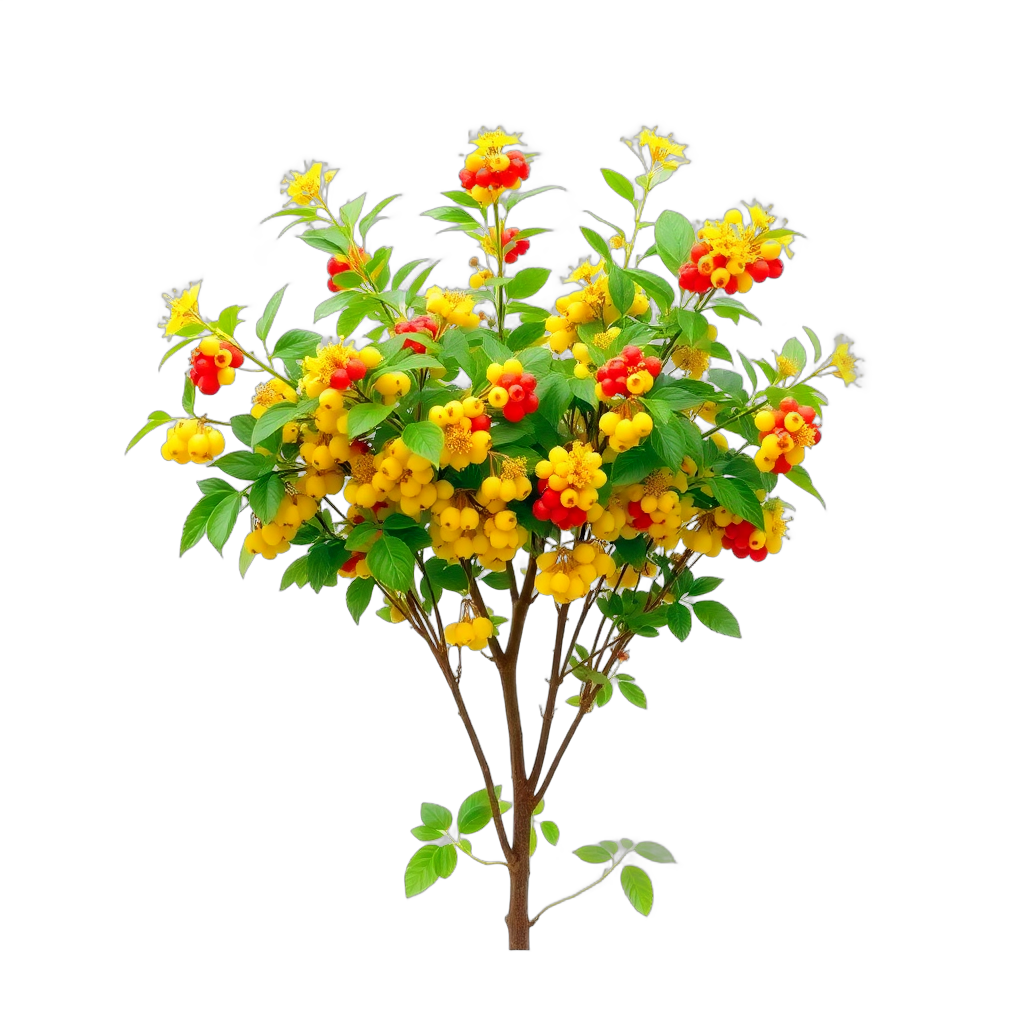
Golden Currant
Ribes aureum
grows to 6 feet, yellow blooms in spring. Attracts hummingbirds.
Featured Grasses & Groundcovers for Modern/Minimalist Gardens
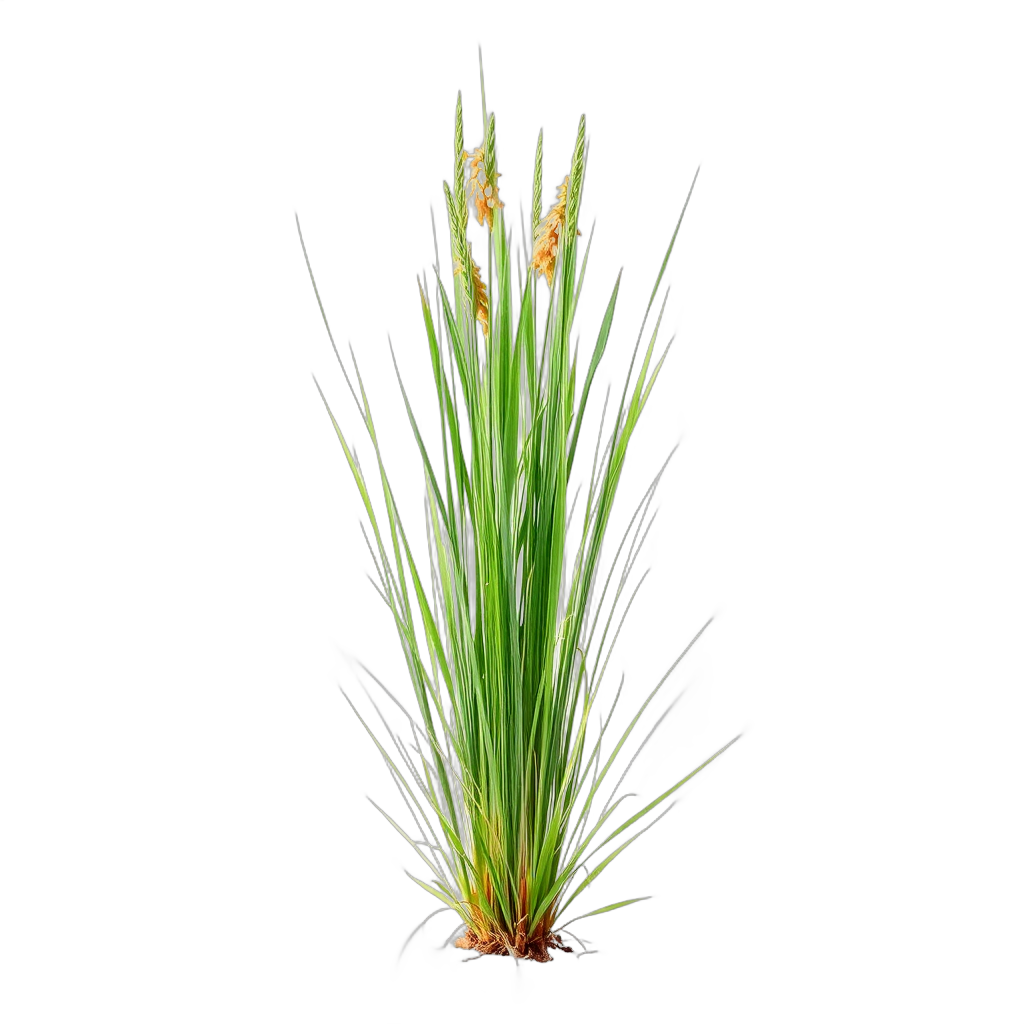
Eastern Gamagrass
Tripsacum dactyloides
grows to 6 feet, blooms in summer. Yellow fall color.
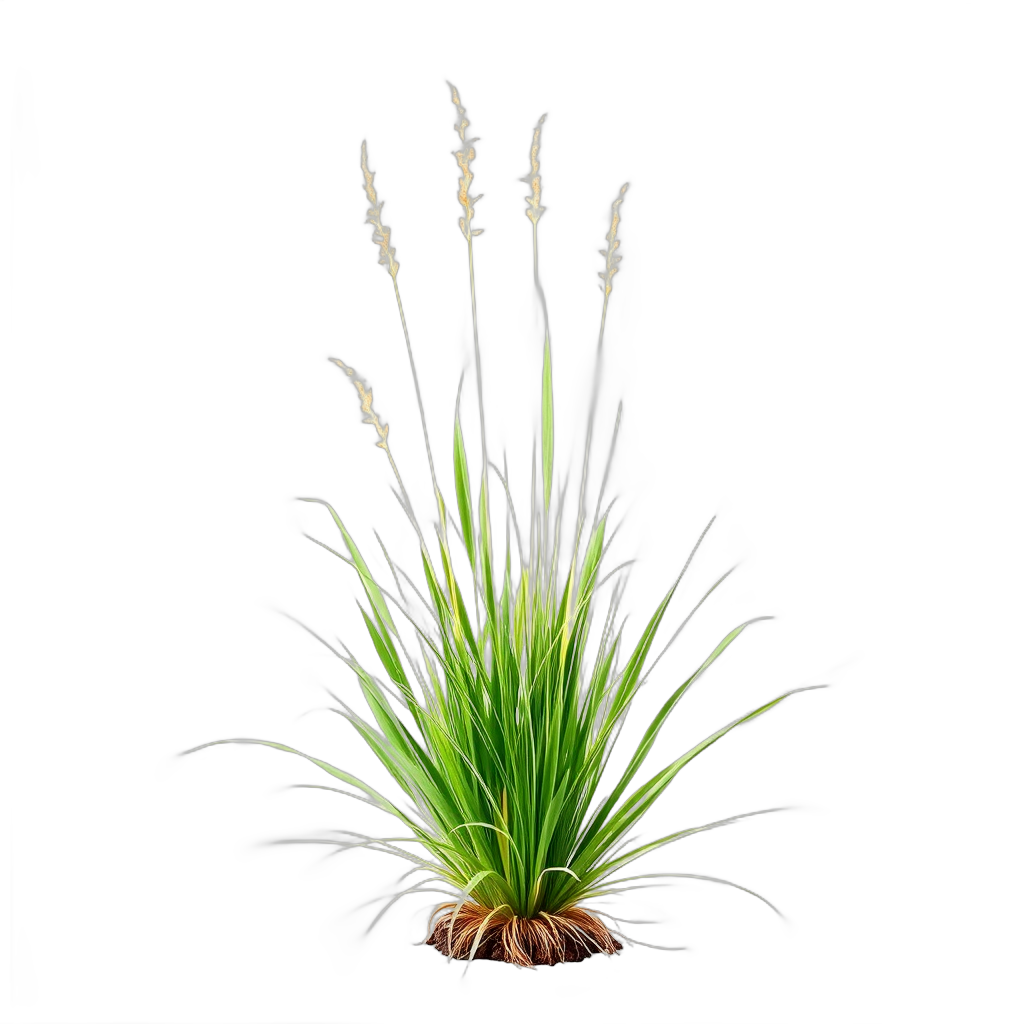
Northern Sea Oats
Chasmanthium latifolium
grows to 4 feet, blooms in fall. Bronze fall color.
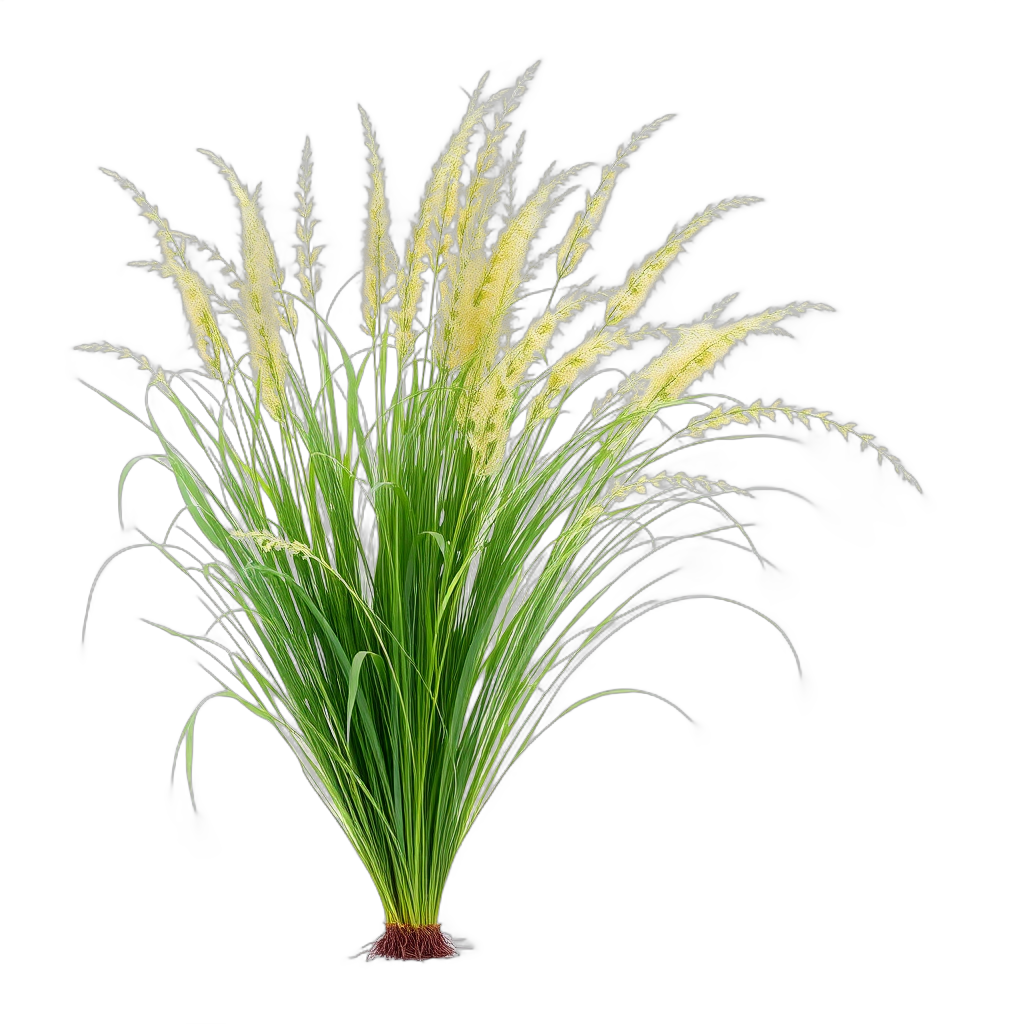
Adagio Maiden Grass
Miscanthus sinensis 'Adagio'
low-growing ground cover, pink blooms in summer. Orange fall color.
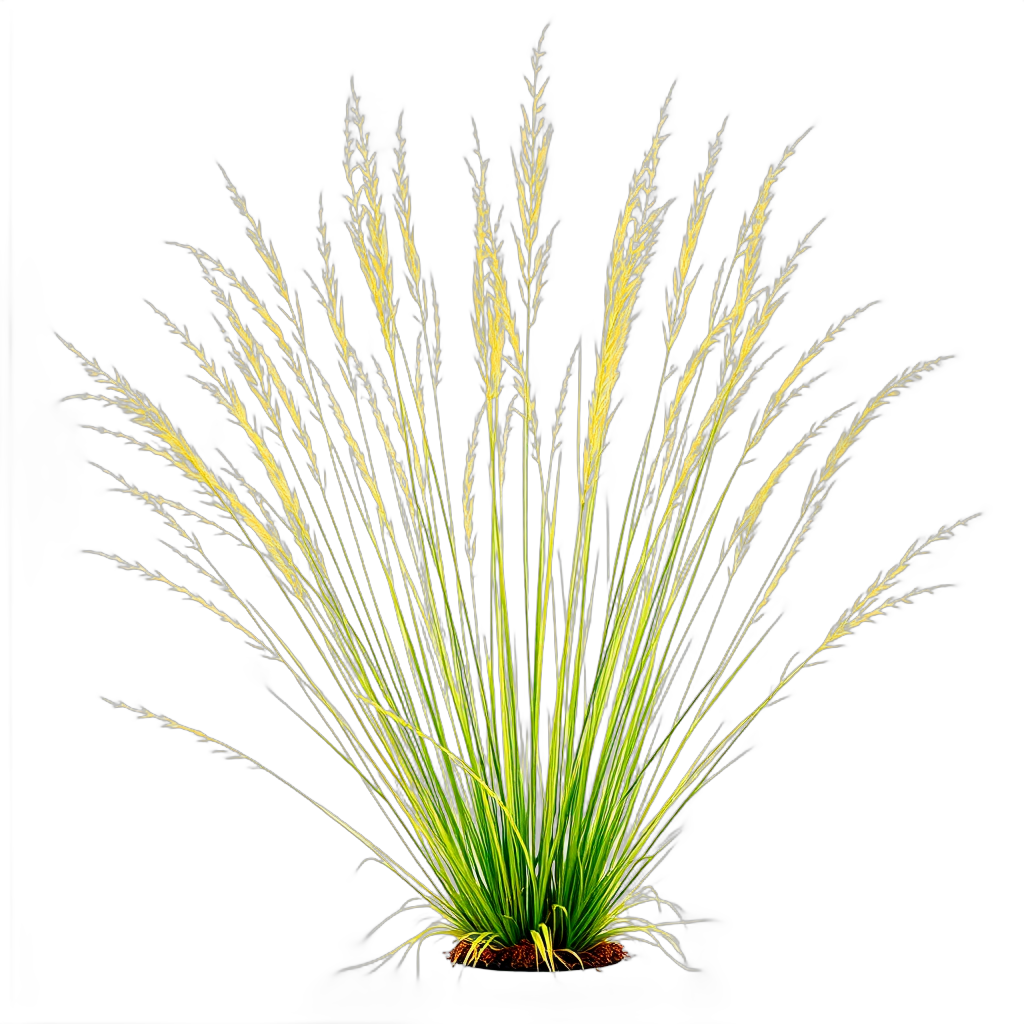
All Gold Japanese Forest Grass
Hakonechloa macra 'All Gold'
low-growing ground cover, blooms in summer.
Featured Flowers & Perennials for Modern/Minimalist Gardens
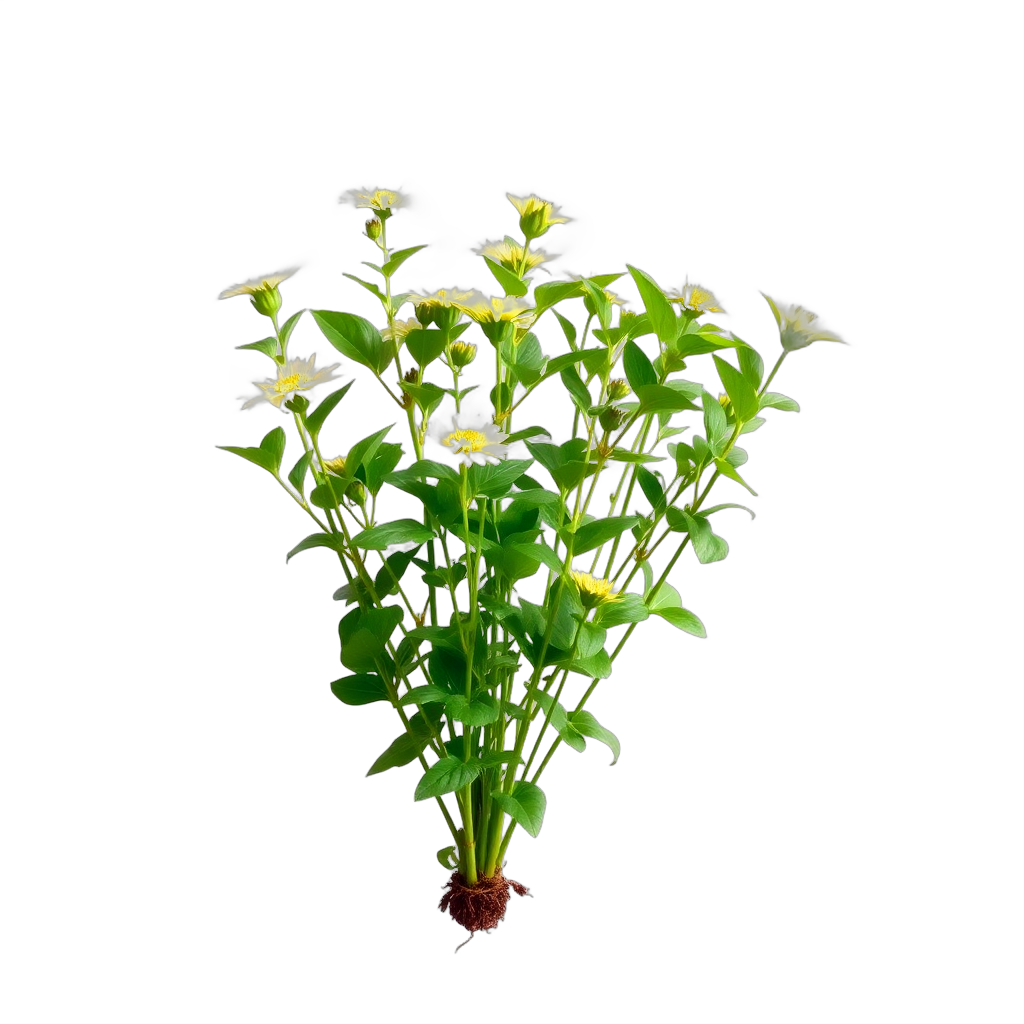
Cup Plant
Silphium perfoliatum
medium-sized at 7 feet, yellow blooms in summer. Attracts butterflies.
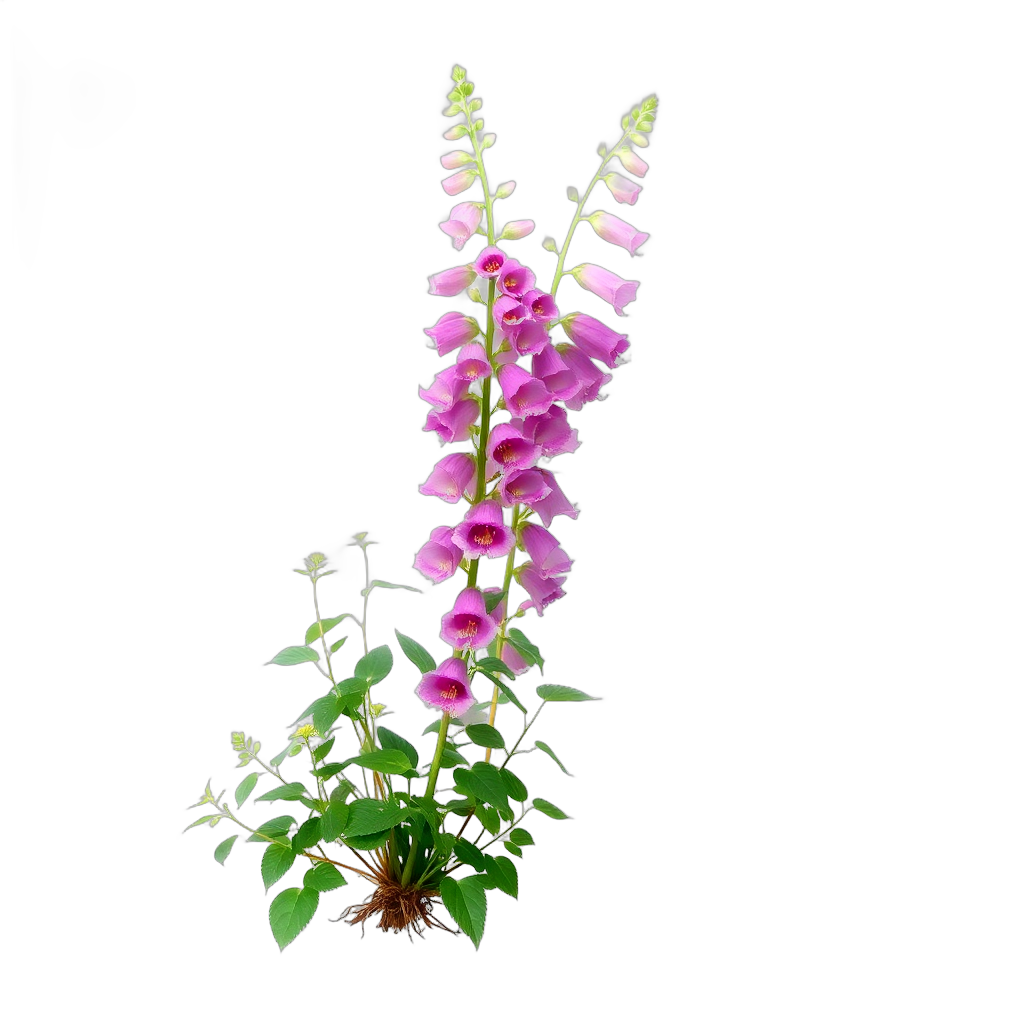
Foxglove Beardtongue
Penstemon digitalis
grows to 3 feet, white blooms in spring. Attracts hummingbirds.
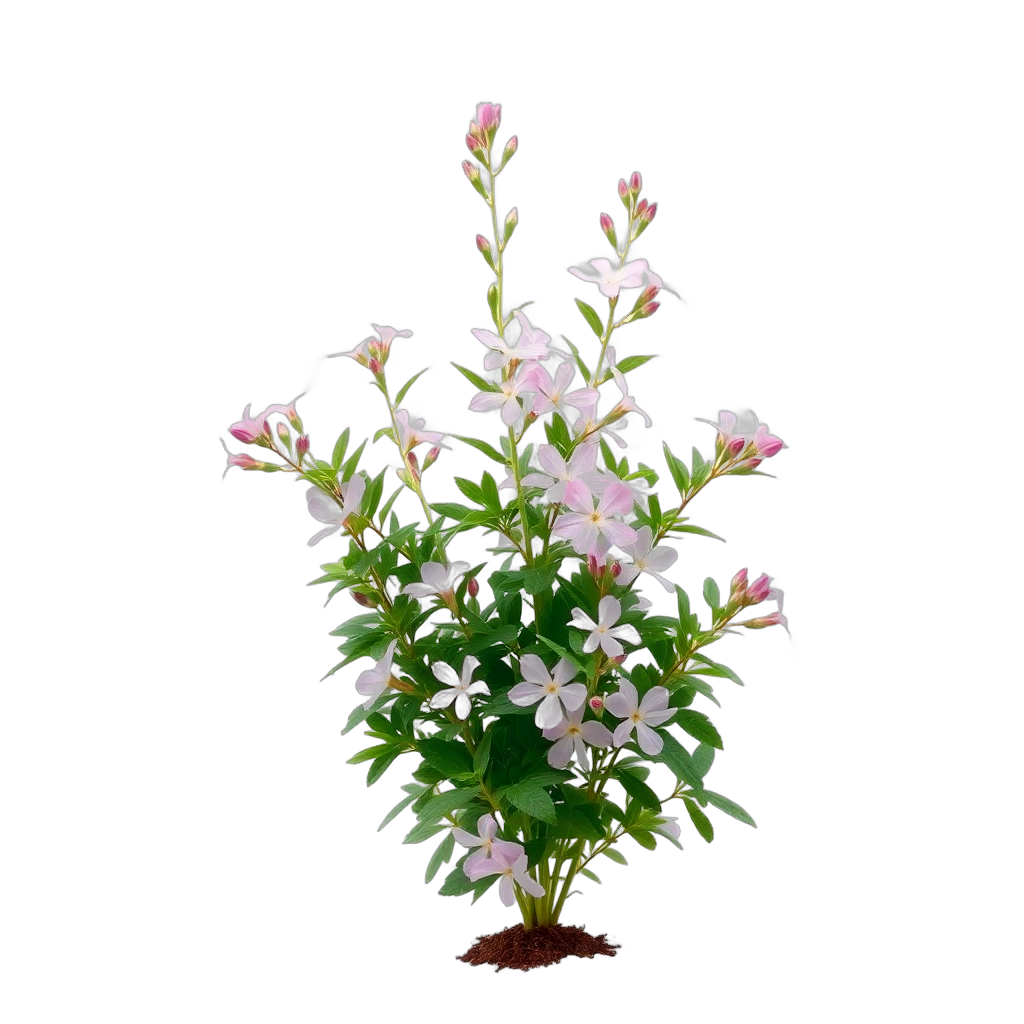
Garden Phlox
Phlox paniculata
grows to 3 feet, multi blooms in summer. Attracts hummingbirds.
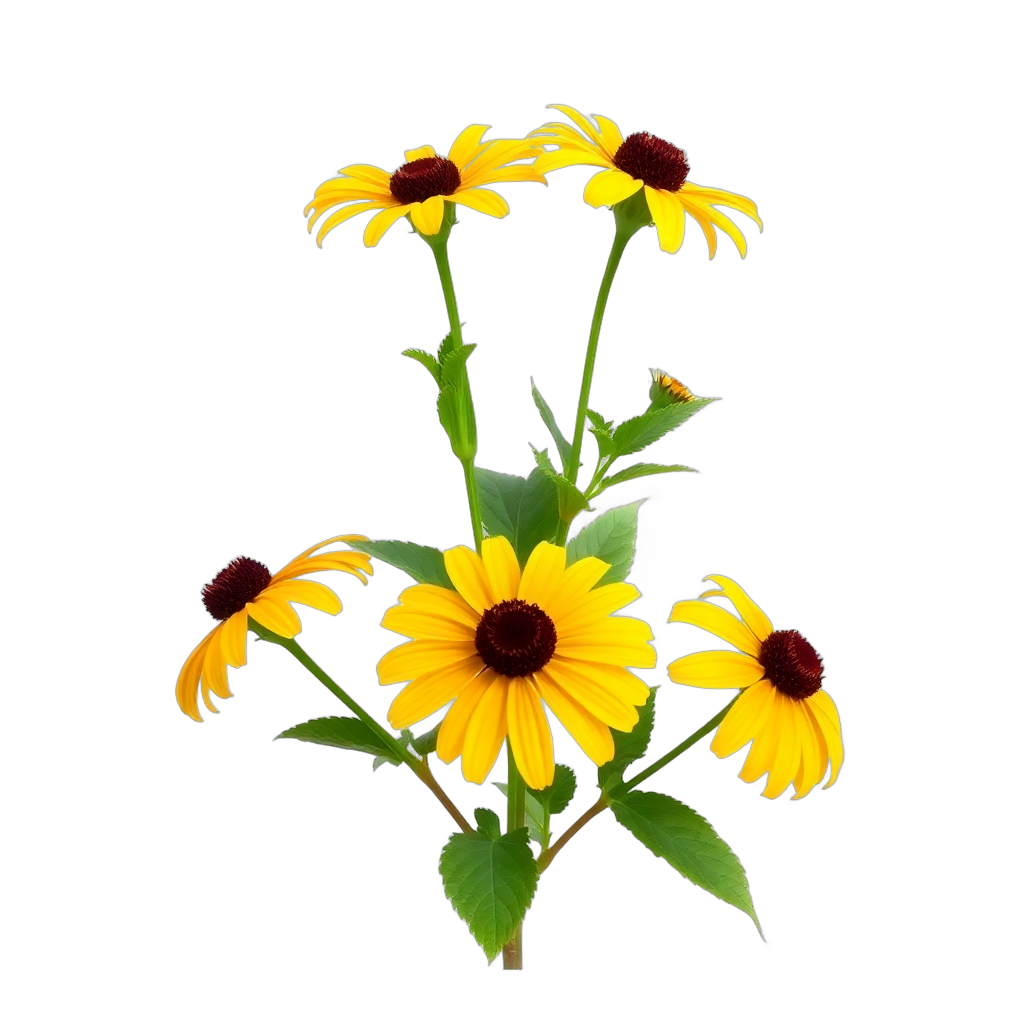
Gloriosa Daisy
Rudbeckia hirta
low-growing ground cover, yellow blooms in summer. Attracts butterflies.
Zone and sun checks come from our database — confirm with your local nursery before you buy.
Bloom Calendar for Naperville
spring
Foxglove Beardtongue, American Black Currant, Clove Currantsummer
Cup Plant, Garden Phlox, Gloriosa Daisyfall
Northern Sea Oatswinter
Limited bloomsDesign Tips for Naperville (Zone 5b)
- Give every hard surface a real base and every post a real footing — 6–8 inches of compacted CA-6 under patios and walks, and footings at the local frost depth of roughly 42 inches for pergolas, fences and light posts; Naperville clay freezes and lifts, and a slab poured on graded soil will crack before its third winter
- Raise the sculptural beds 8–12 inches above grade in a gritty mix and mulch them with gravel, not bark — Yucca filamentosa 'Color Guard', Agave parryi var. neomexicana and Opuntia humifusa die of February wet in DuPage clay, never of Zone 5b cold
- Let the local prairie do the modern work: masses of Sporobolus heterolepis, Panicum virgatum 'Northwind' and Schizachyrium scoparium 'Standing Ovation' deliver the same architectural texture as a Southwest planting, hold their form under 30 inches of snow, and belong to the Central US forest-grasslands transition this city was built on
- Design the snow and salt into the plan — mark where the plow pile lands at the end of the driveway and leave that zone open, and plant the driveway and public-walk edges with salt-tolerant Perovskia atriplicifolia 'Little Spire' or Sporobolus heterolepis rather than Buxus, which browns on the road side by March
- Pick trees that tolerate pH 7.2–7.8: Quercus bicolor, Gymnocladus dioicus 'Espresso' and Acer x freemanii 'Sienna Glen' stay green in DuPage's dolomite-derived soil, while pin oak and Acer x freemanii 'Autumn Blaze' will spend every August yellow and asking for chelated iron
- Cut the grasses back in late March rather than October — their winter silhouette against snow is half of what a modern Naperville garden delivers between December and March, and standing stems protect the crowns through the freeze-thaw cycles
- Light the planes and the plants, not the whole yard: in-grade uplights behind grass clumps and low bollards grazing the concrete give the blue-hour effect these designs are built for, and with sunset near 4:25 p.m. in late December, good lighting is what keeps the design visible for the four months you see it most from indoors
Where to Source Plants in Naperville
Skip the big-box stores. These independent Naperville nurseries specialize in the plants that make modern/minimalist gardens thrive in Zone 5b.
The Growing Place
North Naperville (Plank Road)
Naperville's own independent garden center; strong perennial, grass, shrub and tree selection with display gardens and container design help
Wannemaker's Home & Garden
Downers Grove (Ogden Avenue)
Family-run for over 50 years; trees, shrubs and perennials alongside large-scale pottery and planters suited to modern courtyards
Platt Hill Nursery
Bloomingdale (West Lake Street)
Family-owned grower stocking only material proven hardy locally; good source for specimen trees and evergreen structure
Wasco Nursery & Garden Center
St. Charles (Route 64)
Family-owned since 1925 across 10+ acres; shade and ornamental trees, evergreens and bulk stone, mulch and compost for northern Illinois clay
Modern/Minimalist Landscaping Costs in Naperville
| Project Scope | Estimated Cost |
|---|---|
| Front-yard modern conversion (turf removal, gravel court, steel edging, planting) | $6,000 – $15,000 |
| Poured concrete walk with sawcut joints | $18 – $30 per sqft |
| Large-format concrete or paver back terrace (300–500 sqft) | $12,000 – $30,000 |
| Gas fire bowl on a plumbed line, installed | $3,500 – $9,000 |
| Low-voltage landscape lighting (uplights, bollards, in-grade) | $150 – $350 per fixture |
| Pool, deck and full backyard landscape | $90,000 – $220,000 |
| AI visualization with ProScapeAI | Free to start |
Estimates based on Naperville, IL-area contractor rates as of 2026. Actual costs vary by site conditions, materials, and contractor.
Naperville Climate & Growing Zone
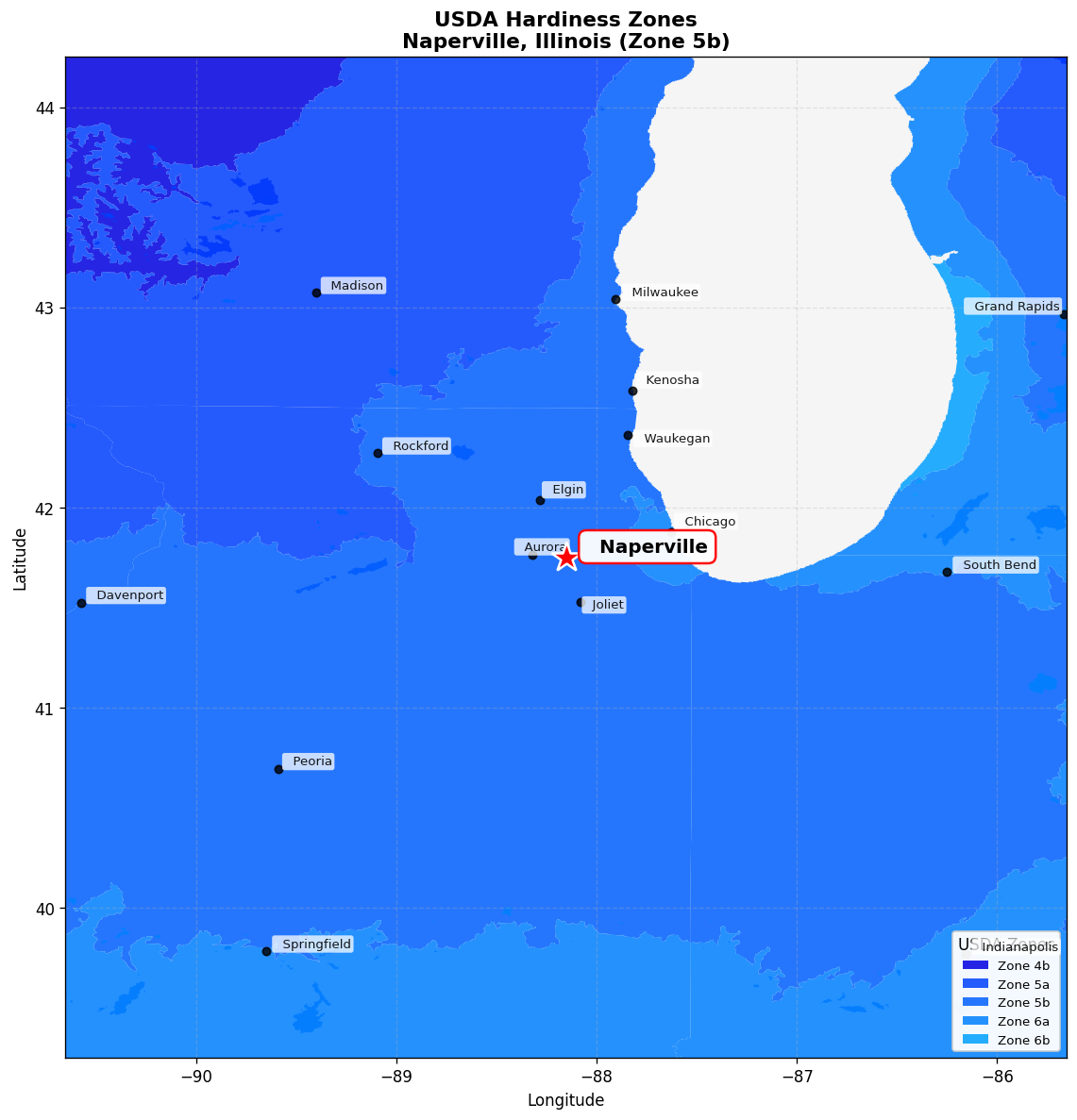
USDA Zone 5b
Hardiness zone for Naperville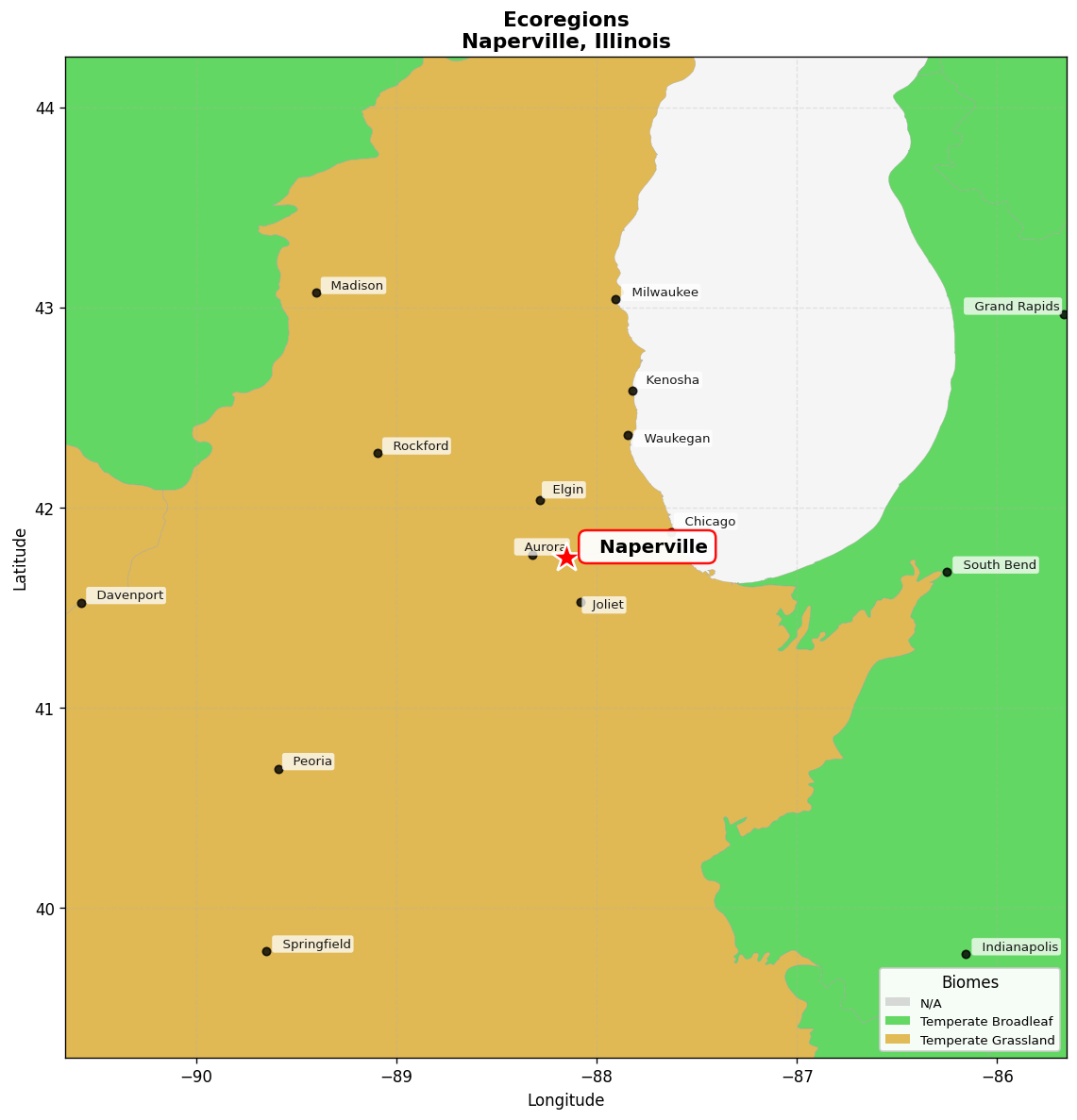
Central US forest-grasslands transition
Native ecoregionFrequently Asked Questions
How much does modern landscaping cost in Naperville?
DuPage County labour runs roughly 10–20% above the national average, so plan a real budget. A front-yard modern conversion — turf removal, compacted base, gravel court, steel edging and architectural planting across a typical 500 sqft front yard — lands at $6,000–15,000 installed. A poured concrete walk with sawcut joints runs $18–30/sqft, and a large-format concrete or paver back terrace of 300–500 sqft runs $12,000–30,000. Add a gas fire bowl on a plumbed line at $3,500–9,000, and low-voltage lighting at $150–350 per fixture installed. A full pool-and-deck backyard in Ashwood Park or Breckenridge Estates commonly runs $90,000–220,000 once the automatic cover, heater and code-height fencing are included. A DIY gravel-and-grasses front conversion can come in near $5–8/sqft in materials.
Can I actually grow agaves and desert plants in Naperville?
Partly, and it pays to be honest about which parts. Naperville is Zone 5b at -15°F to -10°F with about 38 inches of rain, so Agave americana, most Echeveria and Aloe are summer container plants that overwinter indoors or in an unheated garage. What does stay outside permanently, given a raised bed that drains sharply, is a surprisingly good list: Yucca filamentosa 'Color Guard' and Yucca glauca, Agave parryi var. neomexicana, Opuntia humifusa — Illinois' own native prickly pear — and hardy Sempervivum such as 'Royal Ruby'. The rule that kills these plants here is not cold but winter wet, so build the bed 8–12 inches above grade in roughly 60% crushed limestone screenings to 40% compost, mulch with gravel rather than bark, and never let a downspout drain into it.
What does DuPage County clay demand from hardscape?
More base than you think, and deeper footings than most out-of-state contractors assume. Naperville's subsoil is dense clay over Wisconsin-age glacial till: it holds water, freezes, and lifts anything sitting on it. Patios and walks want 6–8 inches of compacted CA-6 crushed stone over geotextile before a single paver is set — concrete poured directly on graded clay will crack within a few winters. Anything post-supported, from a pergola to a string-light post to a fence, needs a footing to the local frost depth, commonly 42 inches in northern Illinois. Plan drainage explicitly: pitch the terrace a quarter-inch per foot away from the house, and put a drain tile or dry creek along the uphill side of any bed cut into clay so the bed does not become a bathtub.
Which grasses hold their shape through a Naperville winter?
The best modern planting here is essentially edited prairie, because those plants evolved in this exact forest-grasslands transition. Panicum virgatum 'Northwind' is the standout — strictly upright, it refuses to flop under 30 inches of snow or a wet October. Sporobolus heterolepis stays as a tidy fine-textured dome, Schizachyrium scoparium 'Standing Ovation' turns copper and holds it into February, and Calamagrostis x acutiflora 'Karl Foerster' gives the vertical exclamation from June onward. Sesleria autumnalis and Bouteloua gracilis 'Blonde Ambition' work at the front of a bed. Avoid Pennisetum setaceum 'Rubrum' unless you intend to buy it annually — it is not hardy here. Cut everything back to 4–6 inches in late March, not autumn, so the winter silhouette earns its keep.
How do Naperville's watering rules shape a modern design?
Naperville buys Lake Michigan water through the DuPage Water Commission and runs a seasonal sprinkling ordinance from roughly mid-May into mid-September — odd-numbered addresses on odd days, even on even, with sprinkling barred through the hottest midday hours. Check current dates and hours with the city before specifying a controller. Modern design sits comfortably inside those rules because it removes the thirstiest element of the yard. Once established through a first season of deep weekly soaking, a planting of Sporobolus heterolepis, Panicum virgatum 'Northwind', Perovskia atriplicifolia 'Little Spire' and Yucca filamentosa needs essentially no supplemental water in a normal 38-inch rainfall year. Where lawn stays in the design, keep it to defined flat panels — smaller, sharper and cheaper to run than wall-to-wall turf.
When should I install, and do I need permits in Naperville?
Hardscape can be built from roughly April into November, with a mid-summer construction rush that fills good crews' calendars by March — book early. Planting is best mid-April to late May or early September to mid-October; skip July and early August, when 84°F highs punish anything not yet rooted. Gravel courts and beds can be installed almost any frost-free month. On permits: planting, mulch and edging need nothing, while patios and other impervious surfaces, fences, decks, pergolas, retaining walls above a set height and pools all fall under Naperville's building and zoning review through the city's Transportation, Engineering and Development group. Thresholds change, so confirm your specific scope with them first. Parkway trees between the sidewalk and street belong to the city, and tree preservation rules can apply to significant existing trees on private lots.