4 Mediterranean Garden Ideas for Norwalk, CA | Olive and Lavender in Zone 10b
Native plants from the California coastal sage and chaparral (Zone 10b) — Mediterranean (warm summer) climate
For a mediterranean garden in Norwalk, CA, a zone 10b city with a mediterranean (warm summer) climate, start with Olea europaea 'Wilsonii', Rosmarinus officinalis 'Tuscan Blue' and Santolina chamaecyparissus, the plants this guide's first design is built on.
Why Mediterranean Gardens in Norwalk?
Mediterranean planting is easy to grow in Norwalk, because the climate is Mediterranean. Winters are mild and wet, summers are dry, and the yearly rain total is about 14 inches, nearly all of it between November and March. This is USDA Zone 10b: winter lows seldom fall below 38 to 42°F, summer afternoons run in the mid 80s, and Santa Ana days can push past 100°F. Olives, rosemary, lavender, rockrose and fig have all been bred for conditions like these. The stucco ranch houses of the 1950s tracts also suit the look, with their flat front yards, plain walls and low rooflines, and many have a tile-roofed or Spanish-influenced variation.
The plant list is long and forgiving. Olea europaea 'Wilsonii' gives a fruitless, silver-green canopy. Rosmarinus officinalis 'Tuscan Blue' makes a 4-foot hedge. Lavandula stoechas 'Otto Quast' blooms from March and handles the heat better than English lavender, and Cistus × purpureus covers dry slopes in pink flowers each May. Cupressus sempervirens 'Glauca' gives the vertical accent, though plant it in a spot where it will not overgrow a narrow side yard. Citrus 'Improved Meyer' lemon and Ficus carica 'Black Mission' add something to eat.
Soil is a point in your favor. Norwalk sits on the alluvial plain between the San Gabriel River and the Rio Hondo, so the ground is sandy loam to loam that drains well and runs a little alkaline (pH about 7.0 to 8.0). Lavender, rosemary and olive all like that. Under old lawns and driveways the soil is compacted, so rip 8 to 12 inches deep before planting and add only a thin layer of compost: Mediterranean plants do best in lean soil, and a rich bed makes them leggy.
Water is the other rule. Norwalk is served by more than one water supplier, so check yours for the current watering days and drought stage. The good news is that established Mediterranean plants need little: deep water every two to three weeks in summer is usually enough once a plant has been in the ground for a year. Run drip, mulch with 3 inches of gravel or decomposed granite, and avoid mixing in thirsty plants like hydrangea or lawn grass on the same valve.
4 Mediterranean Design Ideas for Norwalk
AI-generated image
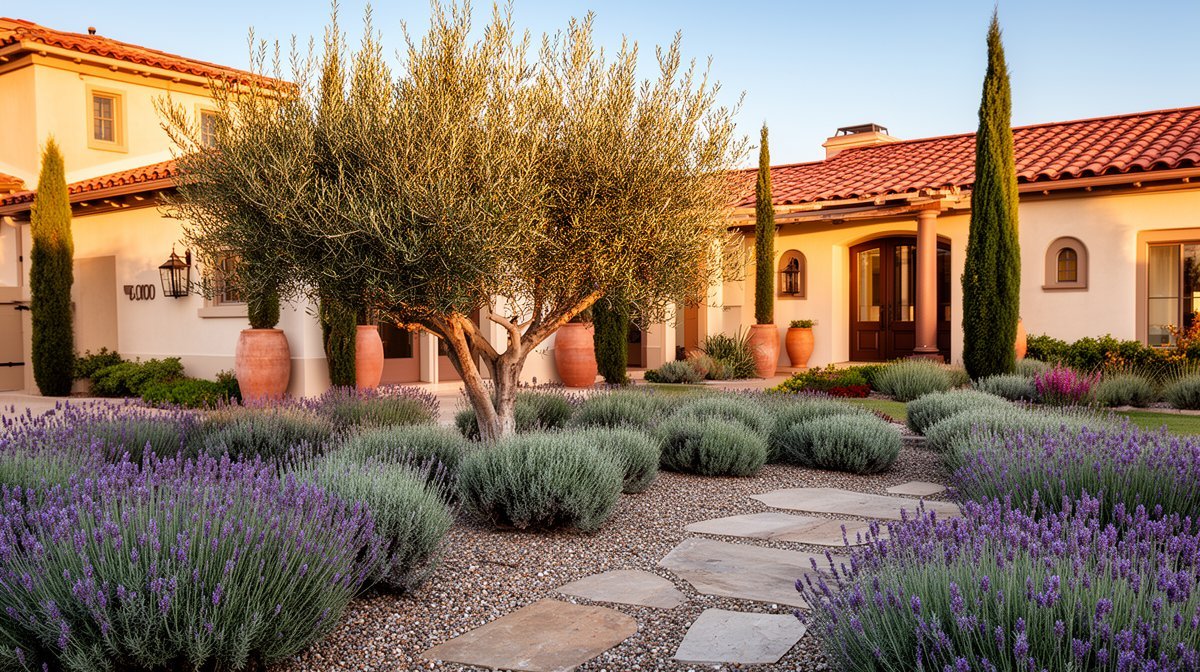
The Olive and Gravel Front Court
$16–34/sqftA gravel front court replaces the lawn, with two Olea europaea 'Wilsonii' trees set off-center on a stucco ranch house and a path of terracotta-toned pavers running to the door. Rosmarinus officinalis 'Tuscan Blue' and Santolina chamaecyparissus make low mounds along the walls, and big terracotta pots of Agave attenuata stand either side of the door. The house faces south, so the gravel and the silver foliage catch the light from noon on.
Try this on your yard: The Olive and Gravel Front CourtAI-generated image
The Lavender and Rockrose Slope Border
$14–30/sqftA front-yard berm, about 2 feet high, is planted in waves of Lavandula stoechas 'Otto Quast' and Cistus × purpureus, with Salvia 'Bee's Bliss' trailing over a low stone retaining wall. Phlomis fruticosa adds yellow in spring. Mulch is 3 inches of decomposed granite, and a flagstone path winds through the middle to the front door.
Try this on your yard: The Lavender and Rockrose Slope BorderAI-generated image
The Fruit and Herb Terrace
$20–42/sqftA back-yard terrace, about 14 by 18 feet, is paved in warm gravel and shaded by a Ficus carica 'Black Mission' fig and a Punica granatum 'Wonderful' pomegranate. Raised beds hold thyme, oregano and Rosmarinus 'Tuscan Blue', and a dwarf Citrus 'Improved Meyer' lemon in a glazed pot catches the late sun. A small table and four chairs sit on the gravel, which stays cool underfoot into the evening.
Try this on your yard: The Fruit and Herb TerraceAI-generated image
The Cypress and Fountain Entry
$30–62/sqftTwo columns of Cupressus sempervirens 'Glauca' frame the gate to a front walled garden, with a glazed bowl fountain on the axis and a flagstone walk to the door. Below the cypress, Euphorbia characias 'Wulfenii', Teucrium and Lavandula stoechas 'Otto Quast' keep the walls soft. The walls are painted warm cream stucco, and the recirculating fountain masks traffic noise from the street.
Try this on your yard: The Cypress and Fountain EntrySee how a mediterranean garden looks on YOUR property
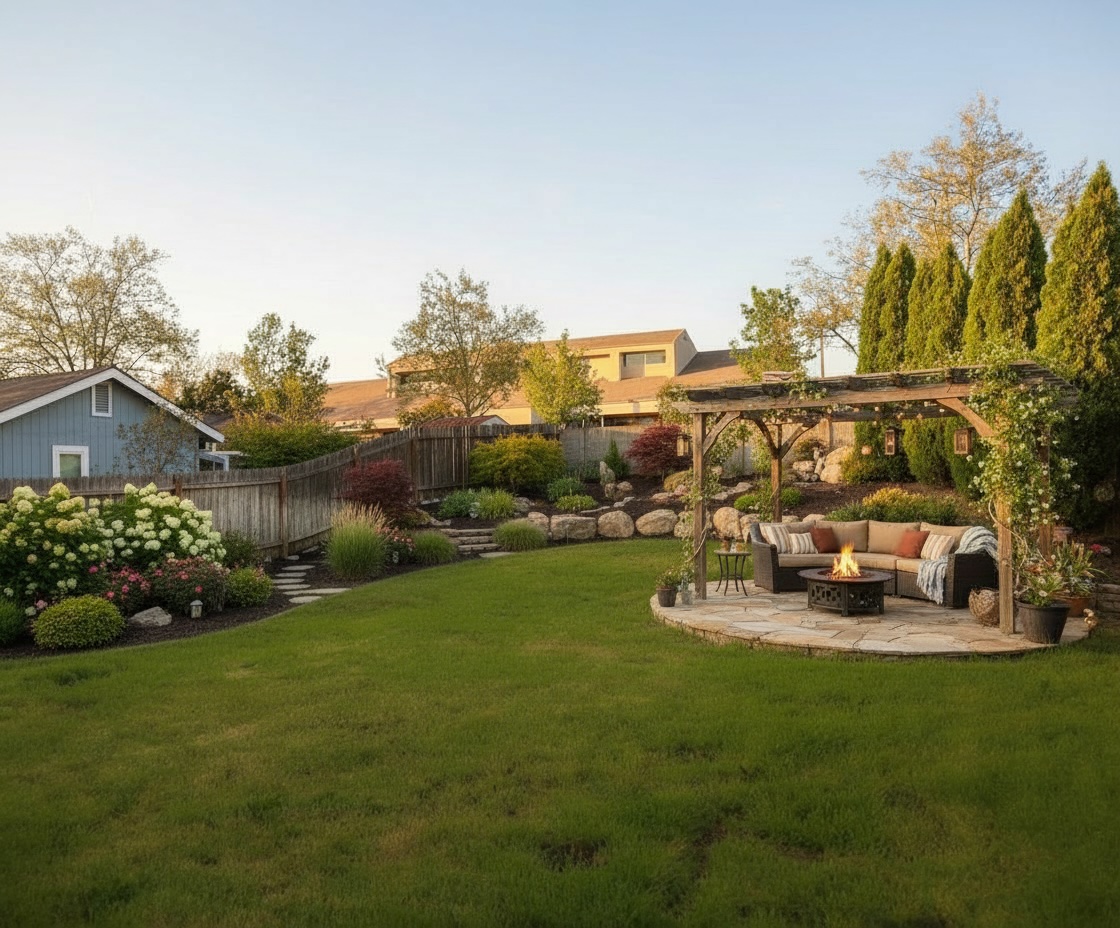
Upload a photo of your Norwalk yard and visualize your dream garden in seconds.
Try ProScapeAI Free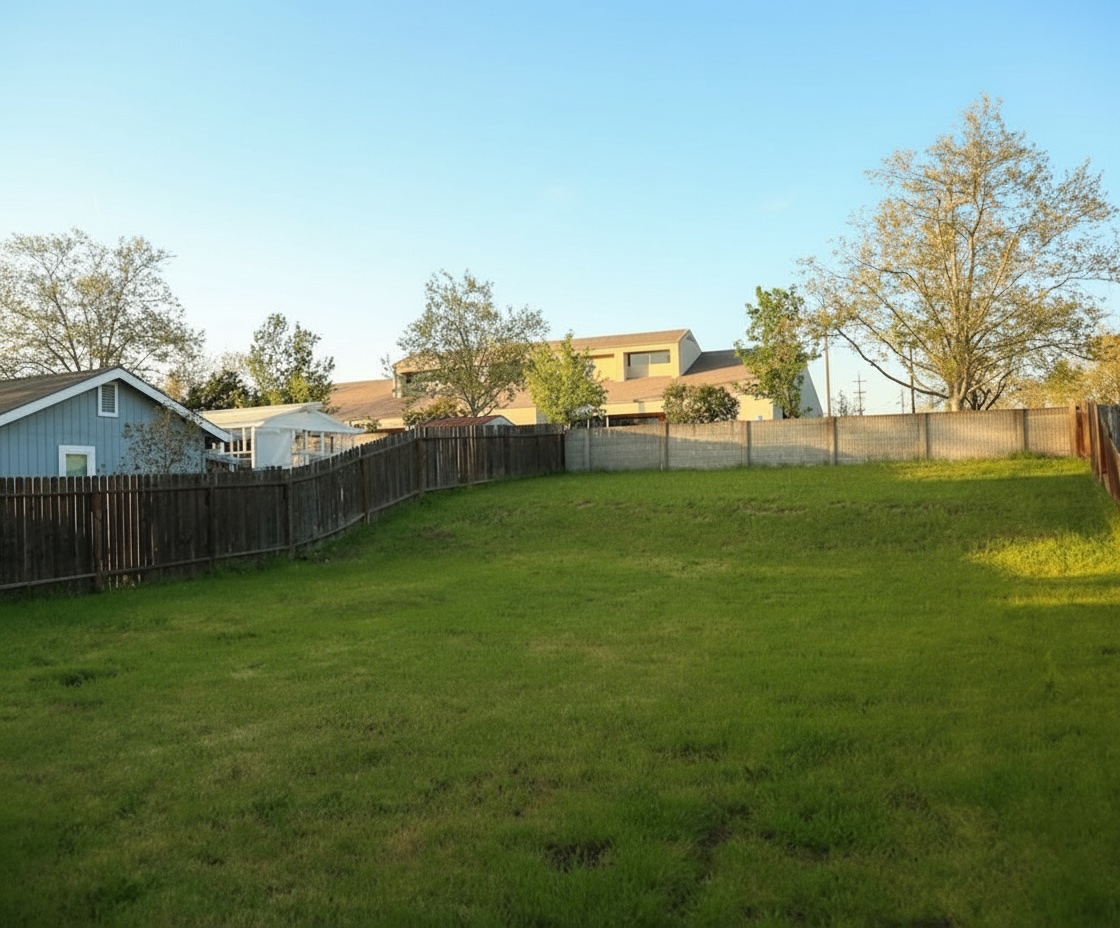
AI-generated image
Featured Trees & Shrubs for Mediterranean Gardens
Browse all 212 plants for Norwalk
Black Sage
Salvia mellifera
grows to 4 feet, white blooms in spring. Attracts butterflies.
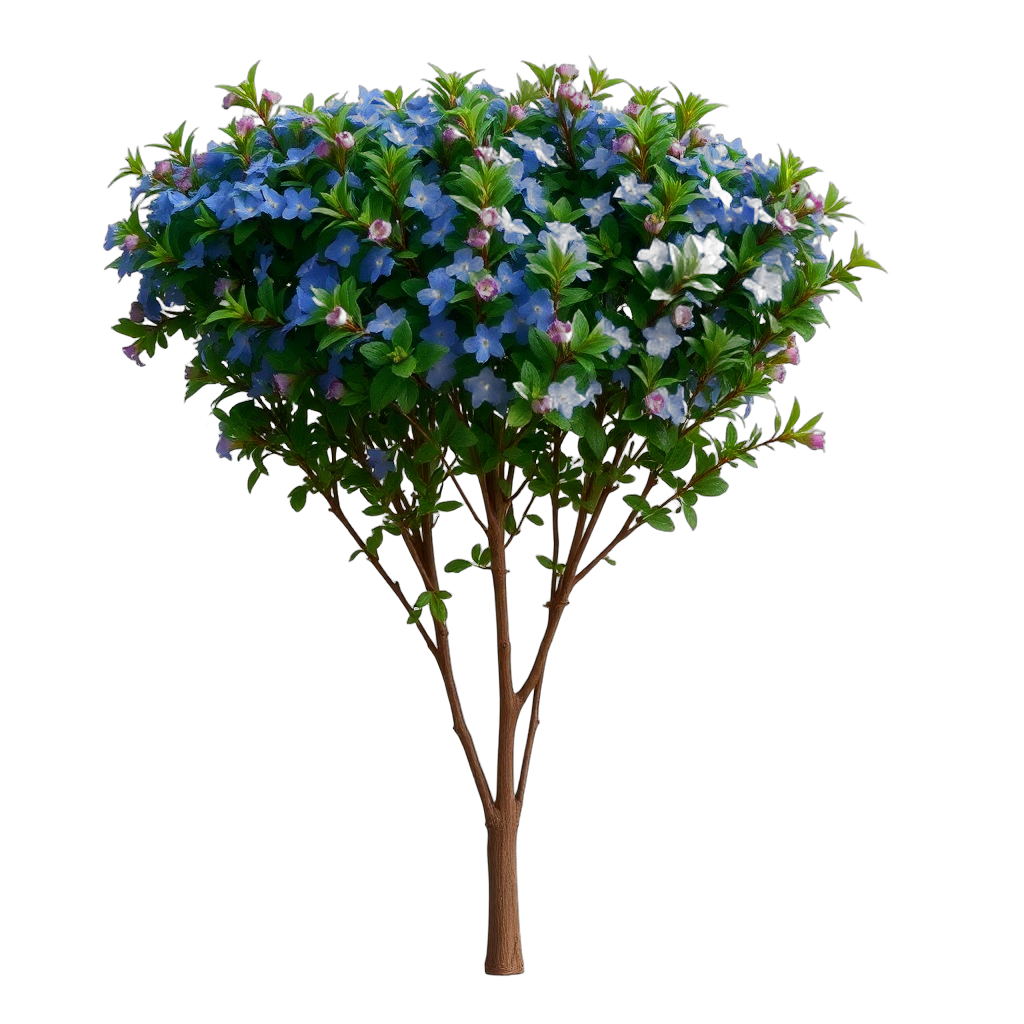
Blue Blossom
Ceanothus thyrsiflorus
medium-sized at 12 feet, blue blooms in spring. Attracts butterflies.
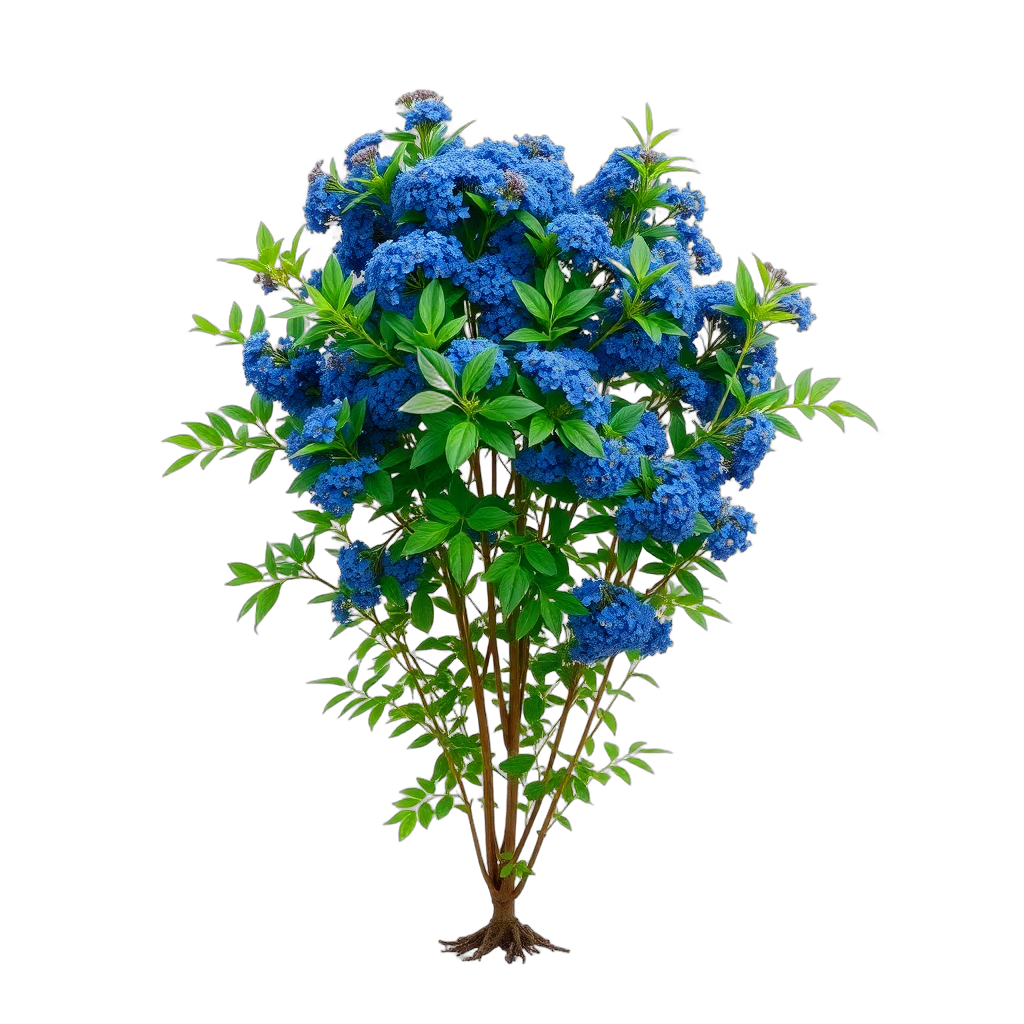
Blue Elderberry
Sambucus cerulea
medium-sized at 15 feet, white blooms in spring. Attracts butterflies.
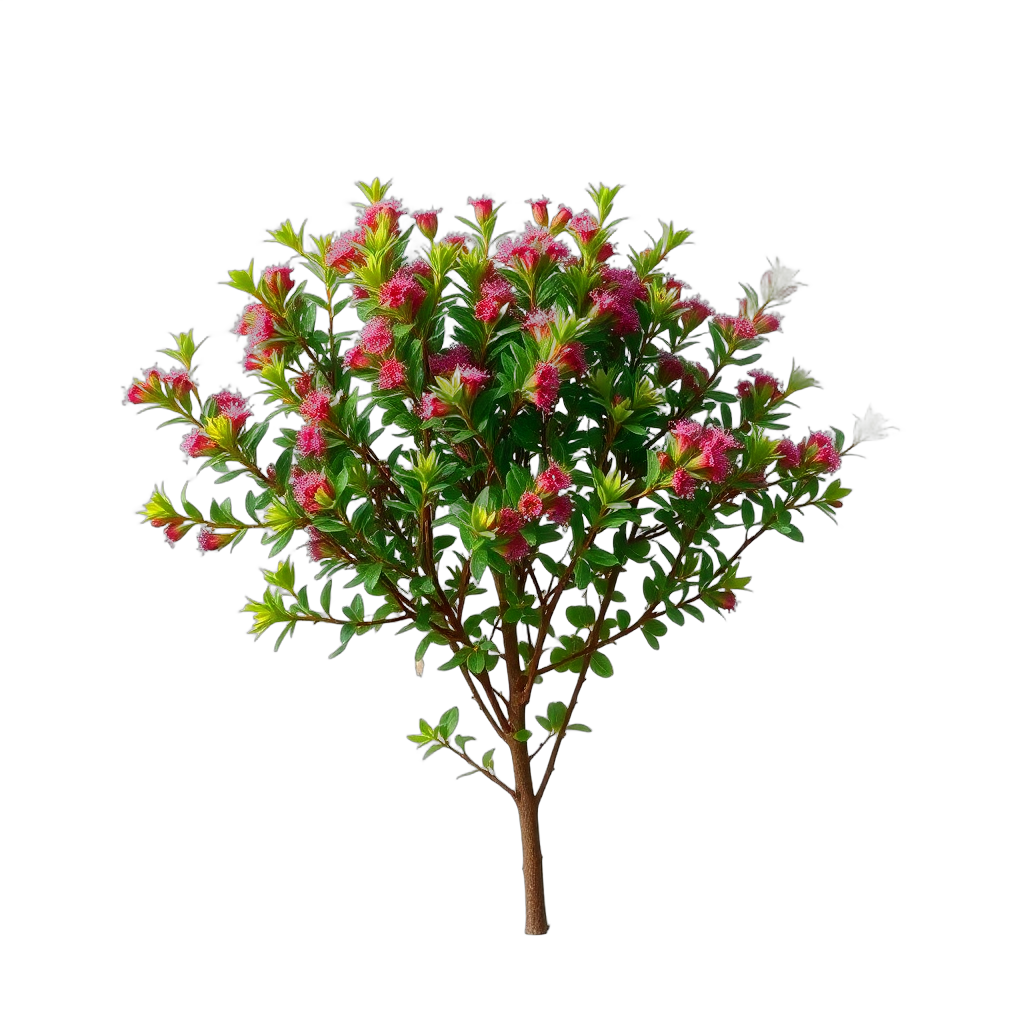
Buckbrush
Ceanothus cuneatus
medium-sized at 7 feet, white blooms in spring. Attracts butterflies.
Featured Grasses & Groundcovers for Mediterranean Gardens
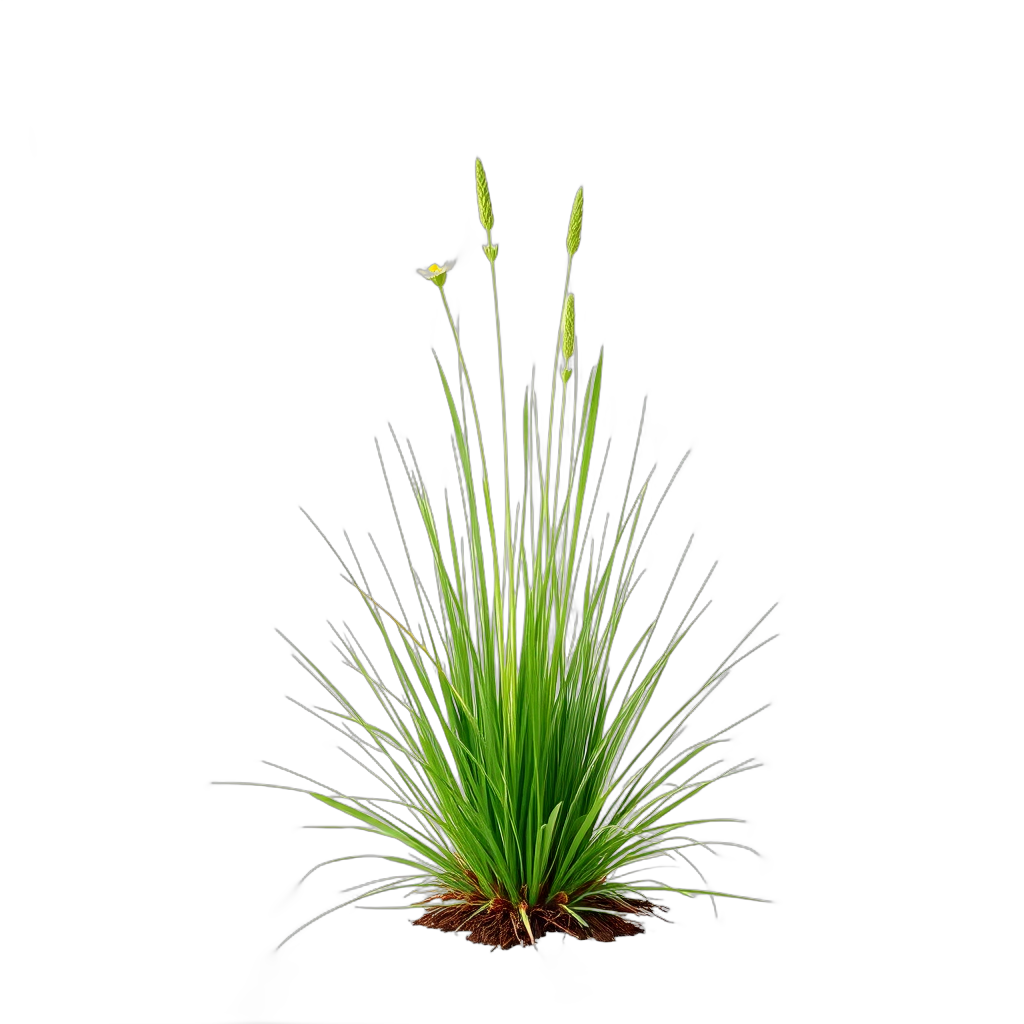
California Brome
Bromus carinatus
low-growing ground cover, blooms in spring. Yellow fall color.
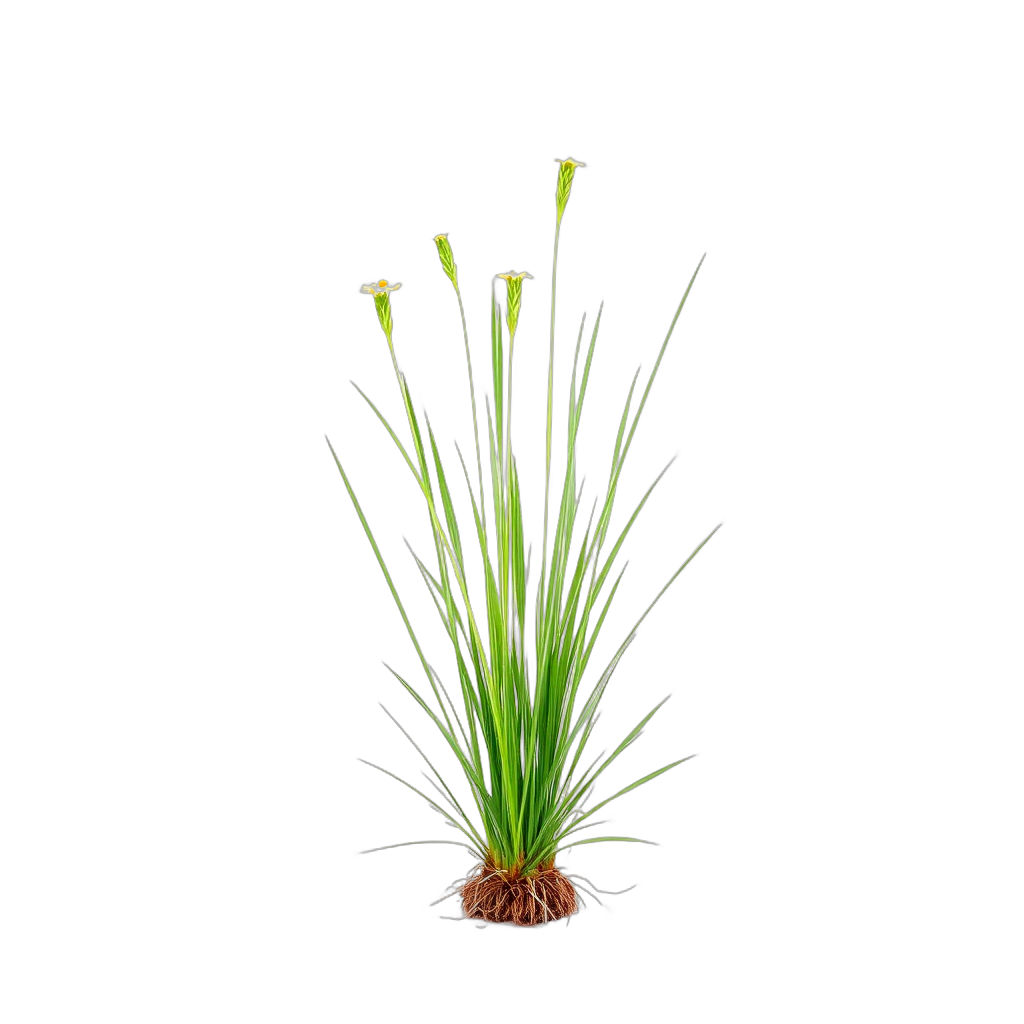
California Melic
Melica californica
low-growing ground cover, blooms in spring.
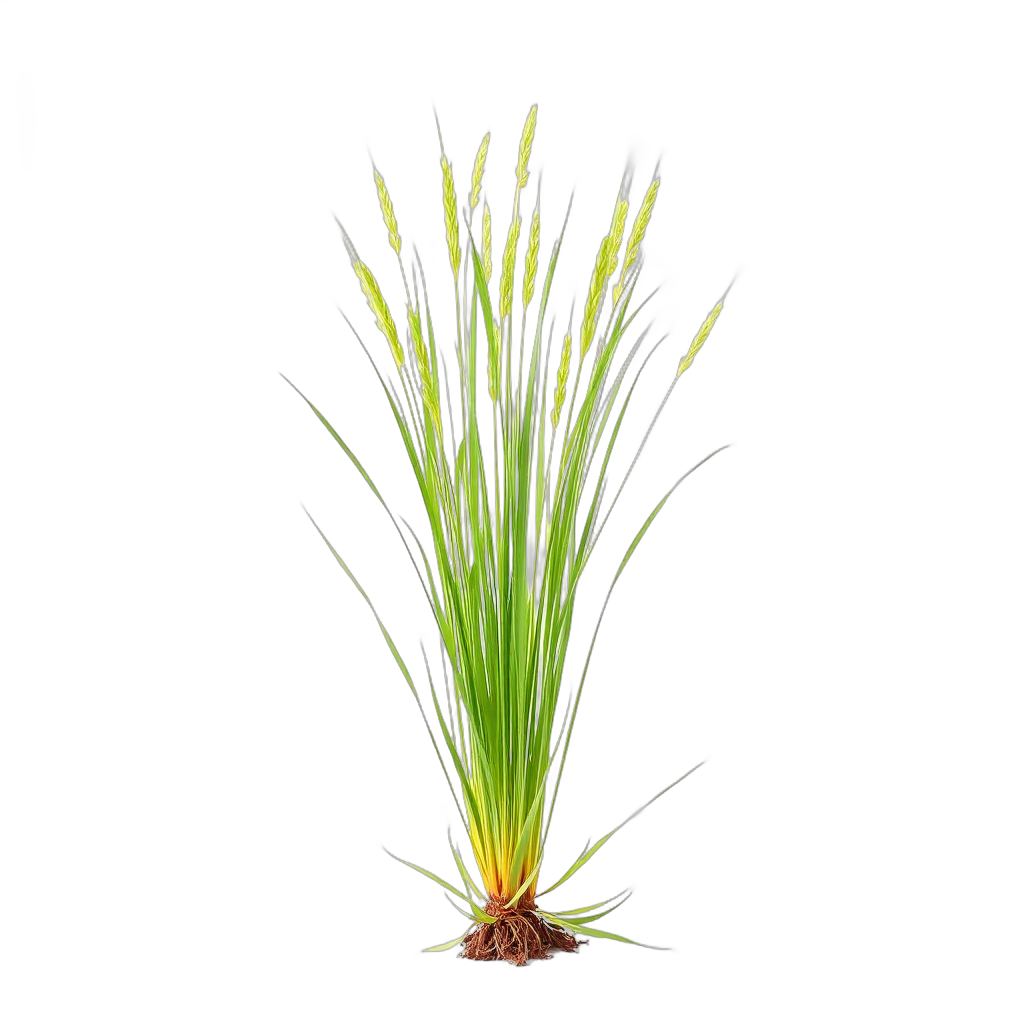
California Oatgrass
Danthonia californica
low-growing ground cover, blooms in spring. Yellow fall color.
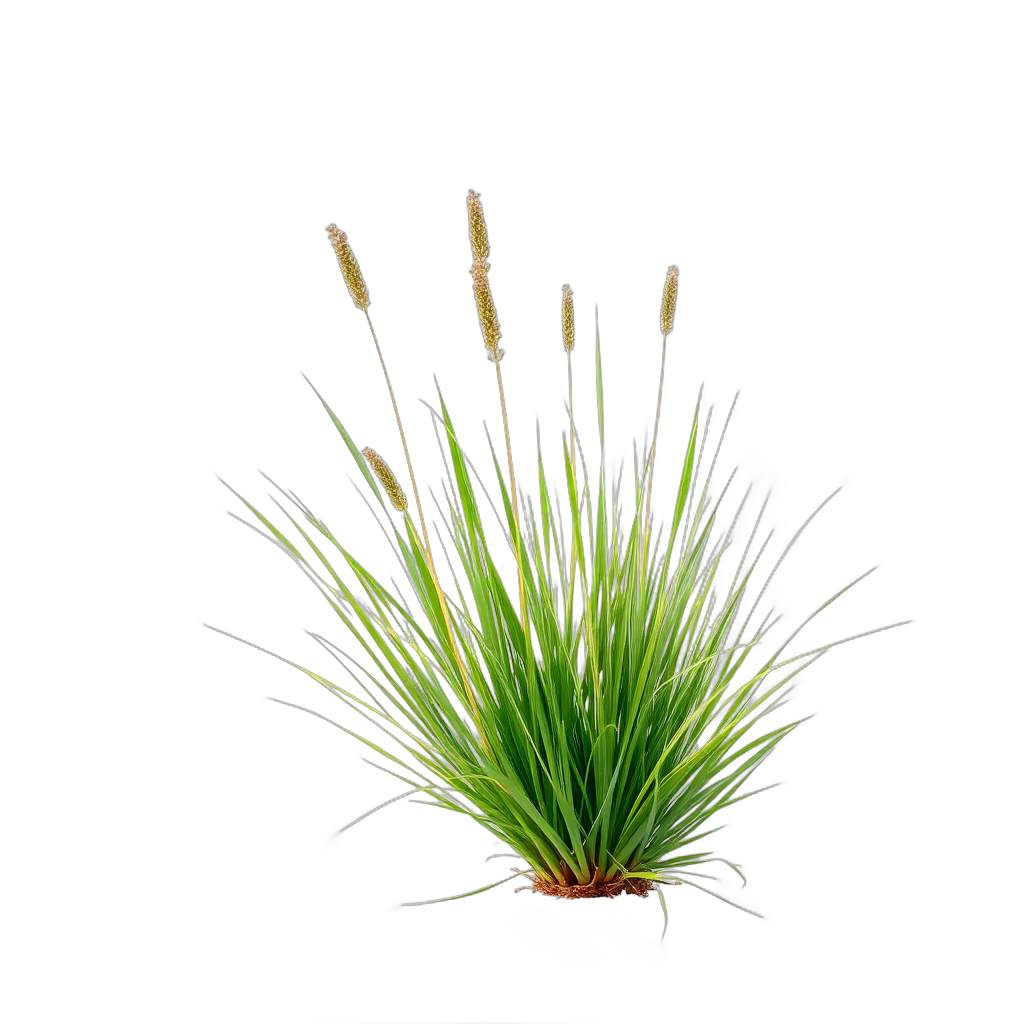
Deer Grass
Muhlenbergia rigens
grows to 3 feet, yellow blooms in fall. Evergreen year-round.
Featured Flowers & Perennials for Mediterranean Gardens
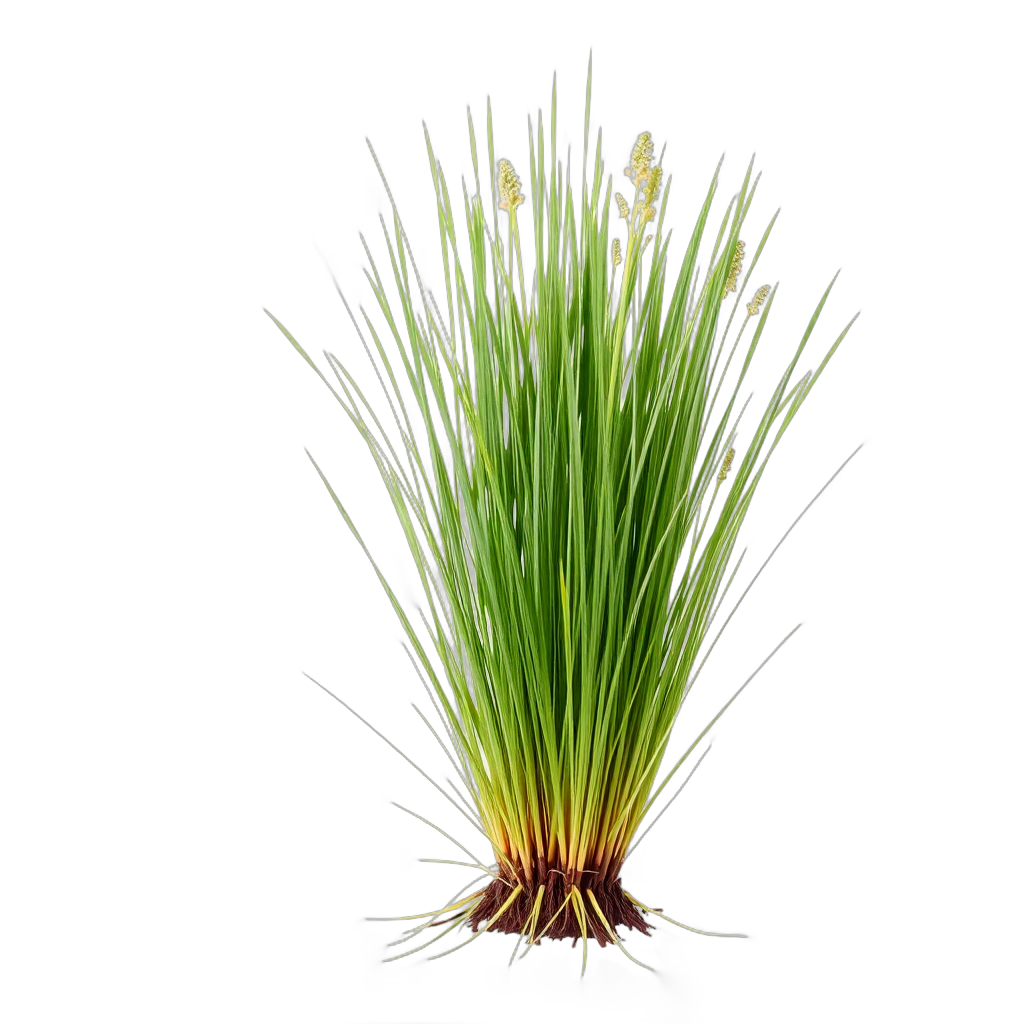
California Gray Rush
Juncus patens
low-growing ground cover, blooms in summer. Evergreen year-round.
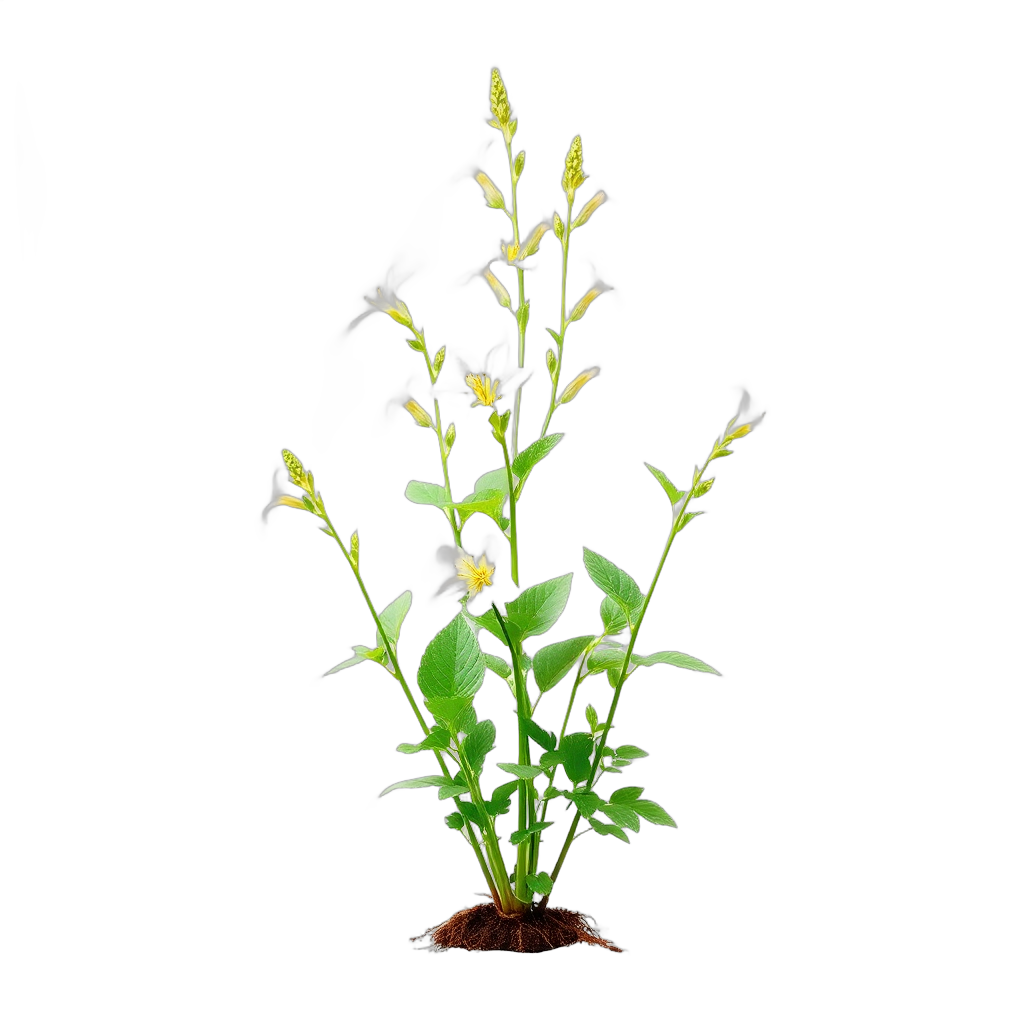
Beach Evening Primrose
Camissonia cheiranthifolia
low-growing ground cover, yellow blooms in spring. Attracts butterflies.
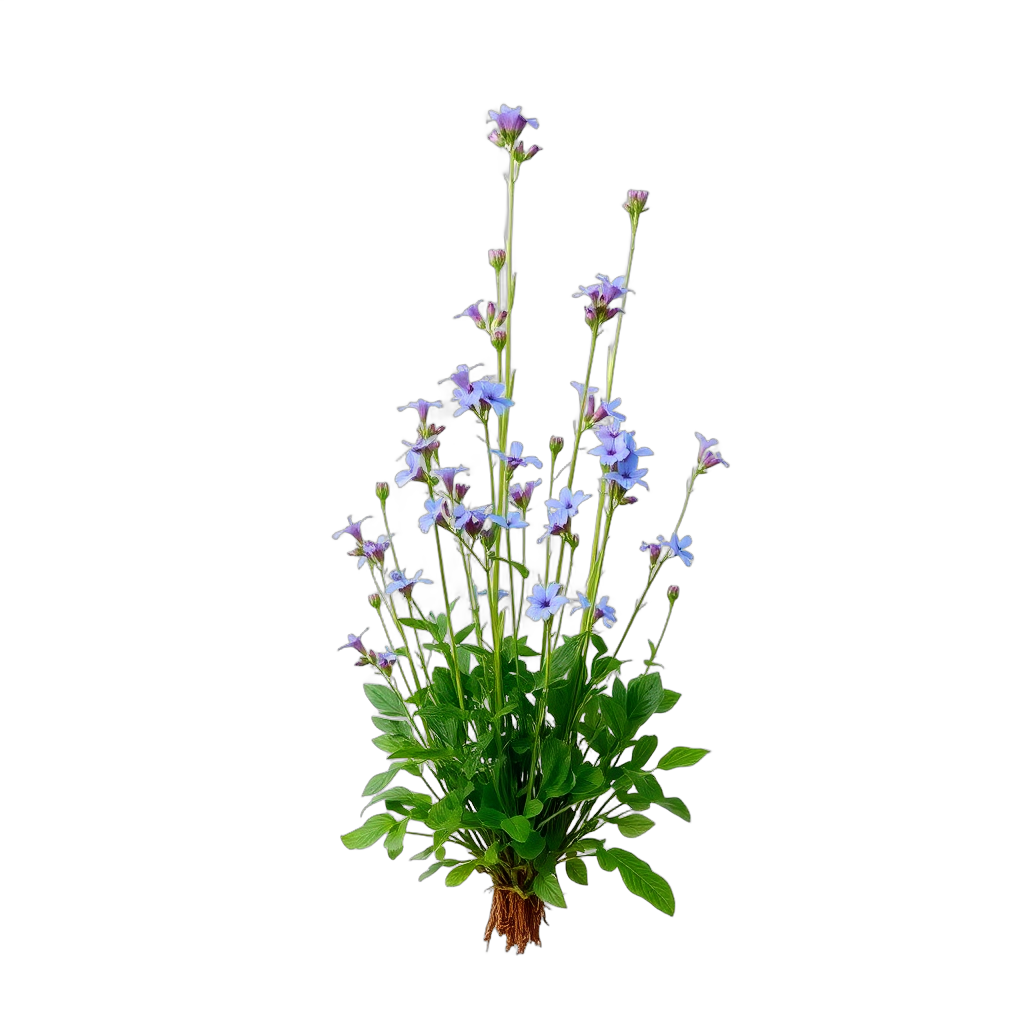
Blue Dicks
Dichelostemma capitatum
low-growing ground cover, blue blooms in spring. Pollinator-friendly.
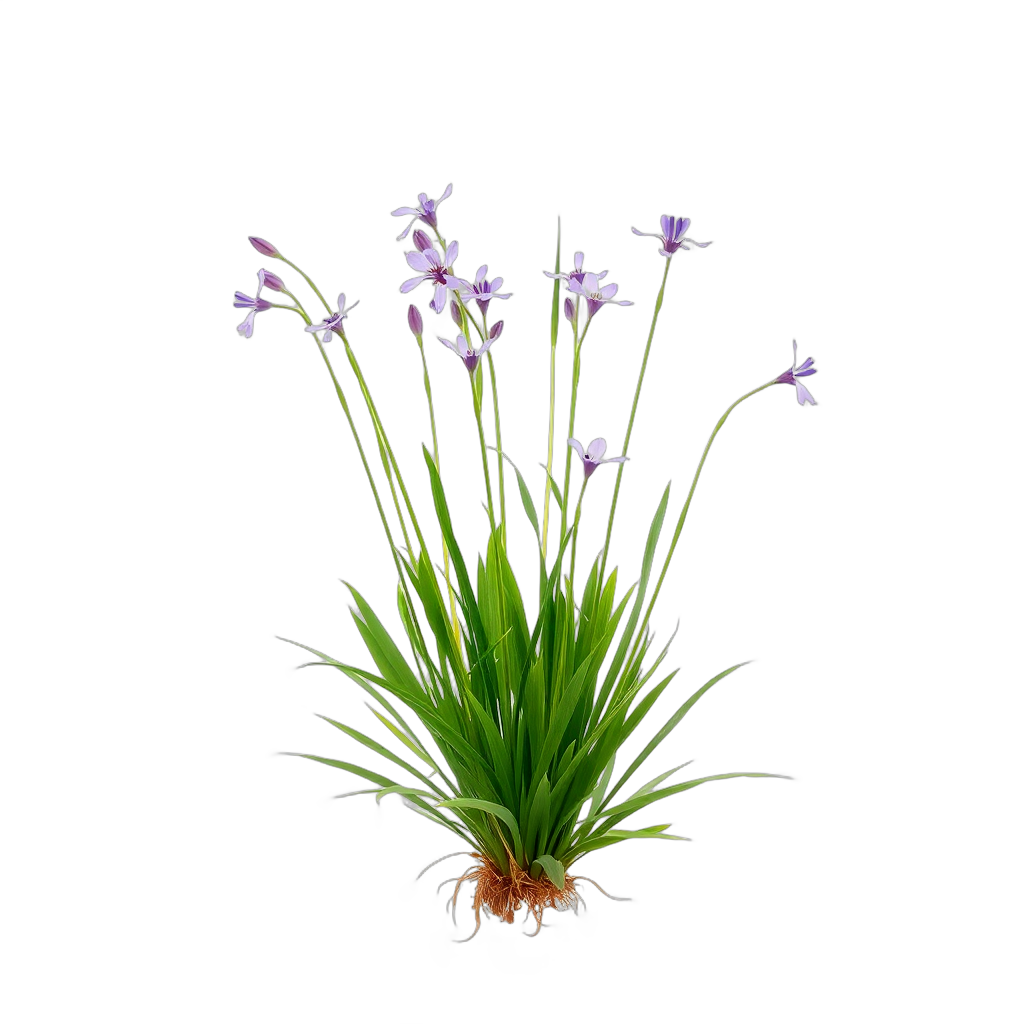
Blue-Eyed Grass
Sisyrinchium bellum
low-growing ground cover, blue blooms in spring. Attracts butterflies.
Zone and sun checks come from our database — confirm with your local nursery before you buy.
Bloom Calendar for Norwalk
spring
Beach Evening Primrose, Blue Dicks, Blue-Eyed Grasssummer
California Gray Rush, Hooker's Evening Primrose, Hummingbird Mintfall
California Fuchsiawinter
Limited bloomsDesign Tips for Norwalk (Zone 10b)
- Keep the soil lean: add only a thin layer of compost, because Norwalk loam already drains well and rich beds make rosemary, lavender and olive leggy
- Rip compacted soil 8 to 12 inches under old lawns and driveways before planting, or the roots of Olea europaea 'Wilsonii' will circle in a shallow pocket
- Choose Lavandula stoechas 'Otto Quast' or Lavandula × ginginsii 'Goodwin Creek Grey' over English lavender: they take the summer heat and a few humid mornings better
- Mulch with 3 inches of gravel or decomposed granite, not bark: dry crowns resist rot, and the light surface reflects heat away from the root zone
- Group by water need: olive, rosemary and cistus on one valve, citrus and fig on another, so nothing gets drowned or starved
- Plant the evergreen backbone first: Cupressus sempervirens 'Glauca', Olea 'Wilsonii' and Rosmarinus 'Tuscan Blue' hold shape through winter, then add seasonal color in October
- Leave 6 feet of clear space between rosemary and santolina and the house on Santa Ana days: dry, resinous foliage burns easily
Where to Source Plants in Norwalk
Skip the big-box stores. These independent Norwalk nurseries specialize in the plants that make mediterranean gardens thrive in Zone 10b.
Ricardo's Nursery
North Long Beach (Atlantic Avenue), about 10 miles south of Norwalk
Retail and wholesale nursery with drought-tolerant plants, succulents, flowering shrubs and vines, open seven days; runs classes and has worked with the City of Long Beach on a drought-tolerant landscaping rebate
Mimosa Nursery
West Anaheim (Crescent Avenue), about 10 miles southeast of Norwalk
Family-owned since 1982, with first-grade bush, tree and Star roses plus citrus, avocado, and tropical and deciduous fruit trees
Theodore Payne Foundation
Sun Valley (also the Los Nogales Nursery in Los Angeles)
Nonprofit California native plant nursery and seed store, open Tuesday to Saturday at Sun Valley, for native salvias, buckwheats, grasses and wildflower seed
Mediterranean Landscaping Cost Ranges
| Project Scope | Estimated Cost |
|---|---|
| Flagstone path (150–250 sqft) | $4,400–$9,400 |
| Flagstone patio (200 sqft) | $5,000–$6,400 |
| Drip irrigation system (500 sqft of planted area) | $1,200–$2,200 |
| AI visualization (ProScapeAI) | Free to start |
National average installed ranges for 2026 from our landscaping price list (Homewyse and other published sources). Prices in Norwalk, CA vary with site, materials and contractor, so get two or three local quotes.
Norwalk Climate & Growing Zone
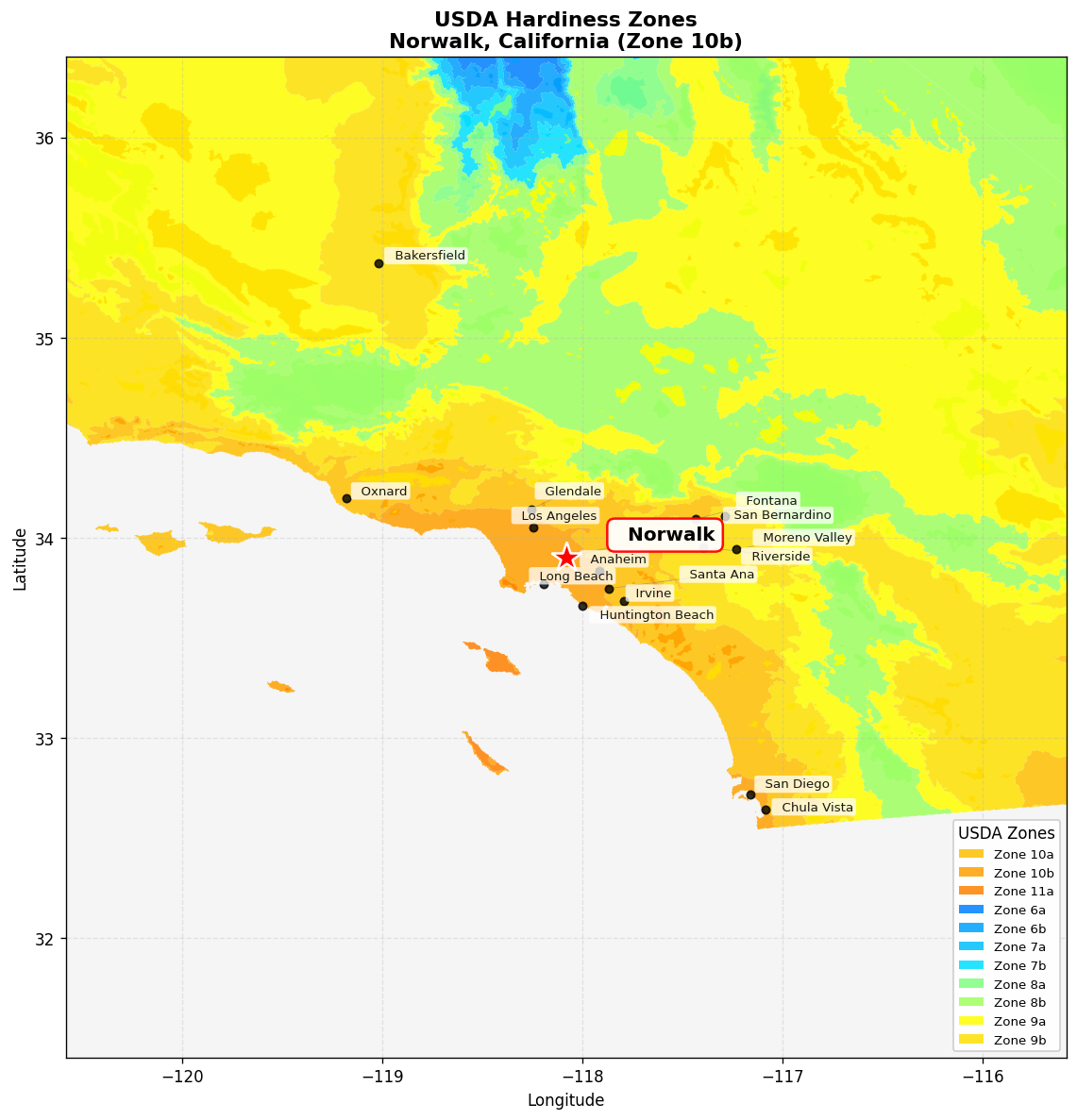
USDA Zone 10b
Hardiness zone for Norwalk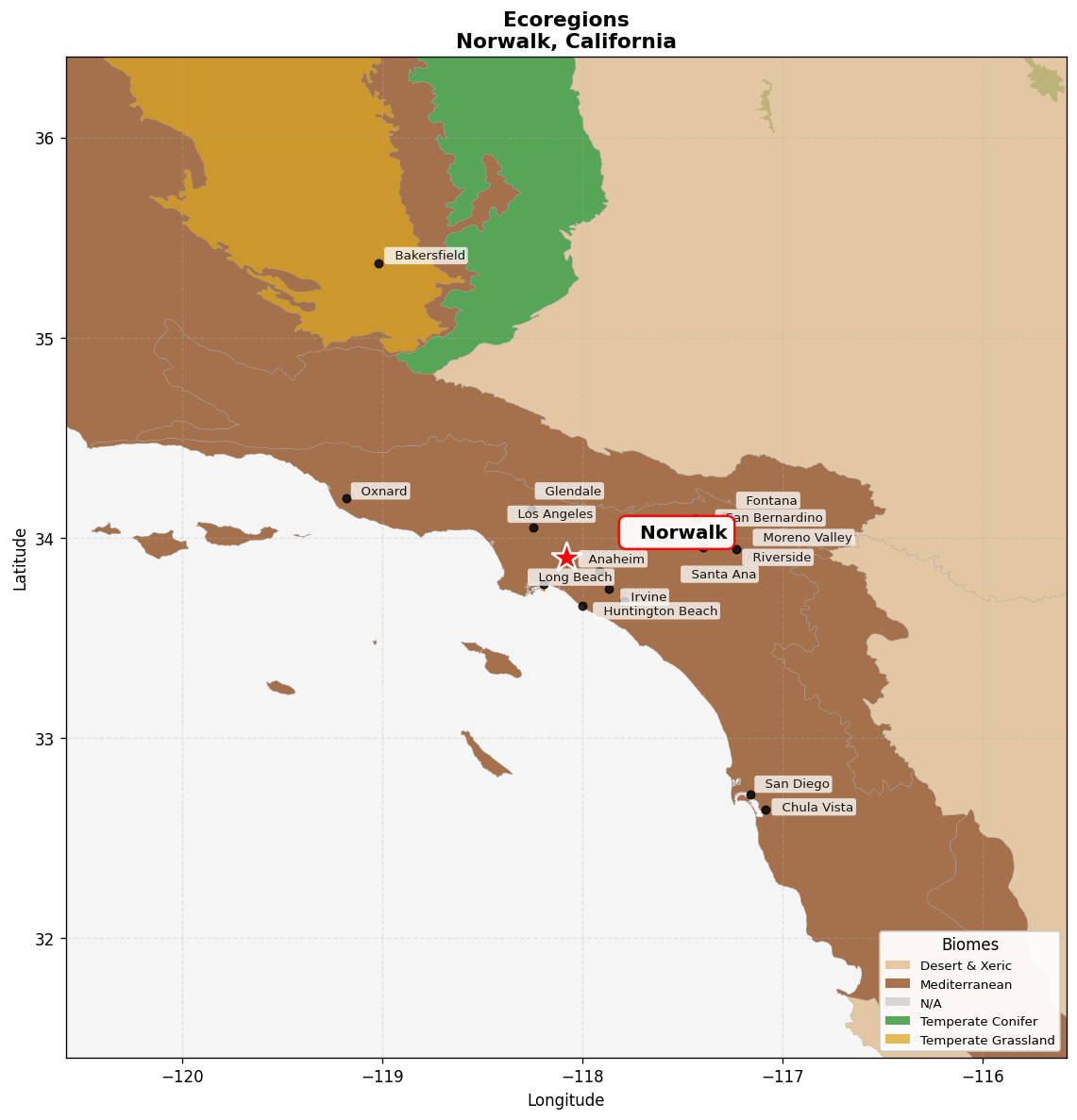
California coastal sage and chaparral
Native ecoregionFrequently Asked Questions
How much does a Mediterranean garden cost in Norwalk, CA?
Los Angeles County labor runs 20–30% above the national average. Costs vary with site, access, materials and local labor rates, so get two or three local quotes before you budget.
Is a Mediterranean garden low maintenance in Norwalk?
Yes, once established. Shear lavender and rosemary by a third after bloom, prune olives lightly in winter, and clear dead leaves from under the Cistus. Check drip emitters monthly in summer. The mistake is overwatering and overfeeding: rich soil and frequent water make Mediterranean plants leggy and short-lived.
When is the best time to plant in Norwalk?
October through March is best, because winter rain helps roots establish. Olives and Cupressus sempervirens 'Glauca' can go in during spring too if you water weekly through the first summer. Avoid midsummer planting. Frost is rare, though a cold night in the high 30s can burn the tips of citrus and Euphorbia.
Do I need a permit or HOA approval in Norwalk?
Most single-family tracts in Norwalk have no HOA, but check your deed if you are in a newer development. Fence and wall height limits apply, and a large retaining wall, fountain with power or patio cover may need a building permit. California's Model Water Efficient Landscape Ordinance applies to many new and rebuilt landscapes that need a permit, and the city has its own water-efficient landscape ordinance. Confirm the current requirements with the City of Norwalk planning and building counter before you build.
Which plants survive Norwalk's heat and which fail?
Survivors include Olea europaea 'Wilsonii', Rosmarinus 'Tuscan Blue', Lavandula stoechas 'Otto Quast', Cistus × purpureus, Santolina chamaecyparissus and Ficus carica 'Black Mission'. English lavender (Lavandula angustifolia 'Hidcote') tends to decline in the humid coastal summers, so plant Lavandula stoechas 'Otto Quast' or Lavandula × ginginsii 'Goodwin Creek Grey' instead. Citrus needs regular water in summer, unlike the rest of the palette.
Are olive trees a problem here?
Fruiting olives drop messy fruit on paving and add to pollen counts. Choose the fruitless Olea europaea 'Wilsonii', and set it at least 8 feet from walls and paths. Olives want full sun and a lean, free-draining soil, which Norwalk's loam already provides.
What about Santa Ana winds?
Santa Ana days, mostly September to January, bring hot, dry gusts. Mediterranean plants handle them far better than a lawn does, but young Cupressus sempervirens 'Glauca' needs staking for the first two years and every new plant needs deep water the day before a forecast event. Keep dead material trimmed from rosemary and santolina near the house.