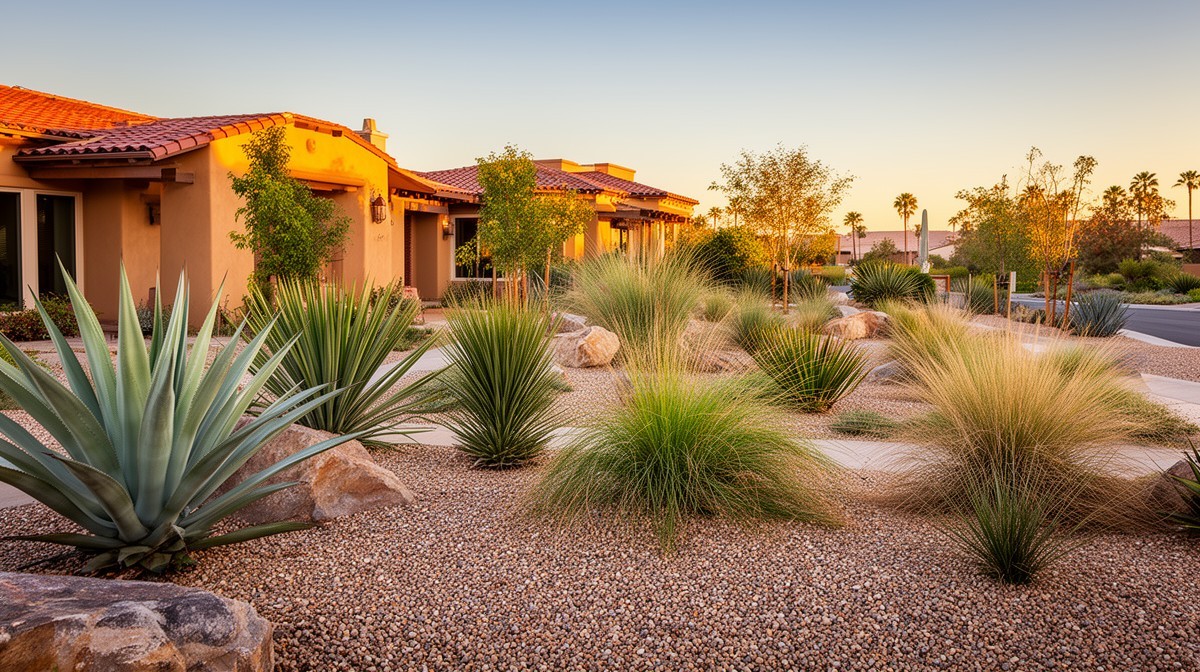
4 Desert & Xeriscape Garden Ideas for Oceanside, CA | Low-Water Coastal Landscape Design in Zone 10a
Native plants from the California coastal sage and chaparral (Zone 10a) — Cold semi-arid climate
Why Desert/Xeriscape Gardens in Oceanside?
Xeriscape in Oceanside is not a Palm Springs import — it is a return to what the land already grows. The city sits in the California coastal sage and chaparral ecoregion, a BSk semi-arid climate that delivers roughly 11 inches of rain a year and none of it in summer, which is why the hillsides above the San Luis Rey River go straw-gold by June without anyone deciding they should. A well-built Oceanside desert garden borrows from three palettes at once: local chaparral natives like Eriogonum fasciculatum 'Warriner Lytle', Salvia leucophylla 'Point Sal', Rhus integrifolia and Muhlenbergia rigens; Baja and Mexican succulents like Agave ovatifolia, Agave 'Blue Glow' and Ferocactus wislizeni; and the Mediterranean workhorses — Westringia fruticosa 'Morning Light', Olea europaea 'Wilsonii' — that hold structure through a rainless summer.
The economics are as persuasive as the aesthetics. Cool-season turf in Oceanside drinks 40–55 gallons per square foot per year; a mature xeriscape on inline drip runs 8–14, and the difference shows up on a City of Oceanside water bill within one billing cycle. Removal is subsidized too: SoCal Water$mart's turf-replacement rebate has run at a base $2 per square foot with San Diego-area top-ups pushing the effective figure to $3–4 in some funding years, enough to cover roughly a quarter of a modest front-yard conversion. Install costs here are not cheap — San Diego County labor sits 25–40% above national averages — so the rebate, the water savings, and the fact that a gravel yard needs no mowing crew are what make the numbers work over five years rather than fifteen.
What trips people up is assuming coastal Oceanside behaves like a desert. It does not. May Gray and June Gloom keep foliage damp for weeks, and high-desert species rot in that persistent marine layer even though the annual rainfall says they should thrive — Echinocactus grusonii goes corky and orange, Agave parryi var. truncata and Agave victoriae-reginae develop black basal rot, and Opuntia santa-rita loses its purple entirely within sight of the water. Meanwhile the soils flip completely across town: Marina loamy coarse sand under South O and The Strand drains so freely that agaves need almost no amendment, while Huerhuero and Las Flores clay loams under Rancho Del Oro and Morro Hills sit over a claypan that perches winter water and demands beds bermed 8–12 inches above grade. Inland also runs 10–15°F hotter on Santa Ana afternoons, which is why Agave attenuata belongs west of El Camino Real and Dasylirion wheeleri belongs east of it.
4 Desert/Xeriscape Design Ideas for Oceanside
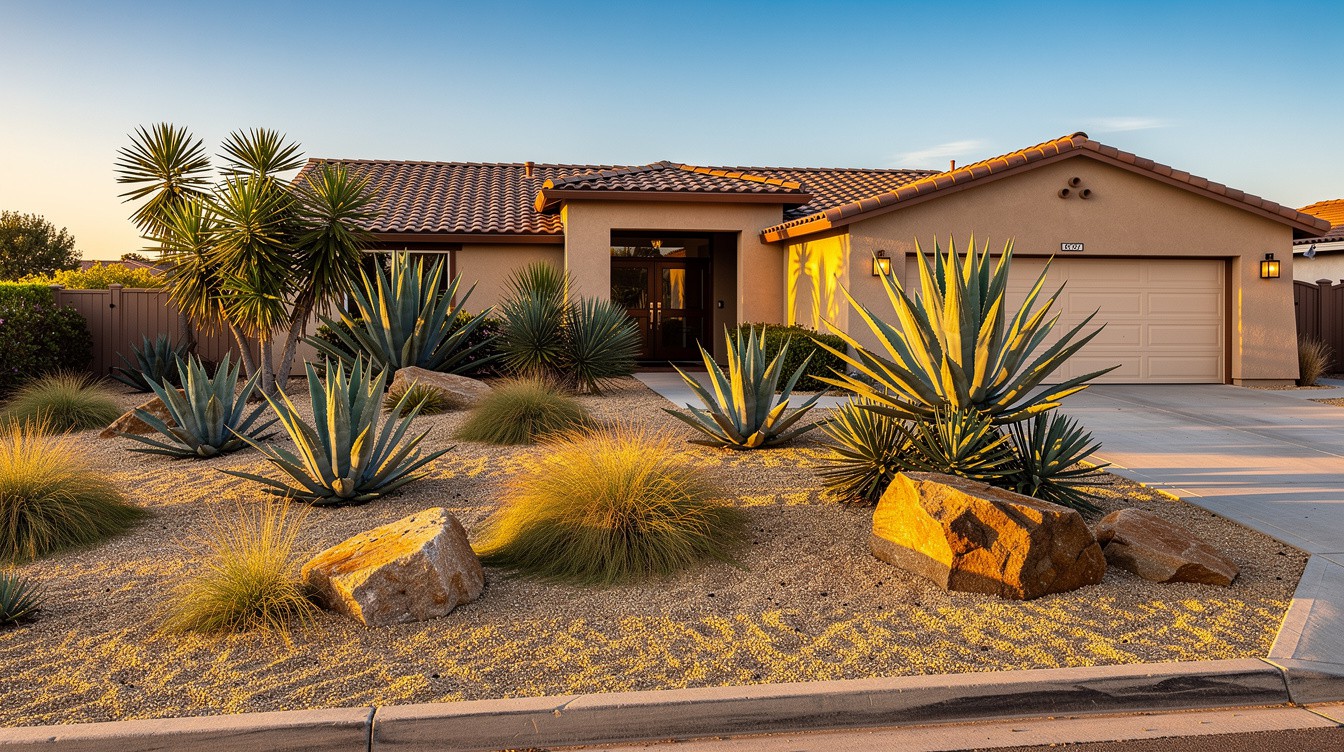
The Rancho Del Oro Gravel Front
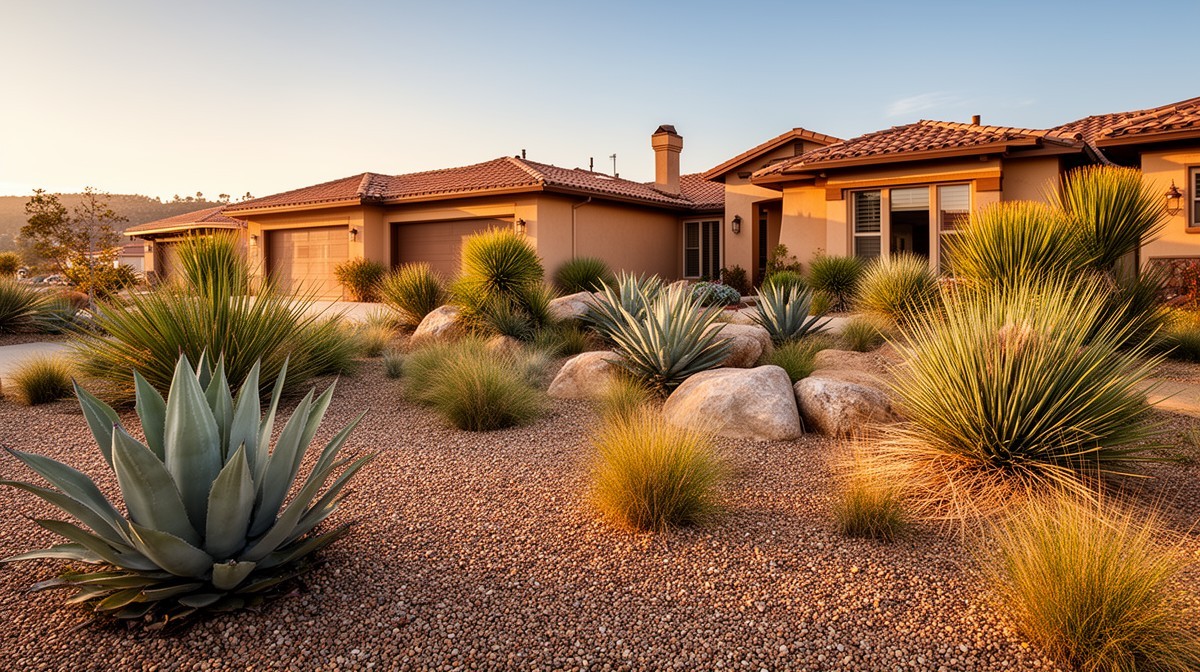
$12–22/sqftA tile-roofed tan stucco ranch loses its lawn entirely to a broad field of gold decomposed granite, contoured with two-to-four-ton Sunburst granite boulders that look like they were always there. The planting is big and confident rather than fussy: yellow-margined Agave americana 'Marginata' and steel-blue Agave ovatifolia set the rhythm across the front, multi-trunk Yucca elephantipes and variegated Yucca gloriosa 'Bright Star' add the vertical spikes, and low tufts of Muhlenbergia rigens and Hesperaloe parviflora 'Brakelights' fill the middle ground and glow when the late sun rakes across them. No edging, no fabric — just soft bays of gravel running between plant groups.
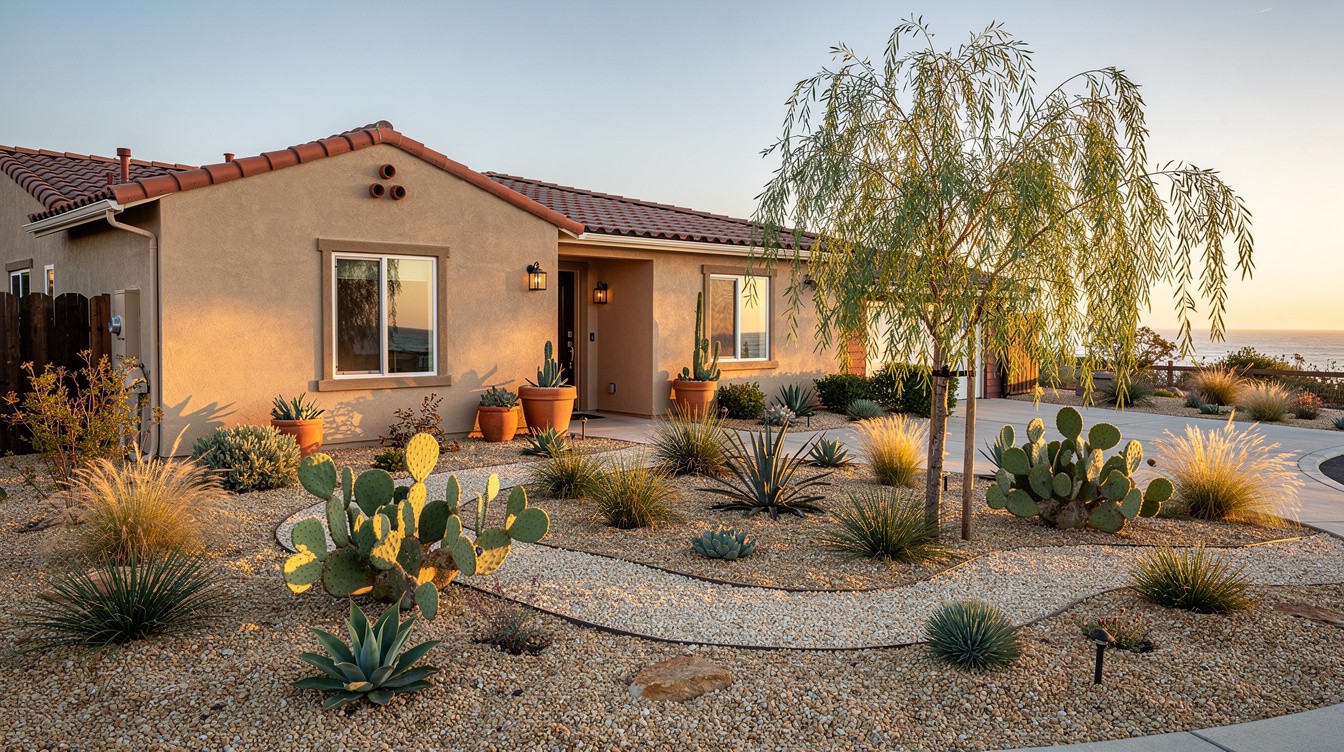
The Cactus Court with a Sea View
$10–18/sqftA single-story Spanish-tile ranch on a mid-slope lot trades its front lawn for a tan gravel court cut by a sinuous decomposed-granite path with thin steel edging, the ocean showing as a silver band past the driveway. Broad Opuntia ficus-indica 'Burbank Spineless' pads read as sculpture at eye level, Agave 'Blue Glow' and Agave ovatifolia sit low and precise beside them, and backlit clumps of Muhlenbergia capillaris and Hesperaloe parviflora 'Brakelights' catch the sunset. Terracotta olive jars planted with columnar cactus flank the door, and a young Schinus molle, still on its lodgepole stakes, promises the shade the west wall will want in five years.
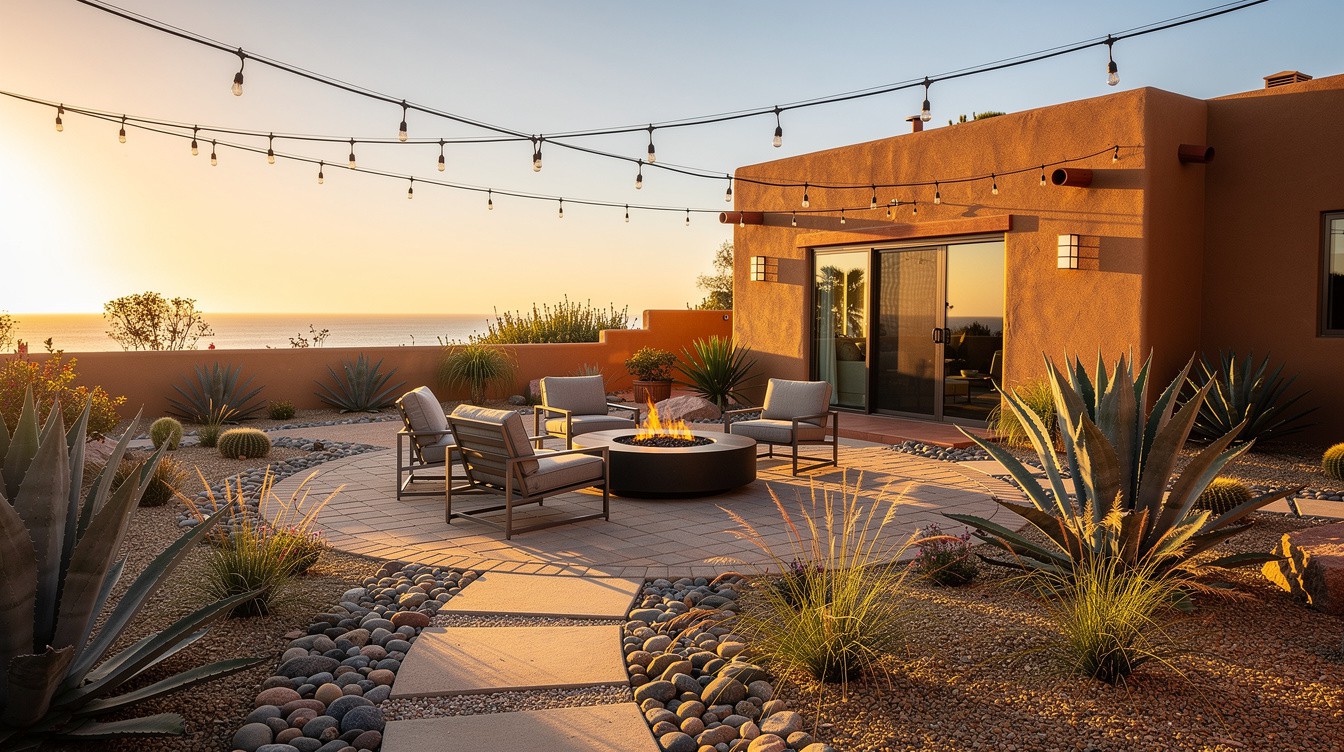
The Adobe Fire Circle
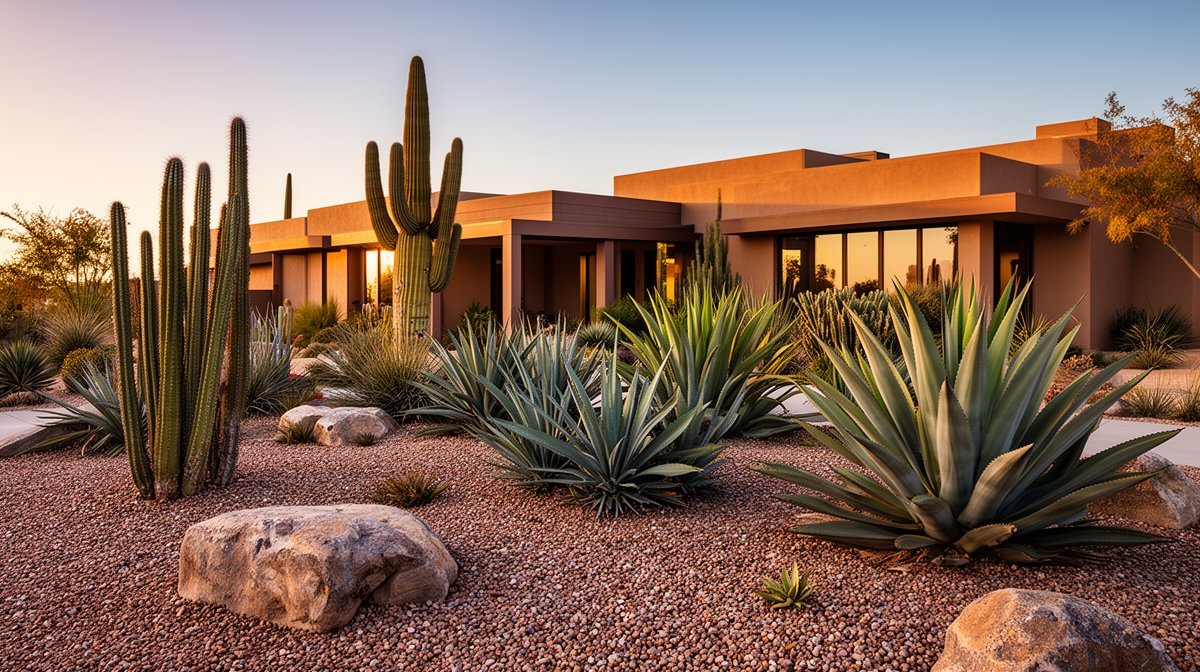
$24–42/sqftA pueblo-style home in warm terracotta plaster, complete with projecting vigas and roof canales, opens onto a radial paver patio ringed by river-cobble mosaic bands and pebble mulch. A round cast-concrete gas fire table anchors four steel-frame chairs, catenary string lights swing overhead on slim posts, and a 42-inch adobe view wall crops the horizon so the ocean reads as a band of light rather than a distraction. Huge Agave americana var. protoamericana rosettes hold both flanks, Ferocactus wislizeni and small mounding cacti dot the gravel, and Aeonium arboreum 'Zwartkop' with Leymus condensatus 'Canyon Prince' soften the wall base.
The Boulder Waterfall Pool Garden
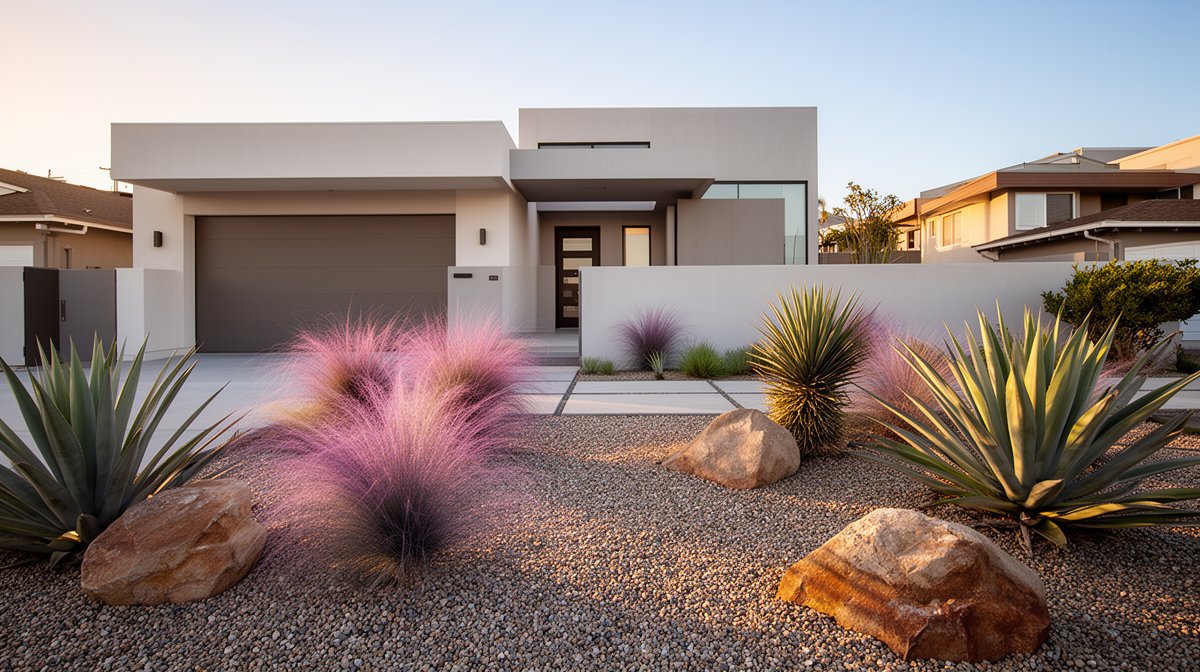
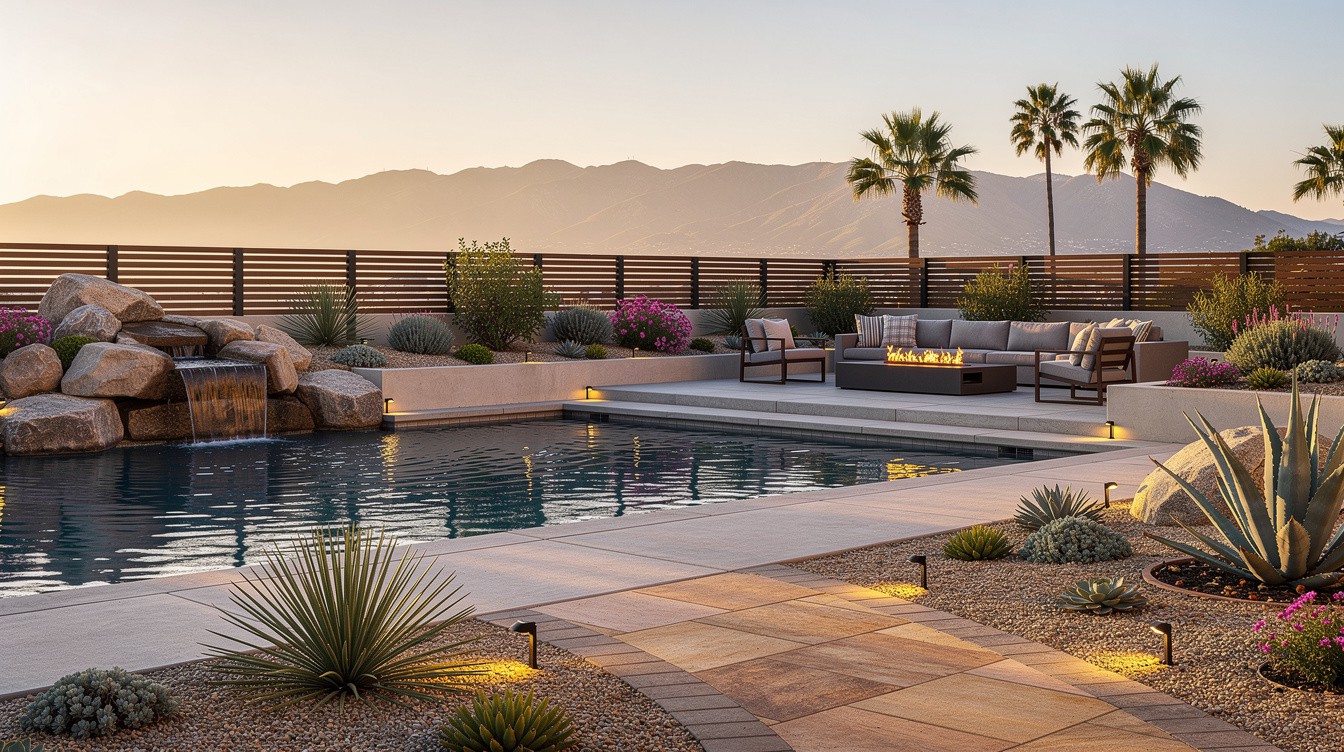
$60–130/sqft (pool area inclusive)A rectangular pool with a granite-boulder waterfall spilling into one corner sits inside large-format sandblasted concrete pavers, screened by a horizontal slat fence that lets the ridgeline show above it. A low stucco seat wall separates the lounge terrace from the water, a linear gas fire table faces the sectional, and the planting runs hot-and-cool in alternating bands: magenta Bougainvillea 'Rosenka' and pink-flowering shrubs against the fence, silver Senecio mandraliscae and Westringia fruticosa 'Morning Light' at the edges, and a blue Yucca rostrata 'Sapphire Skies' in the foreground catching a path-light beam. Washingtonia robusta in the neighbours' yards do the skyline work for free.
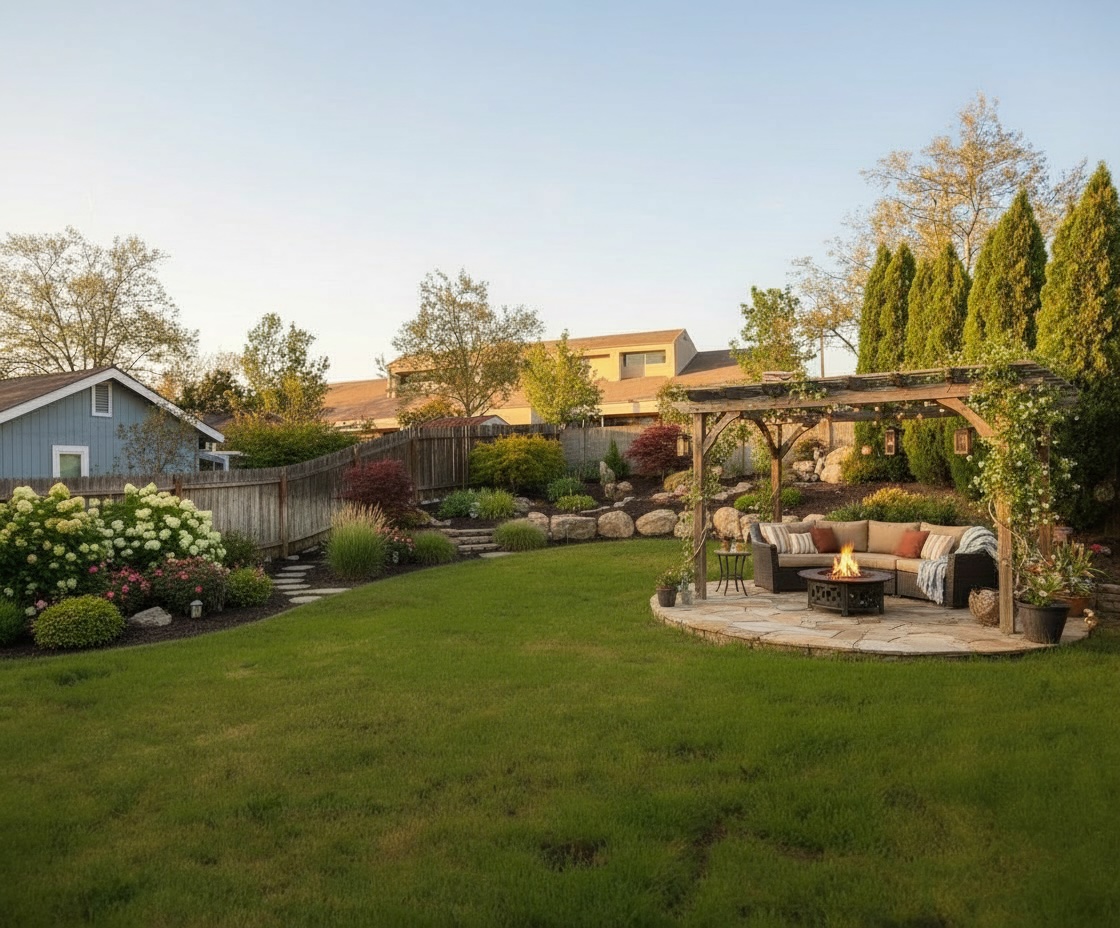
See how a desert/xeriscape garden looks on YOUR property
Upload a photo of your Oceanside yard and visualize your dream garden in seconds.
Try ProScapeAI Free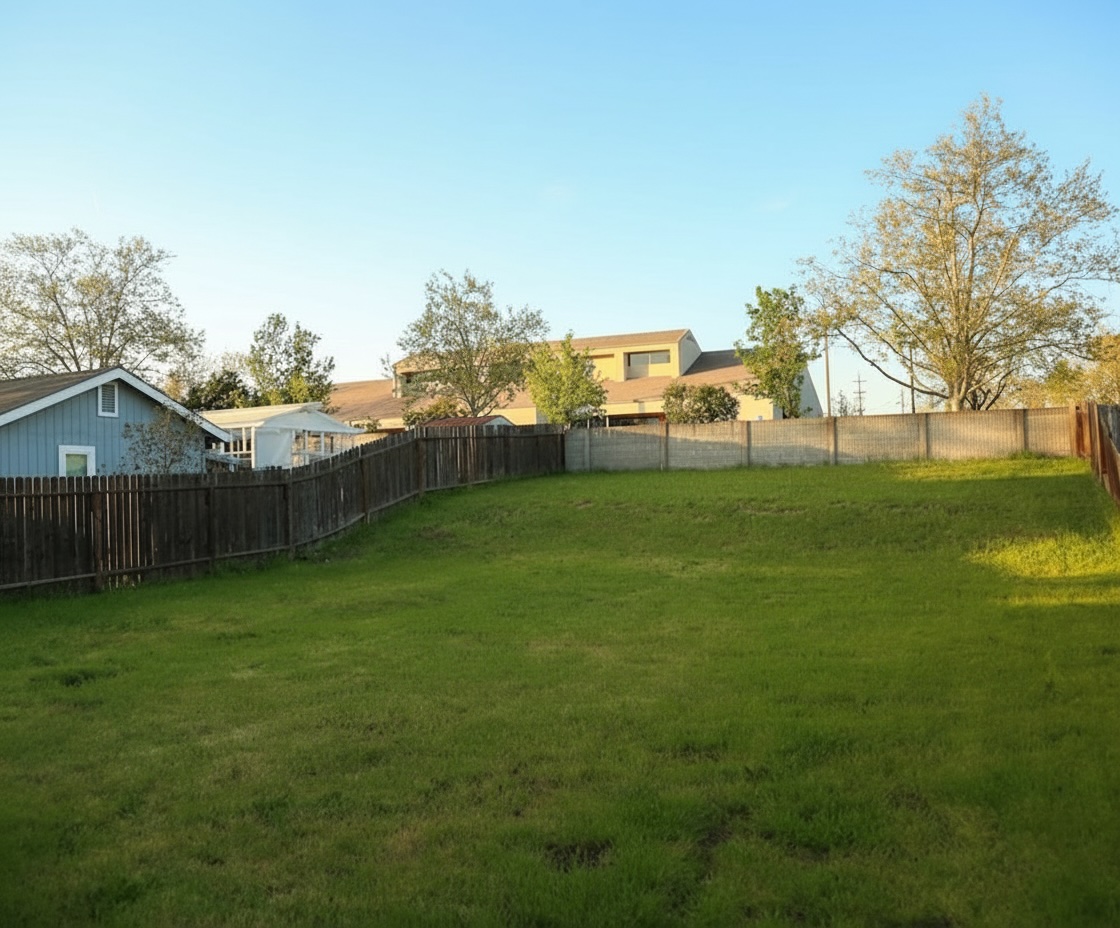
Featured Trees & Shrubs for Desert/Xeriscape Gardens
Browse all 115 plants for Oceanside
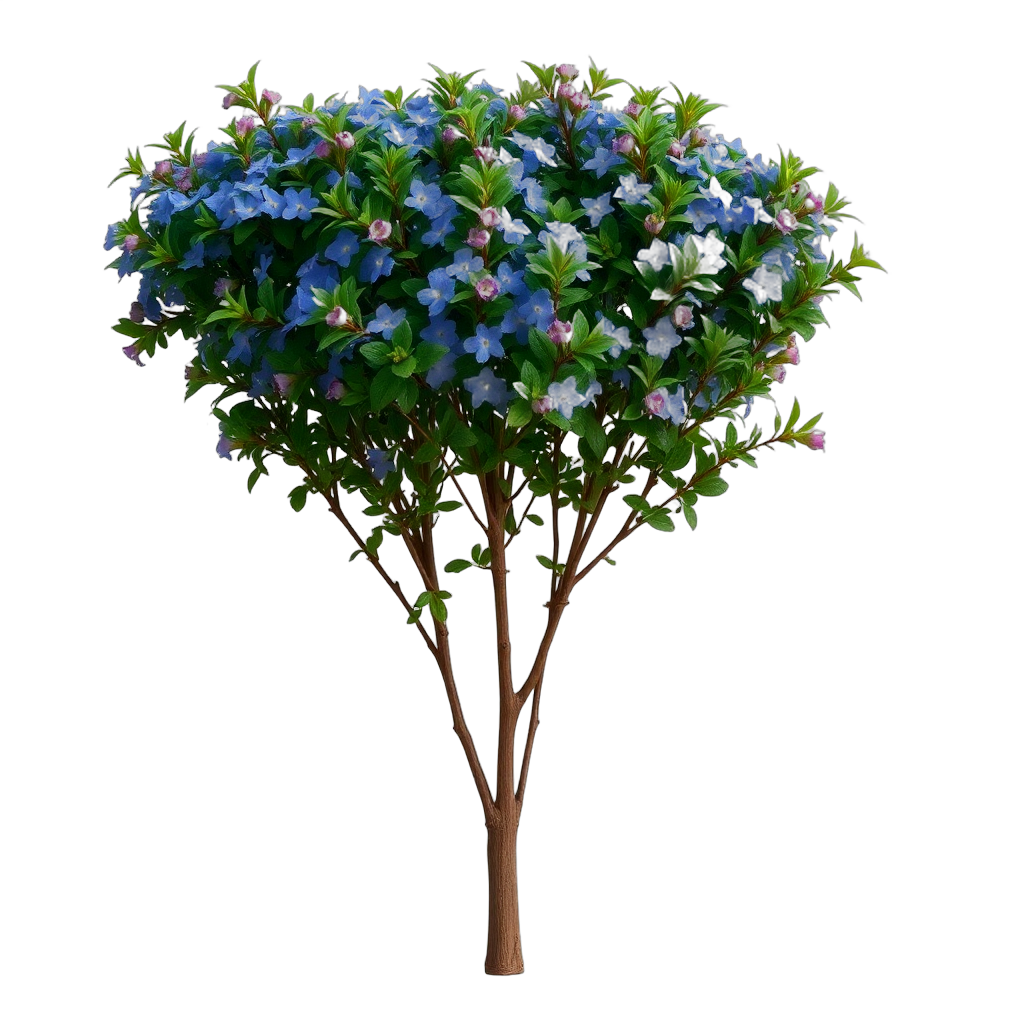
Black Sage
Salvia mellifera
grows to 4 feet, white blooms in spring. Attracts butterflies.
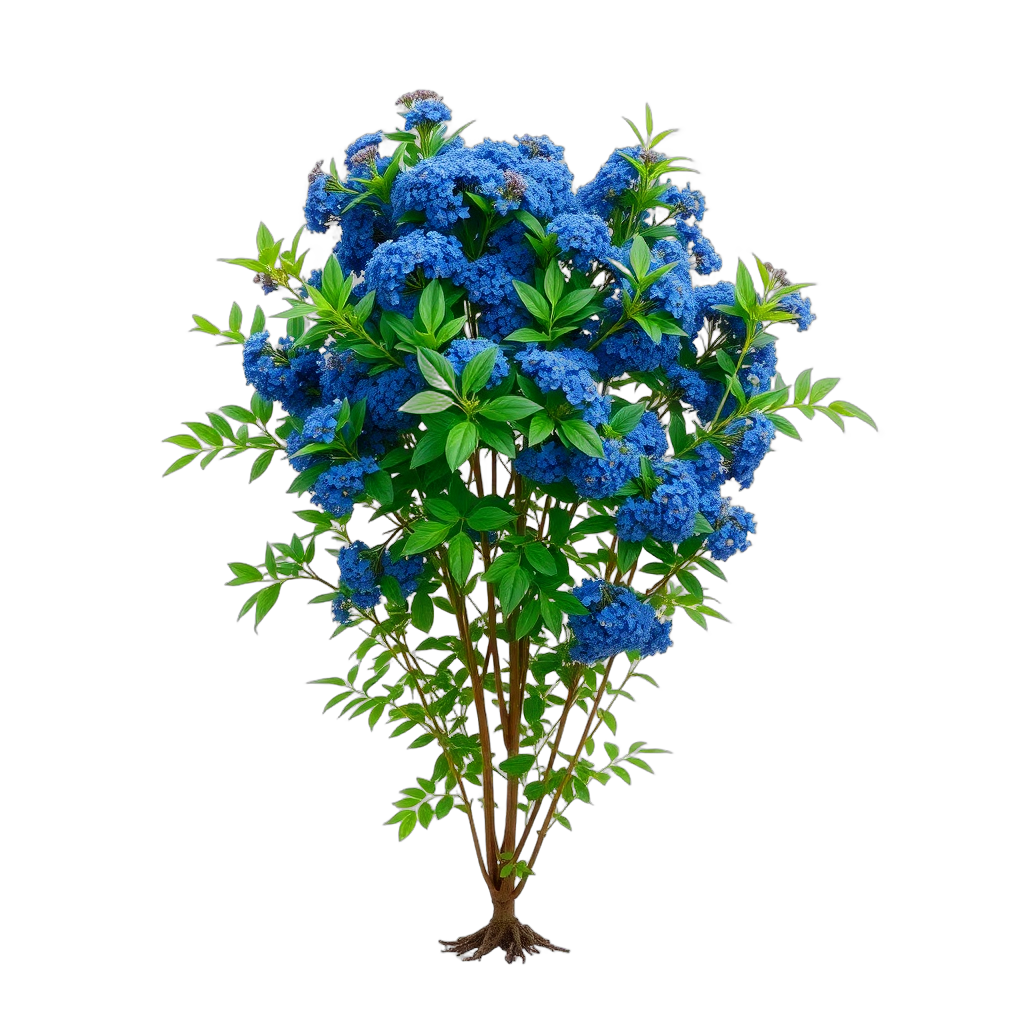
Blue Blossom
Ceanothus thyrsiflorus
medium-sized at 12 feet, blue blooms in spring. Attracts butterflies.
Blue Elderberry
Sambucus cerulea
medium-sized at 15 feet, white blooms in spring. Attracts butterflies.
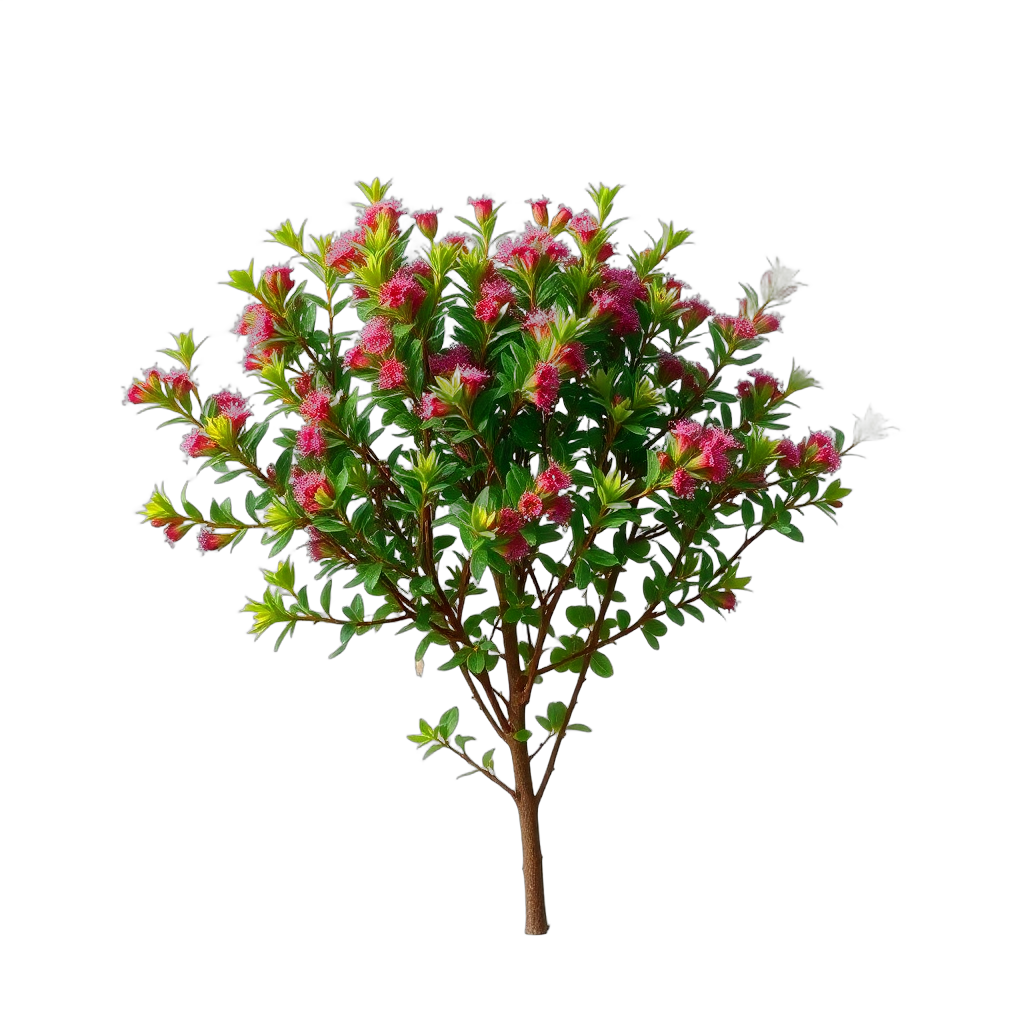
Buckbrush
Ceanothus cuneatus
medium-sized at 7 feet, white blooms in spring. Attracts butterflies.
Featured Grasses & Groundcovers for Desert/Xeriscape Gardens
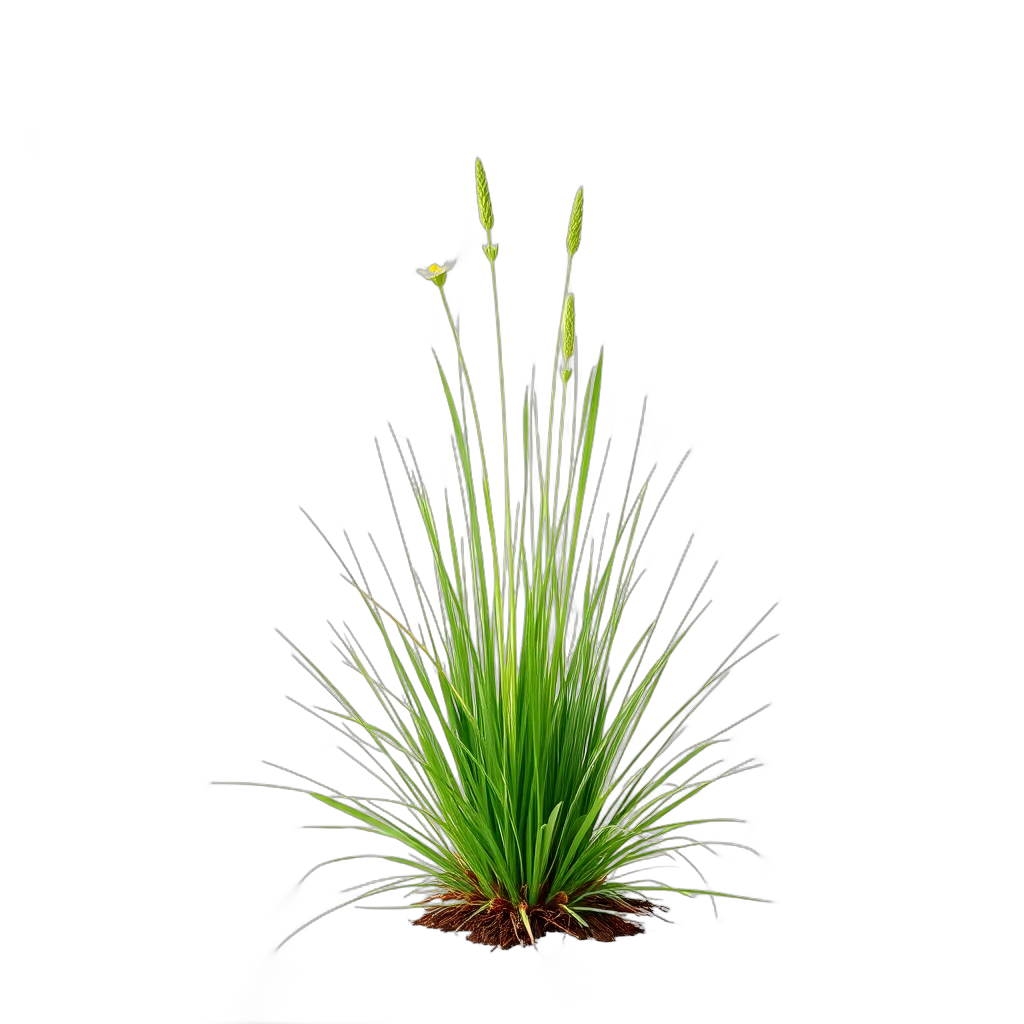
California Brome
Bromus carinatus
low-growing ground cover, blooms in spring. Yellow fall color.
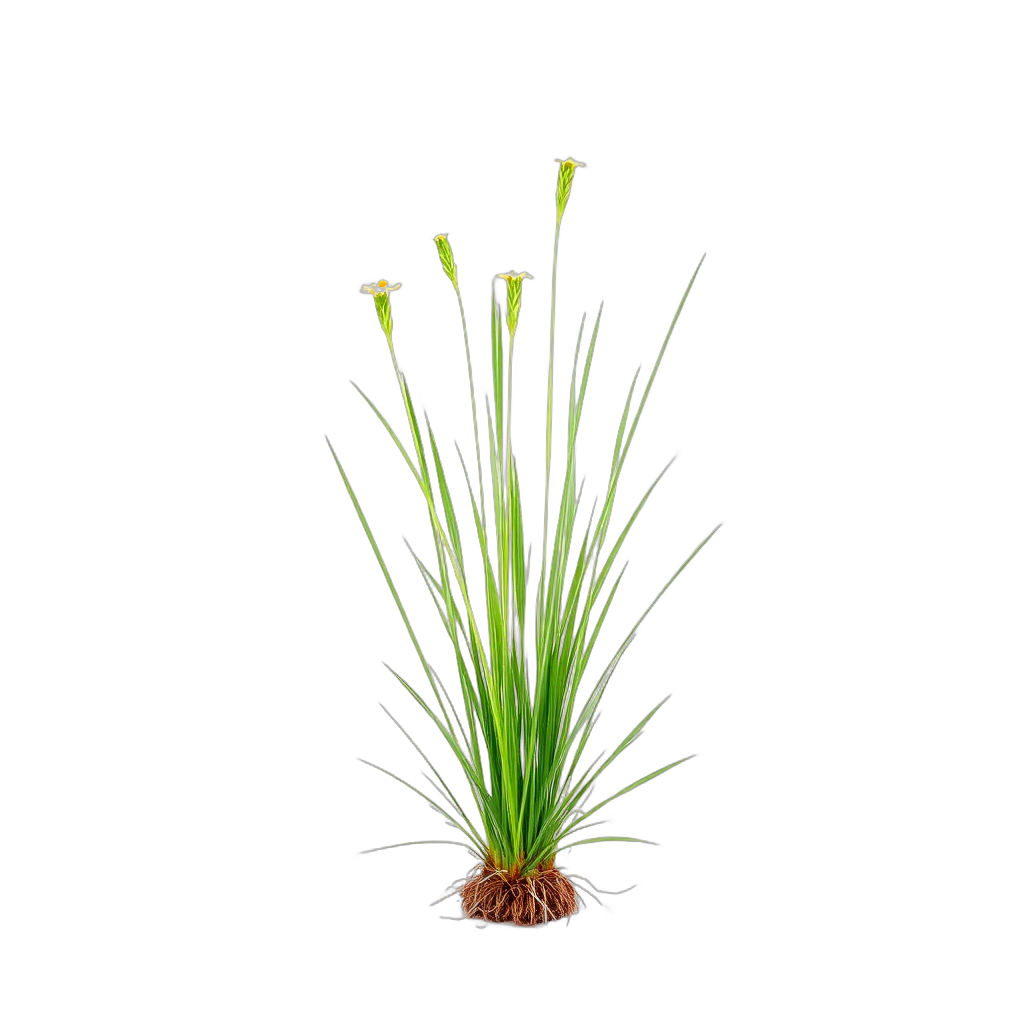
California Melic
Melica californica
low-growing ground cover, blooms in spring.
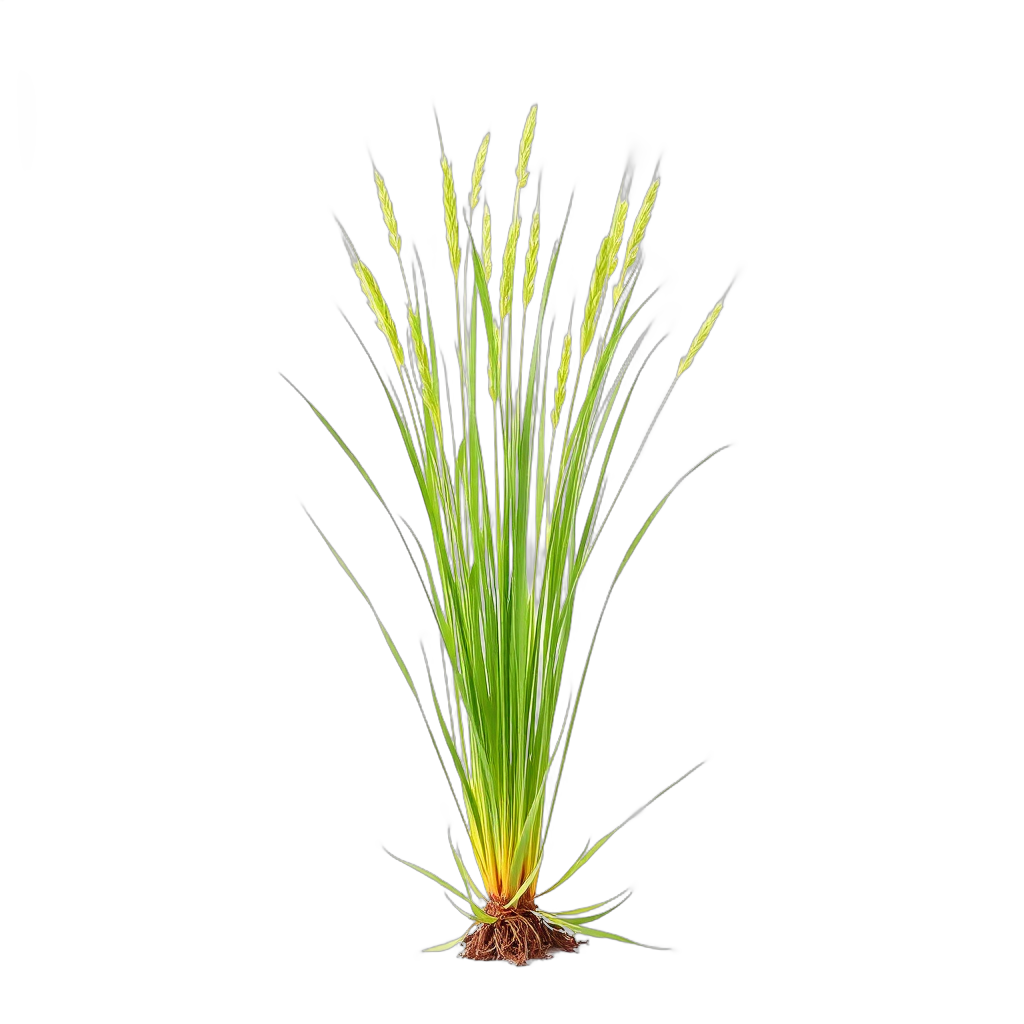
California Oatgrass
Danthonia californica
low-growing ground cover, blooms in spring. Yellow fall color.
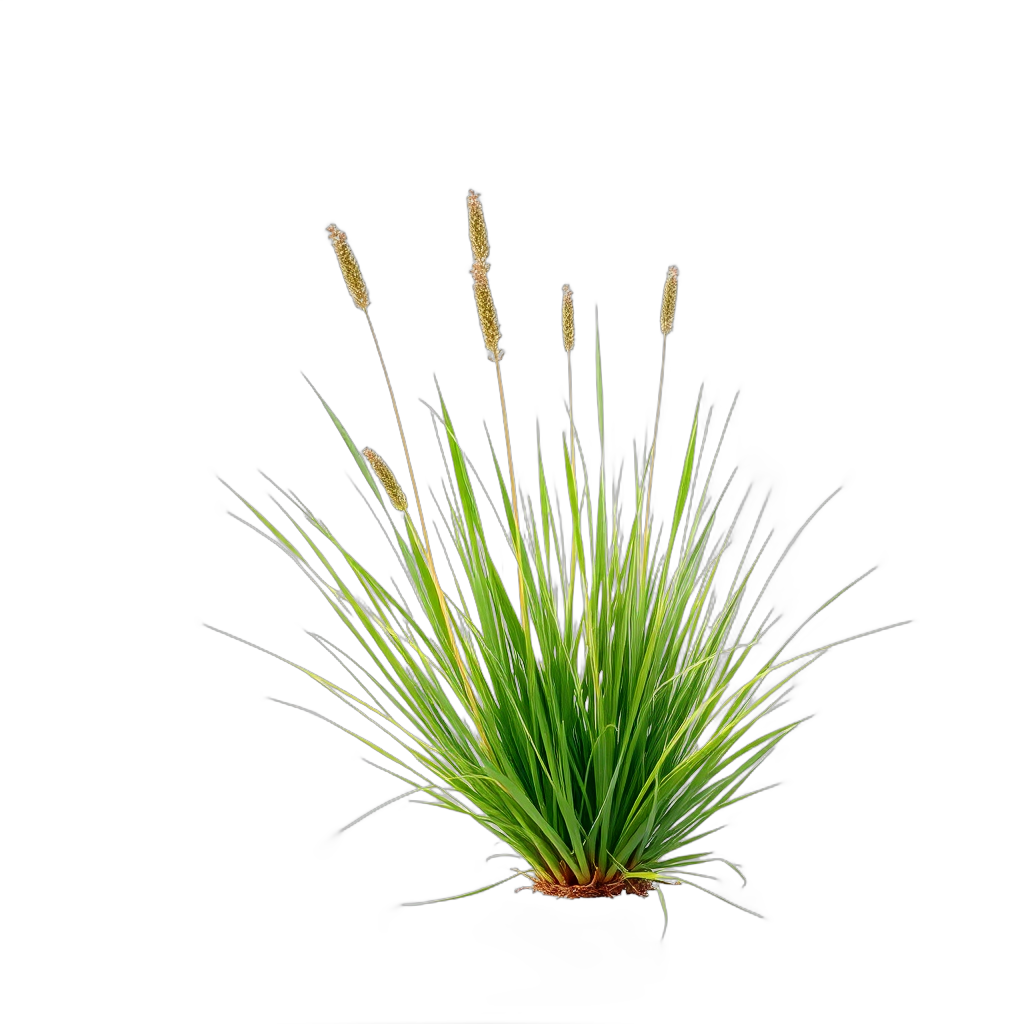
Deer Grass
Muhlenbergia rigens
grows to 3 feet, yellow blooms in fall. Evergreen year-round.
Featured Flowers & Perennials for Desert/Xeriscape Gardens
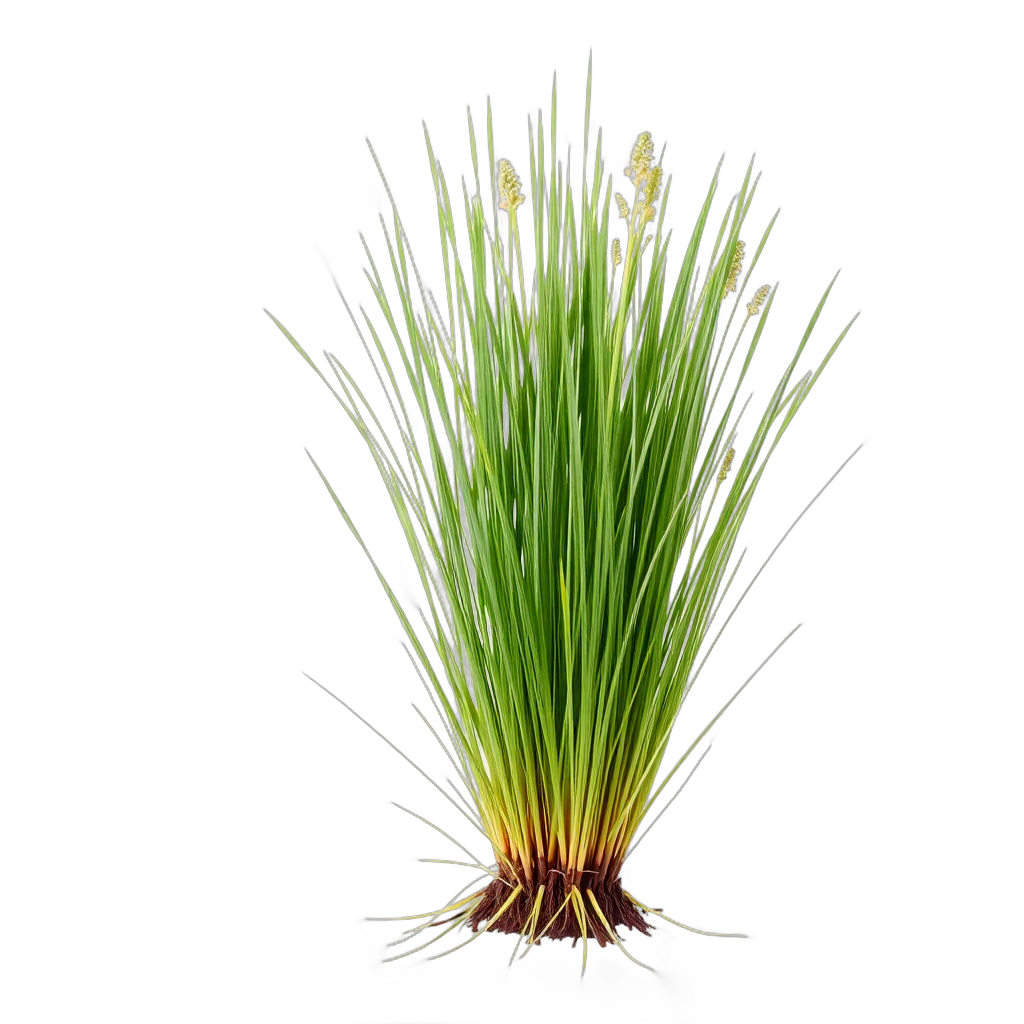
California Gray Rush
Juncus patens
low-growing ground cover, blooms in summer. Evergreen year-round.
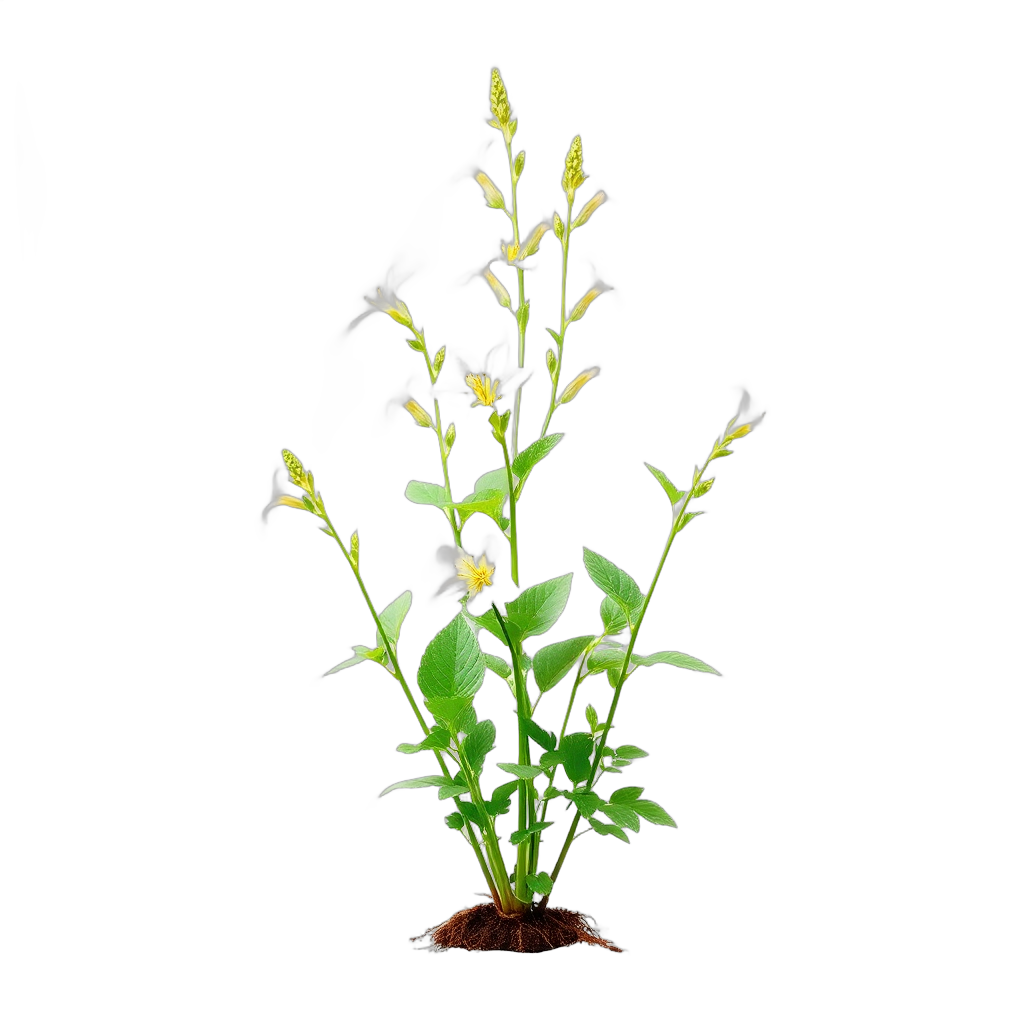
Beach Evening Primrose
Camissonia cheiranthifolia
low-growing ground cover, yellow blooms in spring. Attracts butterflies.
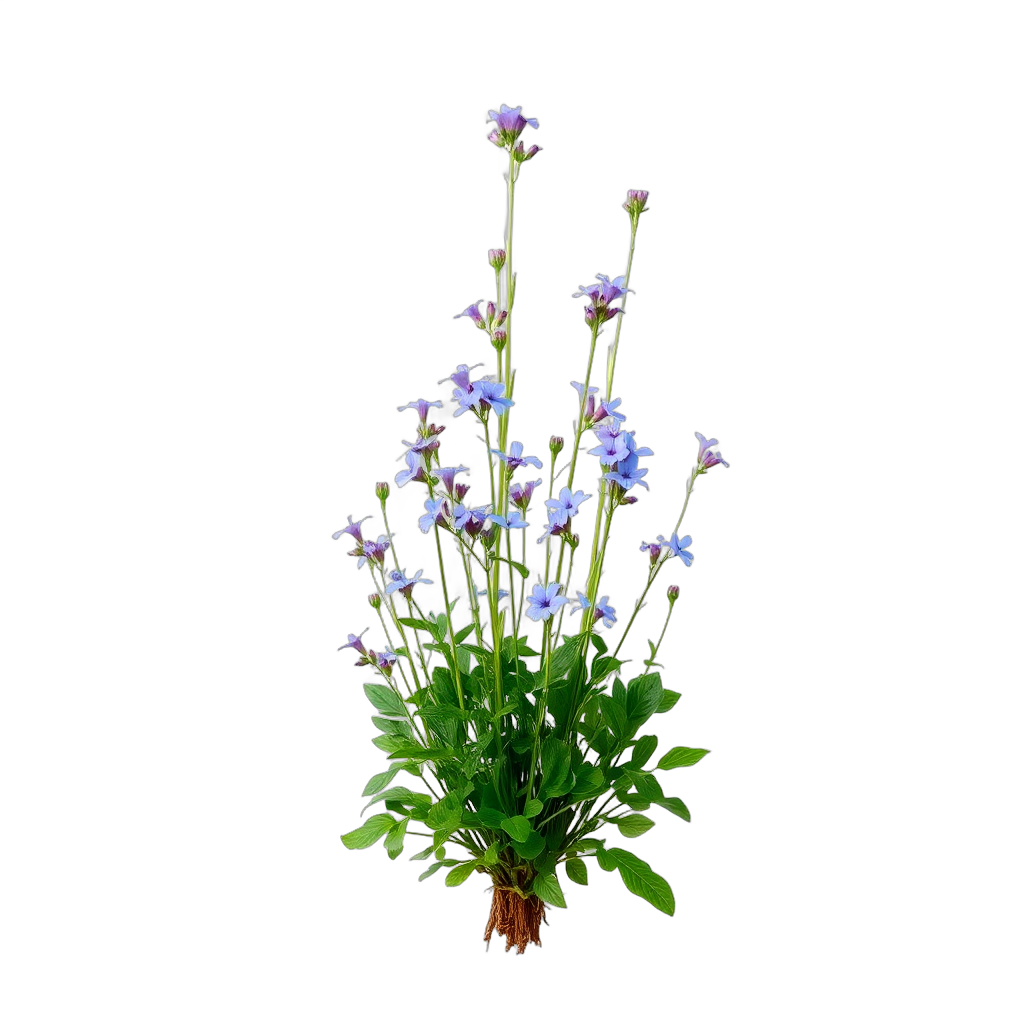
Blue Dicks
Dichelostemma capitatum
low-growing ground cover, blue blooms in spring. Pollinator-friendly.
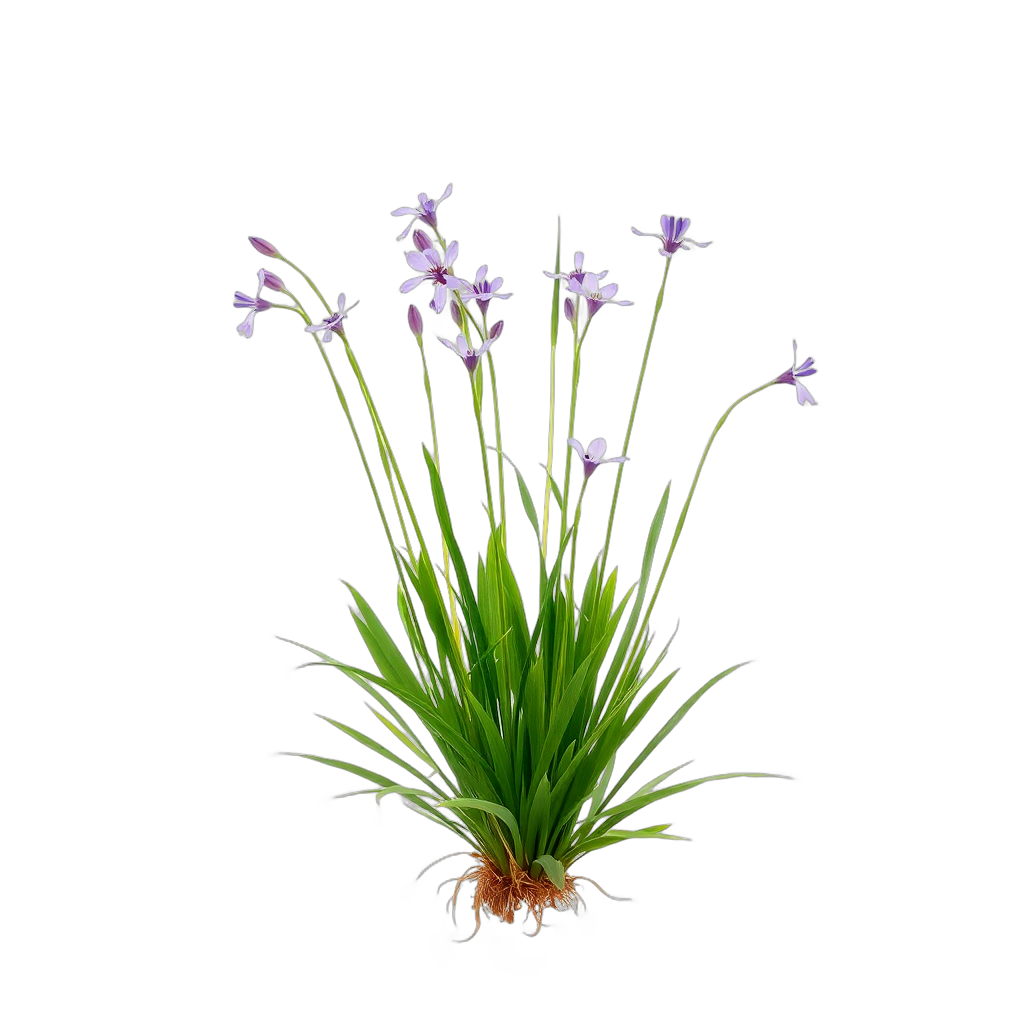
Blue-Eyed Grass
Sisyrinchium bellum
low-growing ground cover, blue blooms in spring. Attracts butterflies.
Bloom Calendar for Oceanside
spring
Beach Evening Primrose, Blue Dicks, Blue-Eyed Grasssummer
California Gray Rush, Hooker's Evening Primrose, Hummingbird Mintfall
California Fuchsiawinter
Limited bloomsDesign Tips for Oceanside (Zone 10a)
- Build a gravel collar, not a gravel blanket — three inches of 3/8-inch DG pulled two hand-widths back from the crown of Agave ovatifolia, Agave 'Blue Glow' and Aloe 'Blue Elf' keeps marine-layer condensation off the growing point, which is what actually kills succulents in Oceanside, not drought
- Skip golden barrel (Echinocactus grusonii) west of El Camino Real — it goes corky and orange in the fog belt within two years; Ferocactus wislizeni and Mammillaria geminispina hold color and form far better within sight of the water
- Stabilize the decomposed granite on any slope over 3% — Oceanside's 11 inches arrive across a handful of December and February atmospheric-river days, and unstabilized gold fines will be in the gutter after one storm; a psyllium or acrylic stabilizer adds $1–2 per square foot and saves the reset
- Berm inland beds 8–12 inches above grade in Rancho Del Oro, Ocean Hills and Morro Hills — the Huerhuero claypan under those tracts perches winter water, and an Agave americana planted at grade there rots in its second winter even though the identical plant thrives in South O's Marina sand
- Keep one shade tree per 400 square feet of gravel — Schinus molle, Olea europaea 'Wilsonii' or a multi-trunk Arbutus 'Marina' drops inland surface temperatures 15–20°F on a 98°F Santa Ana afternoon, and a treeless gravel front yard is unusable from 11am to 5pm from July onward
- Convert spray to inline drip before you plant, not after — 0.6 gph pressure-compensating dripline on a dedicated valve is what waters Muhlenbergia rigens and Hesperaloe parviflora 'Brakelights' correctly, and it is also the piece of the job that qualifies the rest of it for rebate paperwork
Where to Source Plants in Oceanside
Skip the big-box stores. These independent Oceanside nurseries specialize in the plants that make desert/xeriscape gardens thrive in Zone 10a.
Plantplay Gardens
South Oceanside
Unique and unusual plants, pottery, and fountains with a focus on landscape design.
Evergreen Nursery
Oceanside Boulevard
Large grower-direct nursery offering a wide variety of plants, trees, and shrubs for Southern California.
Briggs Tree Company
Vista
Family-owned wholesale and retail nursery specializing in landscape plants, palms, trees, and flowers.
Barrels & Branches
Encinitas
Garden-setting nursery focused on succulents, drought-tolerant plants, and pottery.
Desert/Xeriscape Landscaping Costs in Oceanside
| Project Scope | Estimated Cost |
|---|---|
| Front-yard lawn-to-xeriscape conversion (800–1,200 sqft: removal, DG, drip, plants) | $10,000 – $26,000 |
| Decomposed granite or gravel field, 3 inches over compacted subgrade | $4 – $9/sqft installed |
| Specimen granite boulders, delivered and set (2–4 ton) | $600 – $1,800 each |
| Paver fire-circle patio with gas fire table (350–500 sqft) | $18,000 – $42,000 |
| Pool, boulder waterfall + full backyard xeriscape | $95,000 – $260,000 |
| AI visualization with ProScapeAI | Free to start |
Estimates based on Oceanside, CA-area contractor rates as of 2026. Actual costs vary by site conditions, materials, and contractor.
Oceanside Climate & Growing Zone
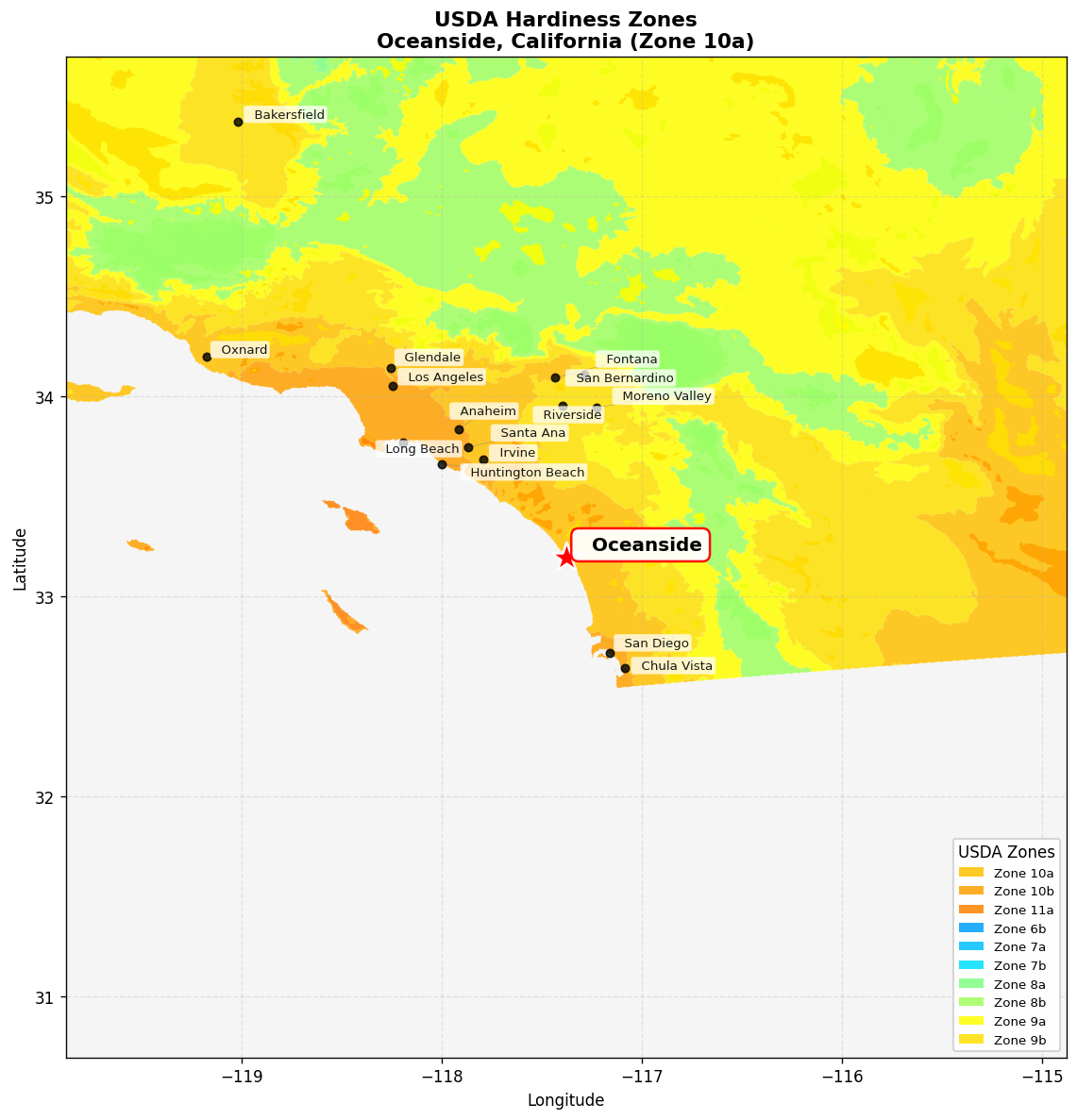
USDA Zone 10a
Hardiness zone for Oceanside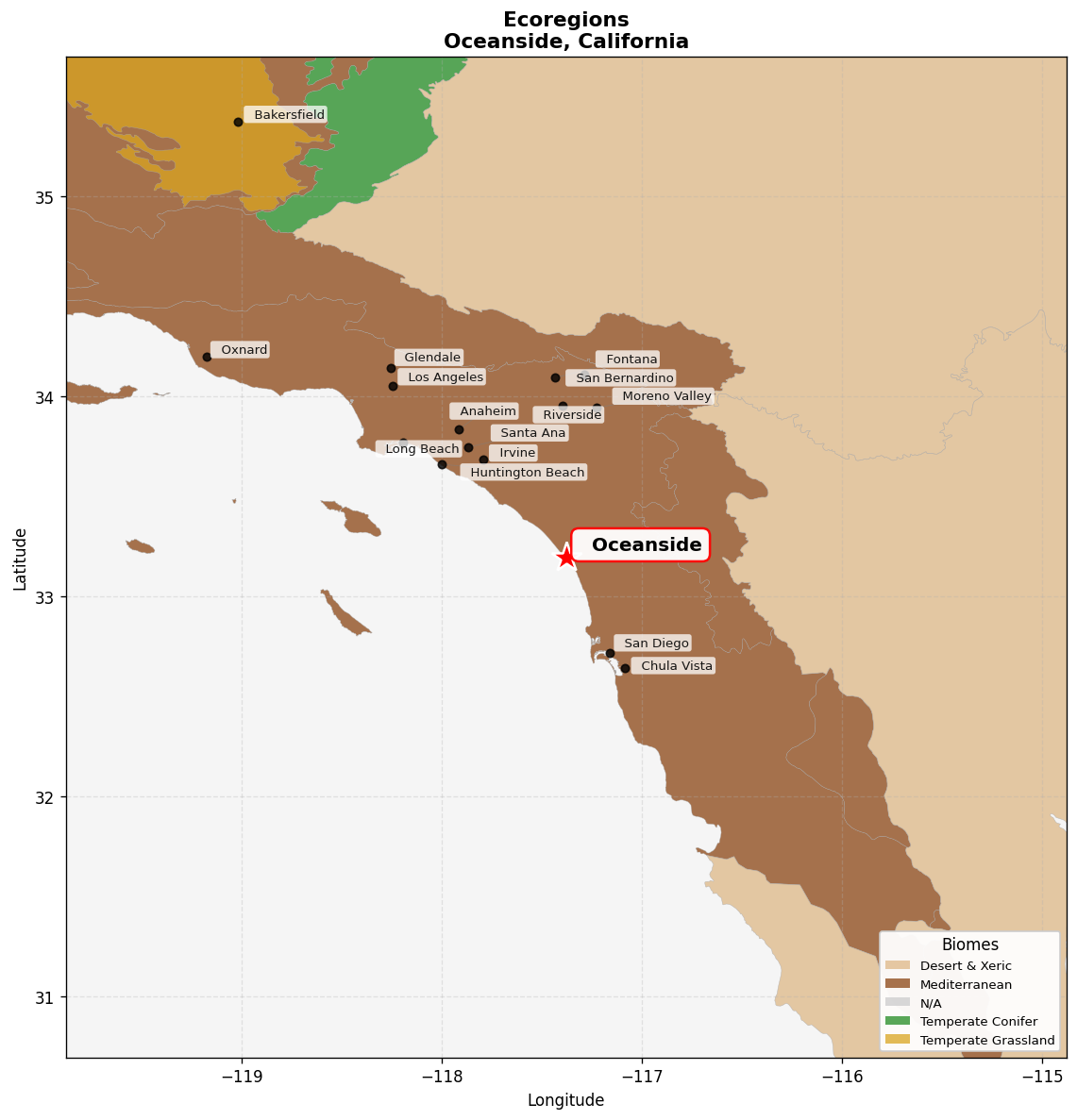
California coastal sage and chaparral
Native ecoregionFrequently Asked Questions
Does desert landscaping actually work in a foggy coastal city like Oceanside?
It works, but the plant list is not Palm Desert's. Oceanside is Zone 10a with roughly 11 inches of winter-only rain — dry enough for xeriscape — yet the May Gray and June Gloom marine layer keeps foliage damp for weeks at a stretch. Species that evolved with dry air rot here: Echinocactus grusonii goes corky and orange, Agave parryi var. truncata and Agave victoriae-reginae get black basal rot, Opuntia santa-rita loses its purple. What thrives instead is the Baja-and-Mediterranean palette — Agave ovatifolia, Agave 'Blue Glow', Agave attenuata, Aloe arborescens, Aloe 'Blue Elf', Ferocactus wislizeni, Opuntia ficus-indica 'Burbank Spineless', Yucca rostrata 'Sapphire Skies' — plus locals like Muhlenbergia rigens, Eriogonum fasciculatum 'Warriner Lytle' and Rhus integrifolia. The fix for everything marginal is sharp drainage, not a different watering schedule.
How much does a xeriscape conversion cost in Oceanside?
Front-yard conversions on typical 800–1,200 square foot lots run $10,000–26,000 installed, and San Diego County labor is the reason — figure 25–40% above national numbers. The line items on a real job: turf kill and haul-off $1.50–3 per square foot, three inches of stabilized decomposed granite $4–9 per square foot installed, spray-to-drip conversion $1.50–4 per square foot, 5- and 15-gallon Agave ovatifolia and Hesperaloe parviflora 'Brakelights' at $35–160 each, and specimen boulders $600–1,800 delivered and set. Doing it yourself roughly halves the figure if you can rent a sod cutter and a plate compactor. Turf rebates at $2–4 per square foot cover about a quarter of a modest conversion.
Decomposed granite or gravel, and how deep over Oceanside soils?
Use 3/8-inch decomposed granite for paths and seating areas and 3/4-inch angular gravel for planting fields, both at three inches over a compacted subgrade. On the sandy Marina loamy coarse sand under South O and The Strand you can lay it straight over scarified soil. Over the Huerhuero claypan inland in Rancho Del Oro and Ocean Hills, berm the beds 8–12 inches first so winter water has somewhere to go. Skip landscape fabric inside planting beds — it stops Muhlenbergia rigens and Eriogonum from self-sowing, and windborne organic matter builds a weed layer on top of it within two years regardless. Use a psyllium or acrylic stabilizer on any DG slope over 3%, because the year's rain arrives in a handful of atmospheric-river days.
How much water does an Oceanside xeriscape really use?
A mature xeriscape on inline drip typically runs 8–14 gallons per square foot per year against 40–55 for cool-season turf. You still need irrigation, though: with effectively zero measurable rain from June through September, even Agave ovatifolia and Dasylirion wheeleri want a deep soak every three to four weeks through their first two summers, and Muhlenbergia rigens and Salvia leucophylla 'Point Sal' will look dead by August without it. Run 0.6 gph pressure-compensating dripline on its own valve, water before dawn, and if your irrigation is on recycled water from the San Luis Rey plant, add one deep leaching soak each November to flush accumulated salts below the root zone.
Will a gravel yard bake my house, especially inland?
Inland, yes, if you skip the canopy. A treeless gravel front yard in Rancho Del Oro or Morro Hills can read 15–20°F hotter at the surface than a planted one on a 98°F Santa Ana afternoon, and it keeps radiating into west-facing rooms well after sunset. The fix is not less gravel but more shade: one Schinus molle, Olea europaea 'Wilsonii', Arbutus 'Marina' or Chilopsis linearis per roughly 400 square feet, plus lighter gold DG rather than dark lava rock on any west or south exposure. West of El Camino Real, where the marine layer holds summer highs near 75°F, the problem is largely theoretical and dark mulch is fair game.
What about HOA rules, fire rules, and permits for a desert yard?
California Civil Code 4735 and AB 1164 bar homeowner associations from prohibiting low-water and drought-tolerant landscaping, so boards in Ocean Hills and Arrowood can regulate appearance but cannot require you to keep turf. Fire rules matter inland: parcels in Very High Fire Hazard Severity Zones around Morro Hills and Jeffries Ranch fall under California's ember-resistant Zone 0 rules for the first five feet from the structure, which favors gravel, hardscape and well-irrigated succulents like Aloe arborescens over resinous natives such as Artemisia californica and Salvia mellifera hard against a wall. Otherwise permits follow structures — retaining walls over four feet, gas lines for a fire table, pool electrical. Parcels west of the coastal zone boundary may also need a Coastal Development Permit under Oceanside's Local Coastal Program.