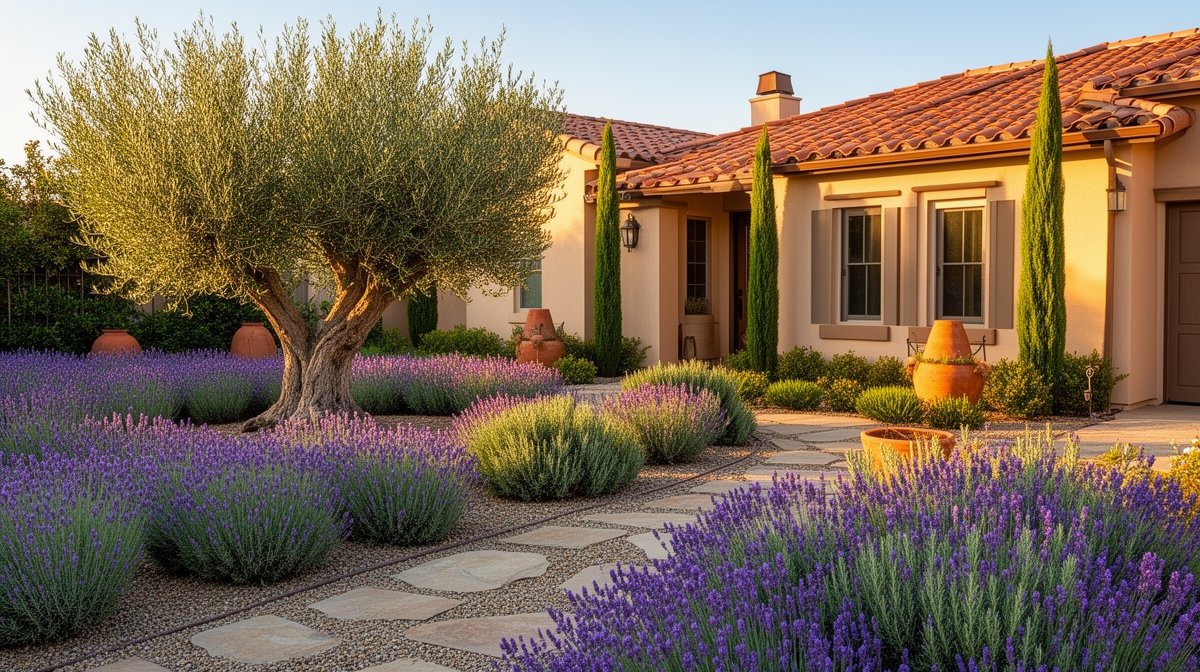
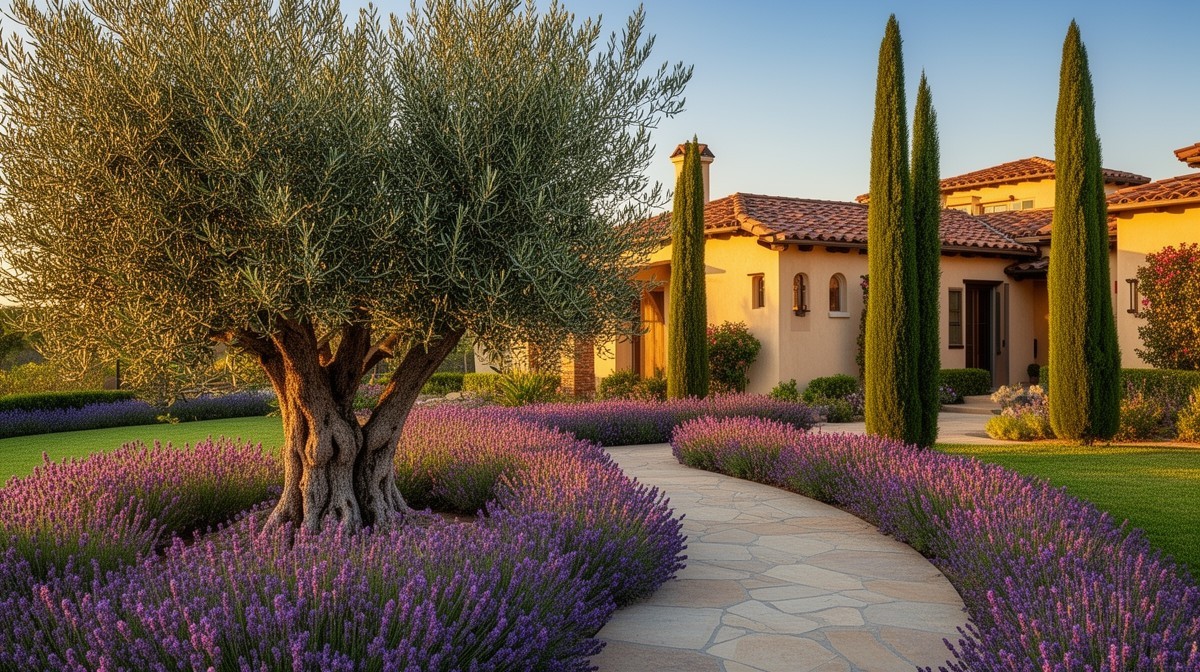
4 Mediterranean Garden Ideas for Ontario, CA | Olive & Lavender Landscape Design in Zone 10a
Native plants from the California coastal sage and chaparral (Zone 10a) — Mediterranean (hot summer) climate
Why Mediterranean Gardens in Ontario?
Ontario sits in one of the few climates on earth that grows Mediterranean plants better than the Mediterranean does. Zone 10a, a Köppen Csa classification, roughly 15 inches of rain falling almost entirely between December and March, and a bone-dry summer are the exact conditions Olea europaea, Lavandula, Cistus and Salvia rosmarinus evolved for — this is not a style you have to force here, it is the default. It also matches the architecture. Spanish Colonial Revival and Mission-style stucco is everywhere from the Euclid Avenue Historic District through Guasti, whose old winery village was planted as one of the largest vineyards in the world, and the tile-roofed two-story builds across Ontario Ranch — New Haven, Park Place, Esperanza, Rich-Haven — are essentially Mediterranean houses waiting for a Mediterranean garden.
Cultivar choice is still what separates a good inland Mediterranean garden from a maintenance headache. Plant fruitless olives — Olea europaea 'Wilsonii', 'Swan Hill' or 'Majestic Beauty' — unless you genuinely want to pressure-wash purple fruit off a driveway every autumn. Use Lavandula × intermedia 'Provence' and 'Grosso', Lavandula dentata and Lavandula stoechas 'Otto Quast' rather than the English lavenders, which rot out by their third Inland Empire summer. Salvia rosmarinus 'Tuscan Blue', Westringia fruticosa 'Morning Light', Teucrium fruticans 'Azureum', Cistus × purpureus and Salvia clevelandii 'Winnifred Gilman' carry the grey-green structure through 105°F afternoons, while Bougainvillea 'Barbara Karst' supplies the magenta that makes the style read at fifty feet. For citrus, Ontario's heat is a gift: 'Washington' navel, 'Improved Meyer' lemon and 'Moro' blood orange all colour up properly here.
The practical constraints are soil chemistry, wind and salt. Ontario's alluvial sandy loam off the San Gabriel front is fast-draining but alkaline at pH 7.5 to 8.2, which locks up iron and zinc — expect yellow interveinal chlorosis on citrus and treat it with chelated iron and zinc foliar sprays, not more nitrogen. Santa Ana winds pour through Cajon Pass at 40 to 60 mph from October into February, so tie bougainvillea into its trellis before autumn, stake young olives low and loose, and avoid brittle-wooded shade trees near the house. Chino Basin water is hard, so leach salts with an occasional long soak. And build for drainage, not water retention: set every lavender, rosemary and cistus crown an inch proud of grade and mulch with gravel rather than bark — overwatering, not heat, is what kills Mediterranean plants in Ontario.
4 Mediterranean Design Ideas for Ontario
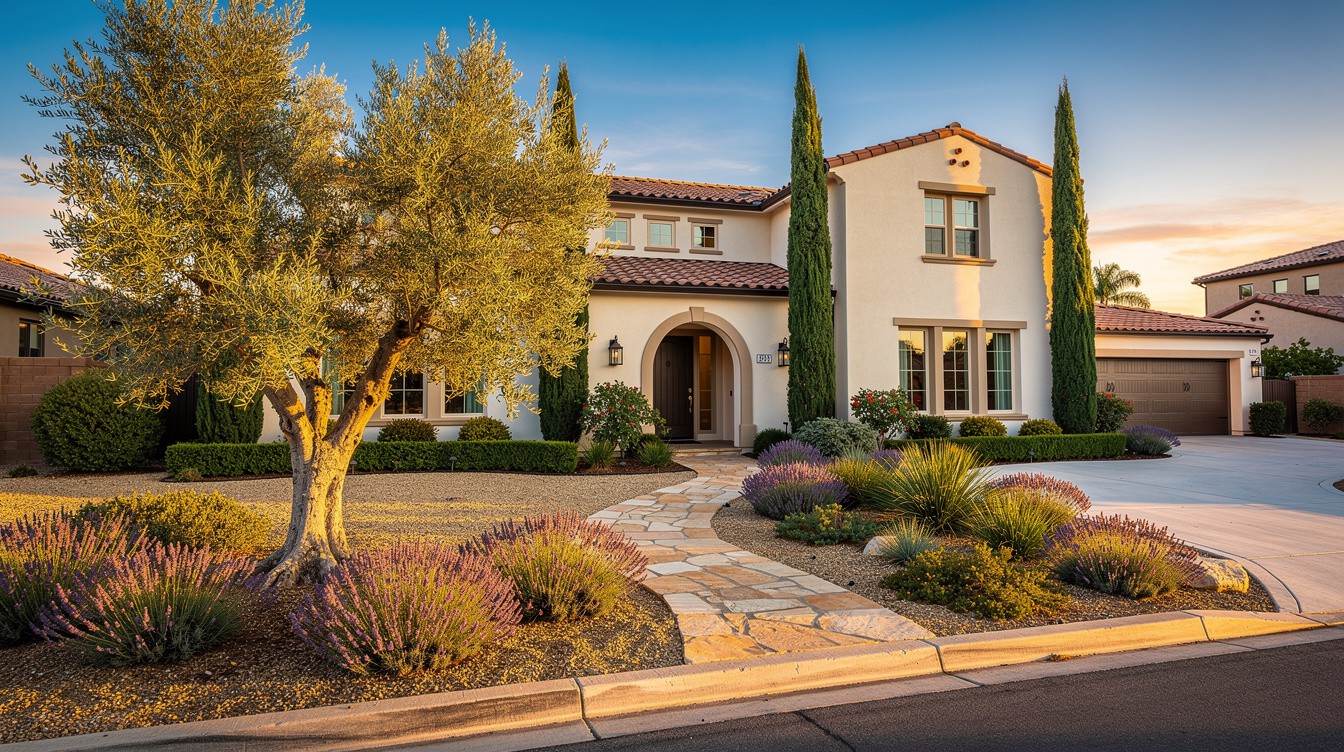
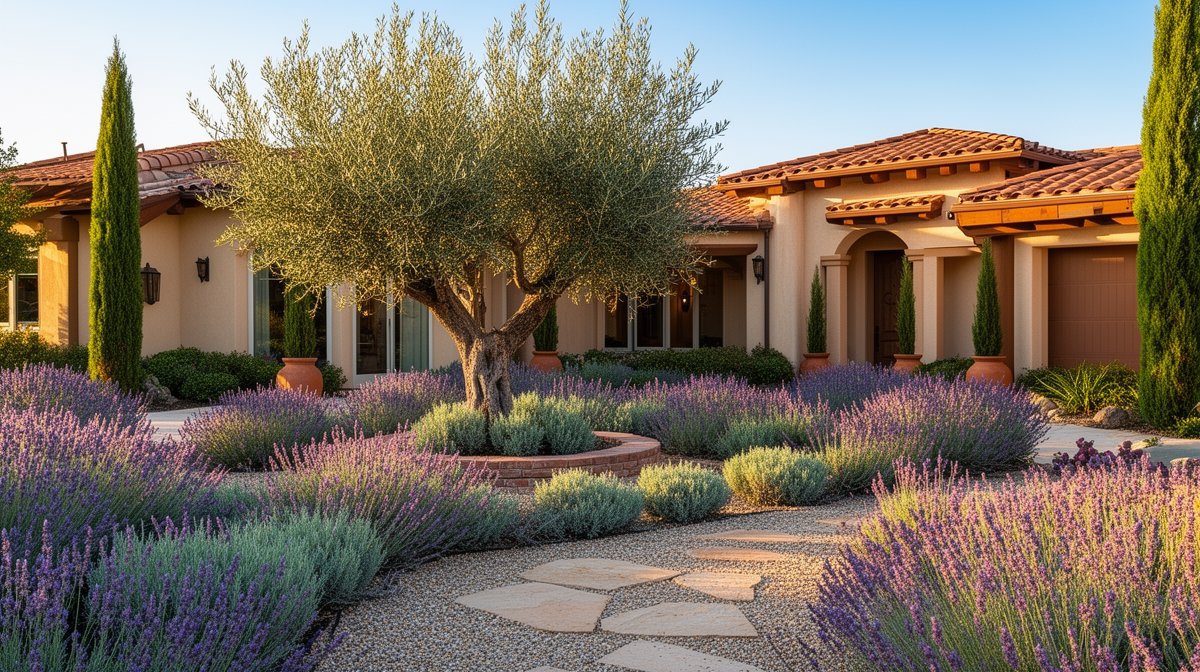
The Fruitless Olive Forecourt
$10–20/sqftA tile-roofed two-story Spanish home is anchored by a single multi-trunk olive placed off-center in the front yard, its gnarled grey trunk uplit from below, with a colonnade of Italian cypress rising against the stucco to carry the eye up the facade. The lawn is gone entirely, replaced by a warm gravel and decomposed-granite field organized around a flagstone walk, and the planting is done in broad drifts rather than dots — rivers of lavender under the olive, a low clipped hedge tucking the foundation, and spiky Hesperaloe and deergrass punctuating the driveway edge. Every plant on this list wants exactly the 15 inches of winter rain Ontario delivers, which is why a mature version of this front yard costs almost nothing to run.
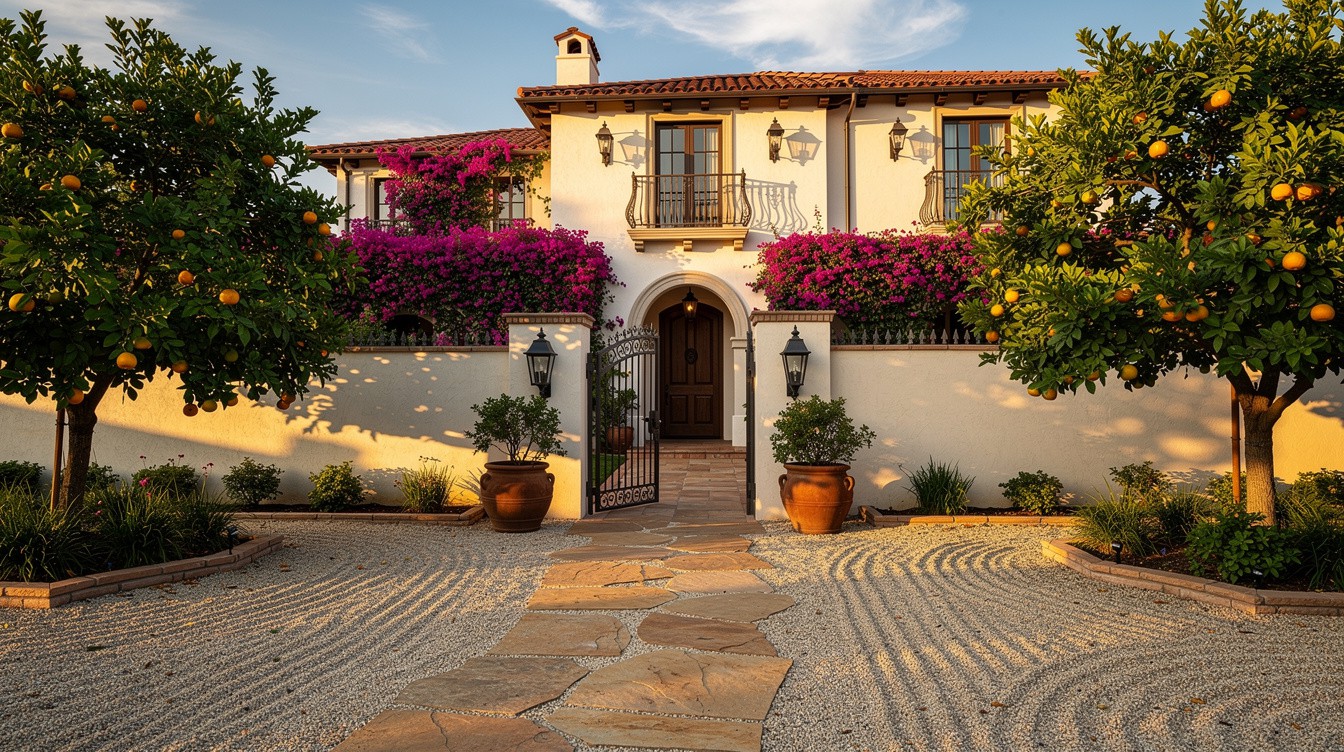
The Walled Citrus Courtyard
$22–45/sqft (wall included)A stucco perimeter wall with an ornamental iron gate turns the entry into an outdoor room before you reach the front door, and bougainvillea is trained to cascade over the top of the wall in a solid sheet of magenta. Two mature citrus flank the gate as living gateposts — heavy with fruit at the exact time of year, December through March, when the rest of the garden is quiet — and glazed terracotta urns holding clipped bay stand sentry either side of the opening. Underfoot, raked pea gravel in an arcing pattern surrounds a run of oversized flagstone treads, so the whole forecourt uses no irrigation at all outside the planting pockets. It is the single most privacy-generating move available on a front-loaded lot.
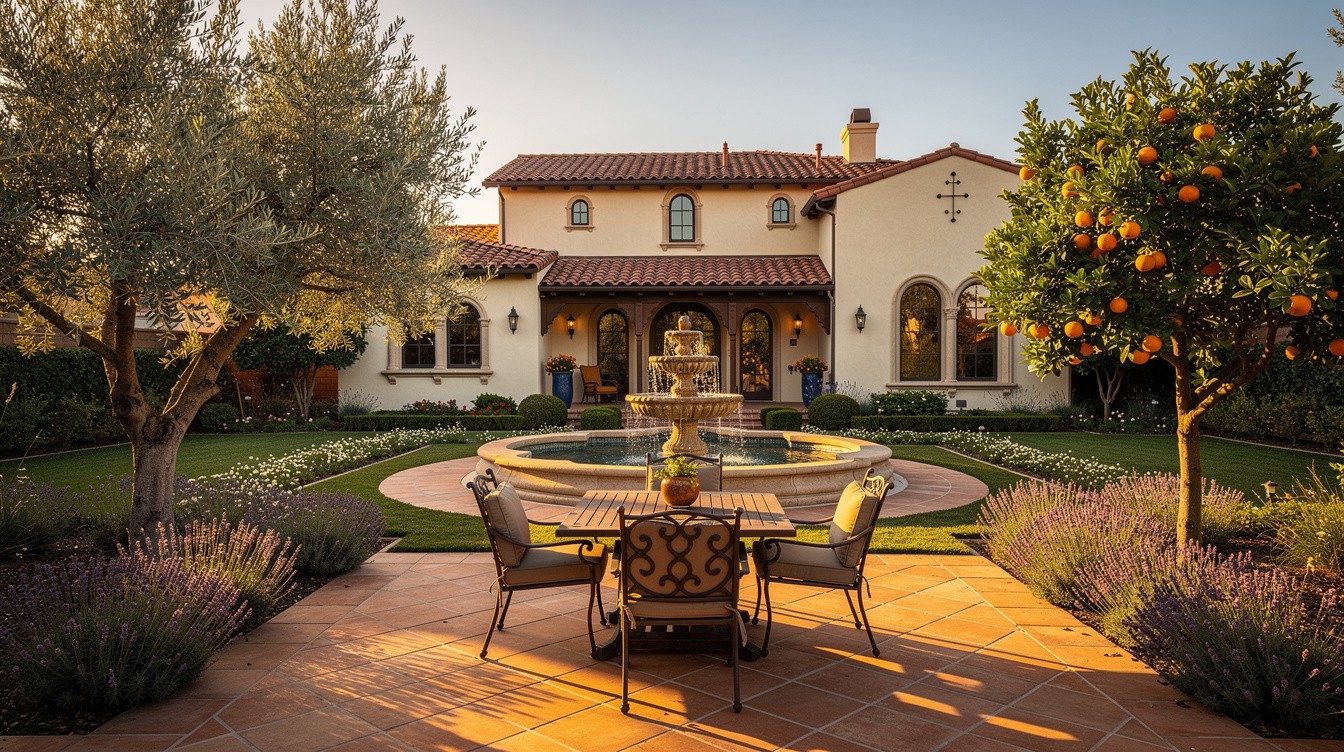
The Fountain Parterre
$25–48/sqftA three-tier cast-stone fountain sits in a round basin at the center of a terracotta-tiled plaza, with a ring of lawn and a formal ribbon of low hedging and white groundcover radiating out from it toward the house. A mature olive holds one corner and a heavily fruiting orange tree holds the other, both framing the arcaded loggia across the back of the house, and lavender hedges run the outer edges of the tile. This is the most formal of the four ideas and the most water-frugal per square foot despite appearances — the fountain recirculates, the lawn ring is small and deliberately shaped, and the clipped boxwood spheres and Erigeron carpet ask for very little once rooted. The fountain also does real acoustic work masking traffic noise near the 60 and Riverside Drive.
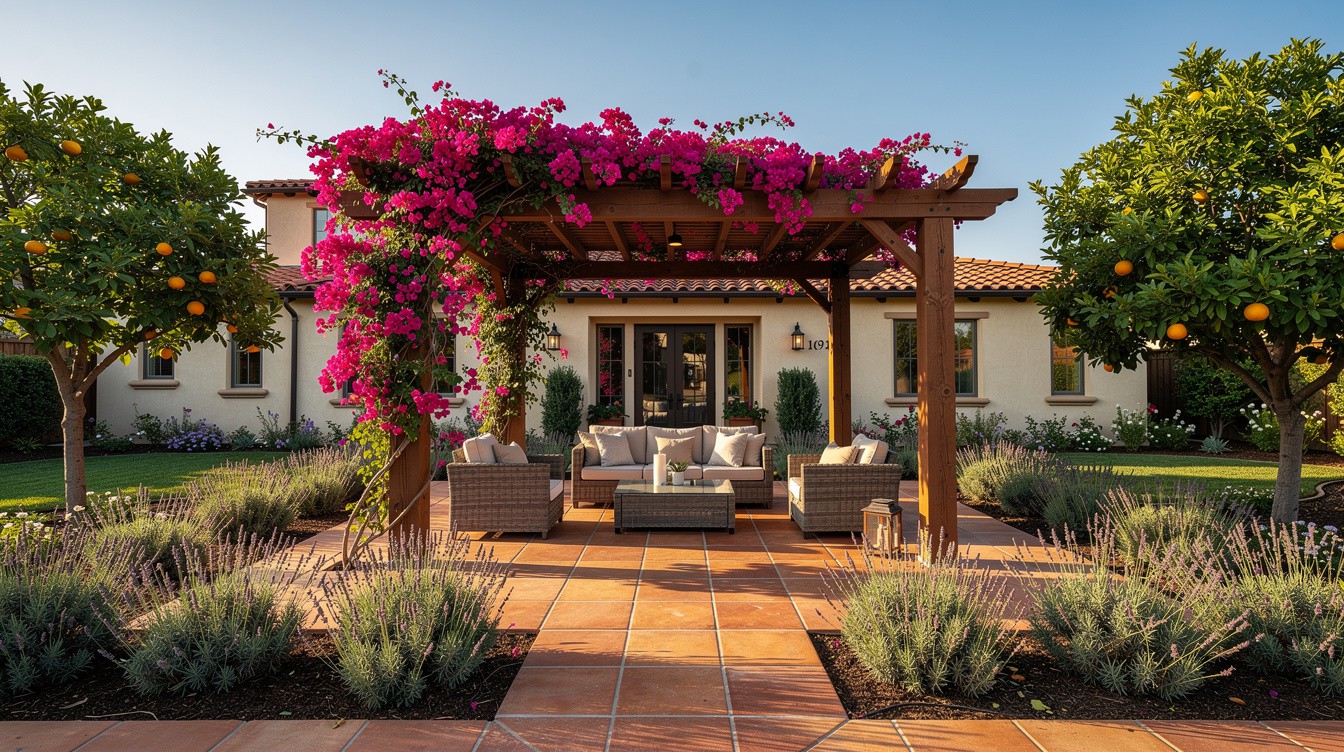
The Bougainvillea Pergola Terrace
$20–38/sqftA heavy timber pergola is built out from the back of the house over a terracotta tile terrace, with 'Barbara Karst' bougainvillea trained across the whole roof so it blooms overhead all summer and casts real filtered shade by year three. Deep wicker sofas and a low table sit under it, citrus anchor both back corners, and the terrace is edged with dense lavender borders that release scent when the evening breeze comes down off the mountains. What makes this design work in Ontario specifically is shade sequencing: the pergola covers the house-side hours, the citrus canopies handle the flanks, and the terracotta tile — unlike dark concrete — stays walkable barefoot at 6pm in August. Keep the lawn panels narrow and functional rather than decorative and the whole backyard runs on a fraction of the water the builder's turf did.
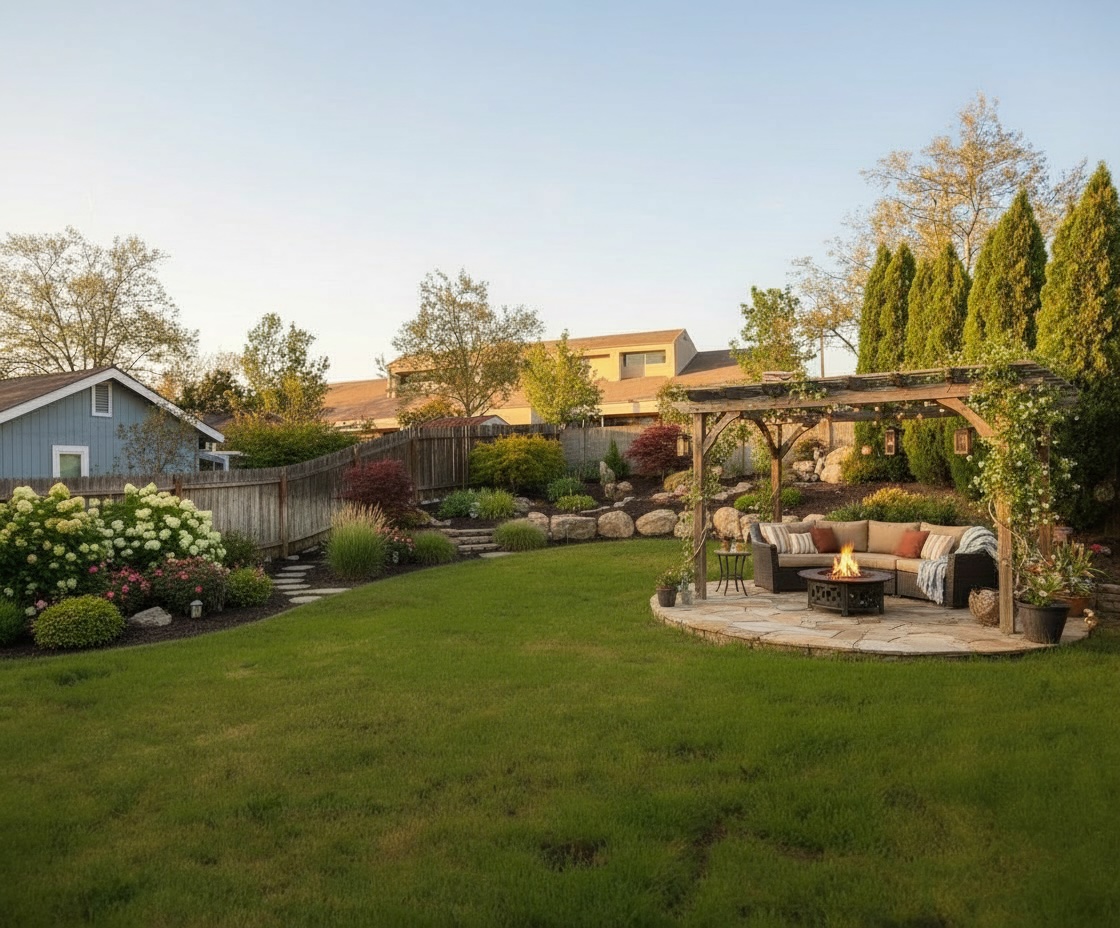
See how a mediterranean garden looks on YOUR property
Upload a photo of your Ontario yard and visualize your dream garden in seconds.
Try ProScapeAI Free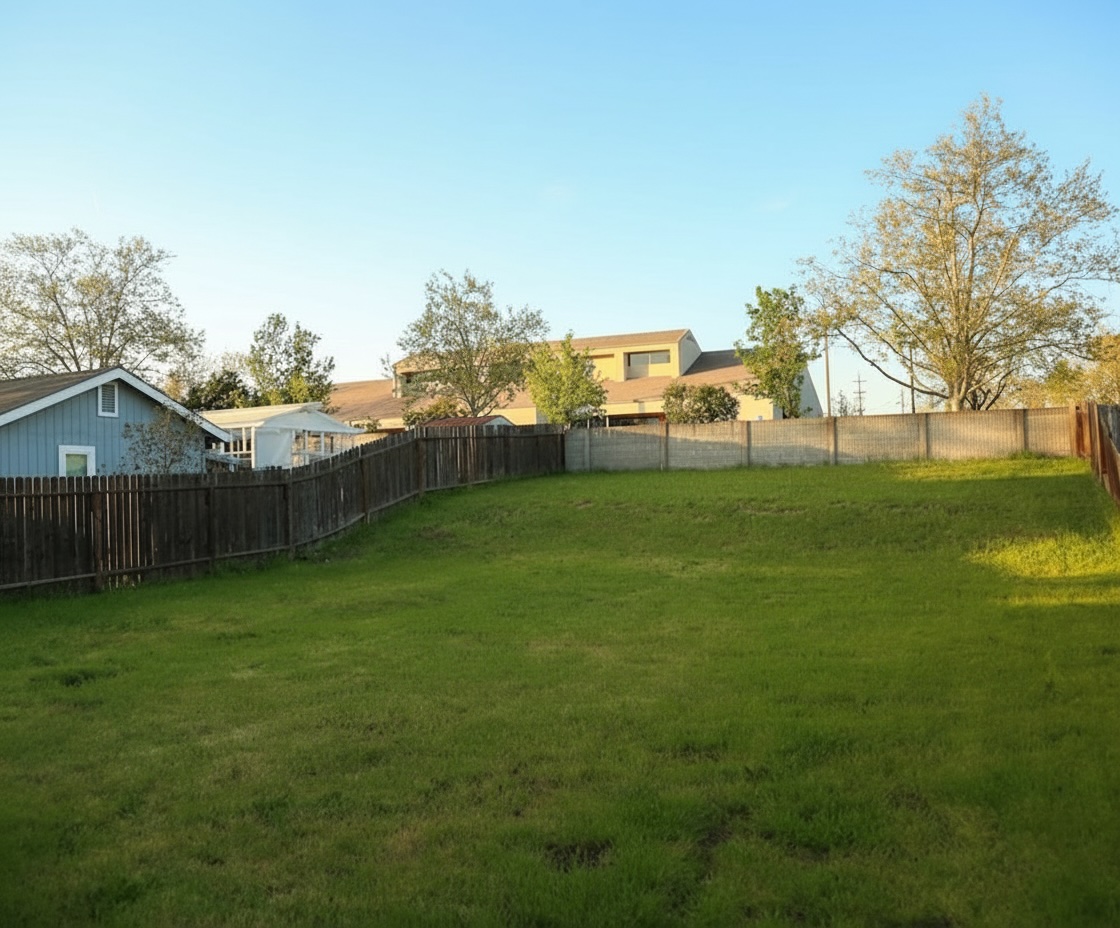
Featured Trees & Shrubs for Mediterranean Gardens
Browse all 115 plants for Ontario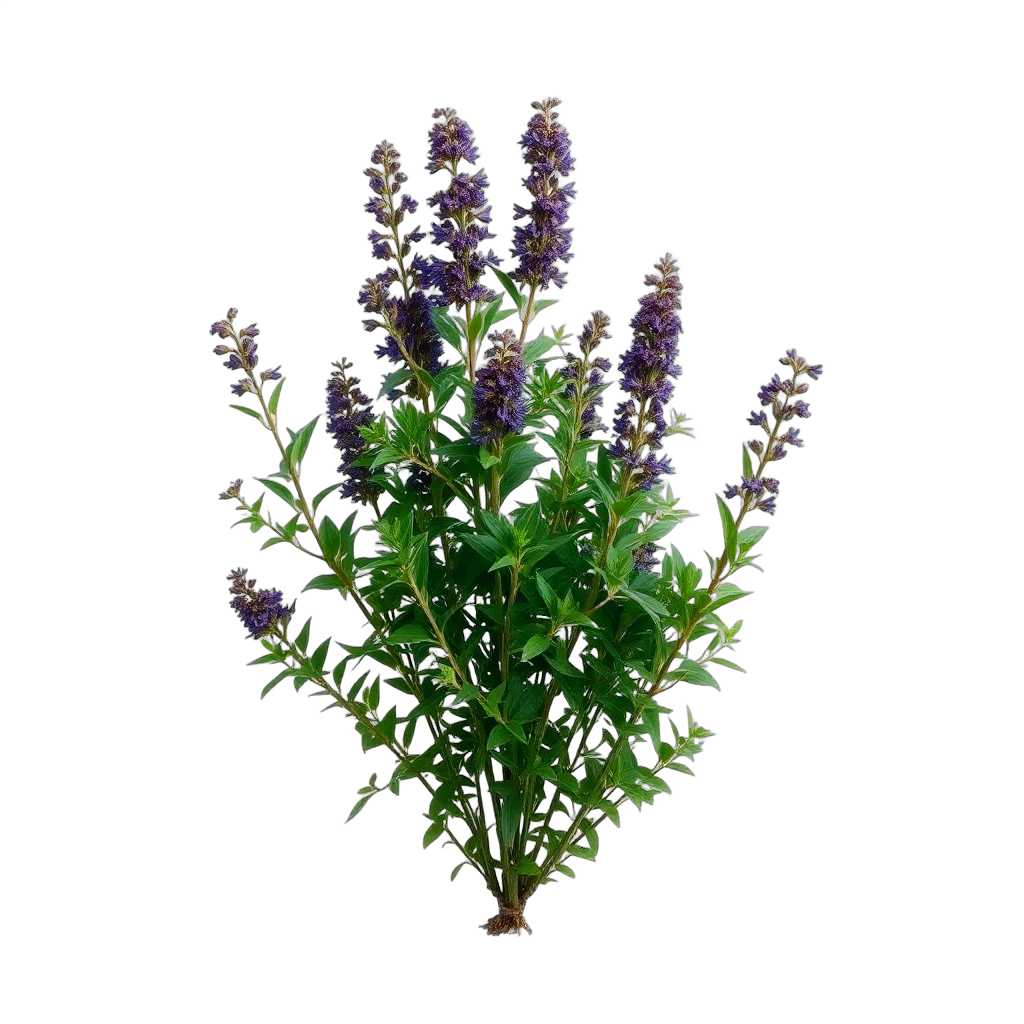
Black Sage
Salvia mellifera
grows to 4 feet, white blooms in spring. Attracts butterflies.
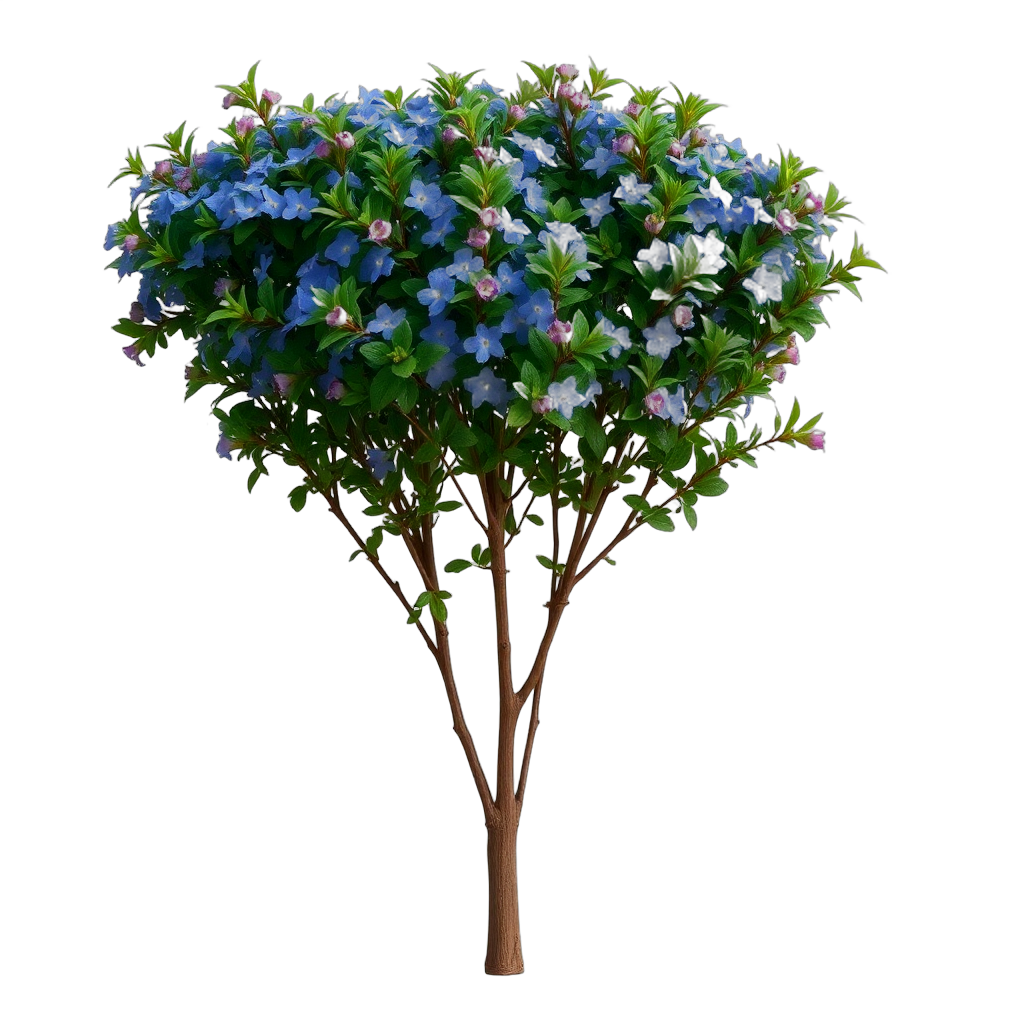
Blue Blossom
Ceanothus thyrsiflorus
medium-sized at 12 feet, blue blooms in spring. Attracts butterflies.

Blue Elderberry
Sambucus cerulea
medium-sized at 15 feet, white blooms in spring. Attracts butterflies.
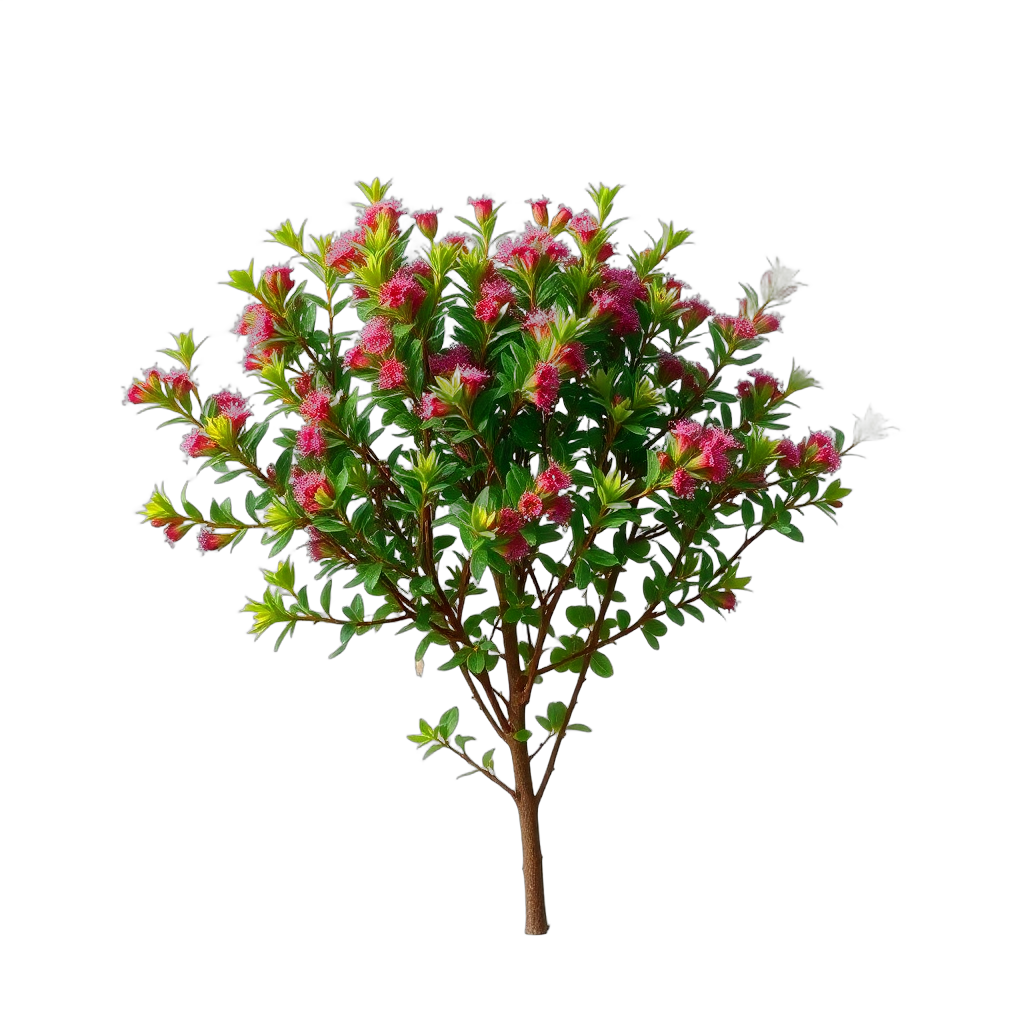
Buckbrush
Ceanothus cuneatus
medium-sized at 7 feet, white blooms in spring. Attracts butterflies.
Featured Grasses & Groundcovers for Mediterranean Gardens
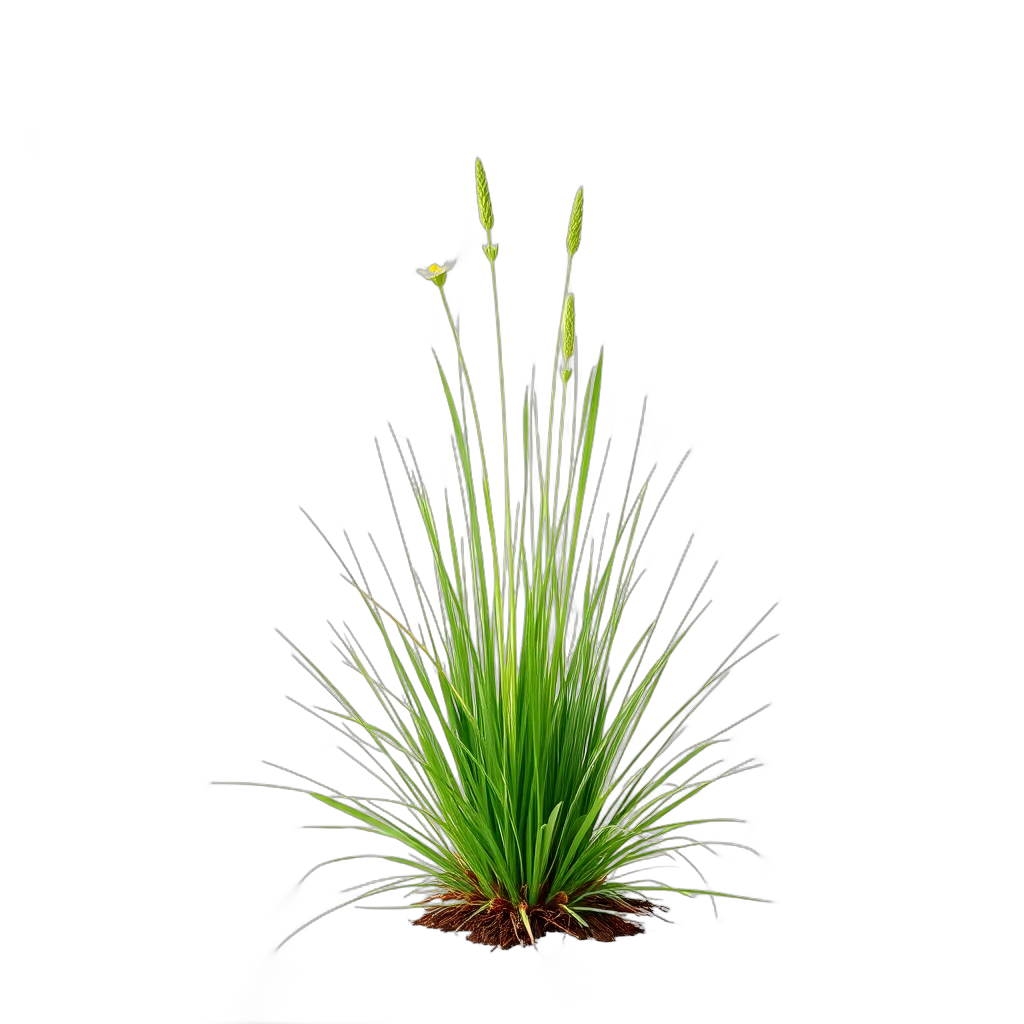
California Brome
Bromus carinatus
low-growing ground cover, blooms in spring. Yellow fall color.
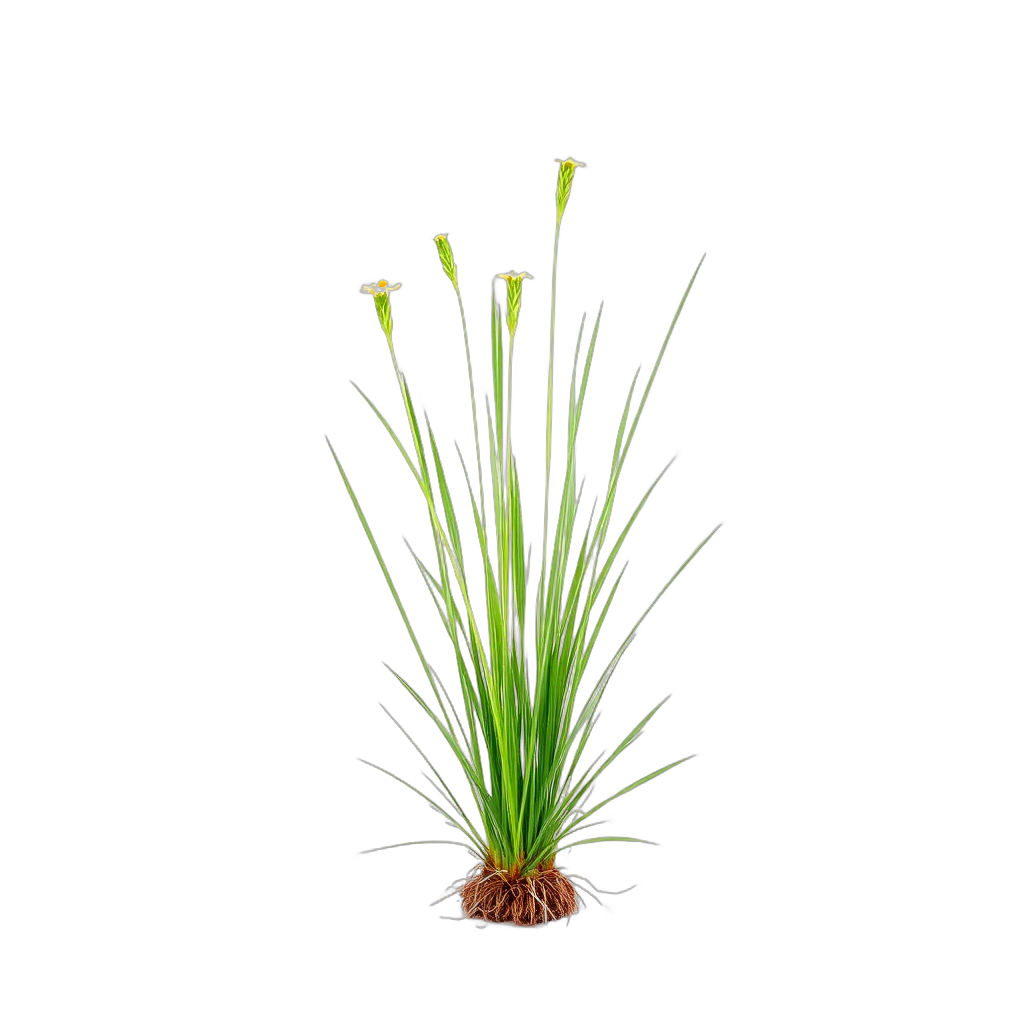
California Melic
Melica californica
low-growing ground cover, blooms in spring.
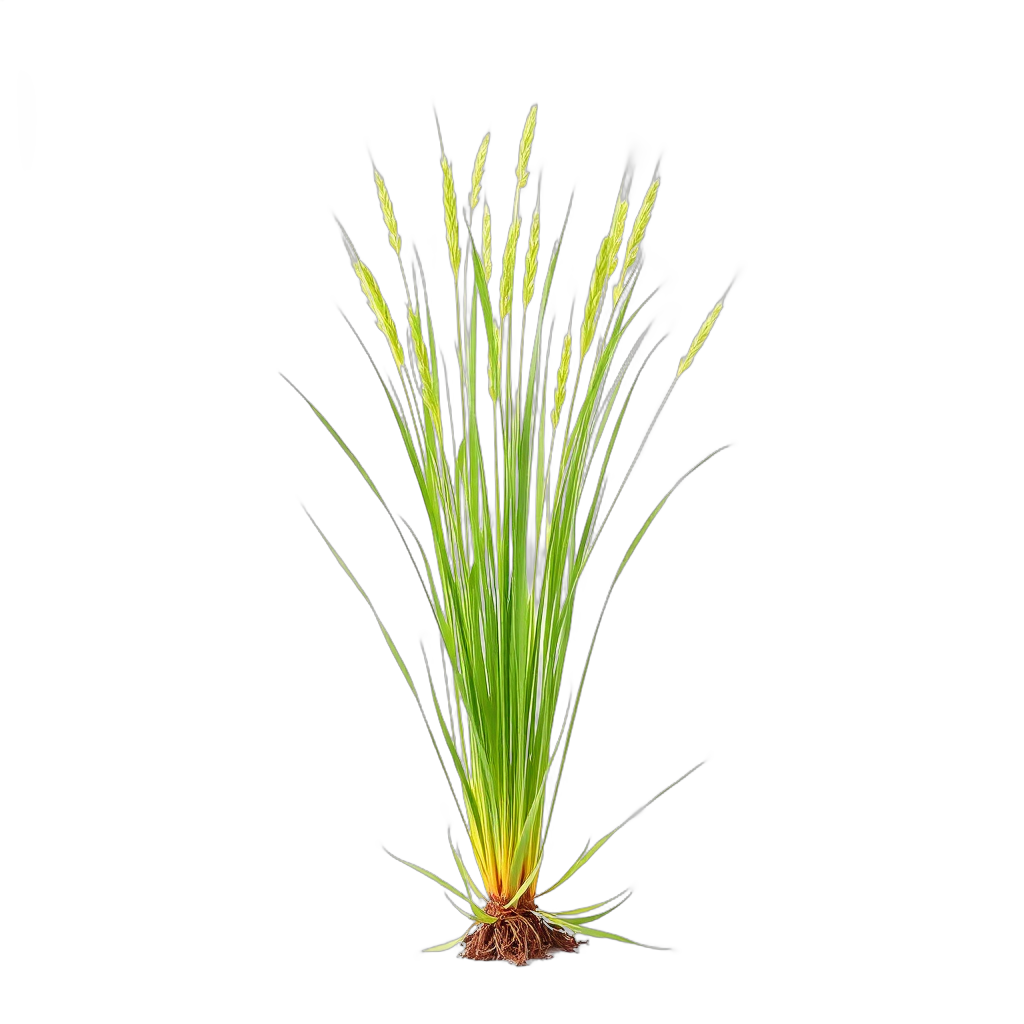
California Oatgrass
Danthonia californica
low-growing ground cover, blooms in spring. Yellow fall color.
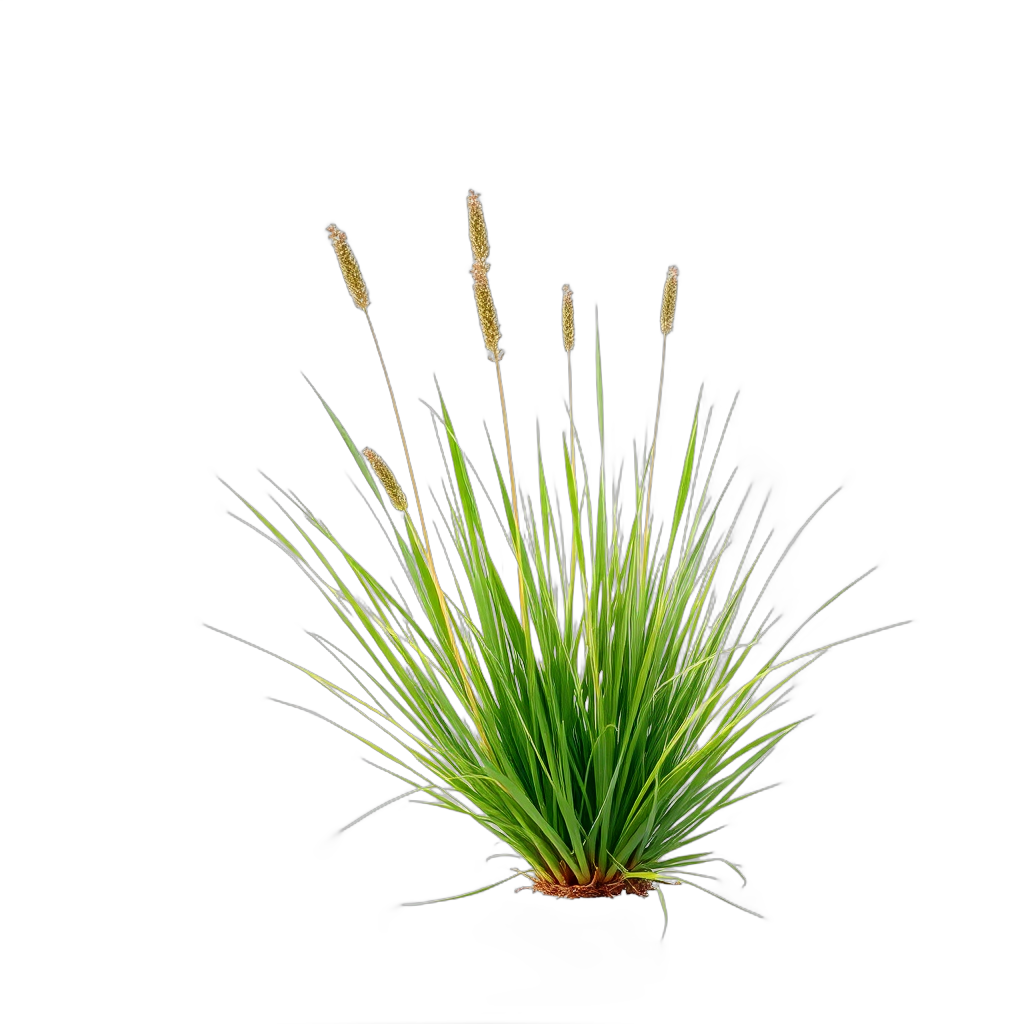
Deer Grass
Muhlenbergia rigens
grows to 3 feet, yellow blooms in fall. Evergreen year-round.
Featured Flowers & Perennials for Mediterranean Gardens
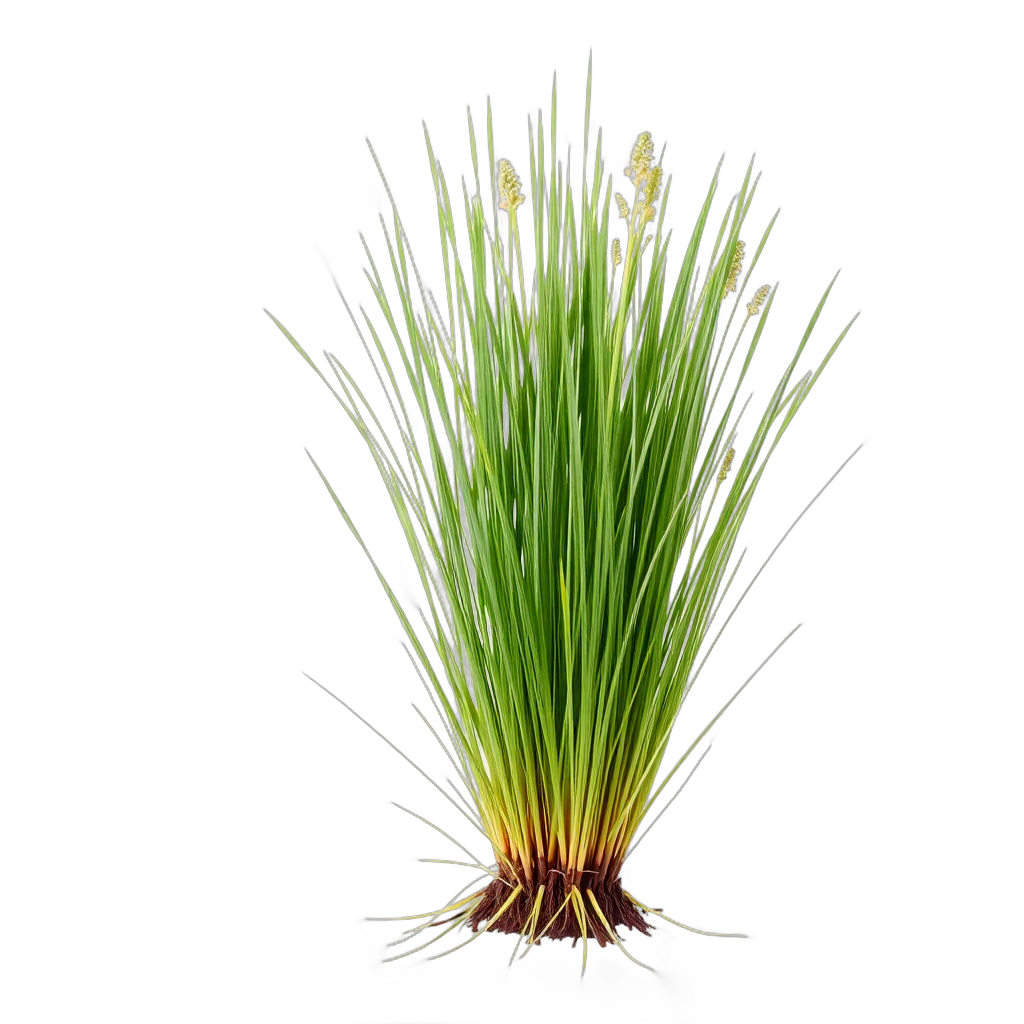
California Gray Rush
Juncus patens
low-growing ground cover, blooms in summer. Evergreen year-round.
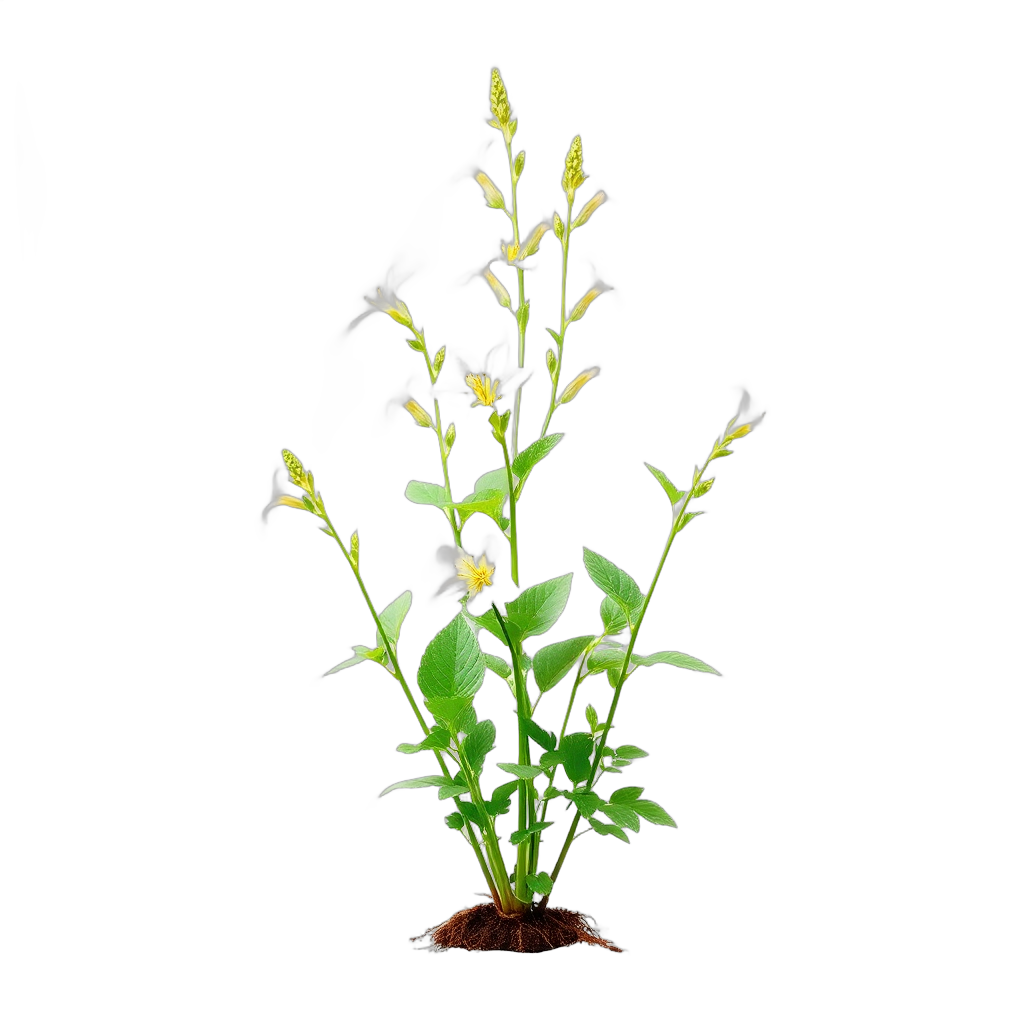
Beach Evening Primrose
Camissonia cheiranthifolia
low-growing ground cover, yellow blooms in spring. Attracts butterflies.
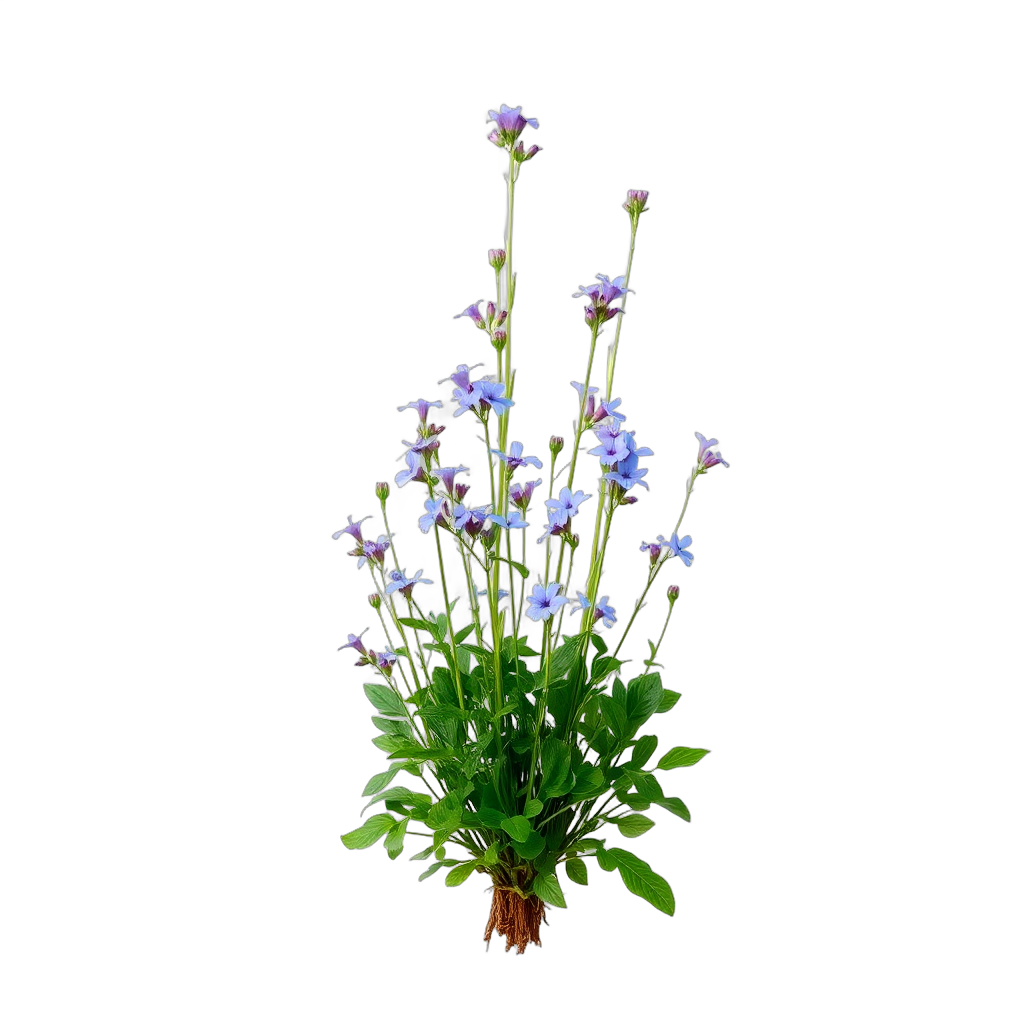
Blue Dicks
Dichelostemma capitatum
low-growing ground cover, blue blooms in spring. Pollinator-friendly.
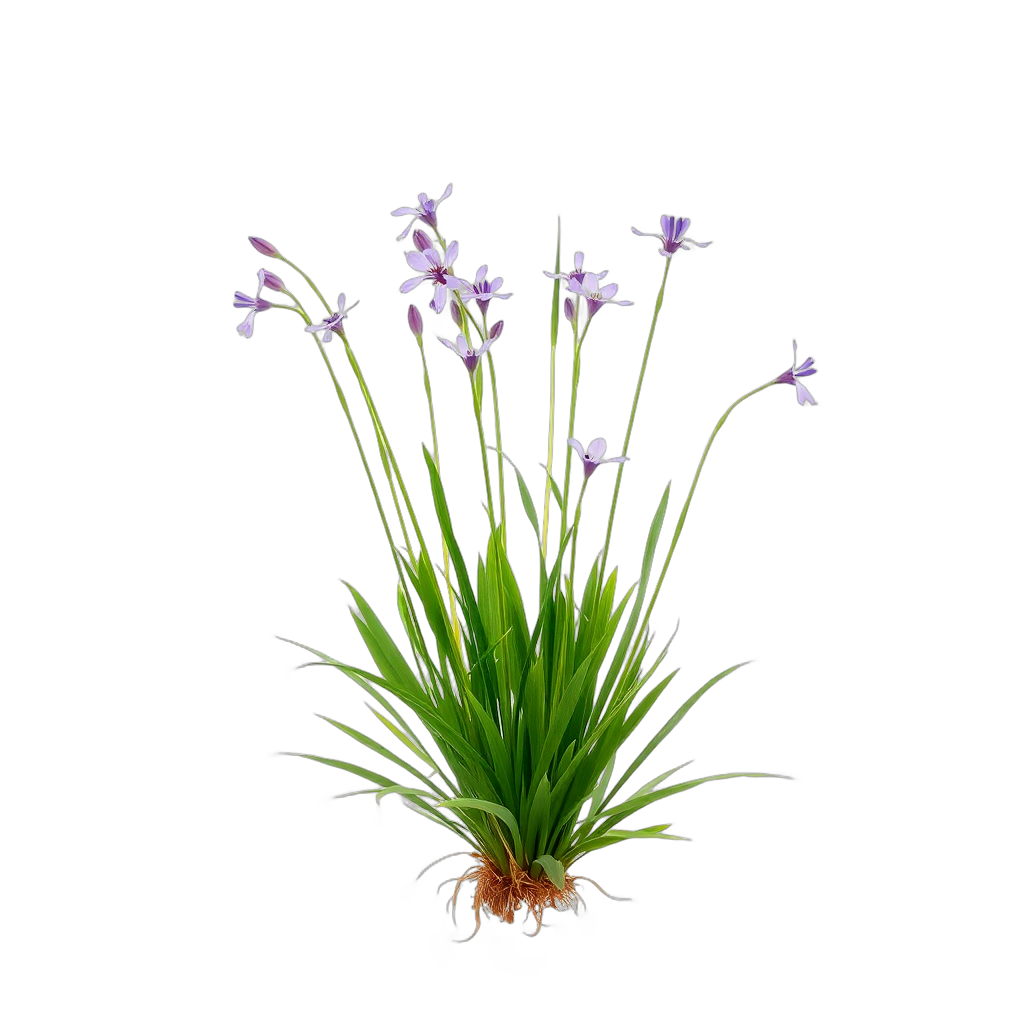
Blue-Eyed Grass
Sisyrinchium bellum
low-growing ground cover, blue blooms in spring. Attracts butterflies.
Bloom Calendar for Ontario
spring
Beach Evening Primrose, Blue Dicks, Blue-Eyed Grasssummer
California Gray Rush, Hooker's Evening Primrose, Hummingbird Mintfall
California Fuchsiawinter
Limited bloomsDesign Tips for Ontario (Zone 10a)
- Specify fruitless olive cultivars by name on the plan — Olea europaea 'Wilsonii', 'Swan Hill' or 'Majestic Beauty' for shade trees, 'Little Ollie' for hedges and pots — because nurseries stock fruiting seedling olives right next to them and the fruit drop is a decade-long regret
- Use gravel or decomposed granite as mulch against the crowns of lavender, rosemary, cistus and teucrium instead of bark; overwatering and a wet stem base kill more Mediterranean shrubs in Ontario than heat ever will
- Put citrus on a completely separate valve from the grey-leaved shrubs — citrus wants consistent moisture and regular feeding while Lavandula and Salvia rosmarinus want to dry out, and one shared schedule ruins both
- Treat yellow-with-green-veins citrus leaves as an iron and zinc lockout from pH 7.5–8.2 alluvial soil, not a nitrogen deficiency; chelated micronutrients fix it, more nitrogen just pushes soft growth that Santa Ana winds then burn
- Build vertical early — Cupressus sempervirens 'Glauca' columns, a bougainvillea-clad pergola and a wall-trained 'Barbara Karst' deliver the Mediterranean silhouette in two seasons, while waiting on a specimen olive to size up takes ten
- Light the trunks, not the flowers: a pair of uplights under a multi-trunk 'Wilsonii' olive and grazing lights across a stucco courtyard wall are the highest-value $600 in the whole project, and they extend usable evening hours all summer
Where to Source Plants in Ontario
Skip the big-box stores. These independent Ontario nurseries specialize in the plants that make mediterranean gardens thrive in Zone 10a.
The Plantspace Nursery
South Ontario
Independent nursery with a wide selection of ornamental plants, houseplants, and botanical specimens.
Sunshine Growers Nursery
South Euclid Avenue
Large wholesale and retail nursery covering everything from bedding plants to large trees.
Parkview Nursery
Riverside
Full-service garden center with a large stock of quality plants including California natives.
Mediterranean Landscaping Costs in Ontario
| Project Scope | Estimated Cost |
|---|---|
| Front-yard turf-to-Mediterranean conversion (600–900 sqft) | $7,000 – $16,000 |
| Decomposed granite / gravel courtyard with header-board or steel edging | $3,000 – $8,000 |
| Saltillo or terracotta tile terrace (250–400 sqft) | $9,000 – $22,000 |
| Specimen fruitless olive, 36–48in box, delivered and planted | $1,200 – $4,500 |
| Tiered cast-stone fountain, plumbed with autofill and lighting | $2,500 – $8,000 |
| AI visualization with ProScapeAI | Free to start |
Estimates based on Ontario, CA-area contractor rates as of 2026. Actual costs vary by site conditions, materials, and contractor.
Ontario Climate & Growing Zone
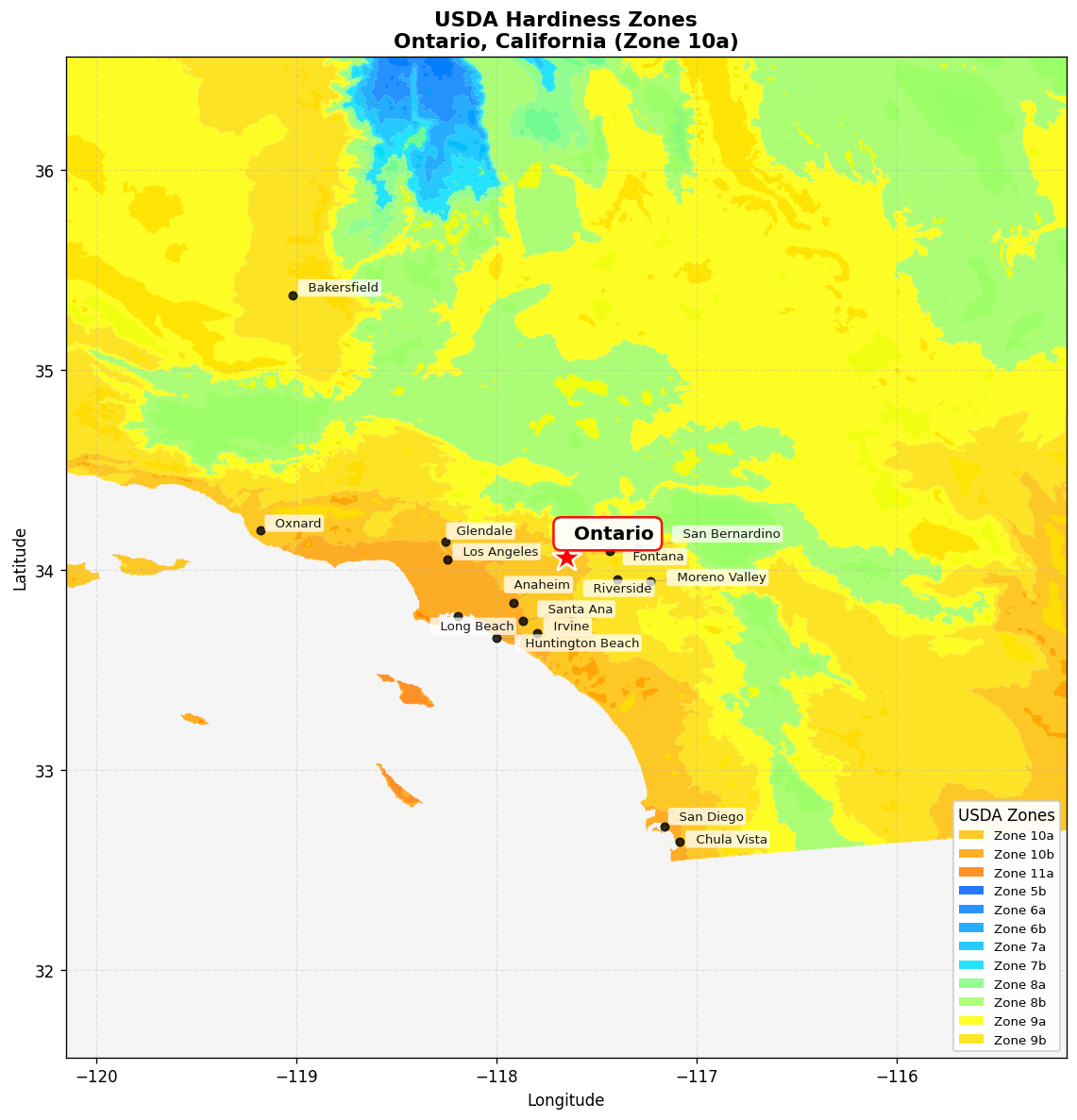
USDA Zone 10a
Hardiness zone for Ontario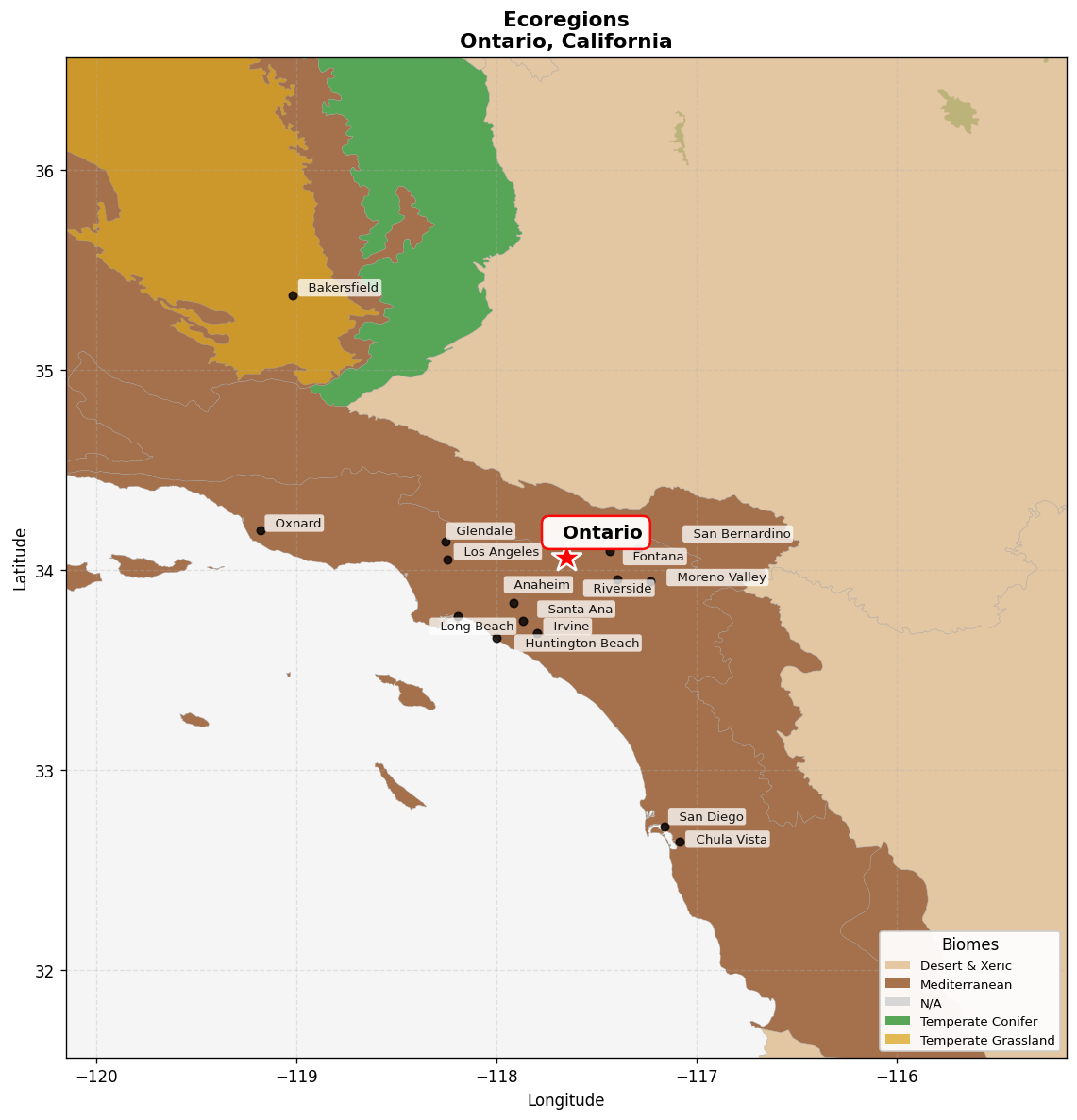
California coastal sage and chaparral
Native ecoregionFrequently Asked Questions
How much does Mediterranean landscaping cost in Ontario, CA?
Inland Empire installation rates run below coastal Los Angeles and Orange County, so this style is unusually affordable here. A front-yard turf-to-Mediterranean conversion on a typical 600 to 900 square foot Ontario yard — turf removal, gravel or decomposed granite field, drip, olives, lavender and grasses — comes in between $7,000 and $16,000 installed. A saltillo or terracotta tile terrace of 250 to 400 square feet runs $9,000 to $22,000. A tiered cast-stone fountain, plumbed with autofill, is $2,500 to $8,000. The plant that moves the budget most is the olive: a 24-inch box Olea europaea 'Wilsonii' is $250 to $450, while a sculptural multi-trunk 48-inch box specimen with crane placement runs $2,500 to $6,000.
Should I plant a fruiting or fruitless olive in Ontario?
Fruitless, in almost every residential situation. A mature fruiting olive drops thousands of oily purple fruit each autumn that stain concrete, track indoors, and germinate in every bed. Plant Olea europaea 'Wilsonii', 'Swan Hill' or 'Majestic Beauty' (Monher) — all three are functionally fruitless and produce far less pollen, which matters in a valley with Ontario's air-quality and allergy season. 'Little Ollie' (Montra) is the dwarf non-fruiting form for hedging and pots. Olives are essentially bulletproof in Zone 10a once established, but they are susceptible to Verticillium wilt, so never plant one where tomatoes, peppers, cotton or strawberries were grown, and do not overwater — a mature olive in Ontario needs a deep soak once a month in summer and nothing at all in winter.
How do citrus trees do in Ontario, and what should I watch for?
Ontario's heat produces excellent citrus — 'Washington' navel, 'Improved Meyer' lemon, 'Moro' blood orange and 'Bearss' lime all crop reliably in Zone 10a, and blood oranges in particular need the hot days and cool nights inland valleys provide to develop colour. Two local issues. First, San Bernardino County is inside California's Asian citrus psyllid and Huanglongbing quarantine area, so buy citrus only from local nurseries selling CDFA-approved nursery stock, never move plants or fruit out of the quarantine zone, and inspect new flush for psyllids. Second, the alkaline pH 7.5–8.2 soil locks up iron and zinc: yellow leaves with green veins are chlorosis, not a nitrogen shortage. Feed a citrus-specific fertilizer with chelated micronutrients three times a year and whitewash exposed young trunks to prevent sunburn.
Why is my lavender and rosemary dying in Ontario?
It is nearly always too much water and the wrong cultivar, not too much heat. Lavandula angustifolia ('Munstead', 'Hidcote') is bred for cool English summers and rarely lasts three inland years — use Lavandula × intermedia 'Provence' or 'Grosso', Lavandula dentata, or Lavandula stoechas 'Otto Quast' instead. Then fix the culture: plant the crown an inch above finished grade, mulch with gravel or decomposed granite rather than bark so the stem base stays dry, put Mediterranean shrubs on their own valve at a deep soak every 10 to 14 days in summer, and never share a valve with roses or lawn. Salvia rosmarinus 'Tuscan Blue' and Westringia fruticosa 'Morning Light' follow exactly the same rules. Shear lavender by a third after the summer flush and never cut back into bare old wood.
How do Santa Ana winds affect a Mediterranean garden here?
Santa Anas come downslope through Cajon Pass mostly from October to February, gusting 40 to 60 mph, and they do damage two ways. The obvious one is mechanical: unsecured bougainvillea canes whip and shred, top-heavy new olives rock their root balls loose, and Italian cypress can lean permanently if planted on a windward corner. Tie bougainvillea into its trellis or wall wires before October, stake young trees low and loose so the trunk flexes and thickens, and plant Cupressus sempervirens in groups where they shelter each other. The less obvious damage is desiccation — a single Santa Ana event can pull more moisture out of new plantings than a week of 100°F weather. Give the whole garden a deep soak the day before a forecast wind event; established olives, cistus and rosemary handle the rest.
Do I need permits or have to follow water rules in Ontario?
Planting, gravel conversions and drip irrigation need no permit. Permits come into play for retaining walls over four feet, courtyard walls above the height allowed in the Ontario Development Code, pools, and any roofed structure — a freestanding pergola is often exempt below a size threshold while an attached patio cover usually is not, so confirm with the City of Ontario Building Department. Properties in the Euclid Avenue Historic District may also require design review for visible frontage changes, and Ontario Ranch HOAs run their own front-yard landscape approval separate from the city. On water, larger permitted landscape projects trigger California's Model Water Efficient Landscape Ordinance and its documentation package, and Assembly Bill 1572 phases out potable irrigation of non-functional turf in HOA common areas by the end of the decade — worth knowing if you sit on a board.