4 Modern Landscape Ideas for Pasadena, TX | Zone 9a Garden Design
Native plants from the Western Gulf coastal grasslands (Zone 9a) — Humid subtropical climate
Why Modern/Minimalist Gardens in Pasadena?
Modern design has an easier time in Pasadena than most people expect, because half the housing stock is already doing the work. The long, low brick ranches that filled Golden Acres, Red Bluff, Parkgate and Southdown through the refinery boom of the 1950s and 60s are horizontal buildings with deep eaves and unbroken rooflines — the exact geometry a clean-line landscape amplifies, and the contemporary stucco-and-glass builds going up off Fairmont Parkway, Space Center Boulevard and Beltway 8 push it further with flat rooflines and black-framed window walls. What Pasadena does not have is topography. The coastal prairie here sits around 20 feet above sea level and falls only a couple of feet across a whole block, so there are no retaining walls or terraces to make drama out of. Modern design in this city is a ground-plane discipline: the width of a concrete walk, the crispness of a steel edge, the rhythm of gravel against grass, and the one strong plant repeated fifteen times.
Zone 9a — an average winter low of 20–25°F and close to 300 frost-free days — is what makes the architectural plant palette possible here. Agave ovatifolia, Yucca rostrata, Hesperaloe parviflora 'Brakelights' and Dasylirion wheeleri all hold their sculptural form through a Pasadena winter, and Muhlenbergia capillaris and Muhlenbergia lindheimeri are natives of this very ecoregion, the Western Gulf coastal grasslands, so they need nothing from you. Two events set the outer limits. February 2021 dropped the Houston area to roughly 13°F, well under the Zone 9a design minimum, which took out queen palms, bougainvillea and a generation of tender specimen planting — so the permanent structure of a modern Pasadena garden should be hardy to 15°F, with anything softer confined to containers. And Pasadena averages about 52 inches of rain a year with July highs near 94°F and heat-index afternoons above 105°F, which means the desert-modern look is not a drought problem here. It is a drainage problem.
Underneath everything is Lake Charles and Beaumont clay: a cracking, high-shrink-swell coastal-prairie vertisol, neutral to alkaline at roughly pH 7.5, that holds water for days. Plant an agave at grade in that and it will not freeze to death — it will rot from the base in a wet February. The fix is the same detail that makes the style look good anyway: raised beds. Build planting areas up 10–16 inches on a free-draining mix of decomposed granite, expanded shale and a small fraction of native soil, edge them in Corten or painted steel, and top with gravel rather than hardwood mulch. Hardscape needs the same respect. Cracking clay heaves poured concrete that was laid on bare ground, so every slab and walk wants 4–6 inches of compacted crushed limestone under it and a sawcut or tooled control-joint grid at roughly 4-foot spacing, which on a modern project is a design feature rather than a compromise.
The last two constraints are water and salt. Pasadena's utility maintains a drought contingency plan that can put landscape irrigation on assigned days once a stage is declared, so a modern planting scheme built on natives and succulents has a real advantage: gravel beds of Agave parryi var. truncata and Muhlenbergia lindheimeri need almost no supplemental water after the first year, while a St. Augustine lawn in the same yard wants an inch a week all summer. Texas rules also require any new in-ground system to be installed by a licensed irrigator with backflow prevention and a rain-and-freeze sensor. On top of that, Pasadena is a coastal city — the Houston Ship Channel runs along its northern edge, Galveston Bay is about ten miles away, and hurricane season from June to November brings both salt-carrying onshore wind and the kind of rain that put 40-plus inches on parts of Harris County during Harvey. Low, anchored, deep-rooted plantings and generous drainage are not conservative choices here. They are the reason the design still looks like the drawing in year five.
4 Modern/Minimalist Design Ideas for Pasadena

The Wide Concrete Walk and Grass Ribbon
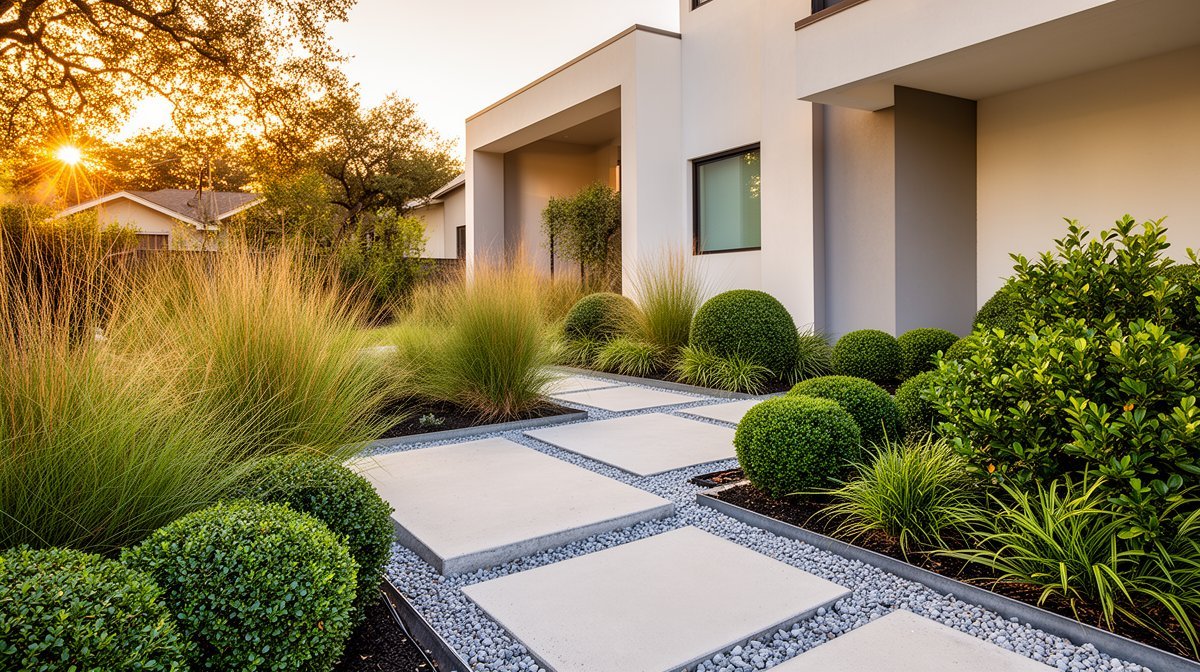
$12–24/sqftA low-slope contemporary house in white stucco with a cedar-slat entry bay, black-framed floor-to-ceiling glass and tall black double doors, approached by an unusually wide broom-finished concrete walk that runs dead straight from the drive to the door. The whole front-yard idea is the ribbon of planting on either side of that walk: a dark gravel band against the concrete, then continuous mounds of fine blue-green grass punctuated with vertical purple salvia spikes, then silvery shrub mounds and clipped green globes tightening up against the foundation. Slim black bollard lights march down both edges at even spacing, two matching potted specimens flank the doors, and a mature shade tree on the left keeps the western glass wall liveable in July. The lawn is left wide, flat and completely uninterrupted — no beds floating in it, which is what keeps the composition modern rather than busy.

The Gravel Field with Geometric Beds
$10–20/sqftThe lawn is gone entirely. A buff pea-gravel field covers the whole front yard, organised by hard-edged triangular and rectangular beds outlined in steel, with floating rectangular concrete pads stepping across it to the recessed entry of a pale stucco house. Inside the beds, big blue whale's-tongue agaves are the repeated hero, dropped at generous intervals so each one reads as a specimen, with smaller tight rosettes, narrow-leaf yuccas along the property edges, one bronze-red spiky accent for contrast and small tufts of feather grass softening the corners. The gravel is not decoration — it is the drainage. Raising every bed on decomposed granite and expanded shale is what lets these plants survive 52 inches of Pasadena rain, and it also drops the water bill and the mowing to nearly nothing.

The Concrete Slab and Fire Bowl Room
$16–30/sqftA single rectangular poured-concrete slab with a clean sawcut grid sits off the back of a white stucco house with a black-framed sliding wall, and everything else is furniture and light. A low round gas fire bowl anchors the middle, a long sofa runs against the house with two black-framed lounge chairs facing it, and catenary string lights sweep overhead from the roofline to a post at the far corner, which is what turns a slab into a room after dark. The planting is deliberately thin and repeated: pale feathery grass plumes catching the low sun along the left edge and against the house, tight evergreen mounds at the fence, and one big deciduous tree carrying the shade. It is the cheapest genuinely modern move available on a standard Pasadena back yard — one material, one focal point, one plant texture.

The Pool Court and Raised Planter
$45–90/sqft (pool area inclusive)An L-shaped flat-roofed house wraps two sides of a rectangular pool, glass walls lit warm from inside at dusk, and the landscape works entirely in horizontal planes: a pale large-format deck, a low concrete fire table with facing sofas on the far side, in-pool LED lighting and small in-grade uplights washing the terrace. The one raised element is a board-formed concrete planter at the pool's edge, filled with sculptural agaves, low succulents and a bronze accent, sitting well above the water line so it drains hard — the detail that lets desert forms live beside a pool in a 52-inch rainfall climate. Grass tufts spill over the deck corners, a narrow lawn strip runs down the opposite side, and the planting stays under knee height everywhere so nothing interrupts the view across the water.
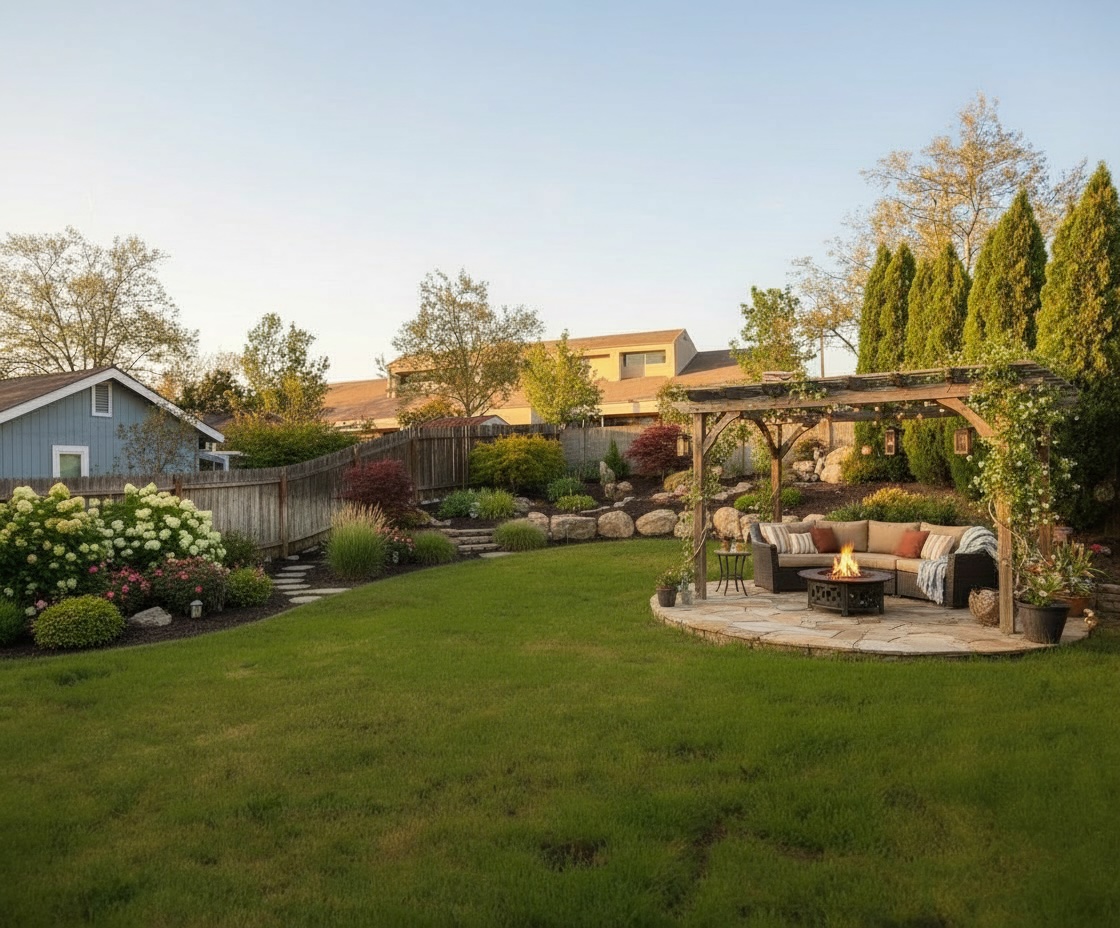
See how a modern/minimalist garden looks on YOUR property
Upload a photo of your Pasadena yard and visualize your dream garden in seconds.
Try ProScapeAI Free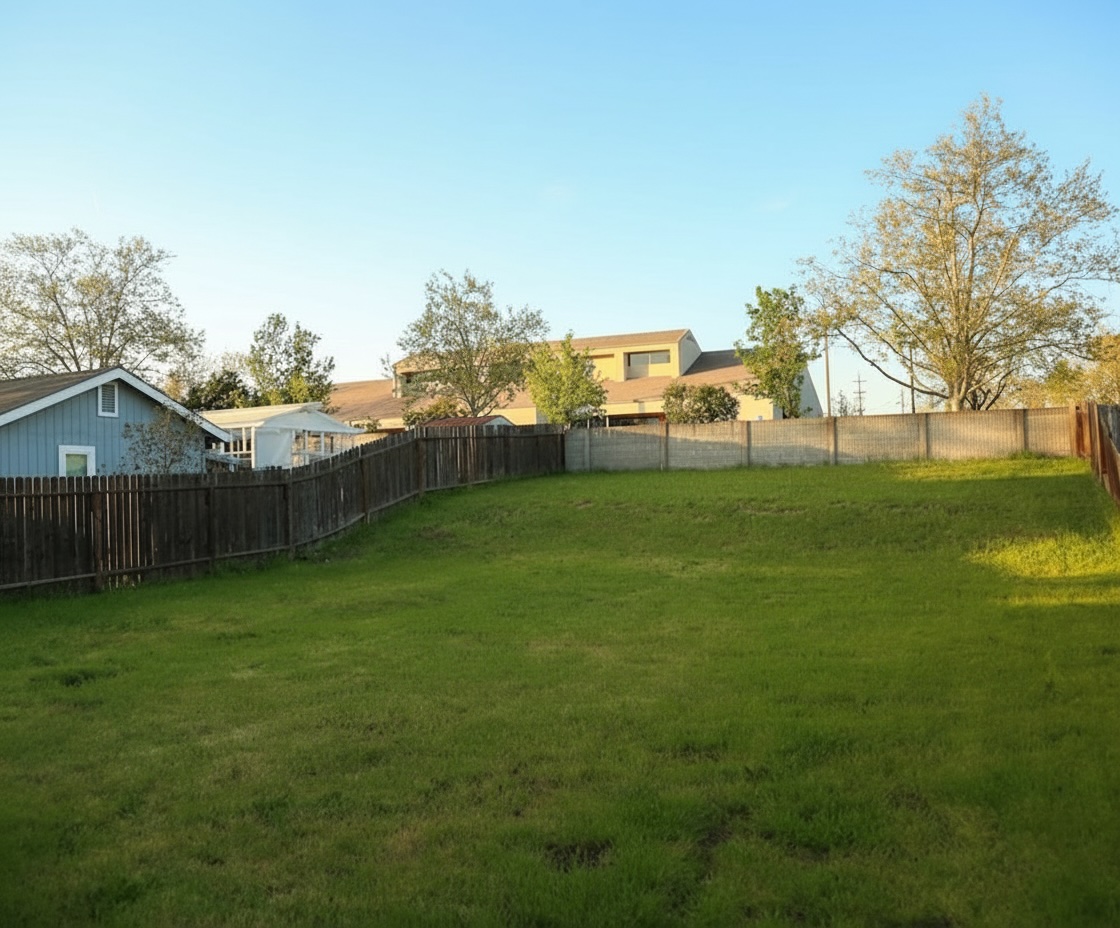
Featured Trees & Shrubs for Modern/Minimalist Gardens
Browse all 156 plants for Pasadena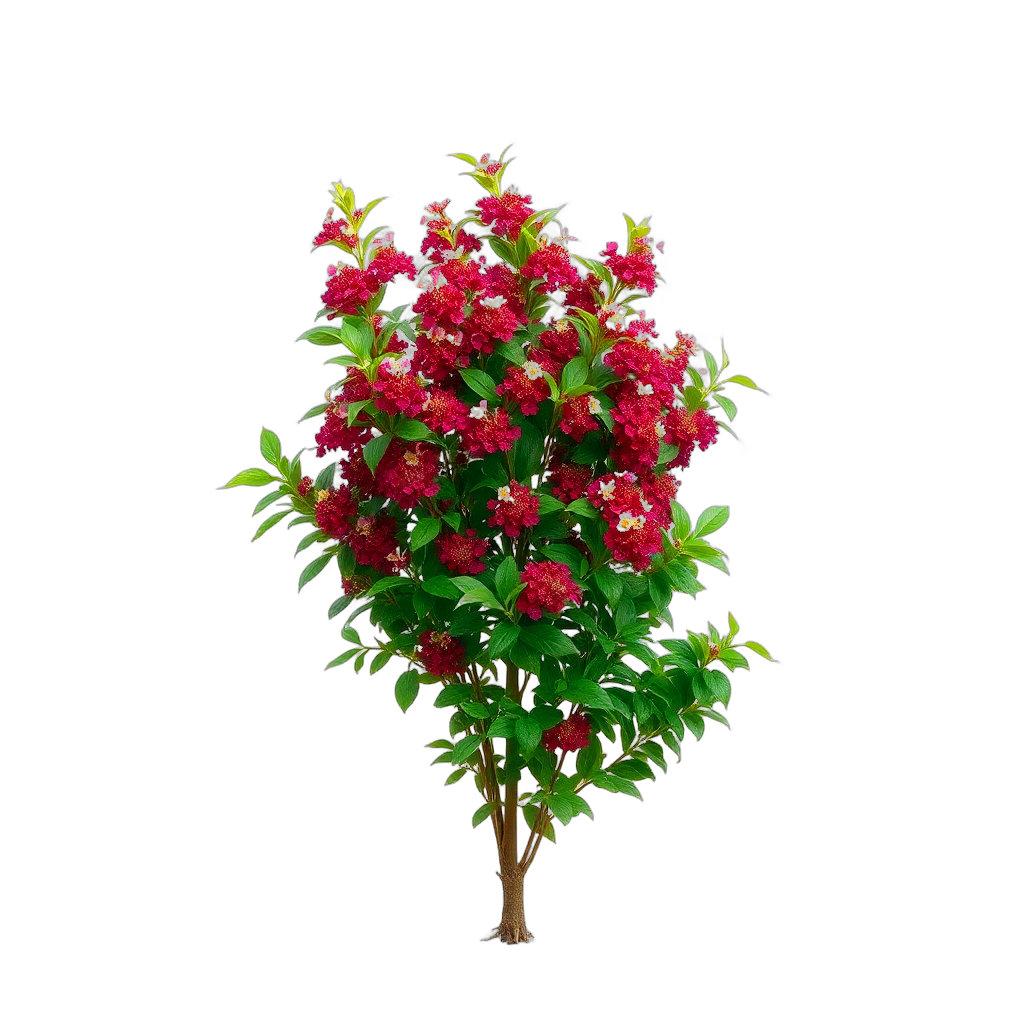
Ruby Spice Summersweet
Clethra alnifolia 'Ruby Spice'
grows to 5 feet, pink blooms in summer. Attracts butterflies.
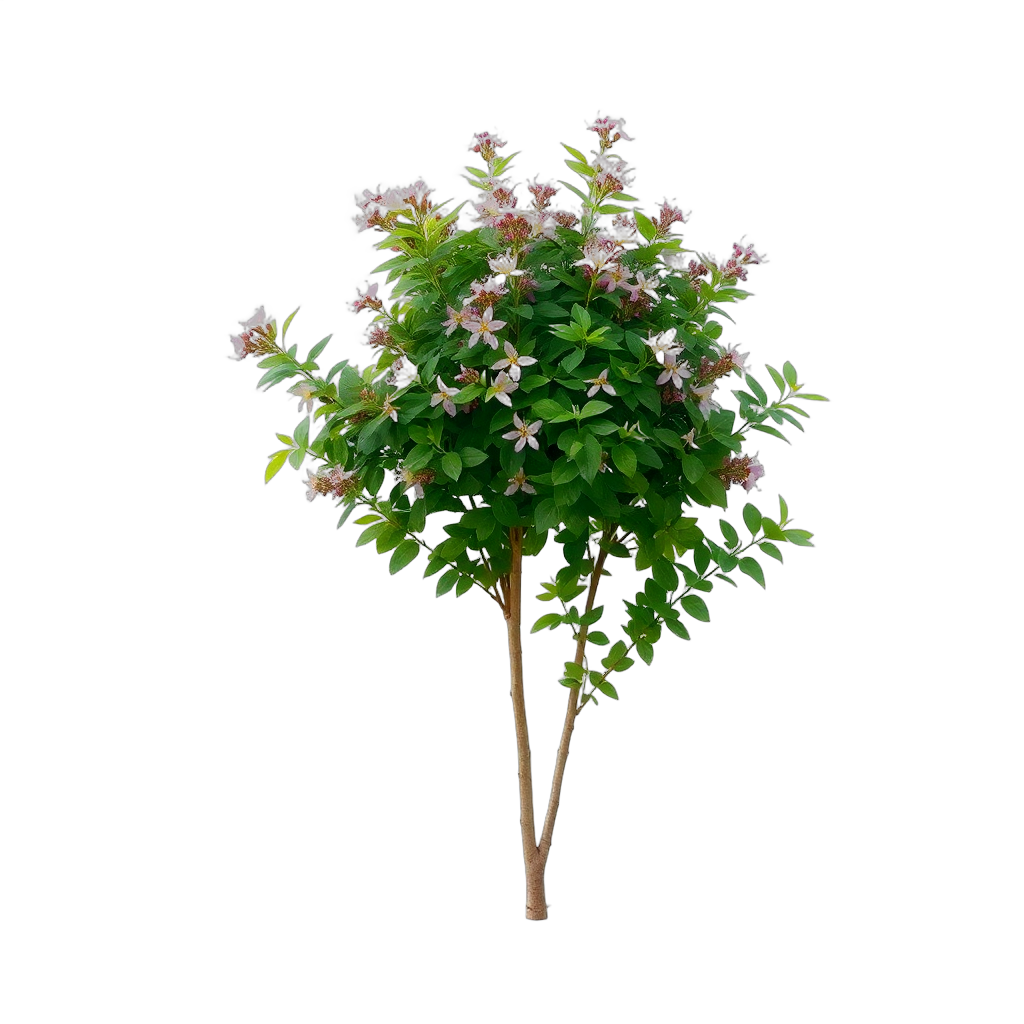
Summersweet
Clethra alnifolia
grows to 6 feet, white blooms in summer. Attracts butterflies.
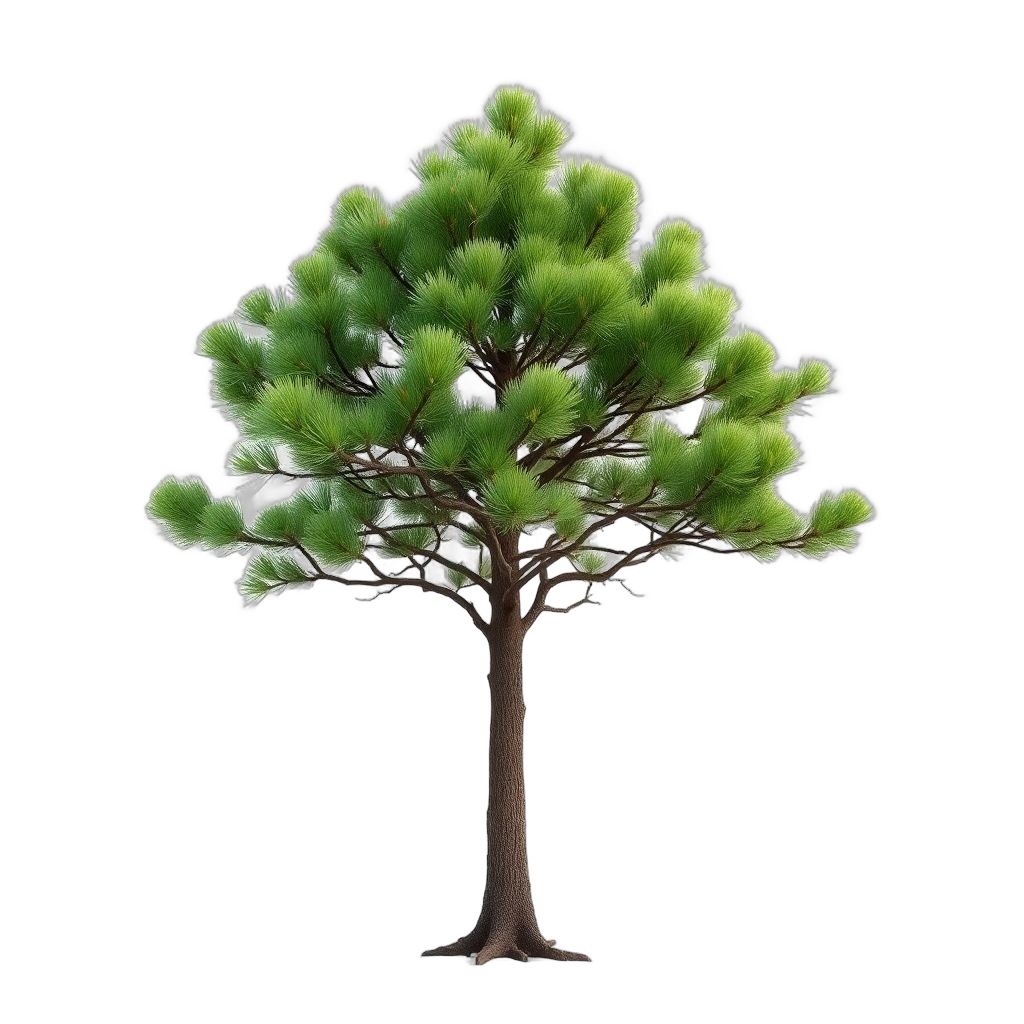
Longleaf Pine
Pinus palustris
large shade tree reaching 90+ feet, blooms in spring. Evergreen year-round.
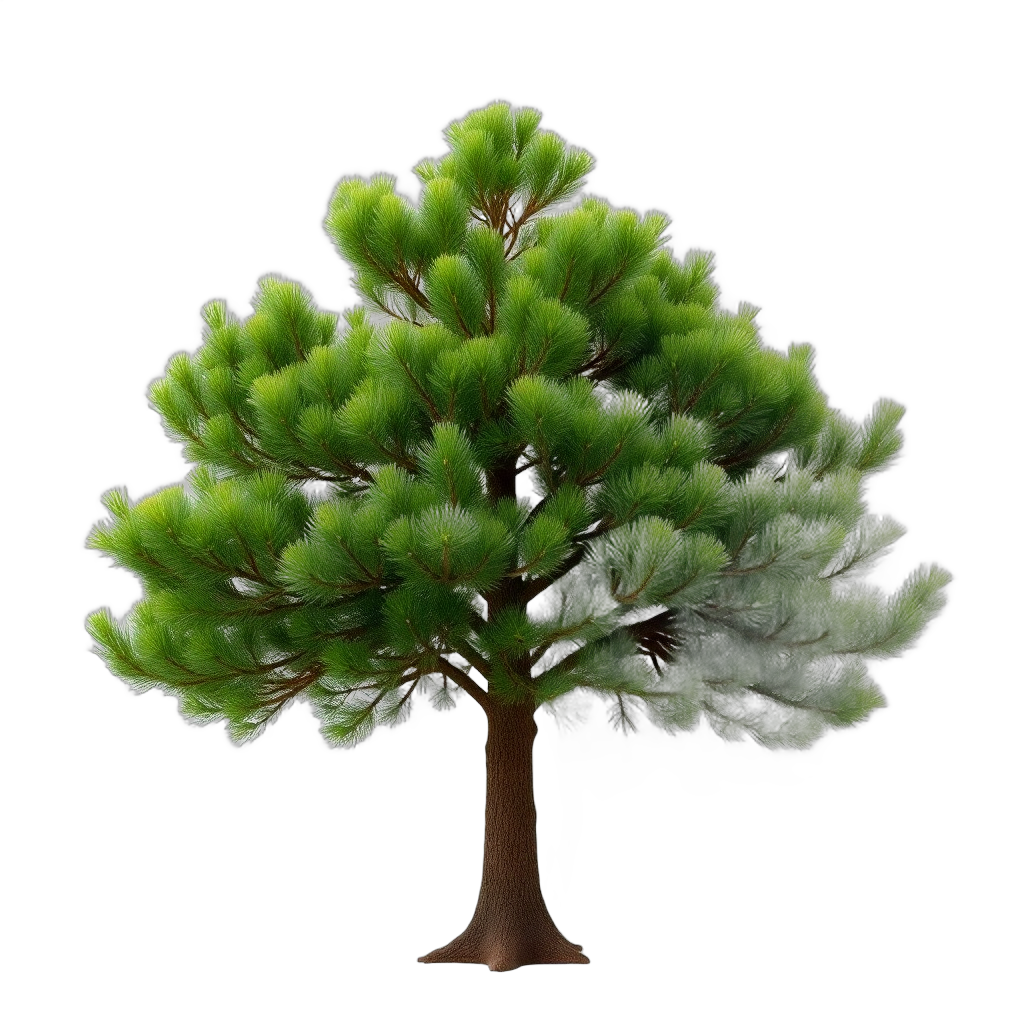
Slash Pine
Pinus elliottii
large shade tree reaching 80+ feet, blooms in spring. Evergreen year-round.
Featured Grasses & Groundcovers for Modern/Minimalist Gardens

Pink Muhly Grass
Muhlenbergia capillaris
grows to 3 feet, pink blooms in fall.
Featured Flowers & Perennials for Modern/Minimalist Gardens

Papyrus
Cyperus papyrus
grows to 5 feet, blooms in summer. Pollinator-friendly.

Water Hyacinth
Eichhornia crassipes
low-growing ground cover, purple blooms in summer. Attracts butterflies.

Water Plantain
Alisma plantago-aquatica
low-growing ground cover, white blooms in summer. Attracts butterflies.

Arrow Arum
Peltandra virginica
low-growing ground cover, blooms in spring.
Zone and sun checks come from our database — confirm with your local nursery before you buy.
Bloom Calendar for Pasadena
spring
Longleaf Pine, Slash Pine, Sweet Acaciasummer
Ruby Spice Summersweet, Summersweet, Papyrusfall
Pink Muhly Grasswinter
Limited bloomsDesign Tips for Pasadena (Zone 9a)
- Raise and drain before you buy a single agave — on Lake Charles clay under 52 inches of annual rain, a 10–16 inch bed of decomposed granite and expanded shale is the difference between a sculptural front yard and a rot-out by the second February
- Use gravel mulch, never hardwood, around succulents and yuccas; hardwood holds moisture against the crown in Pasadena humidity, and the pale gravel also bounces light back into the plant's silhouette after dark
- Let the sawcut grid be the design: cracking clay demands control joints at roughly 4-foot centres anyway, so lay them out deliberately, align them with door and window lines, and a functional requirement becomes the strongest graphic on the site
- Repeat one plant fifteen times instead of buying fifteen plants — Muhlenbergia lindheimeri or Agave ovatifolia in a long rhythm reads as architecture, and it is also the only planting strategy that still looks intentional after a hurricane season of wind and rain
- Design for a 15°F night even though Zone 9a averages 20–25°F; February 2021 hit roughly 13°F here, so keep Cordyline, tender aloes and tropicals in containers you can move and let the hardy structure carry the composition
- Shrink the lawn rather than deleting it if you have kids or dogs: a tight 'Palisades' zoysia panel with a steel edge uses about a third less water than St. Augustine, survives Pasadena's summer without daily irrigation, and gives the gravel and concrete something soft to sit against
Where to Source Plants in Pasadena
Skip the big-box stores. These independent Pasadena nurseries specialize in the plants that make modern/minimalist gardens thrive in Zone 9a.
Maas Nursery
Seabrook (about 13 miles southeast, off Todville Road)
Eight-acre family-run nursery established in 1951 with a strong architectural and specimen range plus on-site plant diagnostics and design consultation
Buchanan's Native Plants
Houston Heights
Texas natives and organic gardening; the metro's most reliable source for Muhlenbergia, Hesperaloe and other Gulf Coast prairie species in quantity
Another Place in Time
Houston Heights (11th Street)
Long-standing independent nursery specialising in succulents, staghorn ferns, hoyas and sculptural container specimens for modern planters
Friendswood Garden Emporium
Friendswood (about 14 miles southwest)
Independent, family-owned since 1972; Gulf Coast and Texas-specific plants, native prairie grasses, organic soils and expanded-shale style soil conditioners
Modern/Minimalist Landscaping Costs in Pasadena
| Project Scope | Estimated Cost |
|---|---|
| Front-yard gravel conversion with specimen planting (500 sqft) | $5,500 – $13,000 |
| Poured concrete patio with sawcut grid (300–450 sqft) | $4,500 – $11,000 |
| Gas fire bowl or fire table, set and plumbed | $2,500 – $7,500 |
| Board-formed concrete or Corten raised planter, built and filled | $1,500 – $6,000 each |
| Yard drainage: French drains, catch basins and regrading on flat clay | $3,500 – $9,000 |
| Low-voltage lighting design and install (12–20 fixtures) | $2,200 – $5,500 |
| Pool, deck and full backyard landscape | $85,000 – $180,000 |
| AI visualization with ProScapeAI | Free to start |
Estimates based on Pasadena, TX-area contractor rates as of 2026. Actual costs vary by site conditions, materials, and contractor.
Pasadena Climate & Growing Zone
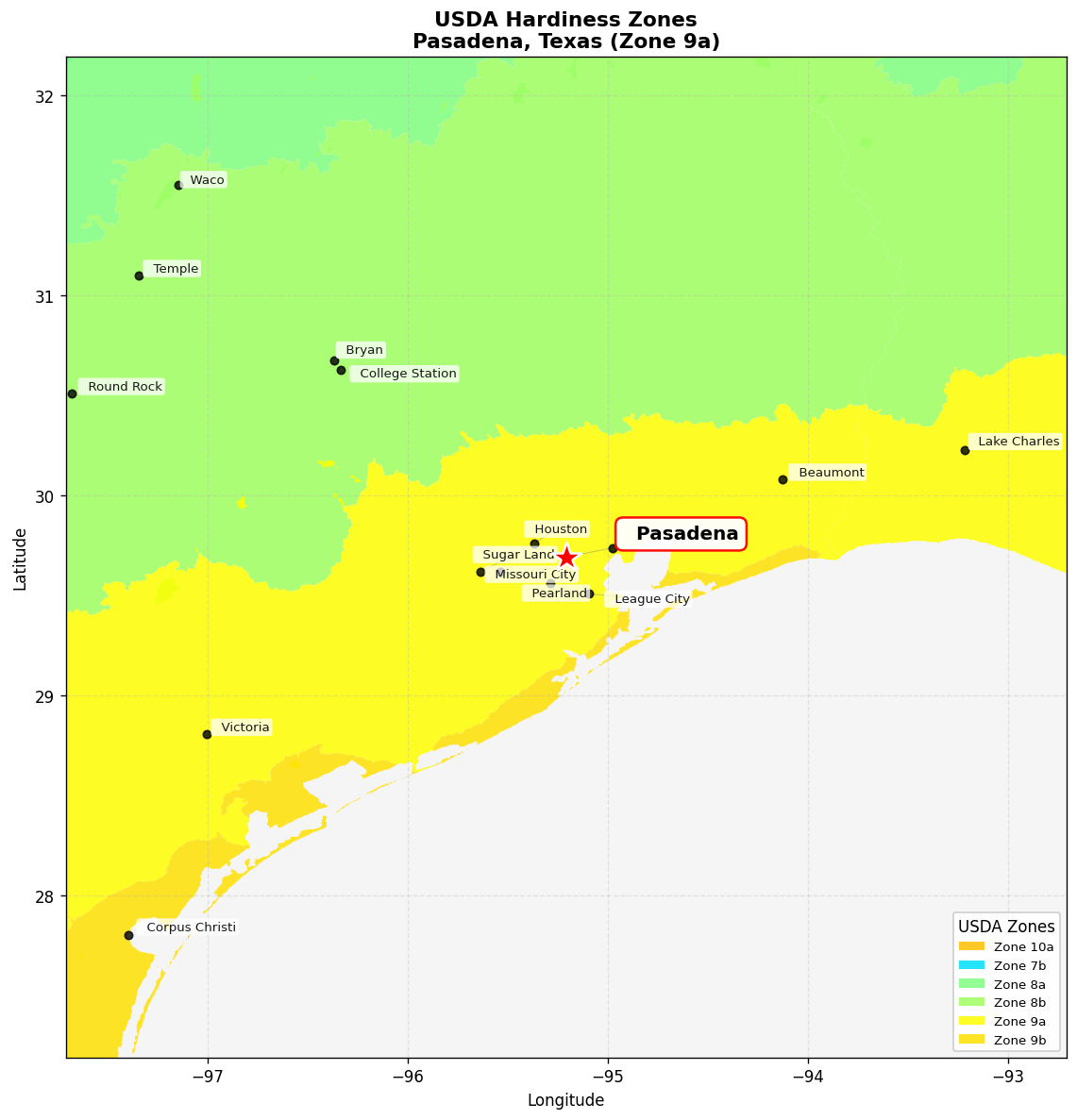
USDA Zone 9a
Hardiness zone for Pasadena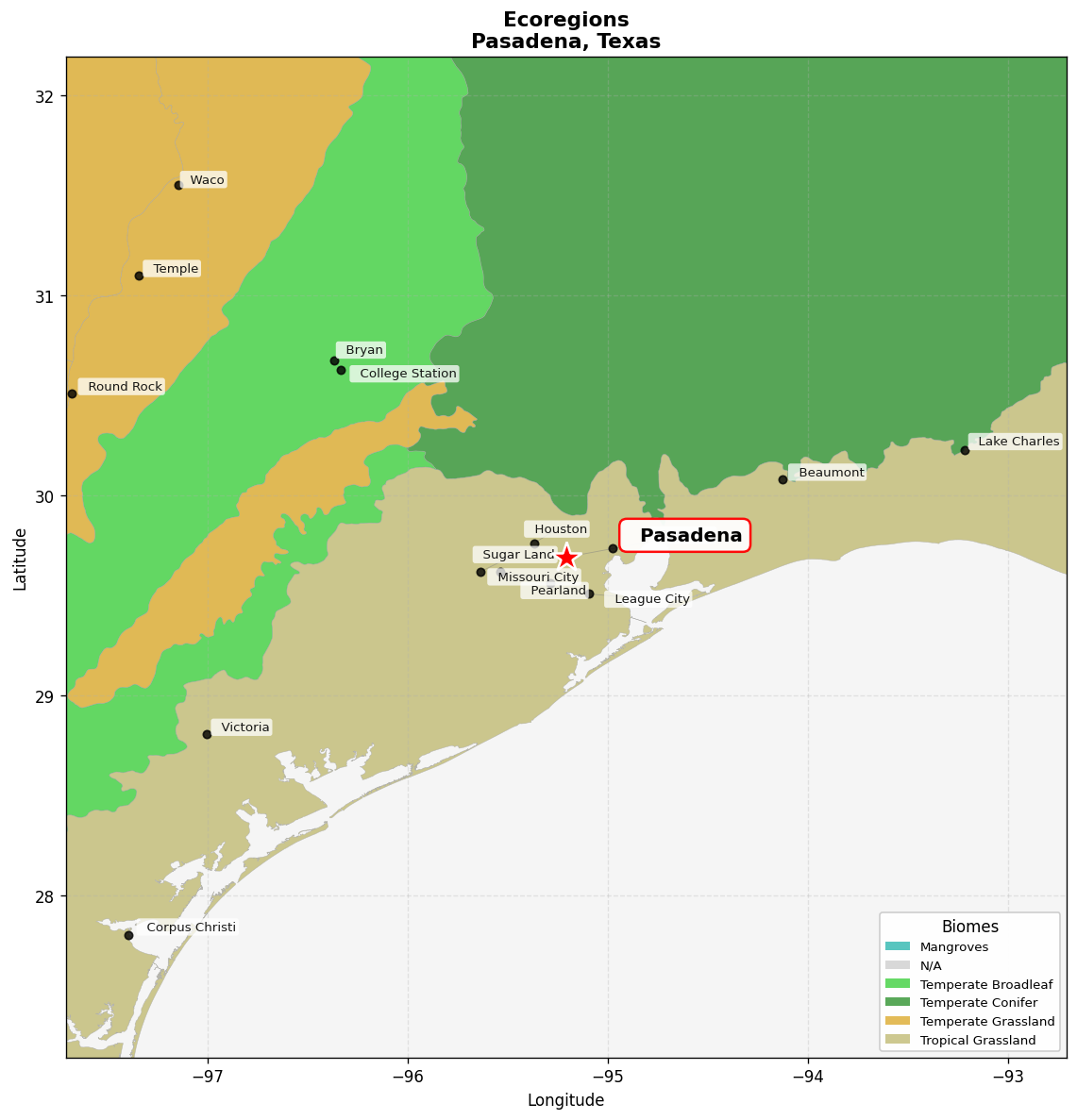
Western Gulf coastal grasslands
Native ecoregionFrequently Asked Questions
How much does modern landscaping cost in Pasadena, TX?
Pasadena sits at the affordable end of the Houston metro, and modern design is cheaper here than the cottage alternative because you are buying fewer, larger plants. A front-yard gravel conversion — turf removal, geotextile, gravel field, steel edging and specimen planting on a 500 sqft yard — runs $5,500 to $13,000 installed. A poured concrete patio of 300–450 sqft with a sawcut grid is $4,500 to $11,000, and a gas fire bowl set and plumbed adds $2,500 to $7,500. Full pool-and-terrace backyards land between $85,000 and $180,000. The plants are not the driver: a 15-gallon Agave ovatifolia is $150–$300 at a local nursery and a one-gallon Muhlenbergia capillaris 'Regal Mist' is under $12. Site drainage on flat clay is the line item that surprises people.
Can agaves and yuccas really survive Pasadena's 52 inches of rain?
Yes, and cold is not the issue — wet feet is. Agave ovatifolia, Agave parryi var. truncata, Yucca rostrata and Dasylirion wheeleri all handle Zone 9a winters comfortably; what kills them in Harris County is sitting in saturated Beaumont clay through a wet February. Build the bed up 10–16 inches on a mix that is mostly decomposed granite and expanded shale with only a small share of native soil, edge it in steel so it holds, and top-dress with gravel instead of hardwood mulch so the crown stays dry. Set each plant slightly proud of the surrounding gravel. Done that way they are effectively maintenance-free. Planted flat in unamended clay, expect to lose them inside two winters.
What happened to Gulf Coast landscapes in the February 2021 freeze, and how do I design around it?
That week the Houston area bottomed out near 13°F — roughly seven degrees below the Zone 9a average annual minimum of 20–25°F — and it flattened the tender end of the local palette: queen palms, bougainvillea, many bananas, a lot of unprotected succulents. The design lesson is simple. Every plant that carries structure in your garden should be rated to at least 15°F: Agave ovatifolia, Yucca rostrata, Hesperaloe parviflora 'Brakelights', Muhlenbergia lindheimeri, Ilex vomitoria 'Nana', Podocarpus macrophyllus 'Maki' and Quercus virginiana all clear that bar. Keep anything softer — Cordyline australis 'Red Star', tender aloes, tropical accents — in containers or in one small bed you can cover for three nights, and one bad week never resets the whole yard.
What replaces the lawn if I want a modern look but not gravel everywhere?
Two good answers for Pasadena. Keep a smaller, better lawn: 'Raleigh' St. Augustine handles the part shade under a live oak and 'Palisades' zoysia takes full sun with about a third less water than St. Augustine and far less chinch-bug trouble — shrink the panel, give it a crisp steel edge, and it reads as a design element rather than leftover space. Or replace turf with mass planting: Muhlenbergia capillaris 'Regal Mist' and Muhlenbergia lindheimeri are natives of the Western Gulf coastal grasslands right here, and a drift of either delivers more visual impact than 800 sqft of grass. Trachelospermum asiaticum works as a low evergreen carpet under trees. All three get one cut-back in late February and nothing else.
How do I handle drainage on a flat Pasadena lot?
Assume it needs designing, because the ground will not do it for you — much of Pasadena falls only a couple of feet per hundred and sits around 20 feet above sea level. Plan for positive slope of at least 2 percent away from the foundation for the first ten feet, then move water with shallow swales, catch basins and solid pipe to the street or a rear drain. Budget $20–$35 per linear foot for a French drain and $3,500–$9,000 for a full yard drainage package on a typical lot. Every planting bed should be raised rather than dug, and every hardscape slab should sit on 4–6 inches of compacted crushed limestone so cracking clay cannot heave it. Getting this right first is what protects the rest of the investment.
When is the best time to build a modern landscape in Pasadena?
October through early December is the ideal window: agaves, yuccas and grasses root through a mild wet winter, the average last frost is mid-February so nothing new faces a long cold spell, and contractor schedules are open. February and March is the second window. Avoid the June-to-September stretch for planting — 94°F days and 105°F heat-index afternoons stress even drought-tolerant stock before it has roots, and afternoon thunderstorms routinely delay concrete pours. Hardscape-only work runs comfortably year-round here; the frost depth is negligible, so slabs and footings can be poured through winter, which is a good way to sequence a two-phase project.