4 Modern Garden Ideas for Portland, OR | Sustainable Design & Architectural Plants for Zone 9a
Native plants from the Willamette Valley oak savanna (Zone 9a) — Mediterranean (warm summer) climate
Why Modern/Minimalist Gardens in Portland?
Portland's Zone 9a climate and Pacific Northwest setting create distinctive conditions for modern landscape design — different from California modern, with its succulents and dry gravel, but equally compelling in its own idiom. Portland receives 37 inches of annual rainfall, concentrated October through May, which means modern designs here use structural plants that embrace moisture: ornamental grasses, architectural sedges, bold-leafed perennials, and the spectacularly diverse shrub palette that thrives in the Pacific NW. The Willamette Valley oak savanna ecoregion provides native structural plants with genuine local credentials.
Portland's urban design culture is among the most progressive in America — the city leads nationally in green infrastructure, stormwater management, and ecological urban design. This cultural context means modern landscape design in Portland tends to integrate sustainability not as an afterthought but as a structural design principle. Rain gardens, bioswales, permeable paving, and native plant communities are not uncommon in Portland front yards; they're admired as the local expression of design sophistication. The Portland Bureau of Environmental Services actively supports and rebates stormwater-management landscape features.
Portland's architecture supports modern design across several housing typologies. Mid-century modern homes in Eastmoreland and Lake Oswego, contemporary infill housing in the Pearl District and South Park Blocks area, and renovated industrial buildings converted to residential use in the Central Eastside all benefit from clean-lined, structurally confident landscape design. Portland's residential streets with their established street tree canopies mean modern front yard designs often work under or alongside mature canopy, creating layered compositions where ground-level structure plays against large-scale overhead elements.
4 Modern/Minimalist Design Ideas for Portland

AI-generated image
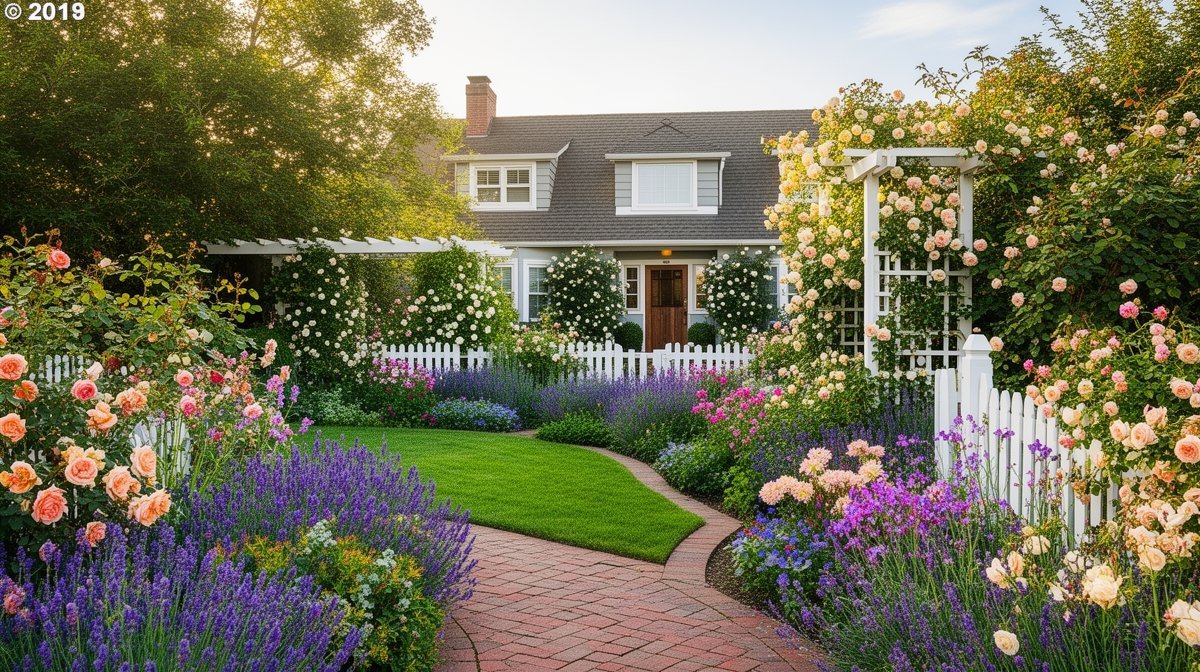
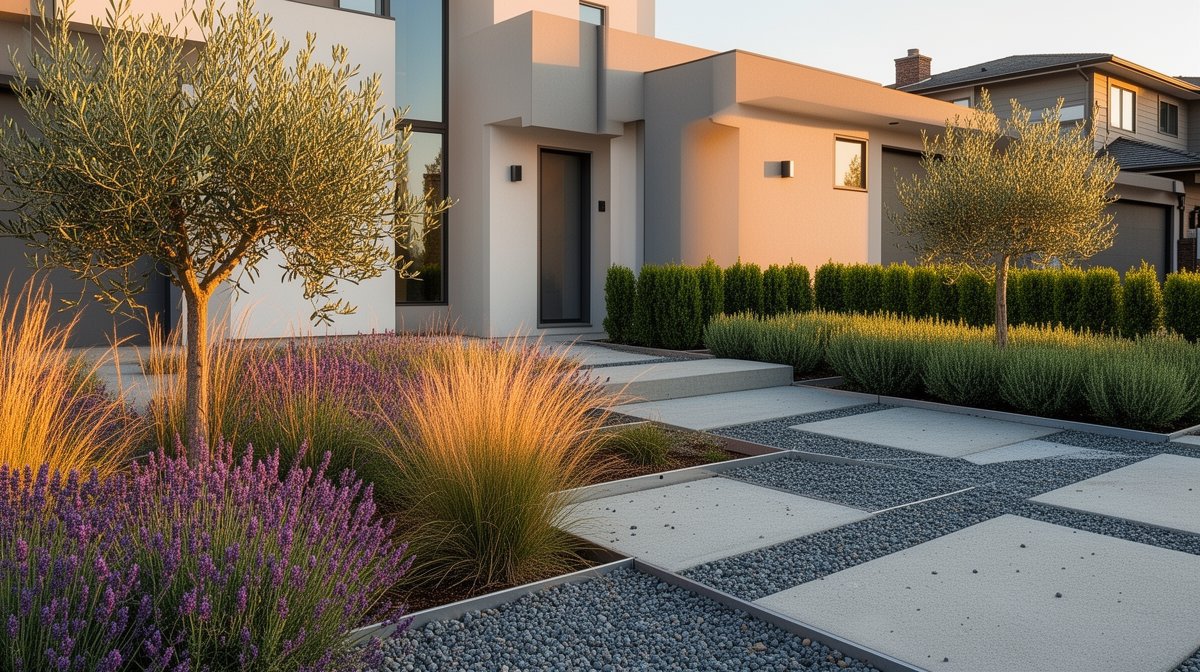
The Warm Modern Grass & Gravel Entry
$16–30/sqftA contemporary two-story home with cedar and concrete facade is fronted by a sweeping modern landscape: a wide curved concrete walkway bisects warm decomposed granite beds planted with ornamental grasses, low purple sage, and a graceful accent tree. The planting palette is naturalistic but deliberate — golden feather grass, grey-blue fescue, and drifts of low lavender-toned perennials that move in the Portland breeze. No lawn, no clutter, just elegant Pacific Northwest modernism.

AI-generated image
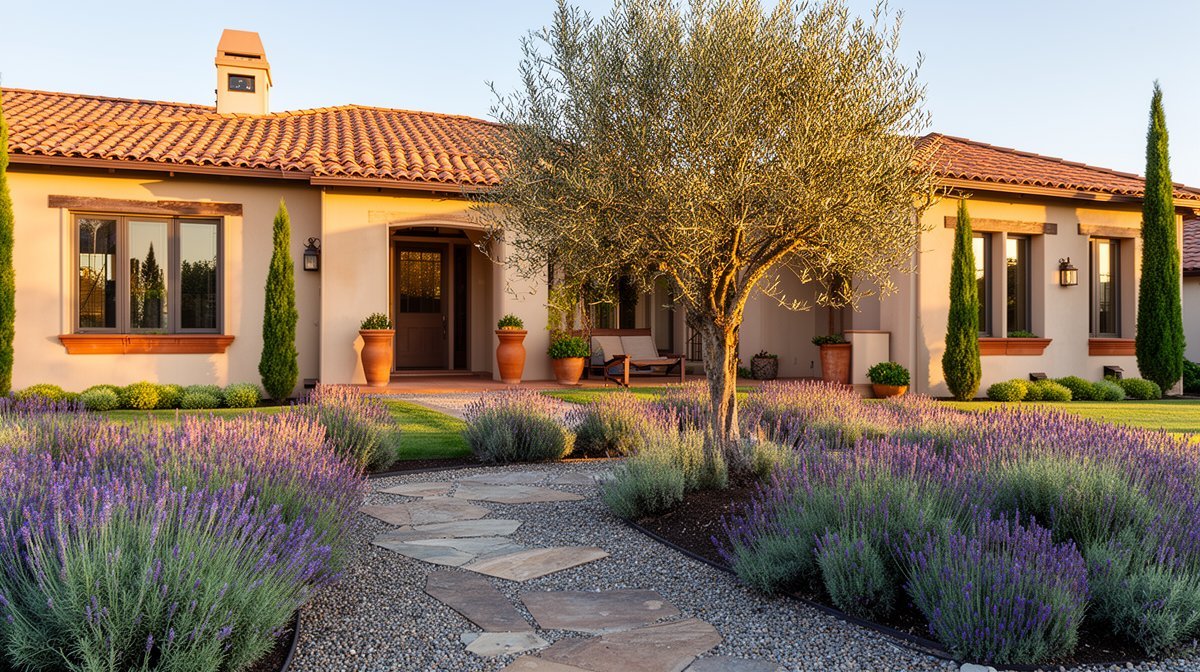
The Desert Modern Xeric Entry
$12–22/sqftA flat-roof modern home sits behind a boldly xeric front landscape: raised rectangular decomposed granite beds hold clusters of agave in blue-grey tones, punctuated by rounded boulders and a single accent tree. The geometry is clean — steel edging defines every bed, the path is straight, and the plant palette is deliberately restricted. Though Portland rarely gets truly dry, this low-water design offers maximum visual impact with minimum maintenance.

AI-generated image
The Modern Fire Pit Backyard
$28–48/sqftA contemporary Portland home with large glass sliding doors opens onto a spacious concrete patio centered on a round fire pit with modern lounge chairs grouped around it. Mature ornamental grasses soften the patio edges, and a large deciduous tree provides summer shade in one corner. String lights cross the patio overhead. This is the perfect Pacific Northwest outdoor room — usable even on cool evenings thanks to the fire element, and beautiful in every season.

AI-generated image
The Modern Pool & Fire Terrace
$60–115/sqftA premium Portland backyard at dusk: a rectangular pool with white concrete coping and integrated lighting reflects the warm glow of floor-to-ceiling glass inside. A square built-in fire table anchors the lounge area adjacent to the pool, with a modern sectional sofa. Ornamental grasses and small accent trees soften the perimeter. The entire space glows with low-profile LED lighting embedded in the paving and pool coping.
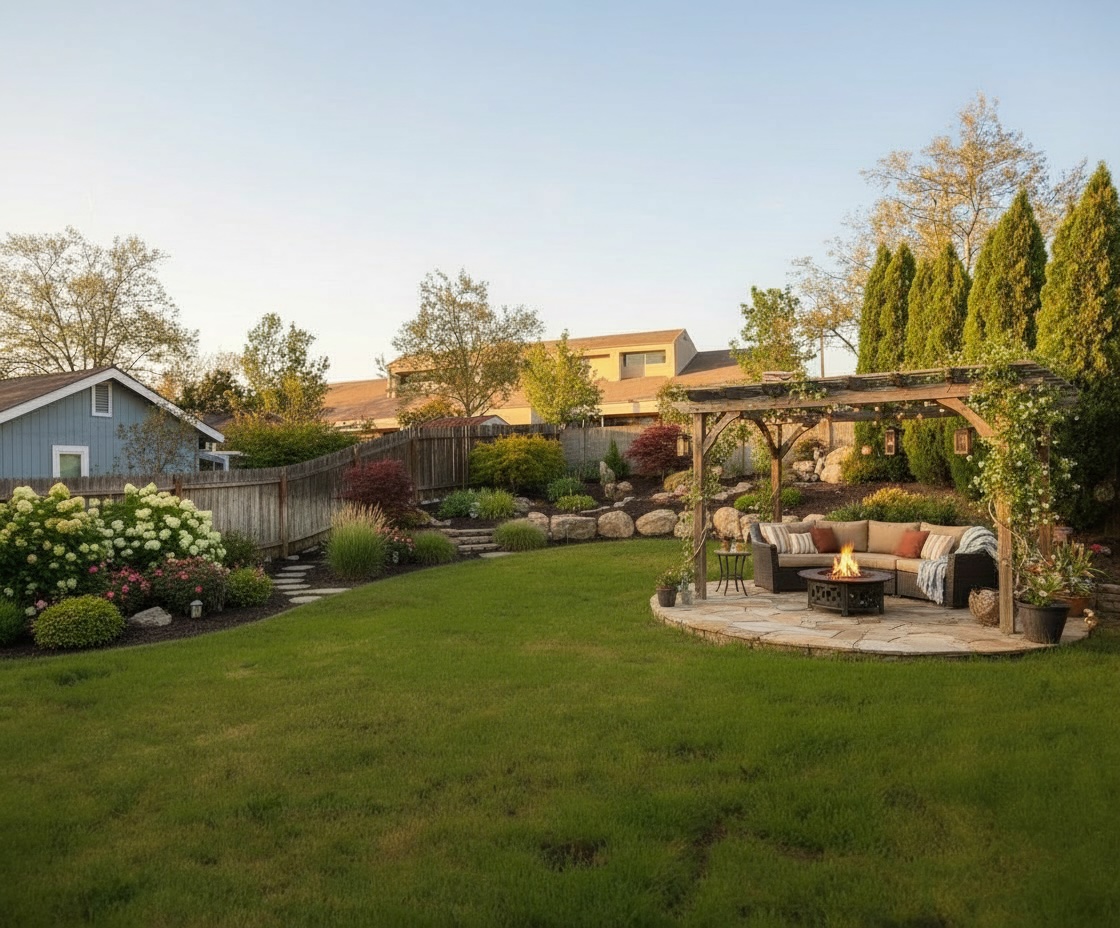
See how a modern/minimalist garden looks on YOUR property
Upload a photo of your Portland yard and visualize your dream garden in seconds.
Try ProScapeAI Free
AI-generated image
Featured Trees & Shrubs for Modern/Minimalist Gardens
Browse all 151 plants for Portland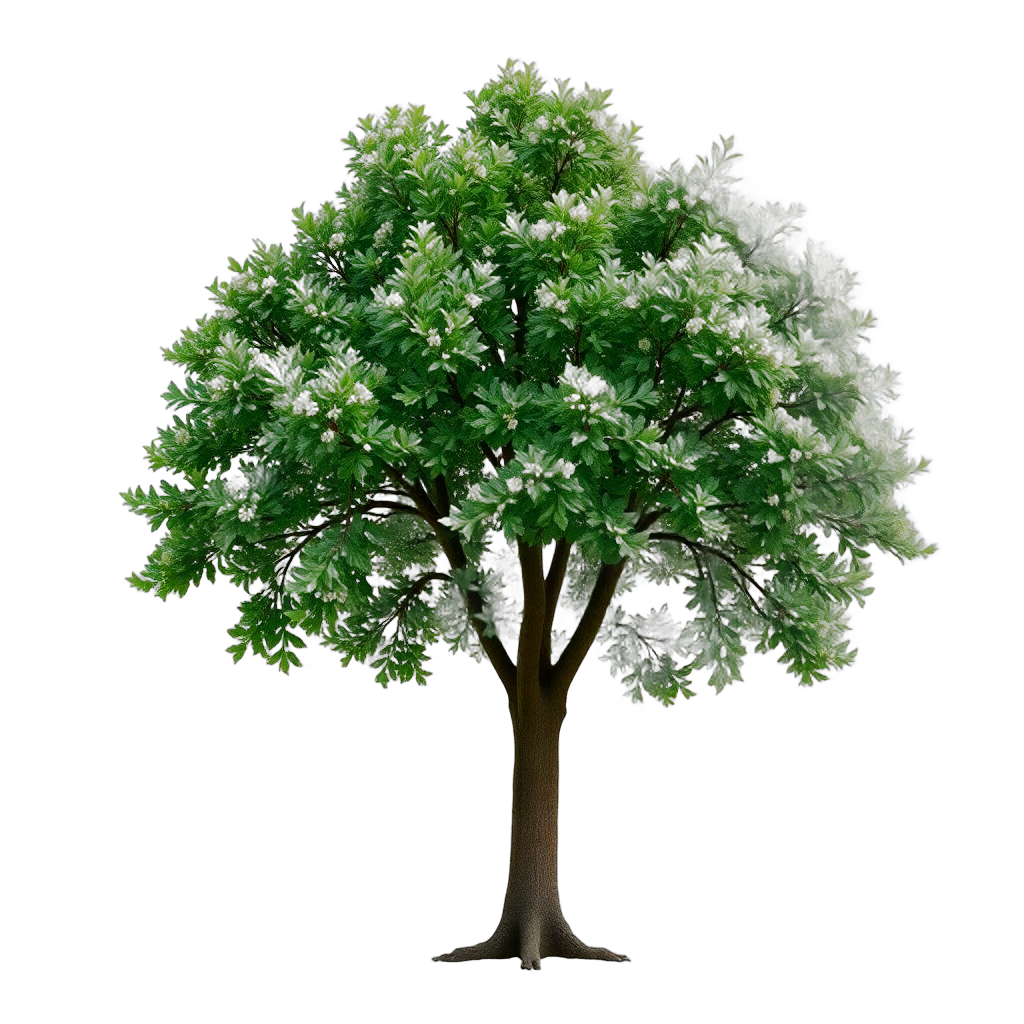
Oregon White Oak
Quercus garryana
large shade tree reaching 65+ feet, blooms in spring. Yellow fall color.
Featured Flowers & Perennials for Modern/Minimalist Gardens

Papyrus
Cyperus papyrus
grows to 5 feet, blooms in summer. Pollinator-friendly.

Water Hyacinth
Eichhornia crassipes
low-growing ground cover, purple blooms in summer. Attracts butterflies.

Water Plantain
Alisma plantago-aquatica
low-growing ground cover, white blooms in summer. Attracts butterflies.

Arrow Arum
Peltandra virginica
low-growing ground cover, blooms in spring.
Zone and sun checks come from our database — confirm with your local nursery before you buy.
Bloom Calendar for Portland
spring
Oregon White Oak, Arrow Arum, Blue Flag Irissummer
Papyrus, Water Hyacinth, Water Plantainfall
Rose Mallowwinter
Limited bloomsDesign Tips for Portland (Zone 9a)
- Use crushed local basalt (not California DG) as your primary permeable ground material in Portland — it's the regionally authentic material, it doesn't compact and muddy in winter rain the way DG does, it's widely available from Portland landscape suppliers, and the dark gray color grounds every modern design palette beautifully
- Apply for Portland Bureau of Environmental Services' Clean River Rewards program before installing any rain garden or downspout disconnection — qualifying projects can earn up to 100% credit on stormwater utility charges, representing meaningful ongoing savings for Portland homeowners
- Plant Japanese maples in October through November to take advantage of Portland's rainy season for establishment — fall-planted maples root over winter without supplemental irrigation and show dramatically better growth in their first spring than spring-planted specimens that immediately face summer dry stress
- Specify COR-TEN steel planters and edging to drain away from any light-colored hardscape surface — the rust runoff from COR-TEN stains concrete, light flagstone, and permeable pavers a deep orange-brown that's nearly impossible to remove; dark basalt or crushed stone beneath COR-TEN requires no staining precautions
- Consider a Japanese maple as the primary specimen plant in any modern Portland garden — Portland's climate is among the best in North America for Japanese maples, they tolerate Portland's winter wet well, provide four-season interest (spring emergence, summer canopy, fall color, winter structure), and grow reliably to 8–15 feet creating genuine garden scale
- Install downspout disconnection hardware and connect to a rain garden or bioswale planting area — Portland's Clean River Rewards program pays for this work's ongoing impact in utility bill credits, and it transforms a functional drainage solution into a design feature that makes your modern garden uniquely place-specific
Where to Source Plants in Portland
Skip the big-box stores. These independent Portland nurseries specialize in the plants that make modern/minimalist gardens thrive in Zone 9a.
Portland Nursery
SE Portland (Stark Street and Division Street)
Portland's premier independent nursery — exceptional structural plant, grass, and Japanese maple selection
Xera Plants
SE Portland
Pacific NW-adapted plants including unusual grasses, sedges, and drought-tolerant structural plants
Cistus Nursery
Sauvie Island
Rare architectural plants, unusual grasses, and exceptional phormium collection for serious Portland designers
Maplewood Nursery
Tigard (Portland metro)
Japanese maples — one of the largest selection in the Pacific Northwest, with rare and specimen varieties
Sky Nursery
Shoreline (Seattle metro) / ships to Portland
Large-scale architectural plants and specimen trees — for Portland projects needing larger material
Modern/Minimalist Landscaping Costs in Portland
| Project Scope | Estimated Cost |
|---|---|
| Front yard modern renovation with DG, steel edging, grasses (400 sqft) | $5,500 – $14,000 |
| Full backyard modern patio with concrete and fire pit | $22,000 – $58,000 |
| Pool and fire feature modern backyard (full build) | $50,000 – $120,000 |
| Round or square gas fire pit/table installation | $2,200 – $7,500 |
| Smart drip irrigation system | $1,100 – $3,500 |
| LED landscape uplighting for specimens | $700 – $2,500 |
| AI visualization with ProScapeAI | Free to start |
Estimates based on Portland, OR-area contractor rates as of 2026. Actual costs vary by site conditions, materials, and contractor.
Portland Climate & Growing Zone
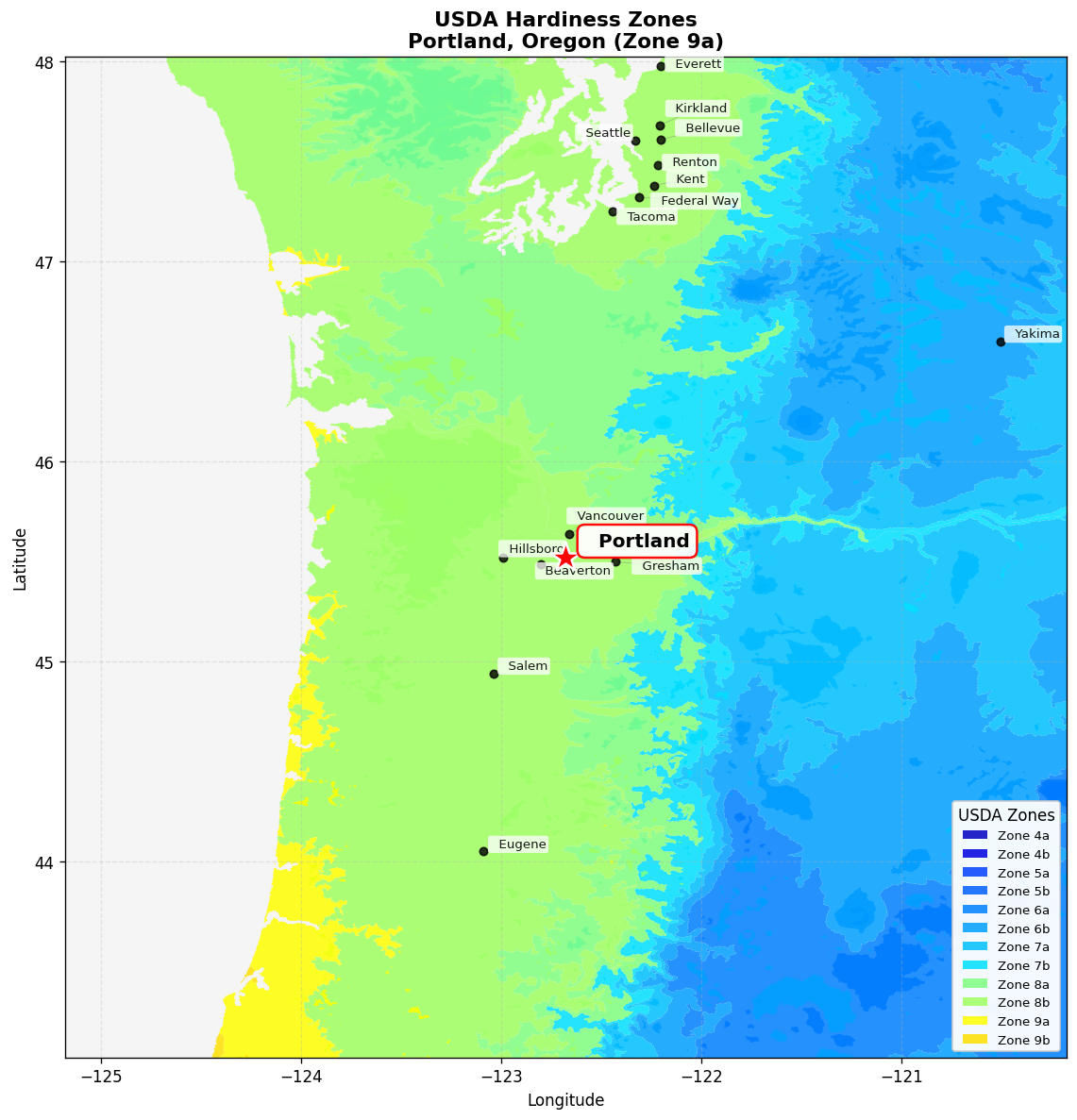
USDA Zone 9a
Hardiness zone for Portland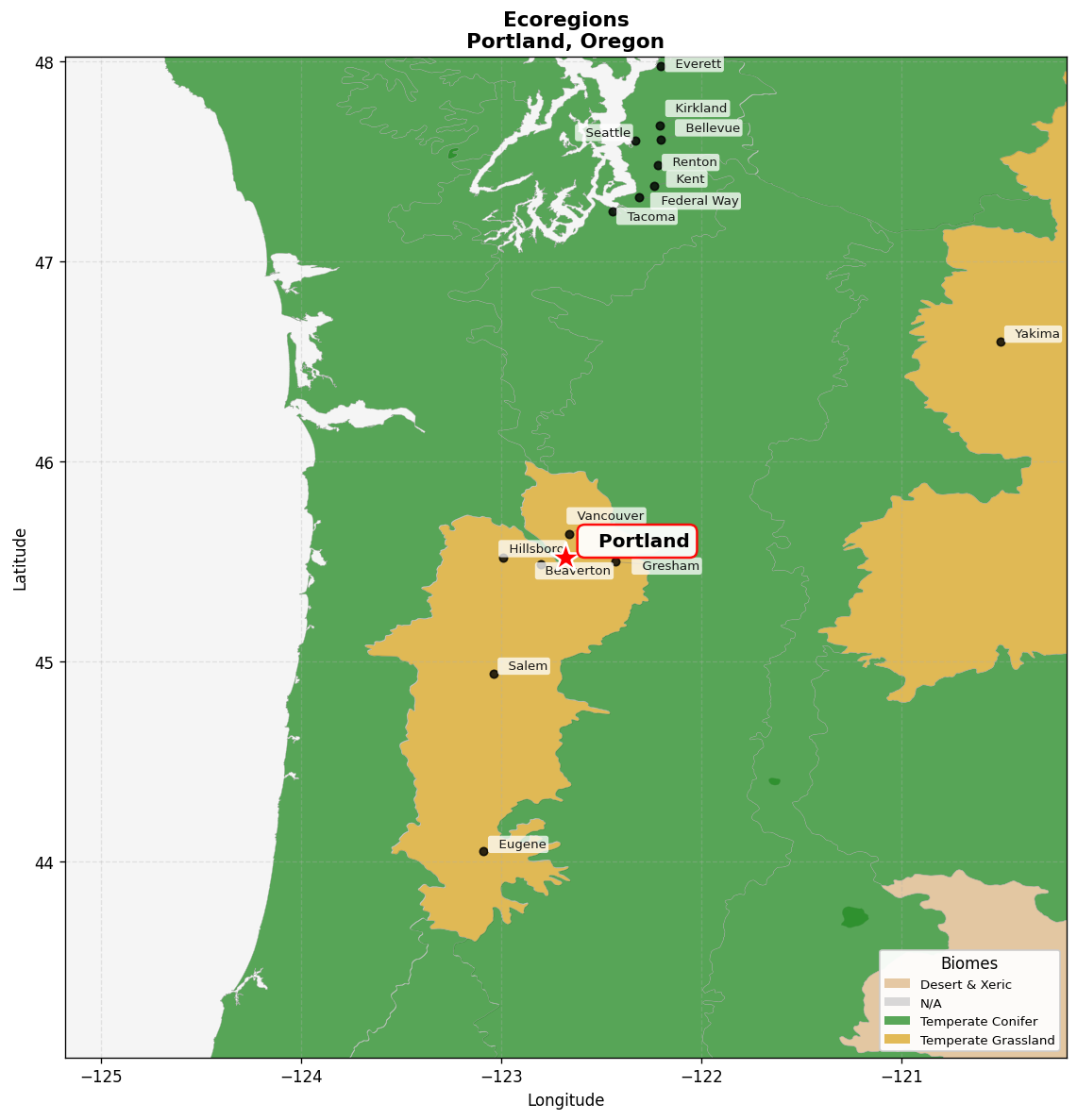
Willamette Valley oak savanna
Native ecoregionFrequently Asked Questions
How do I design a modern garden that handles Portland's heavy winter rains?
Drainage management is the most important design consideration in Portland modern gardens. Key strategies: use permeable surfaces (crushed basalt, decomposed granite, or permeable concrete pavers) to reduce runoff; integrate a bioswale or rain garden for downspout disconnection; grade all hardscape surfaces at minimum 2% slope away from foundations; and choose plants that tolerate both winter saturation and summer drought. The Portland Bureau of Environmental Services offers free stormwater design consultations through their Green Building and Stormwater Management programs — an underused resource.
What are the best structural plants for a modern Portland garden?
Portland's wet winters and dry-ish summers suit a distinctly Pacific NW plant palette. Best architectural performers: Phormium (New Zealand flax) in bronze/burgundy for dramatic straps; Carex (sedge) species for fine-textured ground cover; Karl Foerster grass for vertical accent; Japanese maples for year-round structure and fall color; sword fern (native, bulletproof in Portland shade); Osmanthus heterophyllus for screening hedges; and Viburnum davidii for low-maintenance, glossy-leafed mounding form. All thrive in Portland's climate with minimal intervention.
Does COR-TEN steel work well in Portland's rainy climate?
COR-TEN steel works extremely well in Portland. The wet-dry cycling (wet winters, drier summers) is ideal for the steel to develop its characteristic rust patina and then stabilize. Portland gardens typically show the best-looking COR-TEN color after 2–3 years of cycling — a warm orange-brown that complements basalt stone, dark green ferns, and the regional palette beautifully. The only caution: ensure COR-TEN doesn't drain rust runoff onto light-colored concrete or flagstone, which it will stain.
How much does modern landscaping cost in Portland?
Portland landscaping is more moderately priced than California Bay Area markets. Modern front yard renovations (300–500 sqft) with basalt, steel edging, and structural plantings run $7,000–$18,000. Full backyard concrete patio projects with built-in seating and plantings range $22,000–$58,000. Rain garden integration adds $3,000–$8,000 to front yard projects but may qualify for BES stormwater rebates of up to $5,000 for qualifying installations.
Can I use black bamboo in a Portland modern garden without it spreading?
Black bamboo (Phyllostachys nigra) is one of Portland's most dramatic modern garden plants — dark black culms against the green Pacific NW backdrop is a striking visual statement. But it's a running bamboo that will spread aggressively if not contained. The solution is a high-quality root barrier: install 60-mil HDPE barrier to 30-inch depth in a ring around any in-ground planting, and inspect annually for rhizome escape. Alternatively, plant in large (24–36 inch diameter) concrete or metal containers embedded in the ground — this contains spread completely and reads as intentional design.
What permeable paving works best in Portland's climate?
Crushed local basalt (3/8-inch minus) is Portland's most popular permeable paving choice — it's regional, affordable, drains excellently, and looks appropriately Pacific Northwest. Permeable concrete pavers (Techo-Bloc, Belgard) are the most durable option for driveways and high-traffic areas. Decomposed granite is less ideal in Portland than in California because it tends to compact and muddy in persistent winter rain. For paths and patios, stepping-stones or irregular flagstone with planted joints (moss or creeping thyme) are both beautiful and highly permeable.