4 Modern Garden Ideas for Providence, RI | Clean-Line Landscape Design for Zone 6b
Native plants from the Northeast US Coastal forests (Zone 6b) — Humid continental (warm summer) climate
Why Modern/Minimalist Gardens in Providence?
Modern landscape design works unusually well in Providence precisely because almost nothing else here is modern. Drop a flat-roofed infill house between a Federal Hill triple-decker and an Elmhurst two-family, and the contrast does half your design work — the clean line reads as deliberate rather than default. The city's lots make the case too. A typical Providence parcel is around 40 by 100 feet with a driveway down one side, which is far too small for the sweeping naturalistic planting that dominates suburban design but exactly the right size for a geometric one: a single gravel plane, three Corten-edged beds, one multi-stem tree, done. Modern also solves the problem every dense East Side and West Side lot shares, which is that your neighbour's clapboard wall is fifteen feet from your patio. A horizontal cedar screen and a run of uplit grasses handle that far more elegantly than a hedge that will take eight years to fill in.
The climate rewrites the plant list, and this is where most Providence modern gardens go wrong. Zone 6b lows of -5°F to 0°F, roughly 47 inches of precipitation with no dry season, and 30-plus inches of annual snow make the agaves of Los Angeles modernism a non-starter. The good news is that the sculptural silhouette is fully available in hardy plants: Yucca filamentosa 'Color Guard' and Yucca flaccida 'Golden Sword' give you the spiky rosette, Yucca rostrata 'Sapphire Skies' survives here in sharply drained gravel, and Rhode Island's own native Opuntia humifusa is a genuinely local succulent. For mass and movement, Calamagrostis x acutiflora 'Karl Foerster' supplies the vertical, Sporobolus heterolepis and Panicum virgatum 'Northwind' the mounded drifts, and Nepeta 'Walker's Low' or Perovskia atriplicifolia 'Blue Spire' the purple haze. Skip Italian cypress entirely — Juniperus virginiana 'Taylor' is the hardy, salt-proof, native column that does the same job.
Hardscape is where New England budgets get decided. Providence sits on rocky glacial till, so excavation is slow and expensive, and local labour runs 20–30% above the national average. Frost depth is roughly 42 inches: every pergola post, seat wall and mortared surface needs a footing below that line or it will heave within three winters. Large-format pavers and poured slabs are the highest-risk detail in a modern garden here, so specify dry-laid units on 6–8 inches of compacted open-graded base with polymeric or chip joints, and let the plane float. Keep curbside beds salt-tolerant — Panicum virgatum 'Shenandoah', Myrica pensylvanica and Sedum 'Autumn Joy' — and site Corten steel where its rust runoff will not stain pale bluestone.
4 Modern/Minimalist Design Ideas for Providence
The Infill Modern Front Yard
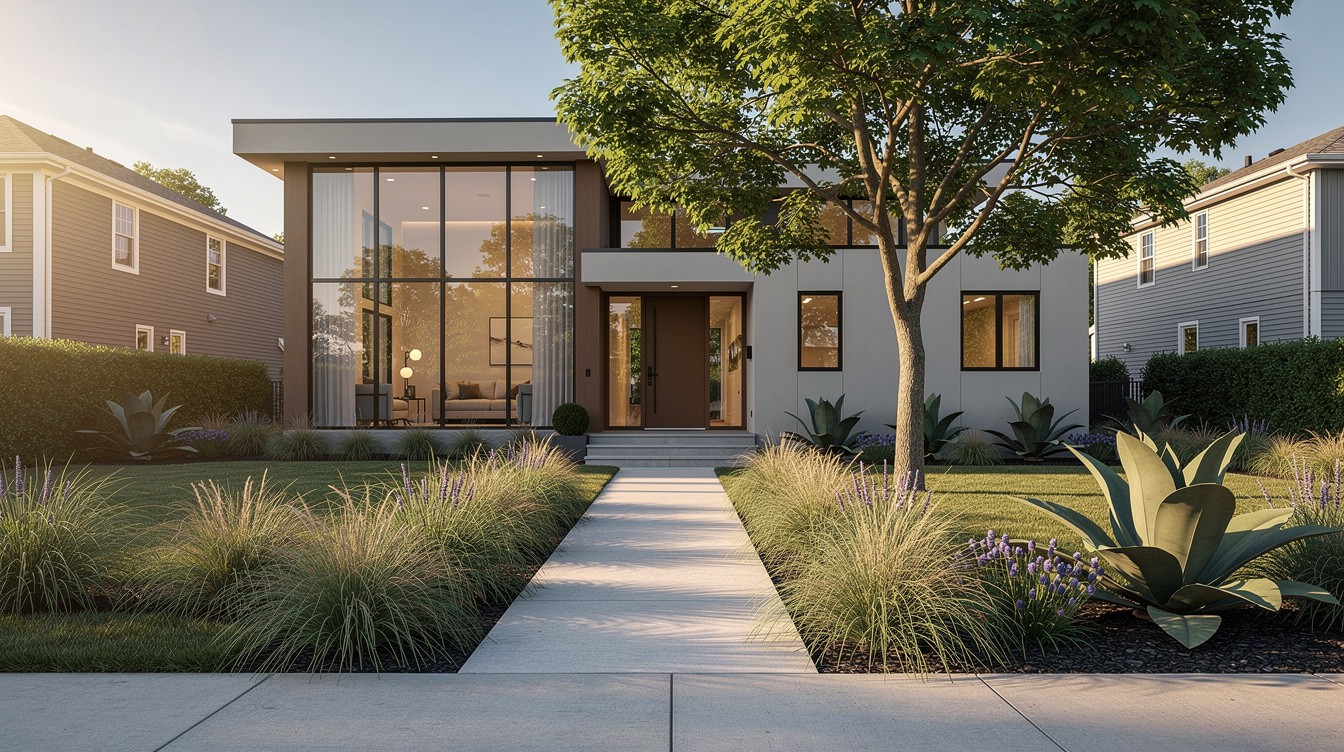
$18–34/sqftA two-storey contemporary with double-height glazing and a walnut entry door, wedged between a clapboard two-family on one side and a shingled colonial on the other — the classic Providence infill condition. A ruler-straight walk of oversized concrete planks splits the yard, and the planting is reduced to three moves repeated at scale: wide drifts of mounded ornamental grass, a low purple river of catmint running the length of both beds, and spiky variegated yucca rosettes punched in as accents. Clipped hedges hold both property lines, and one multi-stem tree canopies the whole composition. The lawn survives only as two neat green panels that read as material, not turf.
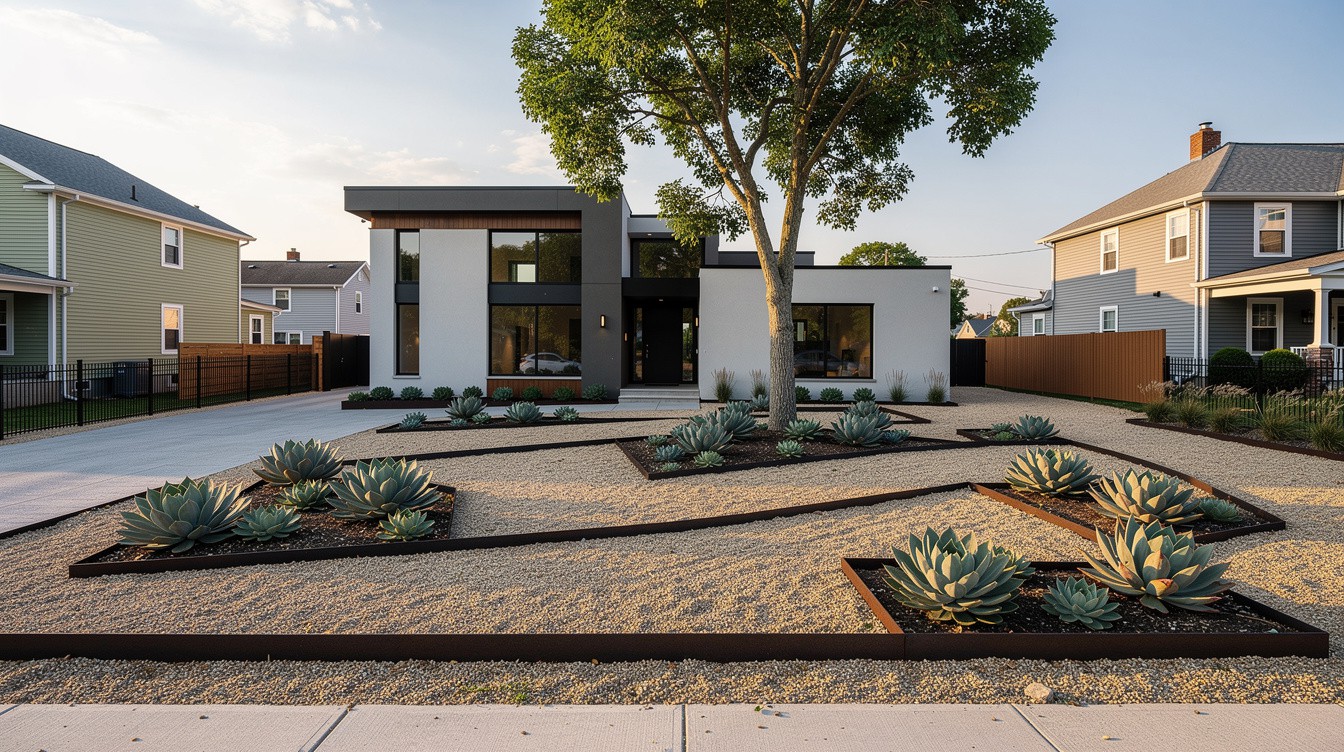
The Zero-Lawn Gravel Court
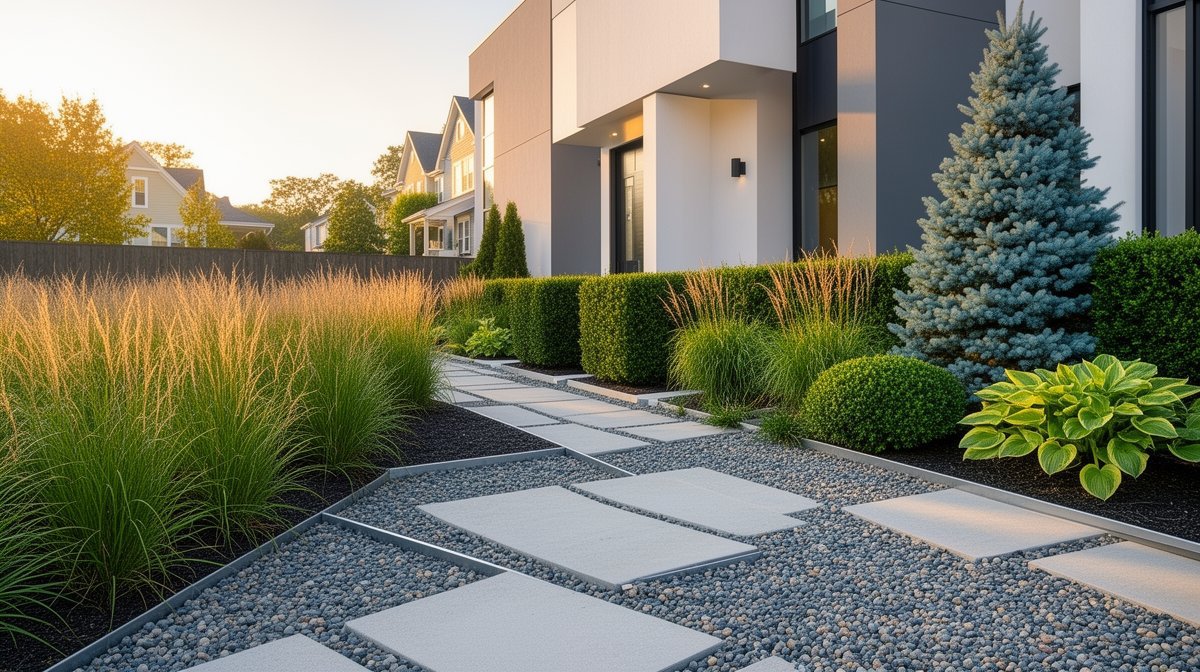
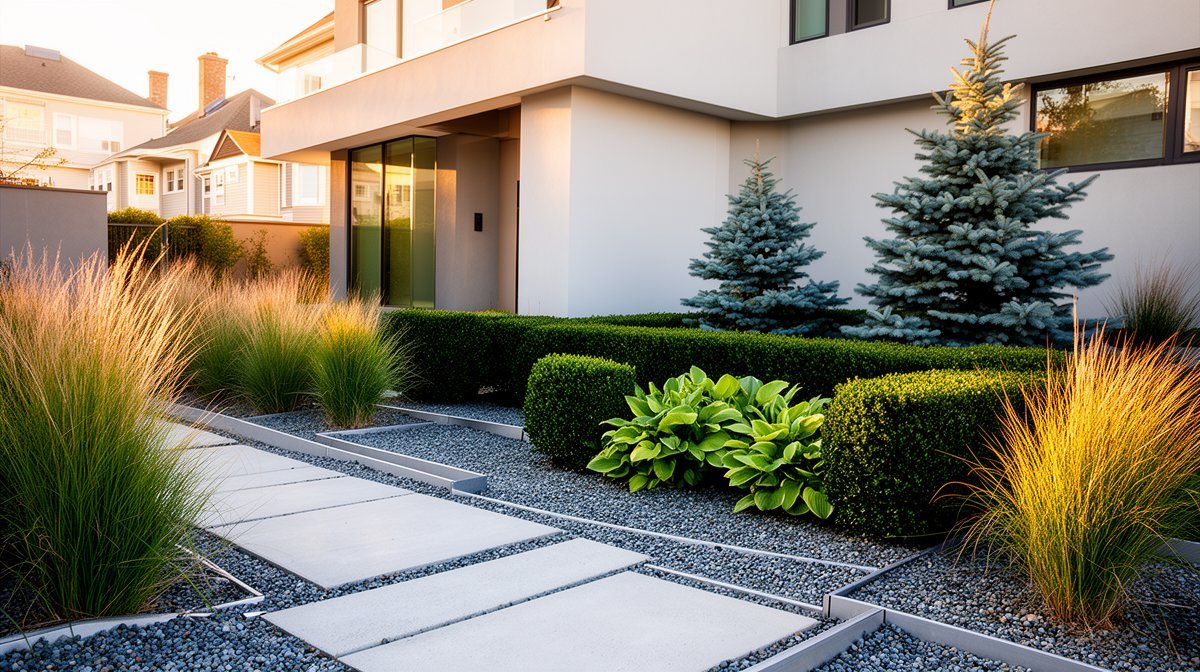
$14–28/sqftThe turf is gone entirely, replaced by a wide plane of pale pea gravel divided by angular Corten steel-edged beds that fan out from the entry like a folded plan drawing. Each bed holds a single repeated species — tight rosettes of hardy succulents set in dark grit — so the geometry stays legible from the sidewalk. A horizontal cedar screen and black aluminium fencing close off the neighbouring triple-deckers, and one mature shade tree rises through the largest bed. It is the lowest-maintenance front yard in this list: no mowing, no irrigation, and the gravel plane drains 47 inches of annual rain straight down instead of pooling on glacial till.
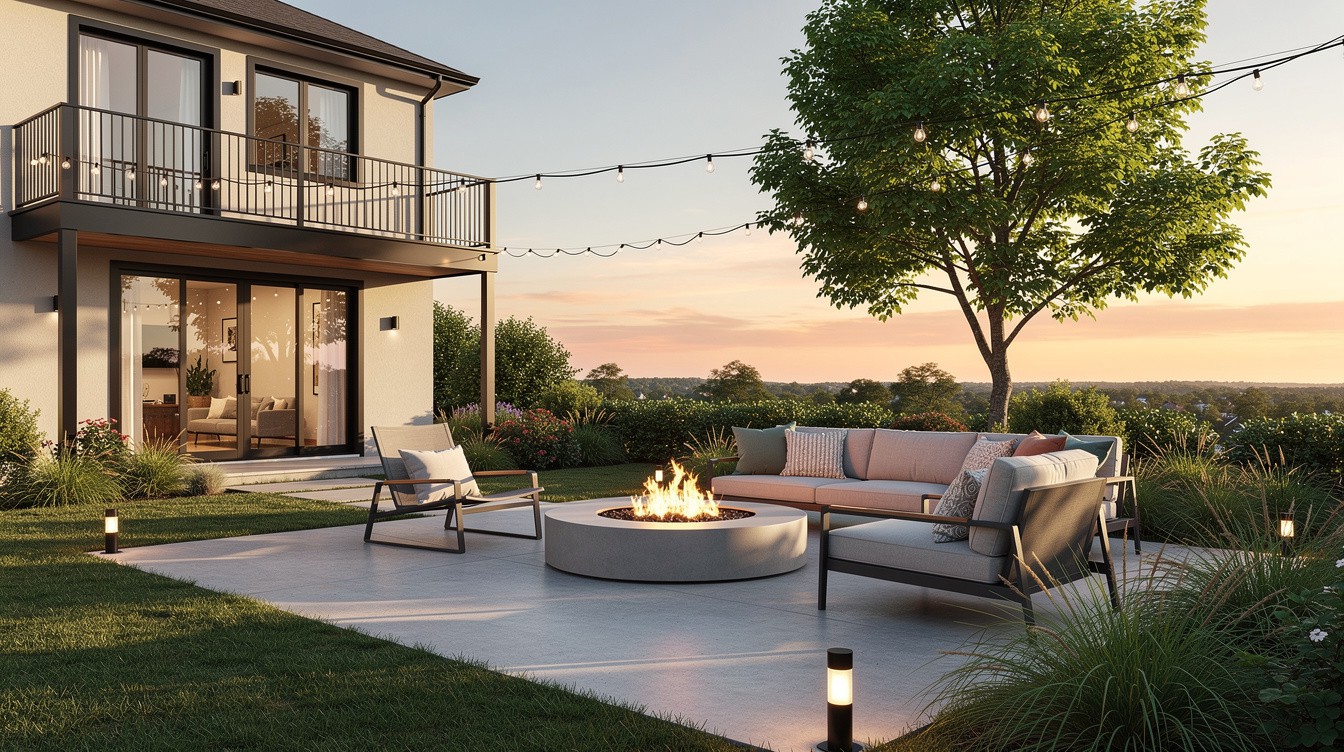
The Hillside Fire Terrace
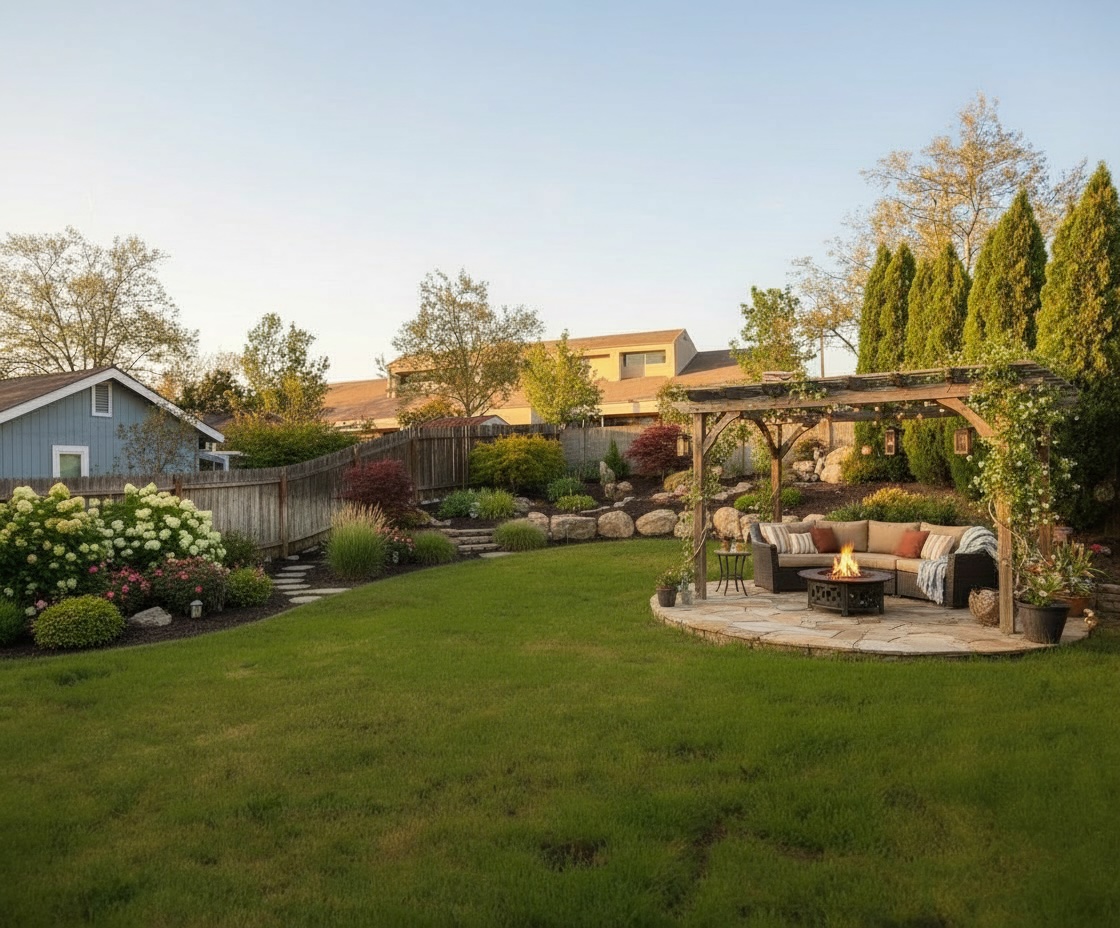
$26–48/sqftA stucco house with a cantilevered steel balcony opens through sliding glass onto a large-format paver terrace set flush with the lawn, so the two planes read as one surface. A round cast-concrete gas fire bowl anchors the seating group, catenary string lights sweep across the whole yard from house to tree, and low bollard lights mark the lawn edge. The planting is doing quiet work at the perimeter — soft grass drifts and a low flowering hedge that frame the long view over the treetops. Providence is a city of hills, and a terrace on the back of a College Hill or Mount Hope slope buys a horizon most New England yards never get.
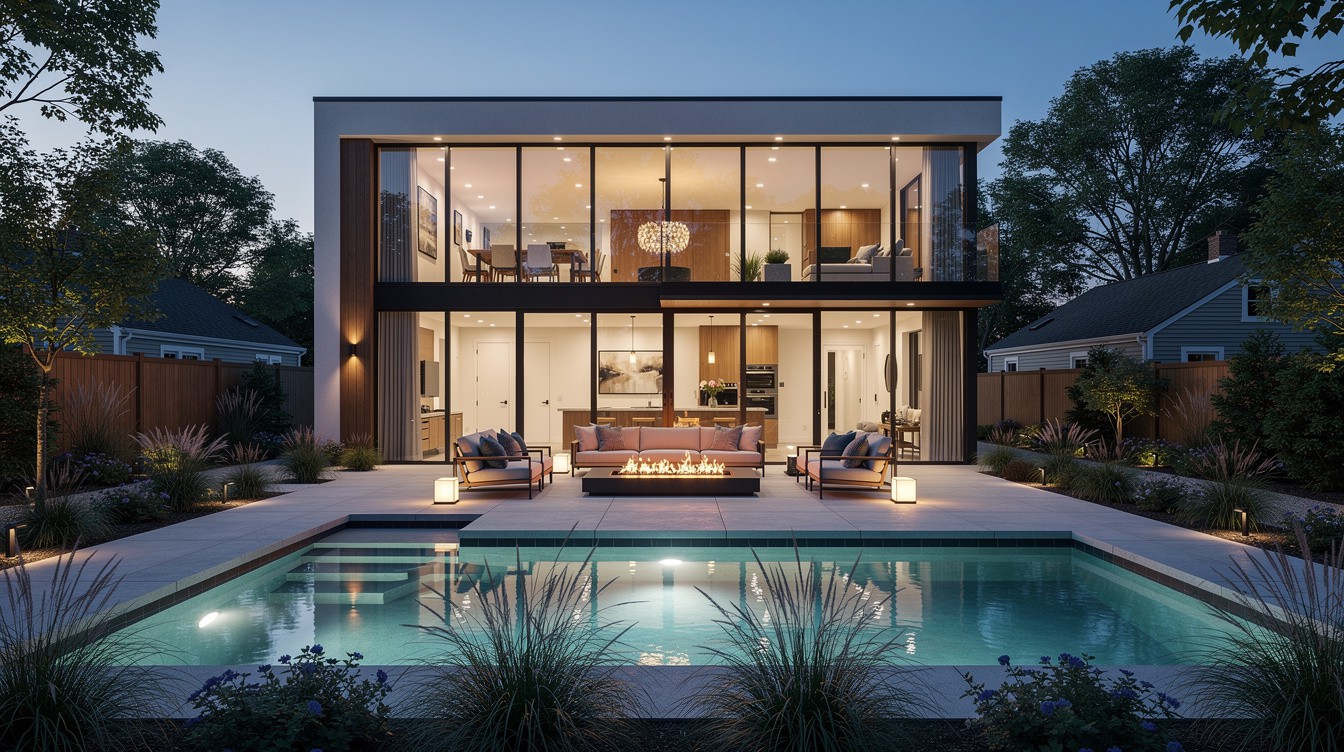
The Glass Box Pool Court
$60–120/sqft (pool area inclusive)A two-storey glass-fronted modern house faces a rectangular pool with a tanning ledge, both wrapped in pale grey pavers laid in a single uninterrupted plane. A long linear gas fire table sits between the sliding doors and the water, and the entire perimeter is lit from below so the grasses glow against a horizontal cedar fence that erases the neighbouring rooflines. Blue-flowering perennials break the water's edge and keep the palette to three colours: pale stone, warm light and blue-green foliage. This is the full outdoor-living build, and on a Providence lot the privacy fencing is not optional — it is what makes the pool usable.
See how a modern/minimalist garden looks on YOUR property
Upload a photo of your Providence yard and visualize your dream garden in seconds.
Try ProScapeAI Free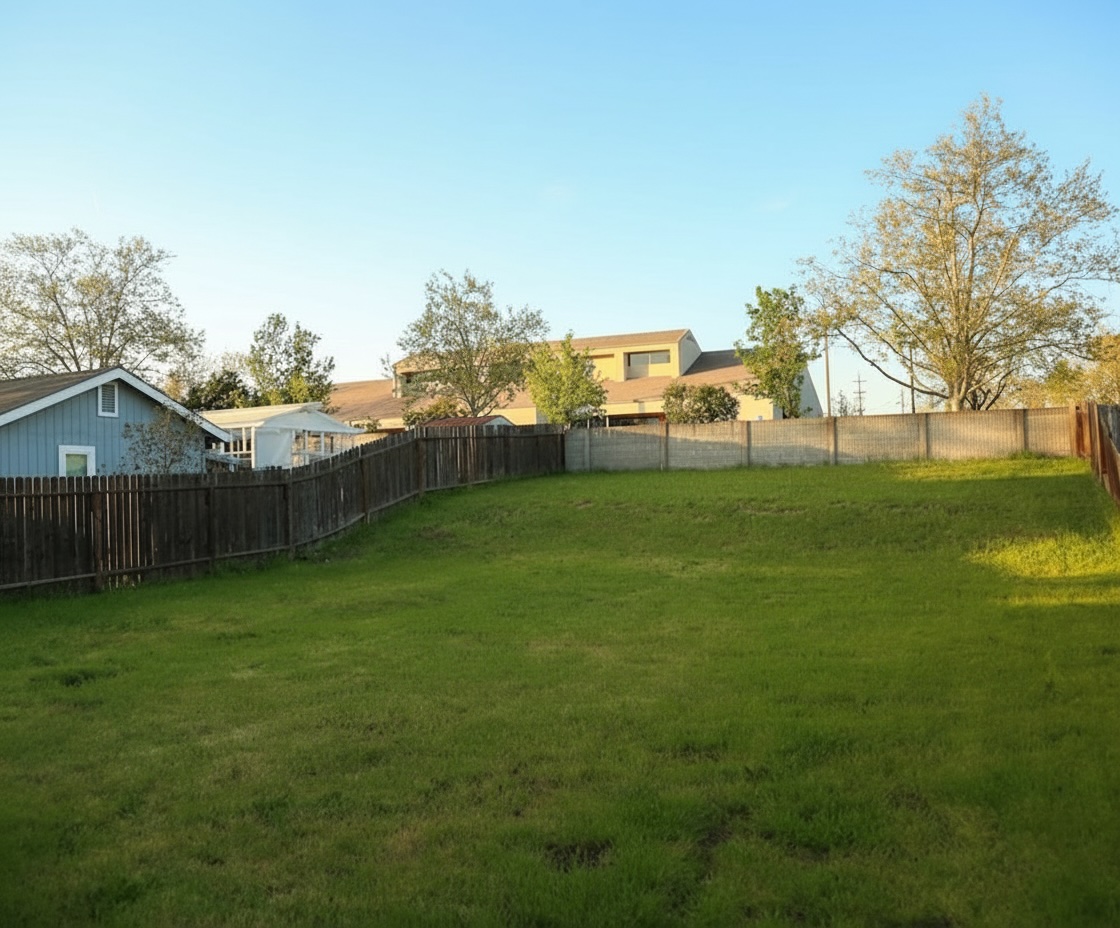
Featured Trees & Shrubs for Modern/Minimalist Gardens
Browse all 38 plants for Providence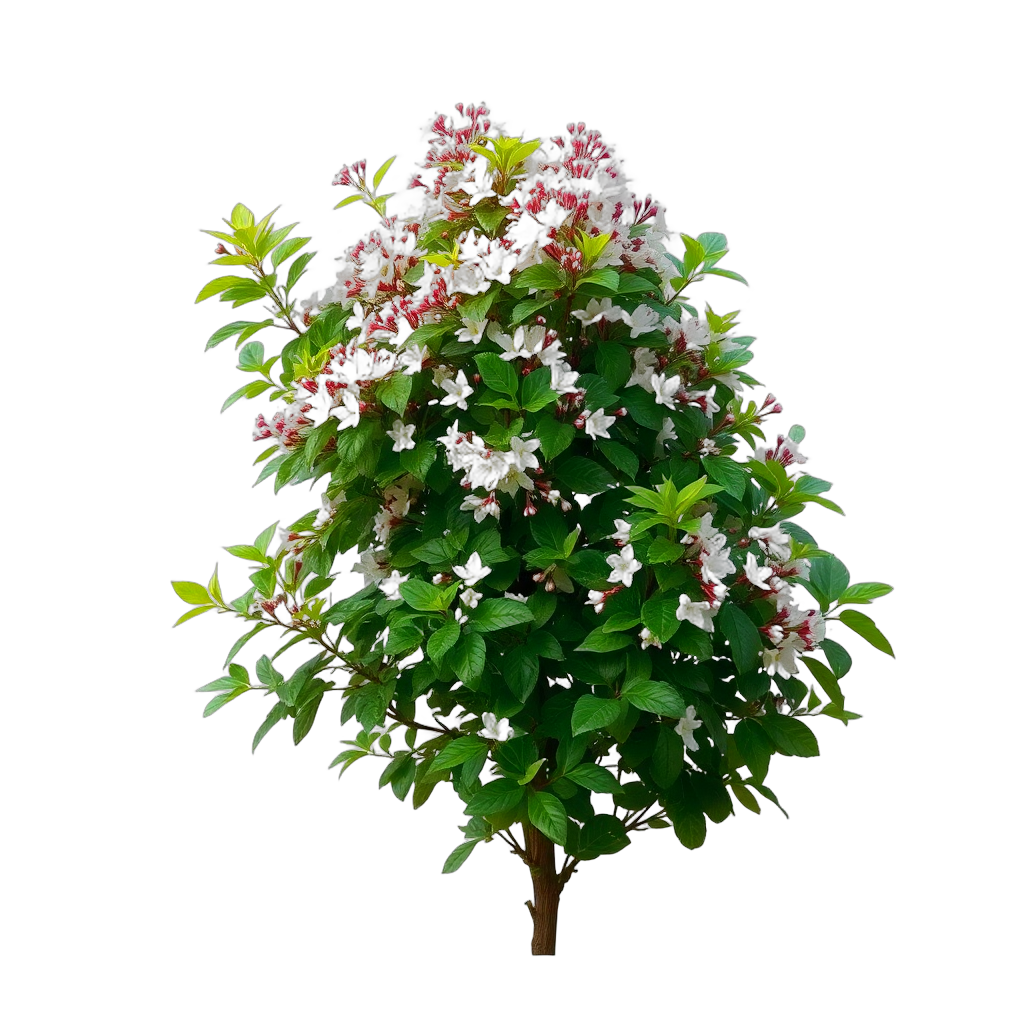
Arrowwood Viburnum
Viburnum dentatum
medium-sized at 10 feet, white blooms in spring. Pollinator-friendly.
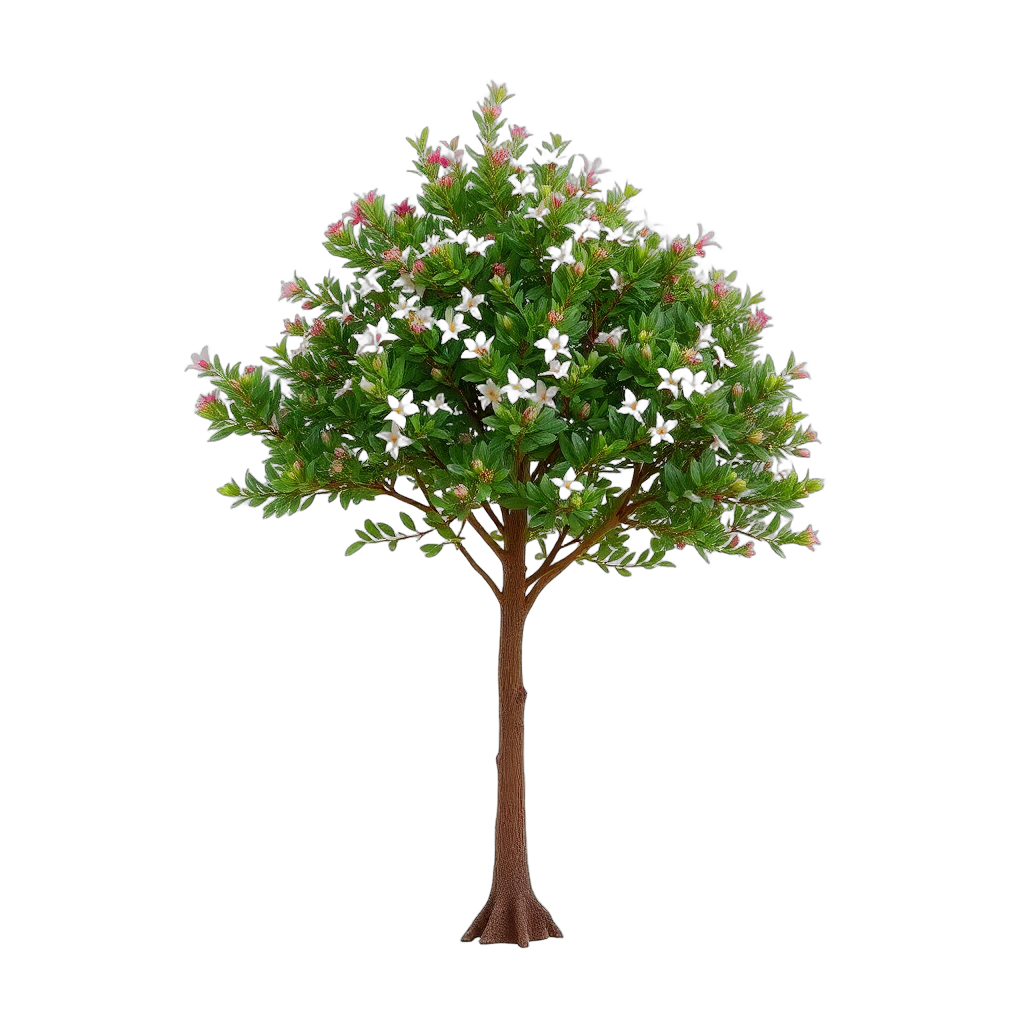
Coastal Leucothoe
Leucothoe axillaris
grows to 3 feet, white blooms in spring. Evergreen year-round.
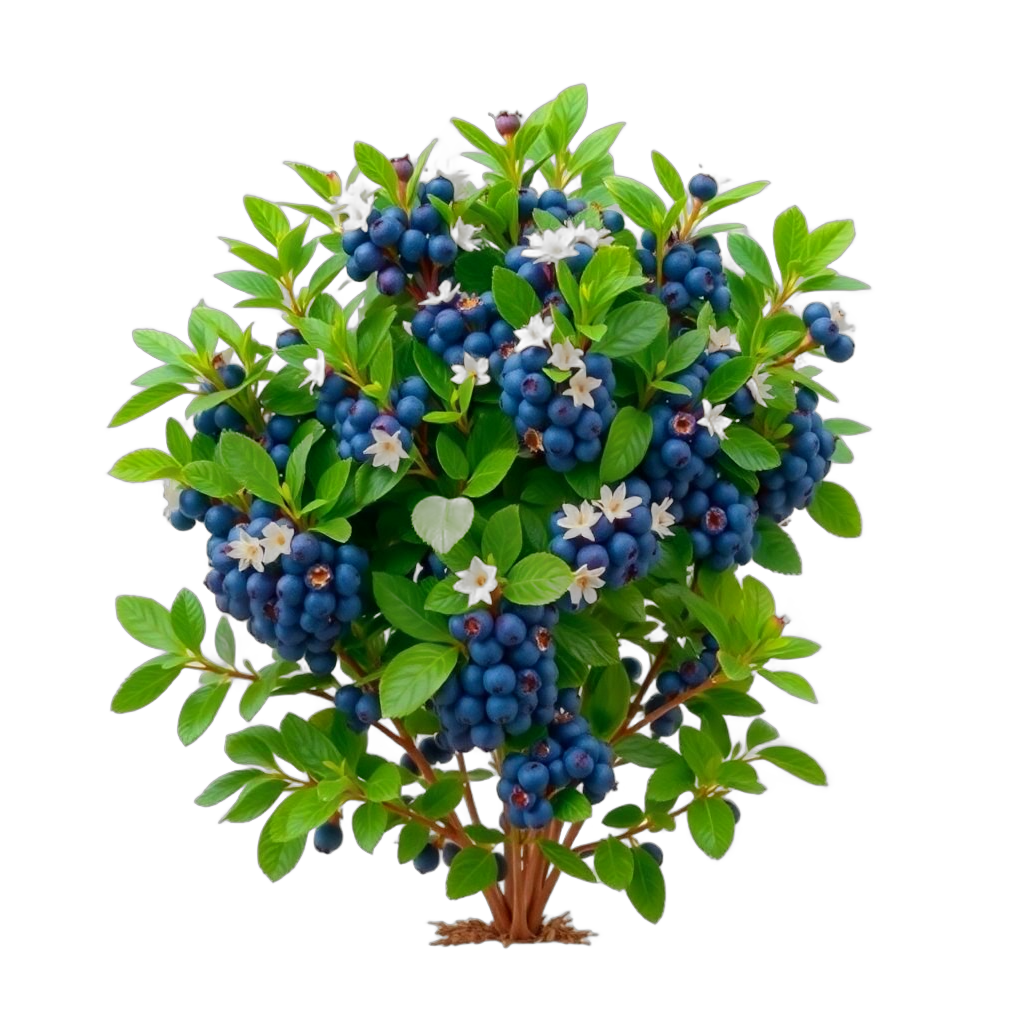
Highbush Blueberry
Vaccinium corymbosum
medium-sized at 7 feet, white blooms in spring. Attracts butterflies.

Inkberry
Ilex glabra
medium-sized at 8 feet, white blooms in spring. Pollinator-friendly.
Featured Grasses & Groundcovers for Modern/Minimalist Gardens
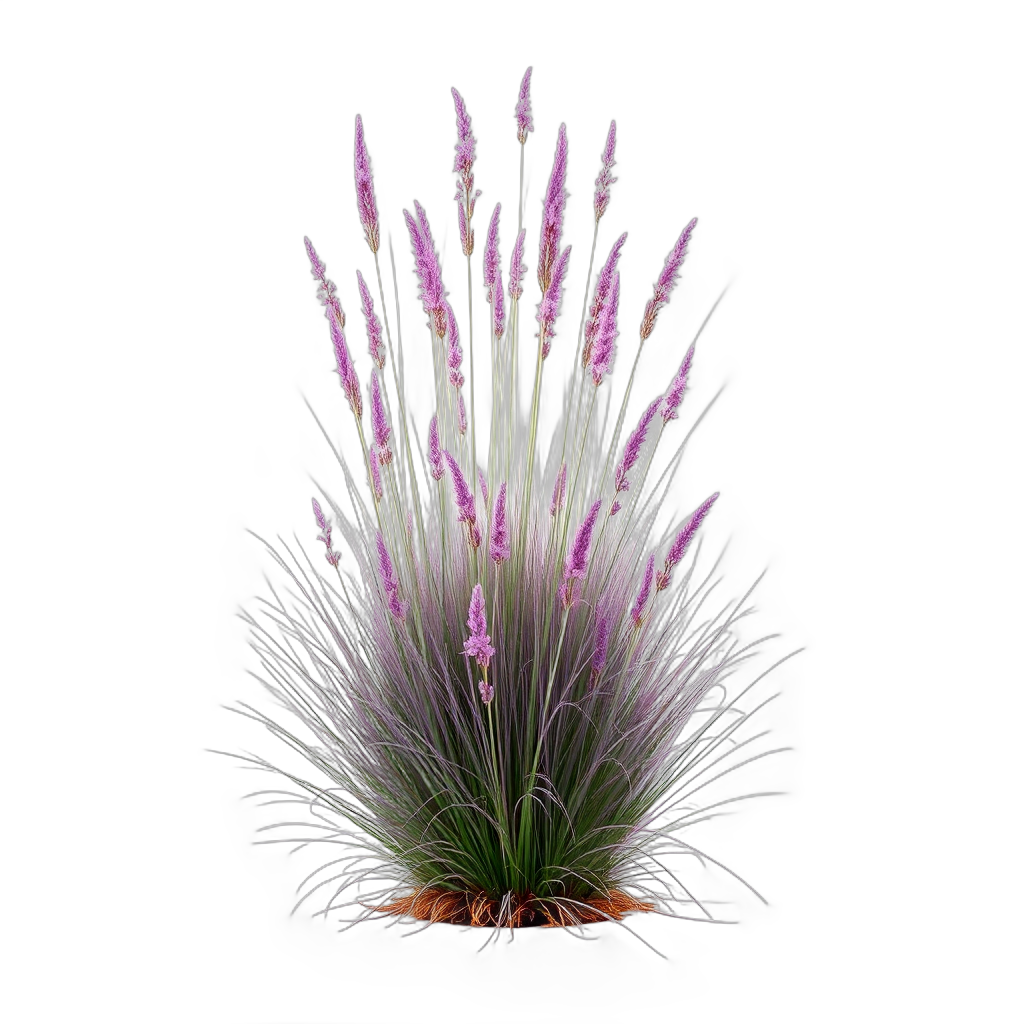
Purple Love Grass
Eragrostis spectabilis
low-growing ground cover, purple blooms in fall. Orange fall color.

Kentucky Bluegrass
Poa pratensis
low-growing ground cover, blooms in spring. Brown fall color.
Featured Flowers & Perennials for Modern/Minimalist Gardens
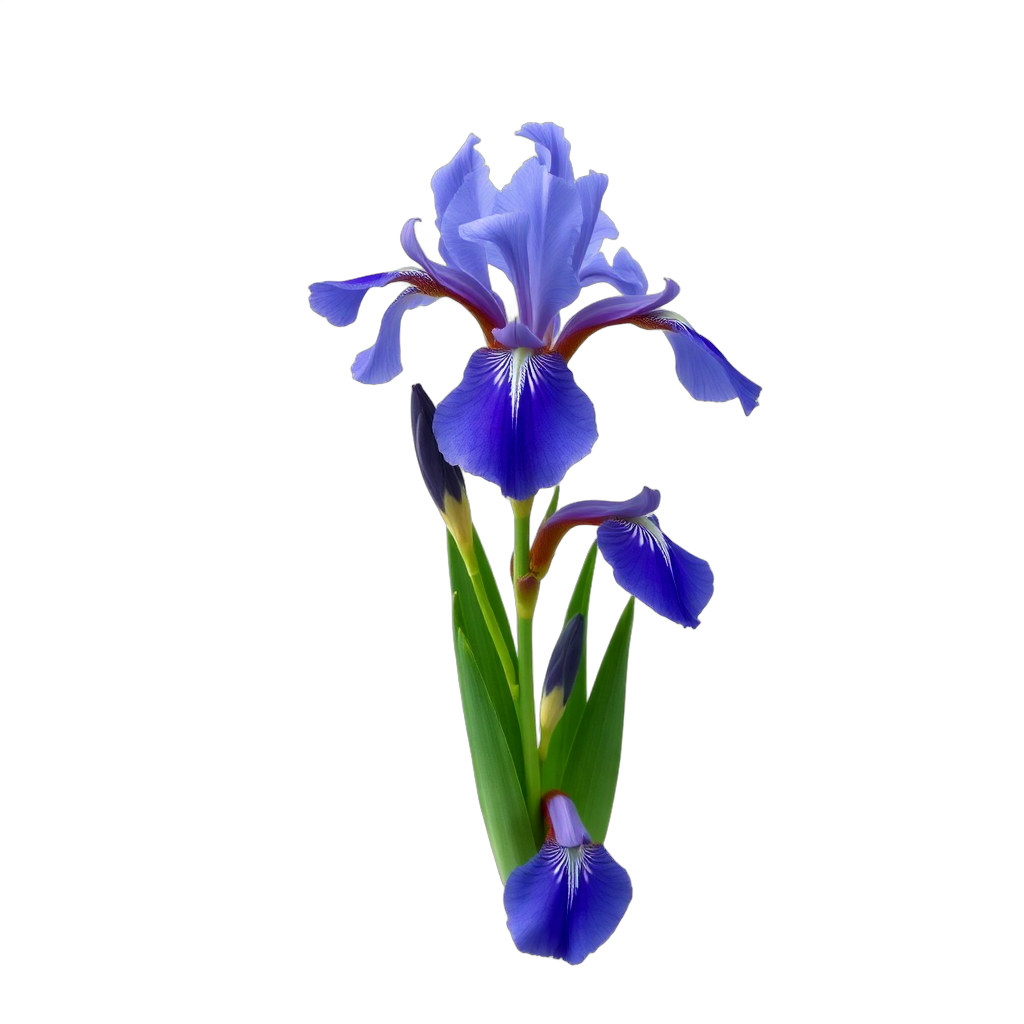
Blue Flag Iris
Iris versicolor
low-growing ground cover, purple blooms in spring. Attracts butterflies.

New York Ironweed
Vernonia noveboracensis
grows to 6 feet, purple blooms in fall. Attracts butterflies.
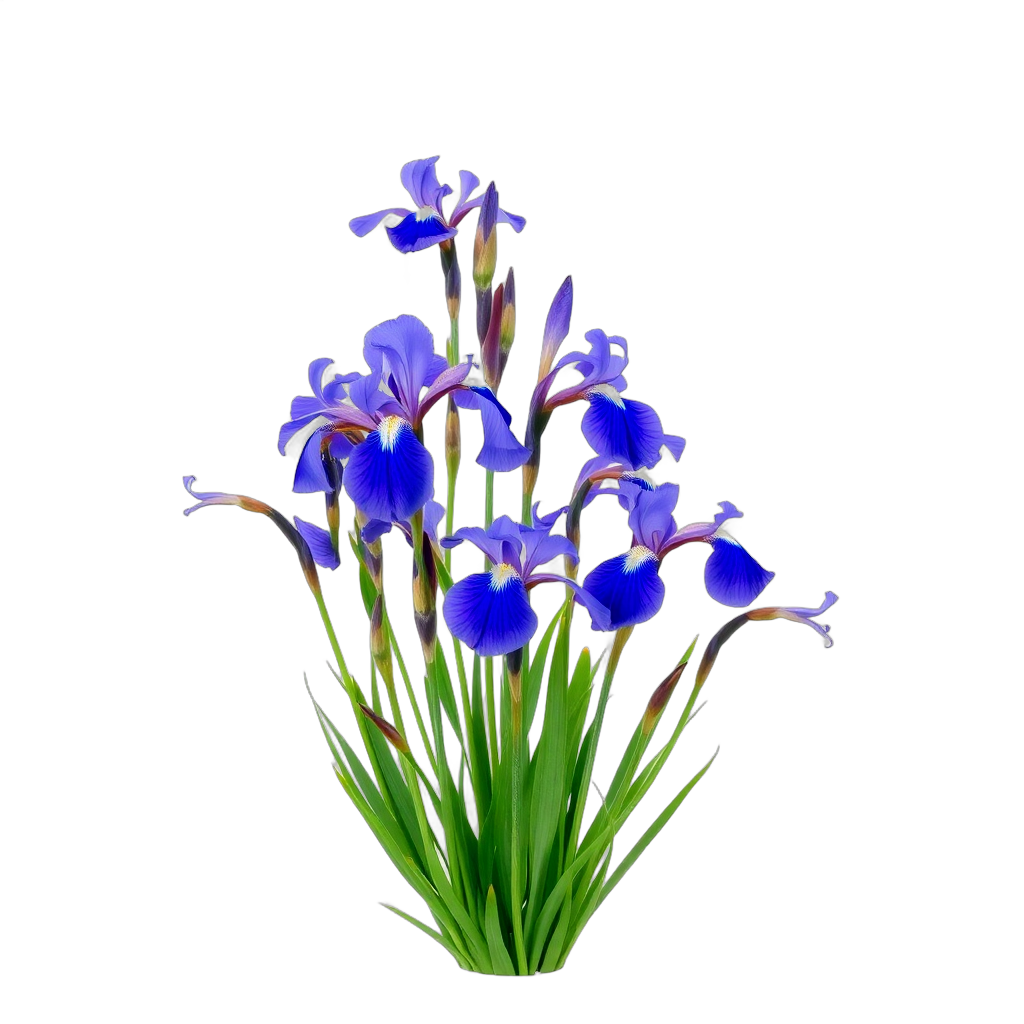
Southern Blue Flag
Iris virginica
low-growing ground cover, blue blooms in spring. Attracts butterflies.

Eastern Prickly Pear
Opuntia humifusa
low-growing ground cover, yellow blooms in summer. Attracts butterflies.
Bloom Calendar for Providence
spring
Blue Flag Iris, Southern Blue Flag, Arrowwood Viburnumsummer
Ruby Spice Summersweet, Summersweet, Eastern Prickly Pearfall
New York Ironweed, Purple Love Grasswinter
Limited bloomsDesign Tips for Providence (Zone 6b)
- Substitute, don't imitate — Yucca filamentosa 'Color Guard', Yucca rostrata 'Sapphire Skies' and native Opuntia humifusa deliver the desert-modern silhouette that Agave americana cannot survive at -5°F with 47 inches of rain
- Make Calamagrostis x acutiflora 'Karl Foerster' your structural plant: it is the only common grass that stays strictly vertical under 30 inches of New England snow load and after a February nor'easter
- Footings below the ~42-inch frost line for every post, seat wall and fire-feature base; dry-lay terrace pavers on 6–8 inches of clean compacted open-graded stone so the plane floats instead of cracking
- Raise and grit every succulent and silver-leaved bed — on glacial till, winter drainage decides whether Yucca, Perovskia atriplicifolia 'Blue Spire' and Sempervivum live, and gravel mulch beats bark every time
- Use Juniperus virginiana 'Taylor' or Thuja occidentalis 'Smaragd' wherever a rendering shows Italian cypress; both give the hardy vertical exclamation point, and the juniper is a salt-proof New England native
- Light the boundary, not the middle — on a 40-foot-wide lot, uplighting a horizontal cedar screen and a run of Panicum virgatum 'Northwind' pushes the visual edge outward and makes a small Providence yard read twice its size after dark
Where to Source Plants in Providence
Skip the big-box stores. These independent Providence nurseries specialize in the plants that make modern/minimalist gardens thrive in Zone 6b.
Homegrown
Pawtucket
Organically-grown native Rhode Island plants and perennials, hard-to-find species from native seed.
Wildwood Nursery & Garden Center
East Greenwich
Established independent nursery serving Rhode Island with a broad plant selection and landscape services.
Hattoy's Nursery & Garden Center
Coventry
Full-service garden center with plants, shrubs, trees, and landscaping services.
Modern/Minimalist Landscaping Costs in Providence
| Project Scope | Estimated Cost |
|---|---|
| Front-yard turf-to-gravel conversion (400–600 sqft, Corten edging + plants) | $8,000 – $20,000 |
| Large-format paver or bluestone terrace (300–500 sqft) | $18,000 – $42,000 |
| Fire terrace with seating, planting and low-voltage lighting | $25,000 – $60,000 |
| Horizontal cedar privacy screen (50–70 linear ft, frost-depth footings) | $9,000 – $22,000 |
| Pool, surround and full backyard landscape | $120,000 – $250,000 |
| AI visualization with ProScapeAI | Free to start |
Estimates based on Providence, RI-area contractor rates as of 2026. Actual costs vary by site conditions, materials, and contractor.
Providence Climate & Growing Zone
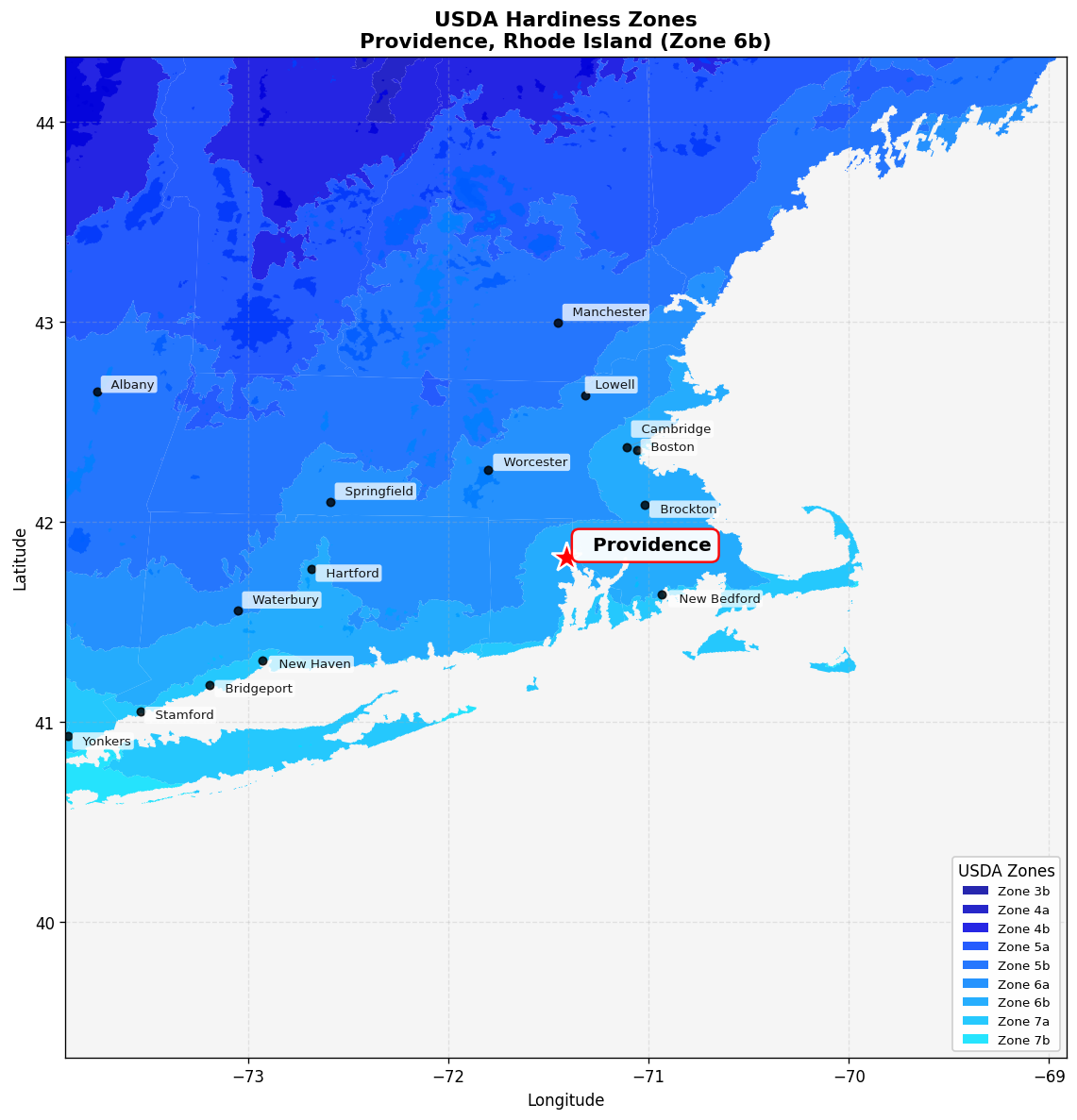
USDA Zone 6b
Hardiness zone for Providence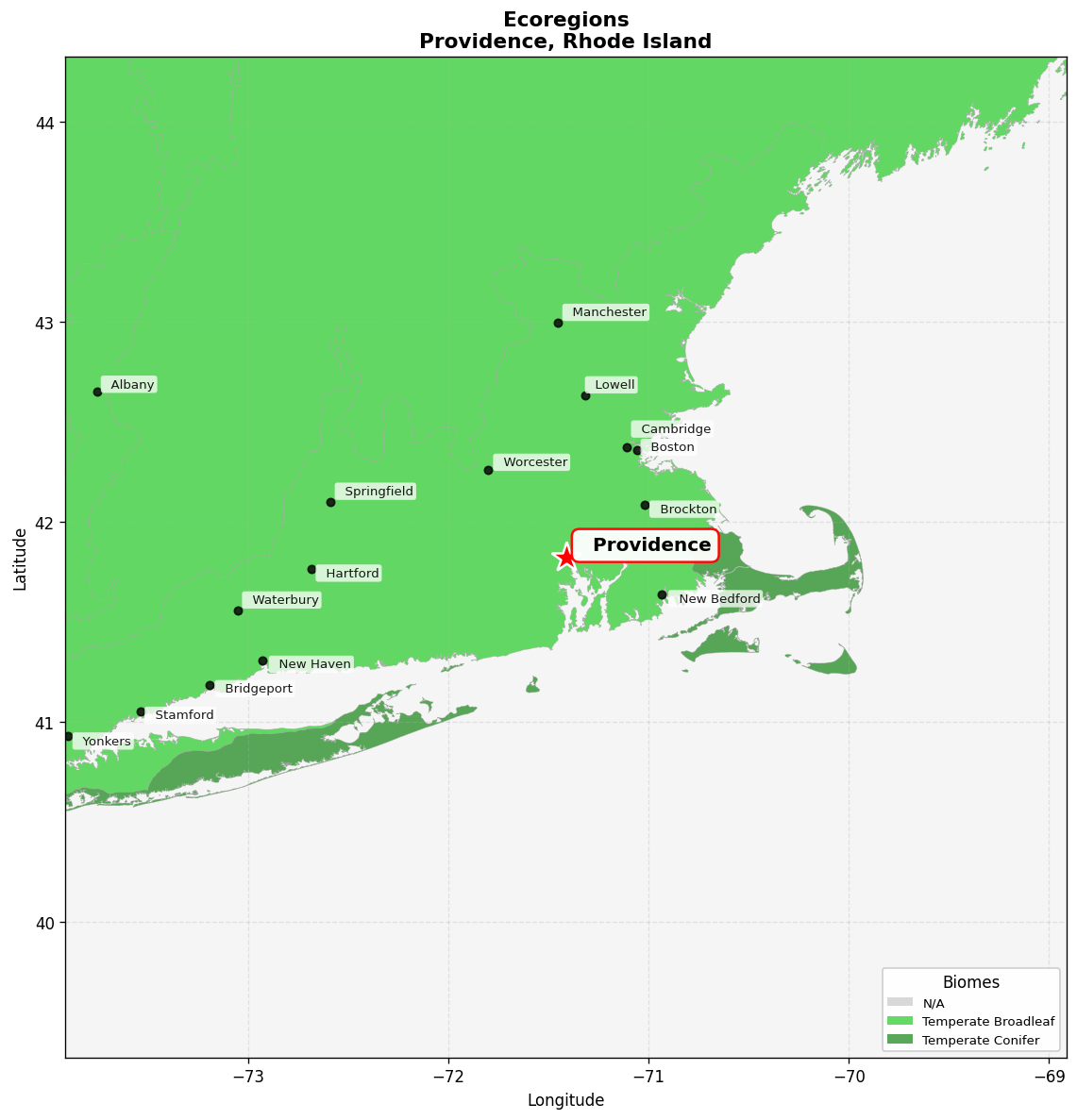
Northeast US Coastal forests
Native ecoregionFrequently Asked Questions
How much does modern landscaping cost in Providence?
Expect to pay above national averages. Rhode Island labour runs roughly 20–30% higher than the U.S. median, and rocky glacial till makes excavation slow — hitting ledge on a College Hill lot can add thousands on its own. A front-yard turf-to-gravel conversion of 400–600 square feet with Corten edging and architectural planting runs $8,000–20,000 installed. A large-format paver terrace of 300–500 square feet runs $18,000–42,000. A full fire terrace with seating, lighting and planting lands at $25,000–60,000, and a pool with its surround and landscape typically runs $120,000–250,000 in the Providence market.
Can I grow agaves and succulents in Rhode Island?
Not true agaves, and this is the most common mistake in Zone 6b modern gardens. Providence combines -5°F to 0°F lows with 47 inches of rain and no dry season, which is fatal to Agave americana and the blue rosettes seen in West Coast design photos. The sculptural look is fully achievable with hardy substitutes: Yucca filamentosa 'Color Guard', Yucca flaccida 'Golden Sword', Yucca rostrata 'Sapphire Skies' in sharp drainage, Sempervivum 'Royal Ruby', Sedum 'Angelina', and Rhode Island's own native prickly pear, Opuntia humifusa. Plant all of them in beds raised above grade with 40–50% crushed stone and gravel mulch — winter wet kills them long before cold does.
How do I stop pavers and concrete from heaving over the winter?
Respect the frost line. Providence frost depth is roughly 42 inches, and modern design's large, flat, uninterrupted surfaces show every millimetre of movement. Anything mortared or structural — pergola posts, seat walls, fire-feature bases, steps — needs a footing below 42 inches. For terraces, dry-lay large-format units on 6–8 inches of compacted open-graded base (clean crushed stone, no fines) with a chip or polymeric joint, so the whole plane rises and settles together instead of cracking. Pitch every surface at least 1/8 inch per foot away from the house, and never pour a monolithic slab on grade in a New England back yard unless it is properly reinforced and footed.
Which ornamental grasses are best for a modern Providence garden?
Calamagrostis x acutiflora 'Karl Foerster' is the backbone — strictly upright, holds its form under snow, and stands through nor'easters that flatten softer grasses. Panicum virgatum 'Northwind' and 'Shenandoah' are natives with excellent road-salt tolerance, making them the right choice for curbside beds. Sporobolus heterolepis gives the low mounded texture, Schizachyrium scoparium 'Standing Ovation' adds blue-to-copper seasonal colour, and Sesleria autumnalis works in part shade. Pennisetum alopecuroides 'Hameln' is hardy here, unlike purple fountain grass, which is an annual in Zone 6b. Be cautious with Miscanthus sinensis, which self-seeds aggressively in parts of New England — 'Morning Light' is among the least prolific.
How do I get privacy on a 40-foot-wide Providence lot?
Build it rather than grow it. On tight urban lots the neighbouring triple-decker is often only 12–20 feet away and three storeys tall, so a hedge alone will never reach. The modern answer is a horizontal cedar or thermally modified wood screen at the six-foot zoning maximum, layered with a green vertical: Juniperus virginiana 'Taylor' columns, Thuja occidentalis 'Smaragd', or Ilex crenata 'Sky Pencil' in the narrowest side yards. Uplighting the screen from below reads as intentional and makes the boundary feel like a wall of the room rather than a fence. Check height limits and, in local historic districts, Historic District Commission review before ordering material.
What about road salt and coastal exposure on street-facing beds?
Every bed within about ten feet of the curb takes plow spray and salt-laden slush all winter, and Providence's proximity to Narragansett Bay adds occasional salt aerosol during nor'easters. Design that strip separately. Reliable salt-tolerant choices include Panicum virgatum 'Shenandoah', native Myrica pensylvanica, Rosa rugosa, Sedum 'Autumn Joy', Perovskia atriplicifolia 'Blue Spire', Juniperus virginiana 'Taylor' and Hemerocallis 'Stella de Oro'. Avoid Taxus, Buxus and Hydrangea macrophylla at the curb — they brown out on the street side. A deep irrigation flush in early April leaches accumulated chloride out of the root zone before growth starts.