4 Cottage Garden Ideas for Rockford, IL | English Style, Zone 5b
Native plants from the Central US forest-grasslands transition (Zone 5b) — Humid continental (hot summer) climate
Why Cottage/English Gardens in Rockford?
Rockford was practically built for the English cottage garden. Churchill's Grove, Signal Hill and the blocks either side of North Main are lined with 1900s–1920s American Foursquares, Queen Annes and Craftsman bungalows whose deep porches, painted railings and short 20-to-30-foot setbacks are exactly the architecture this style was invented to frame — a picket fence, a rose arbour over the gate and a border that spills onto the walk read as restoration here, not decoration. The postwar ranches of Rolling Green, Alpine and Guilford Square give you the other classic cottage canvas: a long, low facade that a deep front border makes interesting. Even the newer builds off Perryville Road and out toward Cherry Valley and Roscoe benefit, because a cottage planting is the fastest way to make a five-year-old house look like it has been there for fifty.
Zone 5b is the number that decides your plant list: design for winter lows of -15°F to -10°F, and expect a growing season of roughly 155 days between an early-May last frost and an early-October first frost. That is a shorter runway than Nashville gets, but Rockford's climate is a genuine advantage for this style. Rock River valley summers average highs in the mid-80s with nights that drop into the low 60s, and those cool nights are why Delphinium elatum 'Blue Bird', Digitalis purpurea 'Camelot Lavender' and Leucanthemum × superbum 'Becky' perform better in Winnebago County than they do anywhere in the South. Roses are the one place to be disciplined: own-root, cane-hardy climbers such as Rosa 'William Baffin' and Rosa 'New Dawn' clear a Rockford winter on an arbour without protection, while grafted hybrid teas need eight to ten inches of mounded compost every November. Paeonia lactiflora 'Sarah Bernhardt' and Syringa vulgaris actually require the 1,000-plus chilling hours Rockford delivers, so the plants that define a cottage garden are the ones this climate favours.
The soil is the local windfall. Winnebago County sits on deep, dark prairie-derived silt loams — the Flagg, Ogle and Durand series — with high organic matter and a near-neutral to slightly alkaline pH of about 6.5–7.5. Phlox paniculata 'David', Alchemilla mollis, Baptisia australis and Hydrangea arborescens 'Annabelle' (a cultivar of an Illinois native) simply thrive in it. The catch is winter drainage: that same silt loam stays saturated from November thaw to April, which is what kills Lavandula angustifolia 'Munstead' and Dianthus far more often than cold does. Build lavender, thyme and pinks into beds raised eight to twelve inches and cut a third pea-gravel or coarse sand into the mix. Note too that frost depth in Winnebago County is 42 inches, so arbour posts, pergola piers and any wall footing must go below that line or the first hard winter will lift them out of square.
Water rules here are gentler than most of the country. Rockford draws its supply from deep sandstone-aquifer wells rather than a reservoir, so the seasonal watering bans common in the West are not part of local life — but the city averages only about 37 inches of precipitation a year and July and August routinely deliver three-week dry spells, so new borders still need a drip line or soaker hose on a timer for their first two seasons. Two other local realities belong in the design. Rockford clears streets aggressively in a 35-inch snow year, and the salt spray thrown onto parkway strips will scorch Buxus 'Green Velvet' and roses within ten feet of the curb — use Rosa rugosa 'Blanc Double de Coubert' or Nepeta × faassenii 'Walker's Low' out there instead. And because so much of the city drains toward the Rock and Kishwaukee, a downspout routed into a planted low spot rather than onto the drive is the single cheapest drainage improvement most Rockford front yards can get.
4 Cottage/English Design Ideas for Rockford

The Picket-Fence Rose Arbour
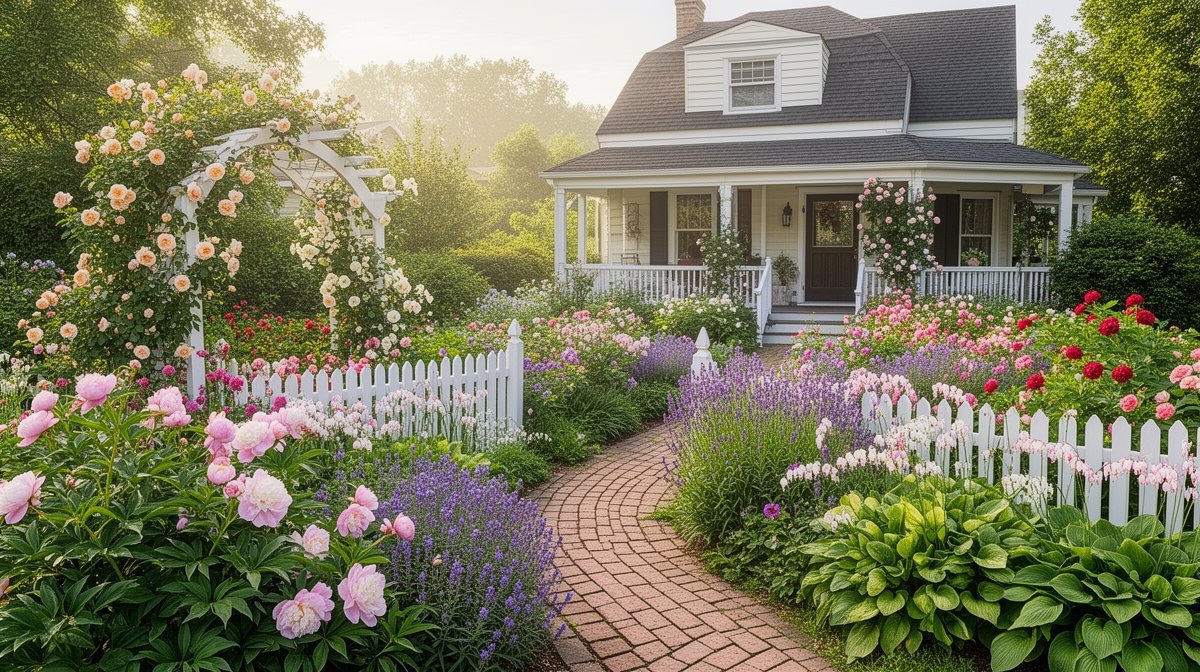
$18–32/sqftA cream clapboard cottage with sage-green shutters and a matching green front door, screened from the sidewalk by a white picket fence and entered through a heavy cedar arbour smothered in blush climbing roses. The gate is picket to match, and the curved clay brick walk behind it bends once before it reaches the stoop — a small move that makes a 25-foot Rockford setback feel like a journey. Outside the fence, a continuous ribbon of lavender runs both directions; inside it, red, pink and white shrub roses stack up against the pickets so the fence reads as a frame rather than a barrier. Clipped boxwood globes and two terracotta pots hold the door steady, and a pair of clipped evergreens repeat at the corners.

The Front-Porch Cottage Border
$14–26/sqftA two-storey cream farmhouse with a full-width porch, white railing, wicker chairs and hanging baskets, approached on an irregular flagstone path that wanders rather than aims. Two cedar tuteurs flank the walk carrying a white climbing rose up toward the porch roof, and the beds on both sides are packed four rows deep — low edging colour at the flagstone, mid-height spires and daisies behind, and tall clumps against the porch skirt. A mature canopy tree on the right throws afternoon shade over half the yard, so the border shifts from sun-lovers on the left to hostas and astilbe under the branches. Small path lights sit low in the planting and make the walk usable after dark.

The Rose Arch and Bistro Terrace
$22–38/sqftA back garden organised around one gesture: a tall painted timber arch, wide enough to walk through, carrying pink and cream climbing roses over the entrance to a small flagstone terrace. The terrace itself is modest — large irregular limestone slabs with green joints, a round white bistro table and two scrollwork folding chairs — and it faces back across an open lawn panel toward the house. Lavender edges the flagstone on both sides, and the deep borders beyond it run to tall spires of delphinium and foxglove, white shasta daisies and dahlias in front. A clipped arborvitae hedge closes the rear boundary and gives the whole composition the green wall an English garden needs.

The Pergola Dining Garden
$20–36/sqftA white-painted pergola built tight against a grey clapboard house, its posts and beams carrying blush climbing roses, sheltering a teak table for six on a tumbled paver patio. Out in the lawn sits the second idea that makes this garden work — a circular island bed edged in cobbles with a cast-stone birdbath at its centre and a low collar of orange and yellow annuals around the base, which stops the lawn from reading as empty space. The perimeter borders are deep and layered: catmint and lavender at the front, coneflowers and peach roses in the middle, delphinium spires against a cedar privacy fence. A mature tree at the back corner supplies afternoon shade to the whole dining area.
See how a cottage/english garden looks on YOUR property
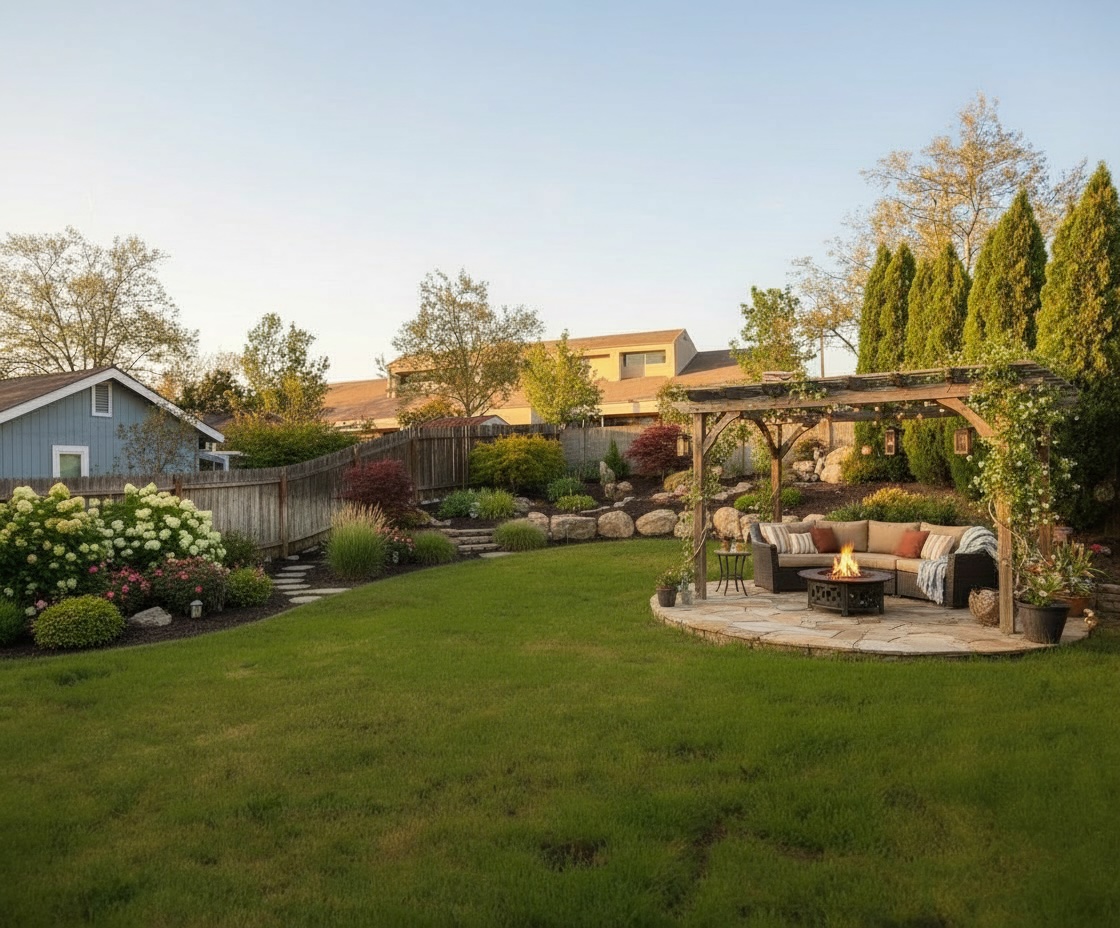
Upload a photo of your Rockford yard and visualize your dream garden in seconds.
Try ProScapeAI Free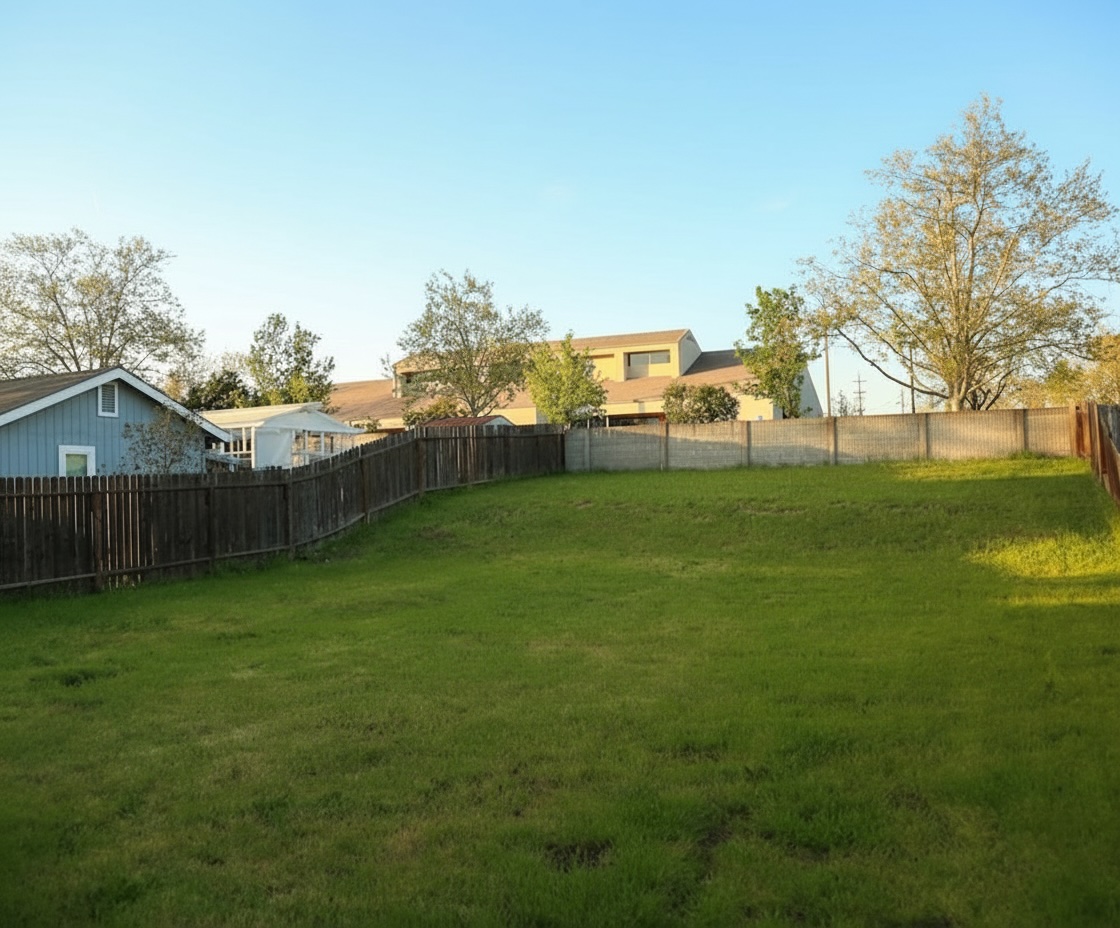
Featured Trees & Shrubs for Cottage/English Gardens
Browse all 168 plants for Rockford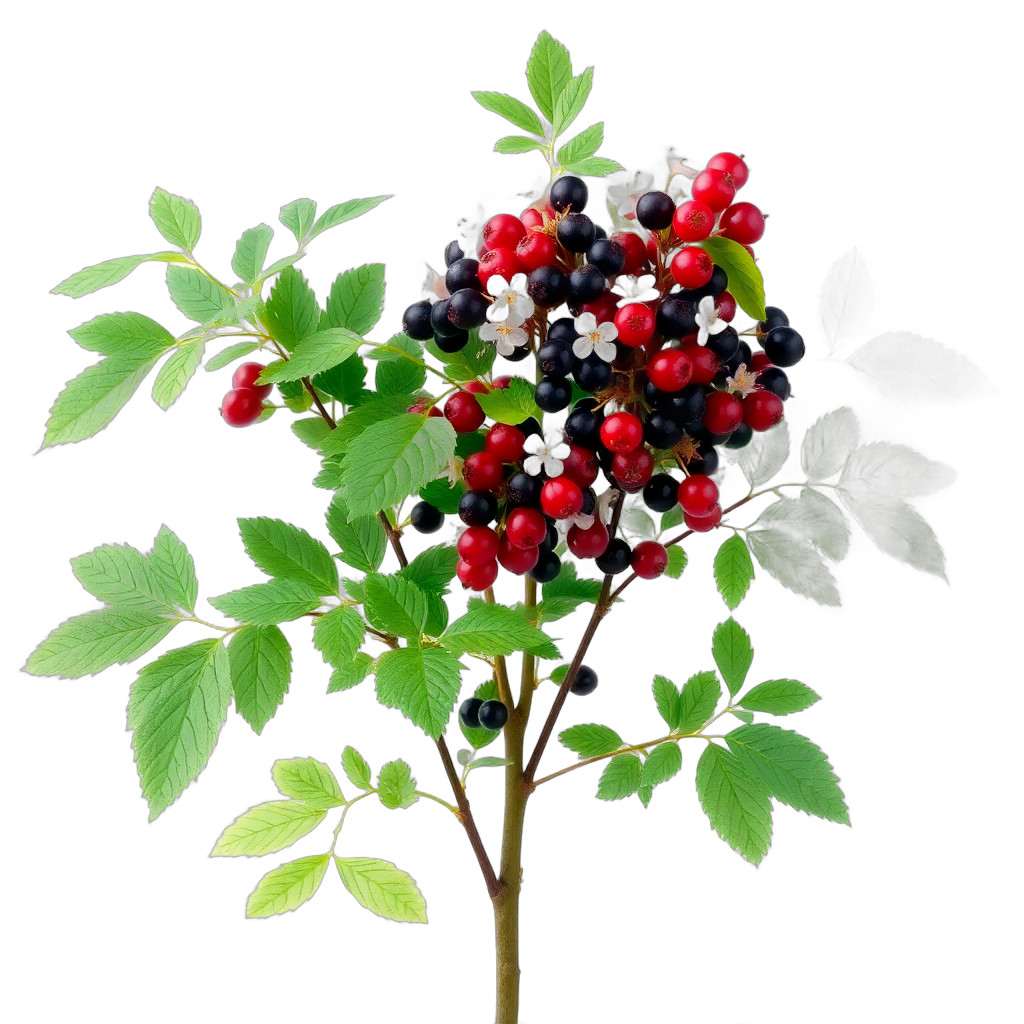
American Black Currant
Ribes americanum
grows to 5 feet, white,yellow blooms in spring. Attracts hummingbirds.
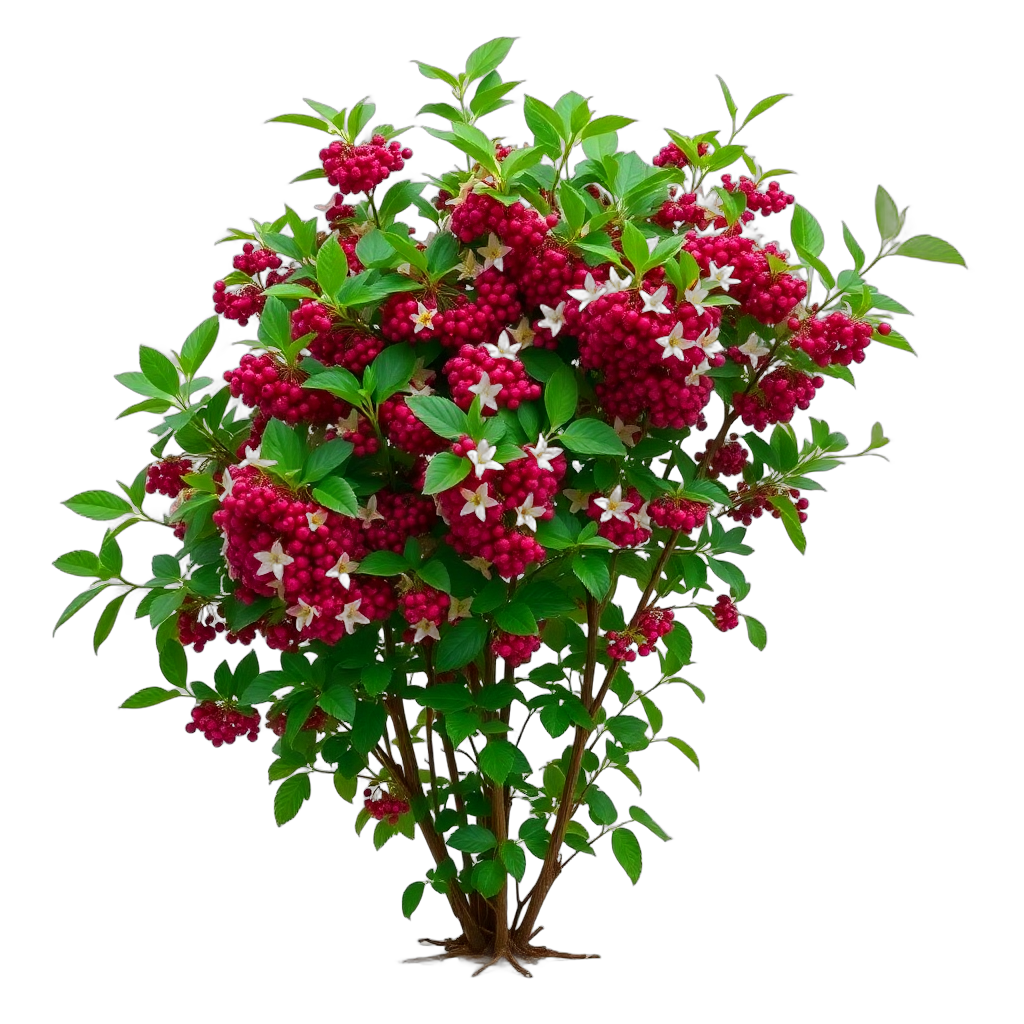
Clove Currant
Ribes odoratum
grows to 6 feet, yellow blooms in spring. Attracts hummingbirds.

Fragrant Sumac
Rhus aromatica
grows to 4 feet, yellow blooms in spring. Attracts butterflies.
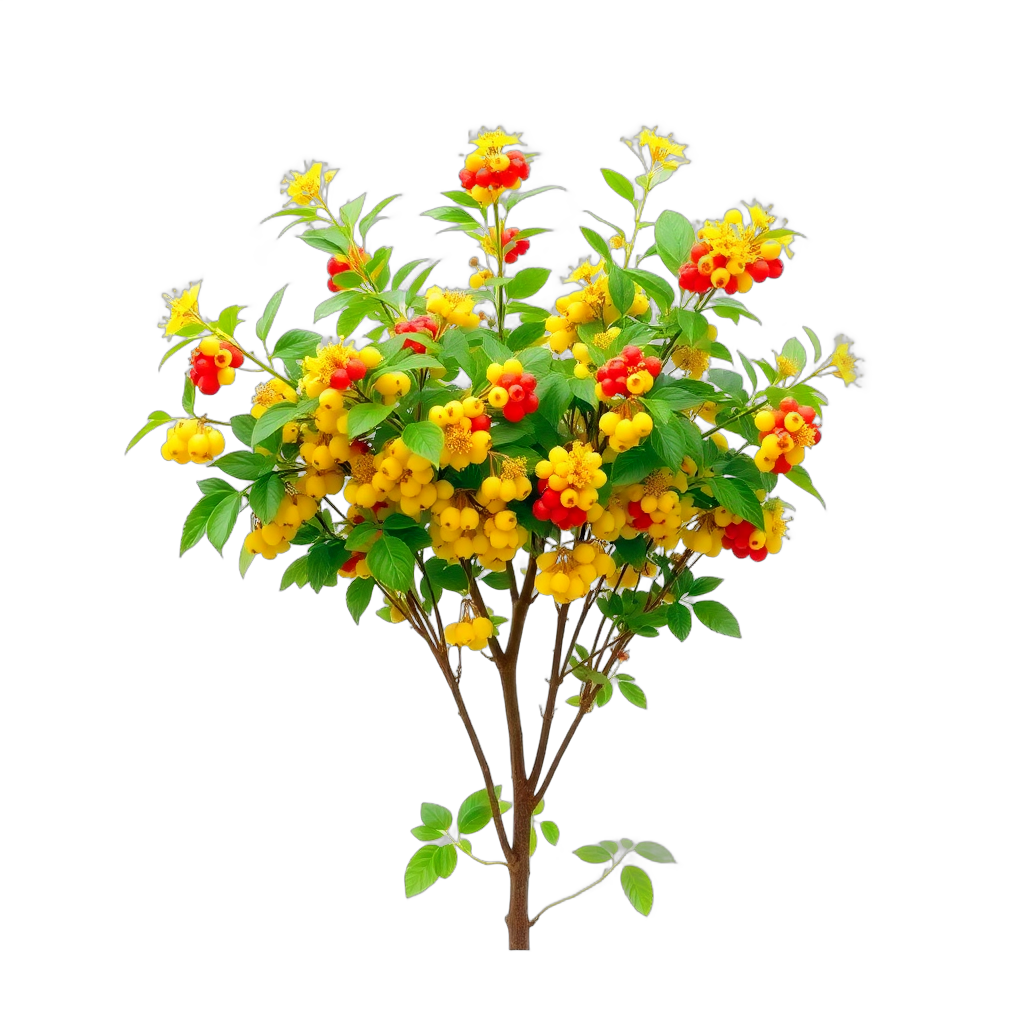
Golden Currant
Ribes aureum
grows to 6 feet, yellow blooms in spring. Attracts hummingbirds.
Featured Grasses & Groundcovers for Cottage/English Gardens
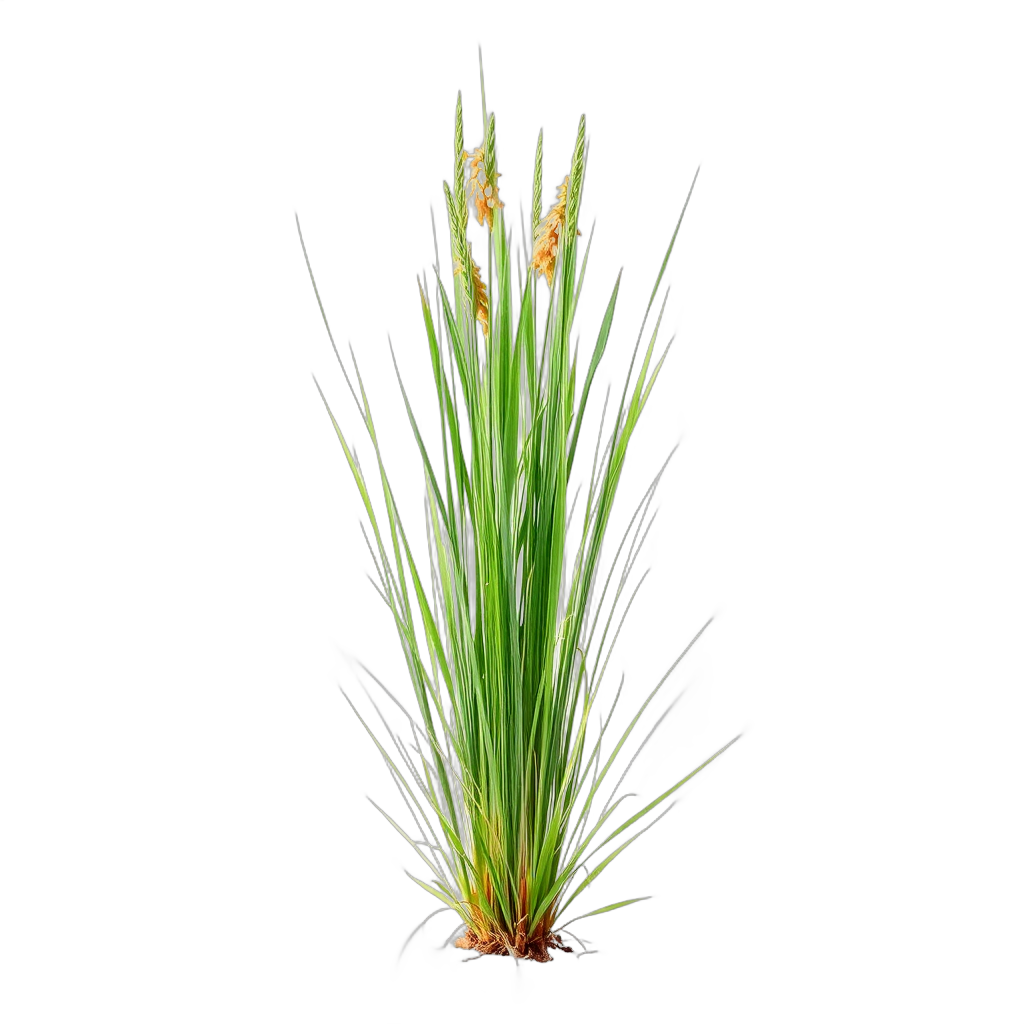
Eastern Gamagrass
Tripsacum dactyloides
grows to 6 feet, blooms in summer. Yellow fall color.
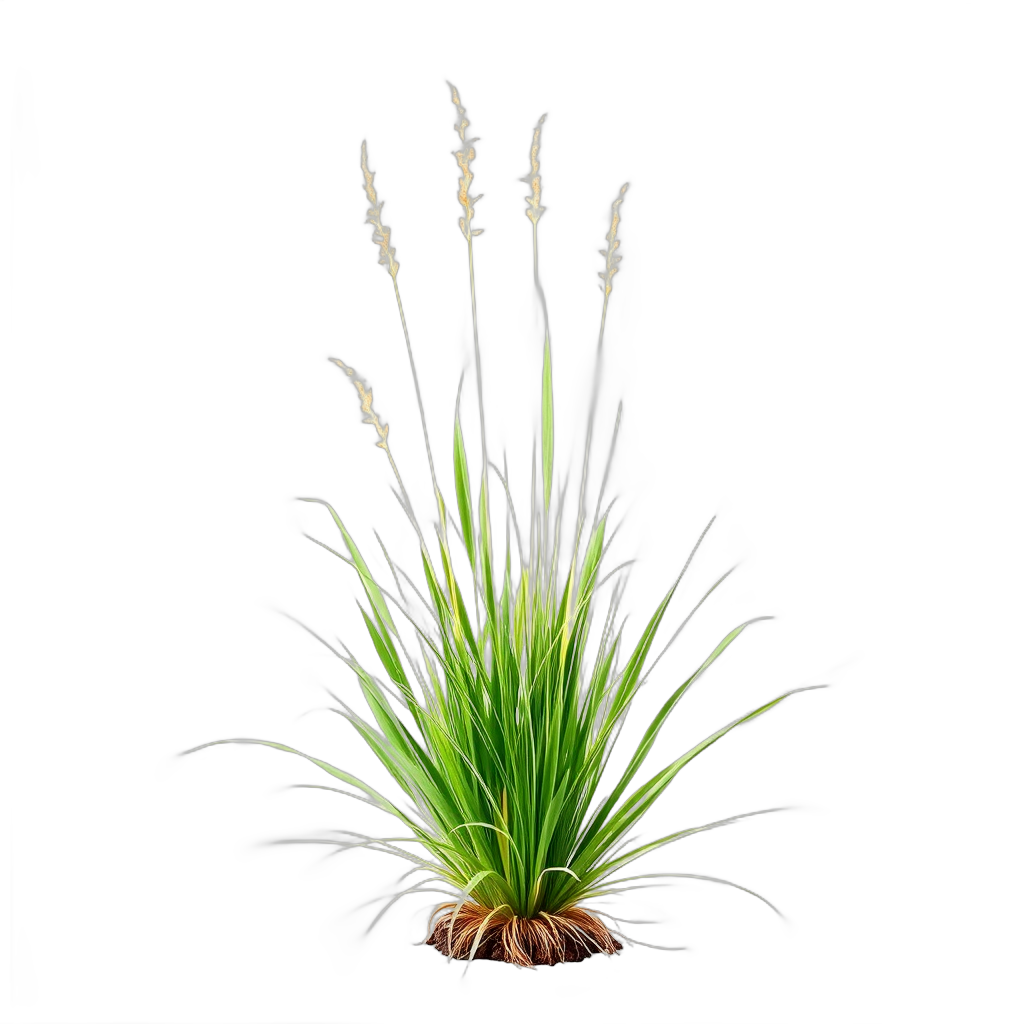
Northern Sea Oats
Chasmanthium latifolium
grows to 4 feet, blooms in fall. Bronze fall color.
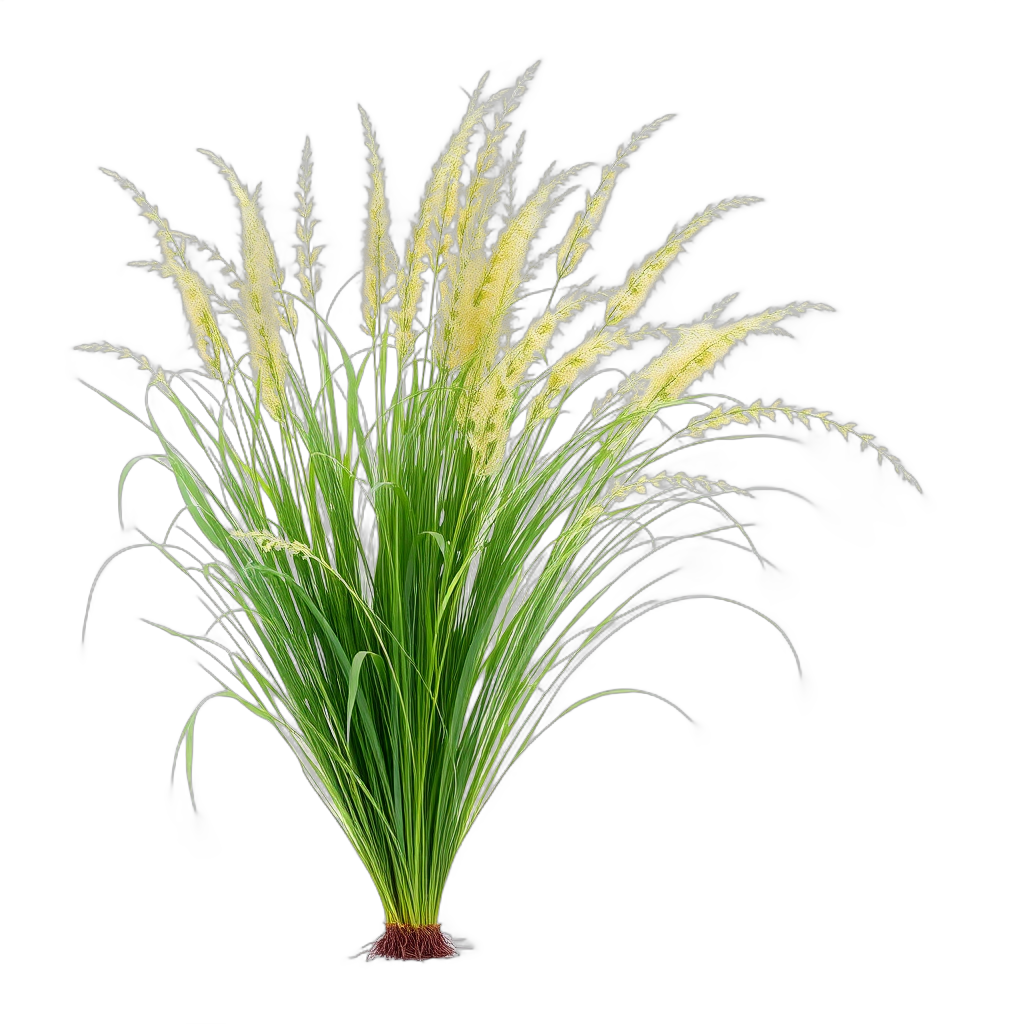
Adagio Maiden Grass
Miscanthus sinensis 'Adagio'
low-growing ground cover, pink blooms in summer. Orange fall color.
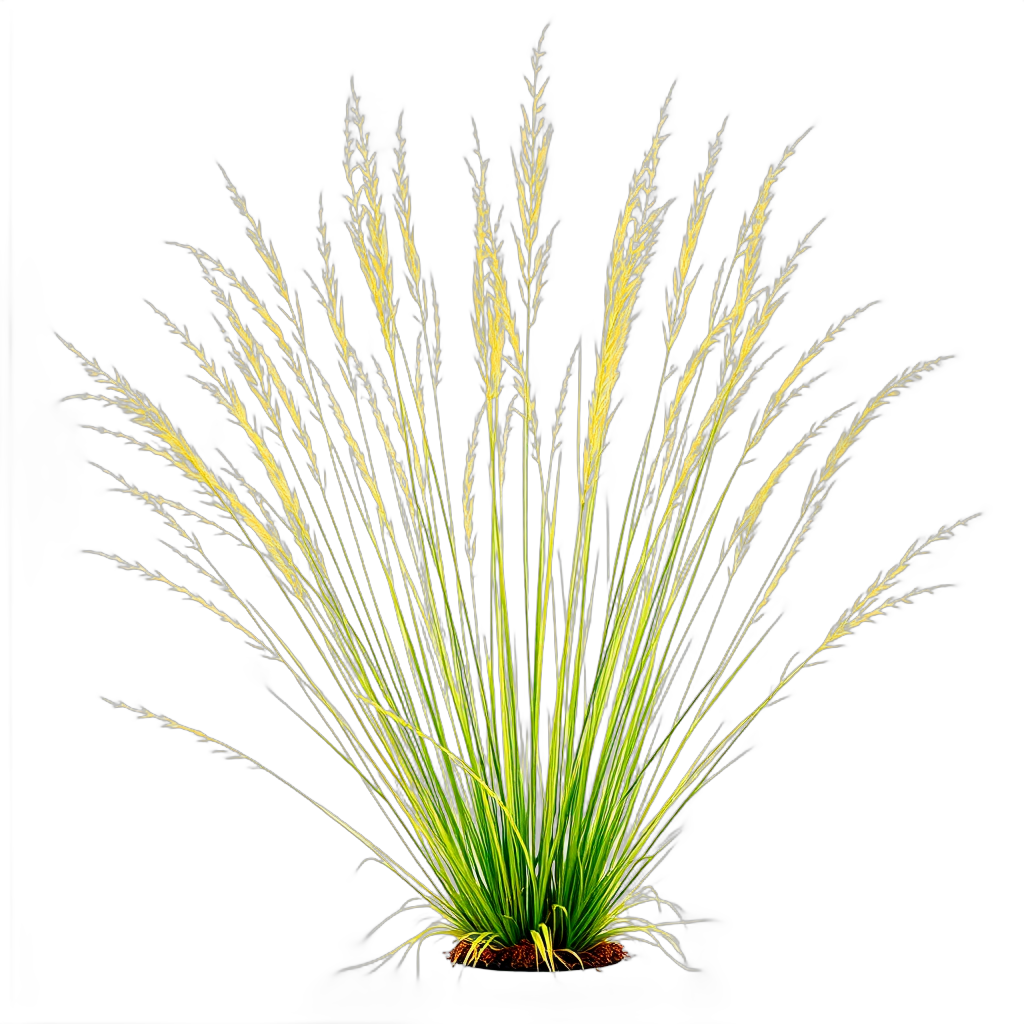
All Gold Japanese Forest Grass
Hakonechloa macra 'All Gold'
low-growing ground cover, blooms in summer.
Featured Flowers & Perennials for Cottage/English Gardens
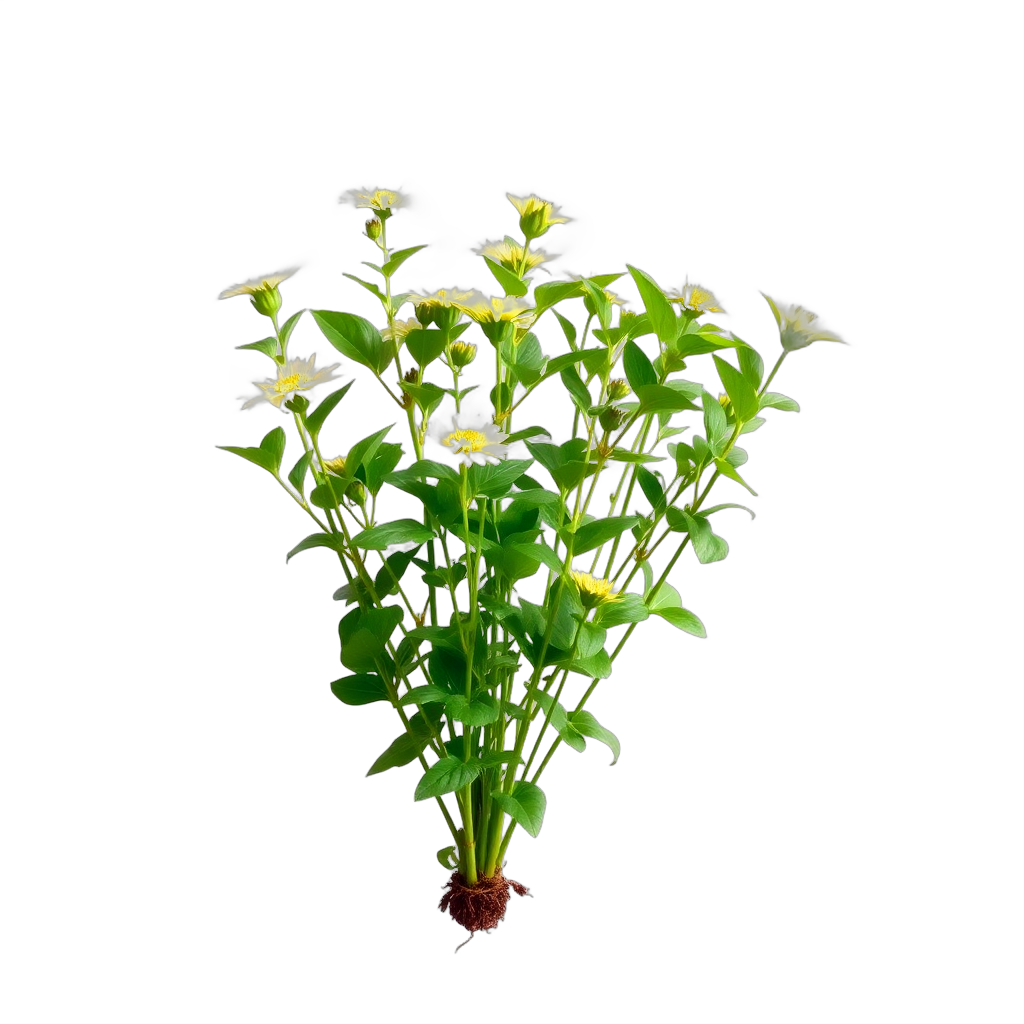
Cup Plant
Silphium perfoliatum
medium-sized at 7 feet, yellow blooms in summer. Attracts butterflies.
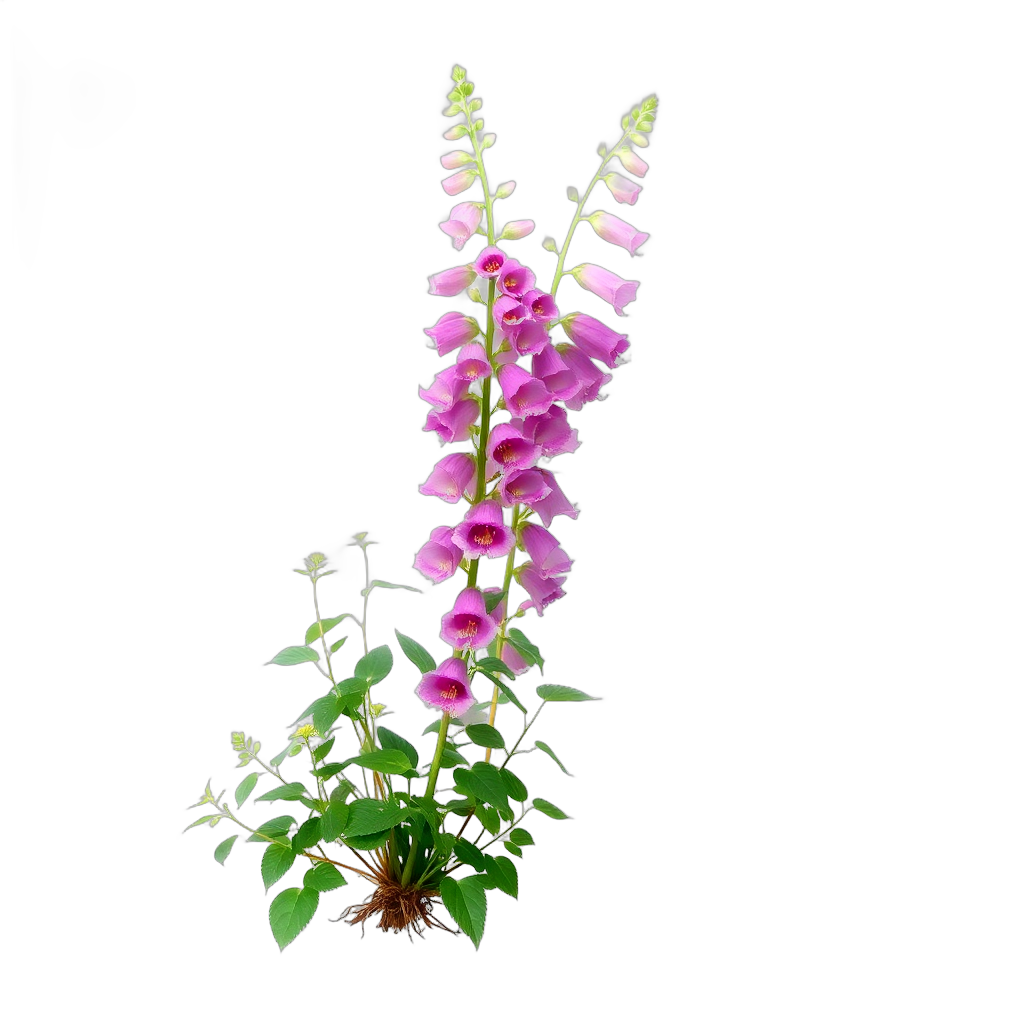
Foxglove Beardtongue
Penstemon digitalis
grows to 3 feet, white blooms in spring. Attracts hummingbirds.
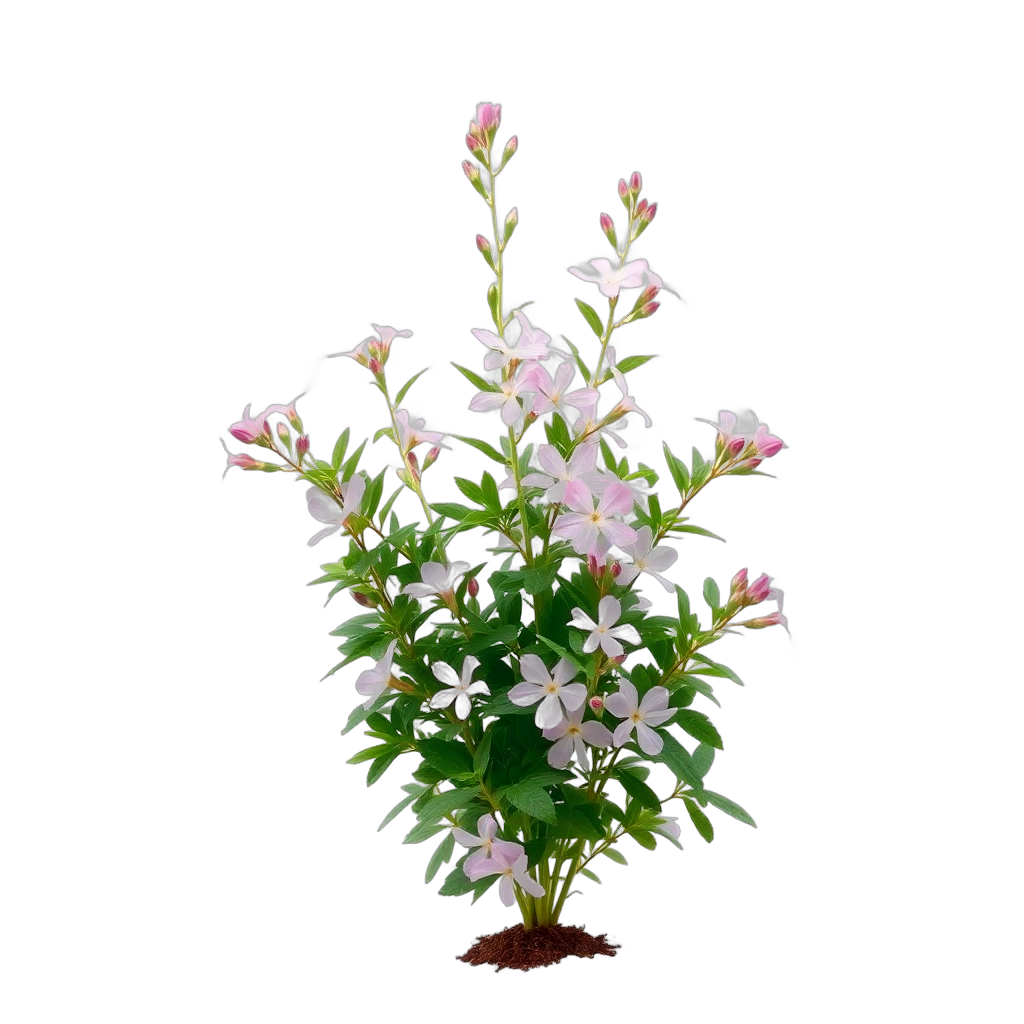
Garden Phlox
Phlox paniculata
grows to 3 feet, multi blooms in summer. Attracts hummingbirds.

Gloriosa Daisy
Rudbeckia hirta
low-growing ground cover, yellow blooms in summer. Attracts butterflies.
Zone and sun checks come from our database — confirm with your local nursery before you buy.
Bloom Calendar for Rockford
spring
Foxglove Beardtongue, American Black Currant, Clove Currantsummer
Cup Plant, Garden Phlox, Gloriosa Daisyfall
Northern Sea Oatswinter
Limited bloomsDesign Tips for Rockford (Zone 5b)
- Raise anything Mediterranean eight to twelve inches above grade and cut a third gravel into the soil — Rockford's Flagg and Durand silt loams stay saturated from the February thaw to April, and winter wet, not the -10°F low, is what kills Lavandula angustifolia 'Munstead' and Dianthus here
- Choose own-root, cane-hardy climbers for every arbour and gate: Rosa 'William Baffin' and Rosa 'New Dawn' come through a Zone 5b winter unwrapped, which means the structure looks finished in April instead of waiting for a grafted rose to regrow from the base
- Set every arbour, pergola and fence post on a footing below Winnebago County's 42-inch frost depth; a 30-inch post hole will lift a rose arch out of plumb in one winter and take the roses with it
- Give the parkway strip its own salt-tough plant list — Rosa rugosa 'Blanc Double de Coubert', Nepeta × faassenii 'Walker's Low' and Panicum virgatum 'Northwind' shrug off plough spray in a 35-inch snow year, while Buxus 'Green Velvet' within ten feet of the curb will brown out by March
- Exploit the cool nights: Rockford summers drop into the low 60s after dark, so Delphinium elatum 'Blue Bird', Digitalis purpurea 'Camelot Lavender' and Leucanthemum × superbum 'Becky' hold flowers far longer here than in warmer zones — build the June peak around them rather than around annuals
- Design for the 155-day season by stacking five bloom waves, from Allium 'Purple Sensation' in May to Hylotelephium 'Herbstfreude' and Aster novae-angliae 'Purple Dome' in October, and shear Nepeta and Salvia nemorosa 'Caradonna' hard after their first flush for a second round in August
- Plant in the first three weeks of September wherever you can — warm soil, autumn rain and no heat stress make it the strongest establishment window Rockford offers, and Paeonia lactiflora and bare-root roses set noticeably better roots then than in a May planting
Where to Source Plants in Rockford
Skip the big-box stores. These independent Rockford nurseries specialize in the plants that make cottage/english gardens thrive in Zone 5b.
Rock Valley Garden Center
East State / Bell School Road
Family-run since 1968; grows its own annuals and perennials plus one of northern Illinois' deepest benches of specialty cottage plants, shrub roses, statuary and pond stock
The Landscape Connection
South Rockford (Mulford & Linden)
Twenty-acre greenhouse and garden center with a large perennial range, bulk mulch and an on-site floral shop — the practical place to buy a whole border in one trip
Platt Hill Nursery
Riverside Boulevard / northeast Rockford
Family-owned Illinois nursery whose Rockford yard carries Zone 5-hardy trees, shrub and climbing roses, hydrangeas and specimen shrubs proven in the Rock River valley
Ack Ack Nursery Company
Loves Park / East Riverside
Locally owned since 1993 with a working tree farm, certified nurserymen on staff, bulk mulch and larger-caliper trees and hedging shrubs for established gardens
Cottage/English Landscaping Costs in Rockford
| Project Scope | Estimated Cost |
|---|---|
| Front-yard cottage border, planted and mulched (300–500 sqft) | $3,500 – $8,500 |
| White cedar picket fence with rose arbour gate (80–120 linear ft) | $4,000 – $9,500 |
| Clay brick paver front walk on compacted base (60–100 sqft) | $2,000 – $5,000 |
| Dry-laid flagstone bistro terrace (150–250 sqft) | $5,500 – $13,000 |
| Cedar pergola over paver dining patio (14 x 16 ft) | $14,000 – $32,000 |
| Mixed perennial and shrub-rose border, per 100 sqft installed | $700 – $1,600 |
| AI visualization with ProScapeAI | Free to start |
Estimates based on Rockford, IL-area contractor rates as of 2026. Actual costs vary by site conditions, materials, and contractor.
Rockford Climate & Growing Zone
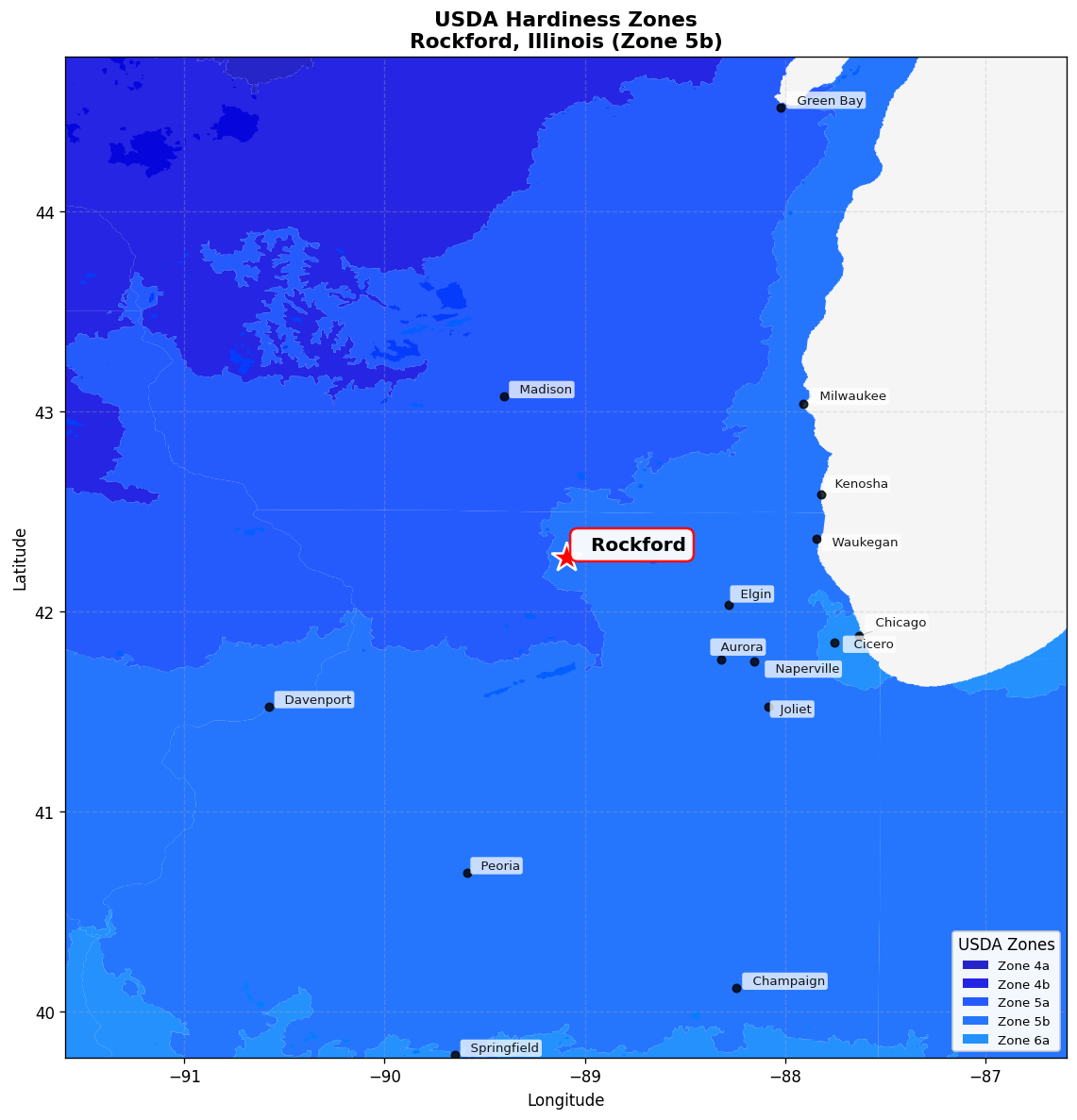
USDA Zone 5b
Hardiness zone for Rockford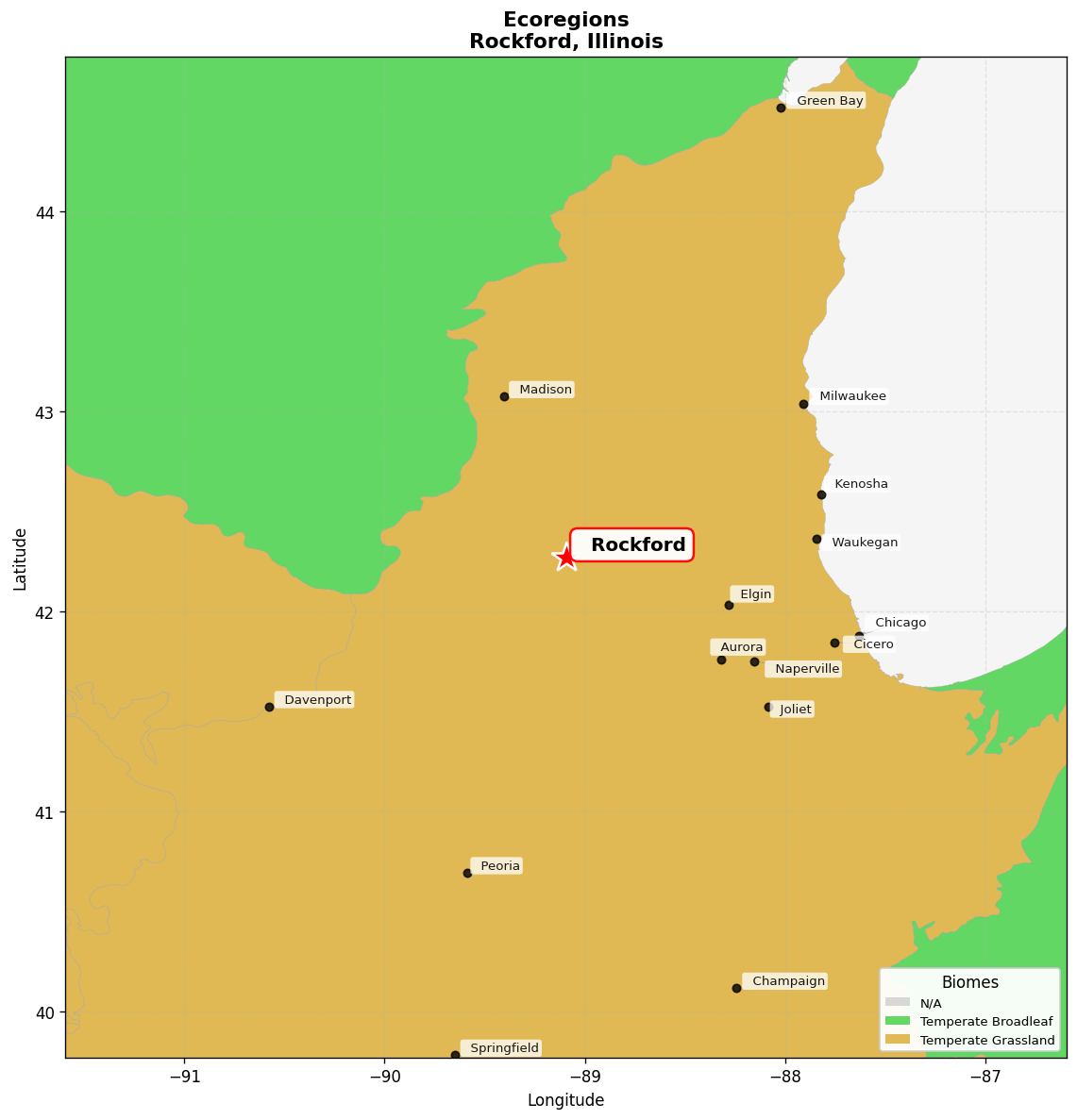
Central US forest-grasslands transition
Native ecoregionFrequently Asked Questions
How much does a cottage garden cost in Rockford?
Rockford installation prices run roughly 15–25% below the national metro average, which makes this style unusually affordable here. A planted front border of 300–500 square feet, installed with amended soil and mulch, lands at $3,500–8,500. Add a white cedar picket fence with a rose arbour gate and budget $4,000–9,500 for 80–120 linear feet. A dry-laid flagstone bistro terrace of 150–250 square feet runs $5,500–13,000, and a cedar pergola over a paver dining patio runs $14,000–32,000. Doing the planting yourself changes the maths substantially: bare-root Rosa 'William Baffin' and division-grown Hosta 'Blue Angel' bought locally in April can bring a whole border in under $6 per square foot.
Which roses survive a Rockford winter without being wrapped?
Anything cane-hardy and own-root. Rosa 'William Baffin' from the Canadian Explorer series is the safest arbour climber in Zone 5b — it is rated to -30°F and needs no protection at all. Rosa 'New Dawn' and Rosa 'Eden' both come through Rockford's -15°F to -10°F design lows with occasional tip dieback you prune out in April. For shrubs, Rosa rugosa 'Blanc Double de Coubert', Rosa 'Knock Out' and the David Austin selection Rosa 'Olivia Rose Austin' are all reliable. Grafted hybrid teas are the exception: mound eight to ten inches of compost over the bud union in mid-November and pull it back in early April, or accept that you will replace them.
Can I actually grow lavender in Rockford's soil?
Yes, but only English lavender and only if you fix the drainage. Lavandula angustifolia 'Munstead' and 'Hidcote' are hardy to Zone 5; Lavandula stoechas and the lavandin hybrids are not and will die the first winter. What kills lavender in Winnebago County is not the -10°F low, it is the Flagg and Durand silt loam staying saturated from the first February thaw through April. Build the bed eight to twelve inches above grade, cut a third pea gravel or coarse sand into the backfill, mulch with gravel rather than shredded bark right at the crown, and site it where snowmelt runs away from the plant. Done that way, a 'Munstead' hedge along a front walk lasts eight to ten years here.
When should I plant in Rockford?
Rockford's frost-free window is roughly May 5 to October 5 — about 155 days. Perennials, shrubs and roses go in best from mid-April to early June, when the soil has warmed but the heat has not arrived. The second and arguably better window is early September to about October 20: soil is still warm, autumn rain does the watering, and Paeonia lactiflora 'Sarah Bernhardt', Baptisia australis and bare-root roses all establish roots before dormancy. Hold tender annuals and dahlias until after May 10. Avoid planting woody stock after the end of October, since roots need six weeks in workable soil before the ground locks up.
How do I keep a Zone 5b cottage garden blooming from May to October?
Plan the succession in five waves rather than hoping for it. Late April to May: Allium 'Purple Sensation', Narcissus and Amsonia hubrichtii. Early June: Paeonia lactiflora 'Festiva Maxima', Salvia nemorosa 'Caradonna' and the first flush on Rosa 'New Dawn'. Mid to late June: Delphinium elatum 'Blue Bird' and Digitalis purpurea 'Camelot Lavender', which is when a Rockford cottage garden peaks. July and August: Echinacea purpurea 'Magnus', Phlox paniculata 'David', Leucanthemum × superbum 'Becky' and Rudbeckia fulgida 'Goldsturm'. September into October: Hylotelephium 'Herbstfreude', Aster novae-angliae 'Purple Dome' and the repeat bloom on the shrub roses. Shear Nepeta and Salvia hard after their first flush and both give you a second one.
What do rabbits, deer and road salt do to a Rockford cottage garden?
Rabbits are the everyday problem inside the city and they will take Echinacea and Phlox seedlings to the ground in May — a 24-inch chicken-wire collar around new plantings for the first six weeks solves it. Deer pressure is real on the edges, in Roscoe, Rockton, Cherry Valley and along the Rock River corridor; Nepeta, Lavandula, Digitalis, Allium and Baptisia australis are all reliably ignored, while tulips and hostas are not. Road salt is the third factor: in a 35-inch snow winter, plough spray will burn Buxus 'Green Velvet' and shrub roses within about ten feet of the curb, so plant Rosa rugosa 'Blanc Double de Coubert', Nepeta × faassenii 'Walker's Low' or Panicum virgatum 'Northwind' in the parkway strip and keep the tender material behind the fence line.
Do I need a permit for a fence, arbour or patio in Rockford?
Planting beds, borders, mulch and dry-laid flagstone laid at grade generally involve no permit anywhere in the metro. Fences, pergolas, decks, pools and retaining walls above a set height are reviewed by the City of Rockford Building Department, and Loves Park, Machesney Park, Cherry Valley, Roscoe and unincorporated Winnebago County each apply their own thresholds and front-yard fence-height limits — confirm the requirements with your own municipality before you order materials. Two technical points matter regardless of paperwork: Winnebago County frost depth is 42 inches, so arbour and pergola posts need footings below that line, and JULIE, the Illinois utility locate service, should be called before any post hole is dug.