4 Mediterranean Garden Ideas for Victorville, CA | Cold-Hardy Picks for Zone 8b
Native plants from the Mojave desert (Zone 8b) — Mediterranean (hot summer) climate
Why Mediterranean Gardens in Victorville?
Most of Victorville already looks Mediterranean from the street. The 1990s and 2000s tract homes across the west side, Sunset Ridge and Spring Valley Lake are stucco boxes with clay or concrete tile roofs, built in the Spanish and Tuscan look that California builders favored, and a gravel courtyard with olives, lavender and rosemary is the garden those houses were drawn for. The dry summers fit as well. A Mediterranean garden is built for heat and drought, and plants such as Lavandula × intermedia 'Grosso', Salvia officinalis 'Berggarten' and Santolina chamaecyparissus want the lean soil and full sun the High Desert has.
Victorville is colder than the Mediterranean. The city sits at about 2,900 feet. The 1991 to 2020 normals give an average January low of about 33°F and an average July high near 98°F, the record low is -1°F, and the city gets only about 5.6 inches of rain a year. That is USDA Zone 8b, typical lows of 15 to 20°F, and several Mediterranean classics do not survive it. Lemons, oranges, bougainvillea and Rosmarinus 'Tuscan Blue' are often killed or cut to the ground by a hard winter here. The substitutes are Rosmarinus officinalis 'Arp' (one of the hardiest rosemaries), Punica granatum 'Wonderful' and Ficus carica 'Brown Turkey' in place of citrus, and Cupressus sempervirens 'Tiny Tower' for the cypress line. Olives are possible but borderline: Olea europaea 'Swan Hill' and 'Arbequina' handle the usual 15 to 20°F nights, so plant them against a south-facing wall and accept that a once-in-a-decade freeze can burn them back.
The soil suits this style better than it suits most. Victorville sits on sandy alluvium from the surrounding mountains and the Mojave River, alkaline at roughly pH 7.5 to 8.5 and low in organic matter. Lavender, rosemary, santolina and thyme all prefer alkaline, fast-draining ground and grow leaner and longer-lived in it than in rich garden soil, so do not amend those beds heavily. Save compost for the pomegranate and fig. Where a cemented caliche layer sits below the surface, break through it for trees or build up a raised terrace, because water held on top of caliche rots olive and rosemary roots.
The water rules point straight to drip and gravel. City of Victorville Water allows sprinklers three days a week by address, from 10 p.m. to 6 a.m. in June through September and 9 a.m. to 3 p.m. in October through May, and drip irrigation is exempt from that schedule. A Mediterranean garden is happy on that regime: gravel mulch, deep and infrequent drip to each shrub, and almost no lawn. Once established in their second or third year, lavender, rosemary and santolina can get by on a light drip cycle once or twice a week even in July.
4 Mediterranean Design Ideas for Victorville

AI-generated image
The Tuscan Gravel Courtyard
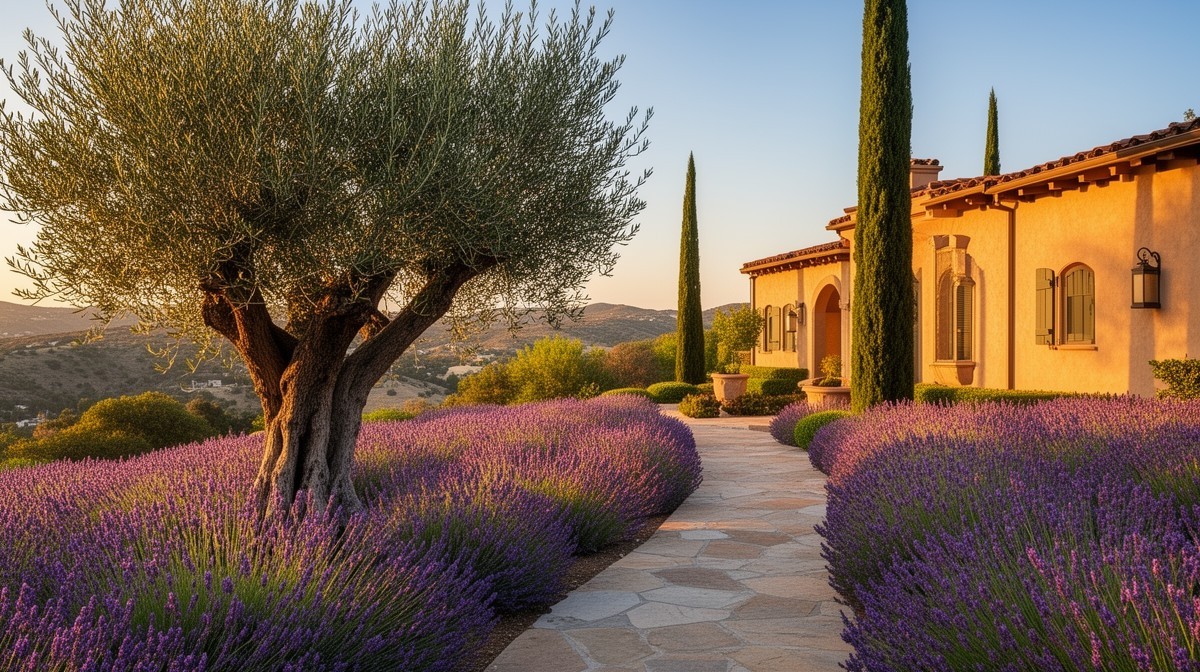
$14–28/sqftThe front yard of a tile-roofed stucco house becomes a walled gravel courtyard with a terracotta fountain at the center and a pair of olives against the south-facing house wall. Clipped lavender and rosemary line the path to the door, and a row of narrow cypress marks the side property line. The wall holds the day's heat into the night, which gives the olives the extra degrees they need through a Victorville winter.

AI-generated image
The Pomegranate and Fig Kitchen Terrace
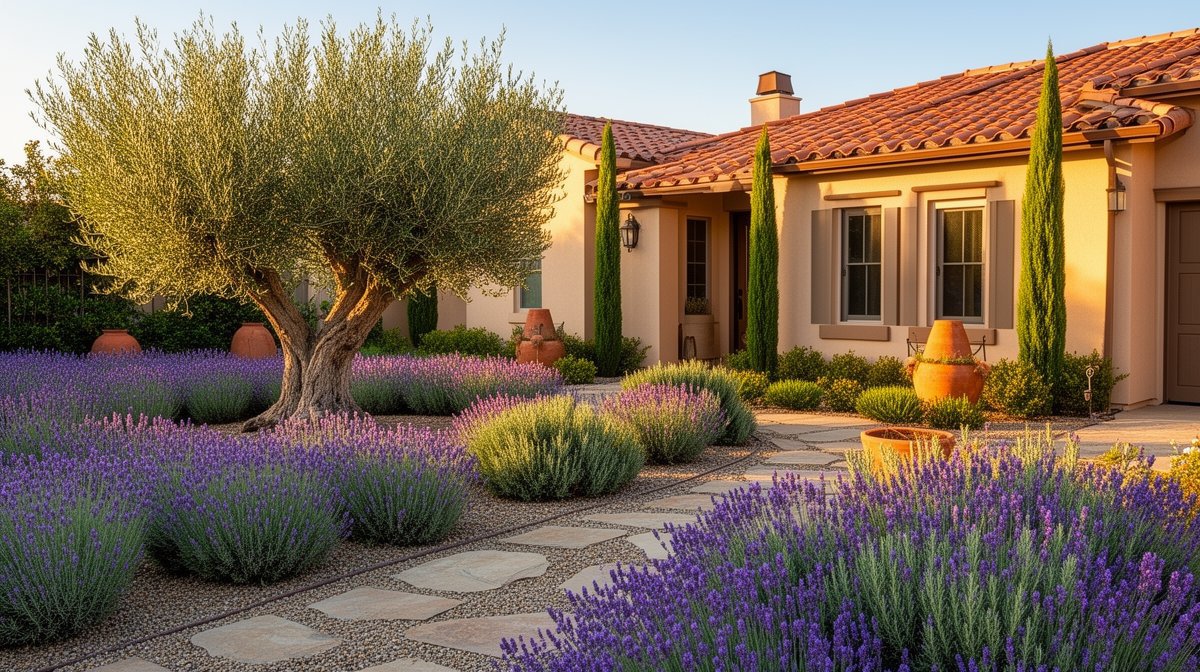
$18–35/sqftA back terrace of tumbled concrete pavers is edged with a bed of pomegranate, fig and culinary herbs for the Mediterranean fruit-and-herb look, with no citrus to lose to the cold. A wood pergola over the dining table carries a grapevine for summer shade. The bed faces west against the block wall, so the fruit gets the long afternoon heat it needs to ripen.

AI-generated image
The Lavender Slope
$12–24/sqftA sloped back or side yard is terraced with low dry-stacked stone walls, and each terrace is planted in long rows of lavender with Russian sage and rockrose between them. Gravel mulch covers the soil, and the rows run across the slope so drip water soaks in rather than running off. In June the slope turns purple and smells of lavender through the whole yard.

AI-generated image
The Olive Tree Patio Garden
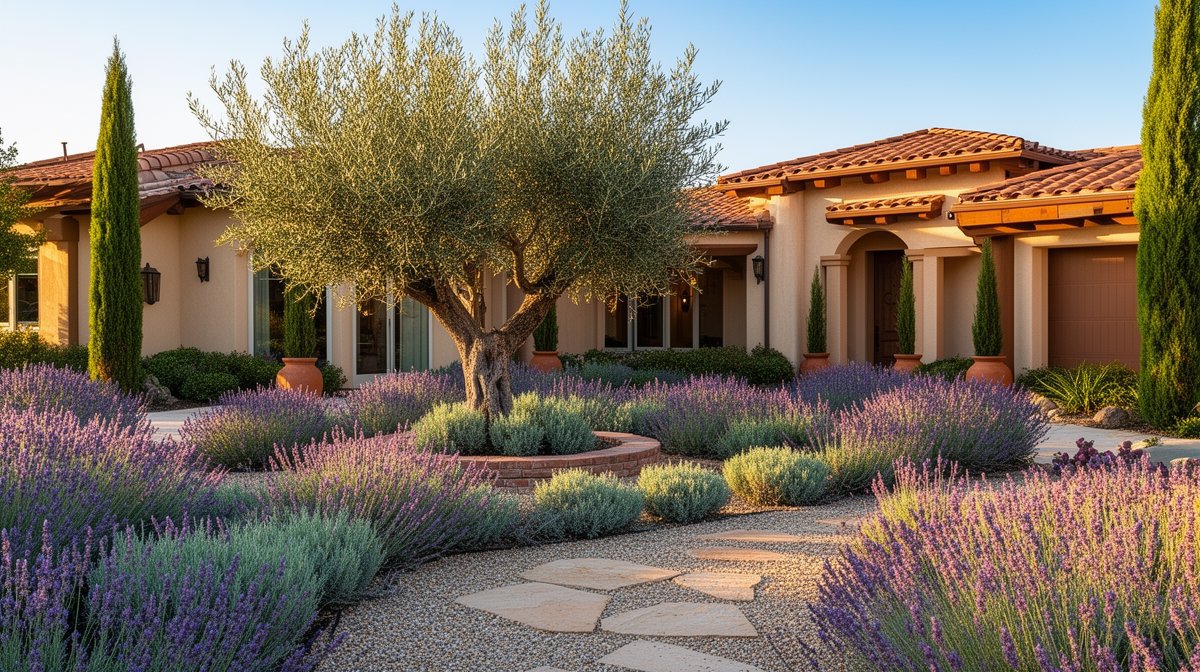
$16–32/sqftA single multi-trunk olive anchors a square patio of stamped concrete behind a two-story stucco house, with low benches built into a curved planter around it. The olive sits on the south side of the house where the wall and patio reflect heat back on cold nights. Germander and santolina are clipped low around the bench, and terracotta pots of rosemary sit by the back door.
See how a mediterranean garden looks on YOUR property
Upload a photo of your Victorville yard and visualize your dream garden in seconds.
Try ProScapeAI Free

AI-generated image
Featured Trees & Shrubs for Mediterranean Gardens
Browse all 168 plants for Victorville
Anderson Wolfberry
Lycium andersonii
grows to 5 feet, purple blooms in spring. Attracts hummingbirds.
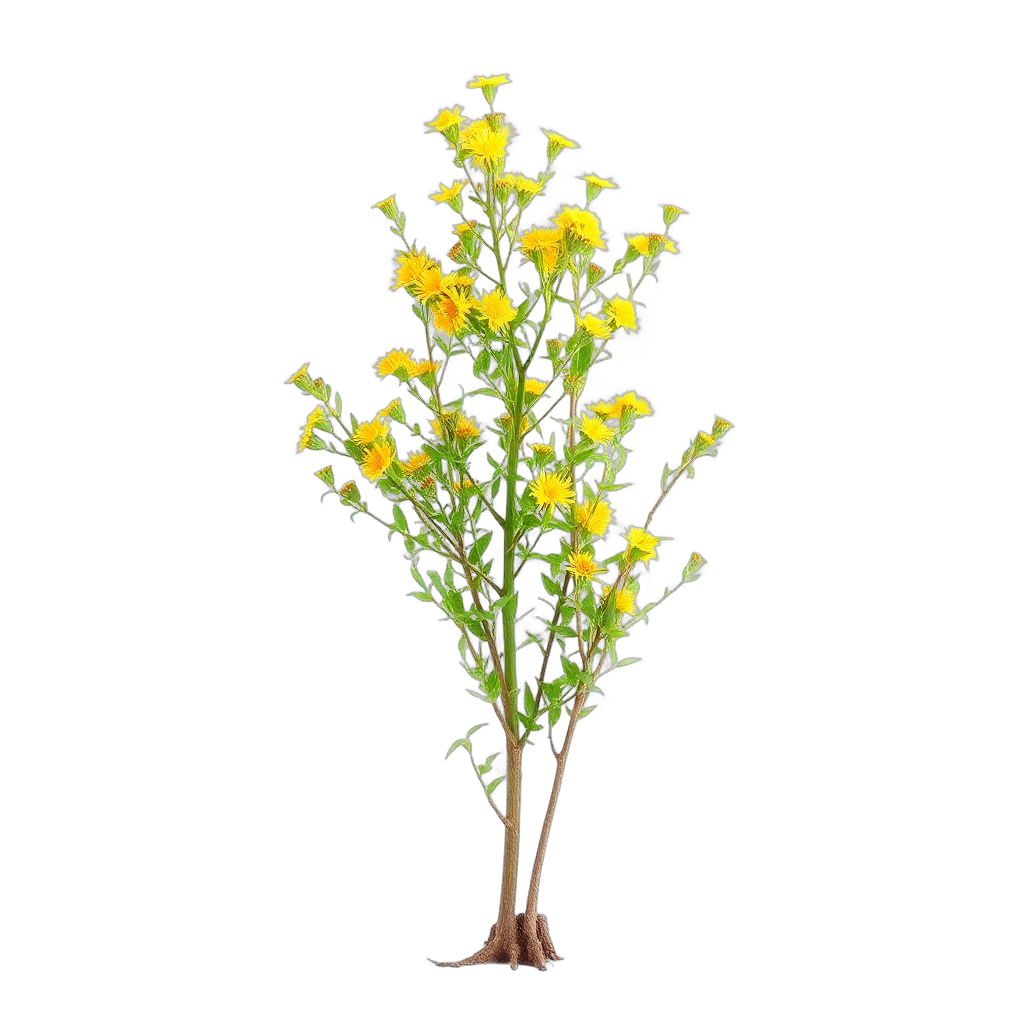
Brittlebush
Encelia farinosa
grows to 3 feet, yellow blooms in spring. Attracts butterflies.
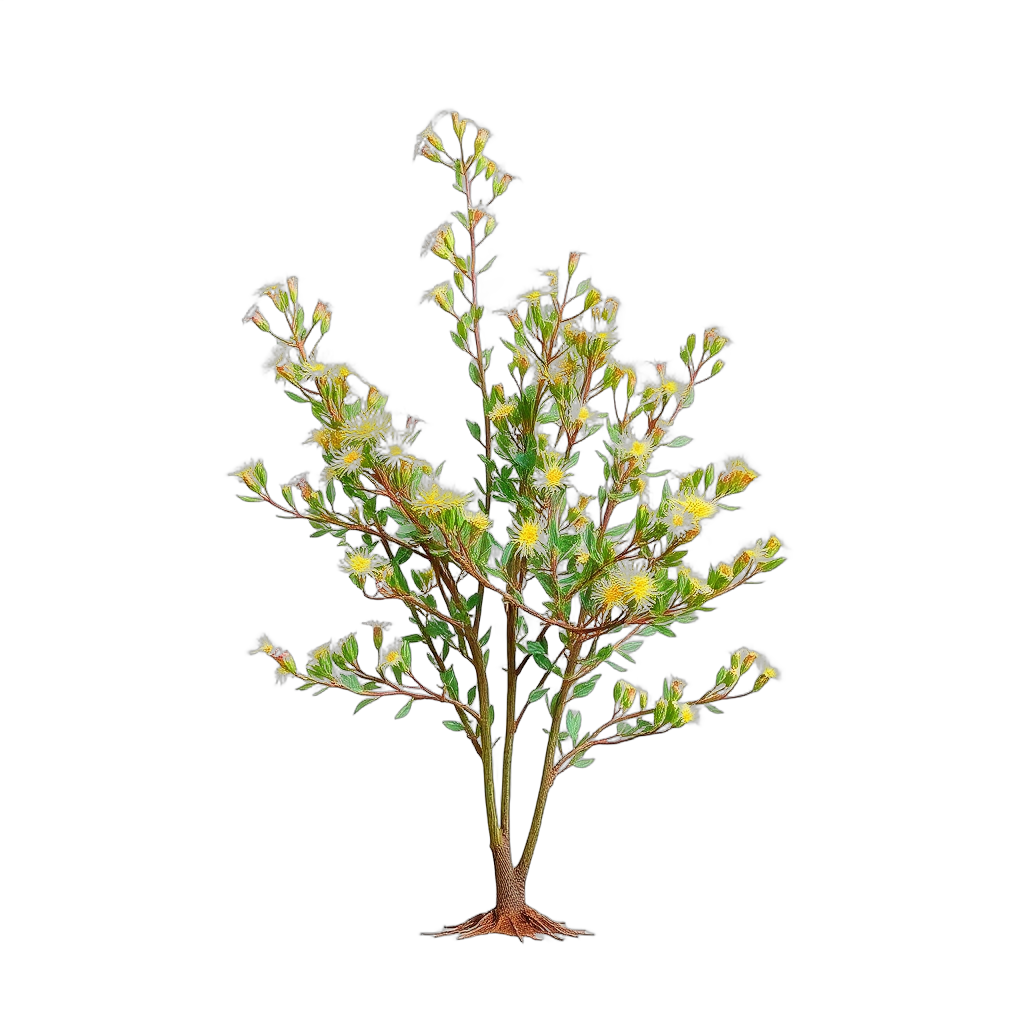
Catclaw Acacia
Acacia greggii
medium-sized at 15 feet, yellow blooms in spring. Pollinator-friendly.
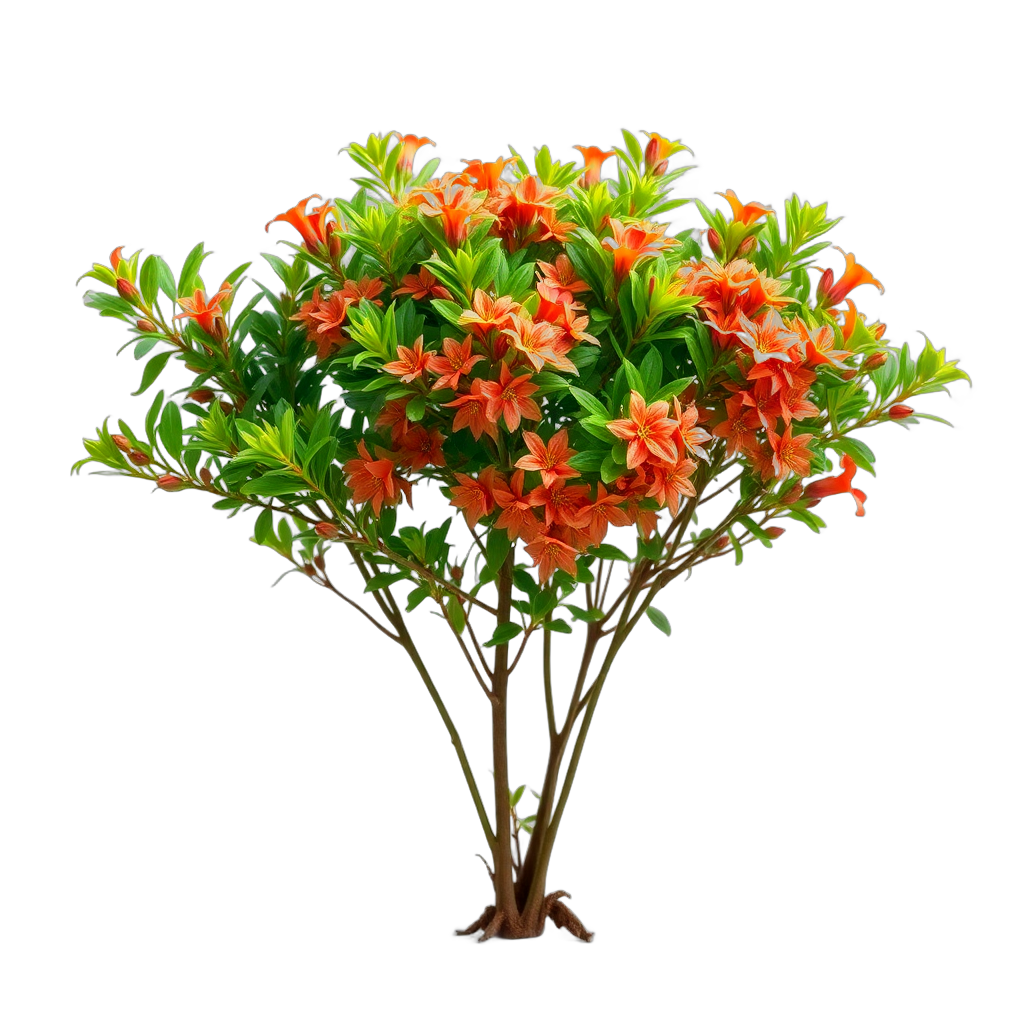
Chuparosa
Justicia californica
grows to 5 feet, red blooms in spring. Attracts hummingbirds.
Featured Grasses & Groundcovers for Mediterranean Gardens
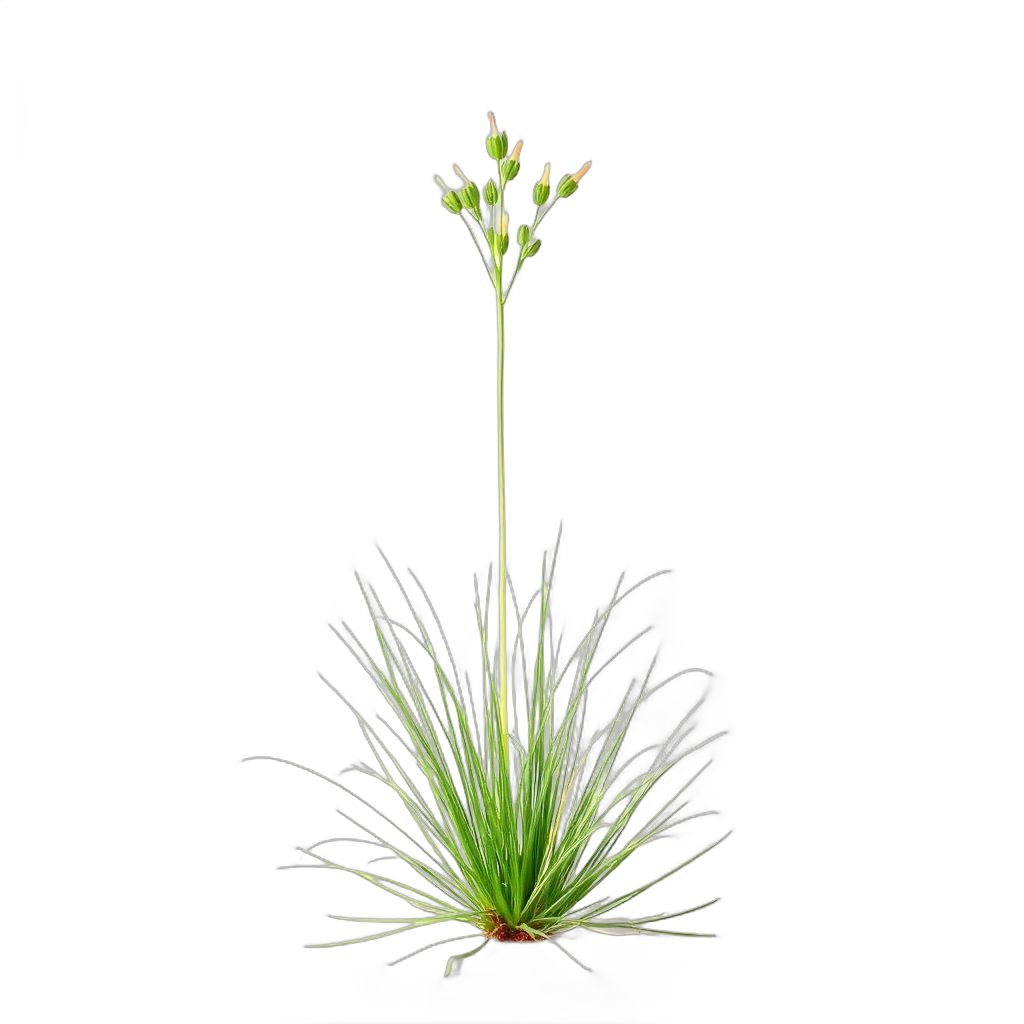
Alkali Sacaton
Sporobolus airoides
grows to 3 feet, blooms in summer. Yellow fall color.
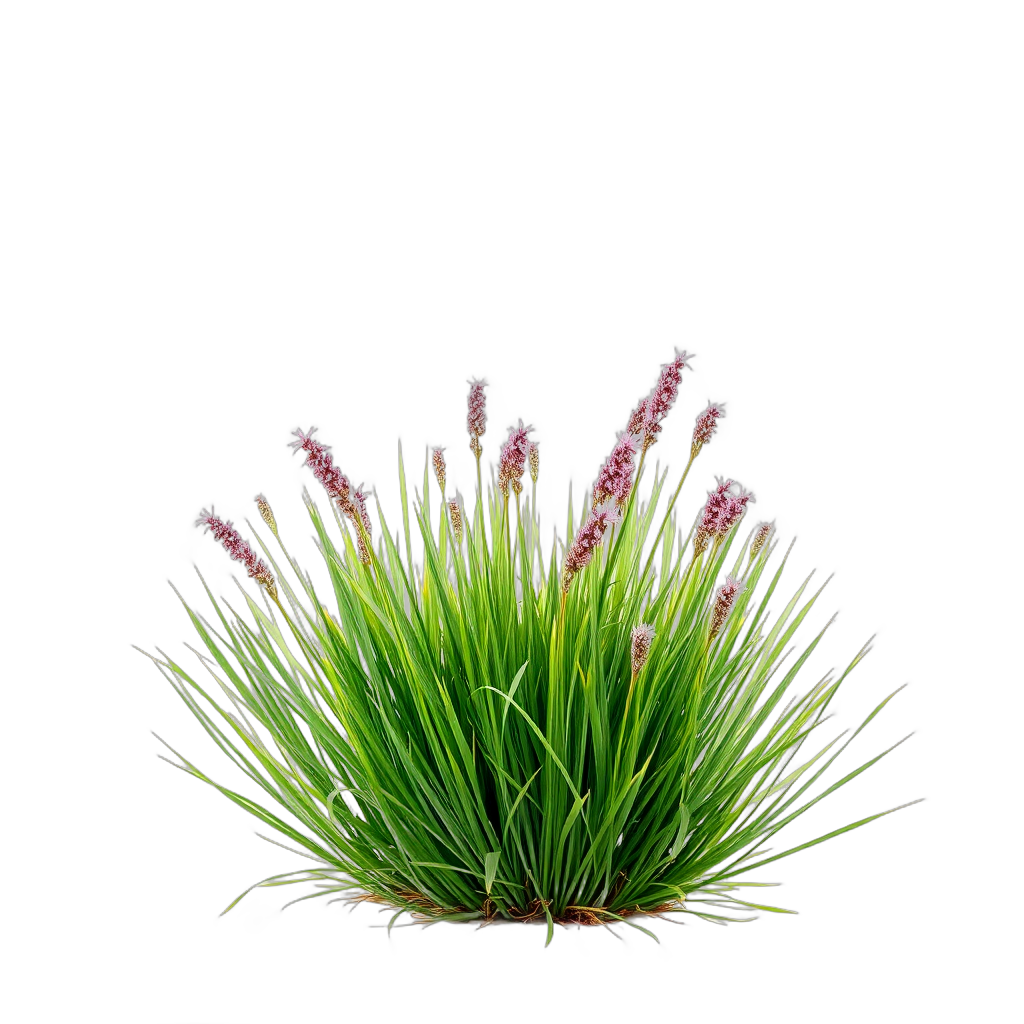
Purple Three-Awn
Aristida purpurea
low-growing ground cover, purple blooms in fall. Yellow fall color.
Featured Flowers & Perennials for Mediterranean Gardens
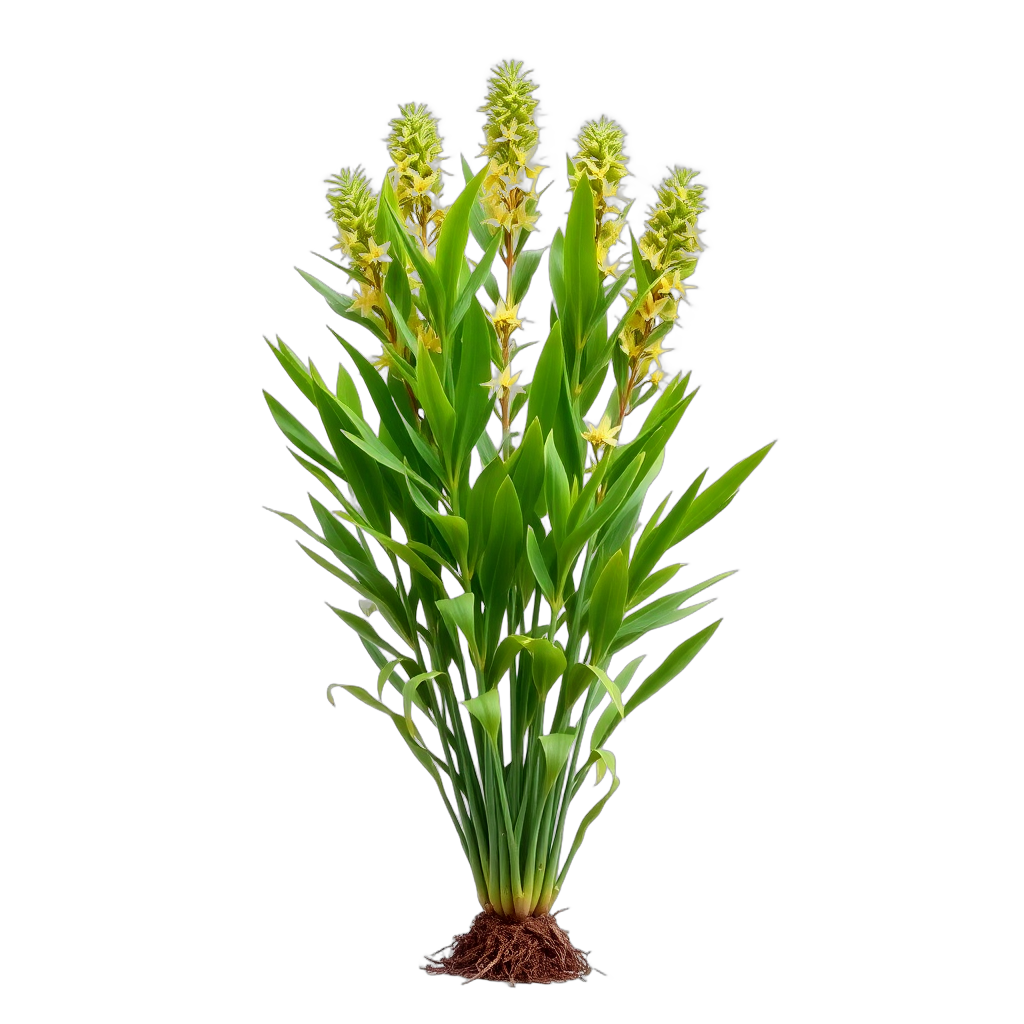
Banana Yucca
Yucca baccata
low-growing ground cover, white blooms in spring. Attracts hummingbirds.
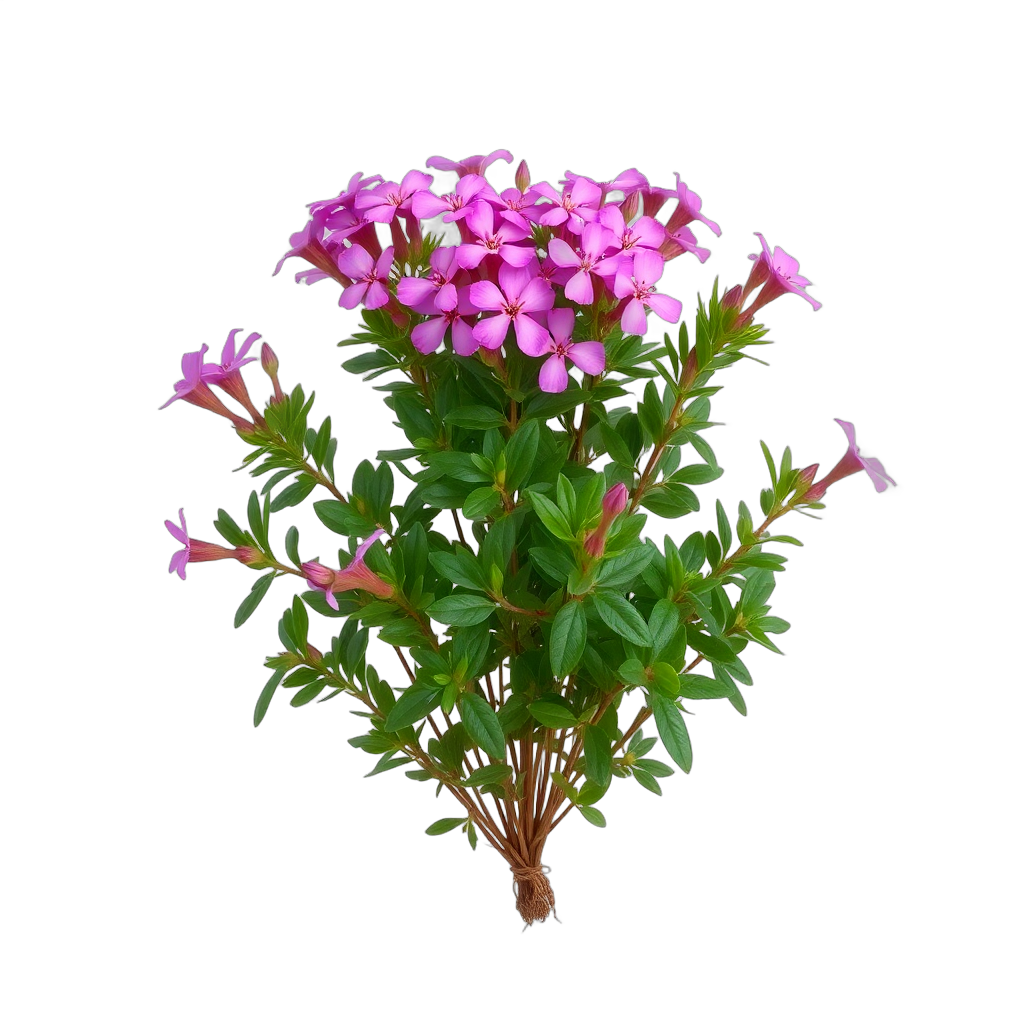
Desert Phlox
Phlox austromontana
low-growing ground cover, pink blooms in spring. Attracts hummingbirds.
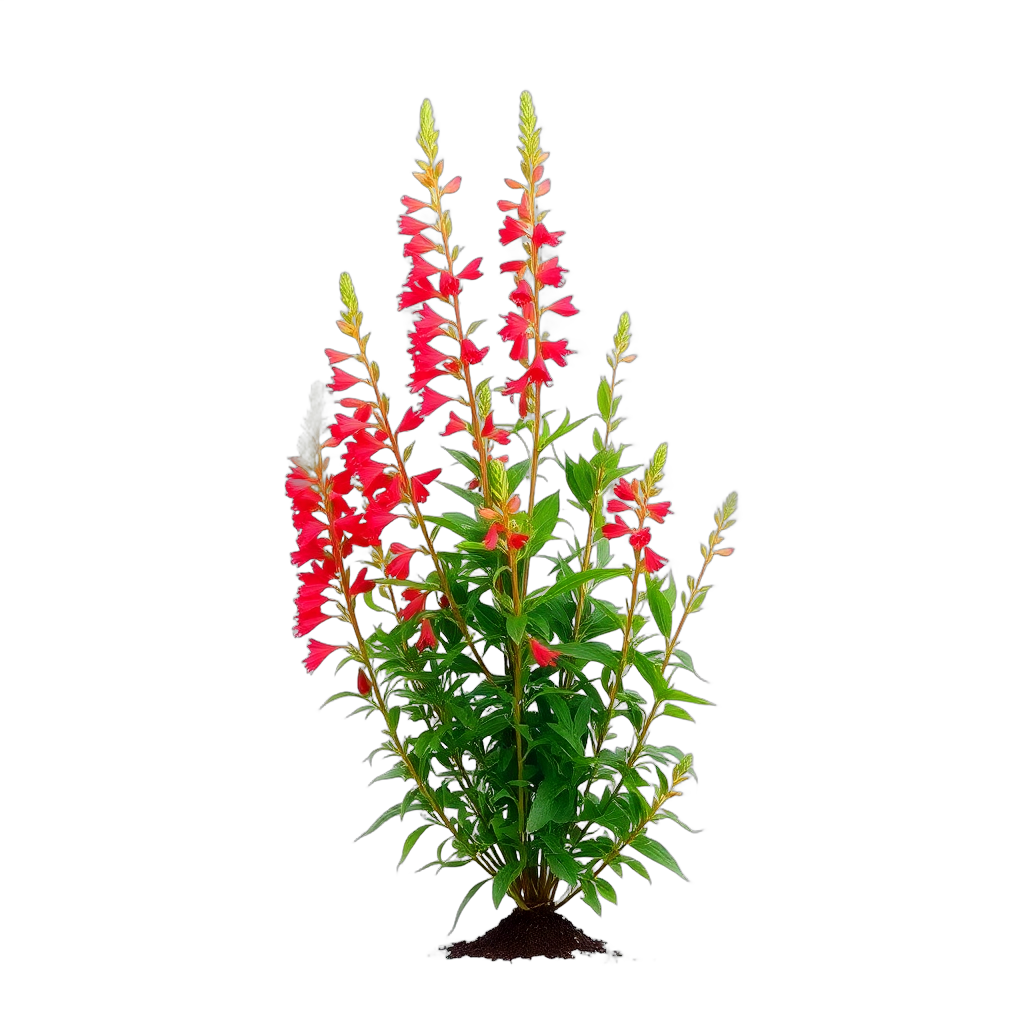
Firecracker Penstemon
Penstemon eatonii
low-growing ground cover, red blooms in spring. Attracts hummingbirds.

Palmer's Penstemon
Penstemon palmeri
grows to 4 feet, pink blooms in spring. Attracts hummingbirds.
Zone and sun checks come from our database — confirm with your local nursery before you buy.
Bloom Calendar for Victorville
spring
Banana Yucca, Desert Phlox, Firecracker Penstemonsummer
Alkali Sacaton, Quailbushfall
Purple Three-Awnwinter
Limited bloomsDesign Tips for Victorville (Zone 8b)
- Plant olives on the south side of the house or against a wall that holds heat; Victorville's 15 to 20°F nights are survivable for Olea europaea 'Swan Hill', but the coldest corner of the lot is not
- Choose Rosmarinus officinalis 'Arp' over 'Tuscan Blue'; 'Arp' is one of the hardiest rosemaries and handles High Desert winters that kill the upright Italian types
- Do not over-amend lavender and rosemary beds; the alkaline sandy soil at pH 7.5 to 8.5 is what these plants want, and rich soil makes them floppy and short-lived
- Use pomegranate and fig for the fruit-tree look: Punica granatum 'Wonderful' and Ficus carica 'Brown Turkey' take the cold that citrus cannot
- Mulch with angular crushed rock, not bark; gravel keeps crowns dry, reflects heat for the Mediterranean plants and does not blow away in the spring wind
- Put everything on drip, which City of Victorville Water exempts from the three-day sprinkler schedule, and water deeply and less often once plants are established
- Break through any caliche under olive and fig planting holes, or build a raised terrace; water held on hardpan is what kills Mediterranean plants here, not drought
Where to Source Plants in Victorville
Skip the big-box stores. These independent Victorville nurseries specialize in the plants that make mediterranean gardens thrive in Zone 8b.
Fireman Rock & Nursery
Victorville (Palmdale Road)
Local family-owned yard with plants and trees plus decorative rock, decomposed granite, boulders and planting soil for gravel courtyards and terraces
Nate's Nursery
Apple Valley (Tulsa Road)
High Desert nursery carrying shade trees, fruit trees and plants; a local source for pomegranates, figs and other fruit trees for a Mediterranean terrace
Canyons to the Desert RCD Nursery
Lancaster (Avenue I), about an hour west
Conservation-district nursery growing drought-tolerant desert stock including rosemary, several sages and chaste tree; open Thursday to Saturday, call ahead
Mediterranean Landscaping Costs in Victorville
| Project Scope | Estimated Cost |
|---|---|
| Front gravel courtyard with olive, lavender and drip (500–700 sqft) | $7,000 – $18,000 |
| Terracotta or cast-stone recirculating fountain, installed | $1,500 – $5,000 |
| Cedar pergola on concrete footings | $4,000 – $10,000 |
| Dry-stacked stone terrace walls (per linear foot) | $40 – $90/linear ft |
| Lawn removal and conversion to gravel and drip (per sqft) | $6 – $14/sqft |
| Full back Mediterranean terrace: pavers, pergola, beds, drip | $15,000 – $40,000 |
| AI visualization (ProScapeAI) | Free to start |
Estimates based on Victorville, CA-area contractor rates as of 2026. Actual costs vary by site conditions, materials, and contractor.
Victorville Climate & Growing Zone
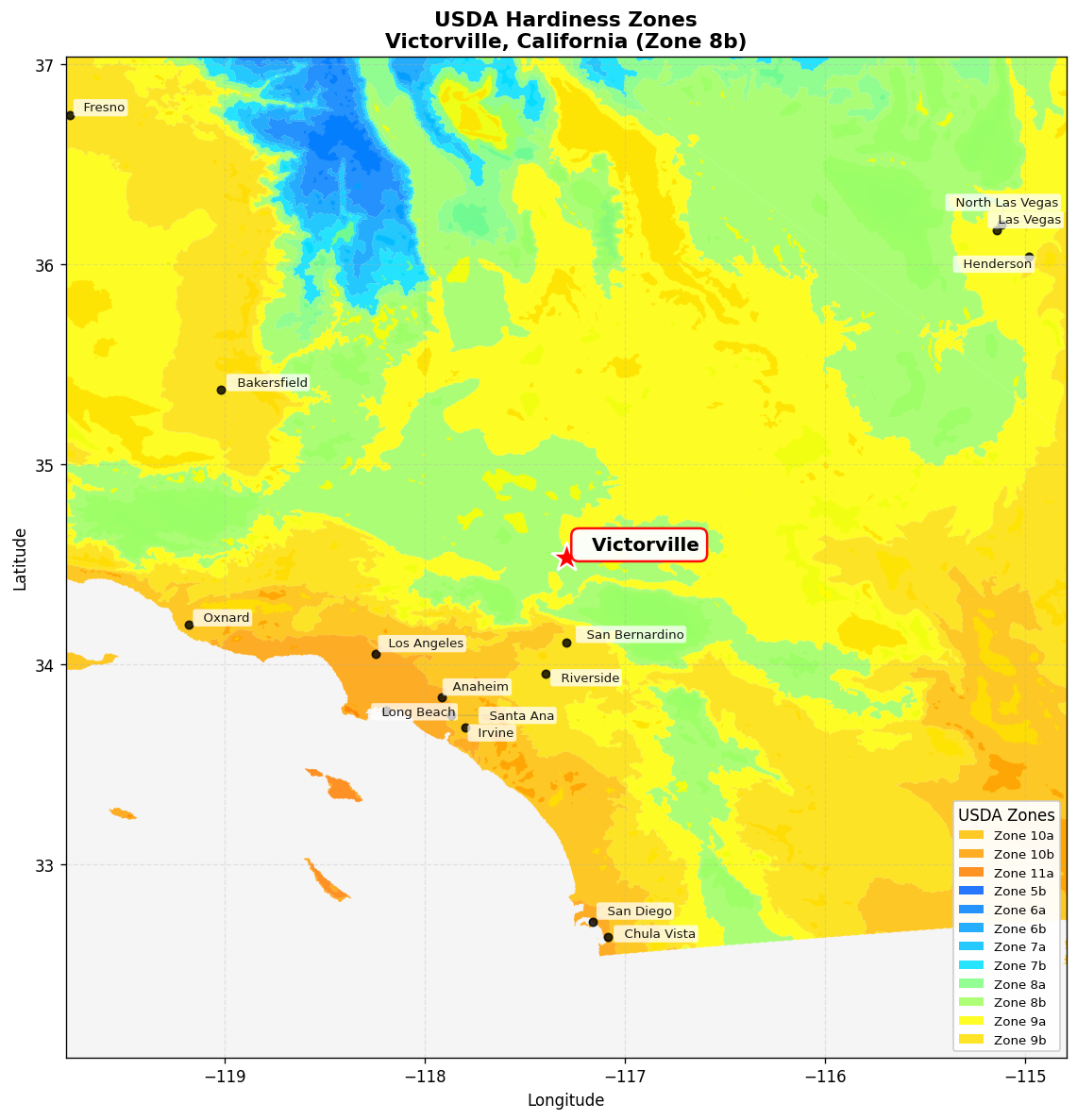
USDA Zone 8b
Hardiness zone for Victorville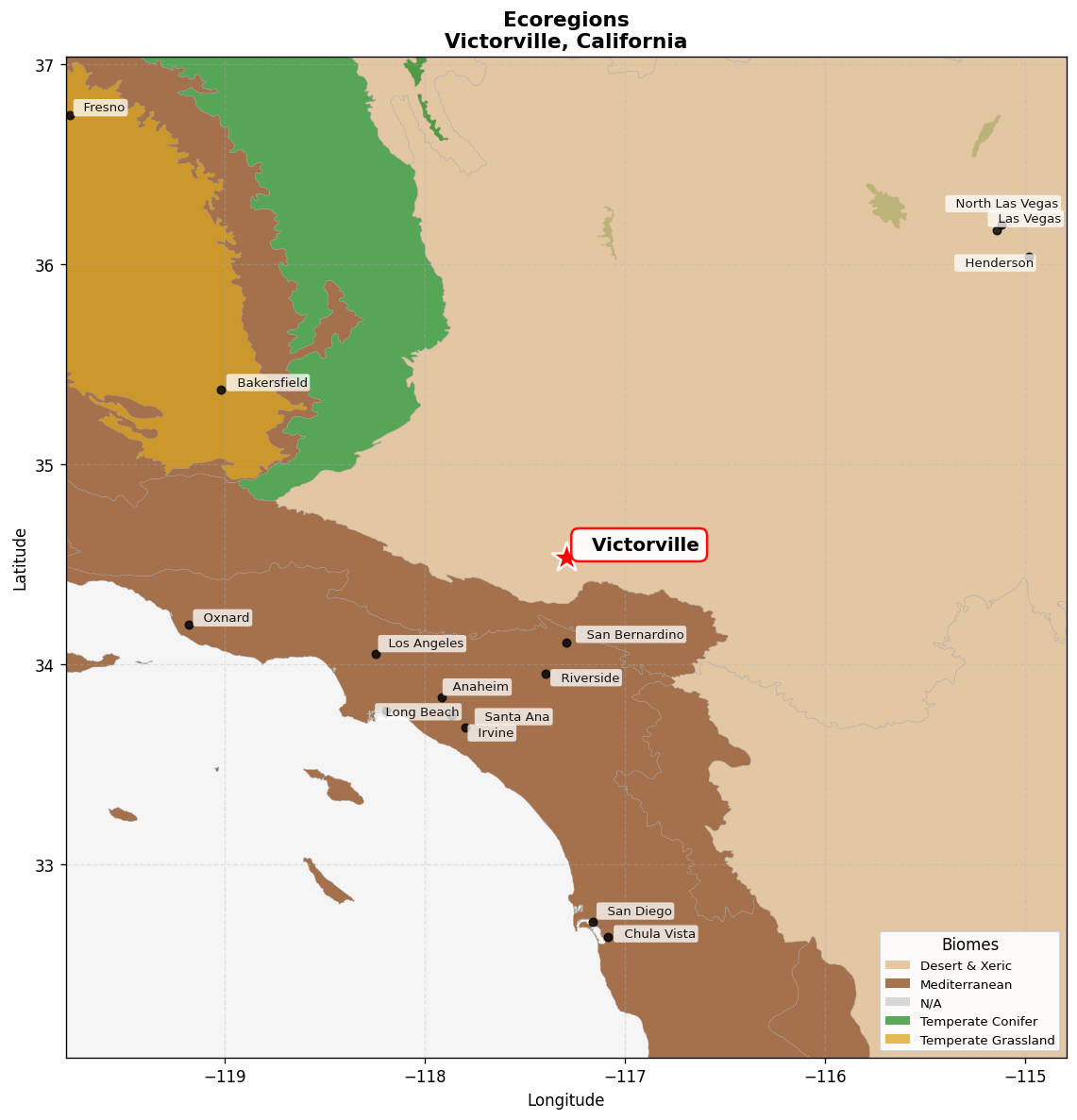
Mojave desert
Native ecoregionFrequently Asked Questions
How much does a Mediterranean garden cost in Victorville?
High Desert labor is cheaper than in Los Angeles, with crews commonly billing around $45–75 per hour. A front gravel courtyard of 500–700 sqft with lavender, rosemary, an olive and drip irrigation runs about $7,000–18,000 installed. A terracotta recirculating fountain adds $1,500–5,000. A back terrace with pavers, pergola and fruit-and-herb beds commonly runs $15,000–40,000. The single biggest cost is a mature olive: a 24-inch box Olea europaea 'Swan Hill' can cost several hundred dollars, while one-gallon Lavandula 'Grosso' and Rosmarinus 'Arp' are cheap enough to plant in quantity.
Can olive trees survive Victorville winters?
Usually, but they are borderline. Victorville is Zone 8b with typical winter lows of 15 to 20°F, and the record low is -1°F. Olea europaea 'Swan Hill' and 'Arbequina' handle the usual winter, but a rare deep freeze can burn back leaves and branches. Plant olives against a south-facing wall or near a patio that holds heat, avoid the lowest corner of the lot where cold air settles, and water deeply in fall so the tree goes into winter well hydrated. If you want a tree with no risk, Punica granatum 'Wonderful' or Chilopsis linearis give a similar look and are fully hardy here.
Which Mediterranean plants will not grow in Victorville?
Citrus, bougainvillea, Rosmarinus 'Tuscan Blue', most aloes and true Italian stone pine are often killed or badly damaged by a hard High Desert winter. Use Rosmarinus officinalis 'Arp' for rosemary, Punica granatum 'Wonderful' and Ficus carica 'Brown Turkey' for fruit, and Cupressus sempervirens 'Tiny Tower' for the narrow cypress shape. Lavandula × intermedia 'Grosso', Santolina chamaecyparissus and Phlomis fruticosa all grow well.
When should I plant a Mediterranean garden in Victorville?
Plant lavender, rosemary and santolina in early spring, from March to mid-April, so they root in before winter. Olives, pomegranates and figs go in in spring as well, so they have a full season to establish before their first freeze. Fall planting from late September to October works for hardy shrubs, but avoid setting out olives in fall here. Skip June through August, when highs average near 98°F.
What are Victorville's watering rules for a Mediterranean garden?
City of Victorville Water allows sprinklers three days a week: even-numbered addresses Tuesday, Thursday and Saturday, odd-numbered Wednesday, Friday and Sunday. Sprinklers may run only from 10 p.m. to 6 a.m. from June through September, and from 9 a.m. to 3 p.m. from October through May. Drip irrigation is exempt from the schedule, which suits a Mediterranean garden. Hosing down paths and driveways is not allowed. If you are served by a different water provider, check its rules.
Is a Mediterranean garden low maintenance in the High Desert?
Yes, once it is established. Lavender needs a shear by a third after its June bloom, rosemary and santolina need a light trim once or twice a year, and olives need a little shaping in late winter. Plants grown lean in Victorville's alkaline sandy soil, roughly pH 7.5 to 8.5, live longer than ones overfed, so fertilize only the fruit trees. Check drip emitters in spring, since hard water and sand can clog them.