4 Desert Garden Ideas for Aurora, CO | Zone 5b Western Shortgrass Prairie Xeriscape
Native plants from the Western shortgrass prairie (Zone 5b) — Cold semi-arid climate
Why Desert/Xeriscape Gardens in Aurora?
Aurora occupies the western shortgrass prairie ecoregion of the Colorado Front Range — a landscape defined by the high-plains grassland that stretches eastward from the Rocky Mountain foothills, historically covered by native buffalo grass, blue grama, and the seasonal wildflowers of the Colorado Piedmont. Aurora’s elevation of approximately 5,400 feet and position just east of Denver on the prairie margin creates a climate of considerable contrast: 300+ days of sunshine annually, frequent summer afternoon thunderstorms, cold dry winters with 55–60 inches of snowfall, and a growing season bracketed by late spring frosts and early fall cold snaps.
Aurora averages 14–15 inches of rainfall annually, almost entirely falling in the May–September growing season as brief, intense afternoon thunderstorms. The combination of dry winters, intense summer sun, and periodic drought cycles makes water-efficient landscaping not merely an aesthetic preference but a practical and economic necessity for Aurora homeowners. Aurora Water and Denver Water both offer substantial rebate programs — up to $1–3 per square foot of turf replaced — for residents who install drought-tolerant xeriscape designs.
Aurora’s Front Range location creates a xeriscape vocabulary that is distinctly its own: native shortgrass prairie plants adapted to the specific conditions of Colorado’s high plains, combined with Front Range fieldstone, warm ochre and buff DG, and the occasional cold-hardy agave that performs surprisingly well at Zone 5b. The Pawnee National Grassland to the northeast and the stunning xeriscape demonstration gardens throughout the Denver metro provide exceptional local reference for what native shortgrass prairie design can achieve at its best.
4 Desert/Xeriscape Design Ideas for Aurora
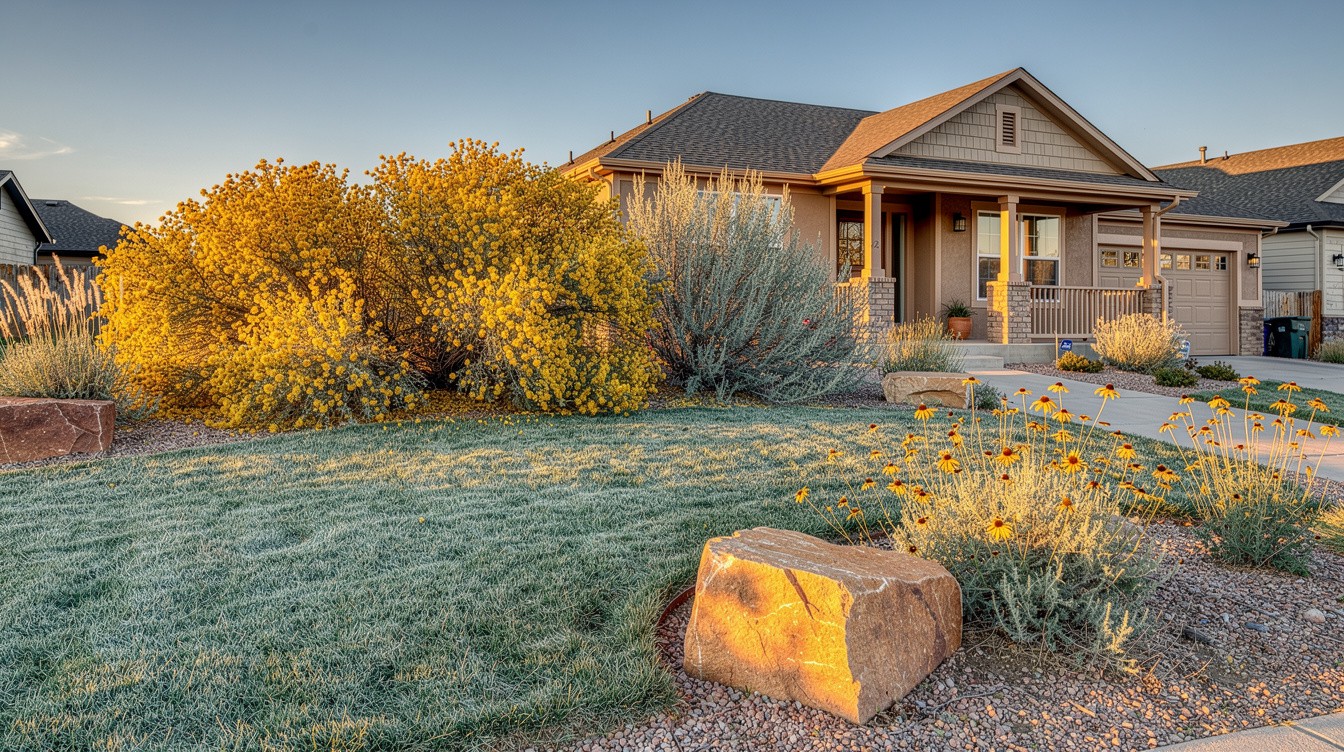
The Shortgrass Prairie Front Yard
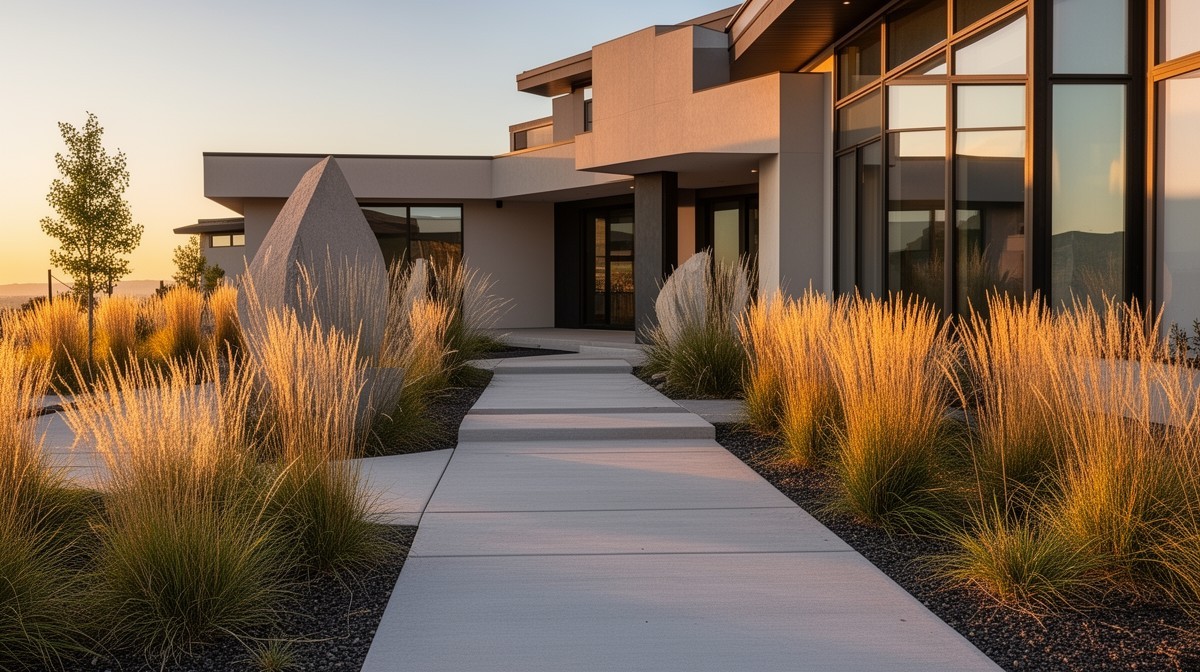
$4–10/sqftAn Aurora front yard transformed from water-intensive turf to a Colorado native shortgrass prairie landscape: native buffalo grass (Buchloe dactyloides) or blue grama grass covers the former lawn areas in a low-water native turf alternative that thrives at Aurora’s elevation and rainfall. A bold mass planting of rabbitbrush (Ericameria nauseosa) creates the signature fall display — exploding in bright yellow in September when most prairie plants are going dormant. Native four-wing saltbush creates the medium-height silver-grey shrub layer. Prairie coneflower (Ratibida columnifera) self-seeds through the DG groundplane in yellow and orange summer colors. Placed Colorado fieldstone or sandstone boulders add warm buff-orange color and regional authenticity. This design qualifies for Aurora Water’s XeriscapeCO rebate program at $1–$3 per square foot of turf removed.
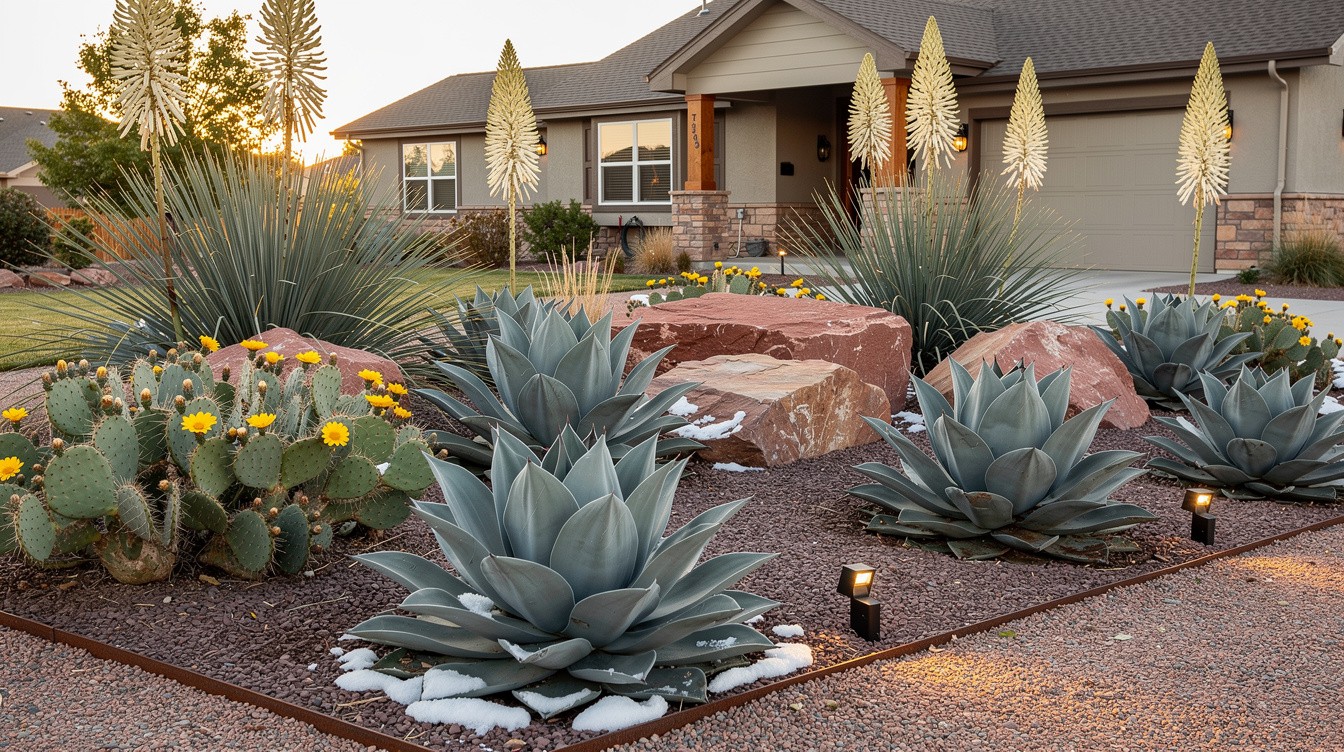
The Cold-Hardy Agave and Yucca Garden
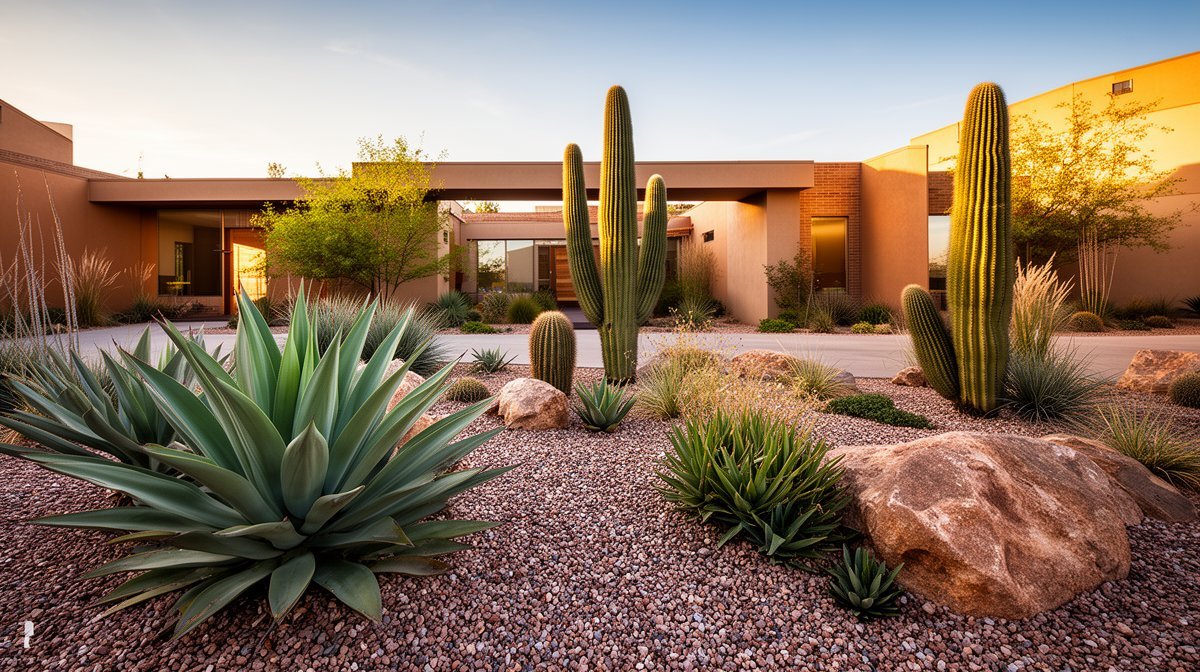
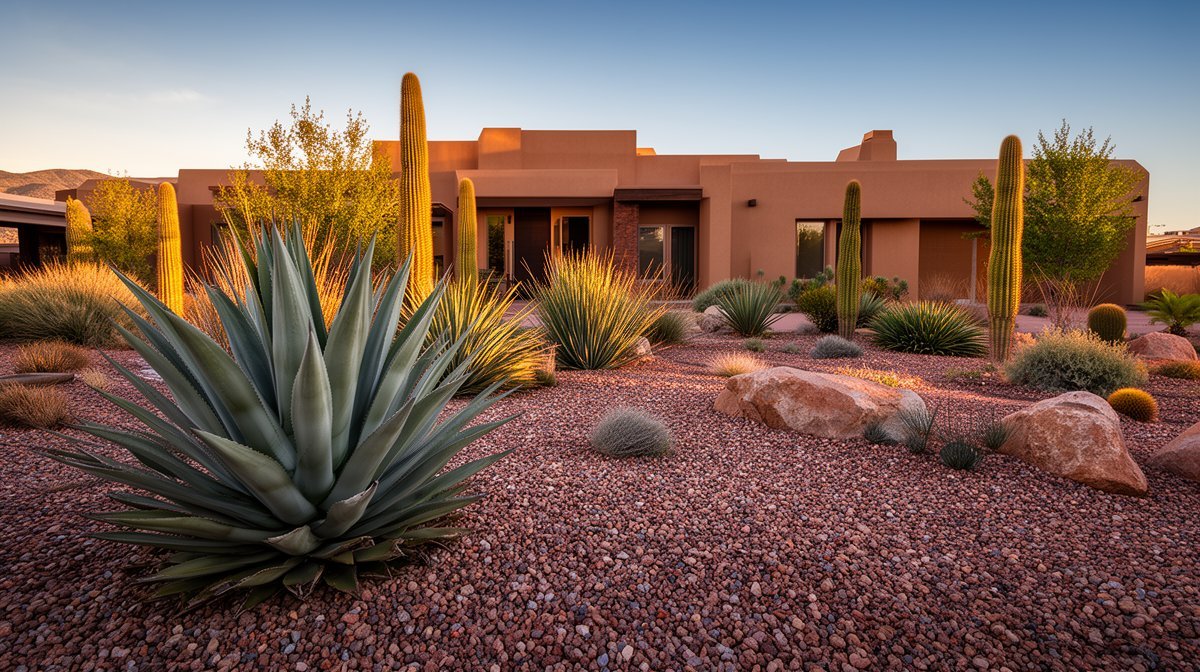
$5–12/sqftAn Aurora front or side yard designed as a Front Range xeriscape sculpture garden: cold-hardy Agave parryi (Parry’s agave, hardy to Zone 5) anchors the composition as living sculpture with blue-grey rosettes that look architectural even in February snow. Yucca glauca (soapweed yucca, native to Colorado’s shortgrass prairie, Zone 3‑9) adds bold vertical accent with its cream flower spikes in June. Native prickly pear (Opuntia polyacantha — Colorado’s cold-hardiest native cactus, Zone 3‑9) creates informal forms and June-yellow flowers. Placed Colorado red sandstone boulders add warm regional character and contrast to the grey-green agave. A DG groundplane with Corten steel edging frames the composition in clean contemporary lines. LED uplighting on the agave specimens creates dramatic evening silhouettes. This design is essentially self-sustaining after one establishment season.
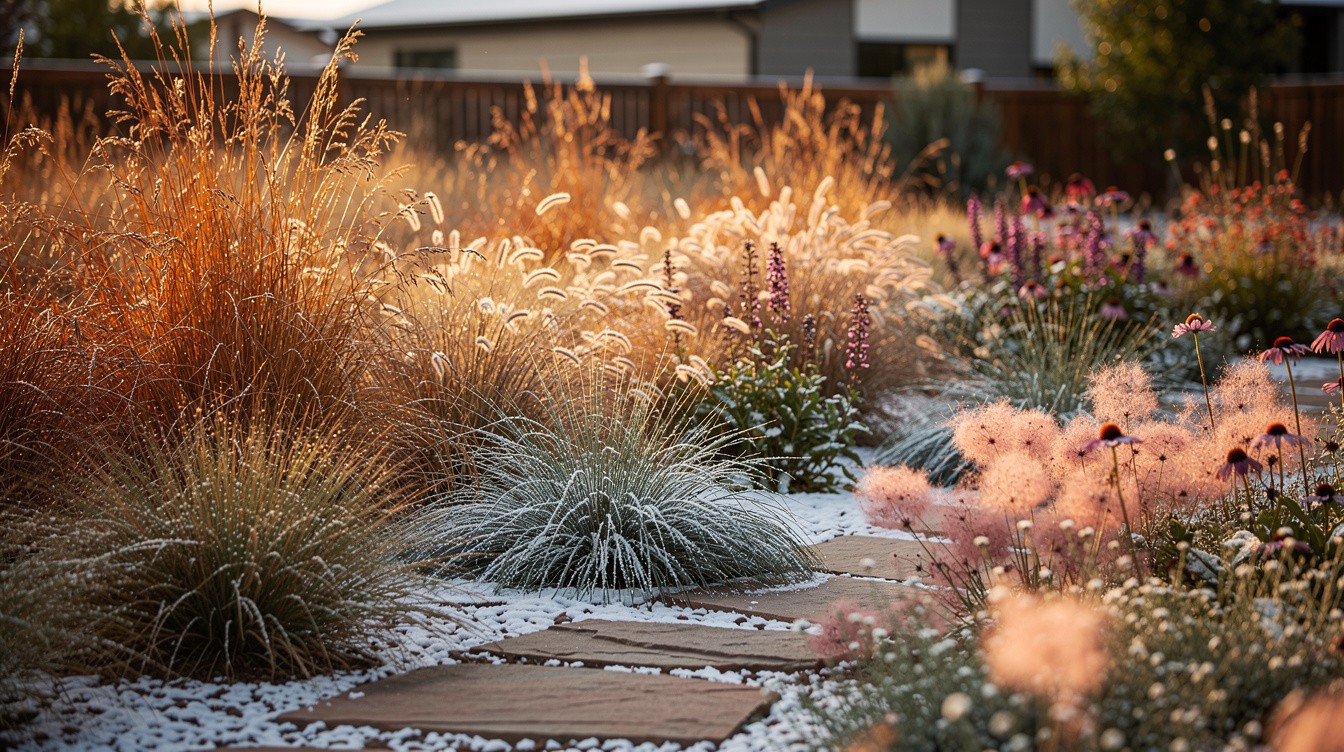
The Aurora Native Prairie Garden
$5–11/sqftAn Aurora backyard or side yard planted in the full vocabulary of the Colorado Front Range shortgrass prairie ecosystem: native little bluestem (Schizachyrium scoparium) creates the primary grass layer with brilliant copper-bronze fall and winter color. Blue grama’s distinctive comb-like seed heads create whimsical texture across the mid-border from July through winter. Native Rocky Mountain penstemon provides June red-pink flowers beloved by hummingbirds. Prairie smoke (Geum triflorum) creates the extraordinary pink feathery seed head display in May–June. Prairie dropseed provides fine-textured grass mounds along path edges. Purple coneflower adds familiar summer color. A simple Colorado fieldstone path meanders through the planting. Standing through Aurora’s snowfall, the dried grasses and seed heads create a winter design as beautiful as any summer garden.
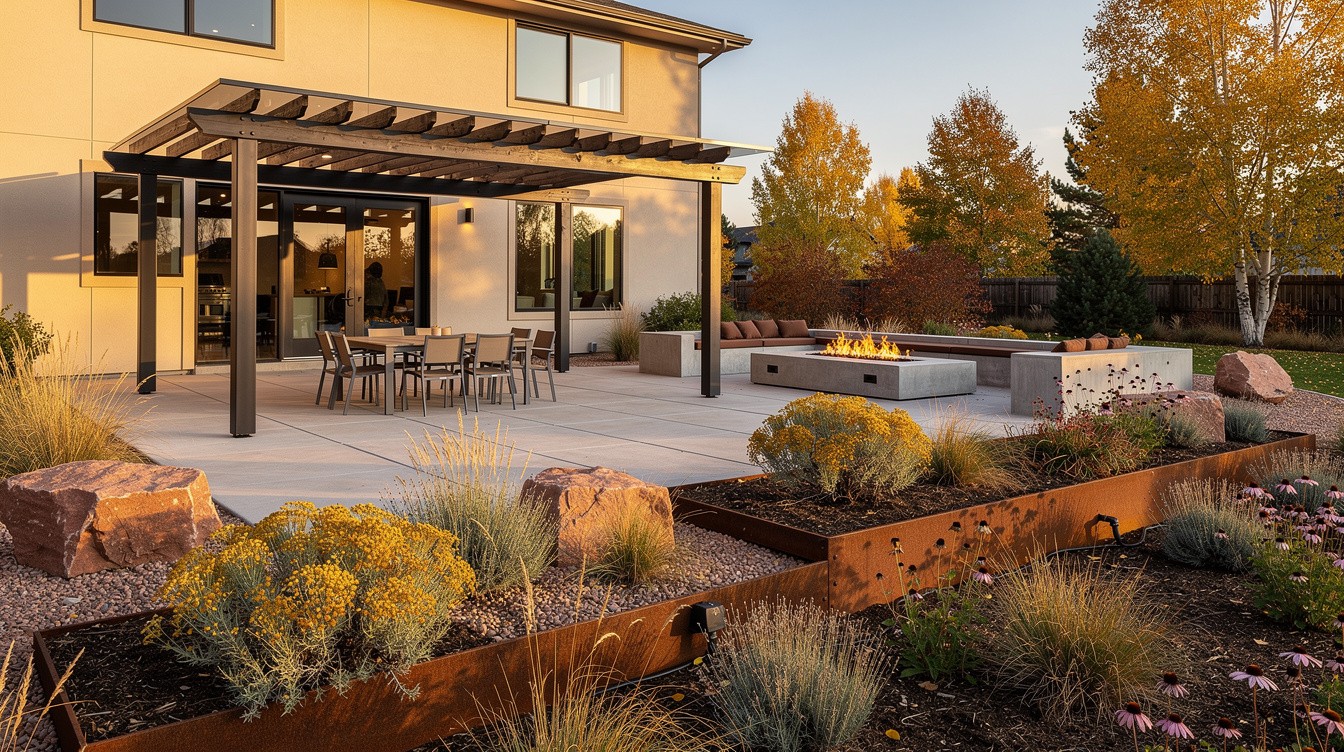
The Front Range Modern Xeriscape
$12–26/sqftA premium Aurora backyard designed as a complete contemporary xeriscape outdoor living space: a large concrete or sandstone paver patio extends from the back of the house. A steel pergola with weathered wood accents creates the outdoor dining room. A concrete fire pit with integrated seating wall anchors the gathering zone at the patio’s far end. Native shortgrass prairie plants — rabbitbrush, little bluestem, prairie coneflower — frame the patio in Corten steel-edged beds. Placed Colorado red sandstone boulders add Front Range character. A simple drip irrigation system waters only during the first two establishment seasons, after which the planting is self-sustaining on Aurora’s summer thunderstorm rainfall. The fire pit extends the outdoor season deep into Aurora’s October and November, when Colorado’s most spectacular fall color makes outdoor living extraordinarily beautiful.
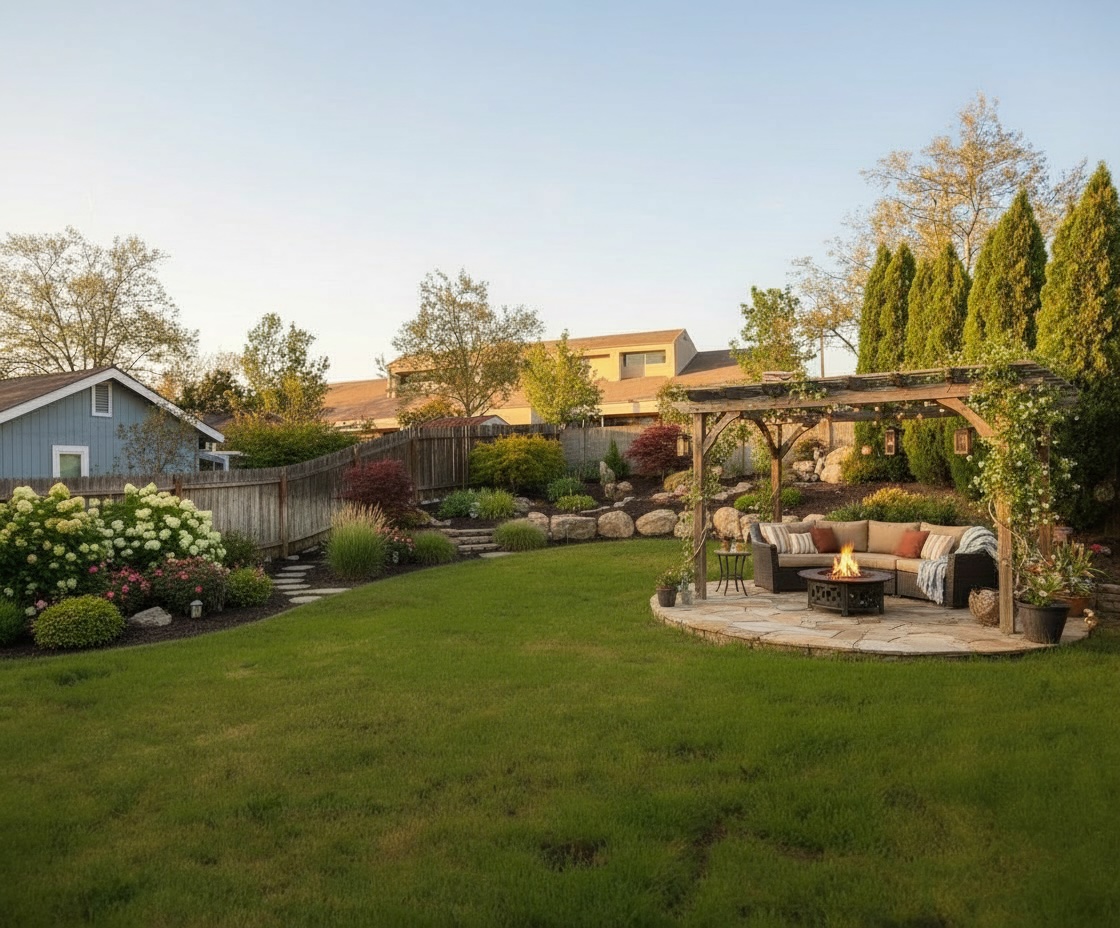
See how a desert/xeriscape garden looks on YOUR property
Upload a photo of your Aurora yard and visualize your dream garden in seconds.
Try ProScapeAI Free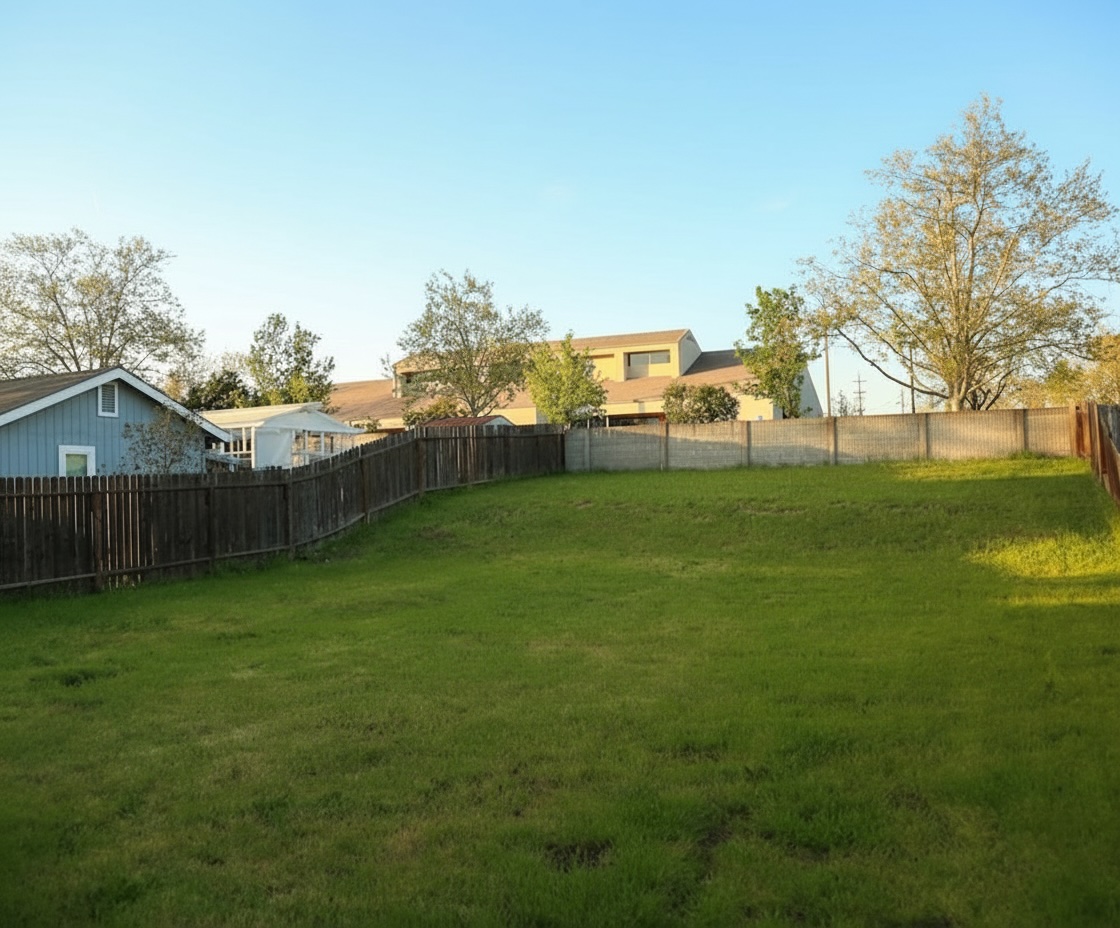
Featured Trees & Shrubs for Desert/Xeriscape Gardens
Browse all 159 plants for Aurora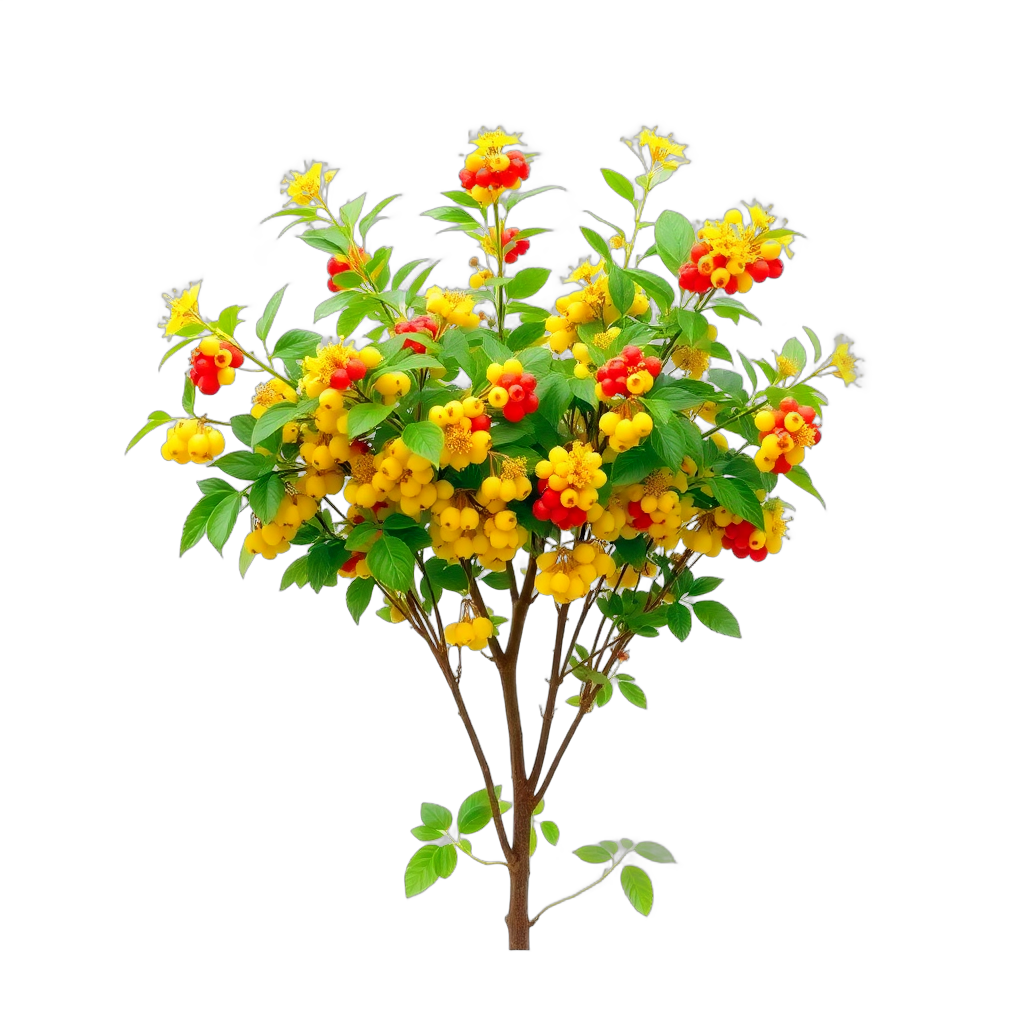
Golden Currant
Ribes aureum
grows to 6 feet, yellow blooms in spring. Attracts hummingbirds.
Featured Grasses & Groundcovers for Desert/Xeriscape Gardens
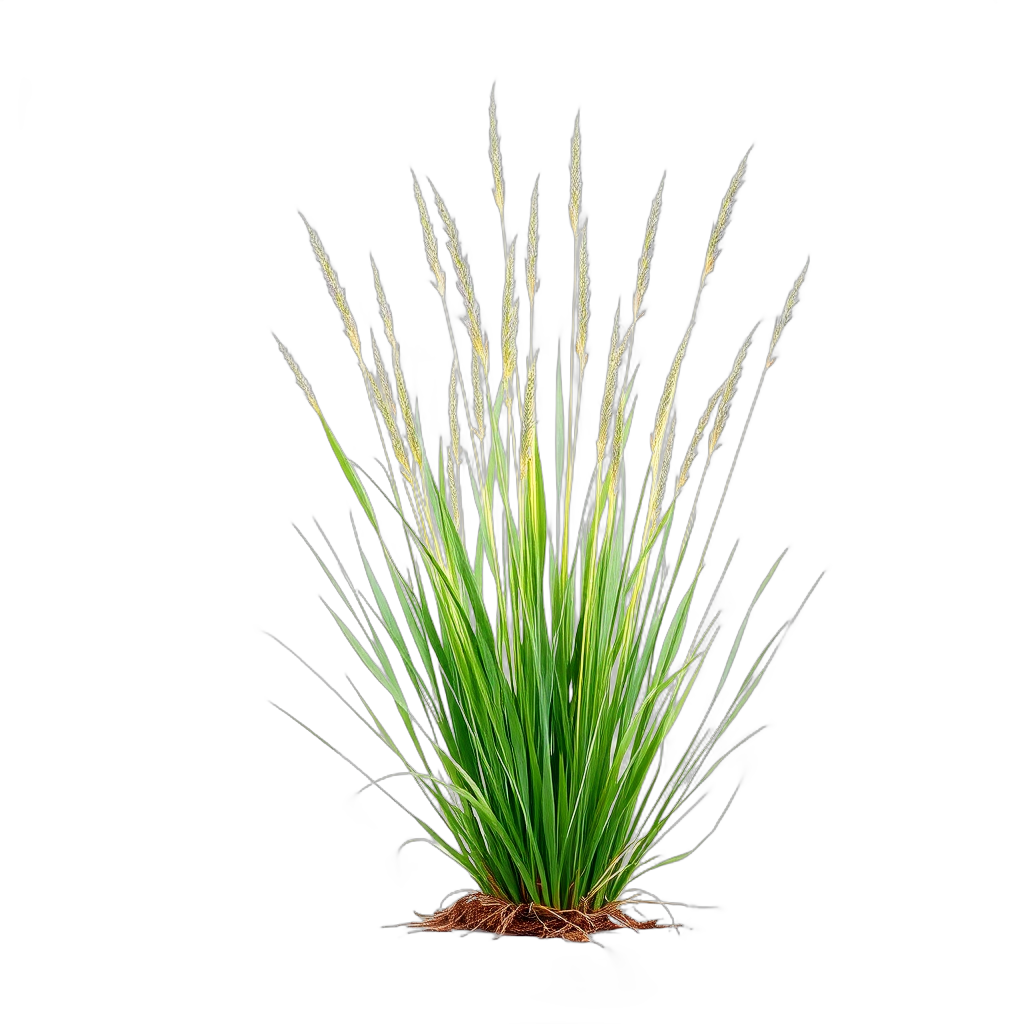
Blue Grama Grass
Bouteloua gracilis
low-growing ground cover, purple blooms in summer. Yellow fall color.
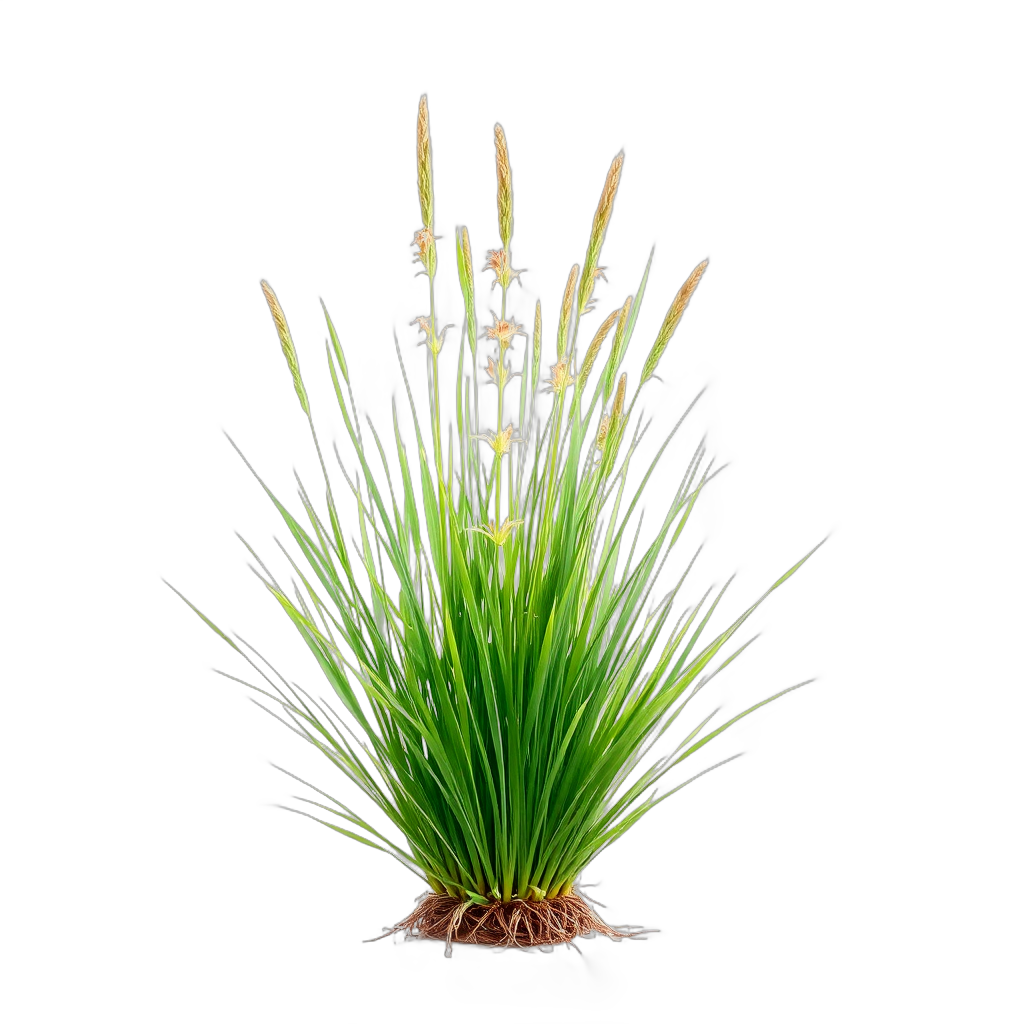
Buffalo Grass
Buchloe dactyloides
low-growing ground cover, blooms in summer. Yellow fall color.
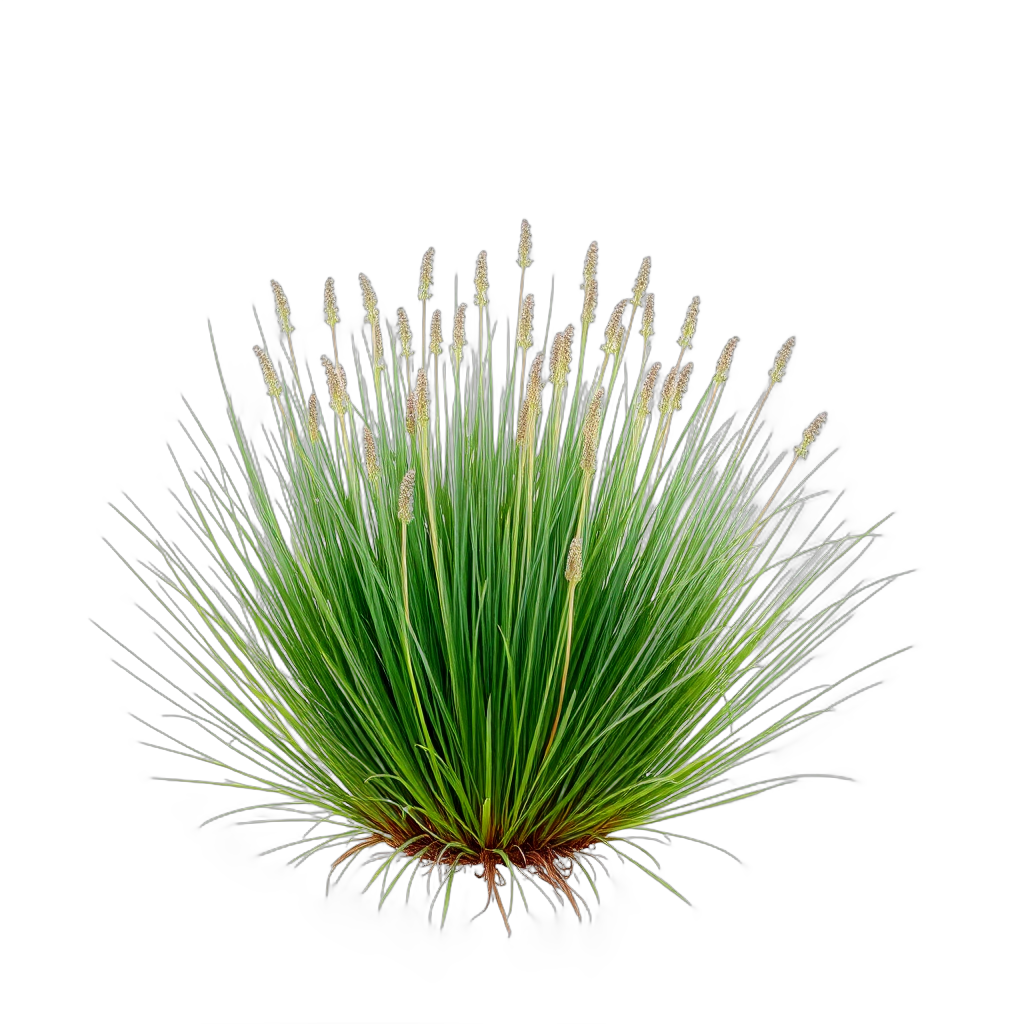
Little Bluestem
Schizachyrium scoparium
grows to 3 feet, blooms in summer. Red,burgundy fall color.
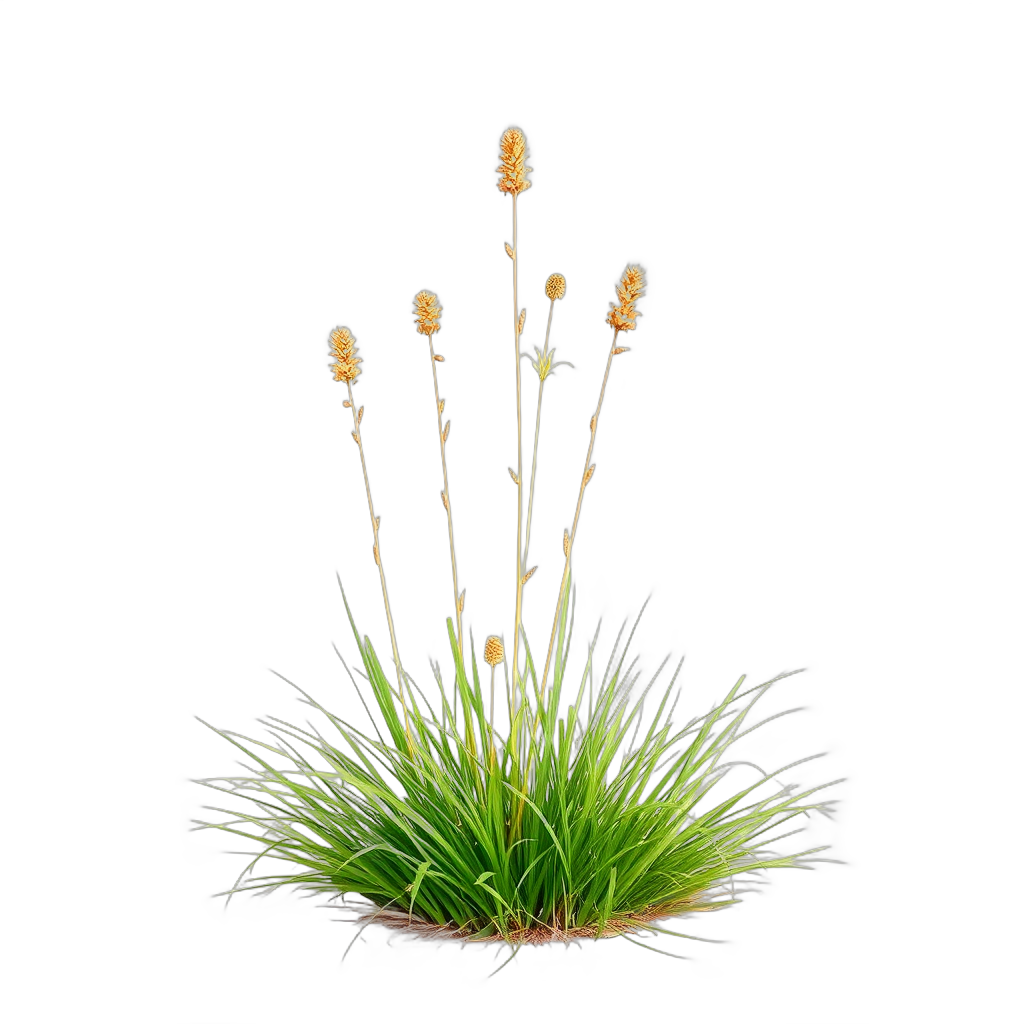
Sand Dropseed
Sporobolus cryptandrus
low-growing ground cover, blooms in summer. Orange fall color.
Featured Flowers & Perennials for Desert/Xeriscape Gardens
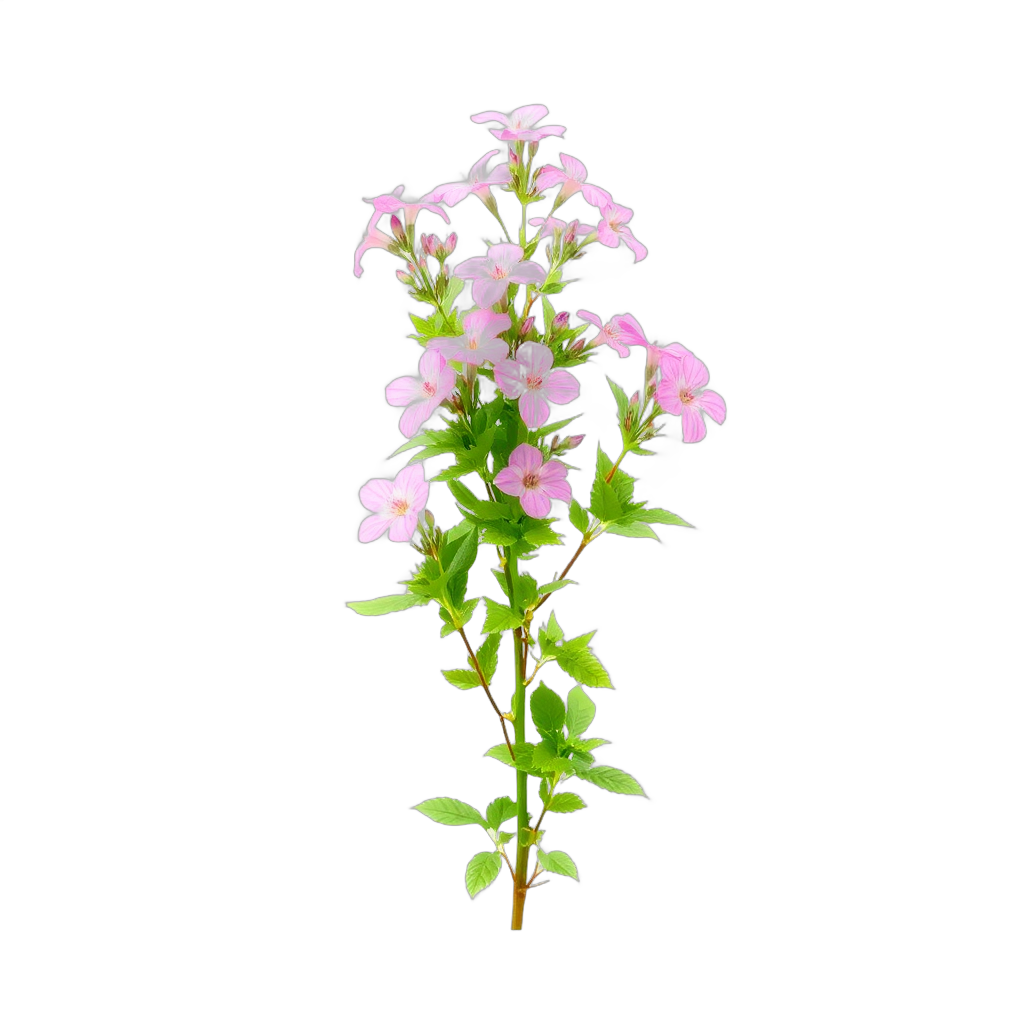
Hood's Phlox
Phlox hoodii
low-growing ground cover, white blooms in spring. Attracts butterflies.
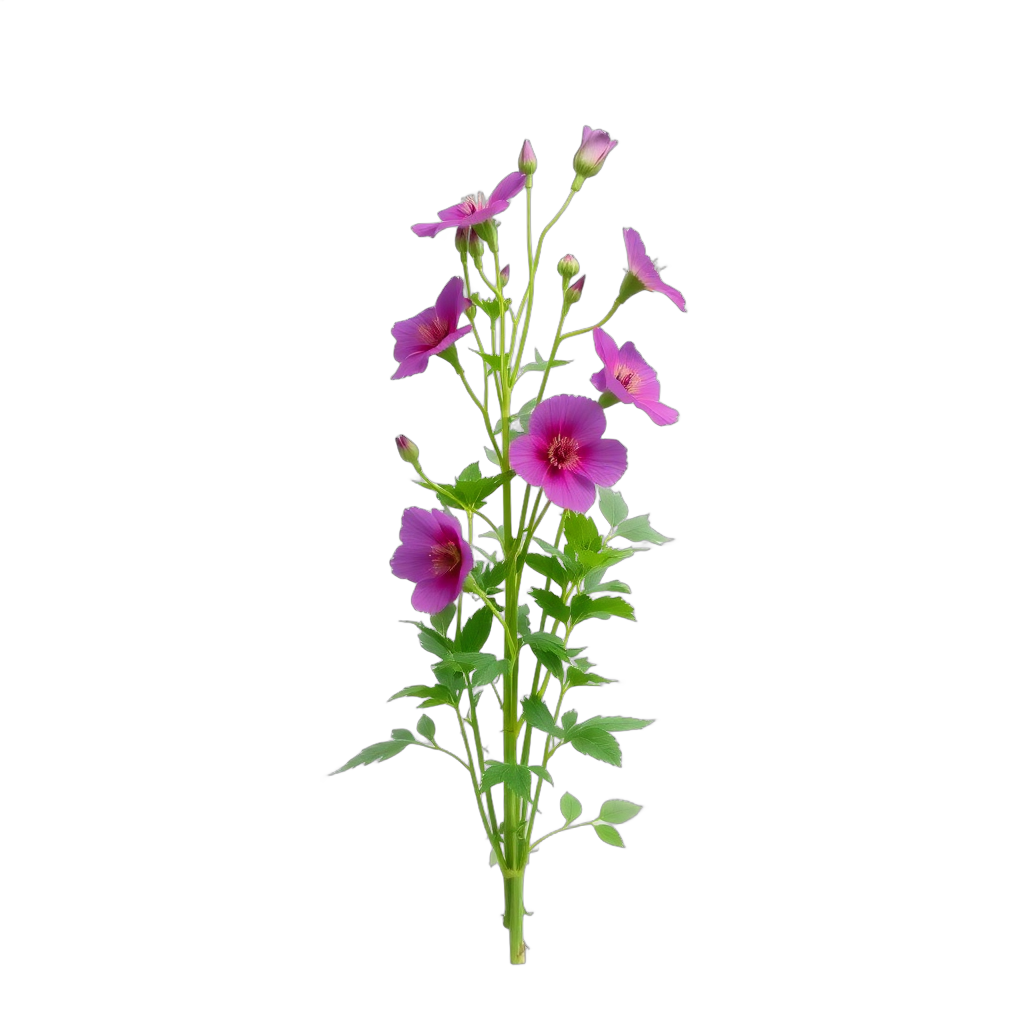
Purple Poppy Mallow
Callirhoe involucrata
low-growing ground cover, purple blooms in summer. Attracts butterflies.
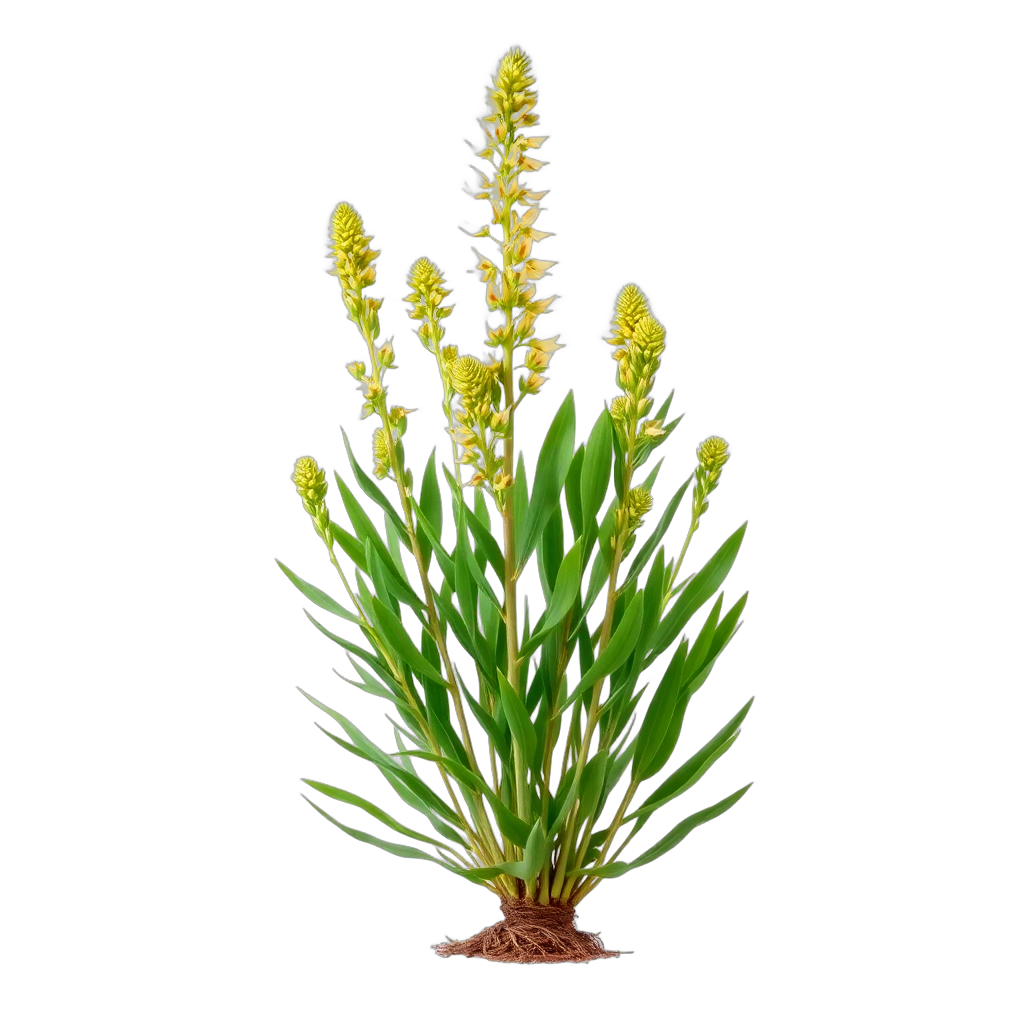
Soapweed Yucca
Yucca glauca
low-growing ground cover, white blooms in spring. Pollinator-friendly.
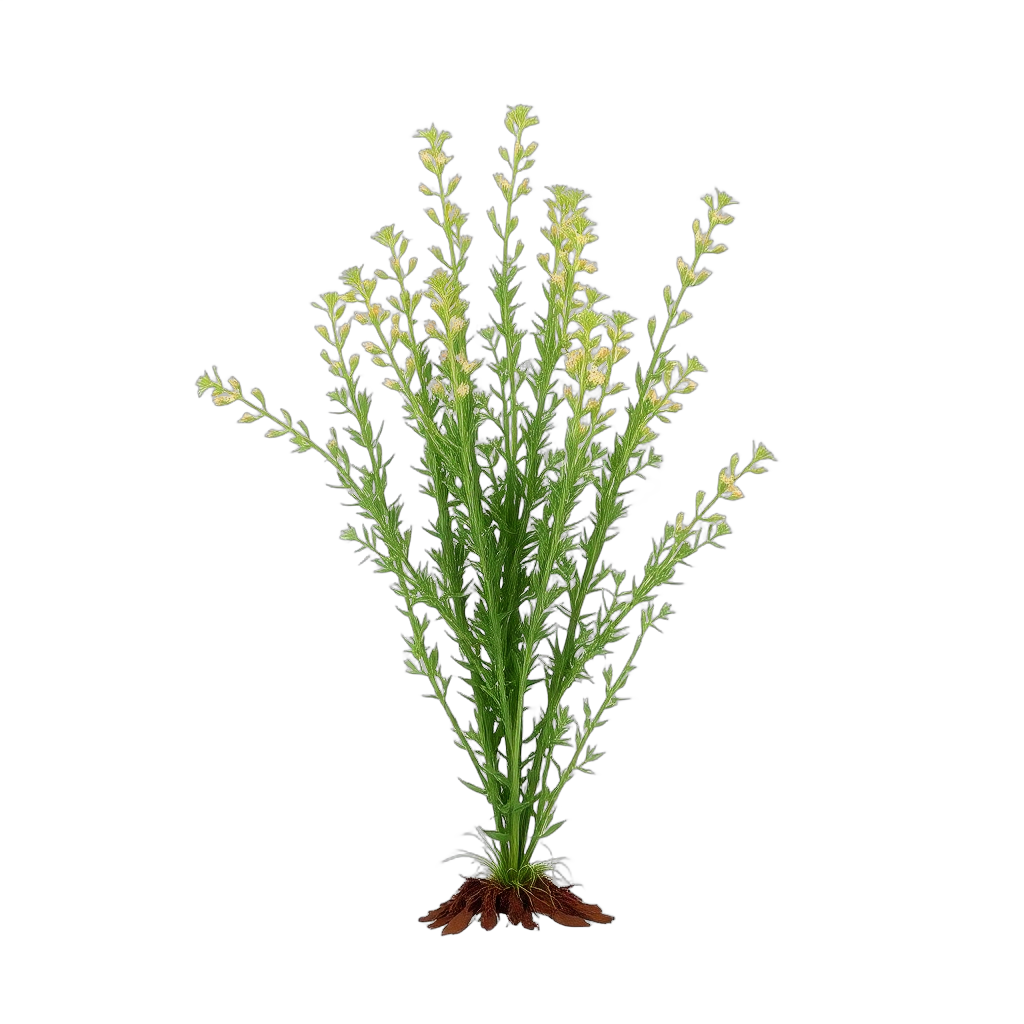
White Sage
Artemisia ludoviciana
low-growing ground cover, white blooms in summer. Fragrant.
Zone and sun checks come from our database — confirm with your local nursery before you buy.
Bloom Calendar for Aurora
spring
Hood's Phlox, Soapweed Yucca, Golden Currantsummer
Purple Poppy Mallow, White Sage, Blue Grama Grassfall
Limited bloomswinter
Limited bloomsDesign Tips for Aurora (Zone 5b)
- Plant Agave parryi in fall (September–October) in Aurora before the ground freezes — the cool soil and autumn moisture allow root establishment before winter, and a fall-planted agave enters its first Colorado winter with an established root system that dramatically improves its cold hardiness compared to spring-planted specimens
- Use Colorado red sandstone as the primary boulder and accent material in any Aurora xeriscape — the warm buff-orange sandstone is quarried from the Front Range foothills and directly references Colorado’s geological character, creating a landscape that feels authentically of this place in a way that imported granite or river rock cannot
- Plant rabbitbrush (Ericameria nauseosa) in any Aurora native xeriscape for the single most spectacular September moment on the Front Range — when every other plant is winding down, rabbitbrush erupts in bright yellow that turns the entire High Plains to gold; a mass of five to seven plants in bloom is visible and beautiful from across the street
- Build a concrete fire pit or install a fire table in any Aurora outdoor living design — Aurora’s 5,400-foot elevation means summer evenings cool rapidly after sunset even in July and August, and a fire feature that provides warmth from 9 PM onward transforms the outdoor living season from a 2–3 hour window to a full evening activity
- Leave all native grasses, prairie coneflower, and rabbitbrush standing through Aurora’s winter without cutting back — the dried seed heads of little bluestem turning copper-bronze against February snow, the skeletal coneflower forms, and the gold rabbitbrush dried masses create a winter xeriscape as beautiful in January as the living plants are in August
- Install smart weather-based drip irrigation controllers for any Aurora xeriscape establishment and register with Aurora Water — qualifying smart controllers receive rebates from Aurora Water’s program, and the controller’s automatic adjustment to real-time ET data prevents both the over-irrigation that wastes water and the under-irrigation that stresses newly planted natives during their critical first-year establishment
Where to Source Plants in Aurora
Skip the big-box stores. These independent Aurora nurseries specialize in the plants that make desert/xeriscape gardens thrive in Zone 5b.
Nick’s Garden Center
Aurora
Aurora’s premier independent garden center since 1981; exceptional Colorado native plant selection, Front Range xeriscape expertise, and full landscape supply for Zone 5b
Echter’s Nursery & Garden Center
Arvada (west Denver metro)
One of Colorado’s largest and most respected nurseries; exceptional native plant, ornamental grass, and xeriscape selection for Front Range landscapes
Tagawa Gardens
Centennial / South Aurora
Award-winning Denver metro garden center with outstanding native plant and drought-tolerant selection for Colorado’s Zone 5b conditions
Harlequin’s Gardens
Boulder
Colorado’s premier native plant nursery; all plants grown locally from Colorado seed; unmatched selection of Front Range and shortgrass prairie native species
City Floral Garden Center
Park Hill, Denver - Kearney Street at 14th Avenue, about 25 minutes east
Denver's oldest surviving greenhouse operation, strong on perennials, annual colour, trees and shrubs, seed and water-garden plants, with in-house diagnosis for the iron chlorosis and spider mite problems Front Range gardens run into
Desert/Xeriscape Landscaping Costs in Aurora
| Project Scope | Estimated Cost |
|---|---|
| Front yard turf-to-xeriscape with native plants and DG (800–1,200 sqft) | $4,000 – $14,000 |
| Agave and yucca sculpture garden (300–500 sqft) | $3,500 – $10,000 |
| Colorado red sandstone boulder placement (5–7 medium specimens) | $800 – $3,000 |
| Concrete or sandstone paver patio (200–350 sqft) | $3,500 – $9,000 |
| Concrete fire pit with integrated seating wall | $3,500 – $10,000 |
| Full native prairie backyard xeriscape (patio, fire pit, planting) | $12,000 – $30,000 |
| AI visualization with ProScapeAI | Free to start |
Estimates based on Aurora, CO-area contractor rates as of 2026. Actual costs vary by site conditions, materials, and contractor.
Aurora Climate & Growing Zone
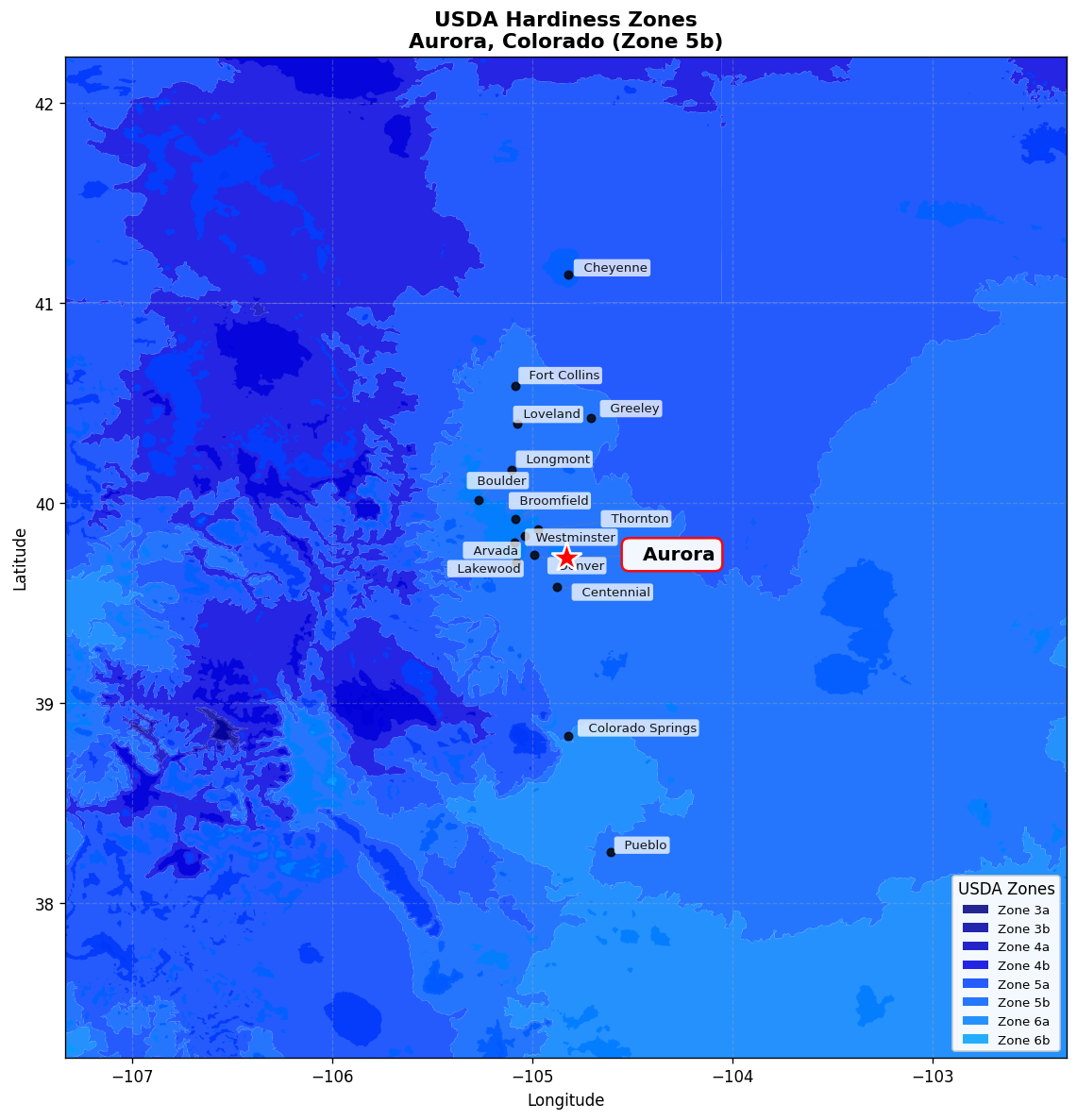
USDA Zone 5b
Hardiness zone for Aurora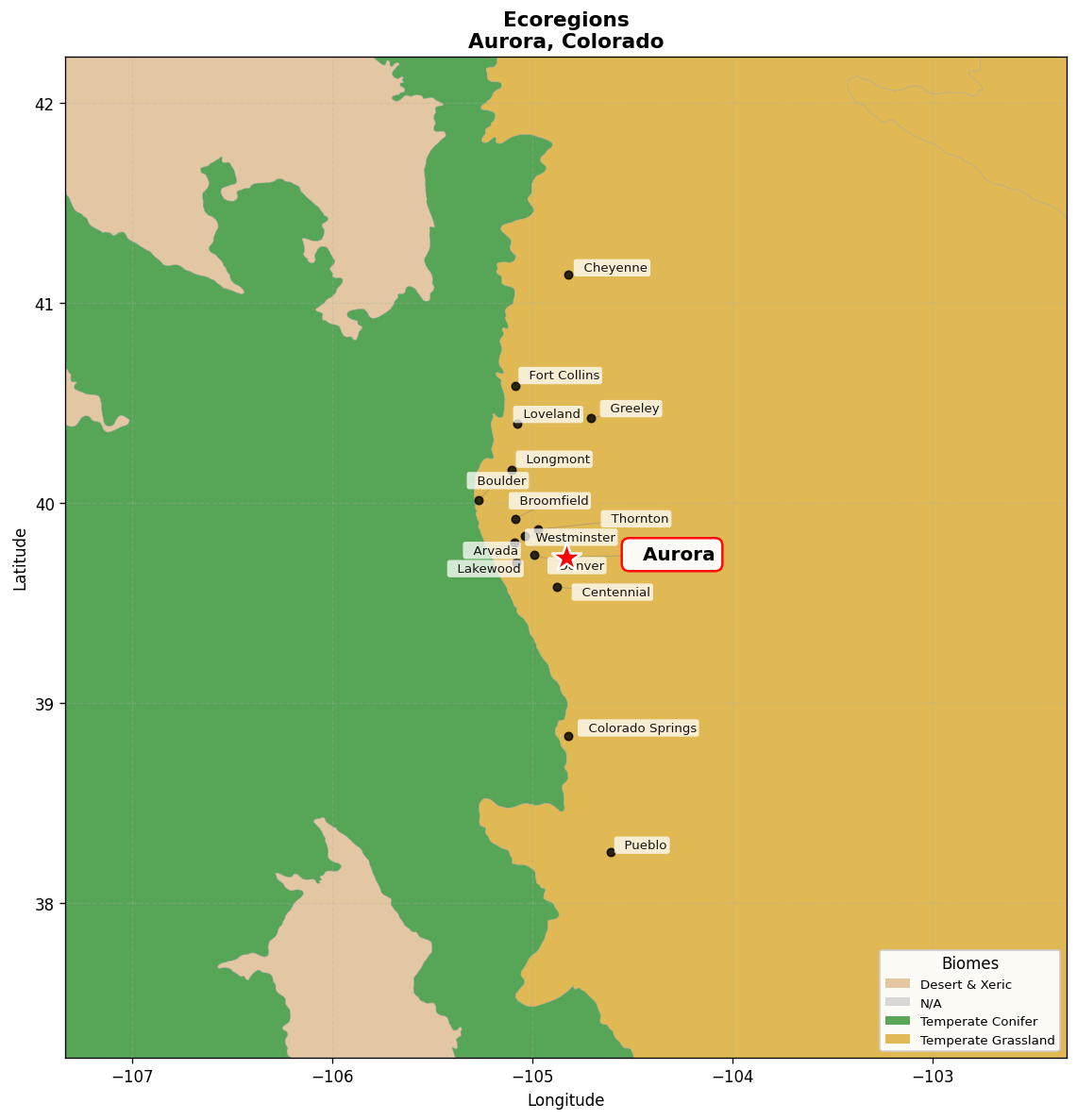
Western shortgrass prairie
Native ecoregionFrequently Asked Questions
Does Aurora offer rebates for xeriscape installation?
Yes — Aurora Water offers the XeriscapeCO rebate program providing $1–$3 per square foot of qualifying turf removed and replaced with approved drought-tolerant plants. Typical front yard replacement (800–1,200 sqft) can qualify for $800–3,600 in rebates. Requirements: submit an application and design plan before installation; use approved plants and minimum 3-inch mulch or DG; install drip or soaker irrigation if any irrigation is retained; allow post-installation inspection. Contact Aurora Water at (303) 739-7367 for the current rebate schedule, application forms, and qualifying plant lists. Colorado WaterWise also provides resources at coloradowaterwise.org. Rebate programs are funded annually and may change; apply and confirm before beginning installation.
What are the cold-hardiest xeriscape plants for Aurora’s Zone 5b winters?
Aurora’s Zone 5b minimum temperature (-10°F to -15°F) requires truly cold-hardy xeriscape plants. Definitive Zone 5b performers: buffalo grass (Zone 3–10, Colorado’s native lawn grass, handles both 110°F and -20°F), blue grama (Zone 3‑11, native shortgrass prairie grass), Agave parryi (Parry’s agave, Zone 5–11 — the cold-hardiest agave for Front Range use), Yucca glauca (Zone 3‑9, native soapweed), native prickly pear (Opuntia polyacantha, Zone 3‑9), rabbitbrush (Zone 4‑10), four-wing saltbush (Zone 4‑10), purple coneflower (Zone 3‑9), little bluestem (Zone 3‑9), prairie dropseed (Zone 3‑9). Avoid: cenizo/Texas sage (Zone 6+, too cold for Zone 5b Aurora), non-hardy agave species, and most Sonoran desert plants.
How much does xeriscape landscaping cost in Aurora?
Aurora xeriscape costs range widely based on scope and material quality. Basic DG and plant installation: $4–12 per square foot. A native front yard replacement with plants, boulders, and DG (800–1,200 sqft) costs $4,000–15,000 before rebates. A patio with fire pit and native planting (300–500 sqft) runs $6,000‑18,000. A steel pergola: $5,000‑13,000. Full backyard design-build (patio, pergola, fire pit, xeriscape planting): $12,000‑32,000. Aurora Water rebates ($1–$3/sqft) can offset $1,000–3,000 of project costs for a typical front yard. Denver metro labor rates are moderate compared to the coasts; the metro’s competitive landscape contractor market generally keeps prices reasonable.
Is buffalo grass a good lawn alternative in Aurora?
Buffalo grass is the native shortgrass prairie lawn of Colorado’s Front Range and performs excellently in Aurora. Key facts: no irrigation required after establishment on Aurora’s 14–15 inches of rainfall (supplemental irrigation in drought years only), no fertilizer needed (native-adapted soils), mows at 3–4 inches once per month in summer — or not at all for a natural look. Goes summer-dormant and straw-brown during drought then greens up after rain. Turns golden-tan in fall and remains dormant November through April. Best for: sunny south and west exposures. Not suitable for: shade (less than 6 hours sun), high-traffic play areas, or moist north-facing exposures where Kentucky bluegrass performs better. Aurora Water includes buffalo grass in qualifying turf replacement rebate plant lists.
How do I protect xeriscape plants through Aurora’s late spring frosts?
Aurora’s average last frost date is May 10–15, but late frosts can occur through mid-May. Best practices: stick to plants rated Zone 5 or colder for Aurora xeriscape — native plants (buffalo grass, agave parryi, yucca, prickly pear) handle late frosts without protection. For borderline plants: keep 3–4 inch DG or bark mulch around crowns to moderate soil temperature swings. In severe late frost events (after growth has emerged), cover tender new growth with frost cloth overnight — remove immediately when temperatures rise. Timing note: do not plant tender perennials until May 15–25 in Aurora. All native Front Range plants are fully frost-adapted; the risk is only with non-native tender plants added for color.
Can I use agave in Aurora’s Zone 5b climate?
Yes, with the right species selection. Agave parryi (Parry’s agave) is consistently rated Zone 5 and performs reliably in Aurora’s Front Range winters, including occasional -10°F events. It thrives in Aurora’s abundant sunshine and dry climate. Key requirements: excellent drainage is essential — agave parryi handles cold, but wet-cold with standing water around the crown will cause crown rot; plant in raised mounds with DG or gravel soil mix. South or southeast exposure preferred for maximum winter sun warmth. Avoid: Agave americana (Zone 7+ for reliable outdoor performance), Agave attenuata (Zone 9+, only in containers brought inside in winter). Yucca glauca is a native Front Range alternative with similar architectural form and is fully Hardy to Zone 3.