English Cottage Garden Ideas for Bellevue, WA | Zone 8b Design
Native plants from the Puget lowland forests (Zone 8b) — Mediterranean (warm summer) climate
Why Cottage/English Gardens in Bellevue?
Bellevue is one of the few American cities where an English cottage garden is not a stylistic import — it is very nearly the native condition. The Csb climate Bellevue shares with Devon, Brittany and the Loire delivers cool cloudy winters and a long, gentle spring that keeps Delphinium elatum, Digitalis purpurea and Alchemilla mollis fresh into July, while the same plants are collapsing by Memorial Day in Denver or Dallas. The housing stock cooperates too. The 1920s–40s cottages and bungalows of Northwest Bellevue, Enatai and Beaux Arts Village, the shingled Craftsman revivals off Main Street, and the low 1950s ramblers of Lake Hills and Woodridge all sit close to the ground behind shallow front yards — exactly the proportion a picket fence, a rose arch and a deep mixed border were invented for. And Bellevue Botanical Garden's Northwest Perennial Alliance Border, fifteen minutes from almost any address in the city, is a free full-scale demonstration of this style already tuned to local conditions.
Zone 8b puts Bellevue's average winter low at 15–20°F — warm enough that Rosa 'New Dawn', Buxus 'Green Velvet' and Helleborus × hybridus keep their structure outdoors all year, with roughly 225 frost-free days between a mid-March last frost and a first frost in early to mid-November. The number that really shapes design here is not the total rainfall but the way it is split. Bellevue collects about 41 inches a year, and barely 1.5 inches of that falls across July and August combined. A border that looks after itself from October through June will still need genuine irrigation for eight to ten weeks in high summer — drip line laid under the mulch, never overhead sprinklers across the roses, because cool Puget Sound nights plus wet foliage are precisely how blackspot takes hold on everything except the tough performers such as Rosa 'Darlow's Enigma', Rosa 'Sally Holmes' and Rosa 'Bonica'.
Under almost every Bellevue lot sits Alderwood soil: a thin gravelly sandy loam lying on cemented glacial till, with the hardpan usually 20 to 40 inches down. Water slides sideways along that layer instead of draining through it, so a bed that looks perfect in August turns into cold soup by February and roots rot below the crown. The fix is the one Victorian gardeners arrived at for entirely different reasons: build the border up rather than down. Six to ten inches of compost-amended soil bermed above grade and held by stone or steel edging gives roses, Nepeta racemosa 'Walker's Low' and Lavandula angustifolia 'Hidcote' the sharp drainage they cannot get at native grade. Bellevue's soil pH also runs acidic, roughly 5.0 to 6.0, which suits Hydrangea macrophylla, Camellia japonica and Rhododendron beautifully and quietly starves lavender, dianthus and clematis — a tested dolomitic lime amendment in those specific beds is worth more than any bag of fertilizer.
The last local factor is regulatory, and expensive to discover late. Bellevue's clearing and grading code and its critical-areas rules govern how much ground you may disturb and how close you may work to steep slopes, streams and wetlands, and the city's tree regulations protect significant trees on many properties — the Douglas firs and western redcedars that give Somerset, Bridle Trails and Cougar Mountain their character are not automatically yours to remove, so confirm the rules for your parcel with the city before any plan is finalized. The better move is usually to design around them anyway. A shade-tolerant cottage garden built on Hydrangea arborescens 'Annabelle', Astrantia major 'Roma', Polystichum munitum and Dicentra formosa reads every bit as romantic as a full-sun border, needs far less summer water, and matches what a typical Bellevue lot actually offers.
4 Cottage/English Design Ideas for Bellevue

The Rose Arch and Picket Gate Entry
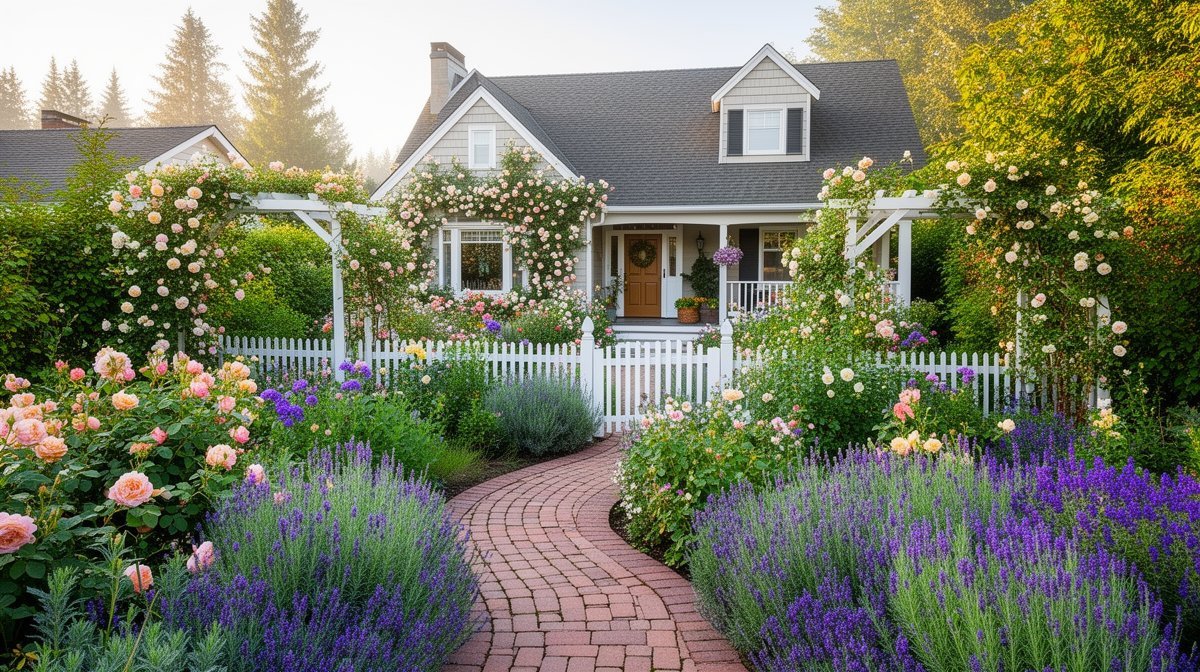
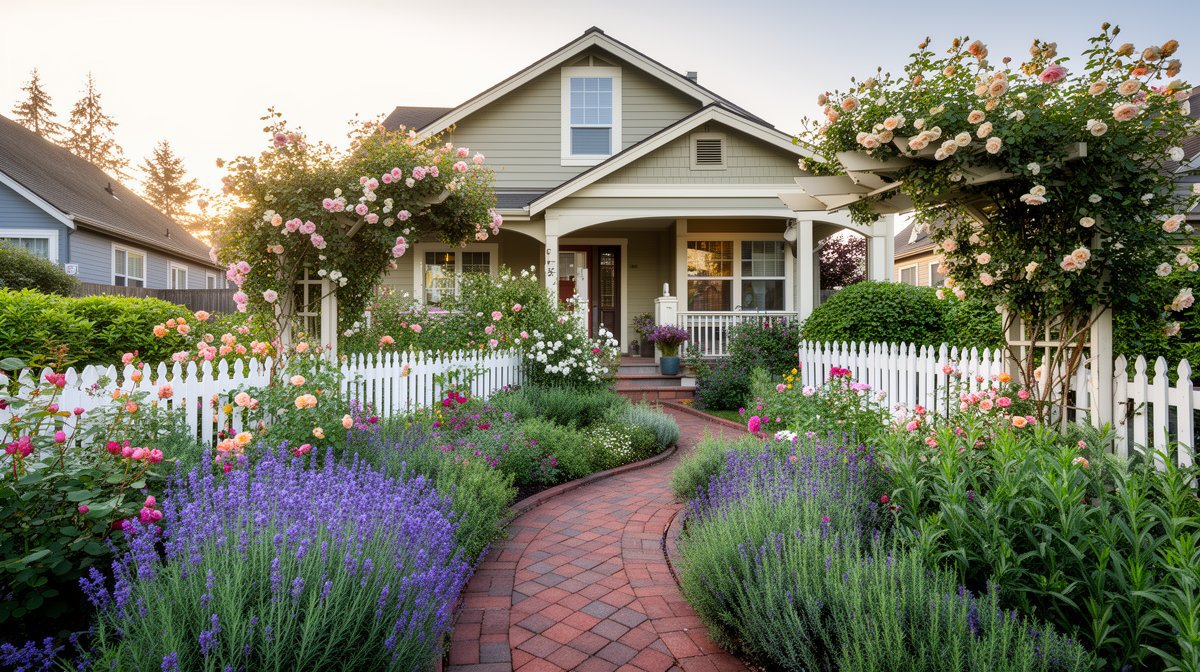
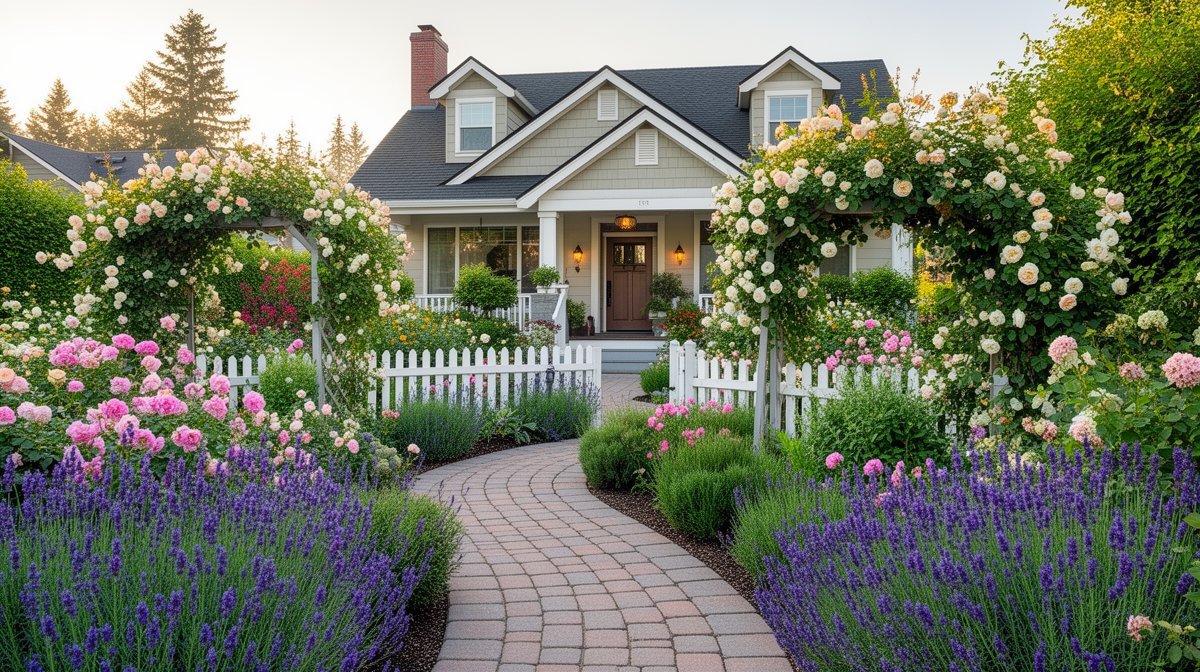
$28–48/sqftA cream clapboard cottage with brick chimneys and a white-railed porch sits behind a timber arch buried under blush and apricot climbing roses, framing the front door dead-on. A white picket fence steps out to either side, and a herringbone red-brick path curves from the gate to the porch instead of running straight, so the walk feels longer than the twenty-odd feet it actually is. Lavender is planted as a continuous low hedge along both edges of the brick, with big shrub roses filling the fence line behind it and a mixed white-and-pink border carrying the color back to the property edge. Everything in this design earns its place twice: the arch gives the flat Bellevue rambler facade some vertical drama, and the brick path drains and dries faster than concrete through the wet months.

The White Arbor Cottage Border
$25–42/sqftA shingled two-story with a deep covered porch, hanging baskets and rocking chairs opens onto a painted white arbor smothered in white climbing roses, with a flagstone path slipping under it and curving to the steps. The real work here is the border on the right: a deep, layered bed running the whole frontage under a mature street maple, stacked from clipped green mounds at the front through white mophead hydrangeas, drumstick alliums and phlox, up to tall pink and purple spires at the back. Only a narrow strip of lawn survives between path and bed, which is the correct ratio for a cottage garden and cuts mowing to about ten minutes. Because the maple throws real shade by June, the planting leans on species that flower happily in Bellevue's bright overcast rather than sun-hungry Mediterranean material.

The Flagstone Tea Terrace
$30–55/sqftOff the back of a shingled cape, an irregular flagstone terrace with wide mortar-free joints holds nothing more than a white iron bistro table and two folding chairs — deliberately small, because the point of the space is to sit inside the planting rather than beside it. A tall cedar lattice arbor stands at the terrace edge carrying apricot climbing roses, and the borders wrapping the lawn oval run four to five feet deep: foxgloves and delphiniums at the back, peonies and shrub roses in the middle, lavender and pinks spilling onto the stone. Mature deciduous trees and a dark conifer backdrop close the garden off from the neighbors, which is what makes an in-town Bellevue backyard feel like a Cotswold one.

The Rose Pergola Dining Garden
$35–65/sqftA painted white pergola stands off the back of the house over a large paver dining terrace, its beams carrying a heavy blush climbing rose so the whole structure flowers overhead in June. A teak table for six sits under it, and beyond the terrace the lawn sweeps out in a soft curve around a carved stone bird bath set in a small circular island of low flowers. The surrounding borders are the tallest in this collection — foxglove and delphinium spires, hydrangea heads, rose shrubs and lavender ribbons layered against a clipped hedge on one side and the dark line of the neighborhood Douglas firs behind. The white paint is a Bellevue-specific choice: against nine cloudy months it reads clean, where a stained cedar pergola would disappear into the gray.
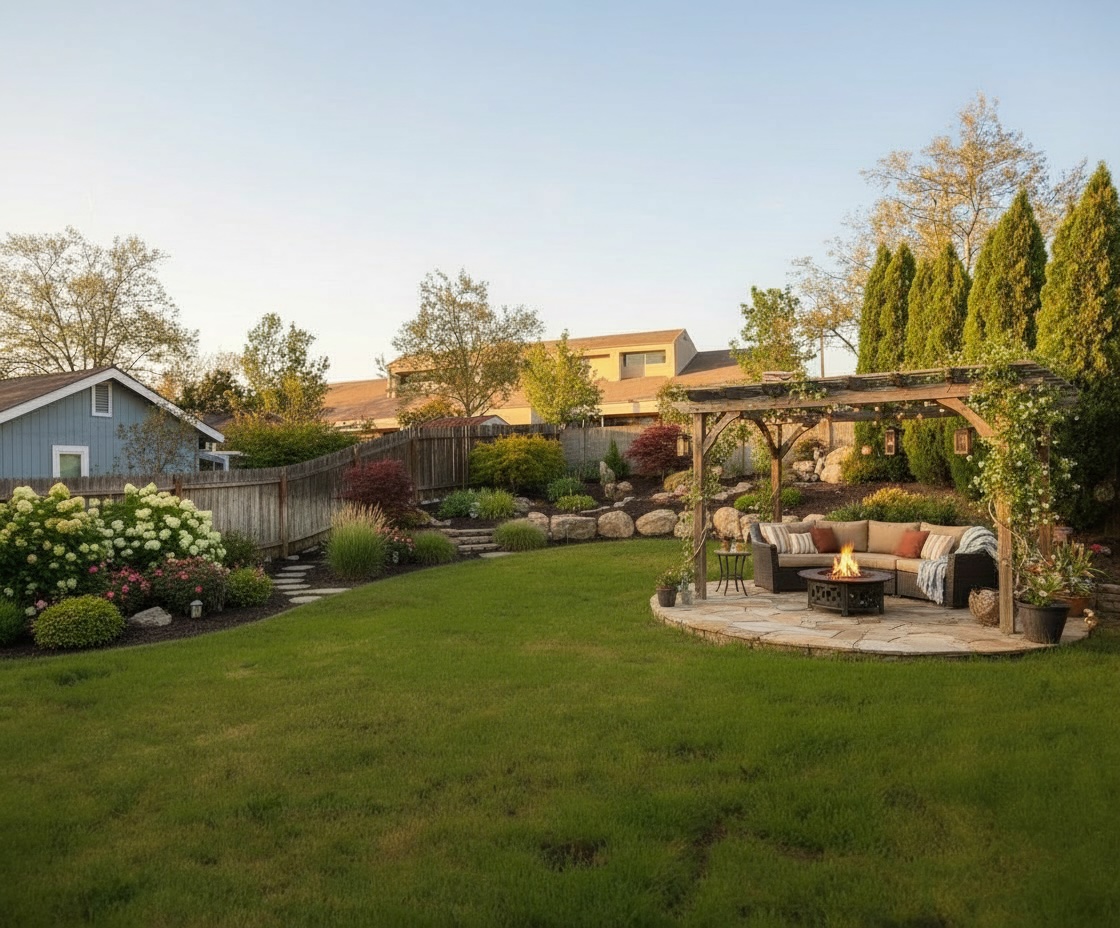
See how a cottage/english garden looks on YOUR property
Upload a photo of your Bellevue yard and visualize your dream garden in seconds.
Try ProScapeAI Free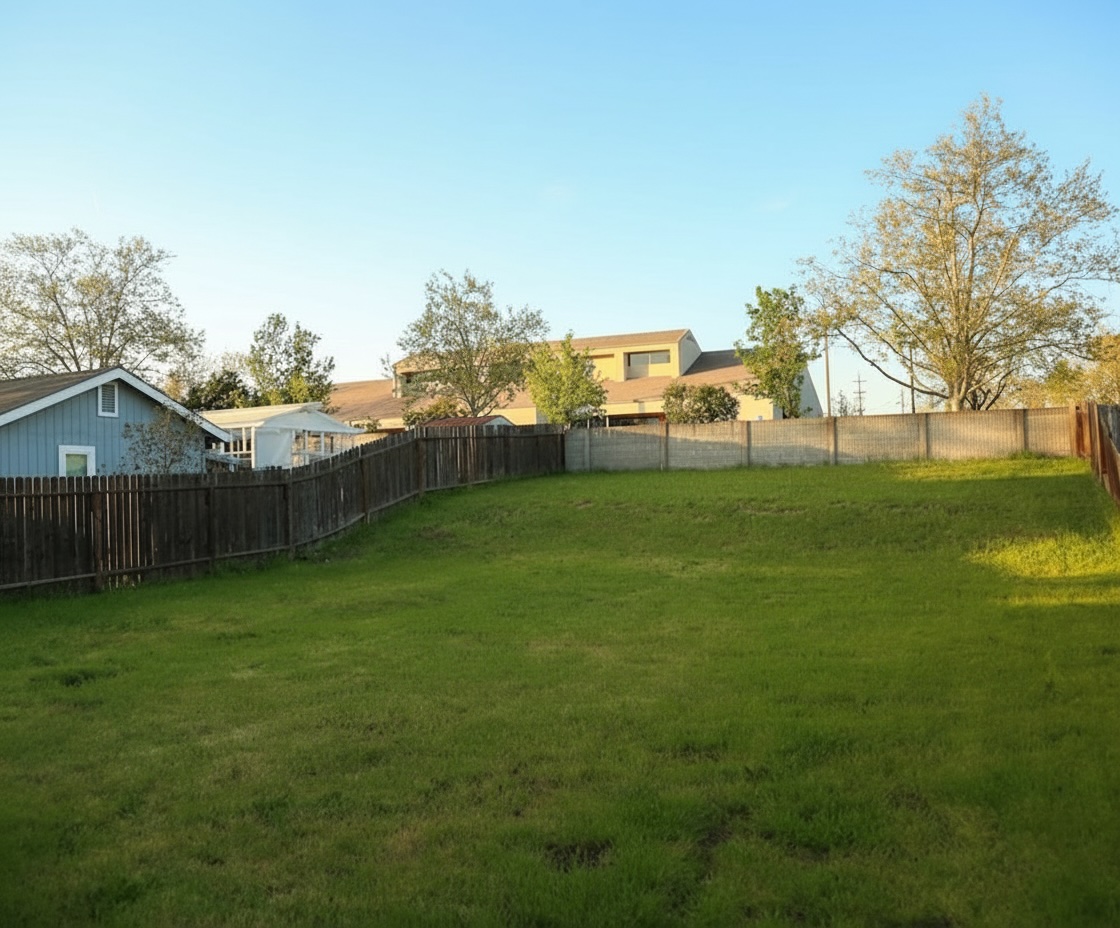
Featured Trees & Shrubs for Cottage/English Gardens
Browse all 163 plants for Bellevue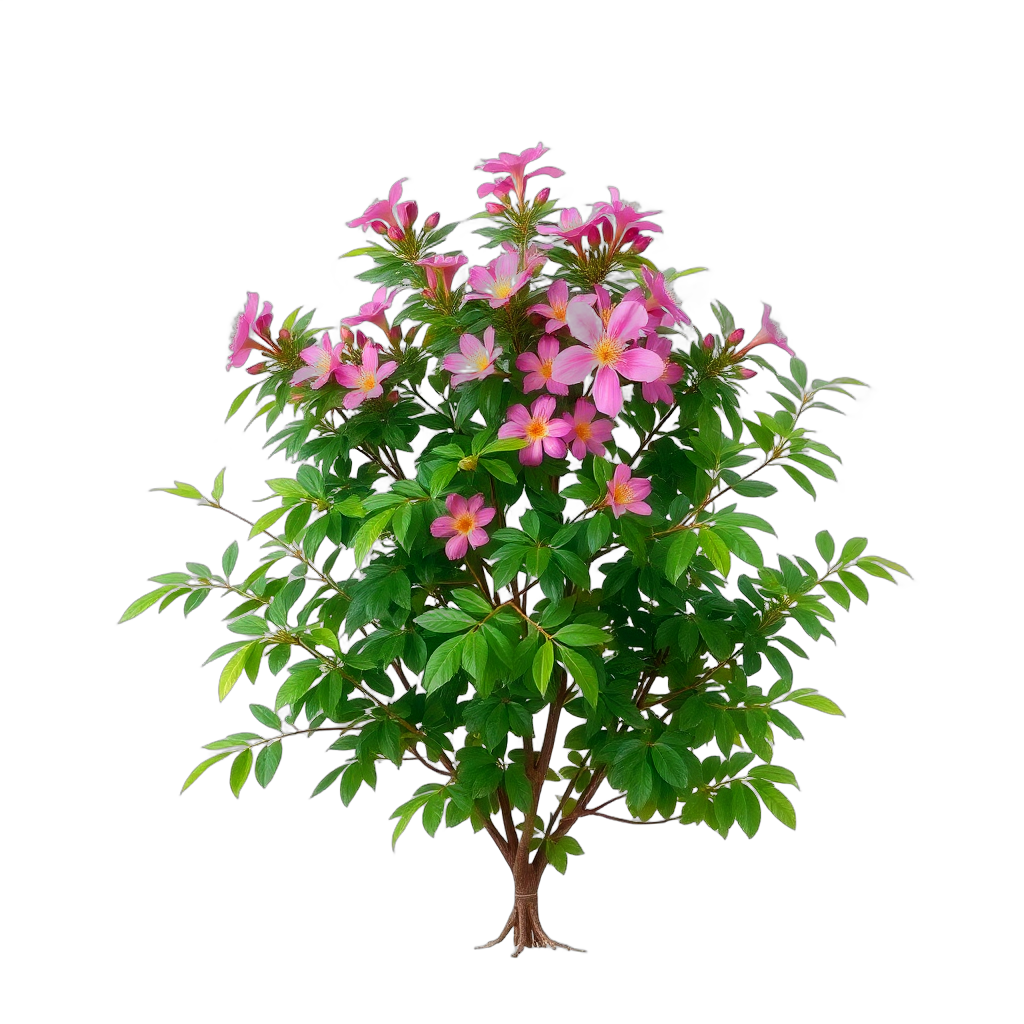
Nootka Rose
Rosa nutkana
grows to 5 feet, pink blooms in spring. Attracts butterflies.
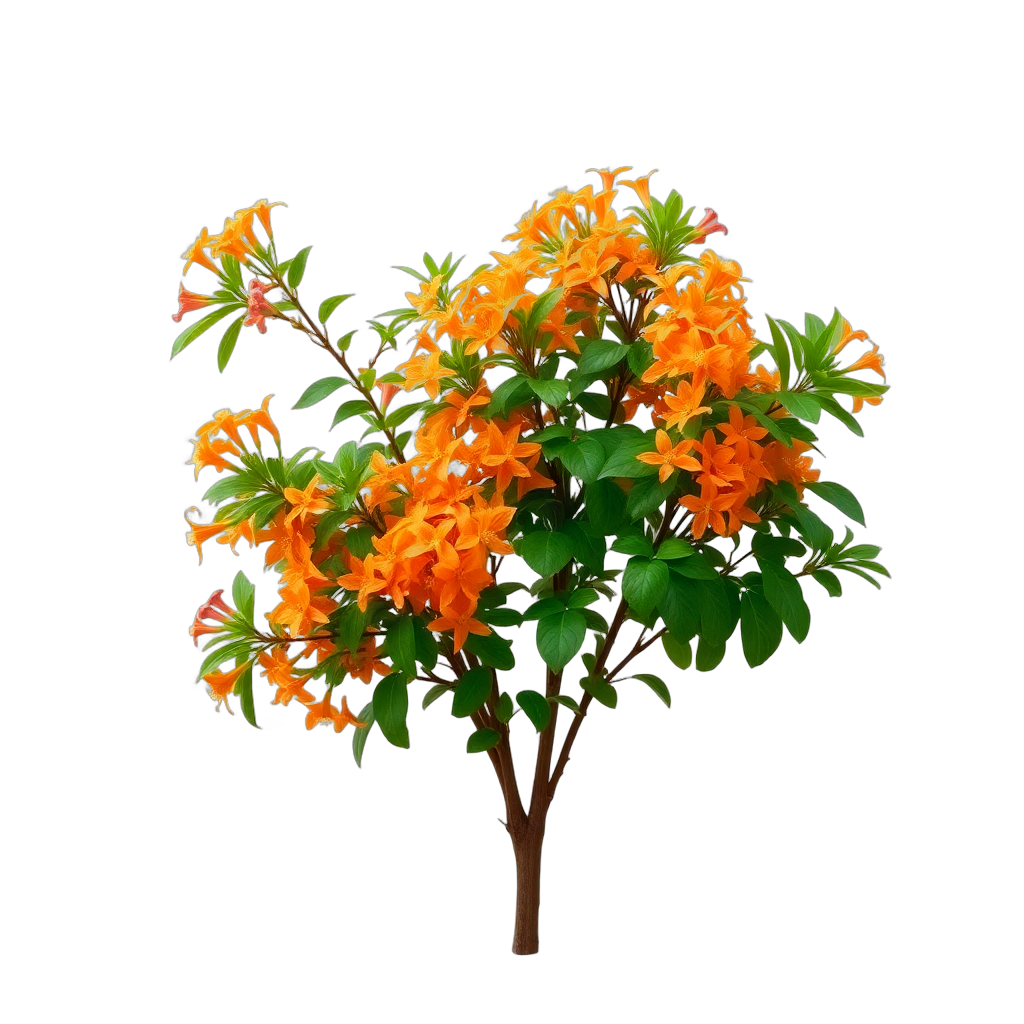
Orange Honeysuckle
Lonicera ciliosa
medium-sized at 15 feet, orange blooms in summer. Attracts hummingbirds.
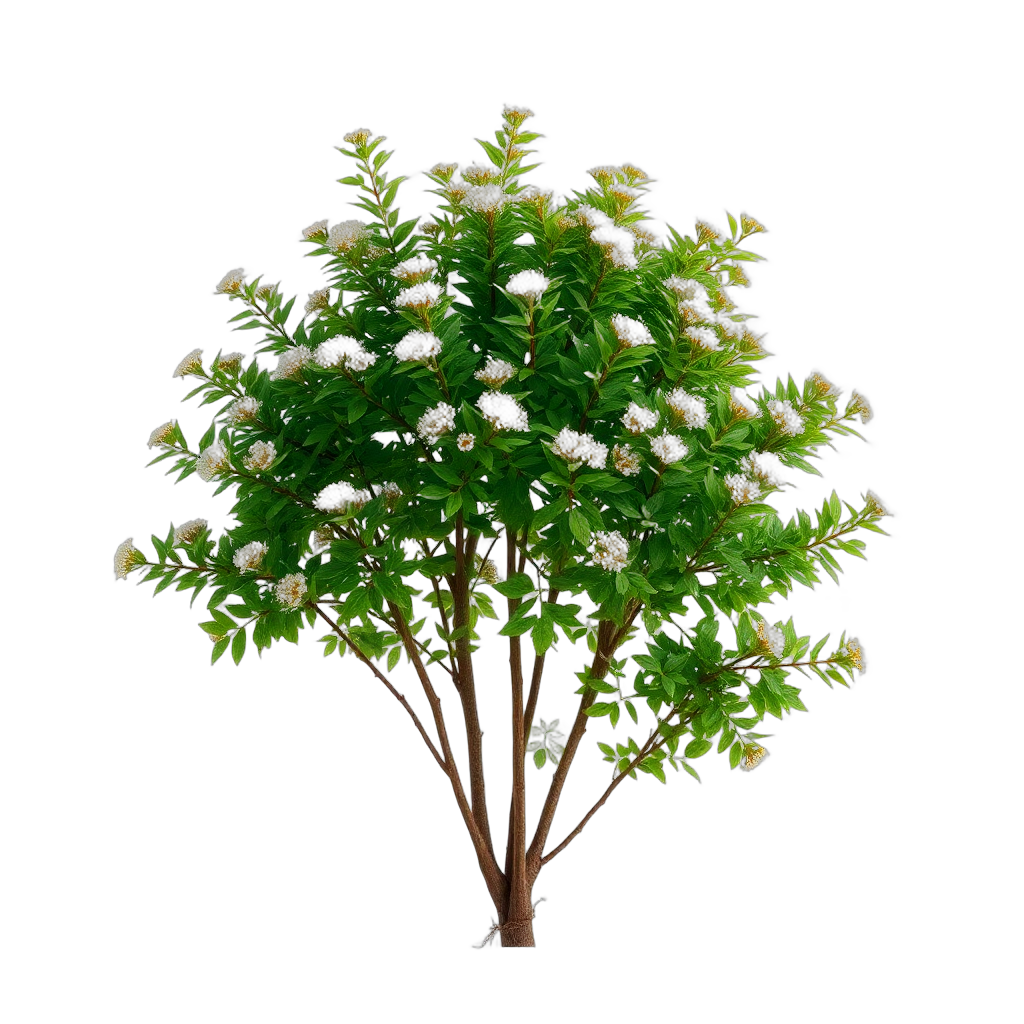
Pacific Ninebark
Physocarpus capitatus
medium-sized at 8 feet, white blooms in spring. Attracts butterflies.
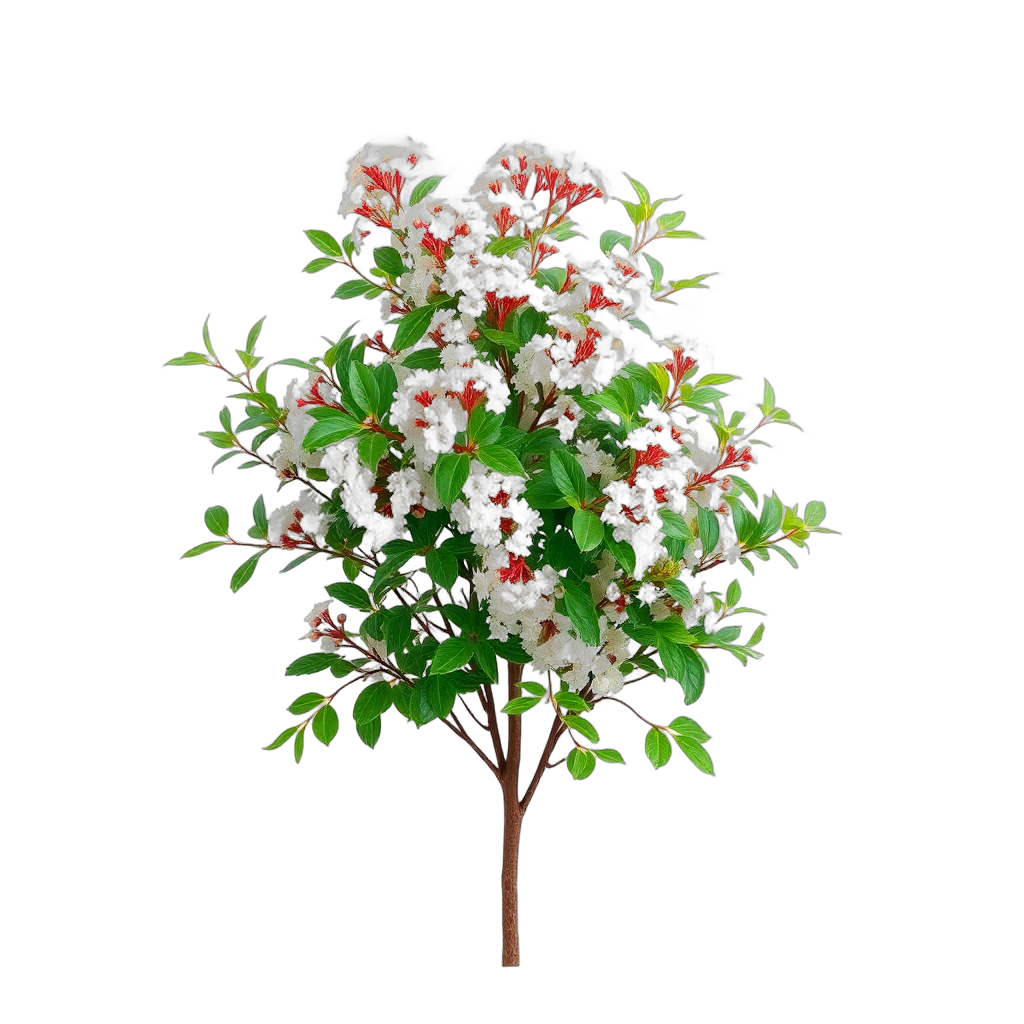
Snowberry
Symphoricarpos albus
grows to 4 feet, pink blooms in summer.
Featured Flowers & Perennials for Cottage/English Gardens
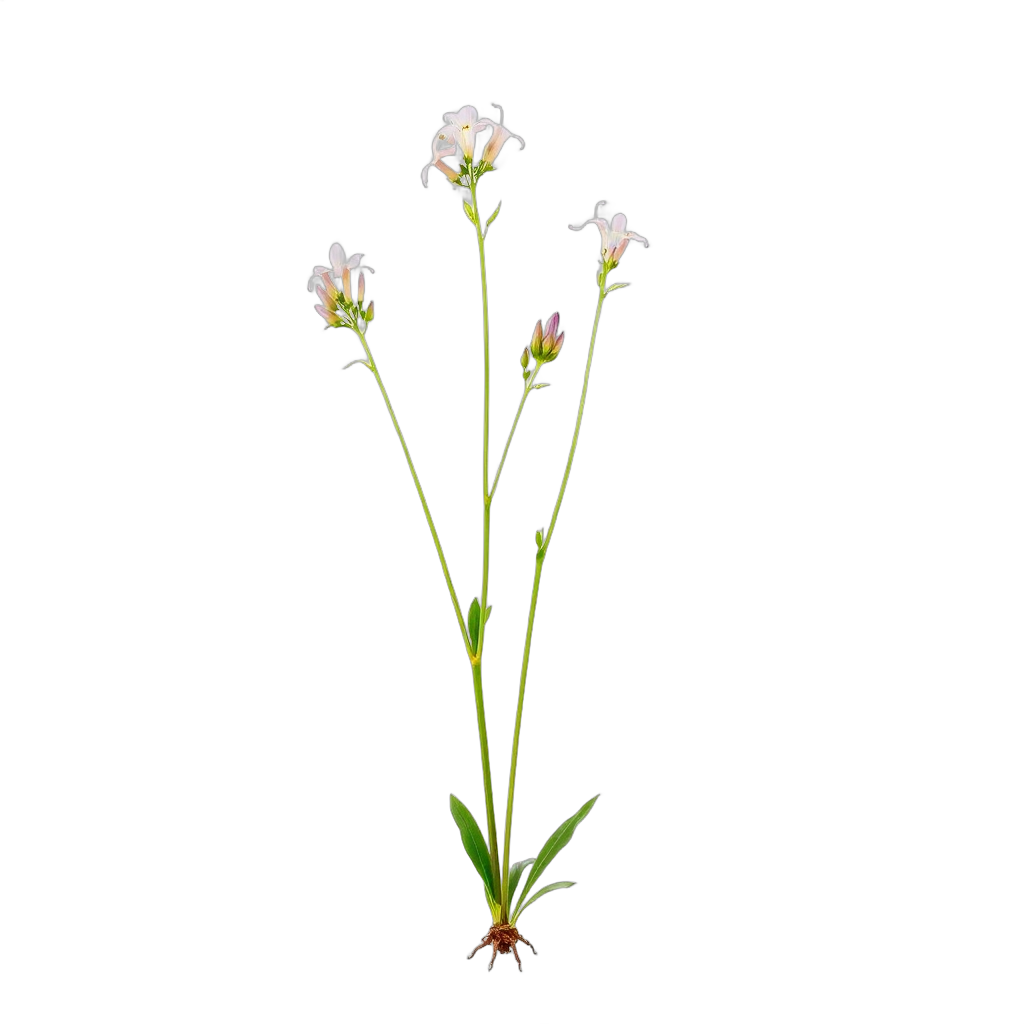
Common Camas
Camassia quamash
low-growing ground cover, blue blooms in spring. Pollinator-friendly.
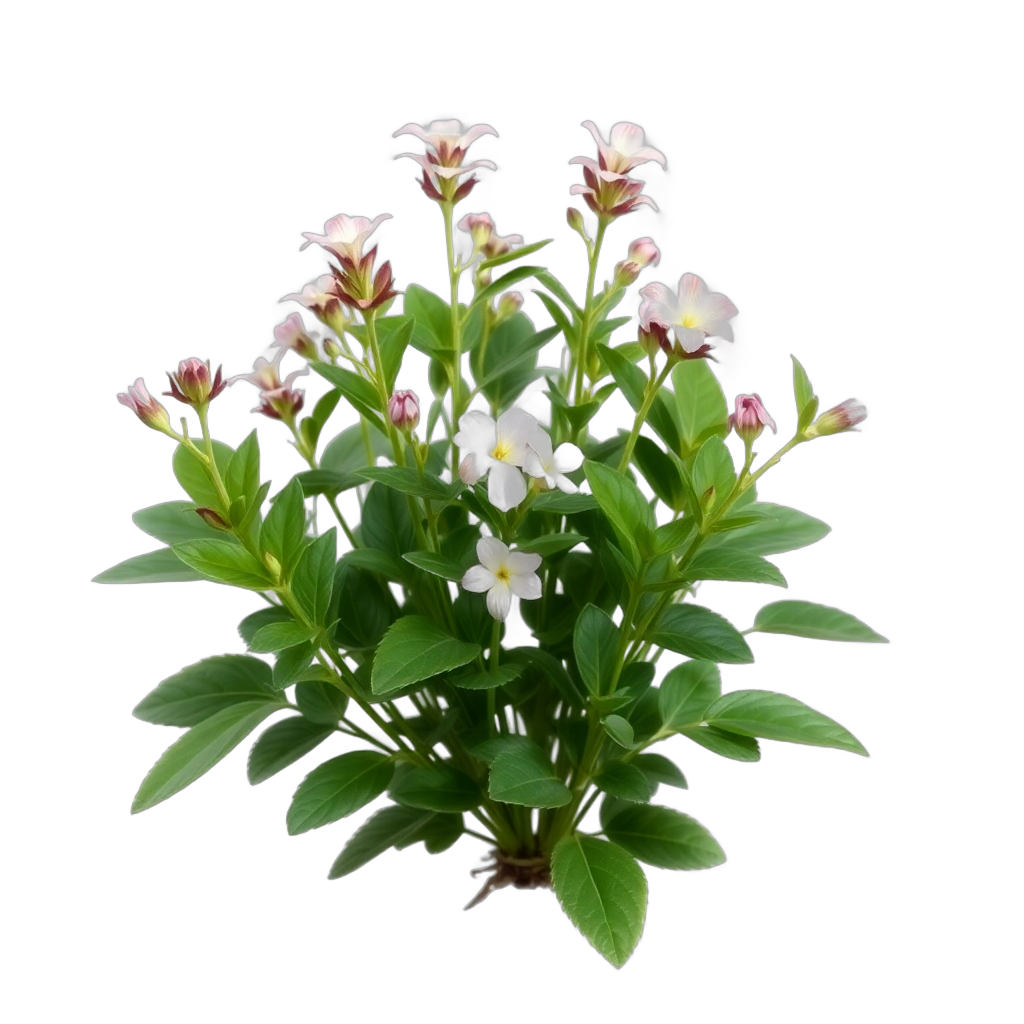
Inside-Out Flower
Vancouveria hexandra
low-growing ground cover, white blooms in spring.
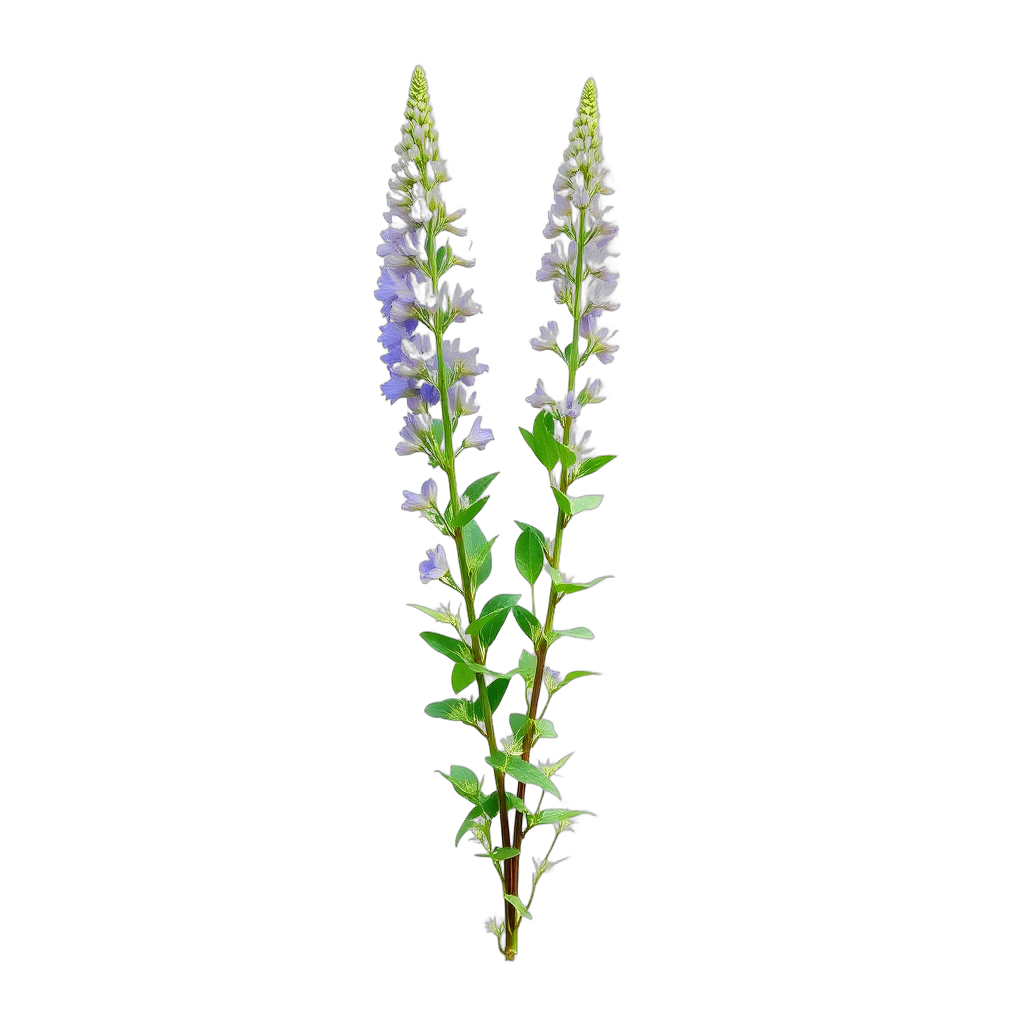
Large-Leaved Lupine
Lupinus polyphyllus
grows to 4 feet, multi blooms in spring. Attracts butterflies.
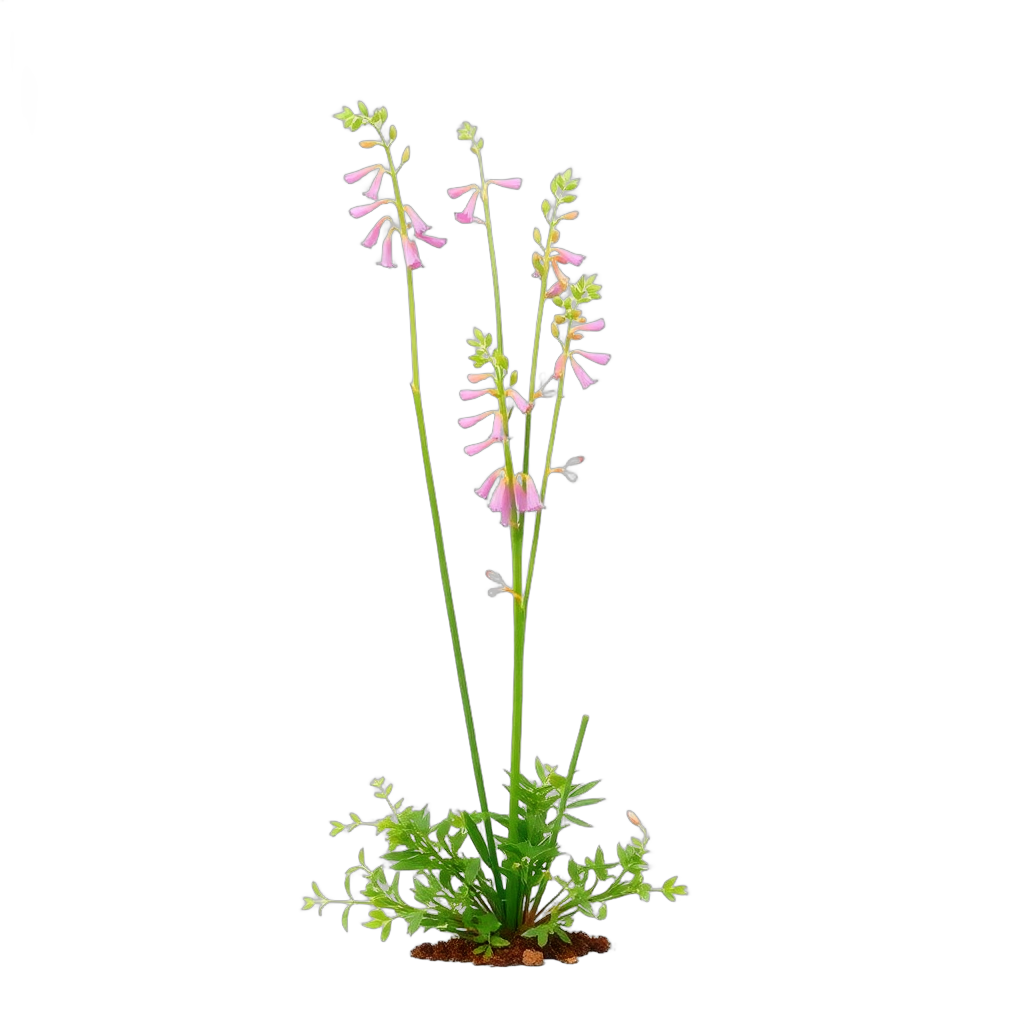
Scouler's Corydalis
Corydalis scouleri
grows to 3 feet, pink blooms in spring. Pollinator-friendly.
Zone and sun checks come from our database — confirm with your local nursery before you buy.
Bloom Calendar for Bellevue
spring
Common Camas, Inside-Out Flower, Large-Leaved Lupinesummer
Tiger Lily, Orange Honeysuckle, Snowberryfall
Limited bloomswinter
Limited bloomsDesign Tips for Bellevue (Zone 8b)
- Berm every border six to ten inches above grade — Bellevue's Alderwood soil sits on glacial hardpan, and winter water moving sideways along that layer rots more cottage plants here than cold ever will
- Buy roses for disease resistance before color: Rosa 'Darlow's Enigma', Rosa 'Sally Holmes' and Rosa 'Bonica' stay clean through a wet Eastside June, while a classic hybrid tea will defoliate by August without a spray schedule
- Lime the lavender beds and only the lavender beds — native Bellevue pH near 5.5 is perfect for Hydrangea macrophylla and Camellia japonica but slowly starves Lavandula angustifolia, Dianthus and Clematis
- Run drip line under the mulch rather than sprinklers over the border; cool nights plus wet foliage are what start blackspot, and July and August together deliver only about 1.5 inches of rain, so the water still has to come from somewhere
- Paint arbors, pergolas and fences white or a pale color rather than staining them cedar — against nine months of Bellevue overcast a stained structure disappears, while white reads as architecture in flat light
- Design in real winter interest, because you look at the garden in the rain more than in the sun: Helleborus × hybridus, Sarcococca confusa for February scent, Cornus sericea stems and Buxus 'Green Velvet' structure carry the border from November to March
- Start the slug program in March, not May — iron-phosphate bait as shoots emerge protects Delphinium, Hosta and young Digitalis before the damage that ruins the June display has already been done
Where to Source Plants in Bellevue
Skip the big-box stores. These independent Bellevue nurseries specialize in the plants that make cottage/english gardens thrive in Zone 8b.
Bellevue Nursery
Downtown Bellevue / 104th Ave SE
Independent garden center since 1955, strong on urban-scale trees, shrubs and seasonal color for small Eastside lots
Wells Medina Nursery
Medina (five minutes west of downtown Bellevue)
Five acres of family-run stock since 1971 — the Eastside source for unusual conifers, Japanese maples, roses, rhododendrons and hard-to-find border plants
Squak Mt. Nursery & Greenhouses
Issaquah (15 minutes east on I-90)
Home-grown annuals, hanging baskets, grasses, natives and a large plant-finder inventory; serves Bellevue and the Issaquah plateau
Newcastle Fruit & Produce Co.
Newcastle (south Bellevue / Factoria side)
Combined produce market and nursery known for Japanese maples, camellias, rhododendrons, hydrangeas, fruit trees and a searchable plant database
Cottage/English Landscaping Costs in Bellevue
| Project Scope | Estimated Cost |
|---|---|
| Front yard cottage conversion (borders, path, rose arch, picket fence) | $18,000 – $35,000 |
| Flagstone or brick path and small terrace (150–300 sqft) | $6,000 – $16,000 |
| Back garden with arbor, terrace and wrapped mixed borders | $30,000 – $70,000 |
| Painted cedar pergola over a paver dining terrace | $18,000 – $40,000 |
| Drip irrigation and lawn zones for a typical Bellevue lot | $4,500 – $9,000 |
| Landscape design plan from a local designer | $1,800 – $6,000 |
| AI visualization with ProScapeAI | Free to start |
Estimates based on Bellevue, WA-area contractor rates as of 2026. Actual costs vary by site conditions, materials, and contractor.
Bellevue Climate & Growing Zone
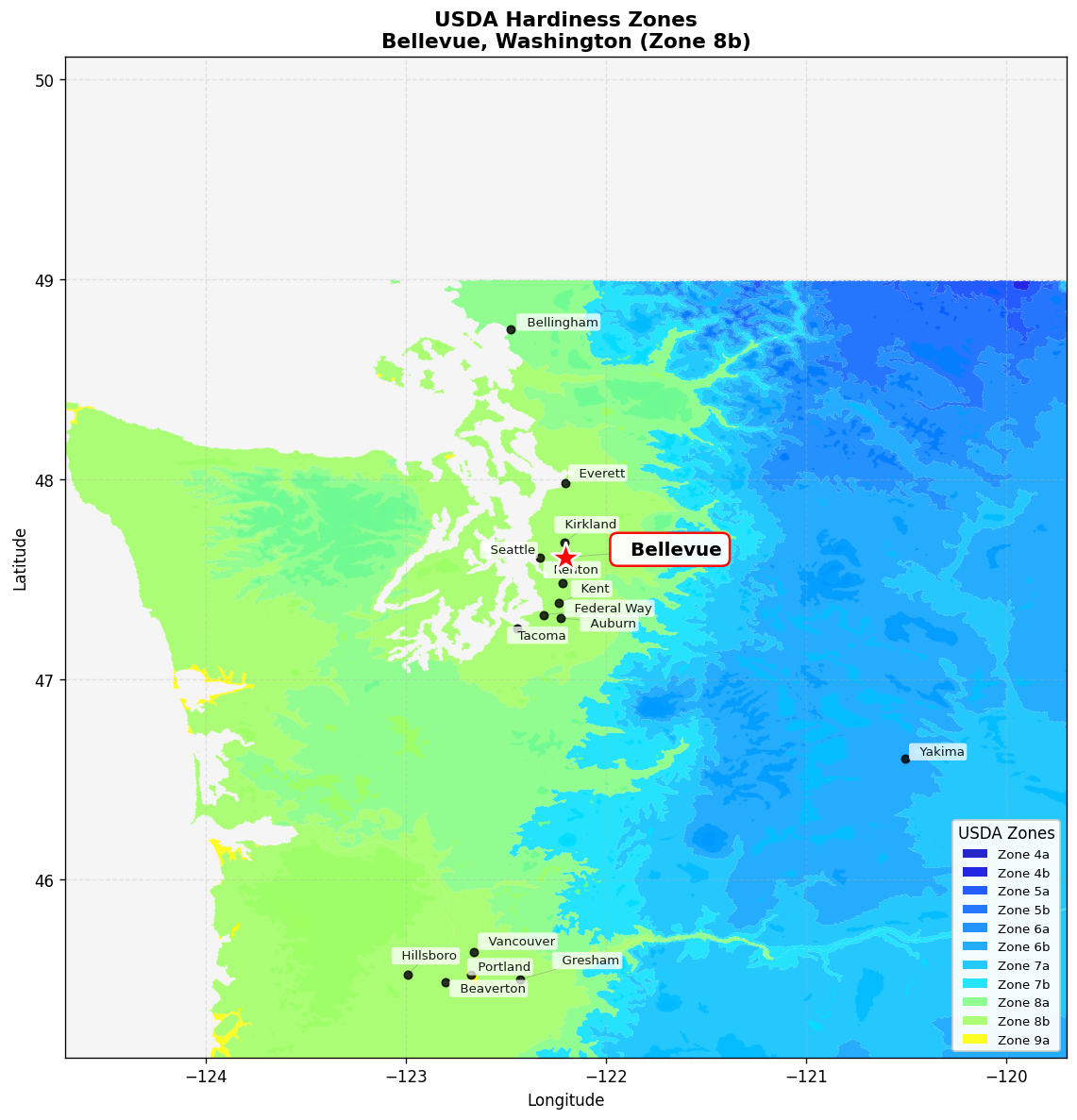
USDA Zone 8b
Hardiness zone for Bellevue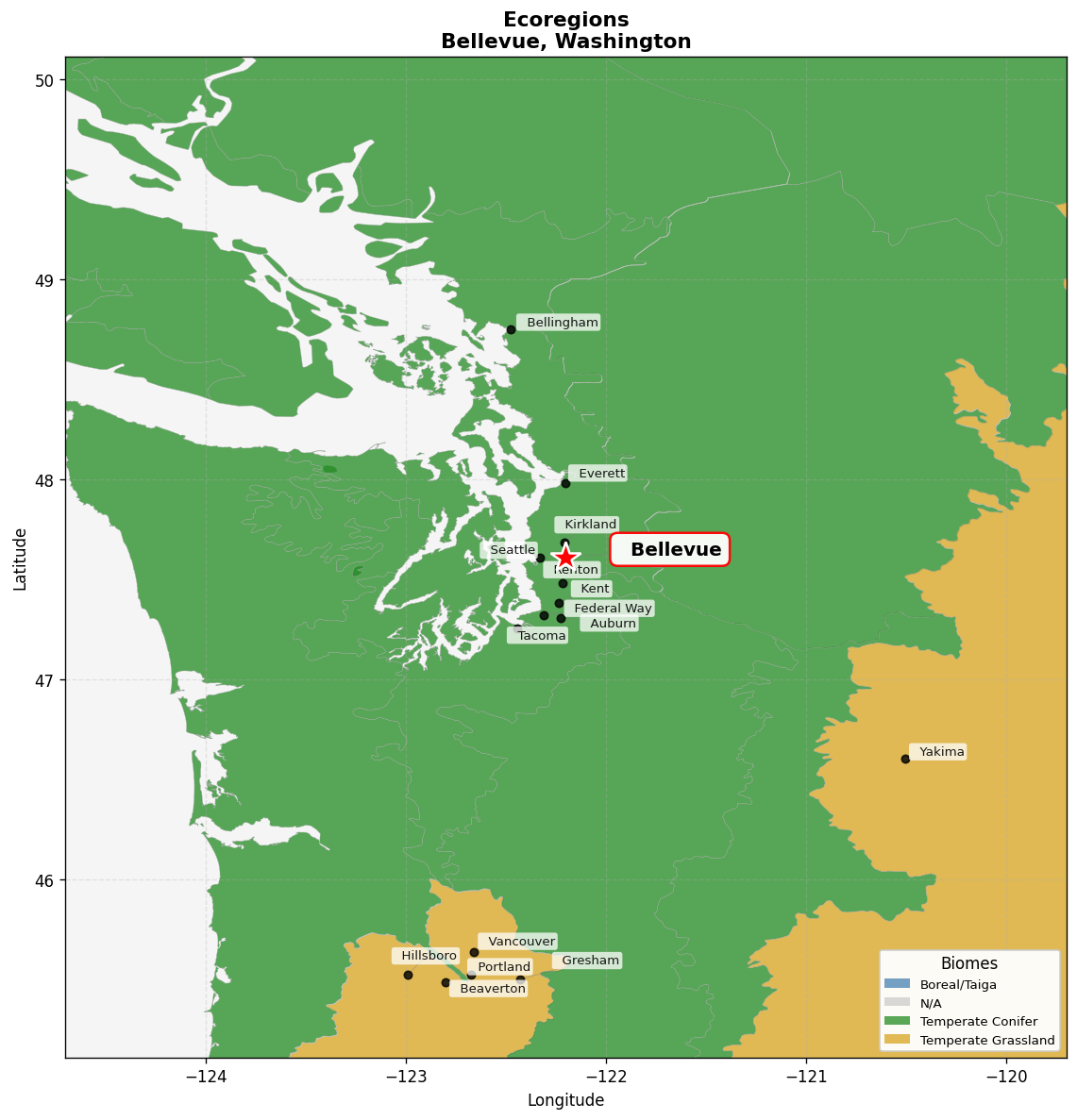
Puget lowland forests
Native ecoregionFrequently Asked Questions
How much does a cottage garden cost in Bellevue?
Bellevue sits in one of the most expensive installation markets in the country, so budget above national figures. A front-yard cottage conversion — turf removal, bermed borders, a rose arch, picket fence and a brick or flagstone path for a typical 600 sqft front yard — runs about $18,000 to $35,000 installed. A back-garden flagstone terrace with an arbor and wrapped borders lands between $30,000 and $70,000. A full backyard with a painted pergola, paver dining terrace, lighting and mature planting commonly reaches $80,000 to $160,000. A stand-alone design plan from a local landscape designer typically costs $1,800 to $6,000. Doing the planting yourself and hiring out only the hardscape usually cuts 30 to 40 percent.
Which roses actually perform in Bellevue's damp climate?
Blackspot and powdery mildew, not cold, are what kill roses on the Eastside — Bellevue records measurable rain on roughly 150 days a year. Choose cultivars with documented disease resistance in the maritime Northwest: Rosa 'Darlow's Enigma', Rosa 'Sally Holmes', Rosa 'Bonica', Rosa 'Iceberg', Rosa 'New Dawn' and Rosa rugosa selections all hold clean foliage here with no spray program. Avoid dense hybrid tea plantings against a wall. Space plants for airflow, water at the root with drip rather than overhead, prune in late February, and clear fallen leaves in autumn — that single habit removes most of the overwintering spore load.
Do I need irrigation if Bellevue gets 41 inches of rain?
Yes, and only for about ten weeks. Bellevue's Csb climate concentrates its rain from October to May and delivers roughly 1.5 inches total across July and August, so a cottage border that has never been watered will stall right when it should be at its peak. A drip system with a timer on the borders, plus a separate zone for the lawn, is the standard solution; installed cost across a typical Bellevue front and back yard runs $4,500 to $9,000. Two to three inches of fine bark over the drip line cuts summer demand substantially, and many Eastside utilities including Bellevue offer a dedicated irrigation meter so summer watering is not billed as sewer volume — worth asking about before the system goes in.
How do I deal with Bellevue's glacial hardpan and acidic soil?
Treat the hardpan as a floor you cannot break through, and build above it. Excavating a planting hole into Alderwood till just creates a bathtub that holds water all winter. Instead berm beds six to ten inches above grade with a 50/50 blend of native soil and compost, edge them, and let the water shed. On sloping lots a shallow French drain along the uphill bed edge is cheap insurance. For pH, get a soil test first: native ground here runs 5.0 to 6.0, which Hydrangea macrophylla, Camellia japonica and Rhododendron love. Lavandula angustifolia 'Hidcote', Dianthus and Clematis want 6.5 to 7.0, so those beds specifically need dolomitic lime worked in — roughly 5 pounds per 100 sqft, then retested the following year.
When is the best time to plant a cottage garden in Bellevue?
October and early November are the best window in the entire Puget lowland. Soil is still warm, the rains have returned, and roots establish through a mild winter so the plant hits its first spring already settled and needs almost no summer watering. Late February through April is the second window and the one most Bellevue nurseries stock heaviest for. Avoid installing new plants from late June through August: the dry season is short but it is genuinely dry, and unestablished plants will need daily attention. Hardscape can go in year-round here, though contractors price winter flagstone and paver work higher because of mud and short daylight.
What about slugs — is a cottage garden realistic in Bellevue?
Slugs and snails are the single most underestimated maintenance factor in an Eastside garden, and they are worst on exactly the plants a cottage border wants: Hosta, Delphinium, Dahlia and young Digitalis. It is manageable, not hopeless. Set out iron-phosphate bait as new shoots emerge in March, keep mulch pulled back an inch from crowns, and lean the front of the border on plants they refuse to touch — Alchemilla mollis, Nepeta racemosa 'Walker's Low', Geranium 'Rozanne', Astrantia major and every Lavandula. Growing Delphinium and Hosta in raised beds or containers rather than at grade also removes most of the pressure.
Are there permit or tree rules I should know about in Bellevue?
Planting, mulching and bed-building need no approval. Things change once you move soil or touch trees: Bellevue administers a clearing and grading code with thresholds on the volume of earth moved and the area disturbed, separate critical-areas rules covering steep slopes, streams and wetlands, and tree regulations that protect significant trees on many lots. Retaining walls above a certain height, and any structure with a roof, are reviewed as well. None of that stops a cottage garden, but it can change the design — so check your specific parcel with the City of Bellevue Development Services before you commit to grading, a wall, or removing a Douglas fir.