Mediterranean Landscaping Ideas for Bellevue, WA (Zone 8b)
Native plants from the Puget lowland forests (Zone 8b) — Mediterranean (warm summer) climate
Why Mediterranean Gardens in Bellevue?
Bellevue's climate classification is Csb — warm-summer Mediterranean, the same Köppen letters as Porto, Bilbao and the coast of northern Portugal. That is not a technicality: Bellevue really does get a genuine dry season, with roughly 1.5 inches of rain across July and August combined out of about 41 inches for the year, and July highs that settle in the mid-to-upper 70s instead of the punishing heat of the actual Mediterranean basin. Lavandula × intermedia 'Grosso', Rosmarinus officinalis 'Arp', Cistus × purpureus, Teucrium chamaedrys and Ficus carica 'Desert King' are not a stretch here — they are among the easiest plants in the Puget lowland once they are sited correctly. The stucco-and-tile houses that suit the style are scattered across Bellevue too: the Mediterranean revivals and stucco spec homes of Clyde Hill, Somerset and West Bellevue, the tile-roofed 1990s builds around Newport Hills and Cougar Mountain, and the newer courtyard-plan houses filling in near Bridle Trails.
The plants that fail here fail from winter wet, not winter cold. Zone 8b means average lows of 15–20°F, which most of the palette tolerates. What it cannot tolerate is a crown sitting in saturated soil from November to April, which is exactly what happens on Alderwood glacial till where the cemented hardpan 20 to 40 inches down sheds water sideways instead of letting it drain. Everything therefore goes on a berm. Raise beds eight to twelve inches, cut the native soil 50/50 with crushed rock or pumice, and mulch with 3/8-inch gravel rather than bark — gravel keeps the crown dry and reflects heat back at the plant, which matters when your summer is mild. Done that way, Lavandula angustifolia 'Hidcote', Santolina chamaecyparissus, Phlomis fruticosa and Helictotrichon sempervirens live for a decade. Planted flat in native soil they will look superb for one season and be gone by the second spring.
Two signature plants need an honest local answer. Olea europaea 'Arbequina' is the hardiest widely sold olive and survives Bellevue in a sheltered south-facing spot with sharp drainage, but a hard Fraser Valley outflow event will burn it, so most Eastside gardens are better served growing it in a large pot that can be pulled against the house, or substituting Elaeagnus 'Quicksilver' or Pyrus salicifolia 'Pendula' for the same silver-canopy effect with none of the risk. Bougainvillea is simply not hardy here and should be treated as a summer container plant; for permanent magenta on a pergola, Clematis 'Madame Julia Correvon', Rosa 'Zéphirine Drouhin' or Campsis × tagliabuana 'Madame Galen' give the same effect through a Bellevue winter. Citrus follows the same logic: keep Citrus × meyeri and Citrus × latifolia in terracotta and move them into a garage or bright room below 30°F, but plant Citrus junos, the yuzu, straight into the ground — it takes 8b winters, and it is the one true in-ground citrus for the Eastside.
Water and code round out the picture. A Mediterranean planting is the lowest-water design available in Bellevue, but it is not a no-water design in its first two summers: drip line and a timer through July and August for the establishment years, then almost nothing after that. Gravel courtyards and permeable joints also work with rather than against Bellevue's stormwater expectations — the city runs a Storm and Surface Water Utility and applies clearing and grading rules that limit how much ground you may disturb, with additional critical-areas review near steep slopes, streams and wetlands, so confirm your parcel with Development Services before grading or building a wall. And plan for moss and algae from day one: on the Eastside, a smooth polished tile surface in shade turns slick by the second winter, while tumbled terracotta pavers, split flagstone and gravel stay usable all year.
4 Mediterranean Design Ideas for Bellevue

The Olive and Cypress Entry Court
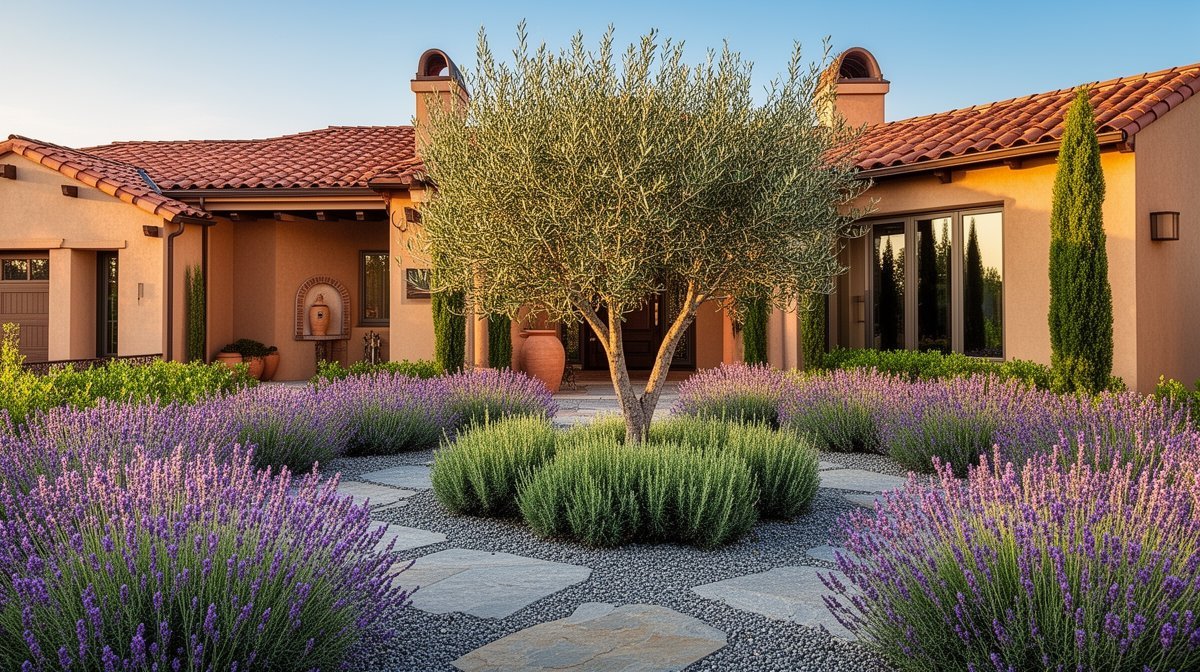
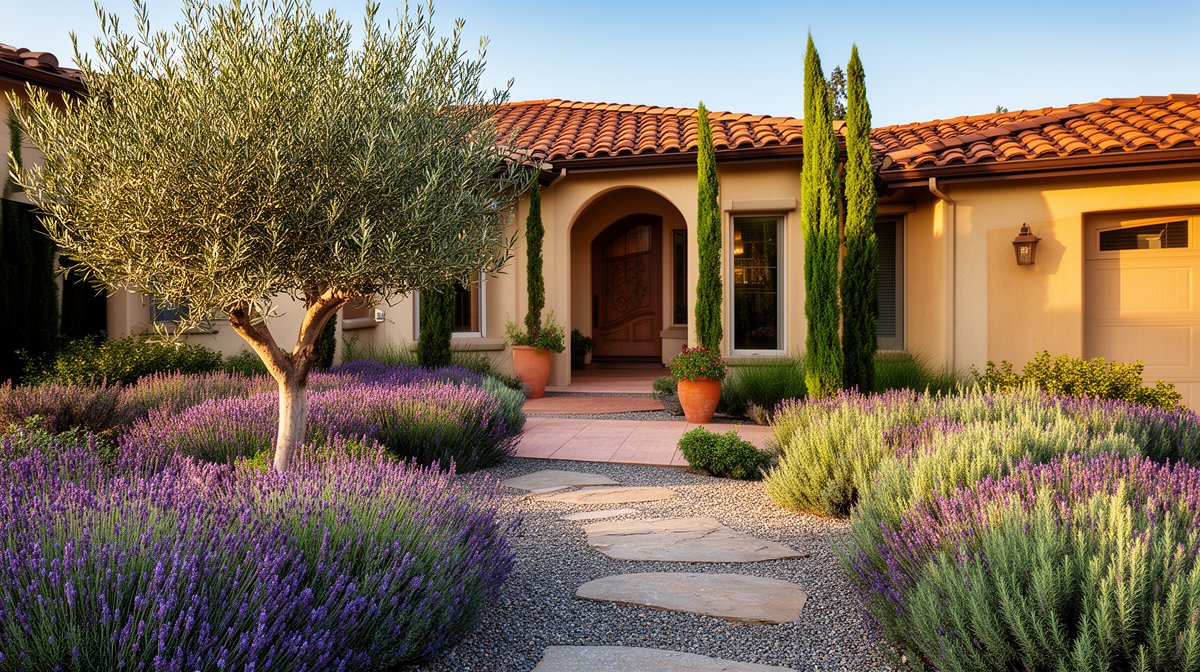
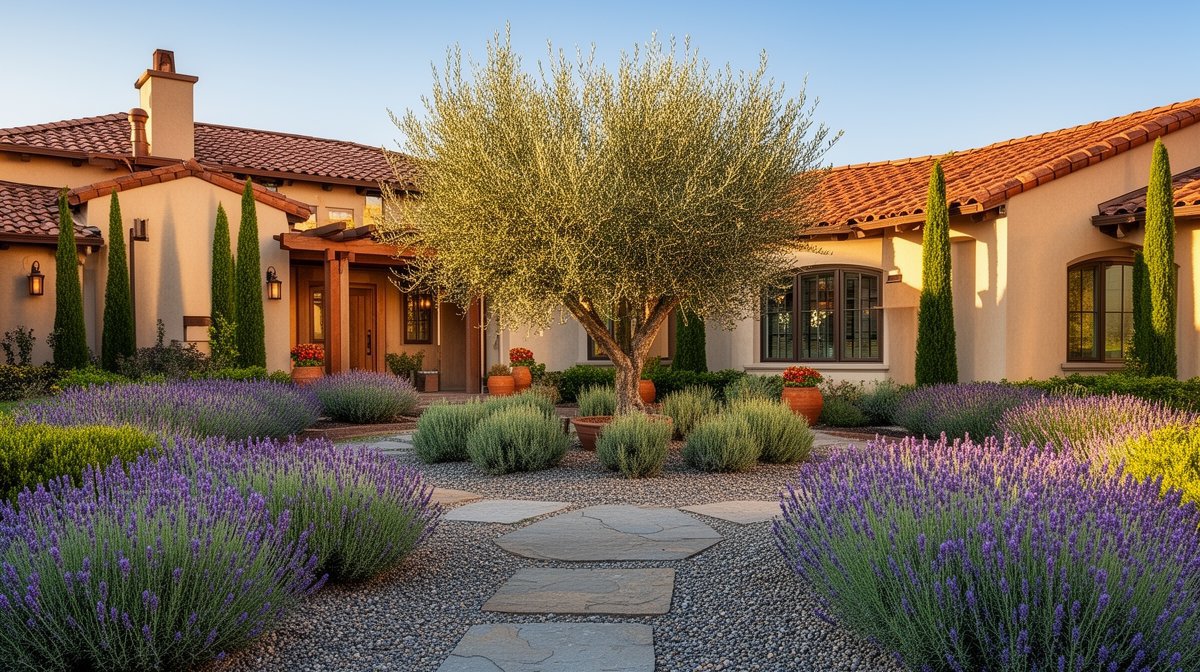
$32–58/sqftA two-story cream stucco house with a barrel-tile roof, dark shutters and a wrought-iron Juliet balcony gets its whole character from three moves: a mature multi-trunk olive standing off to one side with its canopy lifted so the trunk reads as sculpture, three narrow columnar evergreens rising against the facade to punctuate the windows, and a flagstone path that curves rather than aims straight at the door. The path is lined the entire way with a solid ribbon of lavender, so every arrival brushes it, and a clipped low hedge runs tight along the foundation with two matched globes in terracotta pots flanking the entry. The lawn is kept as a single clean panel on one side only — a deliberate restraint that makes the planted side look intentional rather than half-finished.

The Gravel Citrus Courtyard
$26–46/sqftAn ornate iron gate opens into a walled courtyard floored in pea gravel, with a flagstone stepping-path threading through the middle to an arched wood door. Half a dozen large terracotta pots hold small citrus trees, fruit still on the branch, spaced along both sides so the space reads as a collection rather than a border. A magenta climber pours over the top of a warm-toned wall at one side, a low clipped hedge holds the line at the base of the house, and slim spike lights sit low among the pots. The pot-based approach is the whole point in Bellevue: everything tender rolls into shelter in November and comes back out in April, and the gravel floor drains instantly after a winter storm.

The Fountain Terrace
$38–70/sqftThe back of a white stucco house with a deep tiled loggia opens onto a terracotta-tile terrace organized around a single round stone fountain sitting in a low circular basin. A wrought-iron table for four sits just behind it against the lit French doors, a mature olive anchors one side of the composition and a heavily fruiting orange tree the other, and clipped hedge blocks square off the beds between terrace and lawn. Bands of lavender run through the lawn edges with small path lanterns set among them. The fountain is doing more work than it looks: in a city where the sound of light rain is the background nine months a year, moving water keeps the terrace feeling alive on the still, gray days too.

The Bougainvillea Pergola Lounge
$40–75/sqftA heavy rustic timber pergola sits off the sliding glass doors over a big terracotta-tile patio, its beams carrying a magenta climber that flowers straight across the top. Below it a wicker sofa, two lounge chairs and a low table make a full outdoor living room, with fruiting lemon trees standing at both ends of the patio and raised timber planters running along the edges filled with silvery lavender. Terracotta pots with clipped mounds mark the patio corners. For Bellevue, build the pergola from real timber with generous rafters — it has to shed rain and carry a wet vine through winter — and treat the flowering climber as either an annual container display or a hardy magenta substitute if you want it back every June.
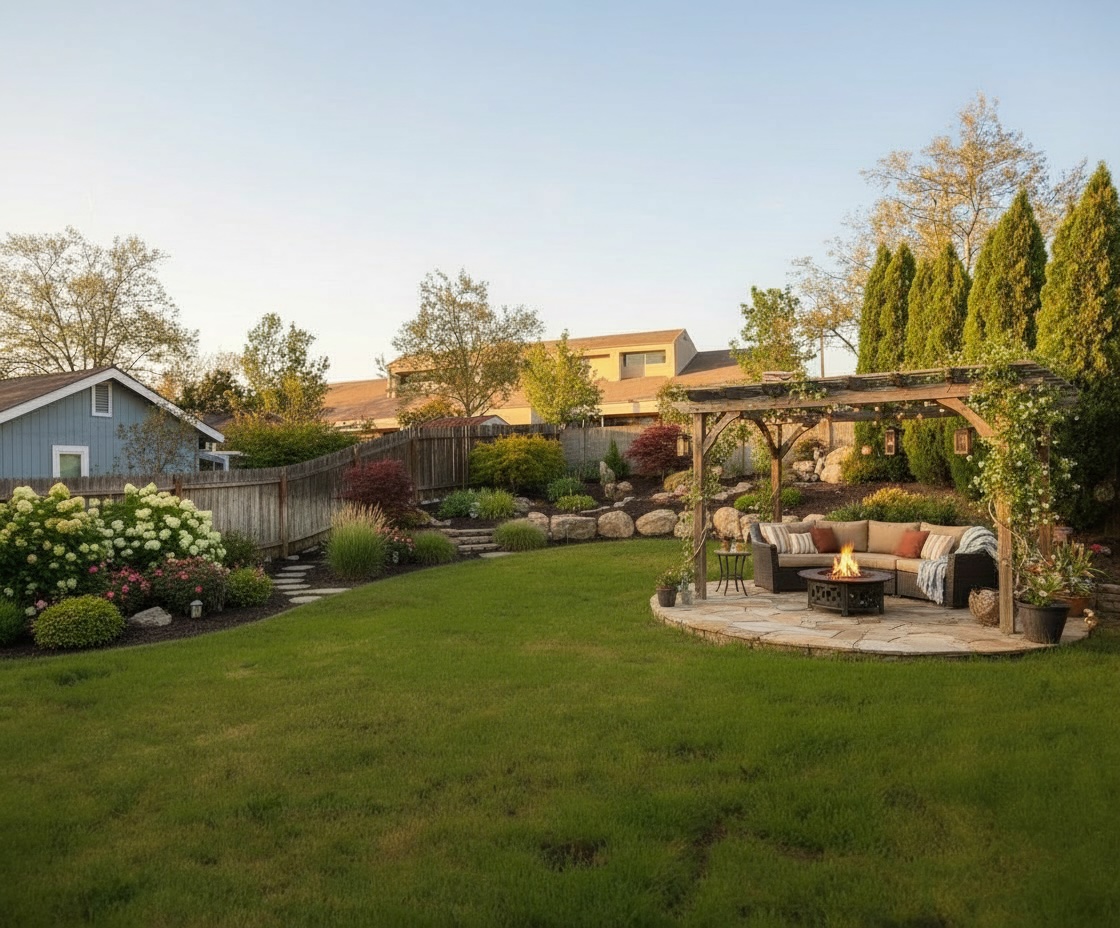
See how a mediterranean garden looks on YOUR property
Upload a photo of your Bellevue yard and visualize your dream garden in seconds.
Try ProScapeAI Free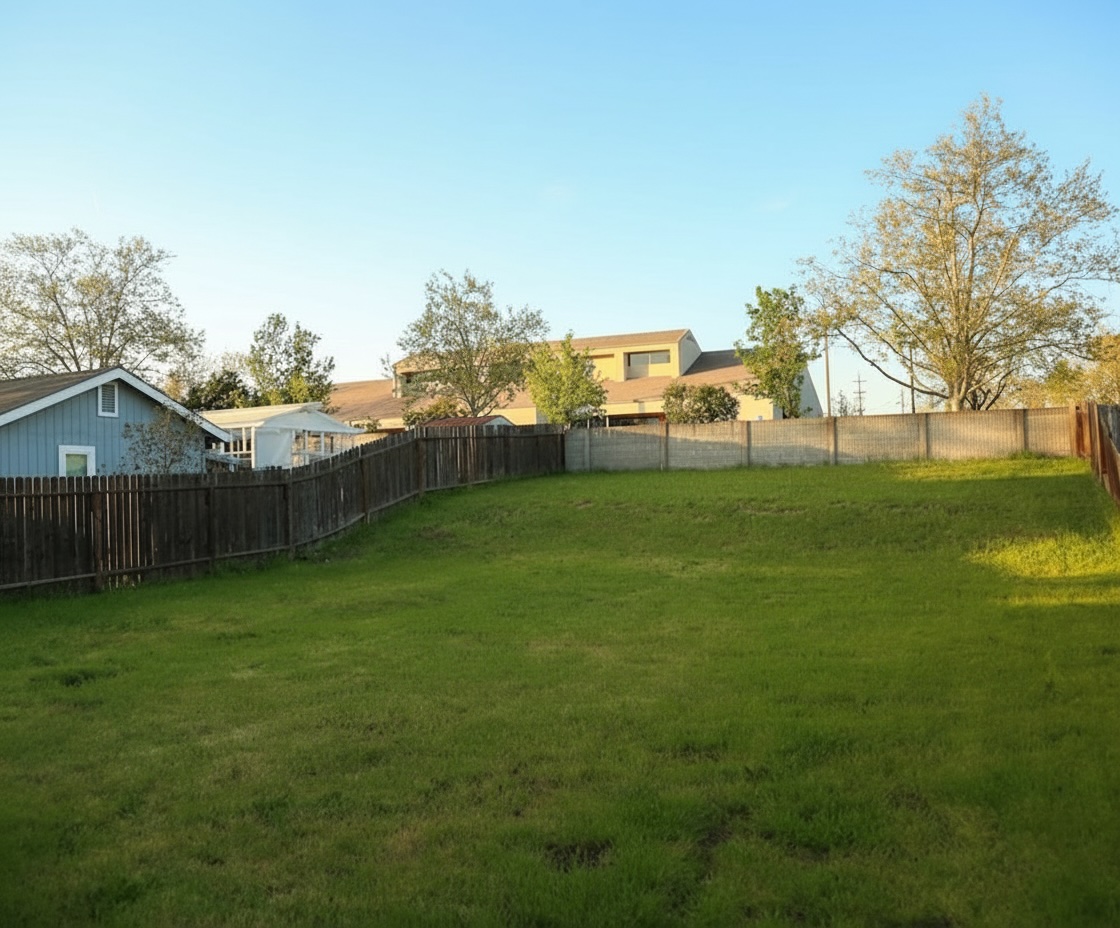
Featured Trees & Shrubs for Mediterranean Gardens
Browse all 163 plants for Bellevue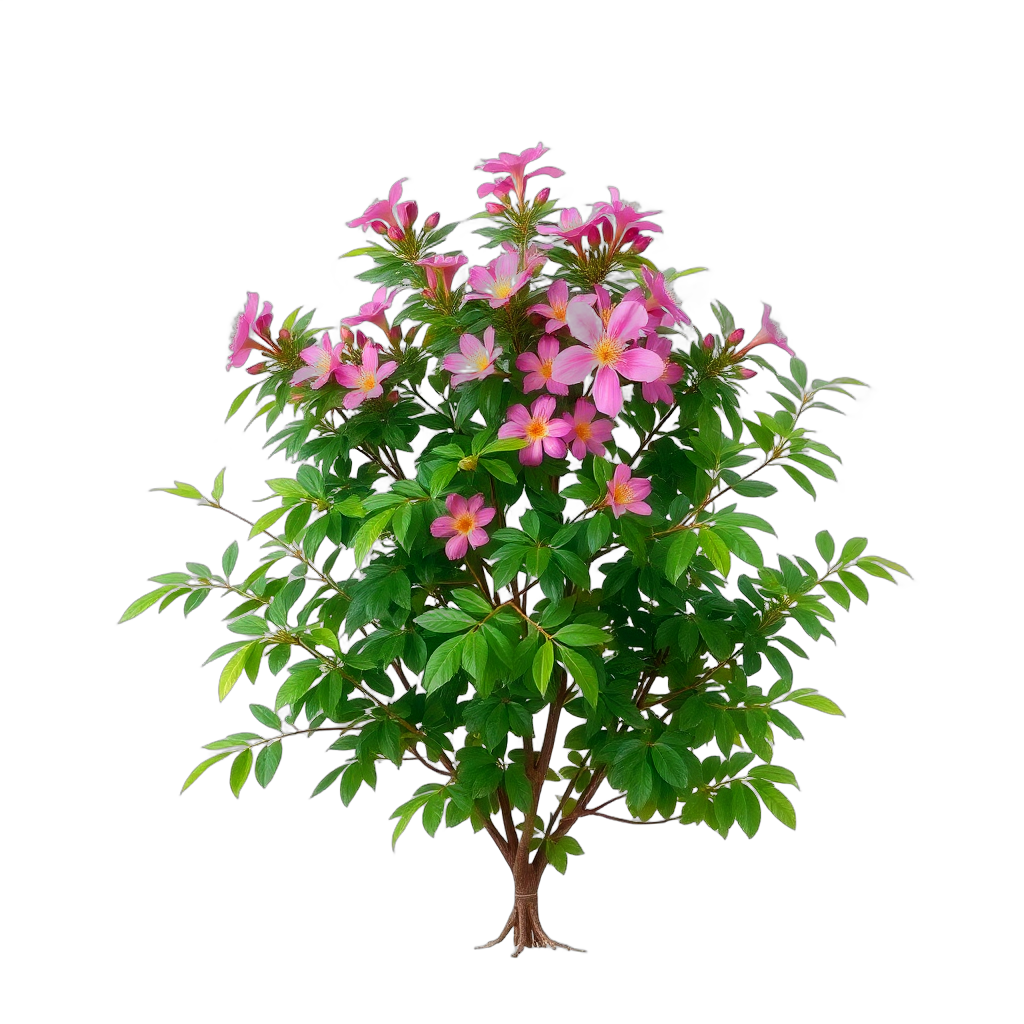
Nootka Rose
Rosa nutkana
grows to 5 feet, pink blooms in spring. Attracts butterflies.
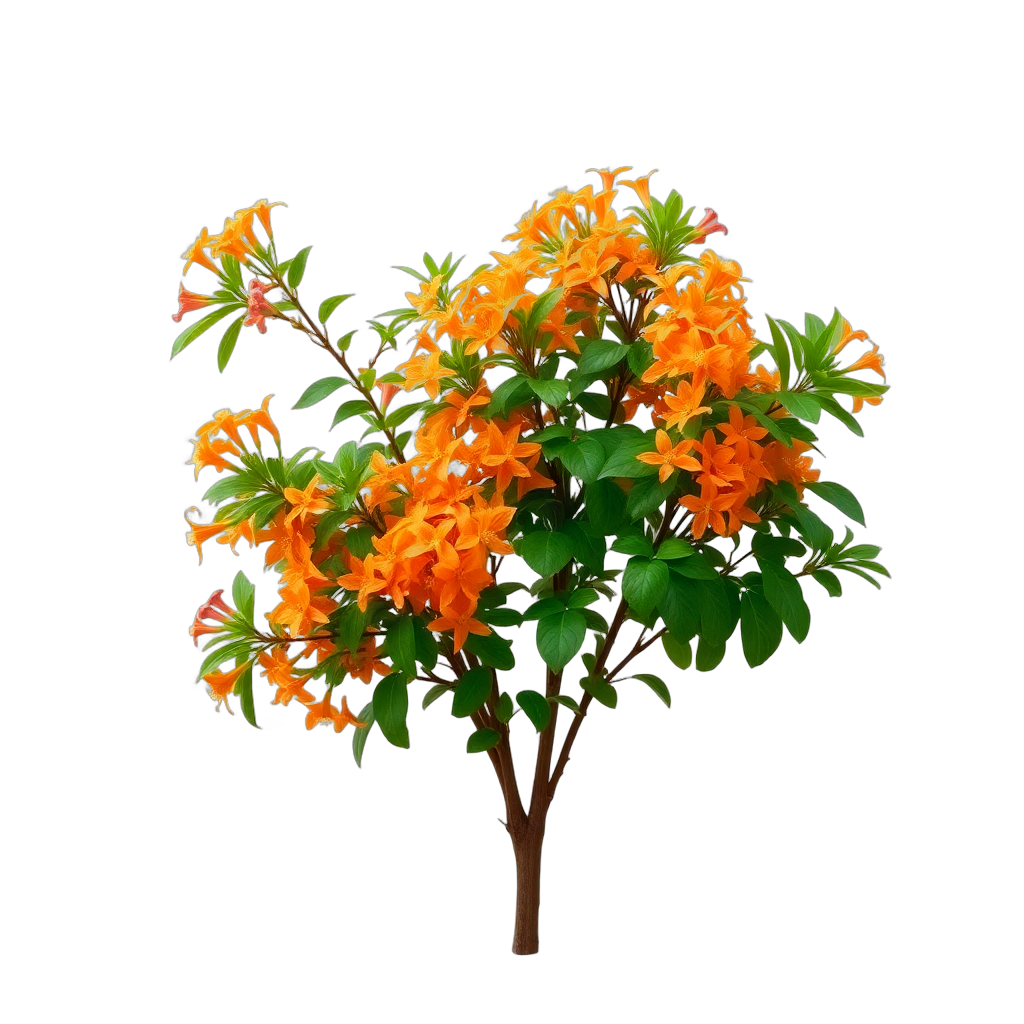
Orange Honeysuckle
Lonicera ciliosa
medium-sized at 15 feet, orange blooms in summer. Attracts hummingbirds.
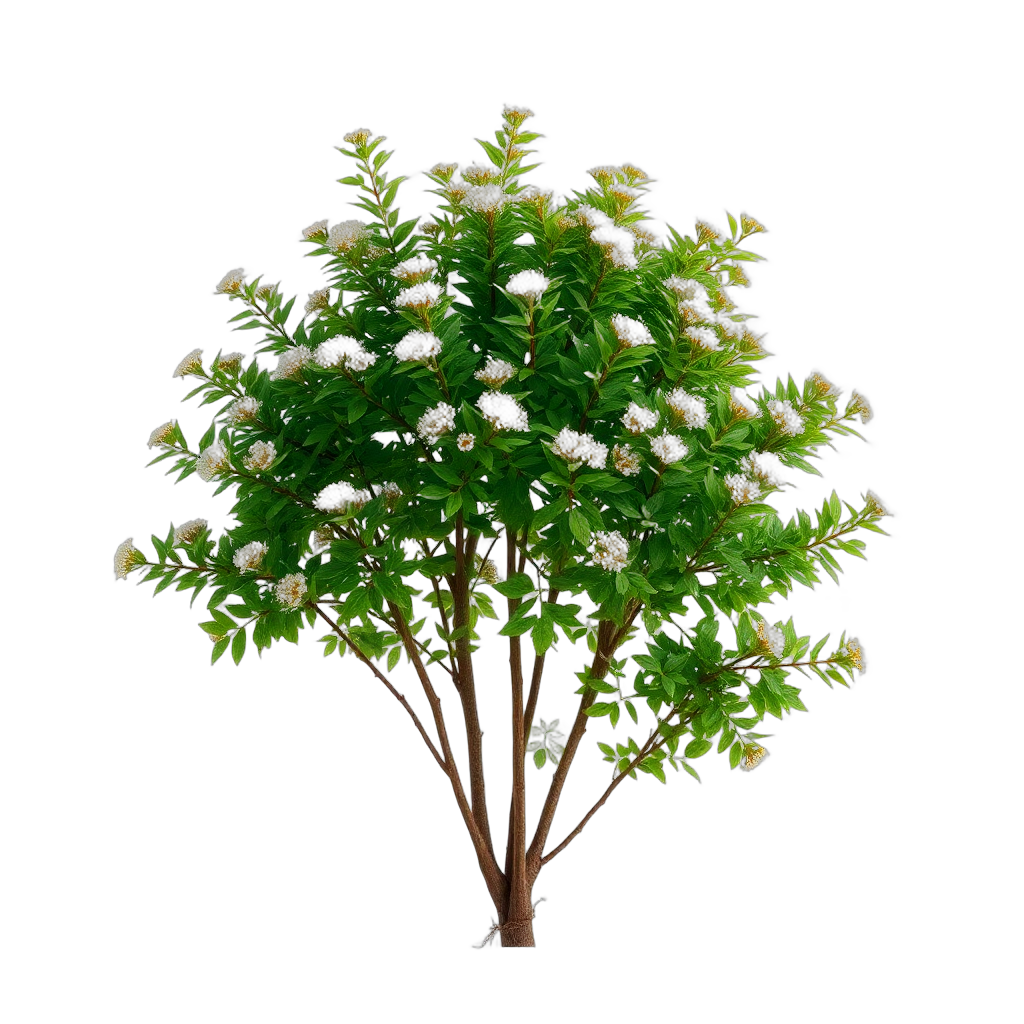
Pacific Ninebark
Physocarpus capitatus
medium-sized at 8 feet, white blooms in spring. Attracts butterflies.
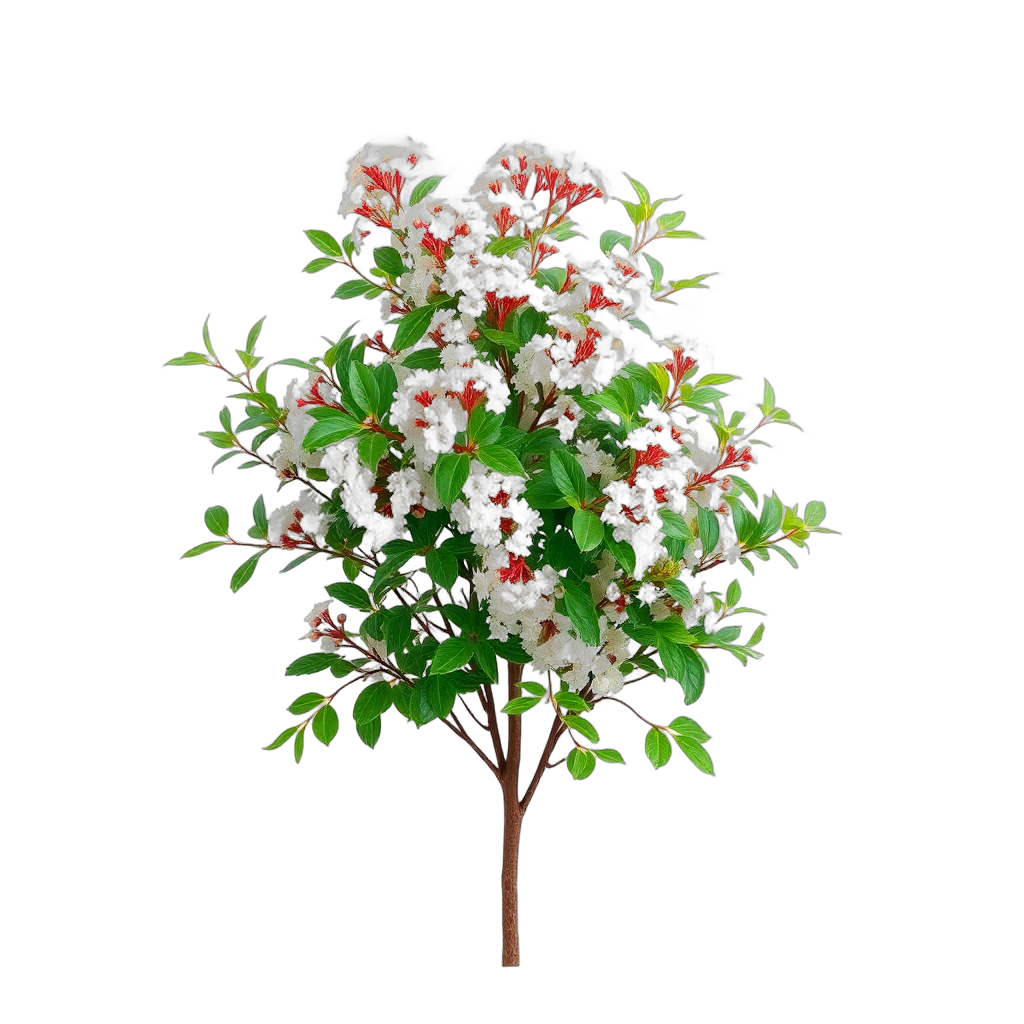
Snowberry
Symphoricarpos albus
grows to 4 feet, pink blooms in summer.
Featured Flowers & Perennials for Mediterranean Gardens
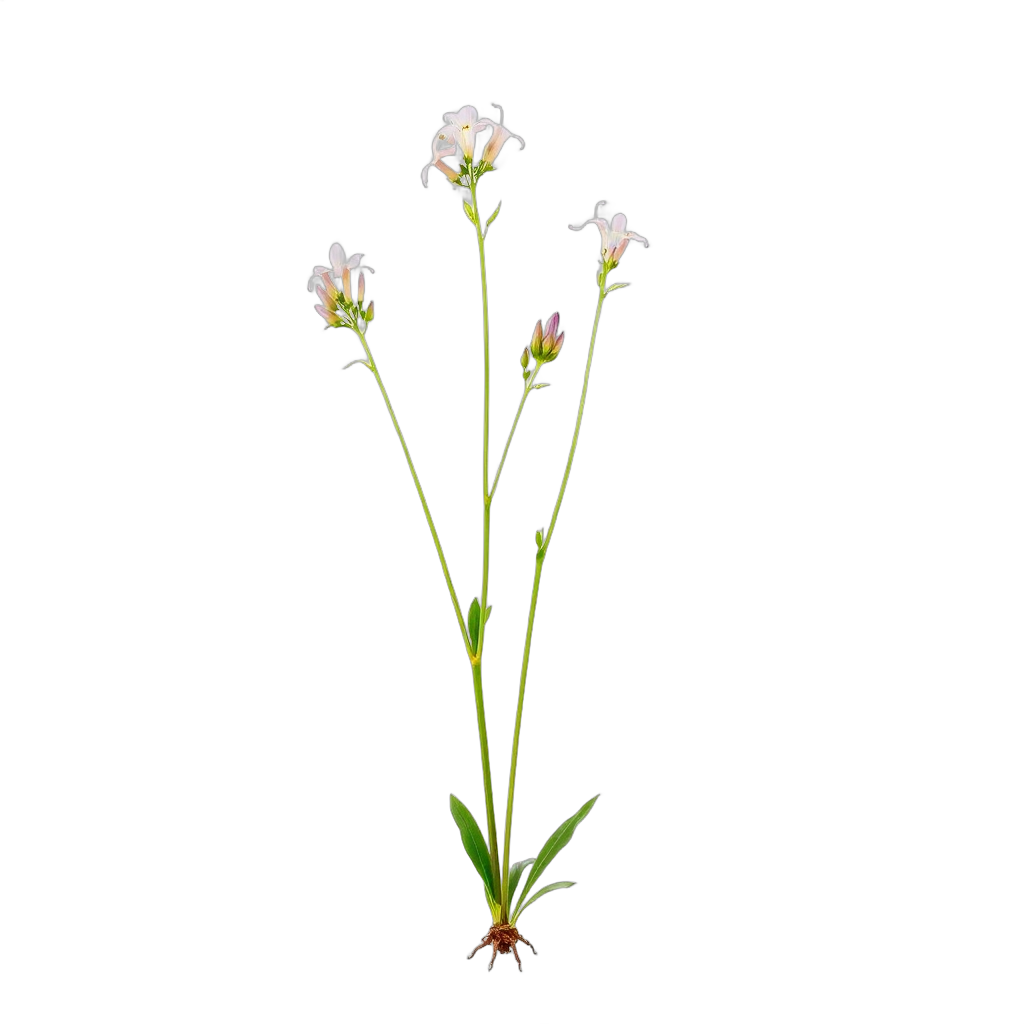
Common Camas
Camassia quamash
low-growing ground cover, blue blooms in spring. Pollinator-friendly.
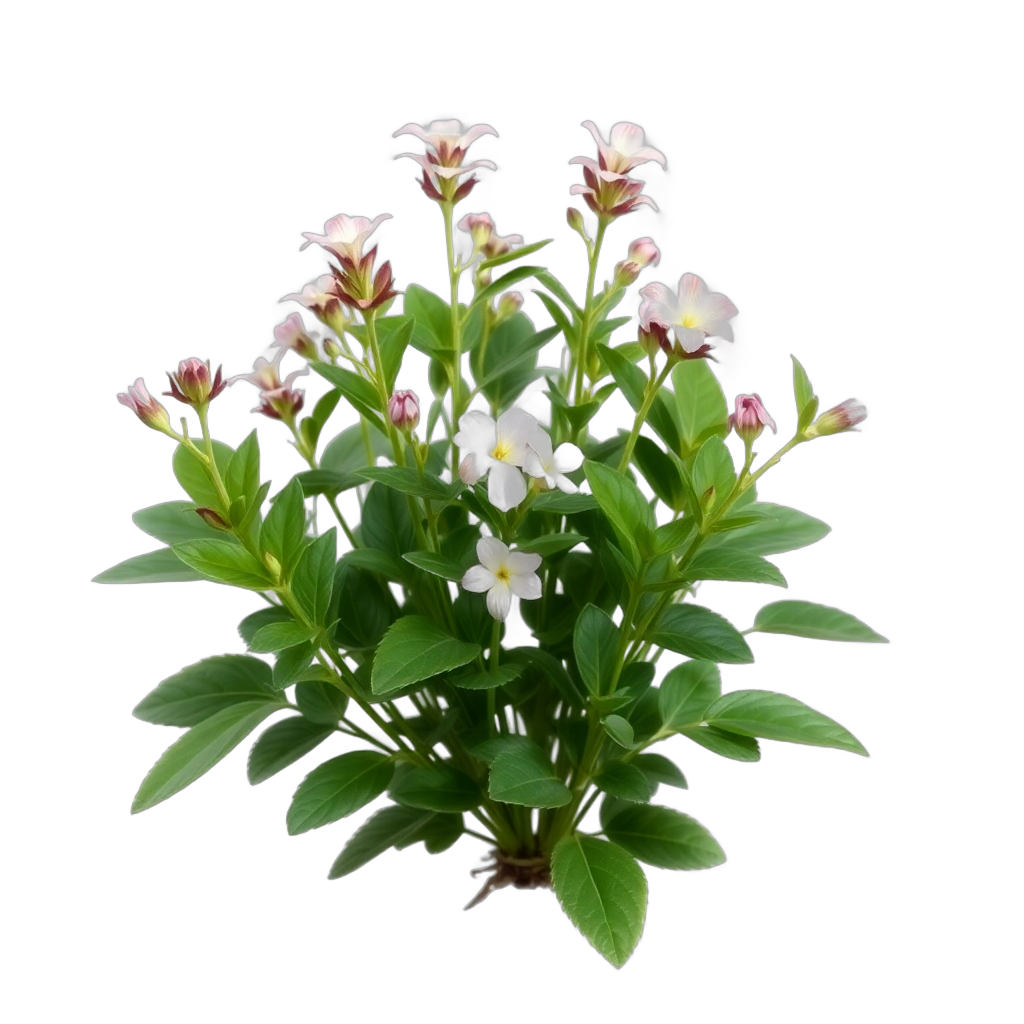
Inside-Out Flower
Vancouveria hexandra
low-growing ground cover, white blooms in spring.
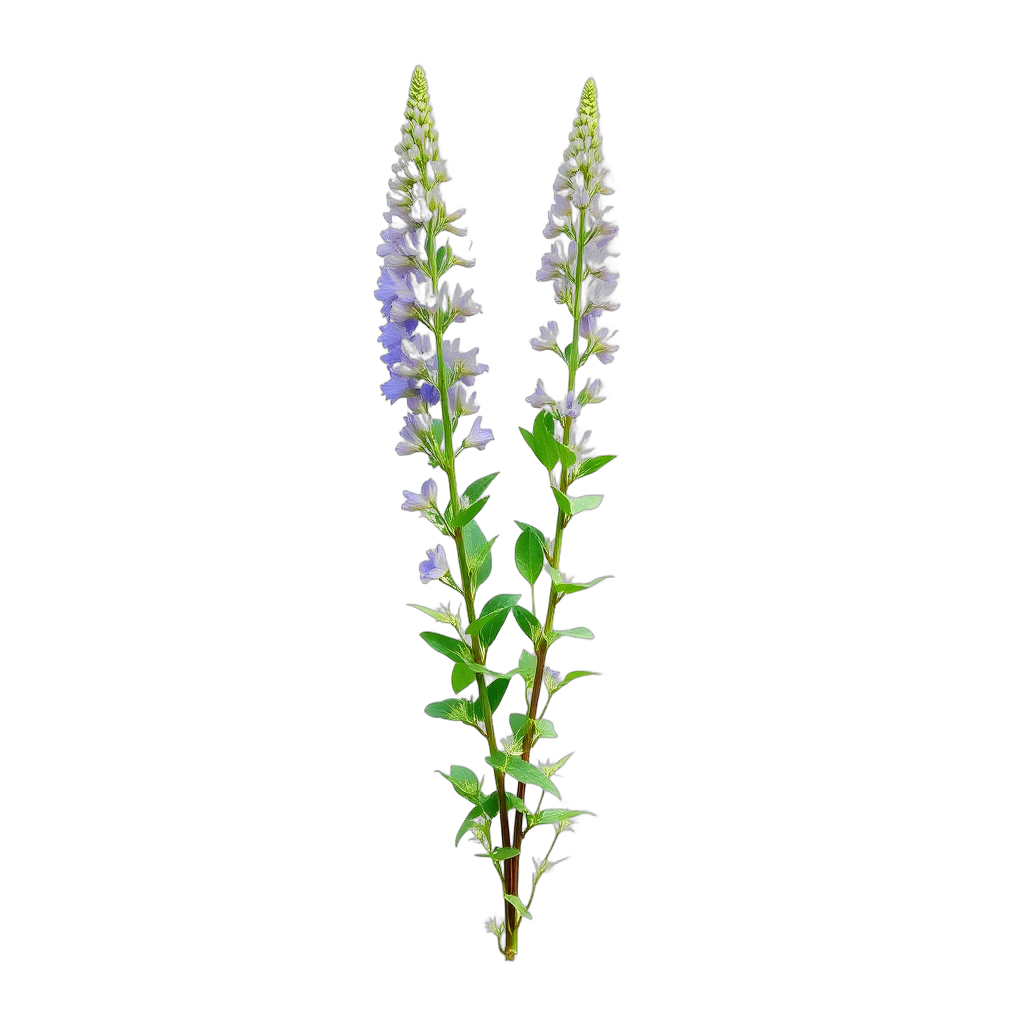
Large-Leaved Lupine
Lupinus polyphyllus
grows to 4 feet, multi blooms in spring. Attracts butterflies.
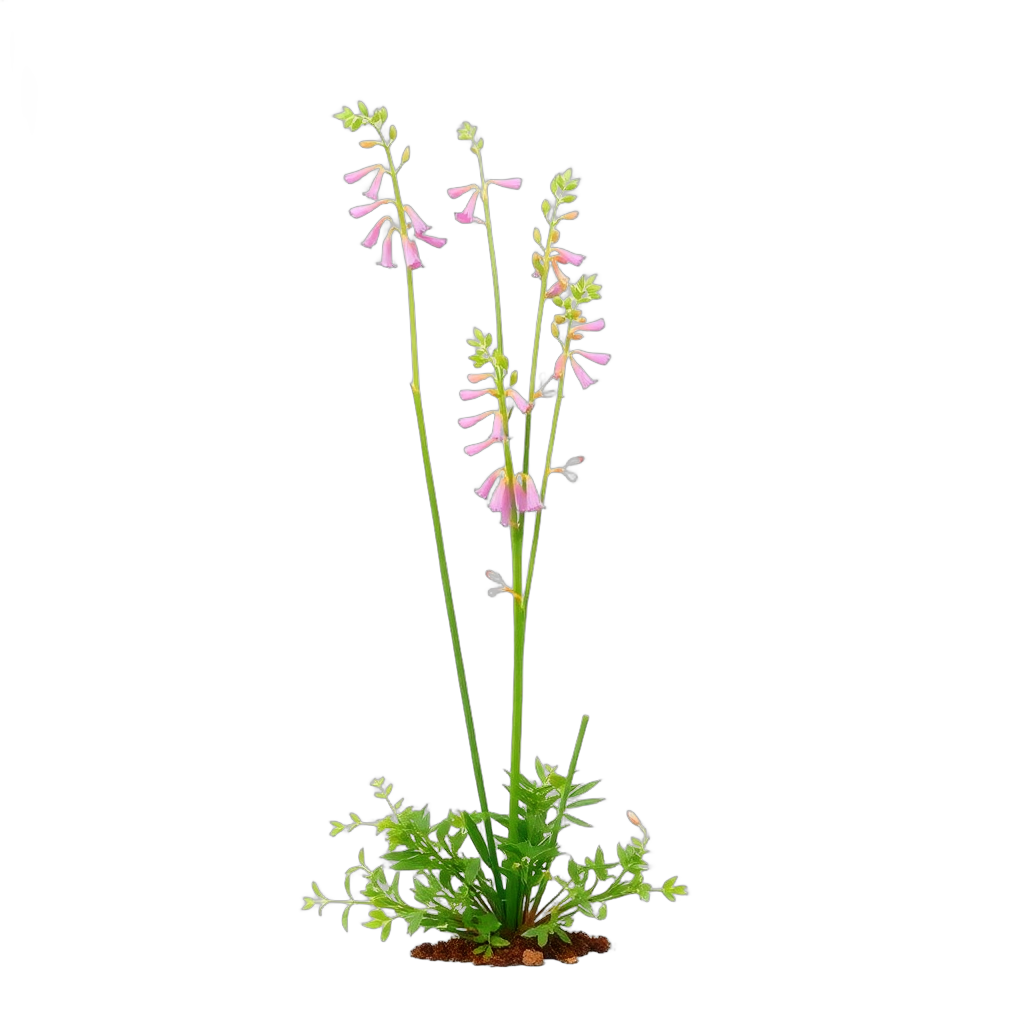
Scouler's Corydalis
Corydalis scouleri
grows to 3 feet, pink blooms in spring. Pollinator-friendly.
Zone and sun checks come from our database — confirm with your local nursery before you buy.
Bloom Calendar for Bellevue
spring
Common Camas, Inside-Out Flower, Large-Leaved Lupinesummer
Tiger Lily, Orange Honeysuckle, Snowberryfall
Limited bloomswinter
Limited bloomsDesign Tips for Bellevue (Zone 8b)
- Berm every bed eight to twelve inches and cut the native soil 50/50 with crushed rock or pumice — on Bellevue's Alderwood till the hardpan sheds winter water sideways, and wet crowns, not 18°F nights, are what kill this palette
- Mulch with 3/8-inch gravel instead of bark: gravel keeps the crown dry through a Puget Sound winter and bounces heat back at Lavandula, Cistus and Santolina during a summer that only reaches the mid-70s
- Lime the Mediterranean beds toward pH 6.5–7.0; native Bellevue soil sits around 5.0 to 6.0, and that alone accounts for most of the lavender and rosemary that quietly declines here in its second year
- Put everything tender in frost-proof terracotta on pot feet — Citrus × meyeri, Citrus × latifolia and bougainvillea all winter indoors, while Citrus junos and Ficus carica 'Desert King' can stay in the ground year-round
- Choose textured tile and permeable joints over polished surfaces; a smooth terrace in Eastside shade grows algae by its second winter, and one low-pressure wash each March keeps a tumbled surface safe
- Use a fountain rather than a fire feature as the focal point: moving water gives a Bellevue terrace something to do on the gray still days that make up most of the year, and it runs from March to November
- Site the whole design against a south or west wall if you can — reflected heat off stucco is what ripens Ficus carica 'Desert King' figs and holds Rosmarinus officinalis 'Arp' through a wet January on the Eastside
Where to Source Plants in Bellevue
Skip the big-box stores. These independent Bellevue nurseries specialize in the plants that make mediterranean gardens thrive in Zone 8b.
Bellevue Nursery
Downtown Bellevue / 104th Ave SE
Independent garden center since 1955, strong on urban-scale trees, shrubs and seasonal color for small Eastside lots
Wells Medina Nursery
Medina (five minutes west of downtown Bellevue)
Five acres of family-run stock since 1971 — the Eastside source for unusual conifers, Japanese maples, roses, rhododendrons and hard-to-find border plants
Squak Mt. Nursery & Greenhouses
Issaquah (15 minutes east on I-90)
Home-grown annuals, hanging baskets, grasses, natives and a large plant-finder inventory; serves Bellevue and the Issaquah plateau
Newcastle Fruit & Produce Co.
Newcastle (south Bellevue / Factoria side)
Combined produce market and nursery known for Japanese maples, camellias, rhododendrons, hydrangeas, fruit trees and a searchable plant database
Mediterranean Landscaping Costs in Bellevue
| Project Scope | Estimated Cost |
|---|---|
| Gravel and flagstone entry courtyard (400–600 sqft) | $16,000 – $34,000 |
| Terracotta-tile back terrace with cast-stone fountain | $35,000 – $80,000 |
| Rustic timber pergola over an existing patio | $18,000 – $45,000 |
| Specimen multi-trunk olive, planted on a drainage berm | $900 – $3,200 |
| Terracotta pot collection with citrus, planted and staged | $2,500 – $7,000 |
| Drip irrigation for establishment years plus controller | $3,500 – $8,000 |
| AI visualization with ProScapeAI | Free to start |
Estimates based on Bellevue, WA-area contractor rates as of 2026. Actual costs vary by site conditions, materials, and contractor.
Bellevue Climate & Growing Zone
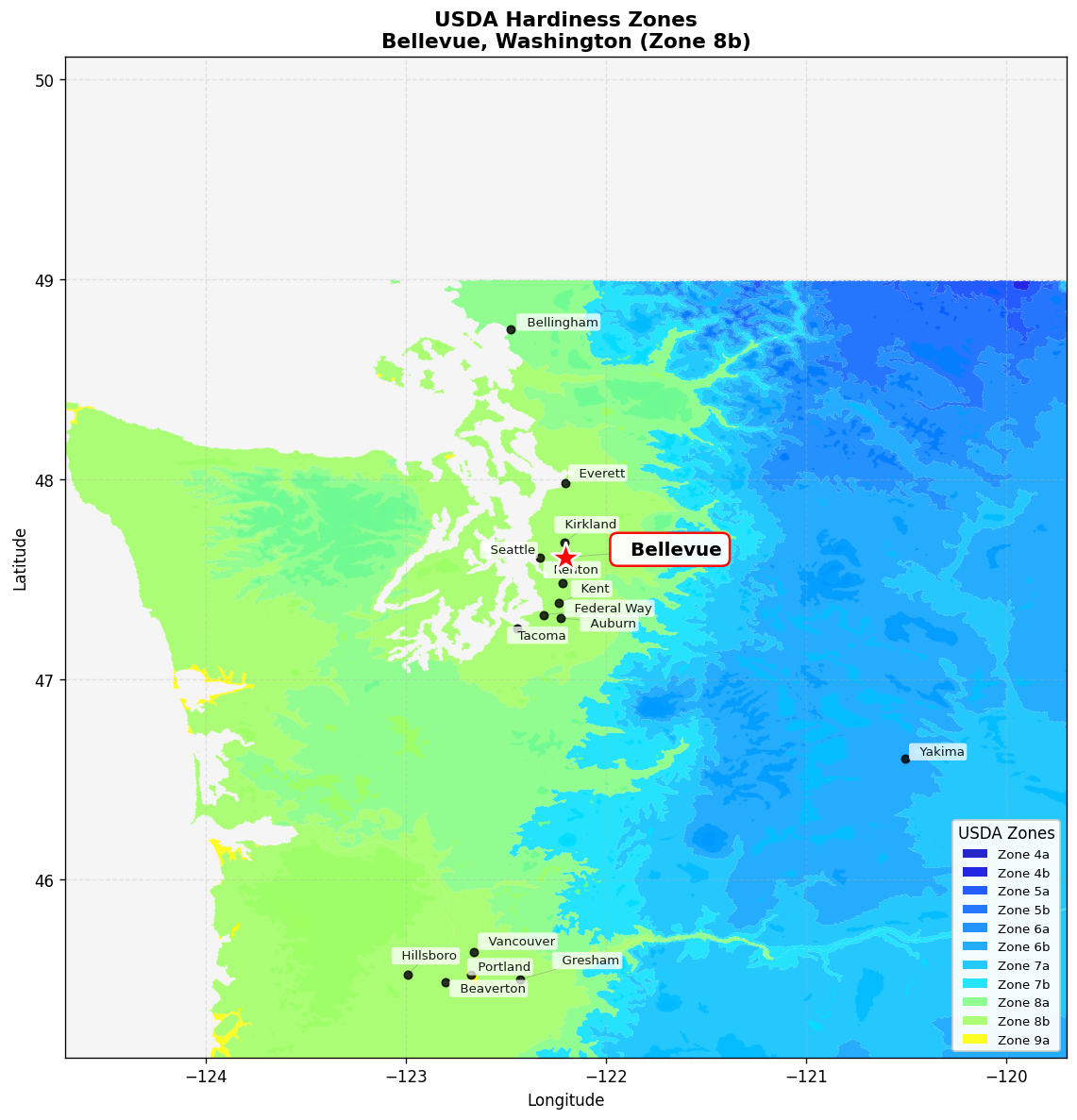
USDA Zone 8b
Hardiness zone for Bellevue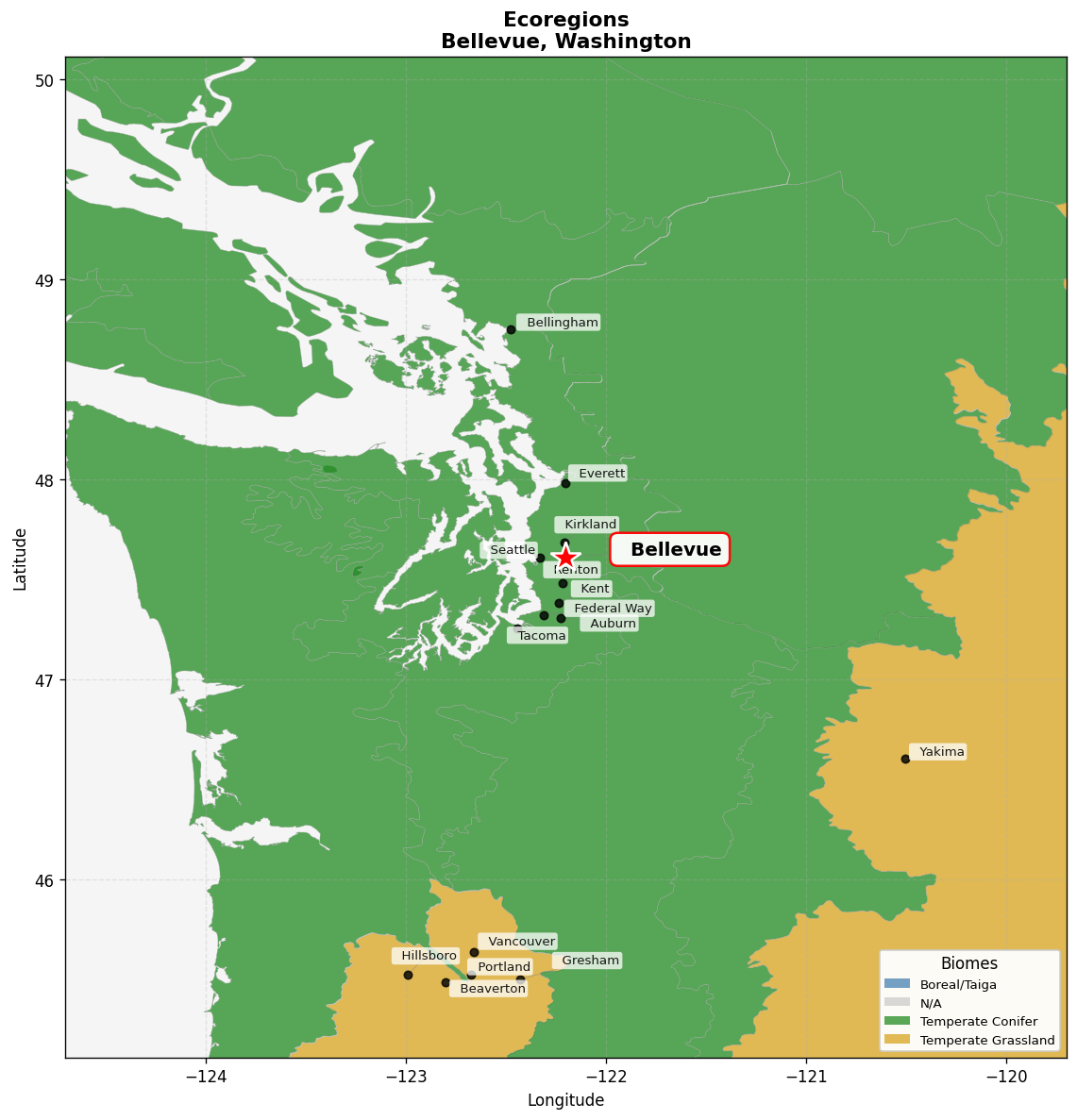
Puget lowland forests
Native ecoregionFrequently Asked Questions
Can you really grow an olive tree in Bellevue?
Yes, with conditions. Olea europaea 'Arbequina' is the hardiest cultivar in general trade and handles Bellevue's Zone 8b lows of 15–20°F, but the danger is not an average winter — it is an outflow event pushing dry air down from the Fraser Valley, plus roots sitting wet in glacial till. Plant it on a berm of 50/50 native soil and crushed rock, against a south or west wall, mulched with gravel and never with bark. Many Eastside gardeners keep it in a 30-gallon pot instead so it can be pulled to shelter. If you want the silver canopy with no risk at all, Elaeagnus 'Quicksilver' and Pyrus salicifolia 'Pendula' read almost identically and are bulletproof here.
What does Mediterranean landscaping cost in Bellevue?
Bellevue labor and material prices run well above national averages. A gravel-and-terracotta entry courtyard of 400 to 600 sqft, including grading, gravel, flagstone path, pots and planting, typically lands between $16,000 and $34,000. A terracotta-tile back terrace with a cast-stone fountain runs $35,000 to $80,000 depending on tile and fountain choice. A timber pergola over an existing patio is $18,000 to $45,000. Specimen material drives cost as much as hardscape: a good multi-trunk 'Arbequina' olive is $600 to $2,500 depending on caliper, and mature Cupressus sempervirens are $150 to $400 each. Design fees run $1,800 to $6,000.
Will lavender survive a Bellevue winter?
Reliably, if it is dry at the crown. Lavandula angustifolia 'Hidcote' and 'Munstead' and Lavandula × intermedia 'Grosso' and 'Provence' are grown commercially at scale two hours away in Sequim, so the climate is proven. What kills lavender on the Eastside is acidic Alderwood soil holding winter water. Berm the bed eight to twelve inches, cut the soil half and half with crushed rock, mulch with 3/8-inch gravel, add dolomitic lime to bring pH toward 6.5 to 7.0, and cut plants back by a third after flowering. Handled that way, expect eight to twelve good years. Handled as a flat bark-mulched bed, expect two.
Which citrus can go in the ground versus in pots on the Eastside?
One goes in the ground: Citrus junos, the yuzu, is hardy well below Bellevue's typical winter low and fruits here in a warm, sheltered spot. Poncirus trifoliata, the hardy orange, is even tougher and makes a formidable thorny hedge. Everything else — Citrus × meyeri 'Improved Meyer', Citrus × latifolia 'Bearss' lime, Citrus japonica kumquats, Citrus sinensis 'Trovita' — should live in frost-proof terracotta on wheeled saucers, spend April through October outdoors, and overwinter in a bright unheated garage or by a south window once nights drop below about 30°F. Feed with a citrus fertilizer through summer only, and let the pot dry between waterings indoors.
How much water does a Mediterranean garden need in Bellevue?
Far less than a lawn, but not zero. Bellevue's dry window is short and real: about 1.5 inches of rain across July and August. For the first two summers, run drip at the root of every new plant once or twice a week through that window so root systems reach down. From year three, an established planting of Rosmarinus officinalis 'Arp', Cistus × purpureus, Phlomis fruticosa and Helictotrichon sempervirens usually needs nothing beyond an occasional deep soak in a long heat spell. Compare that with a Bellevue lawn, which wants roughly an inch a week from July through mid-September to stay green.
Do gravel and tile surfaces get slippery in Bellevue's rain?
Gravel never does, which is one reason it belongs in a wet-climate Mediterranean design. Tile absolutely can. A smooth polished tile in shade will grow algae and moss by its second Eastside winter. Specify a textured or tumbled terracotta-look paver, or a through-body porcelain with a high slip rating, keep joints permeable, and give overhanging plants a hard prune so the surface gets airflow and whatever light there is. One low-pressure wash each March, ideally without a chemical that will run into the storm system, keeps the terrace safe for the year.
Is a Mediterranean design allowed under Bellevue's landscape and grading rules?
The planting side is unrestricted. The regulated side is earth and structure: Bellevue's clearing and grading code sets thresholds for the volume of soil moved and the area disturbed, critical-areas rules add review near steep slopes, streams and wetlands, retaining walls above a certain height are reviewed, and tree regulations protect significant trees on many parcels. Replacing lawn with gravel courtyard normally reduces runoff and works in your favor, but the surface still has to drain onto your own property rather than a neighbor's. Confirm the specifics for your address with City of Bellevue Development Services before any grading, wall or tree removal is scheduled.