4 English Cottage Garden Ideas for Cedar Rapids, IA | Zone 5a Design
Native plants from the Central Tallgrass prairie (Zone 5a) — Humid continental (hot summer) climate
Why Cottage/English Gardens in Cedar Rapids?
Cedar Rapids already owns the architecture an English cottage garden is written for. The Craftsman bungalows and American Foursquares along Grande Avenue and through Vernon Heights, the brick and clapboard workers' cottages of Czech Village and New Bohemia, and the deep porches of the Queen Anne houses around Coe College all give a cottage border the romantic backdrop it needs, and the city's grid of narrow lots with sidewalk-to-porch front walks is exactly the geometry the style was invented for. Where a modern garden wants a wide sweep of concrete, a cottage garden wants a 4-foot path, a gate, and beds crowded right up to both sides of it. Even the 1950s ranches in Kenwood Park and Noelridge take the look well, because their long low facades disappear behind a tall front border of Paeonia lactiflora 'Festiva Maxima' and Delphinium elatum 'Magic Fountains' by the first week of June.
The climate is the real design brief. Cedar Rapids sits in USDA Zone 5a, which means planning for an average winter low of about -20 degrees F, roughly 36 inches of rain and 32 inches of snow a year, and a growing season of only about 160 days between a last frost near May 1 and a first frost around October 8. That is a hard filter, and it is also a gift: the plants that define an English cottage garden and sulk in the South are the ones that love it here. Peonies need the winter chill and live for fifty years in Linn County soil. Paeonia lactiflora 'Sarah Bernhardt' and 'Karl Rosenfield', Syringa meyeri 'Palibin', Hydrangea arborescens 'Annabelle', Iris sibirica 'Caesar's Brother' and Leucanthemum superbum 'Becky' are all bulletproof. Roses are where Cedar Rapids gardeners get hurt: a grafted hybrid tea will die to the graft in a -20 degree February, while the own-root Canadian Explorer climbers, Rosa 'William Baffin' and Rosa 'John Davis', will cover an arch and shrug the same winter off entirely.
The soil under most of the city is a deep, dark prairie Mollisol in the Tama and Downs silt loam family, the richest planting medium in North America, but on a post-1960 subdivision lot in southwest Cedar Rapids or Ely most of that topsoil went out on a truck and what is left is compacted silty clay subsoil. The fix is the one the Iowa Stormwater Management Manual already calls for on disturbed sites: relieve the compaction to 8 inches, then till in 2 to 3 inches of compost before a single plant goes in. Two other local soil facts matter. Cedar Rapids soils and municipal water both run near-neutral to slightly alkaline, around pH 6.8 to 7.4, so a mophead hydrangea sold to you as blue will come back pink here, and taprooted prairie natives such as Baptisia australis and Echinacea purpurea 'Magnus' resent being moved once established. Plant them where you want them in ten years.
Two local events reshaped what a Cedar Rapids garden has to do. The August 10, 2020 derecho put 140 mph straight-line winds through the city and destroyed roughly 65 percent of the urban tree canopy, which turned thousands of shady front yards into full-sun ones overnight and is why the ReLeaf Cedar Rapids plan is working toward tens of thousands of replacement trees. If your hostas suddenly fry, that is why, and a cottage border of Nepeta 'Walker's Low', Salvia nemorosa 'Caradonna' and Rosa 'Bonica' is the honest answer rather than fighting for shade you no longer have. The other is water: after the Cedar River crested at 31.12 feet in June 2008, floodplain overlay rules govern grading and fill on the low ground near the river, and any in-ground irrigation system tied to city water needs a tested backflow preventer. Design around drainage first, plant second, and a Cedar Rapids cottage garden will run on rainfall for most of the season.
4 Cottage/English Design Ideas for Cedar Rapids

The Picket Fence Rose Gate
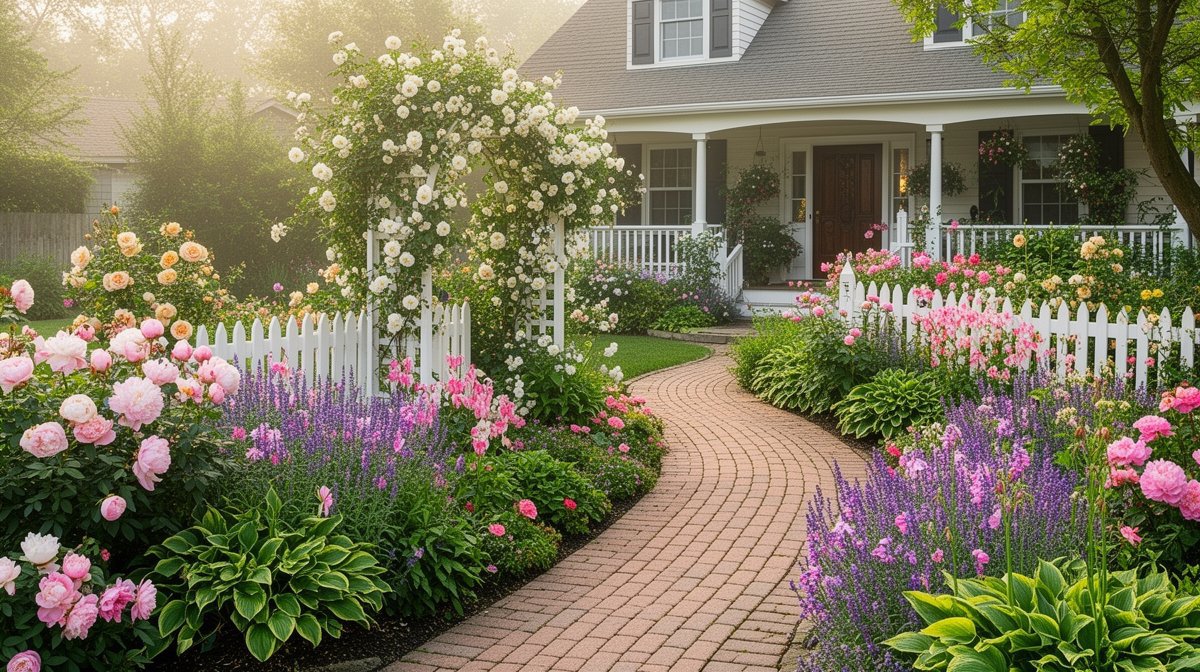
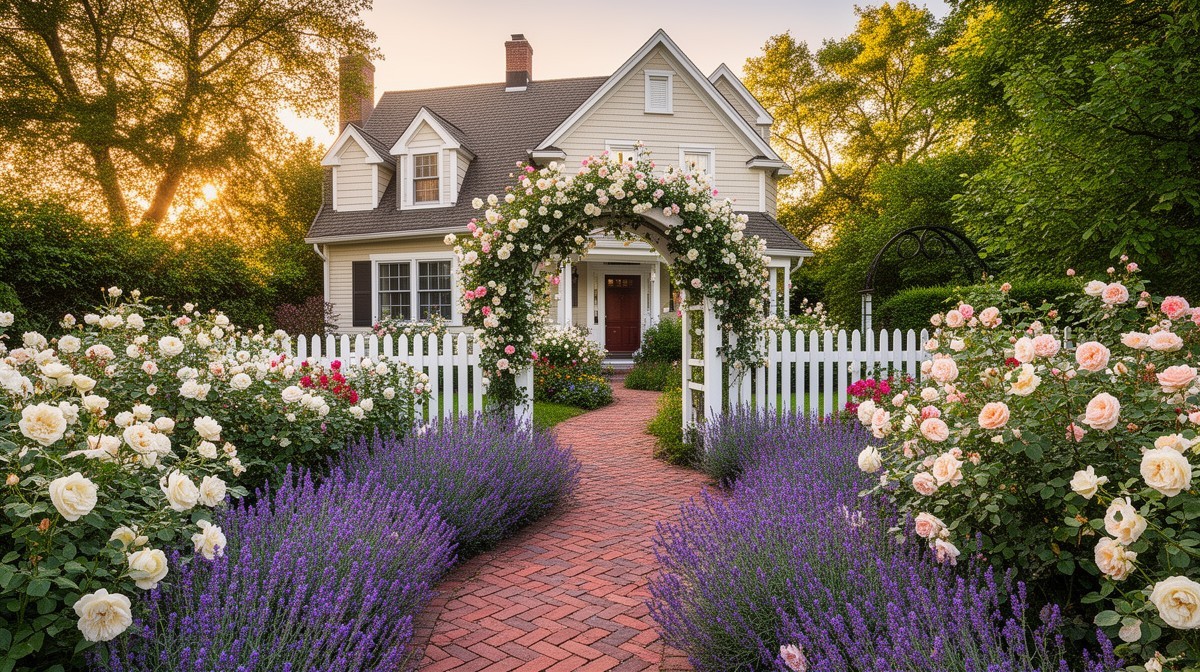
$22 to $45 per sqftA low white picket fence runs the full frontage of a cream clapboard cottage, broken by a rose-smothered arch over the gate where pink and ivory blooms have dropped petals across the brick. Behind the pickets the border is packed two rows deep with shrub roses, and the front edge is a continuous ribbon of lavender and white daisies that spills over the running-bond brick walk as it curves to a wreathed front door. Clipped green mounds hold the corners of the foundation so the whole loose composition still reads as deliberate from the sidewalk.

The Dormer Cottage Front Border
$18 to $34 per sqftA story-and-a-half cream cottage with black shutters, a dormer and a full covered porch sits behind two deep curved island beds that leave only a serpentine ribbon of lawn. An irregular flagstone path swings out around the left bed and back to the porch steps, passing under a white rose arch, and the beds themselves are built in proper English layers: tall foxglove and delphinium spires at the back, roses and coneflowers through the middle, catmint and low daisies breaking over the stone edging. A mature shade tree on the left throws morning shadows across the whole planting.

The Bistro Terrace Under the Rose Arbor
$28 to $50 per sqftA small square of tumbled brick paving tucked into the lawn holds nothing but a round white bistro table, two folding chairs and a jug of cut roses, and that restraint is the whole point. A tall timber rose arbor loaded with apricot and blush climbers frames the view back to the house, hedged evergreens and hydrangeas close the side boundaries, and the terrace is ringed by a low lavender edge with peonies, foxgloves and shasta daisies rising behind it. It is the cheapest genuinely useful garden room you can build in Cedar Rapids, and it is usable from mid-April to late October.

The Fountain Court Dining Garden
$40 to $80 per sqftThis is the full formal cottage layout: a broad dry-laid flagstone terrace with a six-seat dining table, a white pergola at the left corner buried under red and blush climbing roses, and a tiered stone fountain set as the focal point in a circular bed at the far end of a hedged enclosure. Clipped hedging and a pair of small ornamental trees make the walls of the room; inside them the borders run riot with roses, foxglove spires, catmint and white umbels, and a mown grass path leads the eye straight from the terrace to the fountain. Formal bones, informal filling.
See how a cottage/english garden looks on YOUR property
Upload a photo of your Cedar Rapids yard and visualize your dream garden in seconds.
Try ProScapeAI Free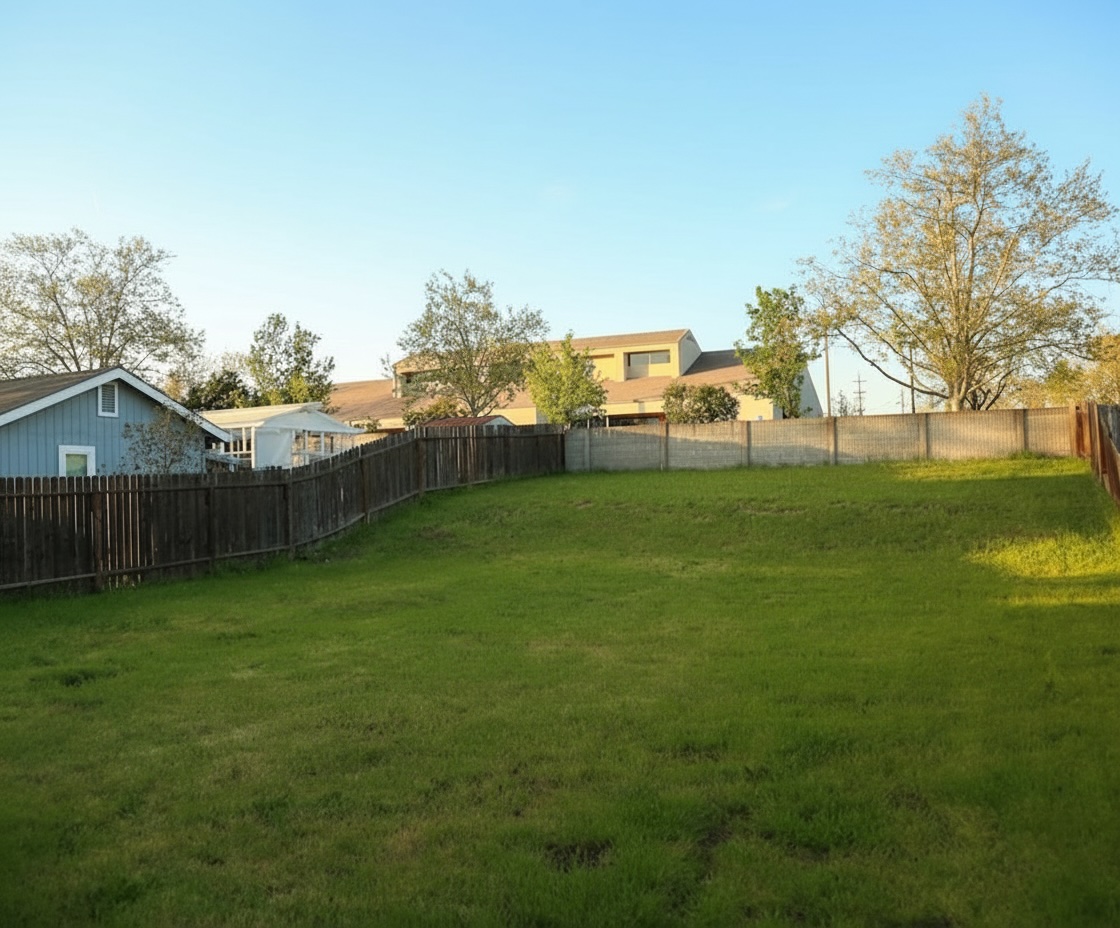
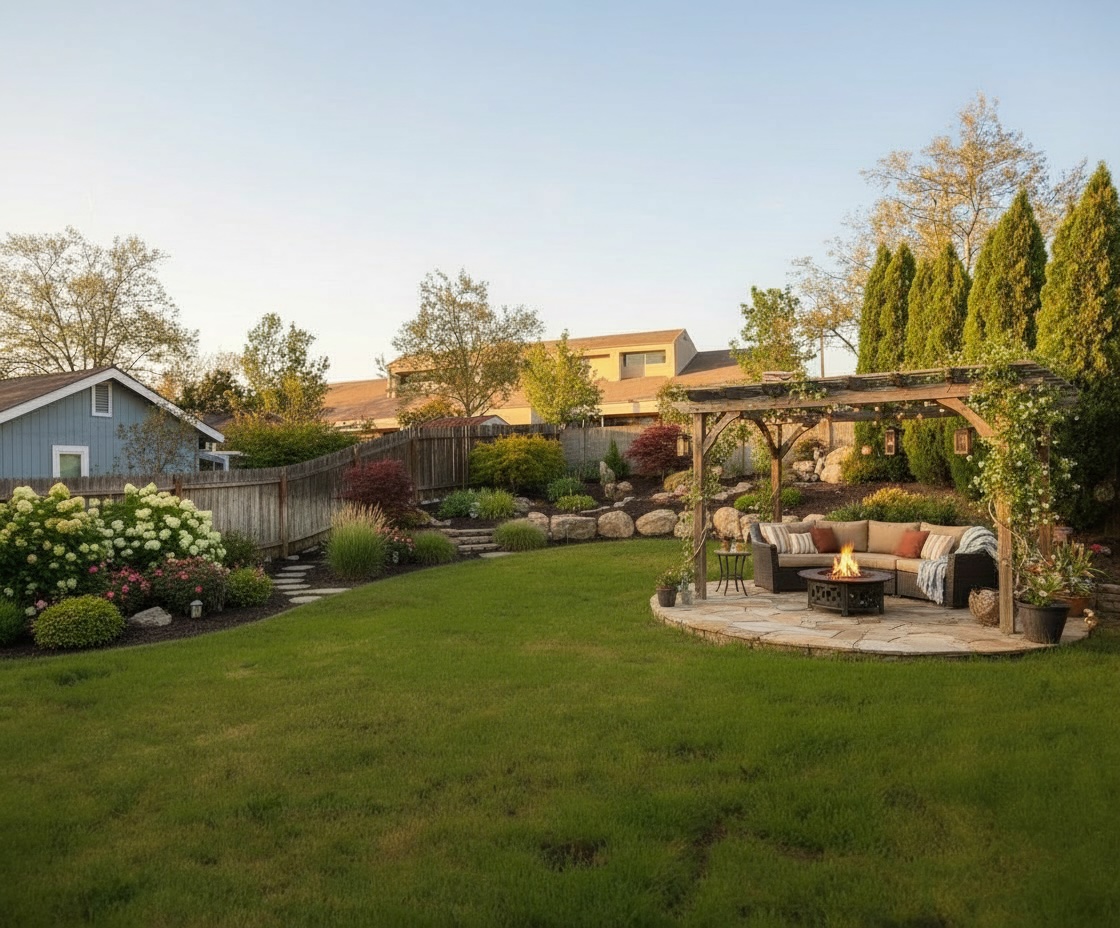
Featured Trees & Shrubs for Cottage/English Gardens
Browse all 193 plants for Cedar Rapids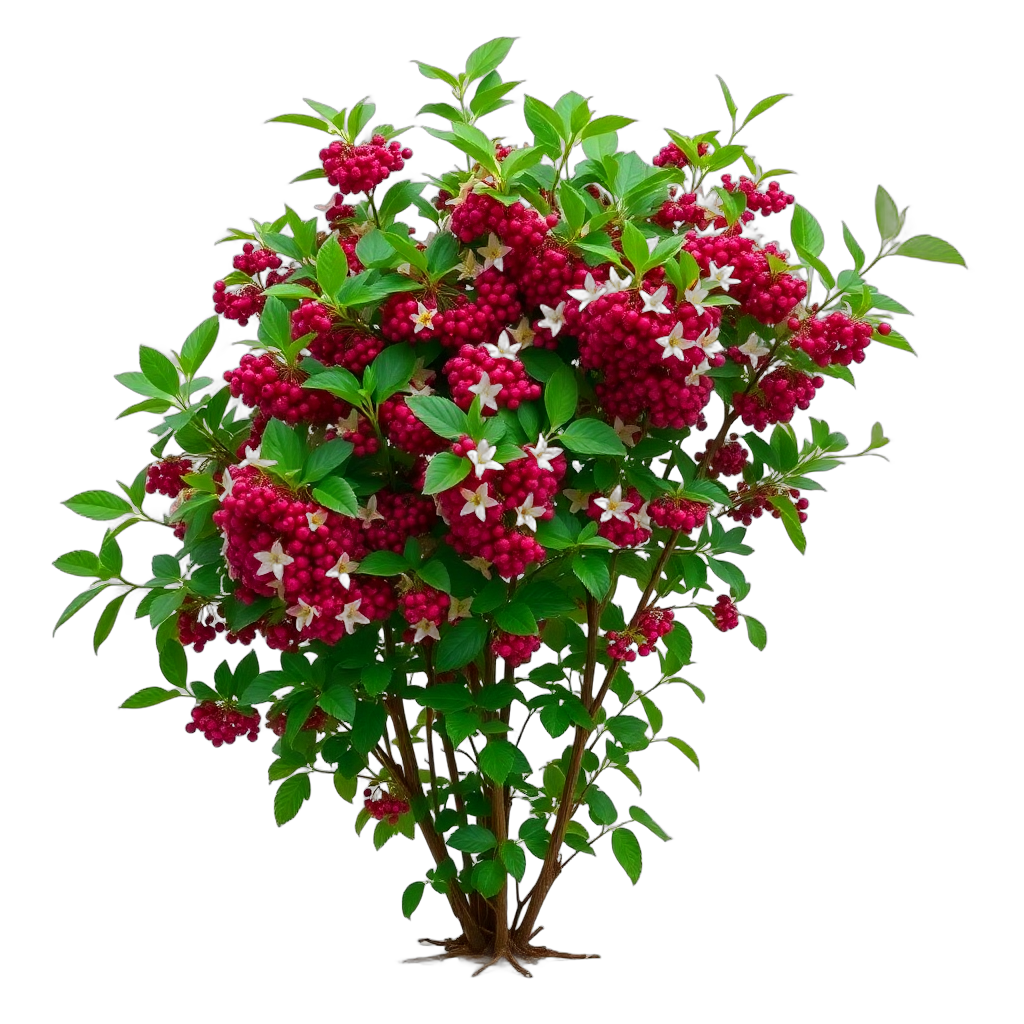
Clove Currant
Ribes odoratum
grows to 6 feet, yellow blooms in spring. Attracts hummingbirds.

Fragrant Sumac
Rhus aromatica
grows to 4 feet, yellow blooms in spring. Attracts butterflies.
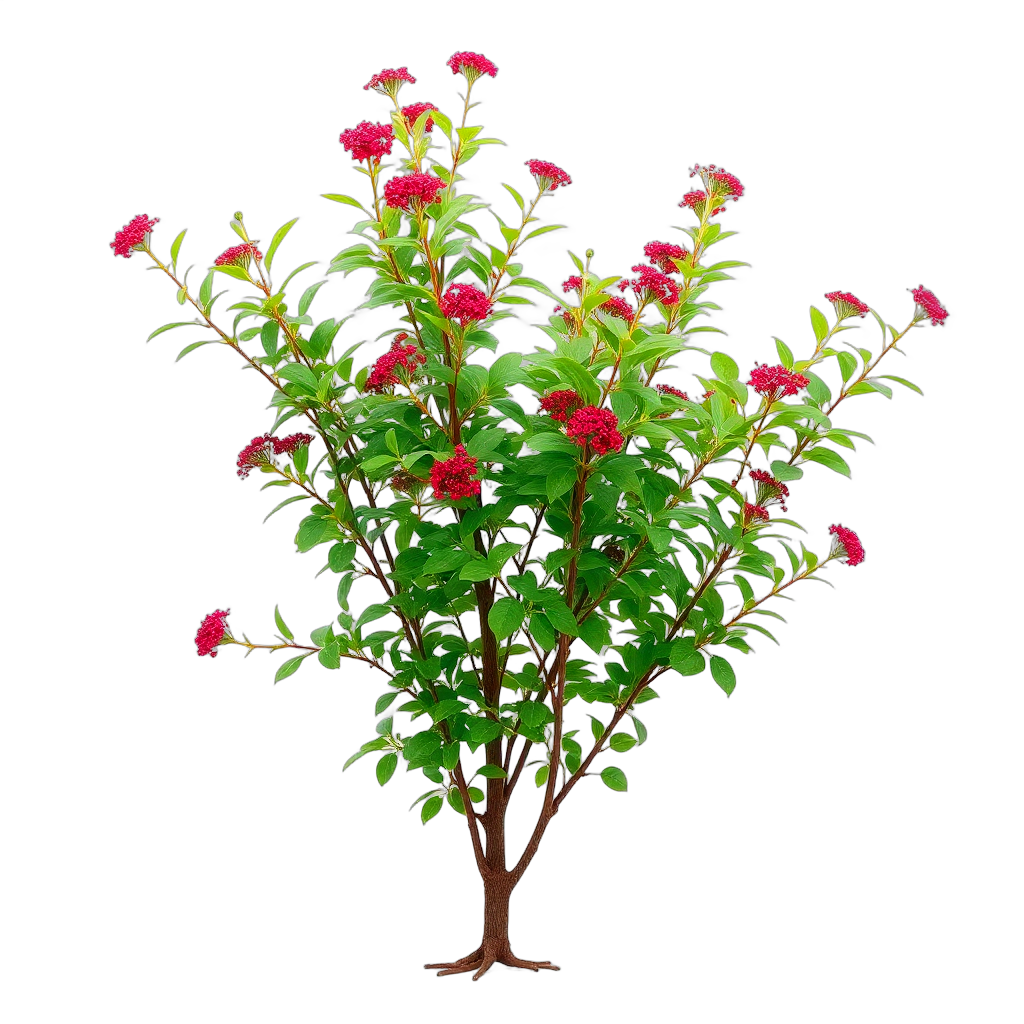
Smooth Sumac
Rhus glabra
medium-sized at 12 feet, white,green blooms in summer. Attracts butterflies.
Featured Grasses & Groundcovers for Cottage/English Gardens
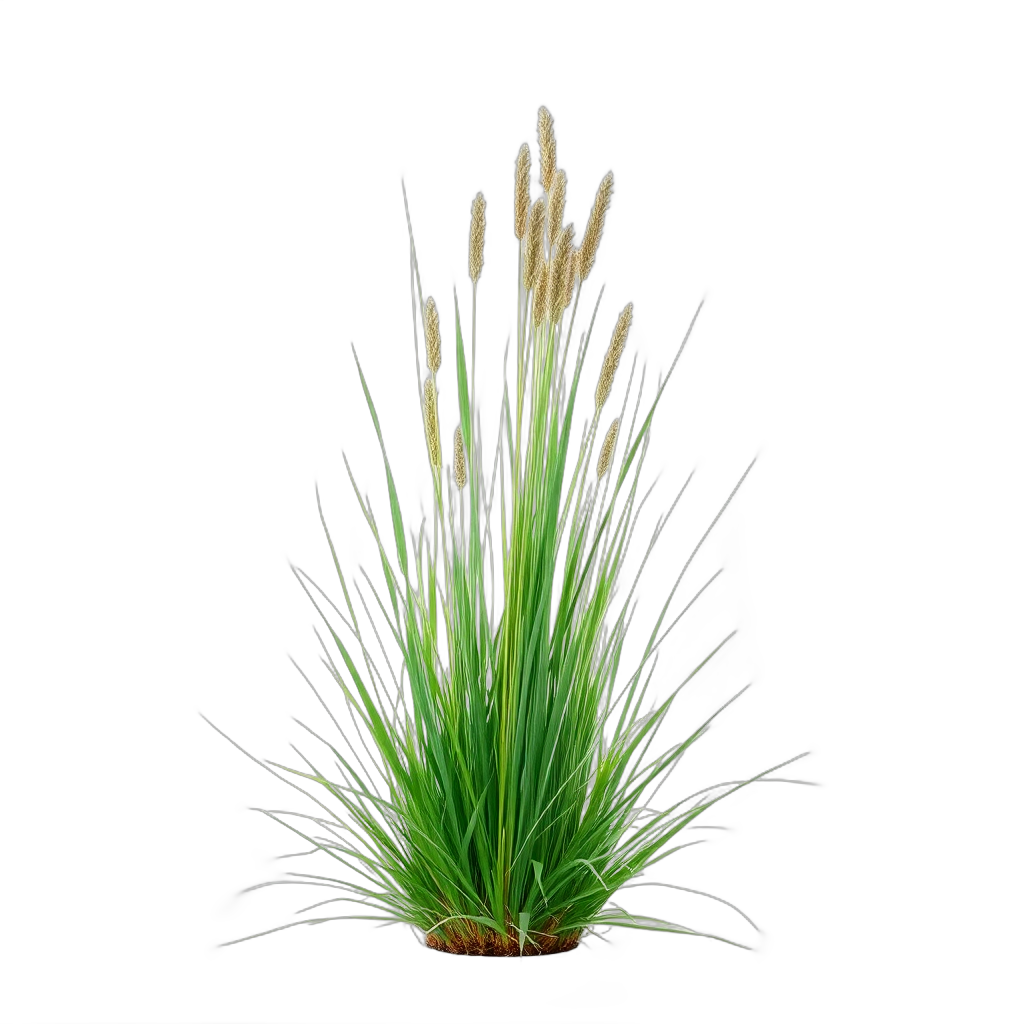
Big Bluestem
Andropogon gerardii
medium-sized at 7 feet, purple blooms in fall. Bronze,burgundy fall color.
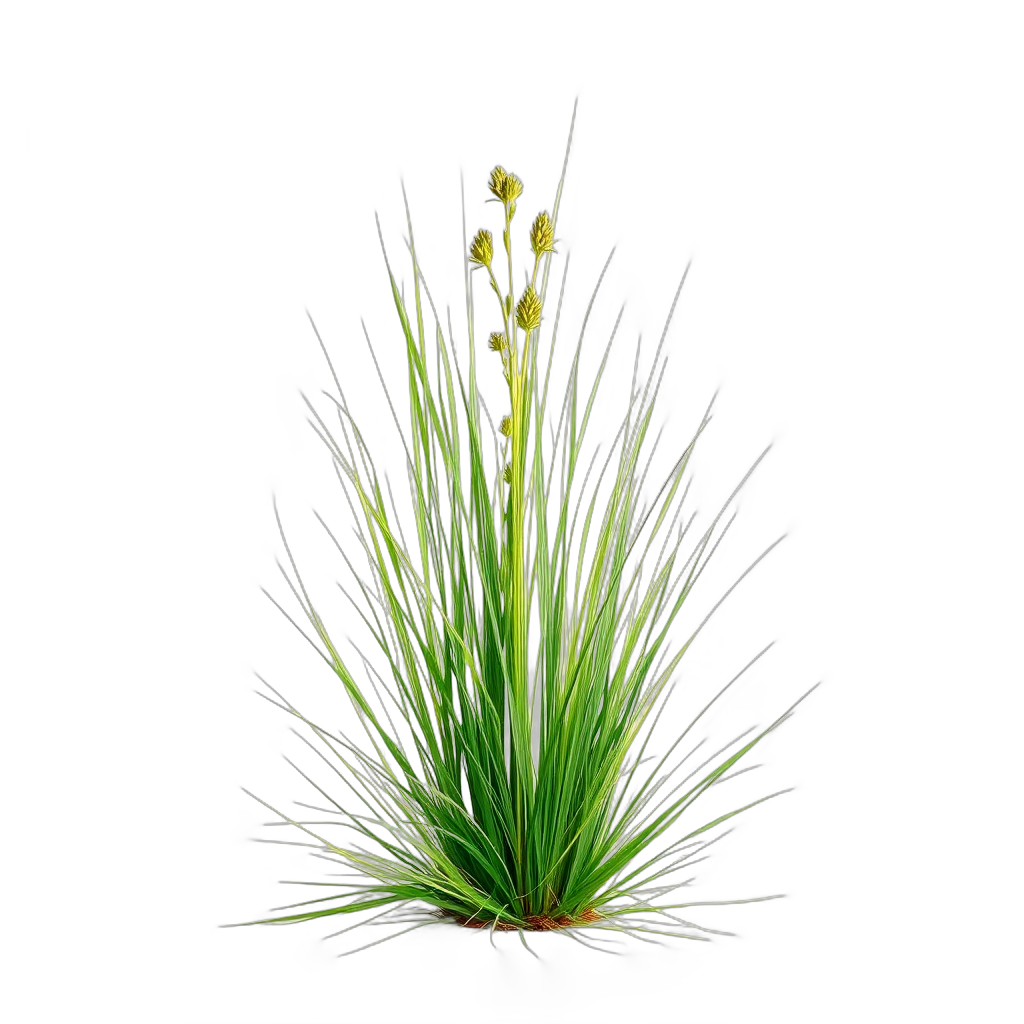
Canada Wild Rye
Elymus canadensis
grows to 4 feet, blooms in summer. Yellow fall color.
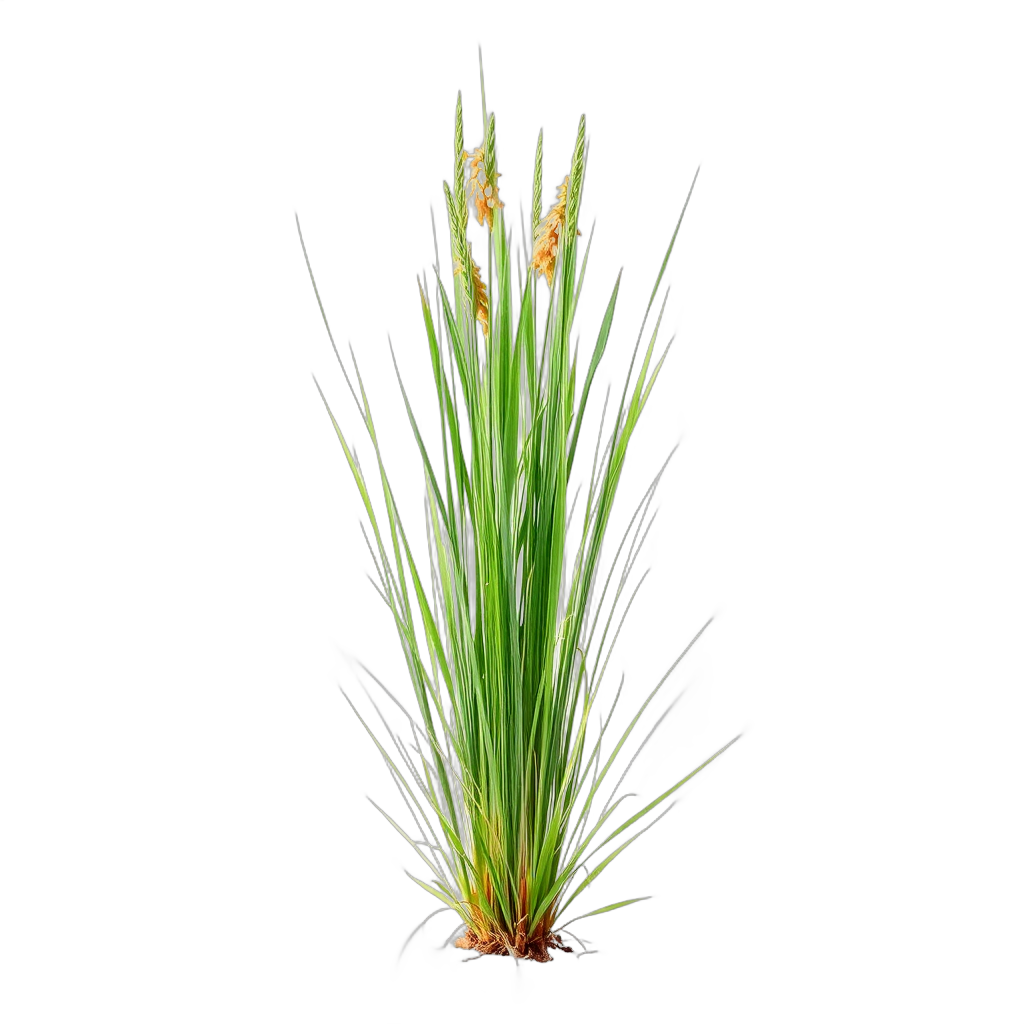
Eastern Gamagrass
Tripsacum dactyloides
grows to 6 feet, blooms in summer. Yellow fall color.
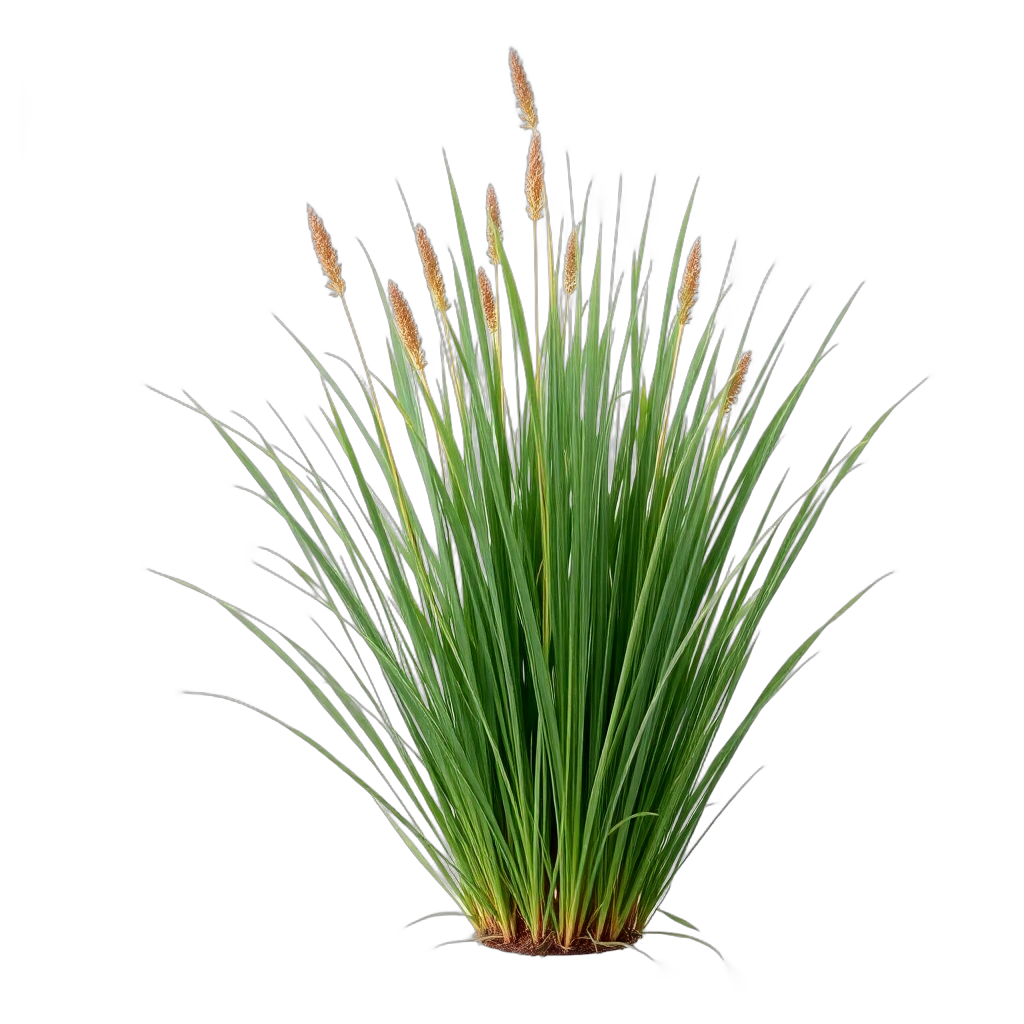
Heavy Metal Switchgrass
Panicum 'Heavy Metal'
grows to 4 feet, pink blooms in summer. Yellow fall color.
Featured Flowers & Perennials for Cottage/English Gardens
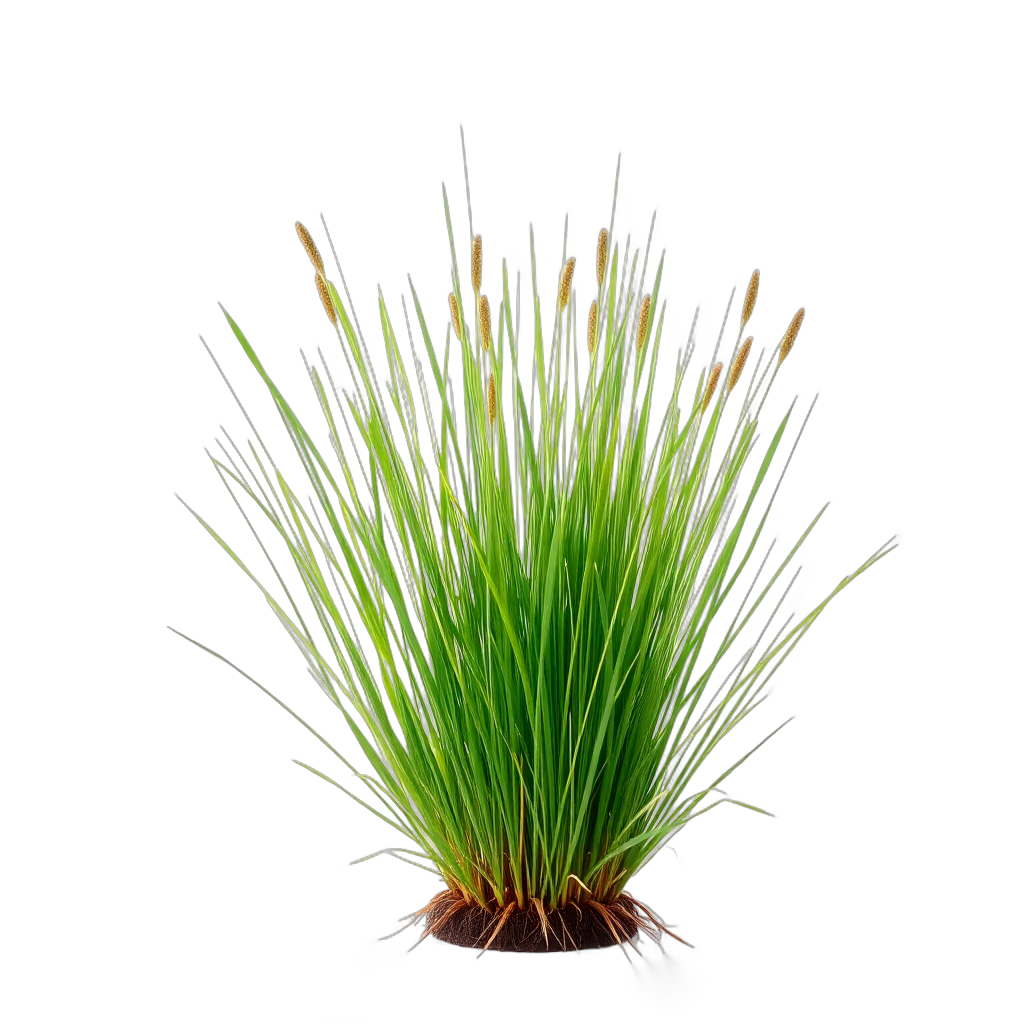
Path Rush
Juncus tenuis
low-growing ground cover, blooms in summer. Evergreen year-round.
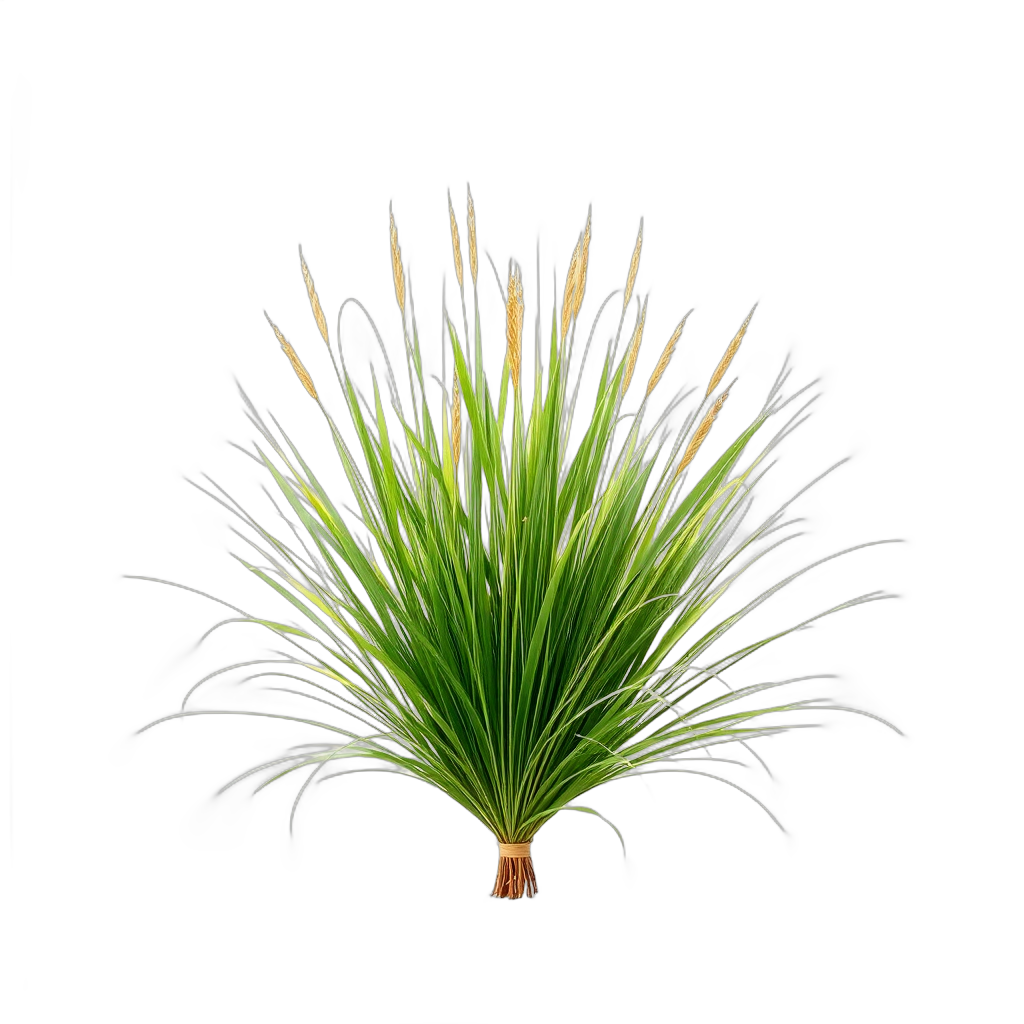
Prairie Cordgrass
Spartina pectinata
grows to 6 feet, blooms in summer. Yellow fall color.
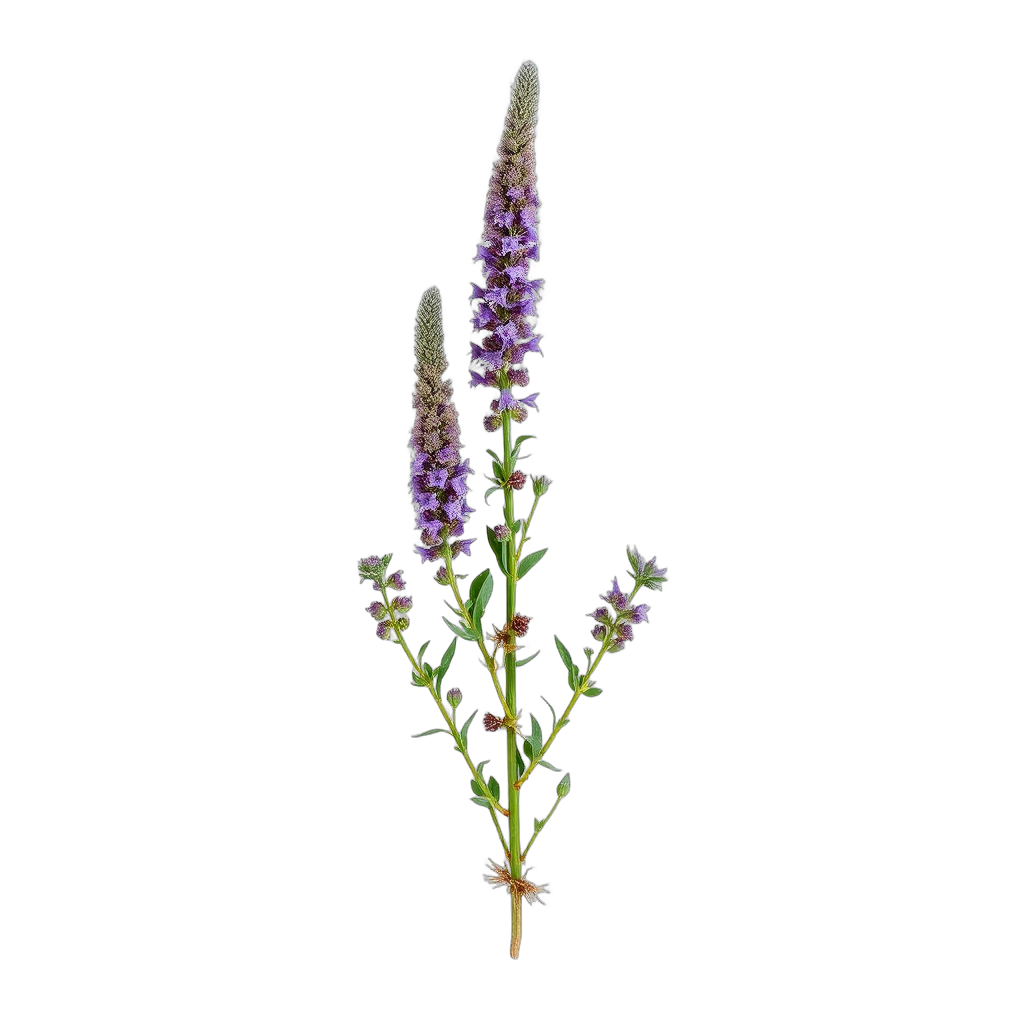
Anise Hyssop
Agastache foeniculum
grows to 3 feet, purple blooms in summer. Attracts hummingbirds.
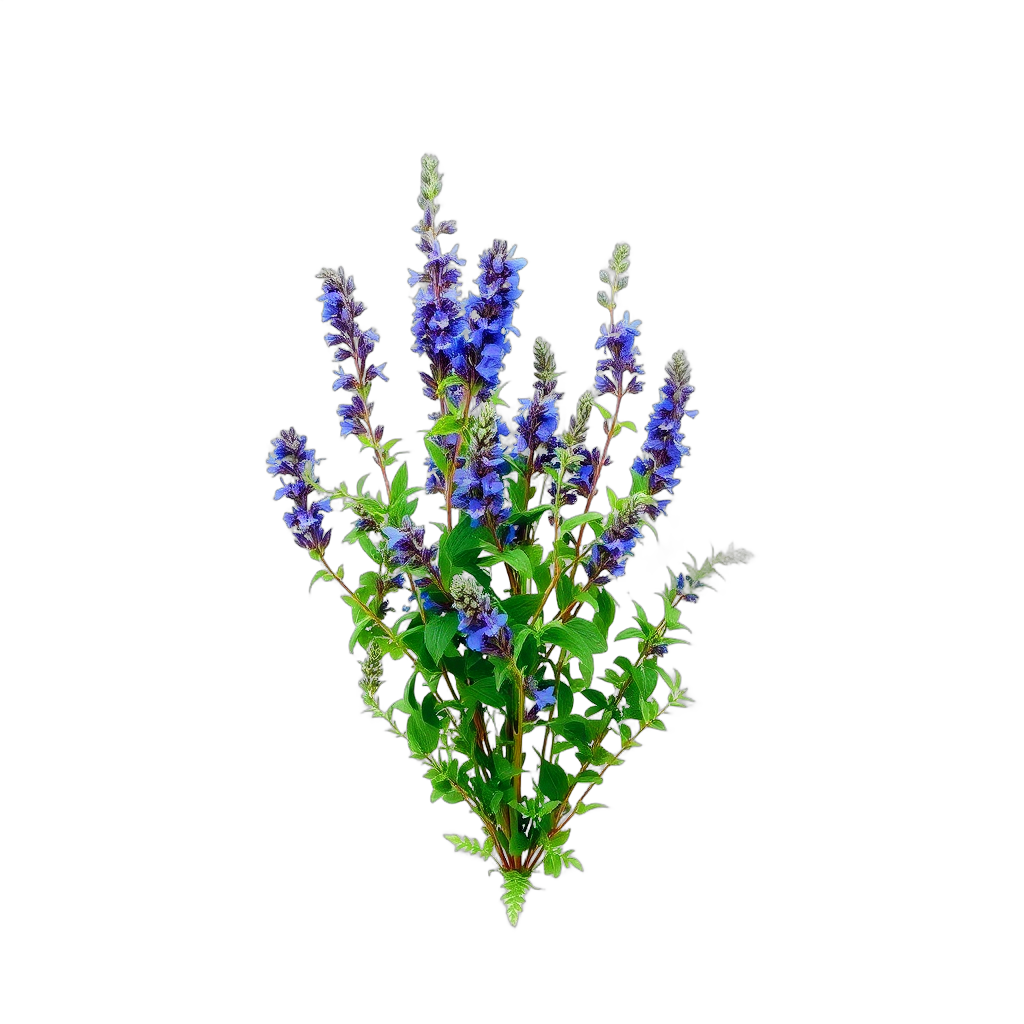
Azure Sage
Salvia azurea
grows to 4 feet, blue blooms in fall. Attracts hummingbirds.
Zone and sun checks come from our database — confirm with your local nursery before you buy.
Bloom Calendar for Cedar Rapids
spring
Blue False Indigo, Foxglove Beardtongue, Golden Alexandersummer
Path Rush, Prairie Cordgrass, Anise Hyssopfall
Azure Sage, Maximilian Sunflower, New England Asterwinter
Limited bloomsDesign Tips for Cedar Rapids (Zone 5a)
- Choose own-root roses only. At a Zone 5a low near -20 degrees F a grafted hybrid tea returns as rootstock, while Rosa 'William Baffin' and Rosa 'John Davis' come through the same winter with live cane to the top of the arch
- Build lavender, dianthus and pinks up on a 6 to 10 inch gravel berm. Cedar Rapids gets about 36 inches of rain on silty clay, and every Mediterranean plant that dies here dies wet in March, not cold in January
- Lean the border on peonies for structure. Paeonia lactiflora 'Festiva Maxima' and 'Karl Rosenfield' need the winter chill Iowa gives them free, live for fifty years, and their foliage still looks presentable in September when the roses have gone shabby
- Relieve compaction before you plant anything. On a scraped subdivision lot in southwest Cedar Rapids or Ely, loosen to 8 inches and till in 2 to 3 inches of compost across the whole bed rather than digging individual holes into clay, which just makes buried buckets that hold water
- Weight the July display toward beetle-proof plants. Nepeta 'Walker's Low', Salvia nemorosa 'Caradonna', Baptisia australis and Allium 'Millenium' carry the border through the Japanese beetle weeks when the roses are being chewed
- Stop deadheading around September 20 and leave the seedheads standing. Echinacea purpurea 'Magnus' and Rudbeckia fulgida 'Goldsturm' hold snow beautifully through a Cedar Rapids January and feed goldfinches, and the stems trap the insulating snow your crowns want
- Set arbor and pergola posts below the 42-inch Linn County frost line. Anything shallower will heave a rose-loaded arch out of square within three freeze-thaw cycles
Where to Source Plants in Cedar Rapids
Skip the big-box stores. These independent Cedar Rapids nurseries specialize in the plants that make cottage/english gardens thrive in Zone 5a.
Blooms Garden Center
Blairs Ferry Road, Marion
Walkable garden center and greenhouses with a strong perennial, rose and Iowa-hardy fruit tree selection, plus an in-house landscape crew
Culver's Garden Center & Greenhouse
Highway 151 East, Marion
Family-run greenhouse and nursery growing much of its own stock, with the largest tree, shrub, perennial and rose range in the Cedar Rapids and Marion area
Cedar River Garden Center
Palo, northwest of Cedar Rapids
Three decades of independent trading, with over 11,000 sqft of perennials, five greenhouses, display beds you can walk, and bulk flagstone and fieldstone
Fleming Nursery
Peterman Lane, north Cedar Rapids
Family tree farm and nursery on 40 acres, best in the area for field-grown shade and ornamental trees, shrubs and evergreens sold in biodegradable planting bags
Cottage/English Landscaping Costs in Cedar Rapids
| Project Scope | Estimated Cost |
|---|---|
| Deep cottage border, 300 to 500 sqft, soil prep and planting | $2,500 - $6,500 |
| Brick front walk with rose arch over the gate | $3,500 - $8,000 |
| Full front-yard cottage conversion | $8,000 - $20,000 |
| Flagstone bistro terrace with cedar rose arbor | $6,000 - $14,000 |
| Hedged back garden with dining terrace and fountain | $28,000 - $65,000 |
| Compaction relief plus 3 inches of compost, per 1,000 sqft | $600 - $1,400 |
| AI visualization with ProScapeAI | Free to start |
Estimates based on Cedar Rapids, IA-area contractor rates as of 2026. Actual costs vary by site conditions, materials, and contractor.
Cedar Rapids Climate & Growing Zone
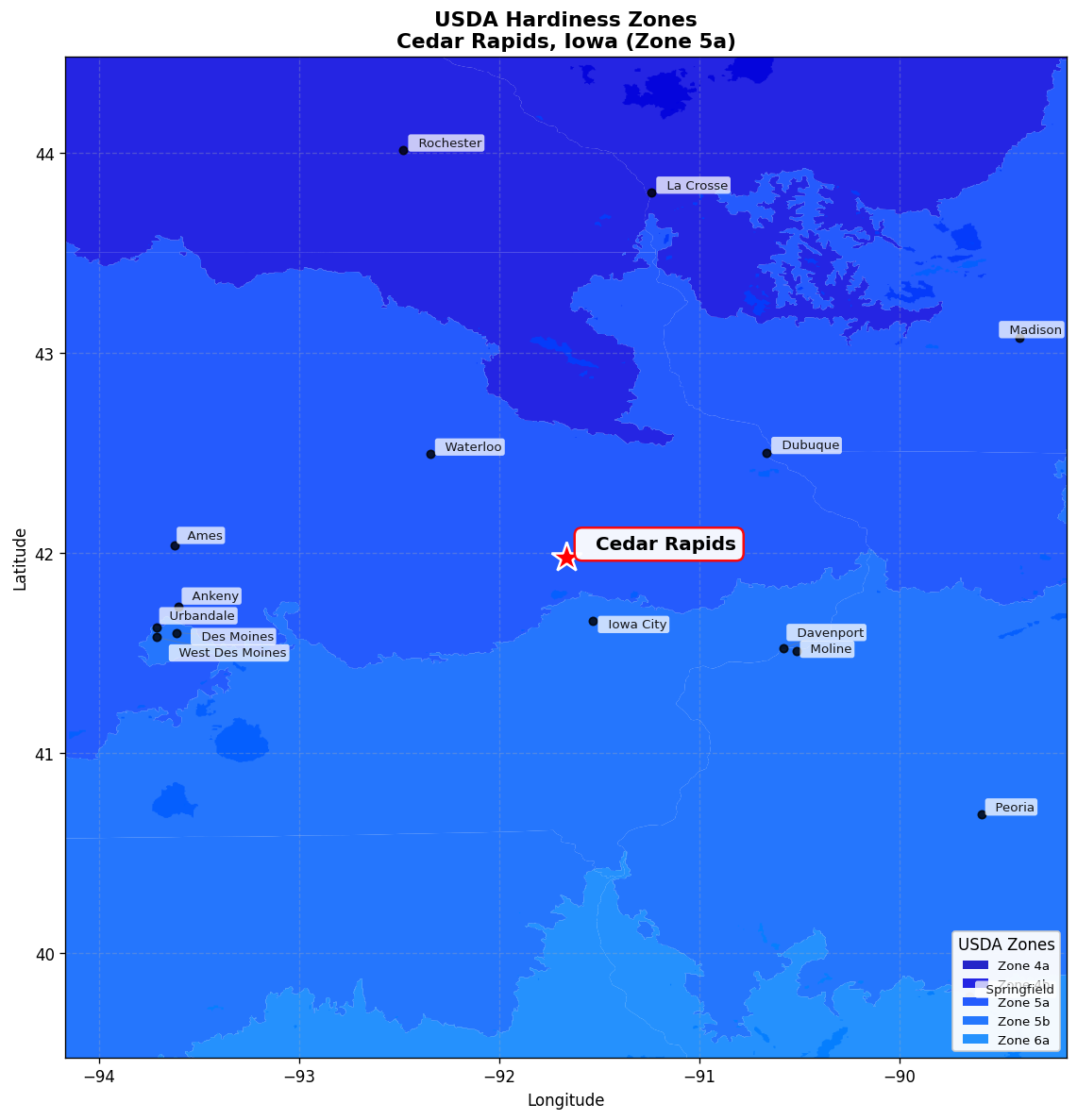
USDA Zone 5a
Hardiness zone for Cedar Rapids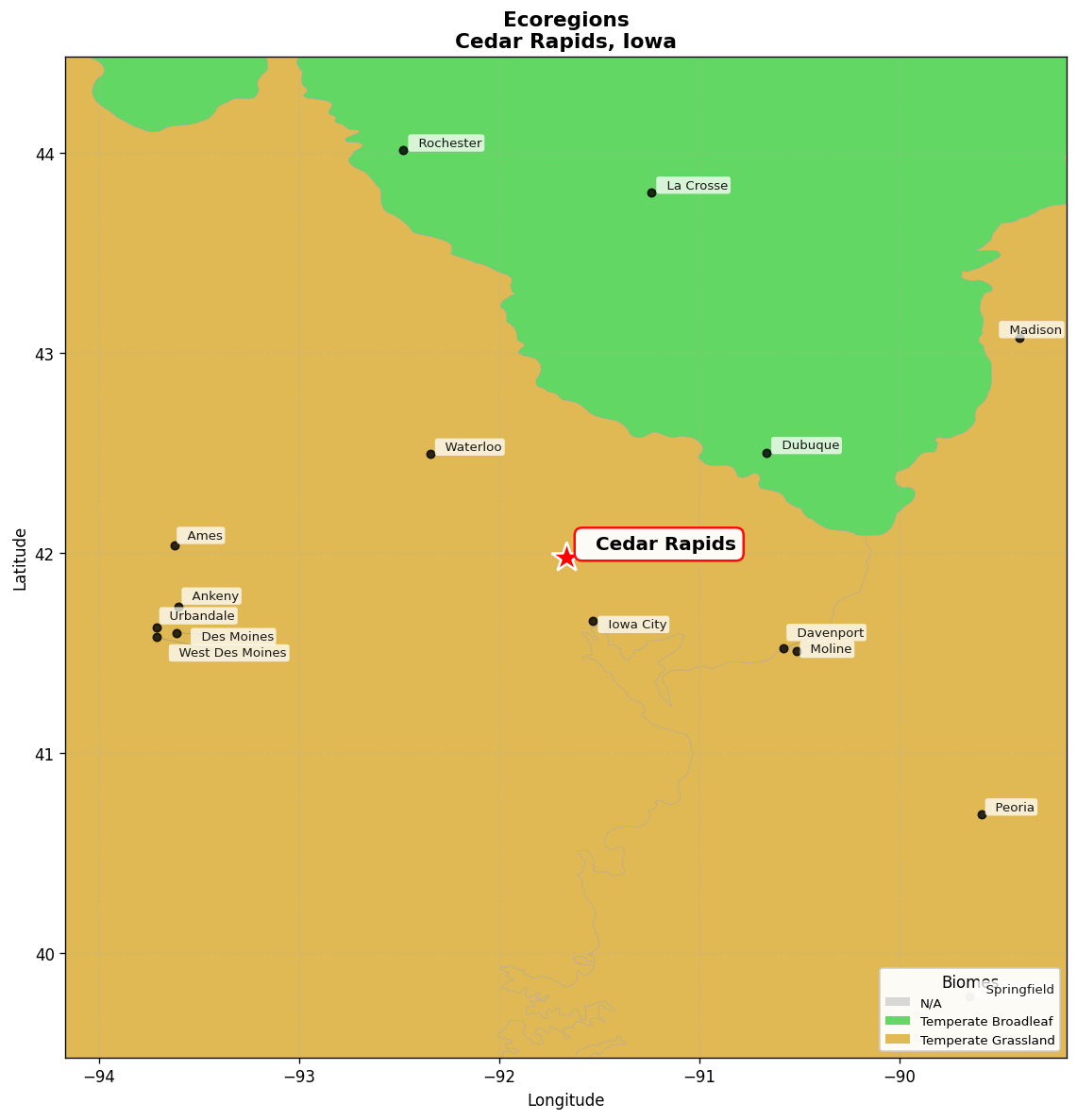
Central Tallgrass prairie
Native ecoregionFrequently Asked Questions
How much does a cottage garden cost in Cedar Rapids?
Linn County installation prices run roughly 10 to 15 percent under the national metro average, so this style is unusually affordable here. A single deep front border of 300 to 500 sqft, properly prepped with compost and planted with Paeonia lactiflora 'Festiva Maxima', Nepeta 'Walker's Low' and Rosa 'Bonica', comes in around $2,500 to $6,500 installed. A brick front walk with a rose arch over the gate runs $3,500 to $8,000. A full front-yard cottage conversion is typically $8,000 to $20,000, and a hedged back garden with a flagstone dining terrace and a fountain lands between $28,000 and $65,000. Doing your own planting and buying bare-root shrub roses in April can cut plant costs by half.
Which roses actually survive a Cedar Rapids winter?
Own-root, cane-hardy shrubs and climbers, not grafted hybrid teas. At an average winter low near -20 degrees F, anything on a rootstock dies back to the graft and comes back as the understock. The Canadian Explorer climbers are the local workhorses: Rosa 'William Baffin' will cover an 8-foot arch, and Rosa 'John Davis', Rosa 'John Cabot' and Rosa 'Quadra' are equally reliable. For shrub roses use Rosa 'Bonica', Rosa 'The Fairy', Rosa 'Sally Holmes' and the hardier David Austins such as Rosa 'Olivia Rose Austin'. Plant the crown 2 inches below grade, skip the fall pruning, and let a foot of snow do the insulating.
Can I grow English lavender in Iowa, or will it rot?
It rots from wet feet in a Cedar Rapids winter far more often than it freezes. With 36 inches of rain a year landing on silty clay, the plant sits cold and saturated from November to April. The fix is mechanical: build a 6 to 10 inch berm, cut 30 to 40 percent pea gravel or chipped limestone into the backfill, mulch with gravel rather than bark, and never blanket the crowns with leaves. Lavandula x intermedia 'Phenomenal' is by a wide margin the most winter-durable choice in eastern Iowa; Lavandula angustifolia 'Munstead' and 'Hidcote' are worth growing but treat them as five-year plants and take cuttings.
What do I do about Japanese beetles on my roses?
Plan for them. Adults emerge in Linn County in late June and feed hard through early August, and roses, lindens and grapes are their favourites. Hand-pick into soapy water before 8 am when they are sluggish, and never hang a pheromone trap in your own yard because it pulls beetles in from blocks away. Design is the better defence: they largely ignore Salvia nemorosa 'Caradonna', Nepeta 'Walker's Low', Baptisia australis, Perovskia atriplicifolia, Allium 'Millenium', boxwood and peonies, so weighting the border toward those and treating roses as accents rather than the whole show keeps a July garden looking intact.
When should I plant a garden in Cedar Rapids?
The two windows are mid-April to early June and September 1 to about October 10. The average last frost is near May 1 and the first is around October 8, giving roughly a 160-day season. Fall is the better half for woody plants and peonies because the soil stays workable long after the air turns cold; plant peony eyes only 1 to 2 inches deep, because deeper and they will grow foliage for years and never flower. Avoid new planting in mid-July, when 85 degree days and humidity punish anything not yet rooted. Bare-root roses and shrubs go in as soon as the ground thaws, usually the first half of April.
My yard lost its shade in the 2020 derecho. What now?
You are gardening in full sun and should design for it rather than nursing shade plants through it. The August 10, 2020 derecho brought 140 mph winds and took out roughly 65 percent of the city's tree canopy, and the ReLeaf Cedar Rapids replanting effort is still filling the gap. Put a fast, wind-firm replacement tree in now, Amelanchier x grandiflora 'Autumn Brilliance' or Gymnocladus dioicus rather than a brittle Acer x freemanii, and in the meantime rebuild the border with sun-lovers: Echinacea purpurea 'Magnus', Rudbeckia fulgida 'Goldsturm', Phlox paniculata 'Jeana' and Hemerocallis 'Happy Returns'. Move the hostas to the north side of the house instead of losing them.
Do I need a permit for cottage garden work in Cedar Rapids?
Planting beds, borders, mulch and a garden path need no permit anywhere in the metro. Permits come into play for retaining walls above 4 feet, fences in some districts, and any roofed structure, and the low ground along the Cedar River falls under floodplain overlay rules that govern grading and fill, so check with the city before importing soil or raising grade there. One construction number worth knowing: frost depth in Linn County is 42 inches, so a pergola or arbor meant to last needs its posts set below that, not on surface blocks.