4 English Cottage Garden Ideas for Rochester, MN | Hardy Roses for Zone 4b
Native plants from the Upper Midwest US forest-savanna transition (Zone 4b) — Humid continental (warm summer) climate
Why Cottage/English Gardens in Rochester?
Rochester has the houses a cottage garden wants. Pill Hill's Tudor Revivals and brick Colonials, the 1910s and 1920s foursquares and bungalows of Kutzky Park, Slatterly Park and Folwell, and the storybook 1940s Cape Cods of Country Club Manor all have the deep porches, steep roofs and short front setbacks that let a rose arbour and a full border read from the sidewalk. The style also suits the way people here garden: a short, intense season you spend outside, then five months looking at the yard from the kitchen window, so the bones (paths, fences, arbours) have to earn their keep in January.
Zone 4b means extreme lows of -20 to -25°F, and that rewrites the English plant list. January averages a low near 10°F, the city averages roughly 33 inches of precipitation a year, rain plus melted snow, and the last spring freeze usually lands in early May. Hybrid tea roses and true English lavender are the casualties: Lavandula angustifolia 'Munstead' and 'Hidcote' are Zone 5 plants that rarely see a third spring here, and David Austin roses die back to the snow line. Hardy climbers and shrubs bred in Canada for the prairies, such as Rosa 'John Cabot', Rosa 'William Baffin' and Rosa 'Morden Blush', carry the arbour. Nepeta × faassenii 'Walker's Low' and Agastache 'Blue Fortune' give the blue haze lavender would. And the cool Minnesota nights mean Delphinium elatum 'Magic Fountains' and Paeonia lactiflora 'Sarah Bernhardt' do better here than they ever do in the humid South.
The ground matters as much as the cold. Southeast Minnesota is karst country: windblown loess silt sits over limestone and dolostone, and Olmsted County has hundreds of mapped sinkholes, most of them southeast of the city. In town that usually means a silty loam that drains well where it has not been compacted by builders, with pH often near neutral rather than acid. Get a University of Minnesota soil test before you add lime or sulfur; most Rochester rose beds need compost, not pH correction. The other big number is frost depth: the Minnesota building code sets footings at 42 inches in the southern half of the state, so arbour and pergola posts go down that far or they lift by March.
One local rule to know before you plant the curb strip: the City of Rochester treats boulevard plantings other than turf as needing a natural landscape permit from the Forestry division, and boulevard trees need their own free permit and come from the city's approved list. Keep the cottage froth inside the property line, or get the permit first, and use the boulevard edge for salt-tolerant plants like Calamagrostis × acutiflora 'Karl Foerster' that can take a winter of plowed snow.
4 Cottage/English Design Ideas for Rochester

AI-generated image
The Explorer Rose Gate
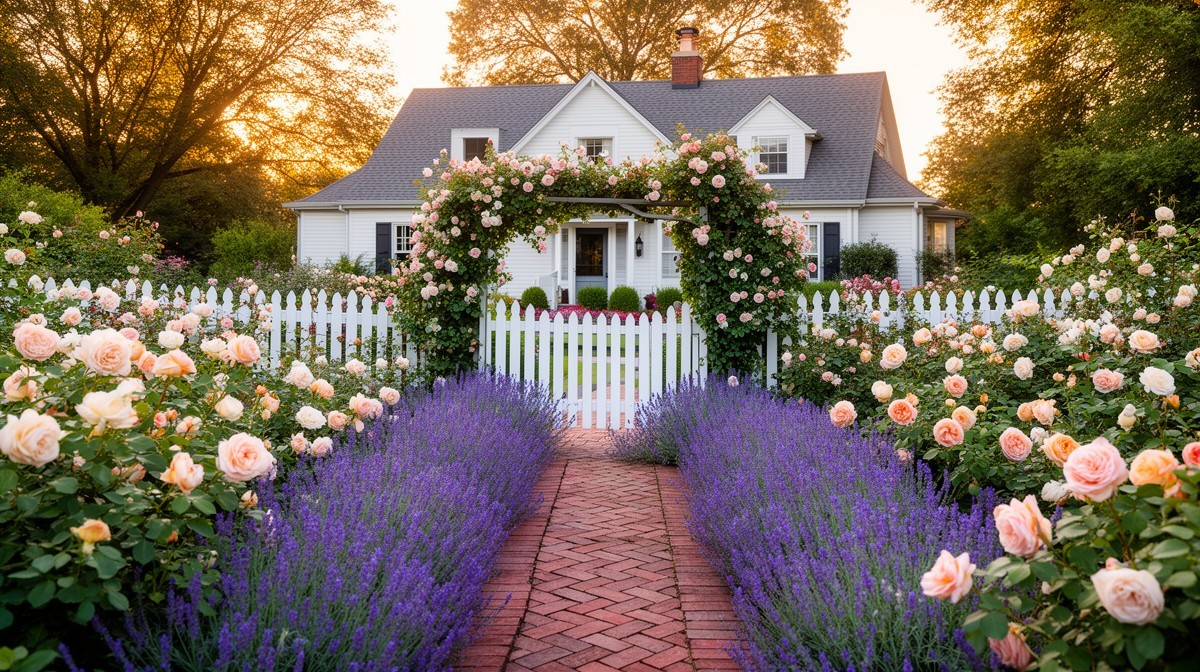
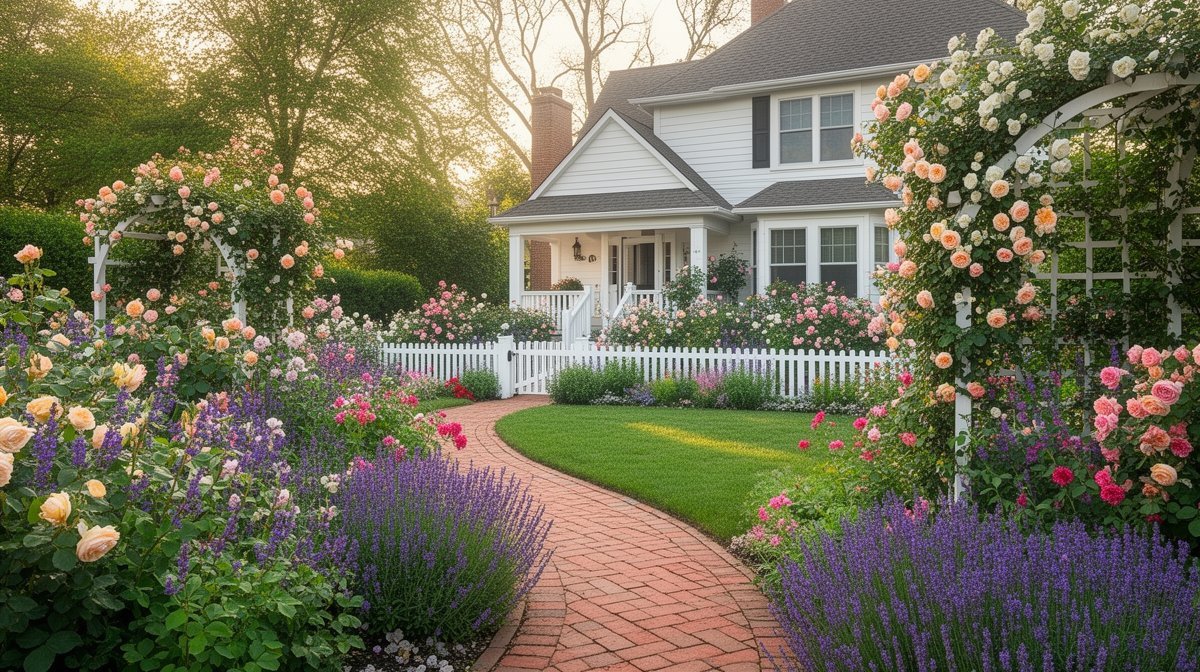
$20–40/sqftA white cedar picket fence runs the frontage of a 1920s Kutzky Park foursquare, and a broad arbour at the gate carries pink Rosa 'John Cabot' trained over it, with a curved clay-brick path leading to the porch steps. Catmint and Agastache spill over the path edge in full afternoon sun on the south-facing front, peonies fill the middle layer, and Annabelle hydrangea anchors the shadier corner by the porch. In winter the fence, the arbour and the hydrangea seedheads hold the picture under snow.

AI-generated image
The Pill Hill Peony Border
$25–48/sqftA deep double border flanks a straight bluestone walk up to a brick Tudor Revival, with a clipped low hedge on both edges and three layers behind it: delphinium spires at the back, peonies and phlox in the middle, lady's mantle and cranesbill at the front. The house shades the walk until late morning, so the border is planted for strong midday and afternoon sun, and the hedge is a hardy boxwood that holds its color through a Rochester winter.

AI-generated image
The Lilac and Bench Corner
$14–30/sqftIn the back corner of a Country Club Manor Cape Cod, a curved gravel path ends at a weathered teak bench under a Miss Kim lilac and a Prairifire crabapple, with a clematis scrambling up a painted trellis behind. The bench faces west to catch the evening sun across the lawn, and the bed around it is a loose mix of catmint, coneflower and foxglove that self-sows a little more each year.

AI-generated image
The Pergola Kitchen Cottage
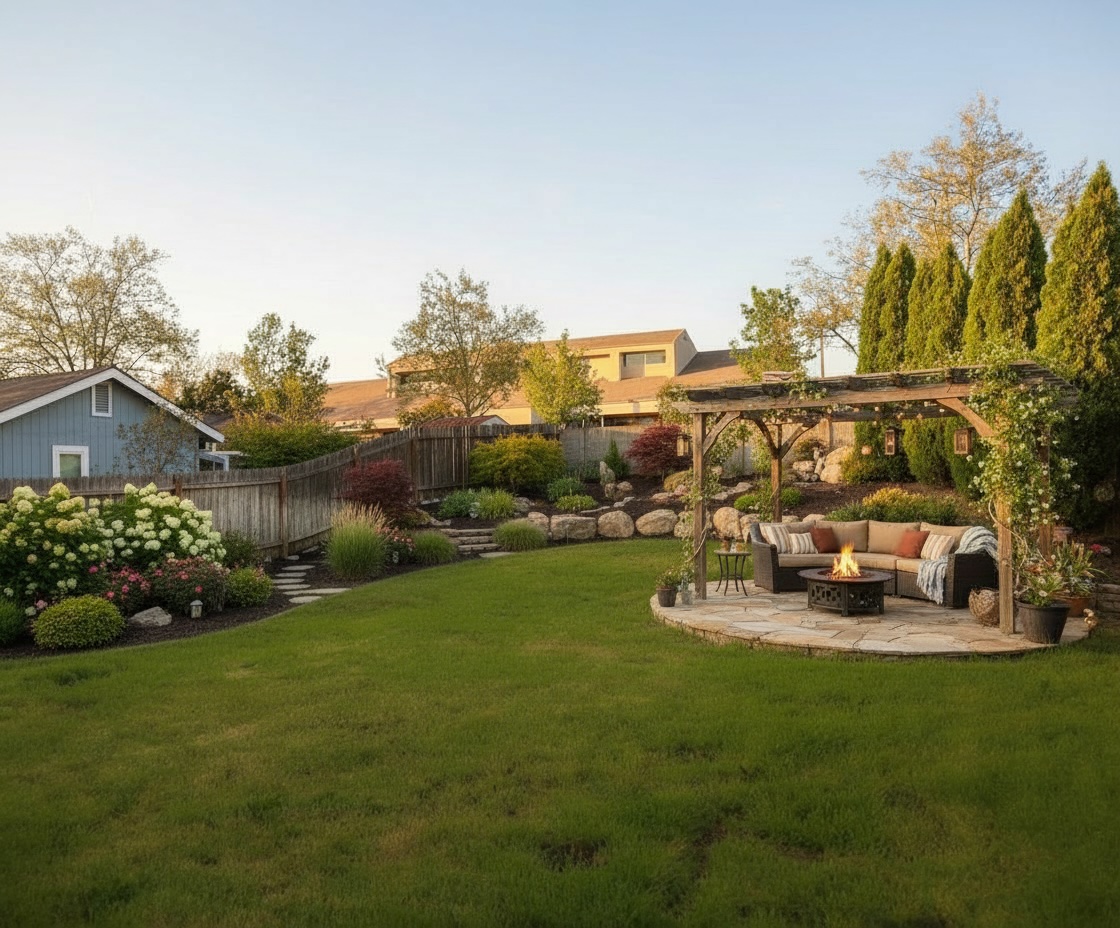
$30–60/sqftA cedar pergola beside a 1950s rambler shelters a small brick terrace, with William Baffin roses climbing two posts and raised cedar beds of herbs and cut flowers along the south side. Shrub roses and tall phlox fill the borders around the terrace, and a row of Limelight hydrangea screens the neighbor's fence and carries the color into September after the roses rest.
See how a cottage/english garden looks on YOUR property
Upload a photo of your Rochester yard and visualize your dream garden in seconds.
Try ProScapeAI Free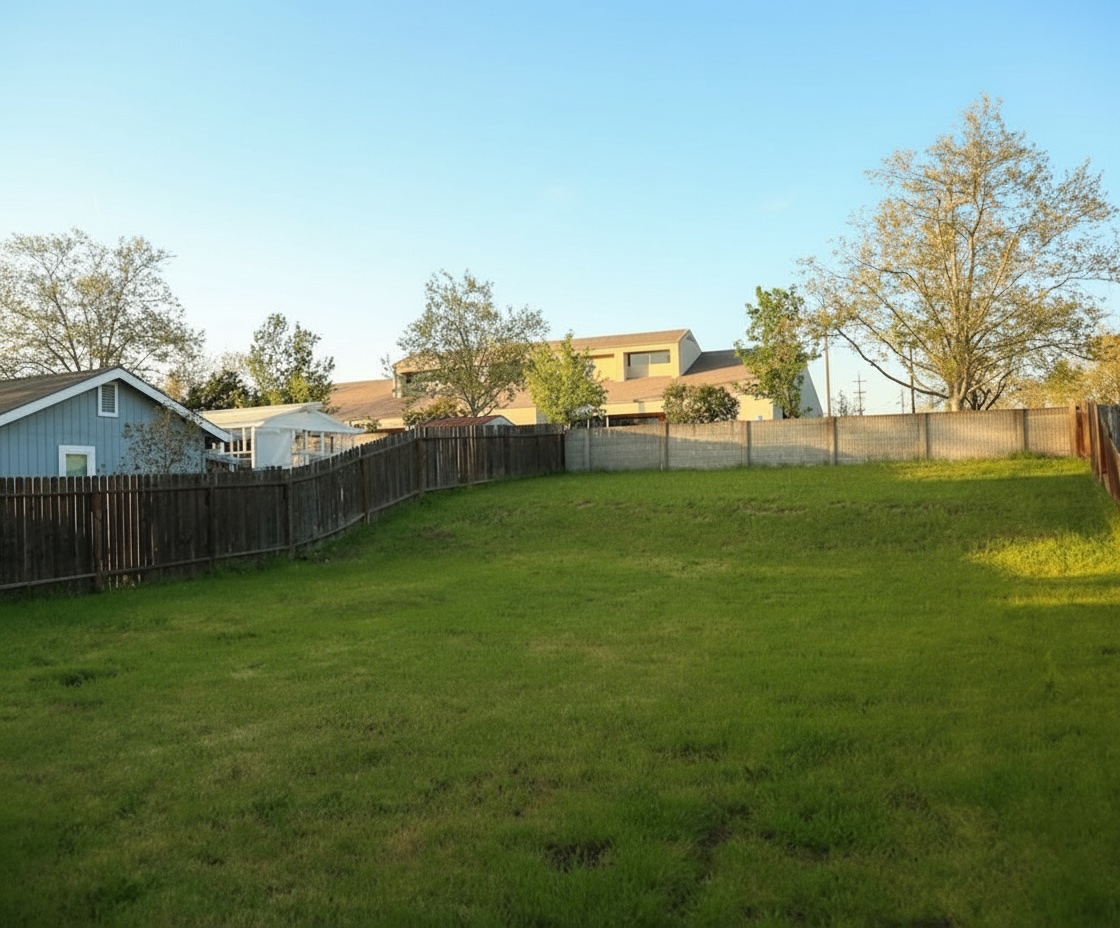
AI-generated image
Featured Trees & Shrubs for Cottage/English Gardens
Browse all 155 plants for Rochester
American Black Currant
Ribes americanum
grows to 5 feet, white,yellow blooms in spring. Attracts hummingbirds.

Gray Dogwood
Cornus racemosa
medium-sized at 10 feet, white blooms in spring. Pollinator-friendly.
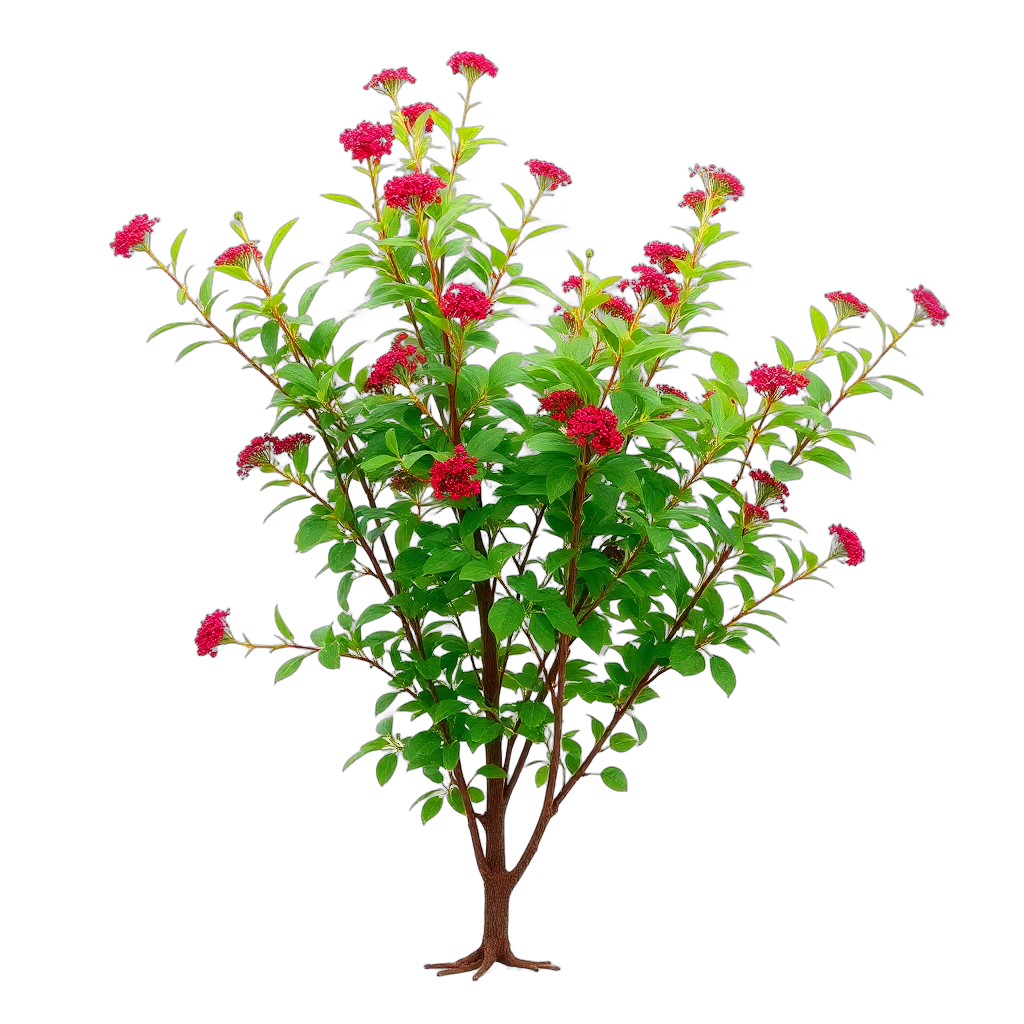
Smooth Sumac
Rhus glabra
medium-sized at 12 feet, white,green blooms in summer. Attracts butterflies.
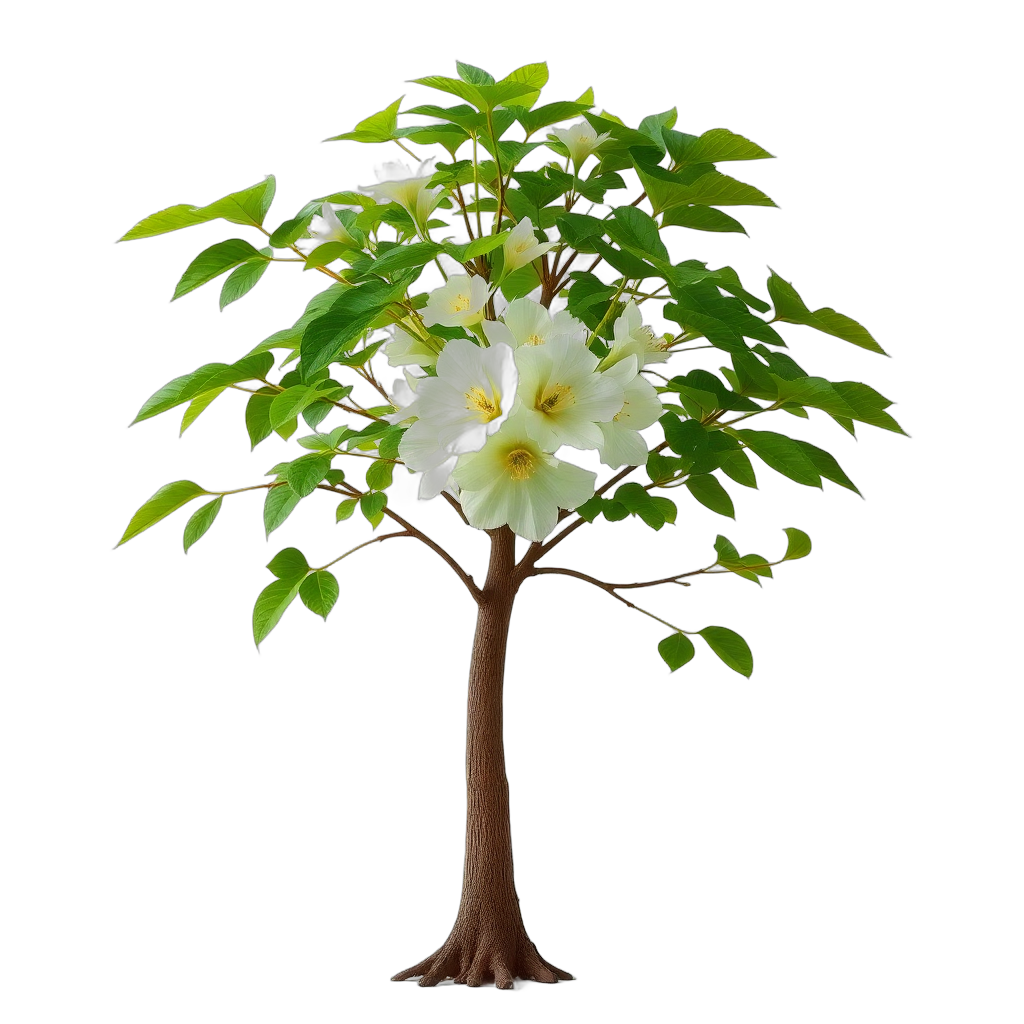
Northern Catalpa
Catalpa speciosa
large shade tree reaching 55+ feet, white blooms in spring. Pollinator-friendly.
Featured Flowers & Perennials for Cottage/English Gardens
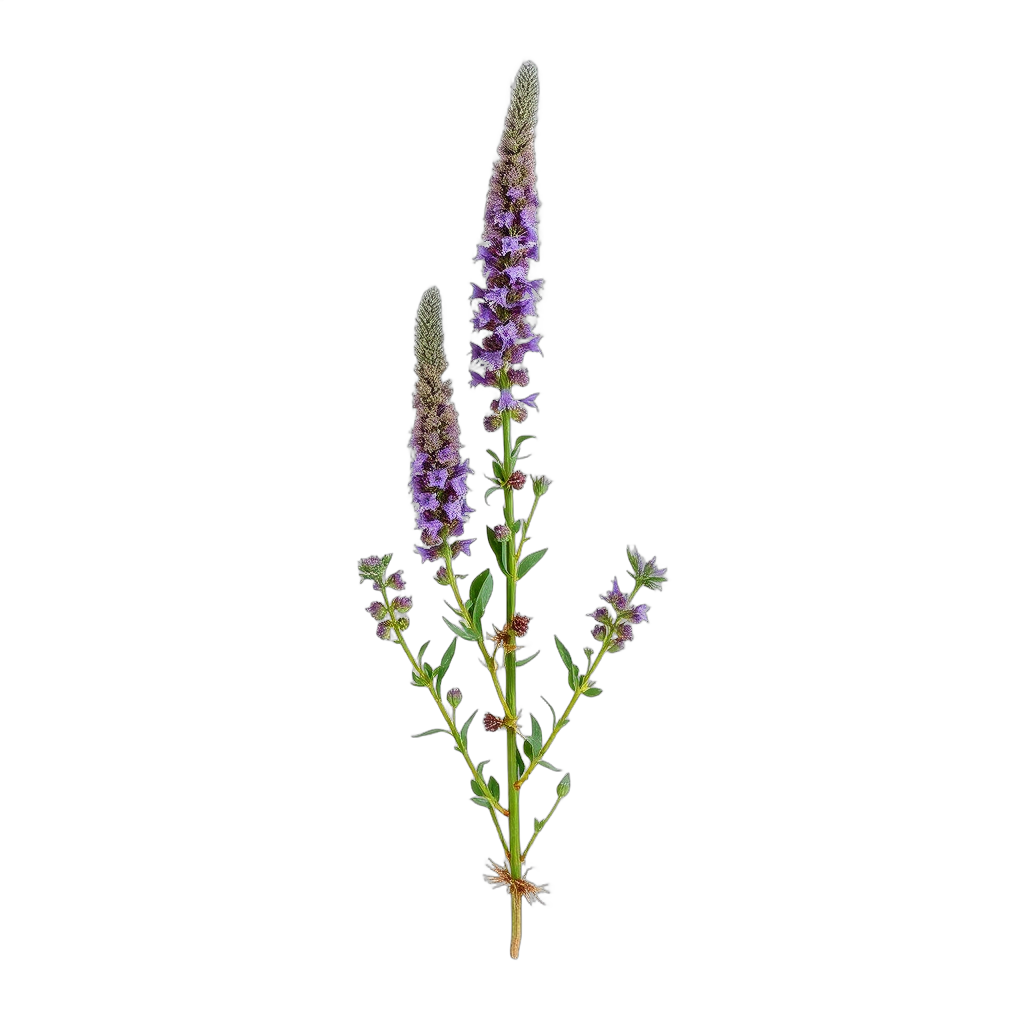
Anise Hyssop
Agastache foeniculum
grows to 3 feet, purple blooms in summer. Attracts hummingbirds.

Ox-Eye Sunflower
Heliopsis helianthoides
grows to 4 feet, yellow blooms in summer. Attracts butterflies.

American White Water Lily
Nymphaea odorata
low-growing ground cover, white,pink blooms in summer. Attracts butterflies.

Canadian Waterweed
Elodea canadensis
grows to 3 feet, white blooms in spring. Evergreen year-round.
Zone and sun checks come from our database — confirm with your local nursery before you buy.
Bloom Calendar for Rochester
spring
American Black Currant, Gray Dogwood, Northern Catalpasummer
Anise Hyssop, Ox-Eye Sunflower, Smooth Sumacfall
American White Water Lily, Canadian Waterweedwinter
Limited bloomsDesign Tips for Rochester (Zone 4b)
- Pick roses from the Explorer and Parkland lines (Rosa 'John Cabot', 'William Baffin', 'Morden Blush'): they are rated to Zone 3 and regrow from the roots after a -25°F January, where hybrid teas simply die
- Set arbour, pergola and fence posts on 42-inch footings, the Minnesota code depth for the southern half of the state; shallower posts heave out of plumb by the first March thaw
- Test before you amend: Rochester's loess silt loam often runs near neutral, so most rose and peony beds want compost, not lime; a University of Minnesota Extension soil test settles it
- Swap lavender for Nepeta 'Walker's Low' and Agastache 'Blue Fortune' and let the cool summer nights work for you with Delphinium 'Magic Fountains', which sulks in hot climates but does well here
- Keep cottage plantings off the boulevard unless you have the city's natural landscape permit, and use that strip for salt-tolerant Calamagrostis 'Karl Foerster' that shrugs off a winter of plowed snow
- Plant the second half of the season: peonies and roses peak in June, so Phlox paniculata 'Jeana', Hydrangea paniculata 'Limelight' and Echinacea 'Magnus' are what carry the border to the first frost in early October
- Leave stems and seedheads standing until April: they hold snow as insulation, protect crowns from freeze-thaw, and give a cottage garden a shape to look at for five months of winter
Where to Source Plants in Rochester
Skip the big-box stores. These independent Rochester nurseries specialize in the plants that make cottage/english gardens thrive in Zone 4b.
Sargent's on 2nd
Southwest Rochester (2nd St SW)
Year-round garden centre with annuals, perennials, bulbs, houseplants and a large pottery selection; the in-town source for cottage border perennials
Sargent's North
Northwest Rochester (18th Ave NW)
Landscape yard with display gardens, large trees and evergreens, bulk landscape materials, paving and wall supplies
Jim Whiting Nursery & Garden Center
Northwest Rochester (19th St NW)
Large nursery with hardy roses, hydrangeas, perennials for sun and shade, flowering and evergreen shrubs, shade and ornamental trees, plus landscaping services
Berg's Nursery and Landscape
Austin (about 40 miles southwest)
Garden centre and landscape design by an APLD-certified designer, with trees, shrubs, perennials, evergreens and hardscape supplies
Cottage/English Landscaping Costs in Rochester
| Project Scope | Estimated Cost |
|---|---|
| Front cottage border with picket fence and gate arbour (400–600 sqft) | $10,000 – $25,000 |
| Clay brick walk on a frost-deep base (150–250 sqft) | $4,000 – $10,000 |
| Bluestone or brick terrace (250–400 sqft) | $8,000 – $20,000 |
| Cedar pergola on 42-inch frost footings | $5,000 – $12,000 |
| DIY perennial and rose border, gallon plants (per sqft) | $6 – $10 |
| Full back cottage garden: terrace, pergola, deep borders | $35,000 – $85,000 |
| AI visualization (ProScapeAI) | Free to start |
Estimates based on Rochester, MN-area contractor rates as of 2026. Actual costs vary by site conditions, materials, and contractor.
Rochester Climate & Growing Zone
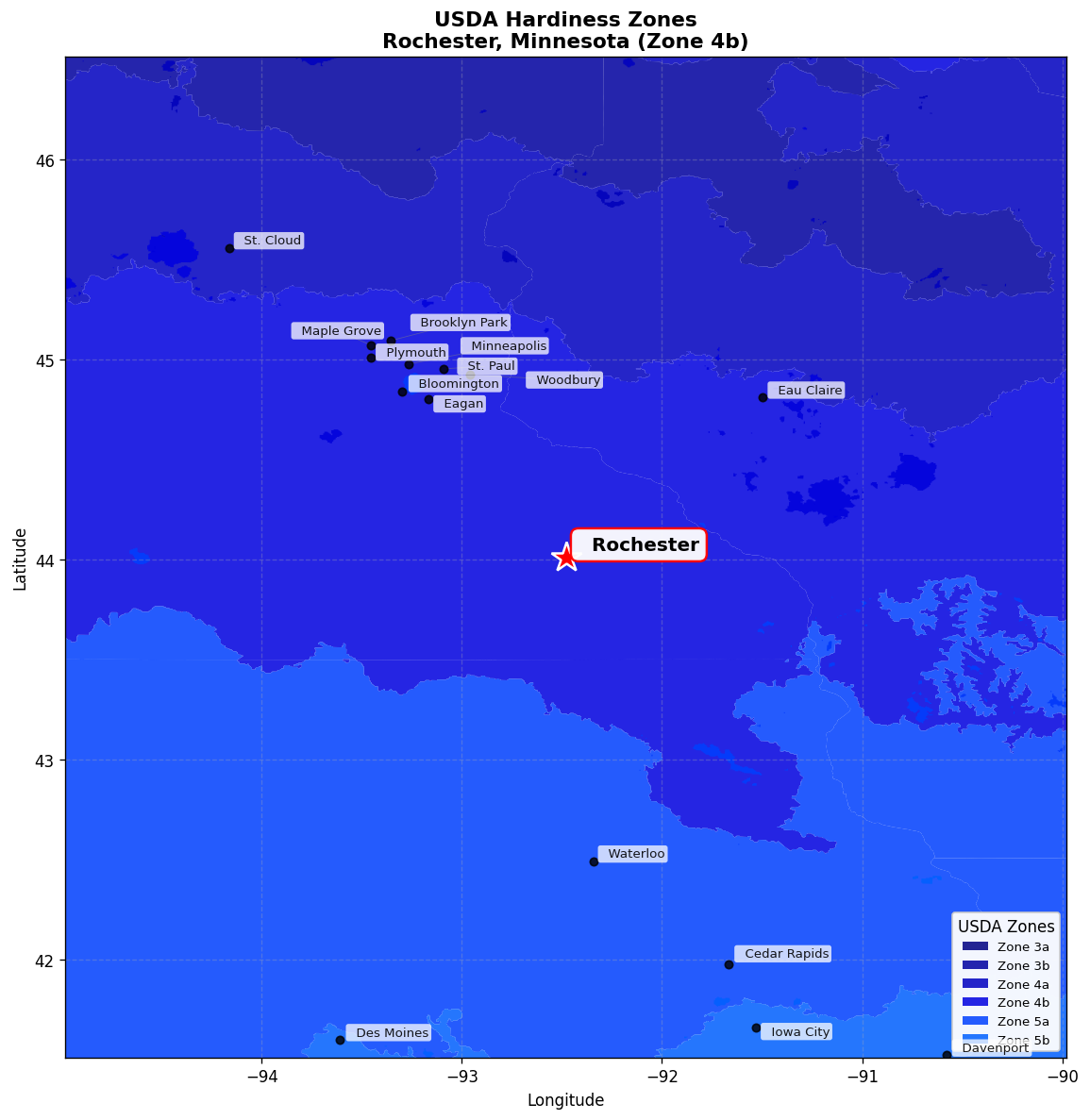
USDA Zone 4b
Hardiness zone for Rochester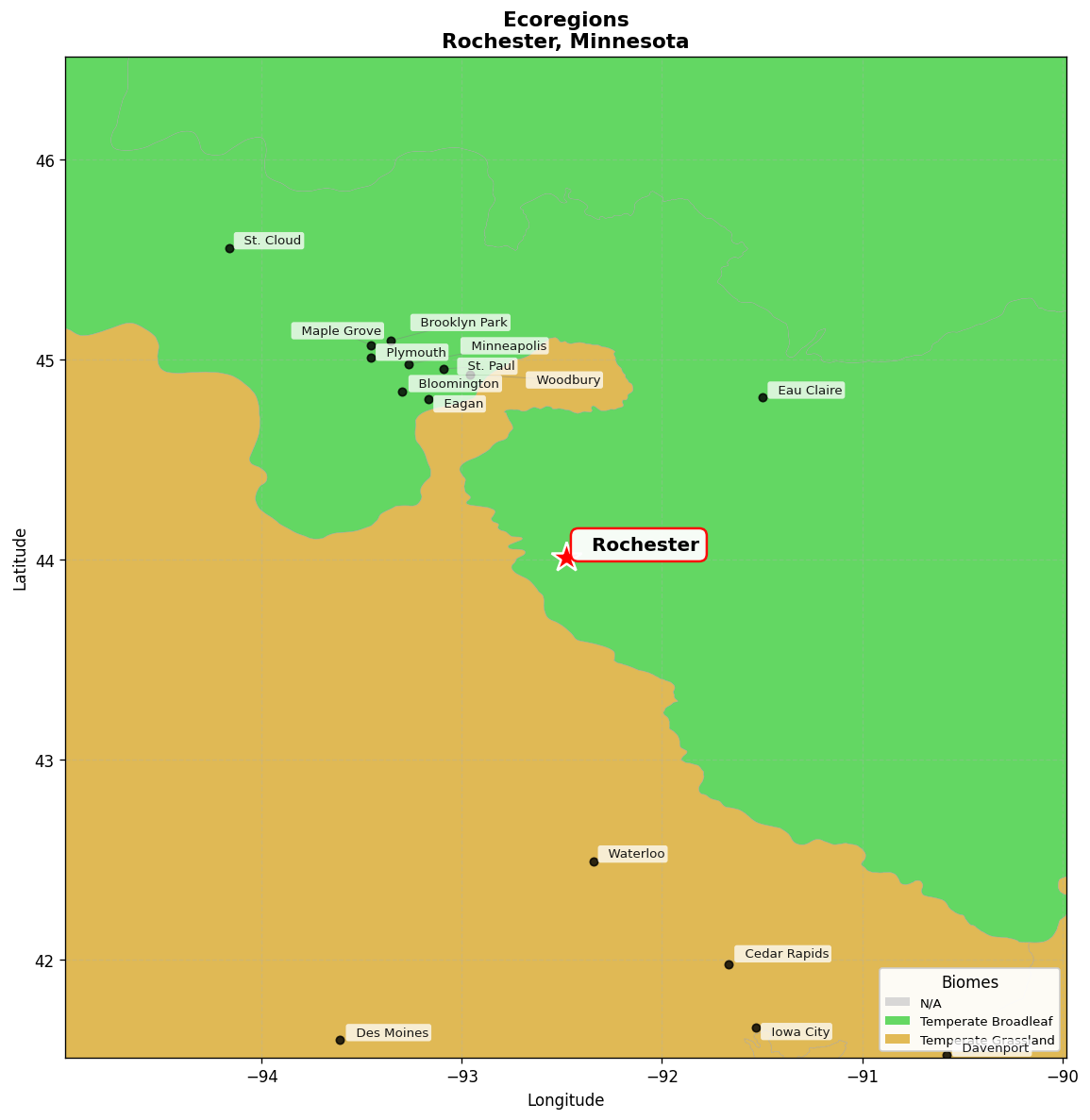
Upper Midwest US forest-savanna transition
Native ecoregionFrequently Asked Questions
How much does a cottage garden cost in Rochester, MN?
Southeast Minnesota installers commonly bill roughly $60–90 per labor hour, a bit under Twin Cities rates. A planted front cottage border with a picket fence and gate arbour on a typical 400–600 sqft Kutzky Park or Folwell front yard runs about $10,000–25,000 installed. Brick walks land around $25–40 per square foot because of the deep base frost demands, and a cedar pergola on 42-inch footings runs $5,000–12,000. If you plant it yourself with gallon-size Rosa 'John Cabot', Nepeta 'Walker's Low' and peonies, a border comes in under $10 per square foot.
Which roses survive a Rochester winter?
Choose roses bred for the prairies. The Canadian Explorer and Parkland series, including Rosa 'John Cabot', Rosa 'William Baffin', Rosa 'John Davis' and Rosa 'Morden Blush', are rated to Zone 3 and come back from the roots even after a -25°F night. Hybrid teas and most David Austin roses need the Minnesota tip method or heavy mounding and still die often. Plant own-root roses with the crown 2–3 inches below grade, stop fertilizing by August, and let the snow sit on them; snow is the best insulation you will get.
Can I grow lavender in Rochester?
Not reliably. Lavandula angustifolia 'Munstead' and 'Hidcote' are Zone 5 and usually die in a hard winter or a wet April thaw. If you want to try, use a raised gravel bed against a south wall and treat it as a bonus. For the cottage blue that comes back every year, plant Nepeta × faassenii 'Walker's Low', Agastache 'Blue Fortune' and Salvia nemorosa 'May Night', all hardy here and all loved by bees.
When is the best time to plant in Rochester?
Plant perennials and shrubs from mid-May, after the last spring freeze (usually early May), through June, and again from mid-August to mid-September so roots set before the ground freezes. Peonies and bulbs go in during September. Bare-root roses go in as soon as the soil can be worked in late April or early May. Avoid planting after early October; the first frost usually arrives by then and new plants need a few weeks of root growth to survive winter heave.
Do I need a permit for boulevard plantings in Rochester?
Yes, for most of it. The City of Rochester requires a natural landscape permit from the Forestry division for boulevard plantings other than turf grass, and for any turf over 12 inches tall. Planting or working on a boulevard tree needs its own free Forestry permit, the tree must come from the city's approved list, and once planted it is public property. Fences, pergolas and patios follow the city's zoning and building rules, so check setbacks and permit needs with the city before you build.
How do I keep a cottage garden looking good through a Minnesota winter?
Give it bones that show above the snow. A picket fence, an arbour, a clipped hedge of Buxus 'Chicagoland Green' and the dried heads of Hydrangea arborescens 'Annabelle' and Echinacea 'Magnus' hold the shape from November to April. Leave perennials standing until spring for structure and for the birds, wrap the boxwood in burlap on the windward side, and keep road salt and plowed snow off the front border.
Do the sinkholes around Rochester affect a garden?
Rarely in town, but it is worth knowing. Olmsted County sits on karst limestone with hundreds of mapped sinkholes, most southeast of the city. Do not direct downspouts or a rain garden into a single low spot over shallow bedrock, and if the yard has a depression that keeps getting deeper, have it looked at before you build a patio over it.