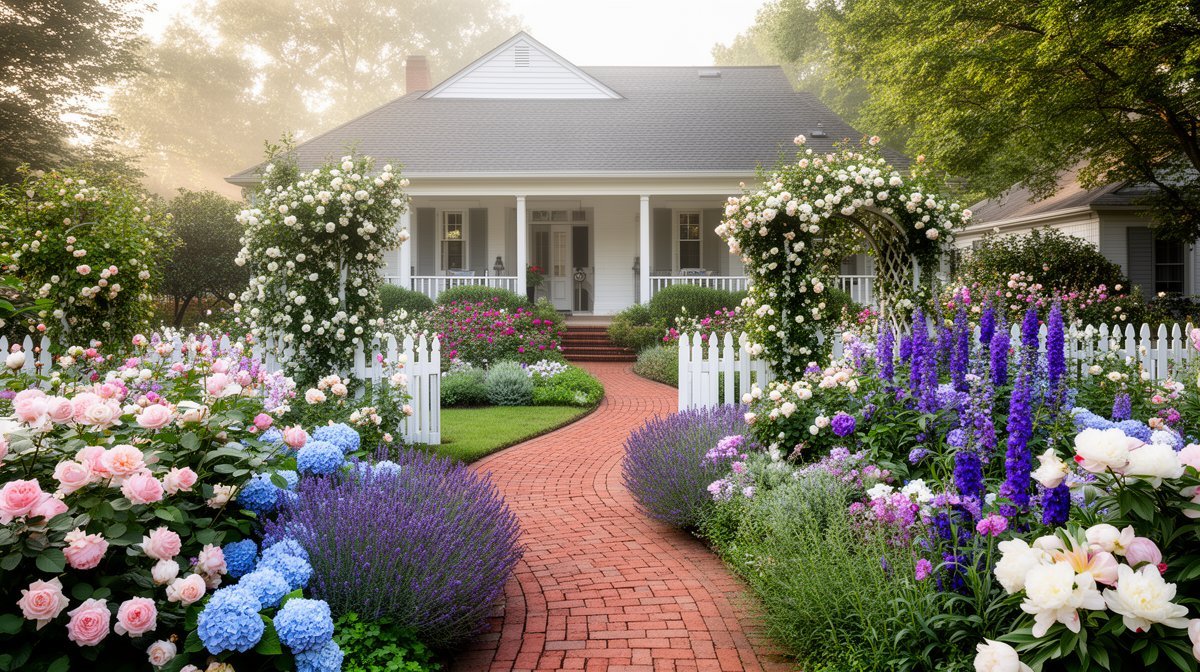
4 Cottage/English Garden Ideas for Chattanooga, TN | Humidity-Proof Rose Design in Zone 7b
Native plants from the Appalachian-Blue Ridge forests (Zone 7b) — Humid subtropical climate
Why Cottage/English Gardens in Chattanooga?
Chattanooga suits an English cottage garden for architectural reasons before horticultural ones. The 1920s–40s bungalows and gable-front cottages of North Shore, St. Elmo, and Riverview were built with deep porches, low eaves, and short front setbacks — exactly the proportions a rose arch and a picket fence were invented to flatter. Add the old summer-cottage stock on Lookout Mountain and Signal Mountain, where ridge-top air runs several degrees cooler and roses keep blooming after valley gardens have quit, and the style reads as local rather than imported. Zone 7b winters bottom out near 5–10°F — cold enough that Paeonia lactiflora 'Festiva Maxima' and 'Sarah Bernhardt' bank the chill hours they need and Narcissus 'Thalia' naturalizes in drifts, yet mild enough that Rosa 'New Dawn' and Clematis viticella 'Betty Corning' hold their framework through February.
The classic English perennial list was written for a cool maritime summer, and Chattanooga's is the opposite. Roughly 52 inches of rain a year, July dew points near 70°F, and a valley hemmed in by Lookout Mountain and Missionary Ridge that traps still, humid air — a fungal incubator. Delphinium elatum collapses by July, so build your blue verticals from Salvia nemorosa 'Caradonna', Baptisia australis, and Veronicastrum virginicum 'Fascination' instead. Lavandula angustifolia 'Munstead' rots out its second winter in valley clay; Lavandula × intermedia 'Phenomenal' is the one lavender bred to take Southern humidity, and it wants a gravel berm rather than a bed. Hybrid teas defoliate with black spot by August — plant Rosa 'Knock Out', the David Austin 'Munstead Wood', and the nearly indestructible 'Peggy Martin' climber. Lamb's ear survives here only as Stachys byzantina 'Helen von Stein', and the one Shasta daisy that lasts is Leucanthemum × superbum 'Becky'.
Soil changes block to block, and it decides your budget. Valley yards sit on cherty, acidic clay weathered from Knox Group limestone — Fullerton and Bodine soils, thick with chert gravel and occasionally hiding ledge rock or a karst void a spade's depth down. Lookout Mountain and Signal Mountain sit on a Pennsylvanian sandstone cap: thin, sharply drained, acidic sandy loam over rock, on grades that often exceed 20%. North Shore and Riverview draw the long straw with deep river-terrace loam. Build cottage borders UP 8–12 inches with composted pine fines rather than digging down into clay, and on steep ground a low drystack limestone wall repays itself in the first heavy December rain. With a 215-day growing season and crew rates around $50–70 an hour — comfortably below national averages — a border planted in October is knitted together by its first June.
4 Cottage/English Design Ideas for Chattanooga
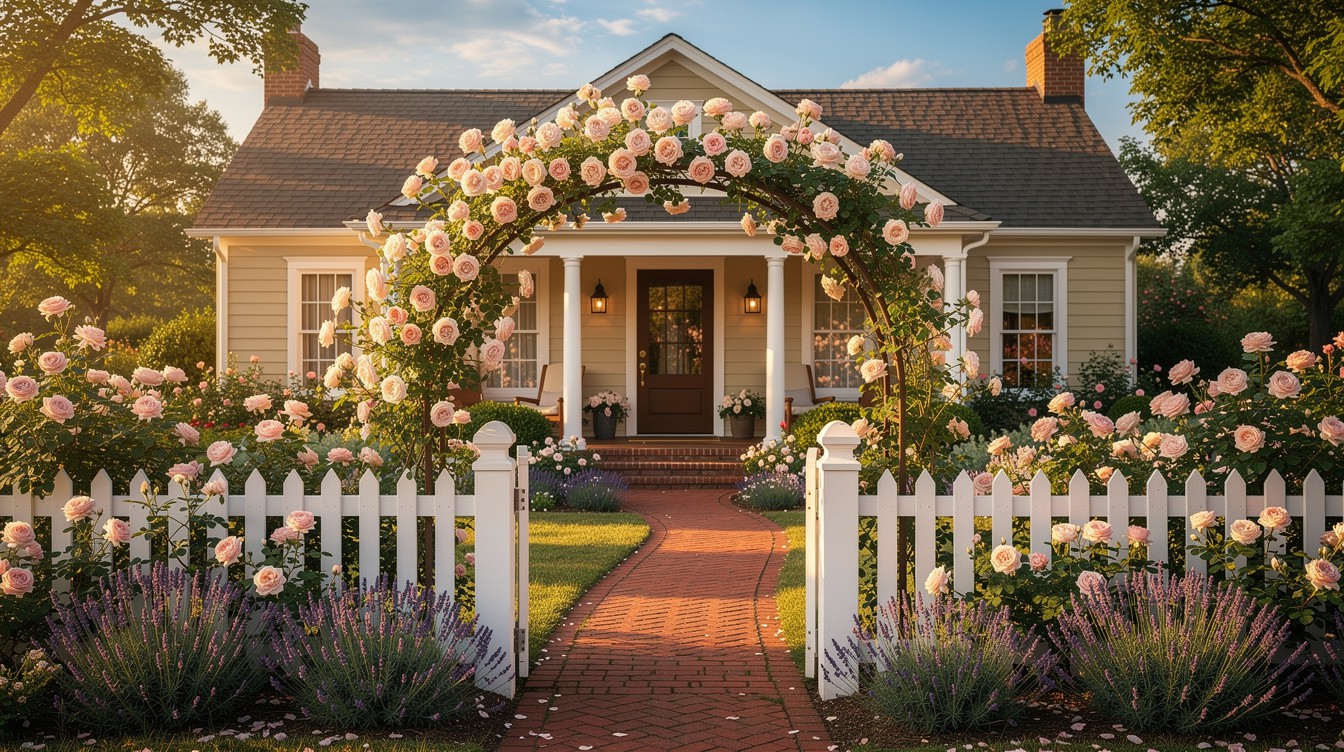
The Golden-Hour Rose Arch
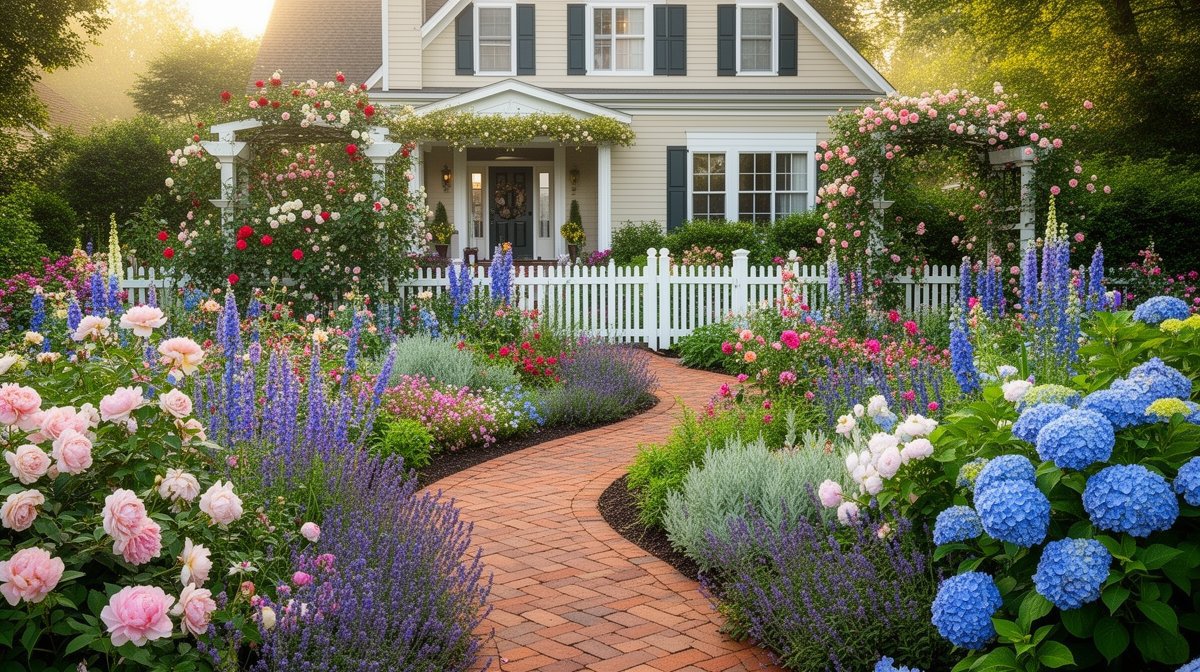
$18–32/sqftA butter-yellow cottage with twin brick chimneys sits behind a white picket fence, and the whole composition hangs on one gesture: a steel arch smothered in quartered, pale-pink cabbage roses spanning a herringbone brick walk that runs straight to the porch steps. Massed lavender spills over the fence line on both sides, shrub roses fill the beds behind the pickets, and low evergreen mounds keep the planting from turning shapeless in winter. The trick that makes this survive a Chattanooga August is what you cannot see — the lavender sits on a raised gravel spine, and every rose here was chosen for black-spot resistance rather than fragrance alone.
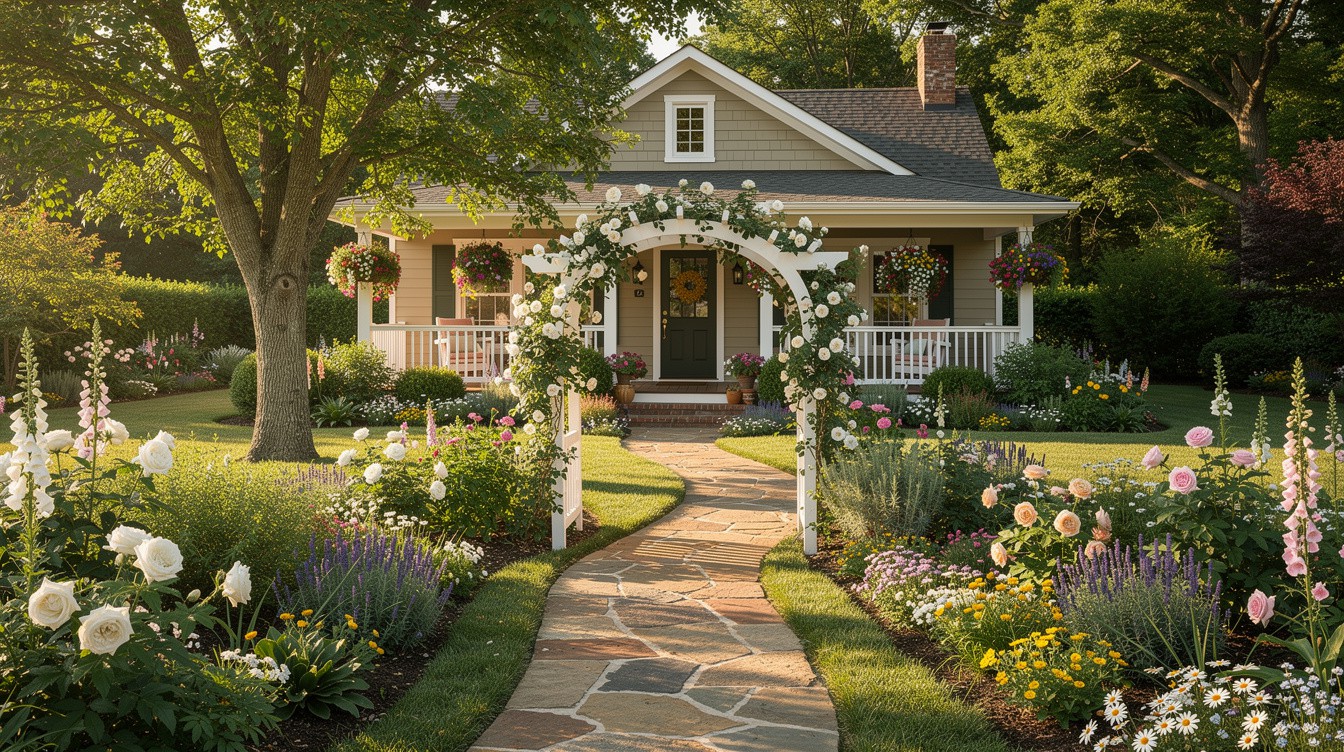
The Flagstone Meander
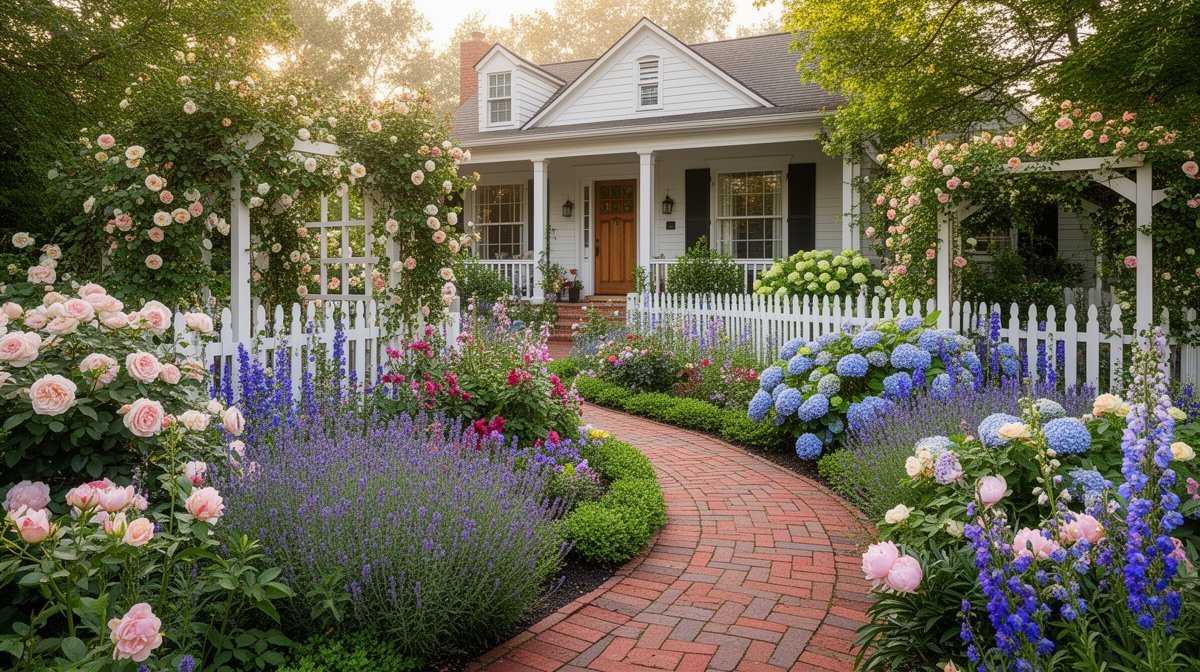
$22–40/sqftA sage-green shingled bungalow with a dormer and hanging baskets, fronted by an irregular Crab Orchard flagstone path that curves — never straight — through two deep, blowsy borders and passes under a white cedar arbor carrying white climbing roses. The borders are layered in the proper English way: tall spires at the back, mounding perennials in the middle, daisies and coreopsis tumbling onto the stone. A mature canopy tree shades the left third of the yard, so that side switches to an oakleaf hydrangea and native shade perennials rather than fighting for sun it will never get.
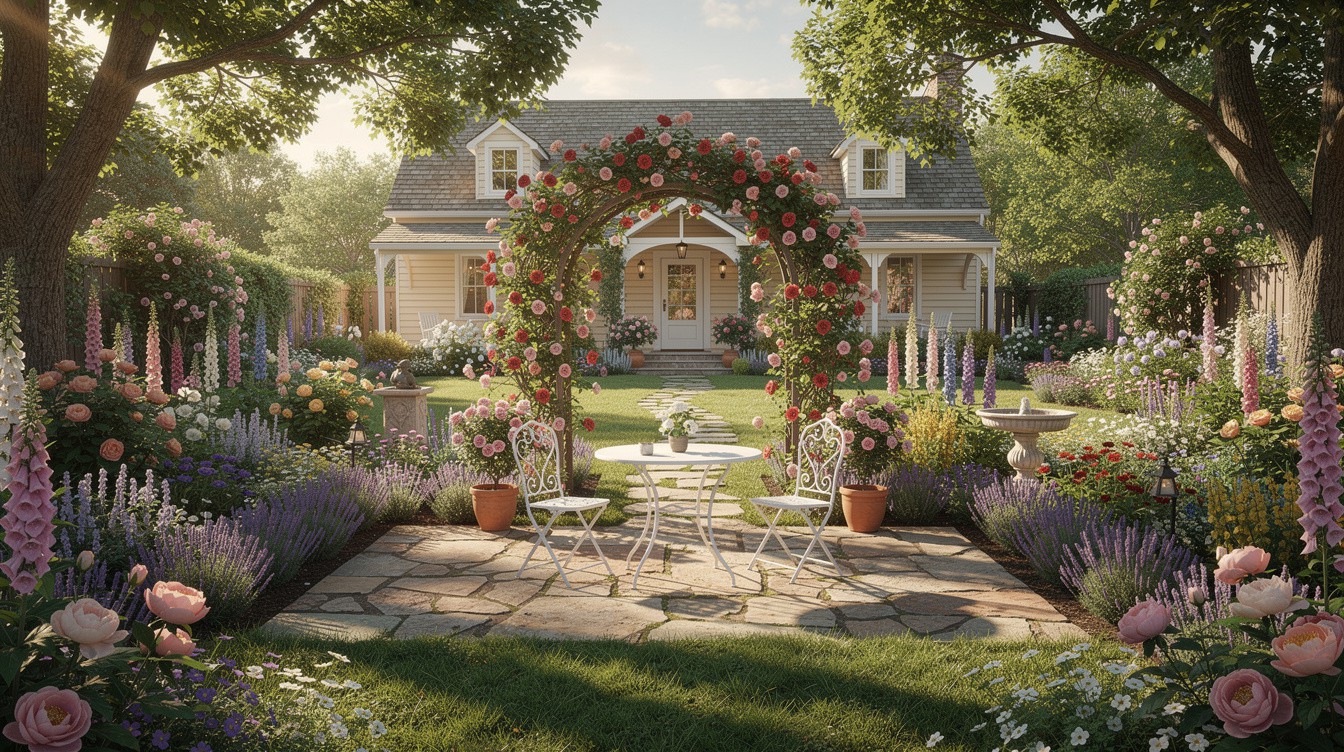
The Twin-Arch Tea Terrace
$25–45/sqftTwo rose arches — one crimson, one blush — frame a small irregular flagstone terrace holding a white wrought-iron bistro set, with standard tree roses in terracotta pots flanking the entry and a cast-stone fountain bubbling at the far right. Behind them the borders go vertical with foxglove and larkspur spires, then drop to peonies and catmint at the front edge, and a stepping-stone path runs across the lawn to the back door. It is the most romantic of the four and the most demanding: the terrace sits in the sunniest third of the yard, and the fountain matters as much for air movement and birds as it does for looks.
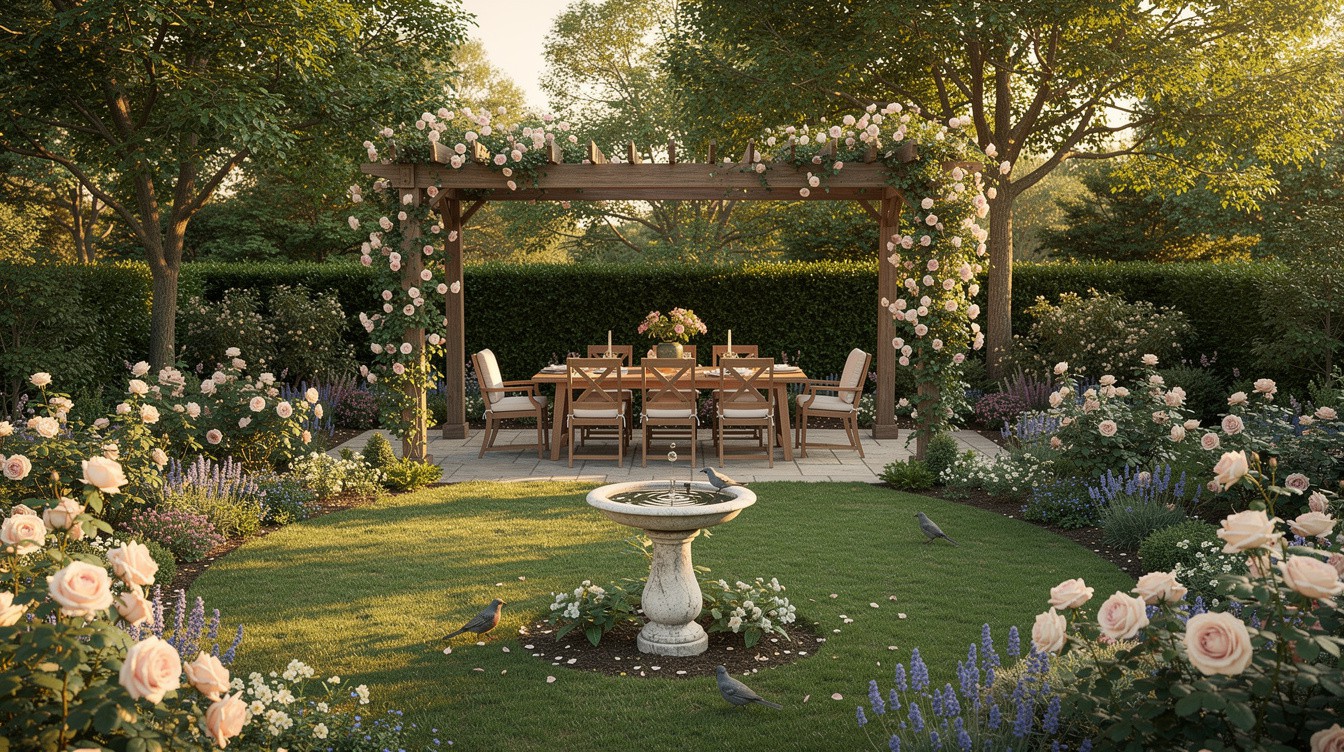
The Rose Pergola Dining Room
$30–55/sqftA rough-sawn timber pergola draped in pale-pink climbing roses shelters a teak table for eight on a pale stone terrace, backed by a tall clipped evergreen hedge that does all the privacy work a fence would do but reads as garden architecture. A circular lawn holds the middle of the space with a cast-stone birdbath at its center, and deep rose-and-catmint borders wrap the whole thing. This is the layout that makes a suburban rectangle feel like an outdoor room — hedge for walls, pergola for ceiling, lawn for carpet — and it stays usable in Chattanooga from late March through early November.
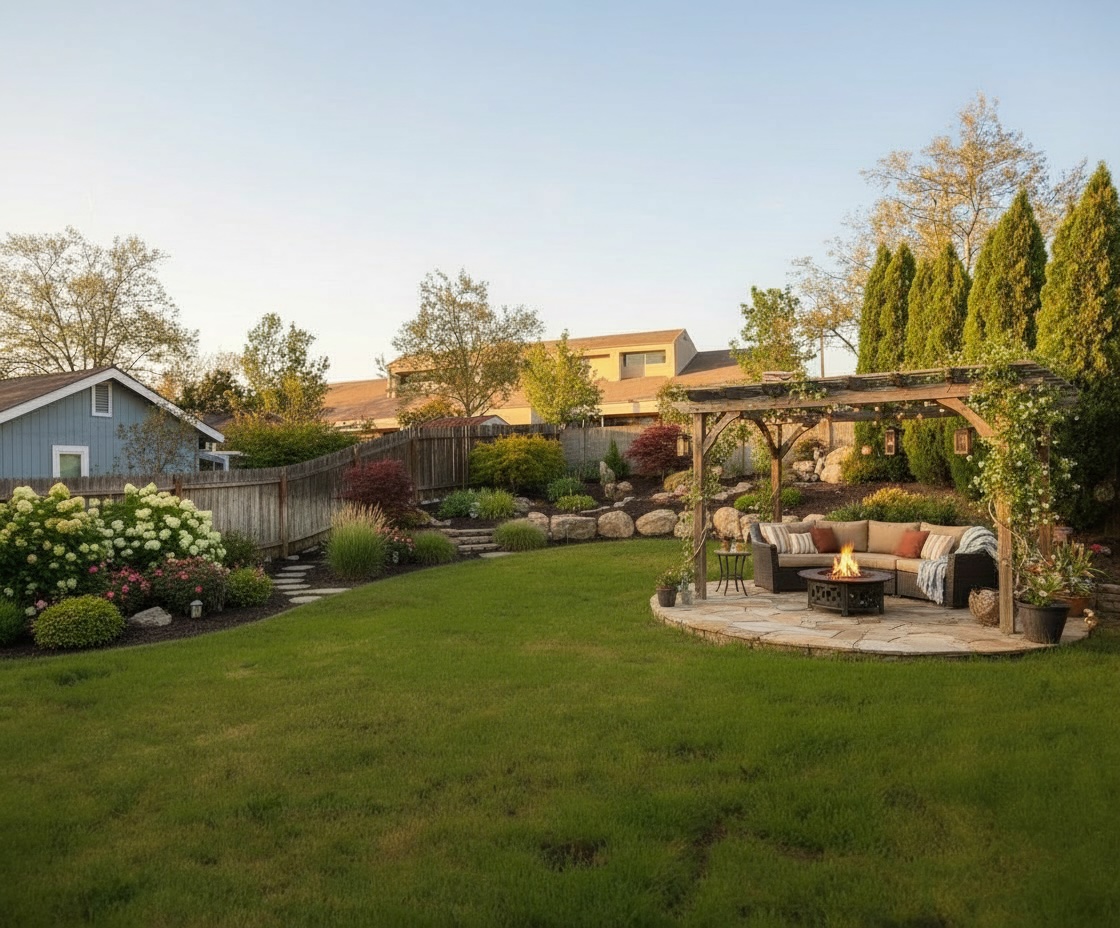
See how a cottage/english garden looks on YOUR property
Upload a photo of your Chattanooga yard and visualize your dream garden in seconds.
Try ProScapeAI Free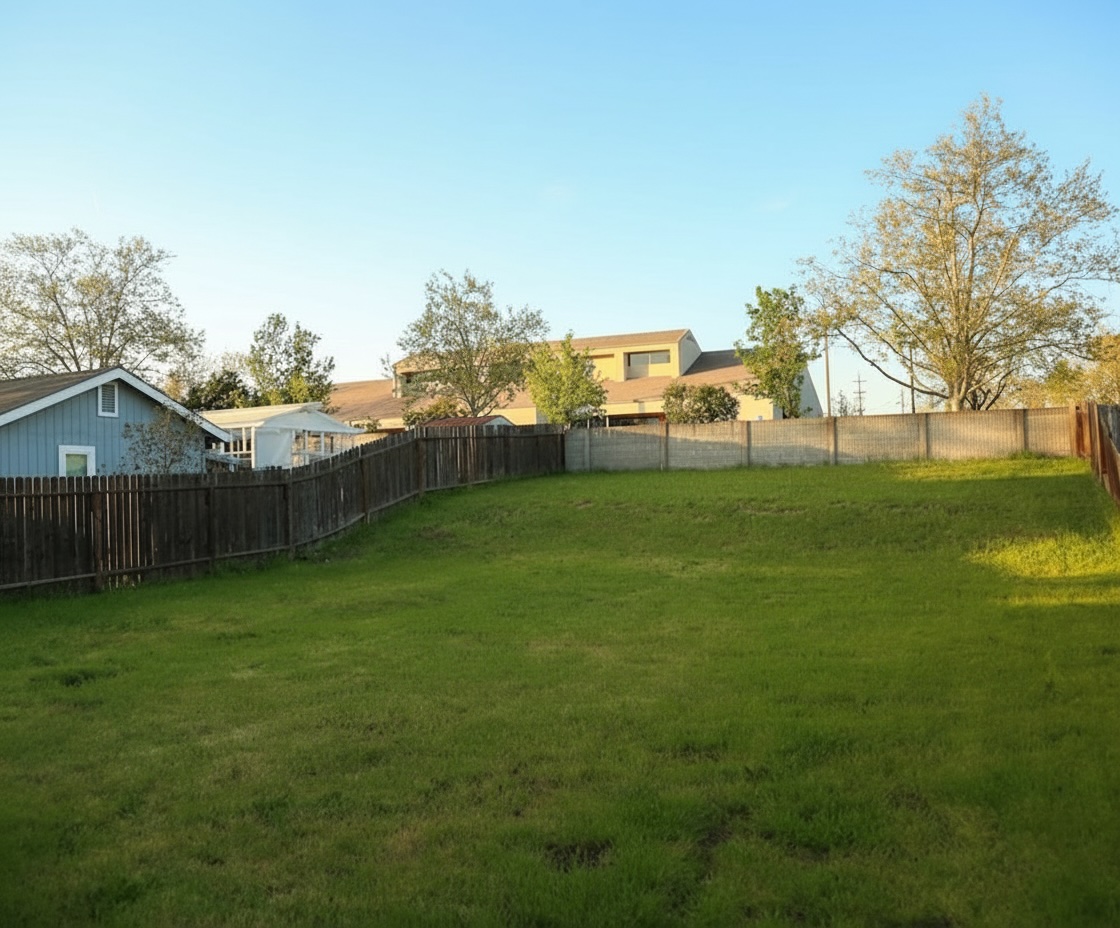
Featured Trees & Shrubs for Cottage/English Gardens
Browse all 114 plants for Chattanooga
Annabelle Hydrangea
Hydrangea arborescens 'Annabelle'
grows to 5 feet, white blooms in summer. Pollinator-friendly.
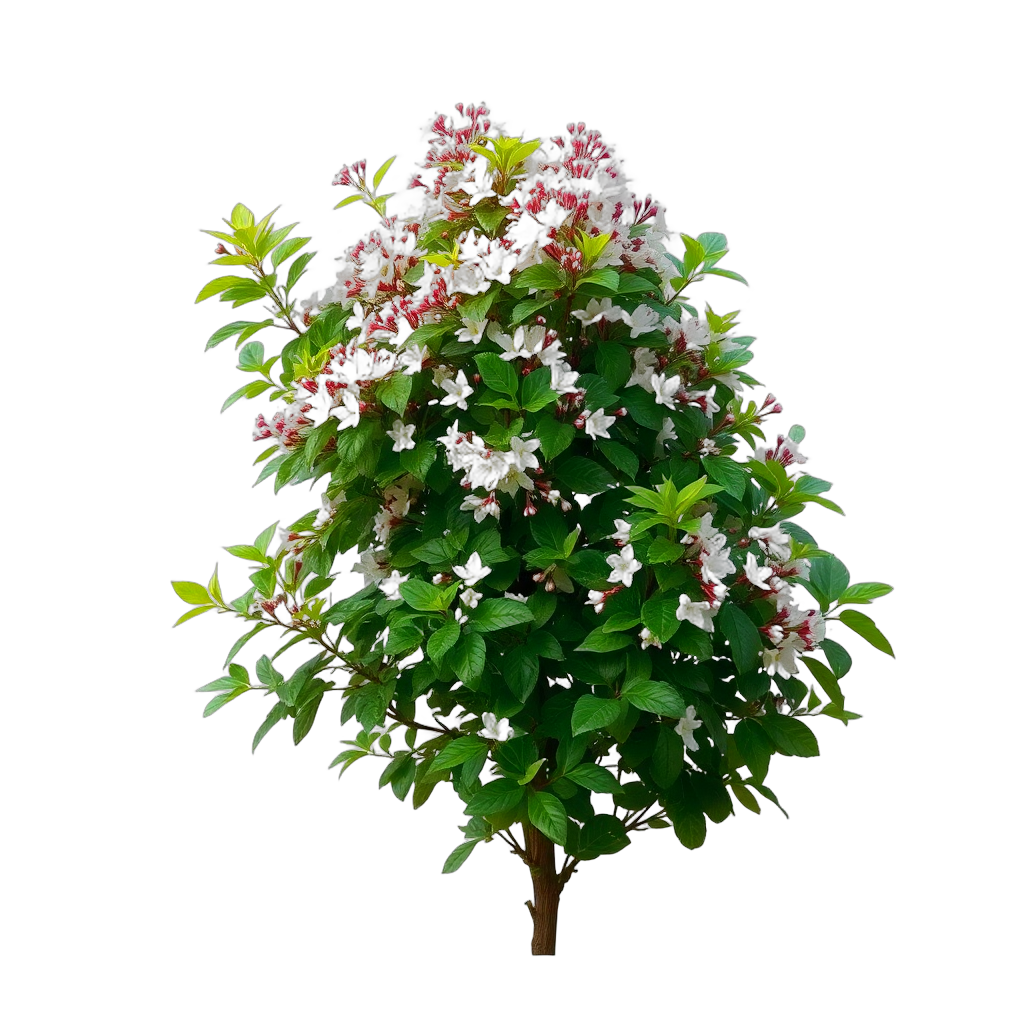
Arrowwood Viburnum
Viburnum dentatum
medium-sized at 10 feet, white blooms in spring. Pollinator-friendly.
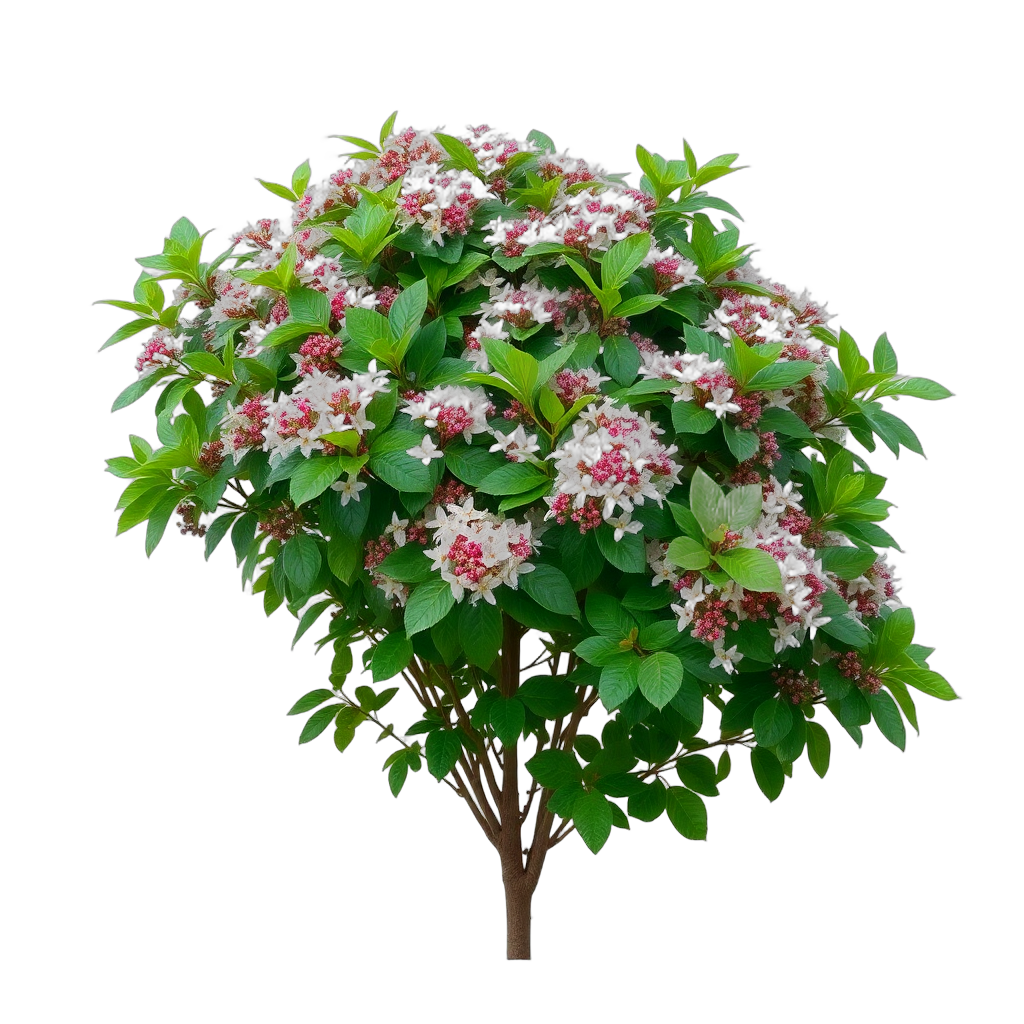
Blackhaw Viburnum
Viburnum prunifolium
medium-sized at 12 feet, white blooms in spring. Pollinator-friendly.
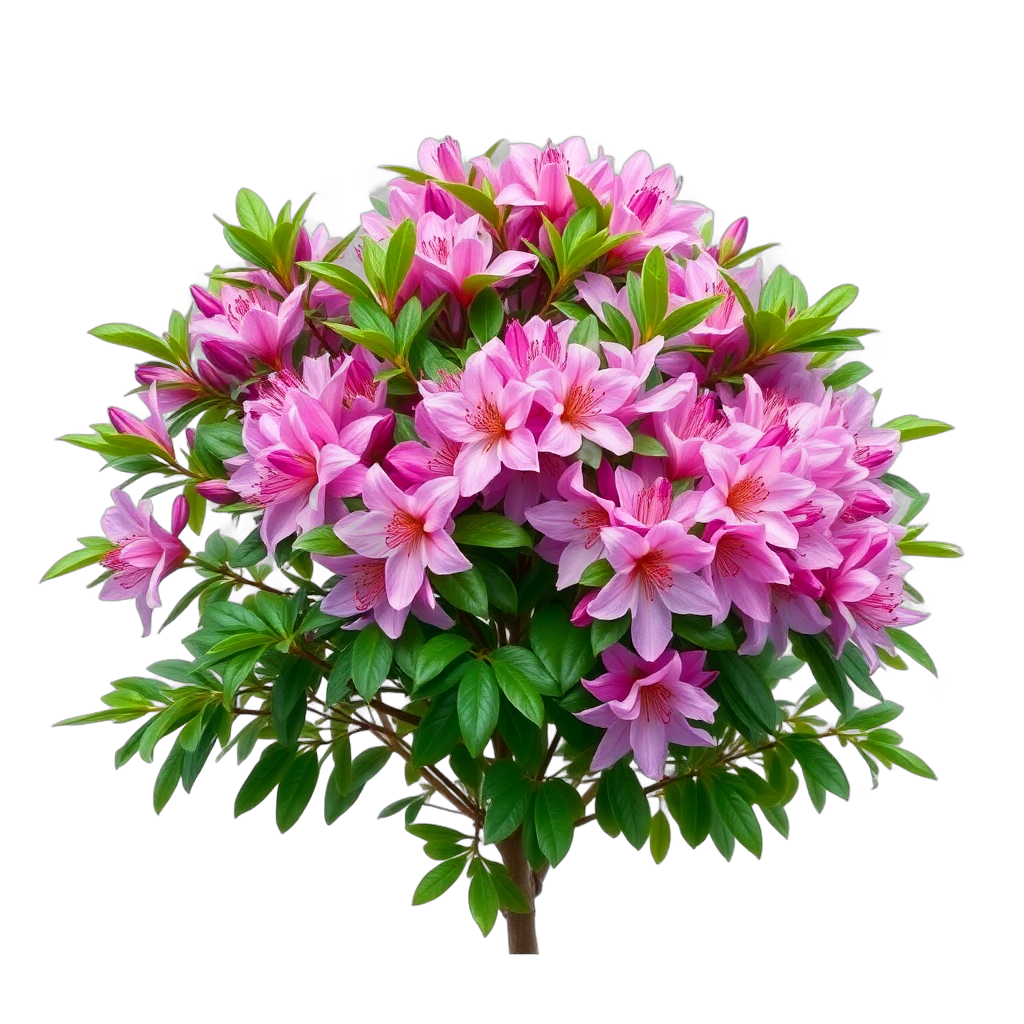
Carolina Rhododendron
Rhododendron carolinianum
grows to 5 feet, pink blooms in spring. Attracts butterflies.
Featured Grasses & Groundcovers for Cottage/English Gardens
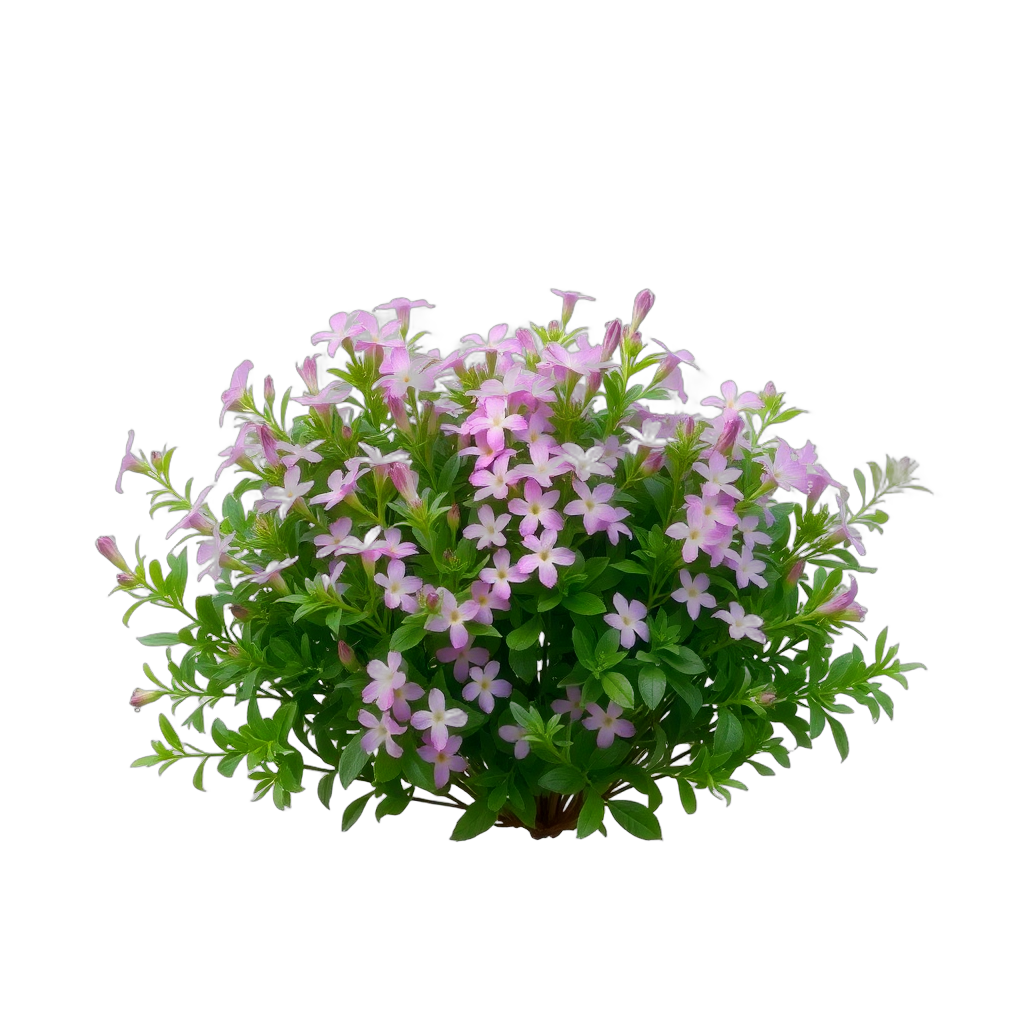
Creeping Phlox
Phlox subulata
low-growing ground cover, multi blooms in spring. Attracts butterflies.
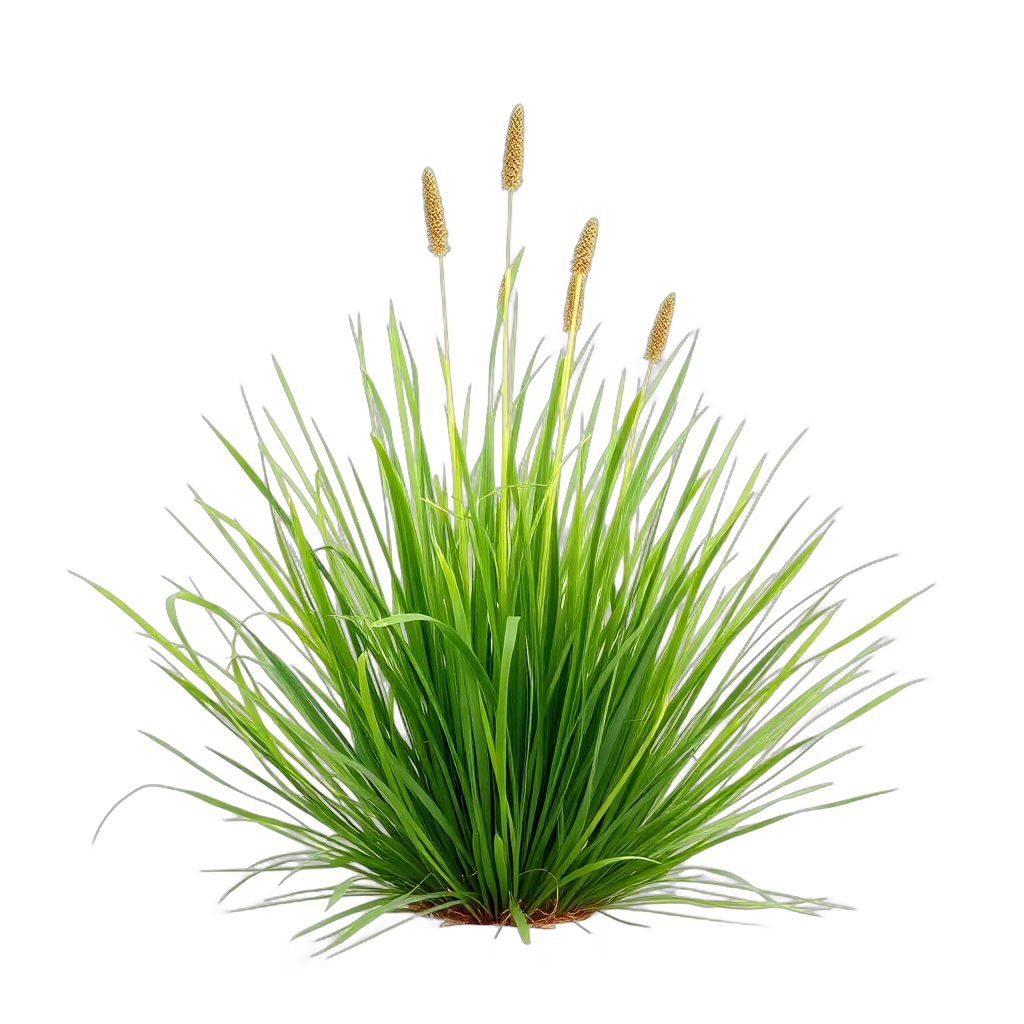
Pennsylvania Sedge
Carex pensylvanica
low-growing ground cover, blooms in spring.

Bermuda Grass
Cynodon dactylon
low-growing ground cover, blooms in summer. Brown fall color.

St. Augustine Grass
Stenotaphrum secundatum
low-growing ground cover, blooms in summer. Brown fall color.
Featured Flowers & Perennials for Cottage/English Gardens
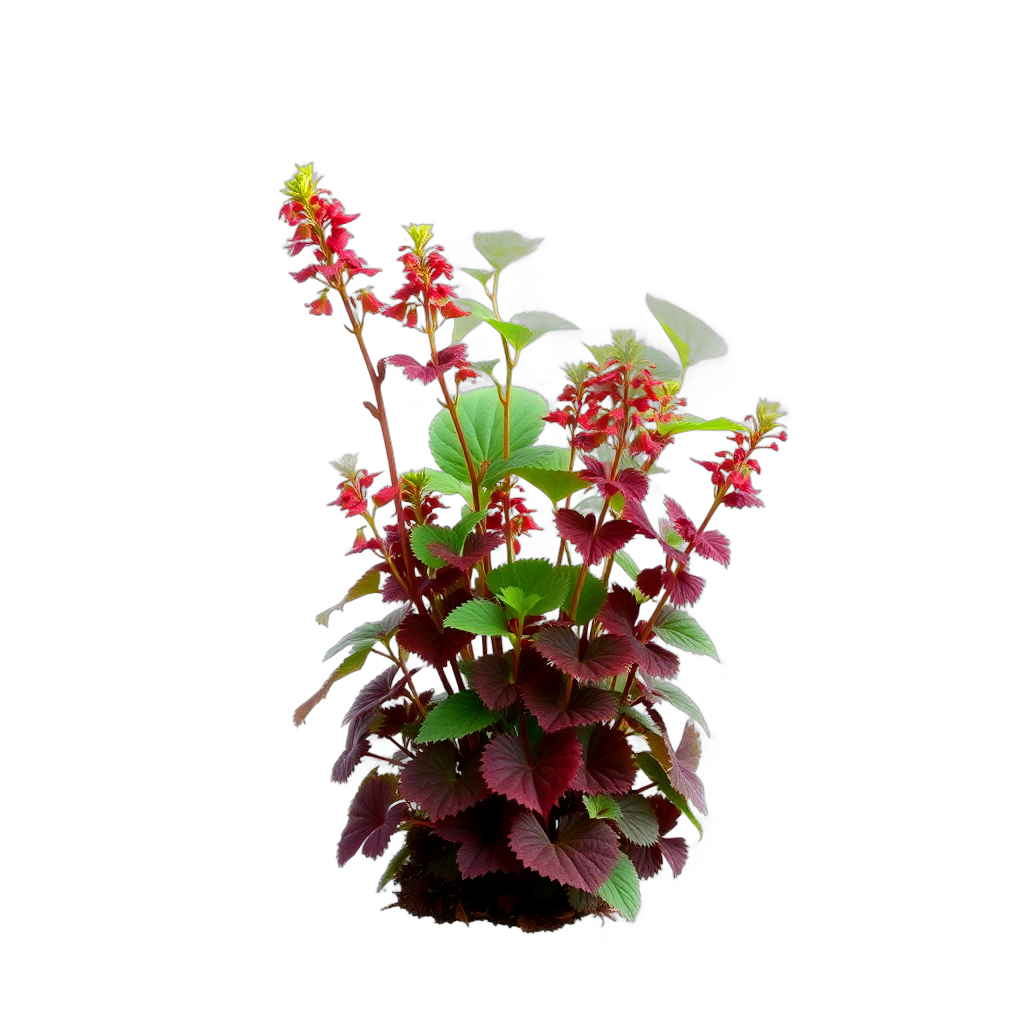
American Alumroot
Heuchera americana
low-growing ground cover, white blooms in spring. Pollinator-friendly.

Bee Balm
Monarda didyma
grows to 3 feet, red blooms in summer. Attracts hummingbirds.
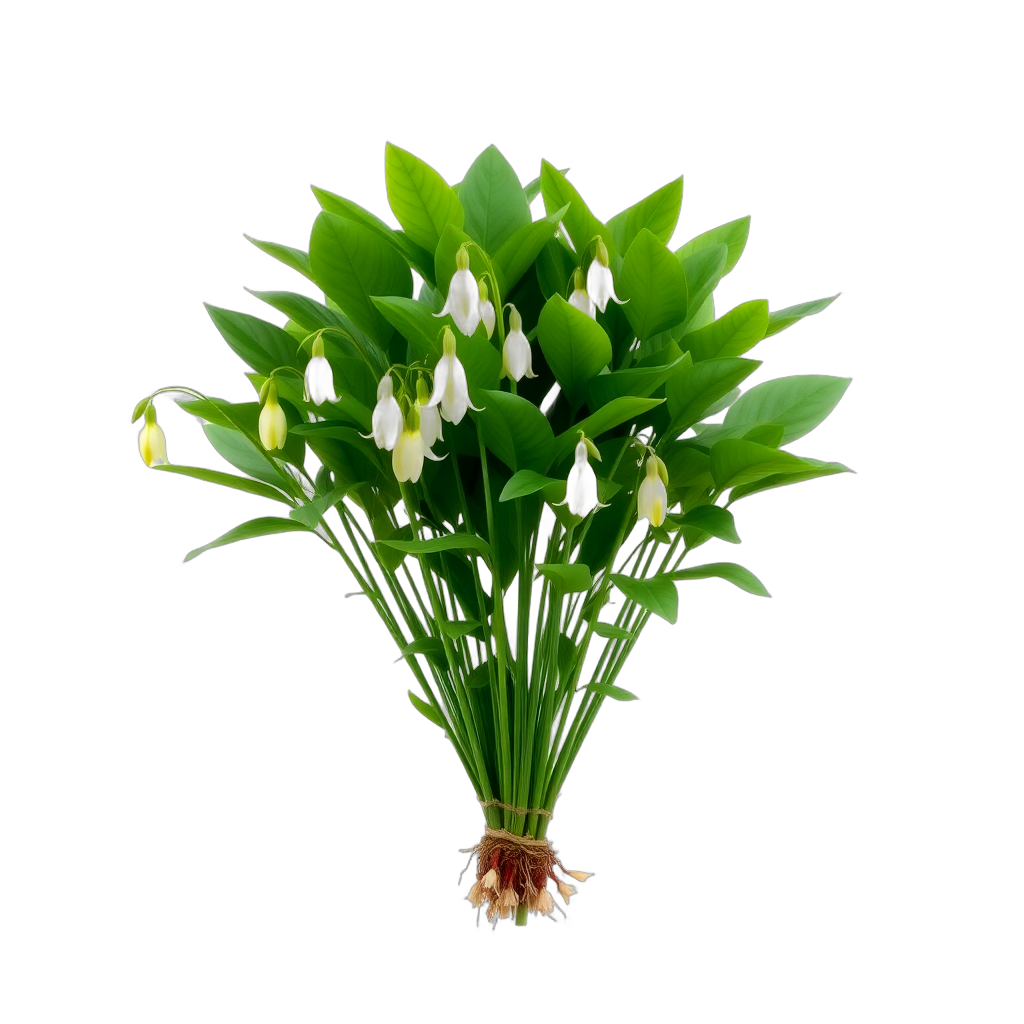
Bellwort
Uvularia grandiflora
low-growing ground cover, yellow blooms in spring. Pollinator-friendly.
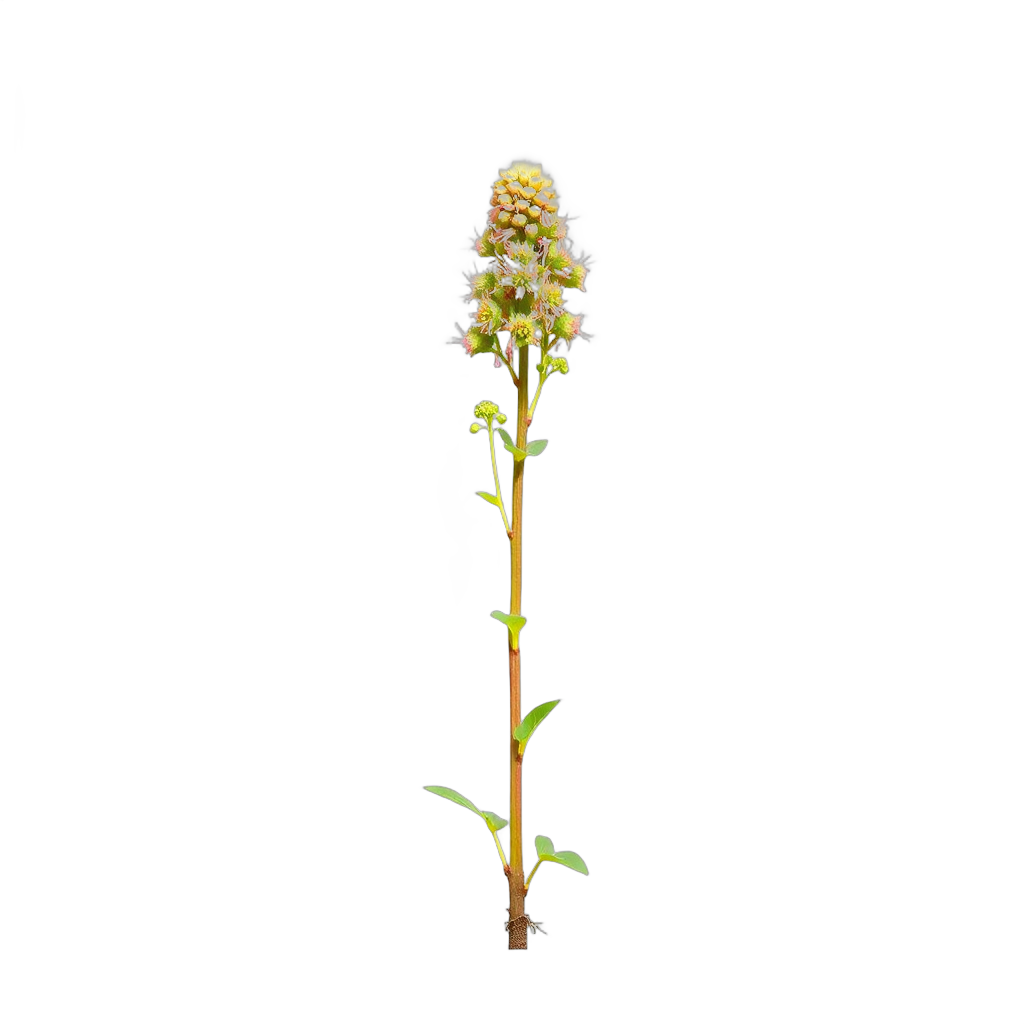
Bishop's Cap
Mitella diphylla
low-growing ground cover, white blooms in spring. Pollinator-friendly.
Bloom Calendar for Chattanooga
spring
American Alumroot, Bellwort, Bishop's Capsummer
Bee Balm, Black Cohosh, Black Cohoshfall
Limited bloomswinter
Limited bloomsDesign Tips for Chattanooga (Zone 7b)
- Build every border UP 8–12 inches with composted pine fines instead of digging into chert clay — in a 52-inch rain year, a hole amended with soft compost becomes a bathtub and kills peonies and lavender by their second winter
- Choose roses by disease resistance first and fragrance second: Rosa 'New Dawn' on the arch, 'Munstead Wood' and 'Bonica' in the border, 'Knock Out' as hedging — all of them hold foliage through a Chattanooga August without a spray program
- Swap the English classics that will not take 70°F dew points: Salvia 'Caradonna' and Baptisia australis for delphinium, Lavandula × intermedia 'Phenomenal' for 'Munstead', Stachys 'Helen von Stein' for ordinary lamb's ear, and Leucanthemum 'Becky' for any other Shasta daisy
- Space plants wider than the English books tell you — 18–24 inches between perennials instead of 12 — because airflow is your only free fungicide in a valley that traps humid air between Lookout Mountain and Missionary Ridge
- Anchor the cottage chaos with evergreen structure that will not get boxwood blight: Ilex × 'Nellie R. Stevens' for tall hedging, Ilex vomitoria 'Nana' or Buxus 'Winter Gem' for low mounds, so the garden still has bones in a bare January
- Plant in late October, not April — Chattanooga's mild wet winter roots perennials and bare-root roses far better than a spring planting that hits 90°F eight weeks after going in the ground
Where to Source Plants in Chattanooga
Skip the big-box stores. These independent Chattanooga nurseries specialize in the plants that make cottage/english gardens thrive in Zone 7b.
The Barn Nursery
Southside
One of the Southeast's largest garden centers with a pottery outlet and extensive plant selection.
Signal Mountain Nursery
Signal Mountain
Third-generation family business operating 76+ years with quality plants and trees.
America's Gardens Plant Nursery & Landscaping
Red Bank
Independently-owned nursery and landscape design center with full-service maintenance.
Green Thumbs Galore
Missionary Ridge
Licensed backyard nursery specializing in iris, daylilies, brugmansia, and unusual perennials.
Cottage/English Landscaping Costs in Chattanooga
| Project Scope | Estimated Cost |
|---|---|
| Front yard cottage conversion (bed shaping + imported soil + 60–80 perennials) | $9,000 – $18,000 |
| Brick or flagstone front walk with flanking borders | $6,000 – $14,000 |
| Rose arch or arbor, installed and planted | $1,200 – $3,500 |
| Back-garden terrace with pergola, hedge, and full borders | $25,000 – $55,000 |
| Drystack limestone terrace wall on a sloped lot (per linear foot) | $45 – $95/ft |
| AI visualization with ProScapeAI | Free to start |
Estimates based on Chattanooga, TN-area contractor rates as of 2026. Actual costs vary by site conditions, materials, and contractor.
Chattanooga Climate & Growing Zone
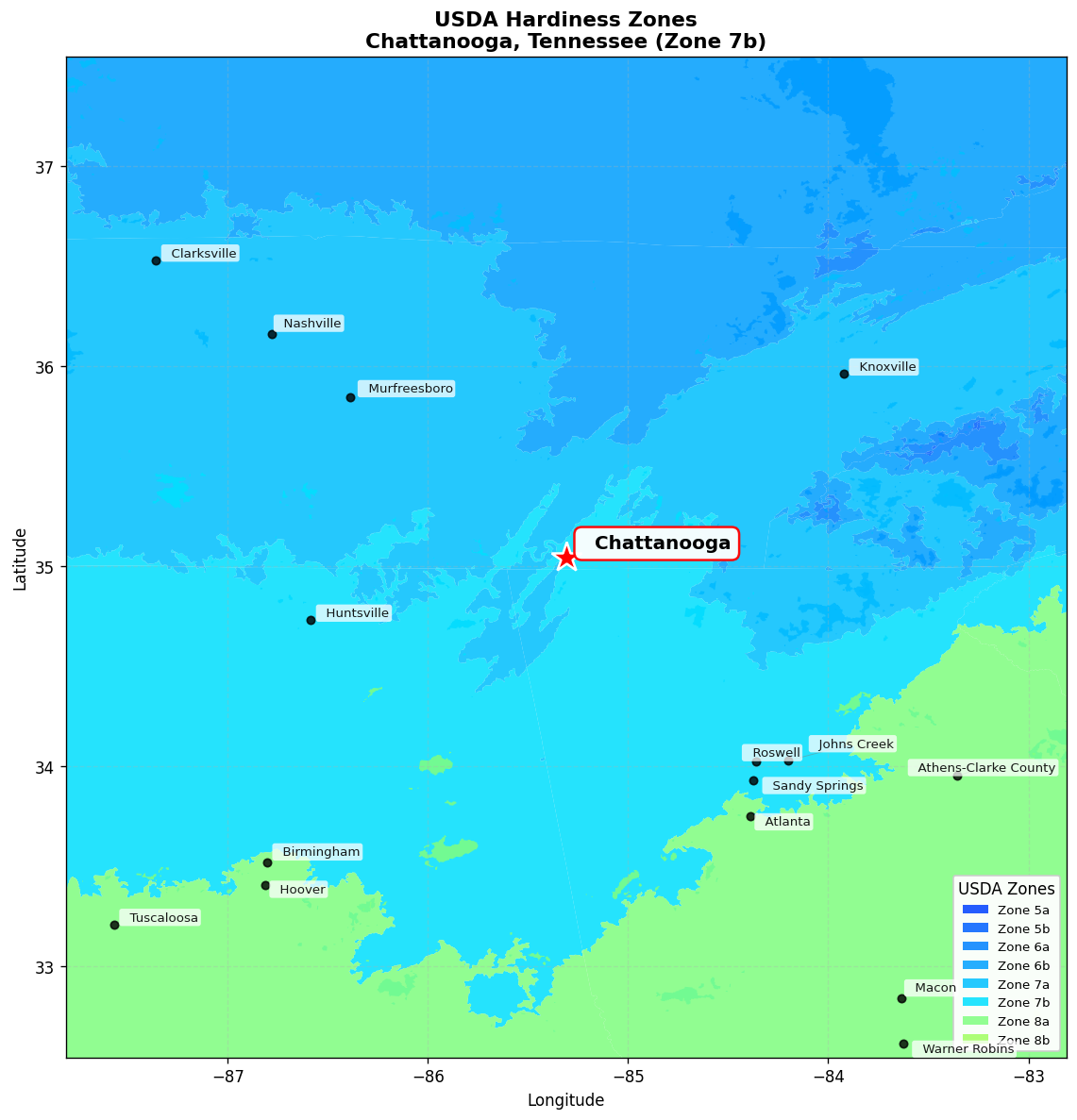
USDA Zone 7b
Hardiness zone for Chattanooga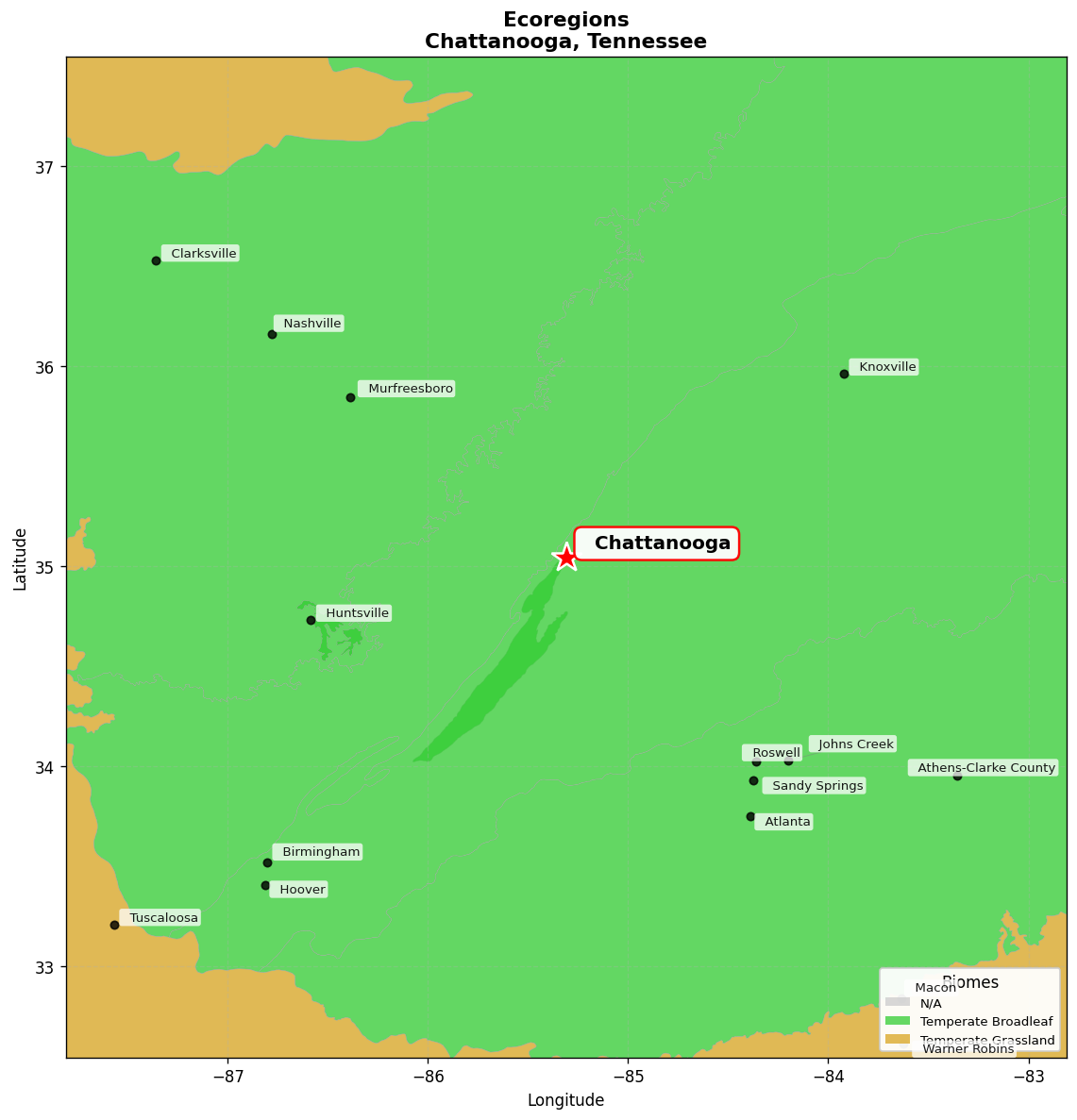
Appalachian-Blue Ridge forests
Native ecoregionFrequently Asked Questions
How much does a cottage garden cost in Chattanooga?
Hamilton County install rates run roughly 15–20% under big-metro pricing, with crews at about $50–70 an hour. A full front-yard cottage conversion — bed shaping, 8–12 inches of imported soil, a rose arch, and 60–80 perennials for a typical 500 sqft front yard — lands between $9,000 and $18,000 installed. A single brick or flagstone walk with flanking borders runs $6,000–14,000. A back-garden terrace with a pergola, hedge, and full borders is generally $25,000–55,000. Doing the planting yourself and hiring out only the hardscape typically cuts 35–40% off the total, since roses and perennials are the cheap part; the soil and stone are not.
Which roses actually survive Chattanooga's humidity and black spot?
Skip hybrid teas unless you plan to spray fungicide every ten days from April to September — the still, humid air trapped between Lookout Mountain and Missionary Ridge guarantees black spot. Reliable performers here: Rosa 'Knock Out' and 'Double Knock Out' for hedging, Rosa 'Bonica', 'The Fairy', and 'Sweet Drift' for low borders, Rosa 'At Last' if you want fragrance with disease resistance, and the David Austins 'Munstead Wood' and 'Olivia Rose Austin', both of which hold foliage far better than older English roses. For climbers, Rosa 'New Dawn', 'Peggy Martin', 'Eden', and 'Don Juan' are the four that consistently cover a Chattanooga arch. Avoid 'Zéphirine Drouhin' — thornless and charming, but a powdery mildew magnet in this valley.
Can I grow lavender and delphinium in Chattanooga?
Lavender yes, with conditions; delphinium effectively no. Lavandula angustifolia cultivars like 'Hidcote' and 'Munstead' usually rot out in their second winter in cherty valley clay. Plant Lavandula × intermedia 'Phenomenal' or 'Grosso' instead, on a berm raised 8–10 inches and mulched with pea gravel rather than bark — gravel keeps the crown dry, bark holds moisture against it. Lavender does noticeably better on Lookout Mountain and Signal Mountain, where the sandstone-derived soil drains sharply. Delphinium elatum melts in July heat; grow Salvia nemorosa 'Caradonna', Baptisia australis, Veronicastrum virginicum 'Fascination', or Salvia 'Amistad' for the same blue vertical line without the annual replacement.
How do I deal with chert clay, rock, and slope before planting?
Never dig a hole in Chattanooga clay and backfill it with soft compost — you have built a bathtub, and the plant drowns over a 52-inch rain year. Build UP instead: shape the bed, then add 8–12 inches of composted pine fines and coarse sand over lightly loosened subsoil. On Lookout Mountain, Signal Mountain, and the upper slopes of St. Elmo you will hit sandstone or ledge rock quickly — plan raised drystack beds rather than excavation, and price rock removal separately. Valley lots near Brainerd and Hixson sit on karst limestone; if your excavator finds a soft void, stop and get it assessed before pouring anything. On grades over about 15%, terrace with low drystack limestone walls and add a French drain on the uphill bed edge.
When is the best time to plant a cottage garden in Chattanooga?
Mid-October through early December is the ideal window. Roses, peonies, and perennials root through the mild, wet winter and arrive at spring already established, and installer schedules open up after the fall rush. Late February through March is the second-best window and the correct time for bare-root roses. Avoid planting June through early September: even on irrigation, new perennials struggle to establish with 90°F afternoons and 70°F dew points, and afternoon thunderstorms routinely delay hardscape work. Average last frost is around April 5–10 and first frost near October 30, giving roughly a 215-day growing season.
Do I need a permit for landscaping in Chattanooga?
Planting, beds, walks, and patios at grade generally need no permit inside the city. Permits come into play for retaining walls above 4 feet (engineered drawings required), pools, roofed structures, and any project disturbing enough ground to trip the City of Chattanooga land-disturbance and stormwater rules — a real concern on the steep lots in St. Elmo and along Missionary Ridge, where redirected runoff lands in a neighbor's yard. Note that the Town of Lookout Mountain and the Town of Signal Mountain are separate jurisdictions with their own ordinances, including tree-removal review, so confirm with the town hall rather than the county. Always call 811 before digging.