4 Cottage Garden Ideas for Clarksville, TN | Zone 7a Design
Native plants from the Interior Plateau US Hardwood Forests (Zone 7a) — Humid subtropical climate
Why Cottage/English Gardens in Clarksville?
Clarksville is one of the easiest cities in Tennessee to build a genuine English cottage garden in, and the housing stock is most of the reason. The Historic Architectural District downtown — the Queen Anne, Italianate and Federal houses along Franklin, Madison and Second Streets, and the steep Victorian lots up on Dog Hill — was platted with narrow street frontages and deep back lots, which are exactly the proportions the cottage garden was invented for. West of downtown, the 1940s cape cods and porch-front cottages of New Providence and Hilldale hand you the white-picket-and-rose-arch look almost for free, while Sango, Rossview and Trough Springs offer half-acre lots where a long double border, a pergola and a fountain parterre finally have room to breathe. With Fort Campbell just up Fort Campbell Boulevard, plenty of Clarksville gardens also need to look established in two or three years rather than ten, which pushes the design toward fast, generous border plants and shrub roses rather than slow topiary.
Clarksville sits in USDA Zone 7a, where winter lows run 0–5°F, and takes roughly 50 inches of rain a year across a growing season of about 195 days that opens in mid-April and closes in the last week of October. That is genuinely good cottage weather in spring and autumn, and genuinely hostile in July, when highs sit near 90°F and the dew point barely drops after dark. The English plant list has to be edited accordingly. Lavandula x intermedia 'Phenomenal' and 'Grosso' shrug off a Montgomery County August; Lavandula angustifolia 'Munstead' usually rots out in its second summer. Leucanthemum x superbum 'Becky' stays upright where softer Shasta daisies flop, and Phlox paniculata 'Jeana' — a mildew-resistant selection found growing wild on Tennessee's own Harpeth River — stays clean into September when older varieties turn grey. Digitalis purpurea behaves as a happy reseeding biennial here, while Delphinium elatum is best treated as a one-season spring plant; sow Consolida ajacis in November instead and you get the same blue spires for a tenth of the money.
Underneath all of it is Western Highland Rim ground: cherty Mountview and Dickson silt loams sitting on Mississippian limestone, usually around pH 6.0–6.8. That pH is a gift, because Rosa cultivars, Buxus 'Green Velvet', Paeonia lactiflora and Nepeta all want precisely that and need no lime. The problem is structure rather than chemistry. The Dickson series carries a fragipan, a dense compacted layer roughly 18–30 inches down that stops water dead, so borders above it stay saturated all winter and then bake hard by August — which is how most Clarksville lavender and Mediterranean herbs actually die. The fix is cheap: build borders up 8–12 inches with a compost-and-pea-gravel amended mix instead of digging holes into the pan. This is also karst country, with Dunbar Cave inside the city limits, so sudden drainage and sinkhole ground are real on some lots. Watch where water actually runs during a heavy March storm before you commit to a sunken terrace or a fountain basin.
Water is the least of your worries here. Clarksville Gas & Water draws from the Cumberland River and imposes no routine seasonal watering bans, so summer irrigation is a cost question rather than a legal one. Ask the utility about an irrigation deduct meter before a system goes in — it keeps sewer charges off water you put on the garden — and budget for the backflow preventer they require. A new border still wants about an inch of water a week through its first two summers, and drip line run under the mulch does that far better than overhead spray, which in this humidity is simply a delivery system for blackspot and powdery mildew. Planting, beds, paths and borders need no city approval. Fences, retaining walls above a few feet, decks and any grading that changes where stormwater goes fall under City of Clarksville and Montgomery County rules, and the Historic Architectural District has its own review, so confirm locally before anything gets built.
4 Cottage/English Design Ideas for Clarksville

The Rose Arch and Picket Fence Front
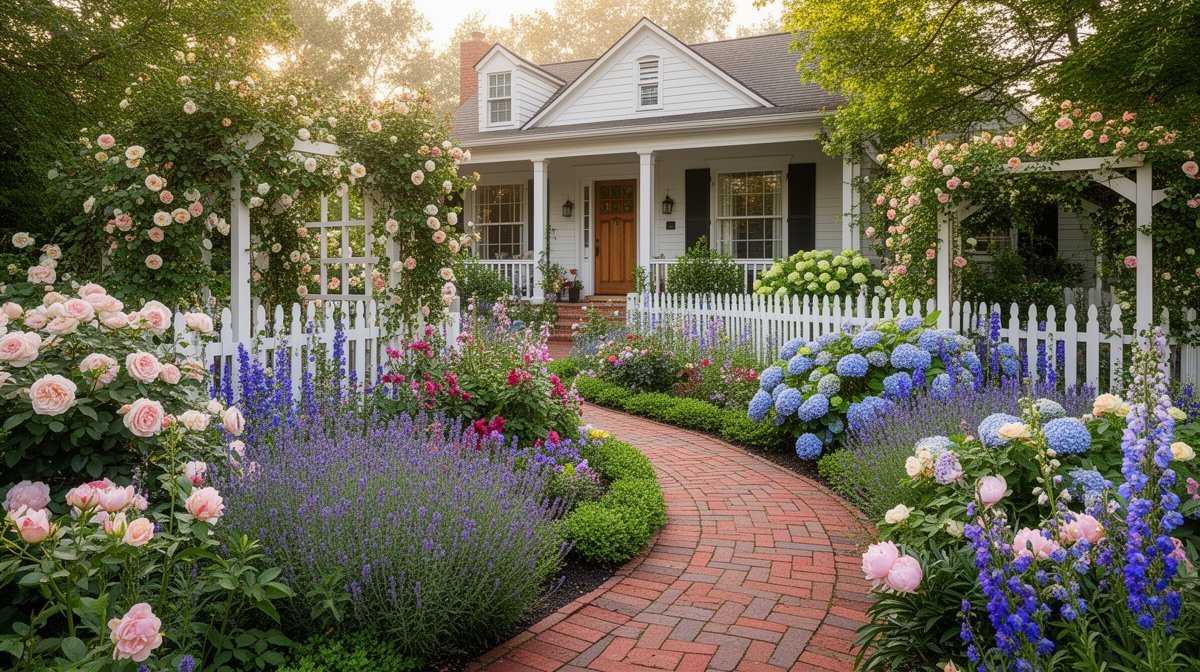
$14–26/sqftA cream clapboard cape with a grey shingle roof and brick chimney sits behind a low white picket fence, and the whole design turns on one move: a timber arch over the gate smothered in pink and cream climbing roses. Inside and outside the fence, a continuous ribbon of lavender runs the full frontage, so the boundary reads as flowers rather than fence. A running-bond clay brick path curves from the gate to a brick stoop and a pale cream door flanked by black carriage lanterns, and by June the path is scattered with fallen petals in the morning fog off the Cumberland. It is a small front garden doing a very large amount of work.

The White Arbor Lawn Border
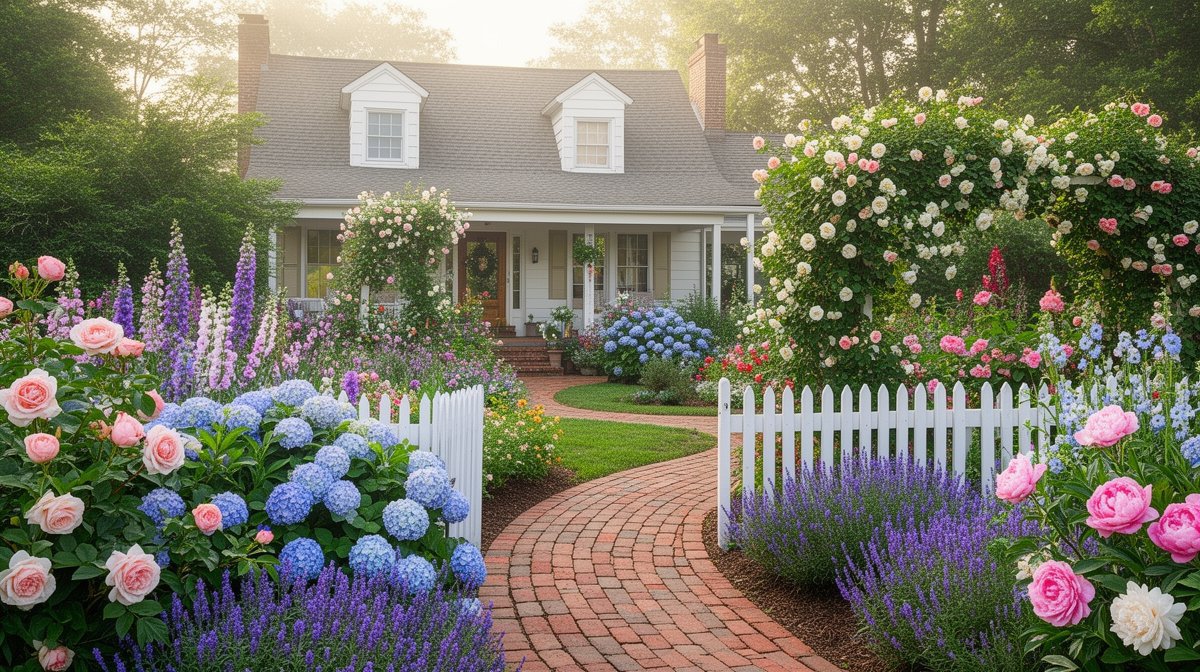
$12–22/sqftA porch-front cottage with white railings, hanging baskets and brick steps looks out across an open lawn, and instead of hugging the house the design pushes a white lattice arbor out onto the grass under a mature canopy tree, where it is smothered in white climbing roses. A curving cut-stone paver walk swings past it, and the two deep borders either side are the real content: pink shrub roses, purple foxglove spires, lavender, dark violet salvia, yellow daisies and white Shastas, with broad hosta leaves filling the shaded end nearest the tree. A cast-metal lantern on a post marks the bend, and crisp steel edging keeps the whole loose planting from bleeding into the turf.

The Flagstone Tea Terrace
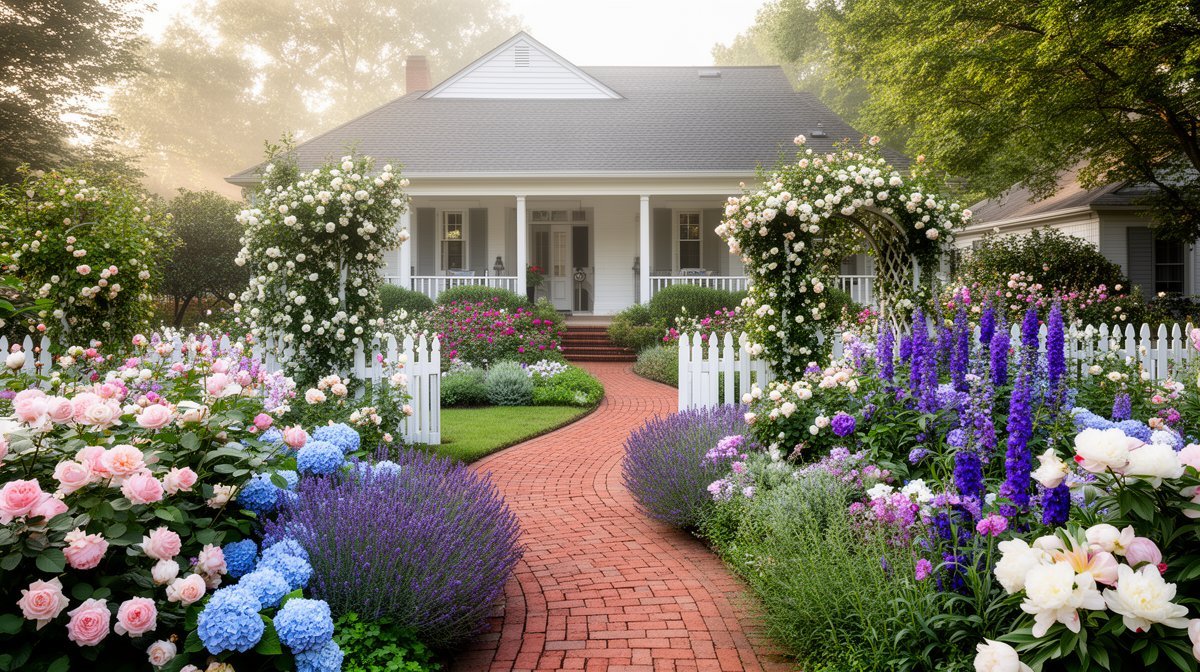
$20–34/sqftBehind a two-storey cream clapboard house with dark shutters, a rose-covered arch frames the back door and an irregular fieldstone terrace opens straight off it, holding nothing more than a white scrollwork bistro table and two chairs with two glasses set out. Everything else is border. Lavender and white Shasta daisies press against the stone on both sides, foxglove and larkspur spires rise behind them, and hot pink and scarlet annuals carry the colour into late summer, all held between a board privacy fence and a clipped hedge with mature trees closing the top. Low evening sun coming in sideways through the planting is the whole point of the layout.

The Pergola, Fountain and Parterre
$26–48/sqftThis is the full half-acre version. A painted white pergola with pink climbers running up its posts covers a brick dining terrace and a long timber table with six woven cane chairs, while out in the lawn a square timber-edged island bed is built around a two-tier carved stone fountain — lavender and silver-leaved edging plants at the front, dark red dahlias and pale spires behind, violas spilling over the timber. Terracotta pots and black lanterns mark the terrace corners, and a cream garden shed with a sage-green Dutch door closes the composition at one side. The fountain gives the garden a sound as well as a centre, which matters on a still Tennessee evening.
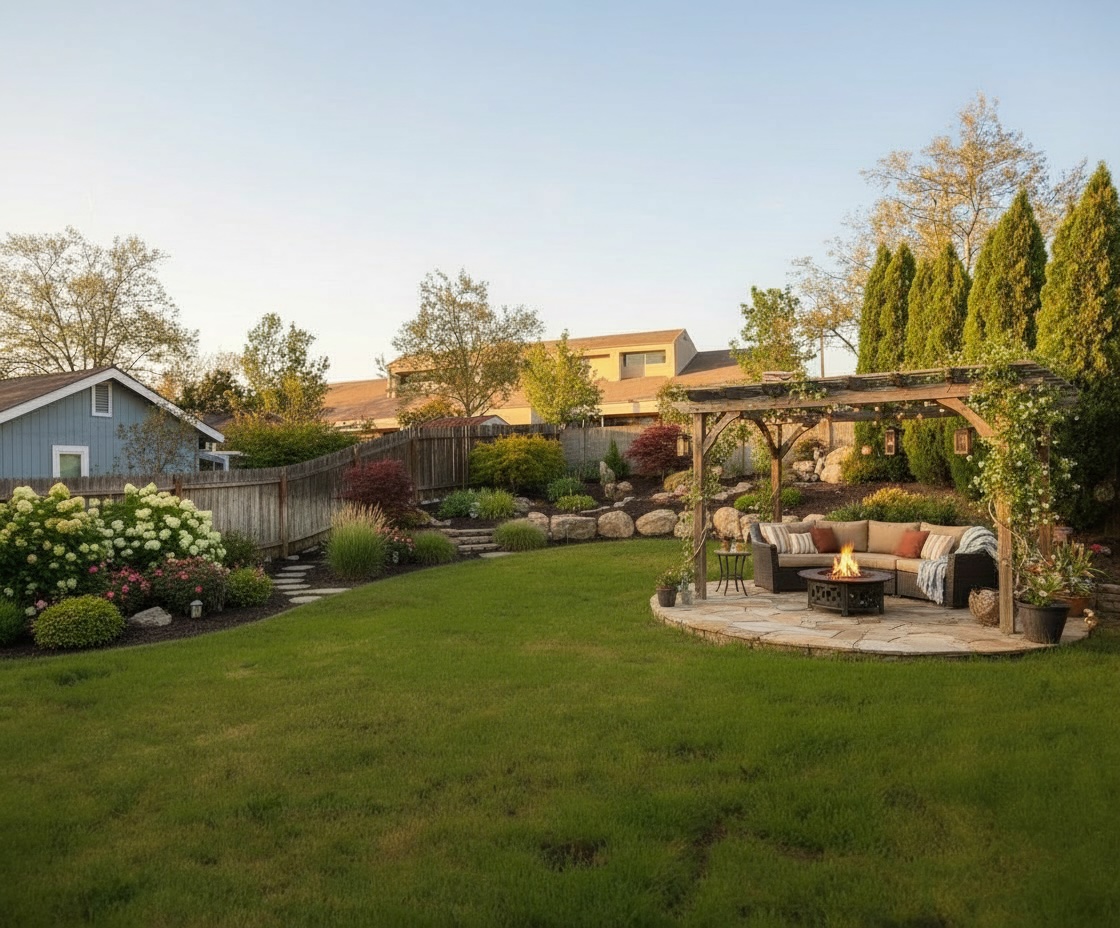
See how a cottage/english garden looks on YOUR property
Upload a photo of your Clarksville yard and visualize your dream garden in seconds.
Try ProScapeAI Free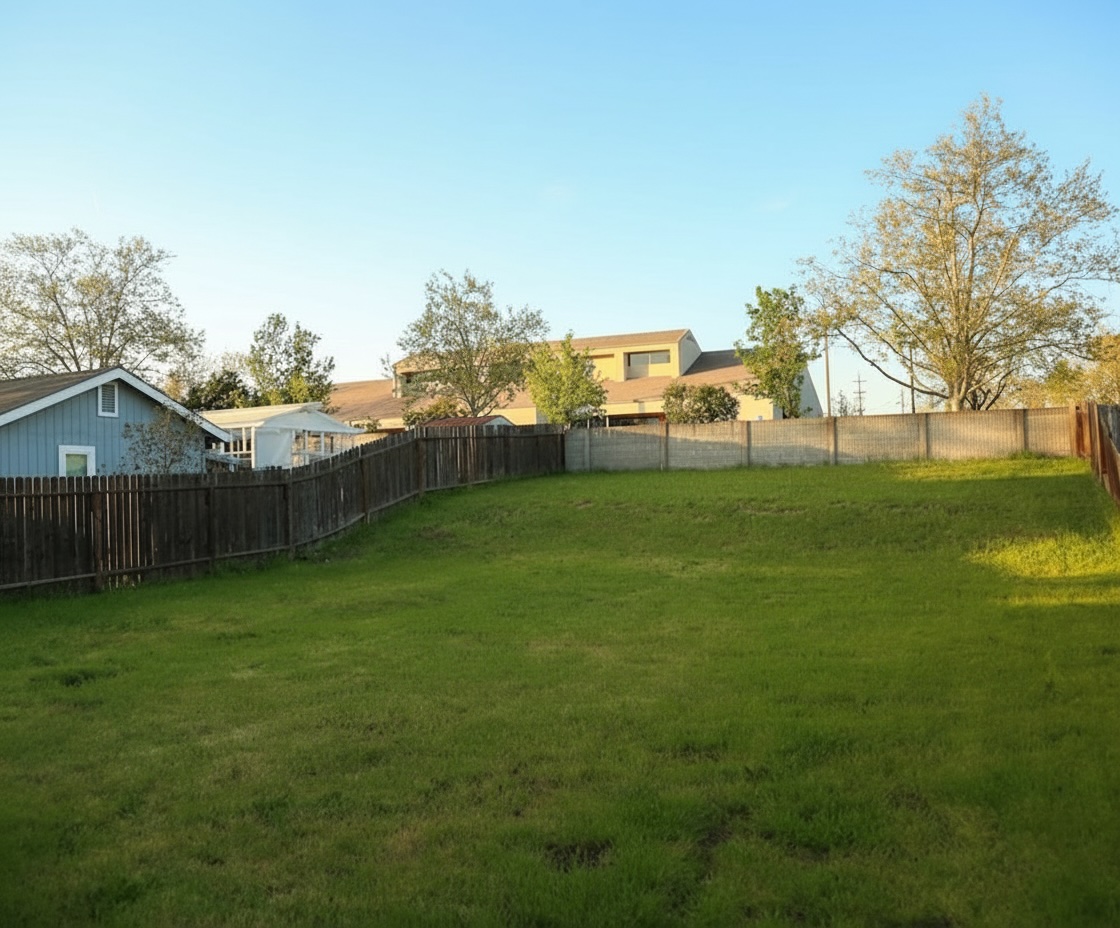
Featured Trees & Shrubs for Cottage/English Gardens
Browse all 173 plants for Clarksville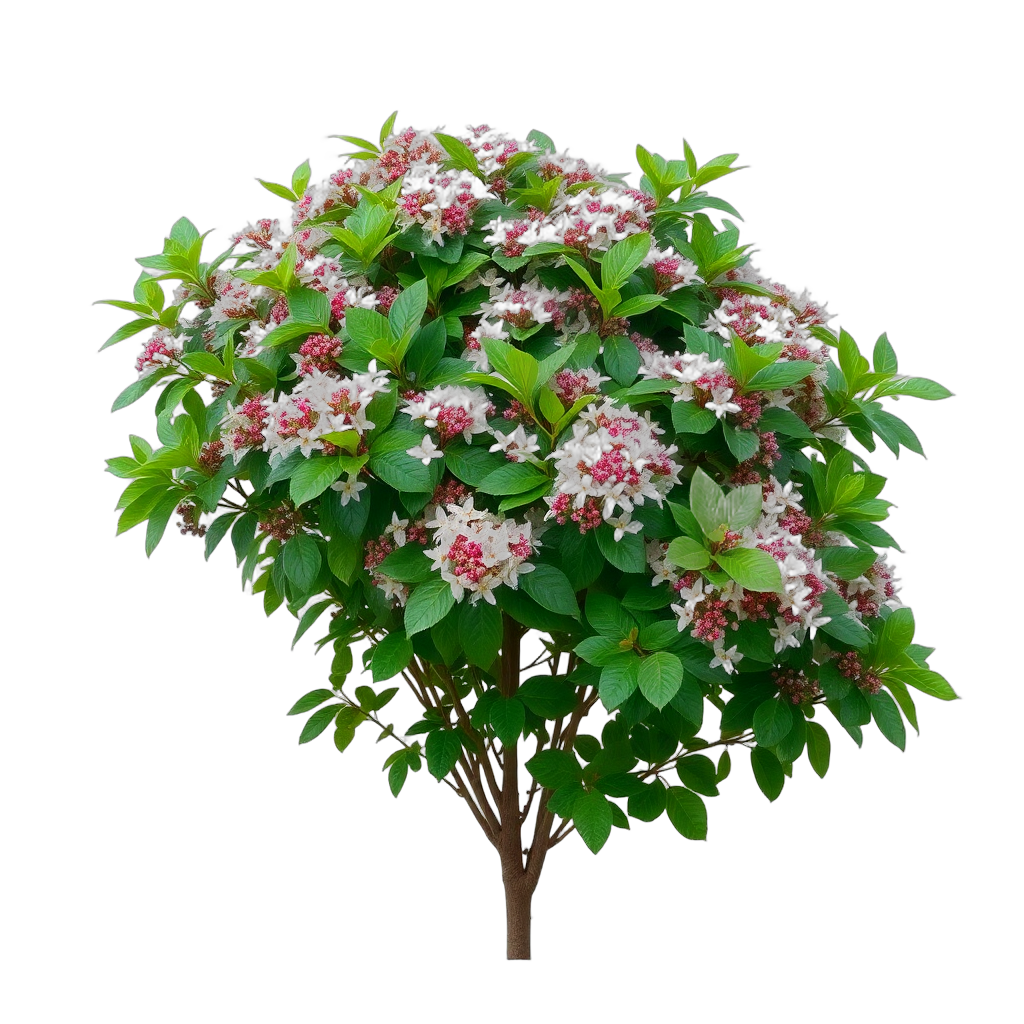
Blackhaw Viburnum
Viburnum prunifolium
medium-sized at 12 feet, white blooms in spring. Pollinator-friendly.
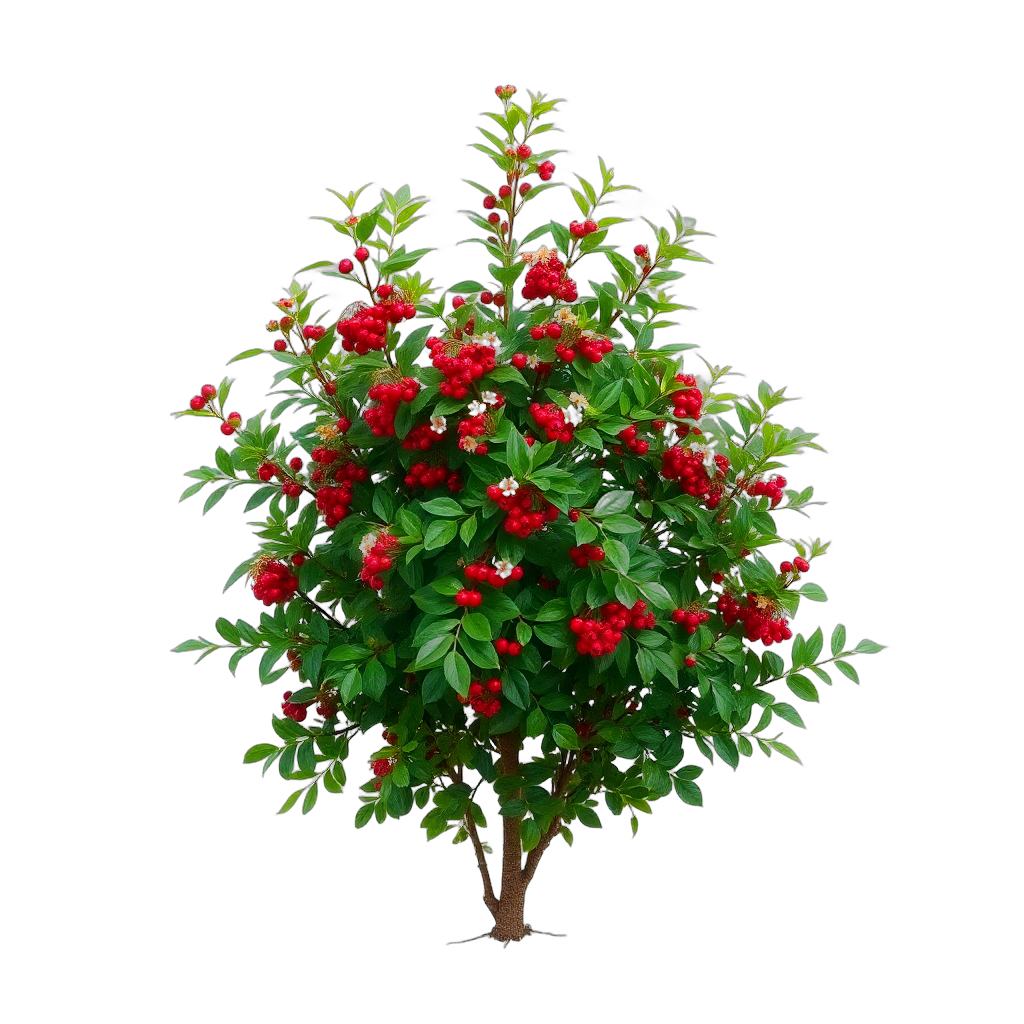
Coralberry
Symphoricarpos orbiculatus
grows to 6 feet, pink blooms in summer. Pollinator-friendly.
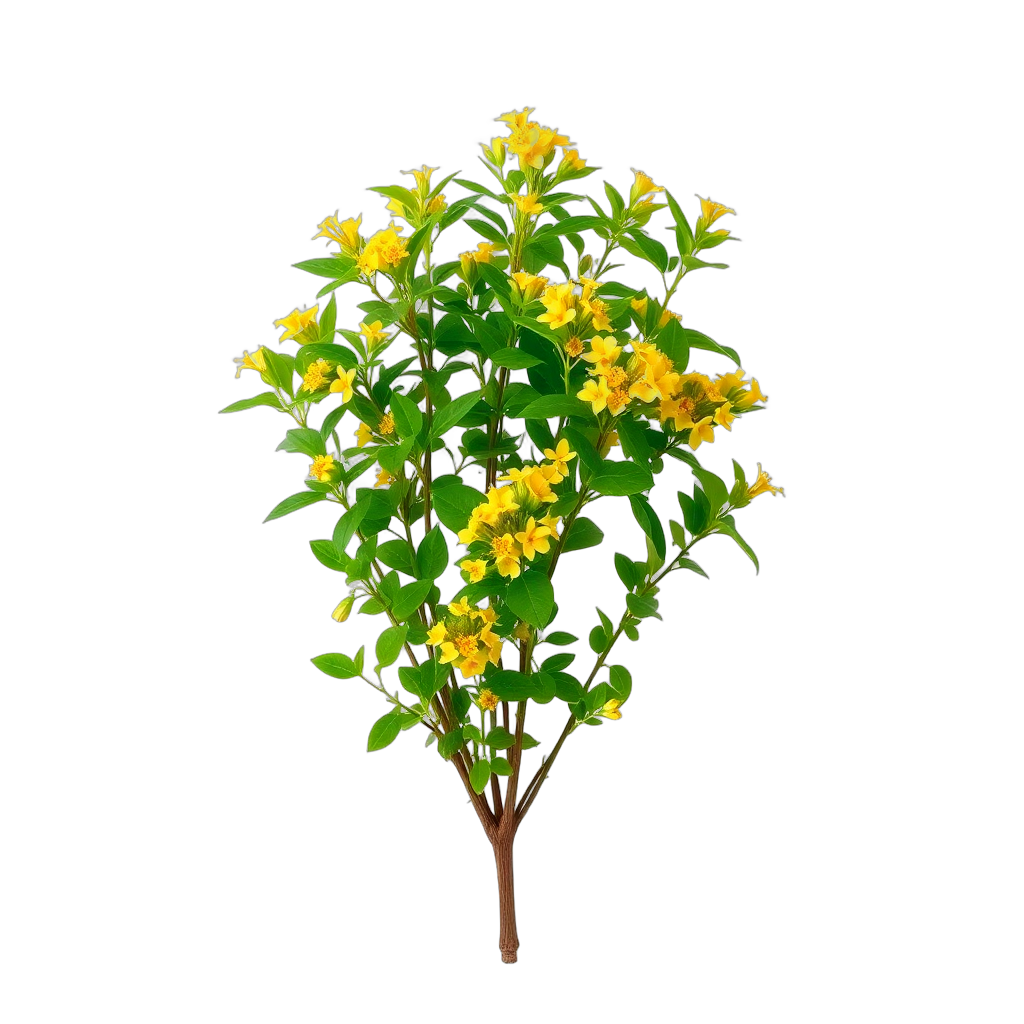
Shrubby St. John's Wort
Hypericum prolificum
grows to 4 feet, yellow blooms in summer. Pollinator-friendly.
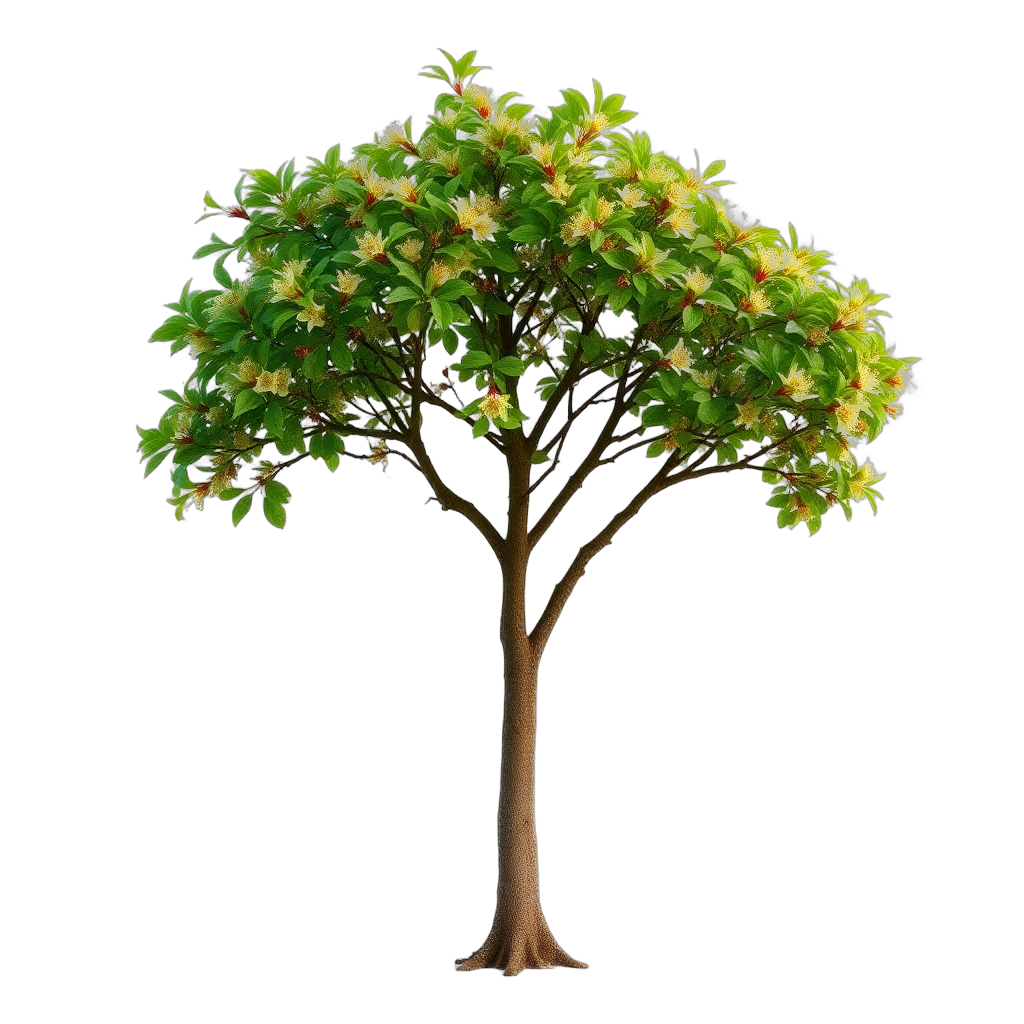
Vernal Witch Hazel
Hamamelis vernalis
medium-sized at 8 feet, yellow blooms in spring. Pollinator-friendly.
Featured Grasses & Groundcovers for Cottage/English Gardens
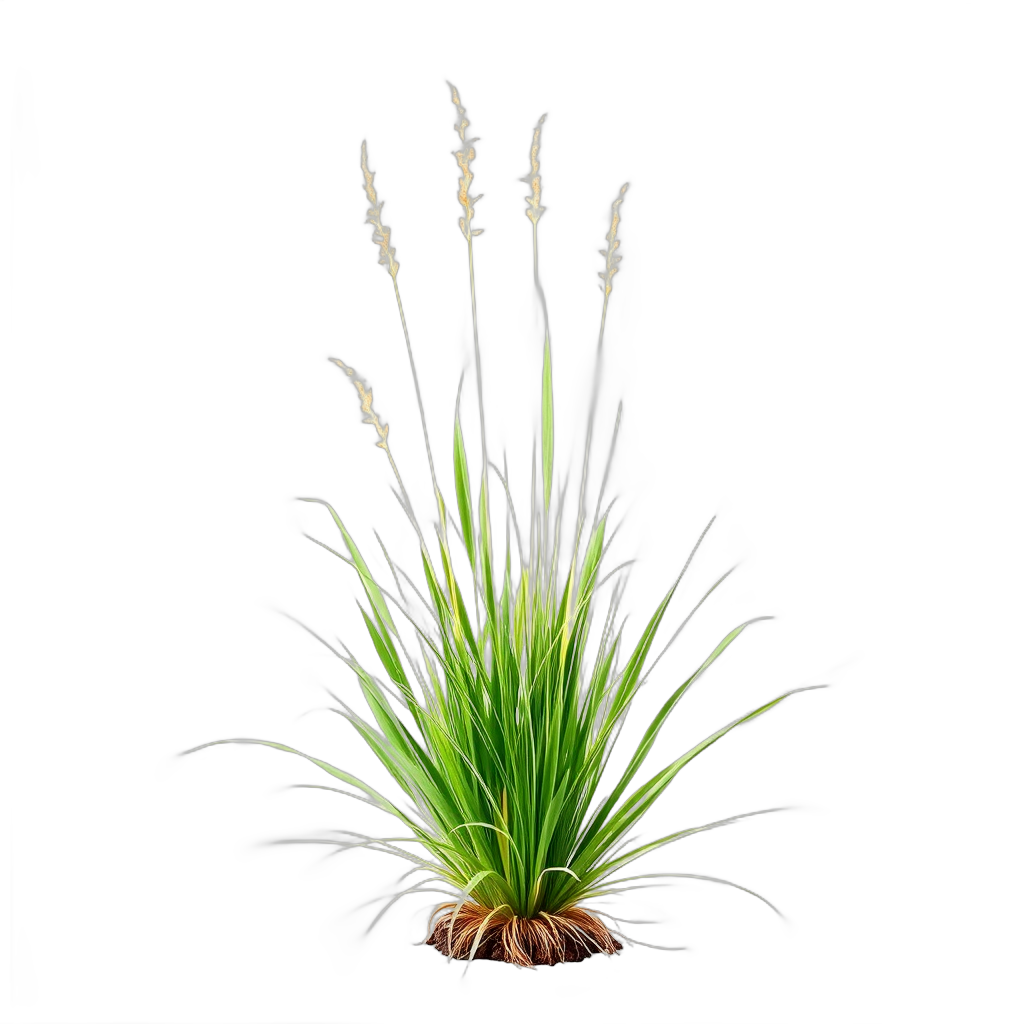
Northern Sea Oats
Chasmanthium latifolium
grows to 4 feet, blooms in fall. Bronze fall color.
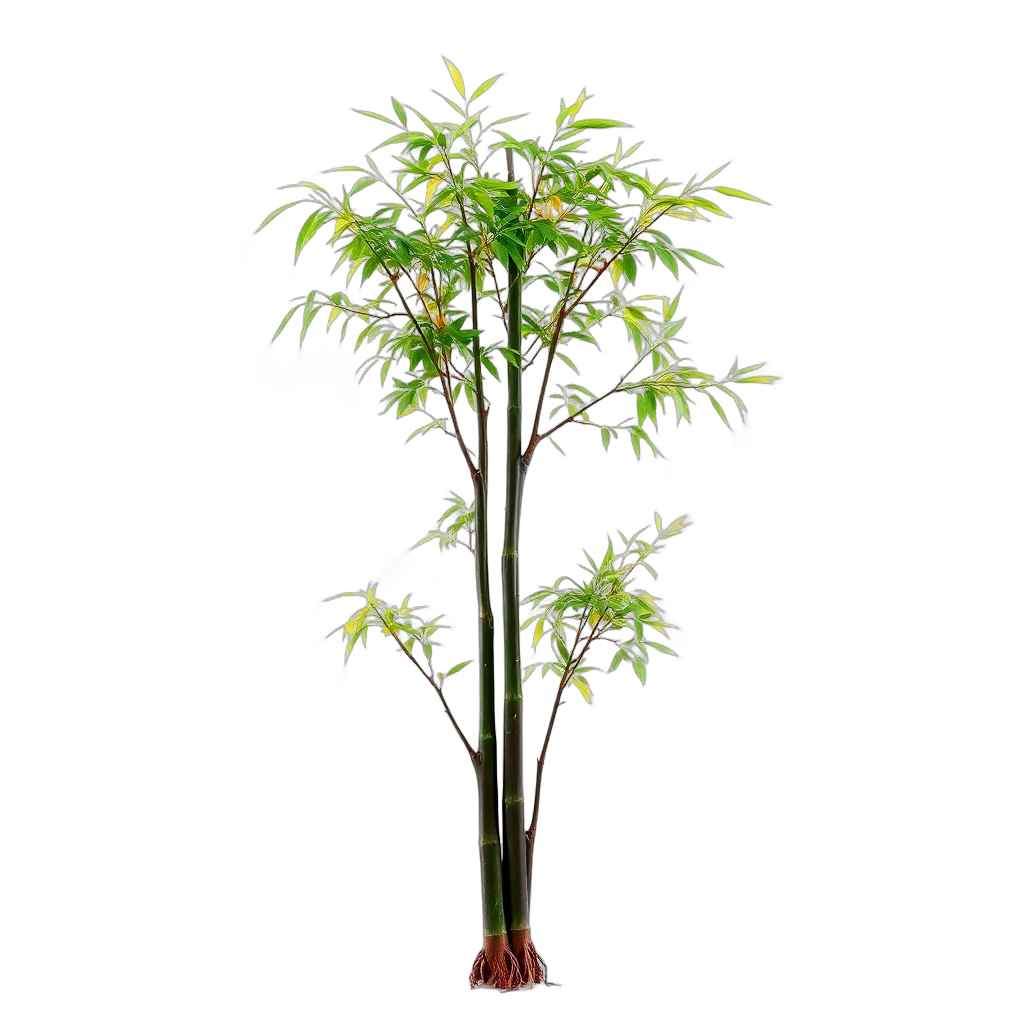
Black Bamboo
Phyllostachys nigra
reaches 25 feet tall, blooms in none. Evergreen year-round.
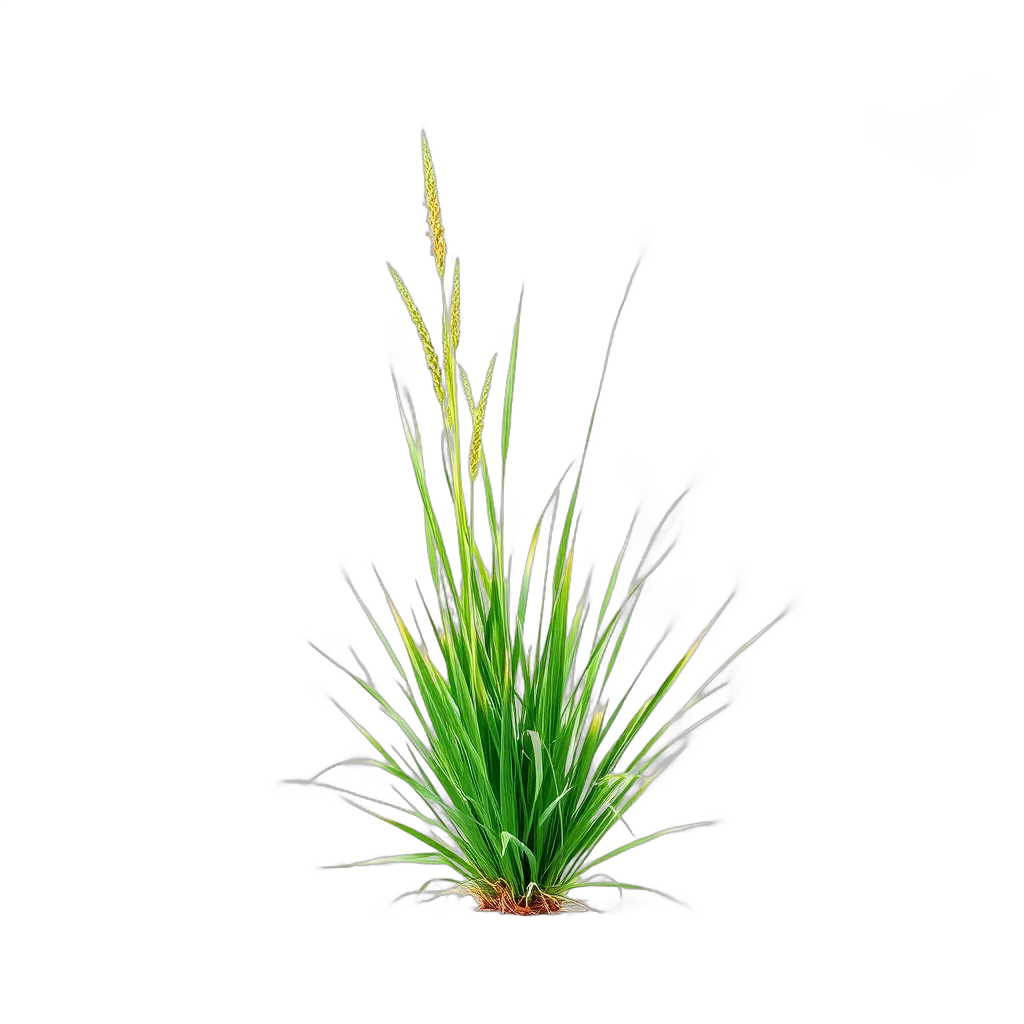
Bull Grass
Muhlenbergia emersleyi
grows to 4 feet, purple blooms in fall. Yellow fall color.
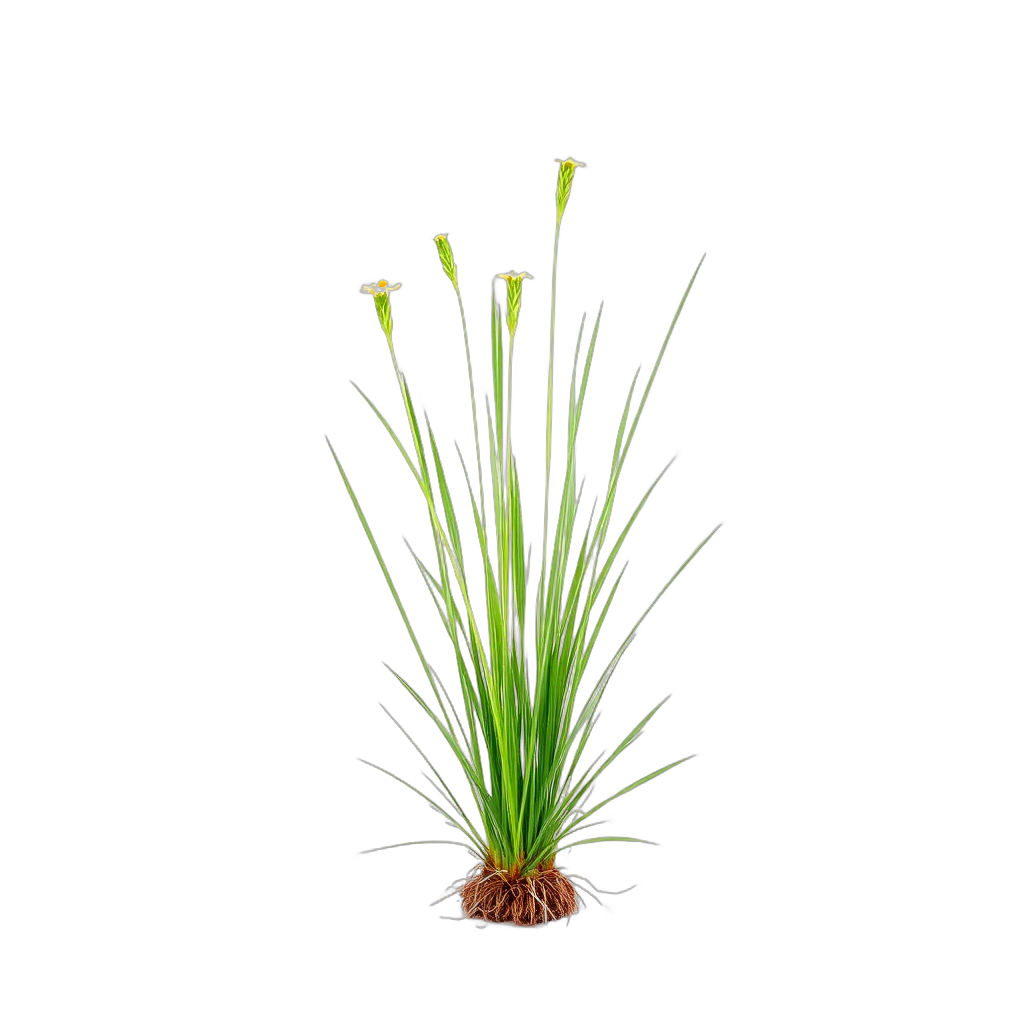
California Melic
Melica californica
low-growing ground cover, blooms in spring.
Featured Flowers & Perennials for Cottage/English Gardens
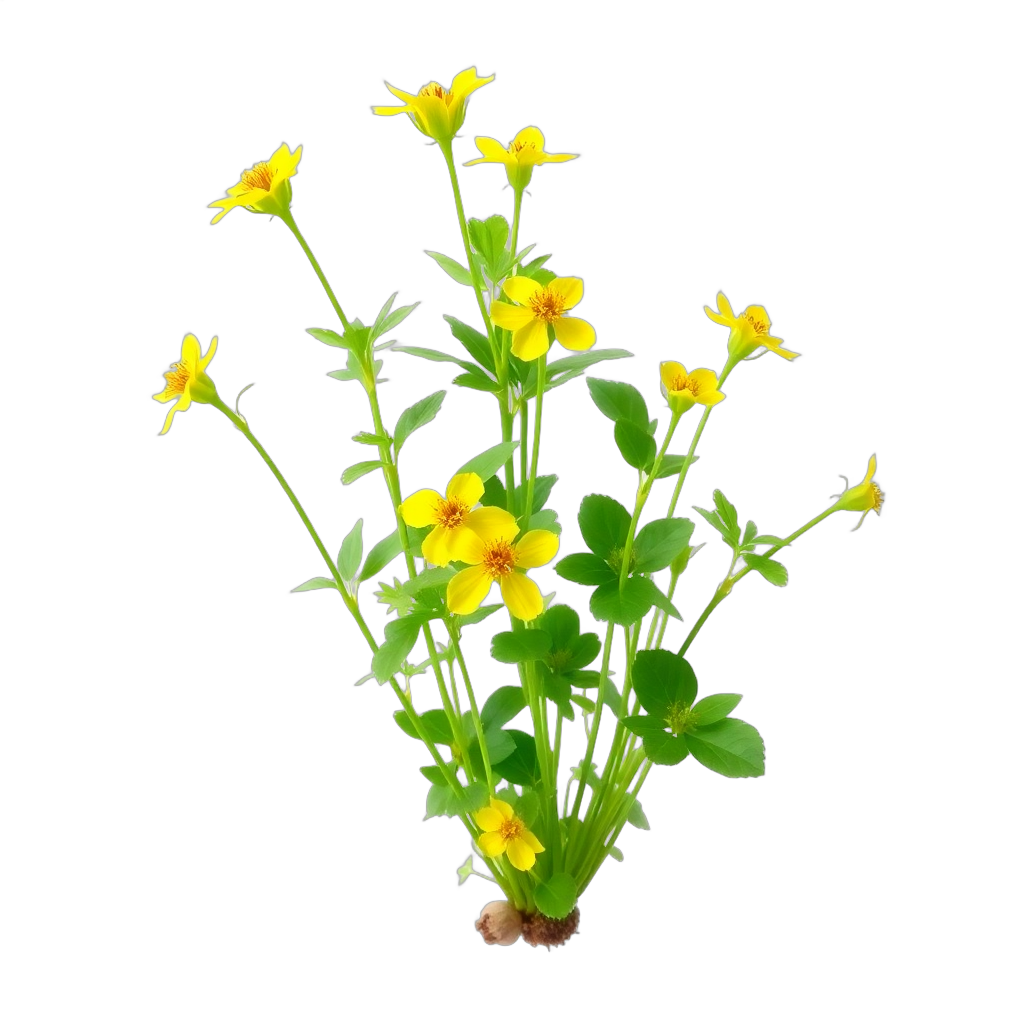
Celandine Poppy
Stylophorum diphyllum
low-growing ground cover, yellow blooms in spring.
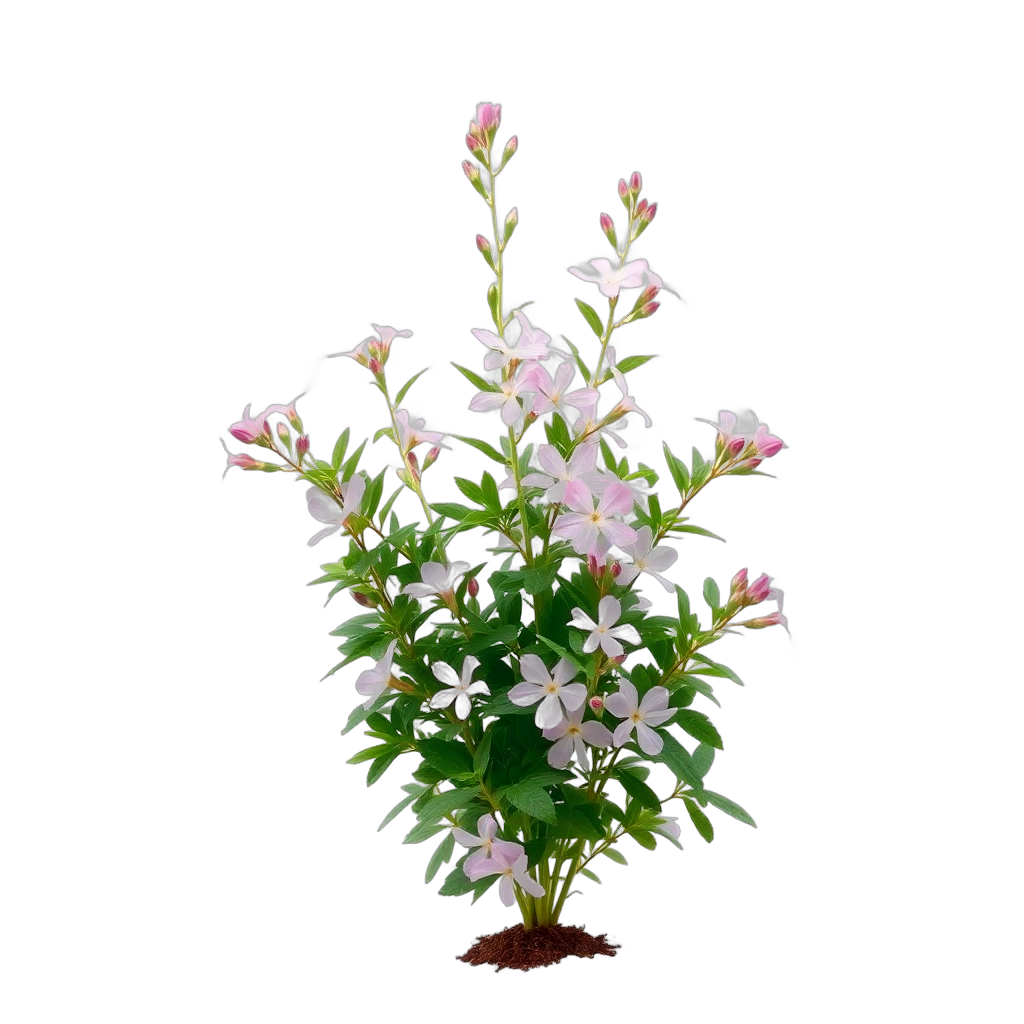
Garden Phlox
Phlox paniculata
grows to 3 feet, multi blooms in summer. Attracts hummingbirds.
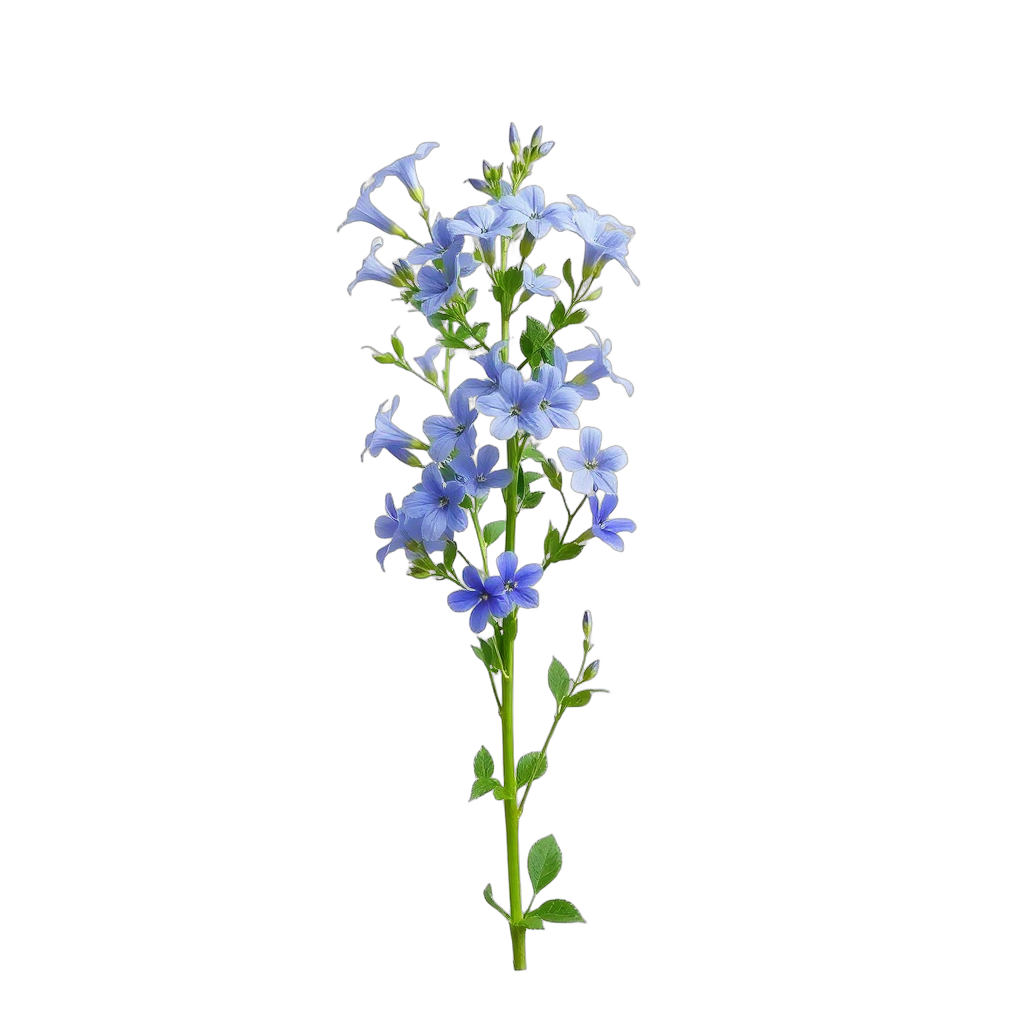
Wild Blue Phlox
Phlox divaricata
low-growing ground cover, blue blooms in spring. Attracts butterflies.

Water Fern
Azolla filiculoides
low-growing ground cover, blooms in none. Red fall color.
Zone and sun checks come from our database — confirm with your local nursery before you buy.
Bloom Calendar for Clarksville
spring
Celandine Poppy, Wild Blue Phlox, Blackhaw Viburnumsummer
Garden Phlox, Coralberry, Shrubby St. John's Wortfall
Northern Sea Oatswinter
Limited bloomsDesign Tips for Clarksville (Zone 7a)
- Give every lavender a berm and a gravel collar — in 50 inches of annual rain it is winter wet at the crown, not Zone 7a cold, that kills Lavandula x intermedia 'Phenomenal', so raise it 8–10 inches and mulch with pea gravel rather than hardwood
- Space roses 4–5 feet apart and mix them through Nepeta and Salvia instead of planting a solid hedge; airflow slows blackspot in July humidity and a scattered planting is far harder for rose rosette disease to move through
- Plant in October, not April — a Clarksville winter is mild enough for roots to keep working, and anything that goes in during autumn faces its first 90°F August already anchored
- Run drip line under the mulch and never water a cottage border overhead; wet foliage overnight in Middle Tennessee humidity is how powdery mildew and blackspot spread across a whole border in a fortnight
- Use the limestone pH instead of fighting it — Mountview and Dickson silt loams sit around 6.0–6.8, which is exactly what Paeonia lactiflora, Buxus 'Green Velvet' and old roses want, and it is why Rhododendron never looks right here
- Swap the English catalogue for its heat-proof equivalents: Leucanthemum x superbum 'Becky' for softer Shastas, Phlox paniculata 'Jeana' for mildew-prone varieties, Stachys byzantina 'Helene von Stein' for regular lamb's ear, and Consolida ajacis for delphiniums
- Lay brick and flagstone on 4–6 inches of compacted crushed stone; Clarksville silt loam swells through a wet winter and shrinks in August, and paving set straight onto soil will be rocking within three seasons
Where to Source Plants in Clarksville
Skip the big-box stores. These independent Clarksville nurseries specialize in the plants that make cottage/english gardens thrive in Zone 7a.
Legacy Nursery & Landscapes
Kirkwood / southeast Clarksville
Locally owned growing operation propagating its own ornamental trees, shrubs and border plants to finished size for Zone 7a gardens
Larry's Nursery & Landscaping
College Street / near Austin Peay
Clarksville nursery trading since 1980; trees, shrubs, roses and bedding plants with help loading and planting advice
The Garden Place
Woodlawn Road / west Clarksville
Family-run nursery and garden centre with landscaping and dirt work, gift shop and a feed and tack store on the same site
Pups Plants + Goods
Historic downtown (Strawberry Alley)
Downtown plant collective for containers, porch pots and specimen foliage, plus planting design and ongoing plant care
Cottage/English Landscaping Costs in Clarksville
| Project Scope | Estimated Cost |
|---|---|
| Front-yard cottage border with picket fence and rose arch | $7,000 – $15,000 |
| Fieldstone or brick back terrace (200–350 sqft) | $7,000 – $19,000 |
| Long double border, 60–80 ft, soil raised and planted | $9,000 – $24,000 |
| Painted cedar pergola with climbing roses | $6,000 – $16,000 |
| Cast-stone tiered fountain, set and plumbed | $2,500 – $7,500 |
| Raising and amending border soil (per 500 sqft) | $900 – $2,200 |
| AI visualization with ProScapeAI | Free to start |
Estimates based on Clarksville, TN-area contractor rates as of 2026. Actual costs vary by site conditions, materials, and contractor.
Clarksville Climate & Growing Zone
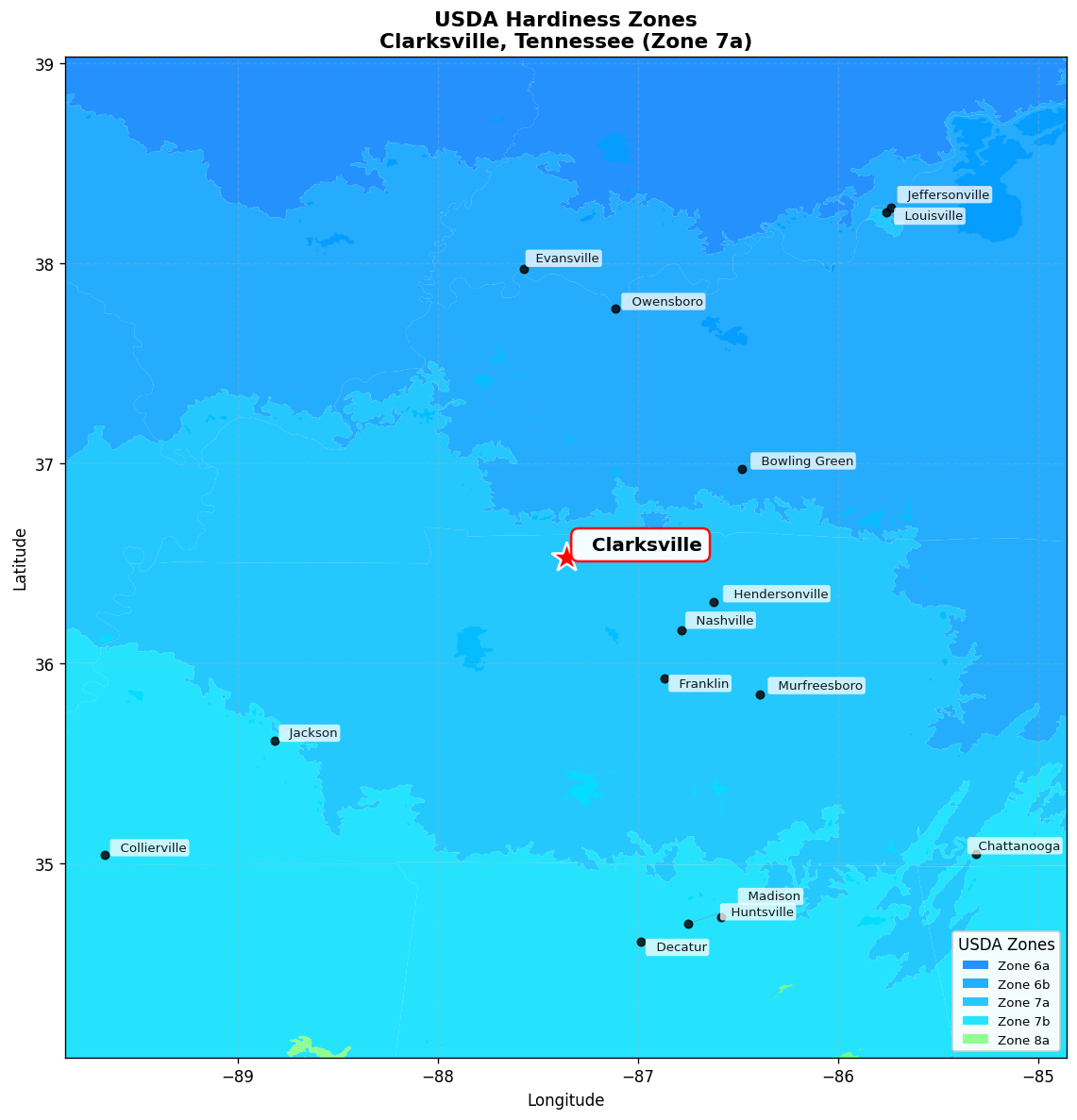
USDA Zone 7a
Hardiness zone for Clarksville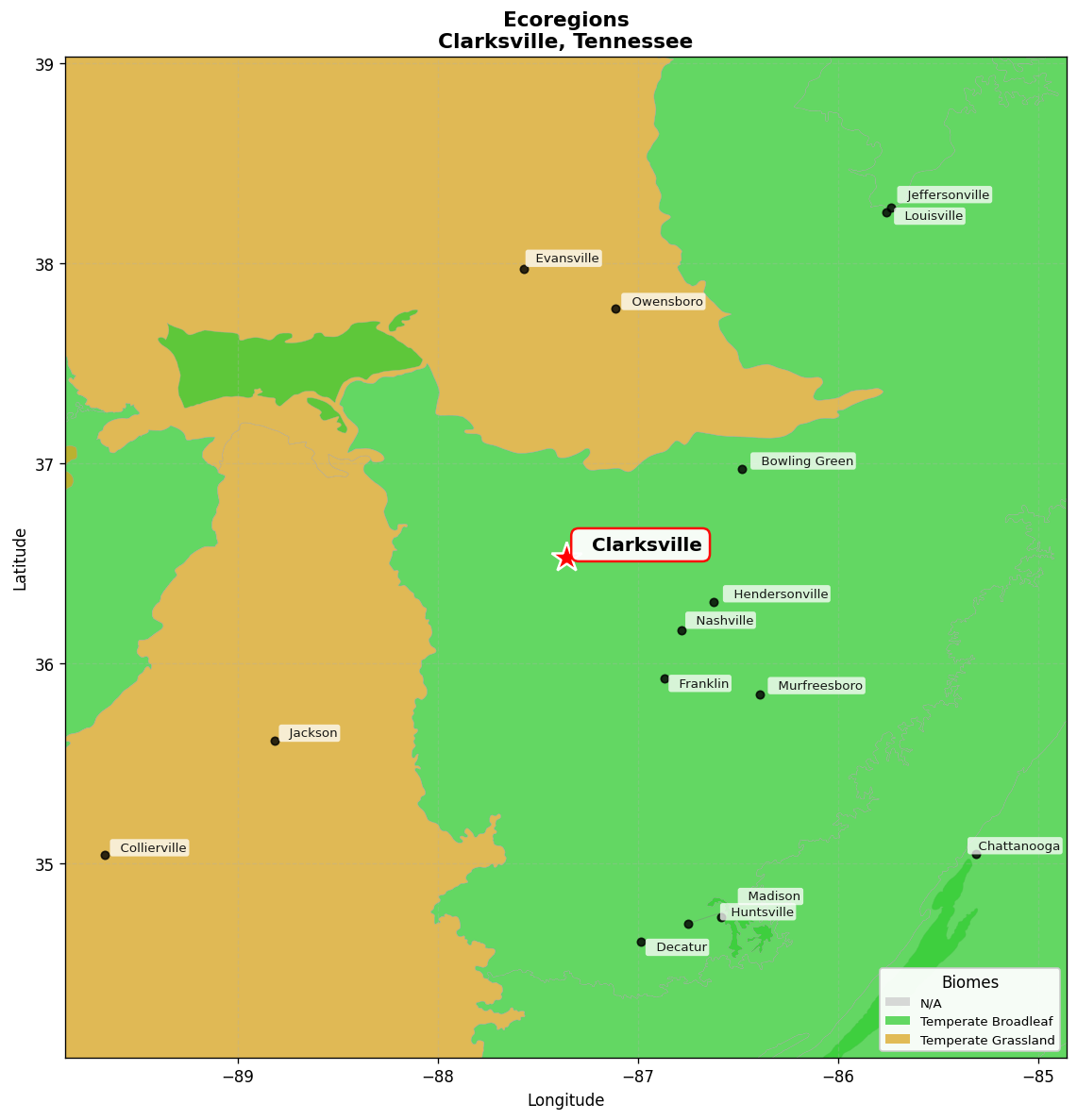
Interior Plateau US Hardwood Forests
Native ecoregionFrequently Asked Questions
How much does a cottage garden cost in Clarksville?
Clarksville labour and material rates run roughly 10–20% below the national metro average, which makes the look attainable here. A front-yard cottage conversion on a typical 500 sqft yard — bed shaping, raised amended soil, a run of picket fence, a cedar arch and 60–80 plants — lands at $7,000–15,000 installed. A fieldstone or brick back terrace with borders down both sides runs $18,000–40,000. A pergola-and-fountain backyard on a Sango half-acre commonly falls between $35,000 and $70,000. Phased over two autumns as a DIY project, a 500 sqft border planted with Rosa 'New Dawn', Lavandula x intermedia 'Phenomenal' and Leucanthemum x superbum 'Becky' can come in around $6–9 per square foot.
Which roses actually work in Clarksville, and should I worry about rose rosette disease?
Worry a little, and design around it. Rose rosette virus is well established across Middle Tennessee and is carried by a wind-borne eriophyid mite, so a long unbroken hedge of identical Rosa 'Radrazz' (Knock Out) is the highest-risk thing you can plant in Montgomery County. Cottage design happens to be the antidote: scatter roses through Nepeta, Salvia nemorosa and Achillea millefolium rather than lining them up, keep 4–5 feet between plants for airflow, and pull out any cane showing witches'-broom clustering, excess thorns or bright red distorted shoots the week you see it. For Zone 7a heat and humidity the four dependables are Rosa 'New Dawn' on an arch, Rosa 'Eden', Rosa 'Zephirine Drouhin' for a part-shaded wall and Rosa 'The Fairy' at the front of a border.
Can I grow lavender and delphiniums in Clarksville's humidity?
Lavender yes, delphiniums only as annuals. With about 50 inches of rain and July dew points in the low 70s, Lavandula angustifolia cultivars such as 'Munstead' and 'Hidcote' usually collapse in their second August. The lavandin hybrids hold: Lavandula x intermedia 'Phenomenal', 'Grosso' and 'Provence', planted on a berm raised 8–10 inches with a two-inch pea-gravel collar around the crown instead of hardwood mulch, which is the single change that decides whether they live. Delphinium elatum wants cool nights Clarksville stops providing in June, so treat it as a spring plant and replace it, or sow Consolida ajacis in November and let it reseed. Digitalis purpurea and Alcea rosea give the same vertical spires and both self-sow here.
What should I do to Clarksville soil before planting a cottage border?
Test it, then build up rather than down. Most of Montgomery County is Mountview or Dickson silt loam at roughly pH 6.0–6.8, which is near-perfect for Paeonia lactiflora, Buxus 'Green Velvet' and Rosa cultivars and needs no lime at all — it does mean acid-lovers like Rhododendron and Camellia sinensis are a fight not worth having. The real issue is the Dickson fragipan 18–30 inches down, which perches winter water. Raise borders 8–12 inches using about three parts native soil to one part compost and one part washed pea gravel, and never dig a deep hole into the pan and backfill it with soft mix, because that just makes a bathtub. UT Extension's Montgomery County office runs inexpensive soil tests and is the quickest way to find out which soil you actually have.
When is the best time to plant a cottage garden in Clarksville?
October through early December wins by a wide margin. The ground stays workable, roots grow through a mild winter, and everything meets its first Clarksville July already established. Late February into March is the second window and the right moment for bare-root roses. Avoid June through August: the average last frost is around 15 April and the first around 25 October, but the practical limit is that anything planted into 90°F soil needs water every day for six weeks. Sow Digitalis purpurea and Alcea rosea seed in September, and get Paeonia lactiflora and Iris germanica rhizomes in the ground in October so they get the chilling they need.
Are there watering restrictions or approvals I should know about?
Clarksville Gas & Water supplies the city from the Cumberland River and does not run routine seasonal watering bans, so irrigating a border in August is a bill question rather than a legal one. Ask the utility about an irrigation deduct meter before a system is installed, because it stops you paying sewer charges on water that goes onto the garden, and expect to fit the backflow preventer they require. Planting, beds, paths and borders need no approval. Fences, retaining walls above a few feet, decks and any grading that redirects stormwater are handled by City of Clarksville building and stormwater staff, and properties inside the Historic Architectural District have extra review, so check with the city before construction rather than after.