4 English Cottage Garden Ideas for College Station, TX | Zone 9a
Native plants from the East Central Texas forests (Zone 9a) — Humid subtropical climate
For a cottage garden in College Station, TX, a zone 9a city with a humid subtropical climate, start with Rosa 'Mutabilis', Rosa 'Old Blush' and Salvia greggii 'Furman's Red', the plants this guide's first design is built on.
Why Cottage/English Gardens in College Station?
A cottage garden suits College Station more than the town's reputation for sunburnt lawns would suggest. The ranch-style brick houses of Southwood Valley and Pebble Creek, the 1930s bungalows near Eastgate and the older cottages around Wellborn all have a modest front setback that a loose, layered border can fill from the sidewalk to the porch. The style asks for generosity rather than geometry: roses on a fence, a path that wanders, plants allowed to lean on each other. On a typical 6,000–9,000 square foot lot in the Brazos Valley, a border 6 feet deep along the front already looks like a garden.
Zone 9a winter lows of 20–25°F rarely hurt anything, but summer decides the plant list. July and August highs average in the mid-90s, the city gets roughly 40 inches of rain a year (heavy in spring and again in the fall), and humidity stays high enough that foliage stays wet after a storm. Classic English choices such as Delphinium elatum, Lavandula angustifolia 'Munstead' and Phlox paniculata 'David' sulk or die by August. What carries the look here are roses bred or proven for Gulf Coast heat: Rosa 'Mutabilis', Rosa 'Old Blush', Rosa 'Belinda's Dream' and Rosa 'Katy Road Pink', along with Salvia greggii 'Furman's Red', Salvia 'Indigo Spires', Echinacea purpurea 'Magnus' and Gaura lindheimeri 'Whirling Butterflies'. Foxglove and larkspur go in as cool-season annuals in October and bloom in April.
Soil changes block by block. Parts of the city sit on dark, sticky Brazos River bottom clay that swells when wet and cracks in August, and tends to run neutral to alkaline. Other neighborhoods have sandy loam over a clay layer that drains slowly and runs more acidic. Either way the fix is the same: raise the beds 6–8 inches with expanded shale or compost-rich topsoil, never dig a planting pit into clay, and mulch with 3 inches of shredded hardwood. A soil test through Texas A&M AgriLife Extension (a local office is in Bryan) costs little and tells you whether hydrangeas or lavender is the better bet for your yard.
Drip irrigation at the base of each rose keeps the leaves dry and blackspot down, and it is easier to live with if the city or your utility calls for watering limits in a dry summer. Check lot-line setbacks, fence-height limits and any HOA covenant with the City of College Station before you order a picket fence and arbour. Heavy clay also holds fence posts well, but set them in concrete and slope the soil away from the base.
4 Cottage/English Design Ideas for College Station
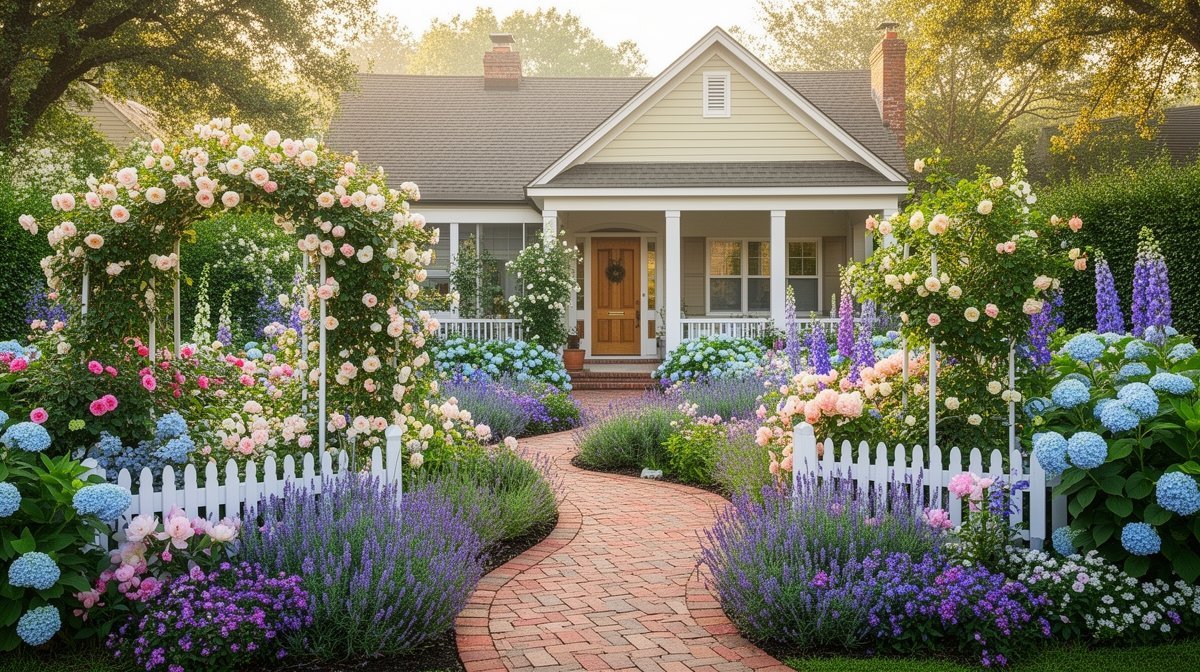
AI-generated image
The Picket Fence Rose Border
$18–38/sqftA low white cedar picket fence runs the width of a brick ranch house, with a gate in the middle and a loose line of heat-tolerant roses behind it. Salvia greggii and gaura spill over a crushed granite path that curves from the sidewalk to the porch, and the planting faces south-east so the roses get long morning sun and dry quickly. Clipped yaupon holly balls hold either side of the gate where boxwood would suffer from the summer heat.
Try this on your yard: The Picket Fence Rose BorderAI-generated image
The Bungalow Porch Garden
$20–42/sqftA deep front porch on a 1930s bungalow gets a cottage border three layers deep. Spires of Salvia 'Indigo Spires' and Agastache 'Blue Fortune' stand at the back, Rudbeckia hirta and Leucanthemum × superbum 'Becky' fill the middle, and a Trachelospermum jasminoides vine scents the porch rail in May. A mature pecan or live oak shades the west side in the afternoon, so the planting leans on sun-tolerant perennials at the front and shade-tolerant ferns near the trunk.
Try this on your yard: The Bungalow Porch GardenAI-generated image
The Gravel Tea Garden
$22–48/sqftA round gravel seating area, 12 feet across, is cut into the back lawn and holds a metal bistro table under a cedar arbour. Rosa 'Belinda's Dream' and Climbing 'Katy Road Pink' roses train up the arbour, and lavender in a raised, gravel-mulched bed catches the full afternoon sun along the south side. The planting is tall enough to hide a fence line and loose enough to feel like an old garden, and it fits a typical backyard behind a 1990s brick house.
Try this on your yard: The Gravel Tea GardenAI-generated image
The Pollinator Cottage Island
$14–30/sqftA kidney-shaped island bed replaces a patch of struggling front lawn and holds a mix of cottage perennials chosen for bees and butterflies. A Vitex agnus-castus 'Shoal Creek' anchors one end, flanked by Salvia greggii, Echinacea and Zinnia 'Profusion' for summer color. A flagstone path winds through the island so that the bed can be weeded and picked from, and the whole planting needs little more than drip irrigation and a spring cutback.
Try this on your yard: The Pollinator Cottage IslandSee how a cottage/english garden looks on YOUR property
Upload a photo of your College Station yard and visualize your dream garden in seconds.
Try ProScapeAI Free

AI-generated image
Featured Trees & Shrubs for Cottage/English Gardens
Browse all 168 plants for College Station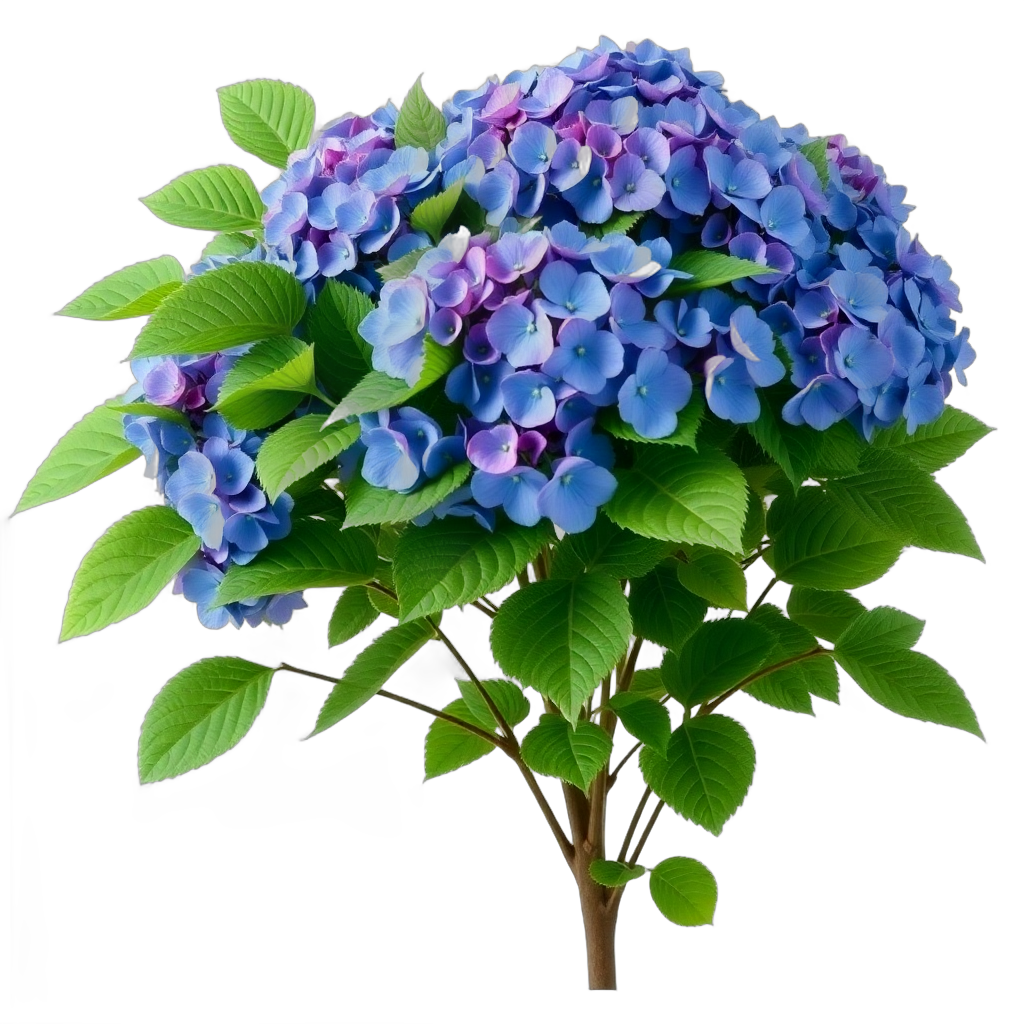
Oakleaf Hydrangea
Hydrangea quercifolia
grows to 6 feet, white blooms in summer. Pollinator-friendly.
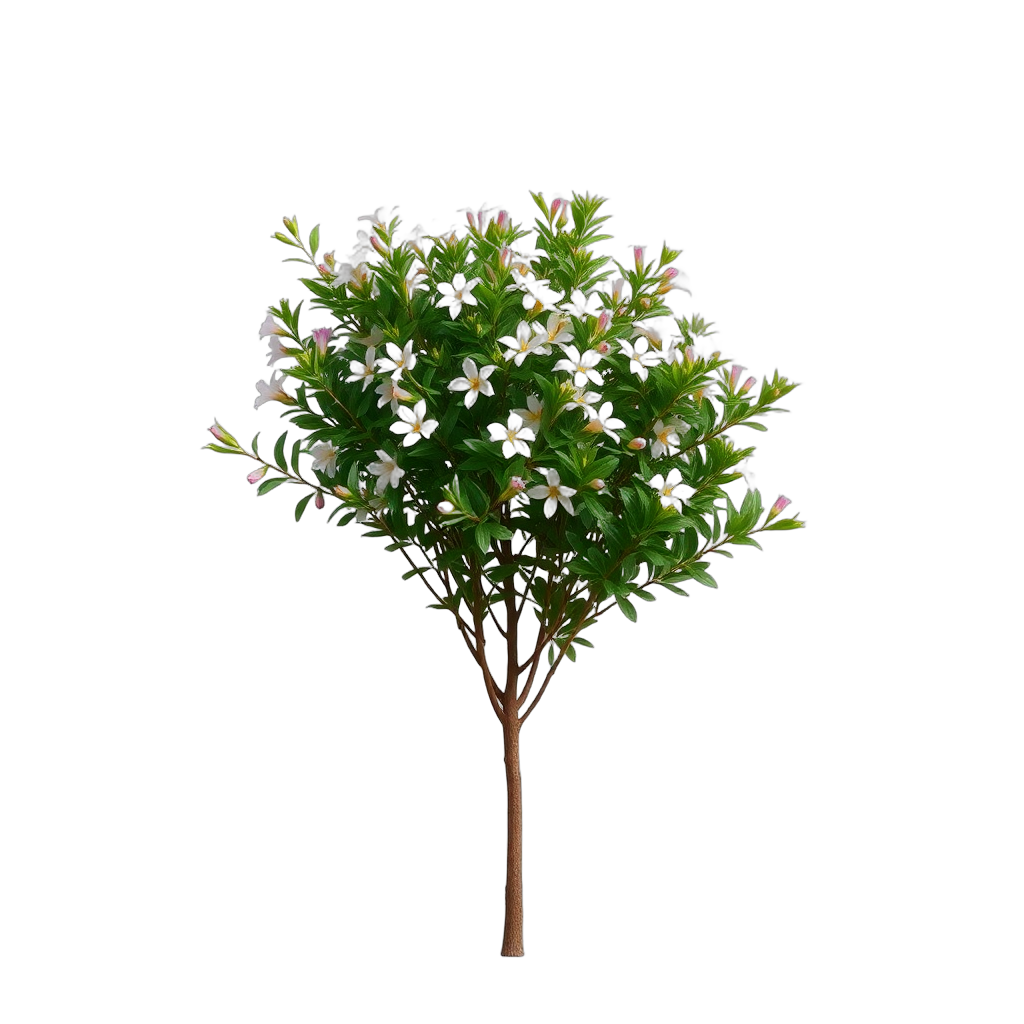
Texas Mountain Laurel
Sophora secundiflora
medium-sized at 12 feet, purple blooms in spring. Evergreen year-round.
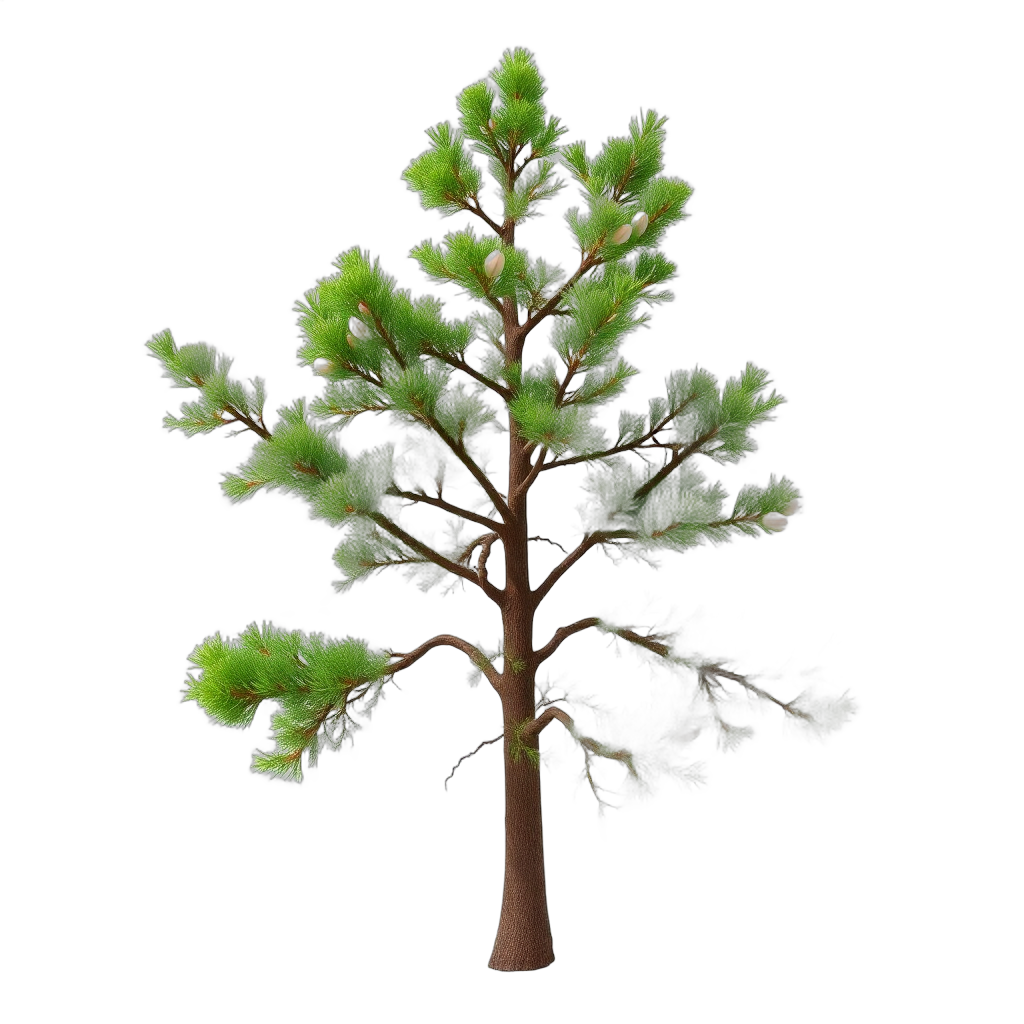
Ashe Juniper
Juniperus ashei
reaches 25 feet tall, blooms in winter. Evergreen year-round.
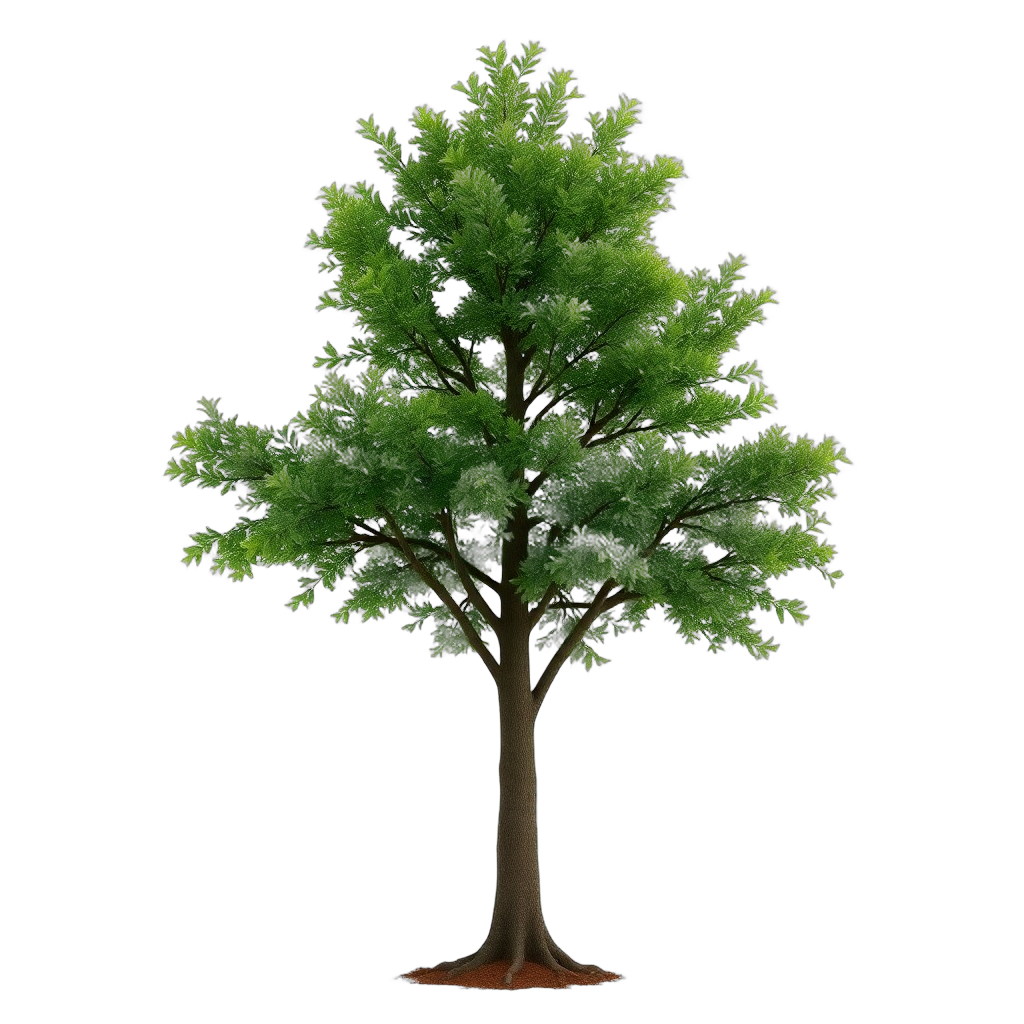
Blackjack Oak
Quercus marilandica
reaches 35 feet tall, blooms in spring. Yellow fall color.
Featured Grasses & Groundcovers for Cottage/English Gardens
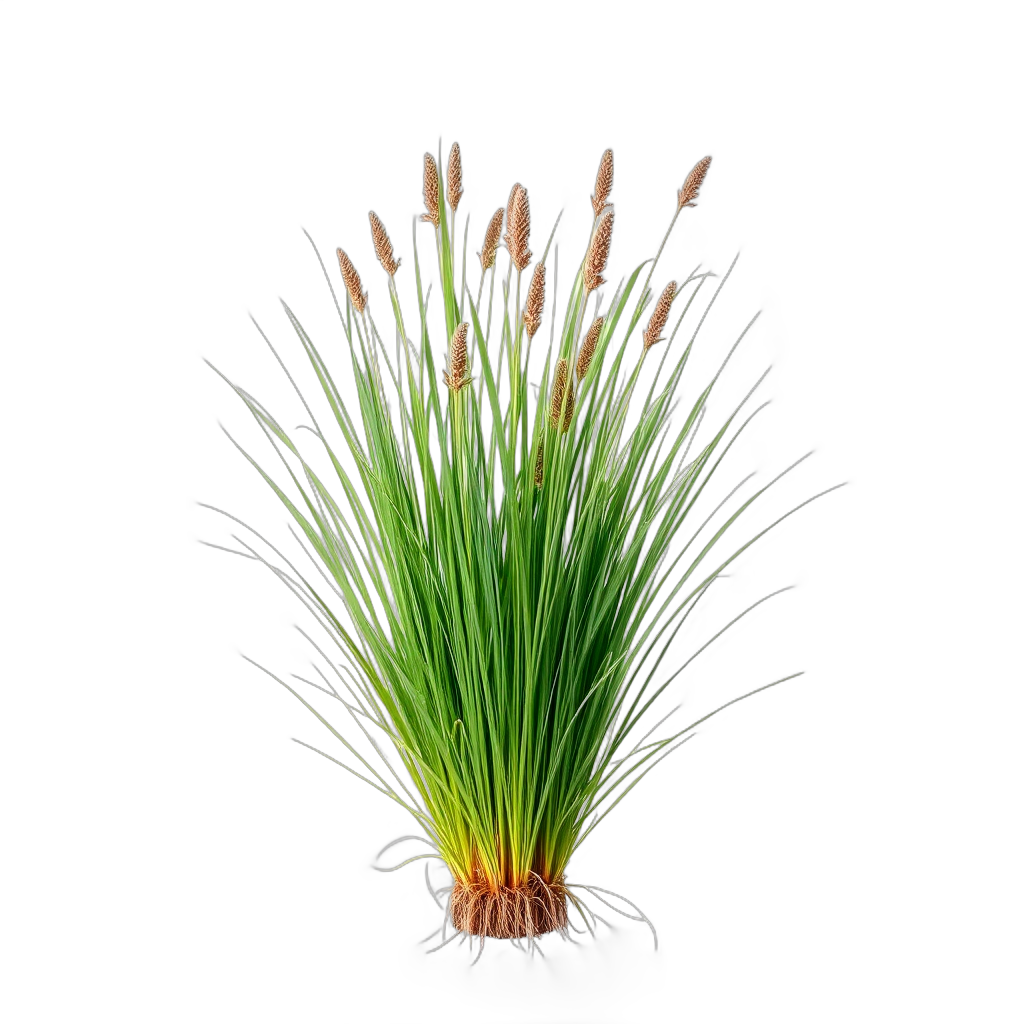
Lindheimer's Muhly
Muhlenbergia lindheimeri
grows to 4 feet, white blooms in fall.
Featured Flowers & Perennials for Cottage/English Gardens
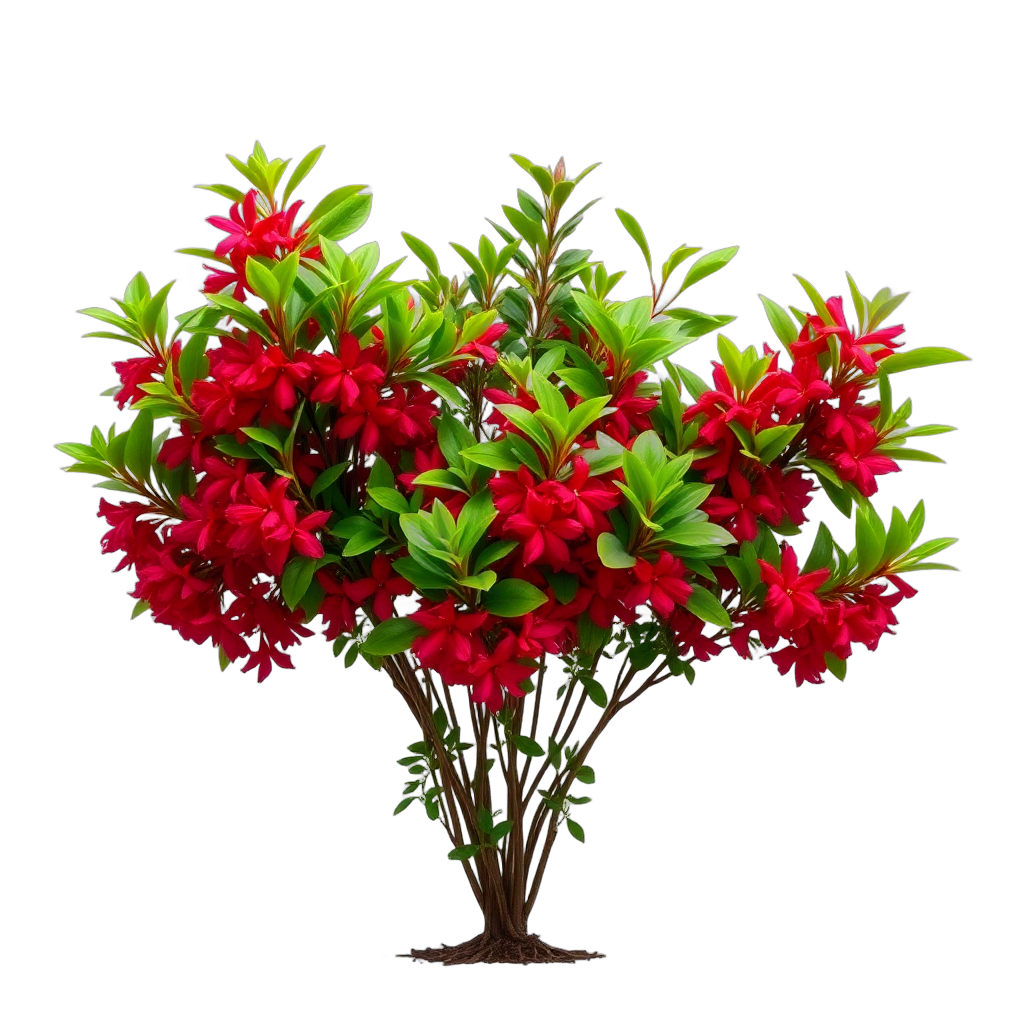
Coral Bean
Erythrina herbacea
grows to 5 feet, red blooms in spring. Attracts hummingbirds.

False Aloe
Manfreda virginica
low-growing ground cover, blooms in summer. Attracts hummingbirds.

Papyrus
Cyperus papyrus
grows to 5 feet, blooms in summer. Pollinator-friendly.

Water Hyacinth
Eichhornia crassipes
low-growing ground cover, purple blooms in summer. Attracts butterflies.
Zone and sun checks come from our database — confirm with your local nursery before you buy.
Bloom Calendar for College Station
spring
Coral Bean, Texas Mountain Laurel, Ashe Junipersummer
False Aloe, Oakleaf Hydrangeafall
Lindheimer's Muhly, Cedar Elmwinter
Ashe JuniperDesign Tips for College Station (Zone 9a)
- Raise every bed 6–8 inches with expanded shale and compost: Brazos Valley clay swells in a wet spring and cracks in August, and roots in a dug pit sit in standing water
- Test the soil through Texas A&M AgriLife Extension before choosing plants: pH can run neutral to alkaline in the bottomland clay and acidic over sandy loam, which decides between lavender and hydrangea
- Plant roses where they get morning sun and run drip at the base: leaves that dry by 9 a.m. cut blackspot in a 40-inch rain year, and mid-90s afternoons are easier on plants with some late shade
- Use Rosa 'Mutabilis', Rosa 'Old Blush' and Rosa 'Katy Road Pink' as the backbone: all three were proven on the Gulf Coast and keep blooming through the summer heat
- Swap boxwood for Ilex vomitoria 'Nana' and Delphinium for Salvia 'Indigo Spires': both give the same clipped edge or vertical spire without summer dieback
- Set cool-season annuals (foxglove, larkspur, snapdragon) in October, then pull them in May and replace with Zinnia 'Profusion' and Rudbeckia hirta for July color
- Mulch with 3 inches of shredded hardwood each spring and keep it off rose crowns: it holds moisture in the first two summers while the roots establish
Where to Source Plants in College Station
Skip the big-box stores. These independent College Station nurseries specialize in the plants that make cottage/english gardens thrive in Zone 9a.
Brazos Valley Tree Farm Nursery and Garden Center
College Station (FM 2154)
Plants and shrubs in 1, 3 and 5 gallon sizes, with shade plants, evergreen shrubs, shrubs under 4 feet, butterfly and hummingbird plants and low-maintenance picks; trees and vegetable plants too. Inventory changes often, so call ahead
Circle D Nurseries
Bryan (Finfeather Road)
Nursery in Bryan, about 5 miles from College Station. Its site lists only the address and phone, so call for current stock
Cottage/English Landscaping Cost Ranges
| Project Scope | Estimated Cost |
|---|---|
| Picket fence, 4 ft tall (60 linear ft) | $1,500–$2,400 |
| Brick paver walk (100 sqft) | $2,000–$2,600 |
| Wood garden arbor (8 sqft footprint, about 4 x 2 ft) | $750–$1,100 |
| AI visualization (ProScapeAI) | Free to start |
National average installed ranges for 2026 from our landscaping price list (Homewyse and other published sources). Prices in College Station, TX vary with site, materials and contractor, so get two or three local quotes.
College Station Climate & Growing Zone
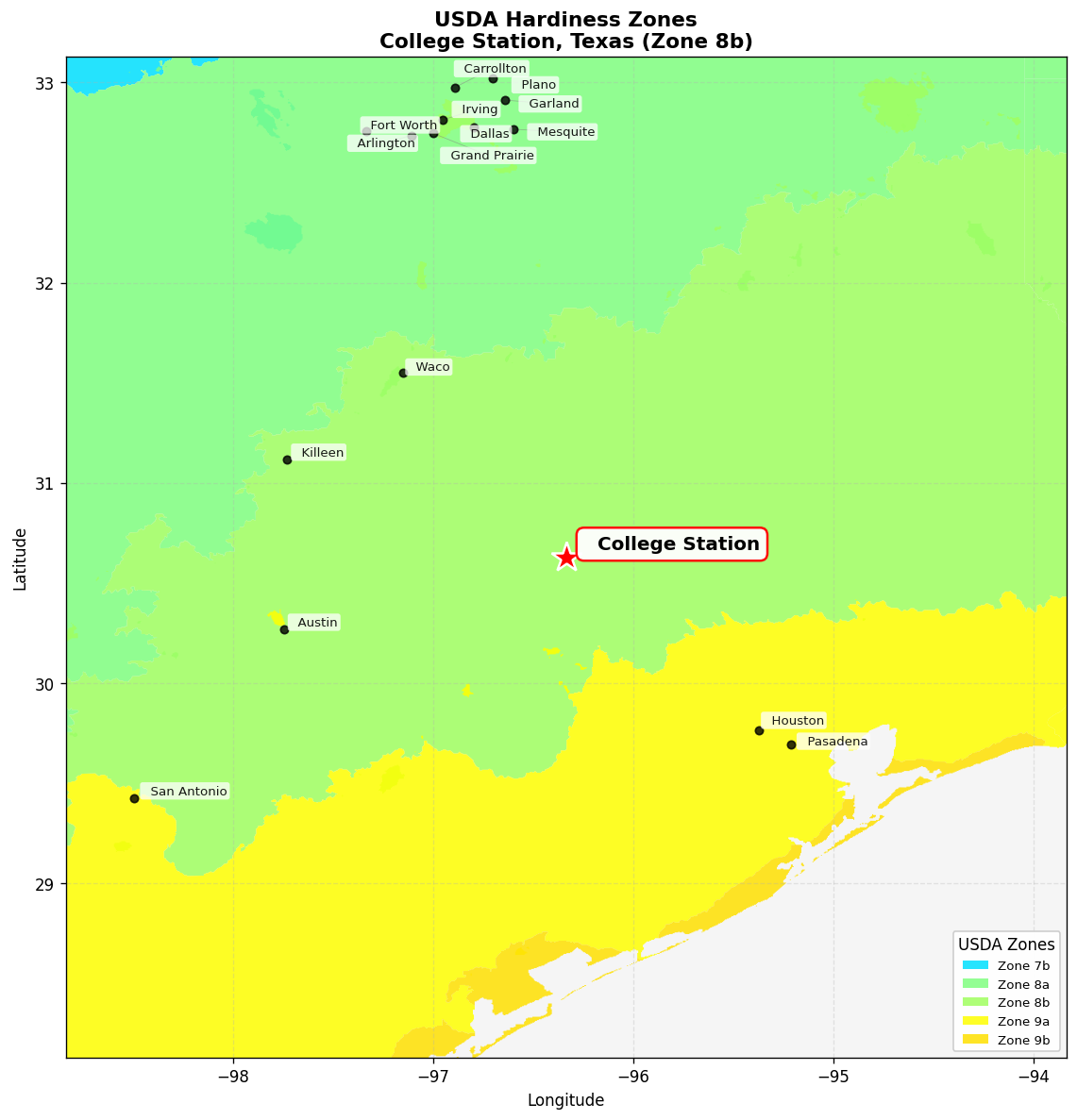
USDA Zone 9a
Hardiness zone for College Station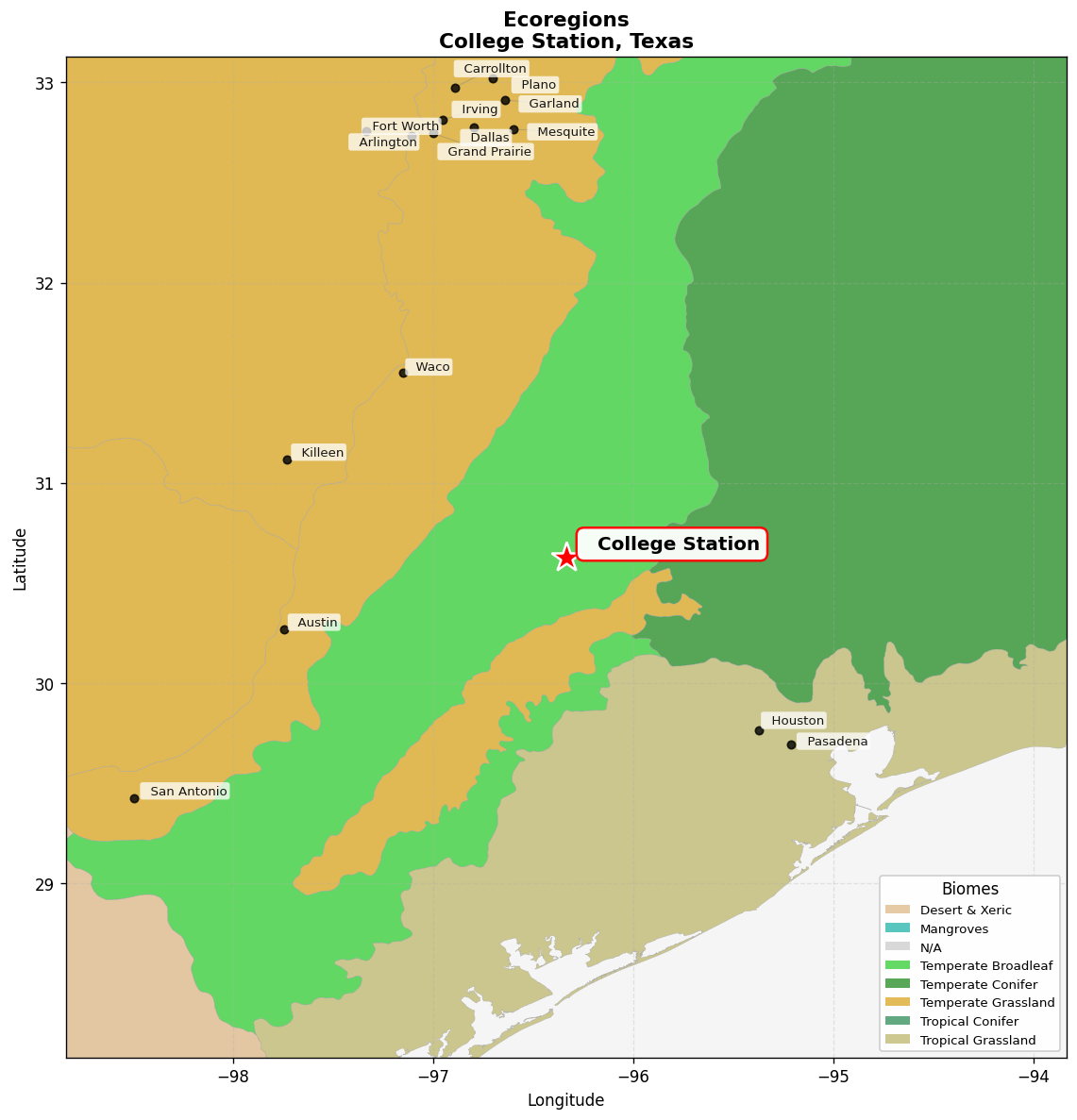
East Central Texas forests
Native ecoregionFrequently Asked Questions
How much does a cottage garden cost in College Station, TX?
What you pay depends on the yard, the materials and local labor rates; two or three written quotes will give you a real figure.
Is a cottage garden low maintenance in College Station's climate?
It is moderate, and it gets easier once the plants are established. Summer humidity and heat mean you will water new beds twice a week for the first two summers, then drop to deep soakings every 7–10 days. Prune roses in late February, cut back Salvia greggii by a third in March and shear gaura after its first flush. Mulch each spring. The biggest ongoing chores are deadheading and replacing the cool-season annuals each October.
When is the best time to plant a cottage garden in College Station?
October through early December is the best window: soil is warm, fall rain returns and roots grow through a mild winter. March through April is the second window, after the last frost, which usually falls around mid-March. Set out foxglove and larkspur in October for April bloom. Avoid planting in July and August, when afternoon highs sit in the mid-90s and new roots struggle to keep up.
Which roses survive College Station's heat and humidity?
Old garden roses that came through Gulf Coast summers do best. Rosa 'Mutabilis', Rosa 'Old Blush', Rosa 'Katy Road Pink' and Rosa 'Belinda's Dream' are tough, bloom repeatedly and tolerate clay if the bed is raised. Give each plant six hours of sun with morning exposure, space them three feet apart and water at the base by drip. Hybrid teas can struggle with blackspot and need more attention.
What cottage plants fail here, and what replaces them?
True Delphinium elatum, Lavandula angustifolia 'Munstead' and boxwood edging often suffer in the summer heat and humidity. Replace delphinium with Salvia 'Indigo Spires' or Agastache 'Blue Fortune' for the vertical spire, use Lavandula × intermedia 'Phenomenal' or Lavandula × ginginsii 'Goodwin Creek Grey' in a raised, gravel-mulched bed, and clip Ilex vomitoria 'Nana' where you would otherwise plant boxwood.
How do I deal with College Station's clay soil?
Build up rather than dig down. Put 6–8 inches of expanded shale and compost on top of the existing soil, since digging a hole in clay creates a bathtub that holds water around the crown. Have the soil tested through Texas A&M AgriLife Extension, because pH can swing from acidic to alkaline between neighborhoods. Avoid working clay when wet, and plan a few weeks after heavy rain before turning the beds.
Do I need a permit or HOA approval for a fence or garden in College Station?
Fences, retaining walls and drainage changes can be regulated by the city and, in many subdivisions, by an HOA. Check fence height and setback rules with the City of College Station before building, and ask your HOA for any covenant on front-yard fences, plant height and mulch. A planting border alone usually needs no permit, but grade changes or new impervious surface may. Design the garden first, then confirm the approval path.