4 English Cottage Garden Ideas for Duluth, MN | Lake Superior Zone 4b
Native plants from the Western Great Lakes forests (Zone 4b) — Humid continental (warm summer) climate
For a cottage garden in Duluth, MN, a zone 4b city with a humid continental (warm summer) climate, start with Rosa 'John Cabot', Paeonia 'Sarah Bernhardt' and Phlox paniculata 'David', the plants this guide's first design is built on.
Why Cottage/English Gardens in Duluth?
Duluth's older housing stock gives a cottage border a good backdrop. The 1900s foursquares and Craftsman homes of Hunters Park, the Tudor Revivals on the east side's tree-lined streets, and the small 1940s cottages near the lake all have porches, painted trim and shallow front yards where a deep, mixed border reads clearly from the sidewalk. A retaining wall of local stone with catmint and lady's mantle falling over it looks like it was planned in 1925, and on a street that drops toward the lake a cottage planting catches the eye from below.
NOAA's 1991–2020 normals for the Duluth airport station put the average January low at 2.4°F and the average July high at 77.7°F, with 31.18 inches of precipitation and 90.2 inches of snow in a normal year, and 176.6 days a year when the low reaches 32°F or colder. That is Zone 4b, and it rules out the southern English catalog. Hybrid tea roses will not live through it, and 'Hidcote' lavender is a gamble. What does live: Explorer roses such as Rosa 'John Cabot', 'William Baffin' and 'Winnipeg Parks', plus Rosa 'Hansa' for fragrance. Peonies are the best bet of all, since Paeonia 'Sarah Bernhardt' and 'Festiva Maxima' need a real winter. Add Nepeta × faassenii 'Walker's Low', Salvia nemorosa 'May Night', Phlox paniculata 'David', Campanula persicifolia and Alchemilla mollis, and the border holds up from June into September.
Soil on the Duluth hillside is often heavy red clay over bedrock, sometimes with only a foot or so of workable topsoil. Native soil tends to be slightly acidic to neutral, so get a test from the University of Minnesota Extension lab before adding lime. Clay holds moisture through spring thaw and stays cold late, so plant peonies and roses on a slight mound and dig compost in a wide area, not a single hole. Park Point is the exception: it is a sand bar, so beds there drain fast and want more compost and mulch. Lake Superior also keeps spring cool near the shore, which delays bloom a week or two compared with the top of the hill.
Own-root shrub roses such as 'Morden Blush' survive winter dieback and re-sprout from the base, so a hard winter costs you stems, not the plant. Put tall, tough structure where the plow and the roof shed will bury it, and keep fragile perennials out of the drift line along driveways. Clematis 'Jackmanii' and Clematis 'Venosa Violacea' on a trellis add height and tolerate Duluth cold.
4 Cottage/English Design Ideas for Duluth
AI-generated image
The Tudor Porch Border
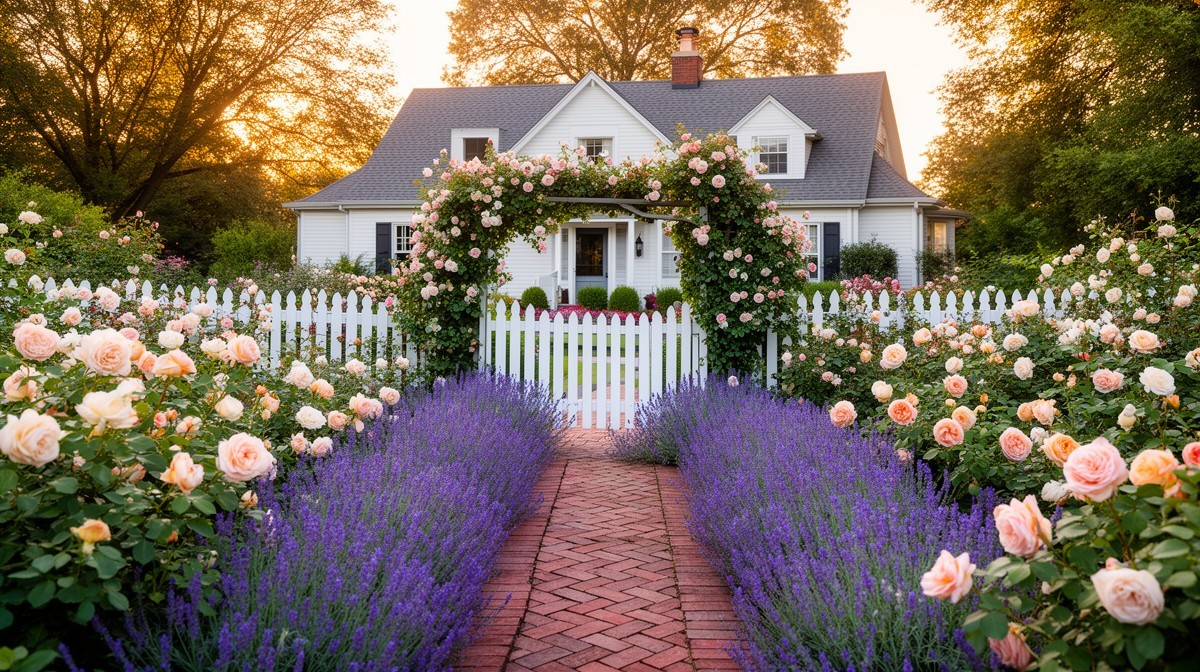
$14–28/sqftA brick Tudor Revival with a deep front porch gets a border 5–6 feet deep along the foundation, facing east so the plants catch morning sun and dodge the hottest afternoon light. Rosa 'John Cabot' climbs a cedar trellis beside the steps, peonies and Phlox 'David' fill the middle layer, and Nepeta 'Walker's Low' softens the edge of a bluestone path. The layers peak in June and keep going into September.
Try this on your yard: The Tudor Porch BorderAI-generated image
The Hillside Stone Wall Garden
$22–40/sqftA sloped front yard in Hunters Park is cut into two tiers with a dry-stacked stone wall about 24 inches high. Lady's mantle, Geranium sanguineum 'Max Frei' and creeping Phlox subulata spill over the top edge, while Syringa vulgaris 'Sensation' anchors the corner behind. Tiering fixes the runoff problem on clay and shows off the cottage mix.
Try this on your yard: The Hillside Stone Wall GardenAI-generated image
The Lakeshore Cottage Dooryard
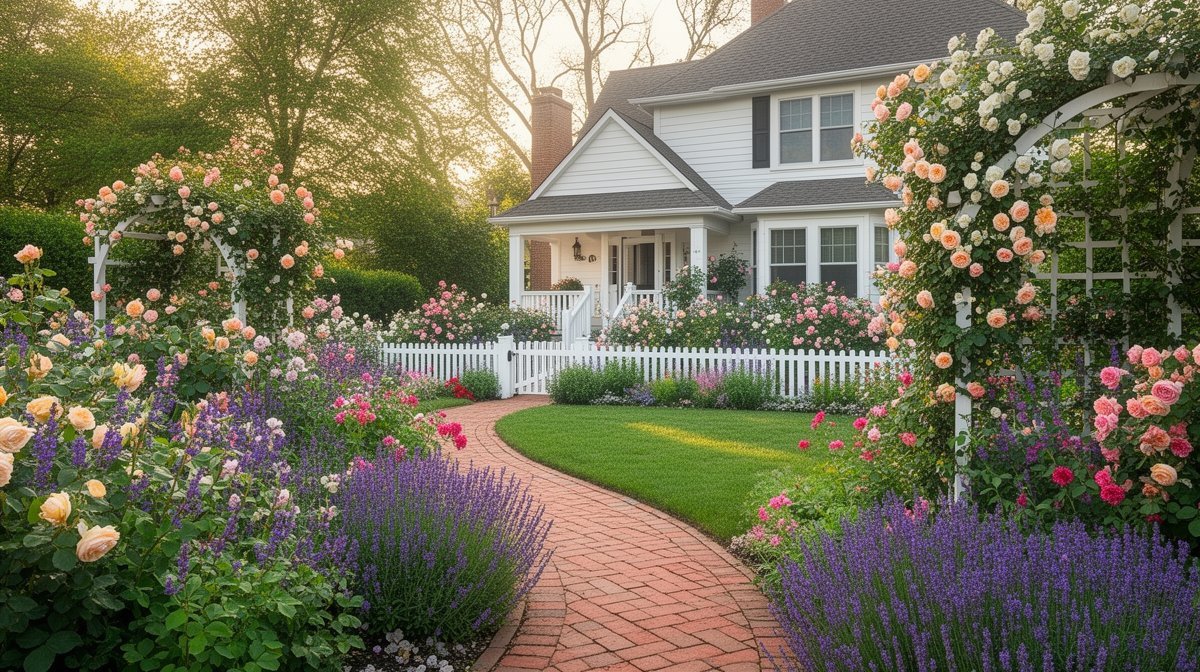
$12–24/sqftA 1940s one-and-a-half-story cottage with a white picket fence has a front garden kept tight and loose at once. Lupinus 'Gallery' mix, Digitalis grandiflora and Echinacea purpurea 'Magnus' stand behind low box-style edging of Spiraea japonica 'Little Princess'. A gravel path runs to the door and a single Hydrangea paniculata 'Limelight' marks the corner.
Try this on your yard: The Lakeshore Cottage DooryardAI-generated image
The Shaded Woodland Cottage Side Yard
$12–22/sqftA north-facing side yard under spruce and birch is planted for shade instead of sun. Hosta 'Sum and Substance' and Astilbe 'Fanal' sit at the front, Aruncus dioicus fills the back, and Heuchera 'Palace Purple' leaf color runs along the stepping stones. The mix stays damp enough to carry itself through a dry August.
Try this on your yard: The Shaded Woodland Cottage Side YardSee how a cottage/english garden looks on YOUR property
Upload a photo of your Duluth yard and visualize your dream garden in seconds.
Try ProScapeAI Free

AI-generated image
Featured Trees & Shrubs for Cottage/English Gardens
Browse all 172 plants for Duluth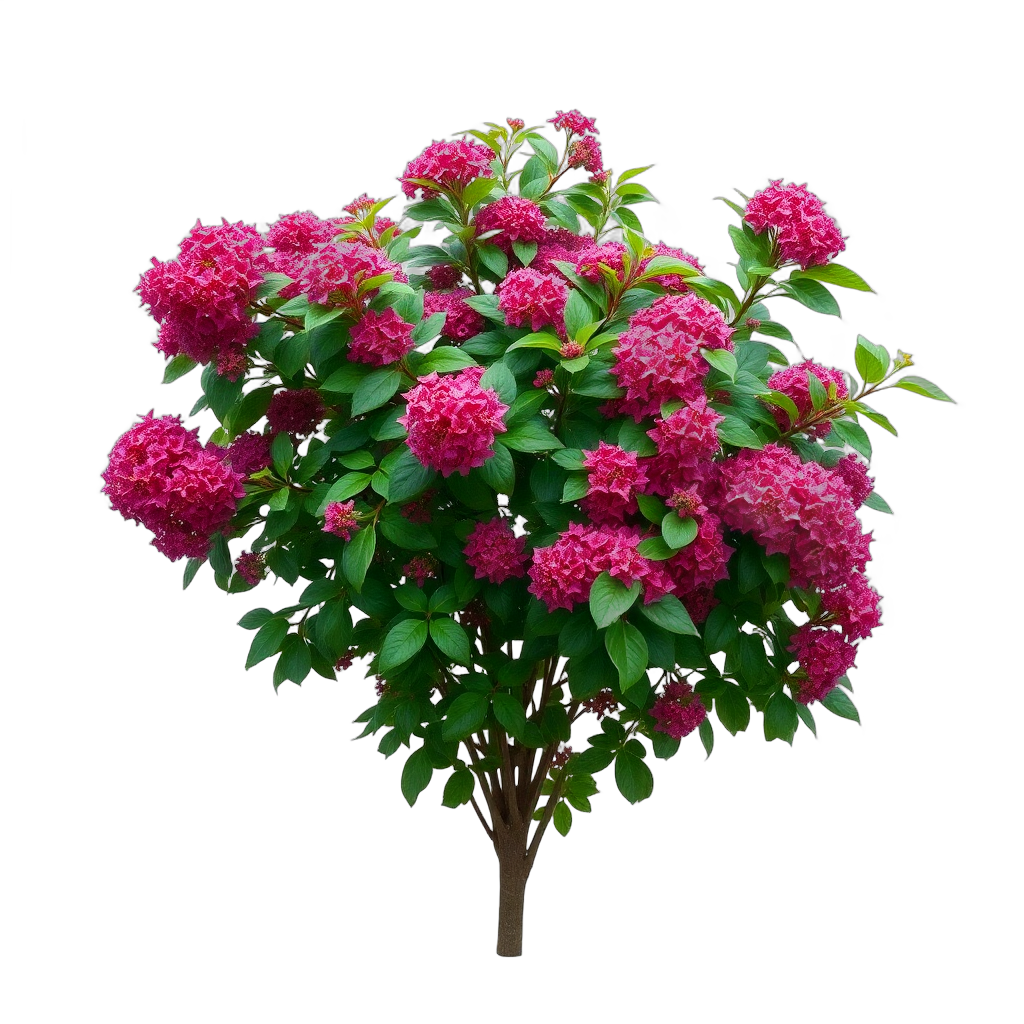
American Cranberrybush
Viburnum trilobum
medium-sized at 10 feet, white blooms in spring. Pollinator-friendly.
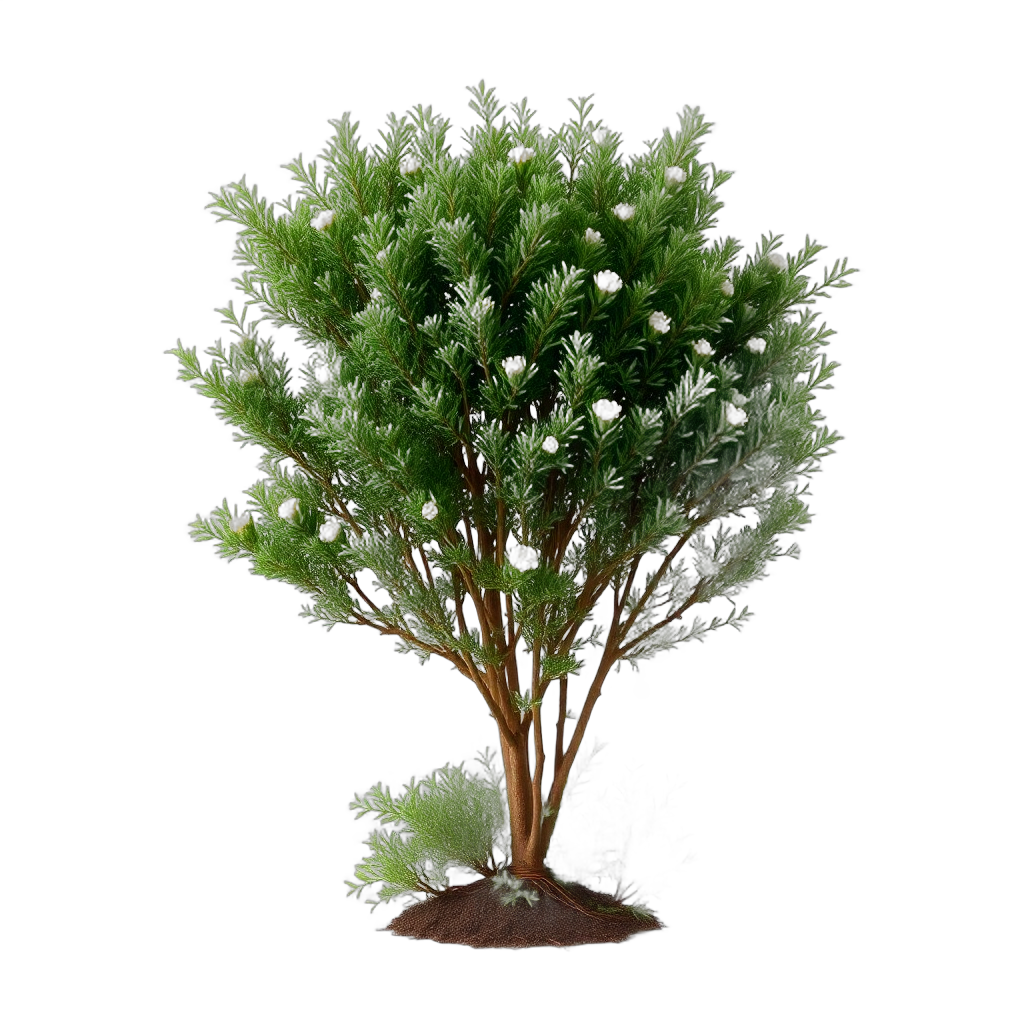
Creeping Juniper
Juniperus horizontalis
low-growing ground cover, blooms in spring. Evergreen year-round.
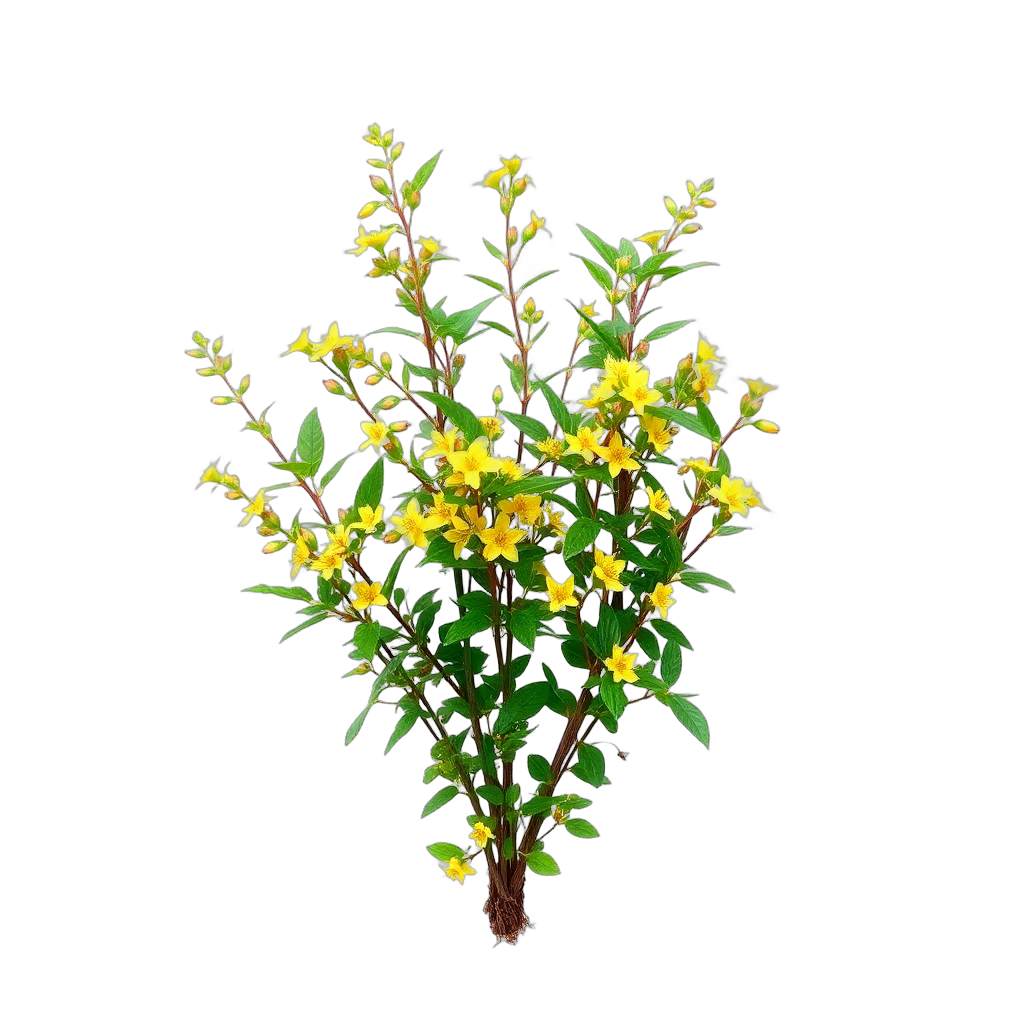
Kalm's St. John's Wort
Hypericum kalmianum
grows to 3 feet, yellow blooms in summer. Pollinator-friendly.
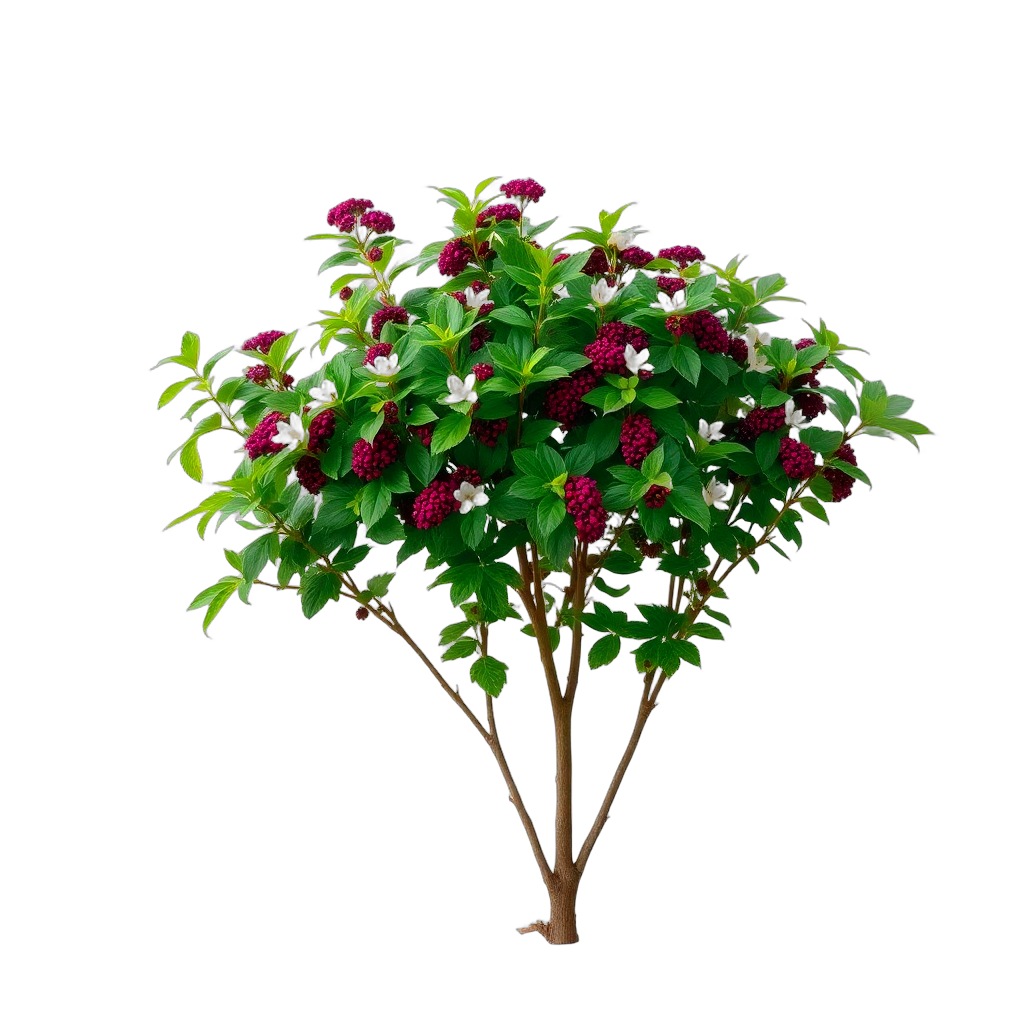
Nannyberry
Viburnum lentago
medium-sized at 15 feet, white blooms in spring. Pollinator-friendly.
Featured Flowers & Perennials for Cottage/English Gardens
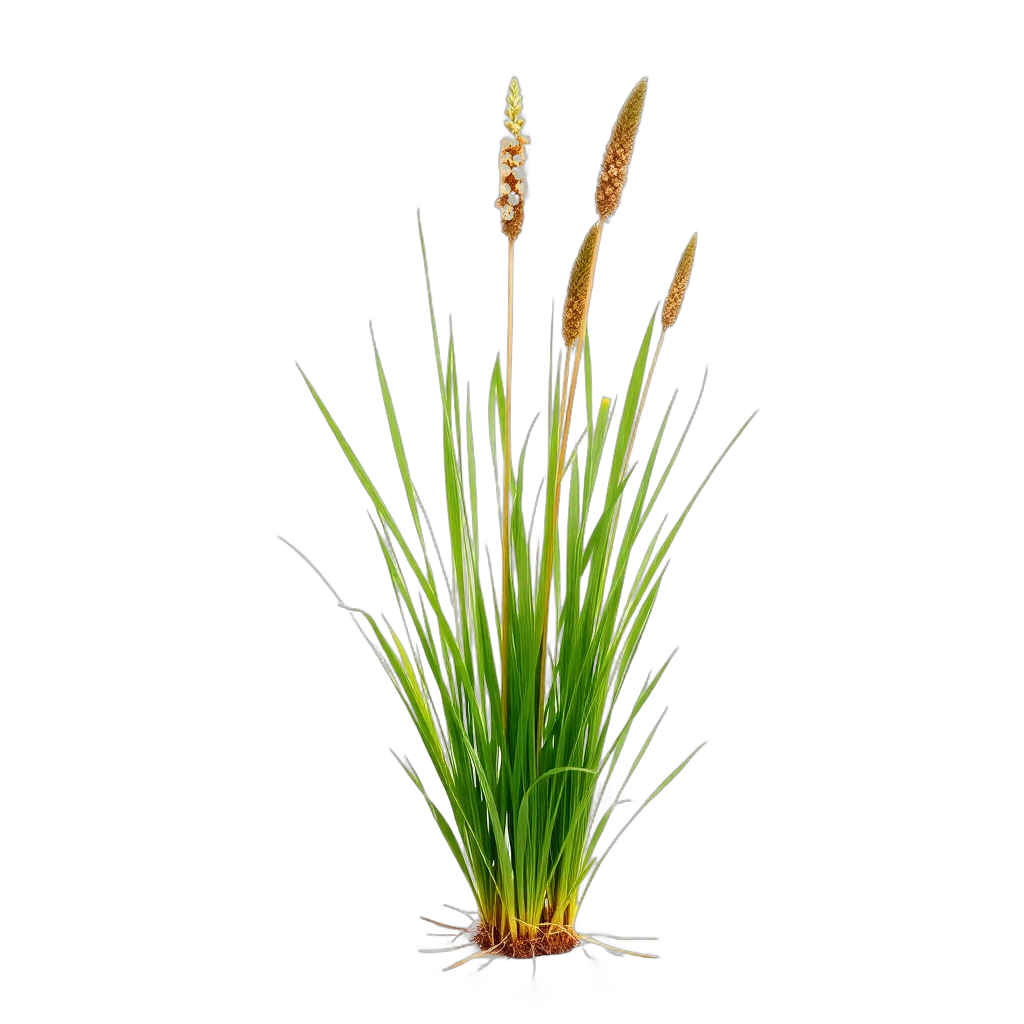
Hardstem Bulrush
Scirpus acutus
medium-sized at 7 feet, blooms in summer.
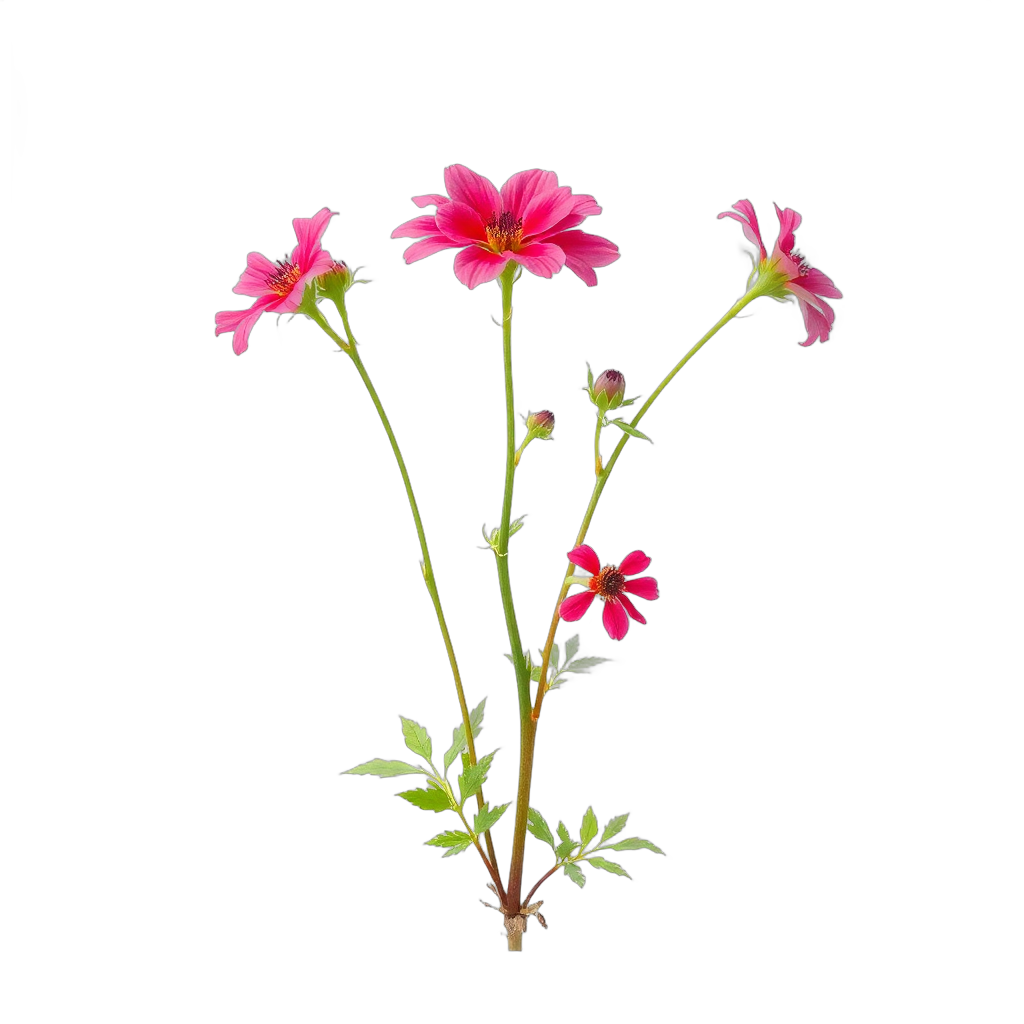
Prairie Smoke
Geum triflorum
low-growing ground cover, pink blooms in spring. Pollinator-friendly.

Purple Coneflower
Echinacea purpurea
grows to 3 feet, purple blooms in summer. Attracts butterflies.
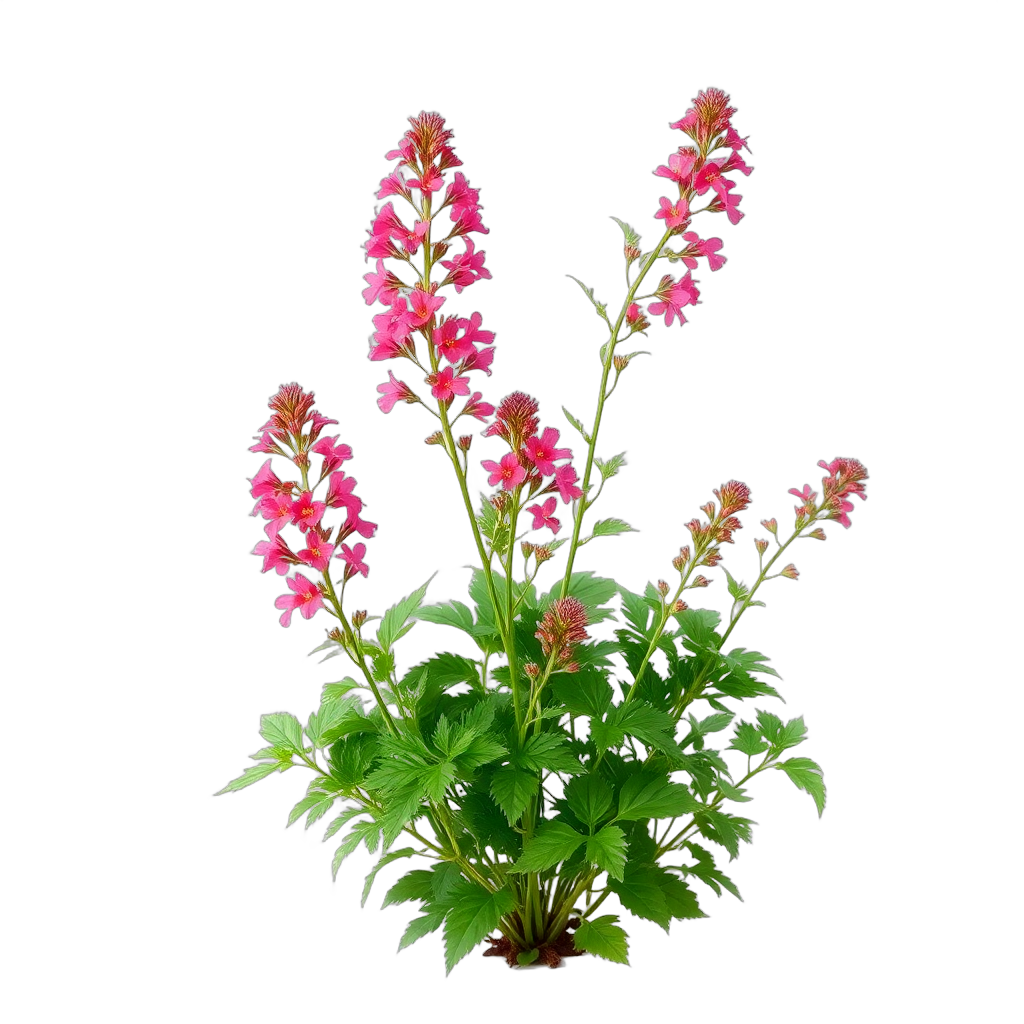
Queen of the Prairie
Filipendula rubra
grows to 5 feet, pink blooms in summer. Attracts butterflies.
Zone and sun checks come from our database — confirm with your local nursery before you buy.
Bloom Calendar for Duluth
spring
Prairie Smoke, American Cranberrybush, Creeping Junipersummer
Hardstem Bulrush, Purple Coneflower, Queen of the Prairiefall
Limited bloomswinter
Limited bloomsDesign Tips for Duluth (Zone 4b)
- Choose own-root Explorer roses such as Rosa 'John Cabot' and 'Winnipeg Parks' over grafted roses, since a winter that kills the canes will not kill the plant
- Mound or raise beds on Duluth's red clay and dig compost into a wide area, because a single planting hole turns into a bathtub in spring thaw
- Plant peonies 2 inches below the surface in early fall and place them away from the roof edge where snow and ice slide off
- Keep fragile perennials out of the driveway drift line and use salt-tolerant edging plants such as Nepeta 'Walker's Low' where the plow throws snow
- Use stone tiers, not mounded soil, on hillside lots to slow runoff, and leave a crushed-stone layer behind every wall
- Test soil through the University of Minnesota Extension lab before adding lime, since native Duluth soil is often already near neutral
- Wait until after Memorial Day for tender annuals, as lake-cooled spring weather can bring a late frost
Where to Source Plants in Duluth
Skip the big-box stores. These independent Duluth nurseries specialize in the plants that make cottage/english gardens thrive in Zone 4b.
Gordy's Gift and Garden
Hermantown, just north of Duluth
Trees, shrubs, perennials, bulbs and annuals with staff garden-planning advice
Hammarlund Landscape Nursery
Esko, south of Duluth
Trees, shrubs, evergreens, perennials and native, pollinator-friendly plants; local delivery
Duluth Flower Farm
Superior, Wisconsin, across the bridge
Bedding plants, perennials, herbs and trees; also sells at the Duluth Farmers Market
Cottage/English Landscaping Cost Ranges
| Project Scope | Estimated Cost |
|---|---|
| Picket fence, 4 ft tall (60 linear ft) | $1,500–$2,400 |
| Brick paver walk (100 sqft) | $2,000–$2,600 |
| Wood garden arbor (8 sqft footprint, about 4 x 2 ft) | $750–$1,100 |
| AI visualization (ProScapeAI) | Free to start |
National average installed ranges for 2026 from our landscaping price list (Homewyse and other published sources). Prices in Duluth, MN vary with site, materials and contractor, so get two or three local quotes.
Duluth Climate & Growing Zone
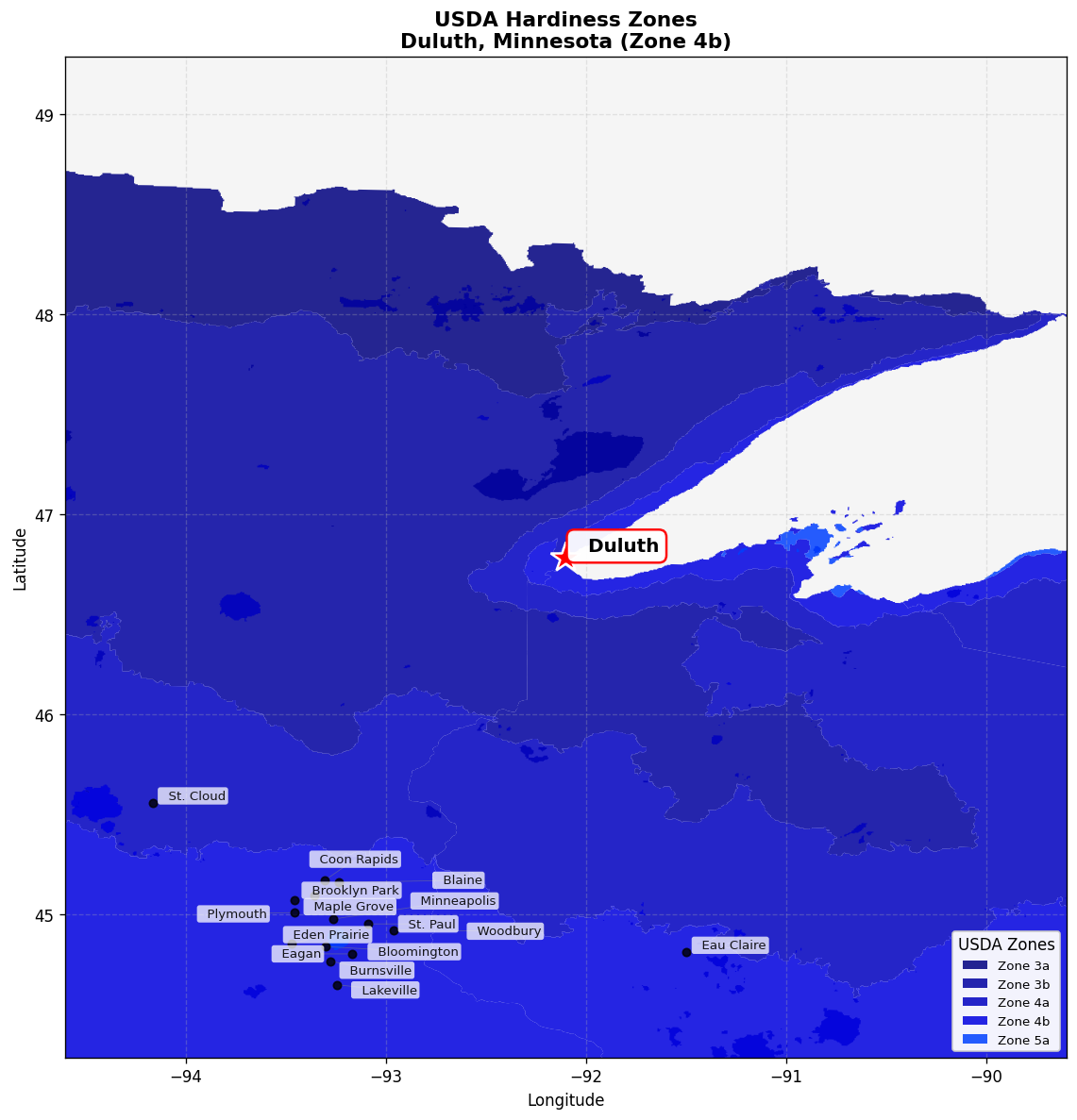
USDA Zone 4b
Hardiness zone for Duluth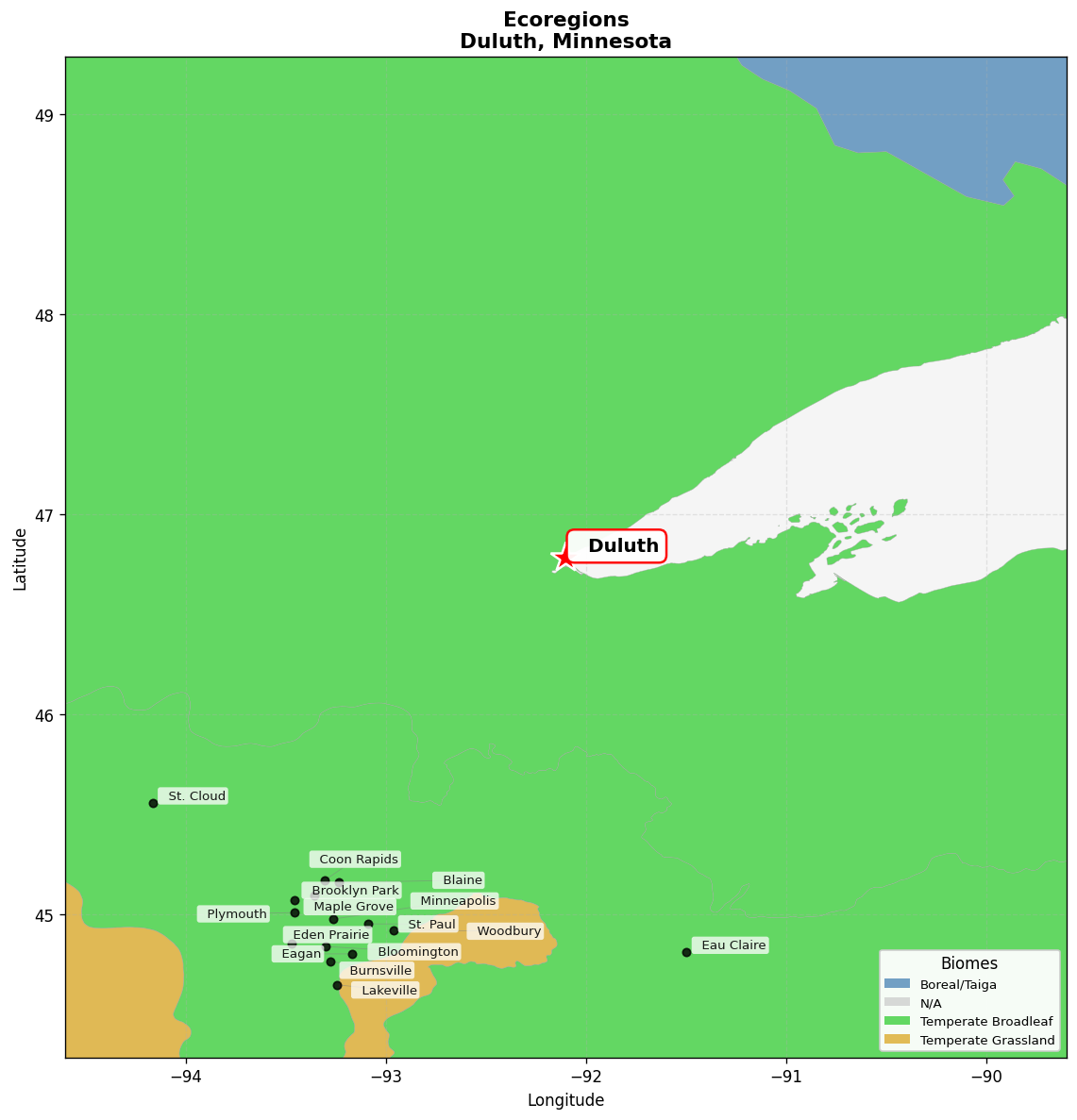
Western Great Lakes forests
Native ecoregionFrequently Asked Questions
How much does an English cottage garden cost in Duluth?
Budget follows the size of the project and the materials, so collect a few local quotes before you decide. Do it in stages: structure first (roses, shrubs, trellis), perennials the next spring.
Is a cottage garden low maintenance in Duluth's climate?
It is moderate work. The hardest tasks are spring cleanup after snow melt, deadheading Phlox 'David' and Nepeta 'Walker's Low' in July, and dividing peonies and daylilies every few years. Cold winters kill off many pests, so disease pressure is lower than in warmer cities. Mulch heavily in late spring, because the clay beneath dries hard in August.
When should I plant a cottage garden in Duluth?
Plant perennials and shrubs once the soil can be worked, typically in May, and finish by mid-September so roots set before freeze-up. Cold spring weather lingers near the lake, so wait until after Memorial Day weekend for tender annuals. Plant peonies in early fall, 2 inches below the soil surface, never deeper.
Do I need a permit for landscaping in Duluth?
Most garden work on your own lot does not need one. The boulevard strip is different: the city's Forestry FAQ says residents cannot plant trees on the boulevard in front of their homes. Ask Duluth planning staff about retaining walls over a set height, work near Lake Superior or trout streams, and any HOA rules.
What cottage plants survive Duluth's winters?
NOAA normals put the January average low at 2.4°F, and real lows go lower. Reliable choices include Rosa 'John Cabot', 'Winnipeg Parks' and 'Hansa', Paeonia 'Sarah Bernhardt', Syringa vulgaris 'Sensation', Campanula persicifolia, Salvia nemorosa 'May Night' and Clematis 'Jackmanii'. Skip hybrid tea roses and treat 'Munstead' lavender as short-lived.
How do I handle red clay and slopes in a Duluth cottage garden?
Dig a wide planting area instead of a single hole, and blend in 2–3 inches of compost. Plant on a low mound where water sits, and add a crushed-stone drainage layer behind any retaining wall. On steep slopes, tier beds with stone instead of mounding soil, which washes out in spring thaw.