Modern Landscape Design Ideas for Fullerton, CA — Zone 10b
Native plants from the California coastal sage and chaparral (Zone 10b) — Mediterranean (hot summer) climate
Why Modern/Minimalist Gardens in Fullerton?
Modern landscape design has a real foothold in Fullerton, and it is not only on new builds. The city's biggest single housing block is postwar tract ranch — long low rooflines, wide shallow front yards and two-car frontages across west Fullerton, the Acacia and Skyline tracts, and the flats below Sunny Hills — and those elevations respond better to a clean modern treatment than to anything fussy. Strip the foundation shrubs, replace the lawn with a graded gravel plane and Corten-edged planters, and a 1958 ranch reads as deliberate rather than dated. At the other end, the custom hillside homes in Raymond Hills and Sunny Hills and the newer contemporary infill around Bastanchury and Coyote Hills come with the flat parapets, black-framed glass walls and stucco planes that modern landscaping is designed to amplify. Fullerton's terrain helps too: the ground rises steadily toward the Coyote and Puente Hills, so a single board-formed concrete retaining wall or a stepped stucco planter turns an awkward slope into the strongest line on the street.
The climate is what makes this style genuinely low-maintenance here rather than merely fashionable. Fullerton is USDA Zone 10b — winter lows around 35–40°F, hard frost effectively unknown — in a hot-summer Mediterranean pattern (Köppen Csa), on the edge of the California coastal sage and chaparral ecoregion. Rainfall is roughly 14 inches a year with over 90 percent of it falling between November and March, and from April to October there is essentially none. That is close to ideal for the sculptural plants modern design leans on: Agave attenuata, Agave 'Blue Glow', Agave parryi var. truncata, Aloe 'Blue Elf', Dasylirion wheeleri and Yucca rostrata all live outdoors permanently and never need protection. The complications are local and specific. Twelve miles inland from the coast, Fullerton spends May and June under a grey marine layer that keeps mornings damp — enough to soften rosettes if they sit in poorly drained ground — and then flips into September and October Santa Ana events with single-digit humidity and afternoons above 100°F. A modern garden here needs one shade tree in the design, not zero: an unshaded gravel-and-concrete yard in a Fullerton October radiates heat back at the house for hours after sunset.
Soil determines how the gravel beds get built. Flat Fullerton is alkaline clay loam, commonly pH 7.5 to 8.2, over ground that was Valencia orange grove until the tract builders arrived; the Raymond Hills and Sunny Hills slopes shift abruptly to shallow decomposed granite over sandstone. Rosettes planted at grade in that clay will rot through a wet February even though they survived a 105°F September without blinking — cold is never what kills them here, standing winter water is. The reliable detail is a raised or bermed bed: 8 to 12 inches of 50/50 native soil and crushed granite, gypsum worked into the clay below, and a 2-inch gravel mulch collar so no crown ever sits in wet mulch. For hardscape, that same clay swells and shrinks between the winter rains and a bone-dry August, so every slab and paver field needs a compacted crushed-rock base and honest control joints; large-format concrete poured straight onto graded clay cracks along the joint lines within a few seasons.
Water rules make this the easiest style in Fullerton to get approved and rebated. The City of Fullerton runs its own water utility, permitted landscape rehabilitations over 500 square feet fall under California's Model Water Efficient Landscape Ordinance — which caps the high-water share of the yard and requires drip on shrub beds plus a weather-based controller — and turf-replacement rebates through MWDOC and SoCal WaterSmart have generally started around 3 dollars per square foot. Confirm current terms before buying plants, because the programs open and close. A gravel-plane front yard planted with Agave, Muhlenbergia rigens, Leucophyllum frutescens 'Green Cloud' and Lavandula ×intermedia 'Phenomenal' clears those requirements without any compromise to the design, and it takes summer mowing to zero.
4 Modern/Minimalist Design Ideas for Fullerton

The Grass-and-Lavender Entry Walk
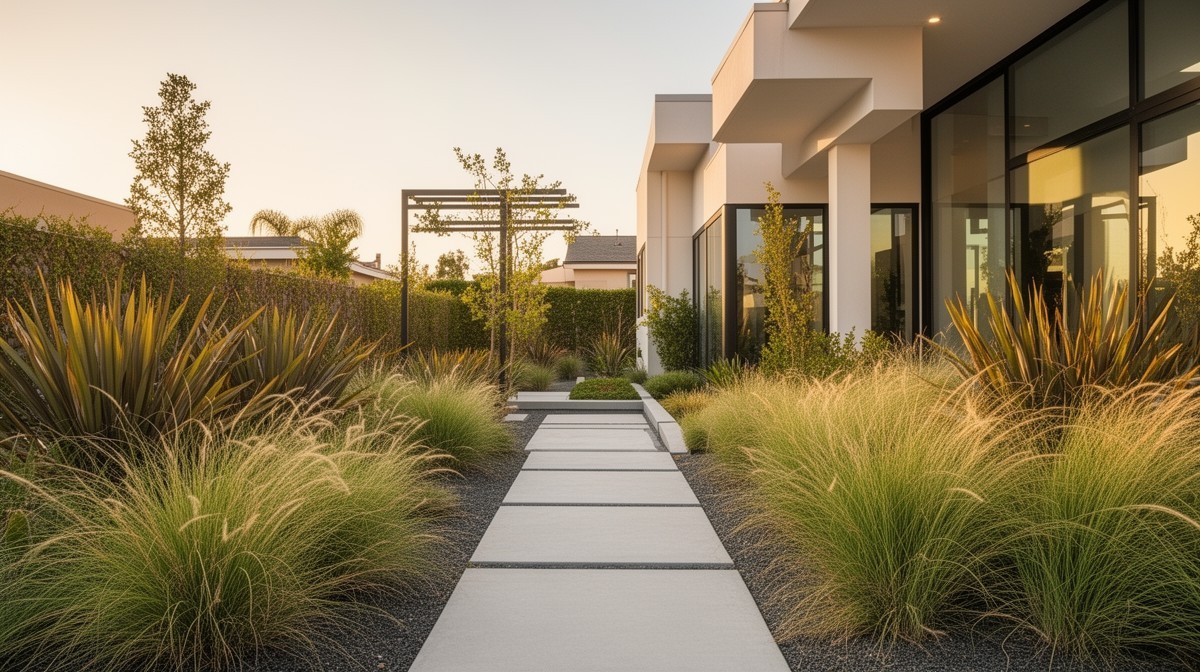
$16–30/sqftA flat-roofed white stucco house with a tall parapet, a narrow horizontal clerestory window and a full-height black-framed glass wall glowing warm on the right, entered through a dark flush-panel door with a long vertical pull. A monolithic pale concrete walk of large slabs runs dead straight from the sidewalk to the entry with a single joint line. Both sides of the walk are deep dark-mulched beds massed in a repeating rhythm: big fountain-shaped bunchgrasses with tan plumes, tight blue-green tufts, drifts of purple lavender, silver mounded shrubs, spiky rosettes and half-buried boulders. Two clipped lawn panels sit behind the beds and a multi-trunk deciduous tree shades the left of the facade.

The Zero-Turf Gravel Frontage
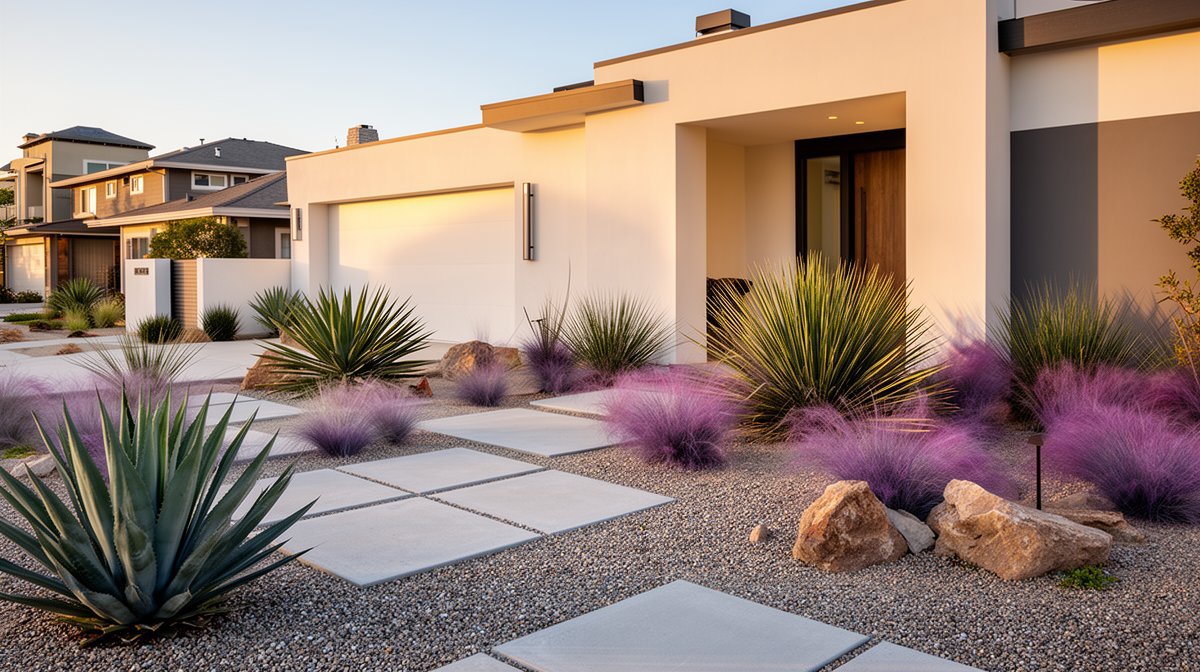
$12–24/sqftA white-painted mid-century ranch with a low dark shingle roof, a projecting flat-roofed stucco entry block and a plain white sectional garage door. There is no lawn at all: the entire frontage is raked pale tan gravel, organised by rectangular Corten steel planters, straight concrete stepping pads and a wide concrete drive. Big blue-grey rosettes are placed as individual specimens through the gravel rather than massed, with smaller green rosettes, bronze spiky clumps, blue chalk-stick colonies and boulders filling between them, and low black bollard lights marking the path. The discipline is in the spacing — every plant is given room to be read as an object.

The Concrete Fire Terrace
$22–42/sqftA large pale grey concrete terrace of big-format square panels sits behind a single-storey white stucco house with a black-framed sliding glass wall and an indoor fireplace visible through it. Two long low-profile sofas and two matching lounge chairs on dark metal frames face a round wood-topped fire table with live flame at the centre. Two runs of bistro string lights cross overhead. Beyond the terrace, a wide flat lawn runs to a smooth white boundary wall lined with evenly spaced upright shrubs, and a mature broad-canopy tree stands to the right. Loose bunchgrasses in dark mulch soften every edge of the slab.

The Lap Pool Courtyard
$55–110/sqft (pool area inclusive)Photographed at dusk: a single-storey white stucco house with a dark hipped roof opens through a full wall of black-framed sliders onto a bright kitchen and living space. A rectangular dark-interior lap pool sits in a wide pale concrete deck, notched around a stepped entry, its underwater lights reflecting the length of the water. Two white stucco planter walls run down both sides holding tall uplit grasses, with two lanterns set on the deck and a low woven sectional and small fire bowl to the right. An olive frames the left edge. Almost the entire palette is white stucco, pale concrete and moving grass — the pool does the rest.
See how a modern/minimalist garden looks on YOUR property
Upload a photo of your Fullerton yard and visualize your dream garden in seconds.
Try ProScapeAI Free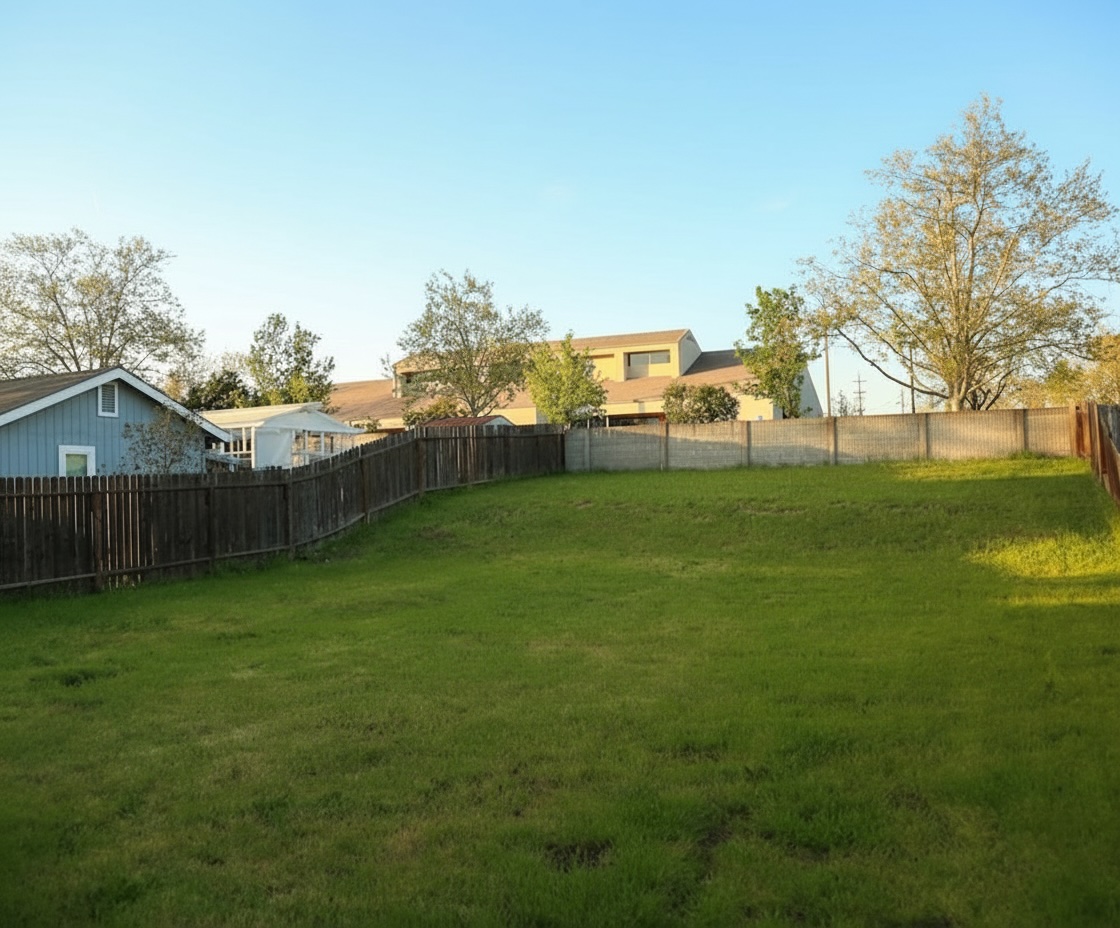
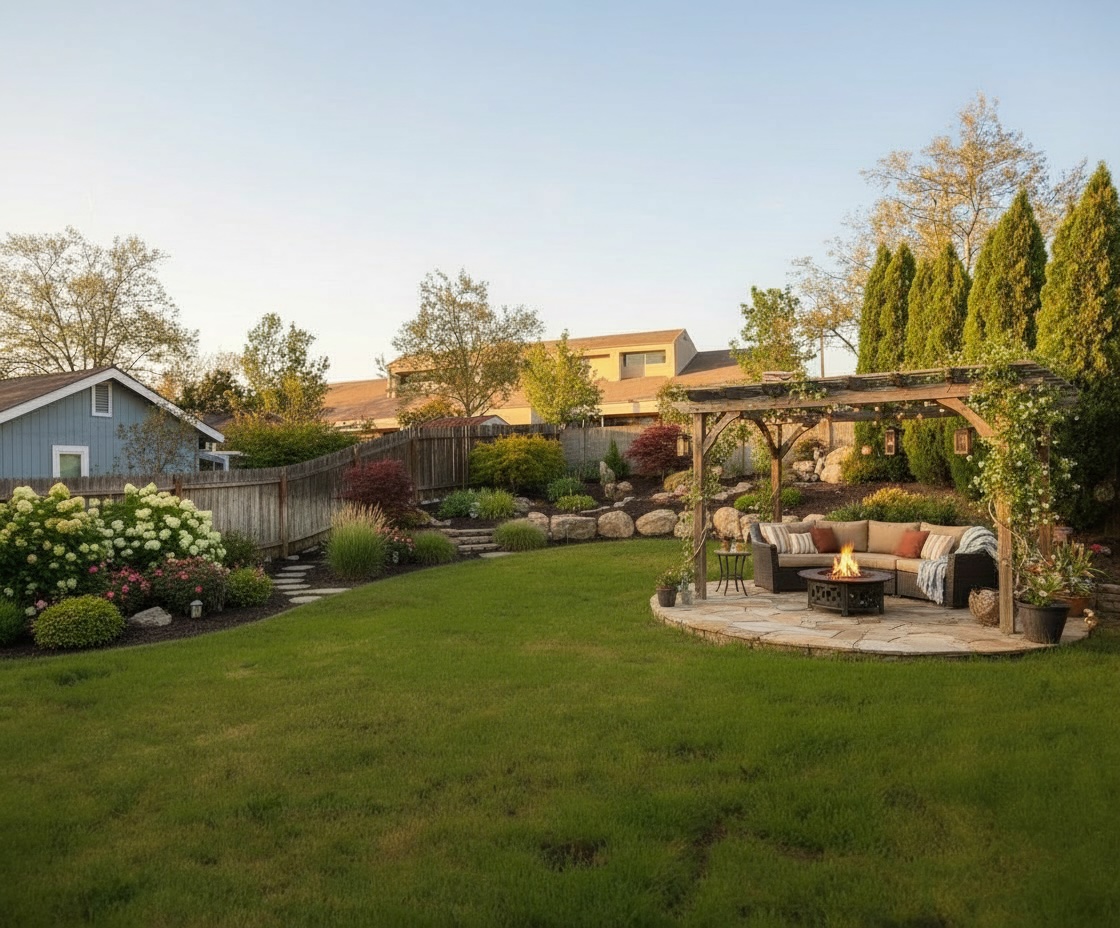
Featured Trees & Shrubs for Modern/Minimalist Gardens
Browse all 219 plants for Fullerton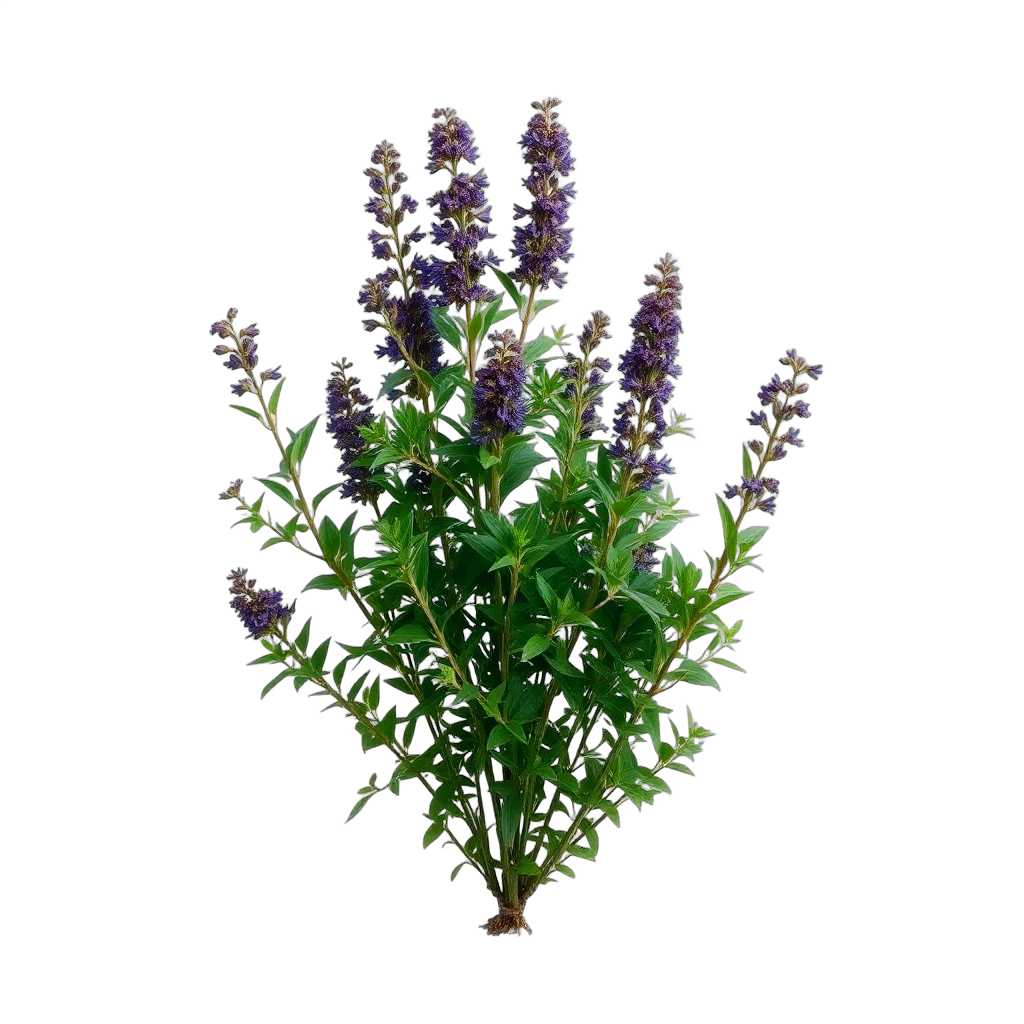
Black Sage
Salvia mellifera
grows to 4 feet, white blooms in spring. Attracts butterflies.
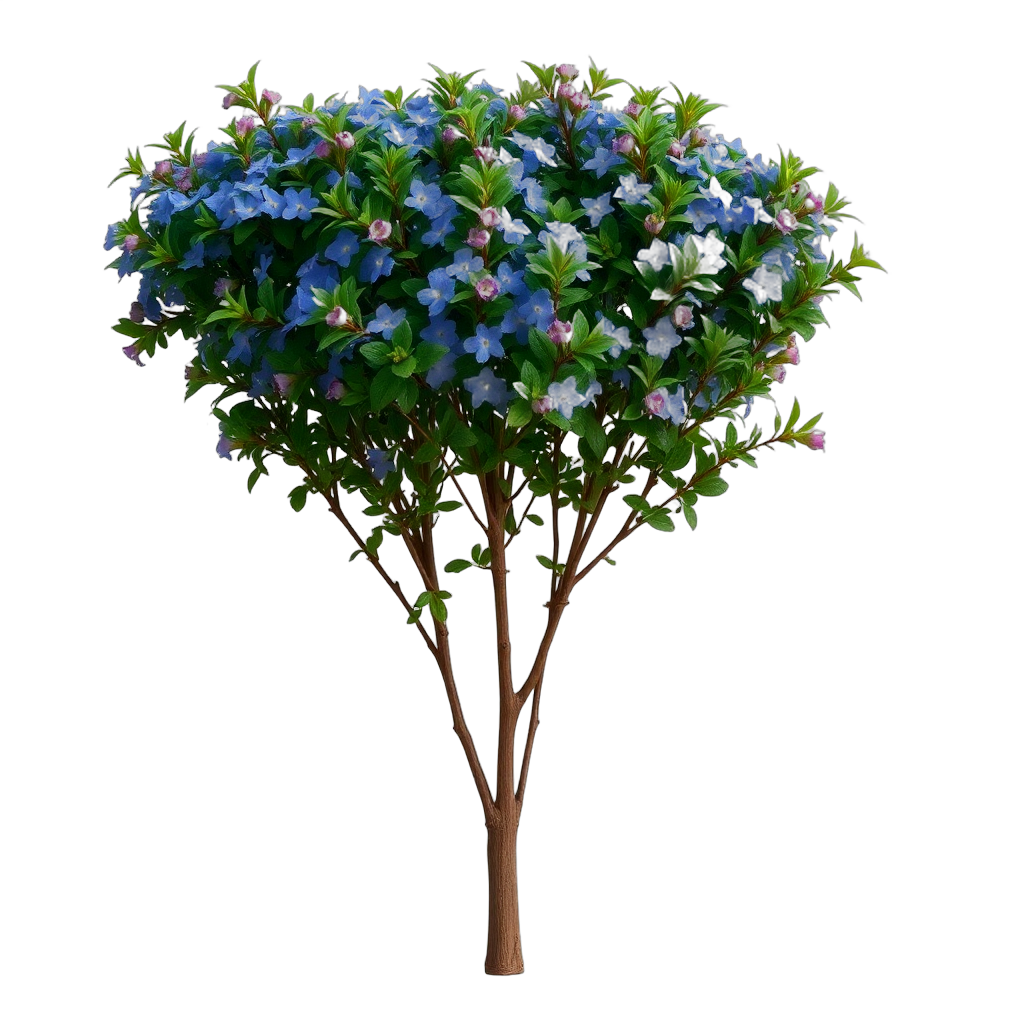
Blue Blossom
Ceanothus thyrsiflorus
medium-sized at 12 feet, blue blooms in spring. Attracts butterflies.

Blue Elderberry
Sambucus cerulea
medium-sized at 15 feet, white blooms in spring. Attracts butterflies.

Buckbrush
Ceanothus cuneatus
medium-sized at 7 feet, white blooms in spring. Attracts butterflies.
Featured Grasses & Groundcovers for Modern/Minimalist Gardens
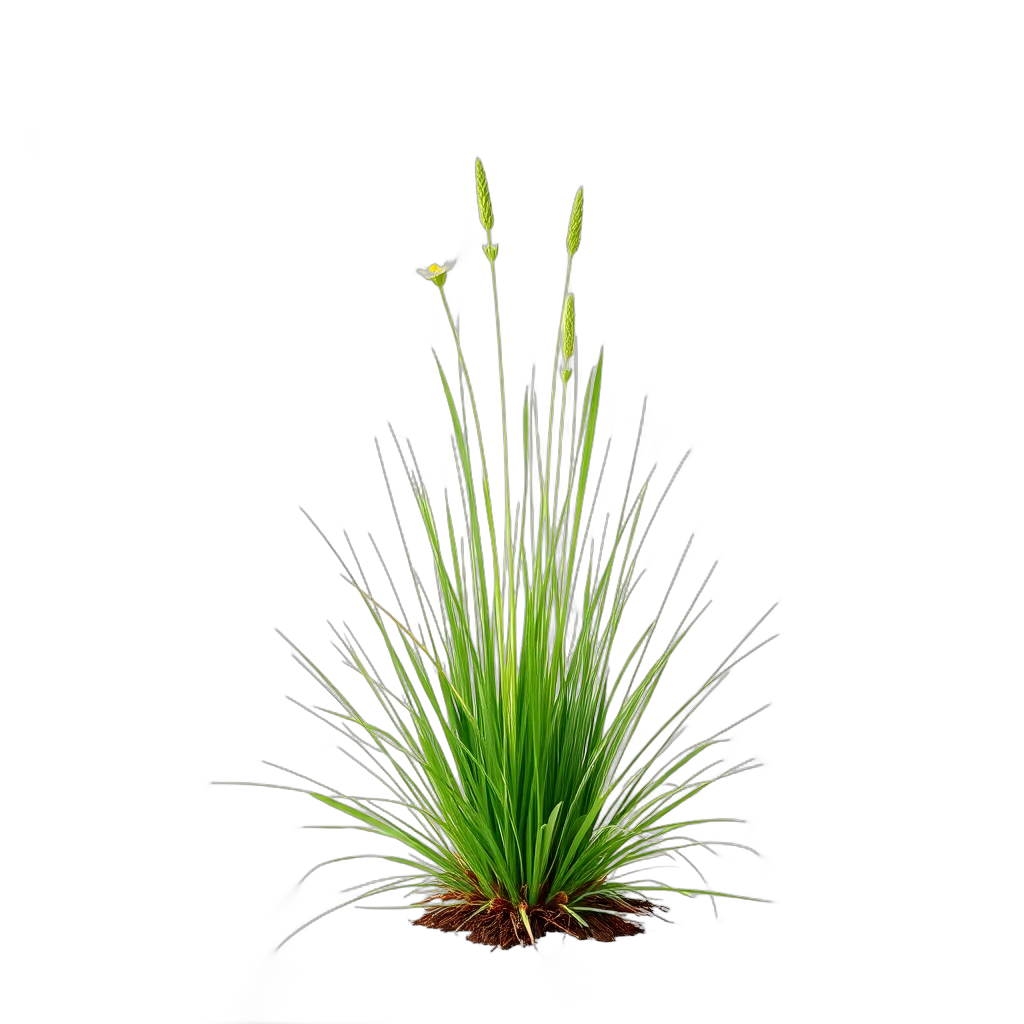
California Brome
Bromus carinatus
low-growing ground cover, blooms in spring. Yellow fall color.
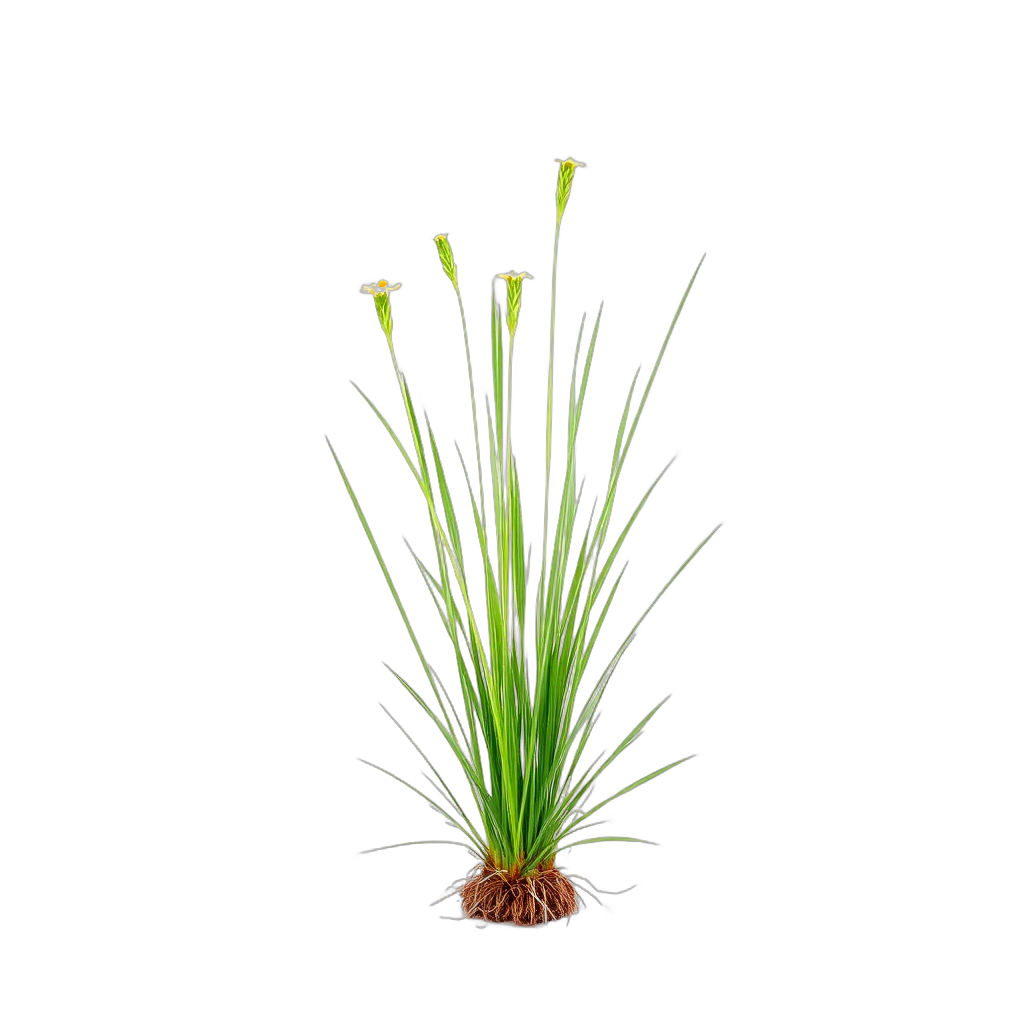
California Melic
Melica californica
low-growing ground cover, blooms in spring.
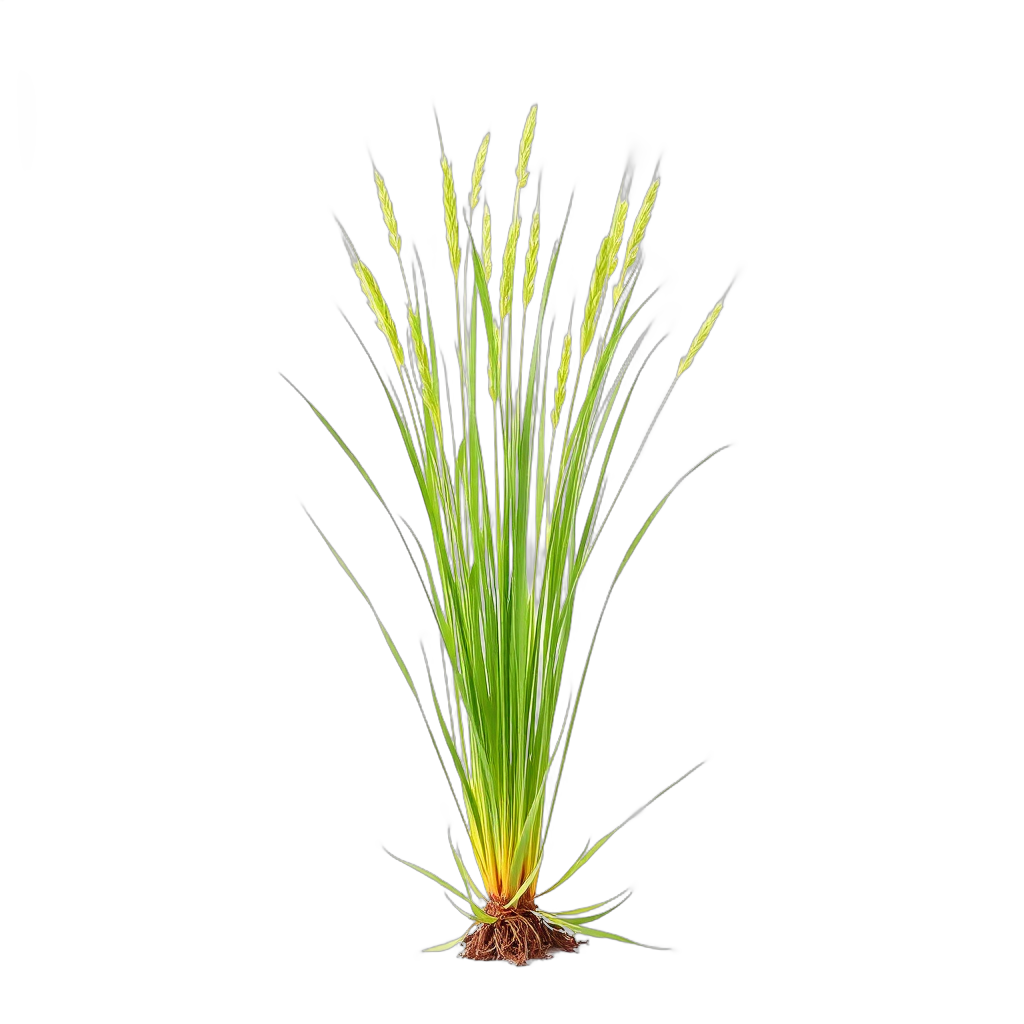
California Oatgrass
Danthonia californica
low-growing ground cover, blooms in spring. Yellow fall color.
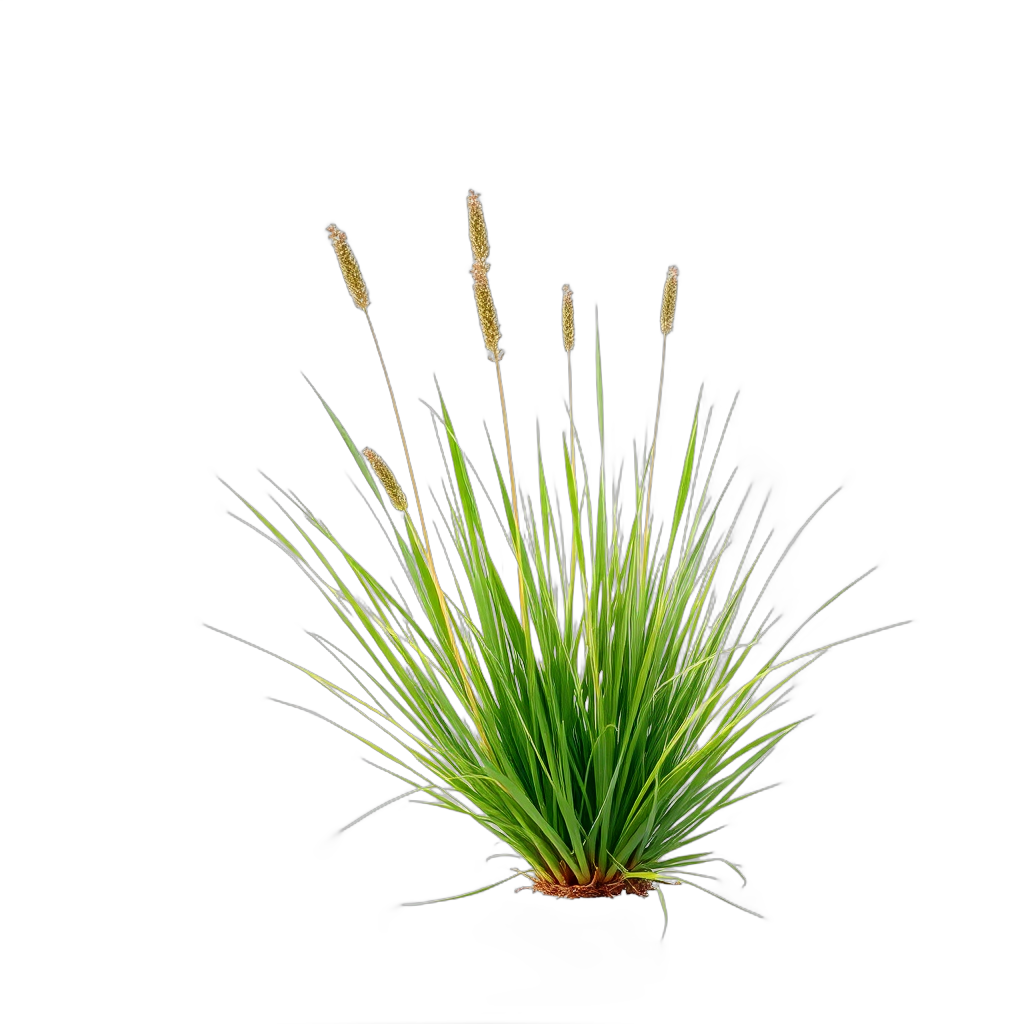
Deer Grass
Muhlenbergia rigens
grows to 3 feet, yellow blooms in fall. Evergreen year-round.
Featured Flowers & Perennials for Modern/Minimalist Gardens
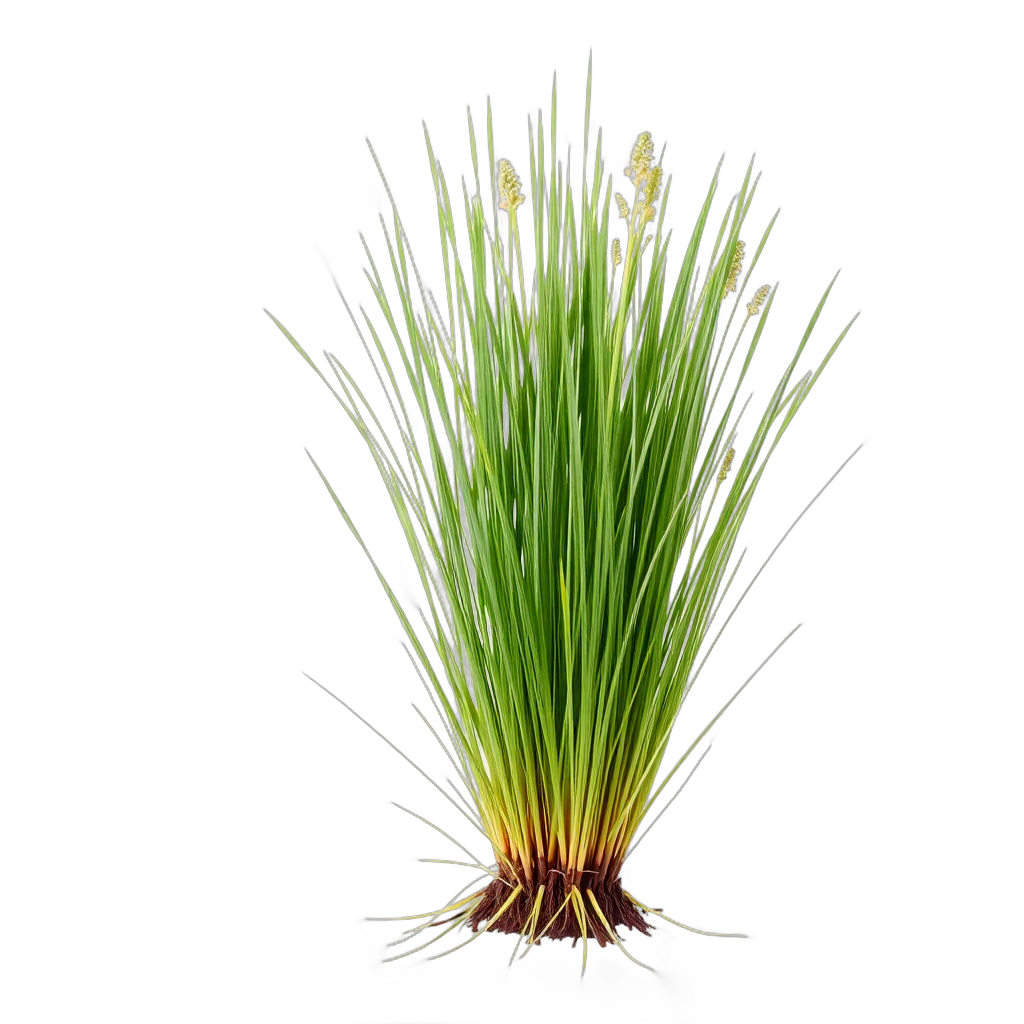
California Gray Rush
Juncus patens
low-growing ground cover, blooms in summer. Evergreen year-round.
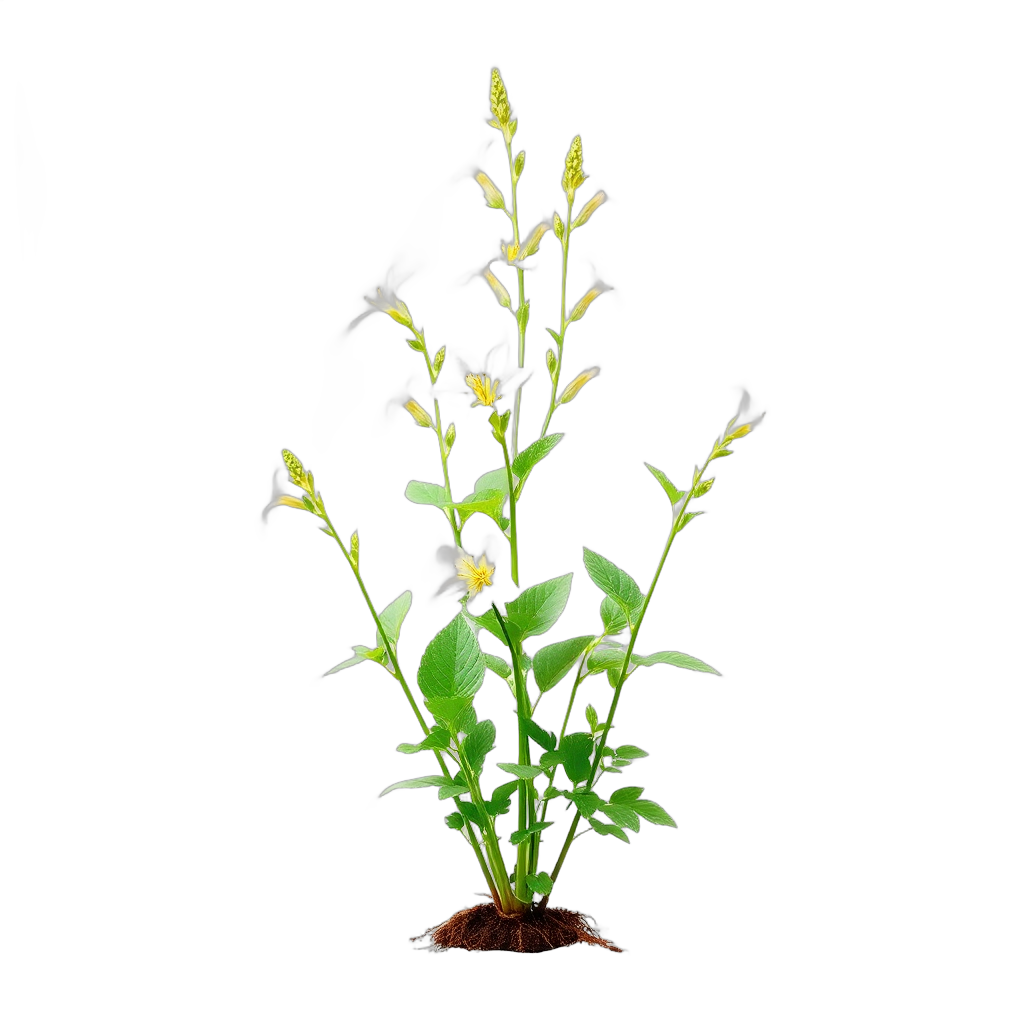
Beach Evening Primrose
Camissonia cheiranthifolia
low-growing ground cover, yellow blooms in spring. Attracts butterflies.
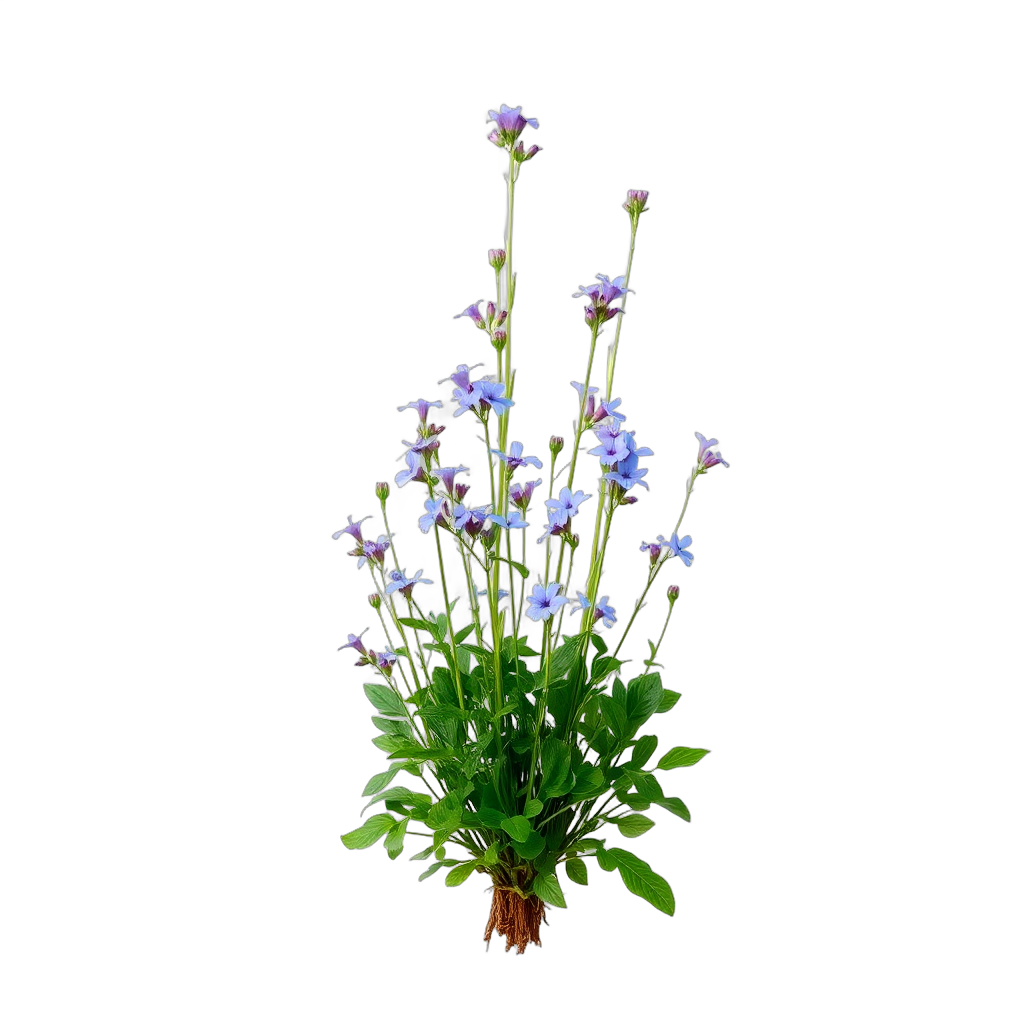
Blue Dicks
Dichelostemma capitatum
low-growing ground cover, blue blooms in spring. Pollinator-friendly.
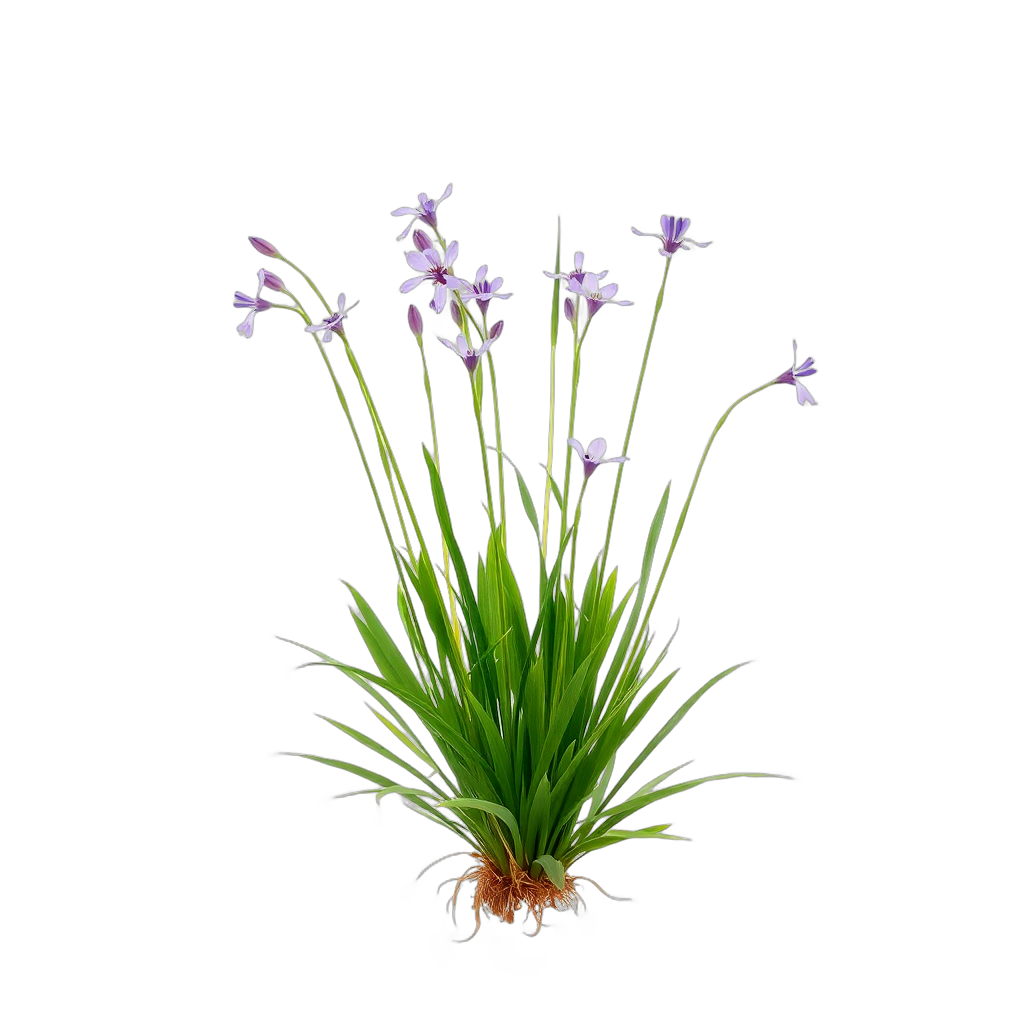
Blue-Eyed Grass
Sisyrinchium bellum
low-growing ground cover, blue blooms in spring. Attracts butterflies.
Zone and sun checks come from our database — confirm with your local nursery before you buy.
Bloom Calendar for Fullerton
spring
Beach Evening Primrose, Blue Dicks, Blue-Eyed Grasssummer
California Gray Rush, Hooker's Evening Primrose, Hummingbird Mintfall
California Fuchsiawinter
Limited bloomsDesign Tips for Fullerton (Zone 10b)
- Raise every rosette bed 8 to 12 inches above Fullerton's clay loam and finish with a 2-inch crushed-rock collar — Agave 'Blue Glow' and Echeveria imbricata die of a wet February here, never of a cold one
- Use Muhlenbergia rigens where a Phoenix designer would use more Agave; the native deergrass gives you the same architectural mass, holds its fountain shape on a fraction of the water, and needs one cut-back in late January
- Never specify Nassella tenuissima for a modern Fullerton bed no matter how good it looks in the reference photo — it is invasive in California, it seeds into every gravel joint, and Festuca mairei or Lomandra longifolia 'Breeze' do the job without the problem
- Design one shade tree into the plan before anything else: gravel and pale concrete in a Fullerton Santa Ana October store heat all afternoon and release it at the house until well after dark
- Compact a real crushed-rock base under every square foot of hardscape and saw the control joints on the panel grid — flat-city clay swells through the winter rains and cracks slabs poured straight onto graded ground
- Uplight the grasses rather than the house wall; in-grade fixtures behind Muhlenbergia capillaris 'Regal Mist' and Chondropetalum tectorum give the evening depth these gardens are designed for, and Fullerton's warm nights buy you eight months of use
- Work with the rise toward the Coyote Hills instead of levelling it — one board-formed concrete or Corten retaining wall on a sloped Raymond Hills lot does more for a modern design than any amount of planting
- Repeat three plants at least five times each before adding a fourth: the discipline in the gravel-plane frontages that work in Fullerton is spacing and repetition, and a one-of-everything collection reads as clutter under this much visual contrast
Where to Source Plants in Fullerton
Skip the big-box stores. These independent Fullerton nurseries specialize in the plants that make modern/minimalist gardens thrive in Zone 10b.
Mimosa Nursery
West Anaheim (Crescent Ave), 5 miles from downtown Fullerton
Large-format fruit and ornamental stock at grower prices, plus citrus on licensed California rootstock for the one fruiting accent a modern courtyard usually wants
Upland Nursery
North Tustin Street, Orange
Family-run since the 1990s; a serious cactus and rosette bench, bonsai stock, Japanese maples and heavy cement planters sized for architectural specimens
Roger's Gardens
Corona del Mar, Newport Beach
Seven-acre destination garden centre with a California native section, a large pot and container department and staff who plant these palettes in coastal Orange County weekly
Green Thumb Nursery
Lake Forest, south Orange County
Family-owned five-acre garden centre; reliable source for Agave, Aloe, Lomandra, Muhlenbergia and 15- and 24-inch box Olea europaea 'Little Ollie' specimens
Modern/Minimalist Landscaping Costs in Fullerton
| Project Scope | Estimated Cost |
|---|---|
| Zero-turf front yard conversion (600 sqft: gravel, edging, specimen plants) | $9,000 – $20,000 |
| Large-format concrete terrace (400–600 sqft) on compacted base | $14,000 – $38,000 |
| Corten steel raised planter, fabricated and filled | $900 – $2,400 each |
| Gas fire table or fire bowl, plumbed and installed | $3,500 – $11,000 |
| White stucco planter walls with in-grade uplighting (per linear ft) | $180 – $340 / ft |
| Backyard modern room with fire terrace, lighting and planting | $35,000 – $90,000 |
| Lap pool with concrete deck and full courtyard landscape | $110,000 – $240,000 |
| AI visualization with ProScapeAI | Free to start |
Estimates based on Fullerton, CA-area contractor rates as of 2026. Actual costs vary by site conditions, materials, and contractor.
Fullerton Climate & Growing Zone
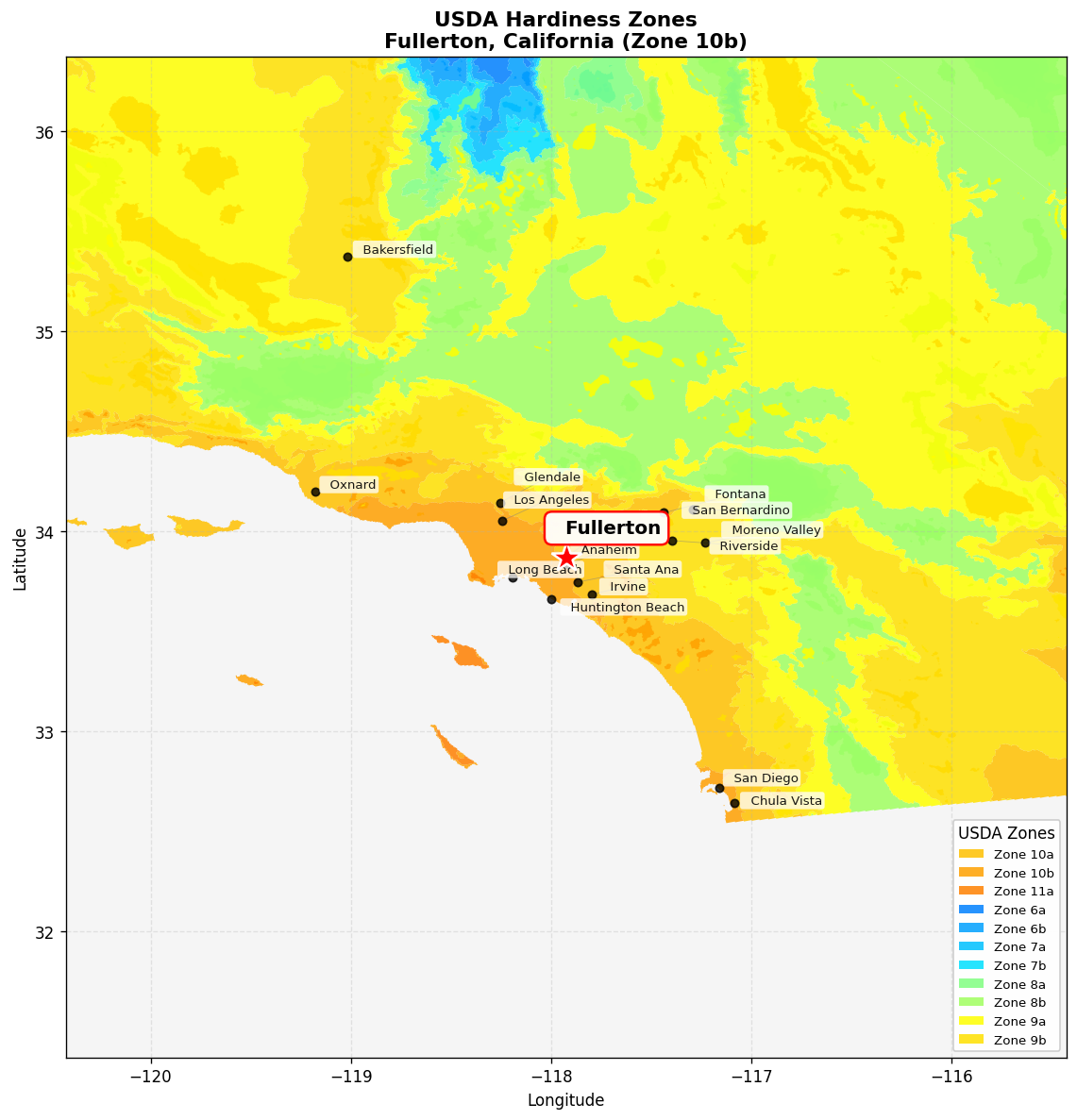
USDA Zone 10b
Hardiness zone for Fullerton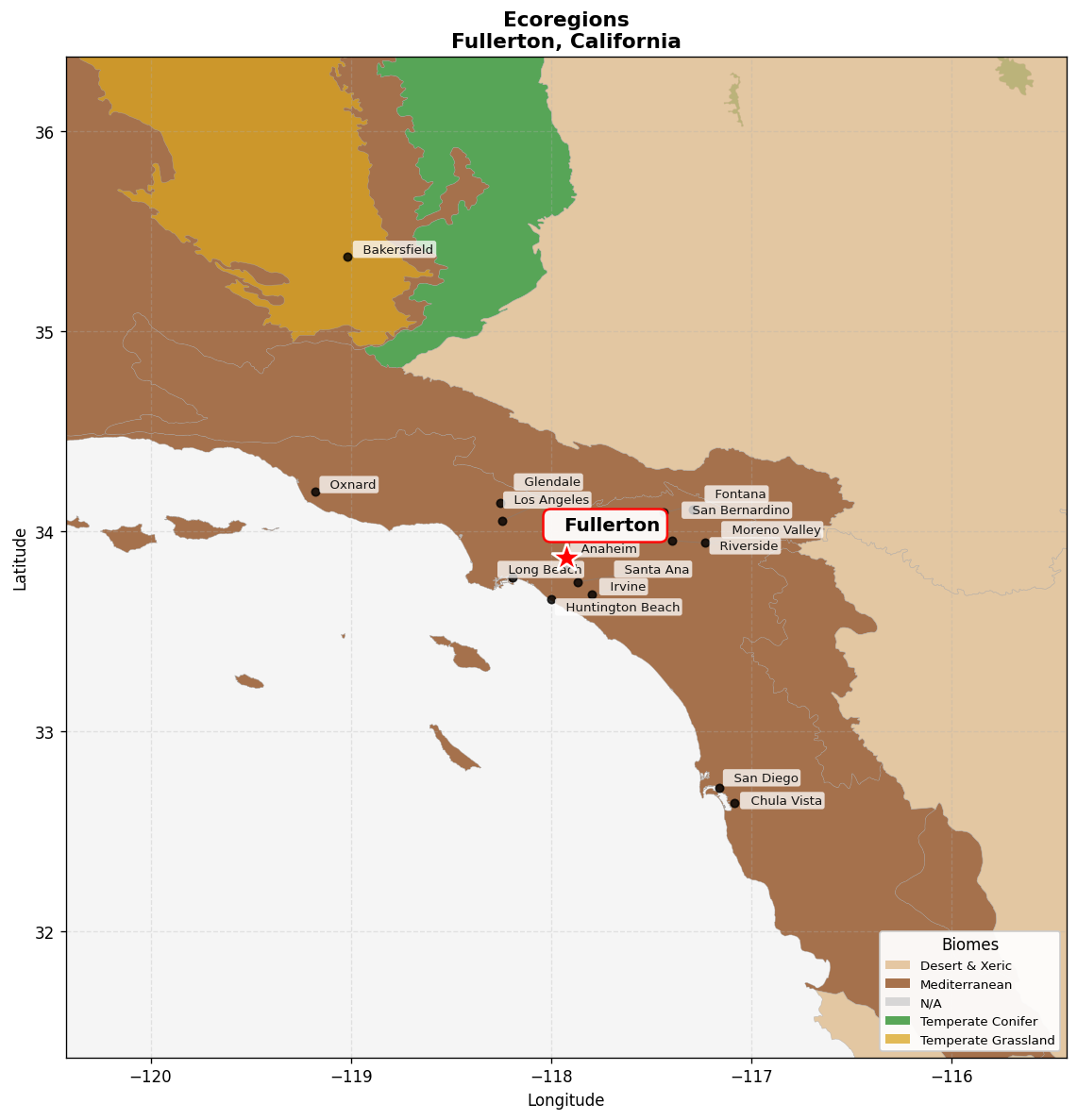
California coastal sage and chaparral
Native ecoregionFrequently Asked Questions
How much does modern landscaping cost in Fullerton?
Orange County installation runs roughly 20 to 30 percent above the national average. A full zero-turf front-yard conversion of about 600 square feet — turf removal, gravel plane, Corten planters, concrete pads and specimen Agave — typically lands between 9,000 and 20,000 dollars. A large-format concrete rear terrace of 400 to 600 square feet with a gas fire table runs 22,000 to 55,000 dollars. A lap pool with a concrete deck and stucco planter walls in Sunny Hills or Raymond Hills commonly falls between 110,000 and 240,000 dollars all in. DIY gravel-and-plant frontages can be done for under 8 dollars per square foot if you hire out only the excavation.
Will agaves and aloes survive a Fullerton winter?
Cold is not the problem here — Fullerton is Zone 10b with winter lows of 35 to 40°F and effectively no frost, so Agave attenuata, Agave 'Blue Glow', Agave parryi var. truncata, Aloe 'Blue Elf', Dasylirion wheeleri and Yucca rostrata all live outdoors permanently. Winter water is the problem. Roughly 14 inches of rain falls between November and March onto clay loam that holds it, and a rosette planted at grade will rot in February even though it sailed through a 105°F September. Plant every one in a bed raised 8 to 12 inches on 50/50 native soil and crushed granite, and finish with a 2-inch gravel collar so the crown never sits in wet mulch.
Do I still need a tree in a modern Fullerton yard?
Yes, and it is the single most common omission. Fullerton gets September and October Santa Ana events where humidity drops into single digits and afternoons pass 100°F, and a yard of gravel and pale concrete with no canopy stores that heat and radiates it back at the house well past sunset. One well-placed tree fixes it. Ulmus parvifolia 'Drake' and 'True Green' give a broad multi-trunk canopy that suits modern lines, Olea europaea 'Swan Hill' gives an evergreen silver form with no fruit drop, and Arbutus 'Marina' works where you want a sculptural trunk. Limb existing trees up high so the trunks read as objects above a clean groundplane.
Which grasses hold their shape through a Fullerton summer?
Muhlenbergia rigens, the California native deergrass, is the local workhorse — it holds a clean fountain form on almost no summer water and tolerates the clay. Muhlenbergia capillaris 'Regal Mist' delivers the pink autumn haze, Lomandra longifolia 'Breeze' stays tidy and evergreen in tight modern beds, Chondropetalum tectorum gives a vertical reed texture, and Festuca mairei handles reflected heat off stucco. Avoid Nassella tenuissima, which is invasive in California and seeds itself everywhere, and treat Cenchrus setaceus cultivars as short-lived. Cut everything back once in late January or February; that is the entire maintenance calendar.
How do Fullerton's water rules affect a modern design?
They work in your favour. Permitted landscape rehabilitations over 500 square feet fall under California's Model Water Efficient Landscape Ordinance, which limits the high-water share of the planted area and requires drip on shrub beds plus a weather-based controller. A gravel plane planted with Agave, Muhlenbergia rigens, Leucophyllum frutescens 'Green Cloud' and Lavandula ×intermedia 'Phenomenal' sits far inside those limits without any design compromise. Turf-removal rebates through MWDOC and SoCal WaterSmart have generally started around 3 dollars per square foot, so a 600-square-foot lawn removal can offset a meaningful share of the gravel and edging cost. Confirm current program terms with the City of Fullerton water utility before you order materials.
What has to happen under the concrete before it is poured?
Treat base prep as part of the design budget, not an extra line to trim. Flat Fullerton is alkaline clay loam that swells through the November-to-March rains and shrinks hard by August, and large-format concrete poured straight onto graded clay cracks along the joint lines within two or three seasons. Excavate 6 to 10 inches, compact a crushed-rock base, and specify sawn control joints on a grid that matches the panel design rather than being cut wherever it is convenient. Give every slab a 1 to 2 percent fall away from the house, and on the Raymond Hills and Sunny Hills slopes add a subsurface drain along the uphill edge — it is cheap now and impossible later.
When is the best time to install a modern landscape in Fullerton?
October through early December is the ideal planting window: Agave, Muhlenbergia rigens, Lomandra and Leucophyllum planted then root through the mild wet winter and meet their first Santa Ana summer already established. February and March is the second window. Avoid planting from mid-June through September, when a 100°F afternoon at single-digit humidity outruns any irrigation schedule on a two-week-old root ball. Hardscape can go in year-round — Fullerton has no frost depth to design around — though winter storms occasionally push a concrete pour back a few days.