4 Modern Landscape Ideas for Kansas City, KS | Zone 6b Design
Native plants from the Central Tallgrass prairie (Zone 6b) — Humid continental (hot summer) climate
Why Modern/Minimalist Gardens in Kansas City?
Modern landscape design has a natural home in Kansas City, Kansas, and it is not the neighbourhood most people would guess. The postwar ranches that fill Welborn, Turner, Bethany and Nearman — long, low, single-storey houses with wide horizontal facades and generous street setbacks — are the exact building type clean-line landscaping was invented for. A ranch already gives you the strong horizontal that modern design amplifies; all it needs is a wide straight walk, a disciplined foundation bed and a plant palette with real structure. Meanwhile the newer construction out toward Piper, Delaware Ridge and the Village West corridor arrives with flat lawns, blank sightlines and no mature planting to work around, which makes gravel courtyards and geometric bed layouts far cheaper to install than they would be on a wooded Missouri-side lot. Even the tight urban parcels of Armourdale and Argentine benefit: when a front yard is only 25 feet deep, one poured concrete plane and three well-chosen sculptural plants read better than any attempt at a traditional border.
The Zone 6b question is which architectural plants actually live here, and the honest answer is that Kansas City, Kansas is a desert-modern impostor rather than a desert. Winter lows of -5°F to 0°F rule out the blue Agave americana and Echeveria rosettes that carry the look in Phoenix or Austin. The substitutes are excellent and, once you know them, indistinguishable at ten feet: Yucca filamentosa 'Color Guard' and Yucca rostrata 'Sapphire Skies' for the spiky rosette, Agave parryi var. neomexicana and Hesperaloe parviflora 'Brakelights' where genuine agave form is wanted, and Sempervivum tectorum or Sedum 'Angelina' for the tight low rosettes. For the mass planting that gives a modern garden its motion, the Central Tallgrass Prairie hands you a better palette than any imported one: Schizachyrium scoparium 'Standing Ovation', Panicum virgatum 'Northwind', Sporobolus heterolepis, Muhlenbergia reverchonii 'Undaunted' and Calamagrostis × acutiflora 'Karl Foerster' all hold their form through a Kansas winter and glow through the low light of a late-summer evening.
Everything here still comes down to drainage and to what winter does to concrete. Wyandotte County's silty clay loam over loess is fertile and slow-draining, with a neutral to mildly alkaline pH commonly between 6.8 and 7.5, and every yucca, agave, sempervivum and lavender in a modern Kansas City bed dies from wet feet in a February thaw rather than from cold. The fix is structural, not chemical: build the beds up 8-12 inches, cut the soil roughly one-third with expanded shale or crushed granite, and mulch with 3/8 inch gravel instead of hardwood so the crowns stay dry. Hardscape needs the same discipline. Kansas City runs a 30-36 inch frost depth and a punishing freeze-thaw cycle, so a concrete walk, patio or fire terrace needs 6-8 inches of compacted crushed stone beneath it, proper control joints, and footings below frost for anything vertical. Skip that base and the crisp geometry that makes the design work will crack and settle inside three winters — the one failure that ruins a modern garden faster than any plant loss.
Water and weather round out the brief. Kansas City, Kansas collects roughly 39 inches of precipitation a year and BPU draws municipal water from the Missouri and Kansas rivers, so KCK rarely faces the hard restrictions common in western Kansas — but a gravel-and-grass modern scheme is still dramatically cheaper to run than turf, because an established planting of Panicum, Schizachyrium and Sporobolus needs essentially no irrigation after year two. That matters more than the water bill: the city is under a long-running federal consent decree to reduce combined sewer overflows, and permeable gravel fields, steel-edged infiltration beds and deep prairie roots all keep storm runoff on your lot rather than in the system. Design for the sky too. Spring hail and 60 mph straight-line winds are routine here, so favour low-profile fire bowls over tall glass surrounds, specify powder-coated steel and concrete rather than lightweight resin, and give any young feature tree a proper staking through its first two seasons.
4 Modern/Minimalist Design Ideas for Kansas City

The Straight Walk and Sculptural Foundation Bed
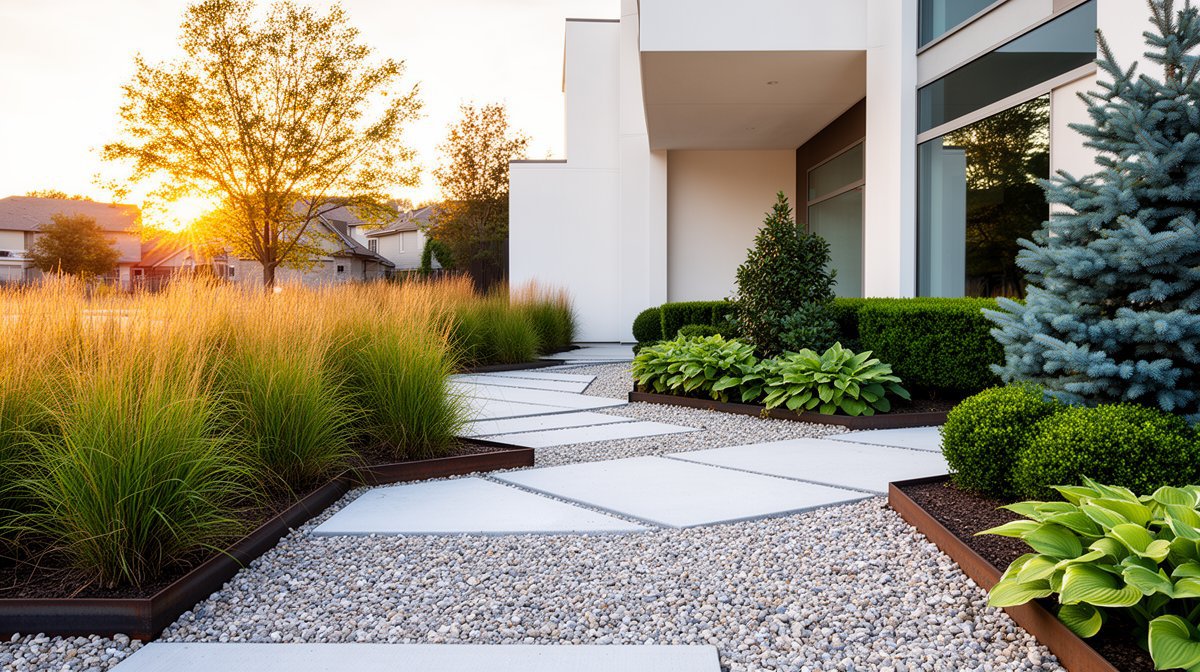
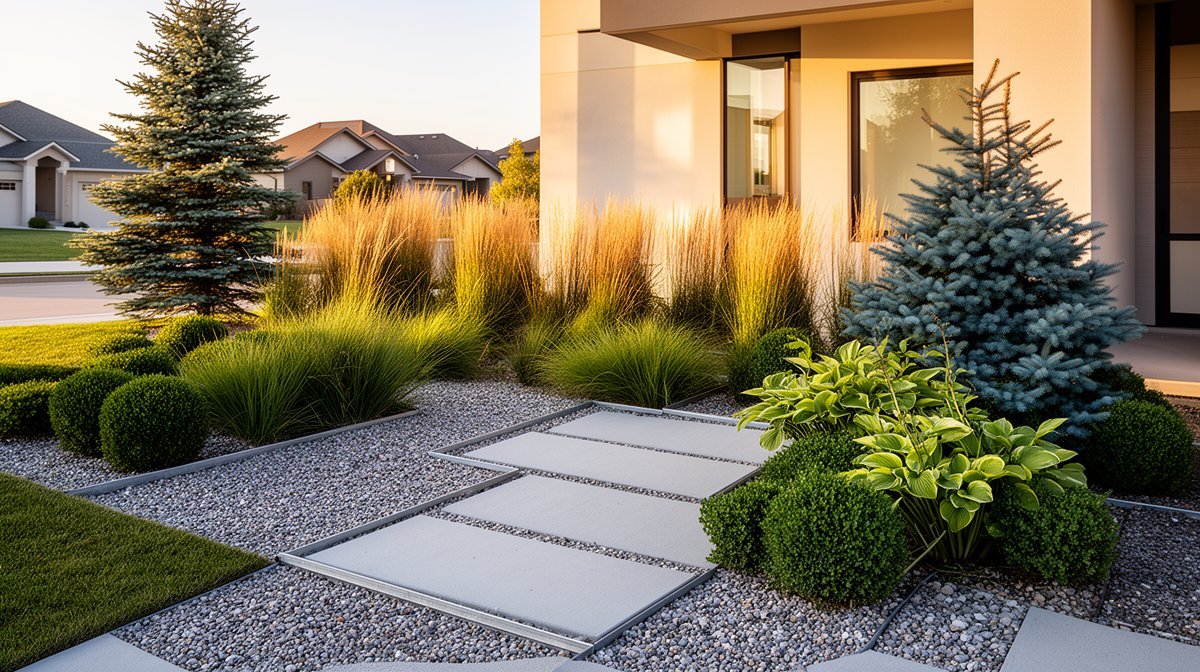
$14-26/sqftA low white stucco house with black window frames and a black front door gets its entire street presence from one wide, unbroken concrete walk that runs dead straight from the curb to the entry stoop. The foundation bed behind it is pale gravel rather than mulch, punctuated by spiky blue-green rosettes and tight silver-purple mounds of lavender, while the strips along the sidewalk carry drifts of wheat-coloured prairie grass caught in the low evening sun. A young shade tree in the remaining lawn panel keeps the composition from reading as severe. The restraint is the design: three plant textures, one paving material, and green lawn used as a deliberate frame rather than a default.

The Gravel Grid Front Yard
$10-20/sqftThe lawn is gone entirely, replaced by a broad field of tan pea gravel cut into angular geometric islands by black steel edging, each island filled with dark gravel and planted with big blue-grey rosettes and tufts of fine-textured grass. A weathering-steel raised planter near the entry adds one band of seasonal colour and lifts the crowns clear of the water table, and the existing multi-trunk shade tree is left as the single sculptural focal point. For a Kansas City, Kansas homeowner this is the most consequential change available: no mowing from April to October, no irrigation after establishment, and a front yard that looks composed in February when a turf lawn looks like a doormat.

The Circular Fire Terrace
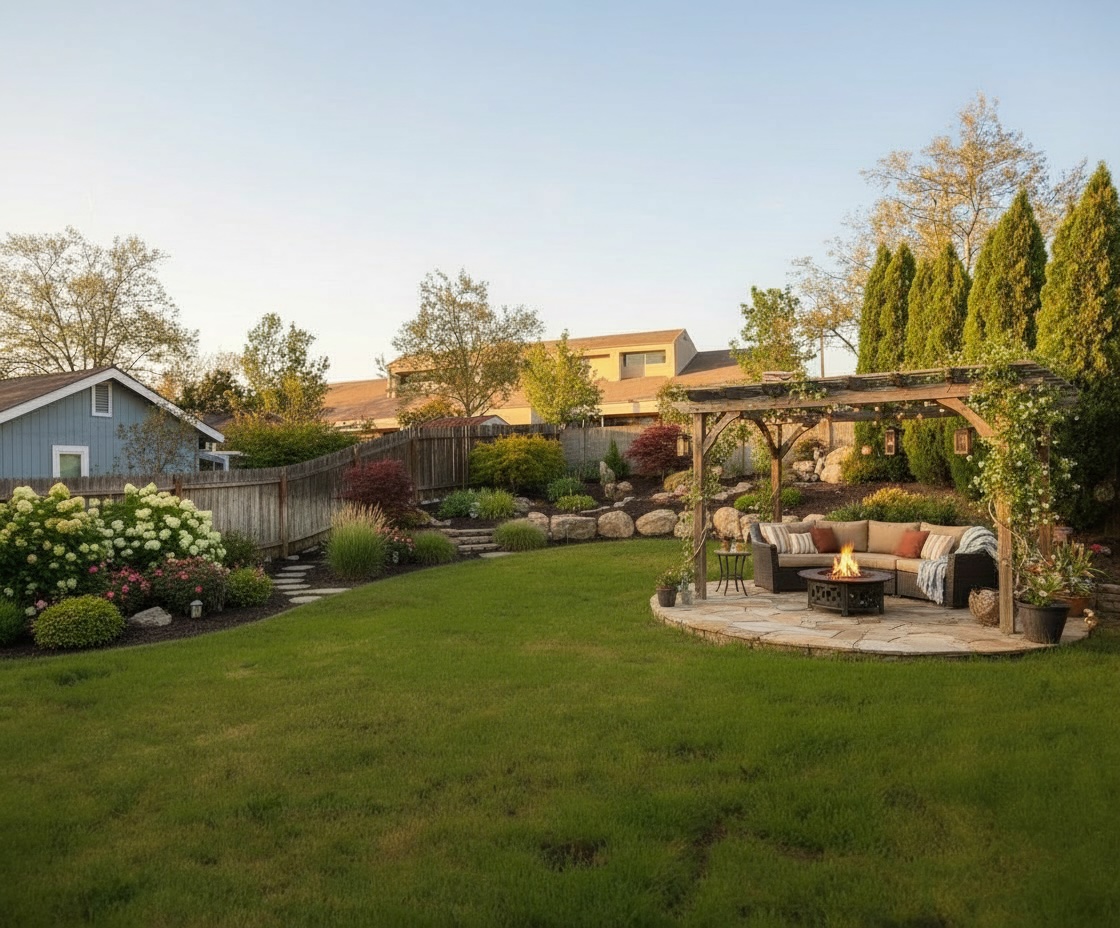
$20-38/sqftA perfect circle of poured concrete is set into the back lawn of a white two-storey farmhouse-modern, ringed by a mulch bed of feathery fountain grasses and low white bloom so the hard edge never touches turf. Four low lounge chairs and a sofa face a round concrete gas fire bowl at the centre, and a single run of string lights strung from the house to a young tree turns the whole yard into a room at dusk. The circle is the point: it costs less than a full rectangular patio, needs no retaining, and gives a flat Kansas backyard a centre it did not have. Built with a gas line rather than wood, it extends the KCK outdoor season from late March into November.

The Lap Pool and Lit Steps Terrace
$45-90/sqft (pool area inclusive)A glass-walled modern box opens onto a large pale concrete deck holding a rectangular lap pool, a low linear black fire table and a grey woven sectional, with the whole terrace stepped down to the lawn on broad concrete treads lit from beneath by continuous LED strips. The planting does its work at the edges: long borders of upright grasses shot through with violet spires run along both sides of the steps and along the dark horizontal privacy fence, softening every hard line without interrupting a sightline. Uplighting in the grass borders is what makes it read at night, and in Kansas City that is most of the year the space gets used.
See how a modern/minimalist garden looks on YOUR property
Upload a photo of your Kansas City yard and visualize your dream garden in seconds.
Try ProScapeAI Free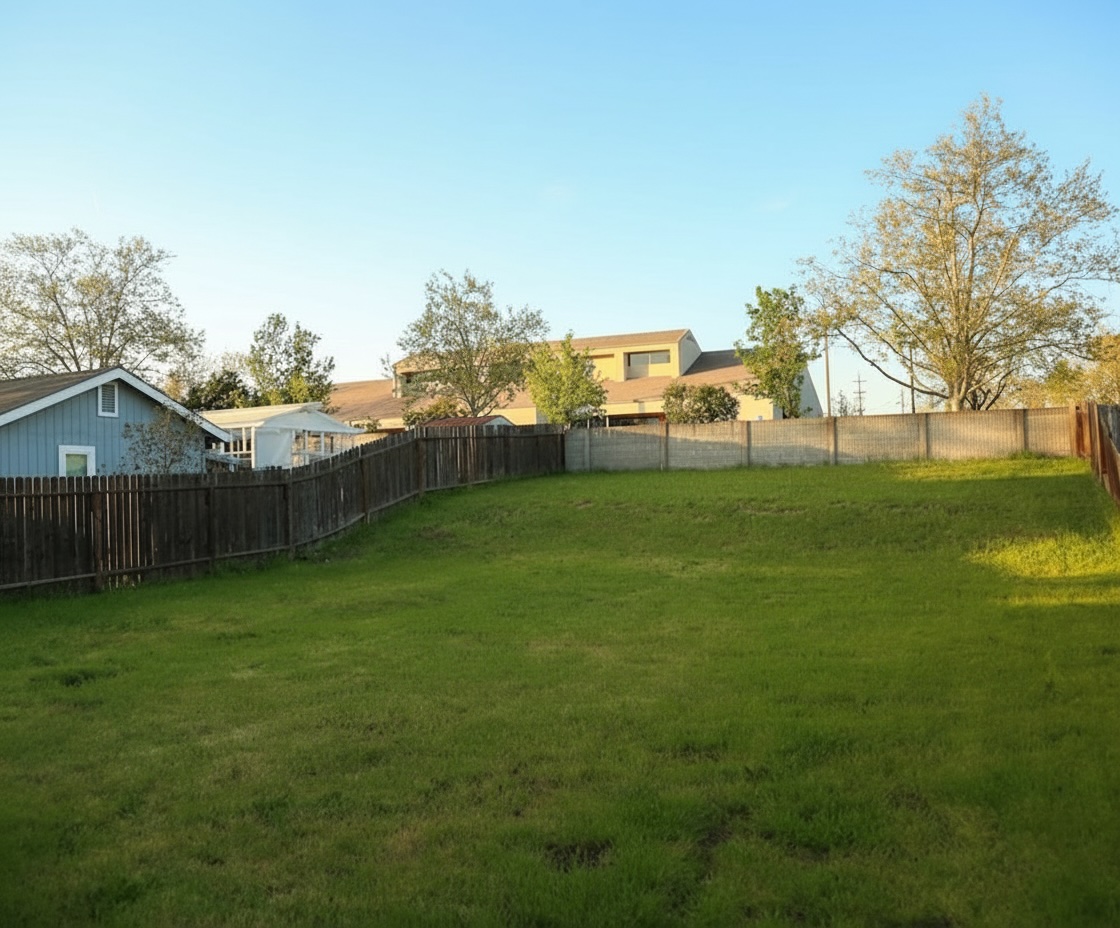
Featured Trees & Shrubs for Modern/Minimalist Gardens
Browse all 194 plants for Kansas City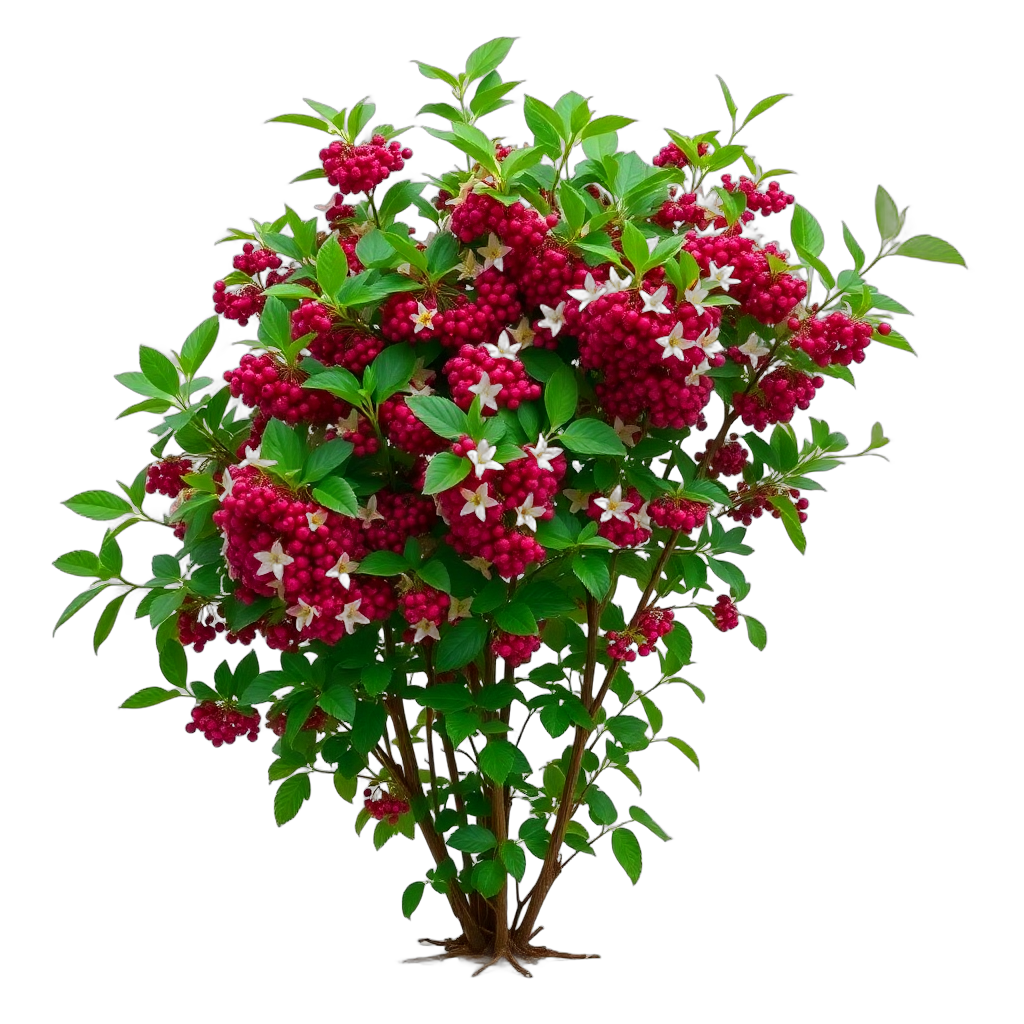
Clove Currant
Ribes odoratum
grows to 6 feet, yellow blooms in spring. Attracts hummingbirds.

Fragrant Sumac
Rhus aromatica
grows to 4 feet, yellow blooms in spring. Attracts butterflies.
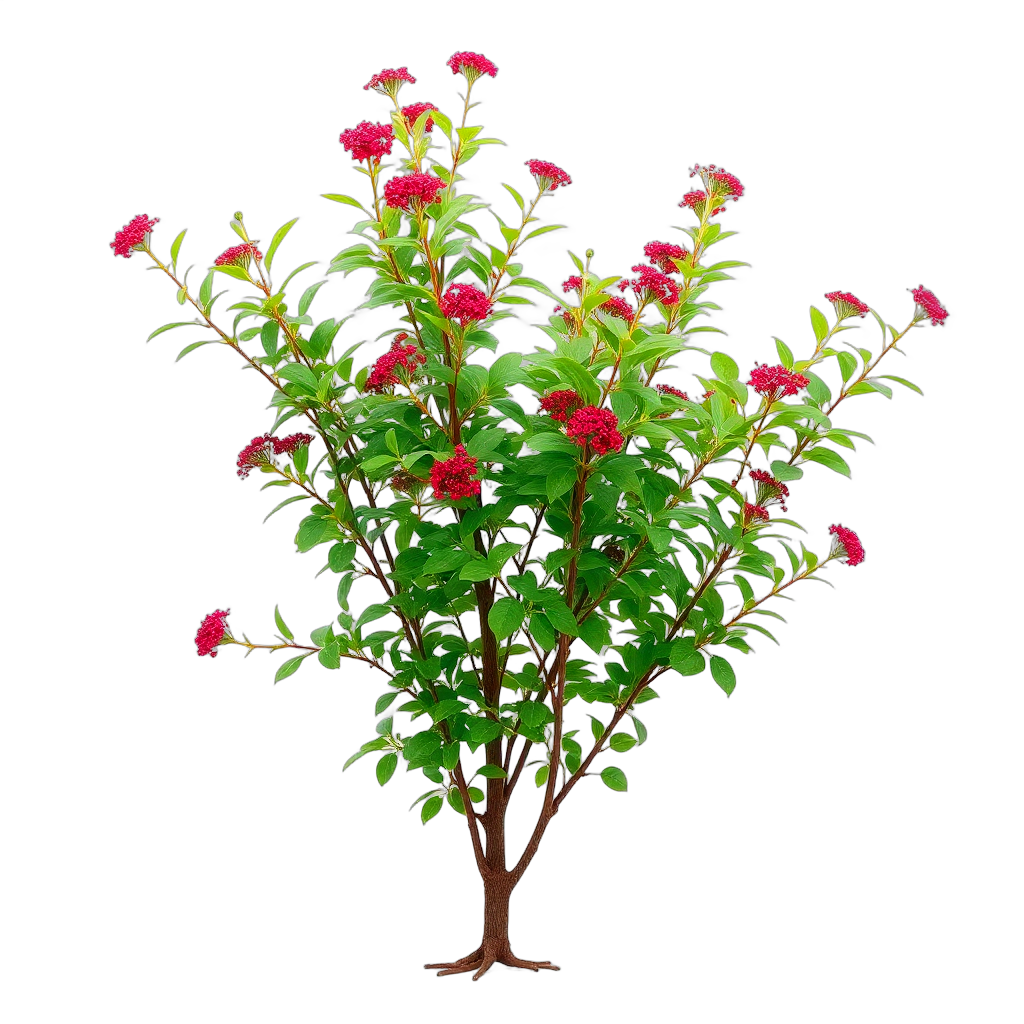
Smooth Sumac
Rhus glabra
medium-sized at 12 feet, white,green blooms in summer. Attracts butterflies.
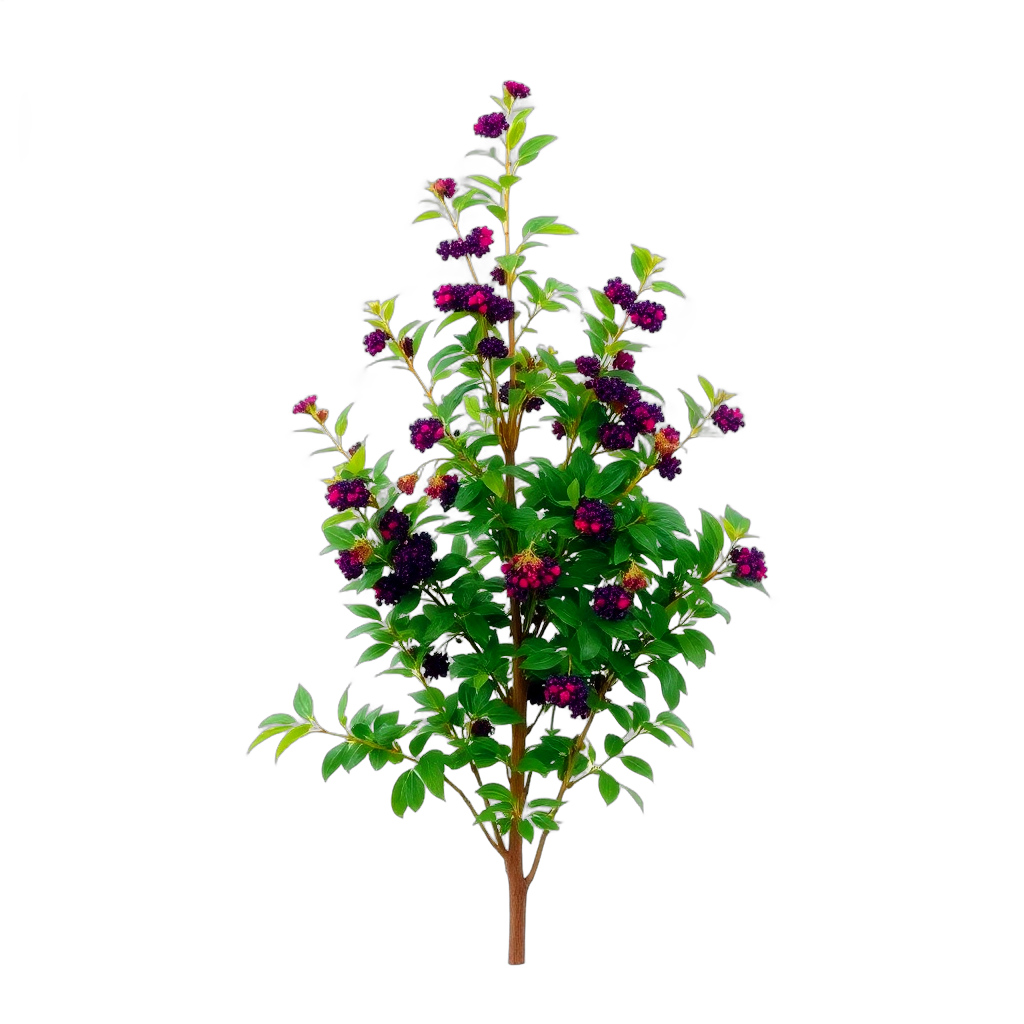
American Beautyberry
Callicarpa americana
grows to 6 feet, pink blooms in summer. Pollinator-friendly.
Featured Grasses & Groundcovers for Modern/Minimalist Gardens
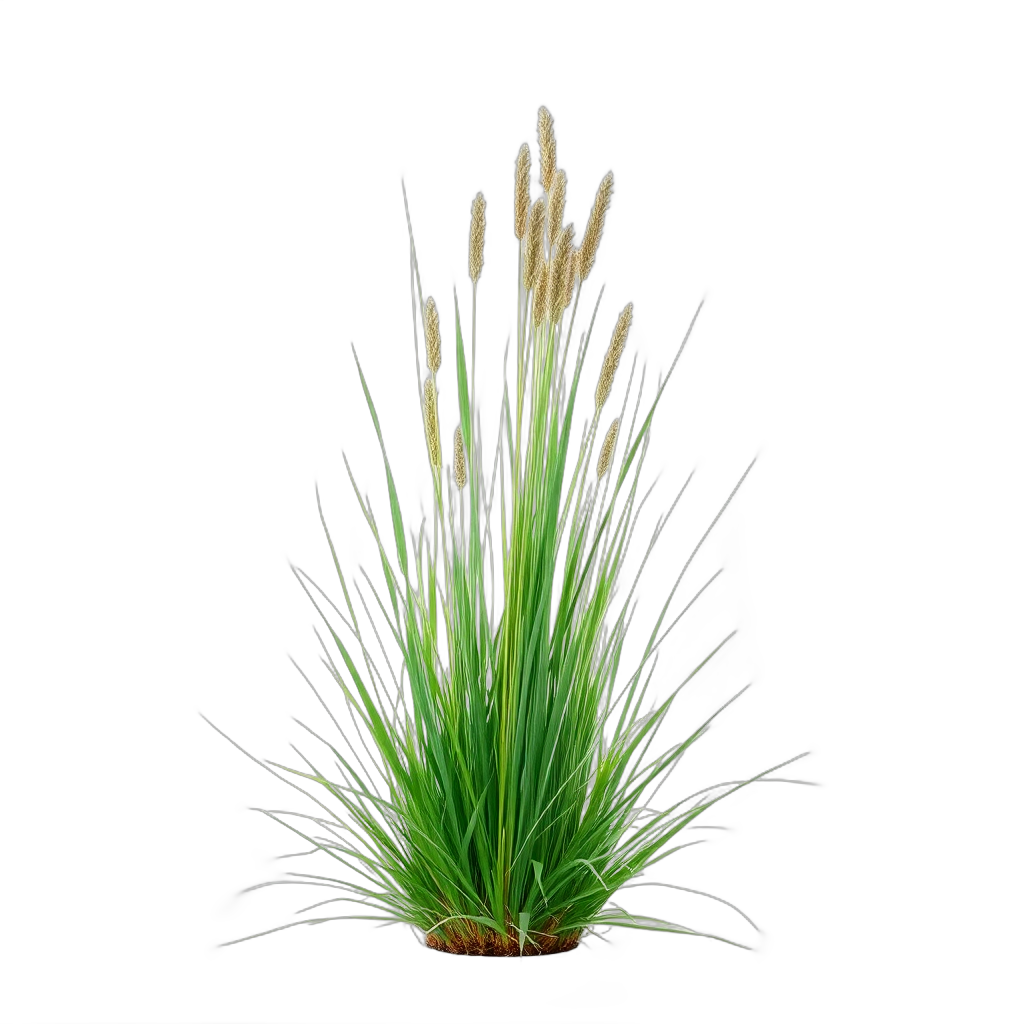
Big Bluestem
Andropogon gerardii
medium-sized at 7 feet, purple blooms in fall. Bronze,burgundy fall color.
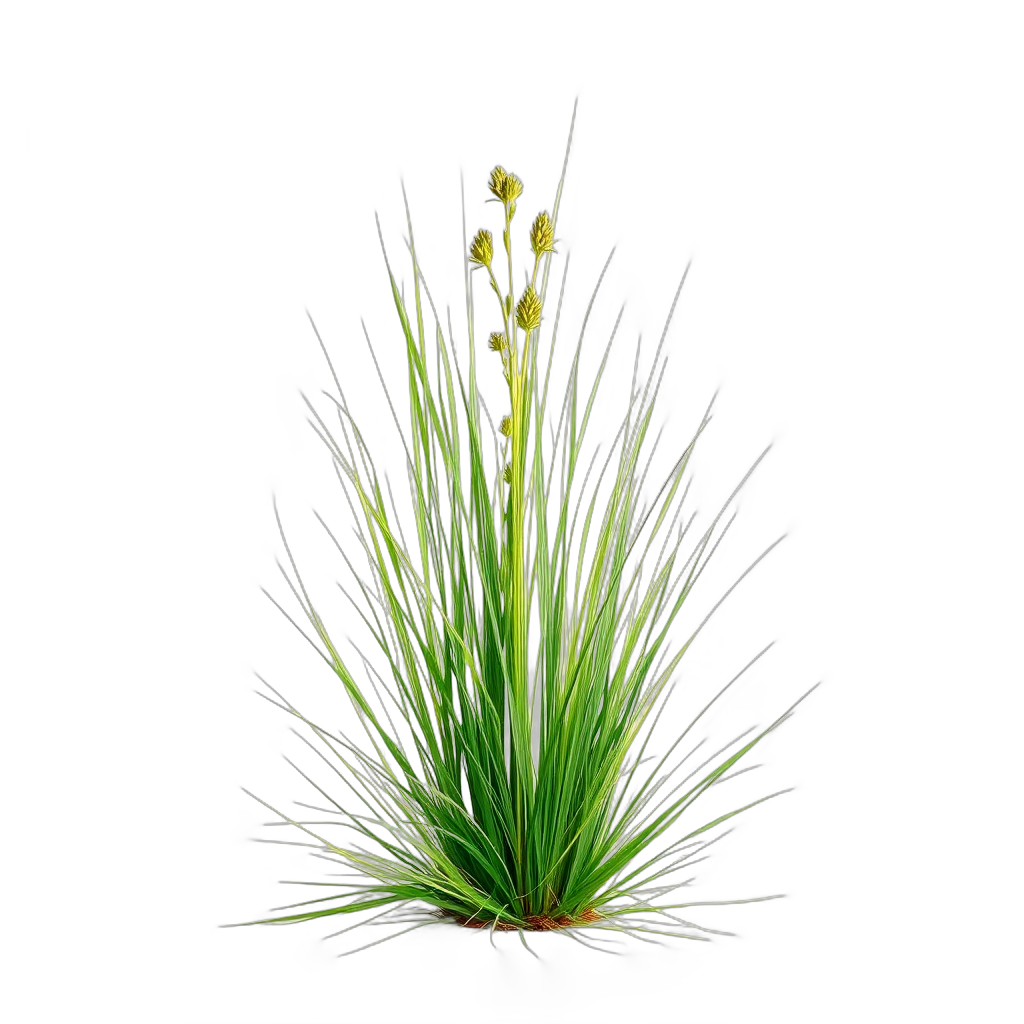
Canada Wild Rye
Elymus canadensis
grows to 4 feet, blooms in summer. Yellow fall color.
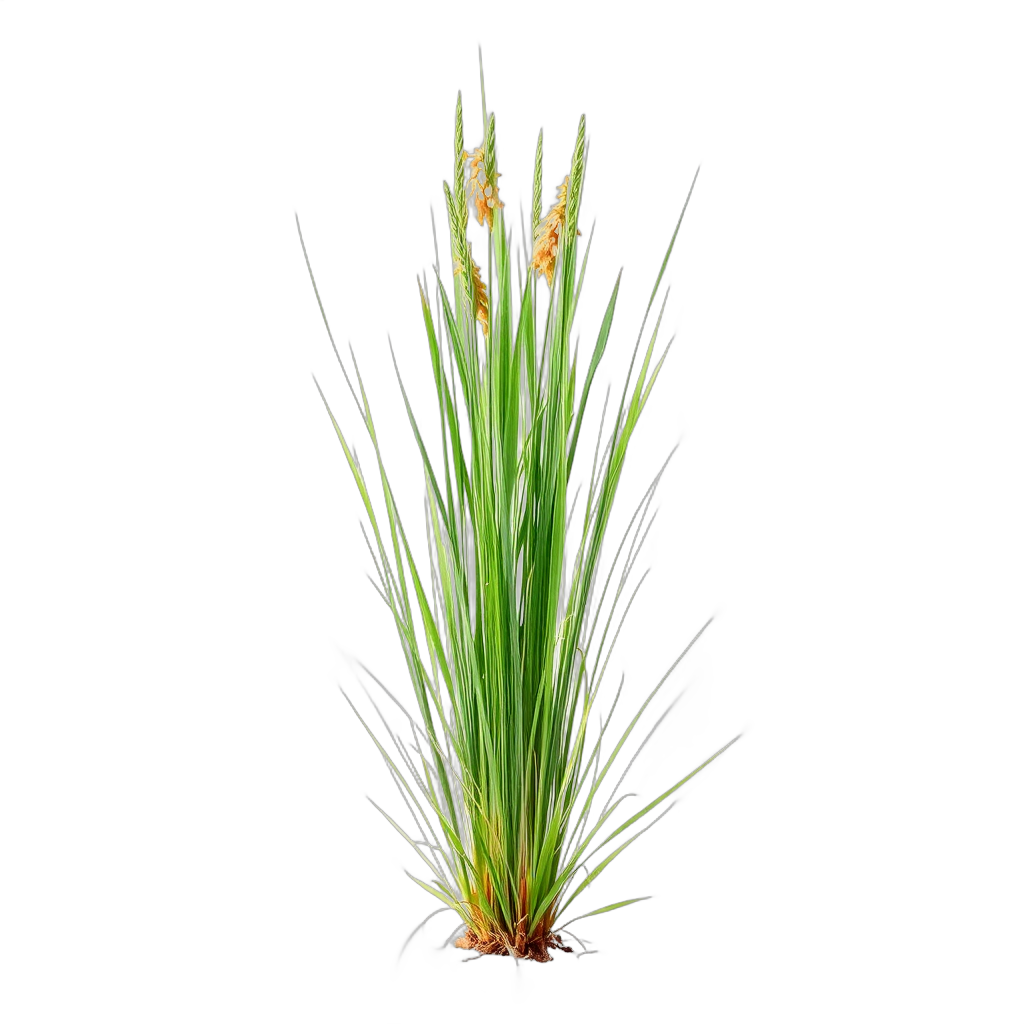
Eastern Gamagrass
Tripsacum dactyloides
grows to 6 feet, blooms in summer. Yellow fall color.
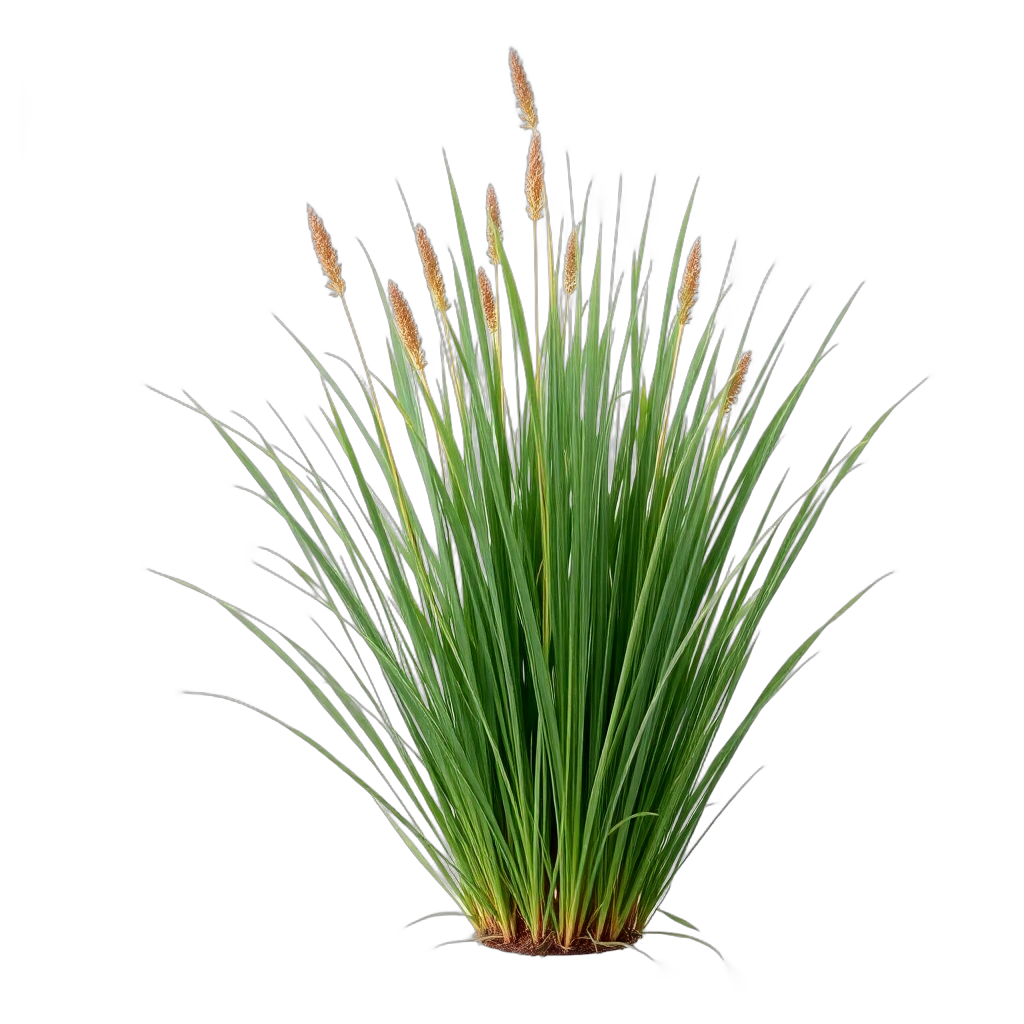
Heavy Metal Switchgrass
Panicum 'Heavy Metal'
grows to 4 feet, pink blooms in summer. Yellow fall color.
Featured Flowers & Perennials for Modern/Minimalist Gardens
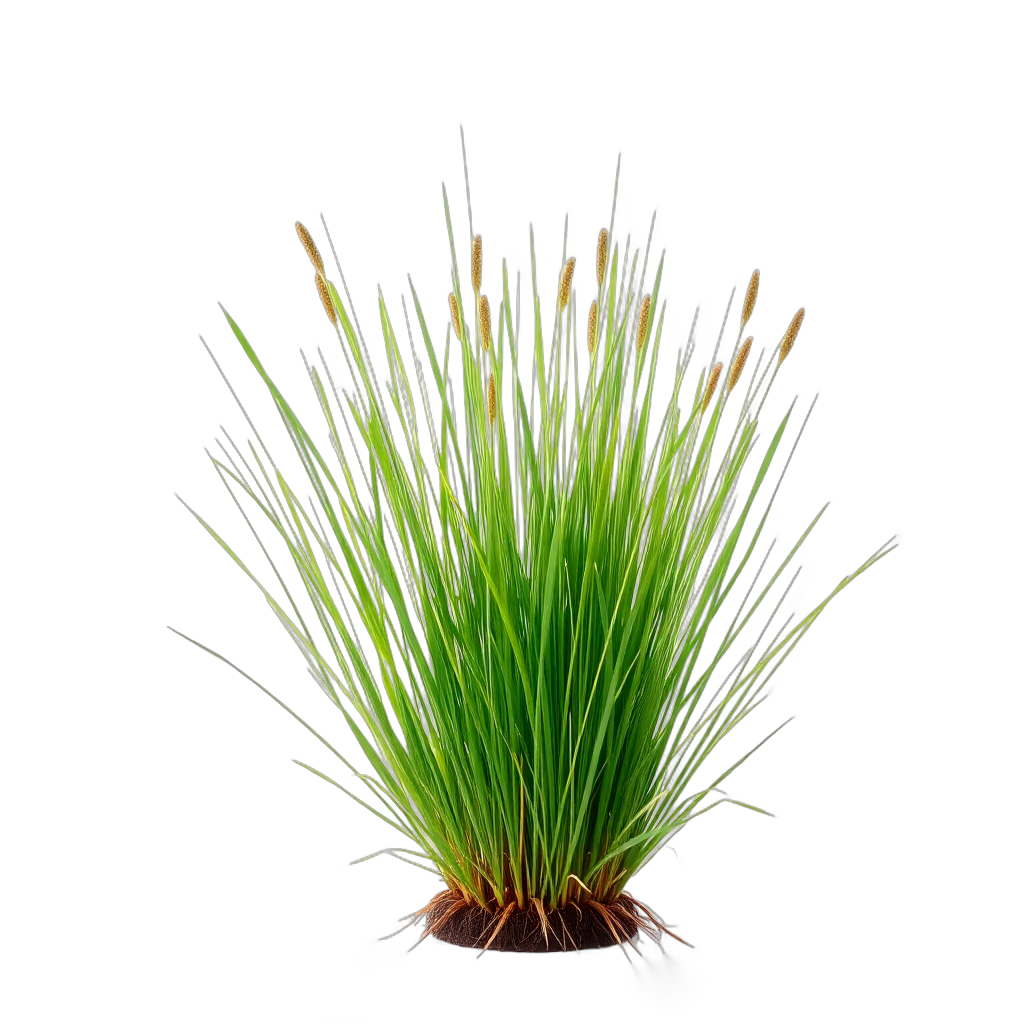
Path Rush
Juncus tenuis
low-growing ground cover, blooms in summer. Evergreen year-round.
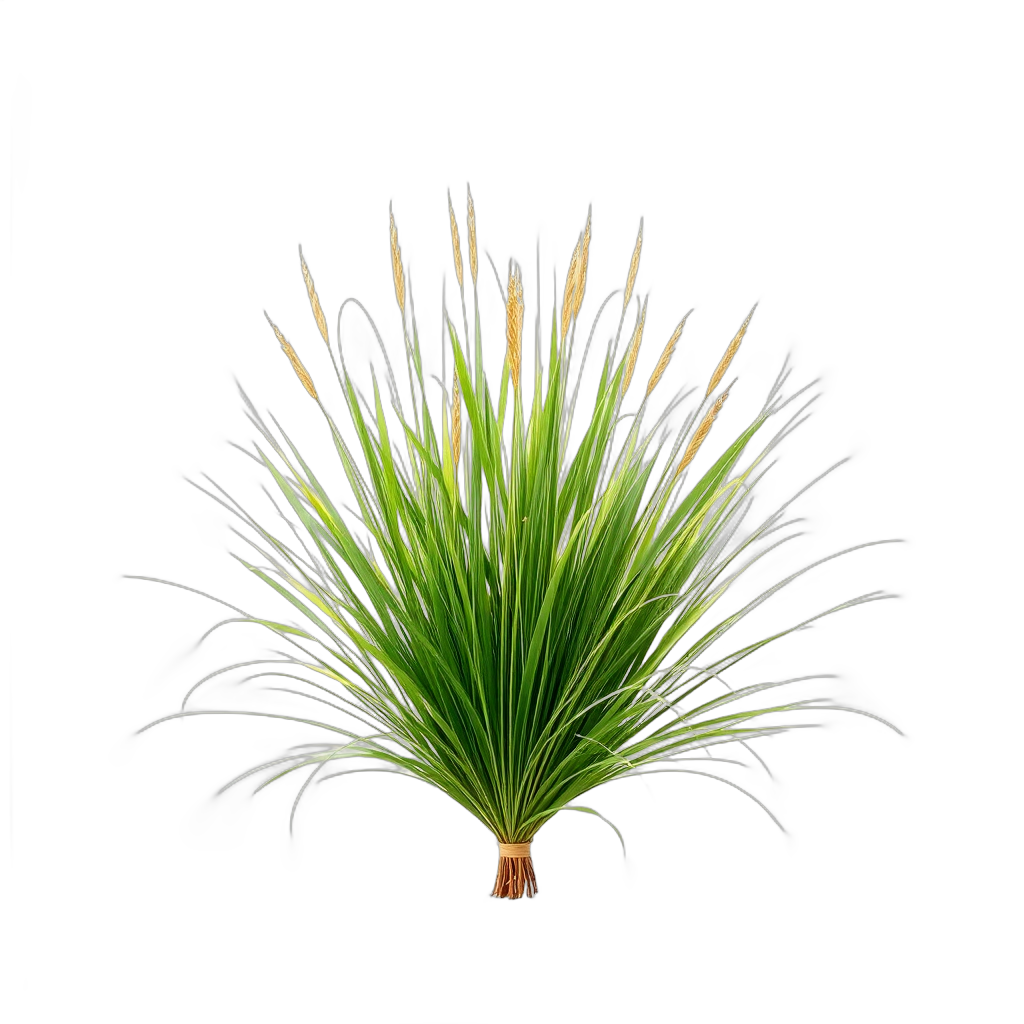
Prairie Cordgrass
Spartina pectinata
grows to 6 feet, blooms in summer. Yellow fall color.
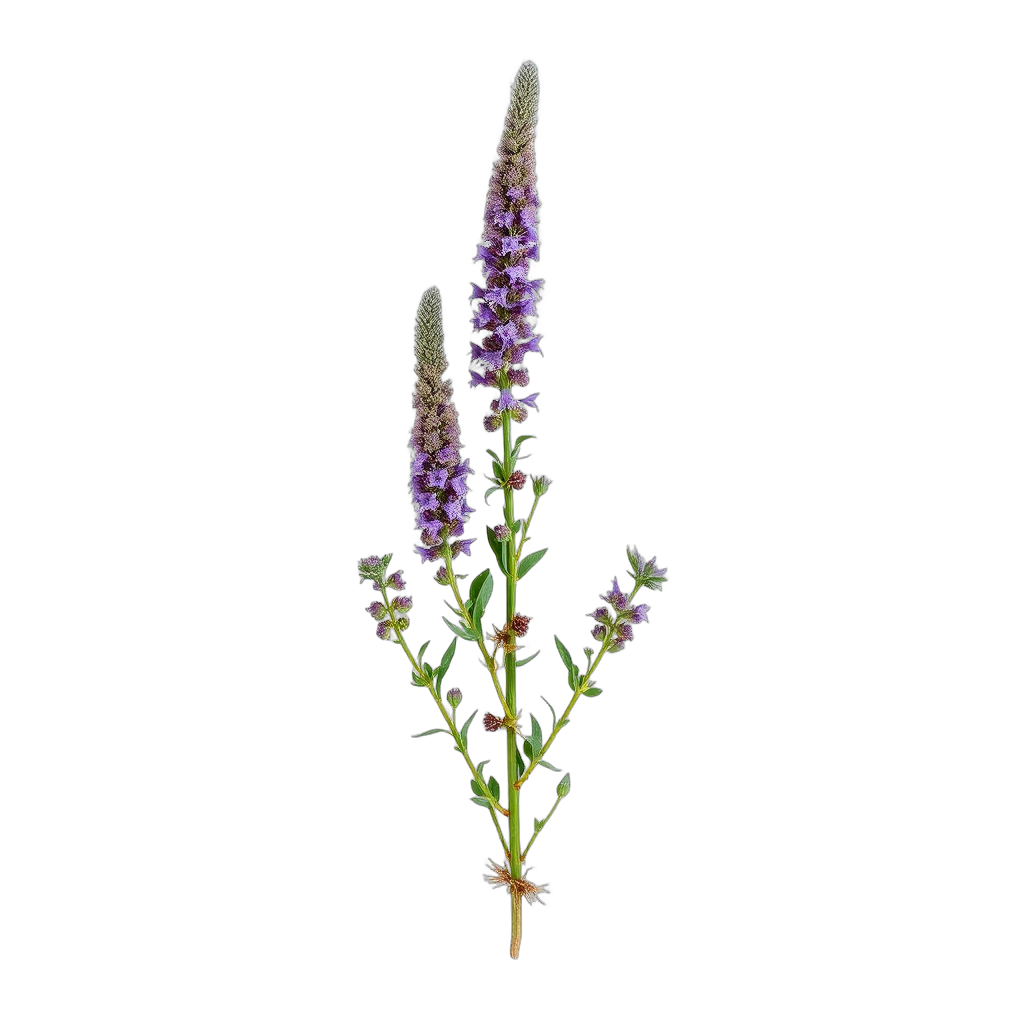
Anise Hyssop
Agastache foeniculum
grows to 3 feet, purple blooms in summer. Attracts hummingbirds.
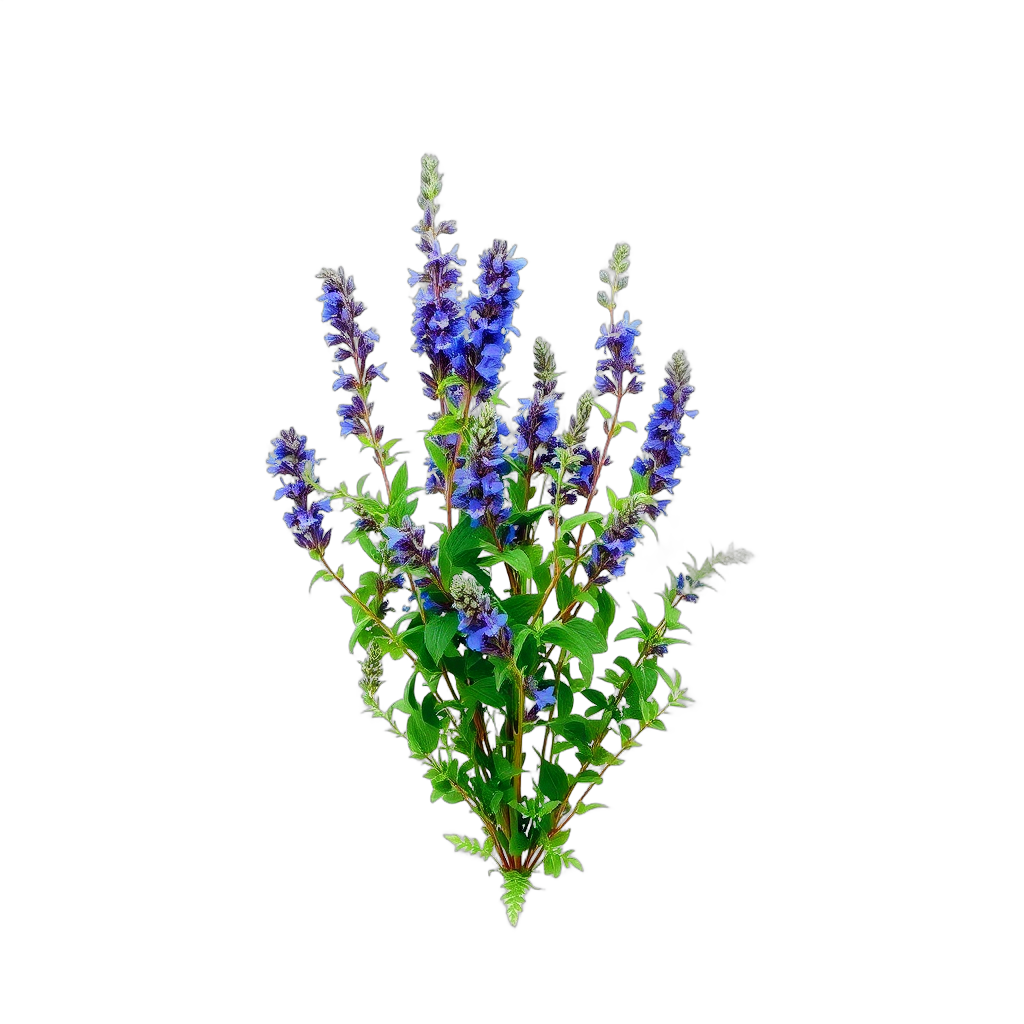
Azure Sage
Salvia azurea
grows to 4 feet, blue blooms in fall. Attracts hummingbirds.
Zone and sun checks come from our database — confirm with your local nursery before you buy.
Bloom Calendar for Kansas City
spring
Blue False Indigo, Foxglove Beardtongue, Golden Alexandersummer
Path Rush, Prairie Cordgrass, Anise Hyssopfall
Azure Sage, Maximilian Sunflower, New England Asterwinter
Limited bloomsDesign Tips for Kansas City (Zone 6b)
- Build beds up, never down - raise modern planting beds 8-12 inches above Wyandotte County clay loam and cut the soil with a third expanded shale, because Yucca rostrata, Agave parryi and Lavandula angustifolia 'Phenomenal' die of February wet feet, not of a -5 degree Fahrenheit January
- Compact 6-8 inches of crushed stone under every square foot of concrete and set vertical footings below the 30-36 inch frost line; a Kansas City freeze-thaw winter will crack and tilt anything poured on bare clay within three seasons
- Substitute prairie for desert and nobody will notice: Schizachyrium scoparium 'Standing Ovation', Panicum virgatum 'Northwind' and Muhlenbergia reverchonii 'Undaunted' give the same sculptural mass as agave drifts and are hardy well past Zone 6b
- Mulch sculptural beds with 3/8 inch gravel rather than hardwood - hardwood holds moisture against yucca and sempervivum crowns through a wet KCK winter and rots exactly the plants you paid the most for
- Design for the storm season: hail and 60 mph straight-line winds arrive most springs, so choose low concrete fire bowls over tall glass wind guards, specify powder-coated steel and concrete over lightweight resin, and stake feature trees for two full seasons
- Light the grasses instead of the lawn - in-grade uplights behind Panicum virgatum 'Shenandoah' and Miscanthus sinensis 'Morning Light' give the evening depth that makes modern gardens read after dark, and KCK gives you eight usable months of it
- Keep one shade tree in the plan: a west-facing modern facade in Welborn or Piper is brutal at 92 degrees Fahrenheit in July, and limbing an existing Celtis occidentalis or Gleditsia triacanthos up high leaves the trunk reading as sculpture over a clean groundplane
Where to Source Plants in Kansas City
Skip the big-box stores. These independent Kansas City nurseries specialize in the plants that make modern/minimalist gardens thrive in Zone 6b.
Family Tree Nursery
Shawnee (Nieman Road), minutes west of KCK
Family-owned Kansas City garden center since 1964; reliable source for Zone 6b yucca, sedum, hardy grasses and specimen trees for clean-line designs
Suburban Lawn & Garden
105th & Roe, Overland Park
Independent Kansas garden center growing most of its own trees and shrubs at its Edgerton nursery; strong on architectural evergreens, junipers and large grasses
Grass Pad
Bonner Springs (Wyandotte County)
Regional Kansas independent selling gravel, decorative rock, compost and soil blends by the yard, plus turf and shrubs; the practical stop for a gravel-and-steel front-yard build
Soil Service Garden Center
Troost Avenue, south Kansas City
Family-owned since 1934; bulk compost, expanded shale and gravel mulch alongside sedum, sempervivum and prairie-grass stock suited to sharp-drainage modern beds
Modern/Minimalist Landscaping Costs in Kansas City
| Project Scope | Estimated Cost |
|---|---|
| Front-yard turf-to-gravel conversion, 500 sqft (edging + sculptural planting) | $5,000 - $12,000 |
| Poured concrete walk + foundation bed rebuild | $6,000 - $15,000 |
| Circular concrete fire terrace with gas bowl and lighting | $14,000 - $30,000 |
| Concrete patio, 300-500 sqft, on engineered base | $9,000 - $22,000 |
| Lap pool + concrete deck + lit steps (full backyard) | $85,000 - $180,000 |
| Weathering-steel raised planter, fabricated and filled | $600 - $1,500 each |
| AI visualization with ProScapeAI | Free to start |
Estimates based on Kansas City, KS-area contractor rates as of 2026. Actual costs vary by site conditions, materials, and contractor.
Kansas City Climate & Growing Zone
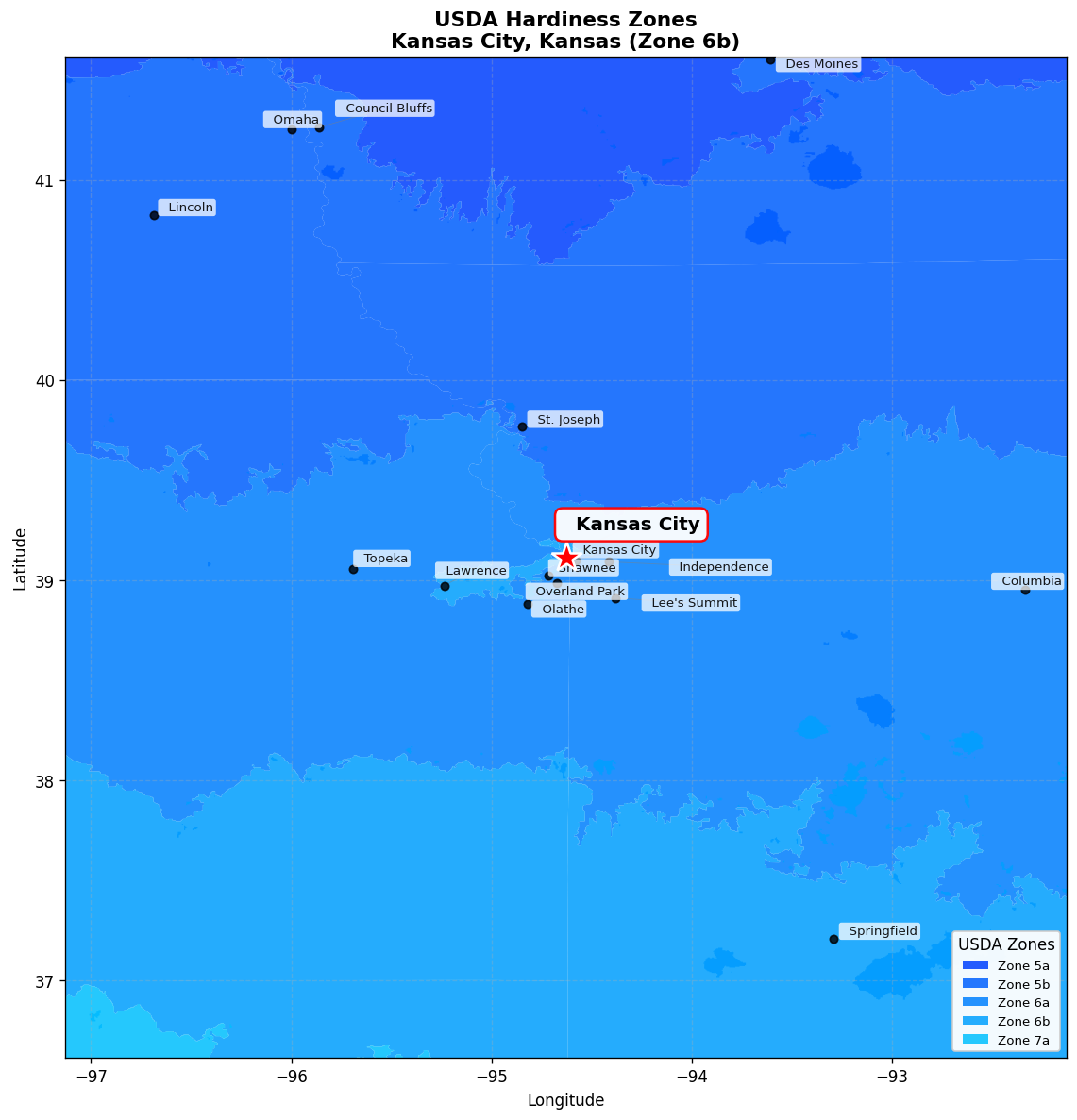
USDA Zone 6b
Hardiness zone for Kansas City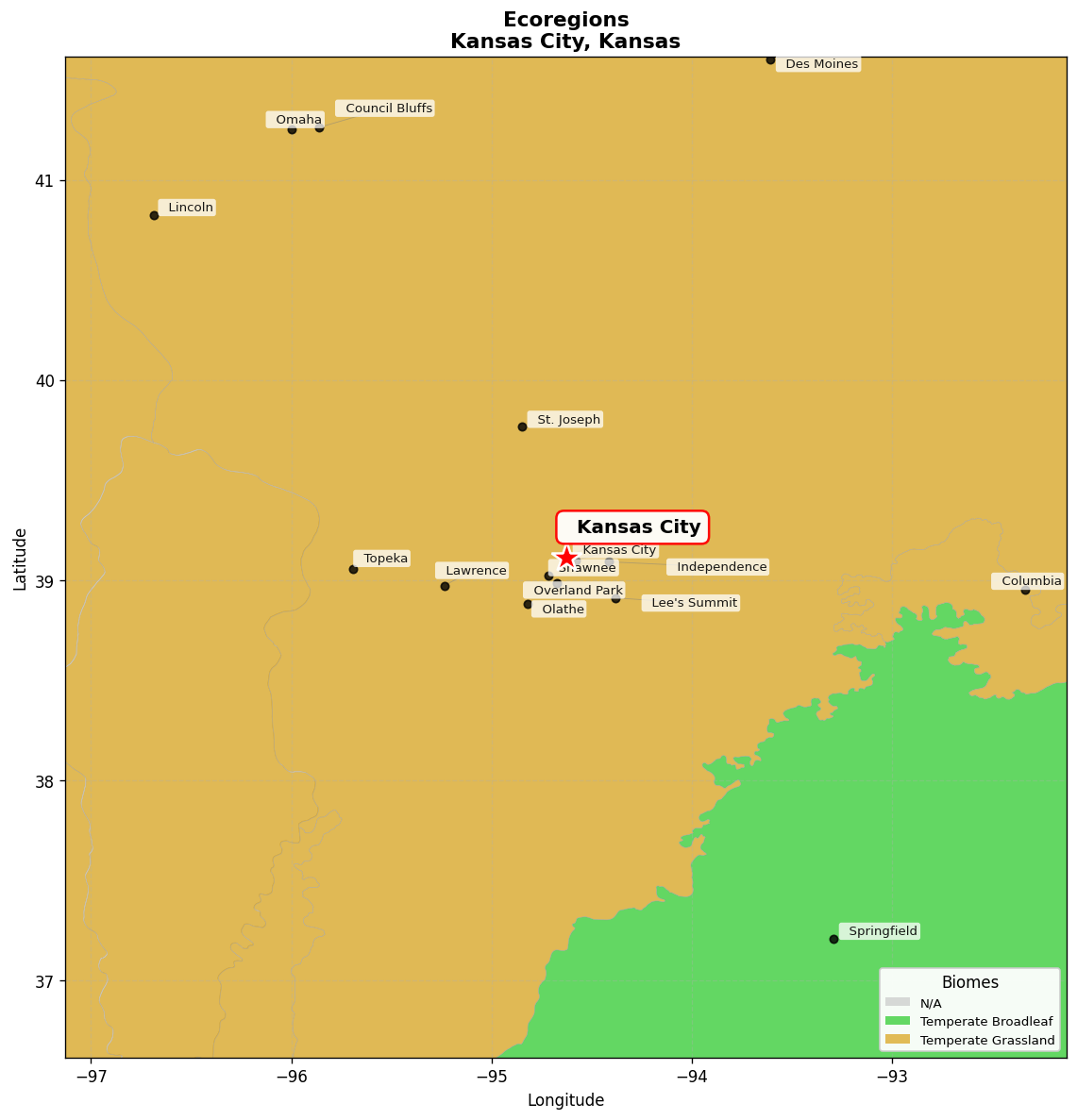
Central Tallgrass prairie
Native ecoregionFrequently Asked Questions
How much does modern landscaping cost in Kansas City, Kansas?
KCK installation runs roughly 10-20% below coastal-metro pricing, which makes clean-line design unusually attainable here. A front-yard conversion of about 500 sqft from turf to a gravel field with steel edging and sculptural planting typically comes in at $5,000-$12,000 installed, or about $4-$7/sqft as a DIY project. A poured concrete walk and disciplined foundation bed runs $14-$26/sqft. A circular concrete fire terrace with a gas bowl and lighting lands around $14,000-$30,000, and a full pool-deck backyard with lap pool, fire table and lit steps generally falls between $85,000 and $180,000.
Can I grow agaves and other architectural succulents in Zone 6b?
Some, and the survivors are the sharply drained ones. Agave americana and Echeveria will not overwinter at -5 degrees Fahrenheit, but Agave parryi var. neomexicana and Agave havardiana handle Kansas City winters if their crowns stay dry, and Yucca filamentosa 'Color Guard', Yucca rostrata 'Sapphire Skies' and Hesperaloe parviflora 'Brakelights' are genuinely reliable. For the low rosette look use Sempervivum tectorum and Sedum rupestre 'Angelina', which are hardy well past Zone 4. In every case the plant is killed by winter wet, not cold, so build the bed up 8-12 inches, cut the soil with a third expanded shale or crushed granite, and mulch with gravel rather than hardwood.
What base do I need under a concrete patio or walk in Kansas City?
Excavate and compact 6-8 inches of crushed stone under any concrete or paver surface, and set footings for posts, walls and pergolas below the 30-36 inch frost depth. Wyandotte County's silty clay loam swells when saturated and shrinks when it bakes, and the Kansas City freeze-thaw cycle drives that movement all winter. Concrete poured on bare clay will crack and settle within about three winters. Also insist on control joints at sensible intervals and a slope of at least 1-2% away from the house; a modern design lives or dies on straight edges staying straight.
Which ornamental grasses look best in a Kansas City modern garden?
The Central Tallgrass Prairie gives you a better palette than anything imported. Panicum virgatum 'Northwind' is the workhorse for strict vertical mass, and 'Shenandoah' brings burgundy autumn colour. Schizachyrium scoparium 'Standing Ovation' and 'The Blues' hold up without flopping where older little bluestem selections sprawl. Sporobolus heterolepis is the finest-textured and best low edge. Calamagrostis x acutiflora 'Karl Foerster' gives the earliest and most reliable upright form. Muhlenbergia reverchonii 'Undaunted' delivers the pink autumn haze that pink muhly provides further south but is hardy to Zone 5. Cut them all back once, in late February or early March.
When is the best time to install a modern landscape in Kansas City, Kansas?
Plant from mid-September through late October for the best results: warm soil, autumn rain, and a full winter of root establishment before spring. Mid-April to May is the second window, after the roughly April 12 last frost. Avoid late June through mid-August, when heat indices exceed 100 degrees Fahrenheit and even irrigated new plants struggle. Hardscape follows a different calendar: concrete can generally be poured from March into December, though pours below about 40 degrees Fahrenheit need cold-weather protection, and spring is the worst season for schedule slip because May and June thunderstorms shut down grading and pouring for days at a time.
Is a gravel yard cheaper to maintain than lawn in KCK?
Substantially, after the first two years. A conventional Kansas City lawn needs 25-30 mowings between April and October, fertiliser, and roughly 1 to 1.5 inches of water a week through July and August. A gravel field with steel-edged beds of Panicum virgatum, Schizachyrium scoparium and Yucca filamentosa needs one annual cut-back, an occasional weed pass, and gravel topped up every five to seven years. The trade-off is front-loaded cost and one honest warning: gravel over bare soil without a proper compacted base and geotextile will be a weed nursery within two seasons, so do not economise on the layers you cannot see.
Do I need a permit for a patio, fire feature or pool in Kansas City, Kansas?
Planting, gravel conversions and bed work need nothing. At-grade patios, retaining walls above a certain height, pools, decks and any roofed structure are permitted through the Unified Government of Wyandotte County and Kansas City, Kansas, and a gas line to a fire bowl or fire table is a licensed-contractor job with its own inspection. Thresholds change, so confirm current requirements with the Unified Government before you break ground. Design work is not an approval and never substitutes for a permit, an inspection or an engineered wall detail on a sloped lot.