4 Desert Garden Ideas for Mission Viejo, CA | Drought-Tolerant Designs for Zone 10b
Native plants from the California coastal sage and chaparral (Zone 10b) — Cold semi-arid climate
For a desert garden in Mission Viejo, CA, a zone 10b city with a cold semi-arid climate, start with Agave ovatifolia 'Vilmoriniana', Hesperaloe parviflora 'Brakelights' and Dymondia margaretae, the plants this guide's first design is built on.
Why Desert/Xeriscape Gardens in Mission Viejo?
Mission Viejo gets little rain for a place that looks this green. NOAA's 1991–2020 normals for the Irvine Ranch station add up to about 13 inches a year, and the months from June to September together receive well under half an inch. That is semi-arid by any measure, and it is the reason a desert garden pays off here: once established, the plants below live on winter rain plus a few deep summer soaks. The city sits in California coastal sage and chaparral country, so the native backbone is already local: Salvia clevelandii 'Winnifred Gilman', Eriogonum fasciculatum 'Warriner Lytle', Arctostaphylos 'Howard McMinn' and Muhlenbergia rigens.
Heat is moderate rather than extreme. At NOAA's Irvine Ranch station, the nearest inland temperature record, January nights average about 49°F and August afternoons about 90°F, so Zone 10b plants survive with little frost worry and no frost depth to plan for. Winter wetness kills desert plants here more often than cold does. Cacti and agaves from the Sonoran and Chihuahuan deserts, such as Echinocactus grusonii and Agave parryi, rot after weeks of cool rain on clay. Substitute plants that tolerate that mix: Agave ovatifolia 'Vilmoriniana', Aloe 'Hercules', Ferocactus pilosus and Hesperaloe parviflora 'Brakelights'.
Many Mission Viejo yards sit on graded pads, so the soil under the lawn can be dense clay, not desert sand. Build the beds 8–12 inches high from a mix of the native soil, coarse pumice and decomposed granite, and give every bed a slope so water leaves the crowns. Add no beach sand to clay. Finish the surface with 3/8-inch gravel in a color that matches your stucco, because desert style depends on a calm ground plane. Group plants by water need, so thirsty roses or citrus do not share a valve with agaves.
Before you remove turf, check three things. Many homes are in an association, so front-yard changes may need approval, and a plan with plant names helps. Slopes that back onto open space may fall under a separate fuel-modification or association rule, and the local water district decides what turf-removal rebates are open at any time. A desert garden also looks best when cleaned up once a year, so plan an annual day for removing dead leaves and pulling weeds that sprout after the winter rains.
4 Desert/Xeriscape Design Ideas for Mission Viejo
AI-generated image
The Agave Front Court
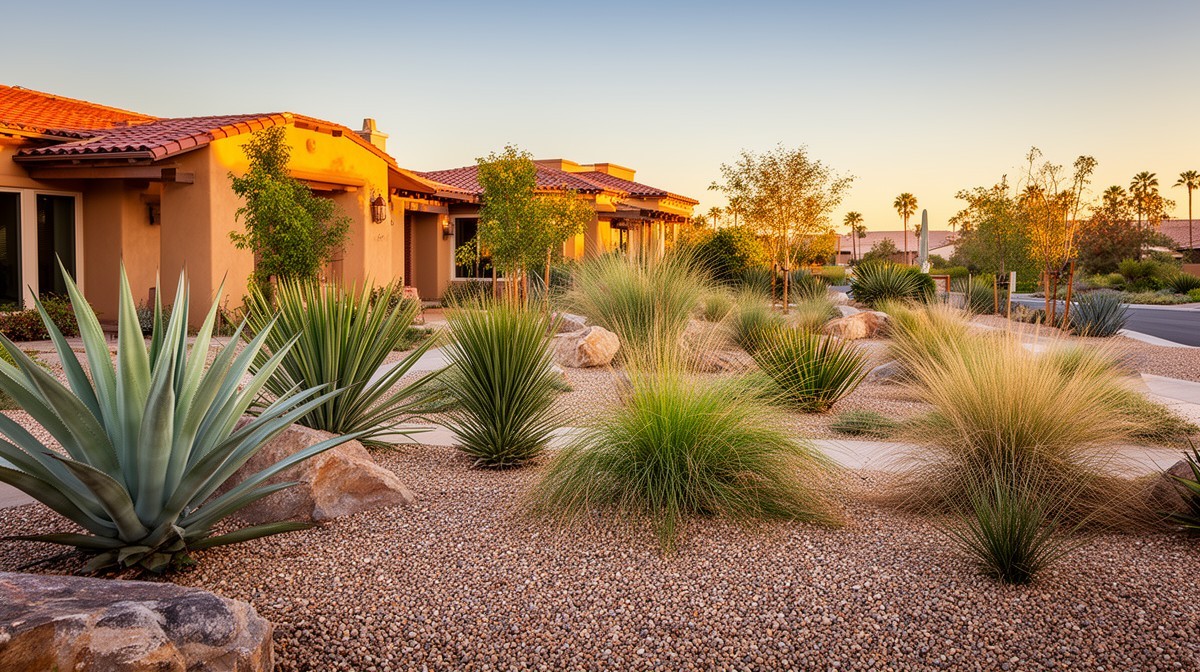
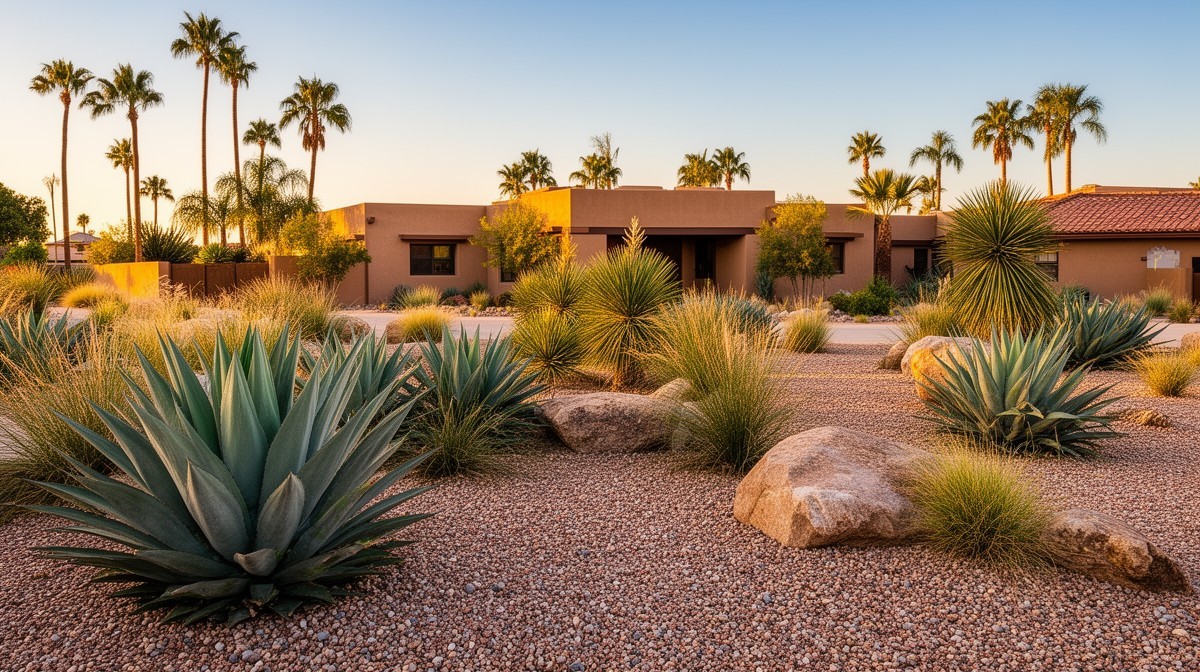
$12–26/sqftA single-story ranch house with a low tile roof trades its lawn for a gravel court of warm tan decomposed granite, with five large Agave ovatifolia 'Vilmoriniana' set in a slightly offset row near the front wall. Behind them, Hesperaloe parviflora 'Brakelights' sends coral flower stalks above the stucco, and a low boulder group at the driveway edge anchors the corner. The south sun lights the blue leaves all afternoon, and a thin band of Dymondia margaretae fills the gaps between stepping stones.
Try this on your yard: The Agave Front CourtAI-generated image
The Native Sage Slope
$10–22/sqftA back slope behind a stucco home is planted with California sage-scrub plants in loose drifts, with a gravel path winding down to a bench at the bottom. Salvia leucophylla 'Point Sal' and Eriogonum fasciculatum 'Warriner Lytle' cover most of the slope, with Arctostaphylos 'Howard McMinn' as the dark evergreen anchor and Muhlenbergia rigens for movement. Spring brings purple and white flowers, and in summer the whole slope dries to a quiet gold and gray, which suits the hills behind it.
Try this on your yard: The Native Sage SlopeAI-generated image
The Succulent Rock Garden
$16–32/sqftBeside a front walk, a raised bed of volcanic rock and gravel is built up two feet and filled with Aloe 'Hercules', Aloe 'Blue Elf', Echeveria 'Lola' and a pair of Agave attenuata 'Kara's Stripes'. The bed is edged in stacked dry stone, and a low Senecio mandraliscae carpet runs along the front. Morning sun hits the aloes from the east, and in January the orange flower spikes appear when the rest of the street is plain green.
Try this on your yard: The Succulent Rock GardenAI-generated image
The Dry Creek Bed Courtyard
$20–40/sqftA backyard patio is wrapped by a dry creek bed of rounded river cobble that doubles as a drainage swale for downspouts. Muhlenbergia capillaris 'Regal Mist' and Festuca 'Siskiyou Blue' hug the banks, a single Olea europaea 'Wilsonii' shades a bench, and Opuntia 'Santa Rita' is held in a steel container as a sculptural accent. A boulder weir slows water in heavy winter storms, and the pale cobble throws cool light on the patio walls at dusk.
Try this on your yard: The Dry Creek Bed CourtyardSee how a desert/xeriscape garden looks on YOUR property
Upload a photo of your Mission Viejo yard and visualize your dream garden in seconds.
Try ProScapeAI Free

AI-generated image
Featured Trees & Shrubs for Desert/Xeriscape Gardens
Browse all 212 plants for Mission Viejo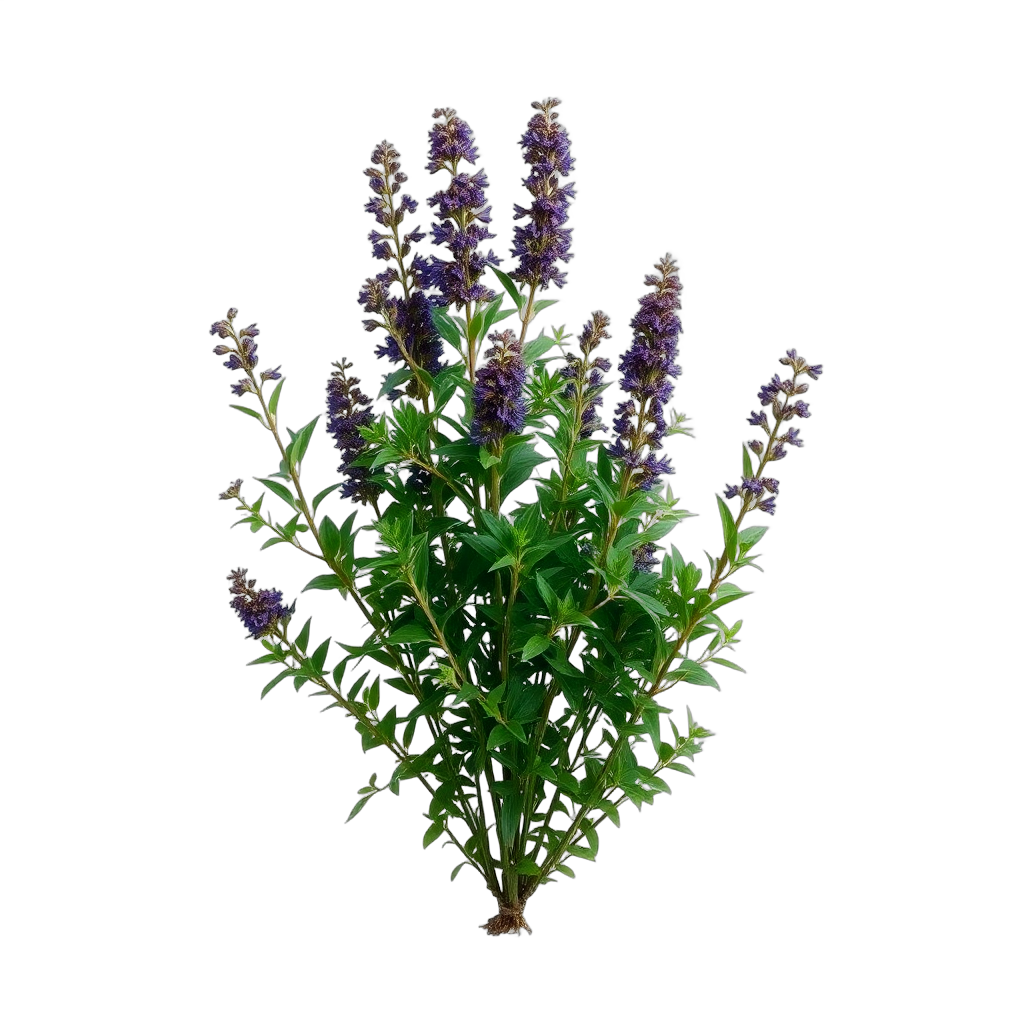
Black Sage
Salvia mellifera
grows to 4 feet, white blooms in spring. Attracts butterflies.
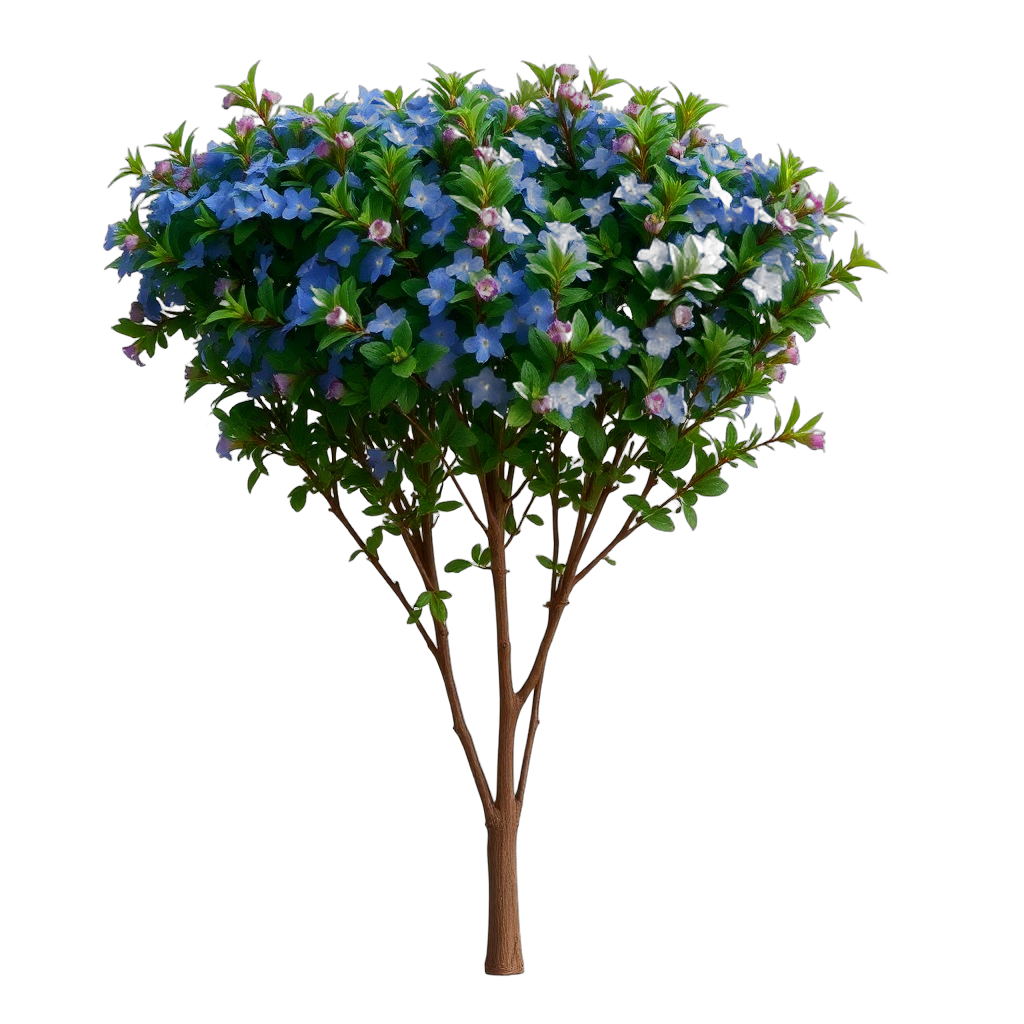
Blue Blossom
Ceanothus thyrsiflorus
medium-sized at 12 feet, blue blooms in spring. Attracts butterflies.
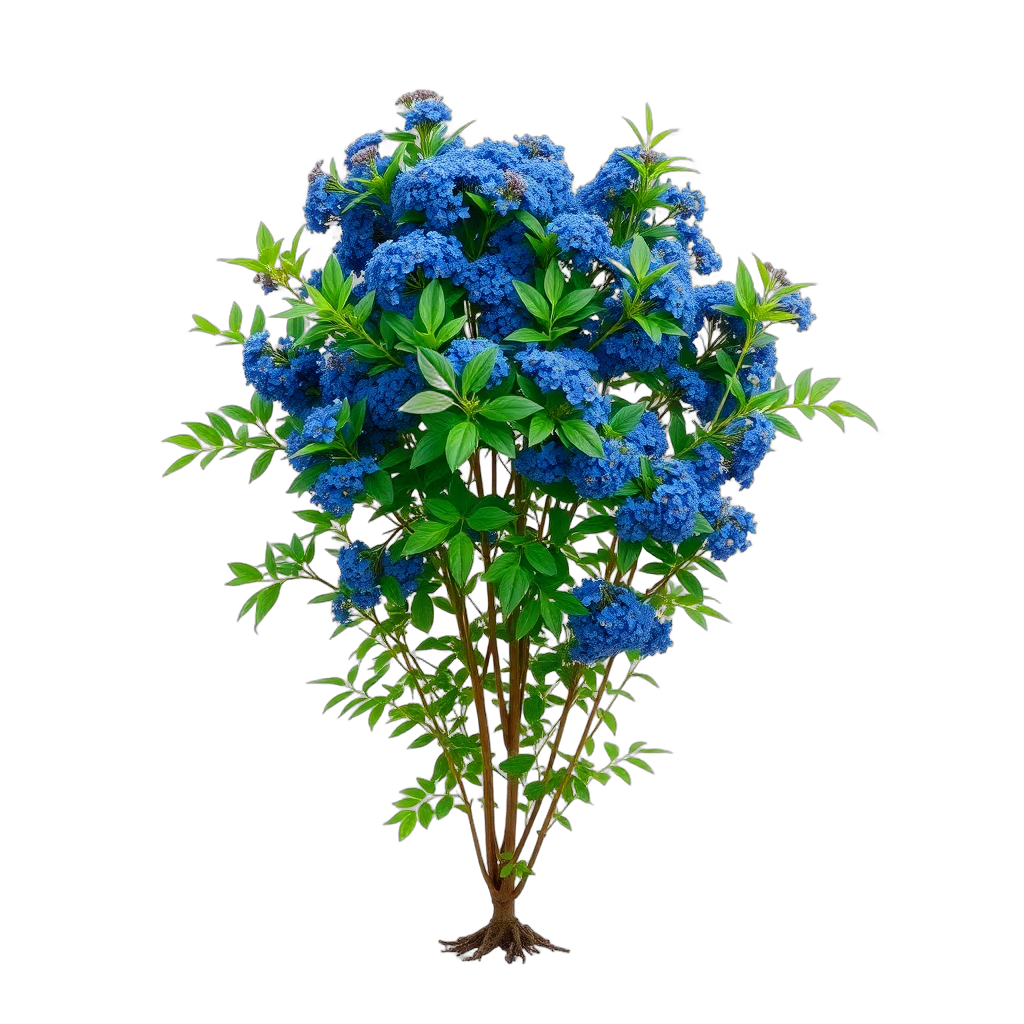
Blue Elderberry
Sambucus cerulea
medium-sized at 15 feet, white blooms in spring. Attracts butterflies.
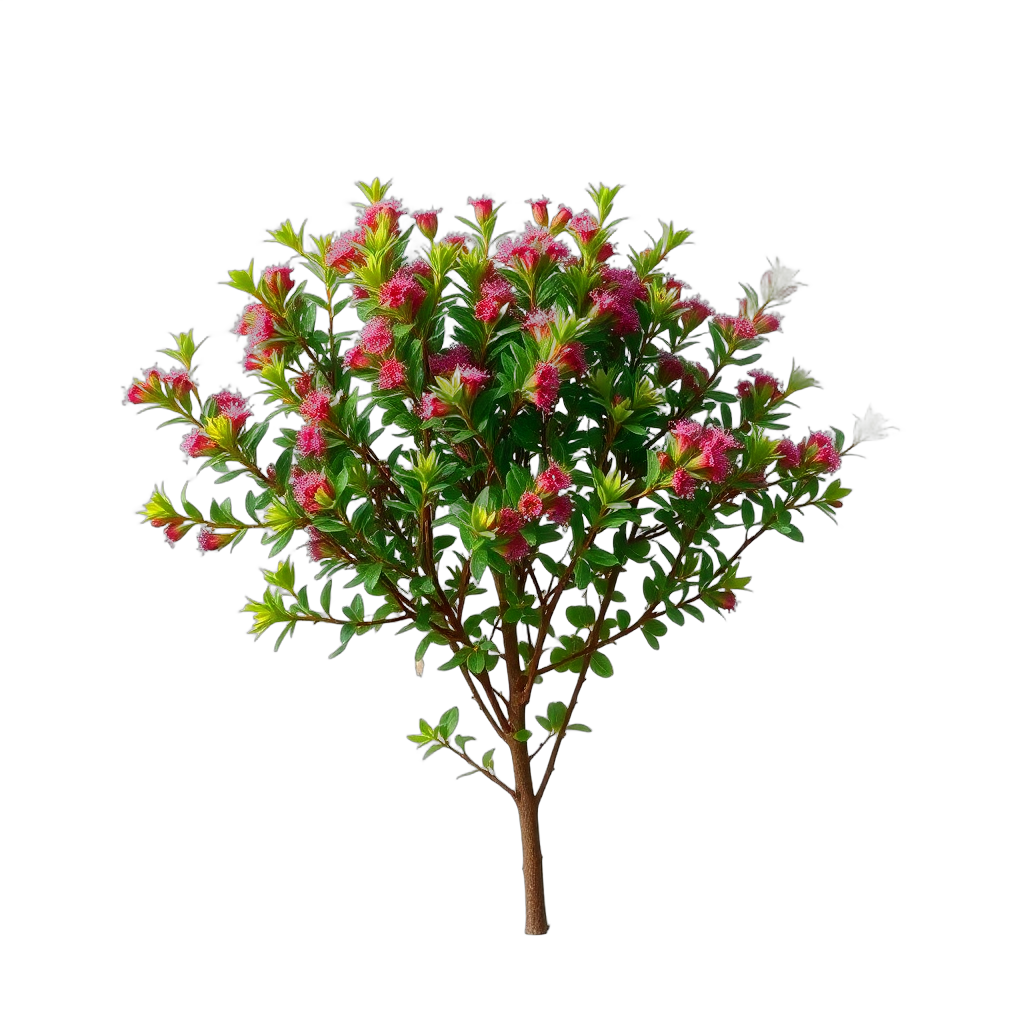
Buckbrush
Ceanothus cuneatus
medium-sized at 7 feet, white blooms in spring. Attracts butterflies.
Featured Grasses & Groundcovers for Desert/Xeriscape Gardens
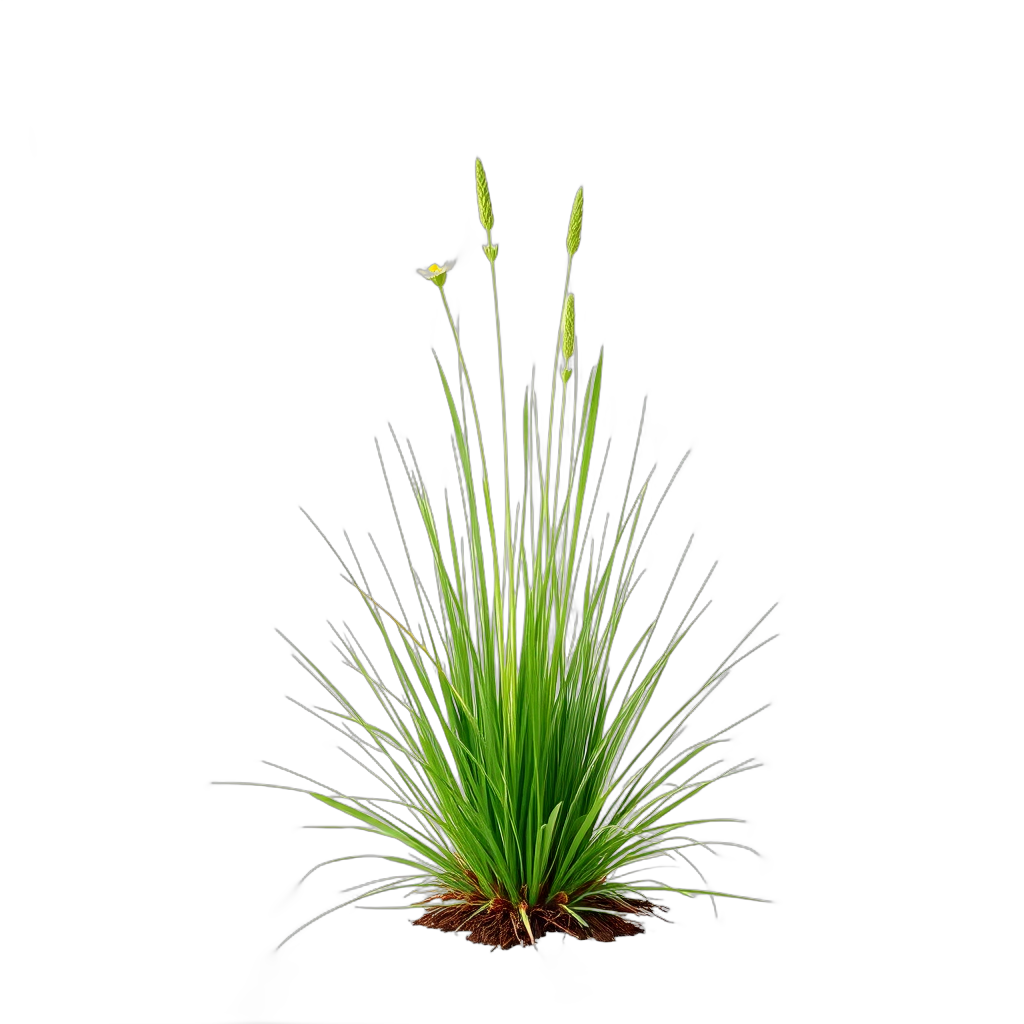
California Brome
Bromus carinatus
low-growing ground cover, blooms in spring. Yellow fall color.
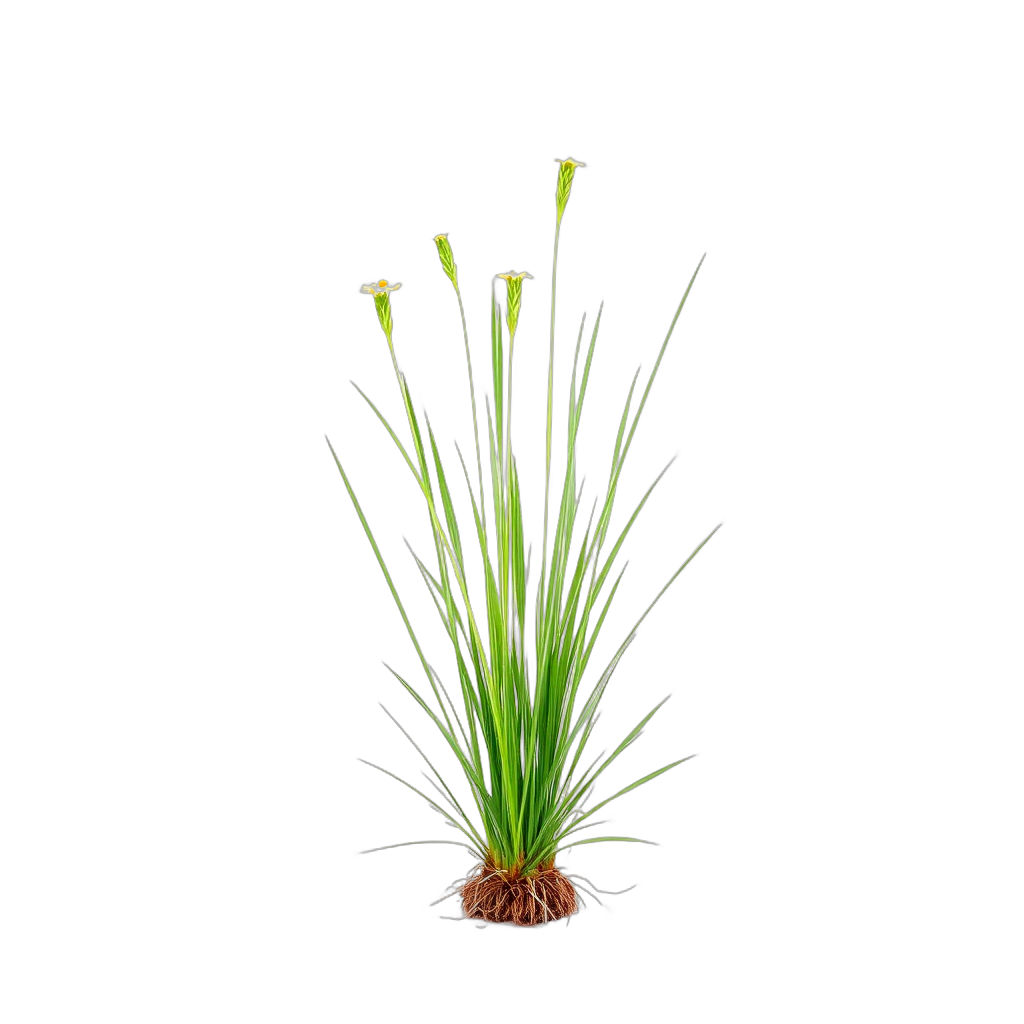
California Melic
Melica californica
low-growing ground cover, blooms in spring.
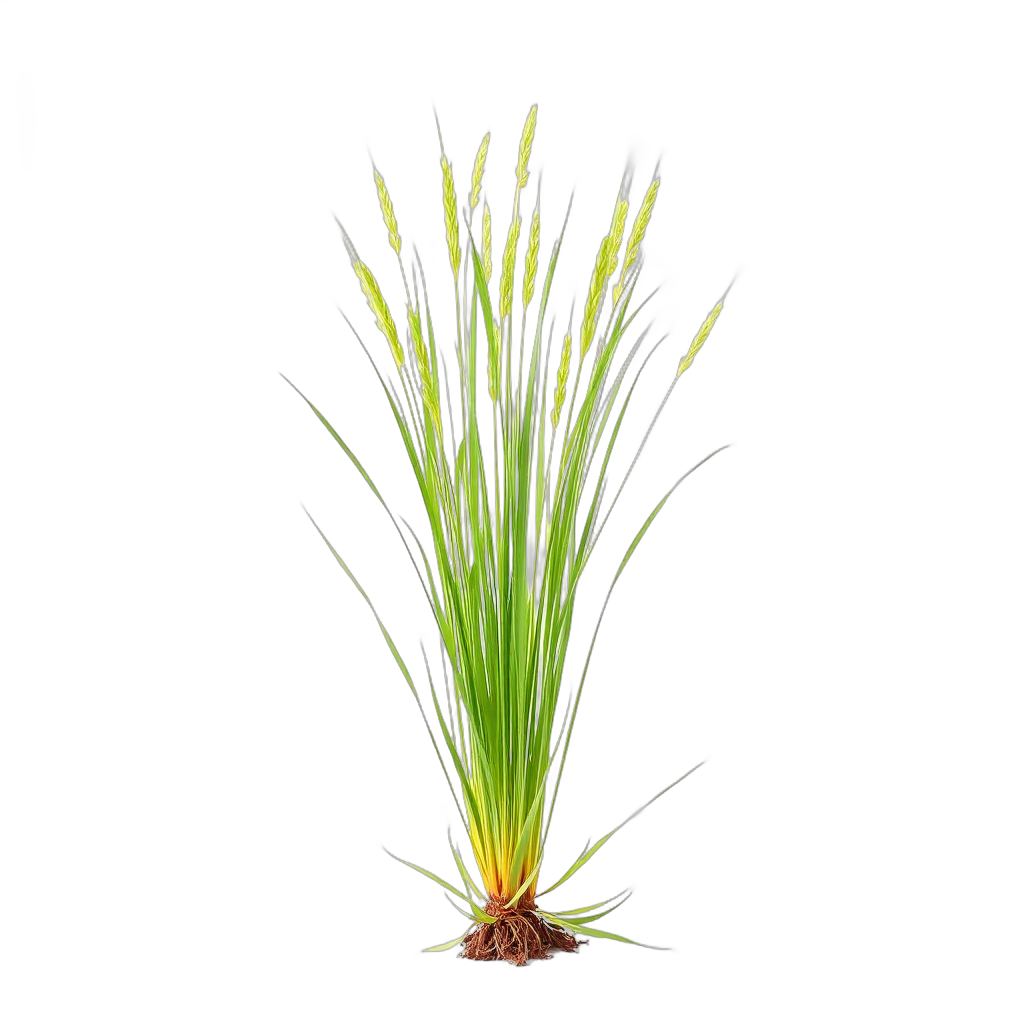
California Oatgrass
Danthonia californica
low-growing ground cover, blooms in spring. Yellow fall color.
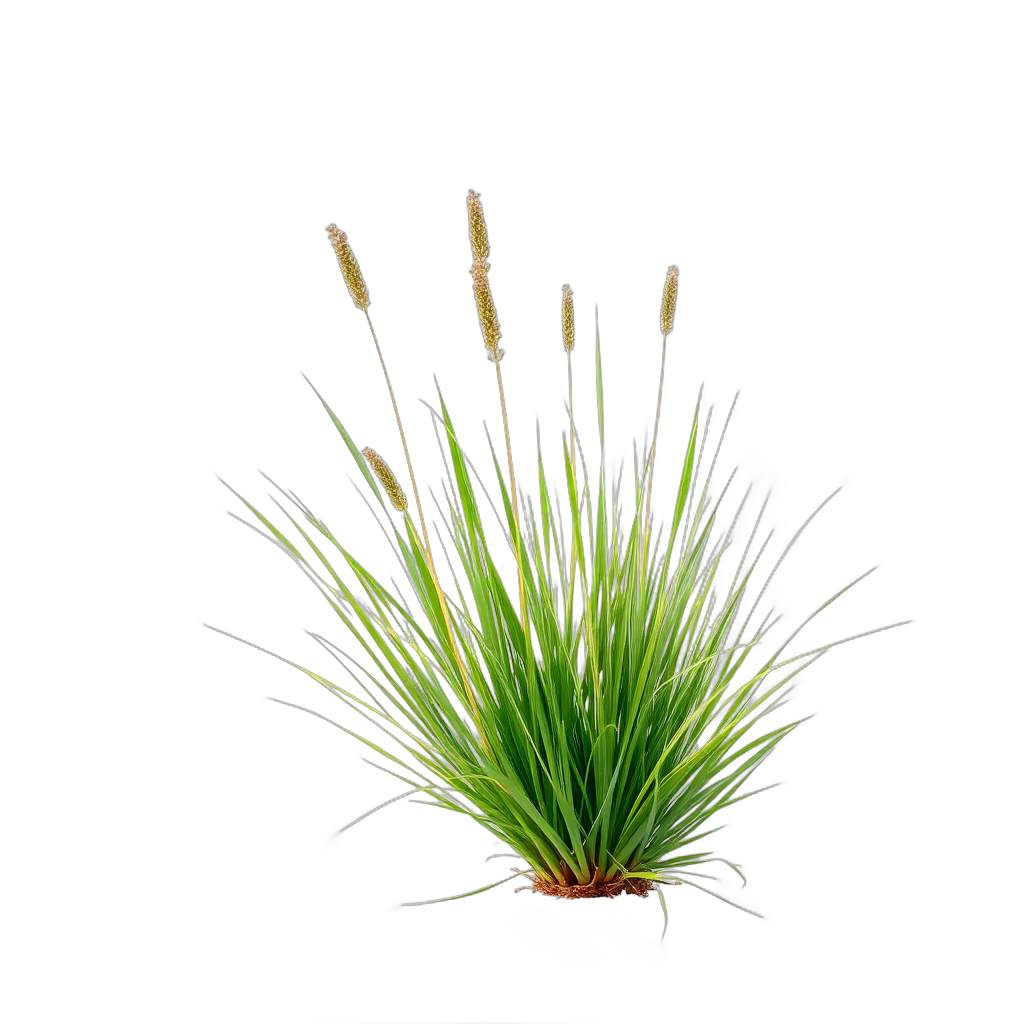
Deer Grass
Muhlenbergia rigens
grows to 3 feet, yellow blooms in fall. Evergreen year-round.
Featured Flowers & Perennials for Desert/Xeriscape Gardens
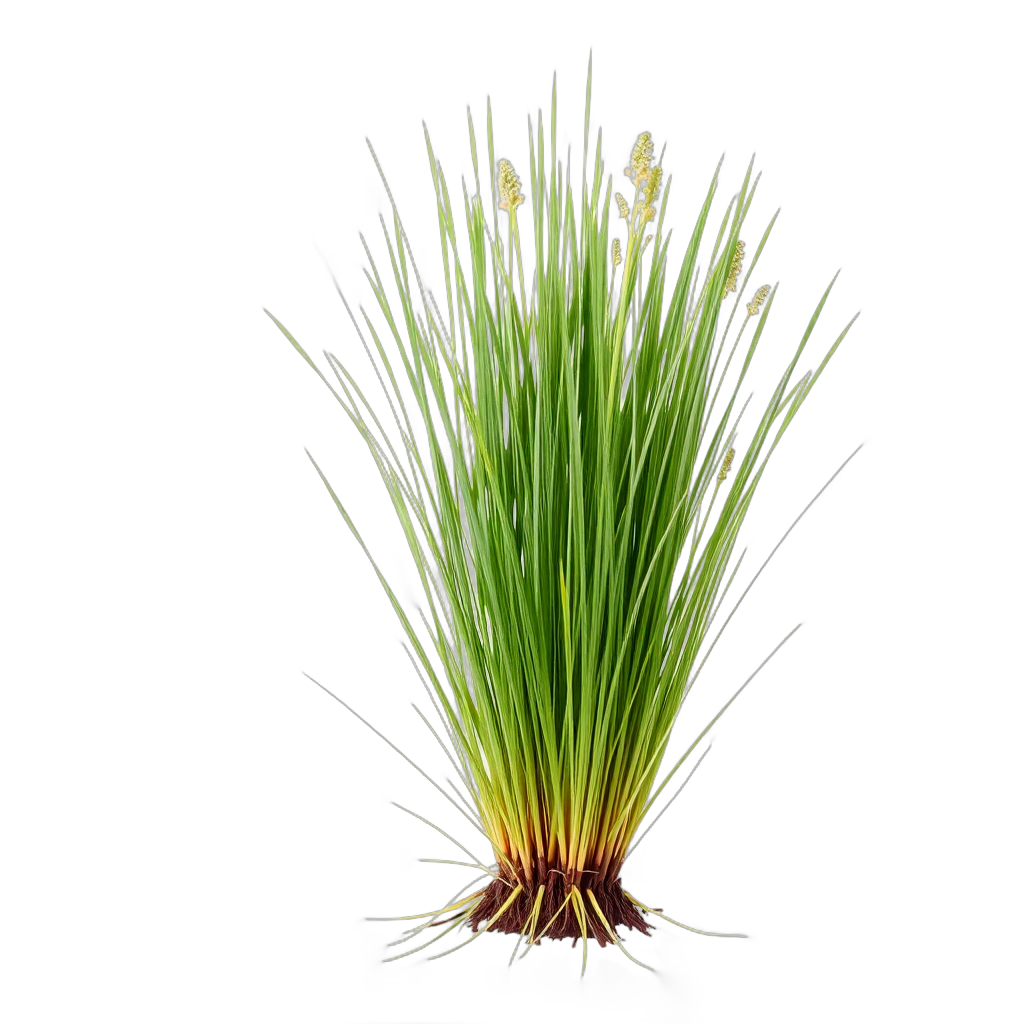
California Gray Rush
Juncus patens
low-growing ground cover, blooms in summer. Evergreen year-round.
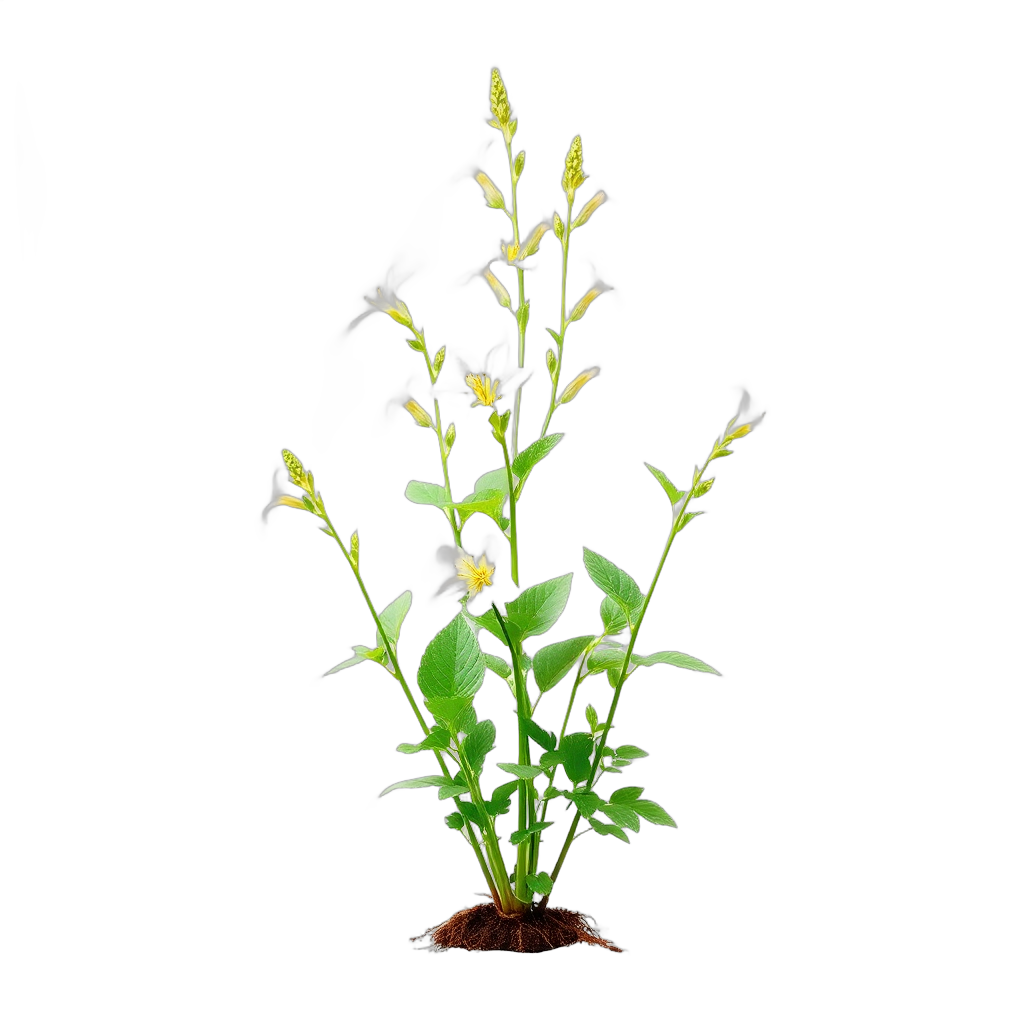
Beach Evening Primrose
Camissonia cheiranthifolia
low-growing ground cover, yellow blooms in spring. Attracts butterflies.
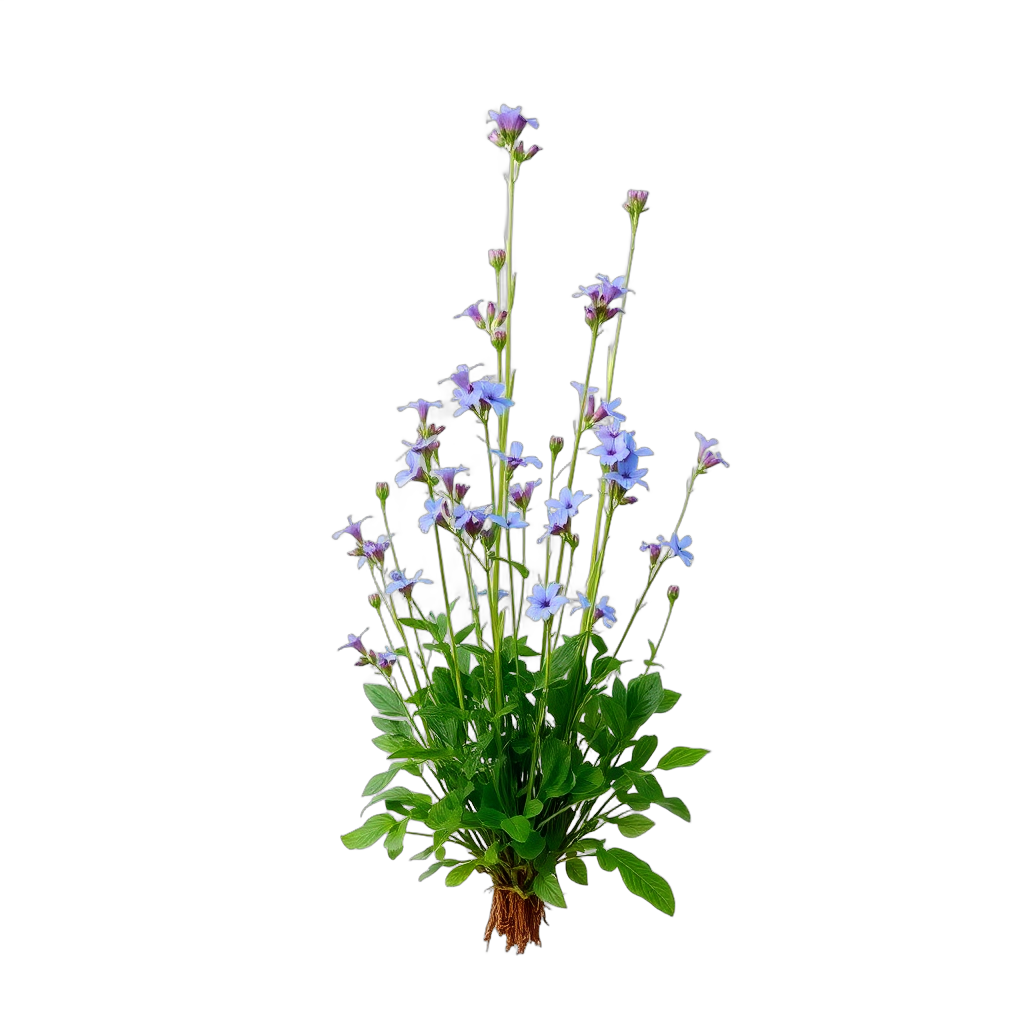
Blue Dicks
Dichelostemma capitatum
low-growing ground cover, blue blooms in spring. Pollinator-friendly.
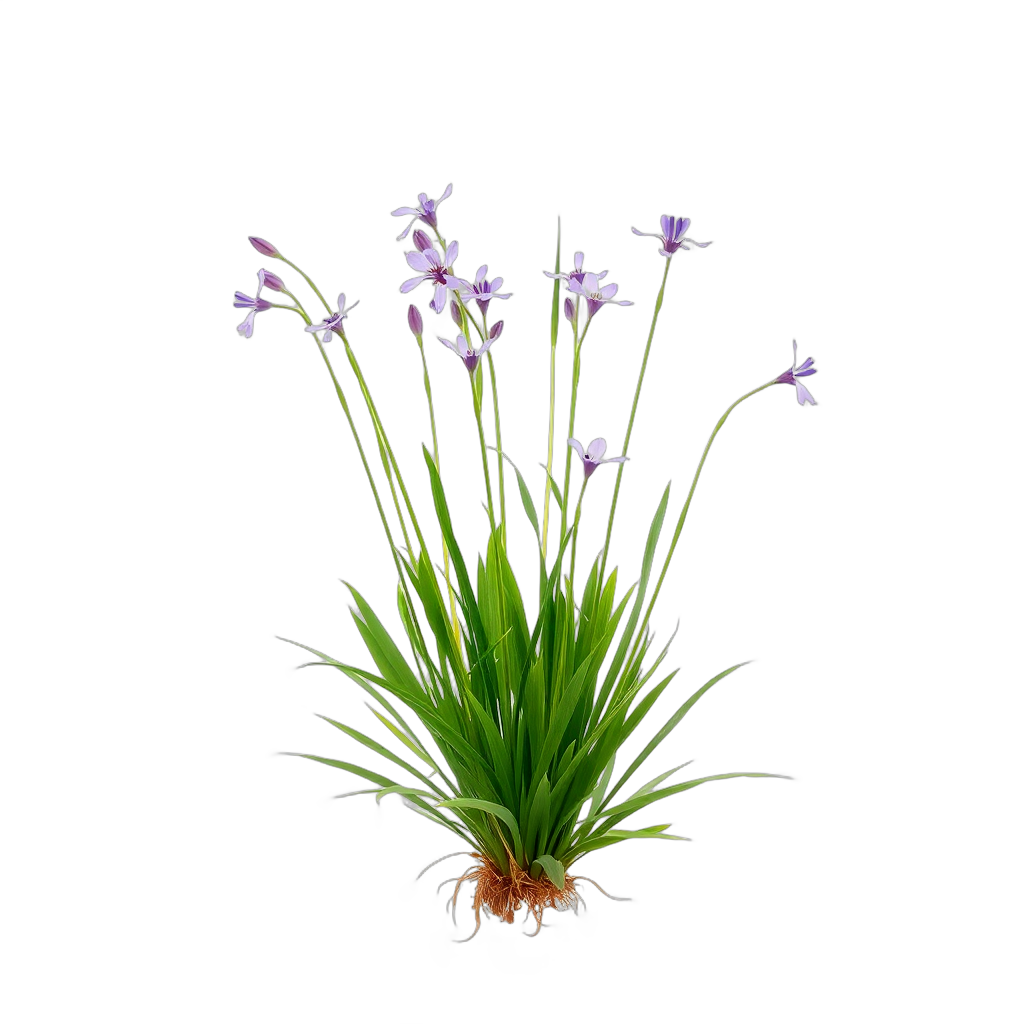
Blue-Eyed Grass
Sisyrinchium bellum
low-growing ground cover, blue blooms in spring. Attracts butterflies.
Zone and sun checks come from our database — confirm with your local nursery before you buy.
Bloom Calendar for Mission Viejo
spring
Beach Evening Primrose, Blue Dicks, Blue-Eyed Grasssummer
California Gray Rush, Hooker's Evening Primrose, Hummingbird Mintfall
California Fuchsiawinter
Limited bloomsDesign Tips for Mission Viejo (Zone 10b)
- Build beds 8–12 inches above grade with gravel-amended soil: Mission Viejo pads are often clay, and Agave ovatifolia 'Vilmoriniana' and Aloe 'Hercules' fail from wet crowns in a November to April rain, not from cold
- Skip Echinocactus grusonii and Agave parryi: they rot in cool, wet winters here, and Ferocactus pilosus and Agave ovatifolia 'Vilmoriniana' give the same sculptural look
- Group plants by water need: keep Salvia clevelandii 'Winnifred Gilman' and Eriogonum fasciculatum 'Warriner Lytle' on one valve and succulents on another, since NOAA shows almost no rain from June to September and the two groups want different summers
- Match gravel to the stucco: 3/8-inch tan or gray decomposed granite looks calm against cream and tan stucco, and it avoids the harsh white of cheap rock
- Plant in October to early December: the soil is warm, rain follows, and roots establish before summer, while a July planting needs weekly watering and shade cloth
- Use native sage-scrub plants on slopes: Arctostaphylos 'Howard McMinn' and Ceanothus 'Dark Star' hold soil better than gravel alone and need little water once established
- Leave bare ground for Dymondia margaretae between stepping stones: it forms a low silver mat that needs little mowing and keeps weeds from sprouting after winter rain
Where to Source Plants in Mission Viejo
Skip the big-box stores. These independent Mission Viejo nurseries specialize in the plants that make desert/xeriscape gardens thrive in Zone 10b.
Roger's Gardens
Corona del Mar
Large independent garden center known for roses, perennials, container plants and home decor; a good source for specimen shrubs and trees
Plant Depot
San Juan Capistrano
Four-acre general nursery with a wide range of succulents, cacti, trees, shrubs and fine pottery
Green Thumb Nursery
Lake Forest
Family-owned since 1946, with about five acres of plants and trees, including drought-tolerant California natives and citrus
Desert/Xeriscape Landscaping Cost Ranges
| Project Scope | Estimated Cost |
|---|---|
| Drip irrigation system (500 sqft of planted area) | $1,200–$2,200 |
| Block fire pit, stacked block, capped (1 fire pit) | $580–$770 |
| Landscape gravel court (200 sqft) | $170–$370 |
| AI visualization (ProScapeAI) | Free to start |
National average installed ranges for 2026 from our landscaping price list (Homewyse and other published sources). Prices in Mission Viejo, CA vary with site, materials and contractor, so get two or three local quotes.
Mission Viejo Climate & Growing Zone
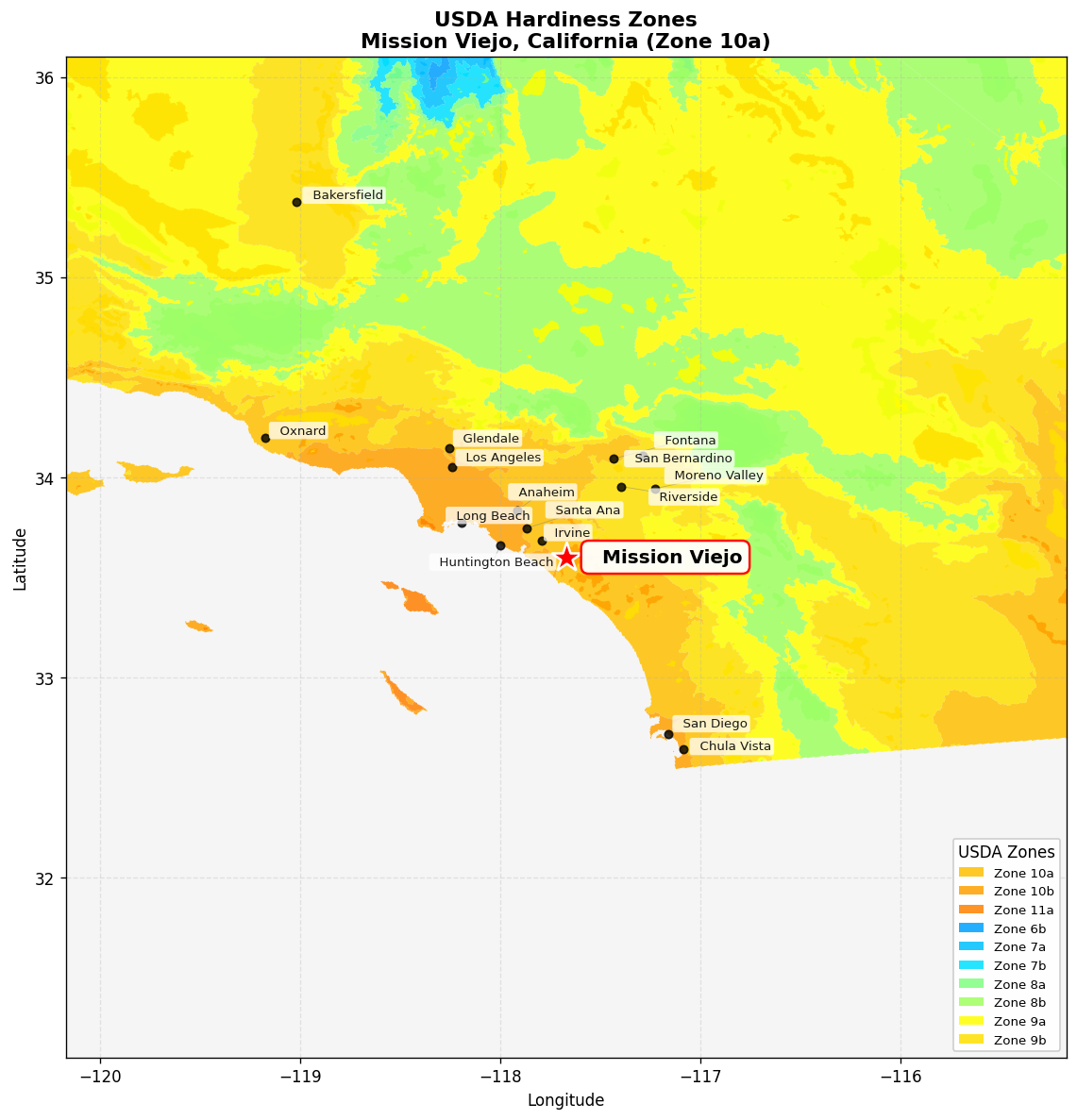
USDA Zone 10b
Hardiness zone for Mission Viejo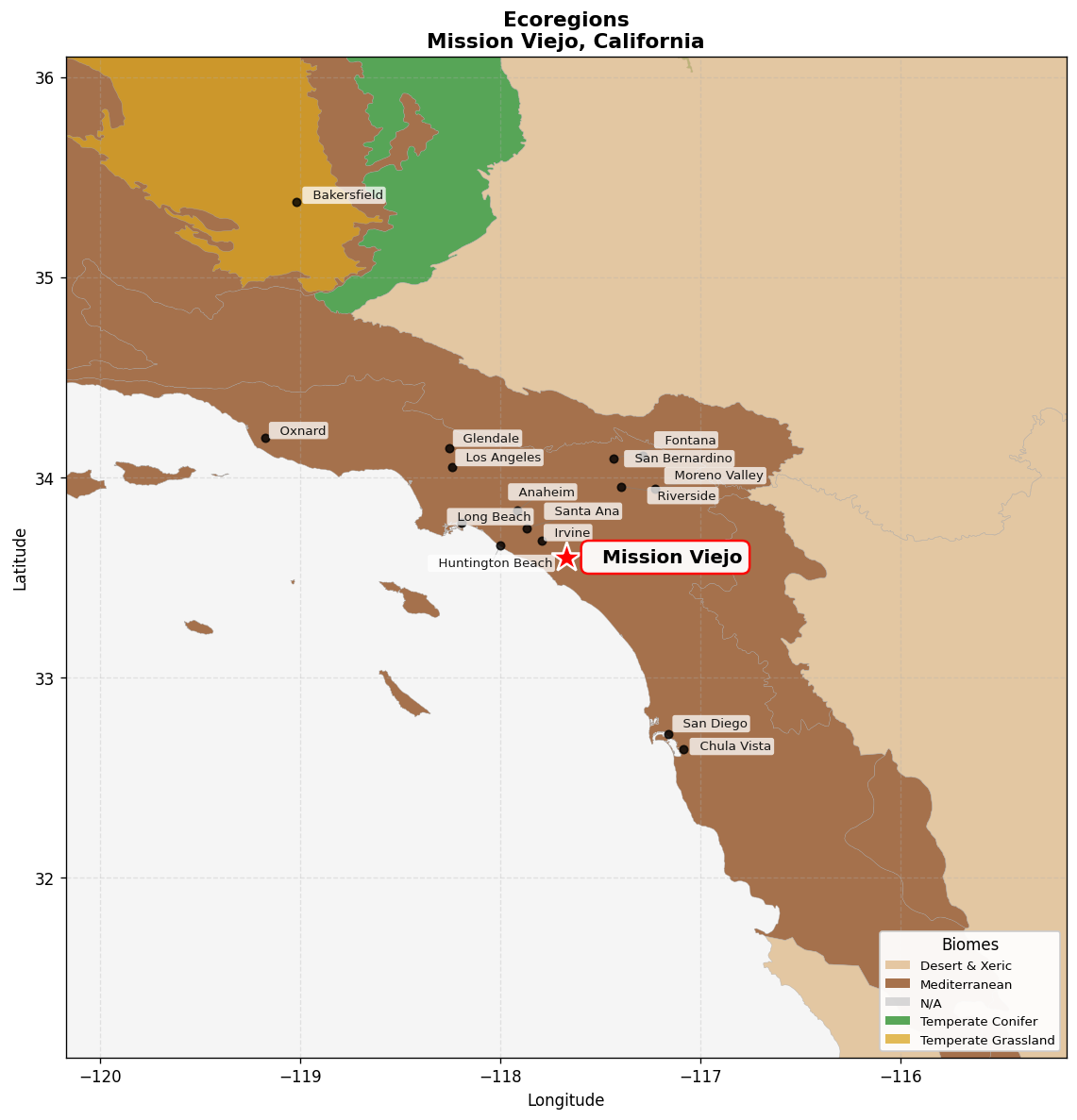
California coastal sage and chaparral
Native ecoregionFrequently Asked Questions
How much does a desert garden cost in Mission Viejo, CA?
Buying one-gallon plants and doing the planting yourself lowers the plant line. All figures on this page are planning estimates, not quotes; get two or three local quotes before you budget.
Is a desert garden low maintenance in Mission Viejo?
It is low water and moderate effort. NOAA's Irvine Ranch normals show about 13 inches of rain a year, so established Salvia clevelandii 'Winnifred Gilman' and Eriogonum fasciculatum 'Warriner Lytle' need only a deep soak every 2–3 weeks in summer. The chores are pulling winter weeds in gravel, cutting back Muhlenbergia rigens to 6 inches each January, and removing dead lower leaves from aloes. Expect about an hour a week in spring and less the rest of the year.
When should I plant a desert garden in Mission Viejo?
October to early December is best: the soil is warm, winter rain follows, and roots settle before summer. Succulents like Aloe 'Hercules' and Agave ovatifolia 'Vilmoriniana' can also go in during March to May, since they root in warm soil. Avoid July and August planting, when afternoons average about 88–90°F at NOAA's Irvine Ranch station, and keep new plants shaded for the first hot week.
Do I need approval before replacing my lawn with a desert garden?
Many Mission Viejo homes belong to a homeowners association, and front-yard changes may need architectural committee approval, so submit a plan with plant names and gravel color. Walls and patios may also need a city permit depending on height and size. Rebate programs for turf removal change often and depend on your water district, so check your district's current offer before removing grass. Confirm every rule with the city and your association before you start.
What desert plants survive Mission Viejo's winters?
Mission Viejo almost never freezes, but cool, wet winters on clay rot plants from drier deserts. Echinocactus grusonii and Agave parryi often fail here. Reliable substitutes are Agave ovatifolia 'Vilmoriniana', Ferocactus pilosus, Aloe 'Hercules', Hesperaloe parviflora 'Brakelights' and Yucca rostrata. Plant them on raised mounds of gravel-amended soil so crowns stay dry from November to April.
Can I use California natives in a desert-style garden here?
Yes, and they usually do better than imported desert plants. Salvia leucophylla 'Point Sal', Arctostaphylos 'Howard McMinn', Ceanothus 'Dark Star' and Encelia californica come from the coastal sage and chaparral country around Mission Viejo, so they match the rainfall pattern. Water them deeply but infrequently the first two summers, then taper off. Do not overwater established natives in summer, since that invites root rot.
What about fire safety on a slope near open space?
Lots that back onto open space may fall under fuel-modification or association slope rules, so ask your association and the local fire authority before replanting. In general, keep succulents and low, widely spaced plants such as Dymondia margaretae, Aloe 'Hercules' and Salvia clevelandii 'Winnifred Gilman' nearest the house, and keep dead leaves and dry grass trimmed. Gravel mulch also helps, since it does not burn like bark.