4 Modern Garden Ideas for Pomona, CA | Zone 10a Landscape Design
Native plants from the California coastal sage and chaparral (Zone 10a) — Mediterranean (hot summer) climate
Why Modern/Minimalist Gardens in Pomona?
Modern landscape design has an unusually easy job in Pomona, because the houses were already built for it. The post-war tracts filling the valley floor between Towne, Garey and Holt are low, wide, single-story ranches with long horizontal rooflines, and the custom builds climbing Ganesha Hills and the Westmont slopes include a genuine seam of mid-century modern — flat and low-pitch roof planes, deep eaves, clerestory glass and stucco walls that want a clean groundplane rather than a busy one. Add the newer contemporary infill in Phillips Ranch and along the Diamond Bar edge and you have the exact architecture that a poured-concrete walk, a Corten-edged gravel bed and a mass of one grass are designed to amplify. The other half of the argument is horticultural. Modern design leans on architectural, sculptural, water-thrifty plants — agave, aloe, yucca, dasylirion, big soft grasses — and the Inland Valley is one of the best climates on earth for growing them outdoors year-round.
Pomona is Zone 10a in a hot-summer Mediterranean climate (Köppen Csa): roughly 17 inches of rain a year, all of it between November and March, July and August highs averaging in the mid-90s, Santa Ana events past 105°F with single-digit humidity, and January lows in the low 40s. That is close to ideal for the modern plant palette. Where a Birmingham or Atlanta designer has to build raised gravel beds just to keep an agave from rotting, Pomona's problem is the opposite — everything drains, nothing rots, and the summer dry season is the plants' natural rest period. The genuine local constraints are different: reflected heat off pale concrete and stucco can push a west-facing bed 15 to 20 degrees above ambient, sunburning even Agave attenuata; Santa Ana winds shred large-leaved plants and desiccate new plantings every autumn; and the agave snout weevil, which is endemic across Southern California, will hollow out a mature Agave americana without warning. Choosing weevil-resistant species — Agave ovatifolia, Agave parryi var. truncata, Agave 'Blue Glow', Agave victoriae-reginae — matters more here than cold-hardiness ever will.
The ground underfoot is San Gabriel alluvial fan — Hanford and Ramona sandy loams laced with decomposed granite, washed down by San Antonio and San Jose Creeks, sharply drained and alkaline at pH 7.2 to 8.2. For hardscape this is good news: unlike expansive clay, Pomona's sandy alluvium is stable under a properly compacted base, so a concrete terrace poured on four to six inches of compacted crushed aggregate will stay flat. Two caveats still apply. Older terraces above Ganesha Park hide caliche hardpan a foot or two down, worth probing before any tree pit. And the hillside lots along the Puente and Chino Hills margins do carry expansive clay and slope stability issues that make a soils report the sensible first spend rather than an optional one. On the plant side, alkalinity means chelated iron for anything that yellows and elemental sulfur worked in each autumn, plus gypsum and one long winter leaching cycle to move the salt that imported Colorado River water leaves behind.
Water and air-quality rules end up steering the details. California's Model Water Efficient Landscape Ordinance governs permitted landscape rehabilitations, with light prescriptive compliance from around 500 square feet and full documentation above 2,500, and a gravel-and-agave palette clears its water budget with room to spare. Pomona is served through the Three Valleys Municipal Water District, so the SoCal Water$mart turf replacement rebate — roughly $2 per square foot of grass removed at the base rate — offsets part of a front-lawn conversion. Two more that catch people out: several ornamental grasses long used in modern California gardens are now flagged as invasive by Cal-IPC — Nassella tenuissima (Mexican feather grass) and Pennisetum setaceum (fountain grass) both self-sow into the surrounding coastal sage scrub, so specify Muhlenbergia rigens, Muhlenbergia capillaris 'Regal Mist' or Leymus condensatus 'Canyon Prince' instead. And the South Coast Air Quality Management District issues no-burn advisories through the winter, which is why gas fire bowls rather than wood-burning ones are the practical choice in a Pomona outdoor room. Pool pumps must meet Title 24 variable-speed requirements. Verify all of it with the City of Pomona and your water provider before you build.
4 Modern/Minimalist Design Ideas for Pomona

The Clerestory Ranch Frontage
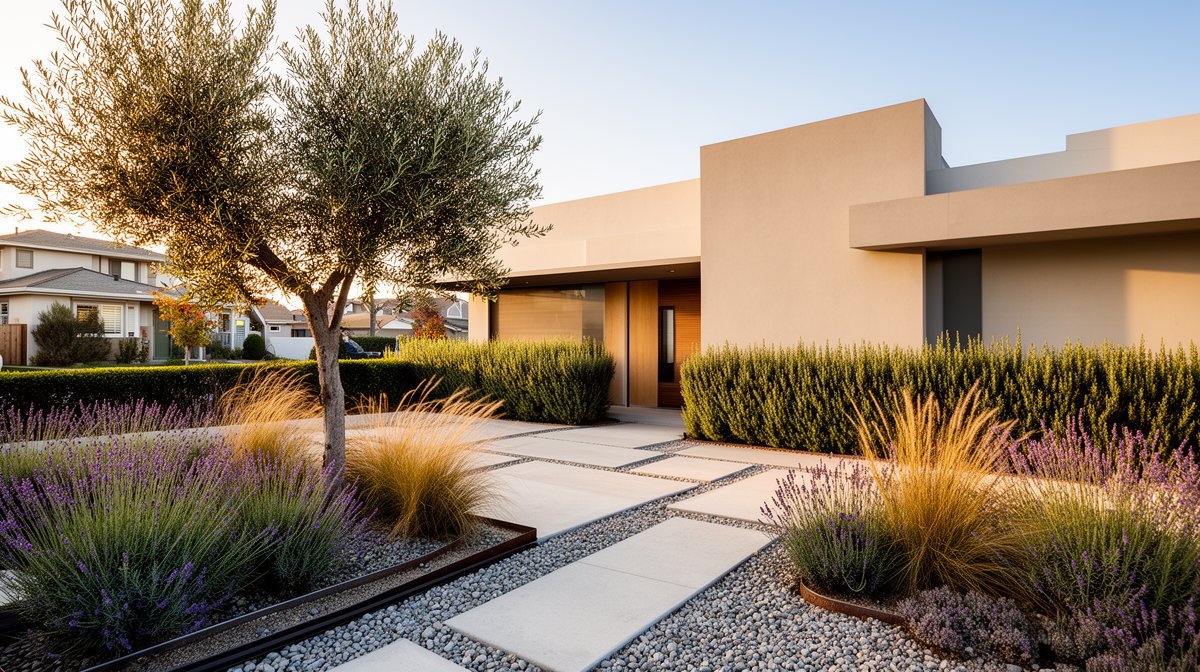
$18–34/sqftA low contemporary stucco house with stacked shed roof planes, a tall clerestory window over the entry, black-framed floor-to-ceiling glass at both wings and a black pivot door, warm interior light spilling out at dusk. A wide poured-concrete walk with planted joints runs dead straight from the street to the door, splitting two clean panels of lawn. The planting does all the work at the edges: honey-toned grasses caught by the low sun, drifts of purple lavender, blue-grey agave rosettes tucked at the foundation, and dark burgundy sword clumps repeated along the whole facade. A young multi-trunk shade tree in a mulch ring sits off-centre in the left lawn panel, deliberately breaking the symmetry.

The Zero-Lawn Gravel Frontage
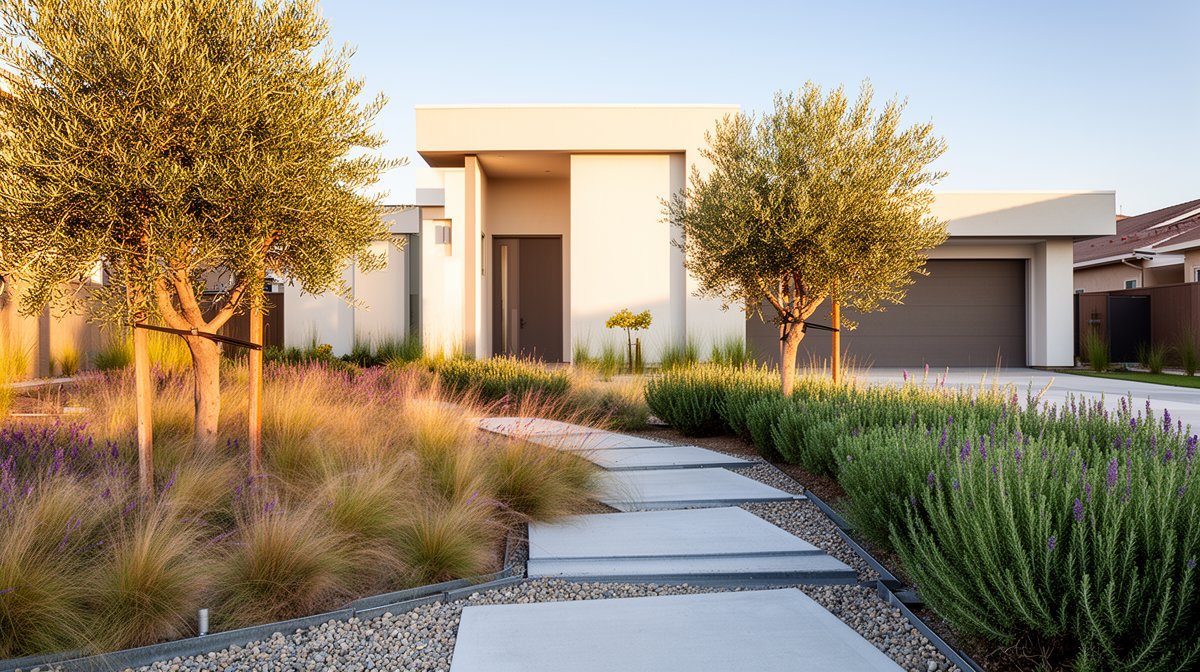
$10–22/sqftA flat-roofed stucco ranch with a dark stucco entry pier and wide picture windows, and not one square foot of grass anywhere in the design. The whole front plane is a field of rust-brown crushed rock, cut by a broad concrete drive and walk. A single square raised bed edged in weathering steel sits proud of the gravel as the composition's one gesture — big blue agave rosettes at the corners, a tight silver-blue rosette in the middle, and a broad rose-tinted rosette placed low at the front like a full stop. More agaves march along the foundation in a loose rhythm, and a mature evergreen shade tree at the right throws its shadow across the stucco. It is the cheapest modern front yard to run and the most dramatic at low sun.

The String-Light Concrete Platform
$28–55/sqftA single-story stucco house with a slim shade trellis over the sliding doors opens onto a raised light-grey concrete platform, floated a step above the lawn so its edge reads as a clean shadow line. A grey modular sectional and two loungers face a low round concrete gas fire bowl, and catenary string lights run from the roofline out to two slim posts and back, drawing a ceiling in the air over the whole terrace. Beyond the platform there is still an honest panel of lawn and a block wall boundary, and the platform is wrapped in dark-mulched borders of tall wispy plumed grasses that catch the sunset light and soften every hard edge. A mature tree at the right anchors the far corner.

The Pool Terrace at Dusk
$45–90/sqft (pool area inclusive)A flat-roofed glass-walled modern house glowing warm at blue hour, its kitchen and dining room fully visible through a wall of sliding glass. A rectangular pool sits flush in a broad pale concrete deck of large sawn panels, with no coping lip to interrupt the plane, and its still surface mirrors the lit interior end to end. A low sectional and two chairs gather around a linear fire table on the deck, small in-grade uplights are set into the concrete, and slim multi-trunk trees stand against the perimeter wall. In the foreground, big backlit grasses spill over the deck edge — the one soft, moving element in an otherwise entirely rectilinear design, and the reason the space photographs the way it does.
See how a modern/minimalist garden looks on YOUR property
Upload a photo of your Pomona yard and visualize your dream garden in seconds.
Try ProScapeAI Free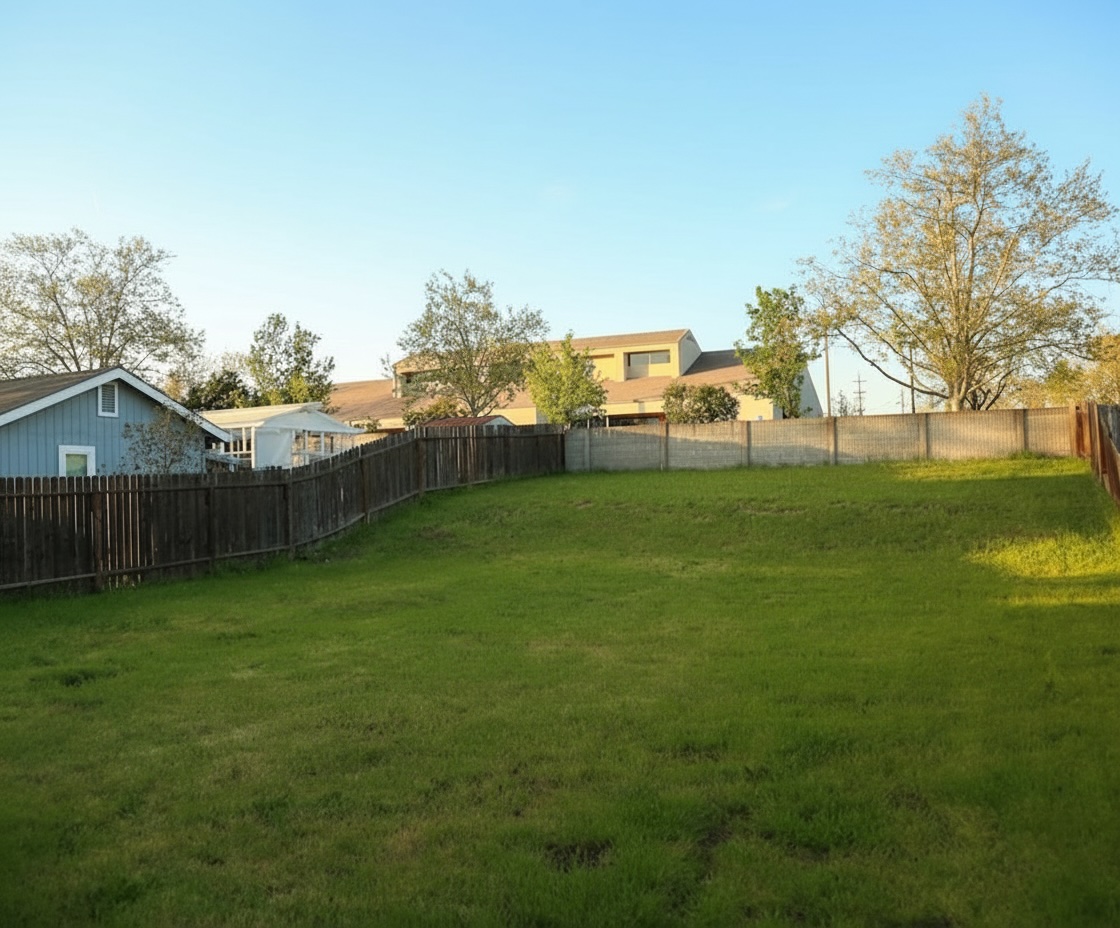
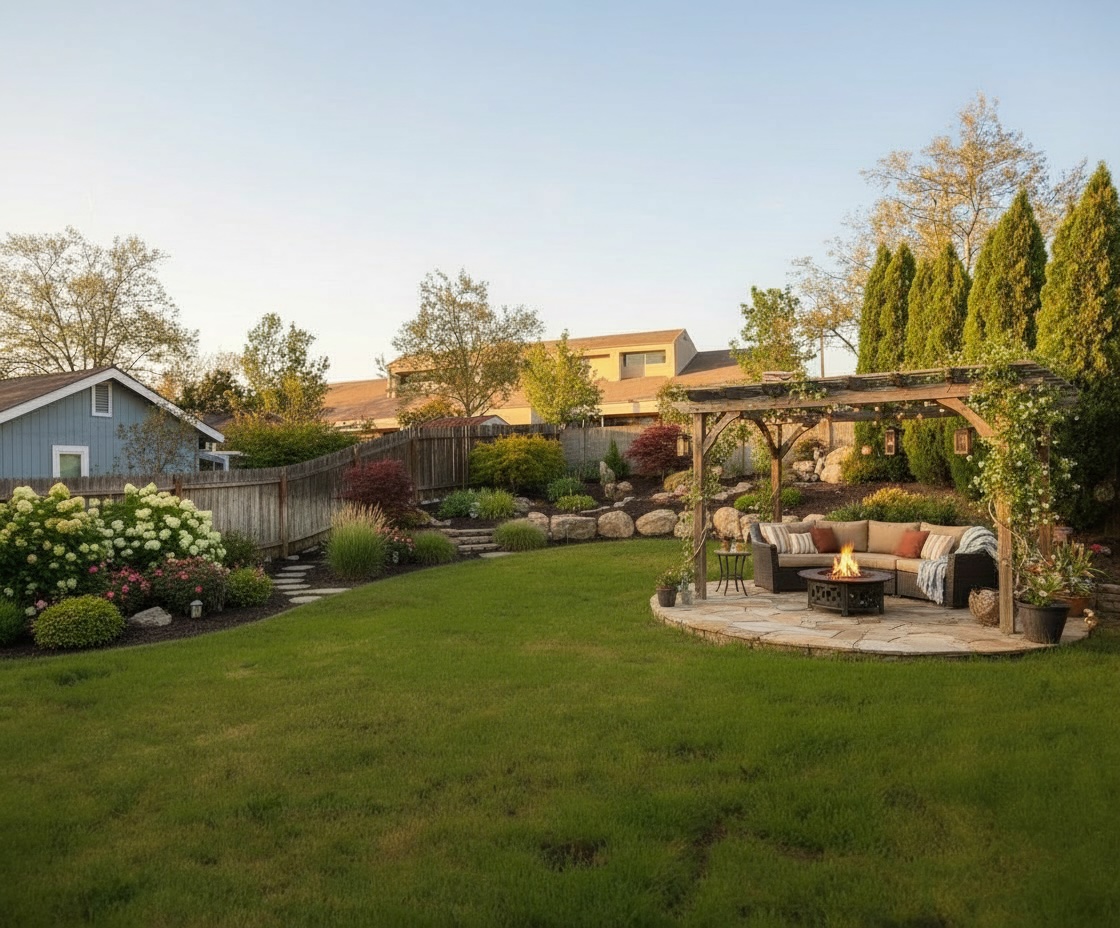
Featured Trees & Shrubs for Modern/Minimalist Gardens
Browse all 219 plants for Pomona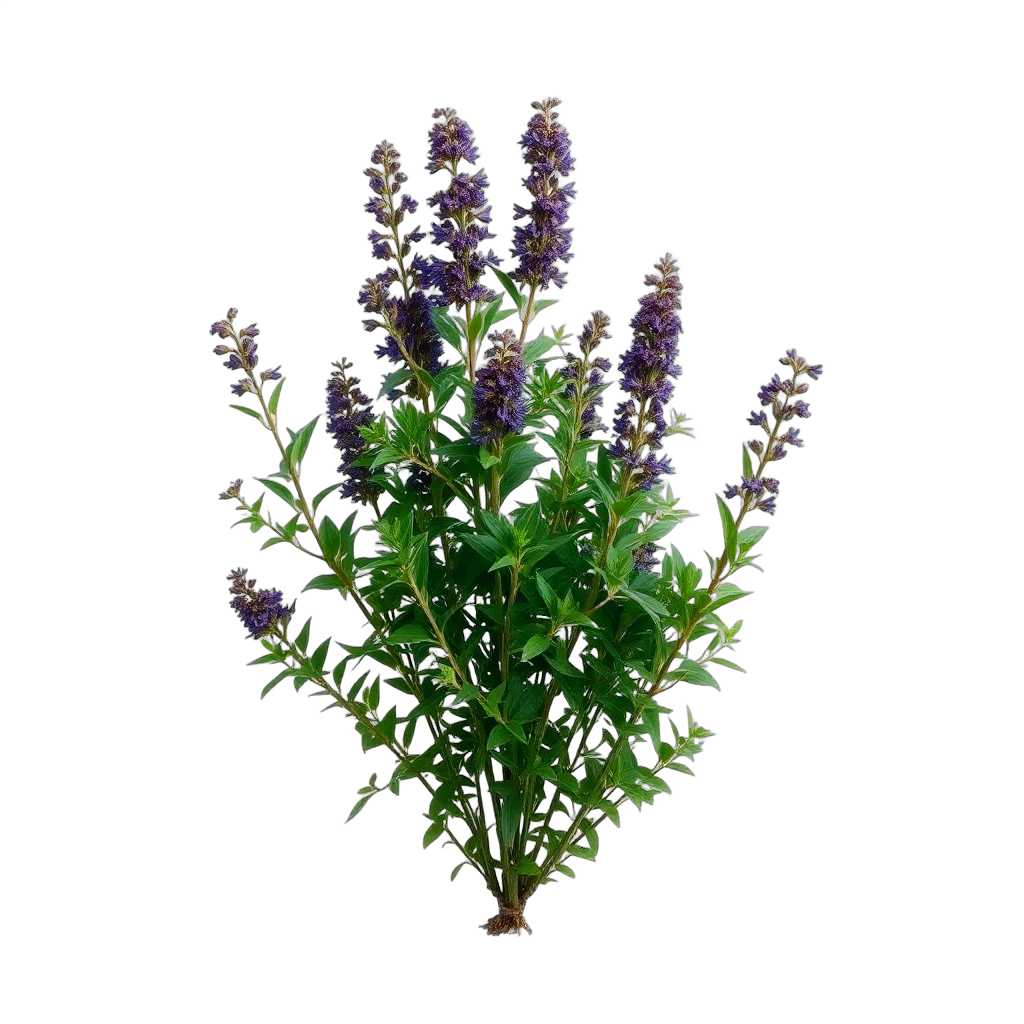
Black Sage
Salvia mellifera
grows to 4 feet, white blooms in spring. Attracts butterflies.
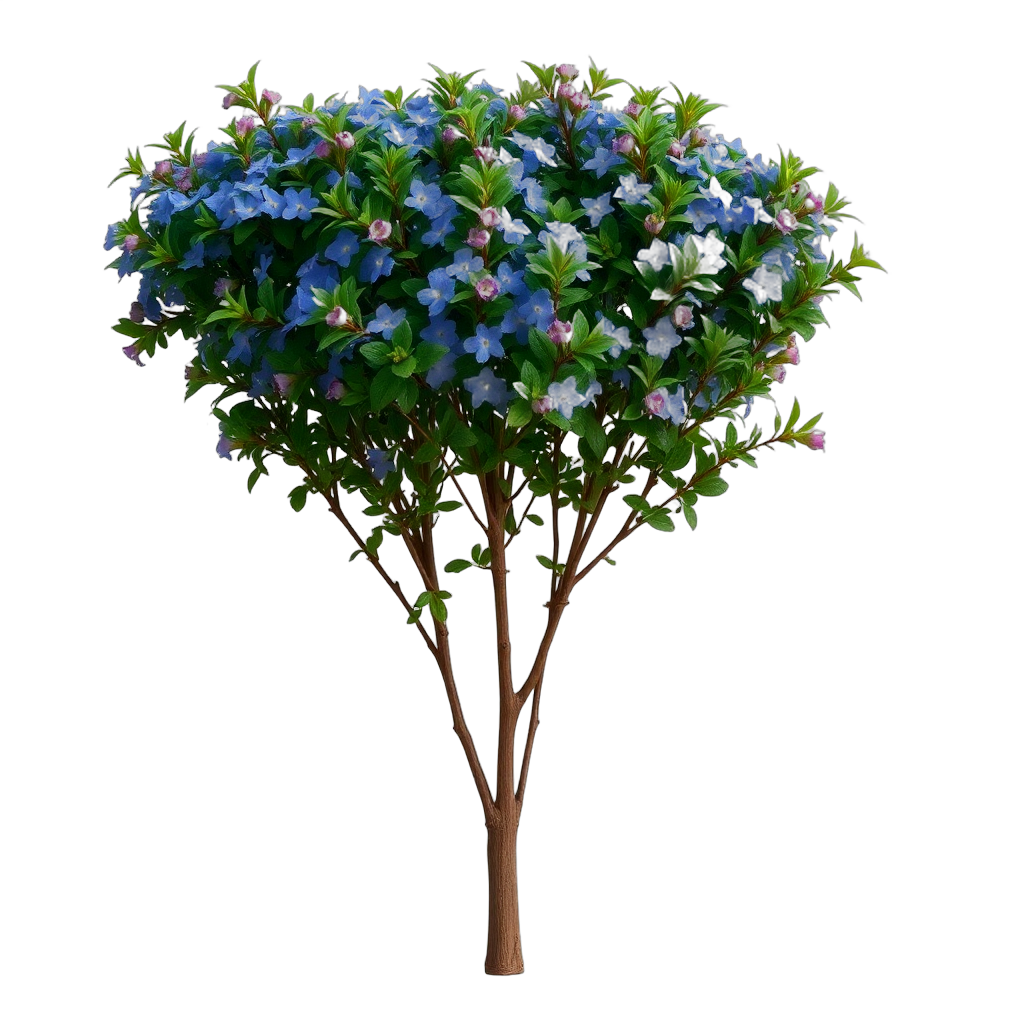
Blue Blossom
Ceanothus thyrsiflorus
medium-sized at 12 feet, blue blooms in spring. Attracts butterflies.
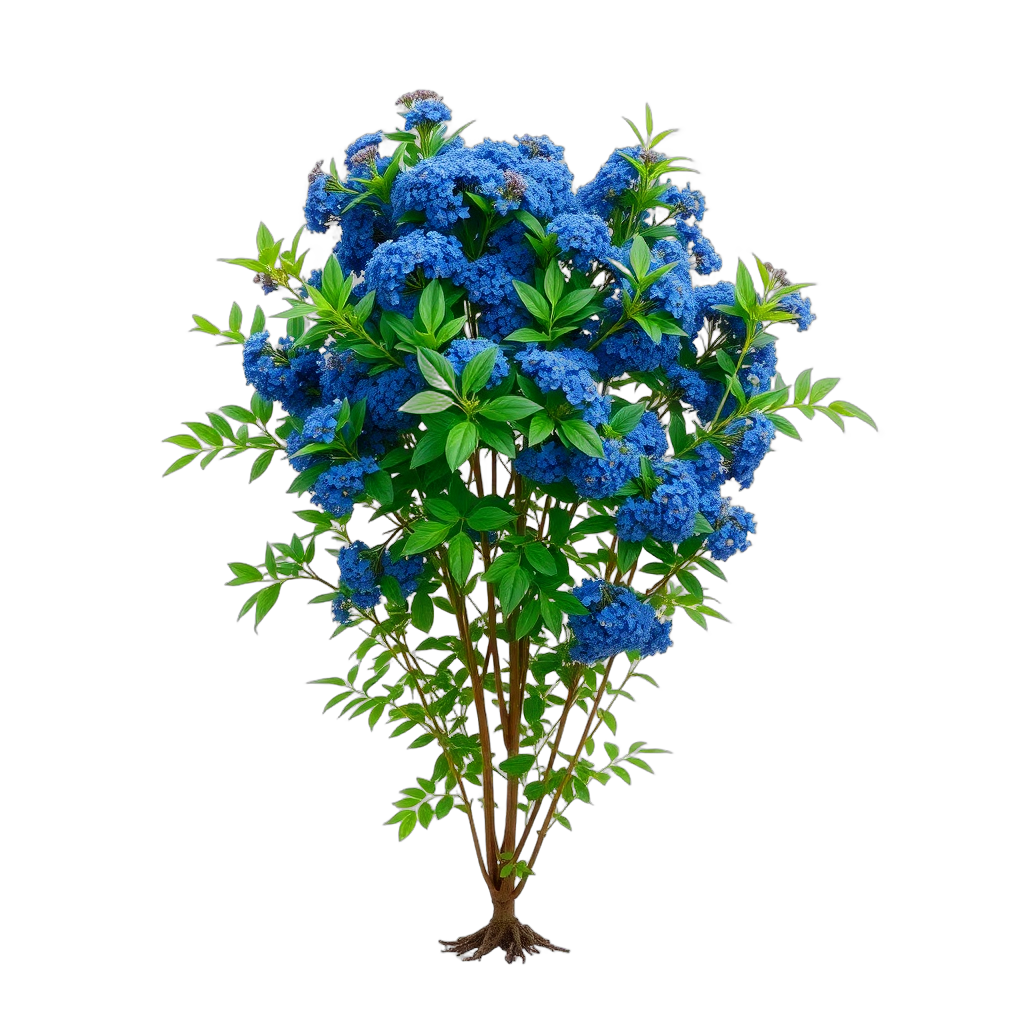
Blue Elderberry
Sambucus cerulea
medium-sized at 15 feet, white blooms in spring. Attracts butterflies.
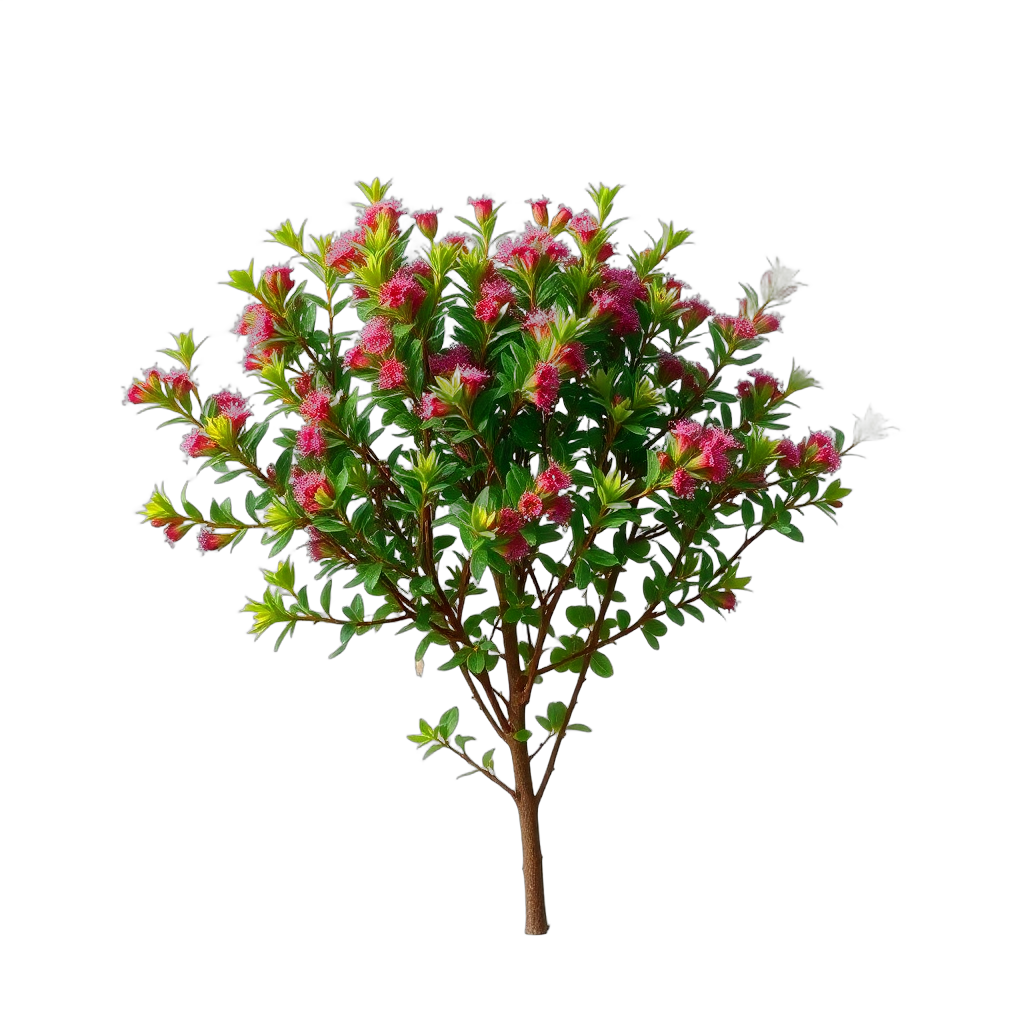
Buckbrush
Ceanothus cuneatus
medium-sized at 7 feet, white blooms in spring. Attracts butterflies.
Featured Grasses & Groundcovers for Modern/Minimalist Gardens
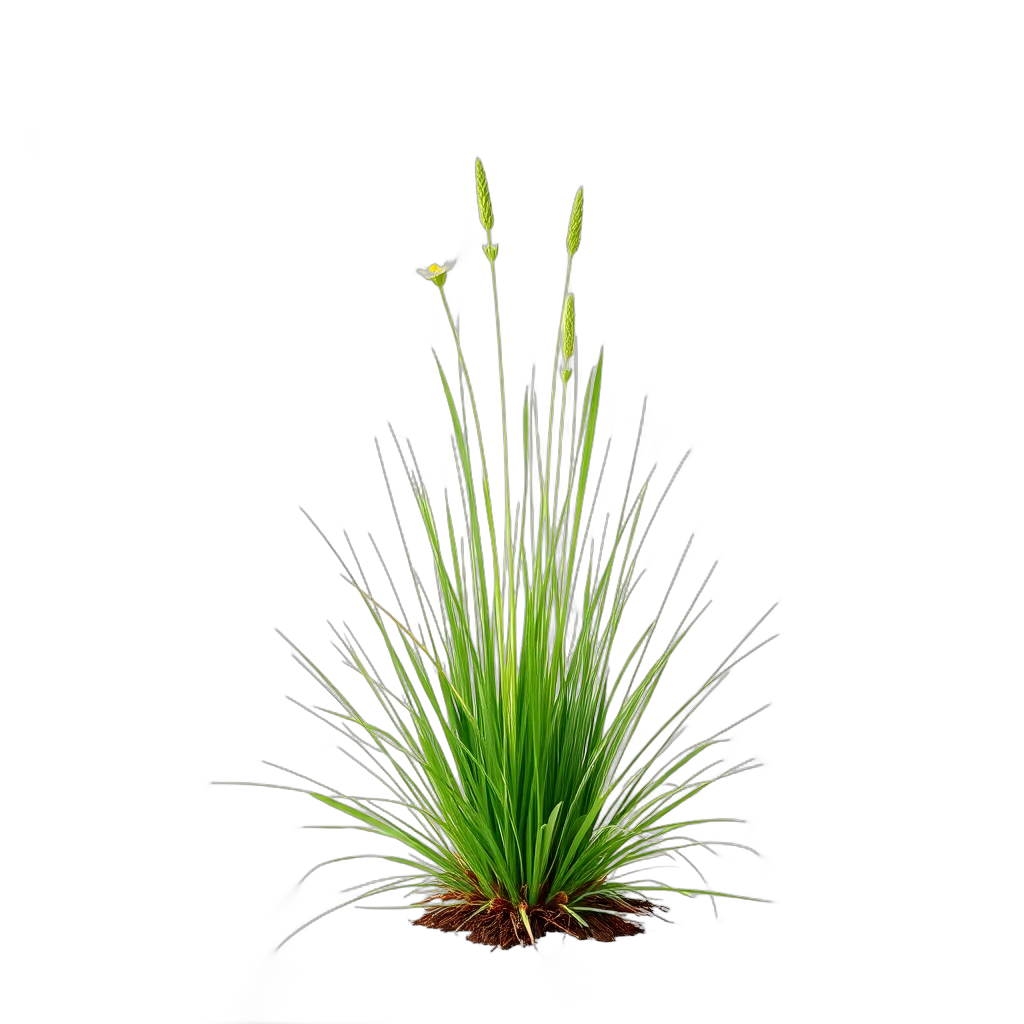
California Brome
Bromus carinatus
low-growing ground cover, blooms in spring. Yellow fall color.
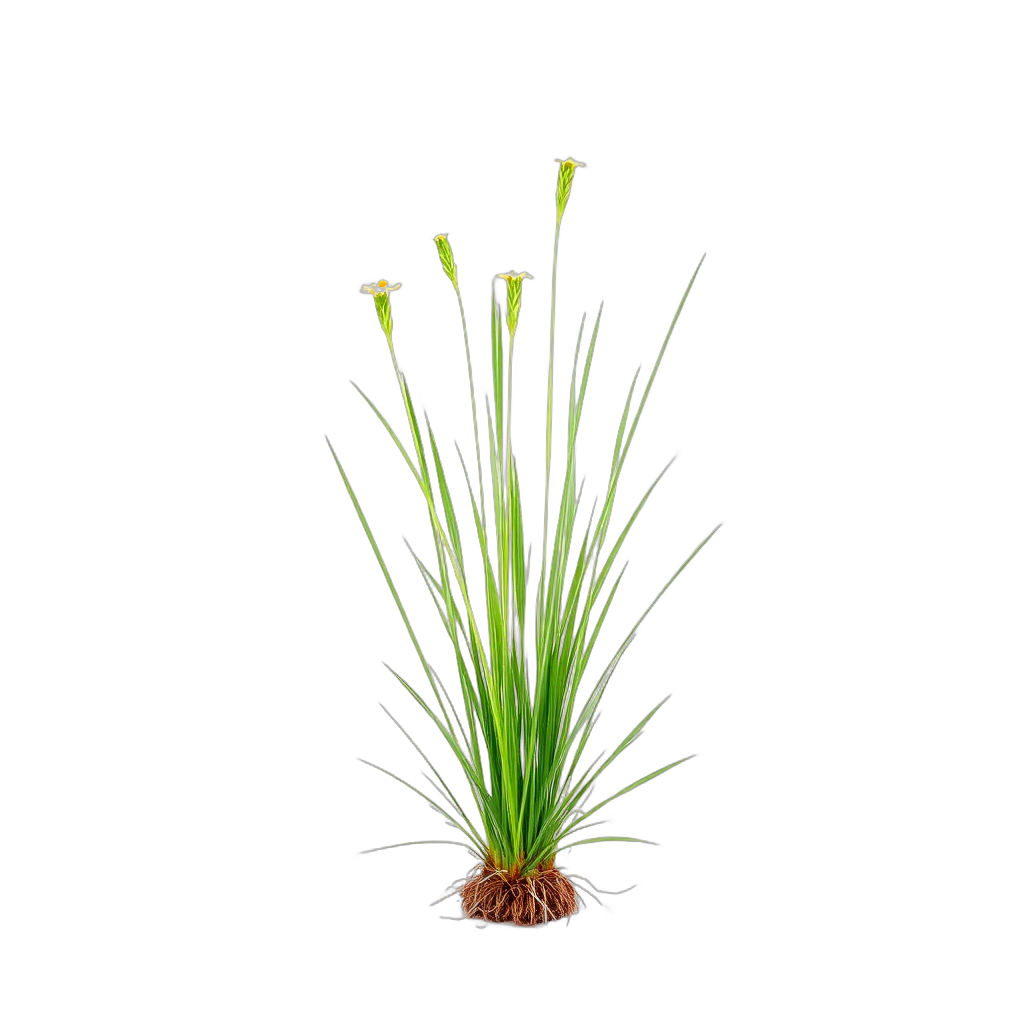
California Melic
Melica californica
low-growing ground cover, blooms in spring.
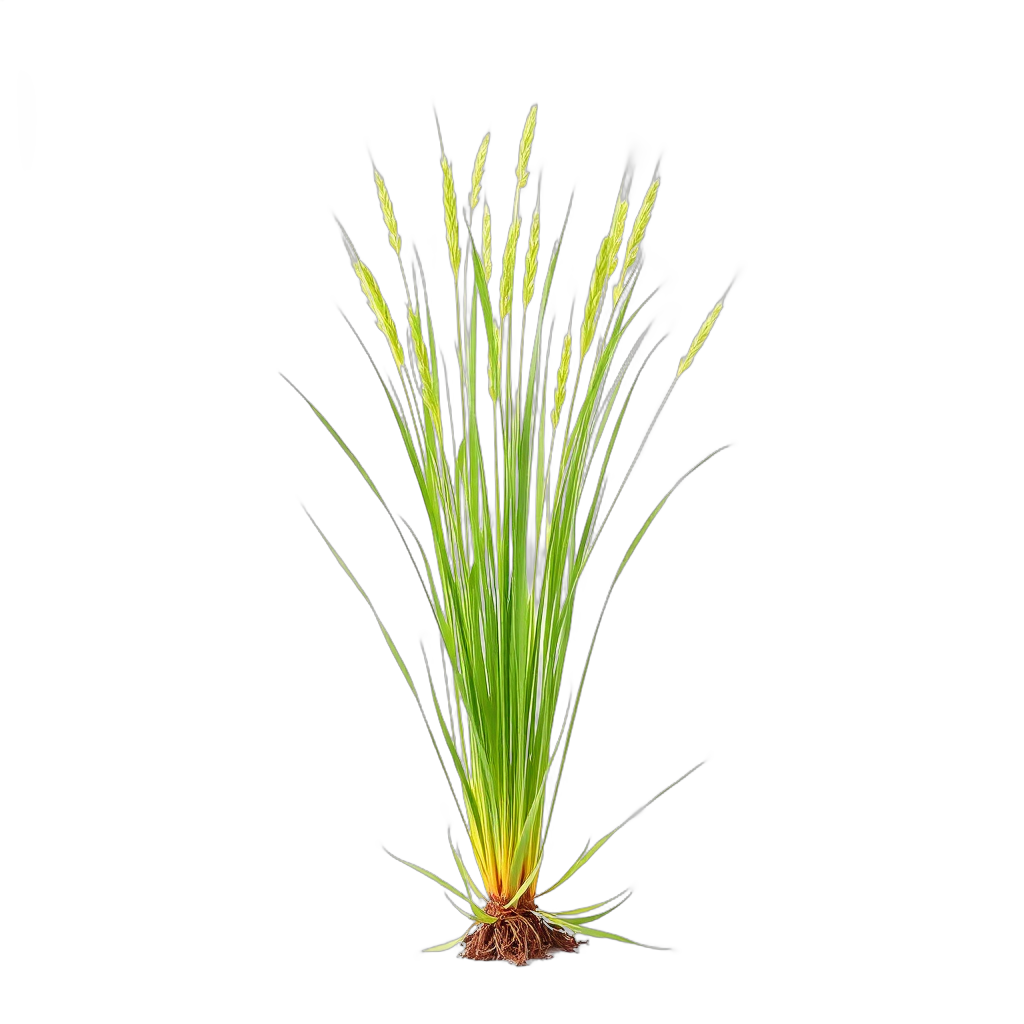
California Oatgrass
Danthonia californica
low-growing ground cover, blooms in spring. Yellow fall color.
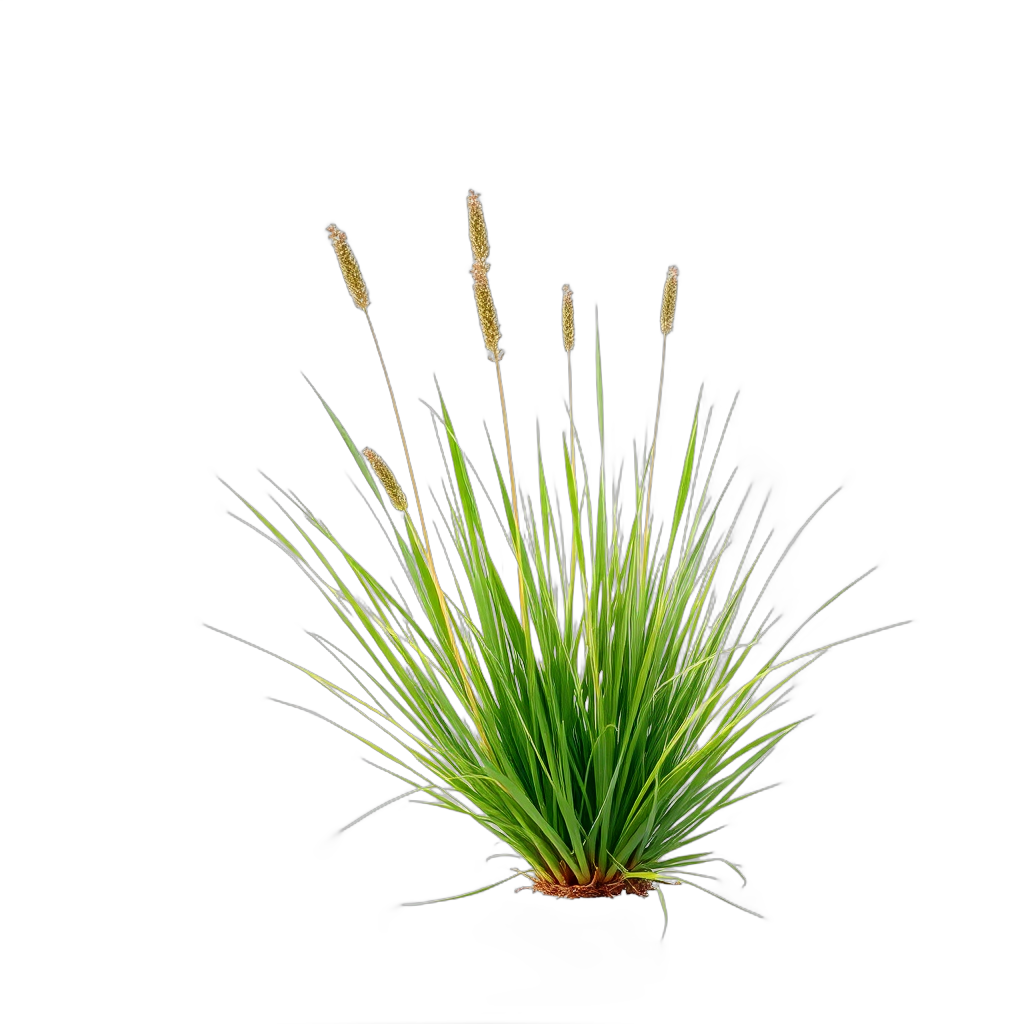
Deer Grass
Muhlenbergia rigens
grows to 3 feet, yellow blooms in fall. Evergreen year-round.
Featured Flowers & Perennials for Modern/Minimalist Gardens
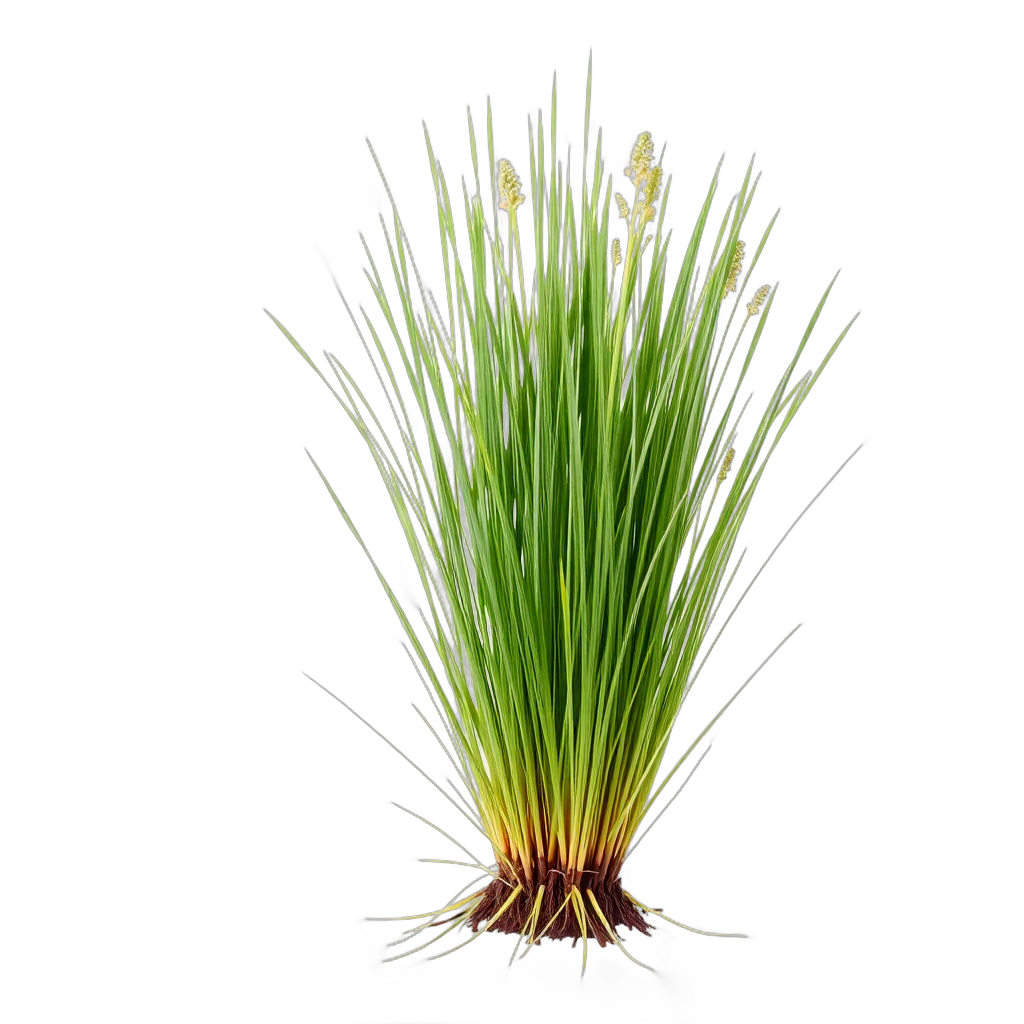
California Gray Rush
Juncus patens
low-growing ground cover, blooms in summer. Evergreen year-round.
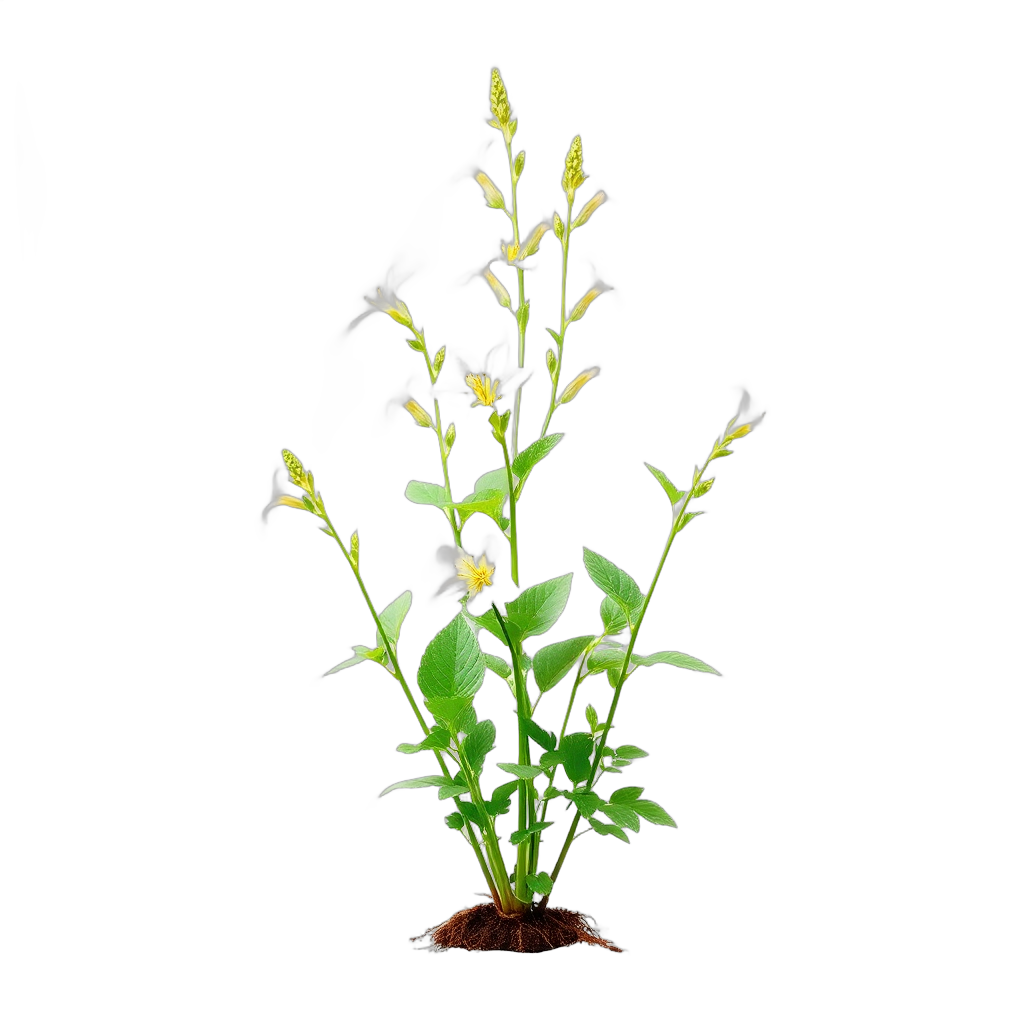
Beach Evening Primrose
Camissonia cheiranthifolia
low-growing ground cover, yellow blooms in spring. Attracts butterflies.
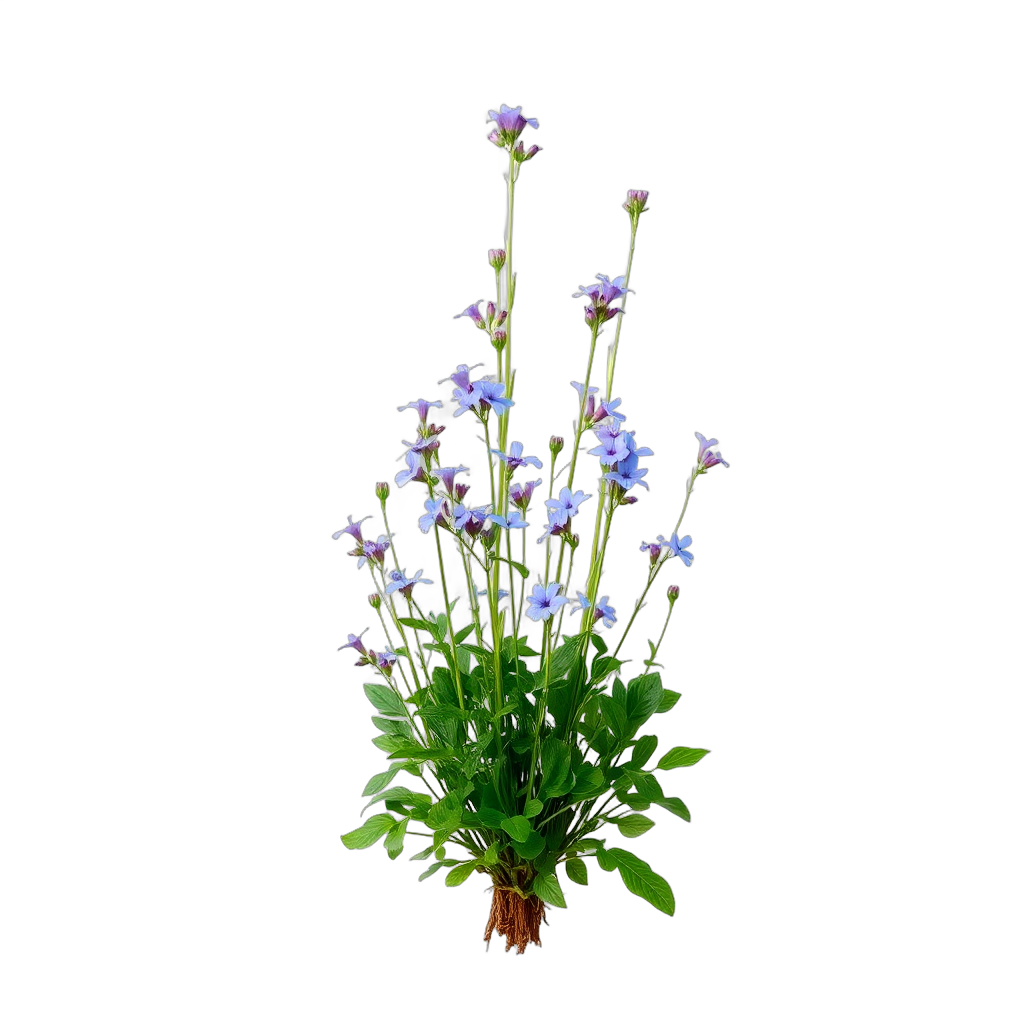
Blue Dicks
Dichelostemma capitatum
low-growing ground cover, blue blooms in spring. Pollinator-friendly.
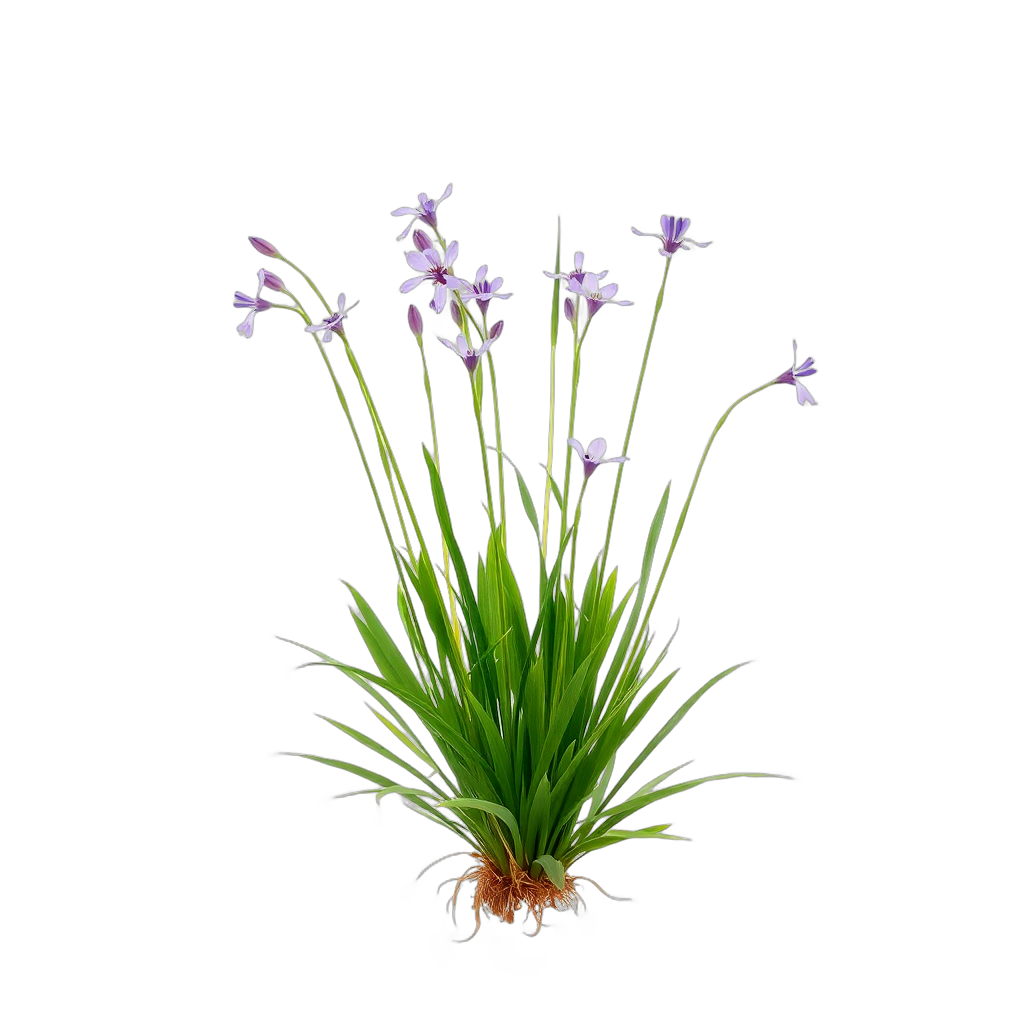
Blue-Eyed Grass
Sisyrinchium bellum
low-growing ground cover, blue blooms in spring. Attracts butterflies.
Zone and sun checks come from our database — confirm with your local nursery before you buy.
Bloom Calendar for Pomona
spring
Beach Evening Primrose, Blue Dicks, Blue-Eyed Grasssummer
California Gray Rush, Hooker's Evening Primrose, Hummingbird Mintfall
California Fuchsiawinter
Limited bloomsDesign Tips for Pomona (Zone 10a)
- Specify Muhlenbergia rigens and Muhlenbergia capillaris 'Regal Mist' rather than Nassella tenuissima or Pennisetum setaceum — both of the latter are on the California Invasive Plant Council list and escape from Pomona gardens straight into the surrounding coastal sage scrub, and the native deergrass has more architectural presence anyway
- Choose weevil-resistant agaves. The agave snout weevil is endemic here and takes Agave americana first; Agave ovatifolia, Agave parryi var. truncata, Agave 'Blue Glow' and Agave victoriae-reginae carry the same sculptural line with far better survival odds over ten years
- Watch reflected heat on west-facing walls — pale stucco and light concrete can drive a bed 15 to 20 degrees above ambient during a 105°F Santa Ana, so give Agave attenuata and Echeveria 'Afterglow' an east or north exposure and put Dasylirion wheeleri, Yucca rostrata and Hesperaloe parviflora 'Brakelights' on the hot side
- Keep concrete light in tone and cut control joints every eight to ten feet; Pomona's sandy alluvium is stable under a compacted aggregate base, so the cracking risk is thermal and shrinkage-driven, and a dark slab in Inland Valley sun is unusable barefoot from June through September
- Plant between October and February so winter rain does the establishment watering; installing agaves and grasses into mid-90s June heat means paying for irrigation all summer to achieve what 17 inches of free winter rain would have done
- Light the grasses, not the lawn — in-grade uplights behind Muhlenbergia and Leymus condensatus 'Canyon Prince' are what make a modern Pomona garden work after dark, and with roughly 280 clear days a year the evenings are usable for most of the year
- Specify a gas fire bowl rather than wood; the South Coast Air Quality Management District runs winter no-burn advisories across the basin, and a gas feature is usable on the cool clear nights when a wood fire would not be
- Leave the mature shade tree in. A modern Pomona garden with no canopy is uninhabitable from noon to six in August — limb Quercus agrifolia, Pistacia chinensis 'Keith Davey' or an existing Chinese elm up high so the trunk reads as sculpture over a clean gravel or concrete groundplane
Where to Source Plants in Pomona
Skip the big-box stores. These independent Pomona nurseries specialize in the plants that make modern/minimalist gardens thrive in Zone 10a.
Noren's Nursery
Claremont
Boutique mother-and-son nursery with the area's best cactus, succulent and tillandsia selection, plus vintage pottery and drought-tolerant plant guidance
Grow Native Nursery at California Botanic Garden
Claremont
Retail nursery of California's largest native-plant botanic garden, including a Grow Local line of coastal sage scrub species collected nearby; seasonal hours with a fall plant sale
Waterwise Community Nursery
Montclair
Chino Basin Water Conservation District nursery selling California natives and low-water Mediterranean-climate plants chosen for Inland Valley water budgets; open Saturdays
Glendora Gardens Nursery and Tree Farm
Glendora
Family-owned ten-acre garden center and tree farm stocking California-friendly specimen and shade trees, hedges, shrubs, perennials, grasses, vines and succulents
Cal Poly Pomona Farm Store Nursery at Kellogg Ranch
Pomona (Cal Poly Pomona)
University teaching nursery selling student-grown stock: fruit trees, berries, lavender and rosemary, California natives, succulents, cacti and landscape perennials
Modern/Minimalist Landscaping Costs in Pomona
| Project Scope | Estimated Cost |
|---|---|
| Front-yard modern conversion (500–700 sqft: turf removal, gravel field, steel edging, architectural planting) | $10,000 – $24,000 |
| Poured concrete walkway or terrace with planted joints (150–350 sqft) | $6,500 – $18,000 |
| Backyard concrete platform with gas fire bowl and seating | $25,000 – $60,000 |
| Pool with flush-edge modern deck and perimeter planting | $85,000 – $200,000 |
| Weathering steel raised planter, fabricated, set and filled (each) | $700 – $1,800 |
| Low-voltage LED lighting scheme (12–16 fixtures, transformer, timer) | $3,000 – $8,000 |
| AI visualization with ProScapeAI | Free to start |
Estimates based on Pomona, CA-area contractor rates as of 2026. Actual costs vary by site conditions, materials, and contractor.
Pomona Climate & Growing Zone
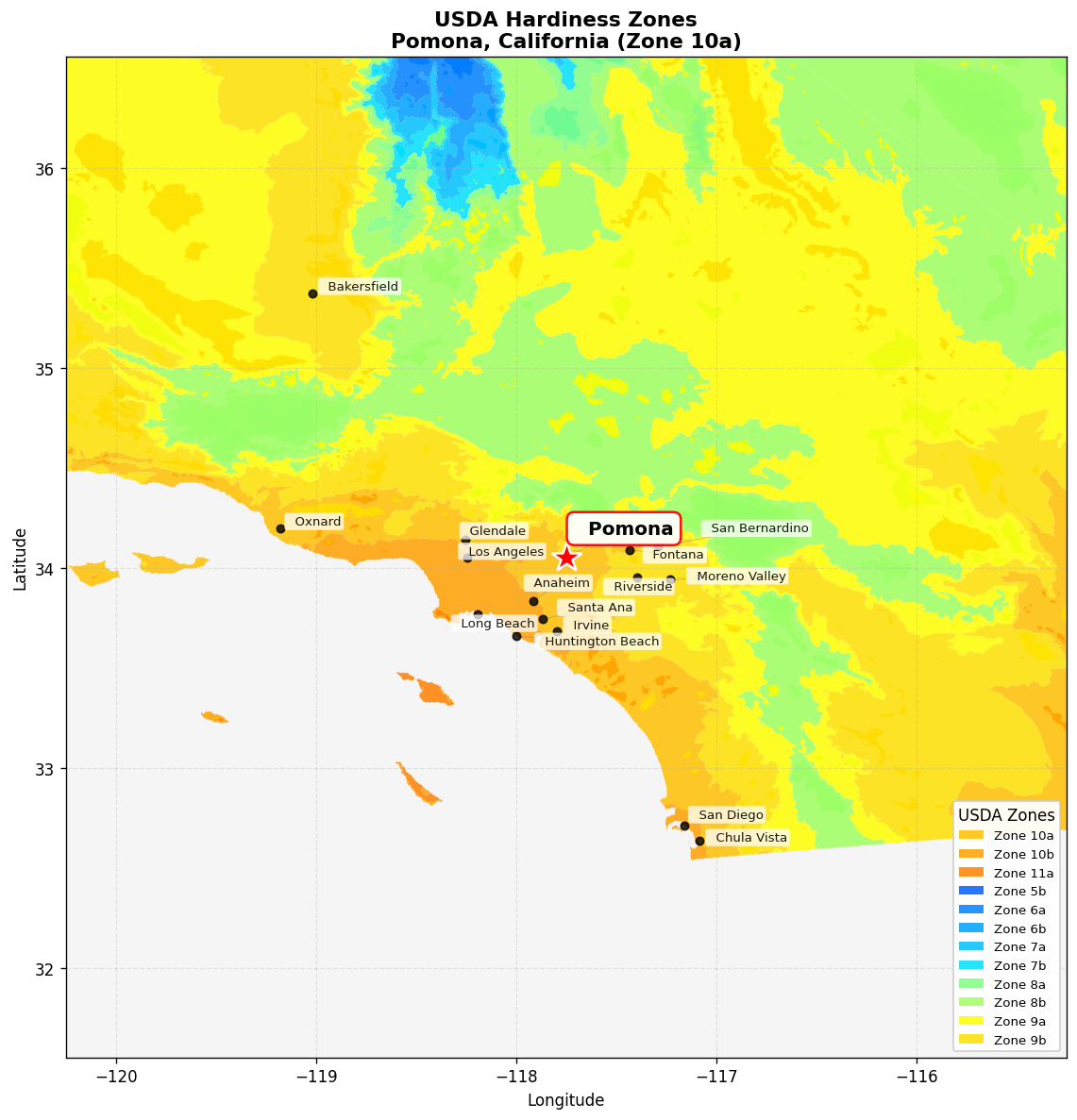
USDA Zone 10a
Hardiness zone for Pomona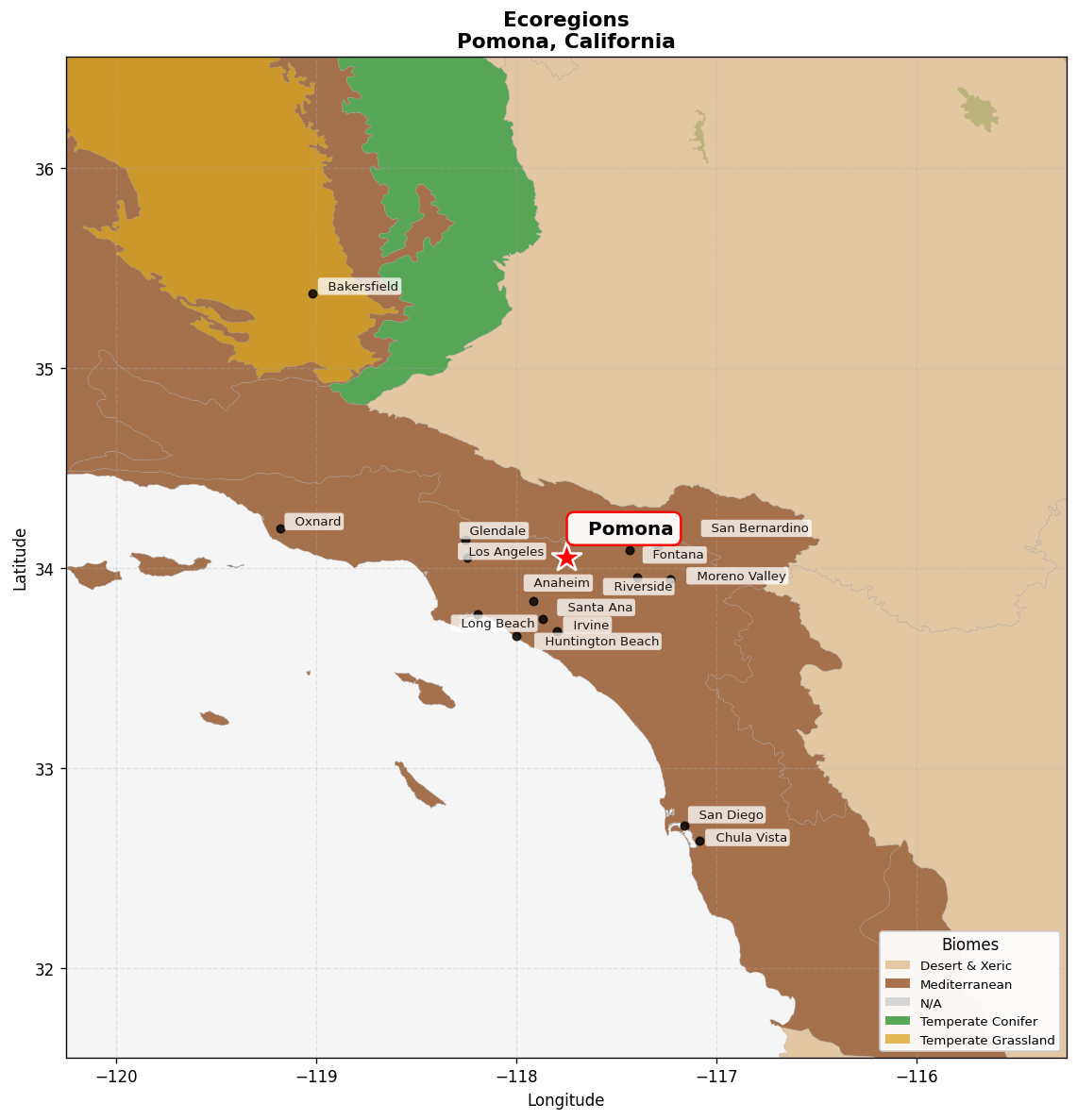
California coastal sage and chaparral
Native ecoregionFrequently Asked Questions
How much does a modern landscape cost in Pomona?
Los Angeles County labour sits 20–35% above national averages, and hardscape-heavy modern design feels that most. A full front-yard conversion on a typical 500–700 square foot Pomona frontage — turf removal, gravel field, steel edging, concrete walk and architectural planting — runs $10,000 to $24,000 installed. A poured concrete terrace with a gas fire bowl and seating comes in at $25,000 to $60,000. A pool with a modern flush-edge deck and perimeter planting is a $85,000 to $200,000 project in this market. Weathering steel raised planters, fabricated and filled, run $700 to $1,800 each. A twelve-to-sixteen fixture low-voltage lighting scheme is $3,000 to $8,000 and is the single best value line item in a modern garden.
Which agaves and succulents actually survive long-term in Pomona?
Cold is not the problem here; Zone 10a lows in the low 40s trouble almost nothing on this list. Two other things kill them. The first is the agave snout weevil, endemic across Southern California, which lays into the crown of a mature plant and collapses it in a week — it strongly prefers Agave americana, so specify Agave ovatifolia, Agave parryi var. truncata, Agave 'Blue Glow' and Agave victoriae-reginae instead, and pull and destroy any plant that softens at the base. The second is reflected heat: a bed against a west-facing pale stucco wall can run 15 to 20 degrees above ambient in a 105°F Santa Ana, enough to scorch Agave attenuata and Echeveria 'Afterglow'. Give those the east side, and reserve the hot walls for Dasylirion wheeleri, Hesperaloe parviflora 'Brakelights' and Yucca rostrata.
Which ornamental grasses should I avoid in Pomona?
Two of the most-planted modern grasses in California are now flagged as invasive by the California Invasive Plant Council and should be left out of any Pomona design. Nassella tenuissima, sold as Mexican feather grass, seeds prolifically into surrounding open land, and Pennisetum setaceum, the green fountain grass, has naturalised through the coastal sage scrub and chaparral that Pomona's hillsides sit in. Both spread from gardens into the Puente and Chino Hills. The substitutes are better plants anyway: Muhlenbergia rigens (deergrass) is a California native with the same architectural fountain form and far more presence; Muhlenbergia capillaris 'Regal Mist' gives the pink autumn haze; Muhlenbergia lindheimeri 'Autumn Glow' and Leymus condensatus 'Canyon Prince' cover the tall blue-grey slot; Bouteloua gracilis 'Blonde Ambition' handles the fine-textured front edge.
Will concrete crack in Pomona's soil and heat?
Less than in most of the country, if it is detailed properly. Pomona's valley-floor soil is sandy alluvial fan material rather than expansive clay, so a slab poured on four to six inches of compacted crushed aggregate is stable, and frost heave is a non-issue at Zone 10a. The real drivers are thermal movement and shrinkage: place control joints roughly every eight to ten feet in each direction, keep panels close to square, and use a proper curing regime, because a mid-summer pour in mid-90s heat and single-digit humidity loses surface water fast. Two local exceptions warrant a soils report before you spend: the hillside lots along the Puente and Chino Hills margins do have expansive clay and slope issues, and older terraces above Ganesha Park can hide caliche hardpan that affects both drainage and tree pits.
What does it cost to run a modern Pomona garden compared with a lawn?
A gravel-and-agave front yard is close to the cheapest landscape you can run in this valley. Pomona gets about 17 inches of rain, all in winter, so a cool-season fescue lawn needs irrigation every summer month; an established bed of Agave ovatifolia, Dasylirion wheeleri, Muhlenbergia rigens and Salvia clevelandii 'Winnifred Gilman' typically wants one deep drip cycle every two to three weeks from June to September and nothing between November and March. Mowing goes to zero. Against that, budget for gravel top-ups every three to four years, an annual grass cut-back in late February, and occasional weeding through the rock, which is the one maintenance job people underestimate. The SoCal Water$mart turf rebate through Three Valleys Municipal Water District, around $2 per square foot at the base rate, offsets part of the removal cost.
When is the best time to install a modern landscape in Pomona?
October through February is the planting window. Agaves, yuccas, Muhlenbergia and Salvia set in autumn root through the 17 inches of winter rain and reach their first summer established, and the nursery stock is at its best. Avoid planting between June and September: new roots cannot keep up with mid-90s heat, and Santa Ana events in the autumn desiccate anything not yet anchored. Hardscape is a different story — concrete, gravel and steelwork can go in year-round in Zone 10a, and winter is often the faster scheduling window for contractors. If you are combining the two, build the hardscape in late summer and plant into it in October.
Do I need permits for a fire pit, pool or raised wall in Pomona?
Usually for all three. Gas fire bowls and fire tables need a permitted gas line and a fixture set at code clearances, and gas is the practical choice locally because the South Coast Air Quality Management District issues no-burn advisories through the winter. Pools require building permits, barrier and safety-cover compliance, and Title 24 variable-speed pump equipment. Retaining walls above four feet need a permit, and hillside lots in Ganesha Hills and Phillips Ranch may also trigger grading, drainage and geotechnical review. Landscape lighting and low-voltage work is generally exempt; new dedicated circuits are not. This is a design service, not a permitting or engineering service — verify every requirement with the City of Pomona Building and Planning divisions before you build.