4 Desert Garden Ideas for Pueblo, CO | Xeric Designs for Zone 6a
Native plants from the Western shortgrass prairie (Zone 6a) — Cold semi-arid climate
For a desert garden in Pueblo, CO, a zone 6a city with a cold semi-arid climate, start with Agave neomexicana, Cylindropuntia imbricata and Delosperma 'Fire Spinner', the plants this guide's first design is built on.
Why Desert/Xeriscape Gardens in Pueblo?
Pueblo is already close to desert. The city lies along the Arkansas River at about 4,700 feet, on the western edge of the shortgrass prairie, and takes only about 16 inches of precipitation a year against heavy evaporation. Cholla (Cylindropuntia imbricata), prickly pear (Opuntia polyacantha), Yucca glauca and Fallugia paradoxa grow wild in the open land around the city. A desert garden here uses plants that already belong, set against local stone and gravel, on lots ranging from Northside Victorians and Bessemer bungalows to the large Pueblo West yards.
Zone 6a sets the limit. January lows reach the mid-teens and can fall below zero in a cold snap, while July highs average near 95°F, so Phoenix-style plantings fail by February. Agave americana, ocotillo and most columnar cactus will not make it. The substitutes are hardy cousins: Agave neomexicana for rosettes, Yucca glauca and Yucca baccata for spikes, Hesperaloe parviflora 'Brakelights' for coral summer flower spikes, and Opuntia polyacantha for flat pads that go through a Colorado winter unharmed. Delosperma 'Fire Spinner' and Epilobium canum 'Orange Carpet' carry color at ground level from July on.
Soil helps this style. Native soils in the Arkansas Valley are typically alkaline, commonly pH 7.5–8.2, and low in organic matter, which suits desert plants and punishes anything that wants rich loam. The trouble is drainage. Heavy clay pockets hold winter water around crowns, and agave and yucca rot there faster than they freeze. Plant on a mound 8–12 inches high, mix 30 to 40 percent coarse sand or crushed stone into the root zone, and finish with 2–3 inches of pea gravel or decomposed granite. Do not add compost to the xeric beds.
Water rules are mild but change. Pueblo Water has published voluntary wise-use guidance (no watering between 10 a.m. and 6 p.m., 3-inch mowing height) and no mandatory schedule, and Pueblo West has its own metro district, so check which utility serves you and whether a lawn-replacement program is open before removing turf. A good place to see it working is the Pueblo West xeriscape demonstration garden at Cattail Crossing Park and the Southeastern Colorado Water Conservancy District garden on United Avenue, both listed by the Pueblo SHED horticulture group. HOA covenants may limit gravel or rock, so get written approval first.
4 Desert/Xeriscape Design Ideas for Pueblo
AI-generated image
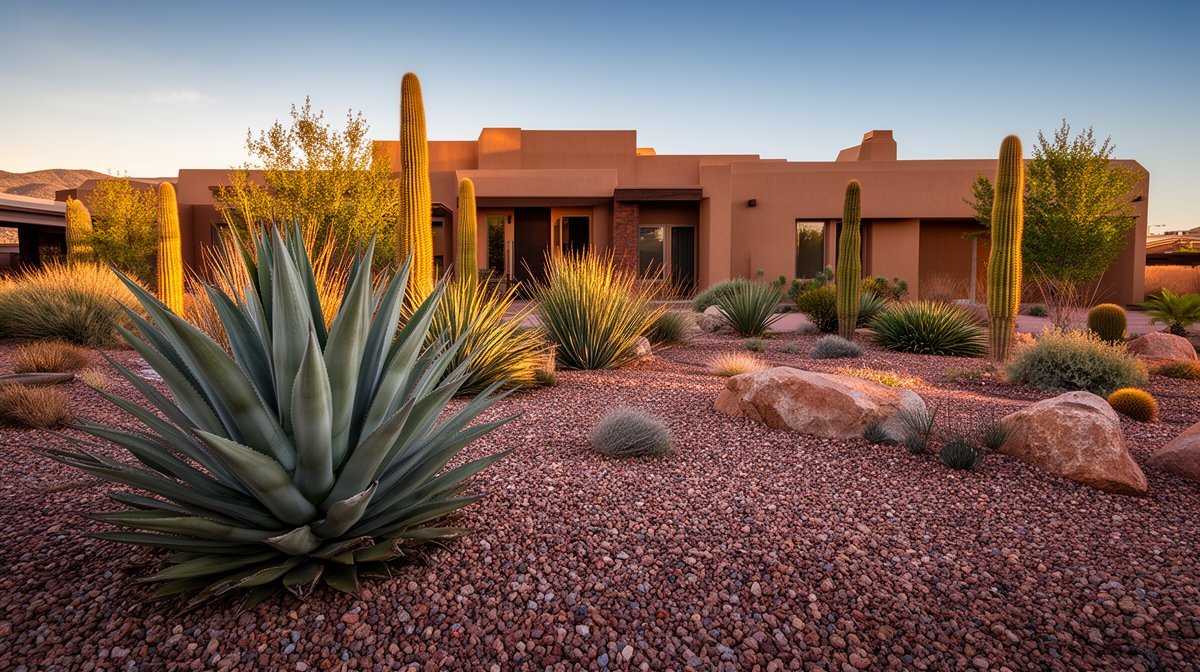
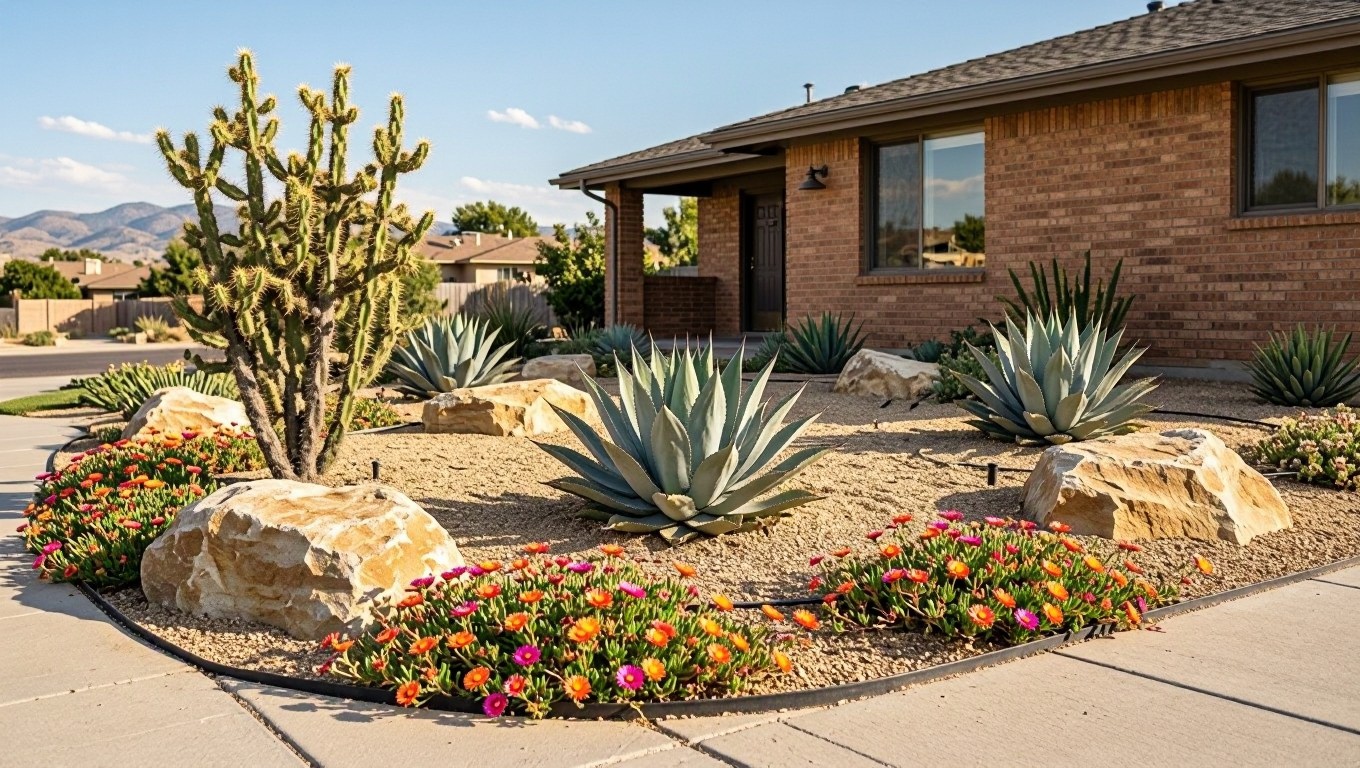
The Cholla and Agave Gravel Yard
$9–20/sqftA brick ranch on the Eastside gives up its lawn for a flat bed of tan decomposed granite, with three Agave neomexicana rosettes, a tall Cylindropuntia imbricata at the corner and a ribbon of Delosperma 'Fire Spinner' along the walk. Large buff sandstone boulders sit low in the gravel and hold afternoon heat. The bed faces west, so the plants take full sun until sunset.
AI-generated image
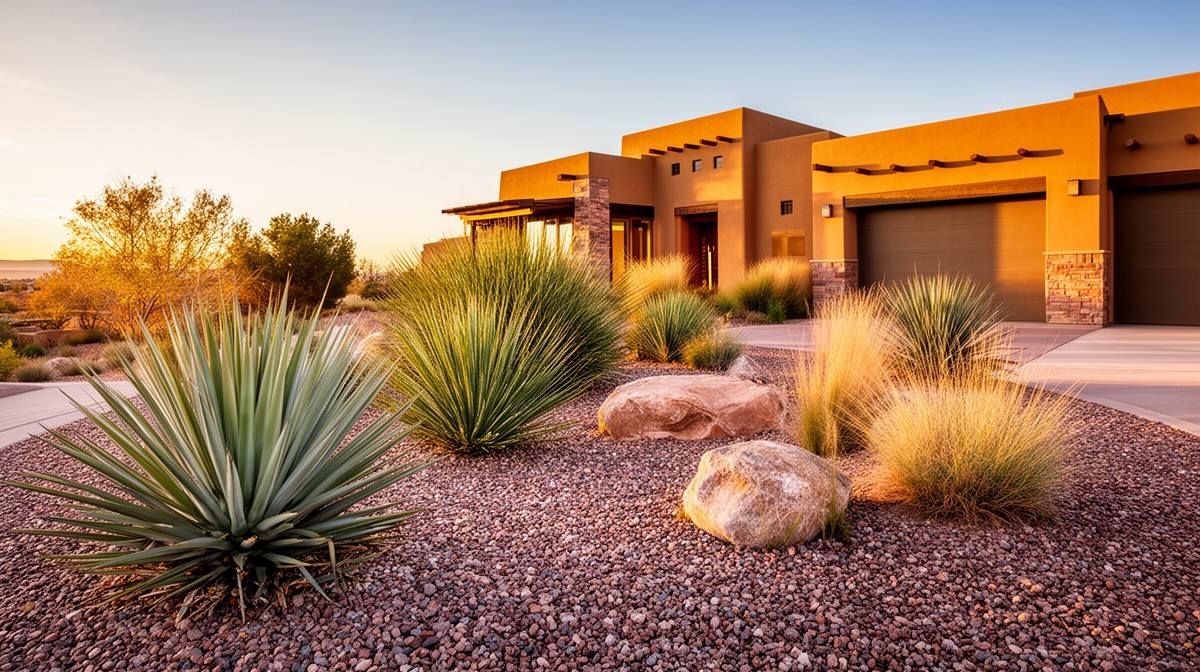
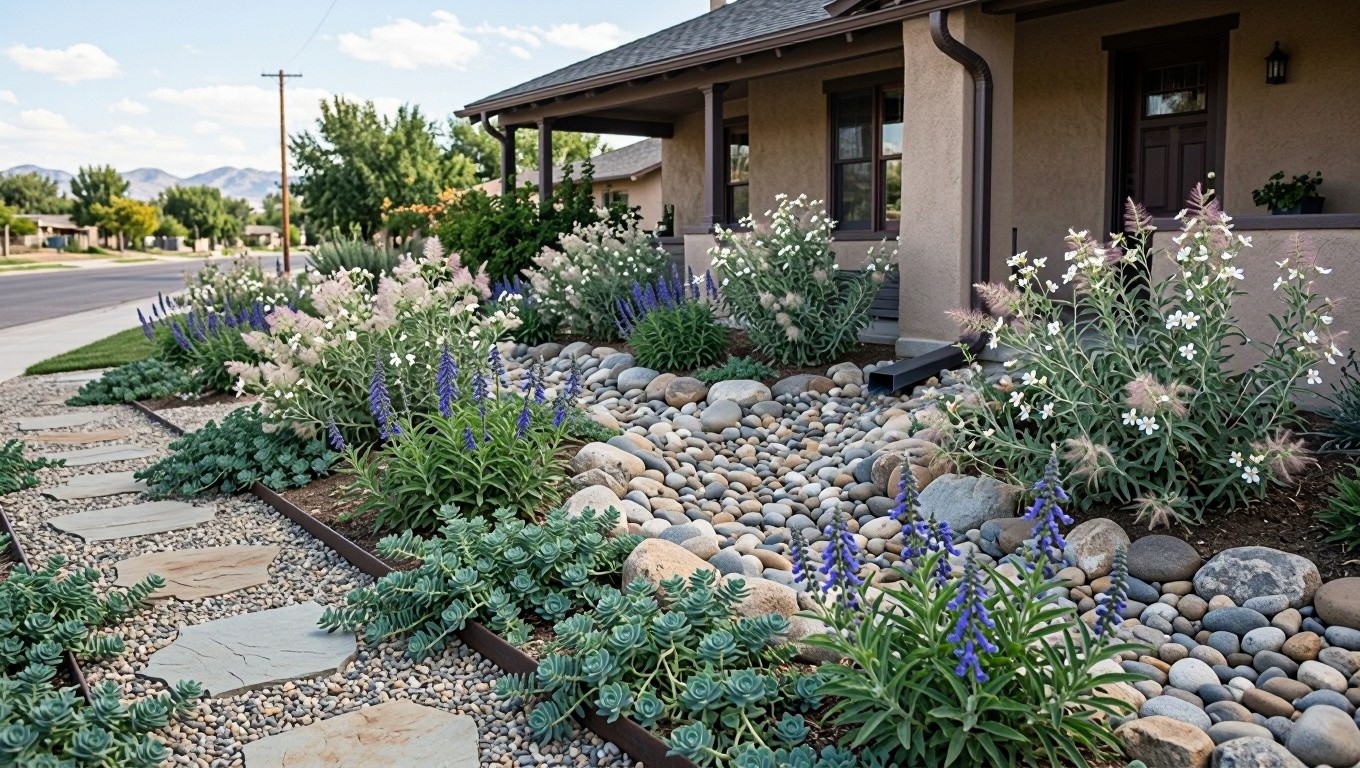
The Apache Plume Dry Wash
$8–18/sqftA dry creek bed of rounded river cobble runs diagonally across the front of a Bessemer bungalow from the downspout to the street, planted on both banks with Fallugia paradoxa and Penstemon strictus. The gravel path alongside is edged with Euphorbia myrsinites. Rainfall from summer storms is steered into the bed, so the plants get extra water exactly when it arrives.
AI-generated image
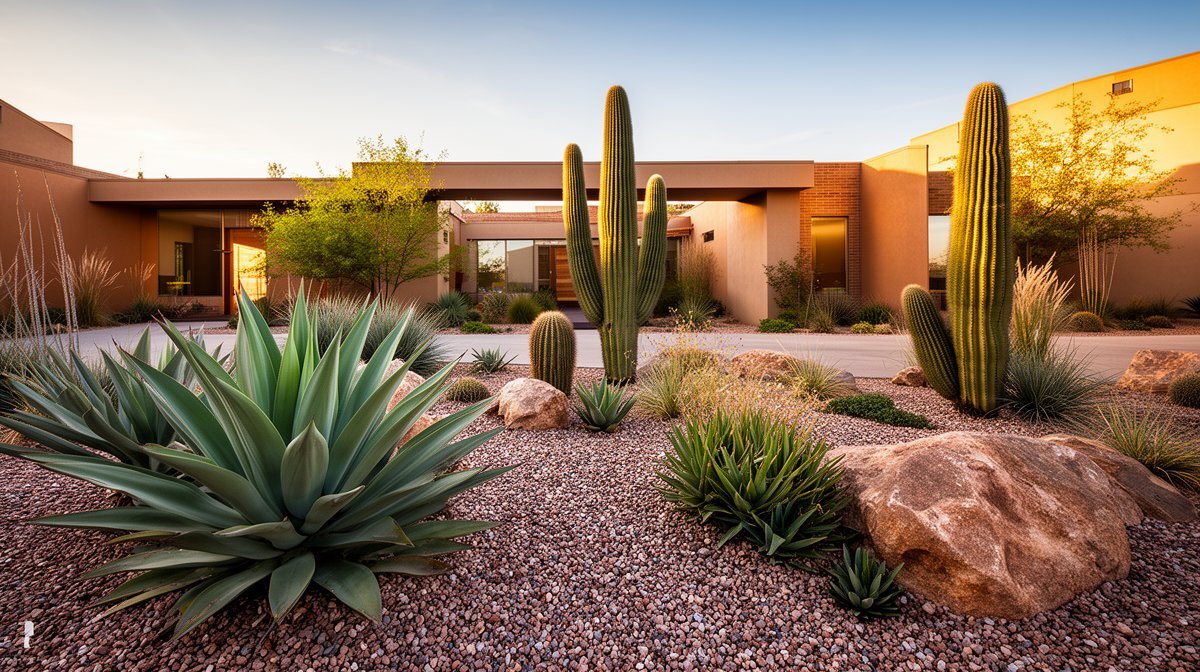
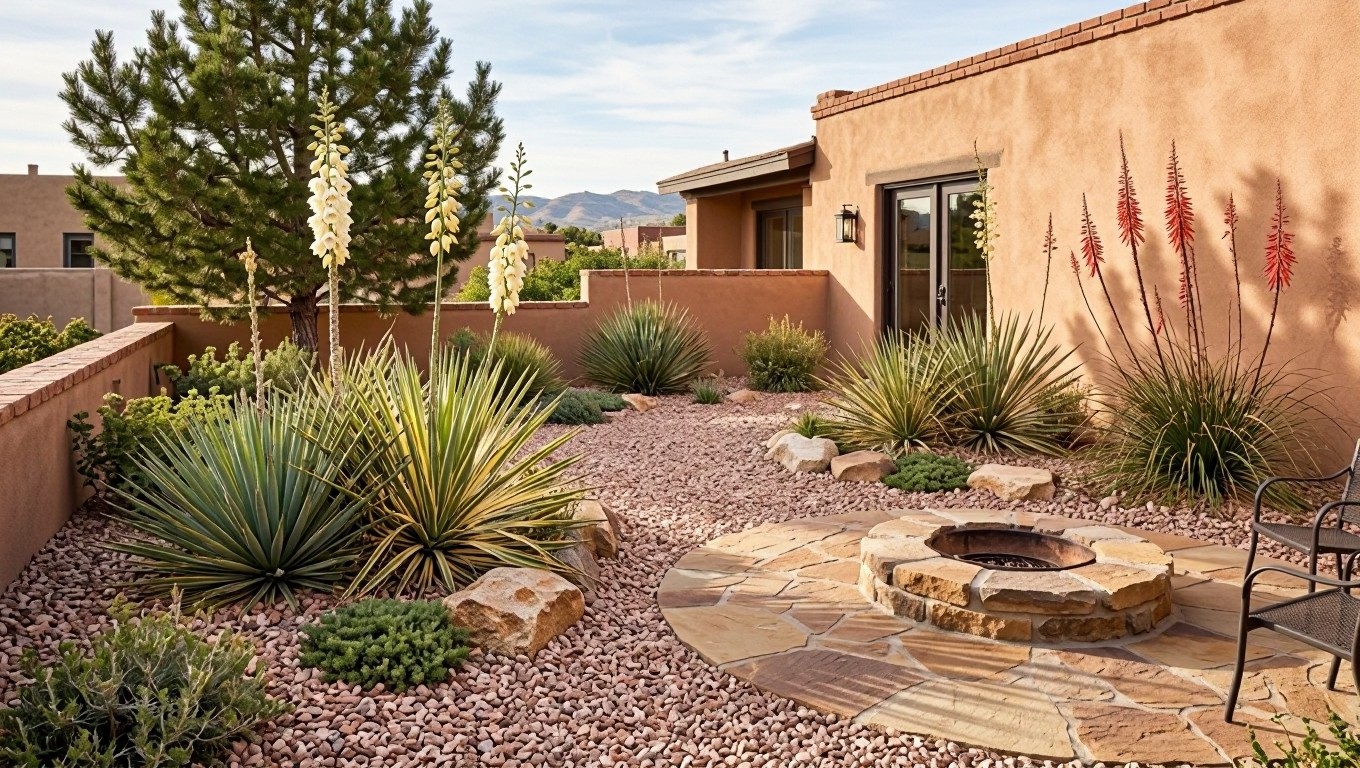
The Yucca Courtyard on the Northside
$12–26/sqftBehind a low wall on the Historic Northside, a courtyard of crushed pink granite holds a cluster of Yucca baccata and Yucca filamentosa 'Color Guard', with a sandstone patio and a small fire ring for cold evenings. Pinus edulis stands in one corner for winter green. The south wall of the house reflects heat into the courtyard, which is warm enough for Hesperaloe to flower into October.
AI-generated image
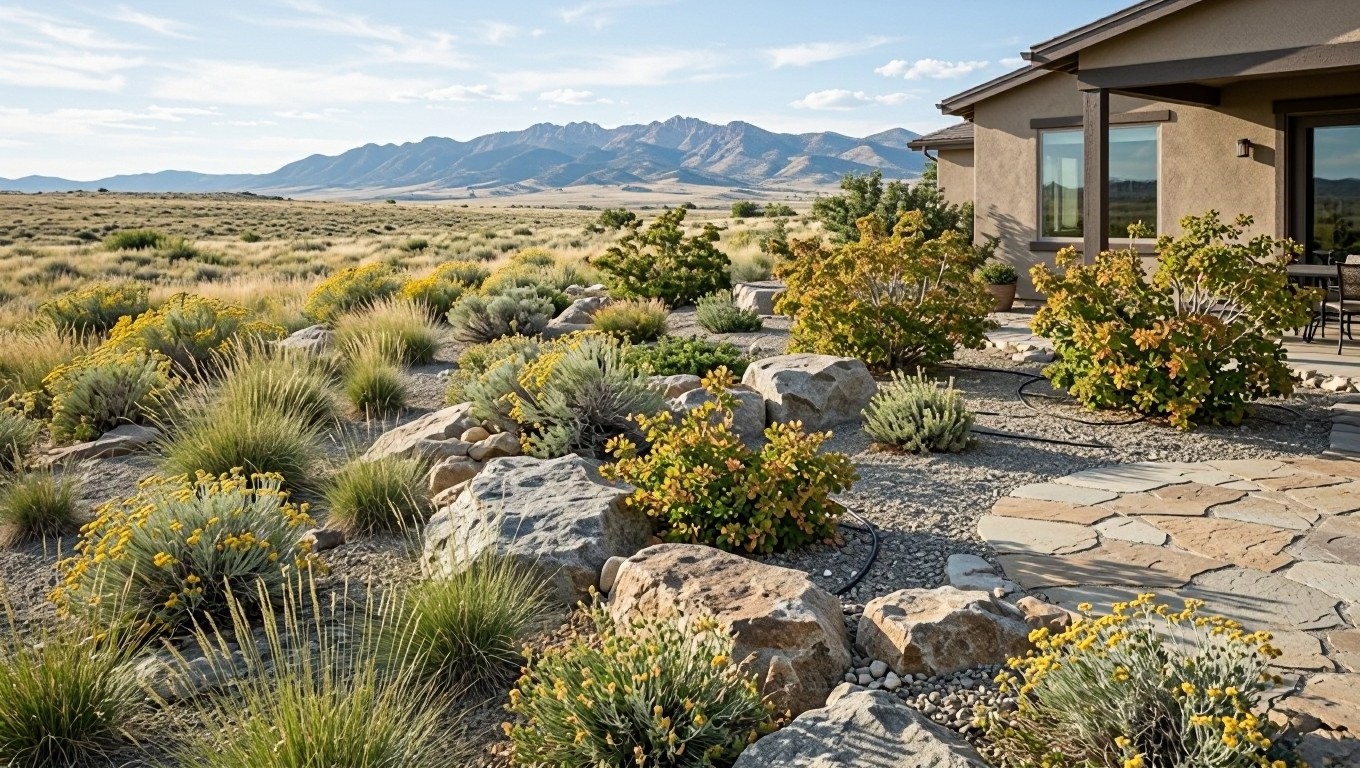
The Pueblo West Prairie-Desert Edge
$7–16/sqftA half-acre Pueblo West lot with Wet Mountains views blends gravel garden into native shortgrass prairie, with swaths of Bouteloua gracilis and Ericameria nauseosa near the boundary. Closer to the house, boulder groupings and Rhus trilobata 'Autumn Amber' give structure to a gravel patio. The beds face the afternoon sun and wind from the west, so shrubs are placed to break it.
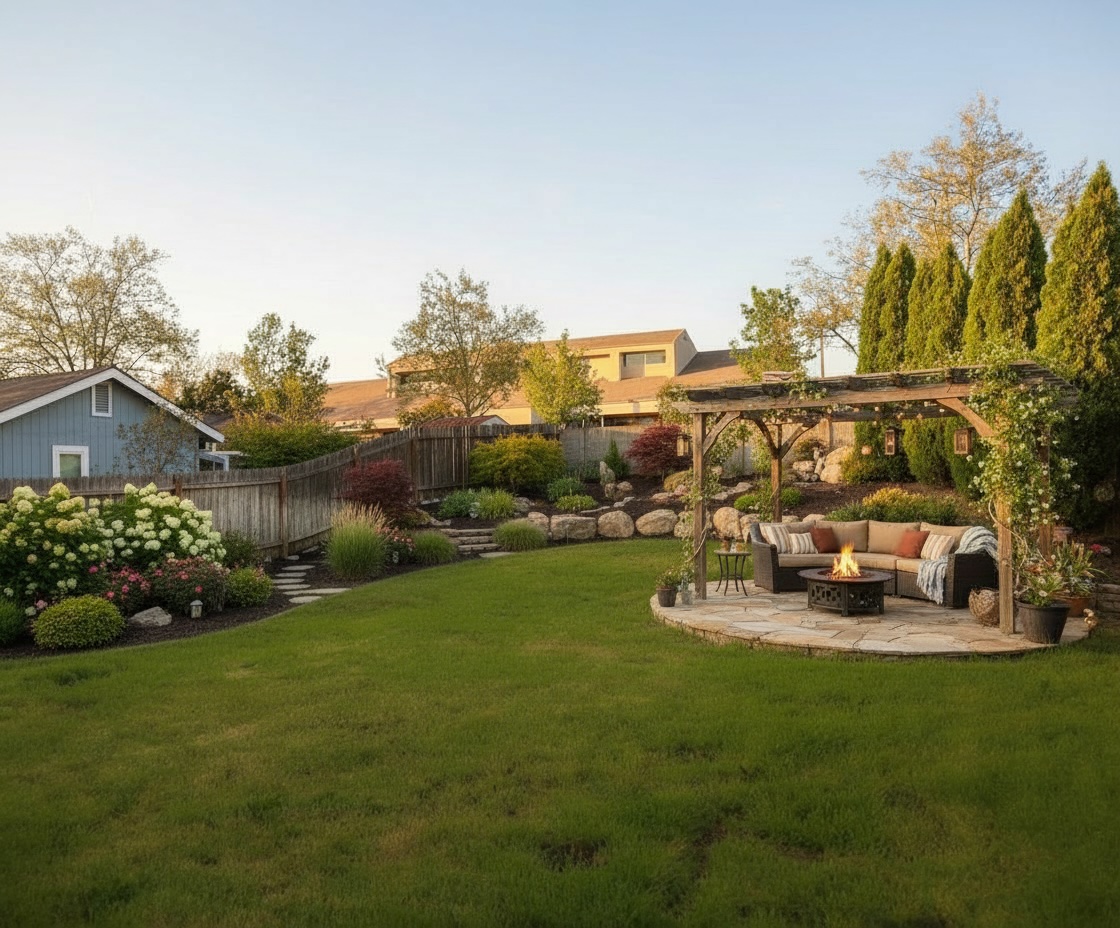
See how a desert/xeriscape garden looks on YOUR property
Upload a photo of your Pueblo yard and visualize your dream garden in seconds.
Try ProScapeAI Free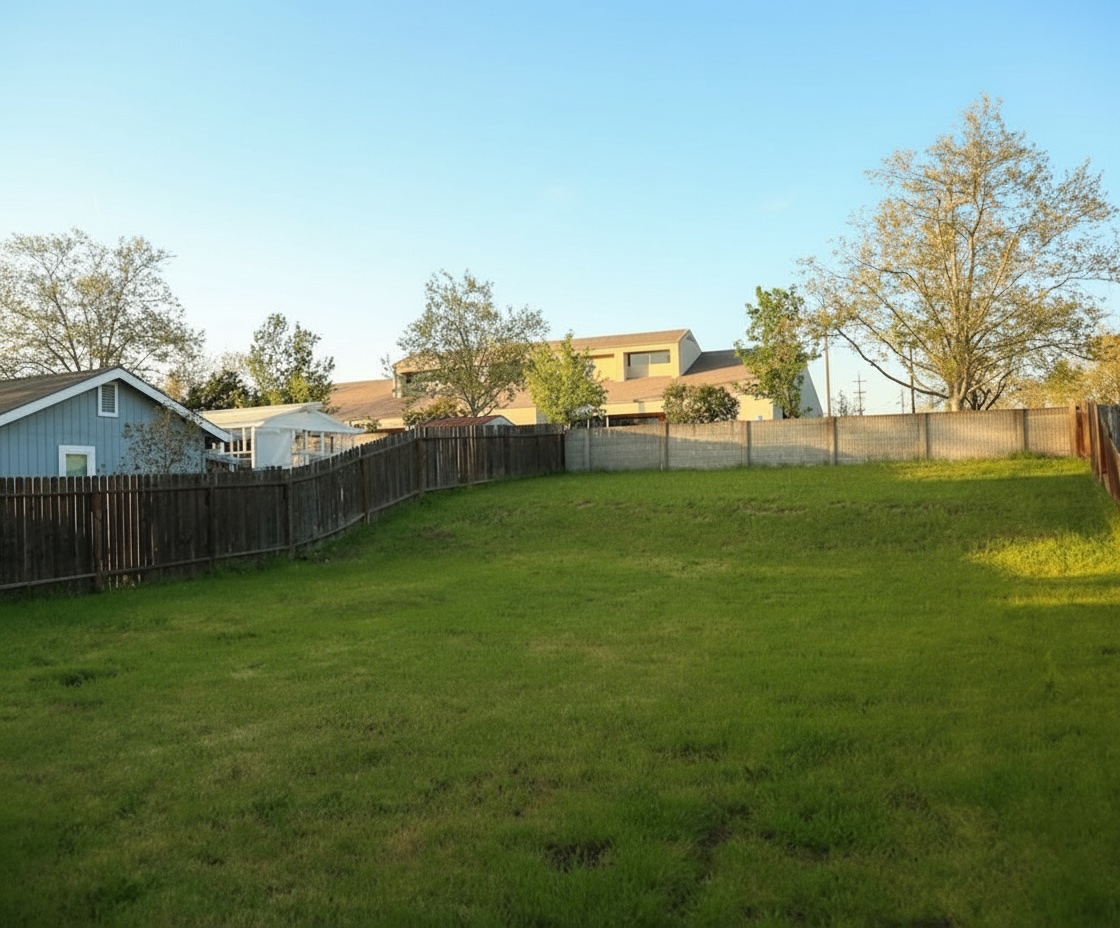
AI-generated image
Featured Trees & Shrubs for Desert/Xeriscape Gardens
Browse all 160 plants for Pueblo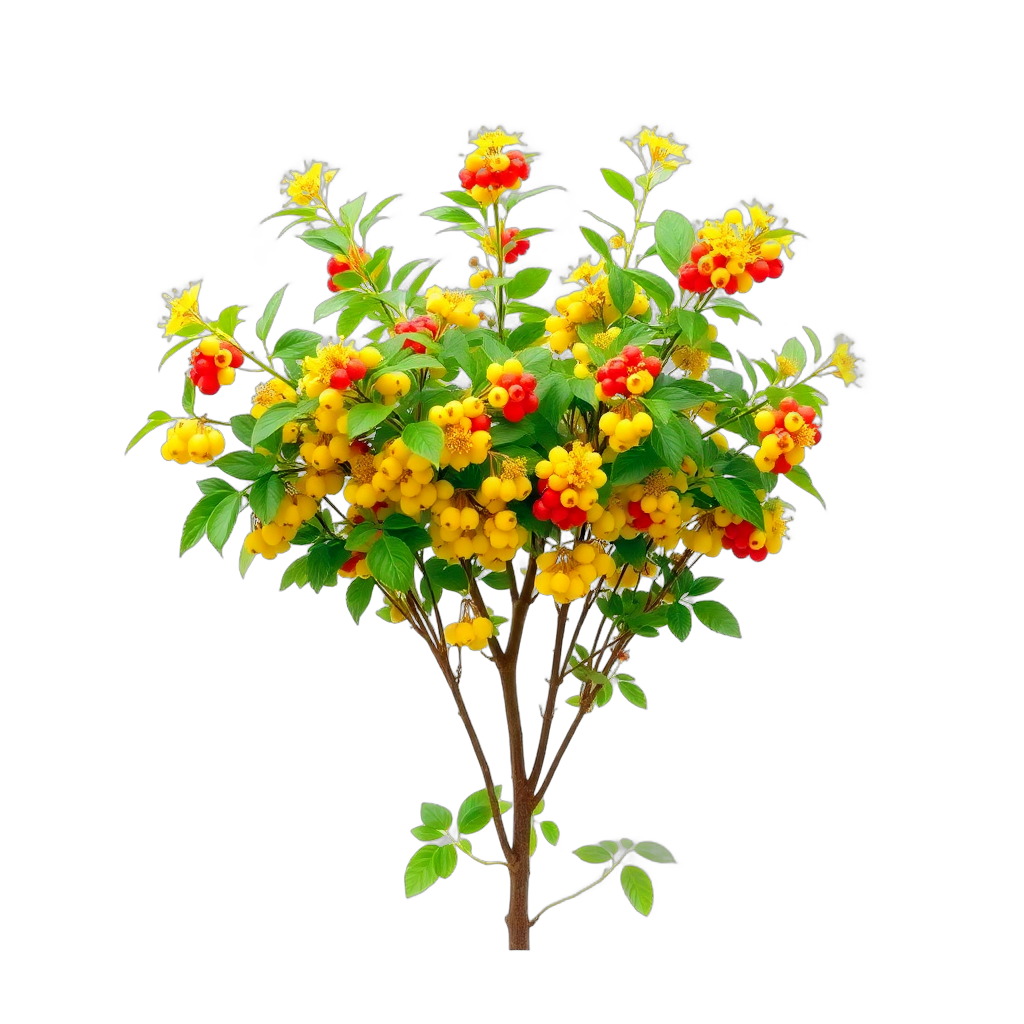
Golden Currant
Ribes aureum
grows to 6 feet, yellow blooms in spring. Attracts hummingbirds.
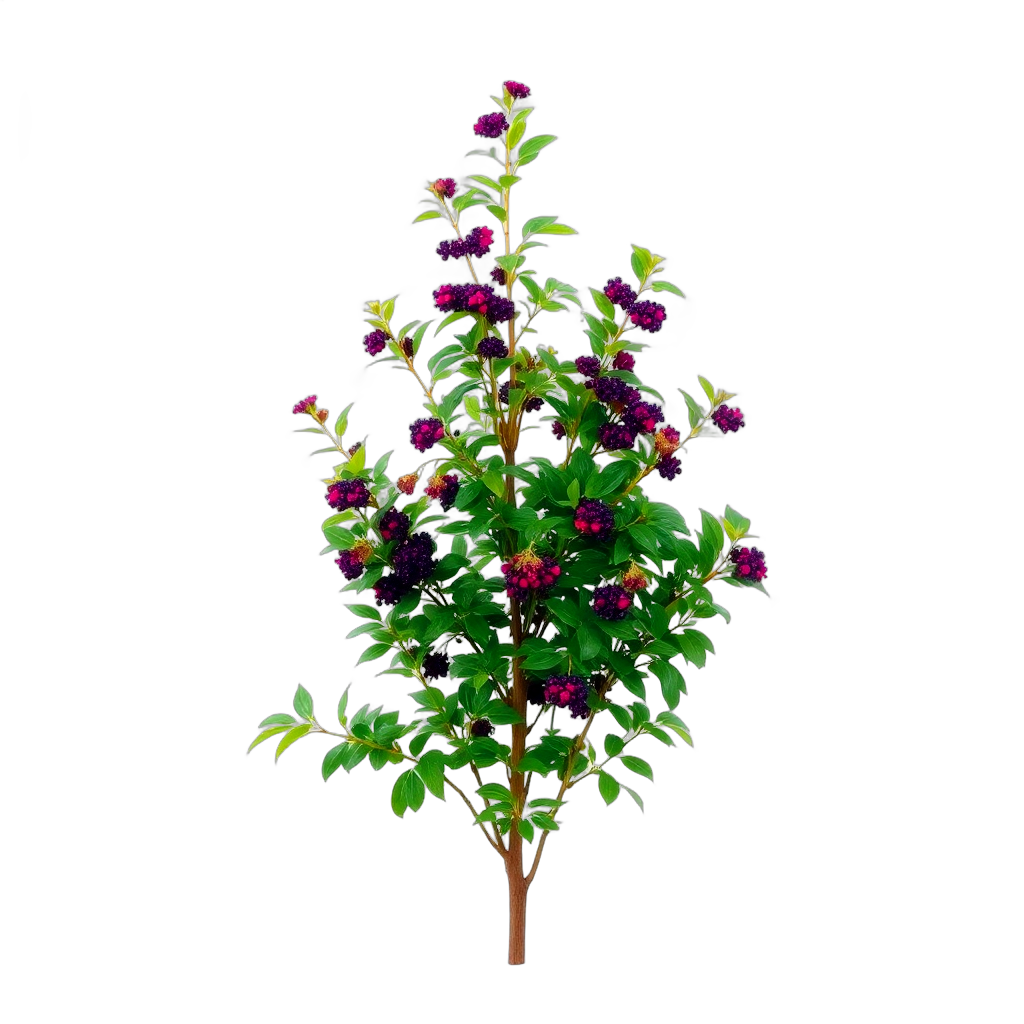
American Beautyberry
Callicarpa americana
grows to 6 feet, pink blooms in summer. Pollinator-friendly.
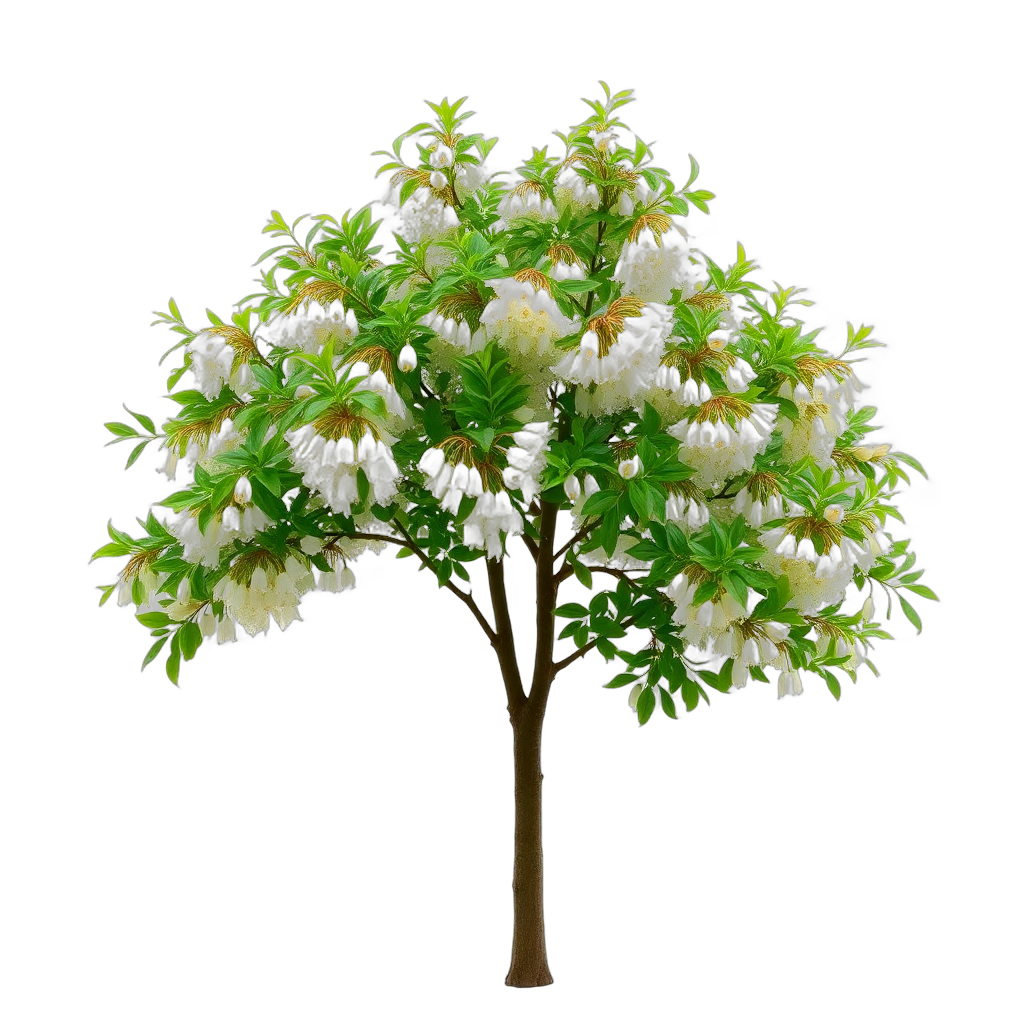
American Snowbell
Styrax americanus
medium-sized at 10 feet, white blooms in spring. Pollinator-friendly.
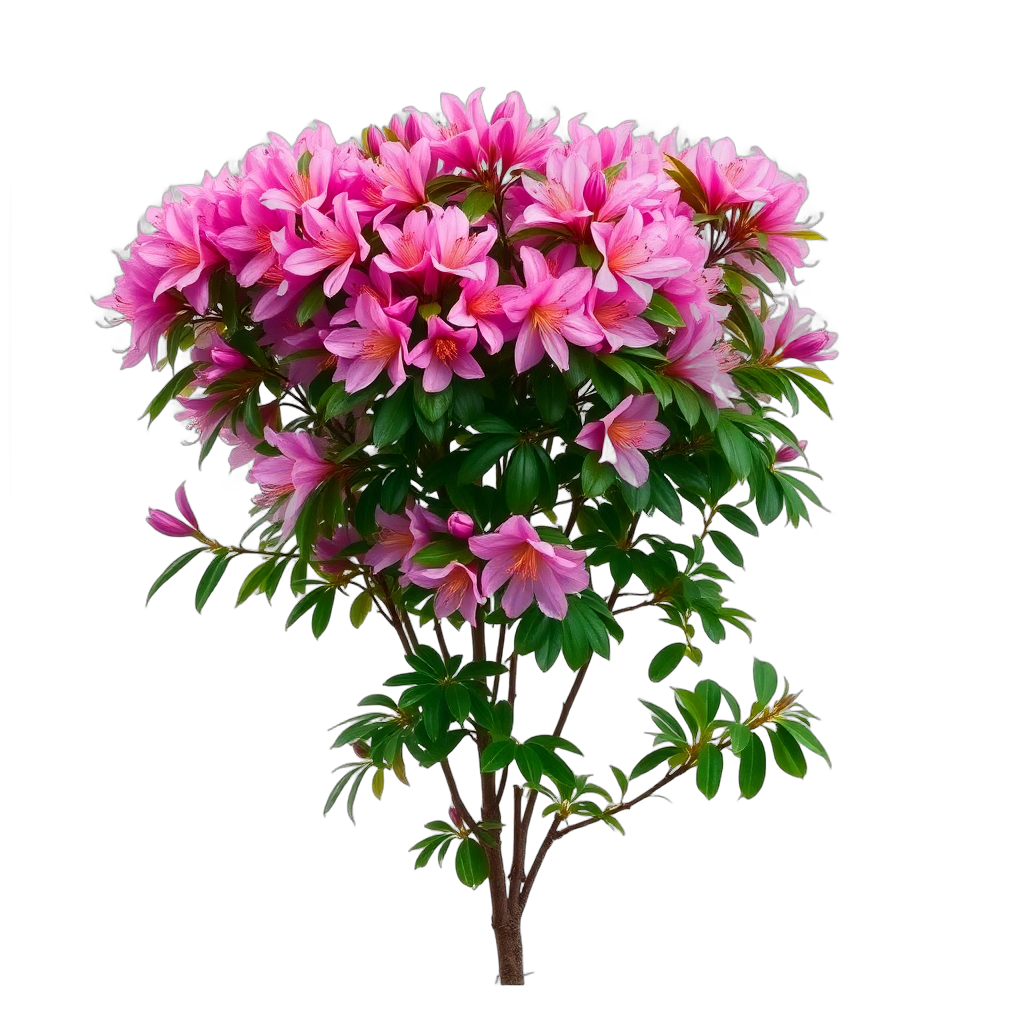
Anna Rose Whitney Rhododendron
Rhododendron 'Anna Rose Whitney'
medium-sized at 8 feet, pink blooms in spring. Attracts hummingbirds.
Featured Grasses & Groundcovers for Desert/Xeriscape Gardens
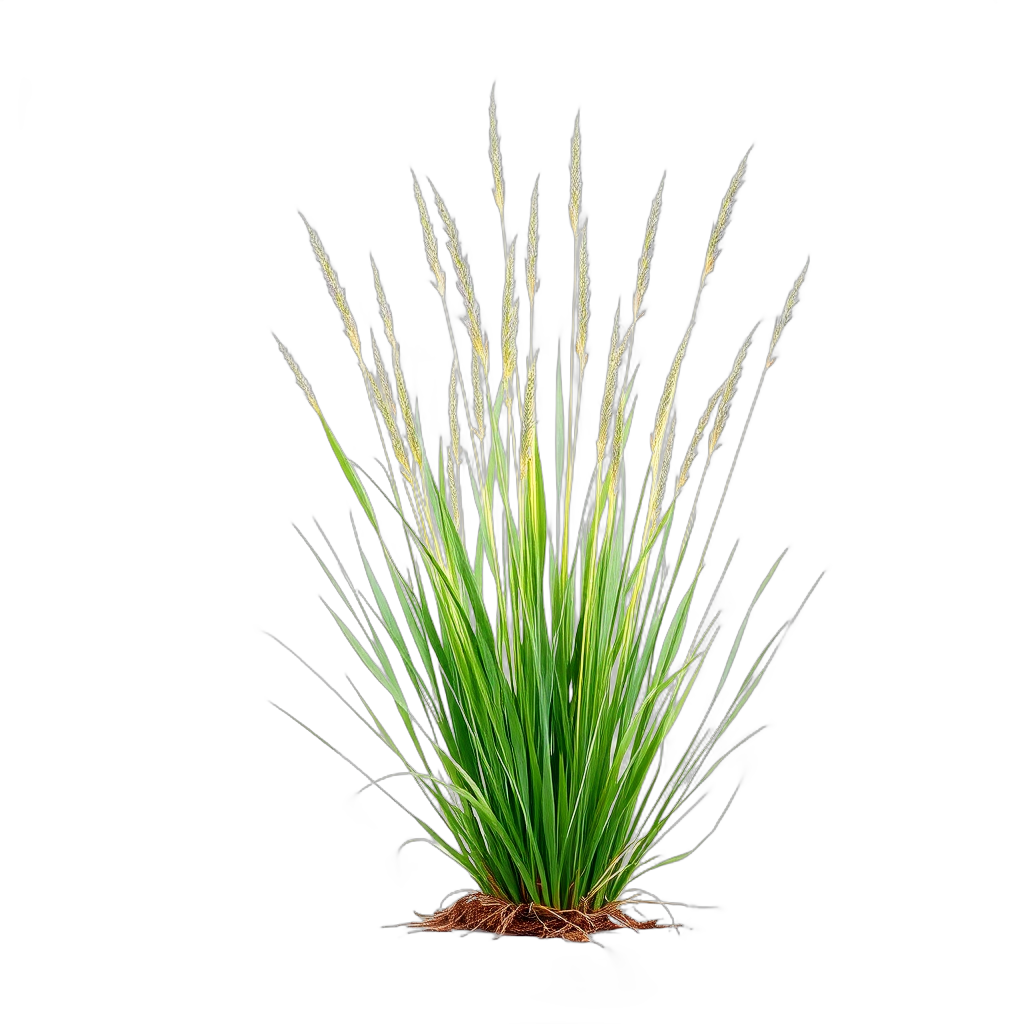
Blue Grama Grass
Bouteloua gracilis
low-growing ground cover, purple blooms in summer. Yellow fall color.
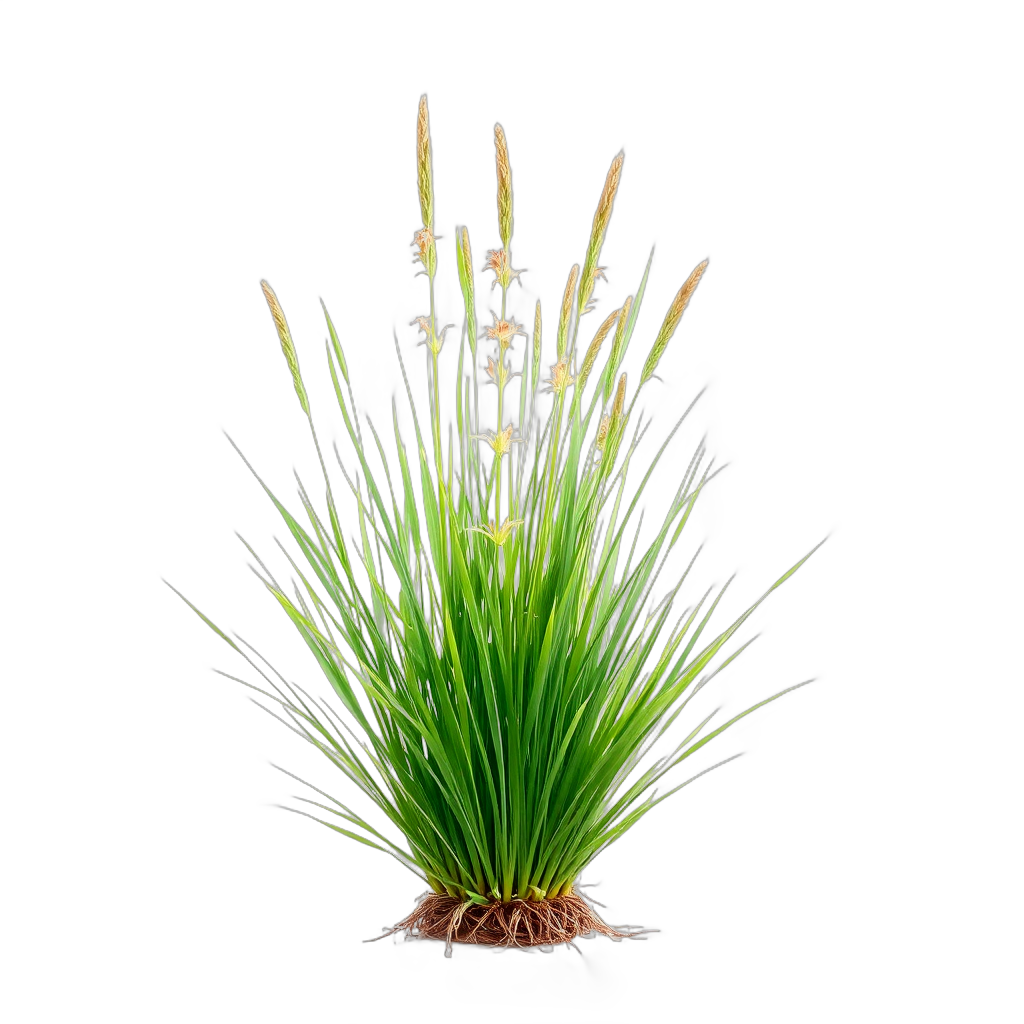
Buffalo Grass
Buchloe dactyloides
low-growing ground cover, blooms in summer. Yellow fall color.
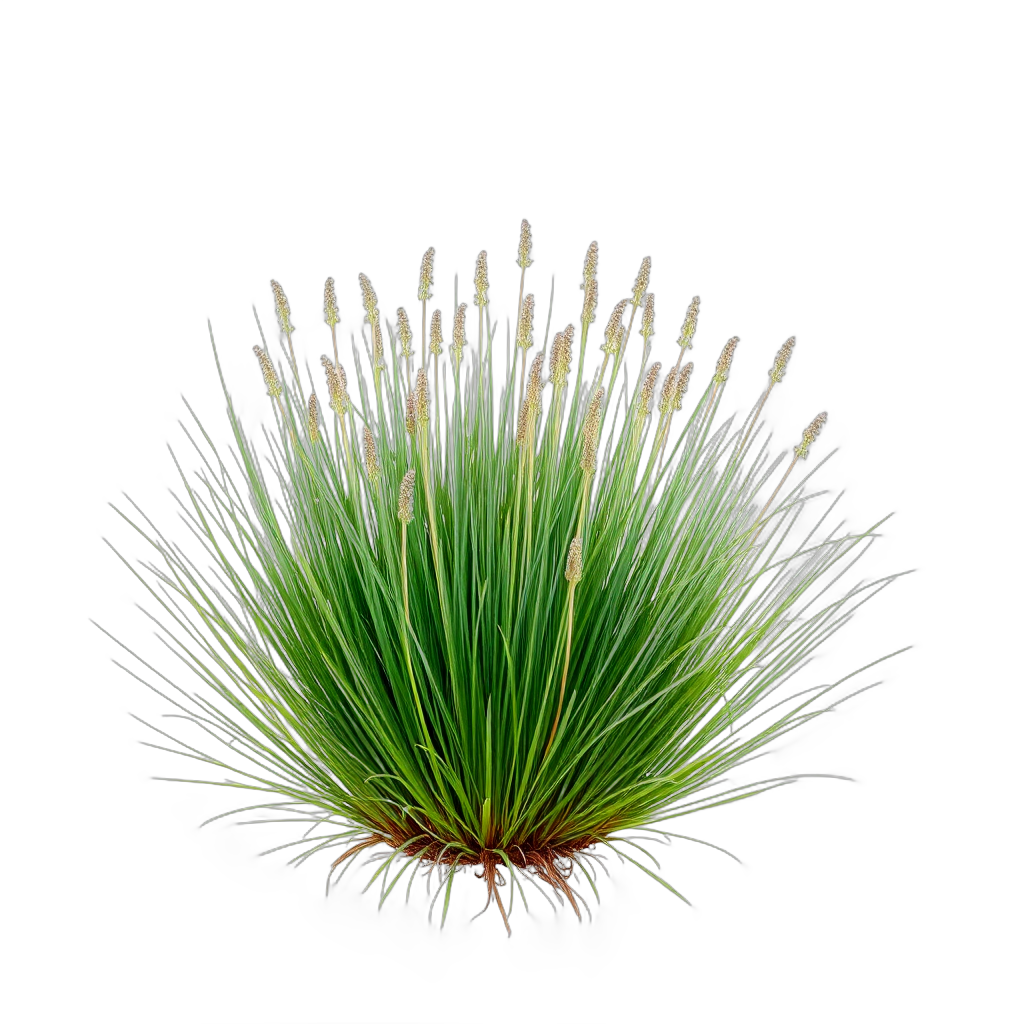
Little Bluestem
Schizachyrium scoparium
grows to 3 feet, blooms in summer. Red,burgundy fall color.
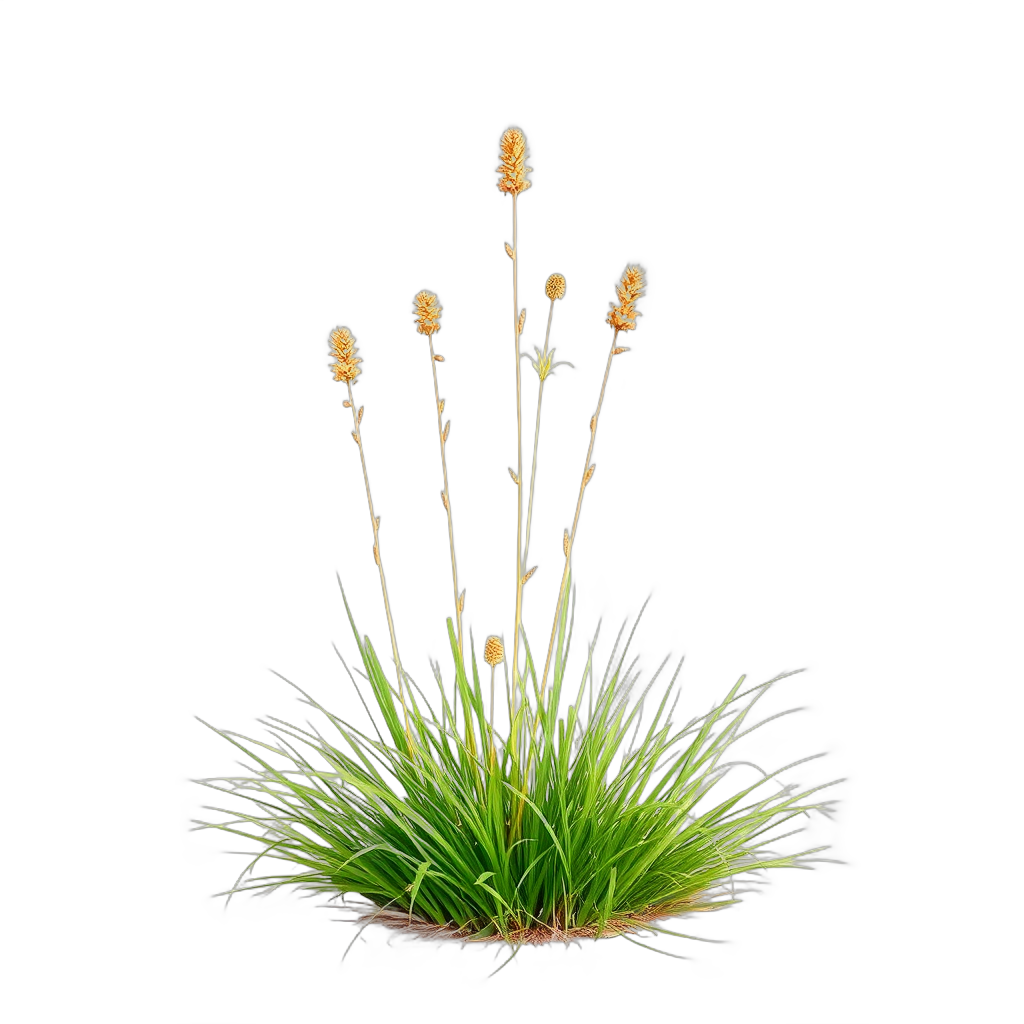
Sand Dropseed
Sporobolus cryptandrus
low-growing ground cover, blooms in summer. Orange fall color.
Featured Flowers & Perennials for Desert/Xeriscape Gardens
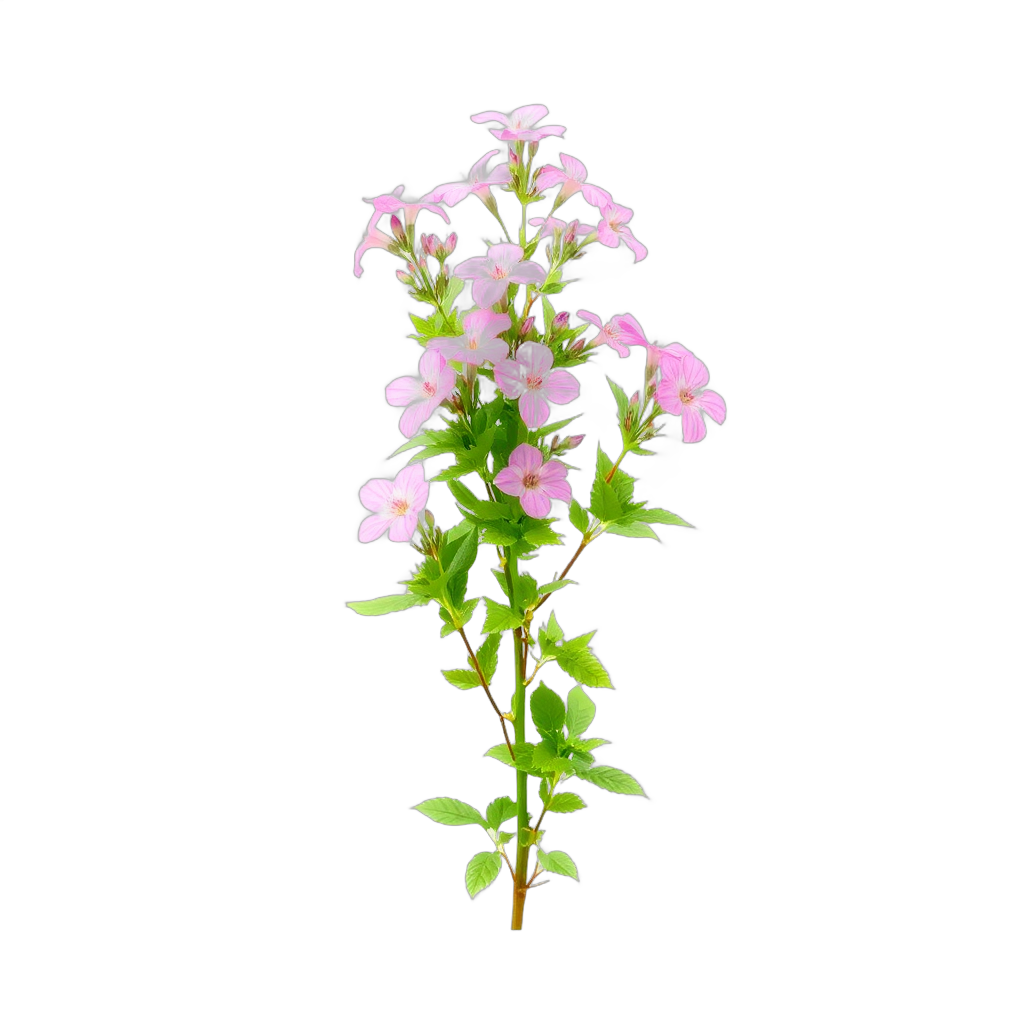
Hood's Phlox
Phlox hoodii
low-growing ground cover, white blooms in spring. Attracts butterflies.
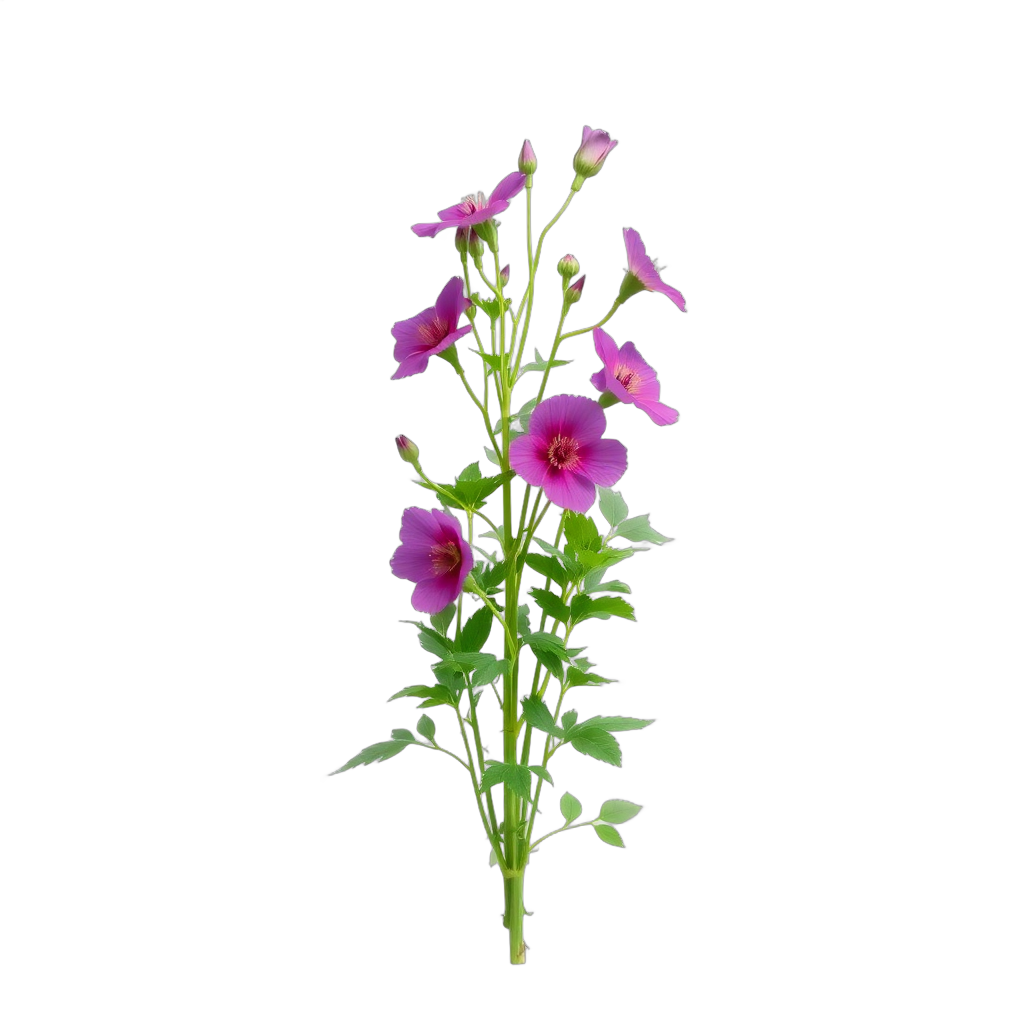
Purple Poppy Mallow
Callirhoe involucrata
low-growing ground cover, purple blooms in summer. Attracts butterflies.
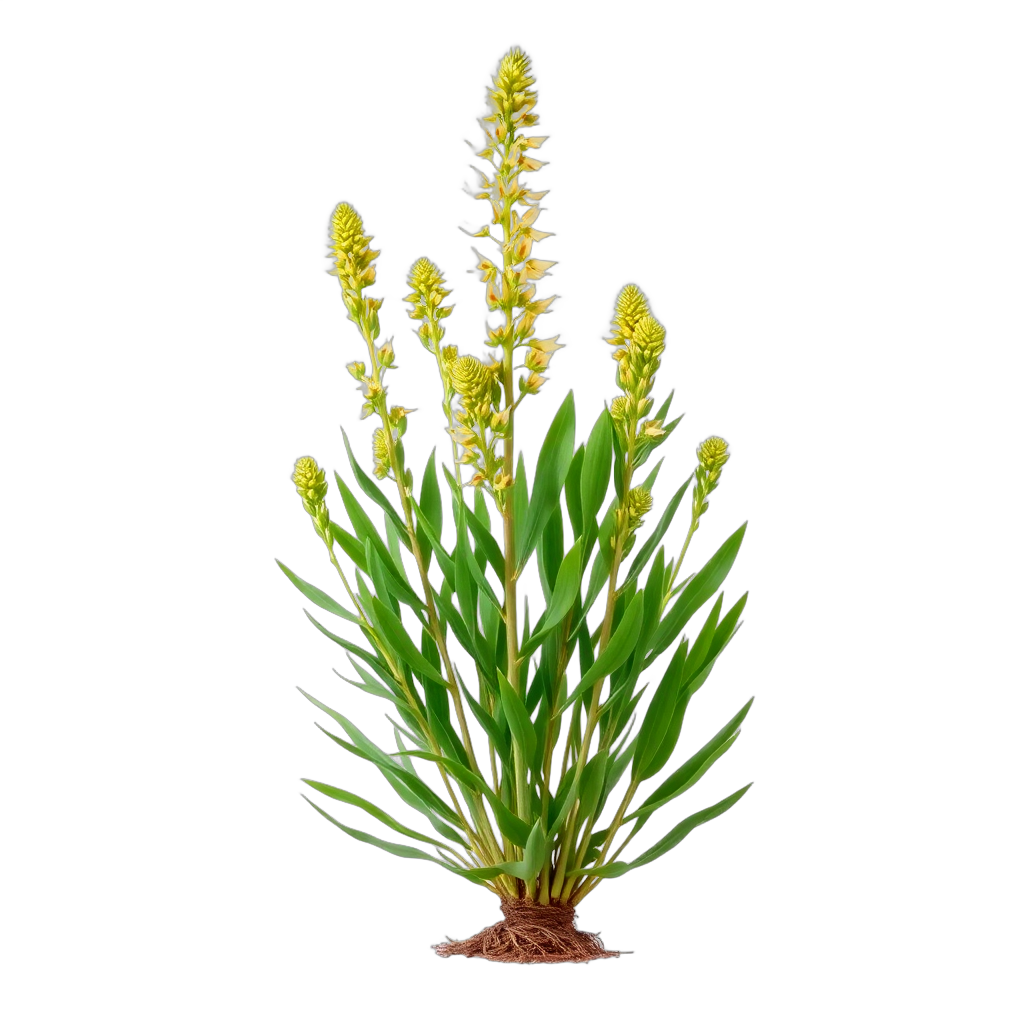
Soapweed Yucca
Yucca glauca
low-growing ground cover, white blooms in spring. Pollinator-friendly.
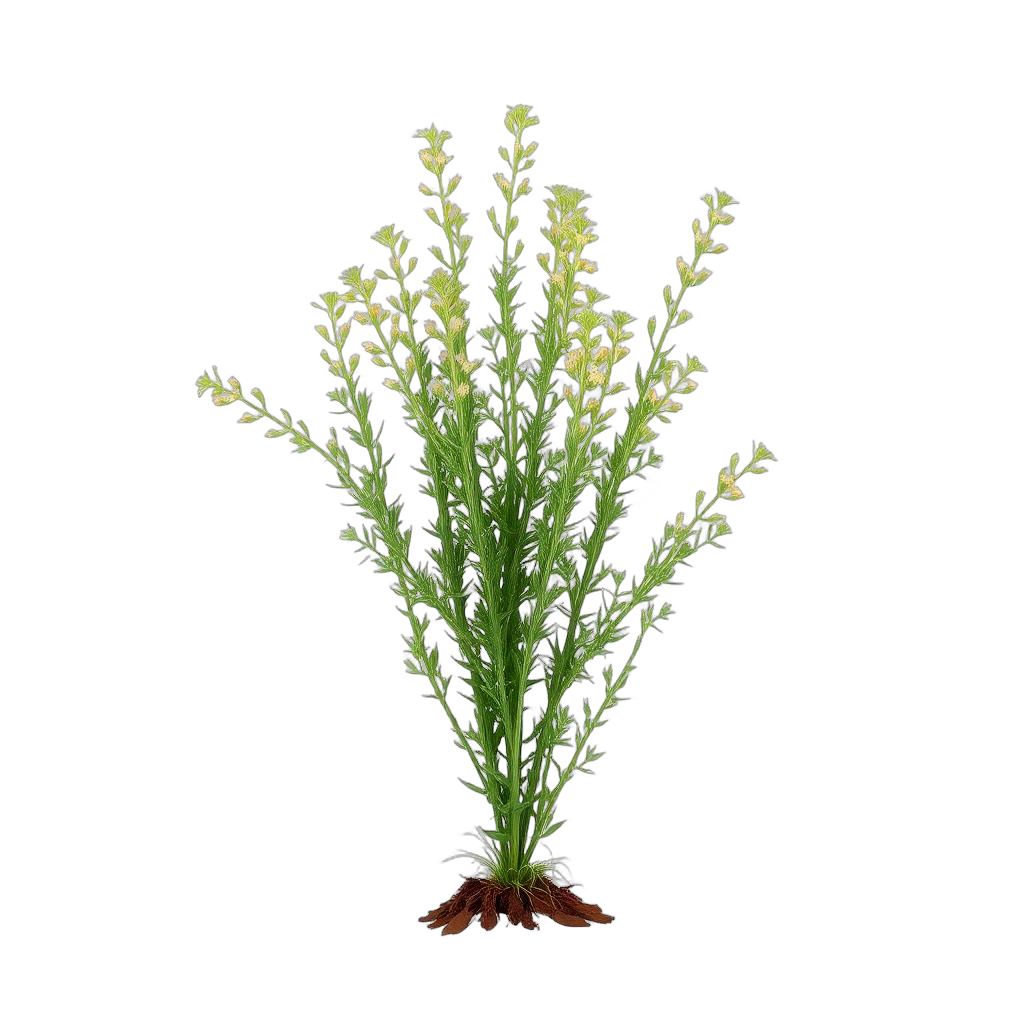
White Sage
Artemisia ludoviciana
low-growing ground cover, white blooms in summer. Fragrant.
Zone and sun checks come from our database — confirm with your local nursery before you buy.
Bloom Calendar for Pueblo
spring
Hood's Phlox, Soapweed Yucca, Golden Currantsummer
Purple Poppy Mallow, White Sage, Blue Grama Grassfall
Bog Sagewinter
Limited bloomsDesign Tips for Pueblo (Zone 6a)
- Plan for 16 inches of precipitation a year: route downspouts into planting beds so summer storm water reaches the roots.
- Mound agave and yucca 8–12 inches above grade with coarse sand mixed into the root zone, because winter wet kills them faster than cold.
- Test pH before planting. Native soil is commonly 7.5–8.2, which suits desert plants, so skip compost in the xeric beds.
- Use Zone 6a-hardy stand-ins: Agave neomexicana for Agave americana, Yucca baccata for cactus-style spikes.
- Set plants where they get full sun and shelter from the spring wind, such as the south and east sides of the house.
- Lay 2–3 inches of decomposed granite or pea gravel, and rake it each spring so weed seeds do not root.
- Cut plants like Hesperaloe parviflora 'Brakelights' back in late winter, before new growth starts in March.
Where to Source Plants in Pueblo
Skip the big-box stores. These independent Pueblo nurseries specialize in the plants that make desert/xeriscape gardens thrive in Zone 6a.
Fox's Lawn and Garden Supply
South Santa Fe Avenue, Pueblo
Family-owned since 1952; trees, shrubs and roses arrive mid-April to early May, plus perennial starts, soil and mulch
Harding Nursery
Colorado Springs (about 45 miles north)
Plant Select retailer, a regular stop for Front Range landscapers hunting hardy xeric perennials
Hillside Gardens
Colorado Springs (about 45 miles north)
Plant Select retailer with a garden center on South Institute Street
Desert/Xeriscape Landscaping Cost Ranges
| Project Scope | Estimated Cost |
|---|---|
| Flagstone patio (per sqft) | $24.88–$32.06 per sqft |
| Drip irrigation system (500 sqft of planted area) | $1,200–$2,200 |
| Block fire pit, stacked block, capped (1 fire pit) | $580–$770 |
| AI visualization (ProScapeAI) | Free to start |
National average installed ranges for 2026 from our landscaping price list (Homewyse and other published sources). Prices in Pueblo, CO vary with site, materials and contractor, so get two or three local quotes.
Pueblo Climate & Growing Zone
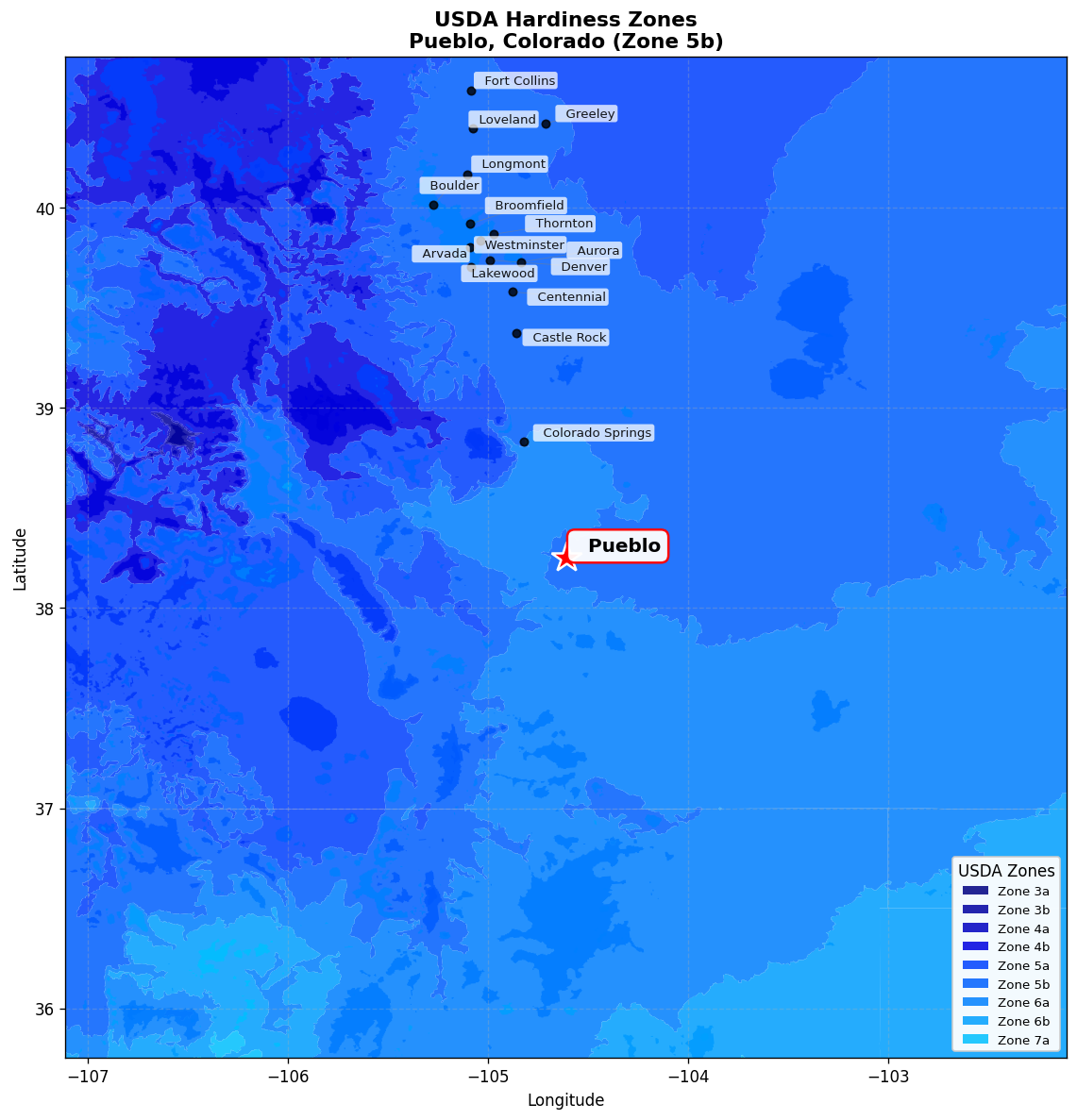
USDA Zone 6a
Hardiness zone for Pueblo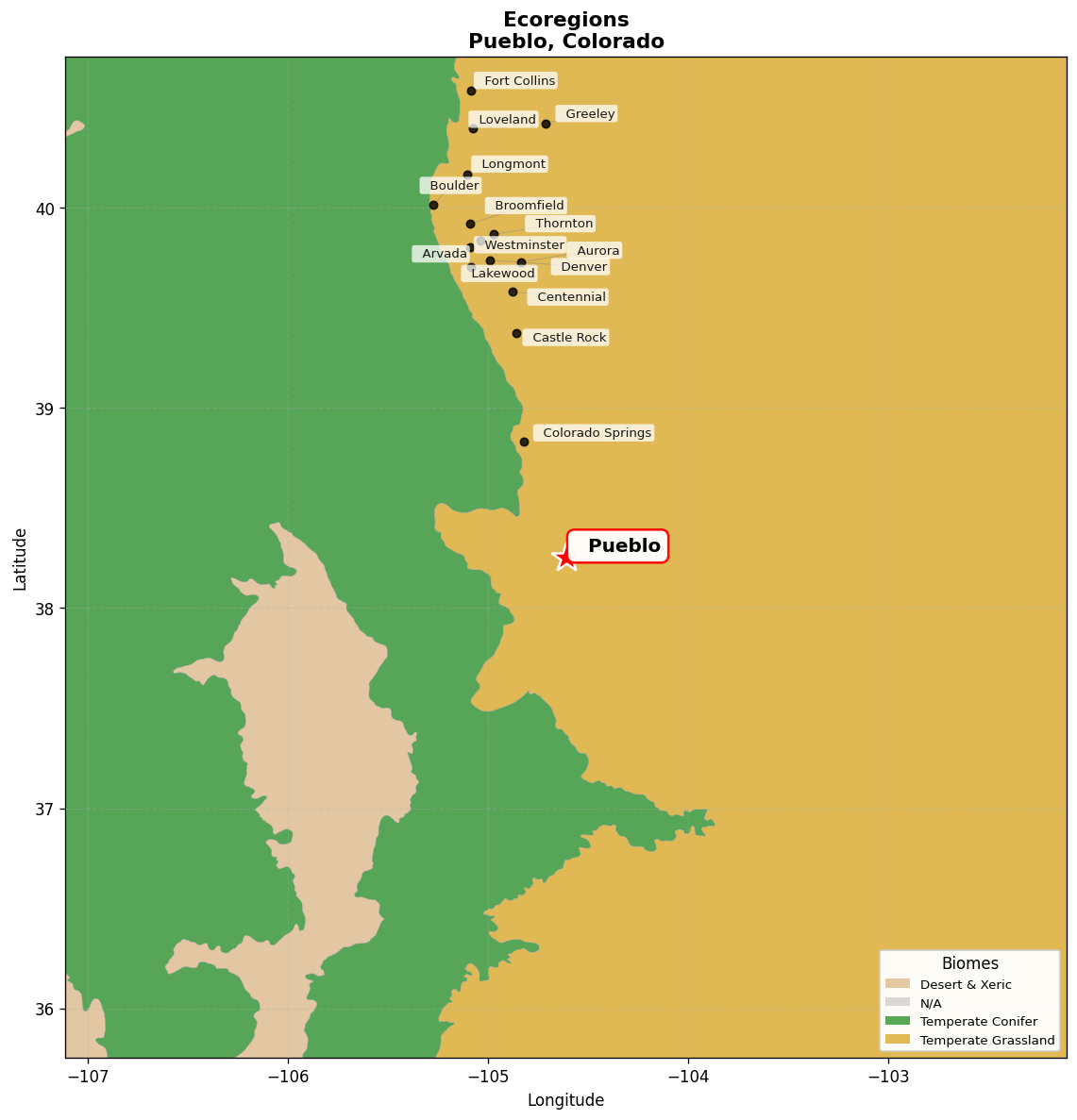
Western shortgrass prairie
Native ecoregionFrequently Asked Questions
How much does a desert garden cost in Pueblo?
Boulders, flagstone and large agave or yucca specimens move the total most. Prices vary with site, size and finishes, so get two or three local quotes.
Is a desert garden low maintenance in Pueblo?
Yes, after the first year. Water new plantings every 7–10 days through the first summer, then every 2–3 weeks in July. Pull winter weeds from the gravel and cut spent Hesperaloe parviflora 'Brakelights' stalks in late winter. Annual raking keeps gravel loose.
When should I plant a desert garden in Pueblo?
Late April through June is best for yuccas, agave and prickly pear, because roots need a full warm season before winter. Early fall plantings can work through September. Soil warms around mid-May, and the first fall frost arrives around October 8.
Do I need a permit or HOA approval for a desert garden in Pueblo?
Plain landscaping rarely needs a permit, but retaining walls, tall fences and electrical for lighting may. Check with the City of Pueblo or Pueblo County. HOA rules in places like Pueblo West often limit rock, so get approval in writing first.
Which desert plants survive Pueblo winters?
Agave neomexicana, Yucca glauca, Yucca baccata, Opuntia polyacantha and Cylindropuntia imbricata all handle sub-zero lows. Agave americana, ocotillo and most columnar cactus do not. Fallugia paradoxa and Hesperaloe parviflora 'Brakelights' are reliable in Zone 6a with good drainage.
Are there watering restrictions in Pueblo?
Pueblo Water currently posts voluntary wise-use guidance and no mandatory schedule, including no watering from 10 a.m. to 6 p.m. in summer. Policies can change, so check pueblowater.org each spring. Pueblo West has its own metro district with its own rules.
Where can I see local xeriscape before I plant?
The Pueblo West xeriscape demonstration garden at Cattail Crossing Park and the Southeastern Colorado Water Conservancy District garden at 31717 United Ave both show working Colorado xeric plantings. The Pueblo SHED horticulture group lists both on its demonstration garden page.