4 Cottage Garden Ideas for Raleigh, NC | English Garden Design in Zone 7b
Native plants from the Appalachian Piedmont forests (Zone 7b) — Humid subtropical climate
Why Cottage/English Gardens in Raleigh?
Raleigh sits in the heart of the Appalachian Piedmont forests ecoregion, and its cottage gardening conditions are among the finest in the Southeast. Zone 7b delivers winter lows of 5–10°F — cold enough to satisfy peonies and classic roses, warm enough that most cottage perennials survive without winter protection. The city receives 46 inches of annual rainfall, spread fairly evenly through the year, and the growing season runs from mid-February through November. Spring is Raleigh’s glory season: from late February’s first daffodils through May’s rose peak, the city produces eight to ten consecutive weeks of cottage garden perfection.
Raleigh’s historic neighborhoods are where cottage style has deepest roots. Hayes Barton, Boylan Heights, and Five Points are lined with early-20th-century craftsman bungalows, colonial revivals, and colonial cottages on tree-lined streets where mature dogwoods, native azaleas, and crepe myrtles have established over 60 to 80 years. Hayes Barton in particular — a neighborhood of generous lot sizes, mature canopy, and well-maintained historic homes — is where Raleigh’s most ambitious cottage gardens live. Cottage gardeners here benefit from the neighborhood’s mature tree structure, which creates the sheltered garden rooms that give English-style planting its distinctive enclosure.
Raleigh’s Piedmont red clay soil is the main challenge, identical to Atlanta’s geology but with Zone 7b’s cooler winters opening a broader plant palette. Amendment with pine bark fines and compost is the established solution, and raised beds above the clay solve drainage problems for the most sensitive cottage plants. NC State’s JC Raulston Arboretum, located in Raleigh on the university campus, is one of the finest horticultural test gardens in the Southeast and serves as an extraordinary resource for Raleigh cottage gardeners — its 10 acres demonstrate what can grow in Piedmont conditions, including thousands of cottage garden candidates evaluated across multiple years.
4 Cottage/English Design Ideas for Raleigh
AI-generated image
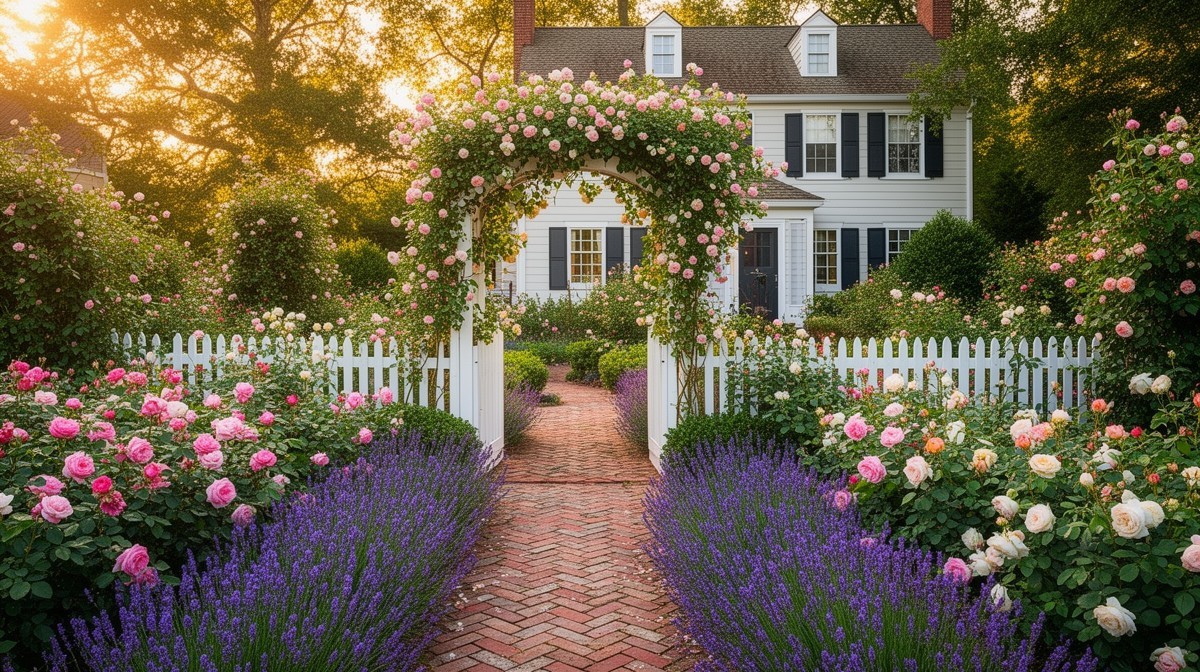
White Picket Gate with Rose Arch and Brick Path
$10–20/sqftA white picket fence with a wide gate opening frames a brick path leading to a craftsman front porch, with a generous rose arch overhead in blush and pink. Dense cottage borders of roses, lavender, and perennials line the path on both sides. Raleigh’s Zone 7b gives roses excellent winter chilling hours for robust spring bloom, and the brick path suits the craftsman and colonial revival homes of Hayes Barton, Five Points, and Boylan Heights where this style has its deepest local roots. The open gate and the overflowing rose arch create an invitation — this is cottage gardening at its most welcoming.

AI-generated image
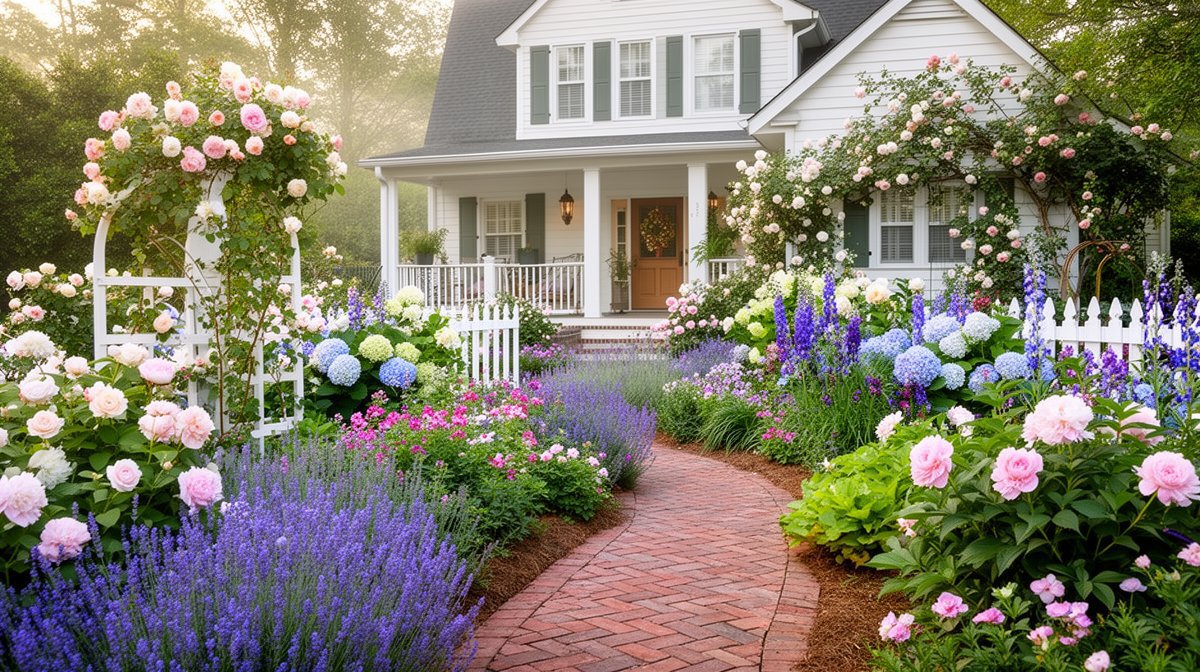
Flagstone Path Cottage with Rose Arbor and Full Borders
$11–22/sqftA wide flagstone path winds through full mixed cottage borders of roses, foxgloves, hydrangeas, and perennials under a mature shade tree, with a climbing rose arbor framing the front porch entry. The layered planting — taller roses and shrubs at the back, mid-height foxgloves and coneflowers in the middle, low cottage perennials at the path edge — uses Raleigh’s generous spring season to maximum effect. Zone 7b’s cool spring temperatures allow foxgloves, peonies, and delphiniums to bloom alongside early roses for a simultaneous multi-peak display that warmer Southern cities can’t achieve.
AI-generated image
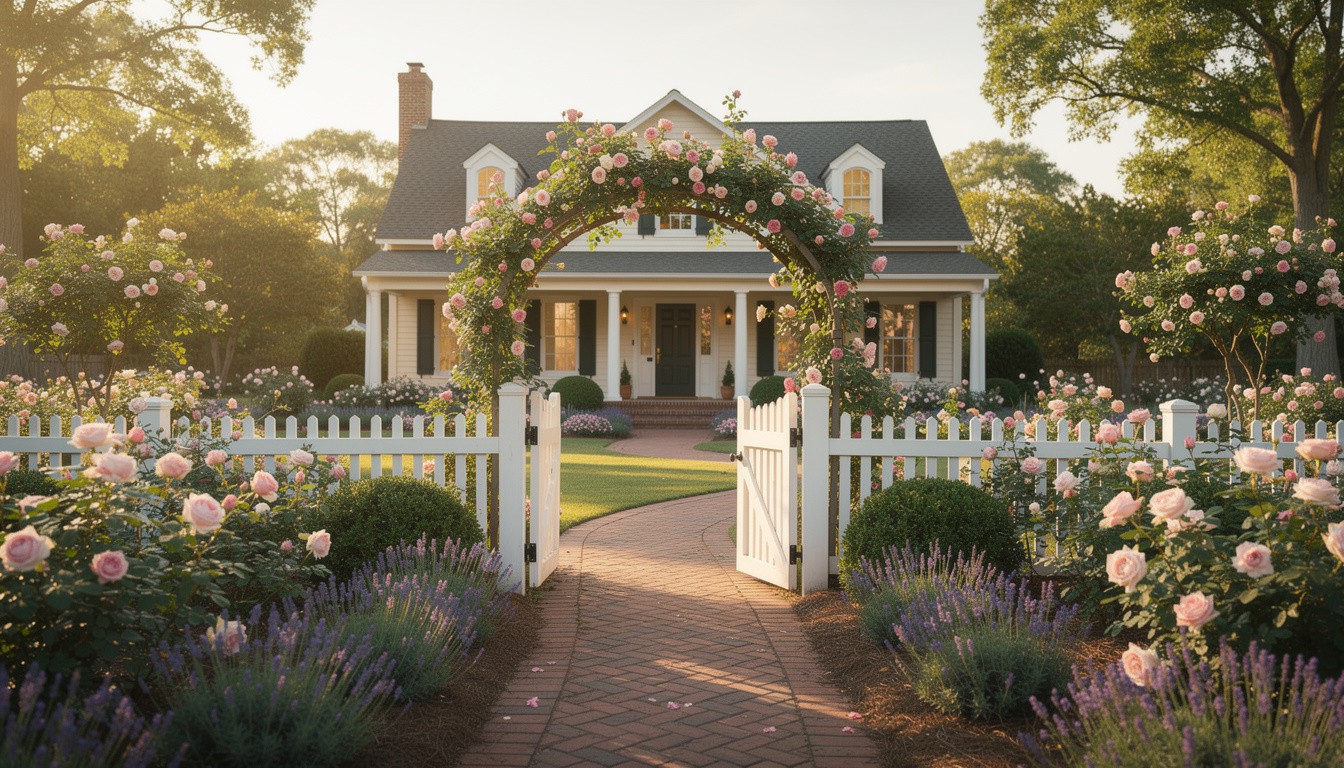
Garden Patio with Climbing Rose Arch and Bistro Set
$16–32/sqftA circular stone patio sits at the center of a backyard cottage garden, entered through a wide climbing rose arch and enclosed on all sides by cottage borders of roses, lavender, and foxgloves. A white bistro table and chairs occupy the patio center, turning the space into a private outdoor room. Two large shade trees frame the back, and the surrounding cottage planting is lush and full. Raleigh’s eight-month outdoor season makes this garden room usable from early March through November, with the spring rose peak in May providing the most spectacular backdrop of the year.
AI-generated image
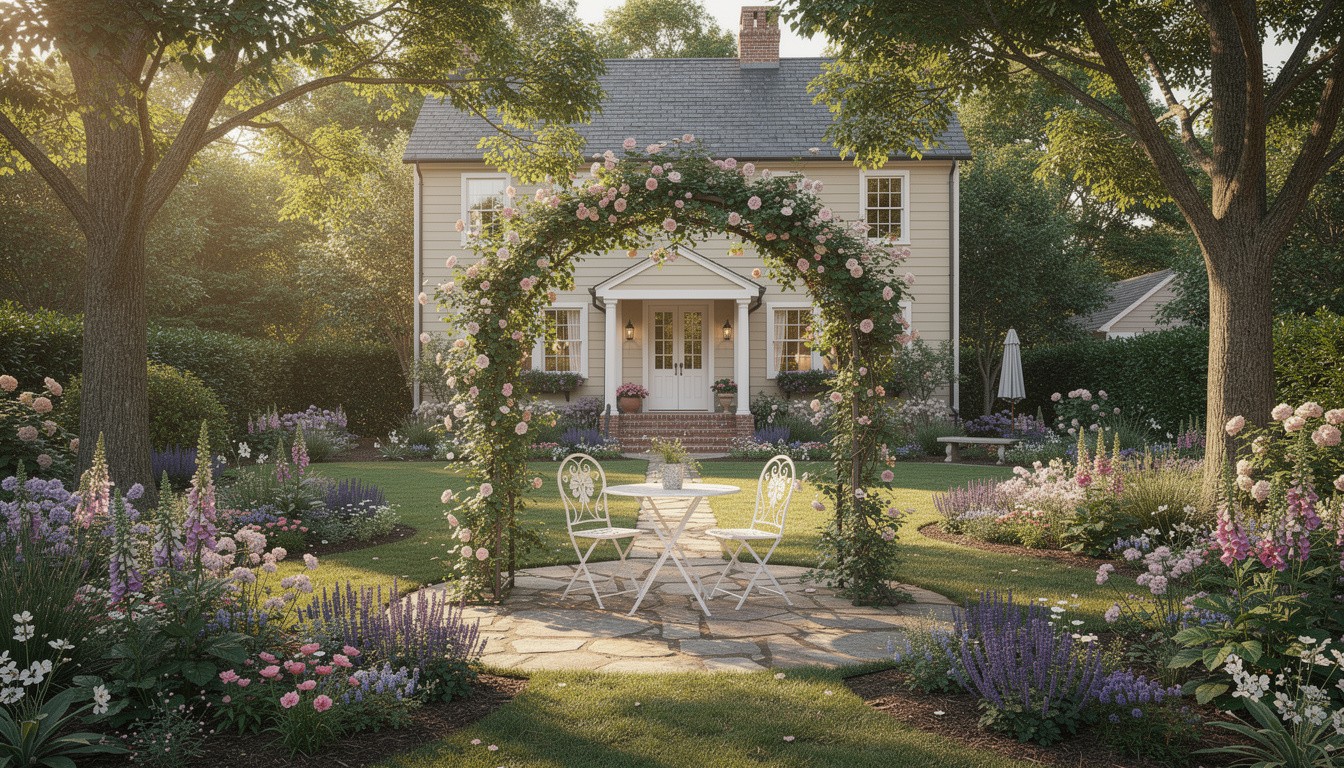
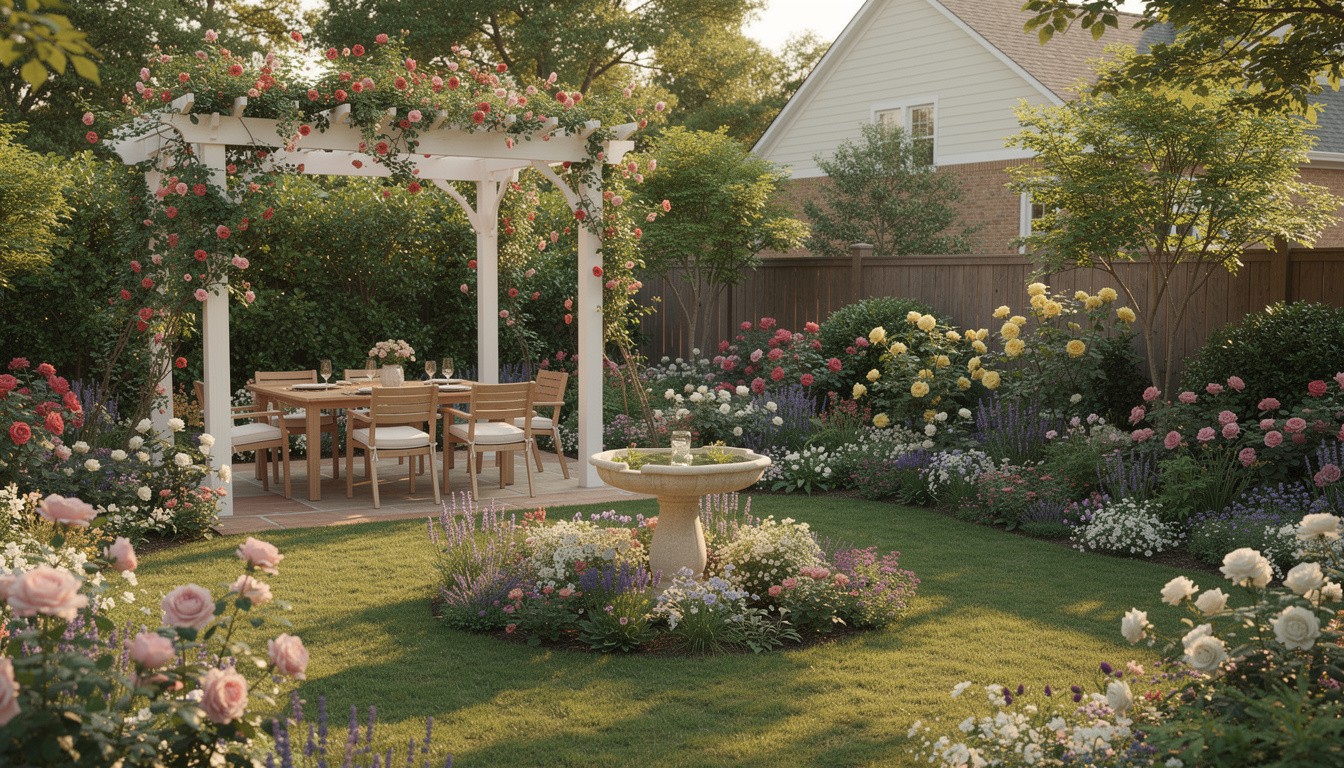
Pergola Dining Garden with Rose Borders and Birdbath
$20—42/sqftA white open pergola creates a covered outdoor dining space at one end of a generous backyard cottage garden. Mixed cottage borders of roses, foxgloves, hydrangeas, and lavender surround a central lawn panel, with a birdbath as the garden’s focal point and a stone fountain adding a water element. The lush, overflowing quality of the borders — roses cascading, foxgloves spiking, lavender drifting — gives this design its cottage character. Raleigh’s fertile, amendable Piedmont soil and nine-month growing season produce exactly this kind of abundance once established.
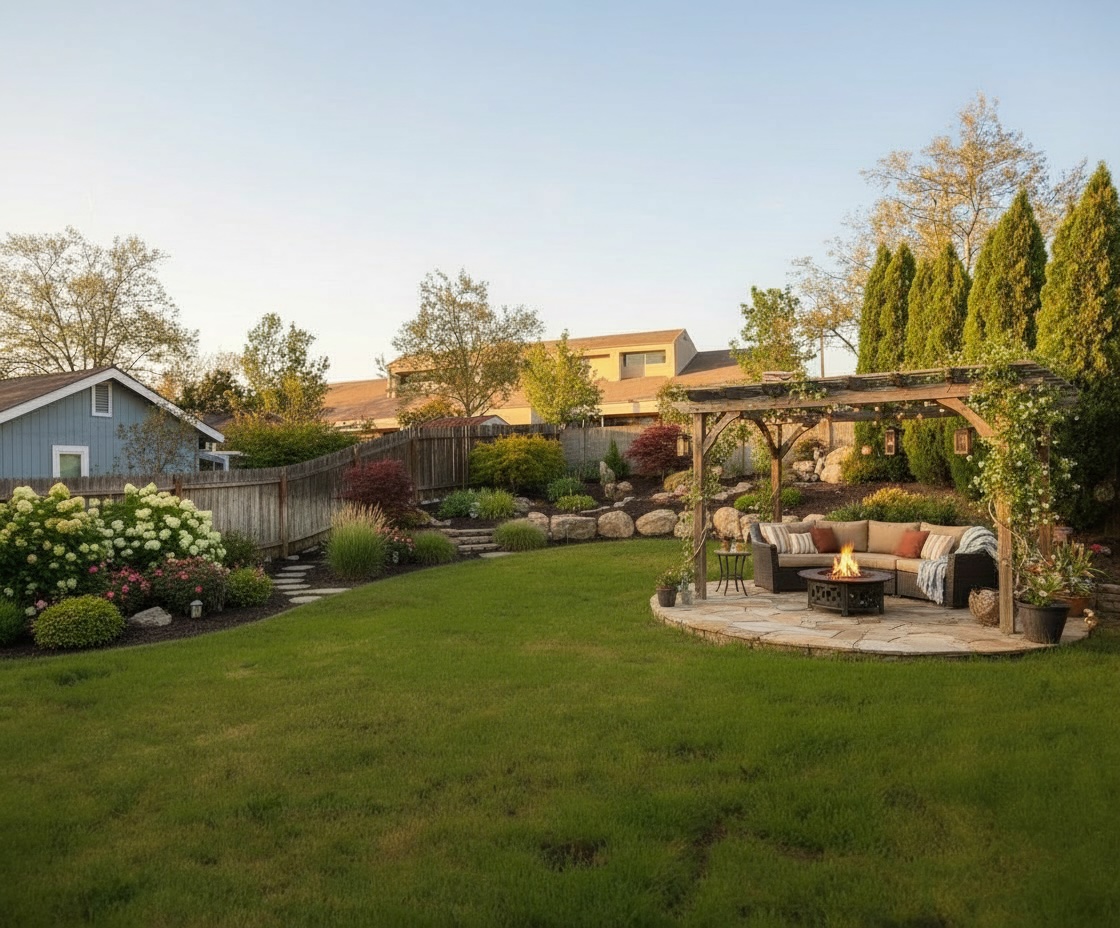
See how a cottage/english garden looks on YOUR property
Upload a photo of your Raleigh yard and visualize your dream garden in seconds.
Try ProScapeAI Free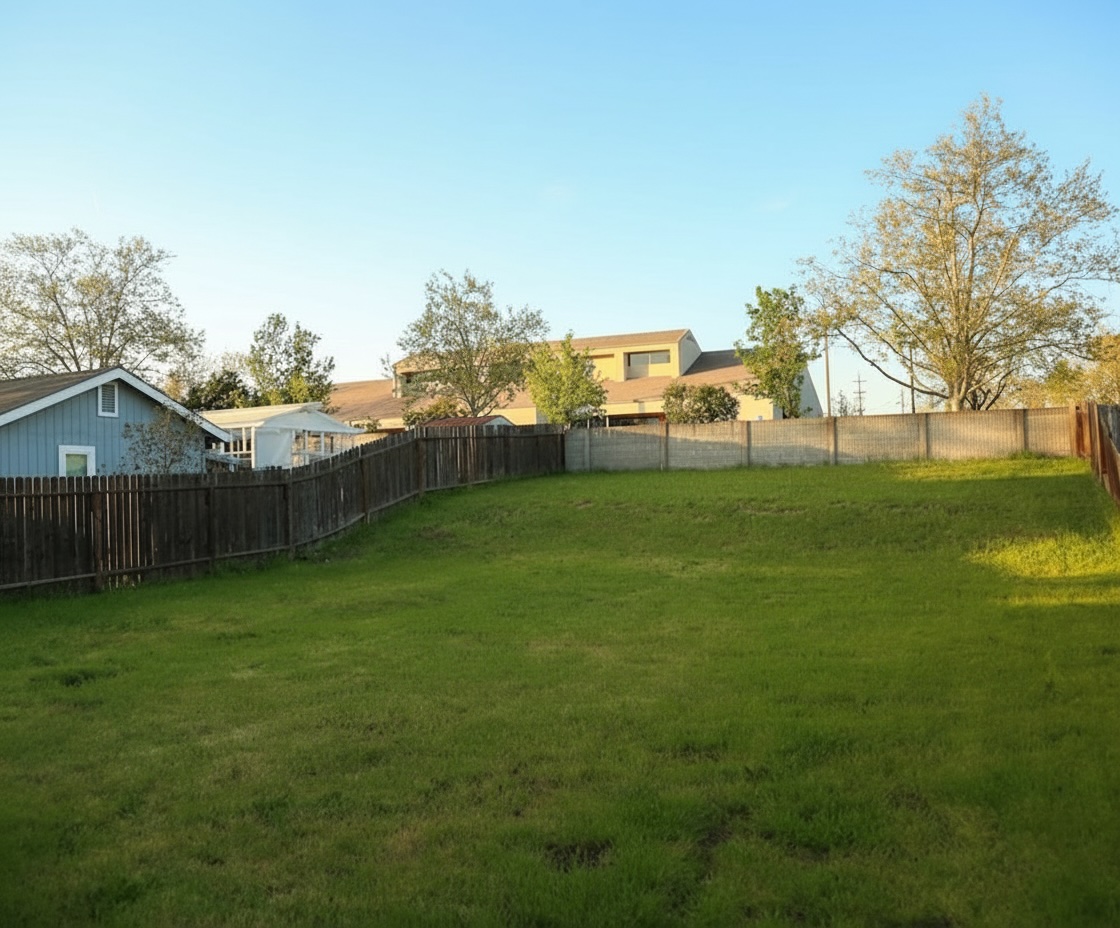
AI-generated image
Featured Trees & Shrubs for Cottage/English Gardens
Browse all 204 plants for Raleigh
American Elderberry
Sambucus canadensis
medium-sized at 10 feet, white blooms in spring. Attracts butterflies.

American Snowbell
Styrax americanus
medium-sized at 10 feet, white blooms in spring. Pollinator-friendly.

Carousel Mountain Laurel
Kalmia latifolia 'Carousel'
grows to 5 feet, multi blooms in spring. Evergreen year-round.

Drooping Leucothoe
Leucothoe fontanesiana
grows to 5 feet, white blooms in spring. Evergreen year-round.
Featured Grasses & Groundcovers for Cottage/English Gardens
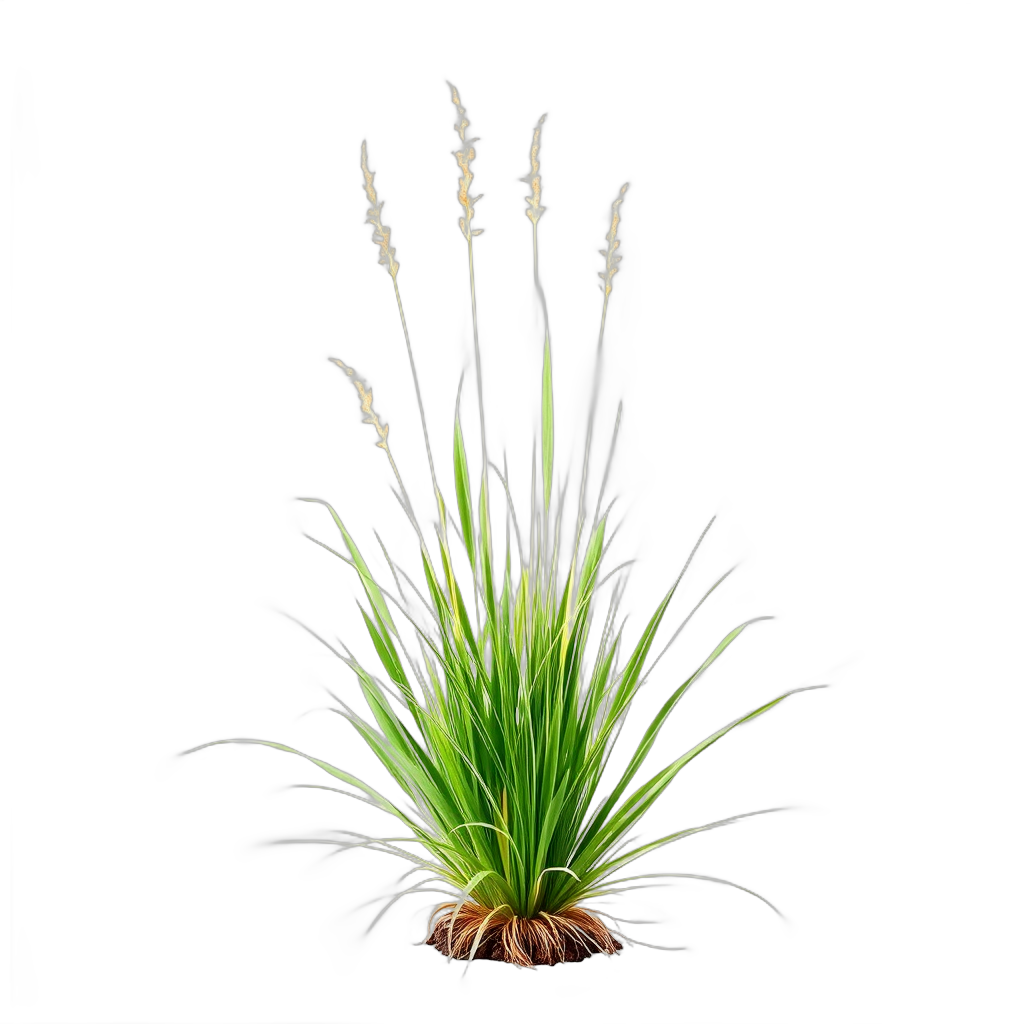
Northern Sea Oats
Chasmanthium latifolium
grows to 4 feet, blooms in fall. Bronze fall color.
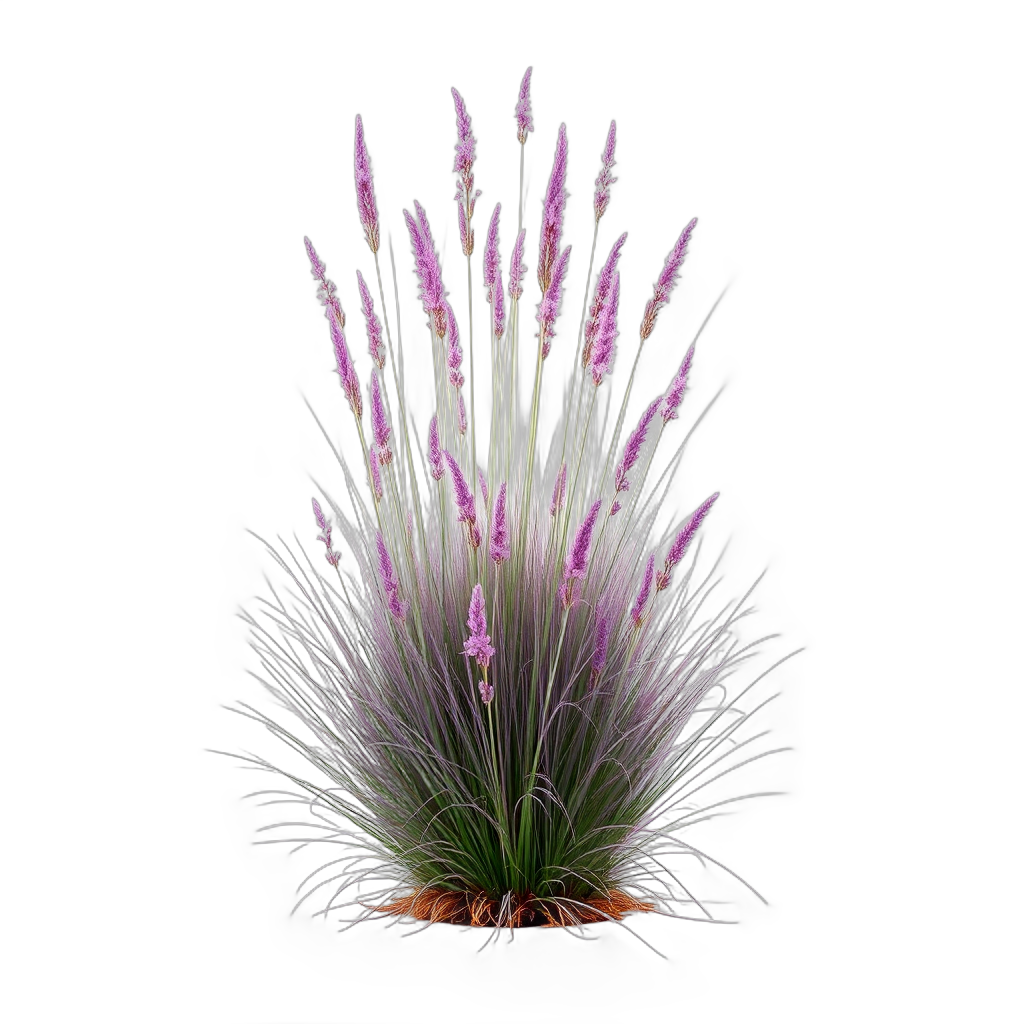
Purple Love Grass
Eragrostis spectabilis
low-growing ground cover, purple blooms in fall. Orange fall color.

Arrow Bamboo
Pseudosasa japonica
medium-sized at 15 feet, blooms in none. Evergreen year-round.

Black Bamboo
Phyllostachys nigra
reaches 25 feet tall, blooms in none. Evergreen year-round.
Featured Flowers & Perennials for Cottage/English Gardens
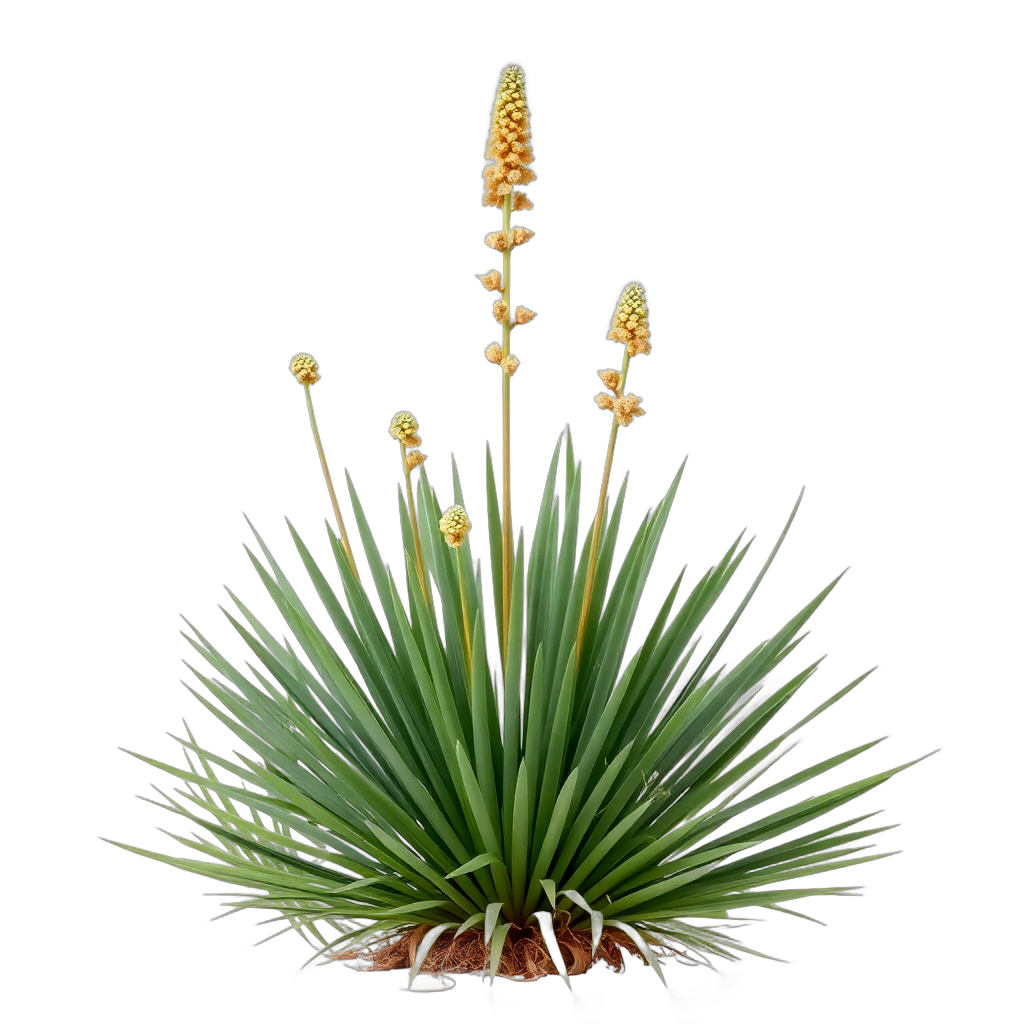
Adam's Needle
Yucca filamentosa
low-growing ground cover, white blooms in summer. Attracts hummingbirds.

Black Cohosh
Cimicifuga racemosa
grows to 5 feet, white blooms in summer. Attracts butterflies.

Coral Bean
Erythrina herbacea
grows to 5 feet, red blooms in spring. Attracts hummingbirds.
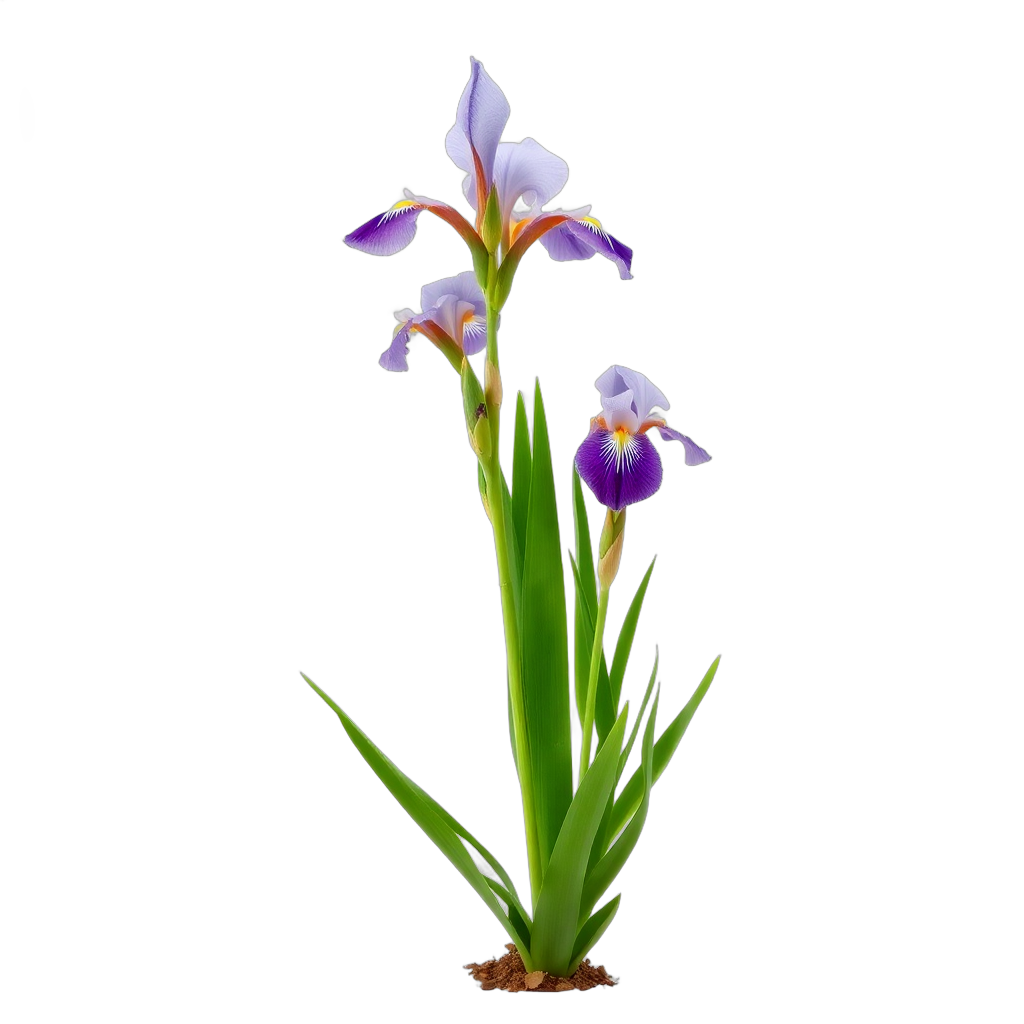
Crested Iris
Iris cristata
low-growing ground cover, blue blooms in spring. Attracts butterflies.
Zone and sun checks come from our database — confirm with your local nursery before you buy.
Bloom Calendar for Raleigh
spring
Coral Bean, Crested Iris, Southern Blue Flagsummer
Adam's Needle, Black Cohosh, False Aloefall
Northern Sea Oats, Purple Love Grasswinter
Limited bloomsDesign Tips for Raleigh (Zone 7b)
- Visit the JC Raulston Arboretum on NC State’s campus before designing your Raleigh cottage garden — it’s free, open daily, and demonstrates what actually thrives in Piedmont Zone 7b conditions across thousands of evaluated species
- Plant peonies in October in the coldest, most north-facing spot on your property — Zone 7b’s marginal chilling hours are maximized in north-facing beds that receive less solar heat during winter, improving bloom reliability
- Use pine bark fines (not mulch, not shredded wood — pine bark fines) as your amendment of choice for red clay beds — it’s widely available in Raleigh, breaks down slowly, and consistently produces the best results per NC State Extension recommendations
- Layer your spring cottage garden for a 10-week display: early bulbs (February), hellebores (February–March), native azaleas (April), iris (April–May), peonies (May), roses (May–June) — Raleigh’s Zone 7b supports this full sequence better than any warmer Southeast city
- Add loropetalum as a year-round burgundy anchor — it’s perfectly adapted to Raleigh’s Zone 7b, provides structure when roses and peonies are dormant, and its fringy spring flowers add a distinctly Piedmont character to cottage borders
- Mulch all cottage beds with pine straw at 3–4 inches in fall — it insulates roots during Zone 7b’s occasional hard freezes, maintains soil moisture through spring, and is the mulch material most aligned with the Piedmont’s natural pine forest floor
Where to Source Plants in Raleigh
Skip the big-box stores. These independent Raleigh nurseries specialize in the plants that make cottage/english gardens thrive in Zone 7b.
JC Raulston Arboretum Plant Sales
Raleigh (NC State campus)
Plant sales featuring unusual cottage perennials and shrubs evaluated specifically for Piedmont Zone 7b performance — unmatched selection and provenance
Logan’s Trading Company
North Raleigh
Large independent garden center — strong cottage plant selection, roses, hydrangeas, and perennial borders for Piedmont gardeners
Homewood Nursery
Raleigh
Full-service independent nursery with landscape design — reliable cottage plant source with strong Raleigh-specific expertise
Rare Find Nursery
Jackson, NJ (ships to Raleigh; specialty source)
Specialty cottage perennials, unusual roses, and rare shrubs for the most ambitious Raleigh cottage gardens
North Carolina Botanical Garden Plant Sales
Chapel Hill (15 miles from Raleigh)
Native NC plant sales including Piedmont wildflowers, native azaleas, and woodland cottage plants
Cottage/English Landscaping Costs in Raleigh
| Project Scope | Estimated Cost |
|---|---|
| White picket fence with rose arch gate and brick path | $6,500 – $14,000 |
| Full cottage front yard with flagstone path, rose arbor, and perennial borders | $9,000 – $20,000 |
| Backyard garden patio with rose arch and cottage border planting | $14,000 – $35,000 |
| Pergola dining garden with rose borders and birdbath | $18,000 – $42,000 |
| Red clay soil amendment and raised bed construction | $800 – $2,500 |
| AI visualization with ProScapeAI | Free to start |
Estimates based on Raleigh, NC-area contractor rates as of 2026. Actual costs vary by site conditions, materials, and contractor.
Raleigh Climate & Growing Zone
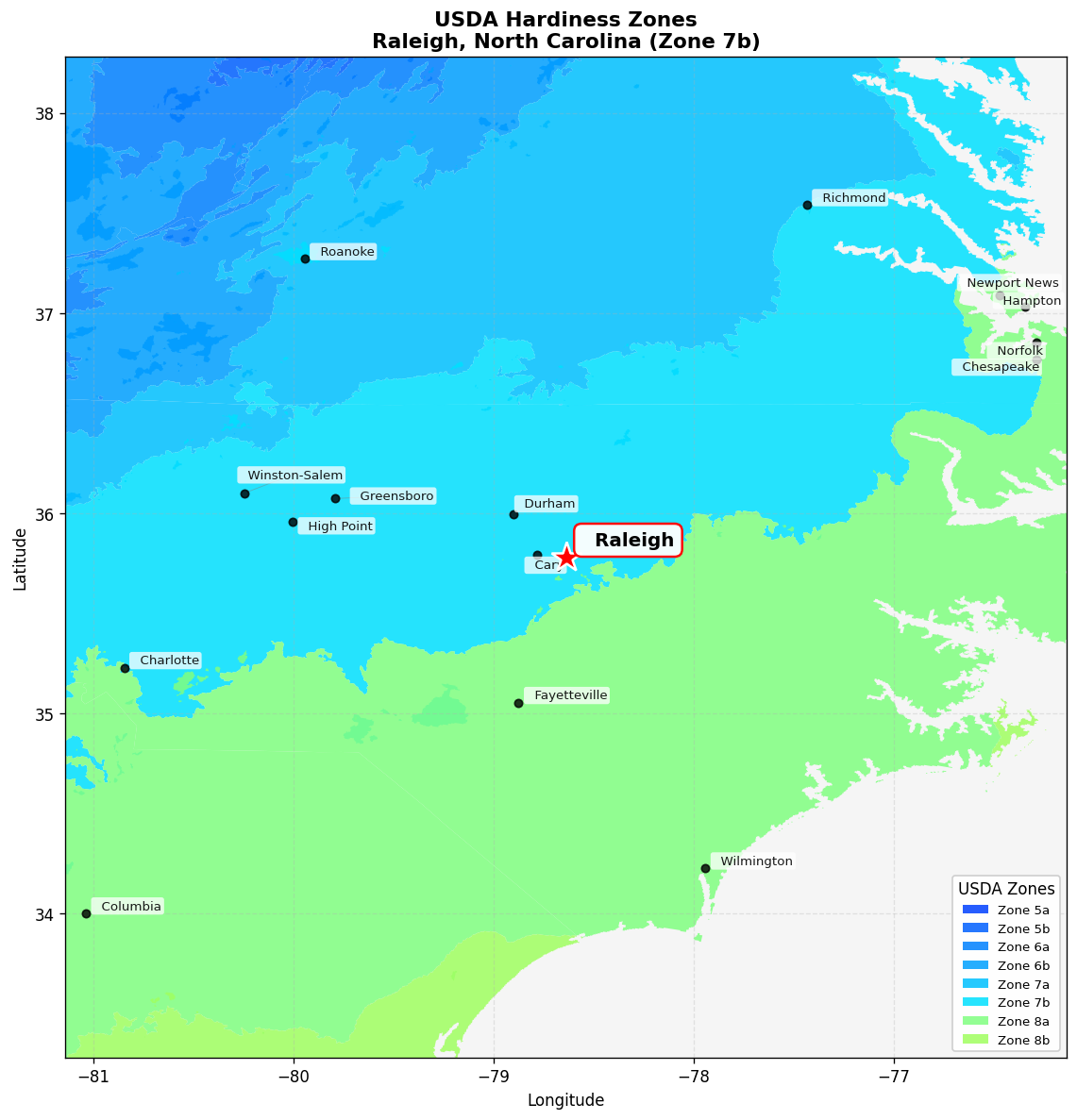
USDA Zone 7b
Hardiness zone for Raleigh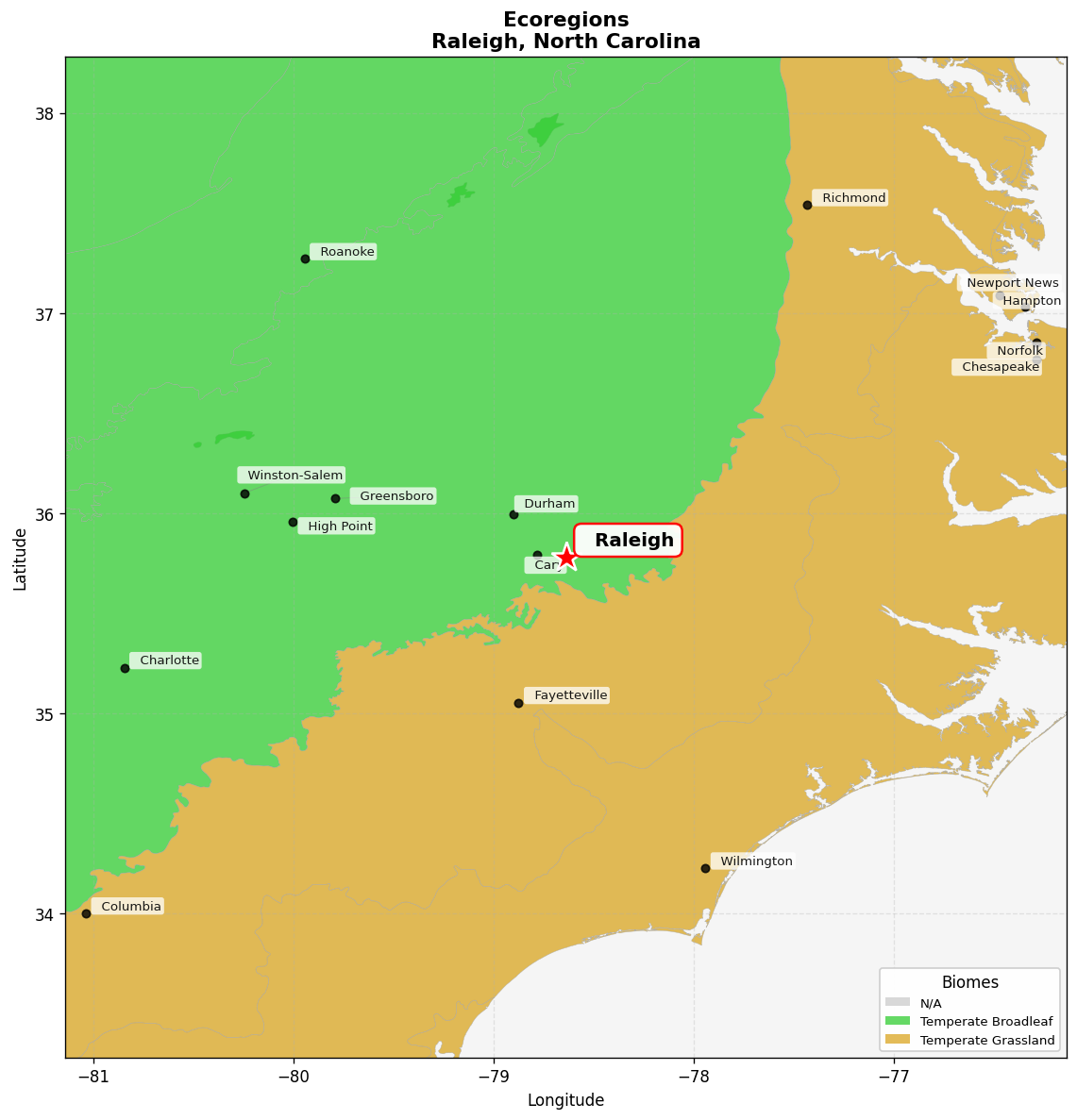
Appalachian Piedmont forests
Native ecoregionFrequently Asked Questions
How does the JC Raulston Arboretum help Raleigh cottage gardeners?
The JC Raulston Arboretum at NC State is an extraordinary resource — free, open daily, and located in Raleigh’s Five Points neighborhood. Its 10-acre mixed plantings demonstrate what thrives in Piedmont Zone 7b conditions across thousands of evaluated species. Cottage gardeners can visit to see how specific roses, perennials, and shrubs perform over multiple seasons before purchasing. The Arboretum also holds plant sales in spring and fall featuring unusual cottage perennials and rare shrubs evaluated for Piedmont conditions. It’s also the source of several plants that have become standard in Raleigh cottage gardens after appearing in Raulston collections.
Do peonies grow reliably in Raleigh’s Zone 7b?
Yes, though at the warmer edge of reliable peony territory. Zone 7b typically provides 300–500 chilling hours below 40°F — sufficient for most herbaceous peony varieties in normal winters. Plant in full sun with well-drained, amended soil (clay drainage is essential — wet winter roots are more damaging than temperature). Reliable Raleigh performers: 'Sarah Bernhardt', 'Festiva Maxima', 'Karl Rosenfield', 'Bowl of Beauty'. Intersectional (Itoh) peonies are more heat-tolerant and recommended for warmer Raleigh microclimates. In unusually warm winters, bloom may be sparse — plant in the coldest, most northern exposure on the property for best chilling.
What cottage plants are uniquely suited to Raleigh’s Zone 7b that don’t work in warmer Southern cities?
Zone 7b opens up peonies (reliable), classic hybrid tea roses (perform better than in Zone 8a+), bearded iris (thrives with Zone 7b winters), English lavender (excellent in well-drained limestone-like amended beds), delphiniums (grow as perennials rather than annuals), and spring bulbs (tulips and hyacinths reliably rebloom for 2–3 seasons in Zone 7b). These plants collectively represent the heart of the English cottage garden style — Raleigh’s Zone 7b gives cottage gardeners here a more genuinely English-compatible plant palette than Atlanta or Jacksonville can achieve.
How do I handle Raleigh’s red clay soil for cottage beds?
Identical to Atlanta’s challenge — heavy red Piedmont clay compacts when wet and bakes when dry. Solution: amend planting beds with 4–6 inches of pine bark fines and compost worked 12 inches deep; build raised beds 12–18 inches above grade for peonies and roses; never add sand to clay (creates concrete). The JC Raulston Arboretum’s entire collection grows in amended Piedmont clay — visit to see how effective amendment is in practice. Annual top-dressing with 2 inches of compost maintains the soil structure over time. Pine straw mulch at 3–4 inches retains moisture and keeps roots cool in Raleigh’s summer heat.
When is the best time to plant a cottage garden in Raleigh?
Fall (October–November) is ideal for roses, peonies, and most perennials — Zone 7b winters allow root establishment before summer heat. For peonies specifically, October planting is strongly preferred, with eyes set 1–2 inches below the soil surface. Spring (February–April) works well for annuals, summer perennials, and fill-in planting after seeing winter performance. Avoid summer planting — Raleigh’s July–August heat and humidity stress transplants severely. NC State Extension’s gardening calendar, based on Raleigh’s specific climate data, is an excellent planning resource.
How much does cottage garden installation cost in Raleigh?
Raleigh landscaping costs are comparable to Charlotte and slightly below the Research Triangle’s highest-end neighborhoods. A front yard cottage transformation with picket fence, stone path, and perennial borders runs $7,000–16,000. A backyard walled garden with flagstone and cedar pergola runs $18,000‑45,000. Annual maintenance for established cottage gardens runs $1,200–3,500/year. Soil amendment adds $800–2,000 upfront. NC State Extension’s Plant Disease and Insect Clinic offers free Raleigh-area plant diagnostics, reducing the costly plant replacement cycle from misdiagnosed problems.