4 Modern Garden Ideas for Salt Lake City, UT | Clean-Line Landscape Design in Zone 7b
Native plants from the Great Basin shrub steppe (Zone 7b) — Temperate climate
Why Modern/Minimalist Gardens in Salt Lake City?
Salt Lake City has quietly become one of the best modern-landscape cities in the Mountain West, and the reason is partly architecture and partly light. Post-war flat-roof and low-slung ranch stock fills Rose Park, Glendale and huge stretches of Millcreek, contemporary infill keeps replacing teardowns in Sugar House and the lower Avenues, and Federal Heights holds a run of glass-and-steel houses cantilevered off the bench with the whole valley below them. Modern design wants geometry, restraint and a strong backdrop, and this city hands you the Wasatch as a borrowed one on every east-facing lot. The high-desert light helps too: clear, hard, low-humidity sun throws the kind of shadow across board-formed concrete and Corten steel that a humid climate simply cannot produce. And the Great Basin plant palette is already architectural - Agave parryi var. neomexicana, Yucca rostrata 'Sapphire Skies', Helictotrichon sempervirens and Bouteloua gracilis 'Blonde Ambition' hold form without pruning.
The hard constraints are frost and soil chemistry. Salt Lake County frost depth is 30 inches, and freeze-thaw here is severe - Zone 7b lows of 5-10°F with wild daily swings, so every footing goes below the frost line, every slab sits on eight inches of compacted road base, and concrete needs to be air-entrained with sawcut control joints every 10-12 feet or the clean lines crack into random ones by year three. Underneath is Lake Bonneville lakebed clay at pH 7.5 to 8.2 with free lime, which causes the iron chlorosis you see all over the valley. Modern designs get sabotaged by it constantly, because the default specimen trees - Acer rubrum, Betula nigra, Quercus palustris and the Populus tremuloides everyone wants for that white-trunk look - all yellow out on valley clay. Specify chlorosis-resistant structure instead: Acer grandidentatum 'Rocky Mountain Glow', Gymnocladus dioicus 'Espresso', Celtis occidentalis, Quercus gambelii and Acer tataricum 'Hot Wings'.
Water is the third design input, and here minimalism pays. The Great Salt Lake hit a record-low 4,188.5 feet in November 2022, and roughly 60 percent of residential water in this valley goes onto landscape, so Utah now writes checks to remove turf: the Flip Your Strip park-strip rebate and Localscapes Rewards both pay per square foot, both require pre-approval before work starts, and both require living plant coverage rather than bare rock. A gravel-and-Corten front garden built on Utah State University Extension's water-wise recommendations qualifies for the money, cuts irrigation on the converted area by 70-80 percent, and happens to be exactly the look modern clients came for. The one thing not to cut is canopy - a wall of pale gravel against a west elevation in a 95°F July needs one real shade tree to stay livable.
4 Modern/Minimalist Design Ideas for Salt Lake City
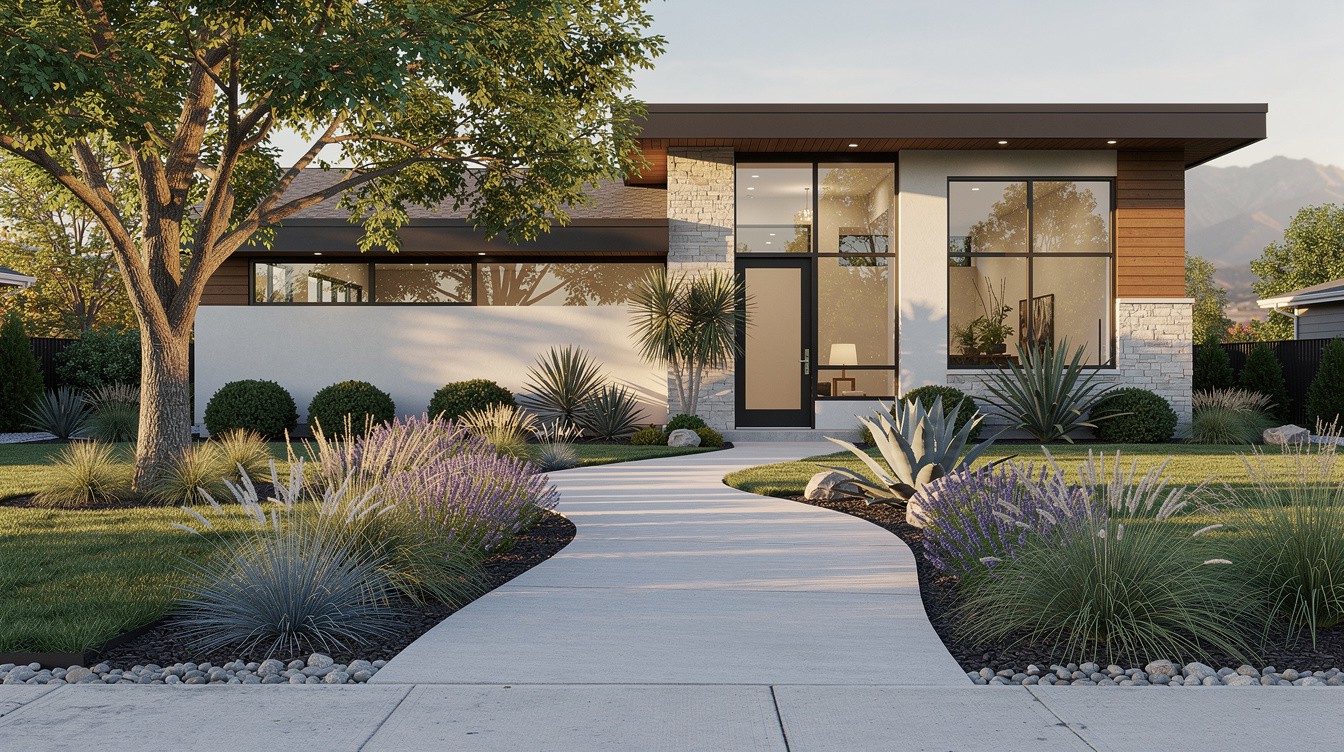
The Millcreek Glass-Entry Approach
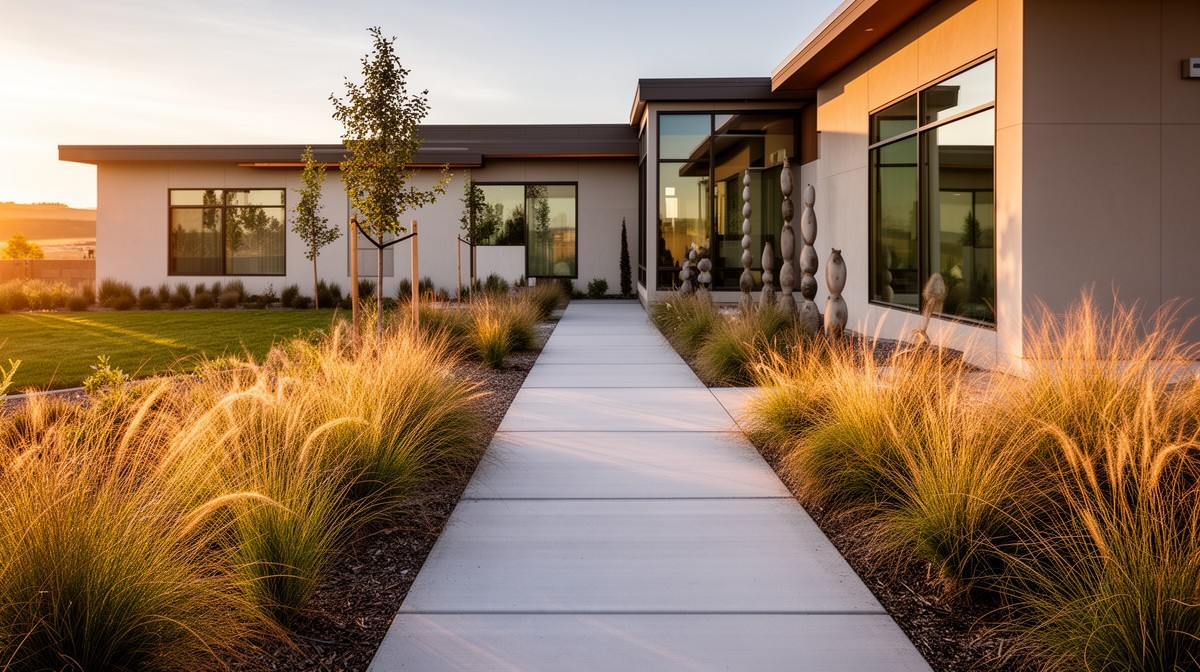
$14-26/sqftA flat-roof contemporary with wood soffit, white stucco and pale stone veneer gets a broad concrete walk that curves rather than runs straight, so the entry reveals itself gradually instead of all at once. The planting is organized by texture and repeated in rhythm: blue mounding grasses at the front edge, soft white-plumed grasses behind them, drifts of purple-flowering subshrub for the only real color, clipped evergreen spheres for punctuation, and two or three big sculptural rosettes placed like objects rather than plants. Trimmed lawn panels survive on both sides, and a band of river cobble at the sidewalk keeps the transition crisp. The mature shade tree on the left is the element that makes the whole west-facing composition work in July.
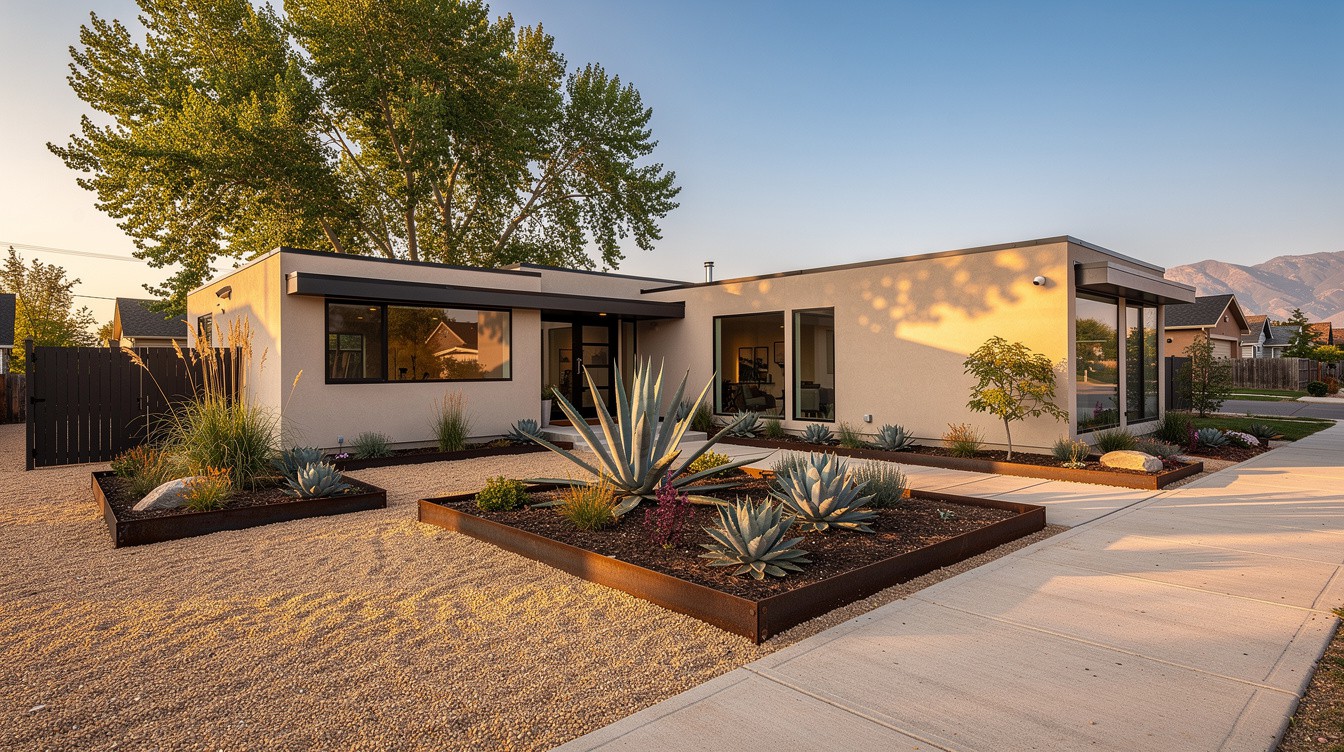
The Rose Park Mid-Century Corten Court
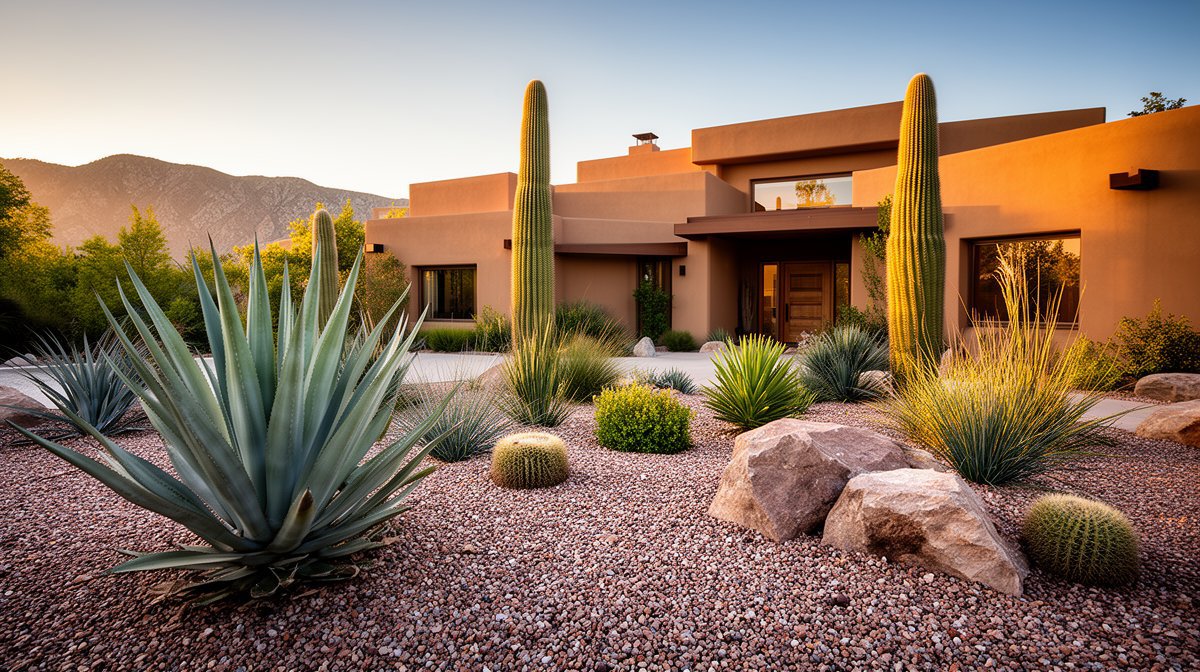
$12-24/sqftA low mid-century flat-roof house loses its lawn entirely to a field of decomposed granite, with three weathering-steel planter boxes floating in it like a grid of trays. Each box is a tight composition of blue agave rosettes, low sedums and fine grasses in dark soil, and one box carries a small multi-stem tree for canopy so the front is not entirely horizontal. The rust of the Corten against the cream stucco and the cottonwood behind the roofline is the entire color story. The functional trick hiding inside the aesthetic: raising the beds twelve inches above valley clay is exactly what keeps agave crowns out of February snowmelt.
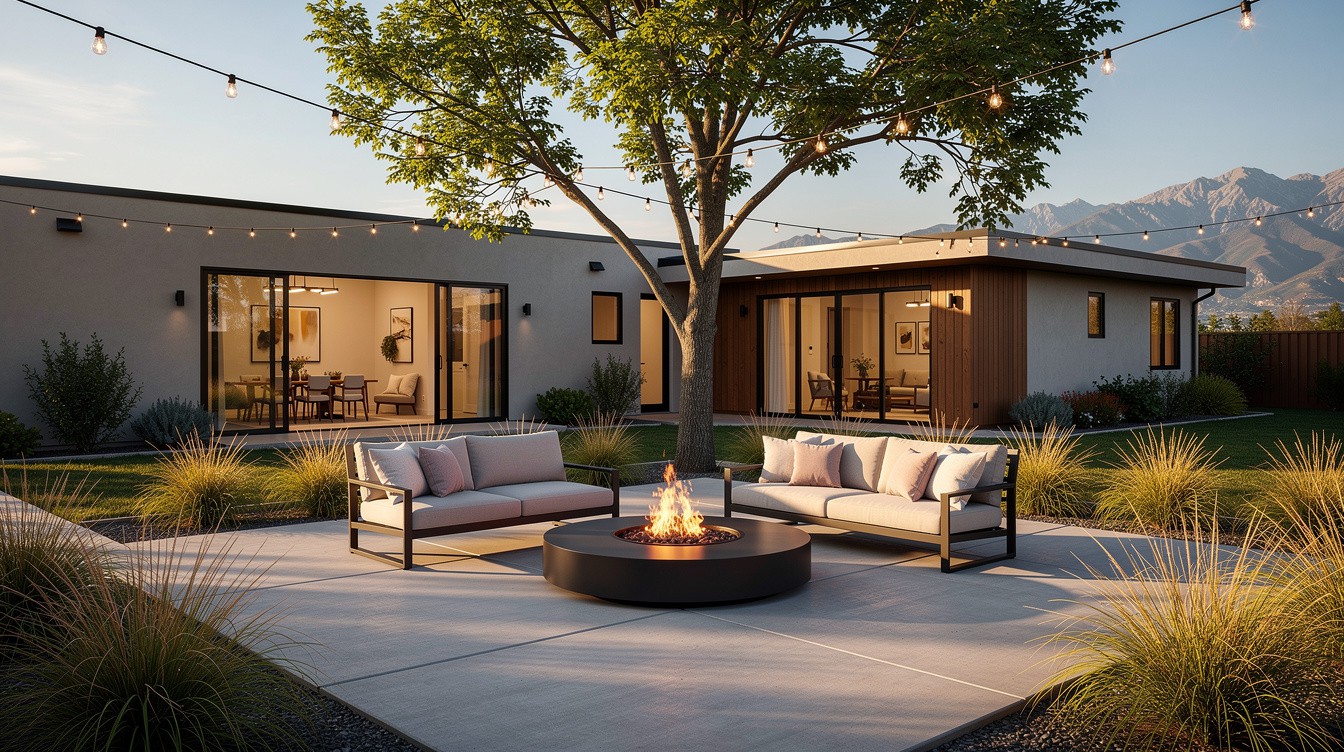
The Courtyard Tree and Fire Bowl
$20-38/sqftA wide poured-concrete terrace in large sawcut panels wraps a single multi-trunk shade tree left growing through a generous cutout, which is what keeps the space from feeling like a parking pad. Two facing sofas and a low round black gas fire bowl set the seating geometry, catenary string lights on cedar posts define the ceiling, and the terrace edge dissolves into knee-high drifts of warm-toned grasses instead of stopping at a hard fence line. Behind them the lawn is reduced to a shaped green panel rather than the default rectangle. Simple by construction - one floor material, one focal object, one plant texture - and it carries a Salt Lake backyard from April into late October.
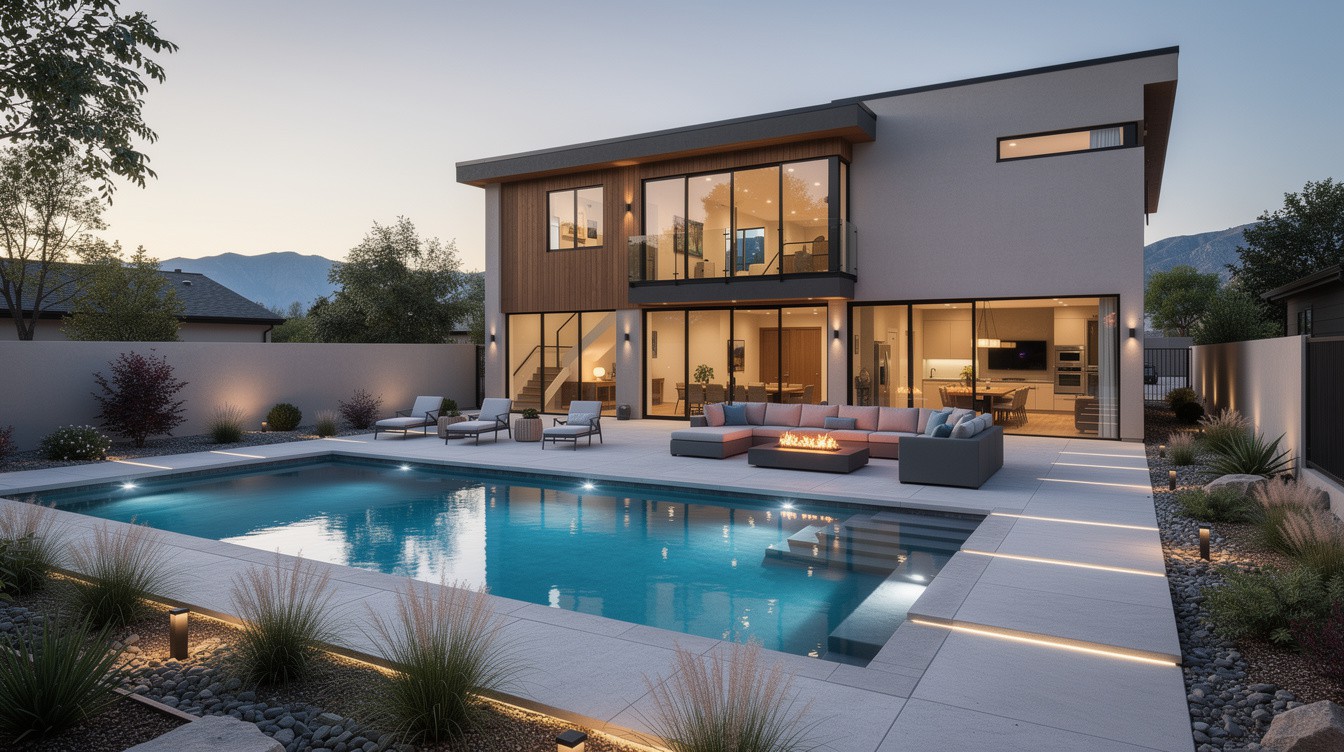
The Federal Heights Glass-Wall Pool
$50-110/sqftA two-story contemporary in wood cladding and full-height glass opens onto a rectangular pool set in large-format pale pavers, with recessed LED strips run into the deck so the geometry still reads after dark. A sectional with a linear gas fire table sits on the house side and chaises on the far side, and the stucco privacy wall stops the neighbors without stopping the mountain view above it. All the planting happens at the perimeter in cobble and gravel beds - uplit grasses, a couple of burgundy-leaved accents, upright evergreen verticals - so the deck stays clean and the greenery does its work as silhouette and shadow rather than as mass.
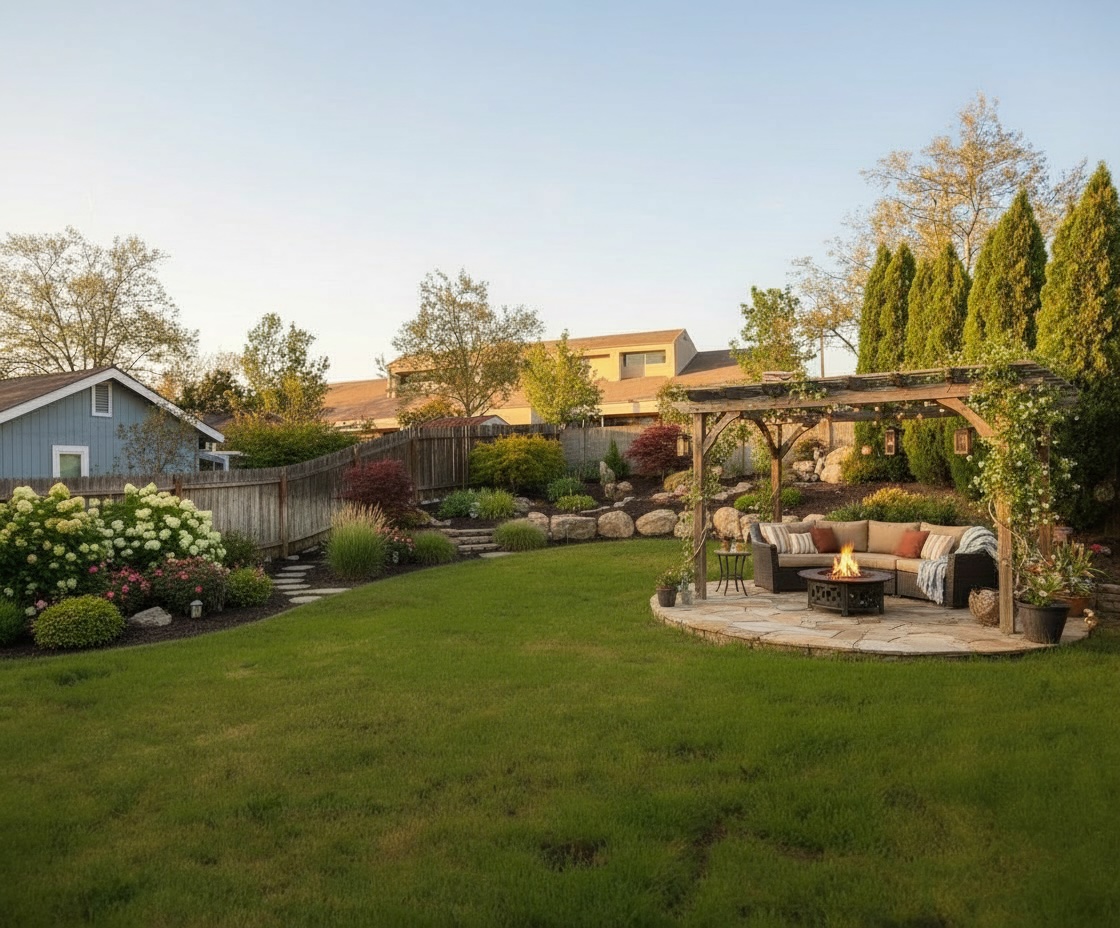
See how a modern/minimalist garden looks on YOUR property
Upload a photo of your Salt Lake City yard and visualize your dream garden in seconds.
Try ProScapeAI Free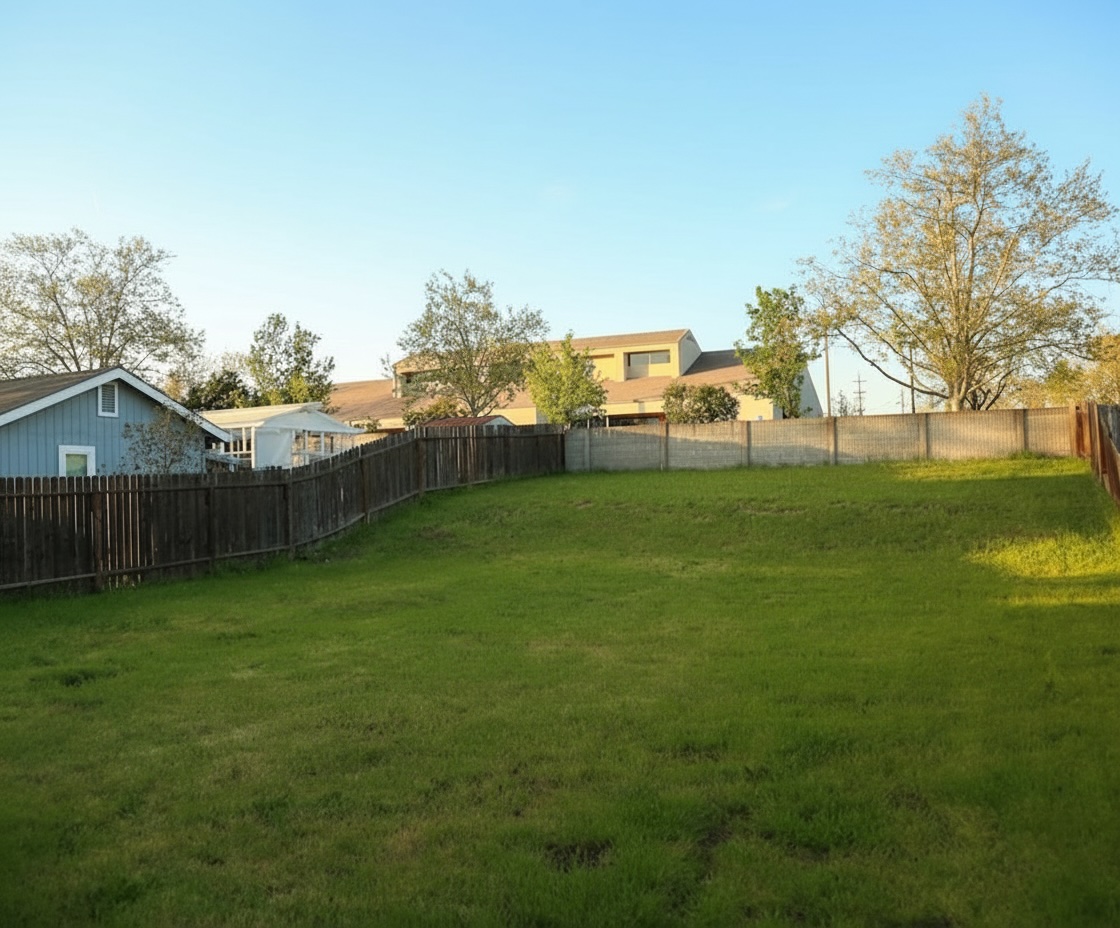
Featured Trees & Shrubs for Modern/Minimalist Gardens
Browse all 40 plants for Salt Lake City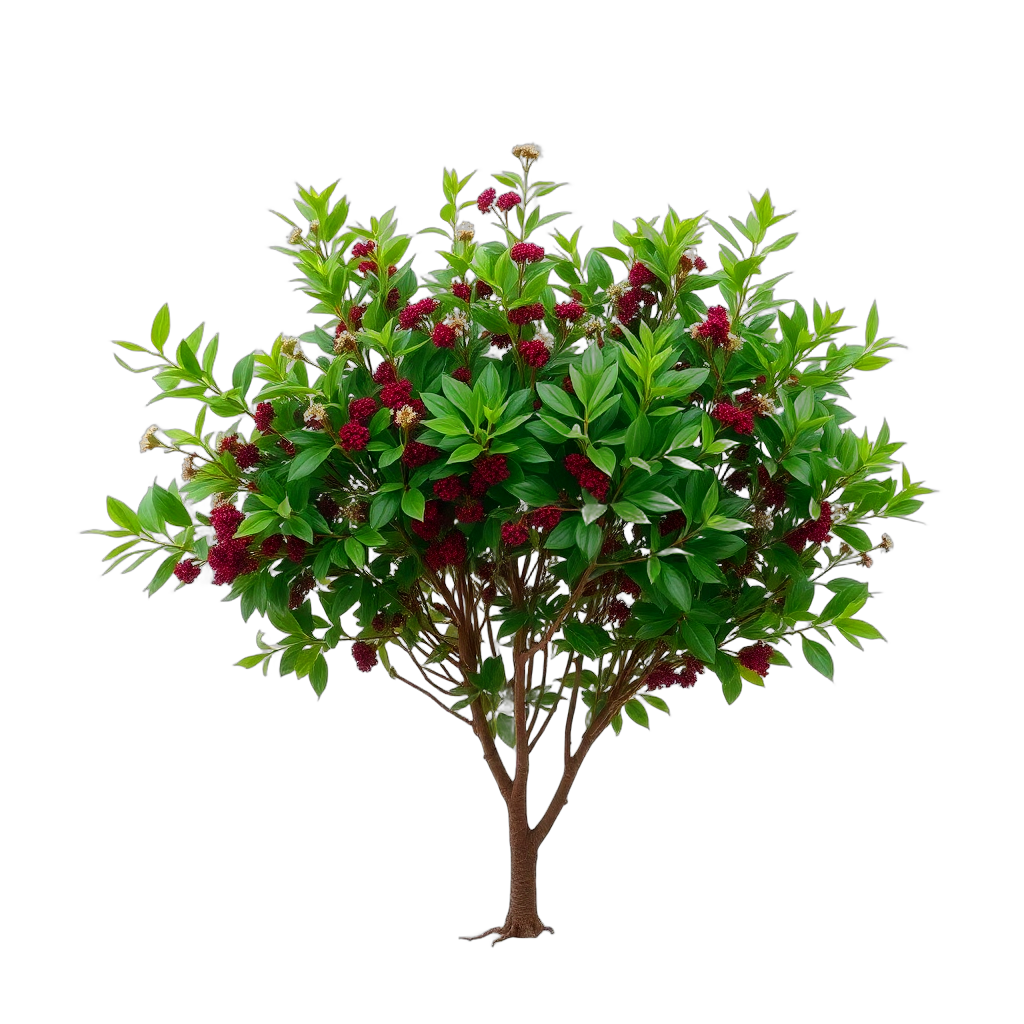
Anderson Wolfberry
Lycium andersonii
grows to 5 feet, purple blooms in spring. Attracts hummingbirds.
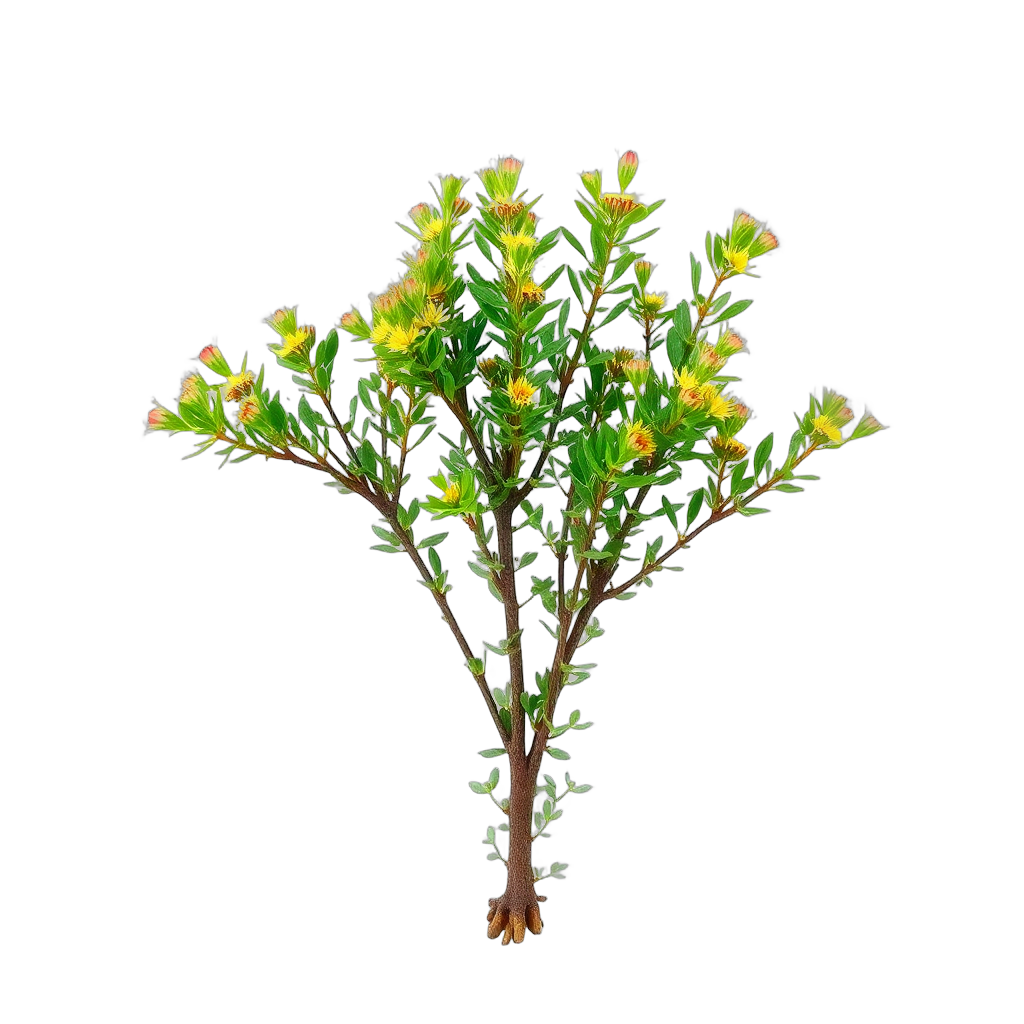
Antelope Bitterbrush
Purshia tridentata
grows to 6 feet, yellow blooms in spring. Fragrant.
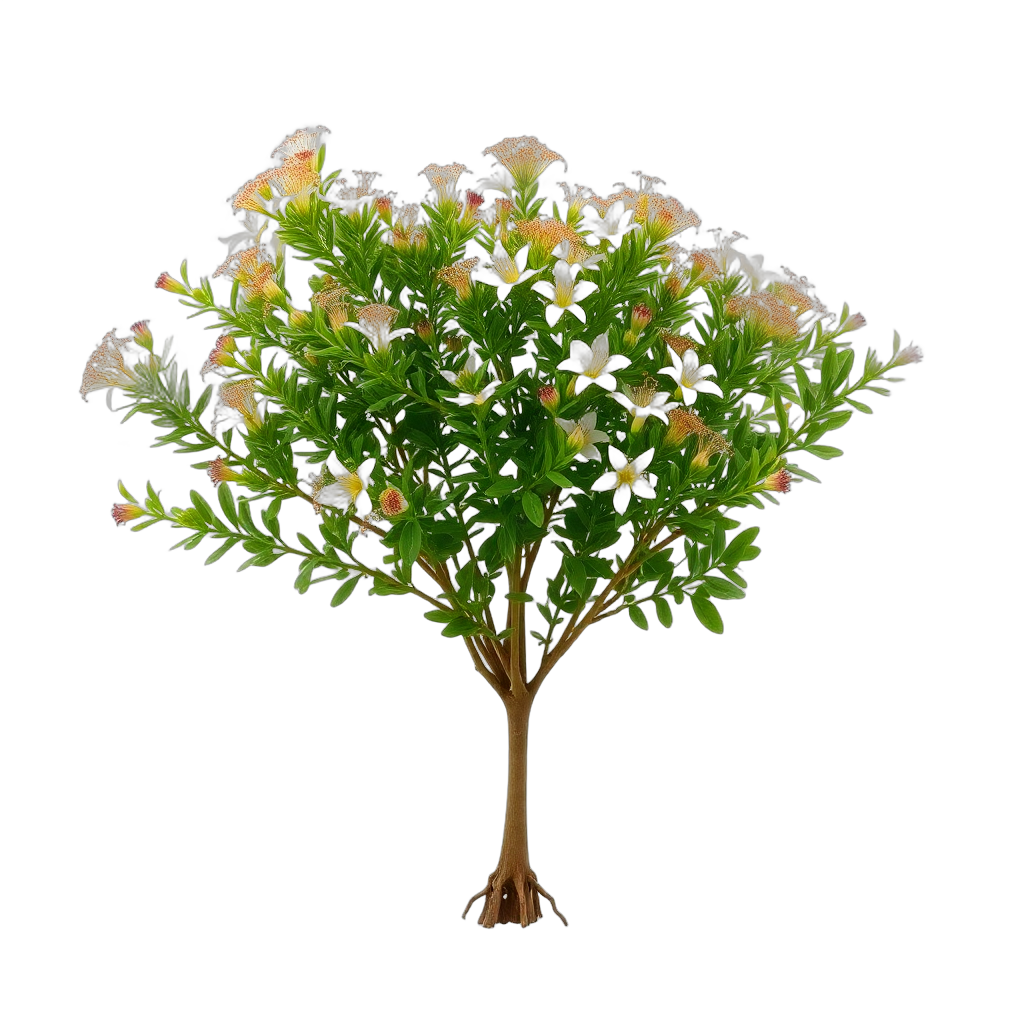
Apache Plume
Fallugia paradoxa
grows to 6 feet, white blooms in summer. Attracts butterflies.
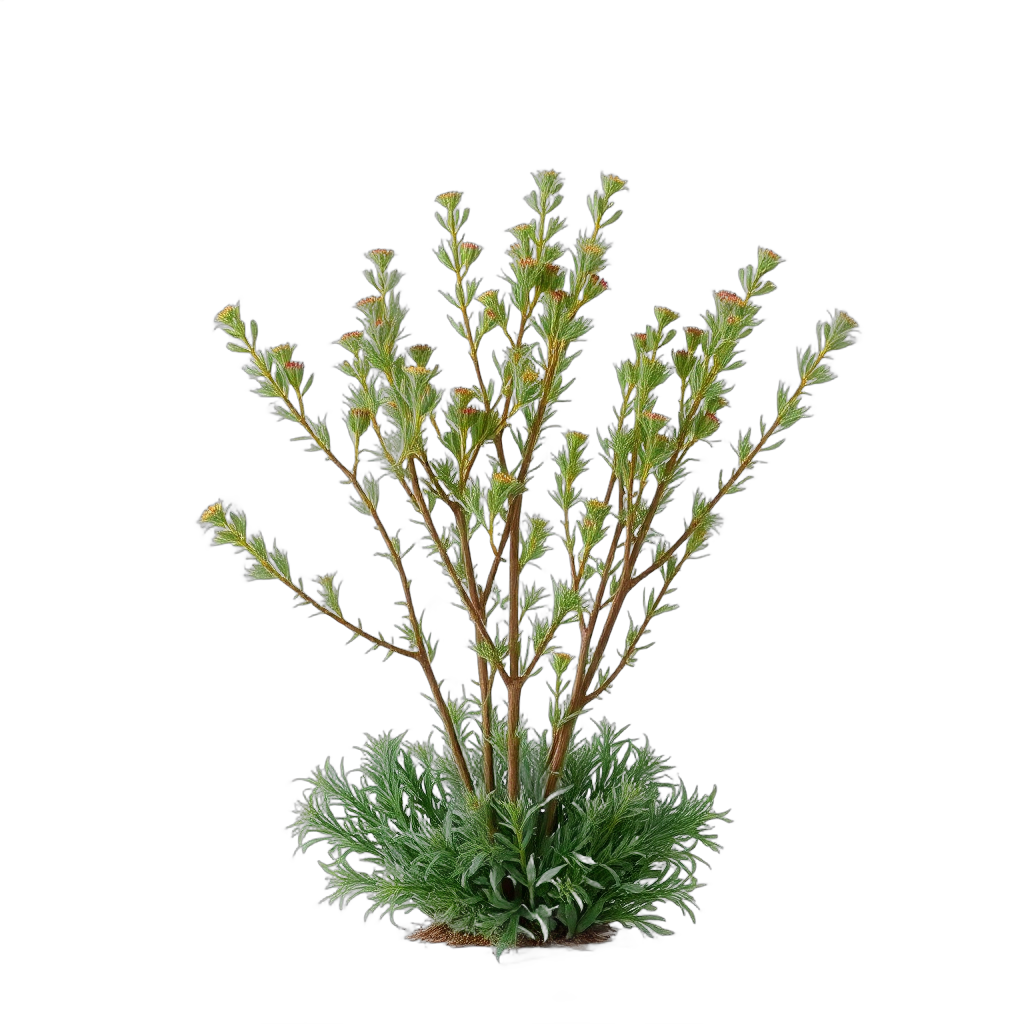
Big Sagebrush
Artemisia tridentata
grows to 6 feet, yellow blooms in fall. Evergreen year-round.
Featured Grasses & Groundcovers for Modern/Minimalist Gardens
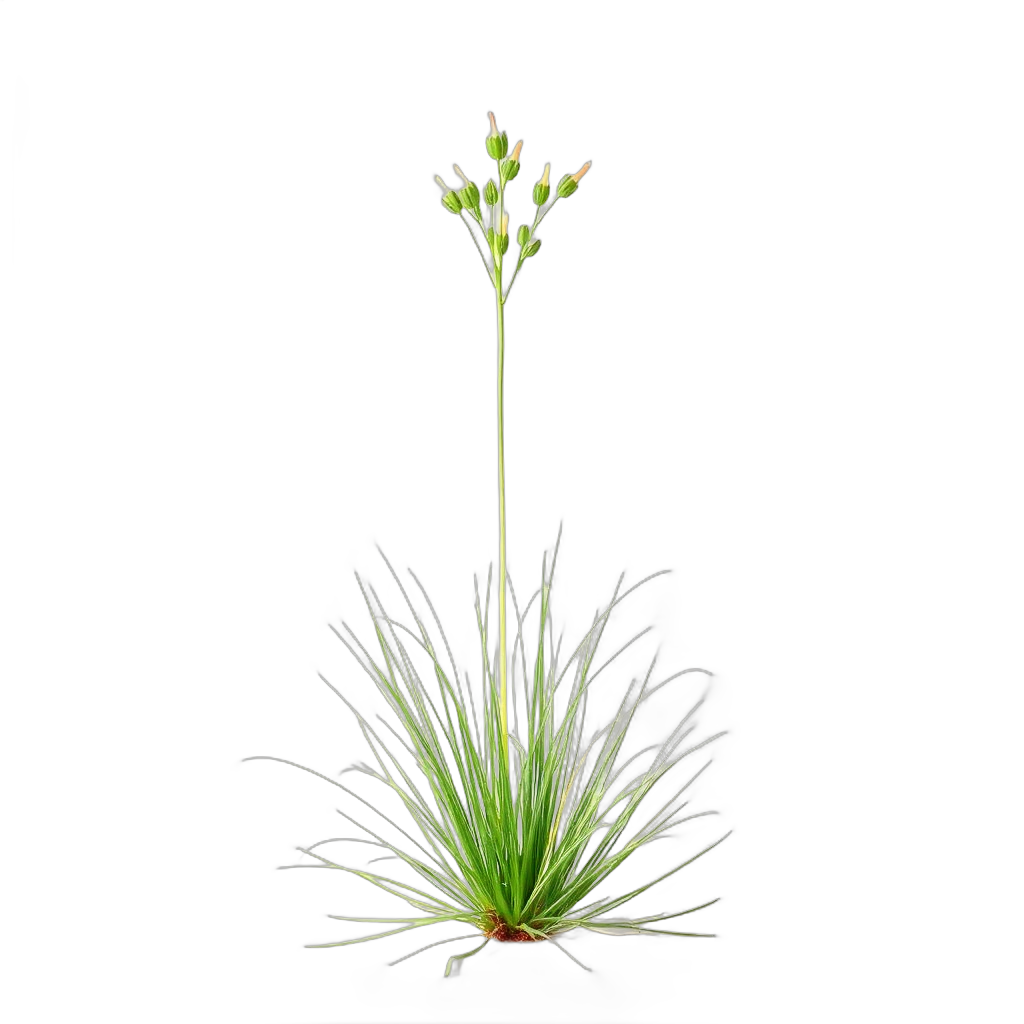
Alkali Sacaton
Sporobolus airoides
grows to 3 feet, blooms in summer. Yellow fall color.
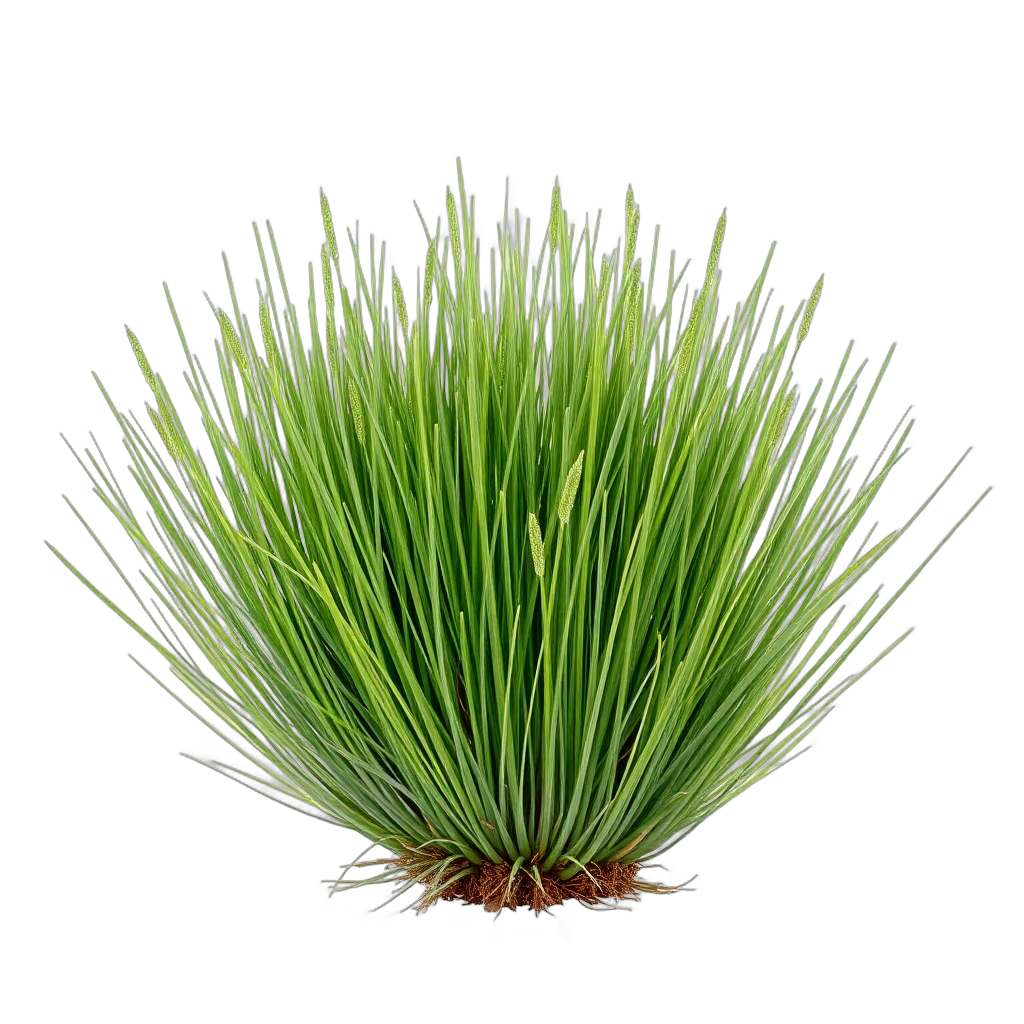
Great Basin Wild Rye
Leymus cinereus
grows to 3 feet, blooms in summer. Yellow fall color.
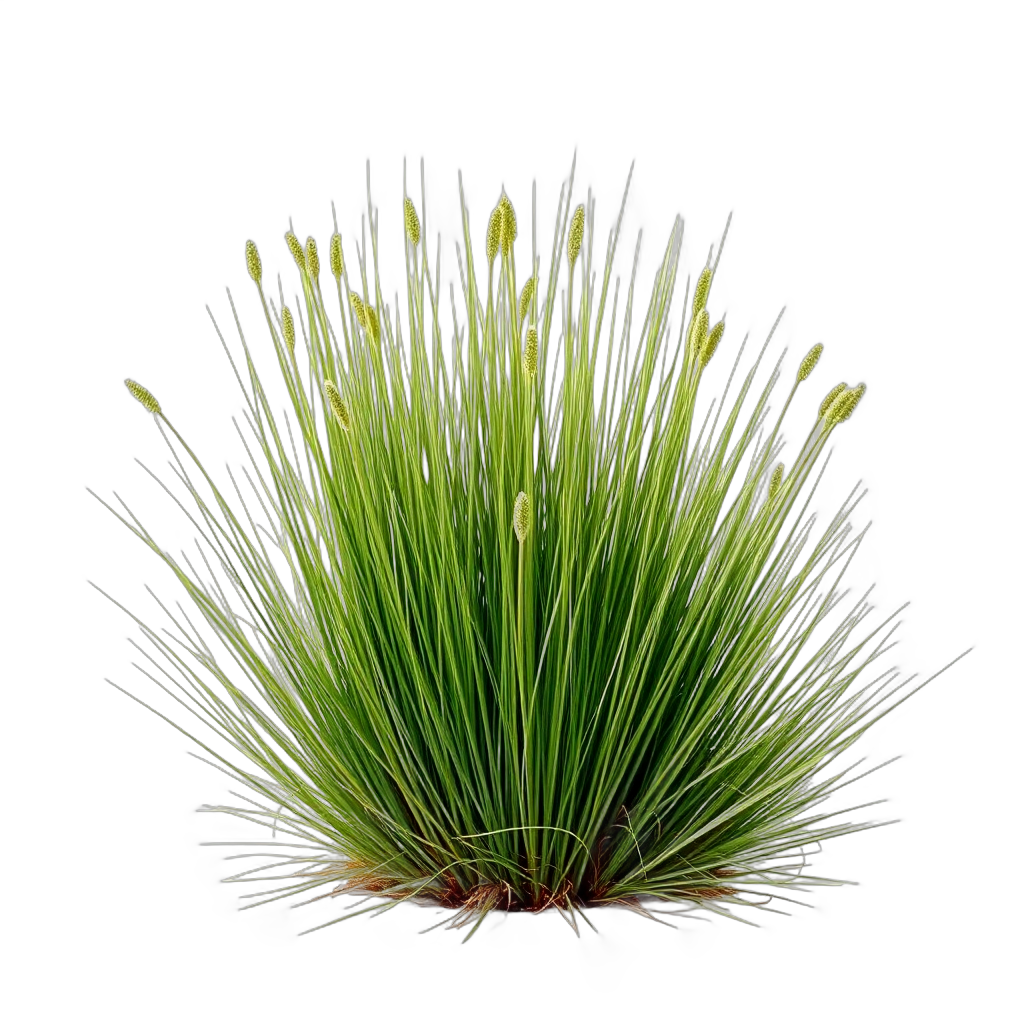
Idaho Fescue
Festuca idahoensis
low-growing ground cover, blooms in summer.
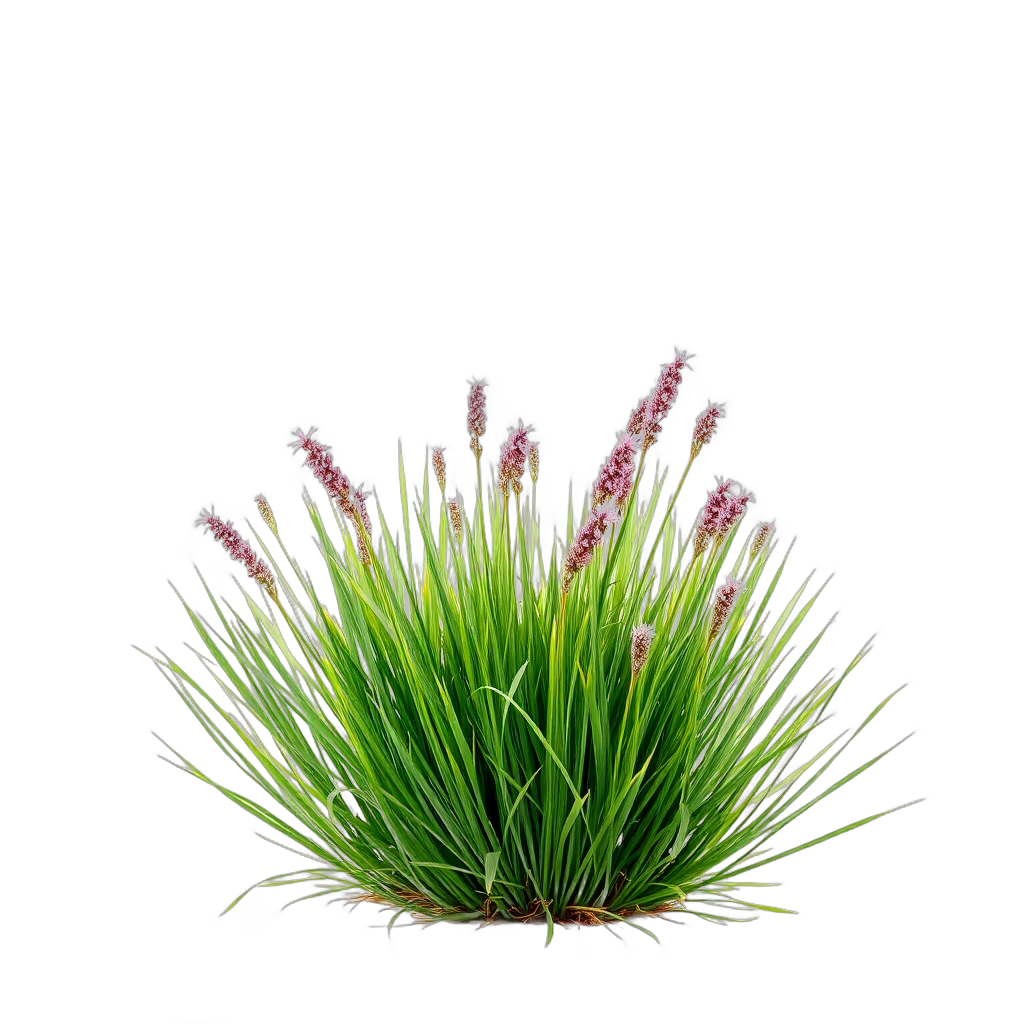
Purple Three-Awn
Aristida purpurea
low-growing ground cover, purple blooms in fall. Yellow fall color.
Featured Flowers & Perennials for Modern/Minimalist Gardens
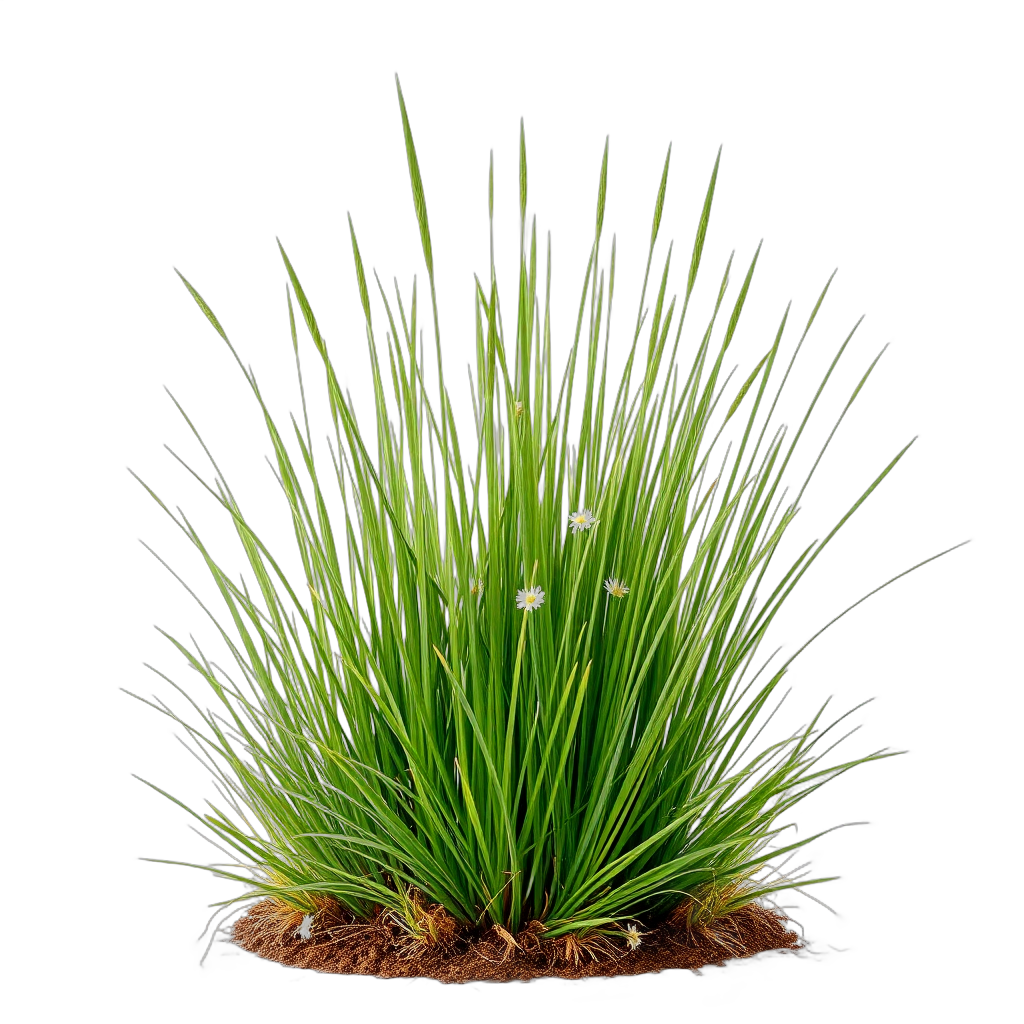
Baltic Rush
Juncus balticus
low-growing ground cover, blooms in summer. Evergreen year-round.
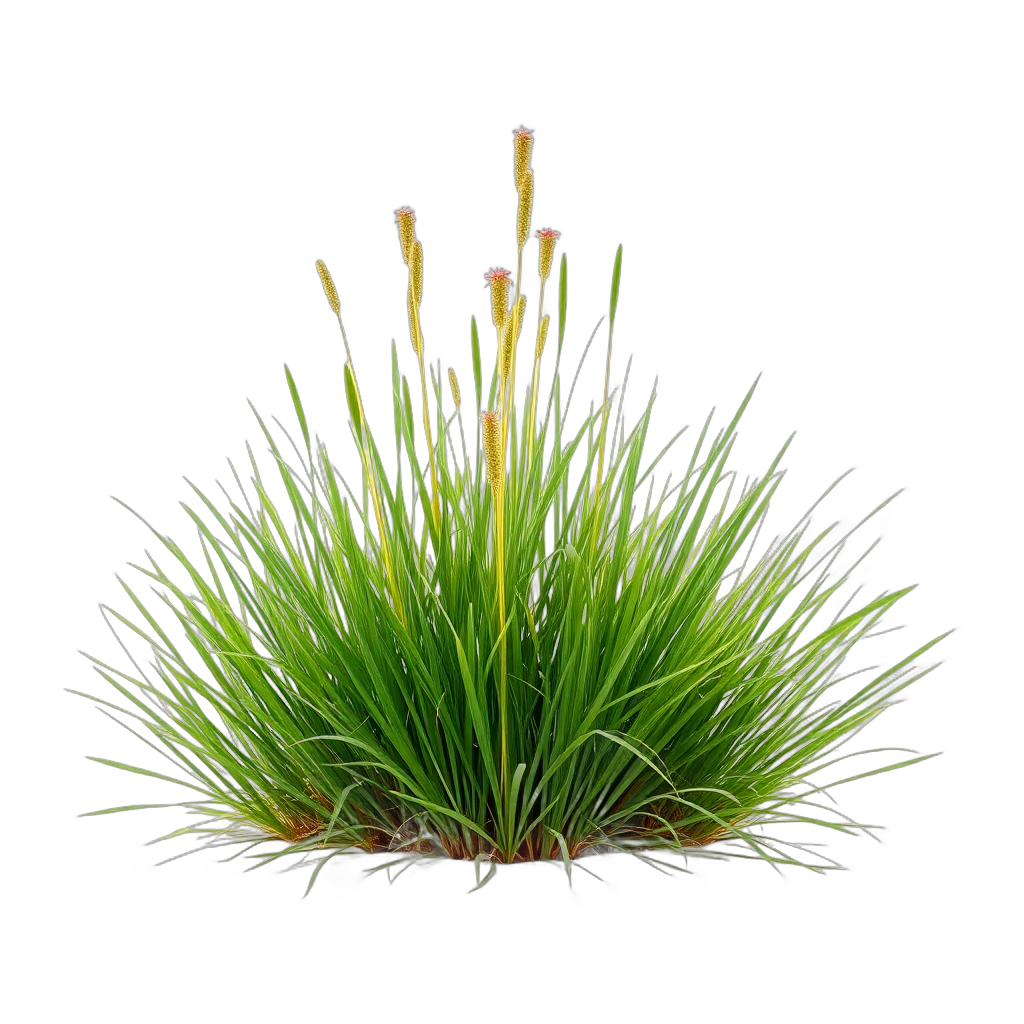
Clustered Field Sedge
Carex praegracilis
low-growing ground cover, blooms in spring.
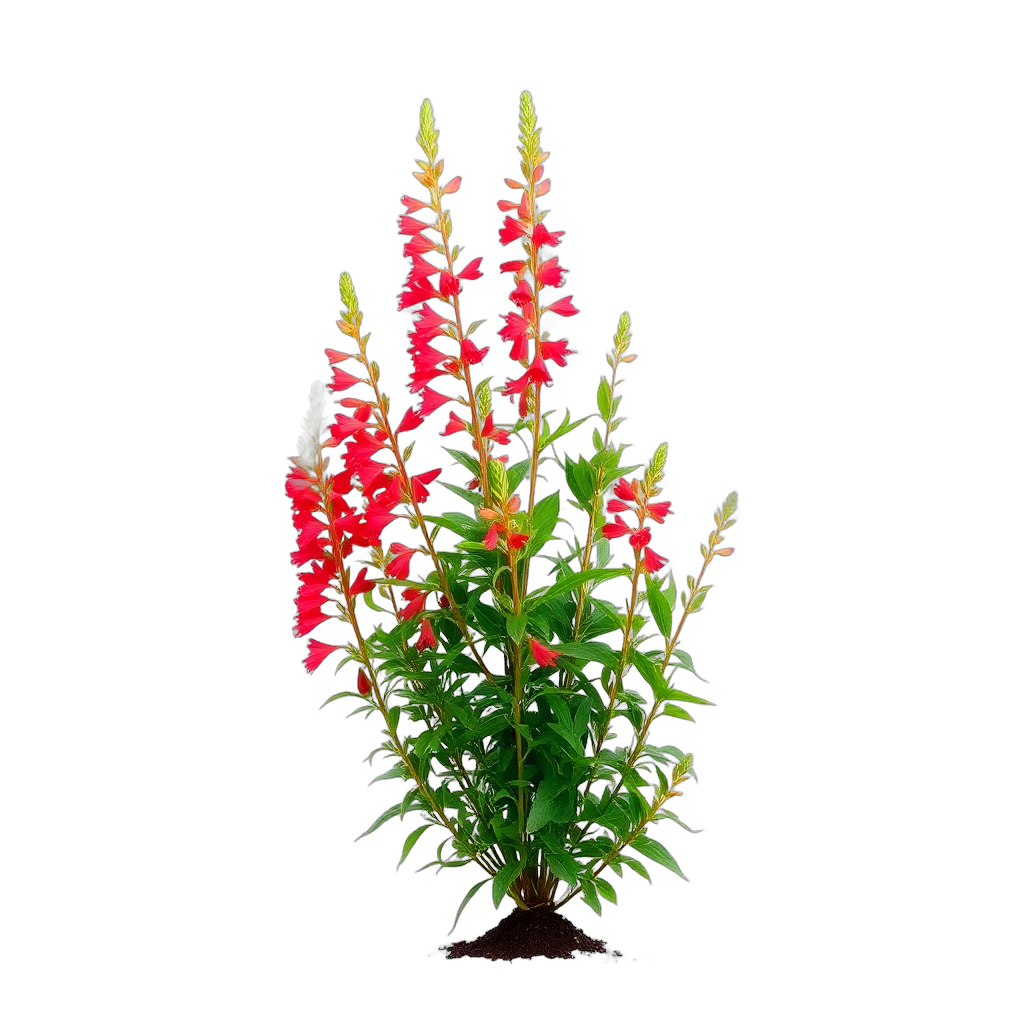
Firecracker Penstemon
Penstemon eatonii
low-growing ground cover, red blooms in spring. Attracts hummingbirds.

Palmer's Penstemon
Penstemon palmeri
grows to 4 feet, pink blooms in spring. Attracts hummingbirds.
Bloom Calendar for Salt Lake City
spring
Clustered Field Sedge, Firecracker Penstemon, Palmer's Penstemonsummer
Baltic Rush, Alkali Sacaton, Great Basin Wild Ryefall
Purple Three-Awn, Big Sagebrush, Rubber Rabbitbrushwinter
Limited bloomsDesign Tips for Salt Lake City (Zone 7b)
- Take every footing below 30 inches - Salt Lake County frost depth is unforgiving, and heaved pergola posts, tilted Corten panels and cracked slabs are almost always a footing problem rather than a materials problem
- Swap the Zone 9 plants out of the rendering before you buy - Cupressus sempervirens, Cordyline and Trachycarpus all die here; Juniperus scopulorum 'Blue Arrow', Yucca rostrata 'Sapphire Skies' and Agave parryi var. neomexicana give you the same silhouettes and survive 5°F
- Design against iron chlorosis from the first sketch - a single yellowing Acer rubrum or valley-clay Populus tremuloides wrecks a minimal composition, so specify Acer grandidentatum 'Rocky Mountain Glow', Gymnocladus dioicus 'Espresso' or Quercus gambelii and never think about it again
- Keep one real shade tree in every gravel scheme - pale aggregate against a west-facing wall in a 95°F Salt Lake July turns the nearest room into an oven, and canopy is the difference between a modern garden that gets used and one that gets photographed once
- Detail a gravel or cobble drip strip wherever weathering steel meets light concrete - Corten runoff stains permanently, and this one 6-inch band is what separates a design that still looks sharp in year five from one that looks neglected
- Light the grasses, not the lawn - low-voltage uplights behind Calamagrostis 'Karl Foerster', Muhlenbergia 'Undaunted' and Sporobolus airoides throw the shadow depth that makes these gardens work after dark, and Salt Lake's clear dry evenings give you eight usable months of it
Where to Source Plants in Salt Lake City
Skip the big-box stores. These independent Salt Lake City nurseries specialize in the plants that make modern/minimalist gardens thrive in Zone 7b.
Glover Nursery
West Jordan
Utah's oldest family nursery (140+ years) offering retail and wholesale on a 10-acre facility.
Millcreek Gardens
Millcreek
Family-owned nursery since 1955 specializing in climate-appropriate trees, shrubs, and perennials.
Western Garden Centers
Downtown Salt Lake City
Independent garden center since 1954 specializing in roses, perennials, and gardening solutions.
Cactus & Tropicals
East Salt Lake City
Independent nursery since 1975 specializing in tropical plants and interior plantscaping.
Modern/Minimalist Landscaping Costs in Salt Lake City
| Project Scope | Estimated Cost |
|---|---|
| Front yard modern conversion (turf removal, gravel field, architectural plants) | $9,000 - $22,000 |
| Poured concrete or paver terrace, 300-500 sqft on 8in base | $10,000 - $26,000 |
| Backyard modern room with gas fire feature and lighting | $15,000 - $45,000 |
| Corten steel raised planters, fabricated, set and filled | $900 - $2,400 each |
| Pool deck plus full modern backyard on a bench lot | $90,000 - $200,000 |
| AI visualization with ProScapeAI | Free to start |
Estimates based on Salt Lake City, UT-area contractor rates as of 2026. Actual costs vary by site conditions, materials, and contractor.
Salt Lake City Climate & Growing Zone
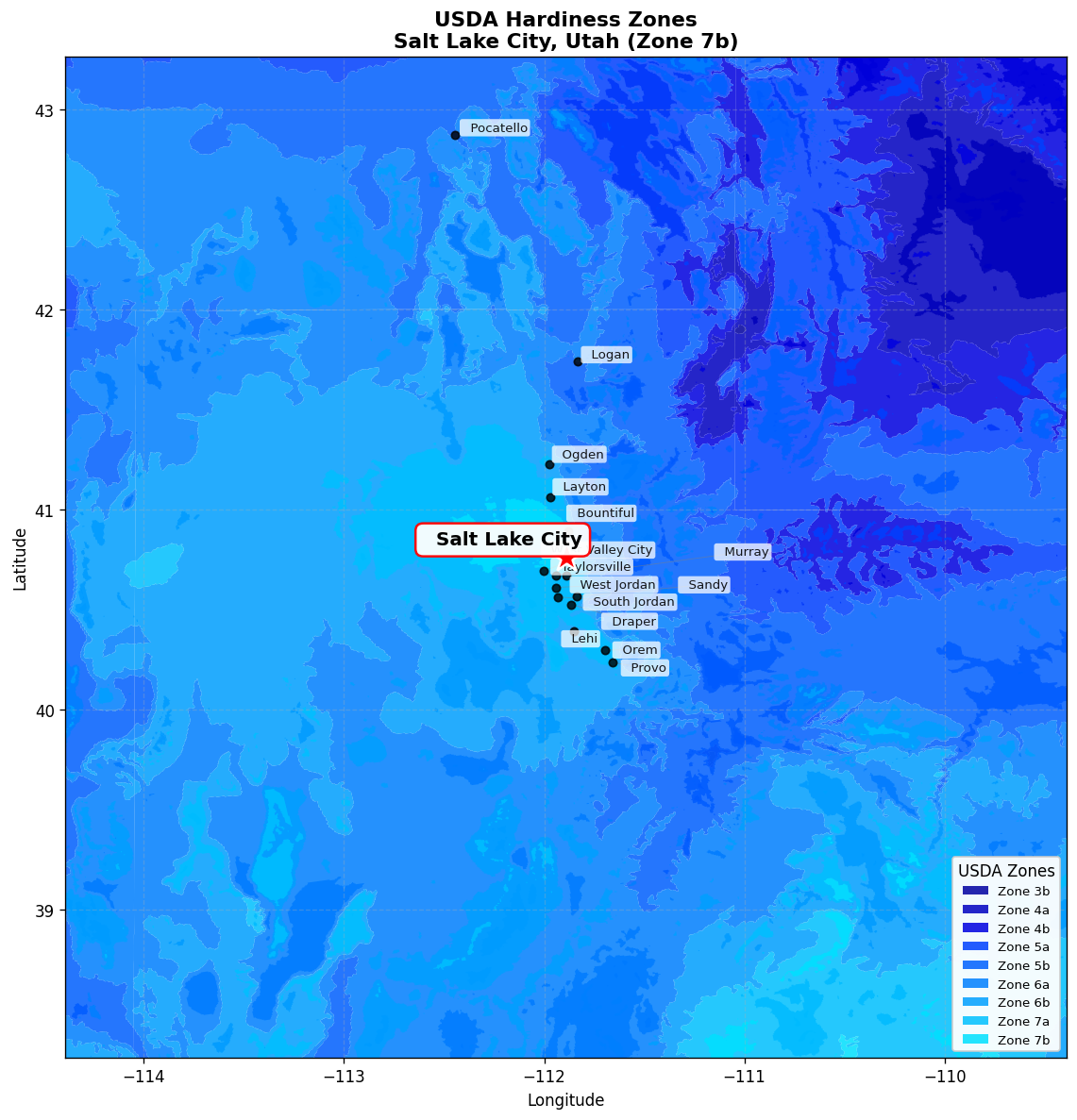
USDA Zone 7b
Hardiness zone for Salt Lake City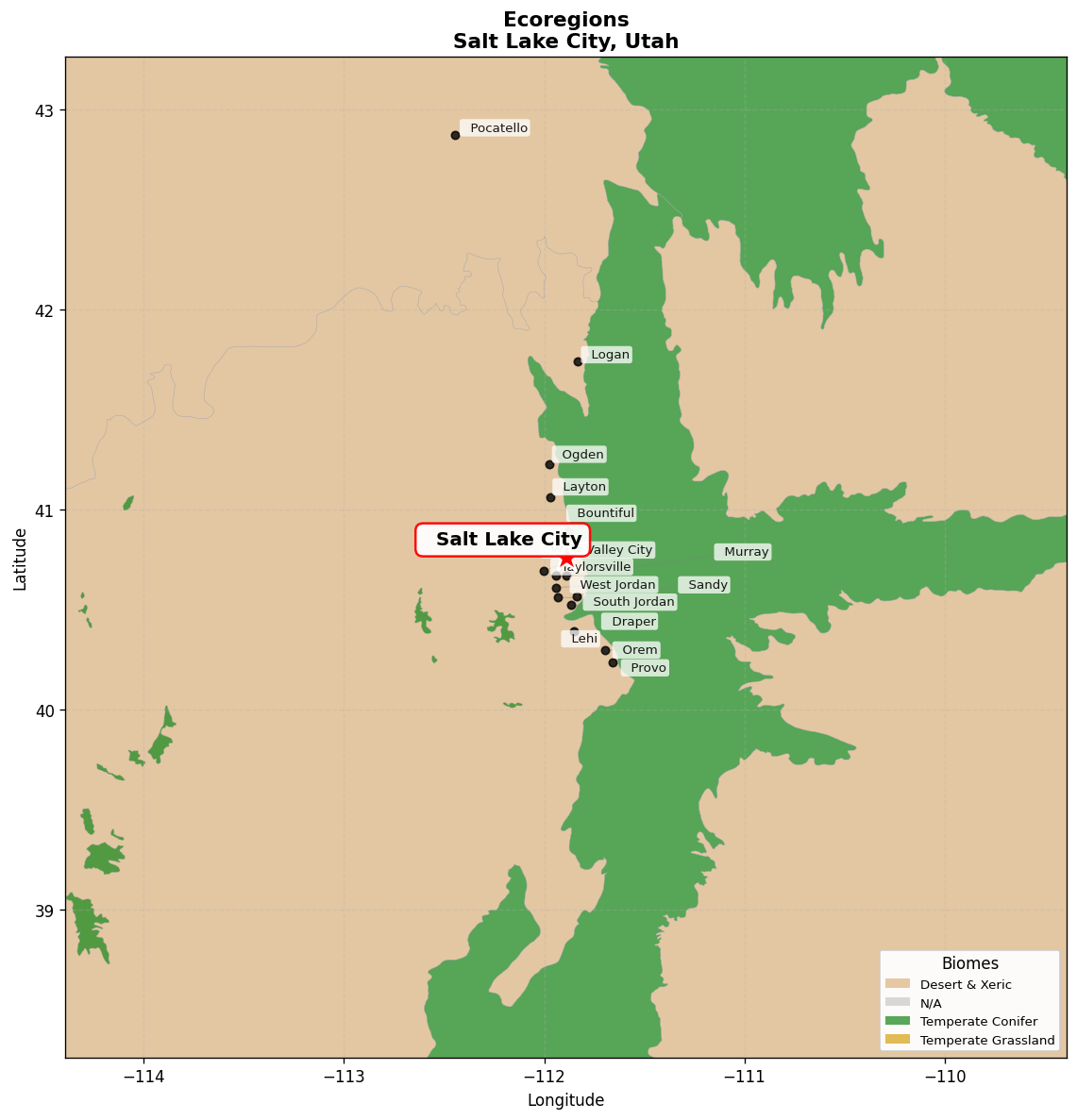
Great Basin shrub steppe
Native ecoregionFrequently Asked Questions
How much does modern landscaping cost in Salt Lake City?
Wasatch Front installation crews bill roughly $65-95 per hour with design at $85-150, which puts Salt Lake close to the national average but well under coastal metros. The season is the real cost driver: usable build months run April through November, so spring bids come in 10-15 percent above the same scope quoted in September. A front-yard modern conversion - turf removal, gravel field, steel or Corten edging, architectural plants - runs $9,000-22,000 for 800-1,200 square feet. A poured concrete or paver terrace with seating and a fire feature is $15,000-45,000. A full pool-and-hardscape backyard in Federal Heights commonly lands between $90,000 and $200,000. A determined DIY gravel-and-plants front yard can be done for $3-5 per square foot in materials.
Will Corten steel and large-format concrete survive Utah freeze-thaw?
Yes, if the substructure is right, and no if it is not. Salt Lake County frost depth is 30 inches, so every post, pier, wall footing and pergola base goes below it - undersized footings are the most common failure in Wasatch Front modern builds and they show up as out-of-plumb steel by the third winter. Slabs and pavers need eight inches of compacted road base over the clay, and concrete should be air-entrained at 4,000 psi with sawcut control joints every 10-12 feet. Keep de-icing salt off any concrete in its first winter; it scales new surfaces badly. Corten weathers beautifully in this dry climate and rarely rusts through, but runoff will permanently stain pale concrete, so detail a gravel drip strip or a cobble band anywhere weathering steel meets a light-colored surface.
What replaces the palms and Italian cypress in modern renderings for Zone 7b?
Almost every modern landscape image circulating online is shot in Zone 9, and three plants in them will die in Salt Lake: Cupressus sempervirens, Cordyline australis and Trachycarpus fortunei. The substitutions are good ones. For the tall narrow vertical, Juniperus scopulorum 'Blue Arrow' or 'Skyrocket' give you the same 15-foot exclamation point and are native to the Intermountain West. For the spiky trunked focal plant, Yucca rostrata 'Sapphire Skies' is genuinely hardy here and better looking than most cordylines. For the big blue rosette, Agave parryi var. neomexicana and Agave havardiana carry it, with Agave ovatifolia workable on well-drained bench soils. For red-flowering vertical accent, Hesperaloe parviflora 'Brakelights' blooms for months and asks for nothing.
Which plants keep clean modern form in Salt Lake's alkaline soil?
The plants to avoid are the ones that go chlorotic at pH 7.5-8.2: Acer rubrum, Acer saccharinum, Quercus palustris, Betula nigra, Rhododendron, and Populus tremuloides on valley clay - a yellow, thin-canopied specimen destroys a minimalist composition faster than anything else. Chlorosis-resistant structure that also has good architecture includes Acer grandidentatum 'Rocky Mountain Glow' for a multi-stem canopy, Gymnocladus dioicus 'Espresso' for a coarse open silhouette, Celtis occidentalis and Quercus gambelii for tough shade, Acer tataricum 'Hot Wings' as a small specimen, Cotinus coggygria 'Royal Purple' for burgundy mass, and Picea pungens 'Montgomery' or Pinus mugo 'Slowmound' for evergreen geometry. In the grass layer, Helictotrichon sempervirens, Calamagrostis 'Karl Foerster', Sporobolus airoides and Bouteloua gracilis 'Blonde Ambition' are all calcareous-soil specialists.
Do minimal modern gardens qualify for Utah's water rebates?
They do, with one condition that catches a lot of modern designs. Utah's Flip Your Strip rebate through Utah Water Savers pays per square foot to convert park-strip turf, and Localscapes Rewards covers whole-yard conversions, but both require a minimum percentage of living plant coverage at maturity - a pure gravel plane with three agaves in it will be rejected as inert landscaping, and Salt Lake City's own park-strip standards say the same thing. The fix is easy and improves the design anyway: mass grasses and low water-wise perennials to hit the coverage, and keep the aggregate as the connective ground plane rather than the whole surface. Get pre-approval before any work starts, since projects already underway are ineligible, and confirm the current per-square-foot rate with your water district because it changes between funding rounds.
How do I handle a Wasatch bench slope, and when should I build?
Bench lots in Federal Heights, the upper Avenues and Capitol Hill sit on Lake Bonneville alluvial fan deposits with 10-25 percent grades, which is a gift for modern design - one board-formed concrete or Corten retaining wall becomes the strongest architectural statement on the street. Any wall over four feet from footing to top needs a Salt Lake City building permit and generally an engineer's stamp, and every wall over about three feet wants free-draining gravel backfill with a perforated drain line behind it, because the thing that fails Utah walls is hydrostatic pressure from spring runoff, not the load. Geogrid reinforcement is standard on segmental block above four feet. Build April through November; concrete pours get unreliable once highs sit below 40°F, and planting is best mid-April to May or mid-September to late October.