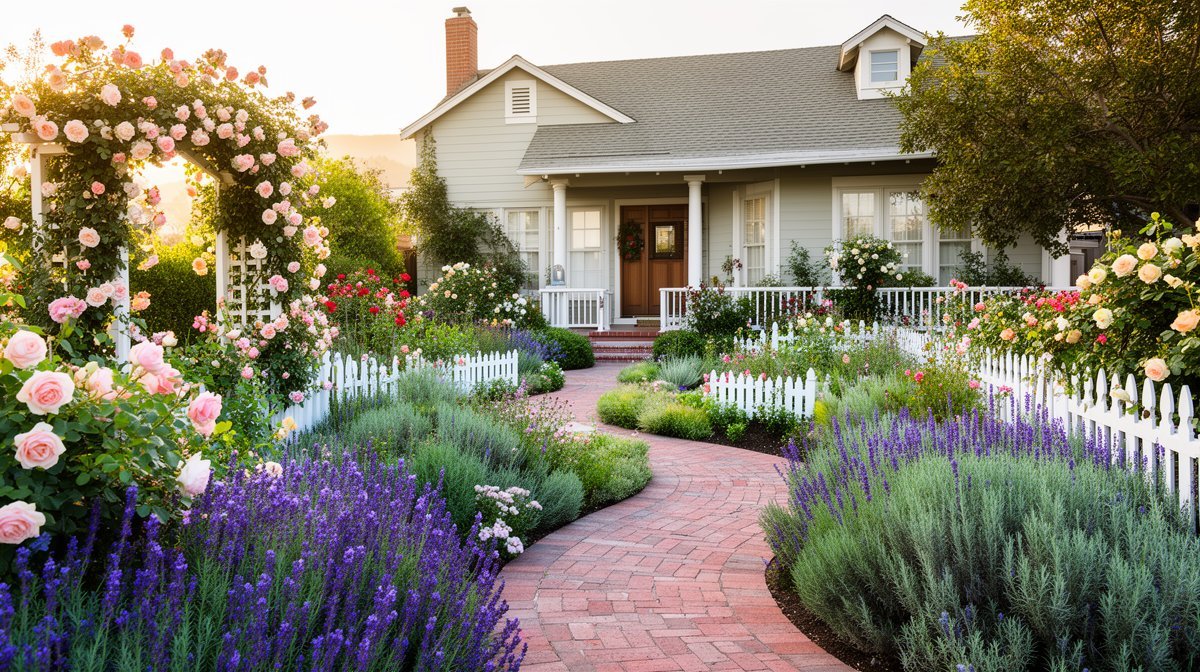
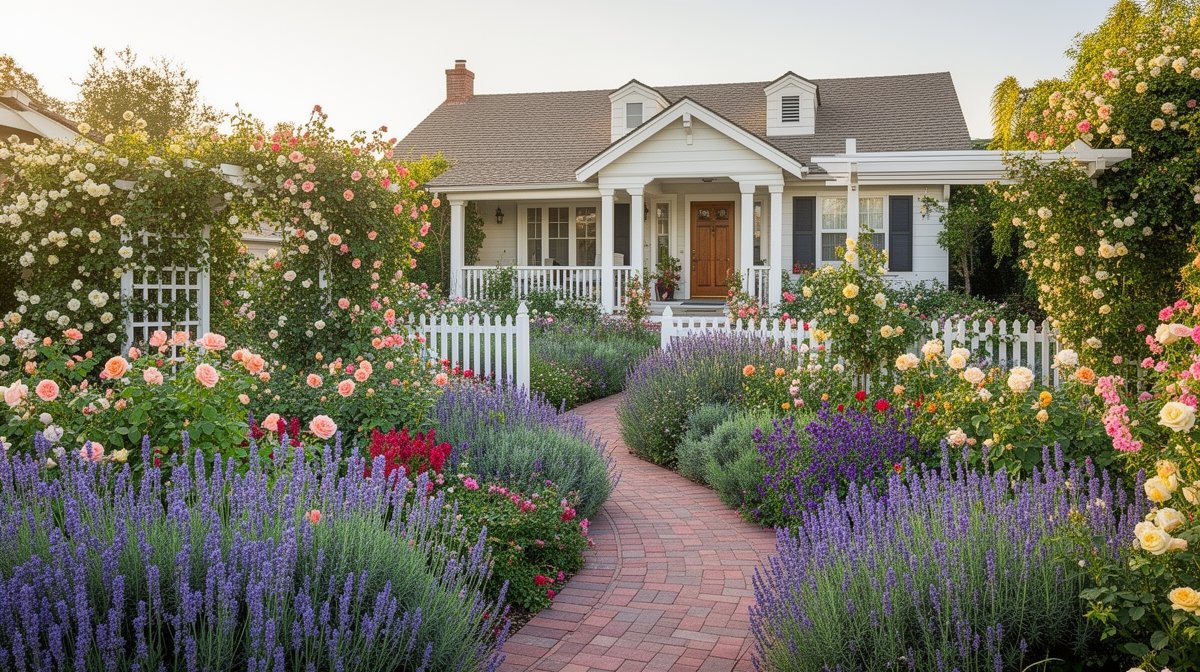
4 Cottage Garden Ideas for Santa Clarita, CA | English Rose & Lavender Borders for Zone 9b
Native plants from the California coastal sage and chaparral (Zone 9b) — Mediterranean (hot summer) climate
Why Cottage/English Gardens in Santa Clarita?
Santa Clarita is full of homeowners who were told an English cottage garden cannot be done here. It can — but the plant list has to be rewritten from scratch, because a Sussex border and a Saugus front yard have almost nothing in common climatically. The Santa Clarita Valley sits in USDA Zone 9b under a Köppen Csa hot-summer Mediterranean regime: roughly 17 inches of rain, essentially all of it between November and March, followed by five rainless months when inland valley highs push past 100°F and Santa Ana winds pull moisture out of leaves in hours. The romance of a cottage garden — layered, generous, unapologetically flower-heavy — survives that translation perfectly well. What does not survive is the literal plant list: astilbe, hosta, English boxwood and hybrid teas bred for maritime Britain will scorch by their second July in Valencia.
The substitution work is where a local cottage garden is won or lost. Rosa 'Iceberg' is still the single most bulletproof rose in the SCV — the white climbing form is what smothers arbors from Newhall to Stevenson Ranch — backed by 'Julia Child', 'Sally Holmes', 'Bonica' and the heat-tolerant David Austins, 'Olivia Rose Austin' and 'The Generous Gardener'. For the lavender-blue haze, skip true English lavender and plant Lavandula × intermedia 'Provence' or 'Grosso', which shrug off alkaline decomposed-granite soil, alongside Nepeta × faassenii 'Walker's Low', Salvia nemorosa 'Caradonna' and Salvia leucantha 'Santa Barbara' for a September encore. Foxgloves and delphiniums absolutely belong here — just planted as cool-season annuals in October rather than treated as perennials. Buxus microphylla japonica 'Green Beauty' replaces English box for clipped edging, Leucanthemum × superbum 'Becky' and Erigeron karvinskianus 'Profusion' supply the froth, and Cercis occidentalis or Lagerstroemia 'Natchez' gives you a small tree that will not cook.
Two local constraints then shape the layout. Most of Santa Clarita sits in a Very High Fire Hazard Severity Zone, and LA County Fire enforces 100 feet of defensible space with annual brush-clearance inspections, so the cottage classics that double as fuel get relocated or dropped. Junipers, Italian cypress, pampas grass, fountain grass and unpruned rosemary banked against the wall are exactly what inspectors flag; irrigated roses, low-pruned lavender, Arbutus 'Marina', Rhamnus californica 'Eve Case' and clipped fruit trees read as fire-resistive inside the first 30 feet. The second constraint is the ground: graded tract pads in Valencia and Plum Canyon are sandy, alkaline decomposed granite over compacted fill, so every bed wants generous compost, soil sulfur for the roses, and wire gopher baskets — SCV pocket gophers will erase a new perennial border in one season.
4 Cottage/English Design Ideas for Santa Clarita
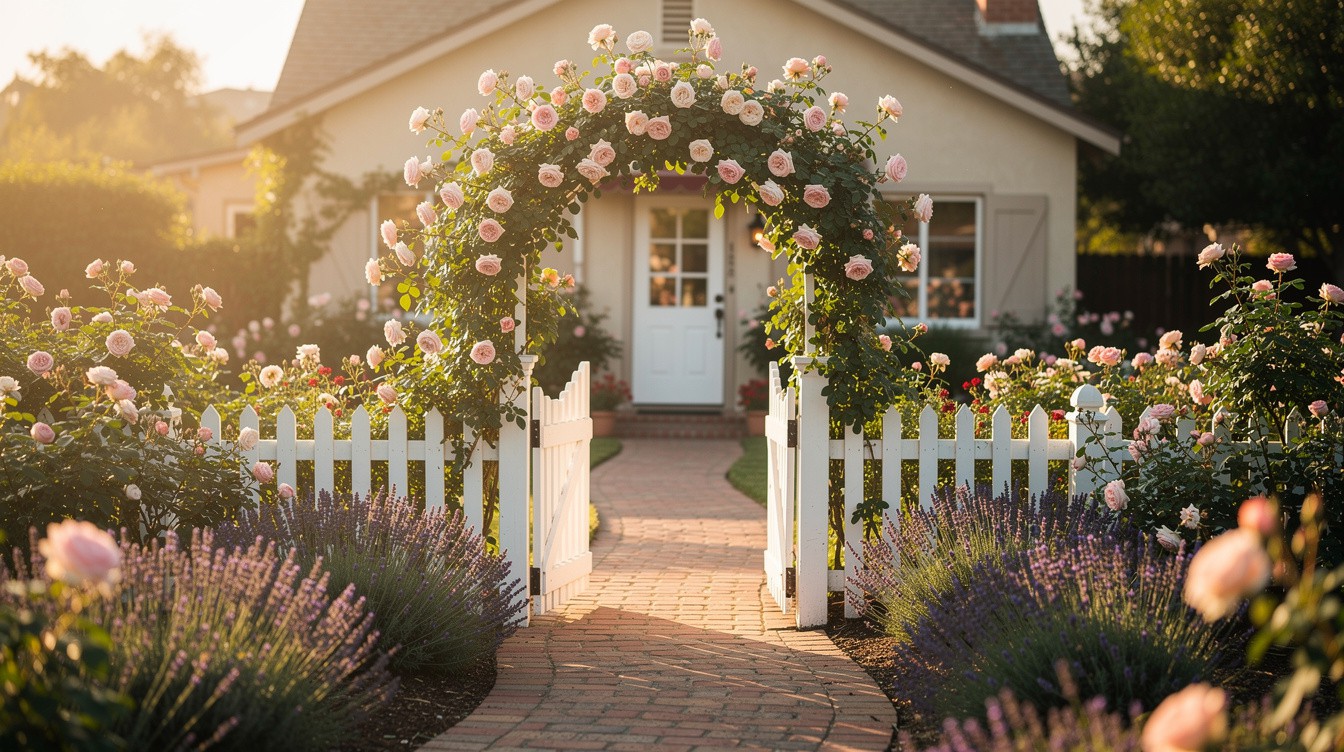
The White Picket Rose Gate
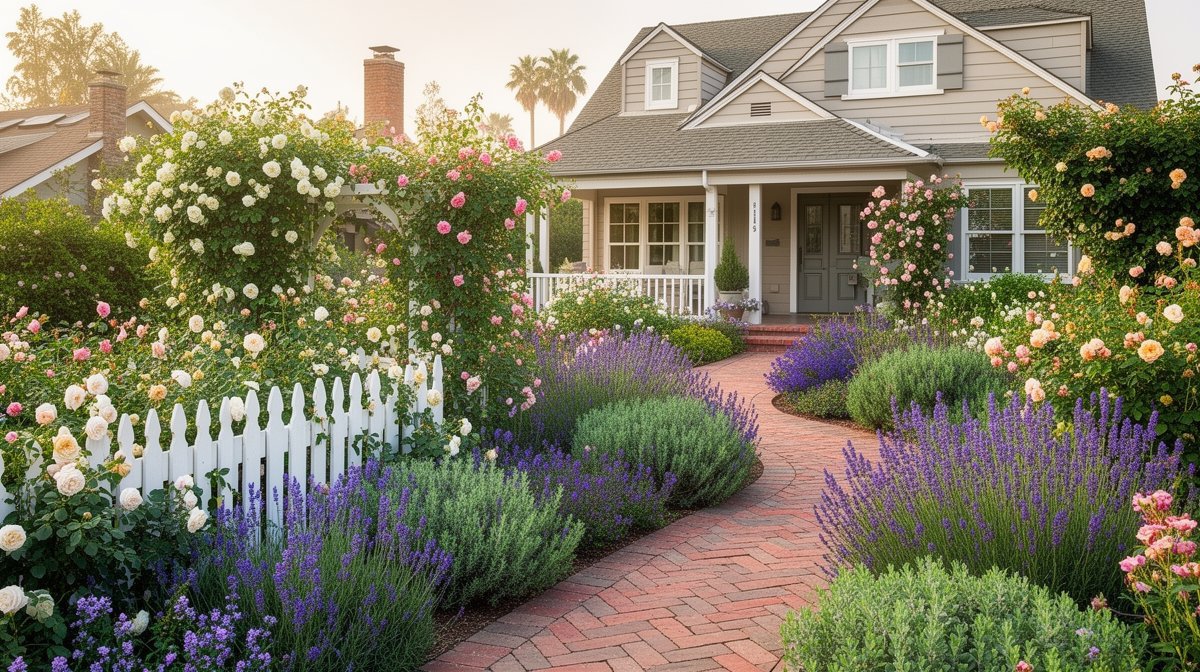
$18–32/sqftA cream single-story ranch disappears behind the garden rather than sitting above it. A low white picket fence runs the property line with a matching gate at center, and a rose-smothered arch frames the opening so you walk through blossom to reach the running-bond brick path. Inside the fence, shrub roses in pale pink and cream press against the pickets while a continuous ribbon of lavender lines both edges of the walk at knee height — the classic English rhythm, executed entirely with cultivars that hold up to 100°F Saugus afternoons and low winter rainfall.
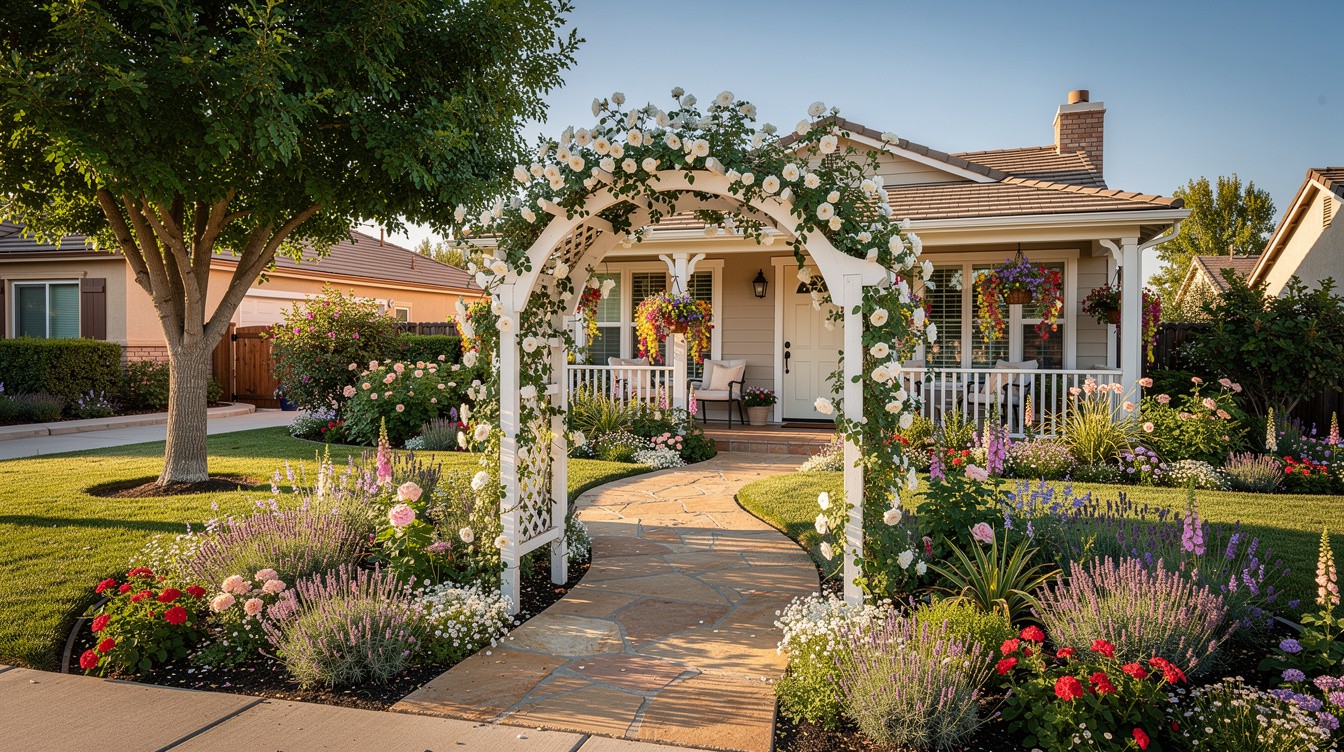
The Lattice Arbor Walk
$22–38/sqftA white lattice arbor straddles a curving flagstone path halfway to the porch, carrying a white climbing rose overhead so the entry sequence has a ceiling. Two trimmed lawn panels survive on either side — deliberately small — while the real volume comes from deep mixed borders: spires of foxglove and larkspur rising out of lavender mounds, white daisies, sweet alyssum foaming over the stone, and red geraniums punching color at the front. A deciduous shade tree on the west side buys the porch and the front room several degrees in August.
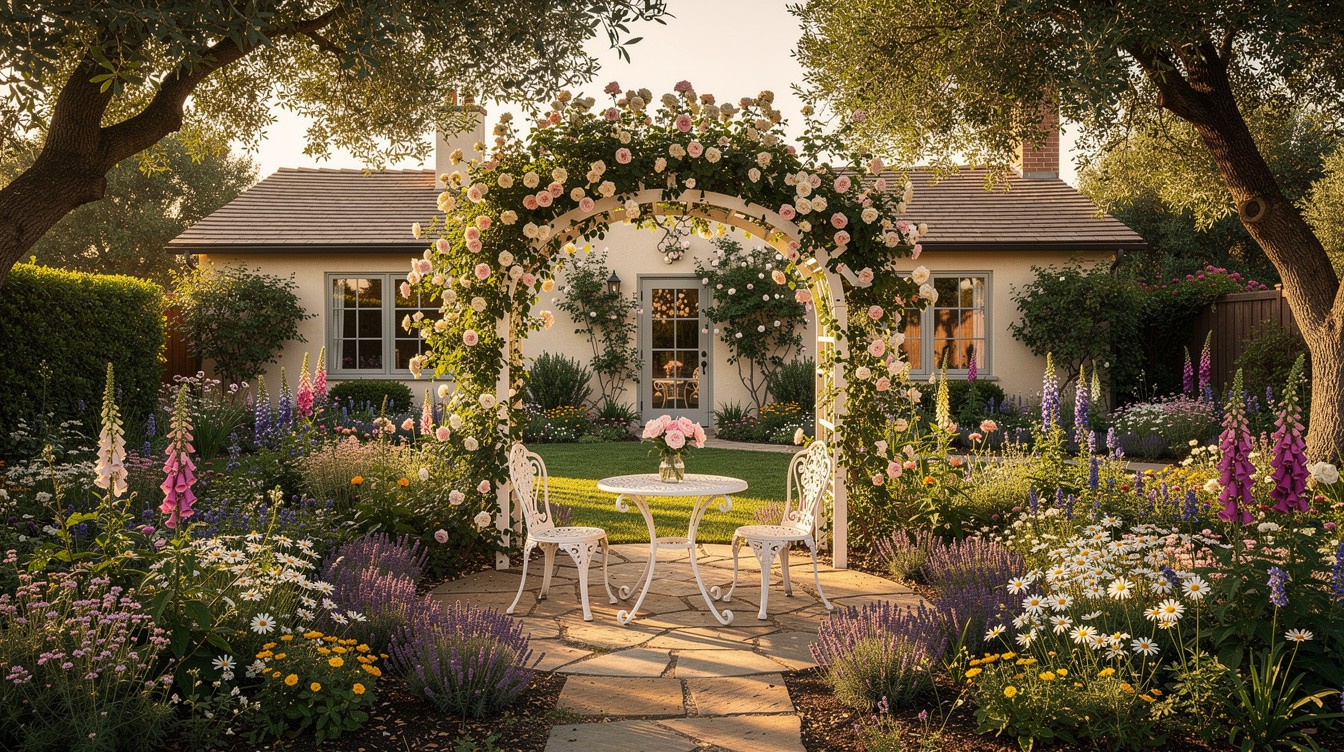
The Bistro Courtyard Backyard
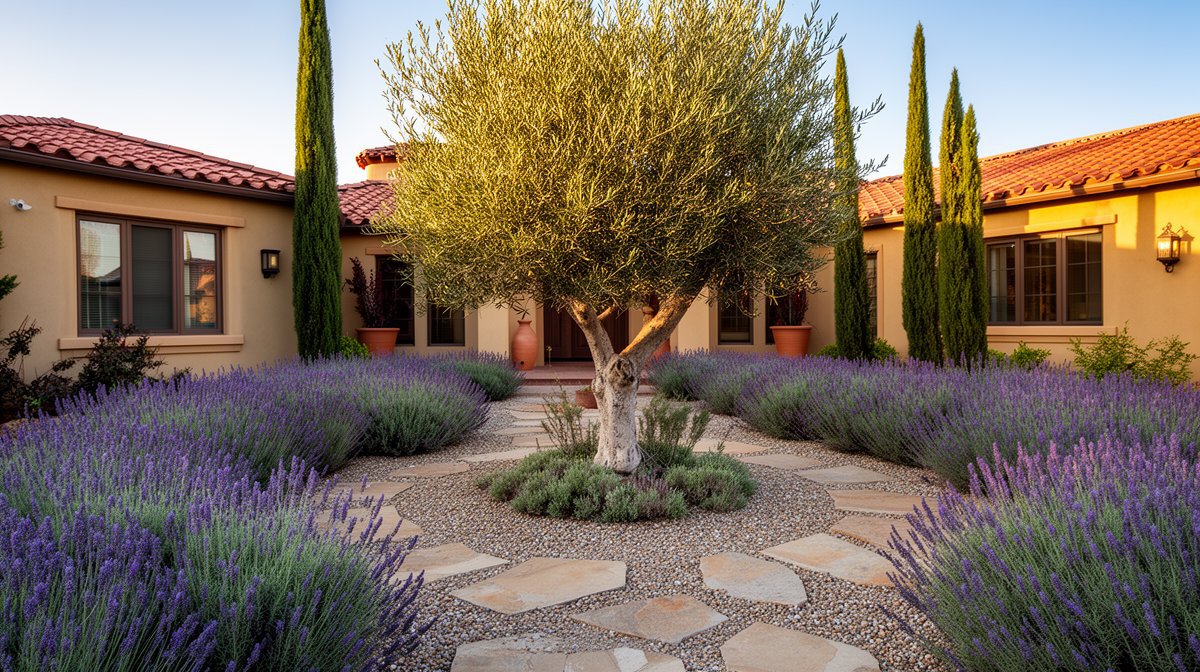
$20–35/sqftA back garden built around one perfect seat rather than an entertaining deck. A painted arbor draped in a fragrant climbing rose marks the threshold, and beneath it an irregular flagstone landing holds a two-chair cast-aluminum bistro set. A small oval of lawn keeps the center calm while everything around it goes deep and layered — foxglove spires, Shasta daisies, catmint, ornamental yarrow and lavender crowding right up to the stone. Mature olives on both sides arch overhead and do the work an English oak would do, without the water bill.
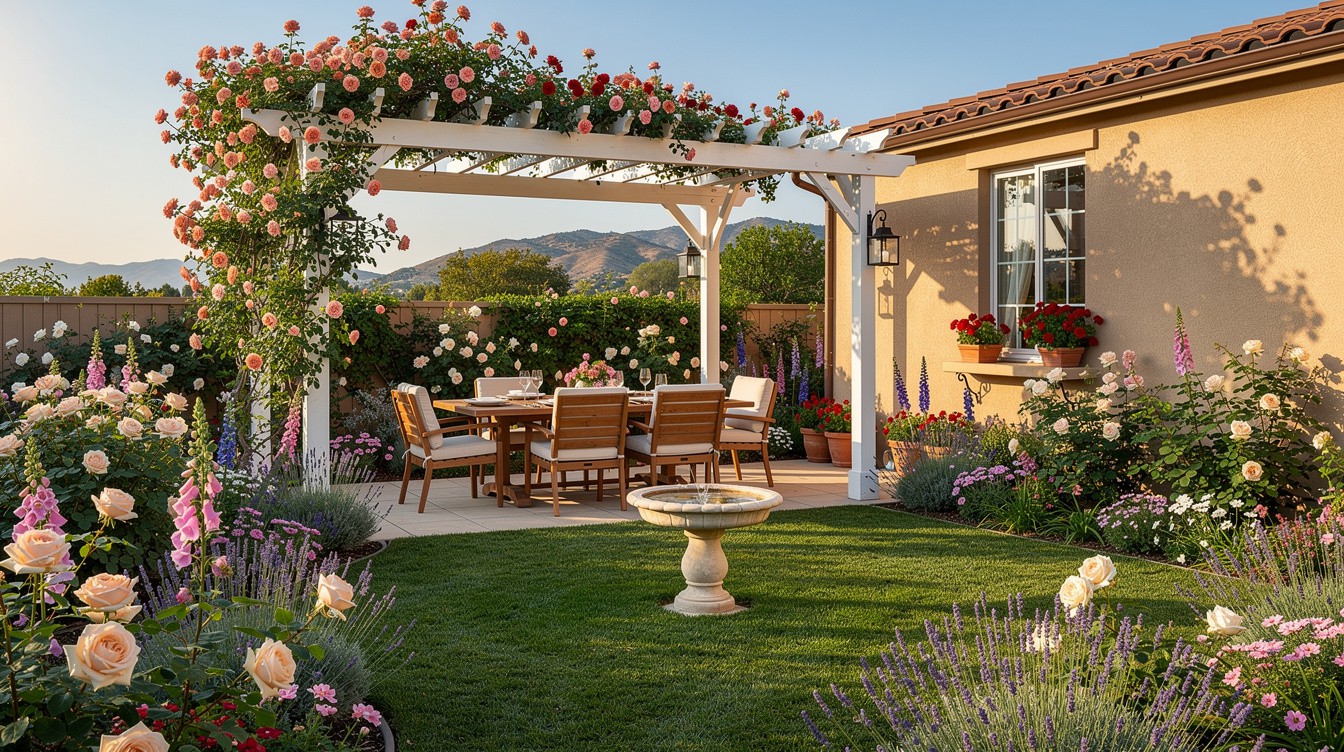
The Pergola Dining Garden with Valley Views
$28–48/sqftA tile-roofed stucco home gets a white pergola set tight against the back wall, sheltering a dining table for six and carrying a heavy climbing rose across the beams so the roof is flowers by May. A clean lawn panel steps down from the terrace with a cast-stone bubbler fountain as its single focal point, and the borders run wide on both sides — roses in peach and cream, foxglove and delphinium spires, lavender at the feet, red geraniums in terracotta on the window ledge. The ridgeline beyond the fence is left completely open as the borrowed view.
See how a cottage/english garden looks on YOUR property
Upload a photo of your Santa Clarita yard and visualize your dream garden in seconds.
Try ProScapeAI Free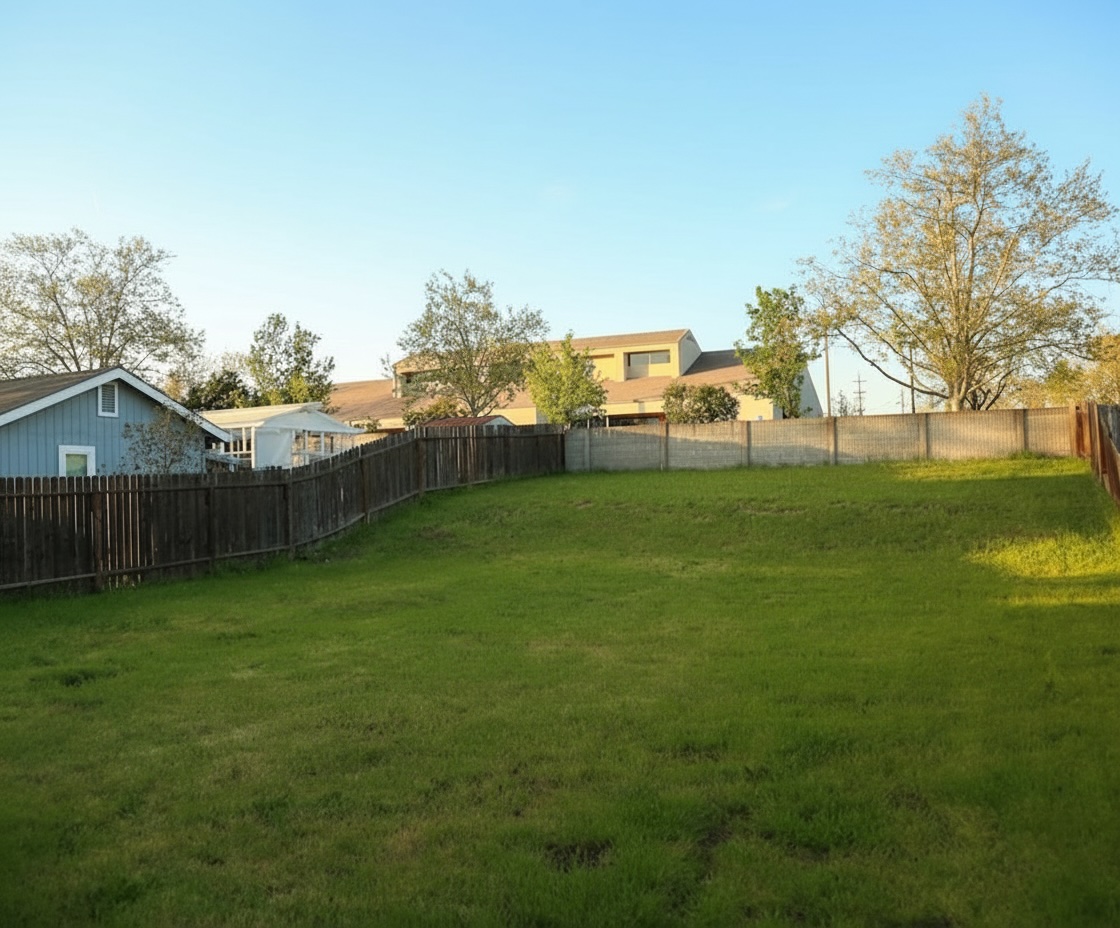
Featured Trees & Shrubs for Cottage/English Gardens
Browse all 223 plants for Santa Clarita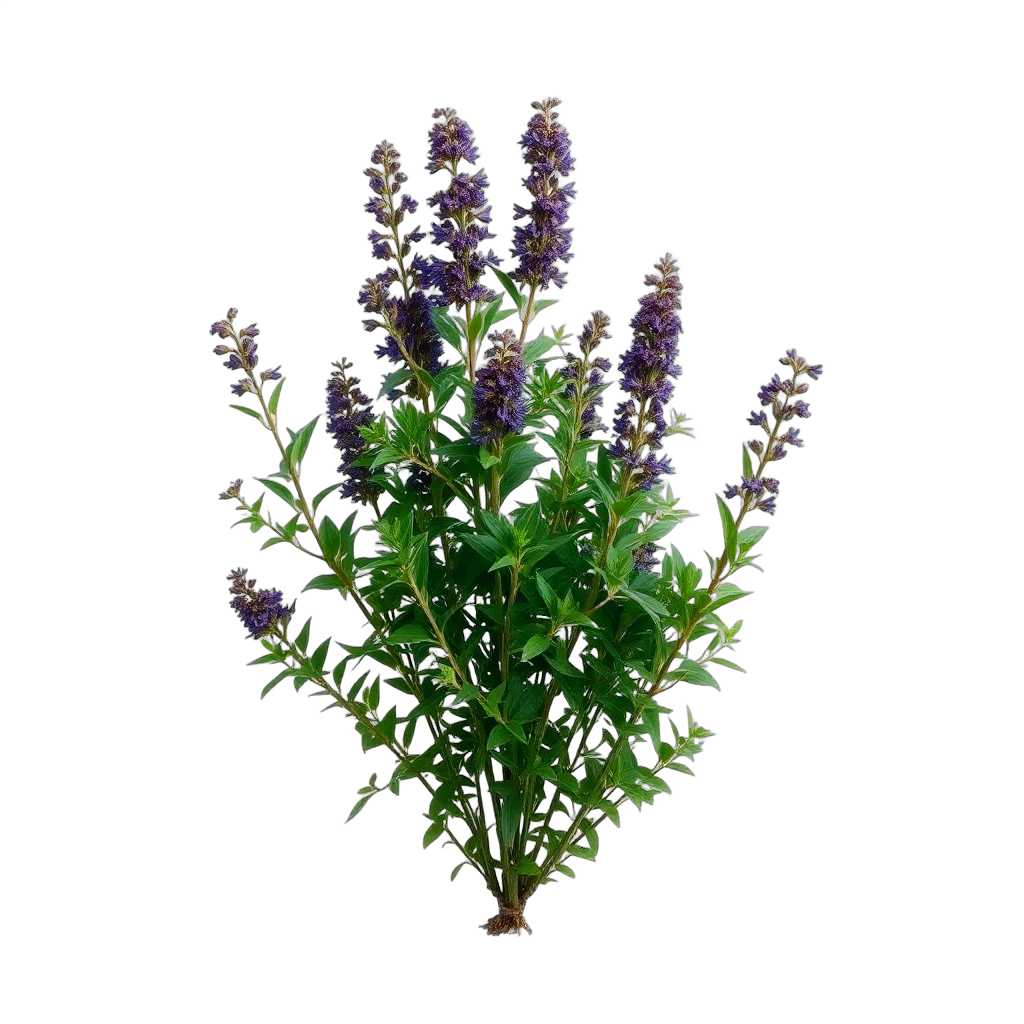
Black Sage
Salvia mellifera
grows to 4 feet, white blooms in spring. Attracts butterflies.

Blue Blossom
Ceanothus thyrsiflorus
medium-sized at 12 feet, blue blooms in spring. Attracts butterflies.

Blue Elderberry
Sambucus cerulea
medium-sized at 15 feet, white blooms in spring. Attracts butterflies.

Buckbrush
Ceanothus cuneatus
medium-sized at 7 feet, white blooms in spring. Attracts butterflies.
Featured Grasses & Groundcovers for Cottage/English Gardens
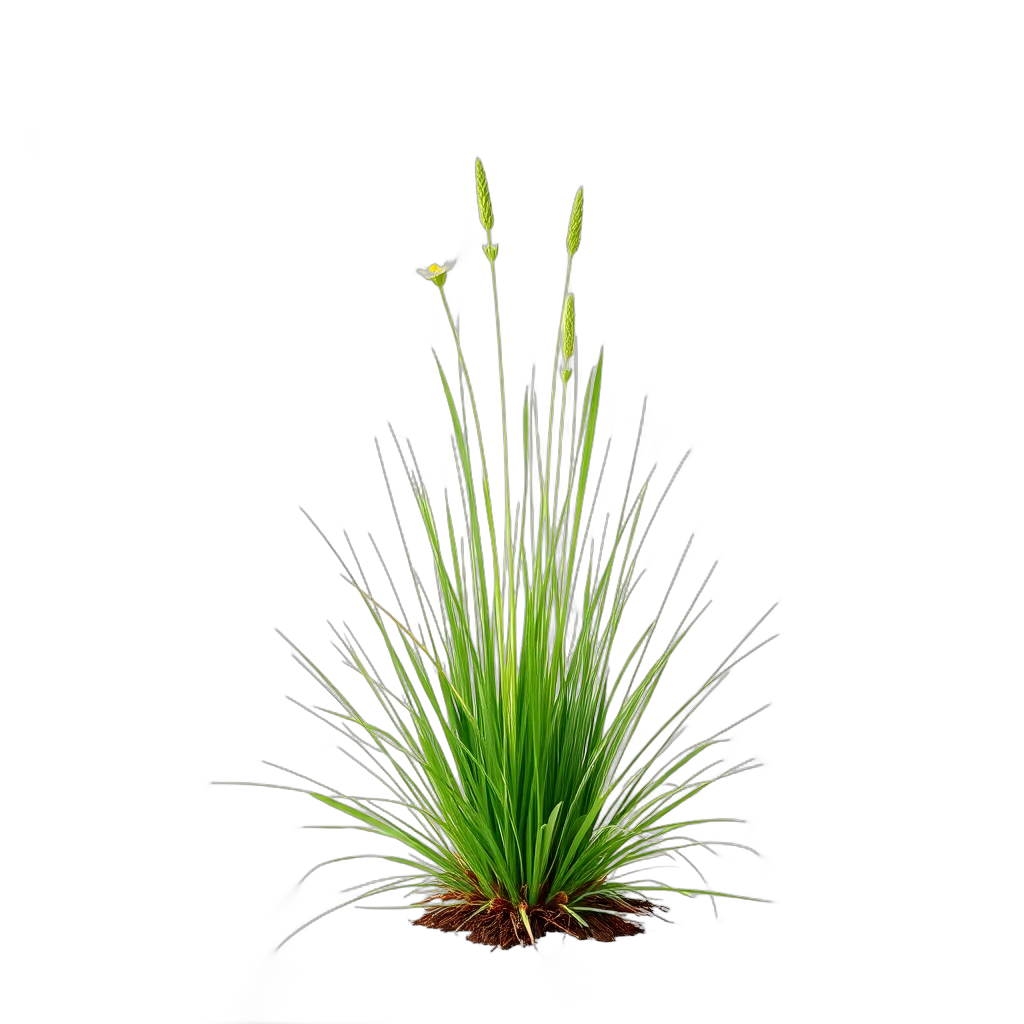
California Brome
Bromus carinatus
low-growing ground cover, blooms in spring. Yellow fall color.
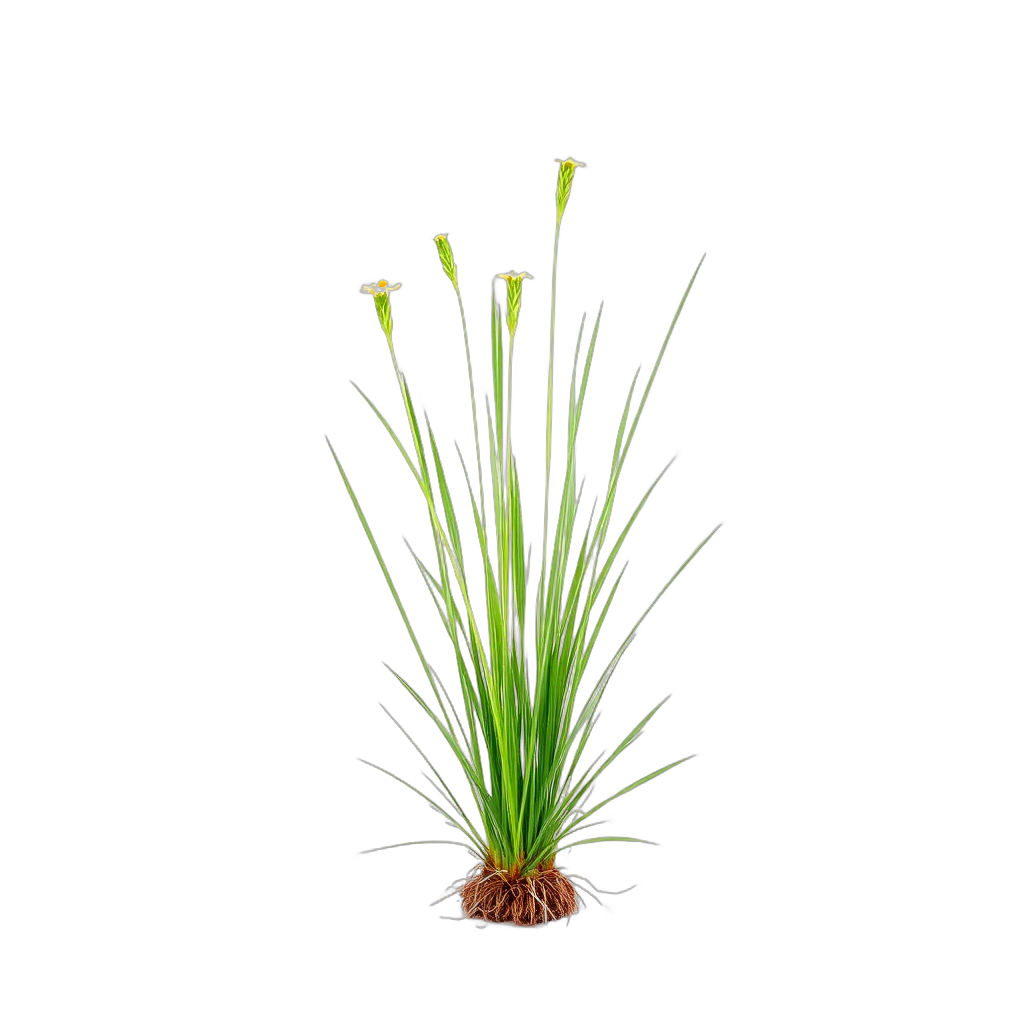
California Melic
Melica californica
low-growing ground cover, blooms in spring.
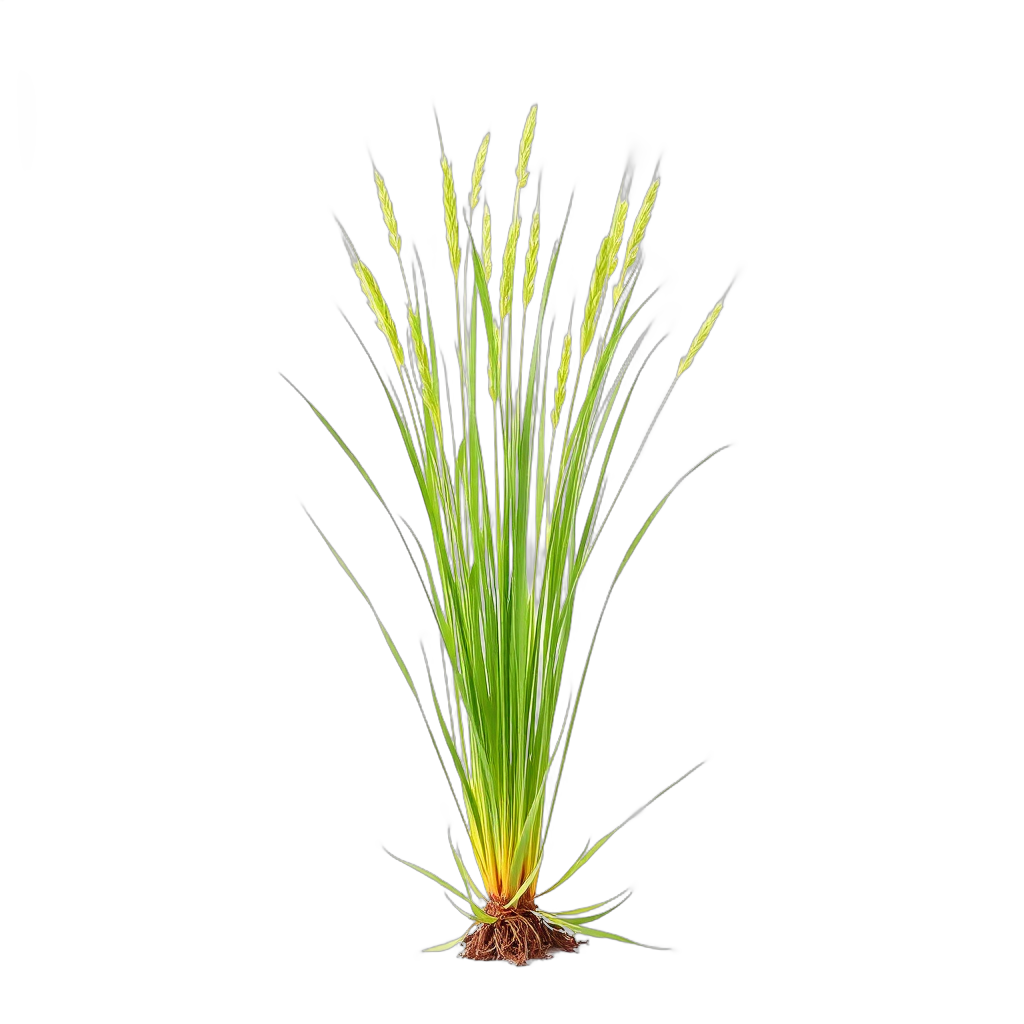
California Oatgrass
Danthonia californica
low-growing ground cover, blooms in spring. Yellow fall color.
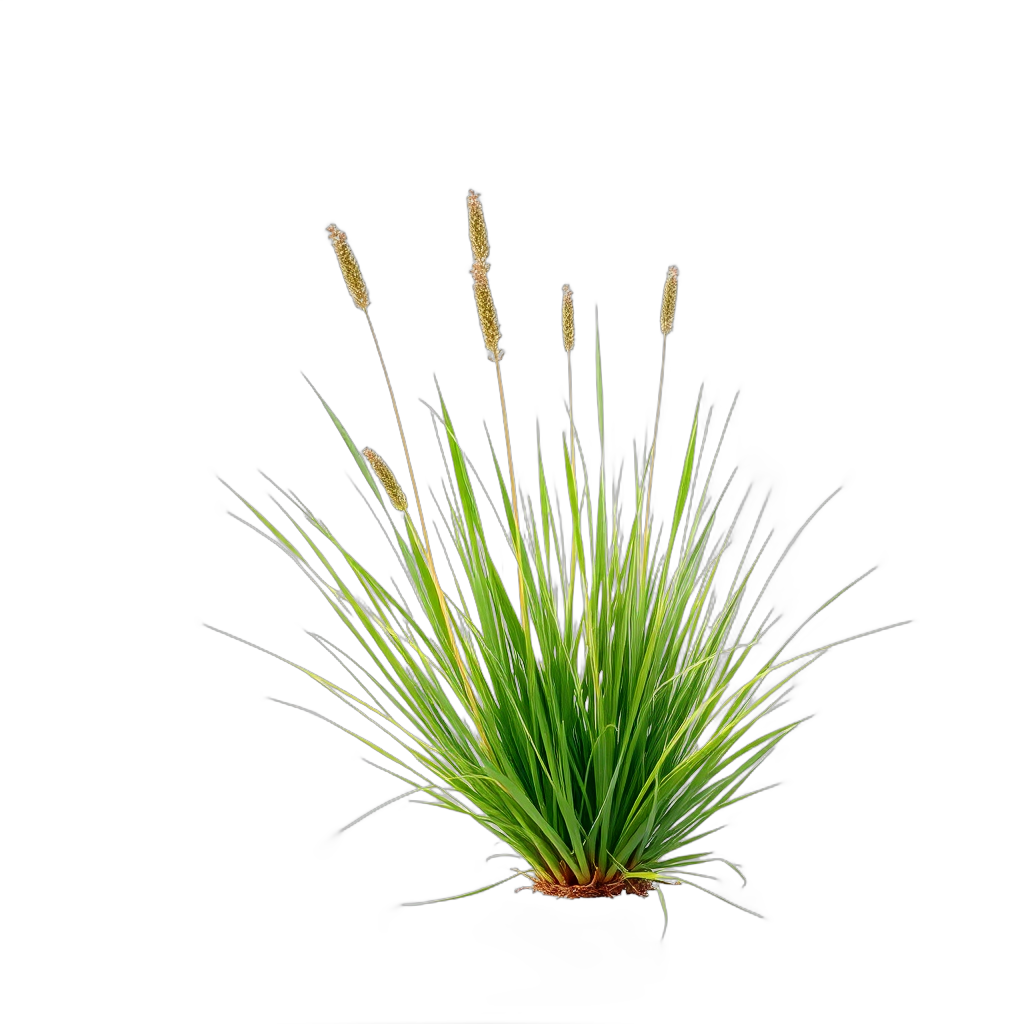
Deer Grass
Muhlenbergia rigens
grows to 3 feet, yellow blooms in fall. Evergreen year-round.
Featured Flowers & Perennials for Cottage/English Gardens
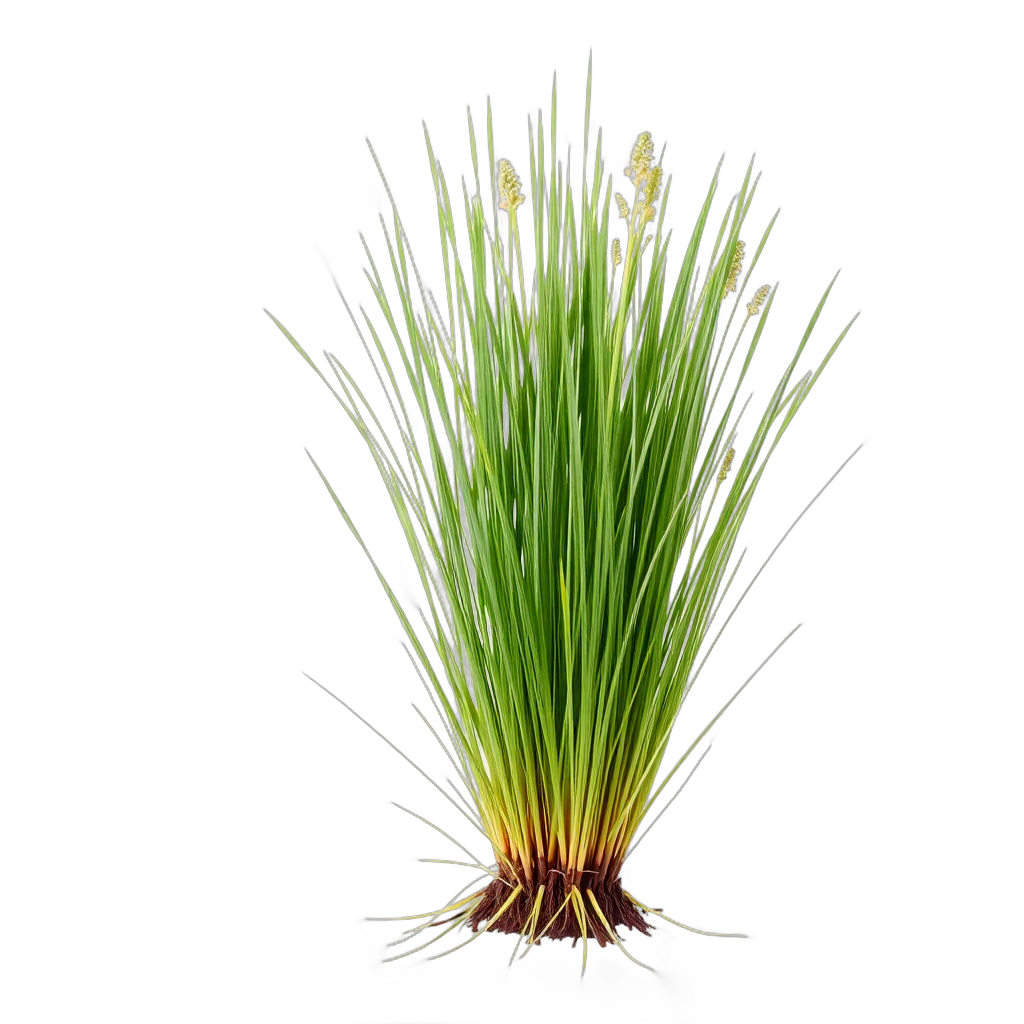
California Gray Rush
Juncus patens
low-growing ground cover, blooms in summer. Evergreen year-round.
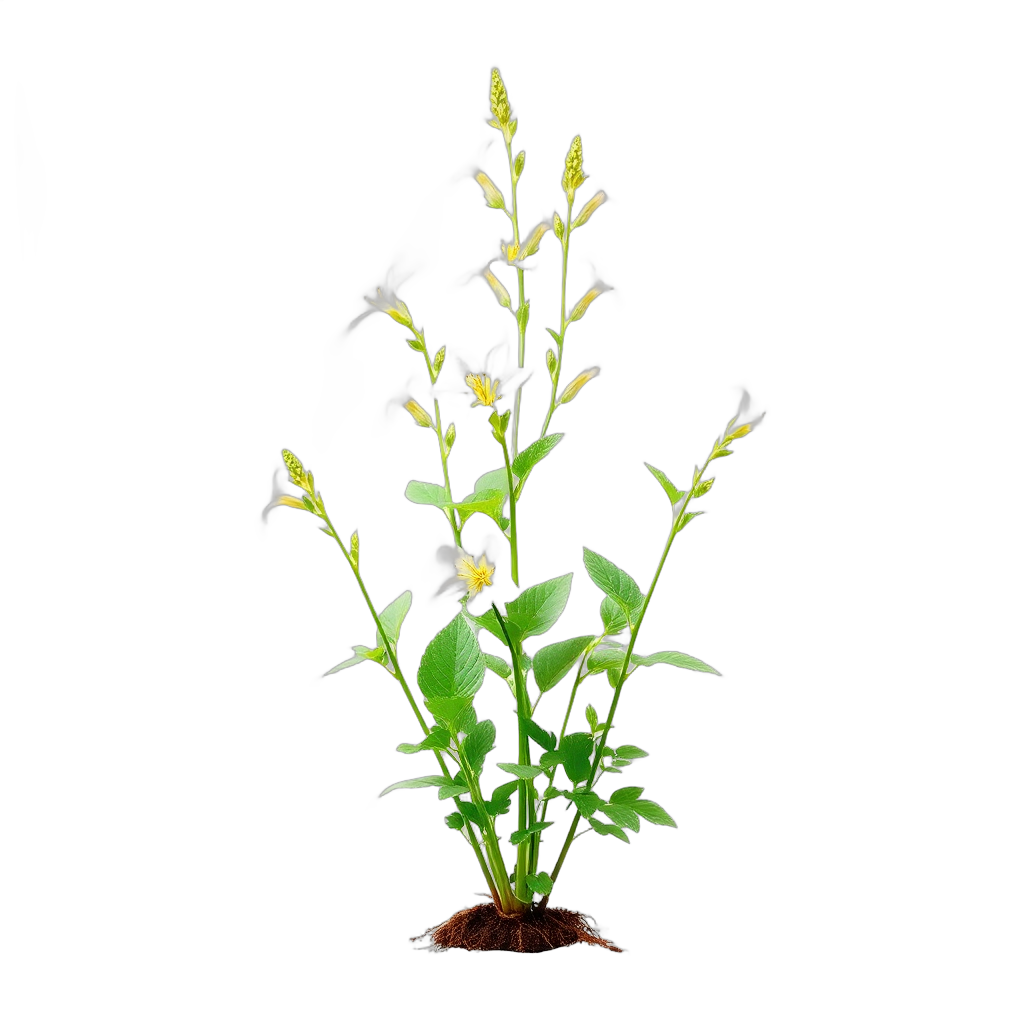
Beach Evening Primrose
Camissonia cheiranthifolia
low-growing ground cover, yellow blooms in spring. Attracts butterflies.
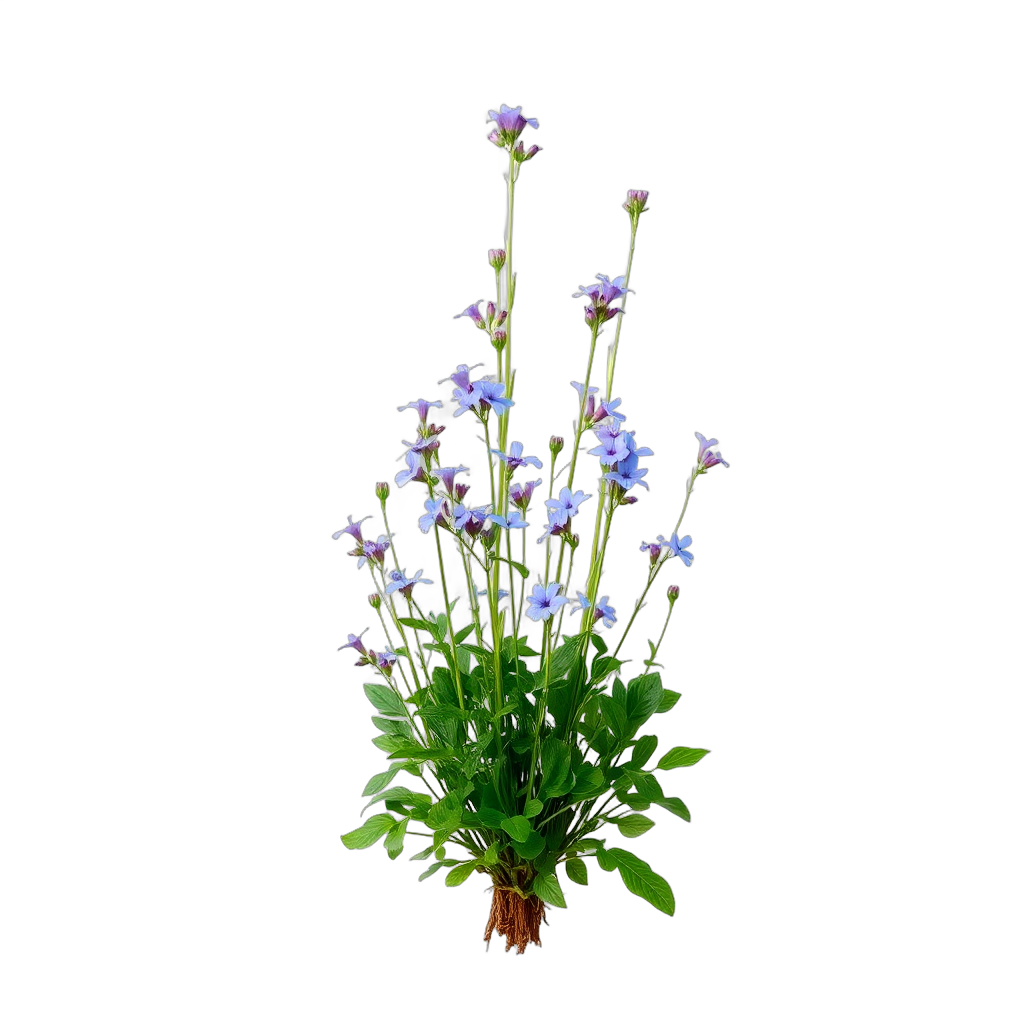
Blue Dicks
Dichelostemma capitatum
low-growing ground cover, blue blooms in spring. Pollinator-friendly.
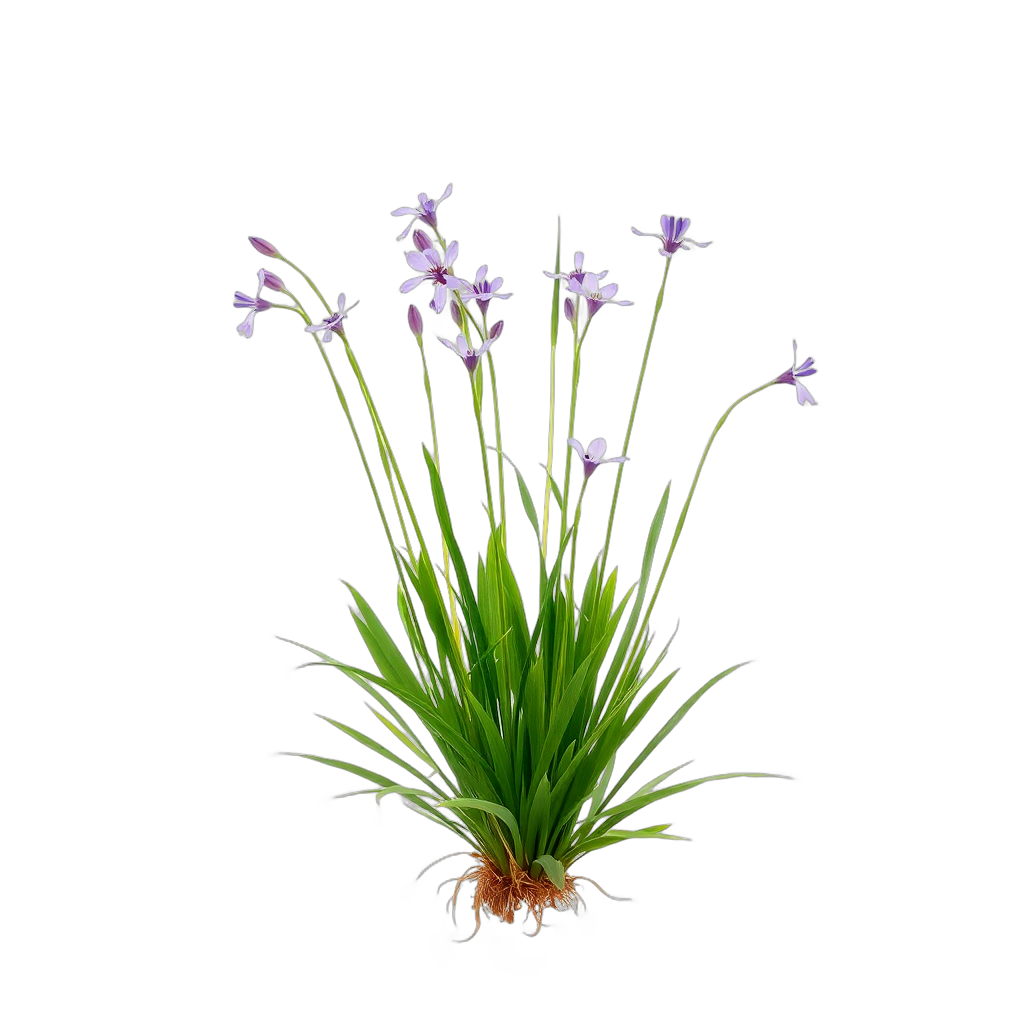
Blue-Eyed Grass
Sisyrinchium bellum
low-growing ground cover, blue blooms in spring. Attracts butterflies.
Bloom Calendar for Santa Clarita
spring
Beach Evening Primrose, Blue Dicks, Blue-Eyed Grasssummer
California Gray Rush, Hooker's Evening Primrose, Hummingbird Mintfall
California Fuchsiawinter
Limited bloomsDesign Tips for Santa Clarita (Zone 9b)
- Swap the English staples one for one instead of abandoning the look — Lavandula × intermedia 'Provence' for English lavender, Buxus microphylla japonica 'Green Beauty' for boxwood, Cercis occidentalis for hawthorn, and Salvia leucantha 'Santa Barbara' to carry the border into a Santa Clarita September
- Treat Digitalis purpurea and Delphinium 'Pacific Giant' as October-planted annuals, not perennials — you get the exact vertical spires the look depends on, they finish before the first 100°F week, and the gaps get filled with Gaura 'Whirling Butterflies' for summer
- Keep everything within 30 feet of the house irrigated, low and pruned for LA County Fire's brush-clearance inspection; that single rule is why Italian cypress and unpruned rosemary should never be planted against an SCV wall no matter how Mediterranean they look
- Cage every rose and perennial in a wire gopher basket at planting — retrofitting after a pocket gopher works your border costs more than the plants did, and Sand Canyon and Plum Canyon lots are the worst for it
- Plant west-facing borders behind a deciduous canopy such as Lagerstroemia 'Natchez' or Pistacia chinensis 'Keith Davey'; four hours of filtered afternoon shade is the difference between roses that bloom in August and roses that go dormant
- Run beds and turf on separate valves and never share a zone — lavender, Nepeta and Achillea will rot on a lawn schedule, and MWELO compliance for any permitted job over 500 sqft requires the hydrozoning anyway
Where to Source Plants in Santa Clarita
Skip the big-box stores. These independent Santa Clarita nurseries specialize in the plants that make cottage/english gardens thrive in Zone 9b.
Green Thumb Nursery
Newhall
Organic earth-friendly plants, fruit trees, California natives, and succulents with certified horticulturist staff.
Green Landscape Nursery
Bouquet Canyon
4-acre family-owned nursery specializing in trees, shrubs, succulents, and native plants with design services.
Cottage/English Landscaping Costs in Santa Clarita
| Project Scope | Estimated Cost |
|---|---|
| Front yard cottage conversion (turf removal, borders, path, drip) | $20,000 – $45,000 |
| Flagstone or brick walkway with planted joints (150–250 sqft) | $5,000 – $11,000 |
| Painted cedar rose arbor or lattice arch (installed) | $1,800 – $6,500 |
| Backyard pergola + concrete dining terrace (300–450 sqft) | $18,000 – $42,000 |
| Perennial border planting with gopher baskets and compost prep (per 100 sqft) | $1,200 – $2,600 |
| AI visualization with ProScapeAI | Free to start |
Estimates based on Santa Clarita, CA-area contractor rates as of 2026. Actual costs vary by site conditions, materials, and contractor.
Santa Clarita Climate & Growing Zone
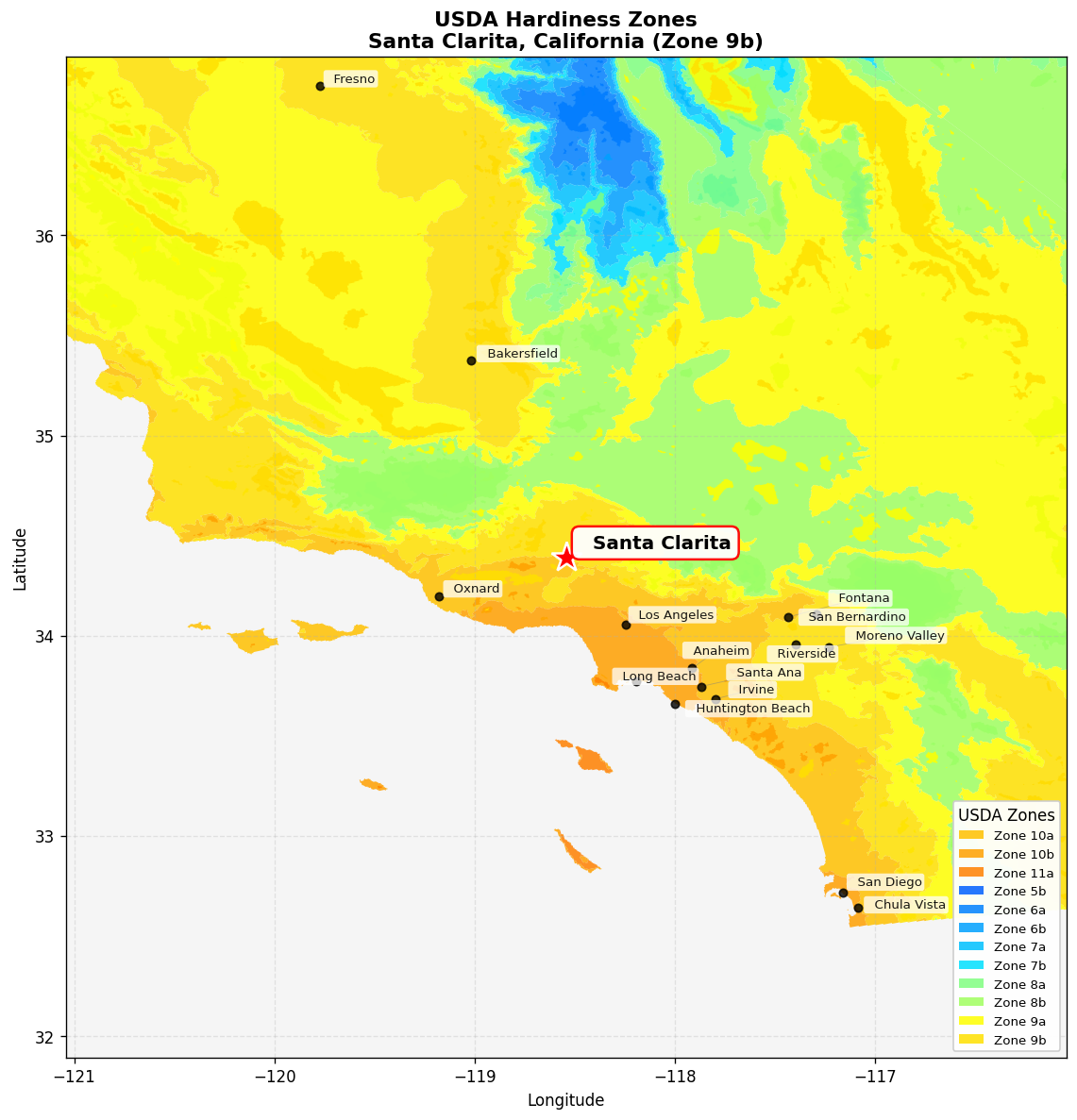
USDA Zone 9b
Hardiness zone for Santa Clarita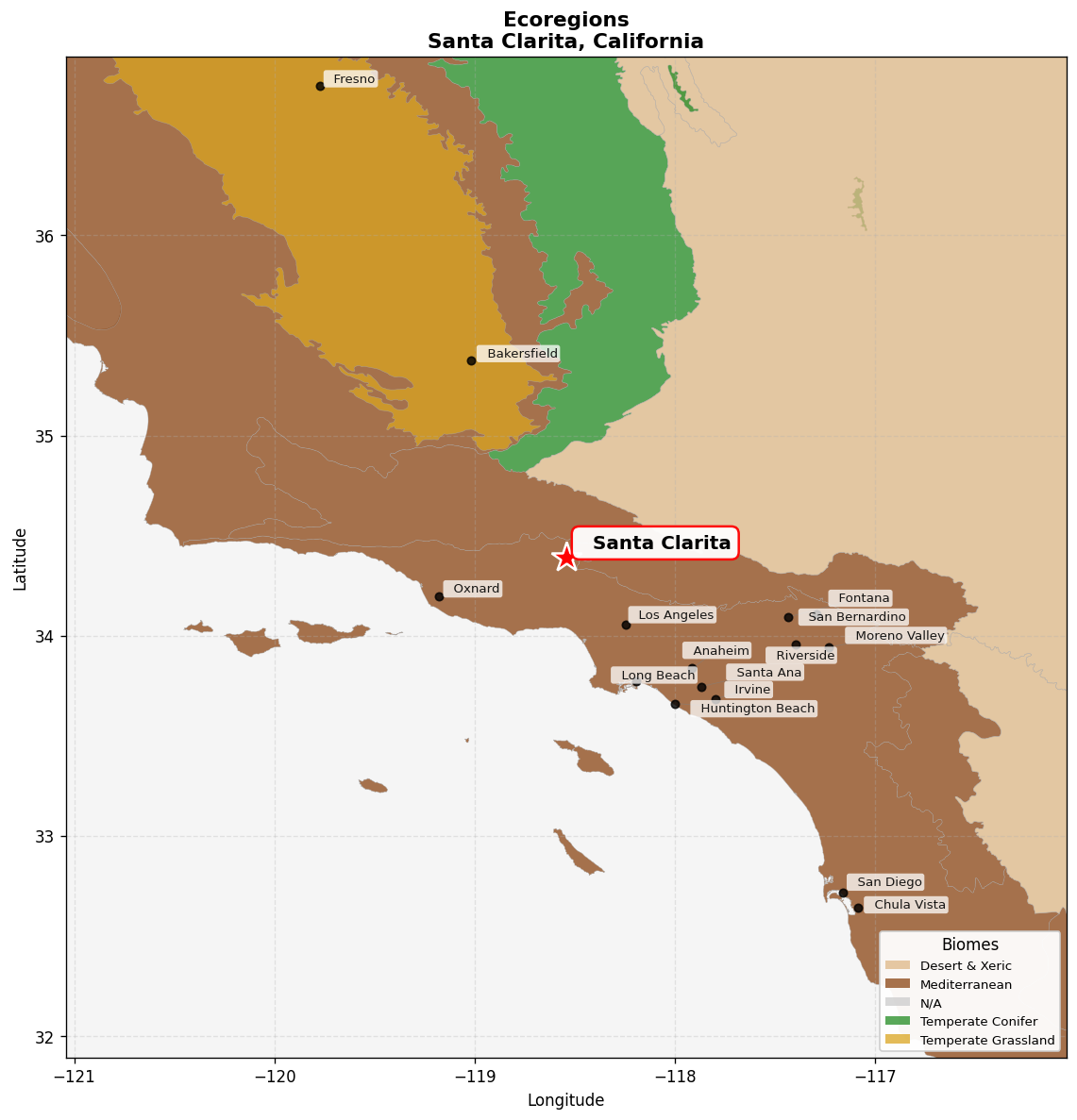
California coastal sage and chaparral
Native ecoregionFrequently Asked Questions
How much does a cottage garden cost in Santa Clarita?
Budget above the national average — LA County crew rates run roughly $65–95 per hour and installed landscape here typically lands 10–20% over US metro norms. A full front-yard cottage conversion on a typical 900–1,200 sqft Valencia or Saugus front yard runs $20,000–45,000 with flagstone, an arbor, drip and 60–100 plants. A modest picket-and-roses front for a Newhall ranch can be done for $12,000–20,000. A back garden with a pergola, concrete terrace and full perennial borders is usually $30,000–70,000. Roses themselves are cheap — 5-gallon 'Iceberg' or 'Julia Child' plants run $28–45 — so the money goes into hardscape, soil prep and irrigation, not the flowers.
Which roses actually survive Santa Clarita's 100°F+ summers?
Stick to proven heat performers rather than catalog romance. Rosa 'Iceberg' (bush and climbing forms) is the local workhorse, followed by 'Julia Child', 'Sally Holmes', 'Bonica' and 'Cécile Brünner' climbing for arbors. Among David Austins, 'Olivia Rose Austin' and 'The Generous Gardener' hold form in valley heat where 'Munstead Wood' and other dark reds crisp at the petal edges. 'Eden' / Pierre de Ronsard performs beautifully on a pergola with some afternoon shade. Feed after the January dormant prune, mulch 3 inches deep to keep root zones under 90°F, and run drip early morning — overhead watering plus SCV hard water leaves mineral spotting and encourages rust.
How do I keep a cottage garden legal under LA County's 100-foot brush clearance rules?
Most of Santa Clarita is in a Very High Fire Hazard Severity Zone, and LA County Fire inspects annually for 100 feet of defensible space. Zone 1 (0–30 feet from the structure) must be irrigated, low, and free of accumulated fuel — that is exactly where roses, Lavandula 'Provence' pruned annually to a tight mound, Leucanthemum, Nepeta and clipped Buxus 'Green Beauty' belong. Zone 2 (30–100 feet) gets thinned and spaced. Keep the high-fuel species out entirely or well beyond 30 feet: Juniperus, Italian cypress against the wall, Cortaderia (pampas grass), Pennisetum setaceum, unpruned rosemary and Acacia are the usual citations. Fire-resistive structural plants that still read as cottage include Arbutus 'Marina', Rhamnus (Frangula) californica 'Eve Case', Cercis occidentalis and citrus. Also clear dead rose canes and spent foxglove stalks before the May inspection window.
How much water does this use, and are there rebates in the Santa Clarita Valley?
Done correctly, far less than the lawn it replaces. A hydrozoned cottage garden on drip — roses and annual color on one valve, lavender and salvias on a much leaner valve, no mixing — typically runs 40–55% of the water a fescue lawn of the same area uses. Any permitted new or rehabilitated landscape over 500 sqft triggers the state Model Water Efficient Landscape Ordinance (MWELO), which means a water budget calculation, high-efficiency drip and a smart controller. SCV Water participates in the SoCal Water$mart program, which has paid turf-replacement rebates in the $2–5 per square foot range plus rebates on weather-based controllers and rotating nozzles — confirm the current rate and pre-apply before you remove a single blade of grass, because retroactive claims are denied.
What do I need to do about Santa Clarita's decomposed granite soil?
SCV soils are sandy alluvium and decomposed granite, alkaline at roughly pH 7.5–8.2, and on graded tract pads they sit over heavily compacted fill with a hardpan layer. Three fixes cover almost everything. First, rip or auger through the hardpan before planting — a rose in a compacted DG bathtub will drown in February and starve in August. Second, work 3–4 inches of compost into the top foot and add soil sulfur or an acidifying fertilizer for roses, hydrangeas and gardenias, which will otherwise go chlorotic from iron lockout in alkaline soil. Third, install wire gopher baskets on every perennial and rose; pocket gopher pressure here is severe and unprotected borders get hollowed out from below within a season. Mulch 3 inches deep and keep it 2 inches off crowns.
Will my HOA approve it, and when should I plant?
Valencia, Stevenson Ranch, West Creek, Tesoro del Valle and most master-planned SCV communities require architectural review committee approval for front-yard changes — submit a plan with a plant list and hardscape materials, and expect 30–60 days. Design 1 with the picket fence in particular needs approval since fence height and material are almost always regulated. Note that California Civil Code §4735 bars HOAs from prohibiting low-water-use plants or drought-tolerant landscaping, so a documented water-efficient cottage design is on strong legal footing even where the CC&Rs still reference lawn. On timing: plant October through early December so roots establish in the winter rains, or February–March as a second window. Avoid June–September planting entirely — new roses and perennials will not root in 100°F soil no matter how much you water.