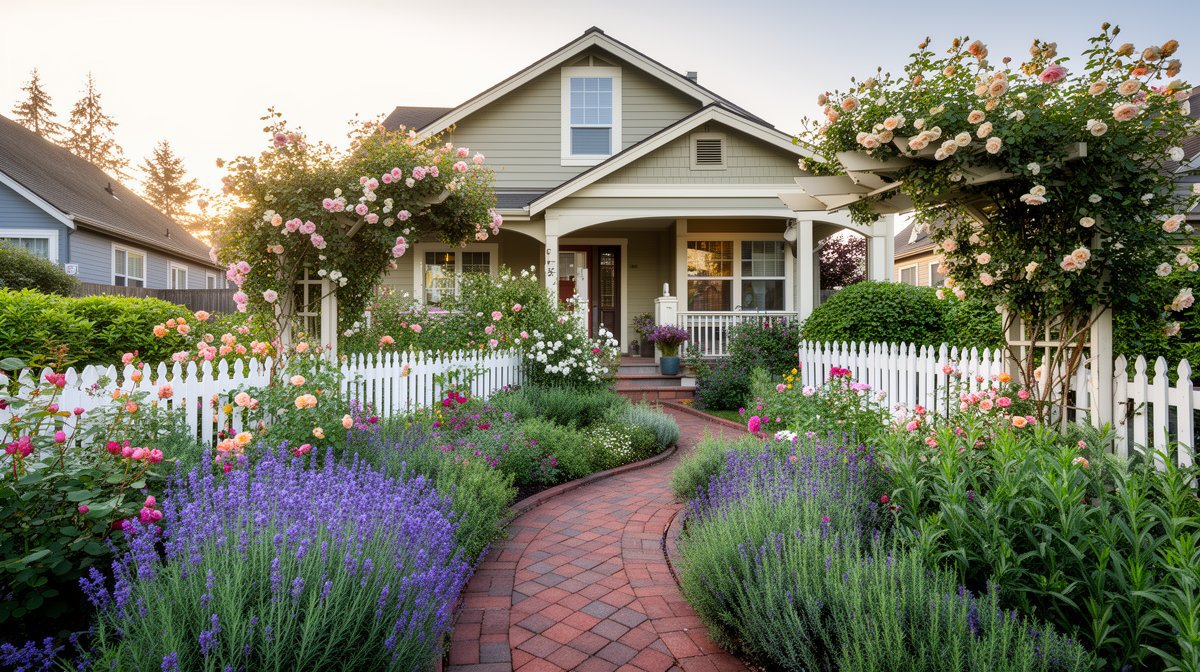
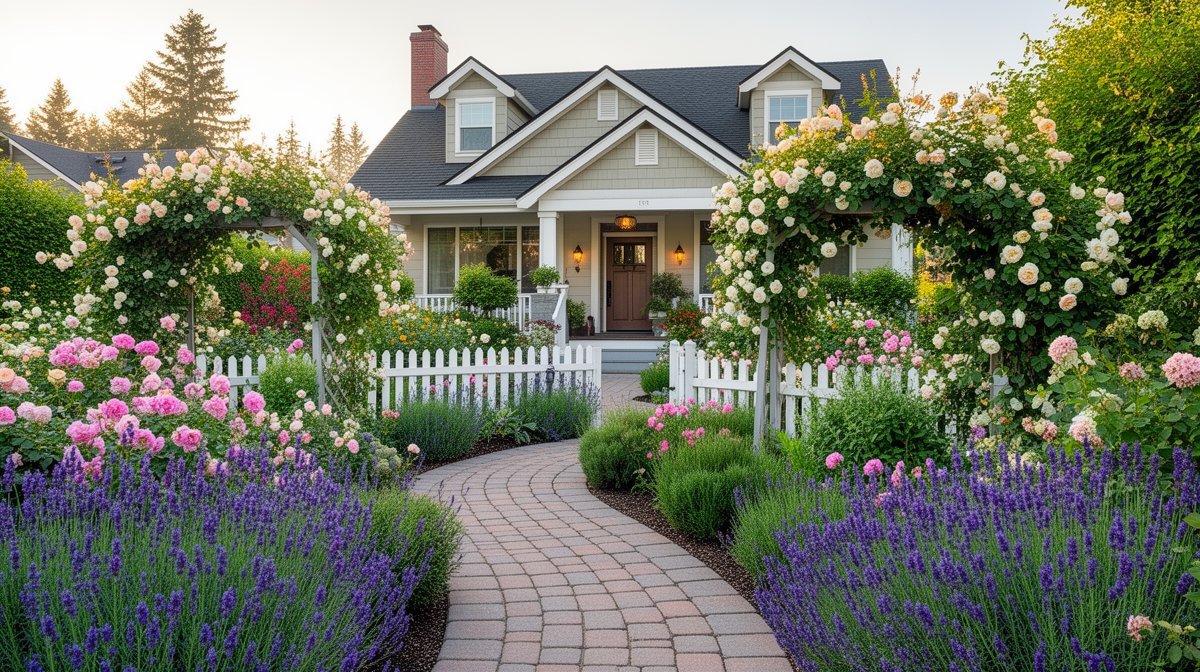
4 Cottage Garden Ideas for Spokane, WA | English-Style Landscape Design in Zone 6b
Native plants from the Northern Rockies conifer forests (Zone 6b) — Temperate climate
Why Cottage/English Gardens in Spokane?
Spokane may be the best cottage-garden city in the American West, and the proof is already public: Manito Park's Rose Hill and the formal Duncan Garden have been demonstrating for over a century that roses, delphiniums, and perennial borders thrive in this climate. The reason is Spokane's rare combination of cold winters and bone-dry summers. Roses that battle blackspot and mildew through humid Eastern summers stay clean here on 16.5 inches of annual precipitation, lavender ripens its oils in the dry July heat exactly as it does in Provence, and the cool nights that follow even the hottest days keep delphiniums, foxgloves, and peonies in the saturated colors that wash out in warmer climates.
The housing stock cooperates too. The Craftsman bungalows of the Perry District and Corbin Park, the grand old homes of Browne's Addition and Rockwood, and the porch-fronted farmhouses scattered through Millwood and the Garland District are natural partners for picket fences, rose arbors, and brick paths — this style looks inherited here, not installed. What Zone 6b demands in return is honest plant selection: own-root and Canadian-bred roses (Explorer and Parkland series), rugosas, and proven hardy climbers like 'John Cabot' and 'William Baffin' sail through -5°F winters, while grafted hybrid teas and many tender David Austin varieties need 8–12 inches of mulch mounded over the crown before Thanksgiving. English lavender ('Munstead', 'Hidcote') is reliably hardy; Spanish and French lavenders are summer annuals here.
The two practical realities are water and season length. Spokane summers are effectively rainless from July through September, so a cottage border — the thirstiest of all garden styles — needs drip irrigation on a timer to look lush rather than survivalist. And with roughly 150 frost-free days (last frost mid-May, first frost early October), the border is planned around a compressed but intense bloom sequence: peonies and iris in late May, roses and catmint carrying June through September with deadheading, and asters closing the show. Winter is long, which is exactly why the bones — fence, arbor, path, pergola — matter more in Spokane than in milder cottage-garden country: they carry the picture under snow.
4 Cottage/English Design Ideas for Spokane
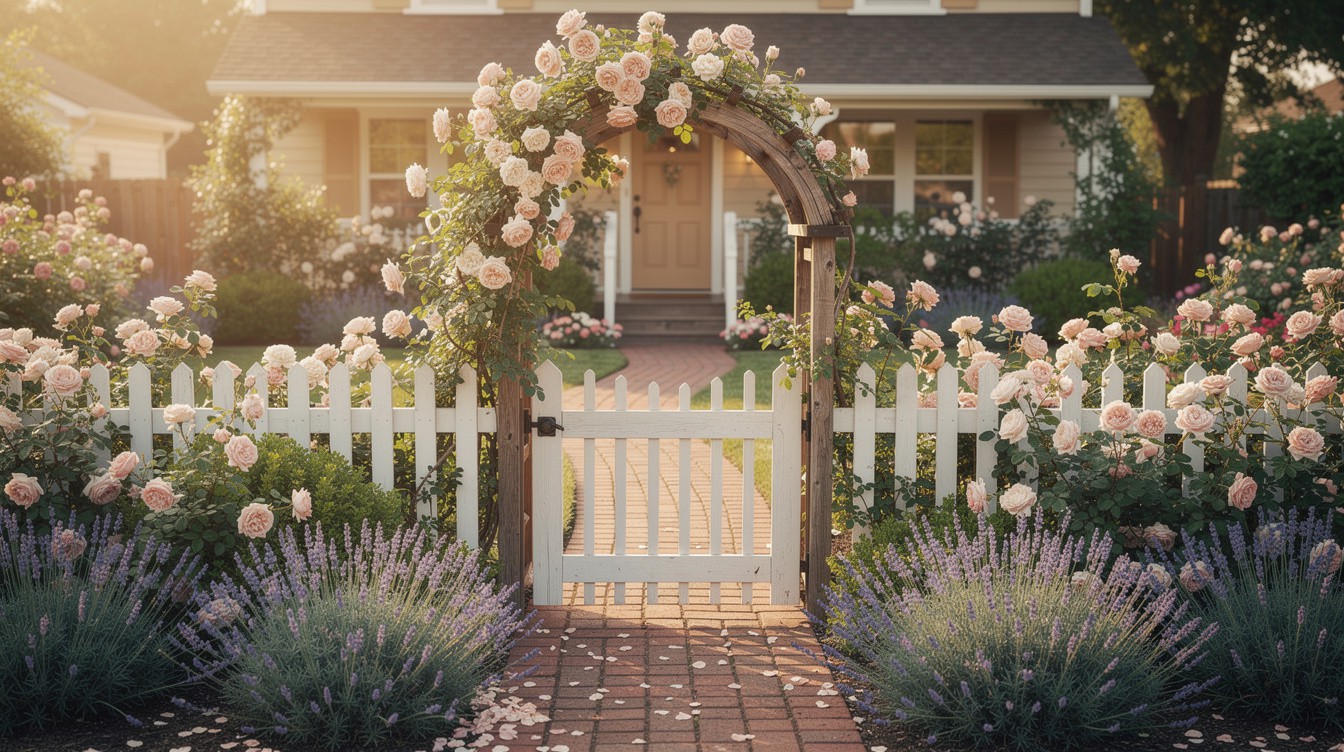
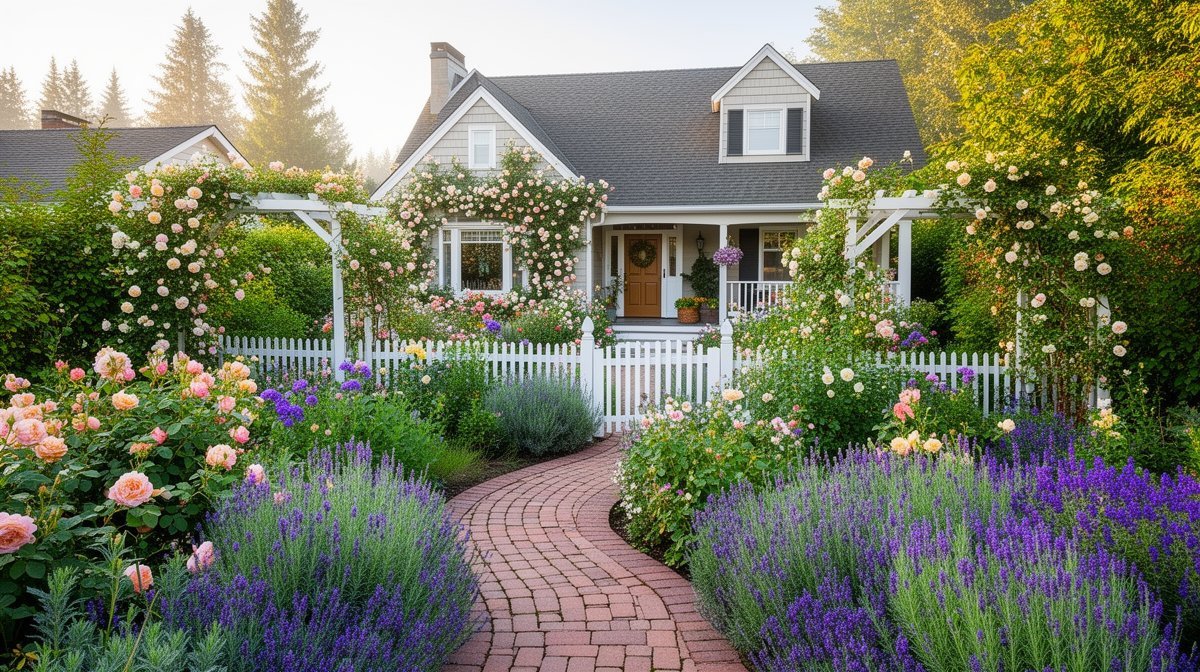
The Picket-and-Petal Gate
$10–18/sqftA classic white picket fence disappears under sheer volume of blush and pink shrub roses, with a weathered wooden arbor arching over the gate and dripping with pale climbing roses. Through the gate, a herringbone brick path scattered with fallen petals leads to the front steps of a two-story cream home, while deep ribbons of English lavender edge the sidewalk on both sides of the entry. The design is a simple layered formula — lavender at the street, roses at the fence, climber overhead — that reads as decades of loving accumulation even in its first full season.
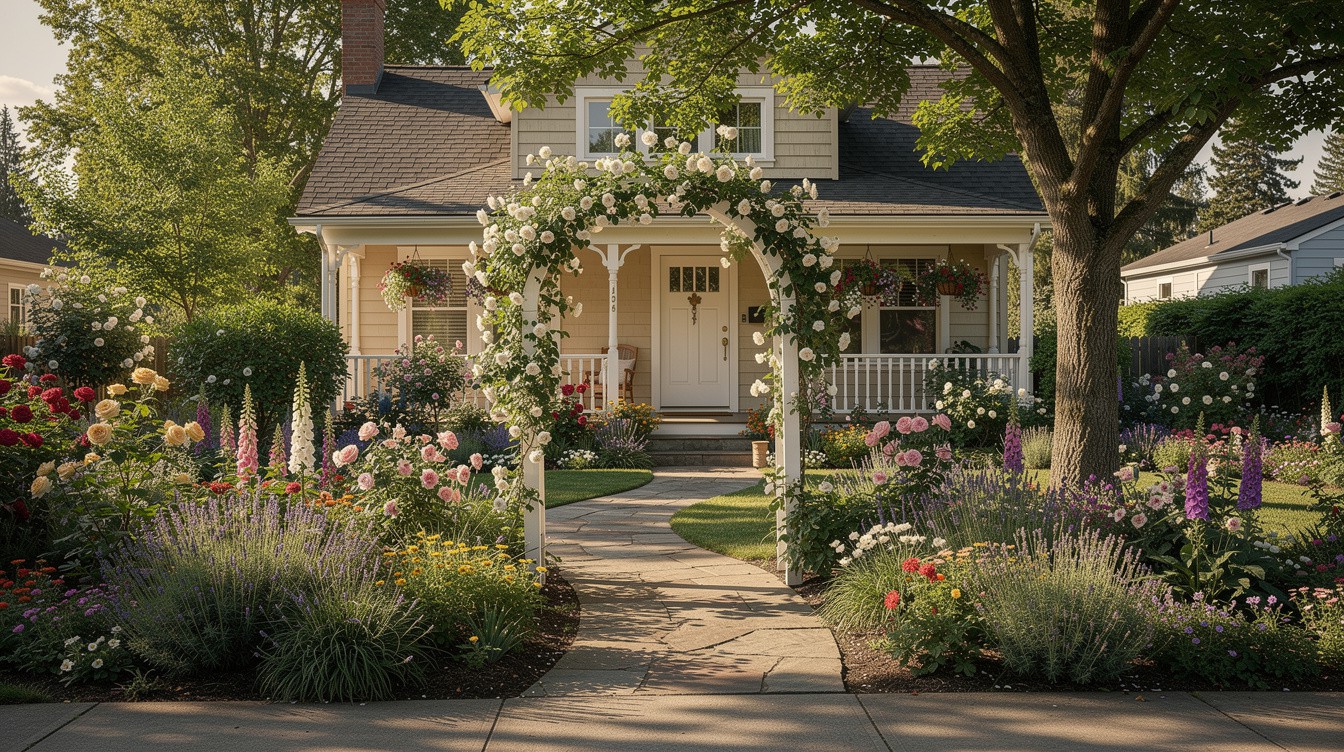
The Porch-Front Border Garden
$8–15/sqftA cream-sided farmhouse with a full front porch, white railings, and hanging flower baskets sits behind one of the most abundant front borders imaginable: a white climbing rose arch frames the flagstone-and-exposed-aggregate walk, and the beds on either side are packed shoulder-to-shoulder with pink and yellow roses, spires of foxglove, catmint, salvia, and golden yarrow under the shade of a big street tree. Nothing about the layout is complicated — a straight walk, two deep borders, one arch — the magic is planting density, with every square foot claimed by something in bloom.
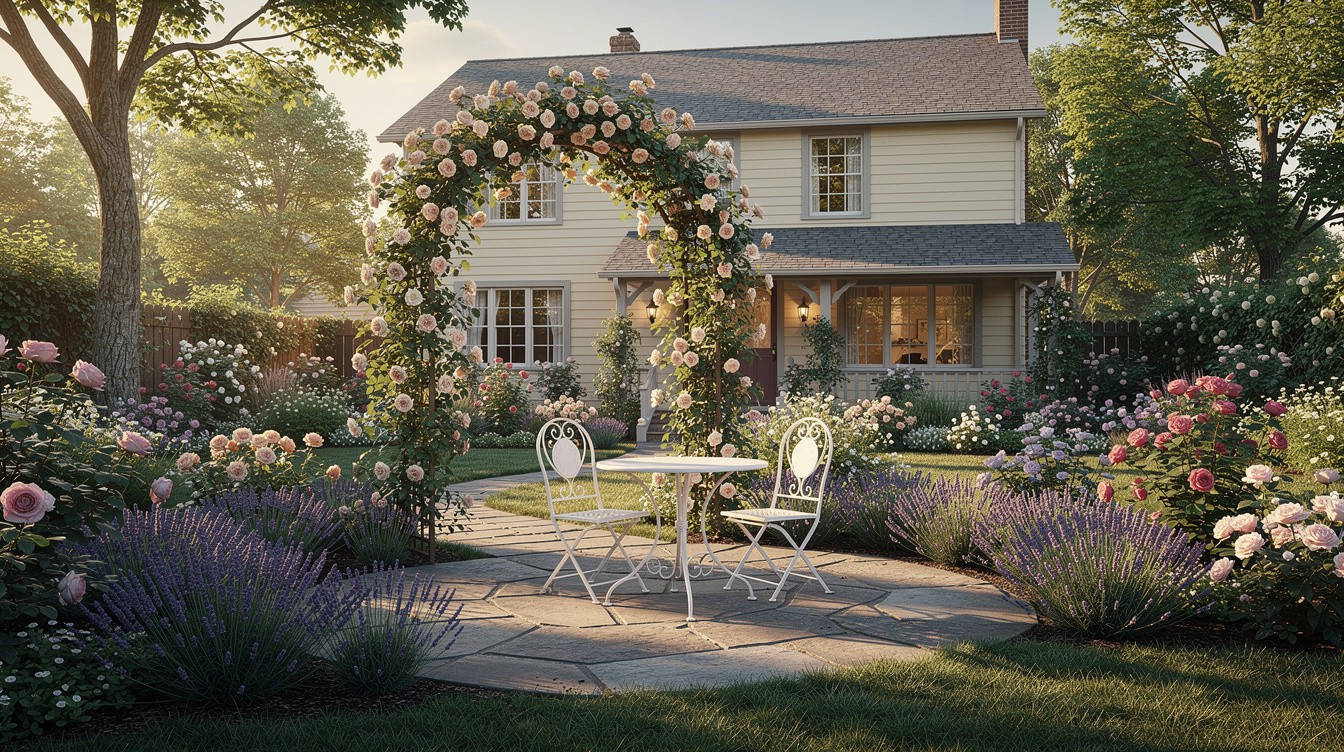
The Bistro Rose Courtyard
$12–22/sqftIn the backyard of a two-story cream home, an irregular flagstone patio holds a delicate white wrought-iron bistro table and two heart-backed chairs — a true morning-coffee garden room. A freestanding arch smothered in pink climbing roses frames the view back to the house, deep billows of English lavender wrap the patio on every side, and pink and white rose borders recede along the fence lines toward a shaded lawn. The palette is deliberately narrow (pink, lavender, white, green), which is what keeps the abundance feeling romantic instead of chaotic.
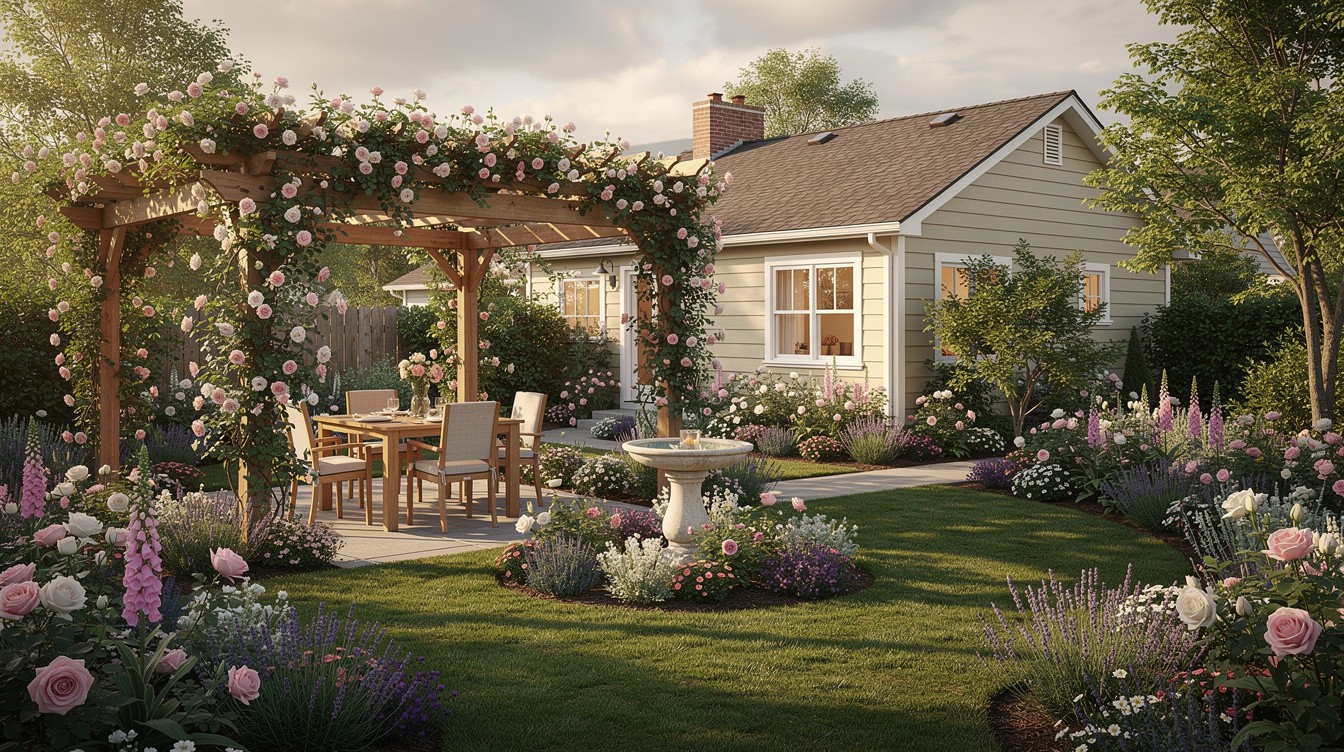
The Pergola Tea Garden
$10–20/sqft (pergola adds $4,000–10,000)A stout cedar pergola draped end-to-end in pink climbing roses shelters a wooden dining table and chairs beside a single-story ranch home, turning one corner of the yard into an outdoor dining room. Out in the lawn, a carved stone bird bath rises from a circular island bed of catmint, pinks, and white alyssum, while sweeping curved borders of foxglove, lavender, roses, and cottage perennials wrap the entire yard so the lawn reads as a green pond inside the planting. The pergola earns its keep in Spokane — its roses shade July dinners and its timber frame carries the garden's structure through five months of winter.
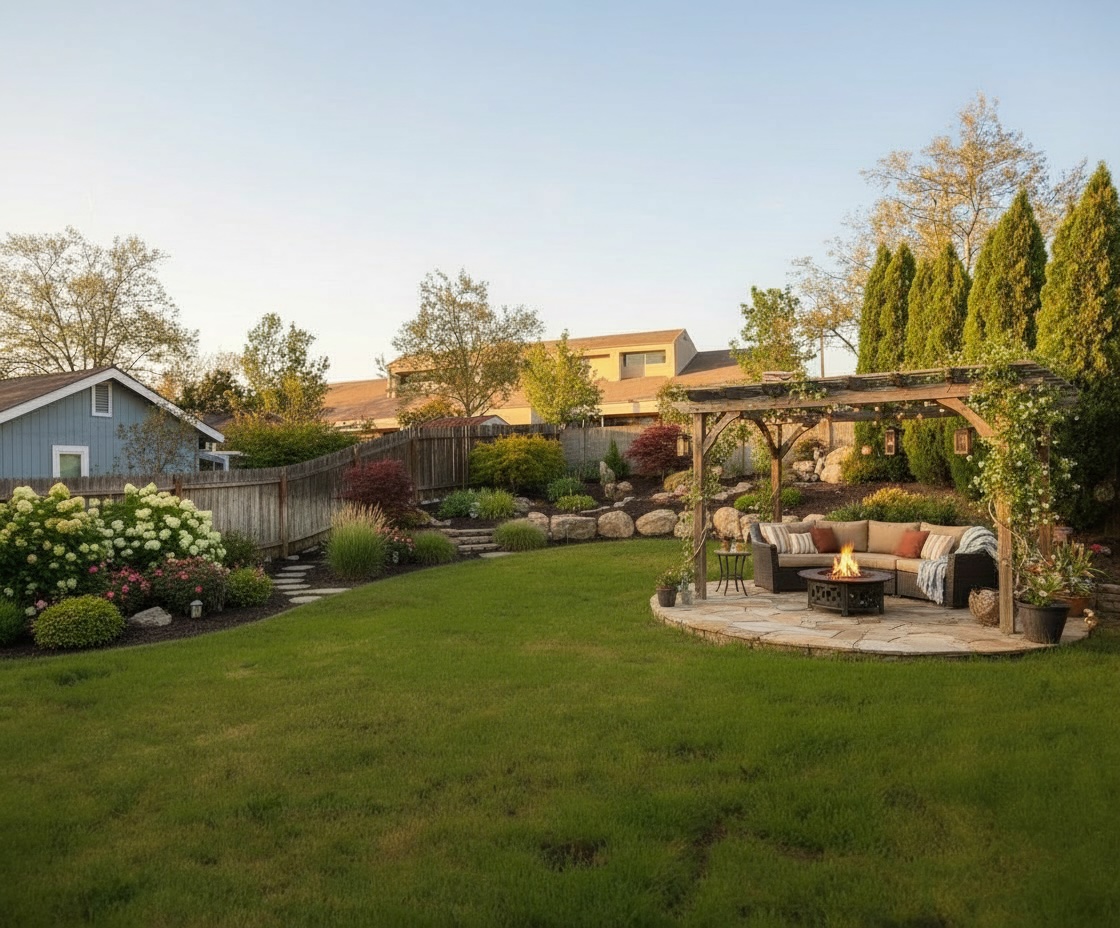
See how a cottage/english garden looks on YOUR property
Upload a photo of your Spokane yard and visualize your dream garden in seconds.
Try ProScapeAI Free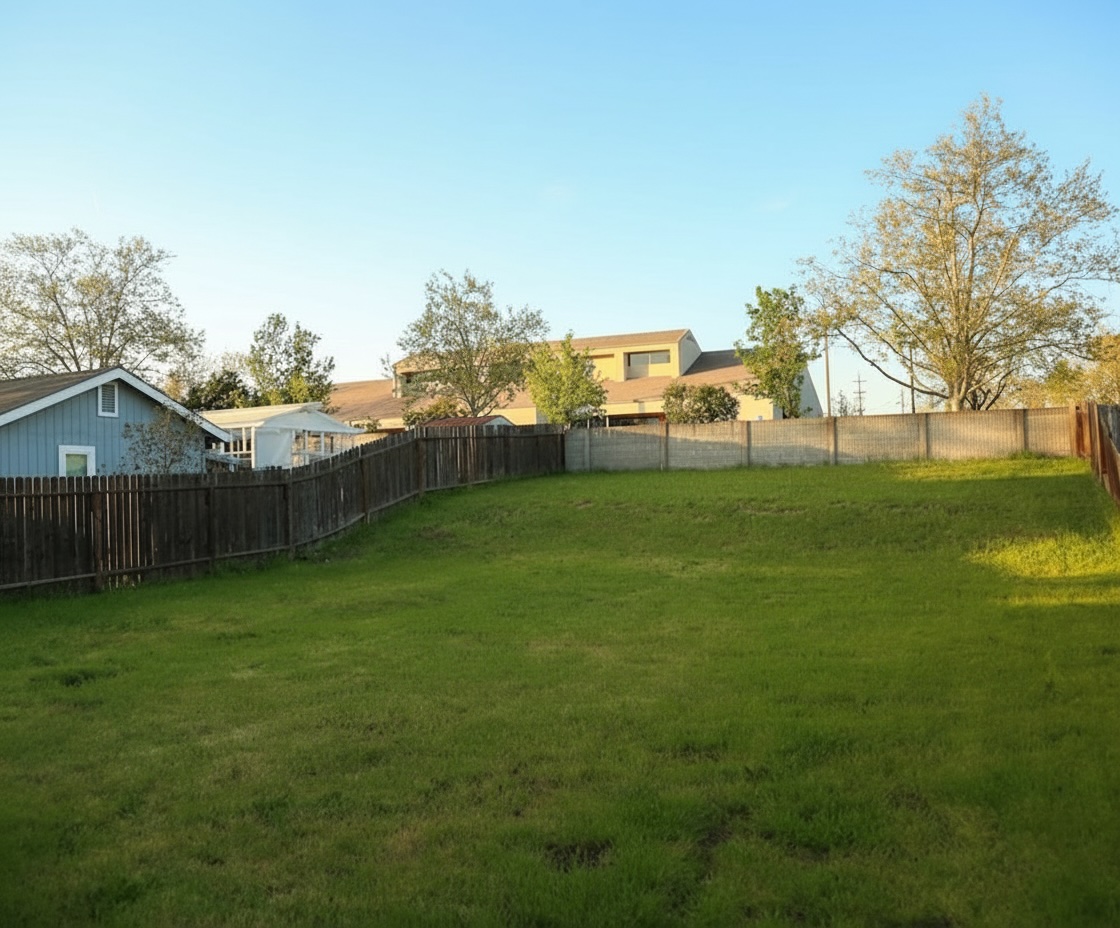
Featured Trees & Shrubs for Cottage/English Gardens
Browse all 49 plants for Spokane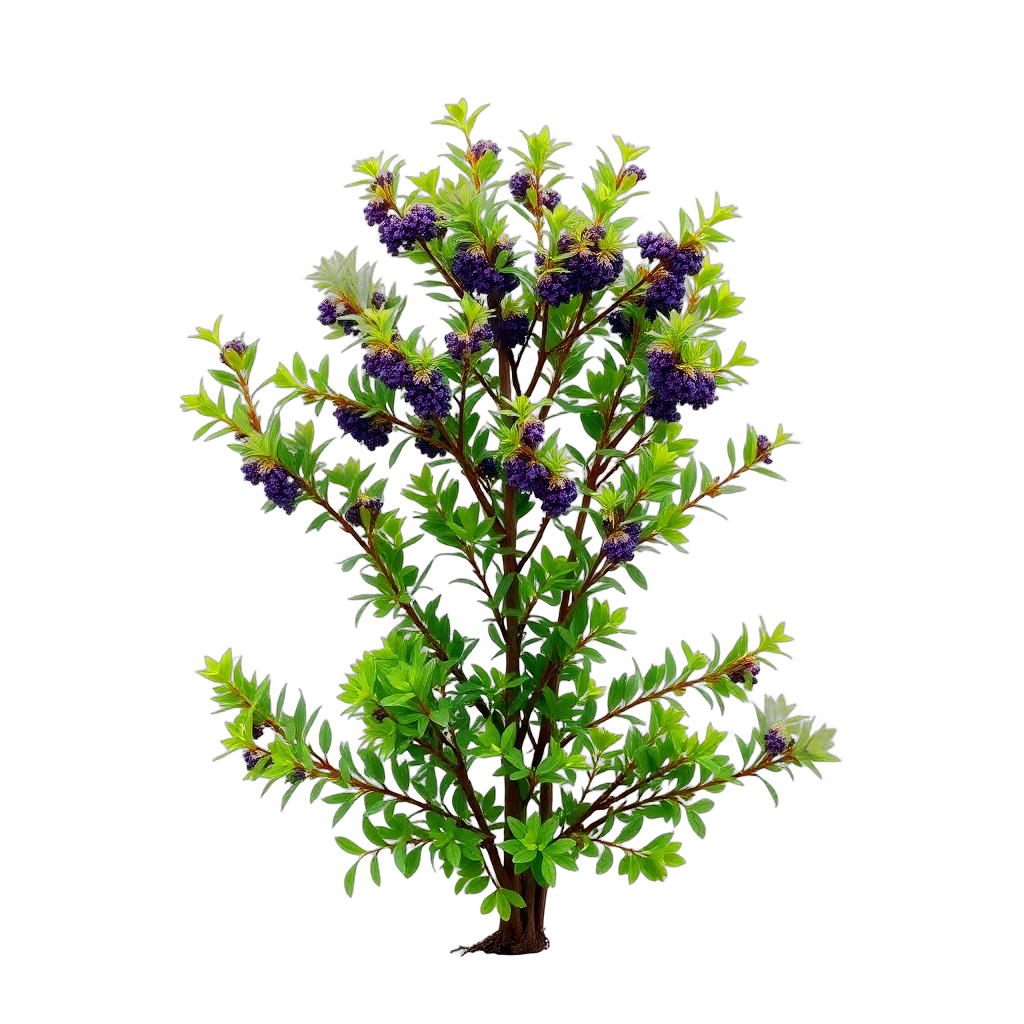
Creeping Mahonia
Mahonia repens
low-growing ground cover, yellow blooms in spring. Pollinator-friendly.
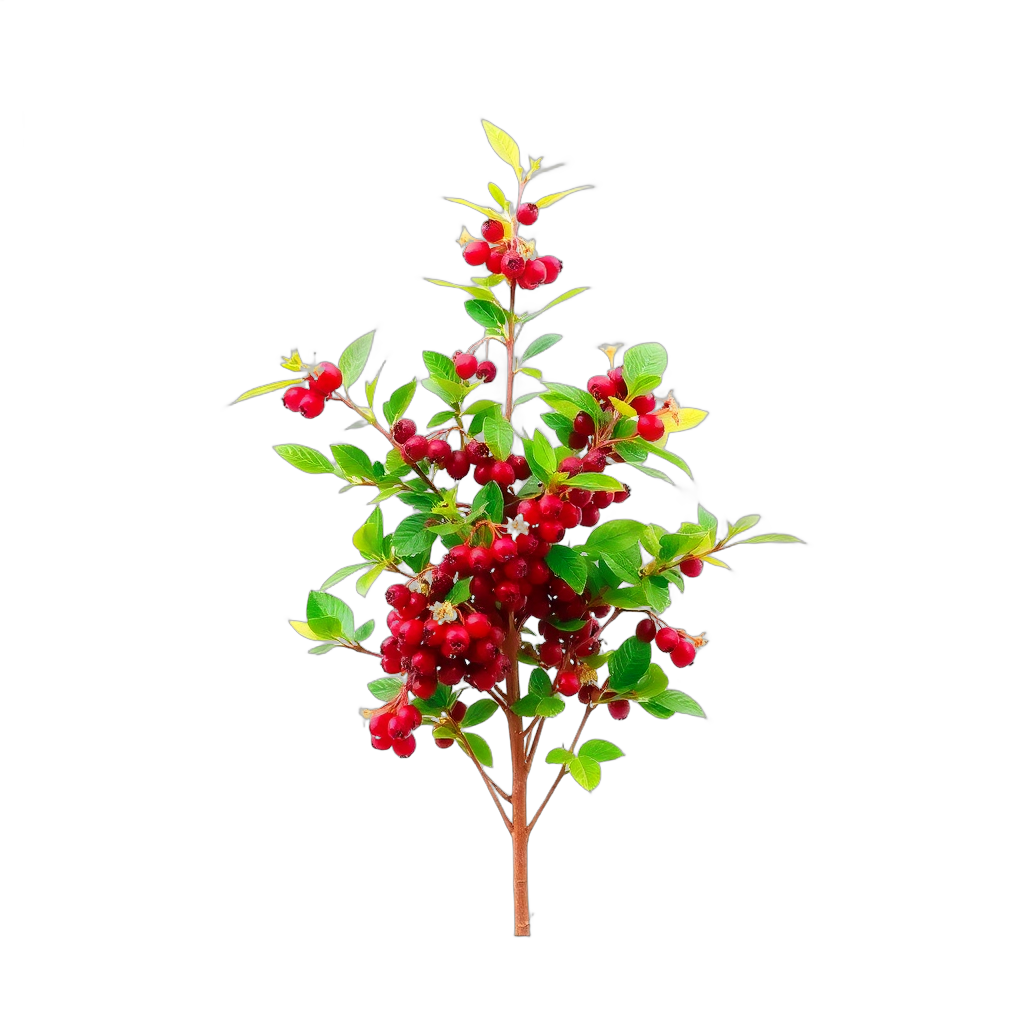
Grouseberry
Vaccinium scoparium
low-growing ground cover, pink blooms in spring. Attracts butterflies.
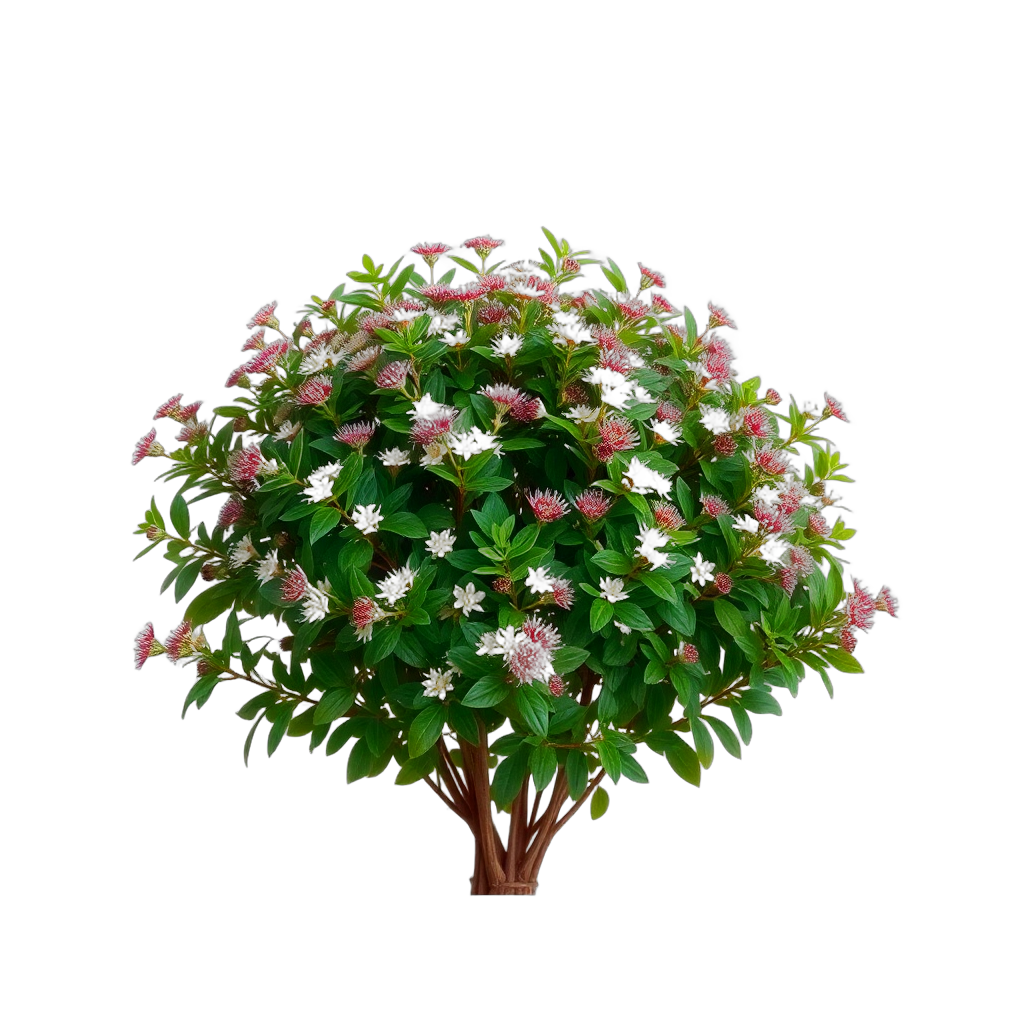
Labrador Tea
Ledum glandulosum
grows to 4 feet, white blooms in spring. Evergreen year-round.
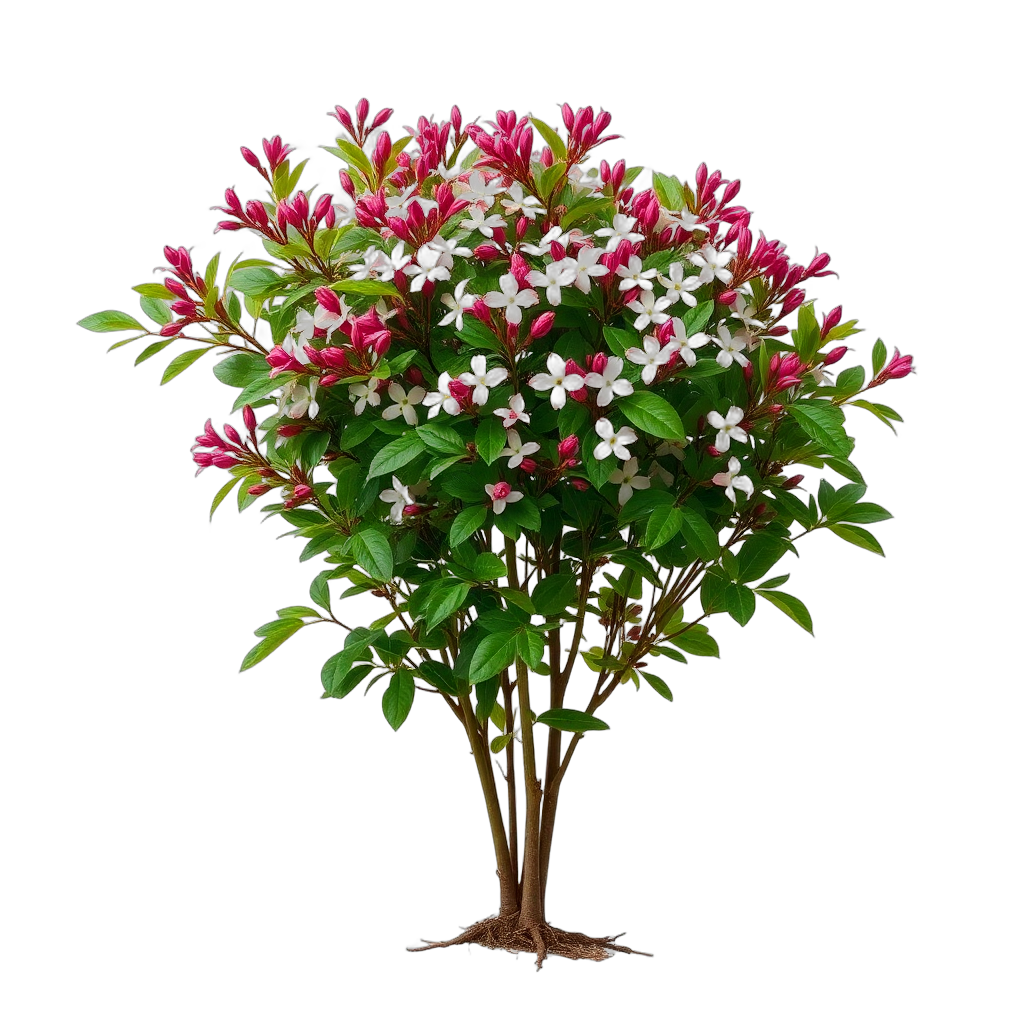
Red Osier Dogwood
Cornus sericea
medium-sized at 8 feet, white blooms in spring. Pollinator-friendly.
Featured Grasses & Groundcovers for Cottage/English Gardens

Kentucky Bluegrass
Poa pratensis
low-growing ground cover, blooms in spring. Brown fall color.
Featured Flowers & Perennials for Cottage/English Gardens
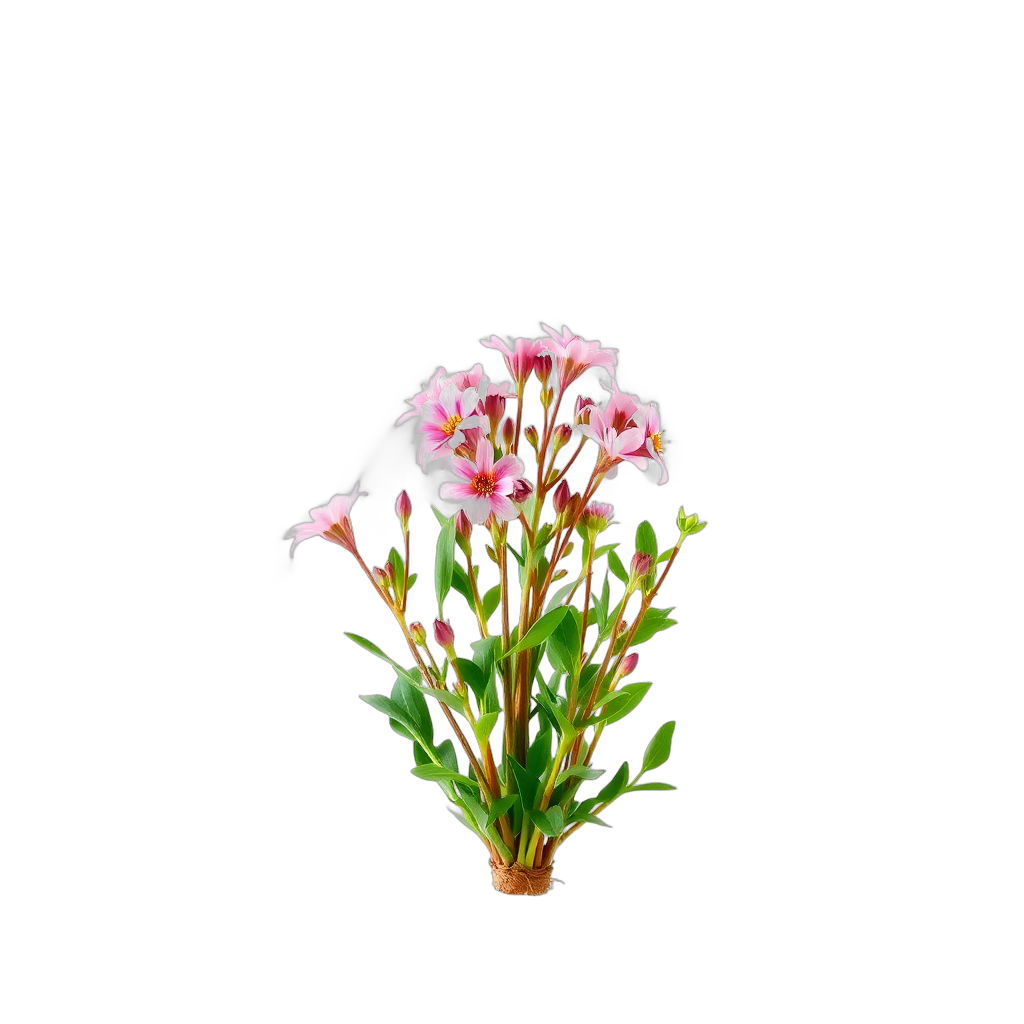
Bitterroot
Lewisia rediviva
low-growing ground cover, pink blooms in spring.
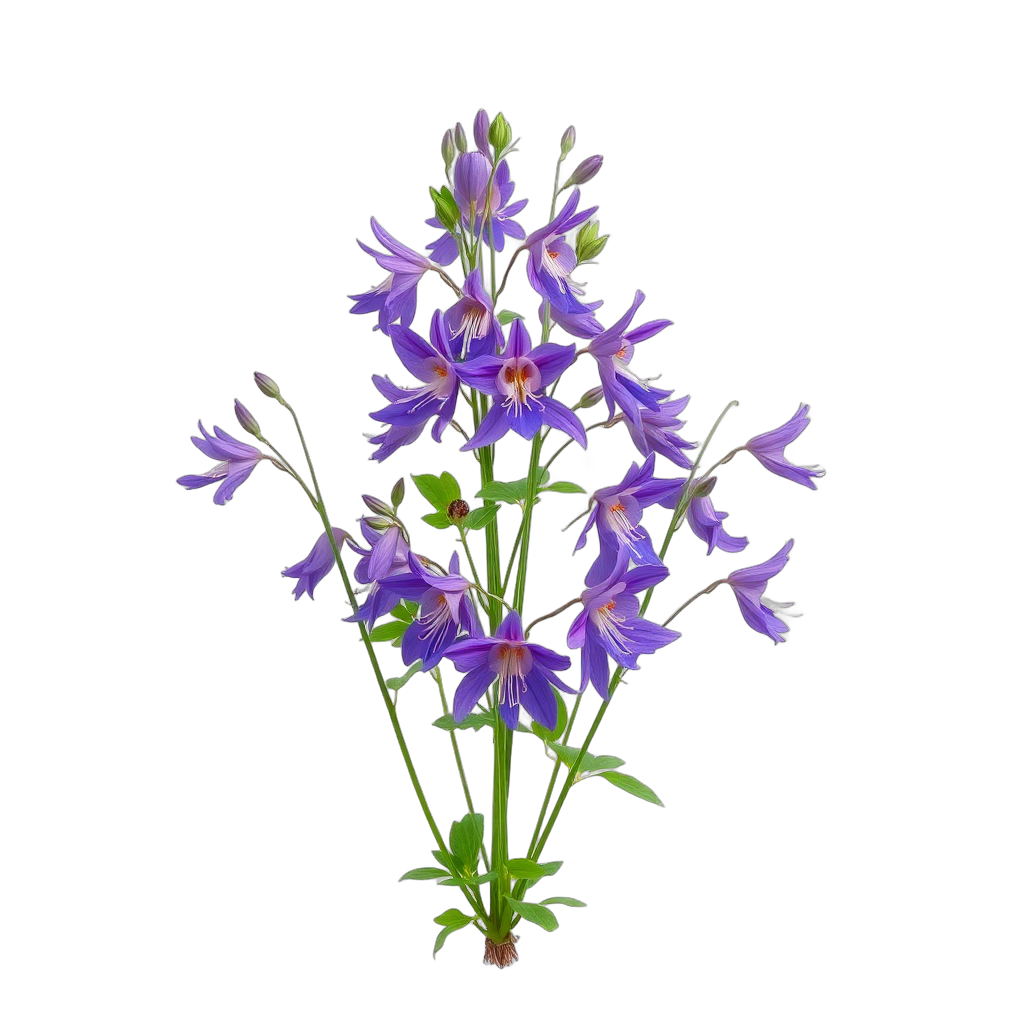
Colorado Columbine
Aquilegia caerulea
low-growing ground cover, blue blooms in spring. Attracts hummingbirds.
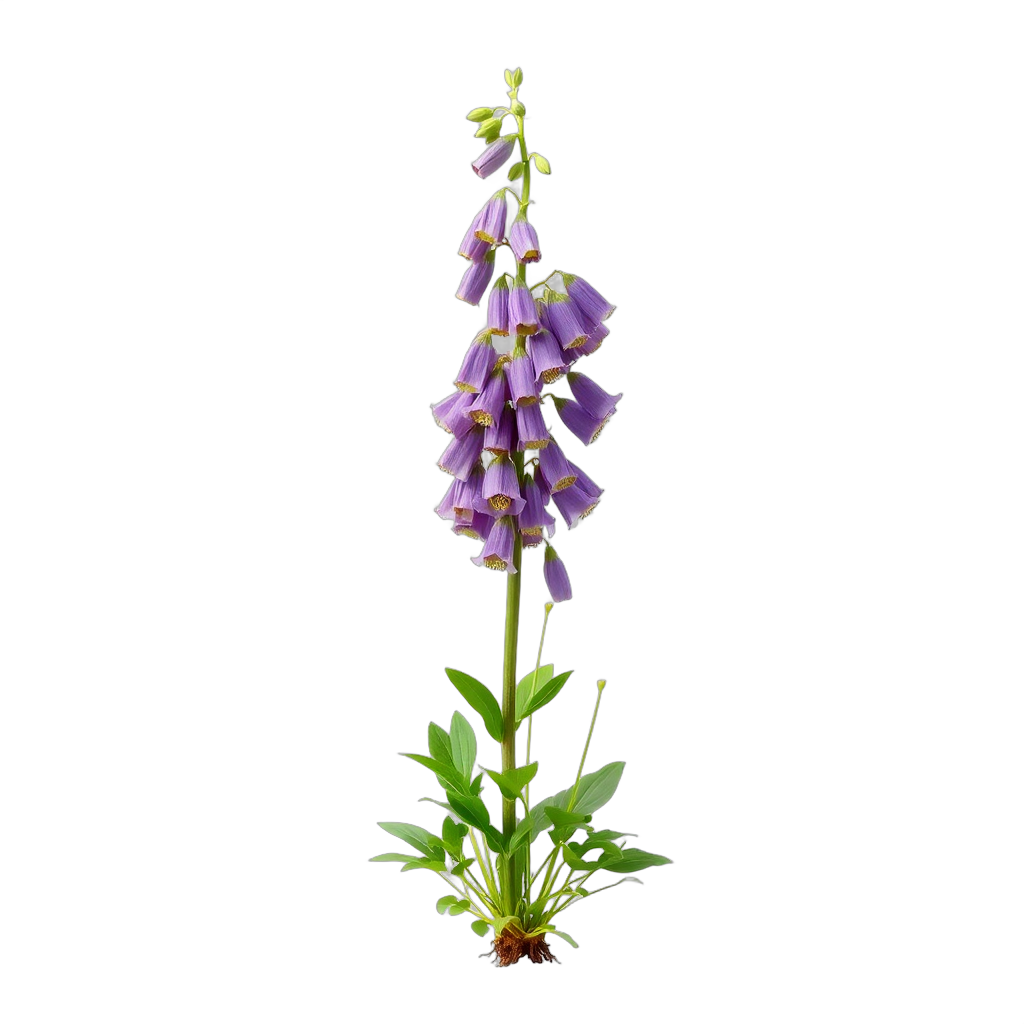
Columbian Monkshood
Aconitum columbianum
grows to 3 feet, purple blooms in summer. Pollinator-friendly.
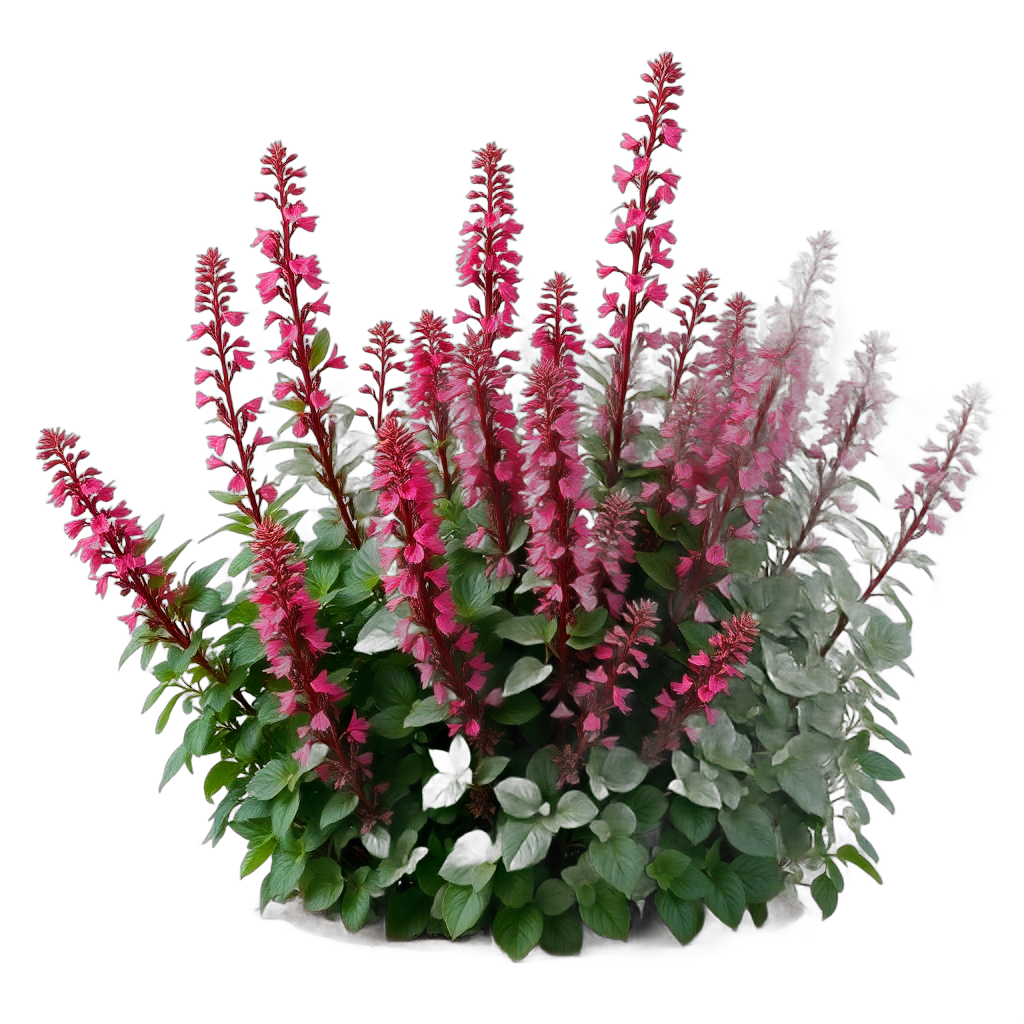
Coral Bells
Heuchera cylindrica
low-growing ground cover, white blooms in spring. Attracts hummingbirds.
Bloom Calendar for Spokane
spring
Bitterroot, Colorado Columbine, Coral Bellssummer
Columbian Monkshood, Mountain Death Camas, Pipsissewafall
Limited bloomswinter
Limited bloomsDesign Tips for Spokane (Zone 6b)
- Steal your plant list from Manito Park — Rose Hill and Duncan Garden are a free, century-old trial garden ten minutes from anywhere in Spokane showing exactly which roses and perennials thrive at this latitude
- Choose Canadian Explorer and Parkland roses as your backbone and treat tender David Austins as the protected minority — winter-mounding two roses is charming, winter-mounding twenty is a job
- Invest in bones before blooms: the picket fence, arbor, brick path, and pergola carry a Spokane cottage garden through five snowy months when the borders are asleep
- Run inline drip through every bed from day one — Spokane's rainless July-through-September would otherwise turn a romantic border into a triage ward, and dry foliage is why local roses skip the fungicides
- Plant in the classic three-tier cottage stack — lavender or catmint at the path edge, roses and peonies mid-border, foxgloves and delphiniums at the back — and pack plants tight; bare soil is the only real mistake in this style
- Exploit the cool nights: delphiniums, foxgloves, and sweet peas that melt in hot-summer cities hold saturated color for weeks in Spokane, so give them the starring positions Southern gardeners can't
Where to Source Plants in Spokane
Skip the big-box stores. These independent Spokane nurseries specialize in the plants that make cottage/english gardens thrive in Zone 6b.
Ritters Garden & Gift
North Spokane
Locally-owned full-service garden center with plants, home decor, pottery, and DIY terrarium offerings.
The Plant Farm
Spokane Valley
Family-owned nursery growing 95% of their plants on-site in 30+ greenhouses across 10 acres.
Smart Gardens Nursery
North Spokane
Independent nursery specializing in landscape design consulting with extensive plant selection.
Greenacres Nursery
Otis Orchards
Largest retail and wholesale nursery in the Inland Northwest with 17 acres of deciduous and coniferous trees.
Cottage/English Landscaping Costs in Spokane
| Project Scope | Estimated Cost |
|---|---|
| Front-yard cottage border installation (soil, drip, dense planting) | $4,000 – $12,000 |
| White picket fence with arbor gate (typical street frontage) | $3,500 – $8,000 |
| Flagstone patio with bistro seating area (150–300 sqft) | $4,500 – $12,000 |
| Cedar pergola with climbing roses (frost-depth footings) | $4,000 – $10,000 |
| Drip irrigation retrofit for planted borders | $800 – $2,500 |
| AI visualization with ProScapeAI | Free to start |
Estimates based on Spokane, WA-area contractor rates as of 2026. Actual costs vary by site conditions, materials, and contractor.
Spokane Climate & Growing Zone
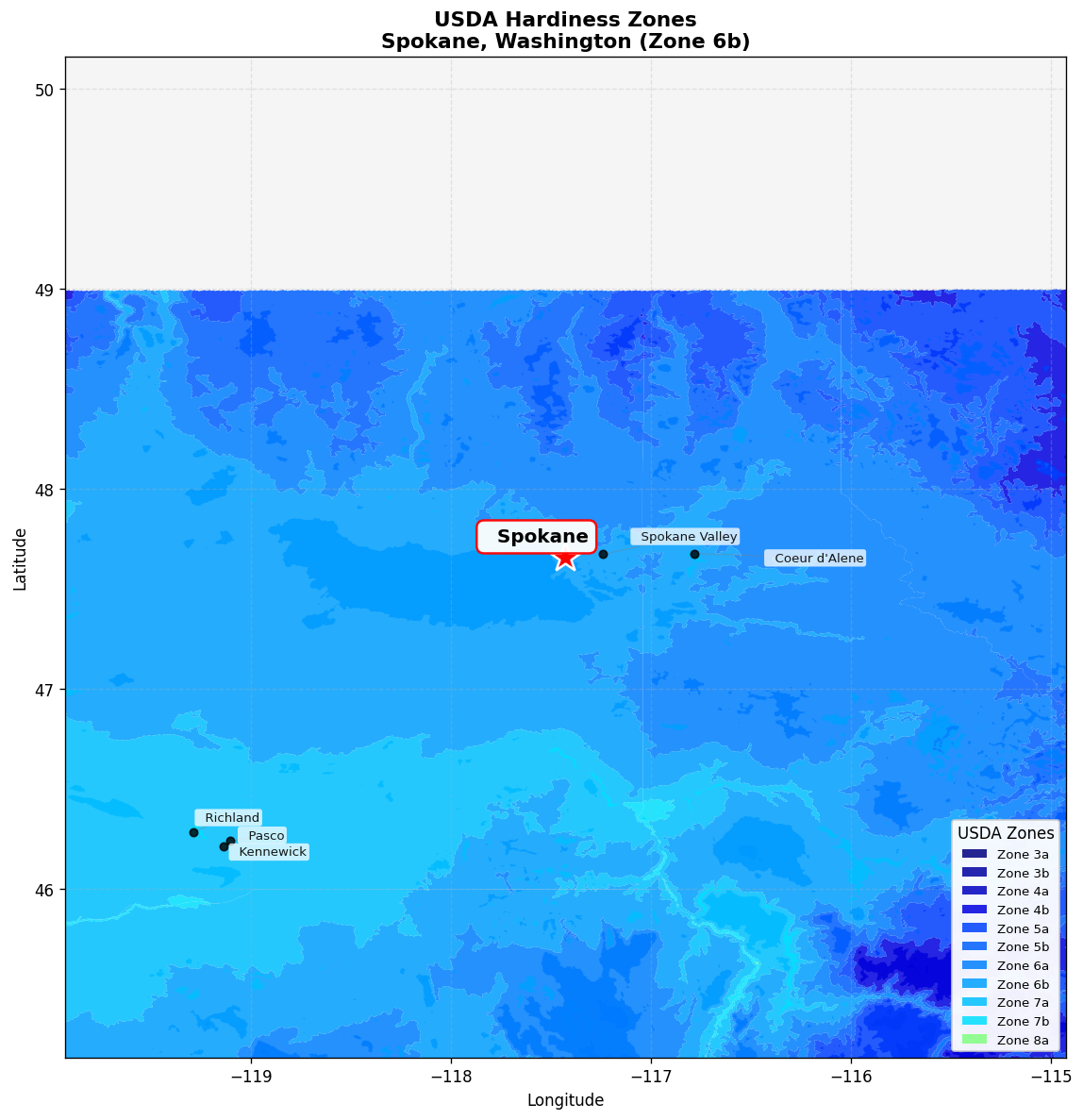
USDA Zone 6b
Hardiness zone for Spokane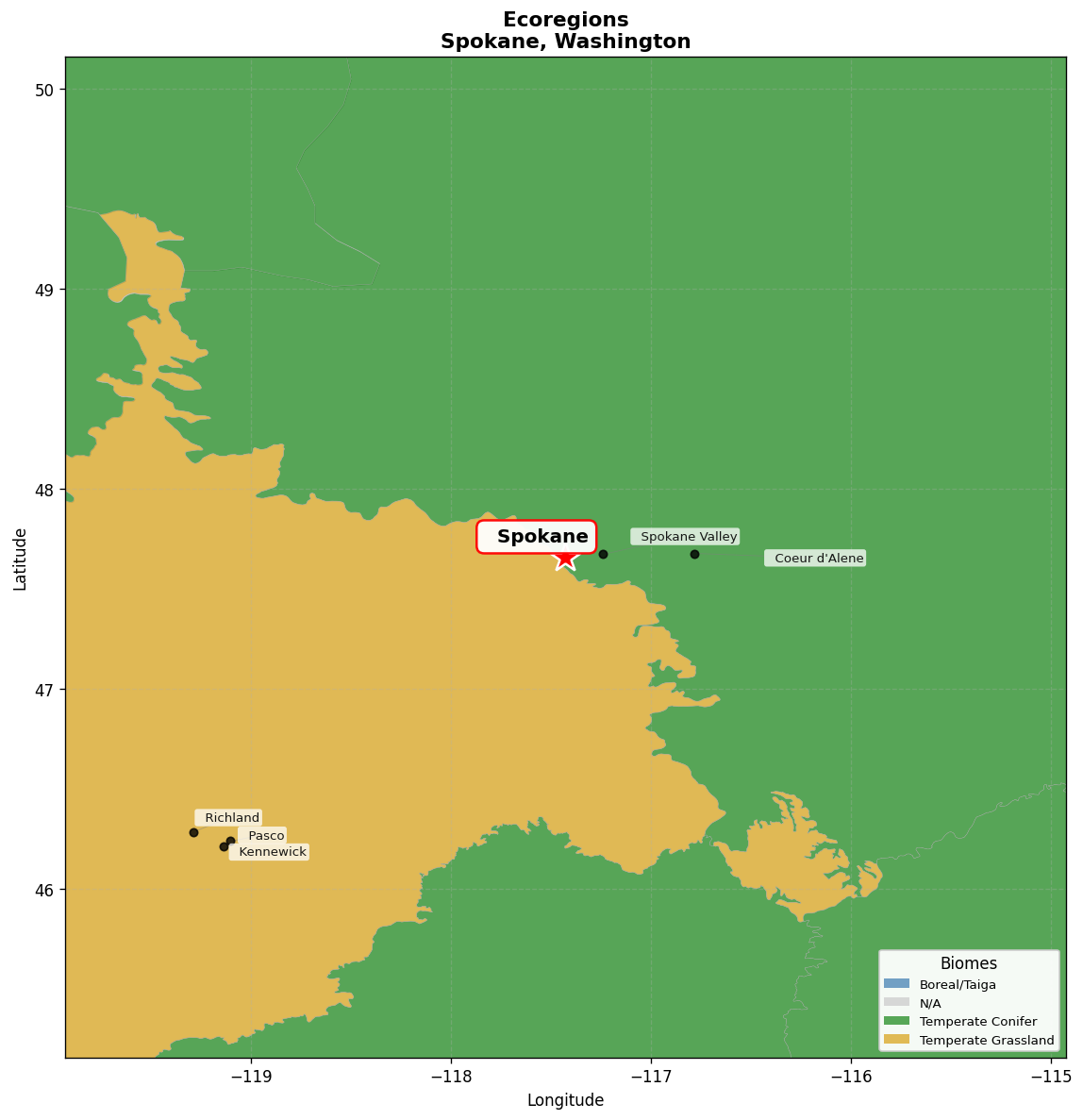
Northern Rockies conifer forests
Native ecoregionFrequently Asked Questions
How much does a cottage garden cost to install in Spokane?
Cottage gardens are plant-heavy rather than hardscape-heavy, which keeps Spokane costs reasonable. A densely planted front-yard border scheme (soil amendment, drip irrigation, plants, path) typically runs $4,000–12,000 for a standard city lot. A picket fence adds $30–45 per linear foot installed, a cedar arbor $500–1,500, and a flagstone patio $18–30/sqft with a proper frost-rated base. A full backyard build with pergola, patio, and wraparound borders lands between $15,000 and $40,000. The budget saver: cottage style forgives — and rewards — planting small; one-gallon perennials fill in within two Spokane seasons.
Which roses actually survive Spokane winters?
Own-root and Canadian-bred roses are the safe bets. The Explorer series ('John Cabot', 'William Baffin', 'Champlain') and Parkland series ('Morden Blush', 'Morden Sunrise') were bred for -30°F and treat Spokane's Zone 6b as mild. Rugosas, 'Bonica', and most Buck roses are equally dependable. Grafted hybrid teas and many David Austin varieties can be grown here, but mound 8–12 inches of soil or mulch over the graft union in late November and unwrap in April. The good news: Spokane's dry summers mean almost no blackspot — Manito Park's Rose Hill grows over 1,500 roses without the spray regimen humid climates require.
Will lavender and other Mediterranean cottage plants grow in Spokane?
English lavender is outstanding here — 'Munstead' and 'Hidcote' are hardy to Zone 5, and Spokane's dry summers produce tight, fragrant plants that flop and rot in wetter climates. The rules: full sun, sharp drainage (add gravel to planting holes in heavier South Hill soils), no winter mulch piled on the crown, and a spring-only pruning. Spanish and French lavenders are not hardy — treat them as annuals. Catmint, santolina, and culinary sage follow the same playbook and are equally reliable. The one classic that struggles is rosemary: even 'Arp' rarely survives a Spokane winter outdoors, so grow it in a pot and bring it in.
How do I keep a cottage garden alive through Spokane's bone-dry summers?
Drip irrigation is non-negotiable. Spokane gets almost no rain from July through September, and a cottage border's density means plants compete hard for whatever moisture exists. Run inline drip tubing through every bed on a timer — two to three deep soakings a week beats daily sprinkling, and drip keeps foliage dry (which is why local roses stay disease-free). Mulch beds with 2–3 inches of compost or fine bark to halve evaporation. Water-wise cottage stalwarts like yarrow, catmint, salvia, and lavender can carry the outer borders with far less water, saving the irrigation budget for roses, delphiniums, and foxgloves.
When should I plant a cottage garden in Spokane?
Mid-April through early June is prime — soil is workable, the mid-May last frost passes, and plants get a full season to establish before winter. September is the second window and is actually the best time for peonies, iris divisions, and spring bulbs; just finish planting perennials by early October so roots settle before the ground freezes. Bare-root roses go in April. Avoid July–August planting entirely unless you can hand-water daily. Foxgloves are biennial: plant them two springs running and they will self-sow a permanent colony thereafter.
Do I need a permit for a fence, arbor, or pergola in Spokane?
Front-yard picket fences up to 36–42 inches and side/rear fences to 6 feet generally need no permit inside Spokane city limits, though corner lots must respect clear-view triangles at intersections. Arbors and open pergolas under 200 sqft typically skip permitting as well, but pergola posts should still bear on footings below the 24–36 inch frost line or they will heave. Spokane Valley, Millwood, and Liberty Lake each have their own fence codes with similar numbers. Historic districts — notably Browne's Addition — review exterior changes including fencing, so check with the city's historic preservation office before building street-facing structures there.