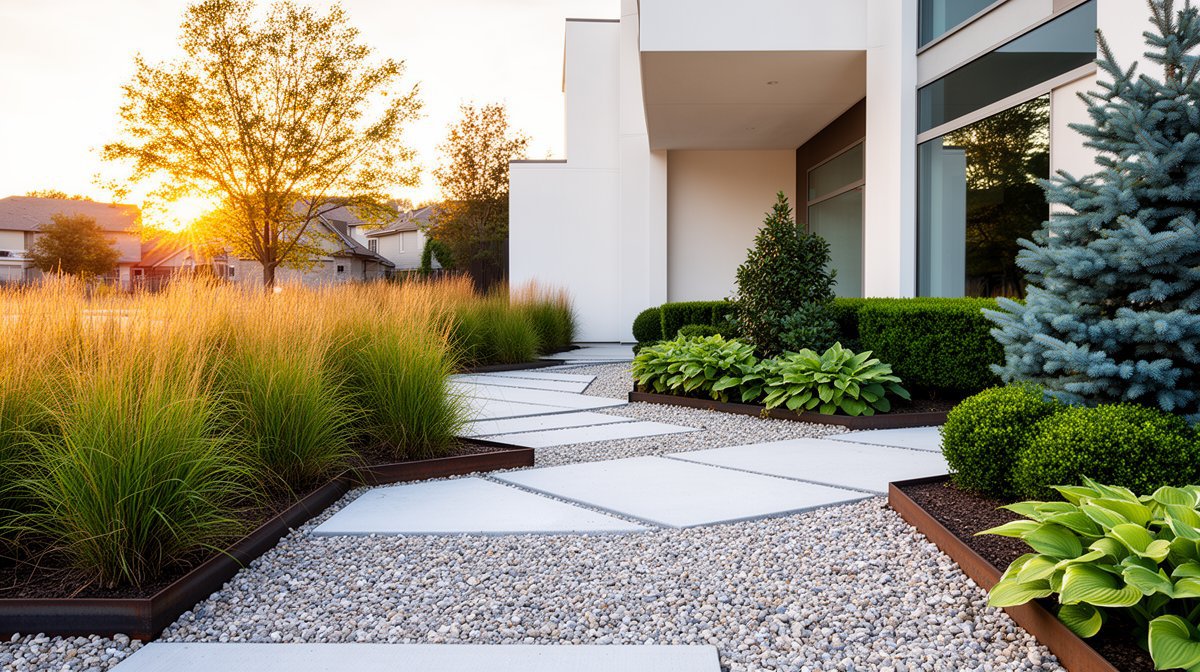
4 Modern Garden Ideas for Springfield, MO | Clean-Line Landscape Design for Zone 6b
Native plants from the Ozark Highlands mixed forests (Zone 6b) — Humid subtropical climate
Why Modern/Minimalist Gardens in Springfield?
Modern landscape design has quietly taken over Springfield's newer south-side construction. The flat-roofed stucco and black-window builds filling in around Galloway Village, Nixa and the Kickapoo corridor want geometry rather than foundation shrubbery, and even the city's enormous stock of 1960s brick ranches in Delaware and Southern Hills converts beautifully — strip the yews, cut one clean concrete walk, and a ranch reads mid-century modern overnight. The style also solves a Springfield problem: fescue lawns here look terrible for six weeks every August, and a gravel-and-grasses front yard looks its absolute best in exactly that window.
The geology that frustrates traditional gardeners is a gift to modern design. Springfield sits on the Ozark Plateau, where cherty silt loam runs only 6–18 inches deep over Burlington limestone, and the region's native limestone glades are already sun-baked rock gardens full of Opuntia humifusa, Echinacea paradoxa, Schizachyrium scoparium and Liatris. That is a modern planting palette growing wild twenty minutes from downtown. Build raised, sharply drained beds capped with chert gravel and hardy succulents genuinely overwinter here: Agave parryi var. neomexicana, Yucca rostrata, Yucca filamentosa 'Color Guard' and Hesperaloe parviflora handle Zone 6b lows of -5°F to 0°F as long as their crowns stay dry through the roughly 45 inches of rain a year. Wet feet in February kill them, never the cold.
Hardscape needs the same respect for the ground. Karst limestone means water either sheets across bedrock or vanishes into fractures, and Greene County has thousands of mapped sinkholes — grading inside a designated sinkhole drainage basin triggers extra city review, and no patio should drain toward a depression. Poured concrete wants a 4–6 inch compacted base and real control joints, because Springfield's freeze-thaw cycling is aggressive at this latitude. Keep the shade trees you inherited: ice storms like January 2007 took out much of the city's canopy, and a mature oak left standing in the middle of a new concrete court is worth more than anything you could plant. For grasses, Calamagrostis x acutiflora 'Karl Foerster', Panicum virgatum 'Northwind', Schizachyrium scoparium 'Standing Ovation' and Sporobolus heterolepis 'Tara' give the architectural verticals without the flopping that plagues Miscanthus in wet Ozark springs. Southwest Missouri installation rates run 20–30% below national metro pricing, which puts full concrete-and-steel projects within reach here that would be out of budget in Kansas City or Denver.
4 Modern/Minimalist Design Ideas for Springfield
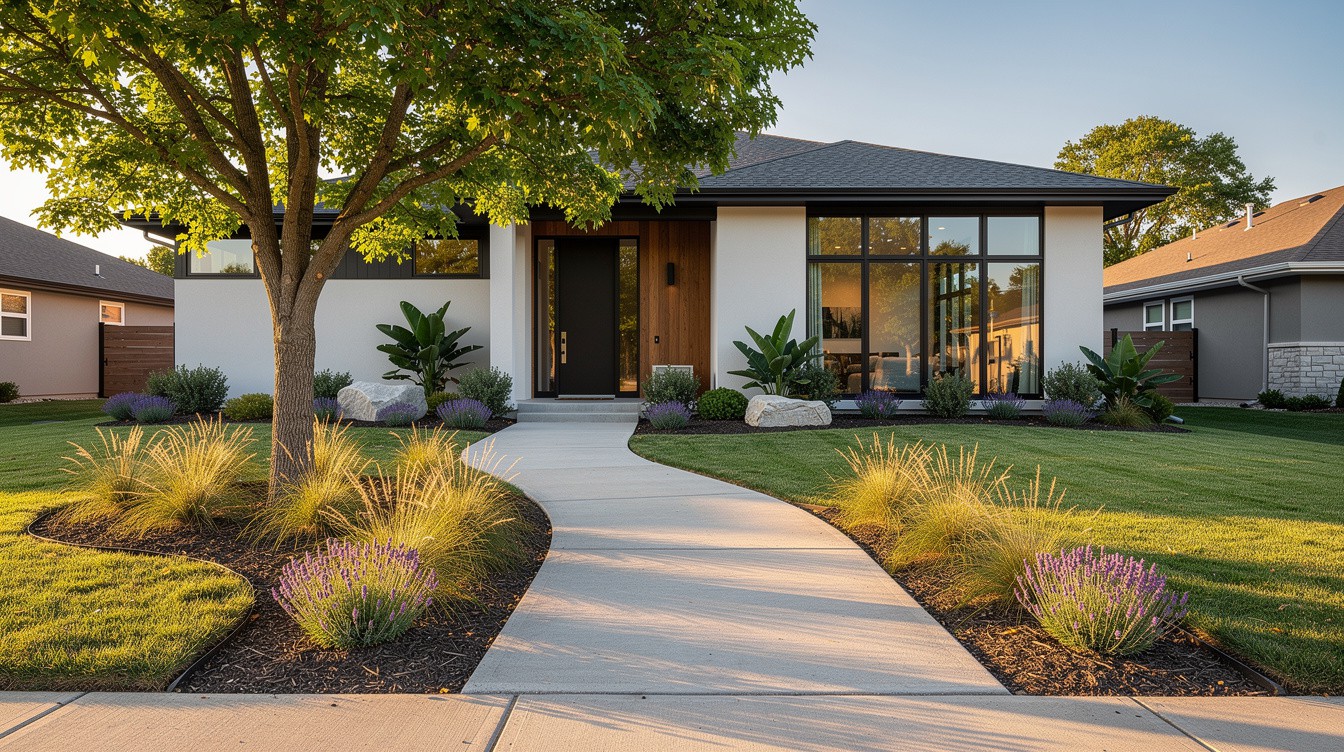
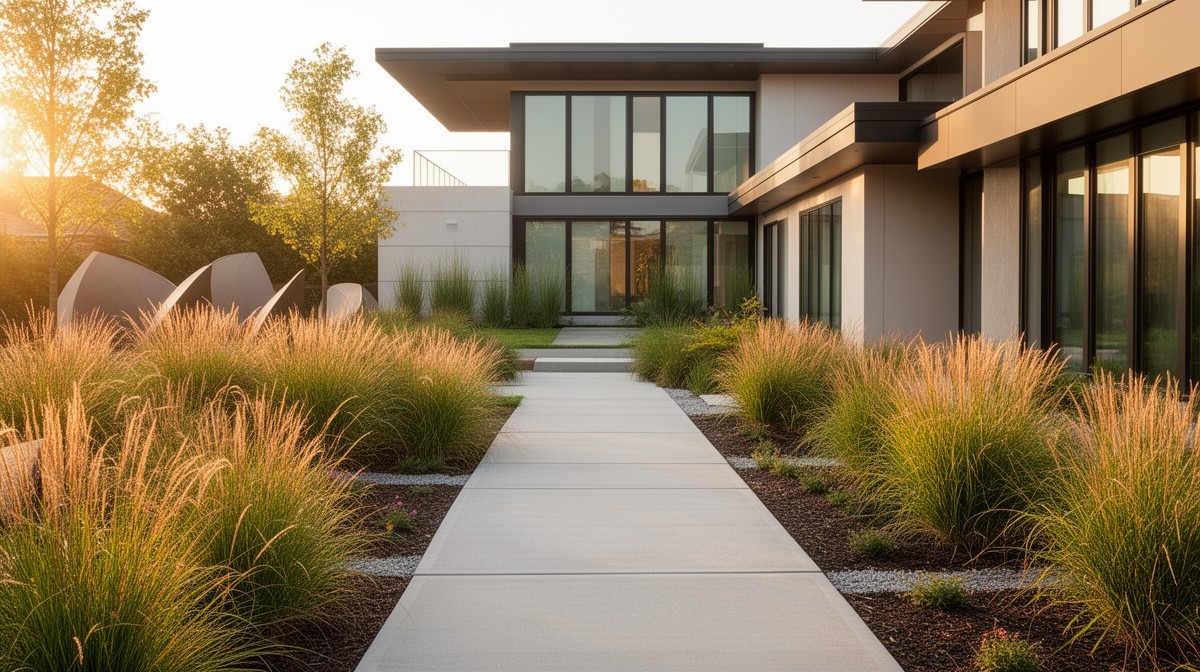
The White Stucco Ranch Entry
$12–22/sqftA low-slung white stucco home with black window frames and a warm wood entry panel is fronted by a single sweeping concrete walk that curves from the driveway to the door — one continuous surface, no steps, no edging fuss. The planting reads as three repeated notes: backlit clumps of upright feather reed grass catching low evening sun, mounded lavender at the bed noses, and a scatter of Ozark limestone boulders set half-buried so they look excavated rather than delivered. Broad tropical foliage flanks the entry for scale, and the existing shade maple is kept and limbed high so its trunk works as sculpture over the clean groundplane.
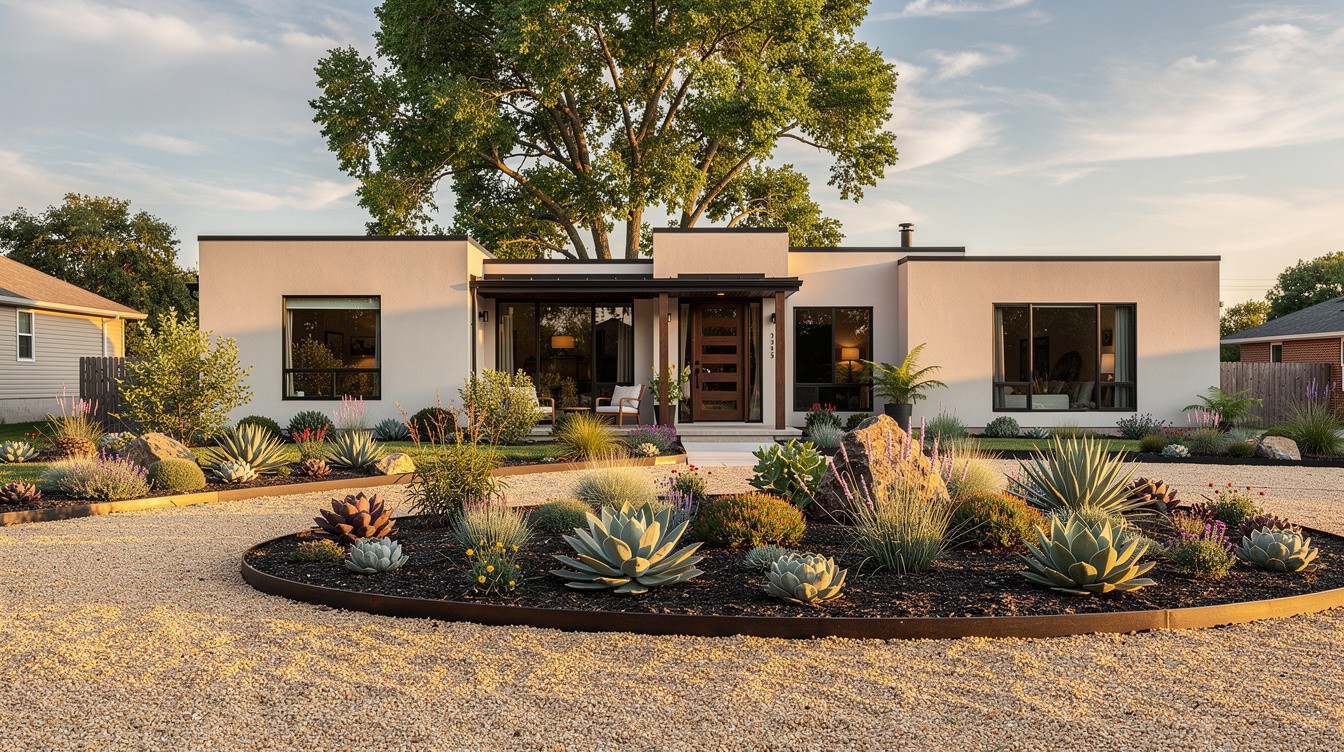
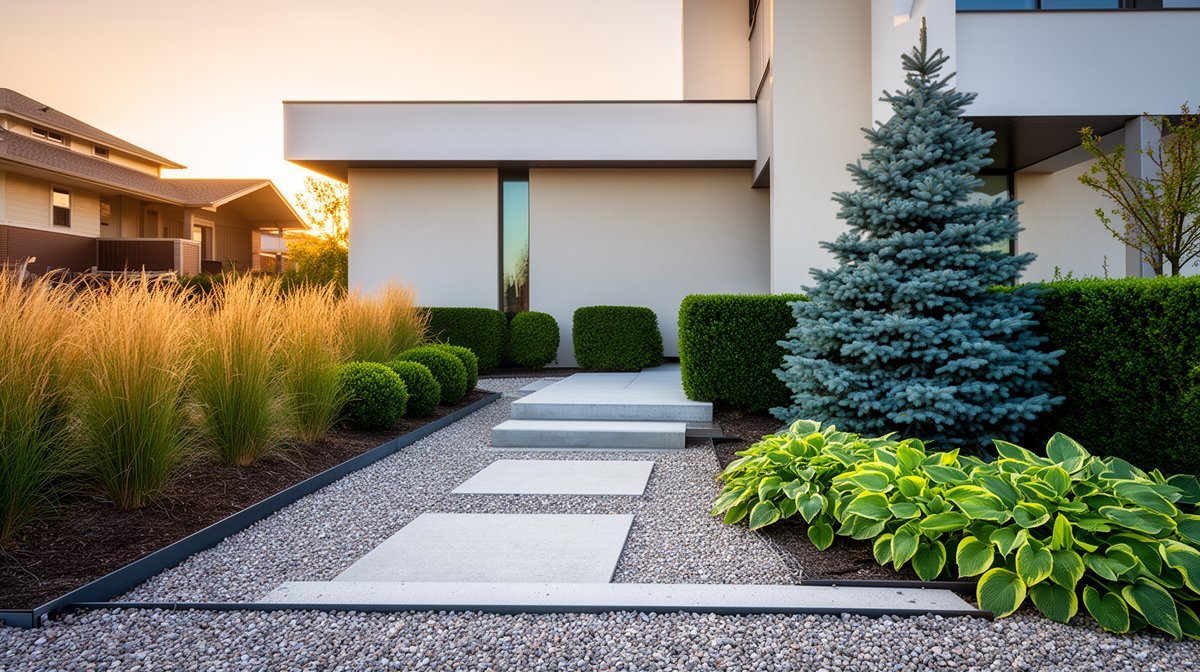
The Gravel Glade Front Yard
$10–20/sqftThe lawn is gone entirely, replaced by a field of pale chert gravel with a single Corten steel-edged island bed floating in it. Inside the bed, rosette-forming hardy agaves and hens-and-chicks are planted at wide spacing in dark, sharply drained mineral soil, punctuated by blue-toned grasses, a limestone boulder set on end, and vertical purple spikes for summer color. It is a direct translation of the limestone glades that ring Springfield — the same plants, the same gravel, the same wide spacing — which is exactly why it survives Ozark winters where a Phoenix-copied version would rot out by March.
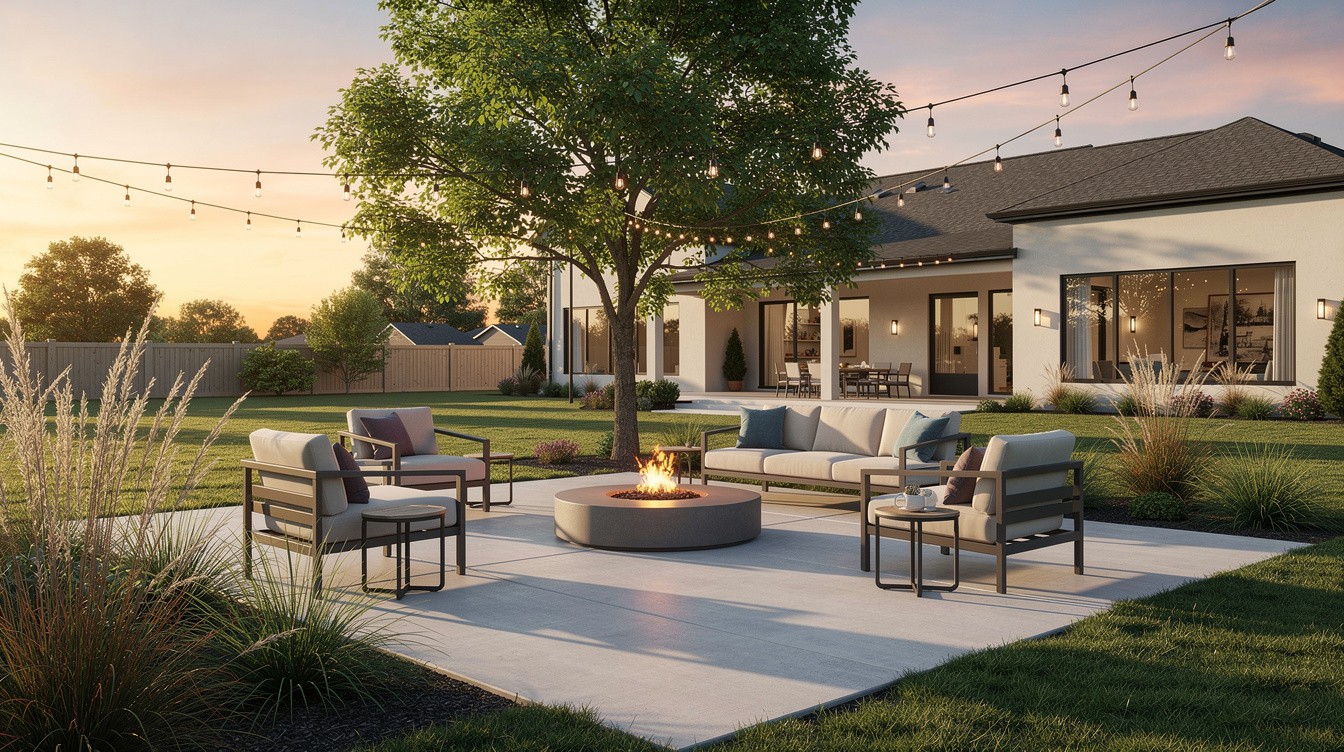
The Concrete Grid Fire Court
$18–34/sqftA large poured concrete court, scored into a clean grid of oversized panels, extends off the back of the house with a round gas fire bowl at its center and a low modern sectional wrapping three sides. String lights sweep overhead from the roofline to the fence, and a mature shade tree is left standing right at the court's edge, its canopy doing the daytime work that no pergola could match. Loose drifts of plumed ornamental grasses close the composition at both ends and along the fence line, replacing what would otherwise be an expensive evergreen hedge.
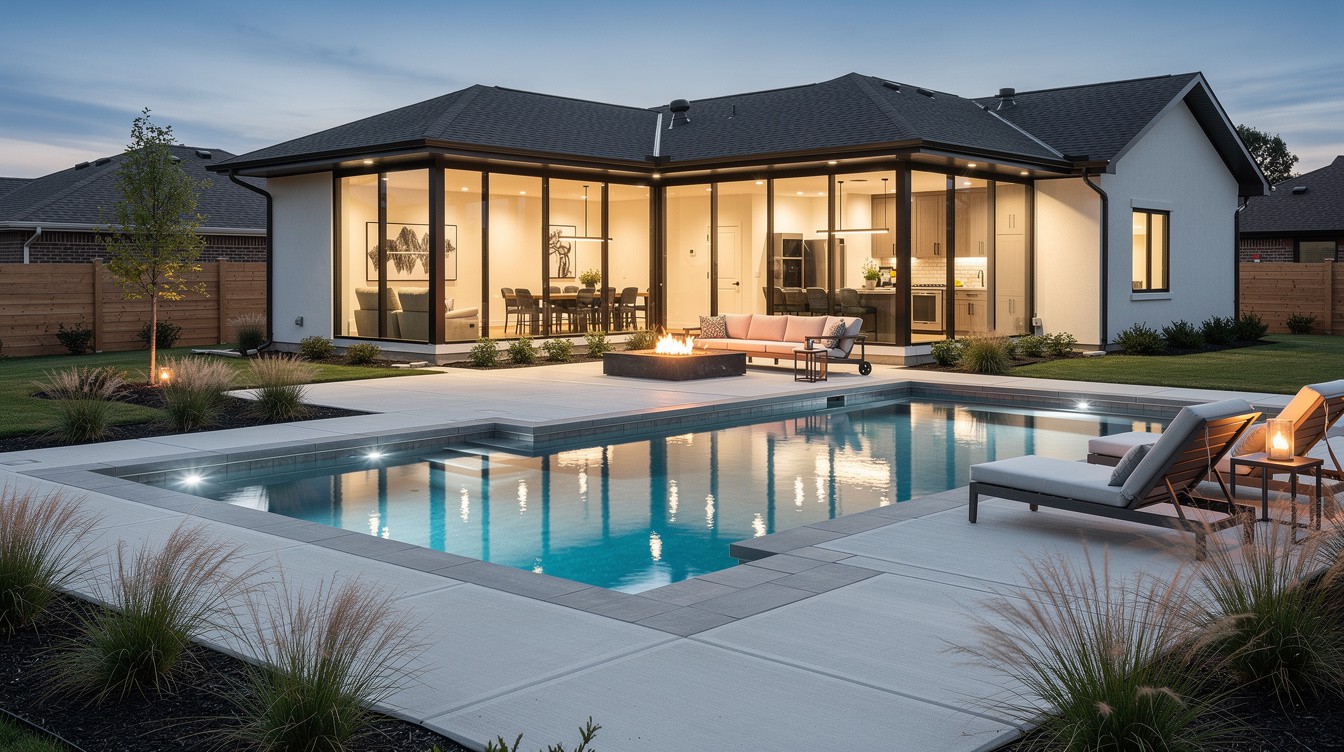
The Twilight Pool Court
$40–75/sqft (pool area inclusive)A rectangular pool with a raised bond beam and a shallow tanning ledge sits inside a deck of large-format concrete pavers, laid in a wide grid that reads as one plane rather than a paving pattern. The house behind is a wall of warm glass at dusk, a linear fire table anchors the near edge, and the entire landscape budget goes into two moves: uplit ornamental grasses running the horizontal cedar fence on both sides, and low submerged pool lighting. The restraint is the design — three materials, one water shape, one plant texture — and it keeps a Springfield backyard usable from April well into October.
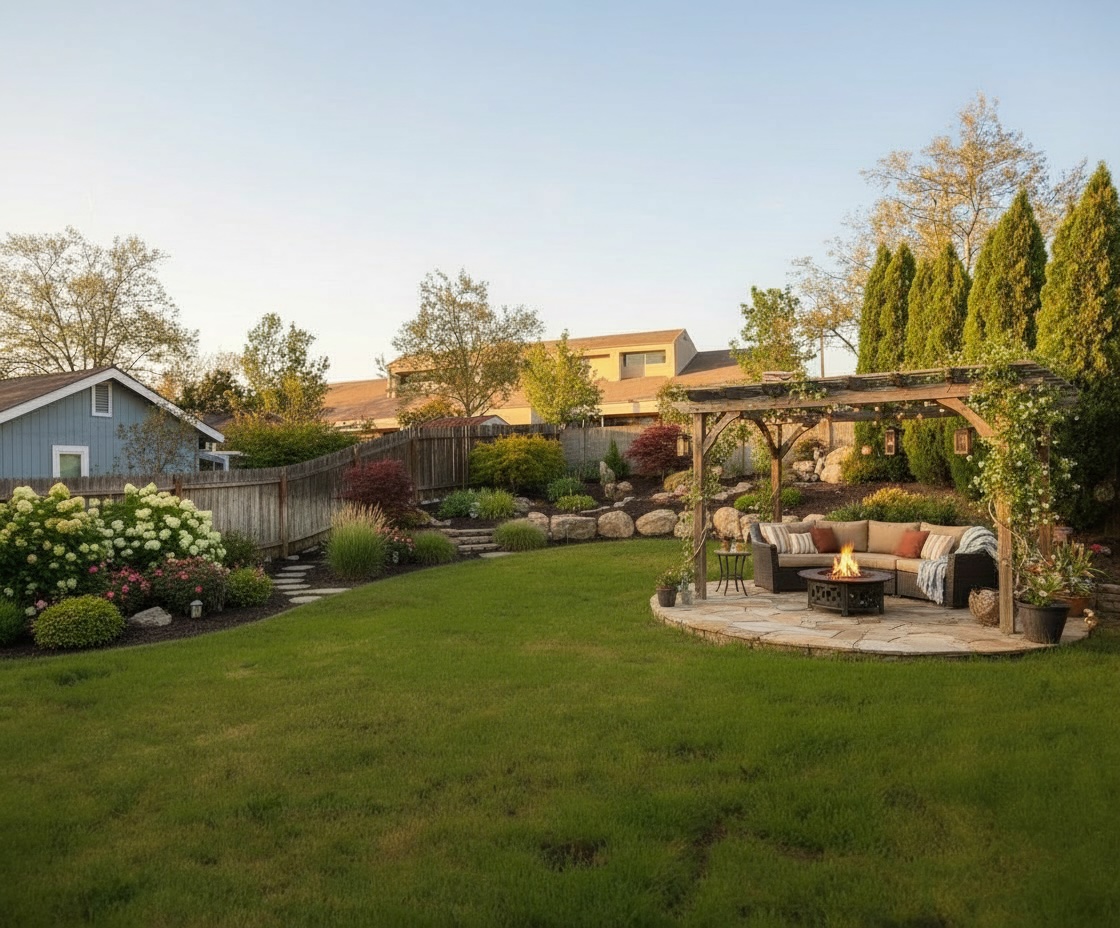
See how a modern/minimalist garden looks on YOUR property
Upload a photo of your Springfield yard and visualize your dream garden in seconds.
Try ProScapeAI Free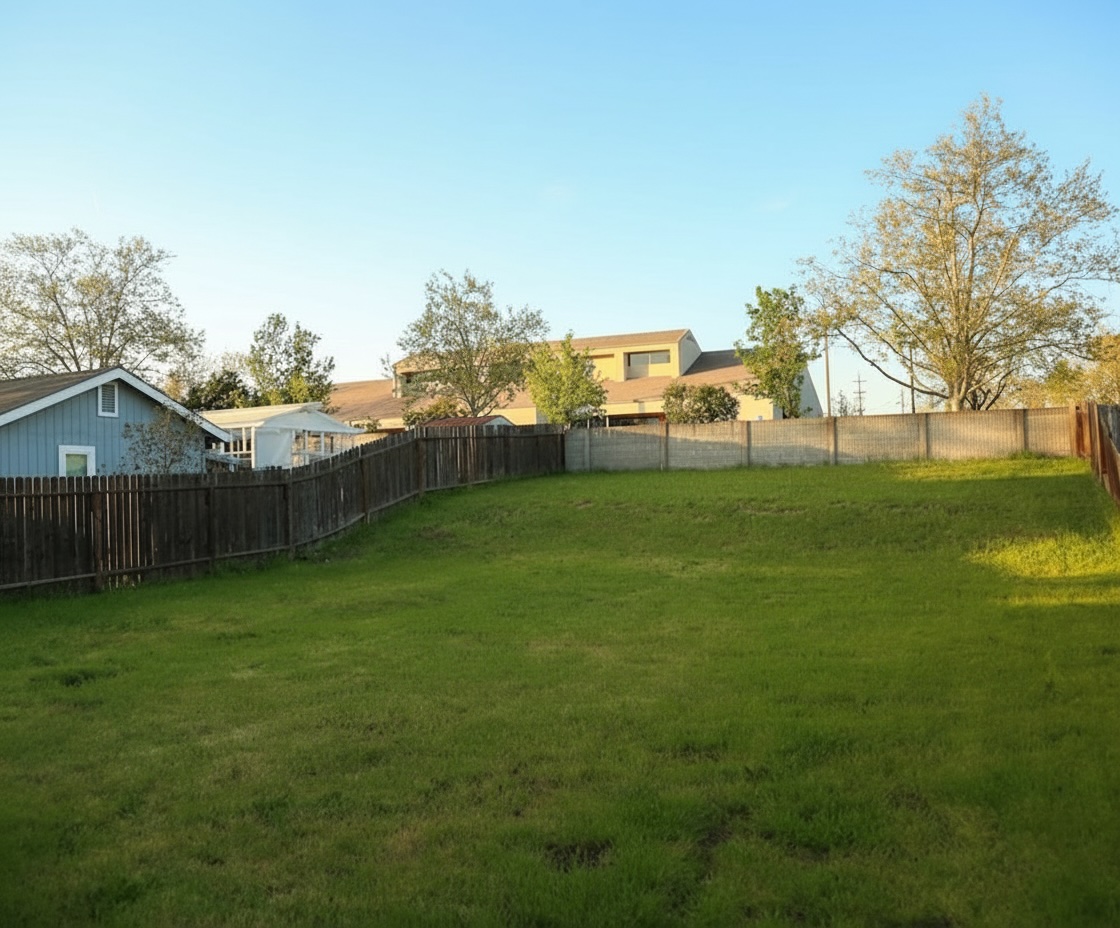
Featured Trees & Shrubs for Modern/Minimalist Gardens
Browse all 21 plants for Springfield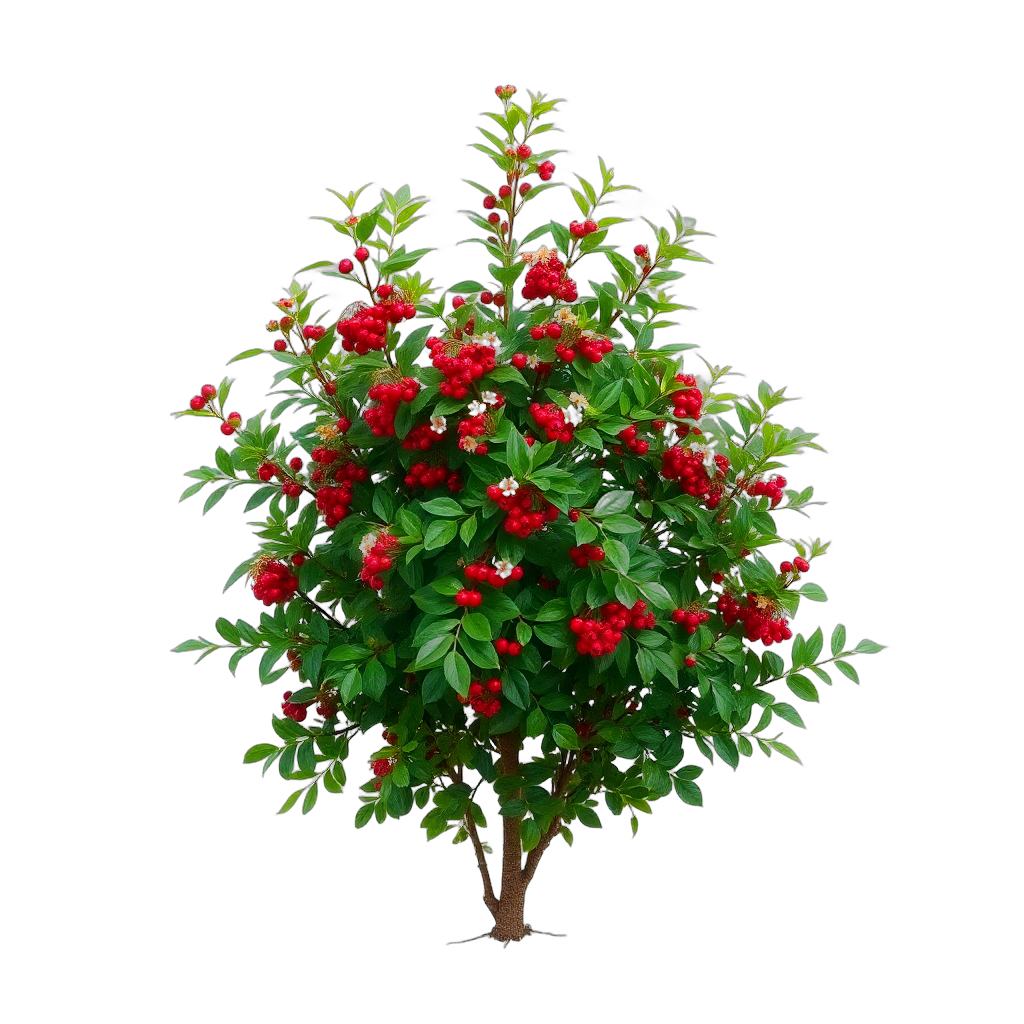
Coralberry
Symphoricarpos orbiculatus
grows to 6 feet, pink blooms in summer. Pollinator-friendly.

Fragrant Sumac
Rhus aromatica
grows to 4 feet, yellow blooms in spring. Attracts butterflies.
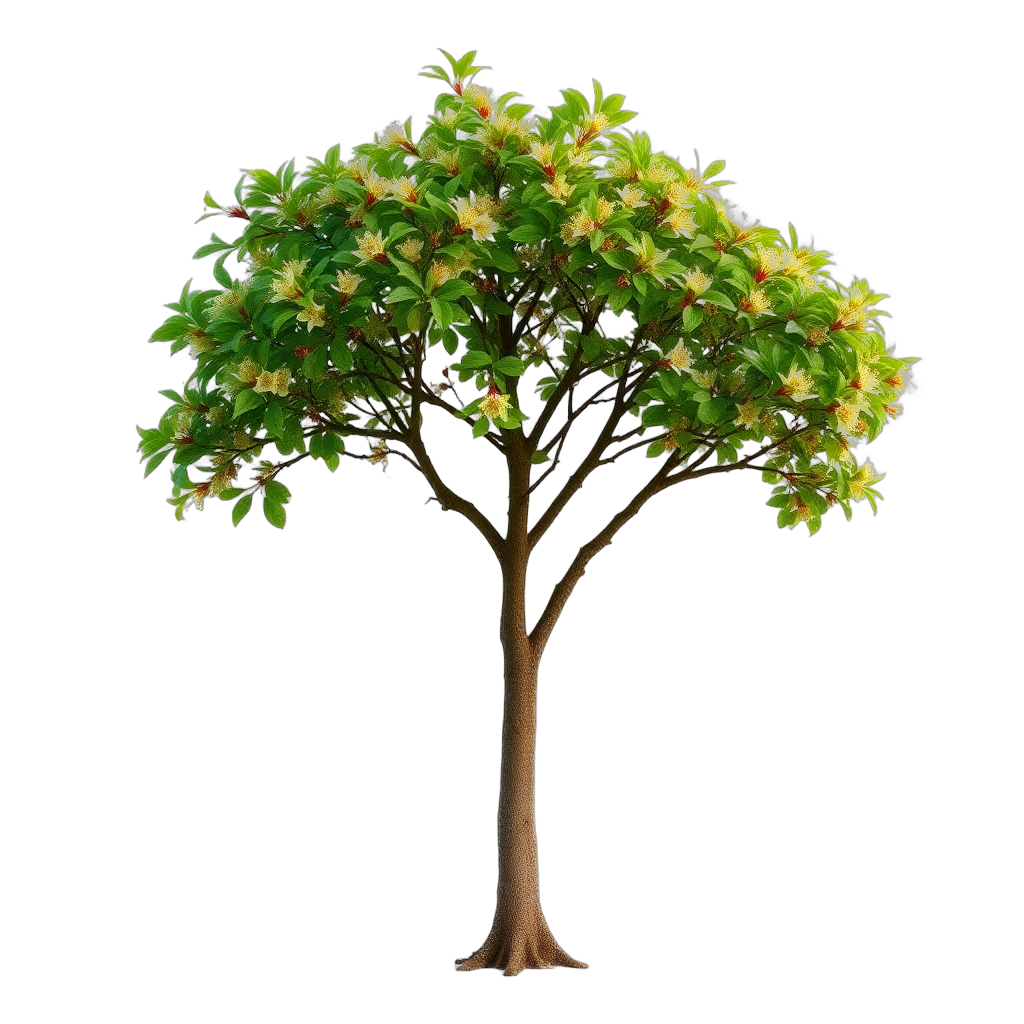
Vernal Witch Hazel
Hamamelis vernalis
medium-sized at 8 feet, yellow blooms in spring. Pollinator-friendly.
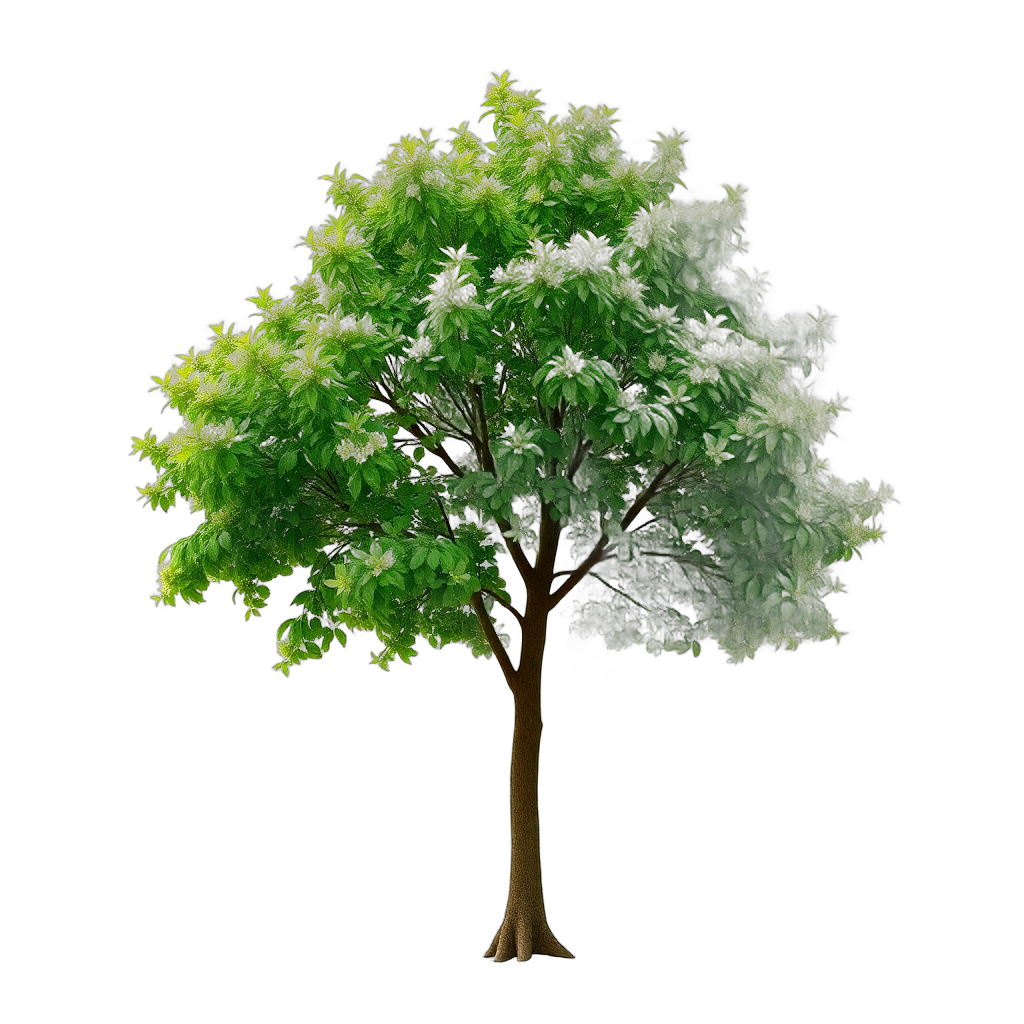
Black Locust
Robinia pseudoacacia
large shade tree reaching 50+ feet, white blooms in spring. Attracts butterflies.
Featured Grasses & Groundcovers for Modern/Minimalist Gardens

Kentucky Bluegrass
Poa pratensis
low-growing ground cover, blooms in spring. Brown fall color.
Featured Flowers & Perennials for Modern/Minimalist Gardens
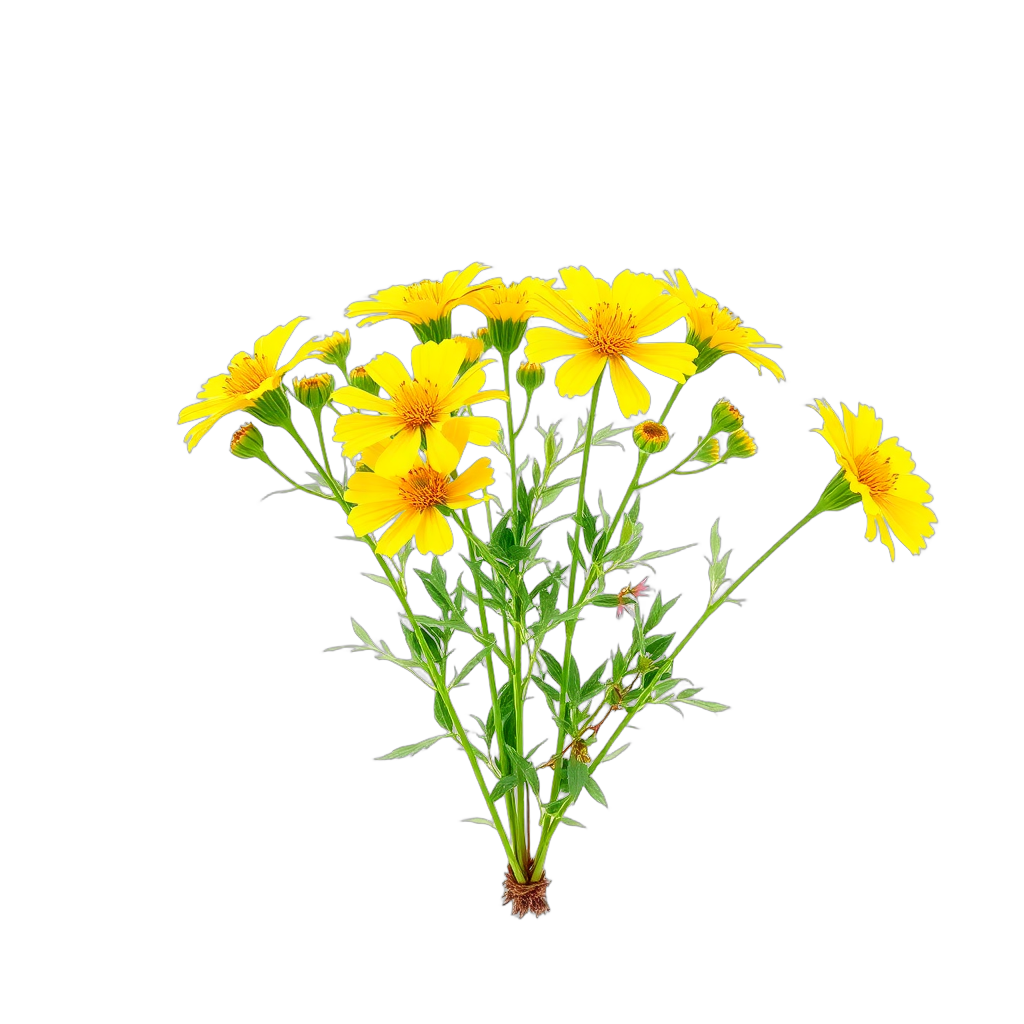
Threadleaf Coreopsis
Coreopsis verticillata
low-growing ground cover, yellow blooms in summer. Attracts butterflies.

Water Plantain
Alisma plantago-aquatica
low-growing ground cover, white blooms in summer. Attracts butterflies.

Anemone Clematis
Clematis montana
reaches 20 feet tall, white,pink blooms in spring. Attracts hummingbirds.

Chinese Trumpet Vine
Campsis grandiflora
reaches 25 feet tall, orange,red blooms in summer. Attracts hummingbirds.
Bloom Calendar for Springfield
spring
Fragrant Sumac, Vernal Witch Hazel, Black Locustsummer
Threadleaf Coreopsis, Coralberry, Water Plantainfall
Purple Passionflowerwinter
Limited bloomsDesign Tips for Springfield (Zone 6b)
- Copy the limestone glades instead of the desert — Opuntia humifusa, Echinacea paradoxa, Schizachyrium scoparium and Liatris pycnostachya already grow on bare rock outside Springfield, so a glade-derived gravel garden delivers the same modern look as an Arizona one and actually survives a Zone 6b February
- Raise every succulent bed and mulch with gravel, never bark — 45 inches of annual rain sitting in an Agave parryi crown through a freeze is what kills hardy succulents here, not the -5°F low itself
- Use Calamagrostis x acutiflora 'Karl Foerster' where a warmer-climate designer would use columnar evergreens; it holds strict vertical form through ice loads and gives you nine months of structure for a fraction of the cost of an Italian cypress row
- Sawcut real control joints on a grid no larger than about 10 feet and make them part of the design — Springfield's freeze-thaw cycling will crack an unjointed slab, and a deliberate grid turns the inevitable into geometry
- Design around the shade trees you already have; the January 2007 ice storm proved how long a Springfield canopy takes to replace, and a mature oak or maple left standing at the edge of a concrete court is the one element money cannot buy back
- Check your lot against the city's sinkhole basin mapping before grading, and always pitch hardscape runoff away from depressions — karst drainage decisions are the most commonly overlooked requirement on Greene County residential projects
Where to Source Plants in Springfield
Skip the big-box stores. These independent Springfield nurseries specialize in the plants that make modern/minimalist gardens thrive in Zone 6b.
Wickman's Garden Village
South Fort Avenue
90+ year family business offering a nursery, garden center, greenhouse, and landscape design.
Schaffitzel's Flowers & Greenhouses
East Atlantic
Historic greenhouse-based florist and nursery offering plants and custom arrangements.
Carson's Nurseries
South Campbell
Full-service nursery with landscape trees, annuals, perennials, shrubs, and an extensive rock yard.
Modern/Minimalist Landscaping Costs in Springfield
| Project Scope | Estimated Cost |
|---|---|
| Front yard modern conversion (turf removal + gravel field + architectural plants) | $7,000 – $15,000 |
| Poured concrete back court, 400–600 sqft with control joints | $8,000 – $18,000 |
| Backyard fire court with gas fire bowl, seating and string lighting | $14,000 – $30,000 |
| Pool deck + full modern backyard landscape | $55,000 – $110,000 |
| Corten steel edged raised planter bed (fabricated + filled) | $450 – $1,100 each |
| AI visualization with ProScapeAI | Free to start |
Estimates based on Springfield, MO-area contractor rates as of 2026. Actual costs vary by site conditions, materials, and contractor.
Springfield Climate & Growing Zone
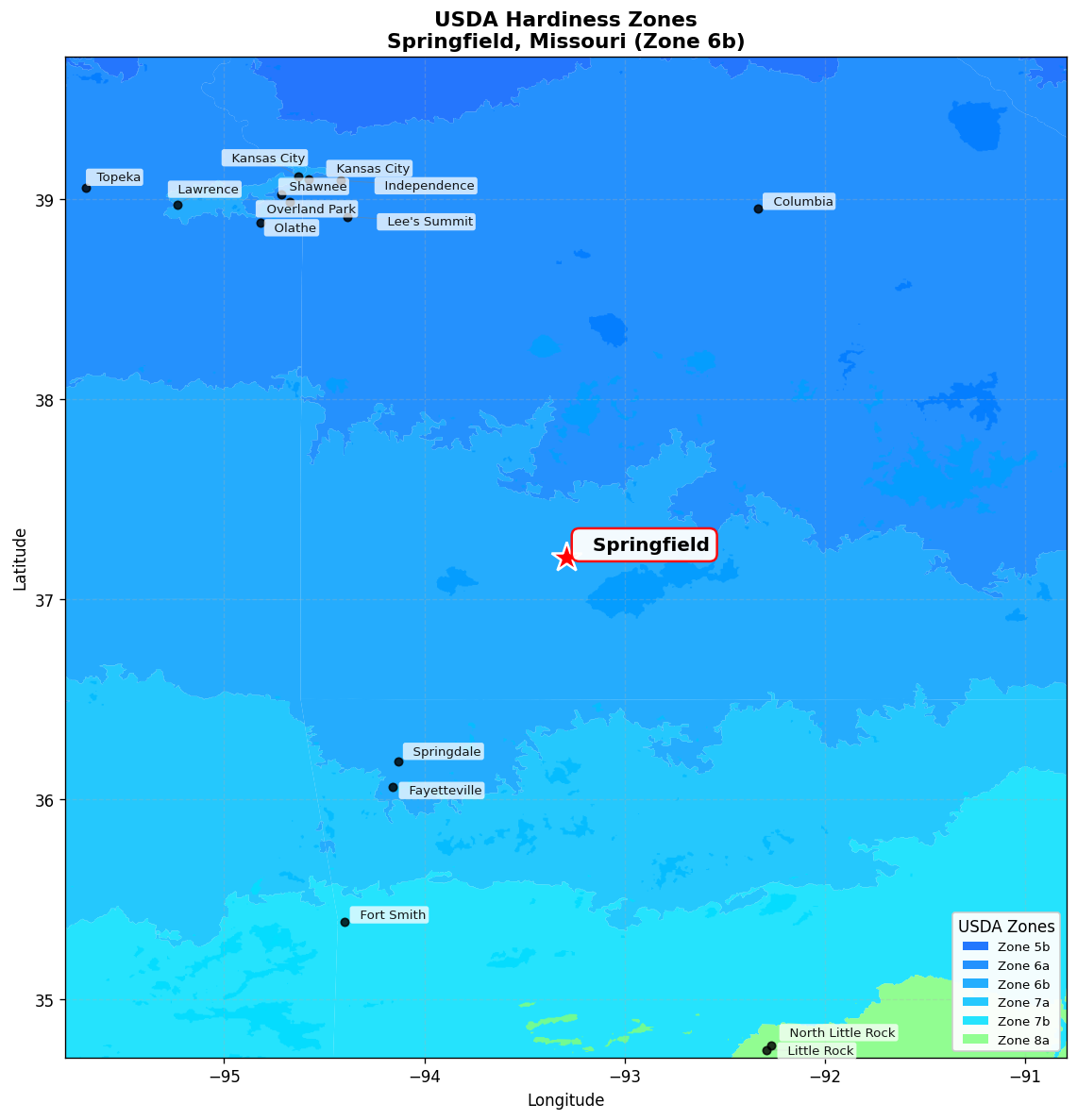
USDA Zone 6b
Hardiness zone for Springfield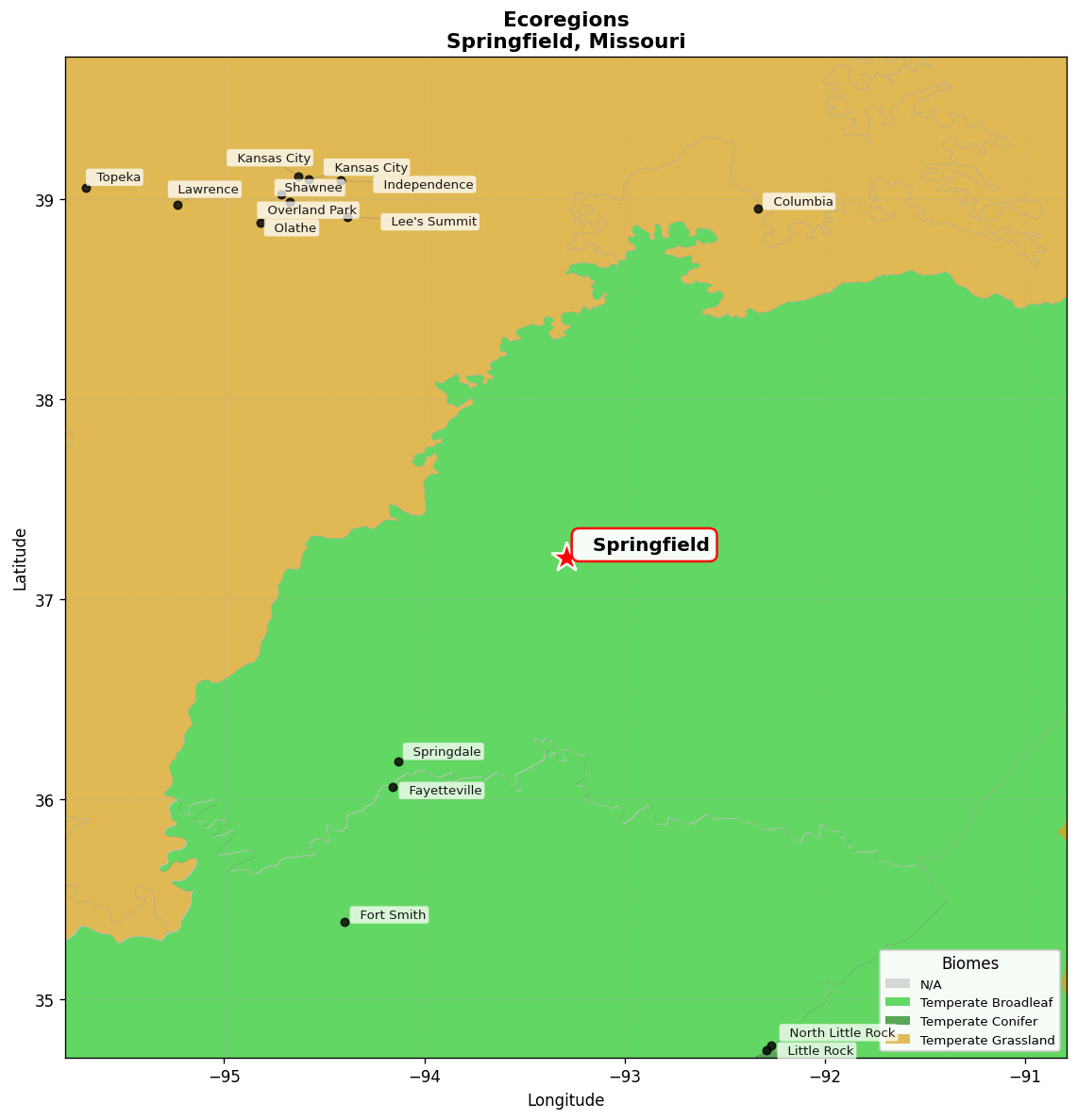
Ozark Highlands mixed forests
Native ecoregionFrequently Asked Questions
How much does modern landscaping cost in Springfield, MO?
Southwest Missouri installation rates run 20–30% below national metro averages, which makes concrete-heavy modern design unusually affordable here. A full front-yard conversion — turf removal, gravel field, Corten edging, architectural plants — on a typical 700 sqft frontage lands at $7,000–15,000 installed. A poured concrete back court of 400–600 sqft with a gas fire bowl runs $14,000–30,000. Complete pool-and-landscape backyards in Nixa or Rivercut generally fall between $55,000 and $110,000, noticeably under Kansas City pricing. A DIY gravel-and-grasses conversion can come in near $4/sqft in materials.
Can agaves and yuccas really survive a Springfield winter?
Yes, and the reason people fail is drainage rather than cold. Zone 6b lows of -5°F to 0°F are within range for Agave parryi var. neomexicana, Yucca rostrata, Yucca filamentosa 'Color Guard', Hesperaloe parviflora and Opuntia humifusa — the last of which grows wild on limestone glades right outside town. What kills them is 45 inches of rain sitting in the crown through a freeze. Plant them in raised beds of 50/50 native soil and crushed limestone screenings, mulch with gravel rather than bark, and tilt the rosettes slightly so water sheds. Never plant a succulent at grade in unamended Ozark silt loam.
How do I pour a patio when bedrock is six inches down?
Shallow bedrock is actually an advantage for hardscape — you get a stable subgrade almost immediately, which is why concrete performs so well in Springfield compared to clay-soil cities. Excavate to 6 inches, compact a 4–6 inch base of crushed limestone, and pour with proper sawcut control joints on a grid no larger than about 10 feet, since freeze-thaw cycling at this latitude will crack an unjointed slab. If you hit ledge, breaking rock adds cost fast, so raise the slab slightly and build up rather than blasting down. Always slope runoff away from the house and away from any depression on the lot.
Which ornamental grasses work best in Springfield?
Calamagrostis x acutiflora 'Karl Foerster' is the workhorse — strictly upright, holds through ice, and its wheat-colored plumes read as architecture from June to March. Panicum virgatum 'Northwind' and 'Shenandoah' are Missouri-native switchgrasses that never flop, Schizachyrium scoparium 'Standing Ovation' and 'The Blues' bring the copper-orange fall color of the local glades, and Sporobolus heterolepis 'Tara' makes a fine-textured low mass. Avoid Pennisetum setaceum 'Rubrum', which is an annual here, and be careful with older Miscanthus cultivars, which reseed and flop in wet Ozark springs.
When is the best time to install a modern landscape in Springfield?
Concrete and hardscape work goes best from April through November, since pours need consistent overnight temperatures above freezing and Springfield gets genuine hard freezes from December through February. For planting, mid-September to early November is ideal — perennials and grasses root through the mild wet fall and hit spring established. Spring planting after the roughly April 15 last frost also works well. Skip planting grasses and succulents in late summer, when the flash droughts that end Springfield summers make establishment brutal, and cut grasses back in late February before new growth starts.
Do I need a permit, and how do sinkholes affect my project?
Gravel conversions, planting beds and at-grade patios generally need no permit in the City of Springfield, while pools, retaining walls above 4 feet, fences and roofed structures do. Nixa, Ozark and Republic each run separate reviews with their own thresholds. The karst question matters more than most homeowners expect: Greene County has thousands of mapped sinkholes, and grading or stormwater discharge inside a designated sinkhole drainage basin triggers additional city review. Never route patio runoff, downspouts or a French drain toward a depression — in karst country that water reaches the aquifer essentially untreated.