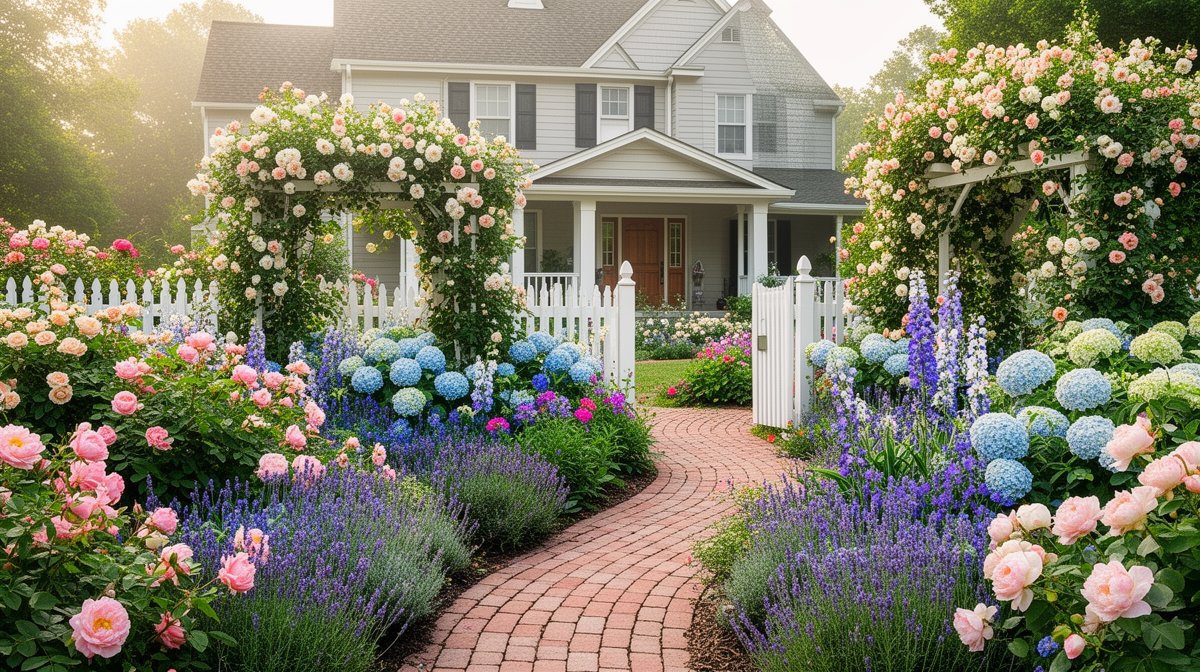
4 Cottage Garden Ideas for Tulsa, OK | English Garden Design in Zone 7a
Native plants from the Central Tallgrass prairie (Zone 7a) — Humid subtropical climate
Why Cottage/English Gardens in Tulsa?
Tulsa sits at the eastern edge of the Central Tallgrass Prairie ecoregion, where the vast sea of big bluestem and Indian grass that once carpeted northeastern Oklahoma gives way to the oak-hickory woodlands of the Ozark foothills. This ecotone — the transition between prairie and forest — is precisely the ecological condition that cottage garden design has always tried to evoke: informal, layered, seasonally dynamic, and abundant with life. Tulsa's cottage gardens are rooted in this prairie-woodland edge, and the best ones acknowledge it openly rather than pretending to be somewhere in the English Cotswolds.
Zone 7a gives Tulsa a genuine four-season growing calendar with winters that deliver the cold stratification cottage perennials need. Average winter lows reach 5–15°F — cold enough to establish hybrid perpetual roses, English lavender, and delphiniums that struggle in warmer Texas cities. The last average freeze is around March 20, opening a long growing season through mid-November. Annual rainfall averages 40 inches — the highest of any city in this group — distributed well across the year with peak precipitation in spring and fall. That rainfall is Tulsa's greatest gardening asset: a well-designed cottage garden in Tulsa is genuinely self-sustaining through spring and fall without supplemental irrigation.
Tulsa's neighborhoods make the cottage garden case compellingly. Maple Ridge, Midland Valley, and Brookside are lined with 1920s–1940s Craftsman bungalows, Tudor revival homes, and period cottages that are architecturally ideal for cottage treatment. The Swan Lake neighborhood — named for its central lake — has some of Tulsa's most established residential landscapes with mature American elms, oaks, and redbuds that create the canopy structure cottage gardens require. Utica Square and the surrounding neighborhoods in midtown are experiencing significant renovation investment from homeowners who understand that a cottage garden front yard is part of the historic character, not a departure from it.
4 Cottage/English Design Ideas for Tulsa
AI-generated image
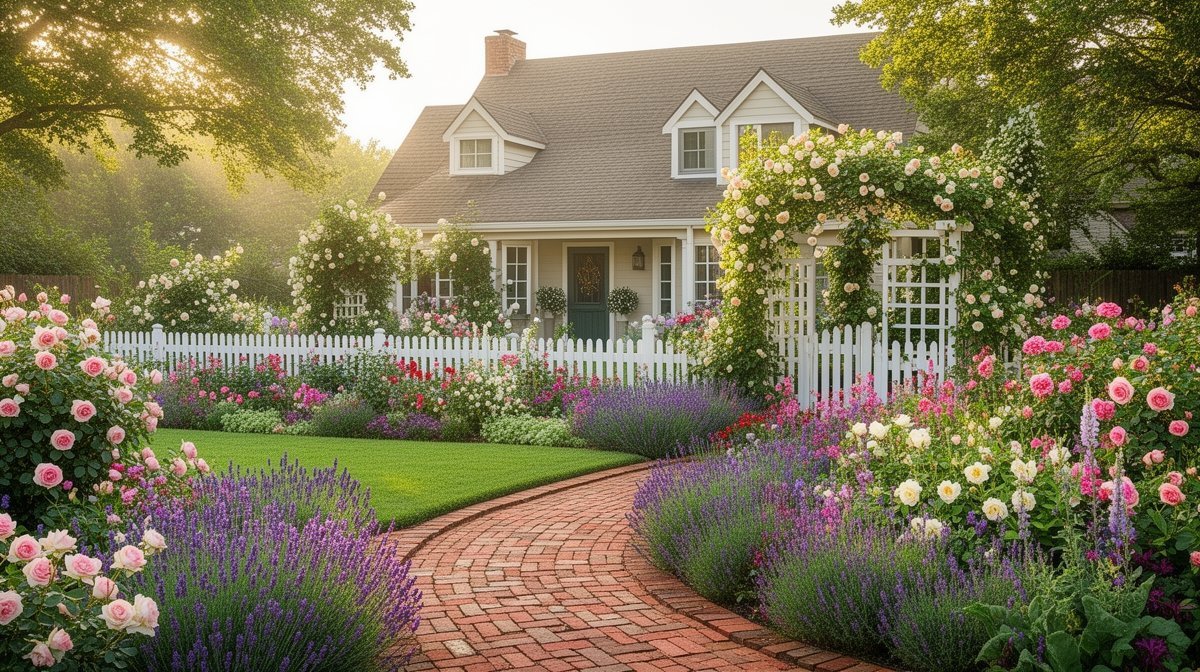
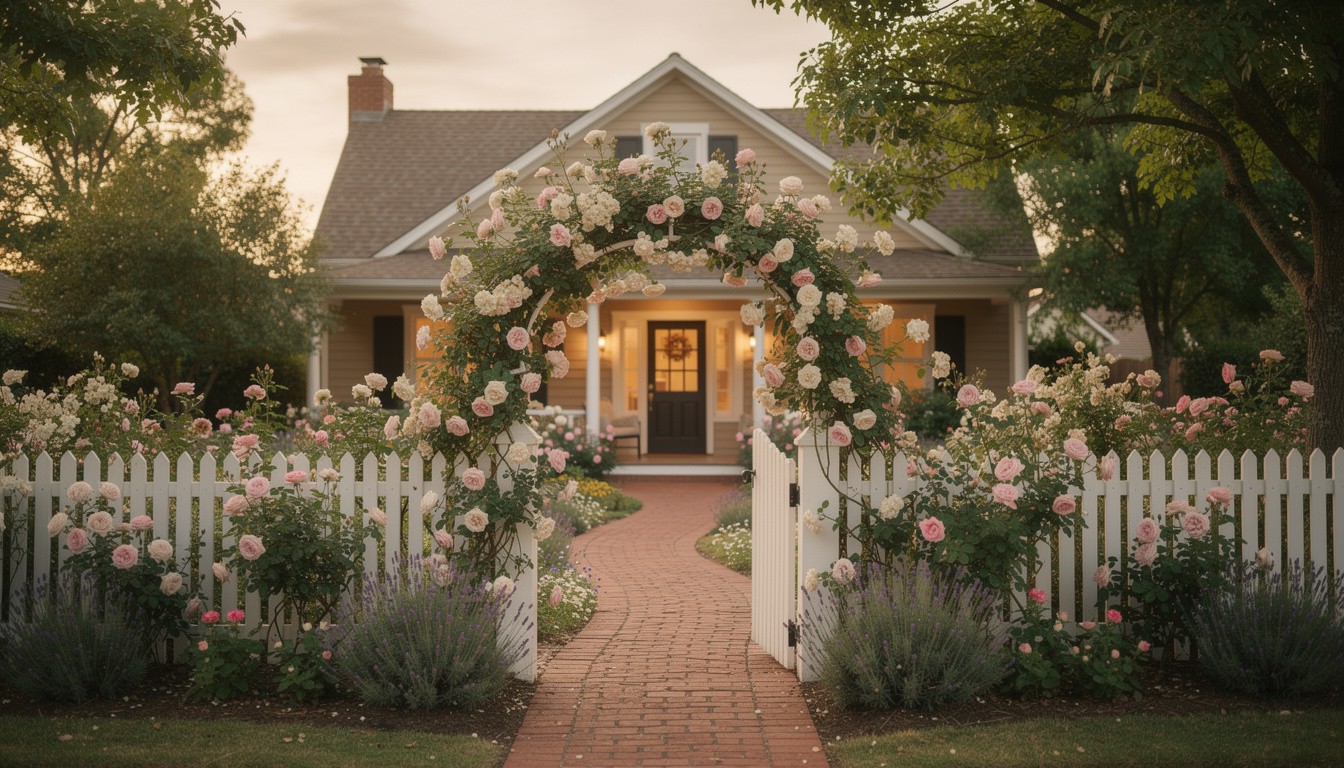
The Rose Arbor Gate and Lavender Entry
$11–20/sqftA white picket fence with a rose-covered arbor gate opens onto a brick path leading to the front porch of a Tulsa cottage. Climbing roses in soft pink and white drape over the wooden arch at spring peak, and lavender borders line the path symmetrically on both sides. A large mature tree provides afternoon shade overhead. Tulsa's Zone 7a climate with reliable spring rainfall and cooler winters than Texas metros allows the widest range of cottage rose varieties — 'New Dawn', 'Climbing Iceberg', and 'Fourth of July' all perform here with fewer disease issues than they face further south, making this the most achievable rose arbor result in the Southern Plains.
AI-generated image
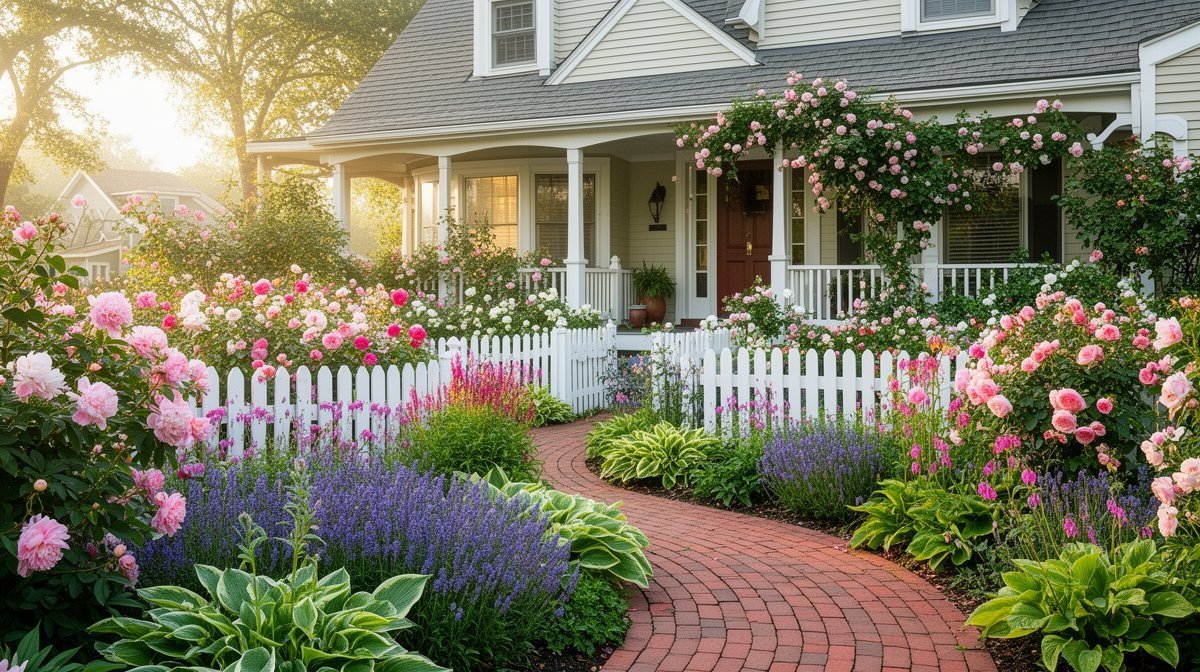
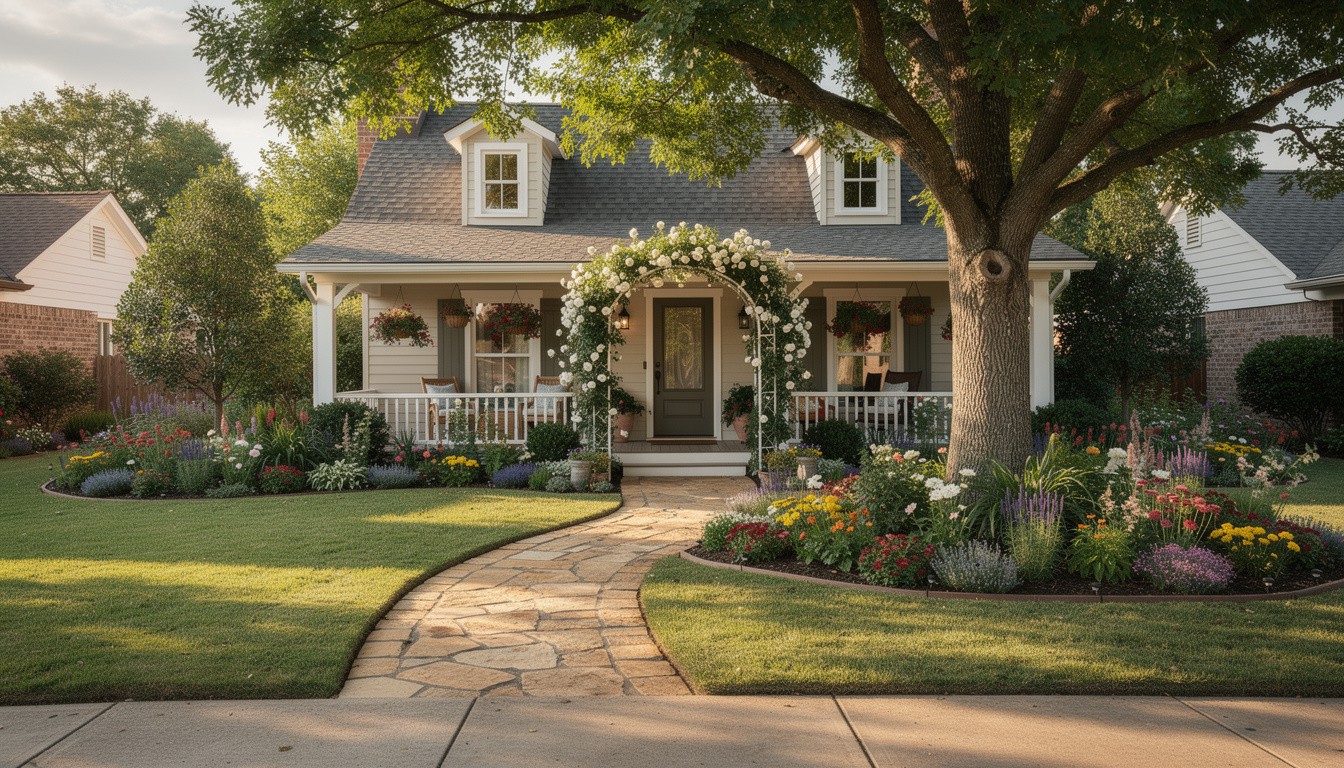
The Cottage Arch and Perennial Walk
$12–22/sqftA white rose arch frames the front of a Cape Cod-style Tulsa home, with wide informal perennial borders sweeping along a curved flagstone path. The borders feature roses, foxgloves, lavender, and bright summer annuals, and the covered porch beyond is dressed with hanging flower baskets. A large shade tree anchors one side of the yard. Tulsa sits at the intersection of the prairie grasslands and the eastern forests — this climate diversity allows a wider cottage plant palette than most Oklahoma cities, supporting foxgloves that struggle further west, hostas in the shade, and roses that bloom continuously from April through frost with proper pruning.
AI-generated image
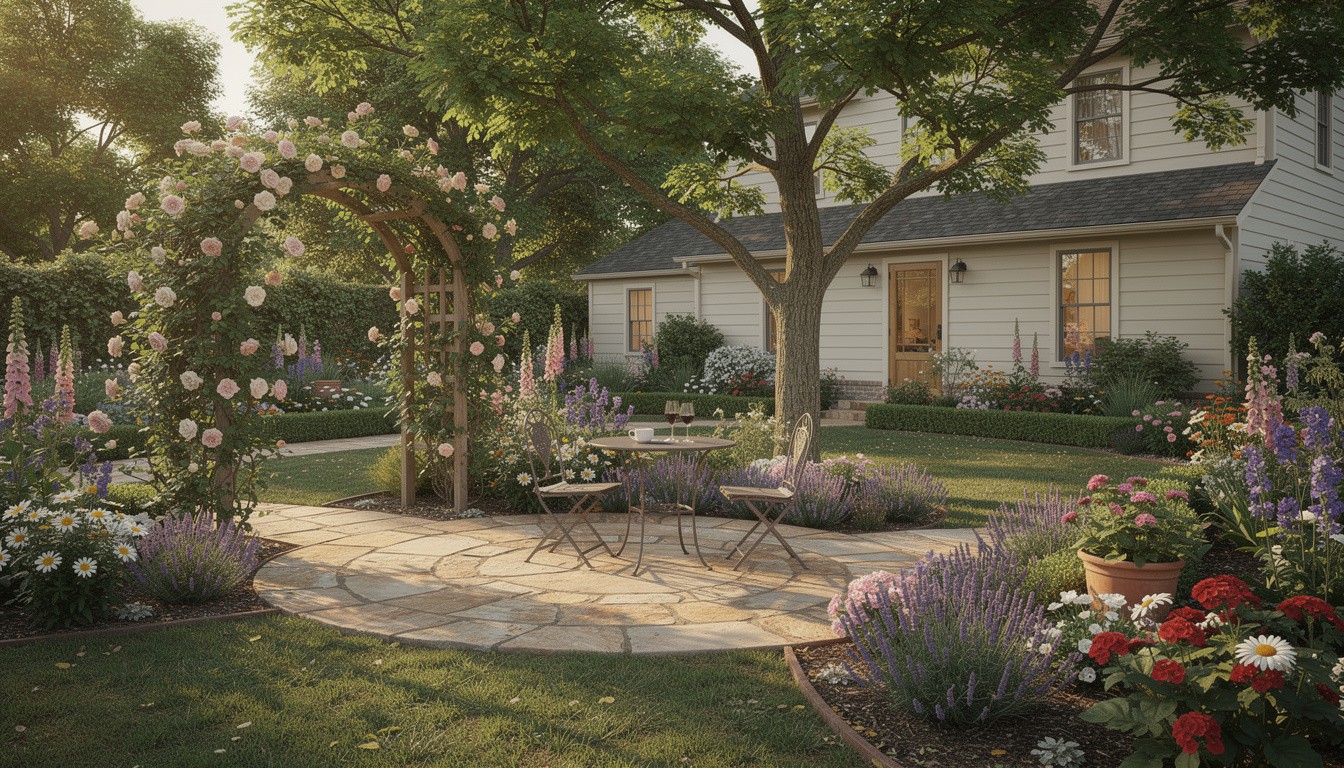
The Garden Arch Patio Seating Room
$14–26/sqftA white rose arch and a pair of bistro chairs sit on a flagstone patio enclosed by cottage borders of roses, lavender, foxgloves, and prairie perennials. Mature deciduous trees overhead filter the afternoon light, and the warm stone paving and lush surrounding planting create a garden room that feels private and abundant. Tulsa's climate delivers a genuinely long outdoor season: spring arrives in March and fall lingers through October, giving this kind of sheltered patio garden more useful hours per year than in any Texas city. The bistro scale keeps the space intimate and functional for daily use.
AI-generated image
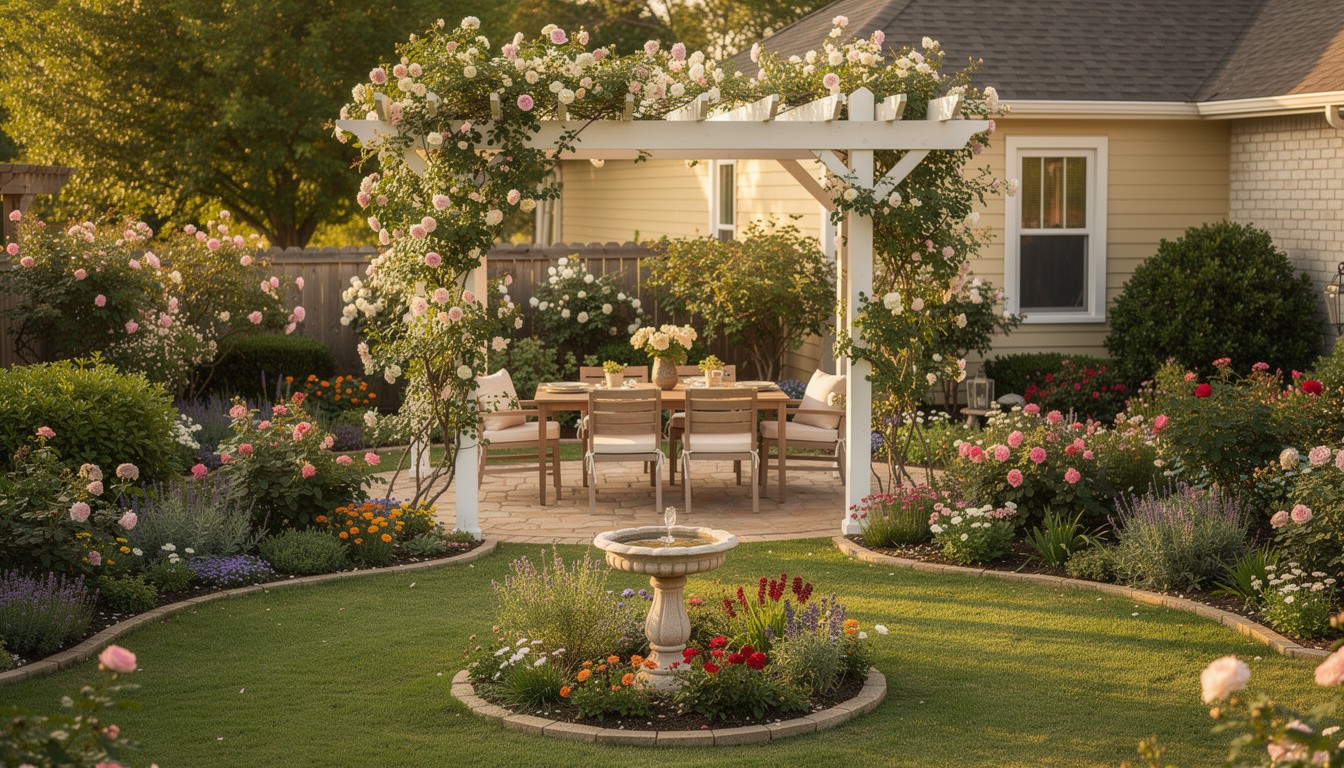
The Rose Pergola, Fountain, and Dining Garden
$18–38/sqftA white pergola draped with climbing roses shelters a dining table at the rear of a Tulsa cottage garden, while a round stone bird bath fountain anchors a circular island bed at the center of a well-kept lawn panel. Mixed cottage borders of roses, lavender, and spring perennials surround the composition. The pergola is in full climbing rose bloom, the fountain catches the afternoon light, and the surrounding borders are at simultaneous peak. Tulsa's lower cost of construction relative to Texas metros makes this full cottage backyard transformation more financially accessible here — the same pergola, fountain, and planting project costs 20–30% less than in Dallas or Austin.
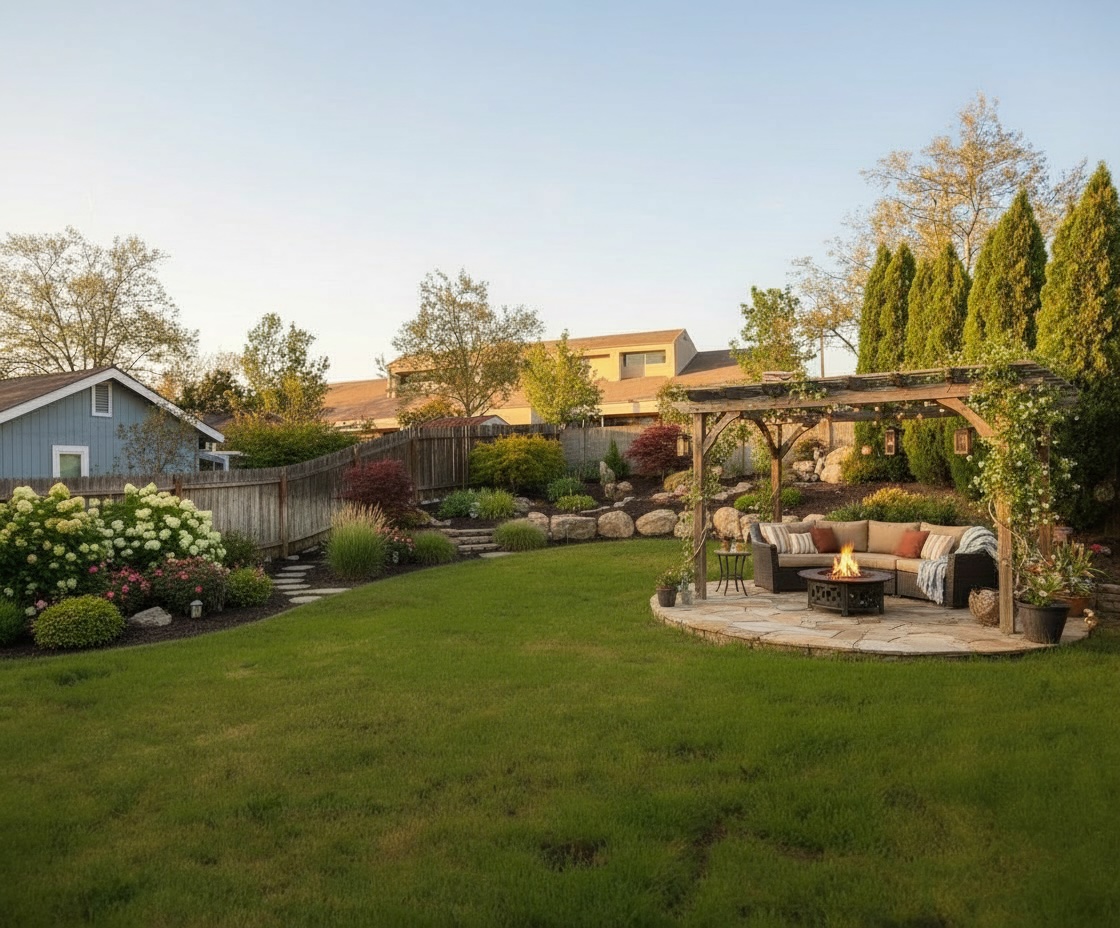
See how a cottage/english garden looks on YOUR property
Upload a photo of your Tulsa yard and visualize your dream garden in seconds.
Try ProScapeAI Free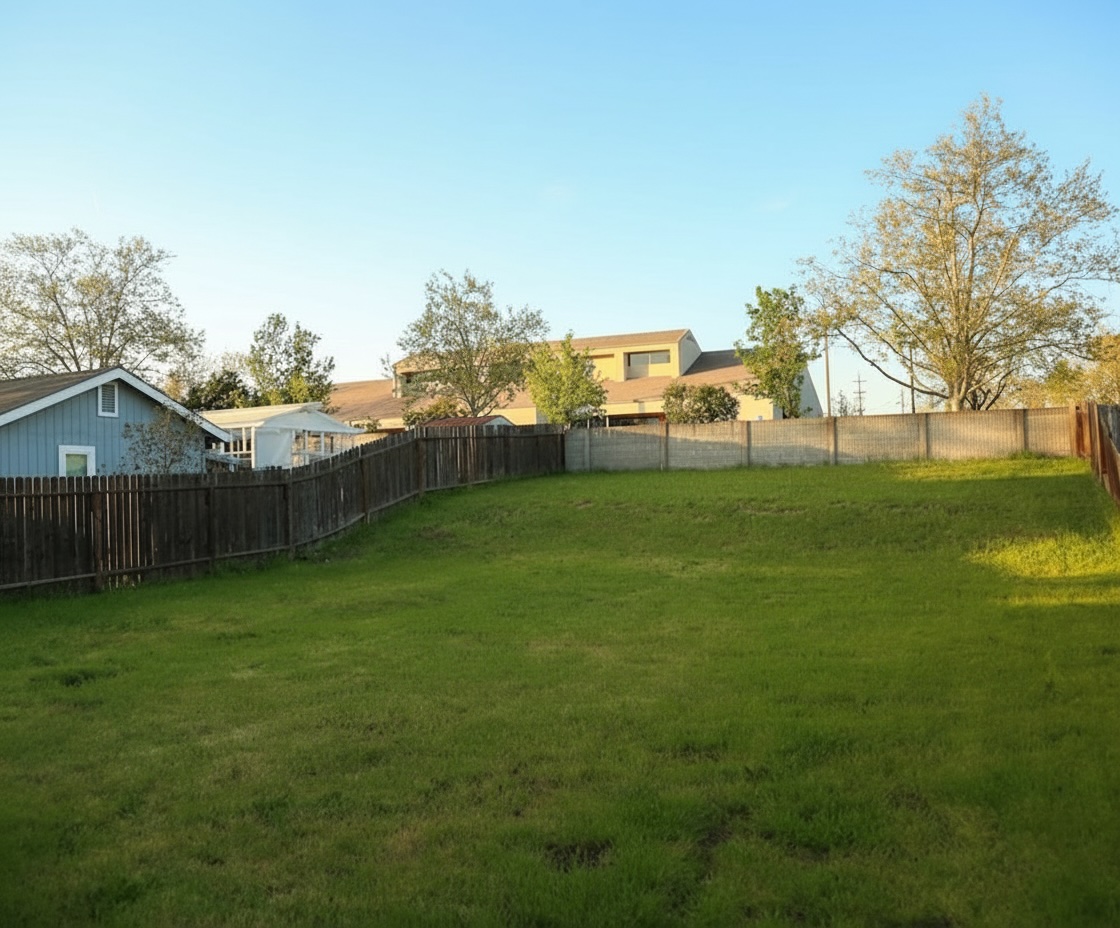
AI-generated image
Featured Trees & Shrubs for Cottage/English Gardens
Browse all 194 plants for Tulsa
Clove Currant
Ribes odoratum
grows to 6 feet, yellow blooms in spring. Attracts hummingbirds.

Fragrant Sumac
Rhus aromatica
grows to 4 feet, yellow blooms in spring. Attracts butterflies.
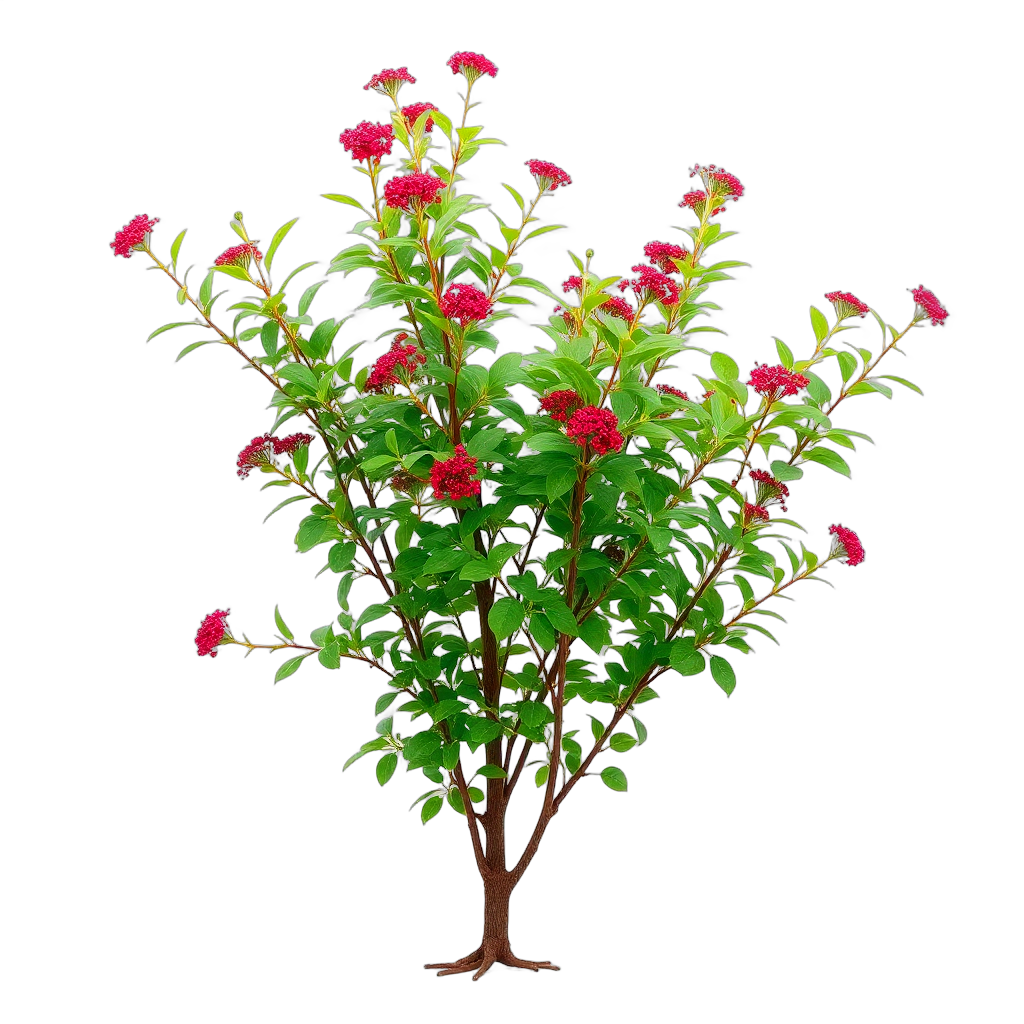
Smooth Sumac
Rhus glabra
medium-sized at 12 feet, white,green blooms in summer. Attracts butterflies.

Cabbage Palm
Sabal palmetto
reaches 40 feet tall, white,yellow blooms in spring. Pollinator-friendly.
Featured Grasses & Groundcovers for Cottage/English Gardens
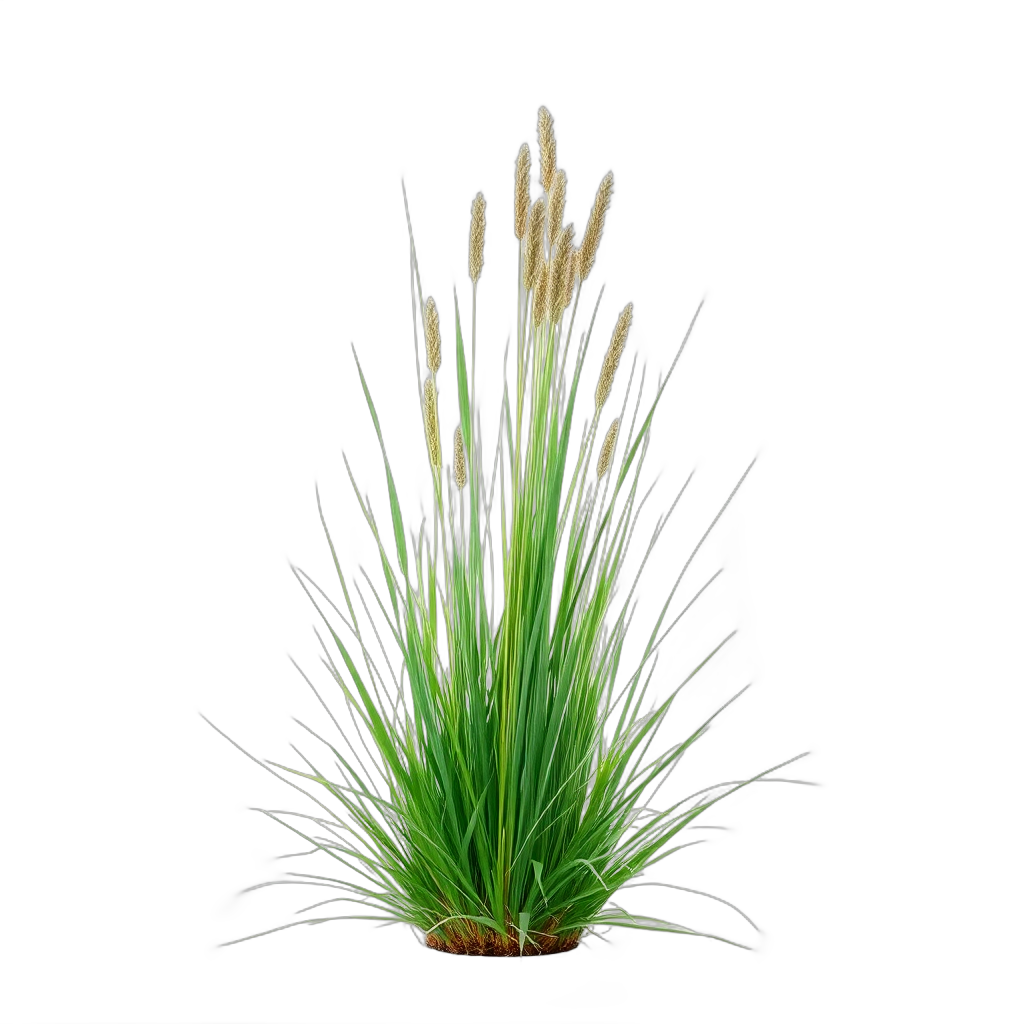
Big Bluestem
Andropogon gerardii
medium-sized at 7 feet, purple blooms in fall. Bronze,burgundy fall color.
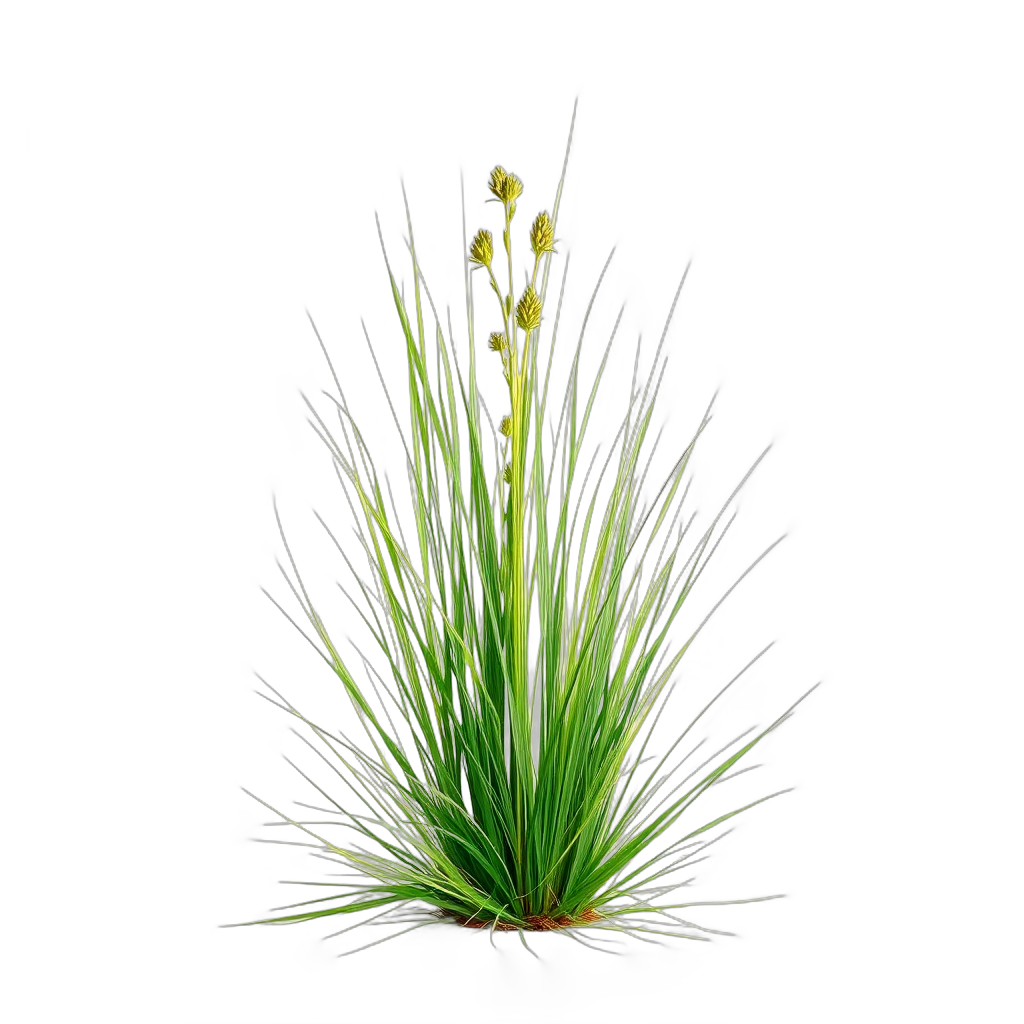
Canada Wild Rye
Elymus canadensis
grows to 4 feet, blooms in summer. Yellow fall color.
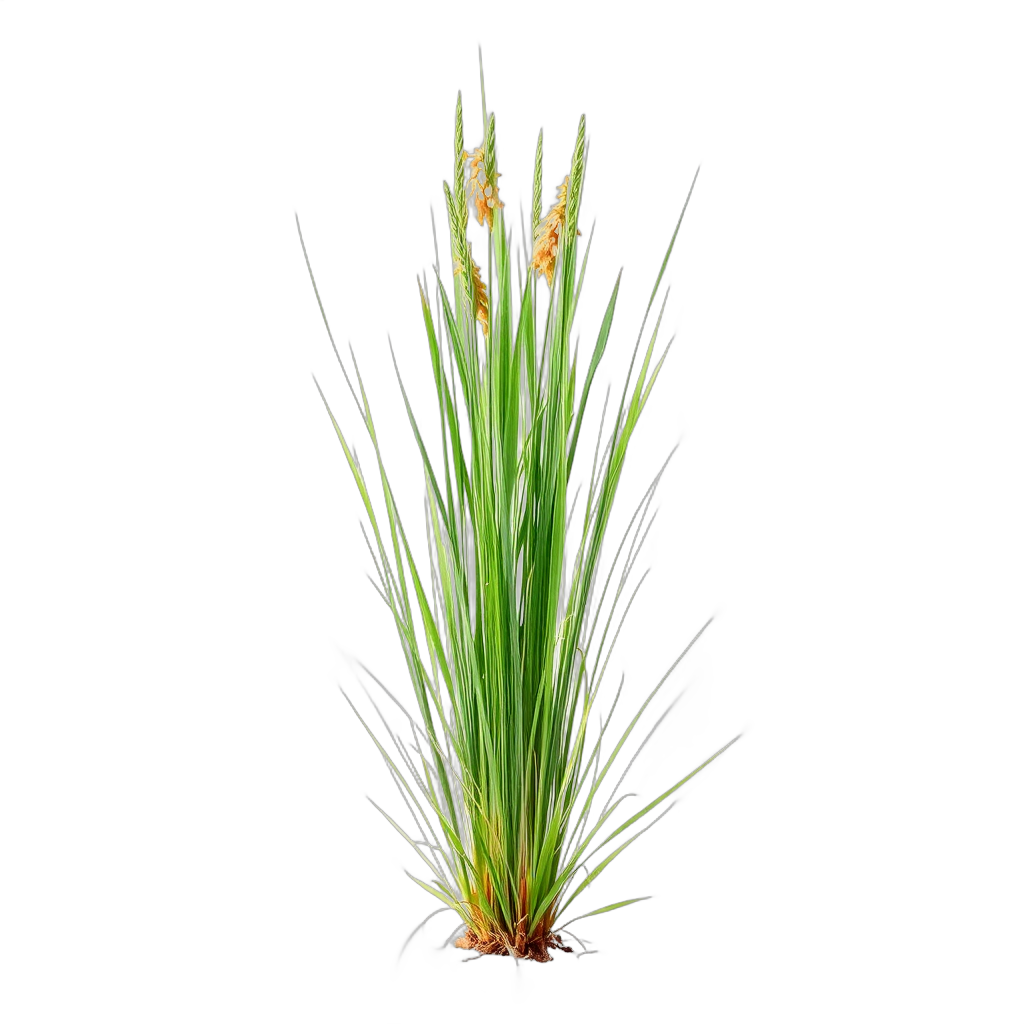
Eastern Gamagrass
Tripsacum dactyloides
grows to 6 feet, blooms in summer. Yellow fall color.
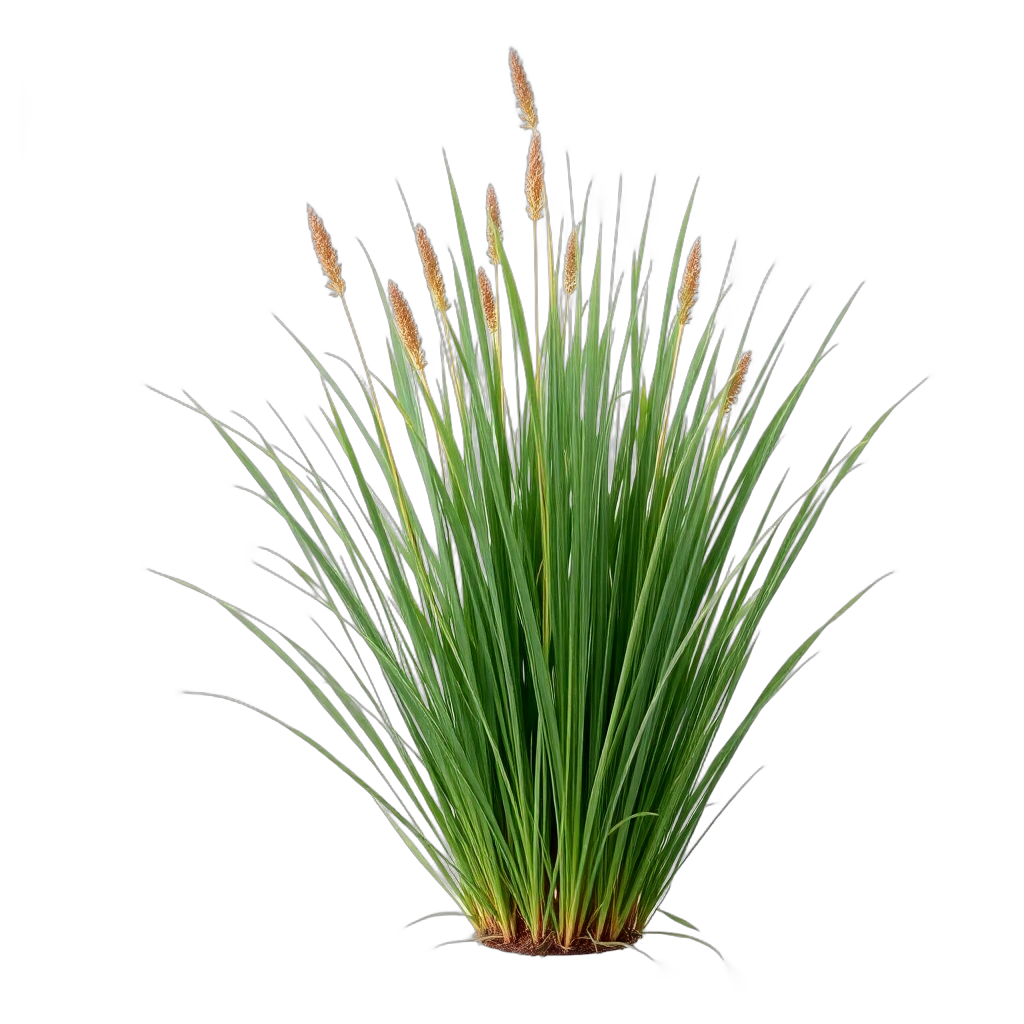
Heavy Metal Switchgrass
Panicum 'Heavy Metal'
grows to 4 feet, pink blooms in summer. Yellow fall color.
Featured Flowers & Perennials for Cottage/English Gardens
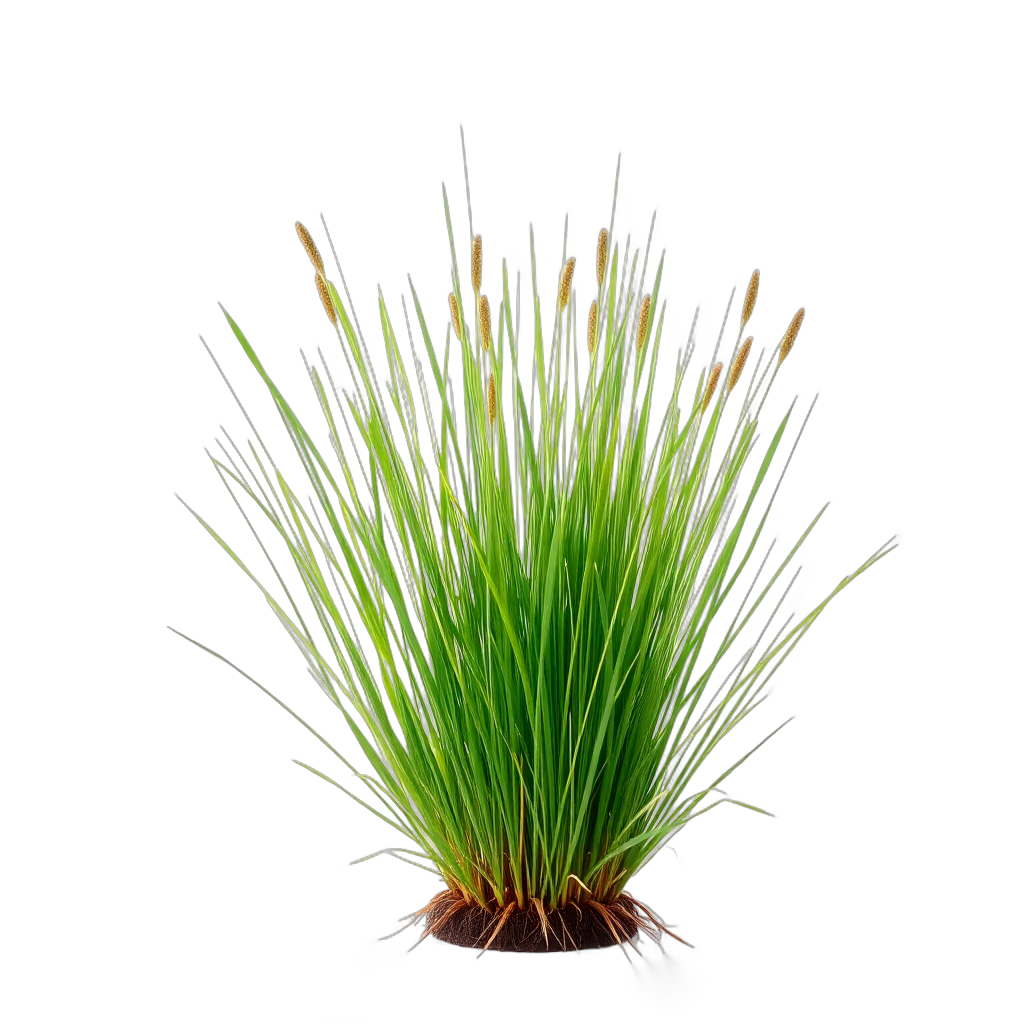
Path Rush
Juncus tenuis
low-growing ground cover, blooms in summer. Evergreen year-round.
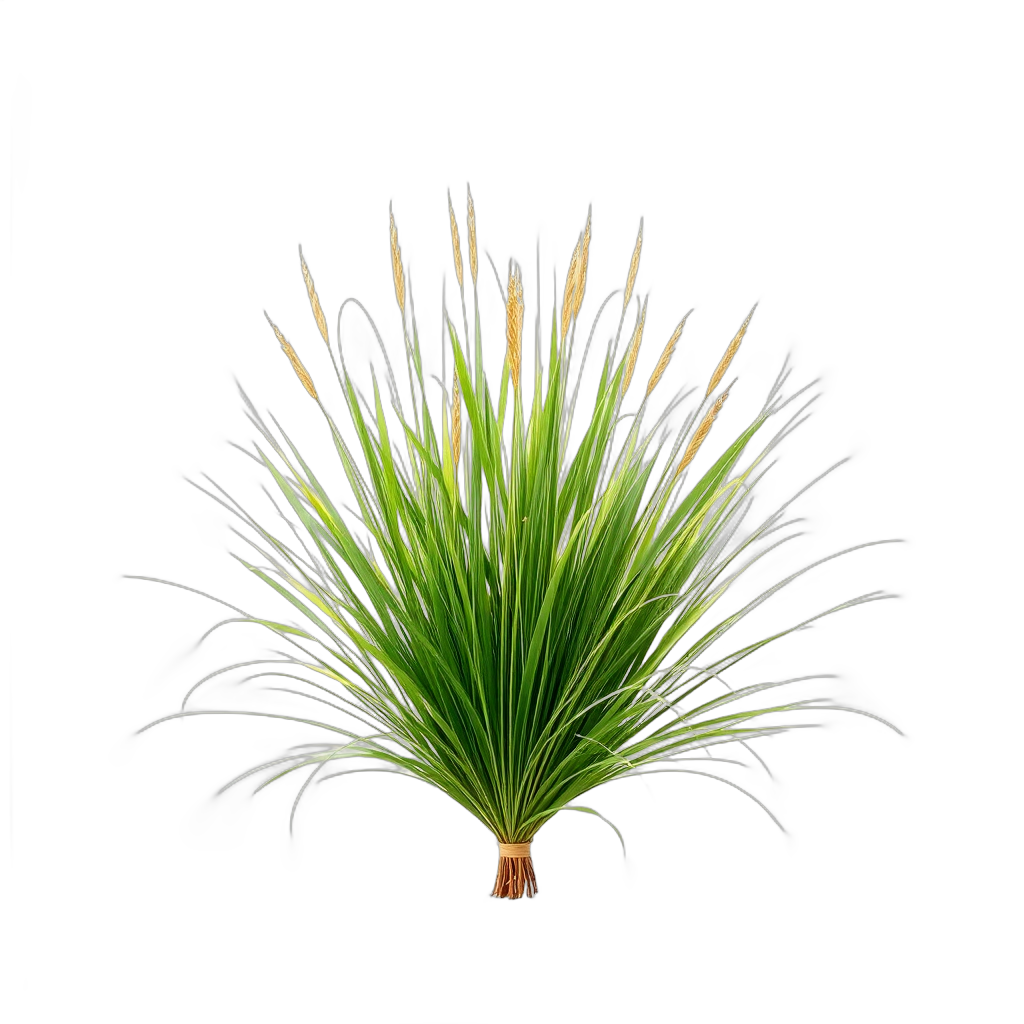
Prairie Cordgrass
Spartina pectinata
grows to 6 feet, blooms in summer. Yellow fall color.
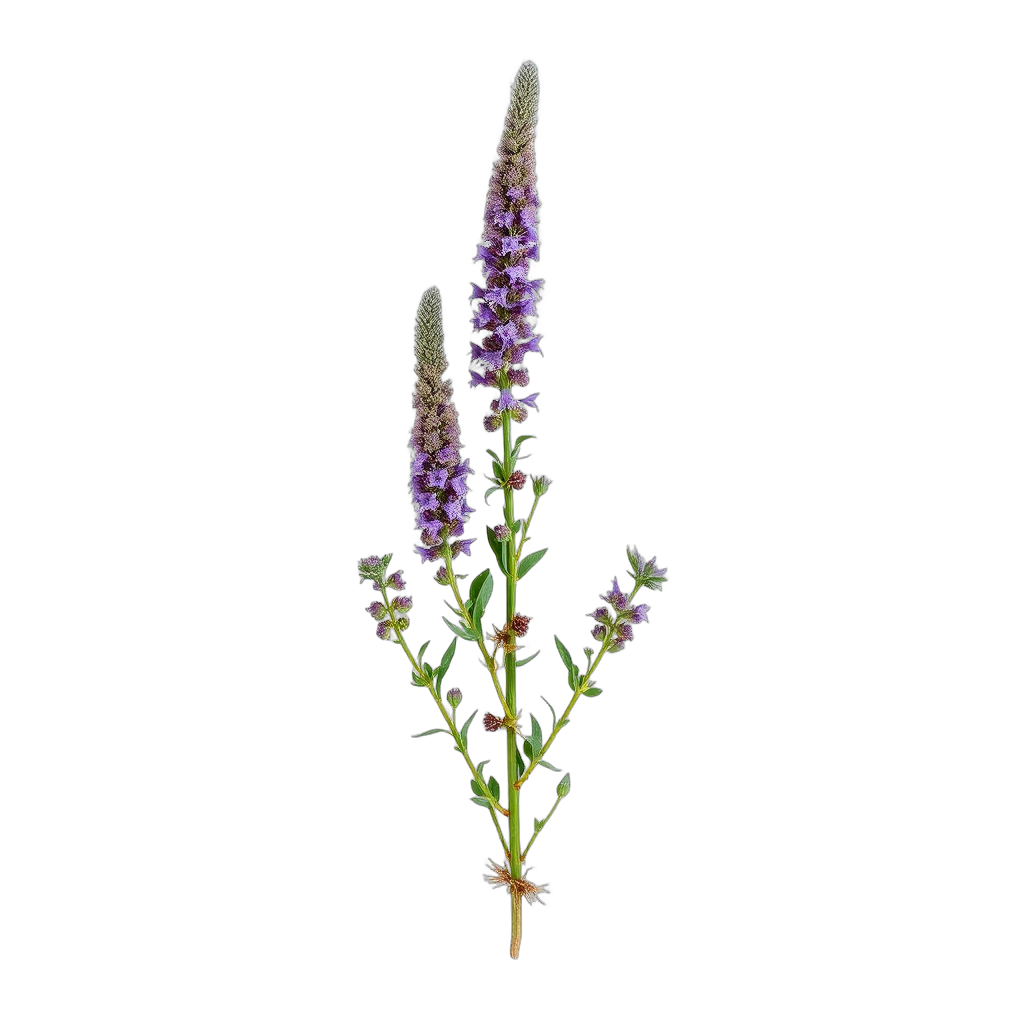
Anise Hyssop
Agastache foeniculum
grows to 3 feet, purple blooms in summer. Attracts hummingbirds.
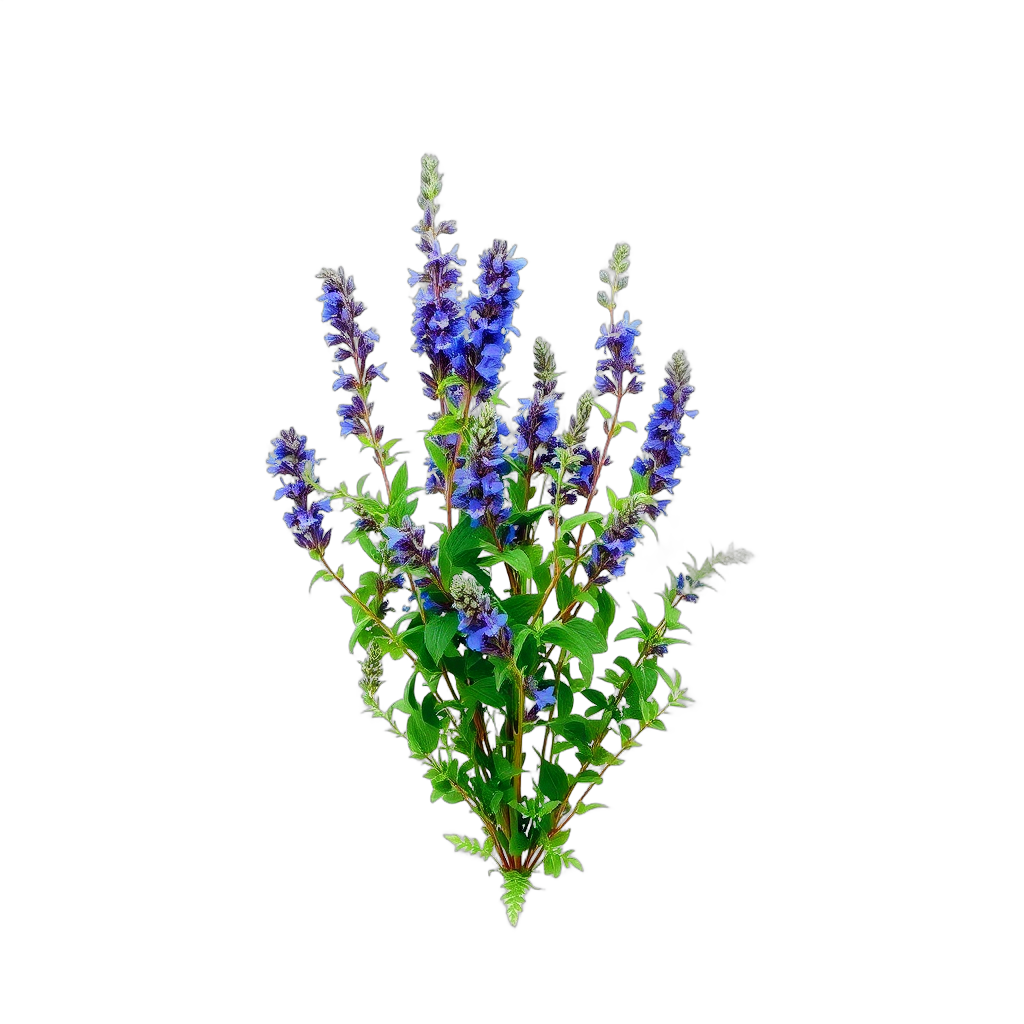
Azure Sage
Salvia azurea
grows to 4 feet, blue blooms in fall. Attracts hummingbirds.
Zone and sun checks come from our database — confirm with your local nursery before you buy.
Bloom Calendar for Tulsa
spring
Blue False Indigo, Foxglove Beardtongue, Golden Alexandersummer
Path Rush, Prairie Cordgrass, Anise Hyssopfall
Azure Sage, Maximilian Sunflower, New England Asterwinter
Limited bloomsDesign Tips for Tulsa (Zone 7a)
- Tulsa's Zone 7a winters make David Austin English roses and hybrid perpetuals viable — these are cold-hardy roses that perform here better than anywhere else in the southern plains
- Tulsa's 40 inches of annual rainfall is your greatest cottage garden asset: established beds need minimal supplemental irrigation in spring and fall, but good drainage must be designed in from the start
- Choose disease-resistant rose varieties and maintain air circulation in border design — Tulsa's higher humidity compared to western Oklahoma makes fungal diseases more active than in drier cities
- Maple Ridge and Swan Lake elm canopy extends the foxglove and delphinium season by 2–3 weeks compared to open-sun plantings — build the design around existing canopy rather than working against it
- Native tallgrass prairie plants (Big Bluestem, compass plant, prairie coneflower) belong in every Tulsa cottage garden as the ecological foundation beneath the English cottage aesthetic
- Tulsa Rose Society members host garden tours in May when antique roses peak — attending before designing your own garden is the best free education available in the city
Where to Source Plants in Tulsa
Skip the big-box stores. These independent Tulsa nurseries specialize in the plants that make cottage/english gardens thrive in Zone 7a.
Southwood Landscape & Garden Center
South Tulsa
Native plants, landscape design, perennials, trees, ornamental grasses
Greenwood Nursery
North Tulsa
Trees, shrubs, perennials, seasonal color — family owned
Gilcrease Orchard & Nursery
North Tulsa (near Gilcrease Museum)
Heritage orchard, native plants, seasonal plant sales on museum grounds
The Antique Rose Emporium
Brenham, TX (4-hr drive — the definitive antique rose source)
Antique and species roses — ships nationally, worth the trip for serious rose gardeners
Cottage/English Landscaping Costs in Tulsa
| Project Scope | Estimated Cost |
|---|---|
| Rose arbor + picket fence cottage entry | $4,500 – $11,000 |
| Full cottage front yard redesign (400–600 sqft) | $5,500 – $13,500 |
| Backyard cottage patio with arch + planting | $7,000 – $18,000 |
| Pergola + fountain + cottage garden (full backyard) | $17,000 – $42,000 |
| Soil amendment (Tulsa clay) | $1,000 – $3,000 |
| Drip / soaker irrigation system | $900 – $2,500 |
| AI visualization with ProScapeAI | Free to start |
Estimates based on Tulsa, OK-area contractor rates as of 2026. Actual costs vary by site conditions, materials, and contractor.
Tulsa Climate & Growing Zone
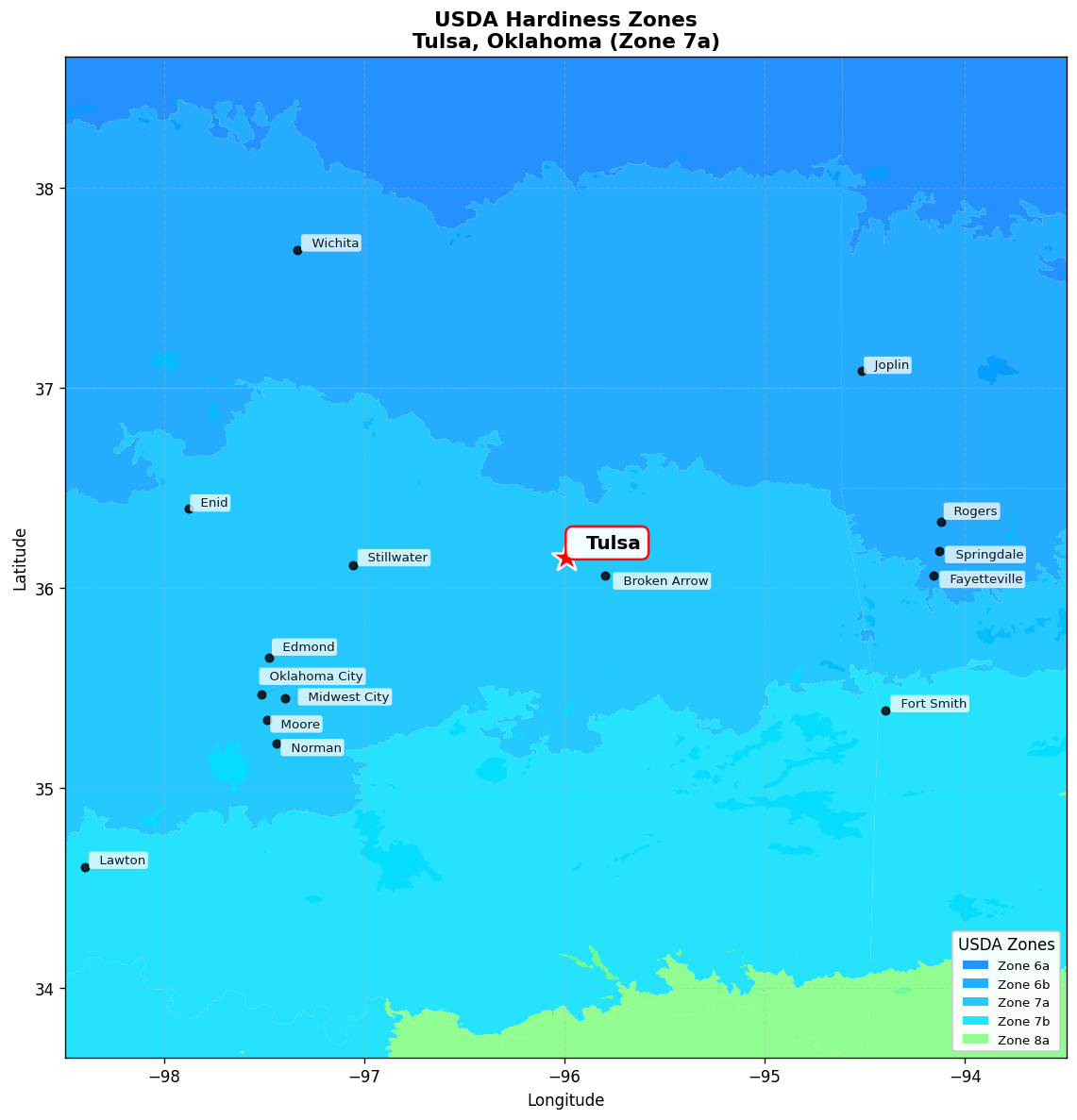
USDA Zone 7a
Hardiness zone for Tulsa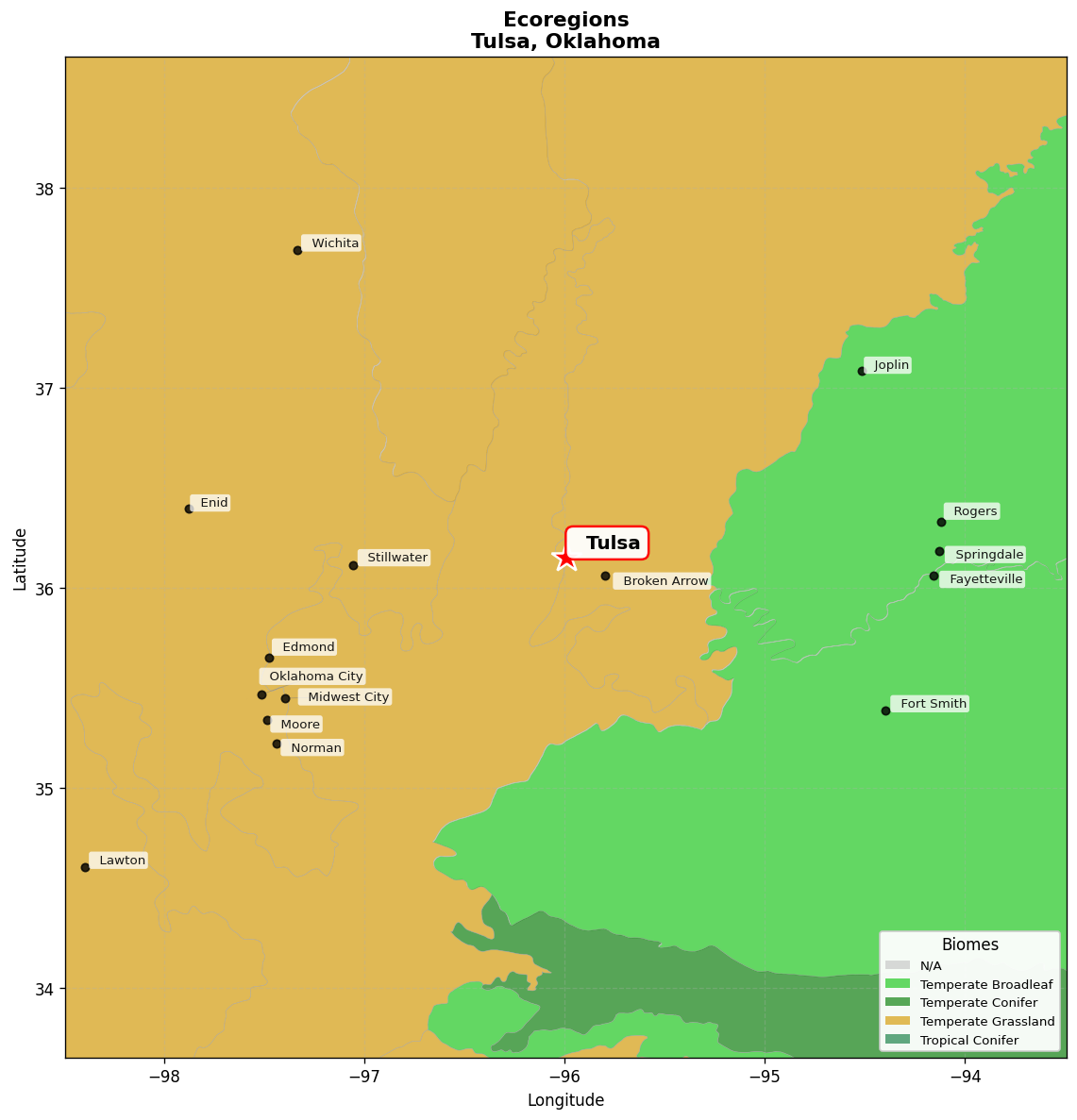
Central Tallgrass prairie
Native ecoregionFrequently Asked Questions
What makes Tulsa particularly good for cottage gardens?
Tulsa has genuine advantages over most Southern Plains cities for cottage gardening. First, 40 inches of annual rainfall well-distributed across the year — the highest in this region — means an established cottage garden is largely self-sustaining through spring and fall. Second, Zone 7a winters allow the full cold-hardy rose and perennial palette, including David Austin English roses, hybrid perpetuals, and English lavender that warmer cities can't reliably grow. Third, the canopy of mature American elms and oaks in Maple Ridge, Swan Lake, and Brookside creates dappled shade conditions that extend foxglove and delphinium season well into late May. Tulsa is genuinely one of the better cottage garden cities in the South.
Which roses are best for Tulsa Zone 7a?
Zone 7a opens the full cold-hardy rose palette. Best performers for Tulsa: David Austin English roses — 'Gertrude Jekyll', 'Olivia Rose Austin', 'William Shakespeare 2000' — all reliably hardy here where they'd struggle in Zone 8+. Hybrid perpetuals: 'Mrs. John Laing', 'Paul Neyron', 'Reine des Violettes' — Victorian-era roses bred for cold climates that perform beautifully in northeastern Oklahoma. Antique shrub roses: 'Belinda's Dream', 'Carefree Beauty', 'Earthsong'. Climbing: 'New Dawn', 'Zephirine Drouhin' (thornless, shade-tolerant). Native: Rosa setigera (prairie climbing rose, deeply local). The Tulsa Rose Society hosts an annual show and maintains a member list of local rose specialists.
How does Tulsa's 40-inch annual rainfall affect cottage garden design?
Tulsa's higher rainfall (40 in vs. 34–36 for Dallas and OKC) is a genuine cottage garden asset but requires design adaptation. Benefits: established plants need much less supplemental irrigation, spring perennials establish quickly and bloom abundantly, soil organic matter stays higher than in drier cities. Challenges: good drainage is essential — clay soils saturated by spring rains can't support roses and lavender without raised beds or amended drainage. Fungal diseases (black spot on roses, powdery mildew on phlox) are more active in Tulsa than in drier cities. Solution: disease-resistant rose varieties, good air circulation in border design, and morning watering (not evening) to reduce foliar moisture overnight.
What are the best Tulsa neighborhoods for cottage gardens?
Maple Ridge is Tulsa's architectural and horticultural centerpiece: the historic district's 1920s–1940s Craftsman bungalows and Tudor revival homes under mature American elm canopy are perfect cottage garden settings. Swan Lake has Tulsa's most established midtown residential landscapes around the central lake. Brookside (south midtown) has 1930s–1950s homes with established trees and lots sized for significant garden projects. Midland Valley and the area around Utica Square have similar period architecture. In South Tulsa's newer development (Owasso, Broken Arrow), establishing canopy trees is the necessary first step before serious cottage gardening — give it 10–15 years and the bones will be there.
What cottage plants thrive in Tulsa's climate?
Tulsa's Zone 7a with 40-inch rainfall supports a generous cottage palette. Excellent performers: David Austin and antique roses (the Zone 7a cold winters help), lavender (English lavender is more reliable here than in Zone 8+ cities), foxgloves and delphiniums (in afternoon shade, bloom through late May), Salvia nemorosa 'May Night' and S. greggii, coneflower, prairie coneflower (Ratibida), compass plant (Silphium), ornamental grasses. Native tallgrass prairie plants — Big Bluestem, Little Bluestem, Indiangrass — provide midsummer structure when English cottage plants rest in July heat.
When should I plant a cottage garden in Tulsa?
Fall (October–November) is ideal for roses, perennials, and spring bulbs — Tulsa's reliable fall rains and cold stratification period prepare plants for vigorous spring emergence. Spring (March–April after the last freeze, typically March 20) works well for annuals and fast-establishing perennials. For spring-blooming cottage plants (foxgloves, delphiniums), plant in fall or start indoors in late January for March transplant. Tulsa's earlier last freeze compared to OKC (roughly similar — both around March 20) means spring planting windows are nearly identical. Tulsa's higher rainfall means new plantings establish faster than in drier cities — less hands-on watering required in the first critical weeks.