4 Mediterranean Garden Ideas for Kent, WA | Dry-Summer Planting for Zone 8b
Native plants from the Puget lowland forests (Zone 8b) — Mediterranean (warm summer) climate
Why Mediterranean Gardens in Kent?
Kent's Köppen climate is Csb, the warm-summer Mediterranean type, which means a real dry season: July and August are close to rainless, July highs average about 78°F, and the roughly 40 inches of rain a year falls almost entirely between October and May. That is the rhythm Lavandula × intermedia 'Grosso', Rosmarinus officinalis 'Arp', Cistus × purpureus and Phlomis fruticosa evolved for. Once established, a planting like that needs little or no summer water, which matters on the sunny south and west faces of the ramblers on East Hill and West Hill, the 2000s stucco-accented builds around Lake Meridian, and the warm walls of older houses on Scenic Hill.
The difference from Provence is winter wet. Zone 8b lows of 15–20°F are within range for most of this palette, but January nights average about 36°F and the ground stays soaked for months. On East Hill and West Hill the soil is glacial till over a dense hardpan that perches water; on the valley floor along the Green River it is silt over a high water table. Both run acidic, around pH 5.5–6.0. So every Mediterranean bed in Kent goes up: raise it 8–12 inches, mix the native soil about half and half with crushed rock or pumice, add a little dolomite lime, and mulch with gravel rather than bark so crowns stay dry. Built that way, lavender, Santolina chamaecyparissus and Teucrium chamaedrys last a decade. Planted flat in bark mulch they rarely see a second spring.
Some signature plants need a substitute. Olea europaea 'Arbequina' is the hardiest common olive, but a cold snap with dry east wind can burn or kill it here, so grow it in a large pot you can pull under cover, or use Elaeagnus 'Quicksilver' or Pyrus salicifolia 'Pendula' for the silver canopy. Bougainvillea is not hardy at all; use Clematis armandii or a fig on the wall instead. Ficus carica 'Desert King' fruits reliably in the Puget lowland's short summers, and Arbutus unedo 'Compacta' gives a hardy, evergreen strawberry-tree look. For a native accent, Arctostaphylos uva-ursi 'Massachusetts' and Ceanothus 'Victoria' handle the same dry summer.
A garden like this looks its best in the months when Kent's lawns go brown, and after its first two summers it needs almost no irrigation.
4 Mediterranean Design Ideas for Kent

AI-generated image
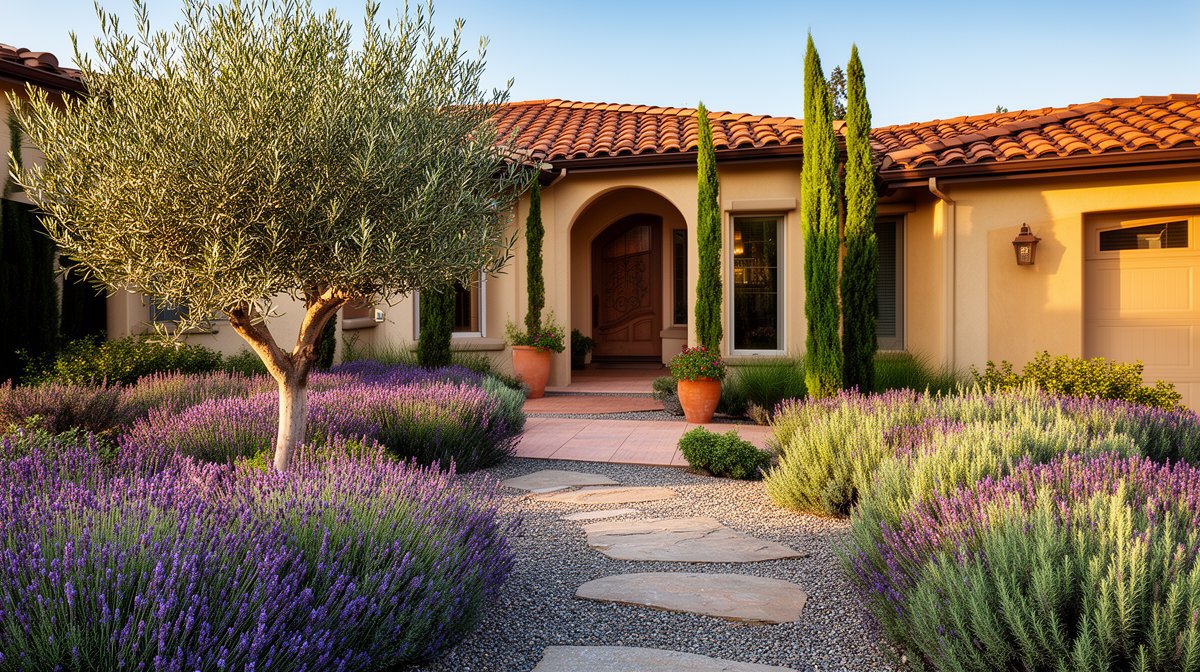
The West Hill Gravel Terrace
$20–40/sqftThe sloped, west-facing front of a 1960s split-level on West Hill is cut into two low terraces held by dry-stacked basalt walls under 3 feet tall. Each terrace is a raised bed of crushed rock and soil mulched with tan gravel and planted in drifts of lavender, rosemary and rockrose that catch the full afternoon sun. A gravel path with flagstone steps climbs between them to the door, flanked by two Italian-style terracotta pots.

AI-generated image
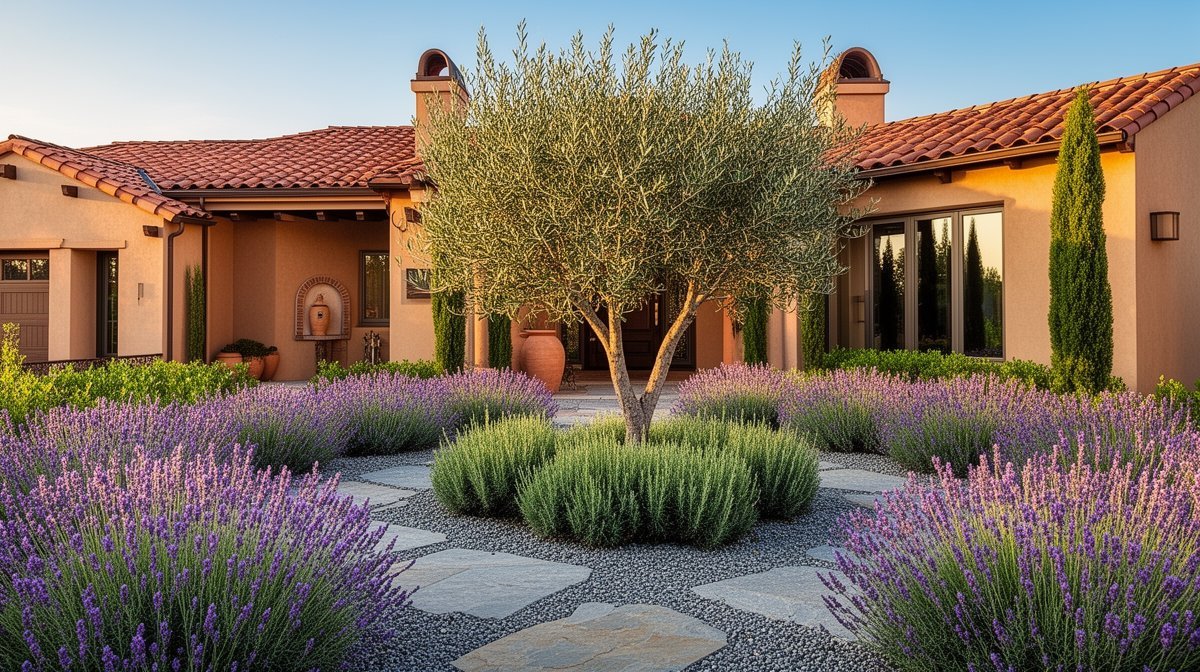
The Lake Meridian Courtyard With a Potted Olive
$30–55/sqftA walled side courtyard against the south wall of a 2000s two-story house near Lake Meridian is paved in warm-toned flagstone with gravel joints. A 30-gallon terracotta pot holds an olive that rolls under the covered porch in a hard freeze, while the raised beds along the stucco-painted wall hold sage, phlomis and germander. A small wall fountain covers the sound of the street.

AI-generated image
The Scenic Hill Fig Wall and Herb Garden
$14–28/sqftBehind an older house on Scenic Hill, the warm south wall of the garage is given over to a fig tree trained flat, with a narrow gravel herb garden in raised stone-edged beds at its foot. A small table under a strawberry tree catches the evening light over the valley. It is a kitchen garden and a Mediterranean garden at once, and almost everything in it is edible or fragrant.

AI-generated image
The East Hill Dry Garden Lawn Swap
$12–25/sqftA 600 sqft front lawn on a flat East Hill lot is replaced by a raised, gently mounded gravel garden crossed by a curving path of crushed rock. Silver and gray shrubs are spaced in loose drifts with boulders between them, and native manzanita and wild lilac knit the Mediterranean look into the Puget lowland. After two summers on drip, the irrigation is switched off.
See how a mediterranean garden looks on YOUR property
Upload a photo of your Kent yard and visualize your dream garden in seconds.
Try ProScapeAI Free

AI-generated image
Featured Trees & Shrubs for Mediterranean Gardens
Browse all 163 plants for Kent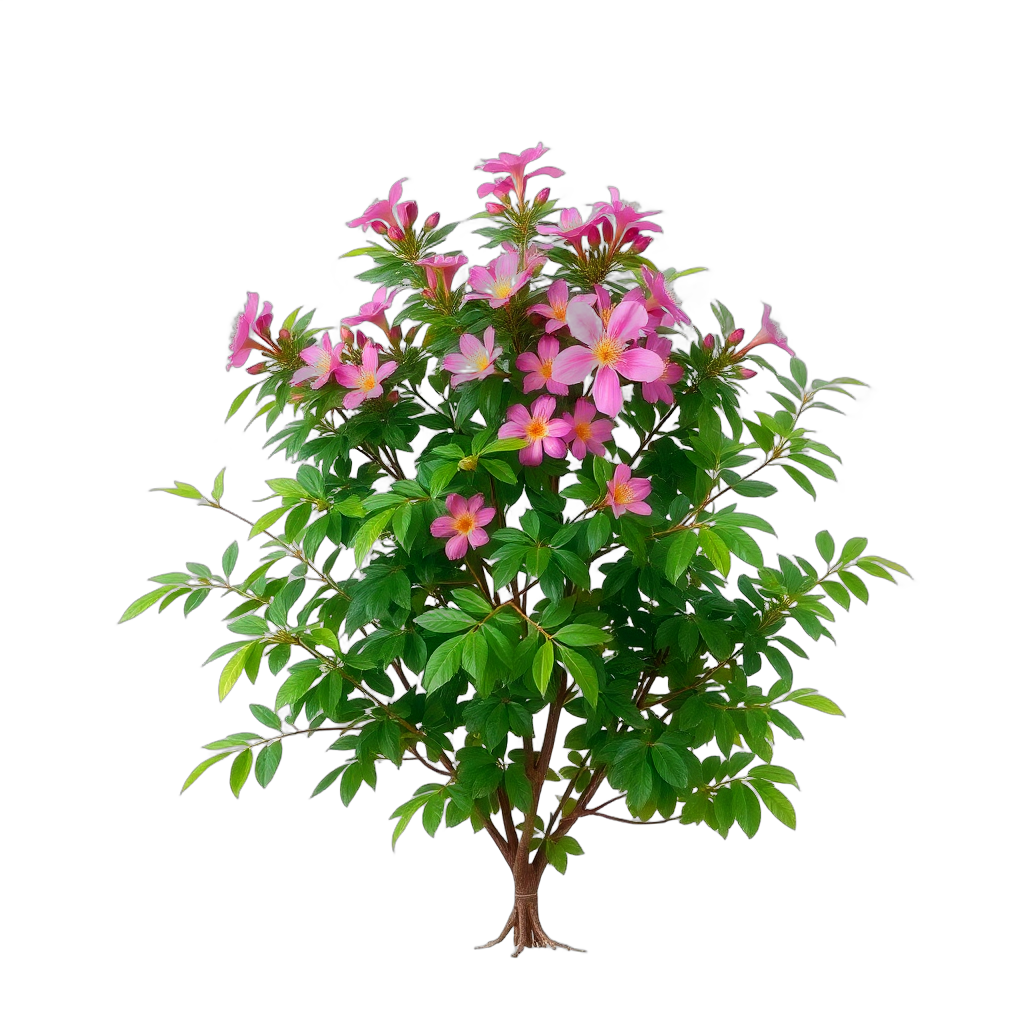
Nootka Rose
Rosa nutkana
grows to 5 feet, pink blooms in spring. Attracts butterflies.
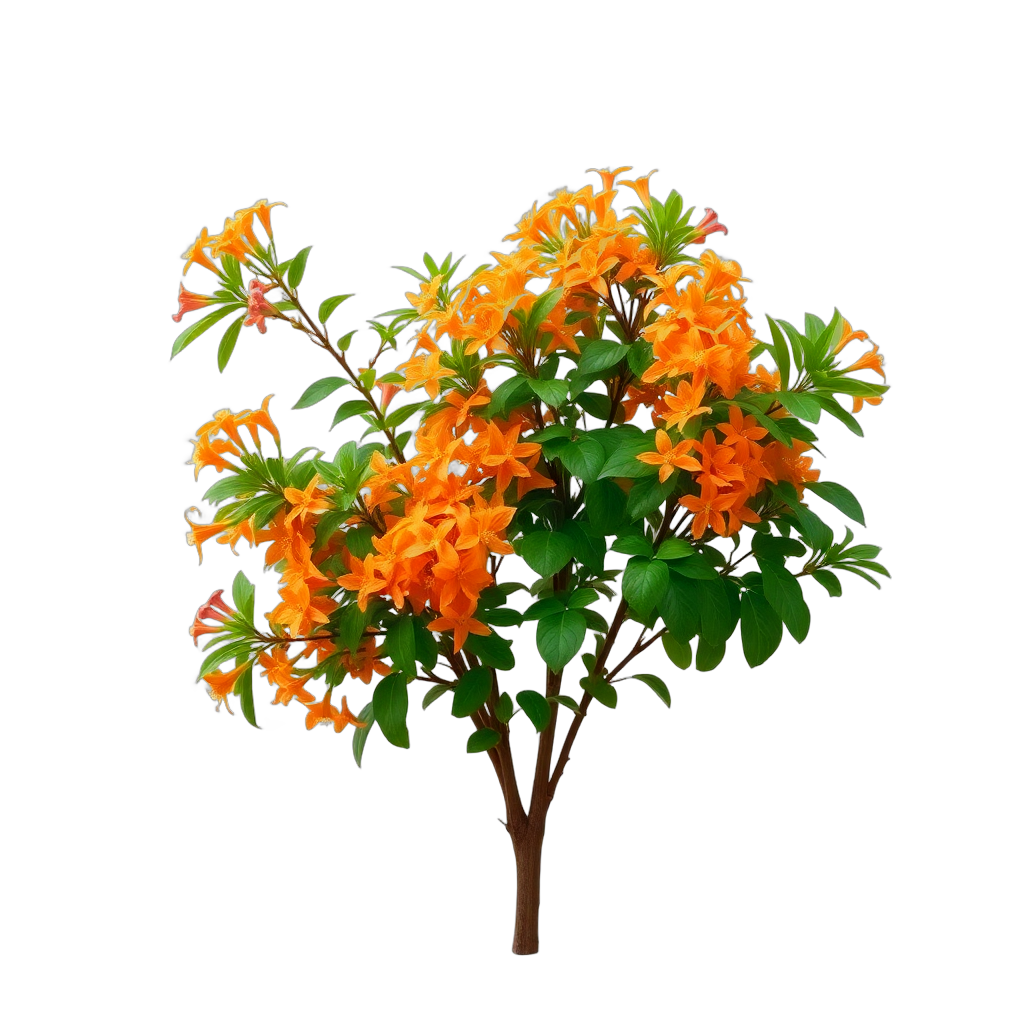
Orange Honeysuckle
Lonicera ciliosa
medium-sized at 15 feet, orange blooms in summer. Attracts hummingbirds.
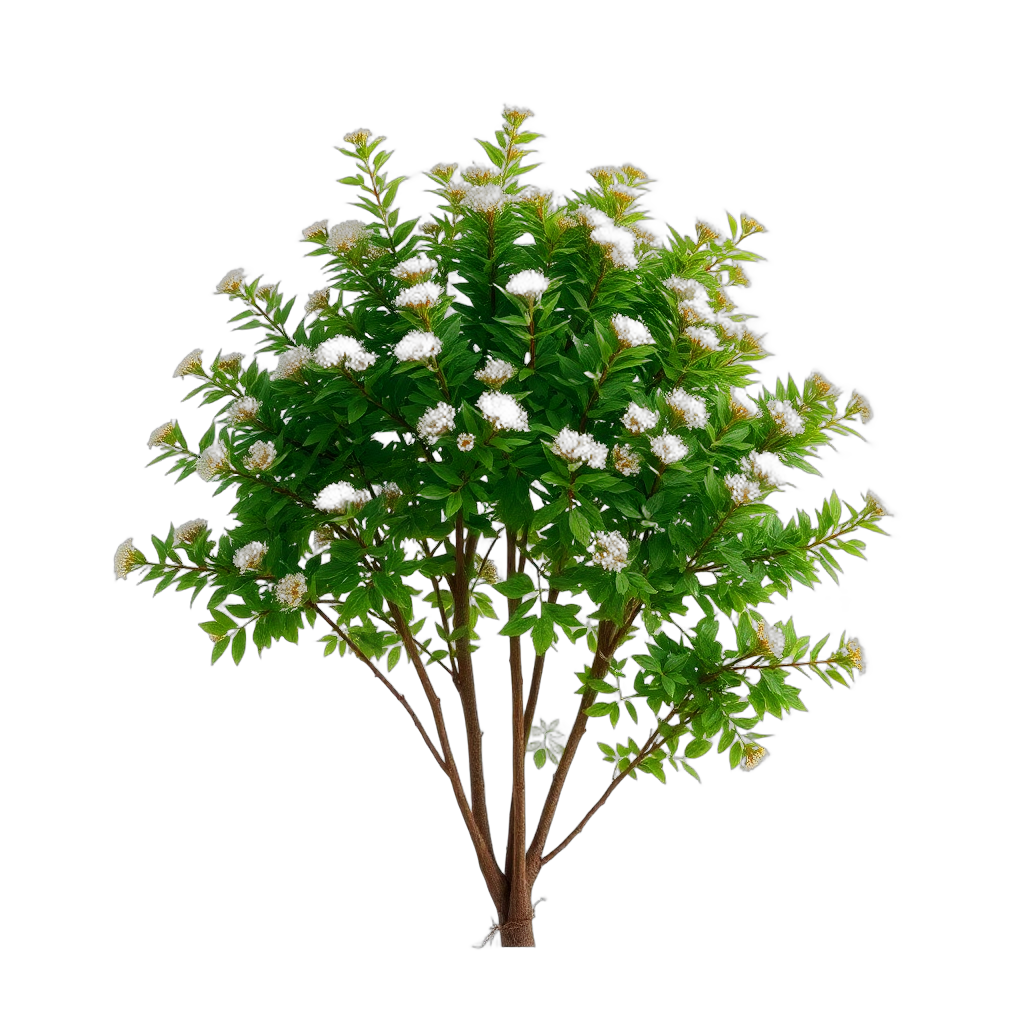
Pacific Ninebark
Physocarpus capitatus
medium-sized at 8 feet, white blooms in spring. Attracts butterflies.
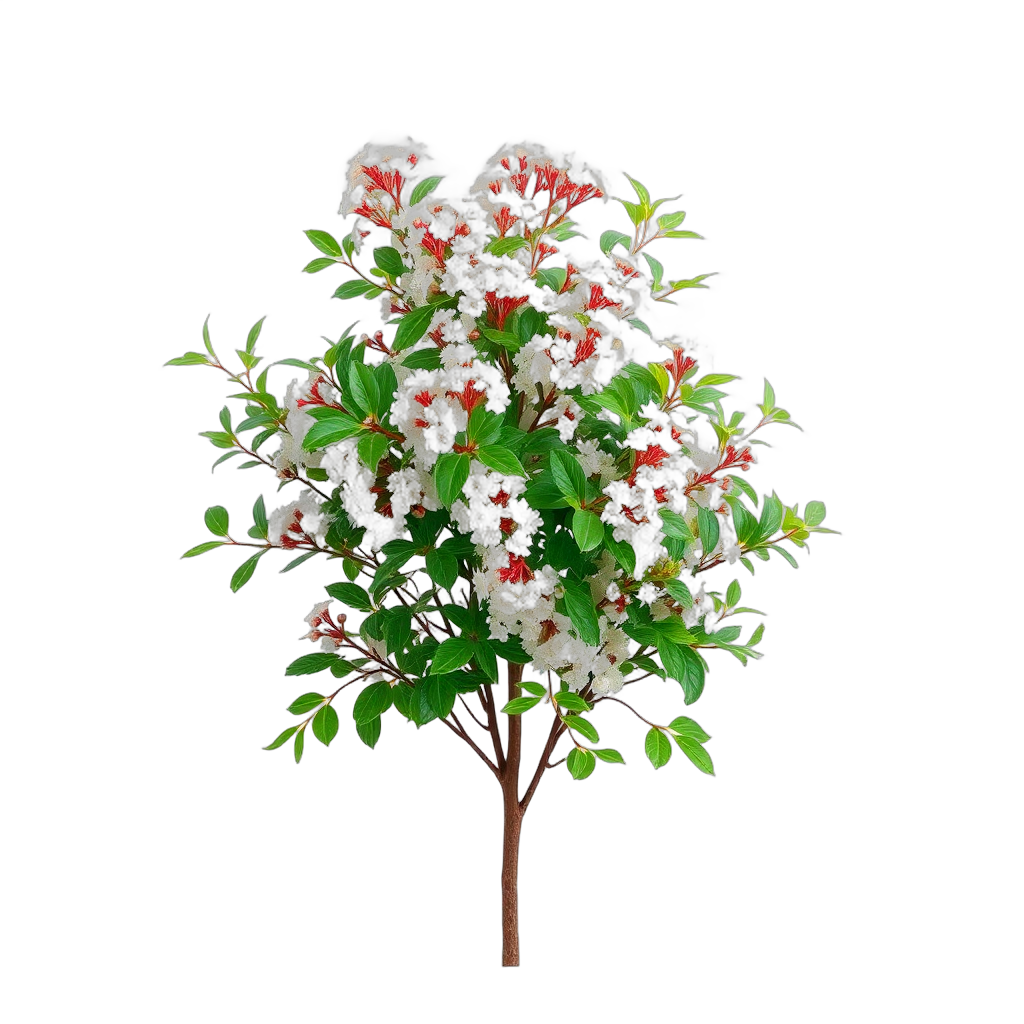
Snowberry
Symphoricarpos albus
grows to 4 feet, pink blooms in summer.
Featured Flowers & Perennials for Mediterranean Gardens
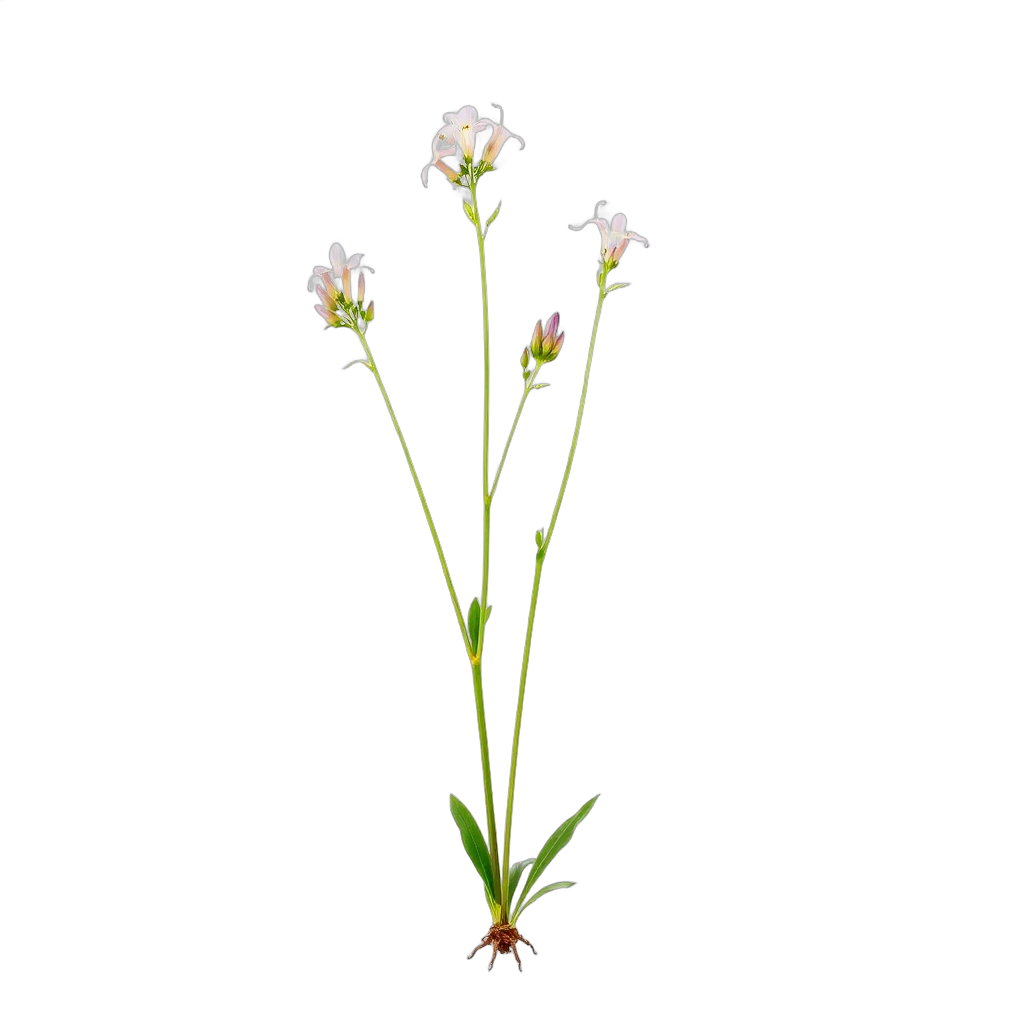
Common Camas
Camassia quamash
low-growing ground cover, blue blooms in spring. Pollinator-friendly.
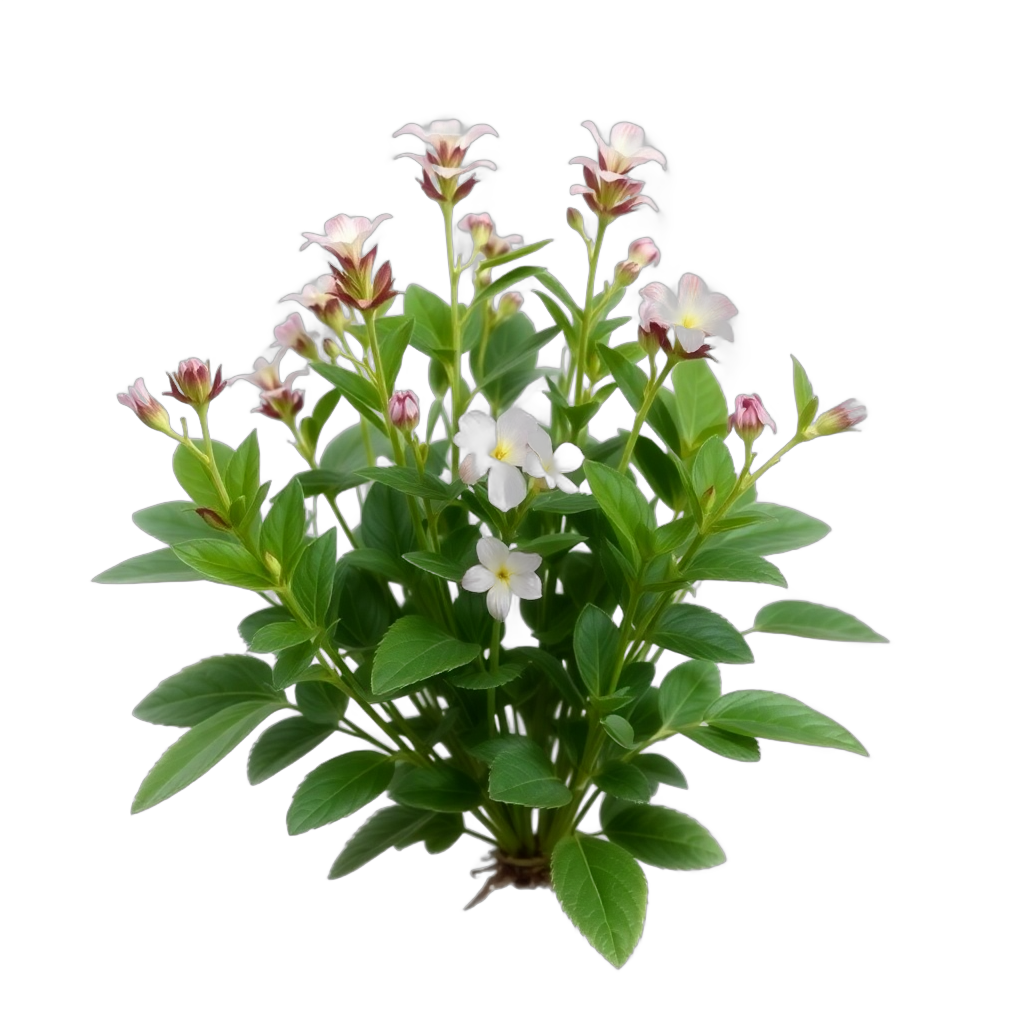
Inside-Out Flower
Vancouveria hexandra
low-growing ground cover, white blooms in spring.
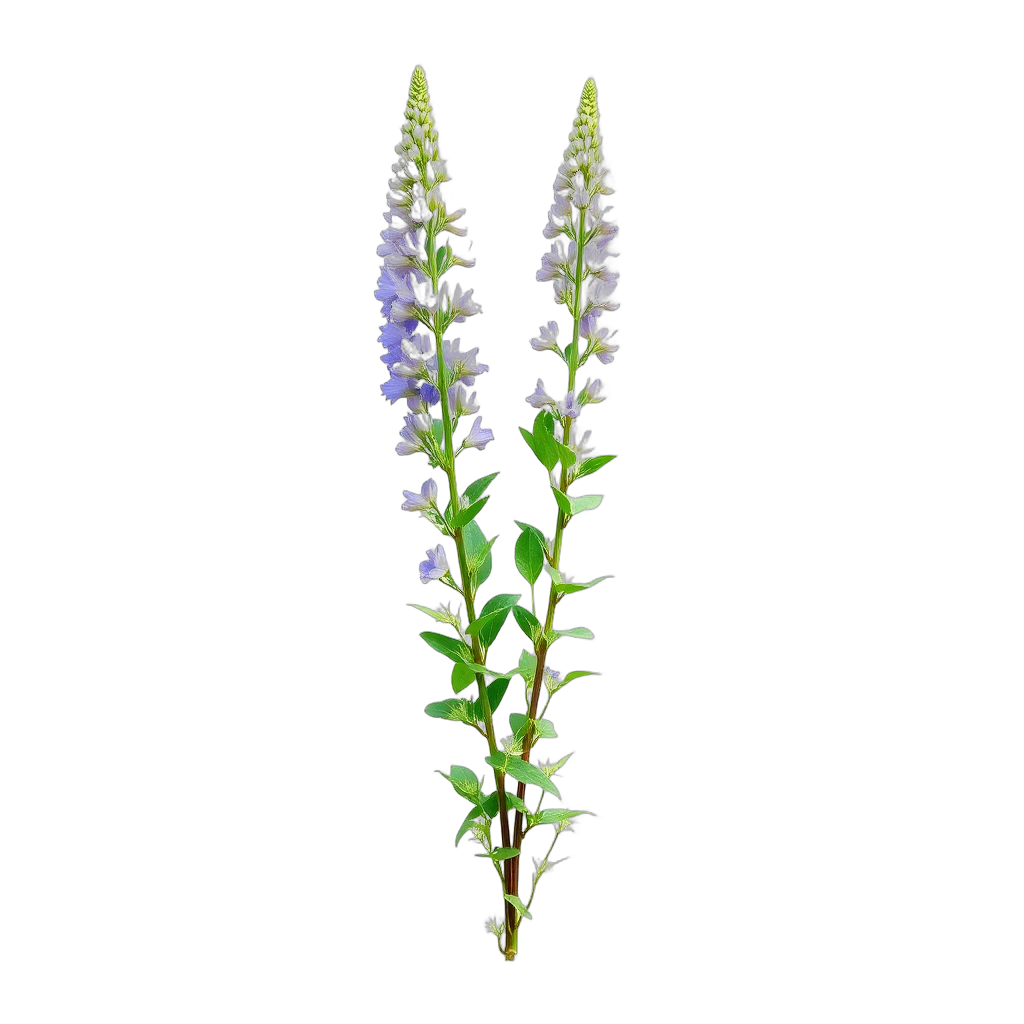
Large-Leaved Lupine
Lupinus polyphyllus
grows to 4 feet, multi blooms in spring. Attracts butterflies.
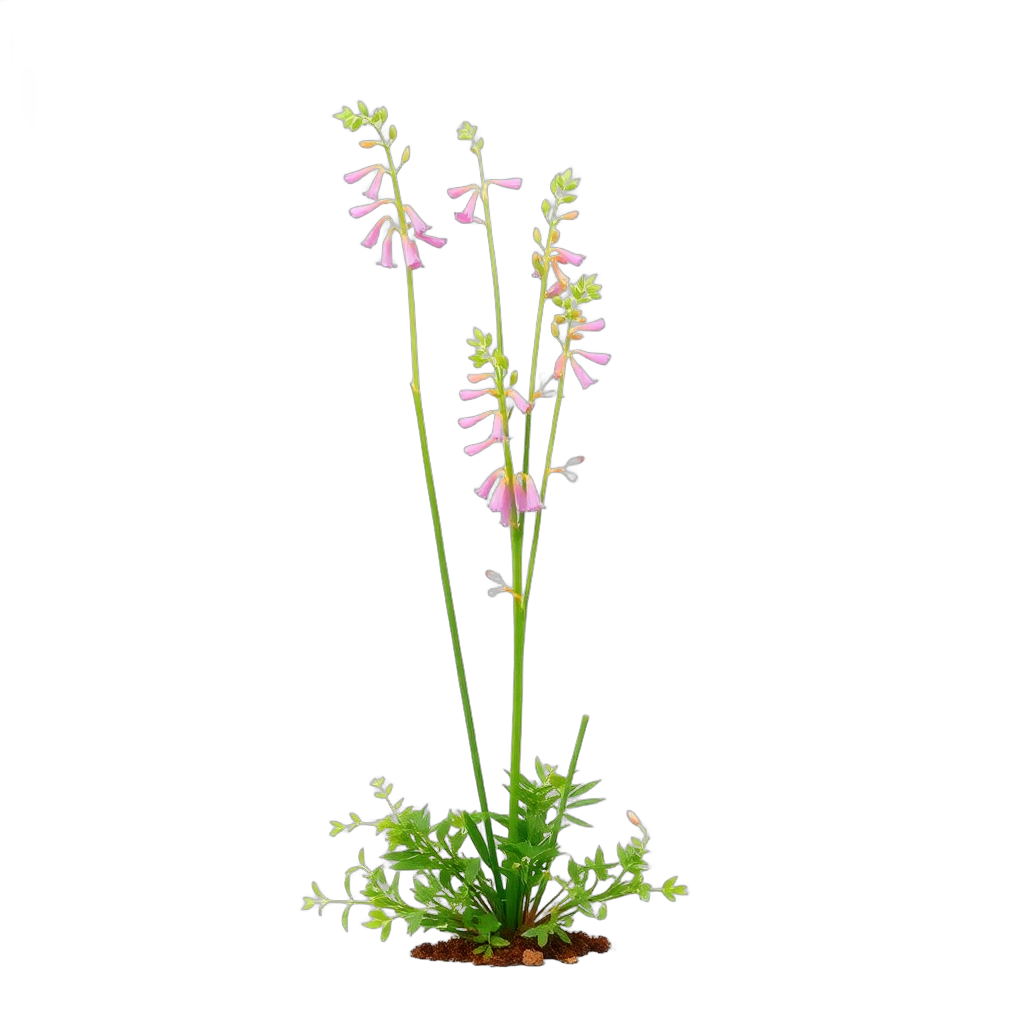
Scouler's Corydalis
Corydalis scouleri
grows to 3 feet, pink blooms in spring. Pollinator-friendly.
Zone and sun checks come from our database — confirm with your local nursery before you buy.
Bloom Calendar for Kent
spring
Common Camas, Inside-Out Flower, Large-Leaved Lupinesummer
Tiger Lily, Orange Honeysuckle, Snowberryfall
Limited bloomswinter
Limited bloomsDesign Tips for Kent (Zone 8b)
- Raise every bed 8–12 inches and mix the native soil half and half with crushed rock: Kent's glacial till on the hills and silt on the valley floor both stay wet from November to April
- Mulch with gravel, never bark: gravel keeps lavender and rosemary crowns dry through a 40-inch rain season and reflects warmth back during Kent's mild summer
- Lime only the Mediterranean beds: Kent soils run around pH 5.5–6.0, and lavender, rosemary and santolina prefer 6.5–7.0
- Use the south and west walls: a fig like Ficus carica 'Desert King' or a potted olive against warm siding gets the extra heat Kent's 78°F summers do not always provide
- Water for two summers, then stop: drip once or twice a week in July and August while roots establish, then let the dry-summer Csb climate do the rest
- Keep olives and citrus mobile: a 30-gallon pot on a wheeled saucer can roll under cover when a cold east wind is forecast
- Mix in Puget lowland natives with the same rhythm: Arctostaphylos uva-ursi 'Massachusetts' and Ceanothus 'Victoria' love the dry summer and tie the garden to the Douglas firs around it
Where to Source Plants in Kent
Skip the big-box stores. These independent Kent nurseries specialize in the plants that make mediterranean gardens thrive in Zone 8b.
Carpinito Brothers
Kent Valley (Central Ave N)
Family-owned farm and garden store with a nursery and garden center, plus bulk bark, soil and gravel for pickup or delivery, useful for raised gravel beds
Kent East Hill Nursery
East Hill
Family-owned four-acre nursery since 1986 with evergreen shrubs, fruit trees, hanging baskets and a certified horticulturist on staff
Covington Creek Nursery
Auburn (southeast of Kent)
Trees, shrubs, herbs, perennials, natives and fruit trees, plus pottery, fountains and trellises
Mediterranean Landscaping Costs in Kent
| Project Scope | Estimated Cost |
|---|---|
| Gravel dry-garden lawn swap with berms and planting (500–700 sqft) | $7,000 – $16,000 |
| Raised gravel beds with crushed-rock soil blend (per 100 sqft) | $1,500 – $3,500 |
| Dry-stacked basalt terrace walls under 3 feet (40–60 face feet) | $2,500 – $6,000 |
| Flagstone courtyard with gravel joints (250–400 sqft) | $8,000 – $20,000 |
| Cast-stone wall fountain, set and wired | $2,000 – $6,000 |
| Temporary drip irrigation for the first two summers | $800 – $2,500 |
| AI visualization (ProScapeAI) | Free to start |
Estimates based on Kent, WA-area contractor rates as of 2026. Actual costs vary by site conditions, materials, and contractor.
Kent Climate & Growing Zone
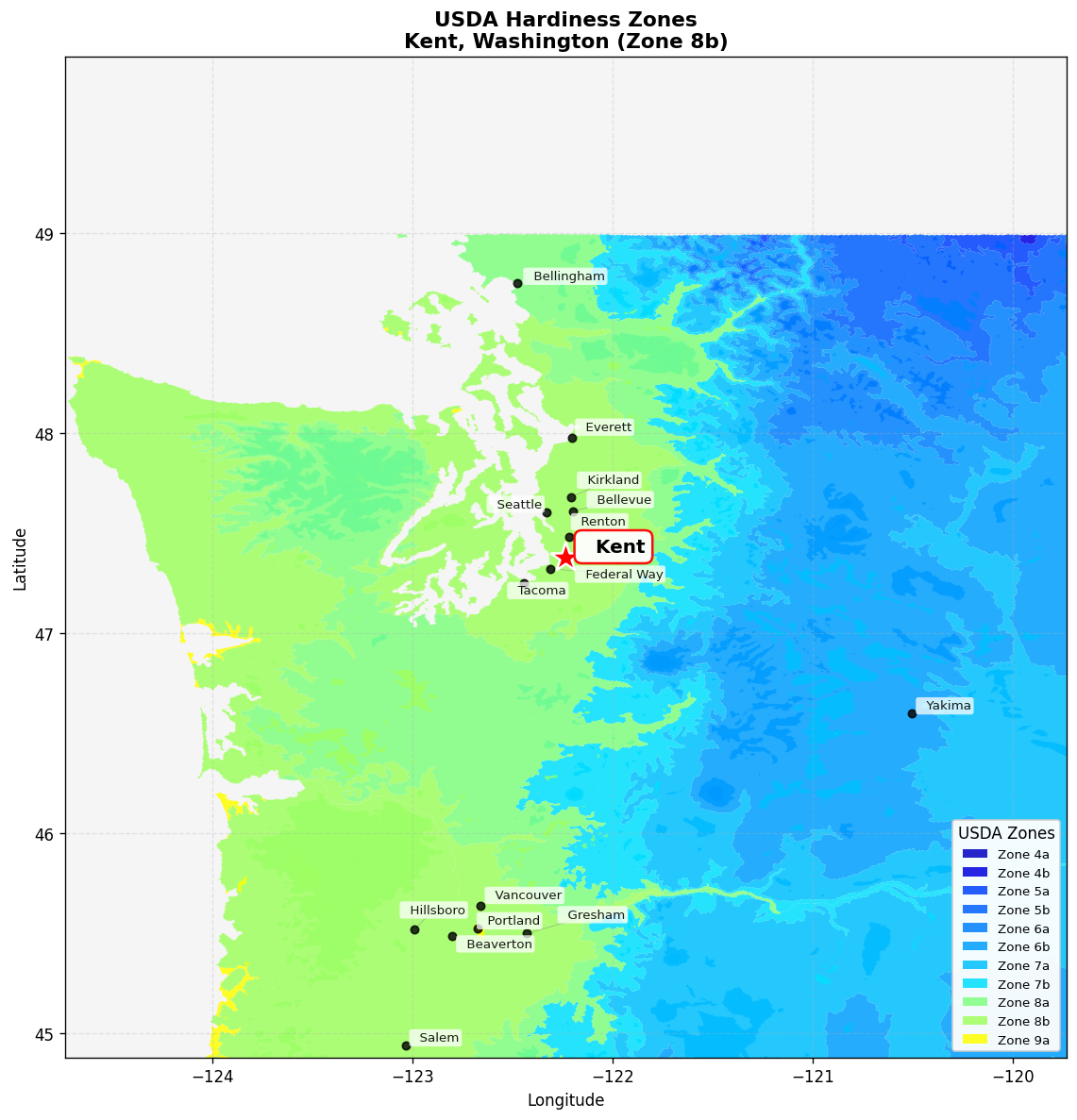
USDA Zone 8b
Hardiness zone for Kent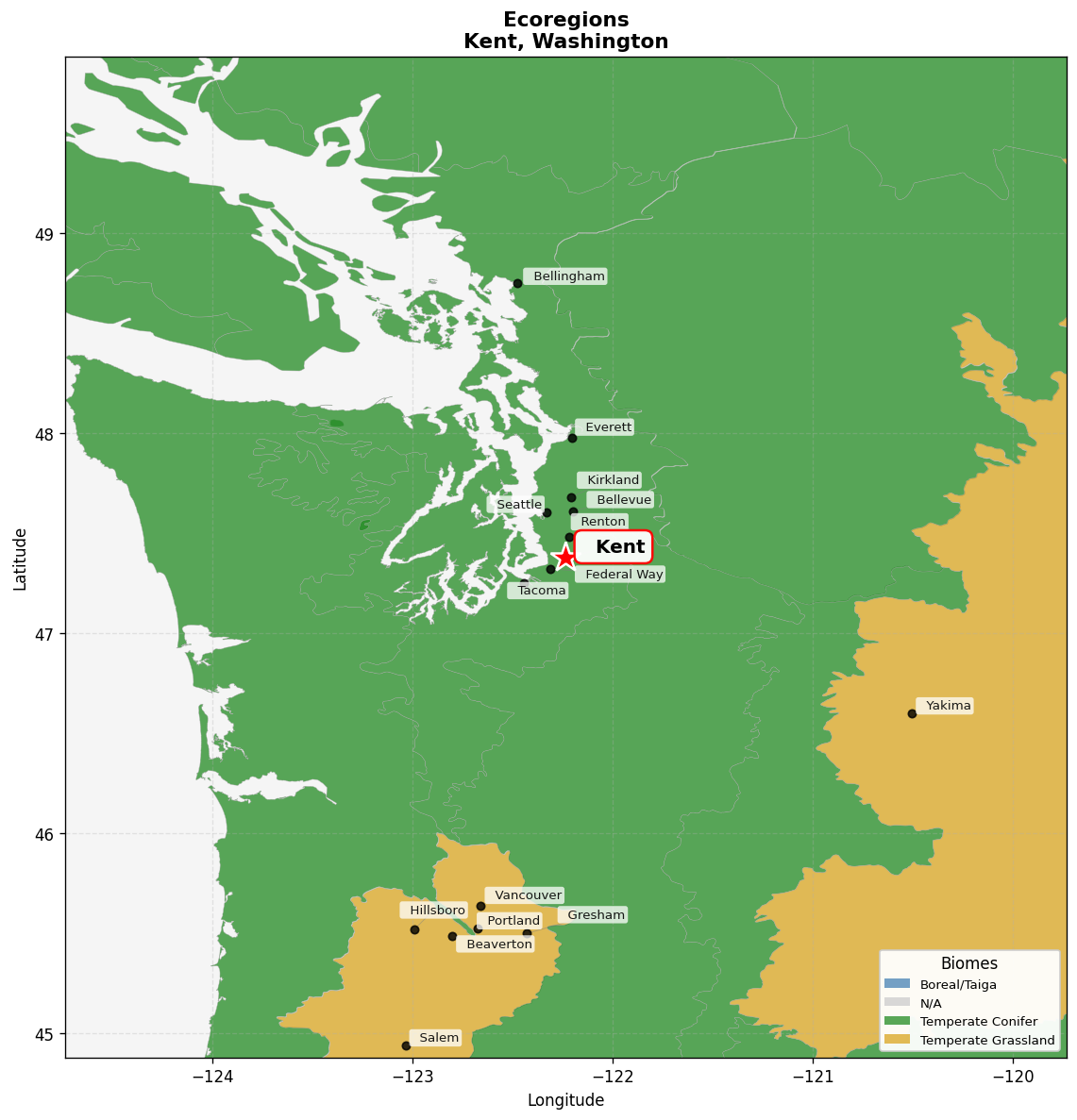
Puget lowland forests
Native ecoregionFrequently Asked Questions
How much does a Mediterranean garden cost in Kent, WA?
Puget Sound landscape crews typically bill around $65–95 per hour per worker. A gravel dry-garden lawn swap on a 500–700 sqft Kent front yard runs about $7,000–16,000 installed. A flagstone courtyard with raised beds and a wall fountain runs $15,000–35,000. Terraced beds with dry-stacked basalt walls on a sloped West Hill lot add $45–80 per face foot of wall. A good potted Olea europaea 'Arbequina' costs a few hundred dollars depending on size, while one-gallon Lavandula 'Grosso' and Rosmarinus 'Arp' keep a DIY planting under $8 per square foot.
Is a Mediterranean garden low maintenance in Kent?
Once it is established, yes. Water new plants by drip once or twice a week through July and August for the first two summers; after that, Cistus × purpureus, Phlomis fruticosa and Rosmarinus 'Arp' usually need nothing but the occasional deep soak in a heat spell. The yearly jobs are shearing lavender by a third after flowering, raking leaves off the gravel in autumn, and pulling the odd weed seedling from the mulch.
When should I plant a Mediterranean garden in Kent?
Early autumn (mid-September to mid-October) or spring (April to May). Autumn planting lets roots grow through the mild wet winter, but gray-leaved plants dislike sitting wet as small plants, so in valley silt or heavy till, spring planting into a freshly raised bed is the safer bet for lavender and rosemary. Avoid planting in July and August, when Kent gets almost no rain.
Do I need a permit for terraces and walls in Kent?
Planting, gravel and low garden walls usually do not. Under the Washington residential code, a retaining wall over 4 feet tall measured from the bottom of the footing, or one holding back a driveway or slope, needs a building permit and often engineering. Sloped lots, stream buffers and the Green River floodplain can trigger extra critical-area review even for smaller work, so check with the City of Kent Permit Center first. Subdivisions on East Hill may also have HOA rules about removing front lawns, so read the covenants.
Will lavender and rosemary survive a Kent winter?
Yes, if the crowns stay dry. Lavandula angustifolia 'Hidcote' and Lavandula × intermedia 'Grosso' handle Zone 8b lows of 15–20°F, and Rosmarinus officinalis 'Arp' is one of the hardiest rosemaries. What kills them is acidic, soggy soil from November to April. Raise beds 8–12 inches, mix in crushed rock, lime toward pH 6.5–7.0, and mulch with gravel. Frost depth in the Puget lowland is shallow, but a cold snap with dry east wind can still burn foliage, so site them out of exposed corners.
Can I grow an olive tree or citrus in Kent?
An olive, with care. Olea europaea 'Arbequina' is the best bet, but it is safest in a large pot you can move under a porch during a hard freeze. Citrus such as Citrus × meyeri 'Improved Meyer' belongs in a pot outdoors from May to October and in a bright, cool garage or room in winter. If you want the silver look with no risk, Elaeagnus 'Quicksilver' and Pyrus salicifolia 'Pendula' are fully hardy here.
Is a Mediterranean garden a good idea on the Kent valley floor?
It works, but only on a berm. The Green River valley floor is silty alluvium with a high water table, so Mediterranean shrubs planted at grade sit in water all spring. Build mounded beds 12 inches or more above the lawn, use a crushed-rock blend, and keep the lowest, wettest spot for a rain garden. Ficus carica 'Desert King' and Arbutus unedo 'Compacta' are more forgiving of heavier soil than lavender is.