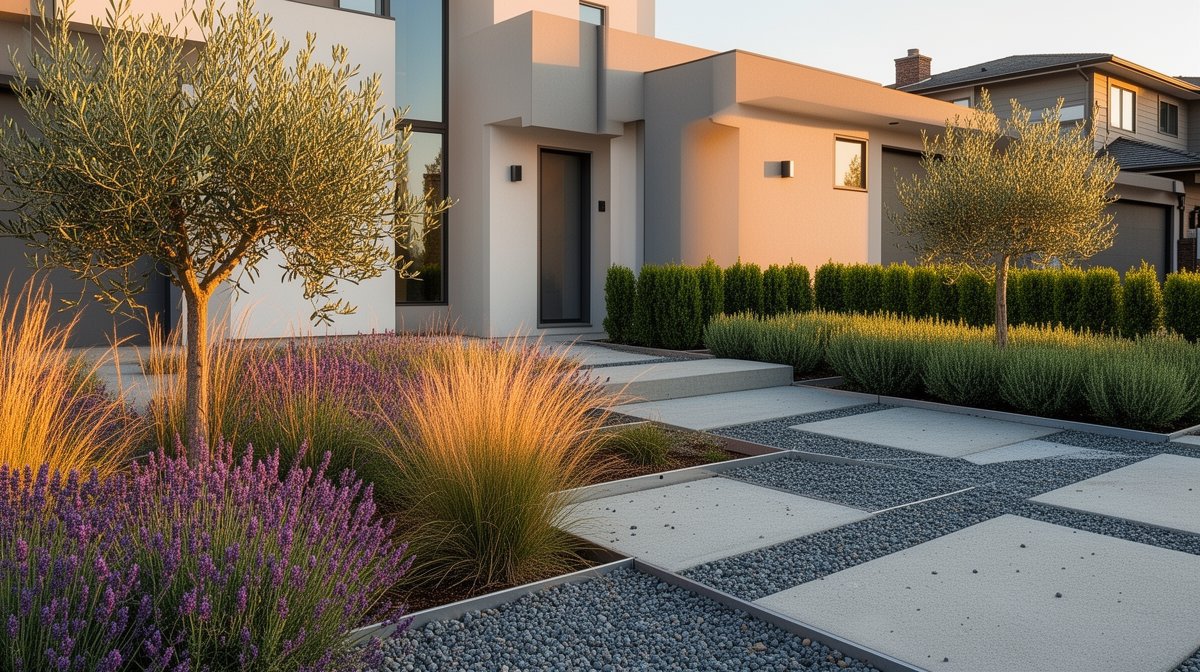
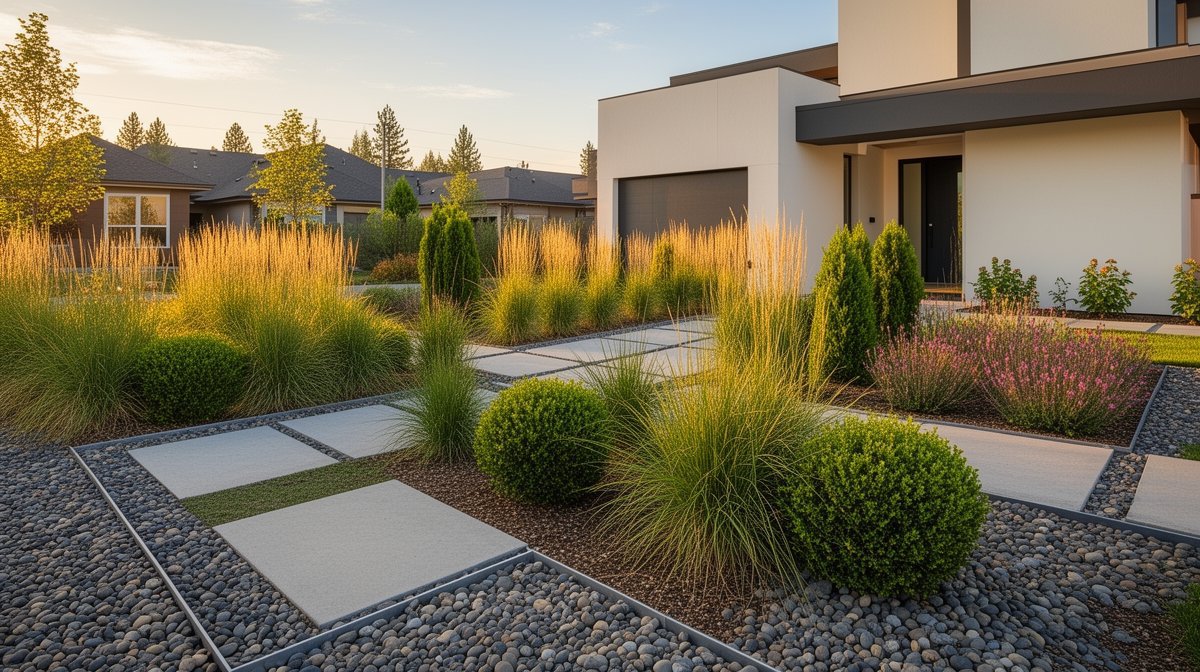
4 Modern Garden Ideas for Tacoma, WA | Clean-Line Landscape Design in Zone 8b
Native plants from the Puget lowland forests (Zone 8b) — Mediterranean (warm summer) climate
Why Modern/Minimalist Gardens in Tacoma?
Tacoma's building boom has quietly handed the city some of the best raw material for modern landscape design in the Northwest. The flat-roofed infill houses rising across the Proctor District and North Slope, the mid-century ranches of Fircrest, University Place, and Northeast Tacoma, and the new contemporary builds around Point Ruston all bring the strong horizontal lines that modern landscaping exists to amplify. Where a cottage garden softens a house, modern design frames it — and Tacoma's backdrop of Douglas firs, water views, and moody light gives clean hardscape and sculptural planting a drama that sunnier cities have to manufacture.
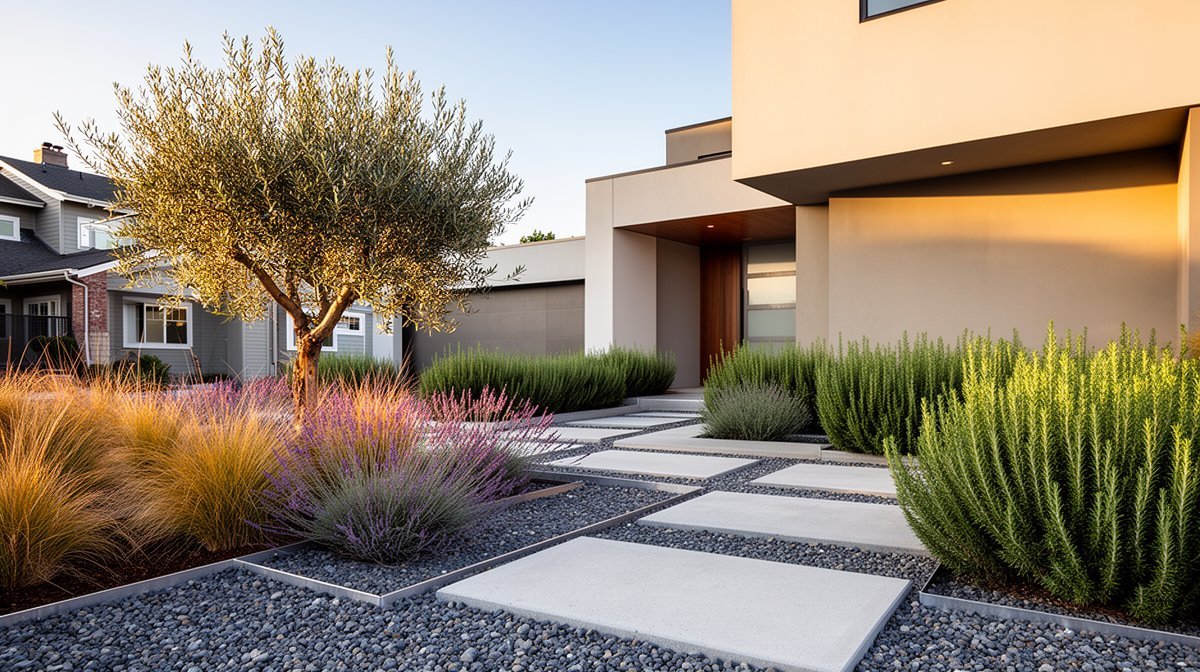
Zone 8b and a dry-summer Csb climate make Tacoma far friendlier to the modern plant palette than most people assume. Ornamental grasses, lavender, Russian sage, and hardy yuccas all thrive, and the near-rainless July–August stretch means a gravel garden here spends its showcase season genuinely dry. The catch is the other nine months: roughly 40 inches of rain falls between October and May, so every agave, yucca, and silver-leafed plant in a Tacoma modern garden must sit in raised, sharply drained beds — winter wet, not winter cold, is what kills them. Steel-edged planters filled with a 50/50 mix of soil and crushed rock, topped with gravel mulch, deliver the desert-modern look while solving the drainage problem outright; cold-hardy Agave parryi and Yucca filamentosa handle 8b winters fine once their crowns stay dry.
The local ground itself is an ally. Most Tacoma lots sit on gravelly glacial outwash that drains far better than the clay that plagues modern hardscape elsewhere — patios and pads need only a modest 4–6 inch compacted base — though pockets of hard till can perch water, so a quick percolation test before pouring concrete is cheap insurance. Two Tacoma-specific rules complete the picture. First, embrace the conifers: limbed-up firs and native evergreens read as living sculpture against flat rooflines and keep the composition alive through the gray season. Second, invest in lighting — Tacoma's winter darkness arrives by 4:30 pm, and uplit grasses, string lights, and fire features are what turn a modern landscape from a summer amenity into a year-round room. With mild winters, no real irrigation demand outside high summer, and hardscape that shrugs off the rain, a well-built modern garden here is about as low-maintenance as Northwest landscaping gets.
4 Modern/Minimalist Design Ideas for Tacoma
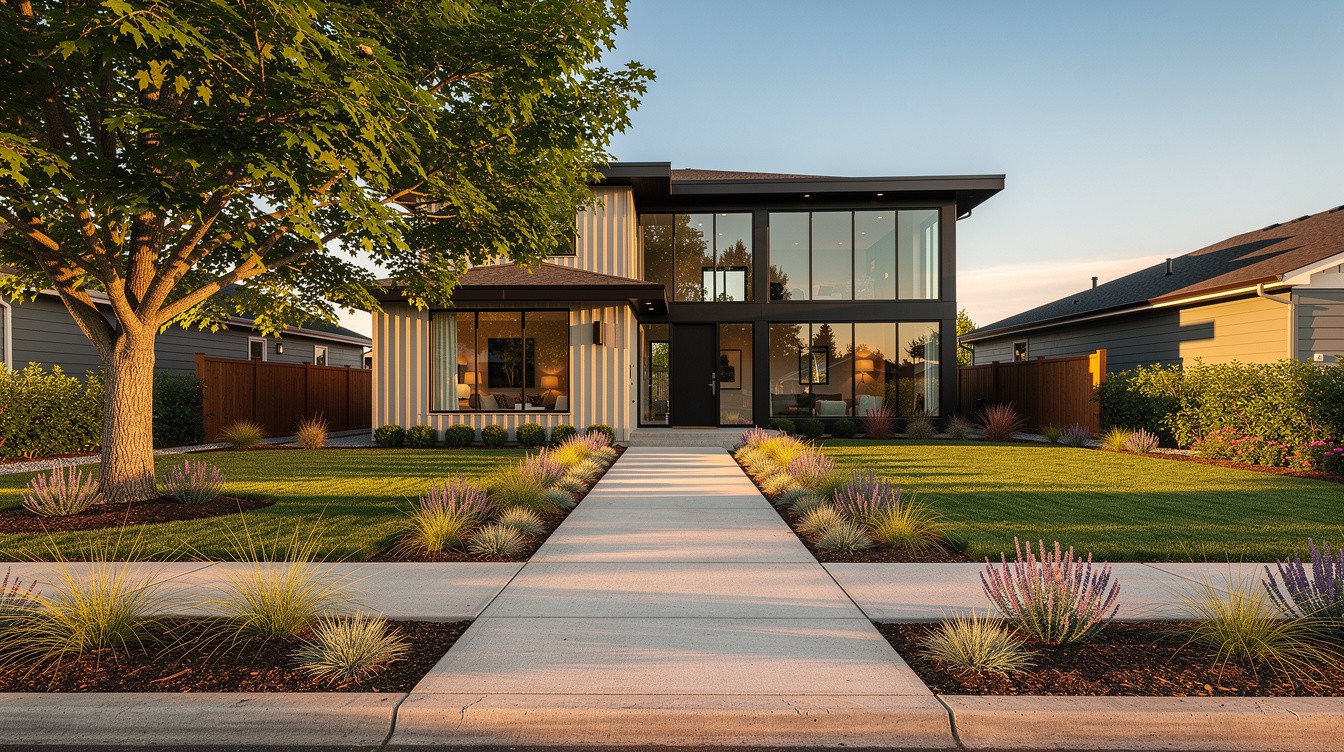
The Slat-Wall Statement Entry
$10–20/sqftA two-story flat-roofed contemporary home — black window frames, a full glass corner, and striped wood-slat siding — fronted by a wide broom-finished concrete walkway that runs dead straight from the sidewalk to the door. The lawn is kept as two clean panels, and the walk is lined on both sides with a rhythmic ribbon of ornamental grasses and purple-flowering perennials set in dark mulch, repeating like a drumbeat toward the entry. A mature maple shades the front corner, proving the composition works with, not against, Tacoma's established street trees.
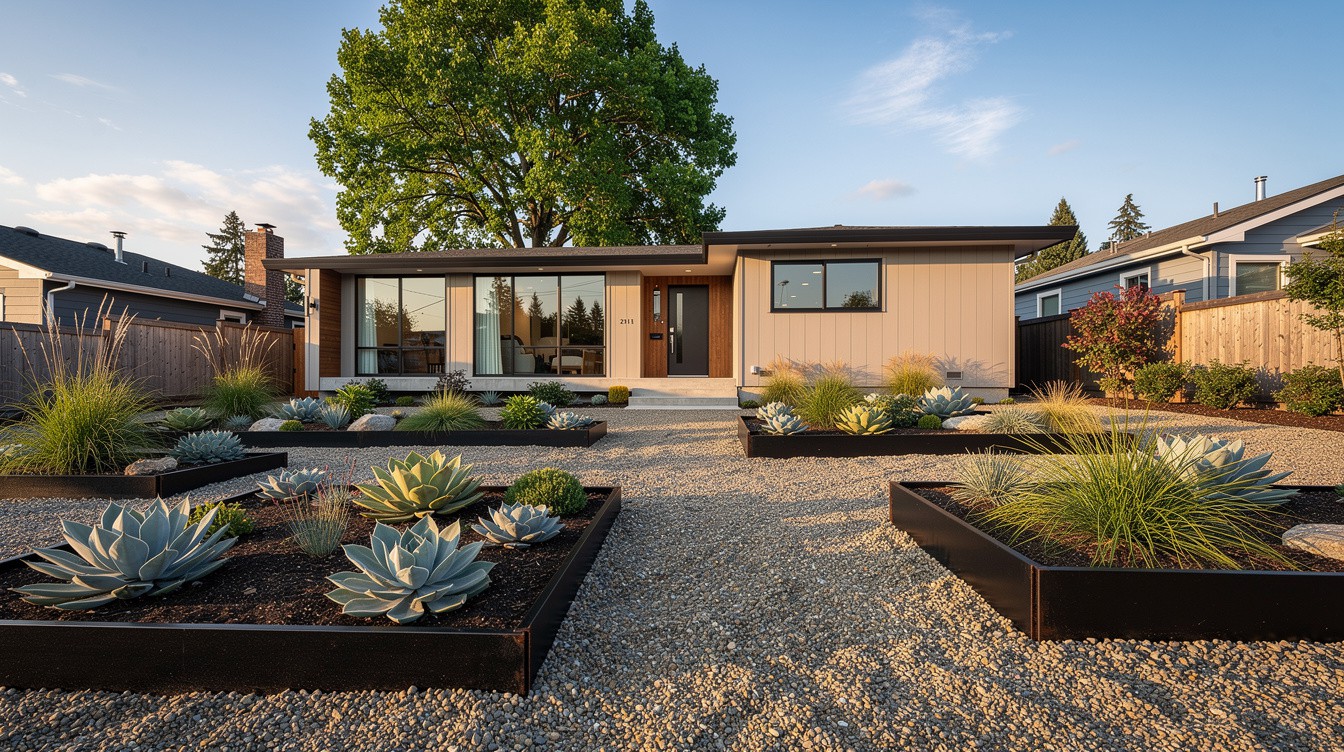
The Mid-Century Gravel Courtyard
$12–22/sqftA single-story mid-century ranch with vertical siding and a wood-trimmed entry, its entire front lawn replaced by a field of pea gravel organized into crisp, black steel-edged raised beds. Each bed is its own composition — big blue-green agave rosettes, clipped evergreen mounds, tufts of grass, and feature boulders set in dark soil — with the raised, free-draining beds being exactly the trick that lets sculptural succulents survive Tacoma's 40-inch wet season. A cedar fence and a small burgundy specimen tree close the courtyard, and the whole yard needs mowing exactly never.
The Fire Bowl Night Garden
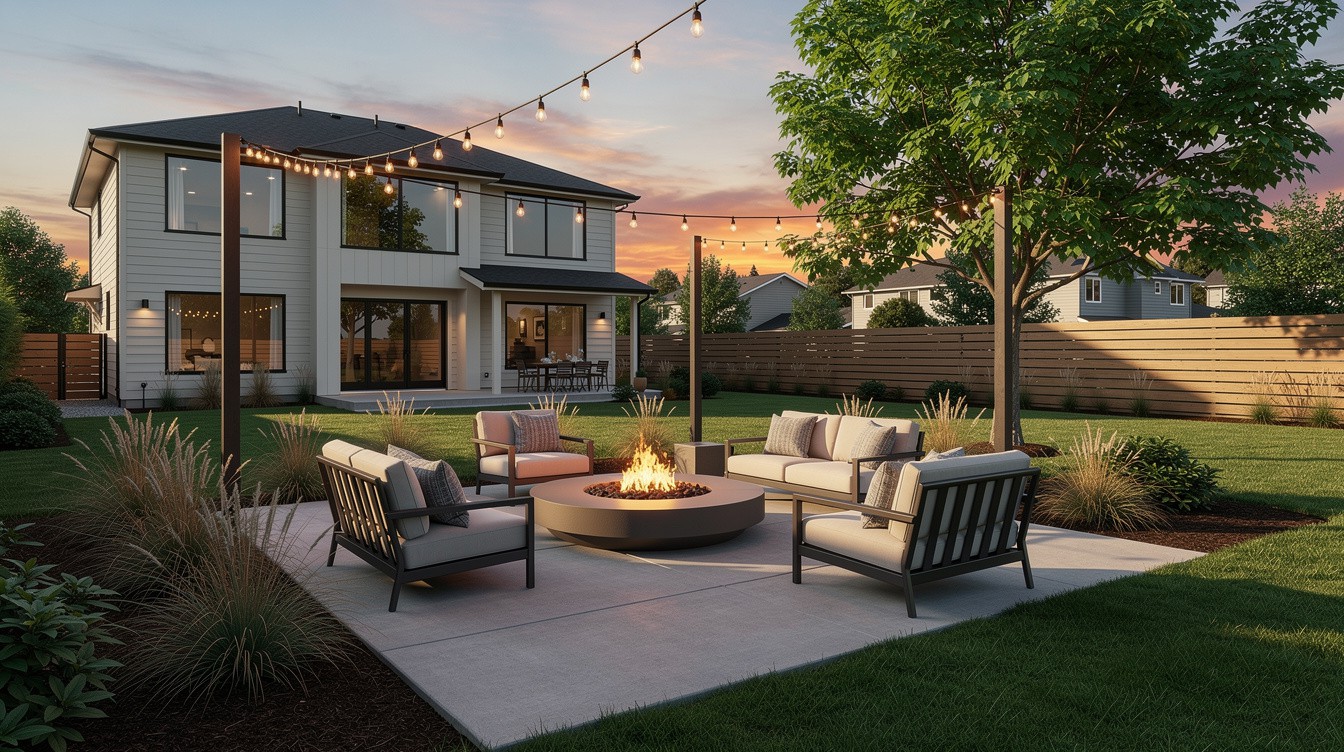
$18–35/sqftBehind a white two-story farmhouse-modern home, oversized square concrete pads form a floating terrace in the lawn, furnished with four slatted-frame lounge chairs around a round steel fire bowl. Cedar posts carry sweeping lines of string lights from the roofline, and the terrace edges dissolve into loose drifts of feather reed grass and native shrubs instead of railings. It is deliberately simple — one floor material, one focal flame, one planting texture — and it is aimed squarely at Tacoma's sunset hours, extending backyard season from March to November in a climate where evenings cool fast.
The Evergreen-Framed Pool Deck
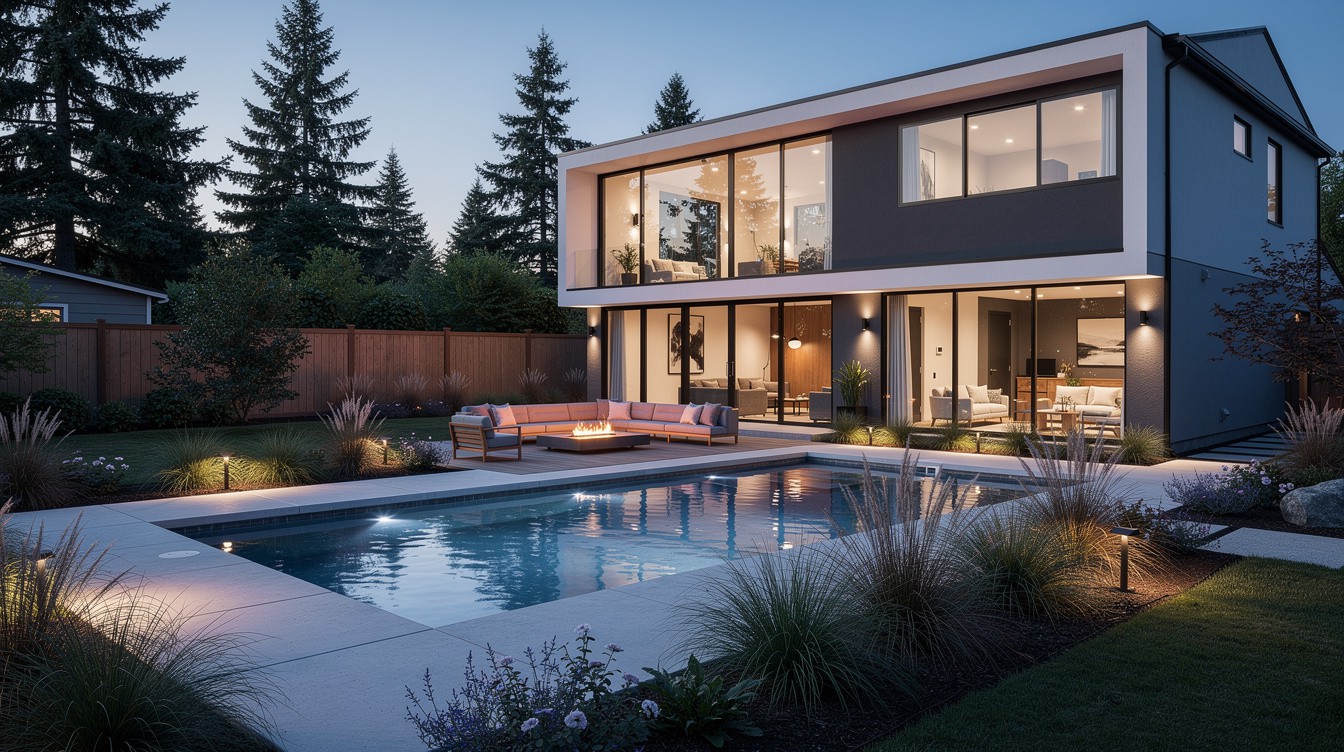
$45–90/sqft (pool area inclusive)A charcoal-and-white flat-roofed contemporary with two stories of floor-to-ceiling glass opens onto a rectangular pool wrapped in pale concrete decking, with towering native firs and cedars standing guard beyond the fence line — the unmistakably Northwest frame that makes this scene Tacoma rather than Palm Springs. Ornamental grasses planted in loose drifts soften every deck edge, low path lights and underwater lighting carry the space into the evening, and a low fire table with sectional seating sits at the water's edge. The restrained palette — gray, white, green, wheat — lets the big conifers and the sky do the decorating.
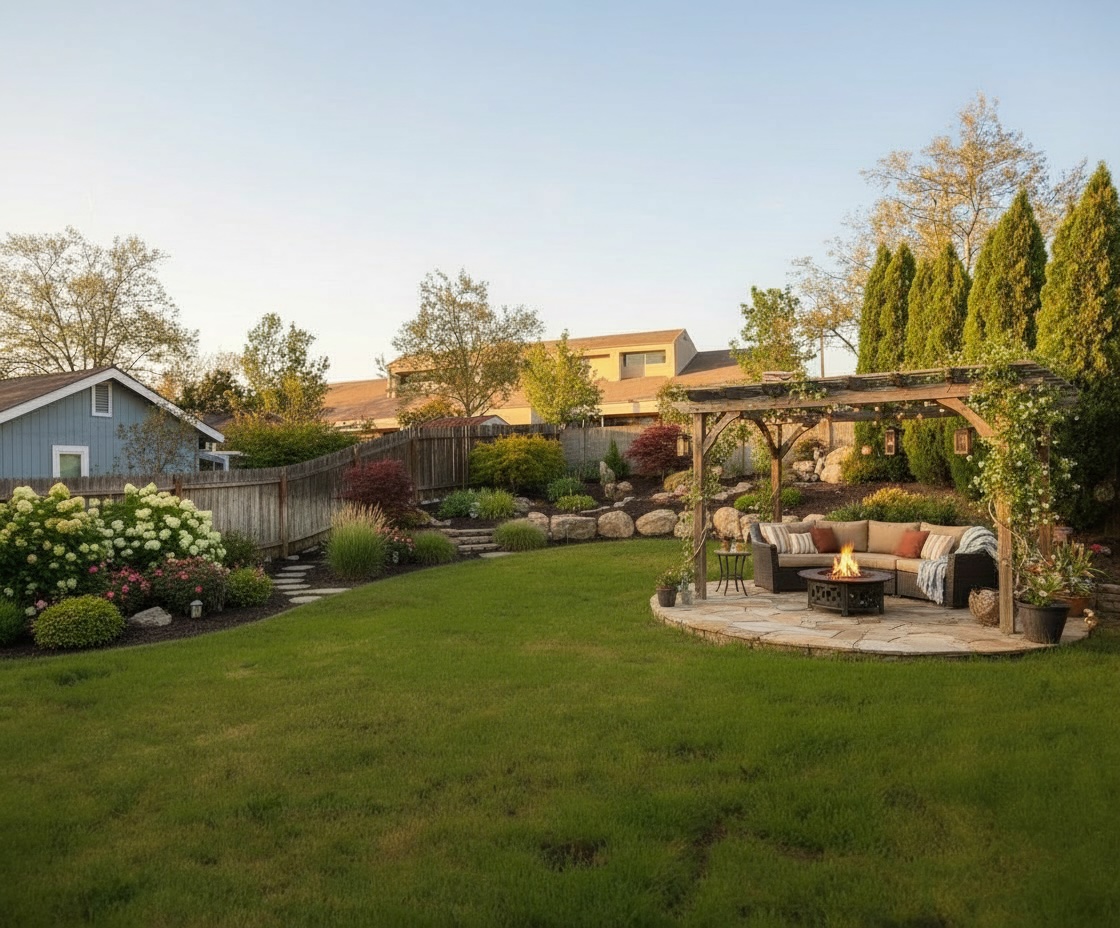
See how a modern/minimalist garden looks on YOUR property
Upload a photo of your Tacoma yard and visualize your dream garden in seconds.
Try ProScapeAI Free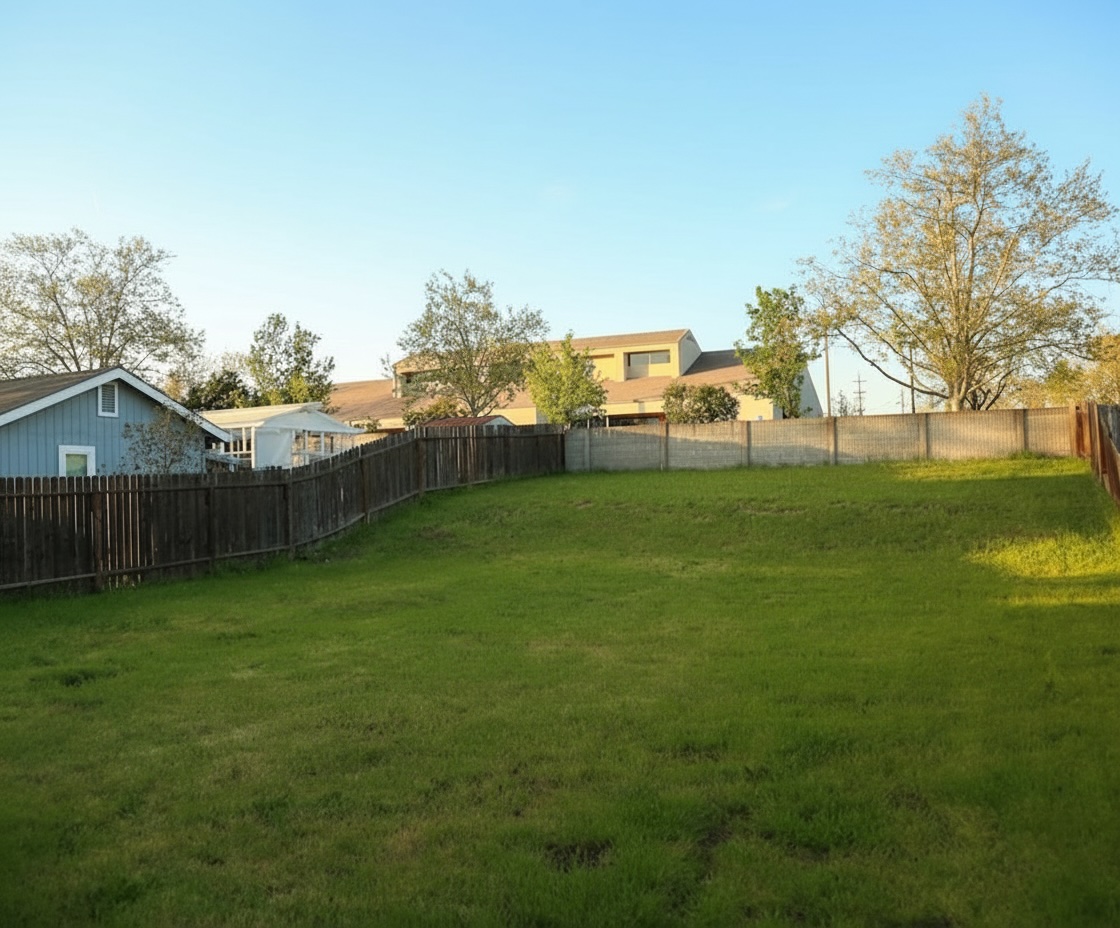
Featured Trees & Shrubs for Modern/Minimalist Gardens
Browse all 164 plants for Tacoma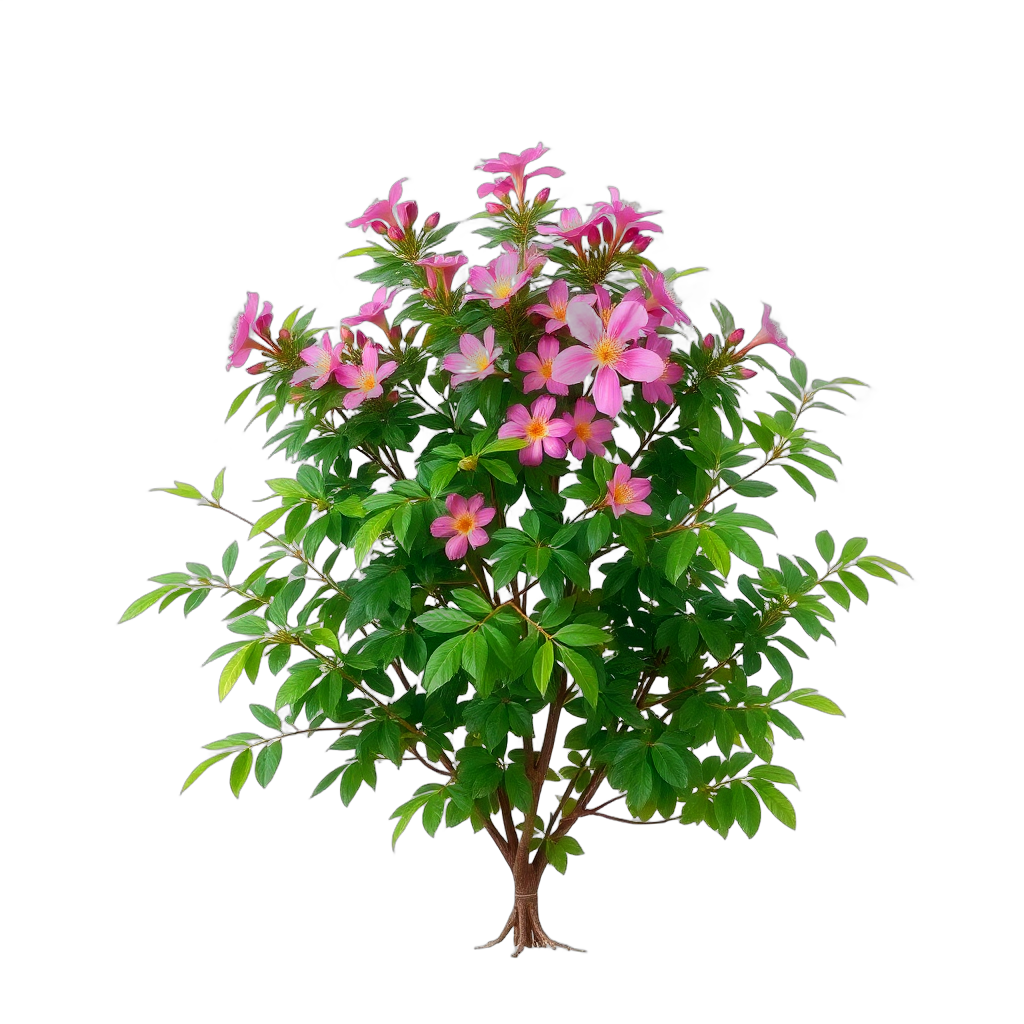
Nootka Rose
Rosa nutkana
grows to 5 feet, pink blooms in spring. Attracts butterflies.
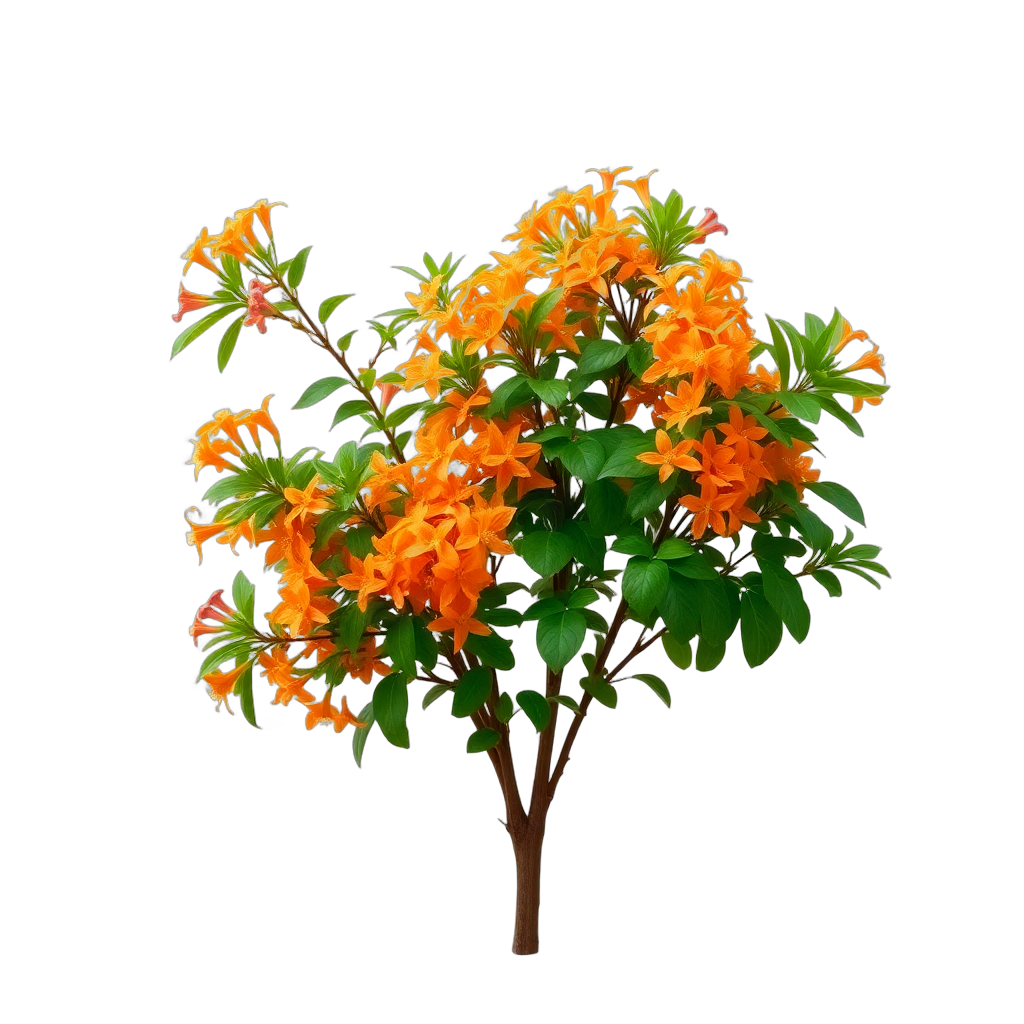
Orange Honeysuckle
Lonicera ciliosa
medium-sized at 15 feet, orange blooms in summer. Attracts hummingbirds.
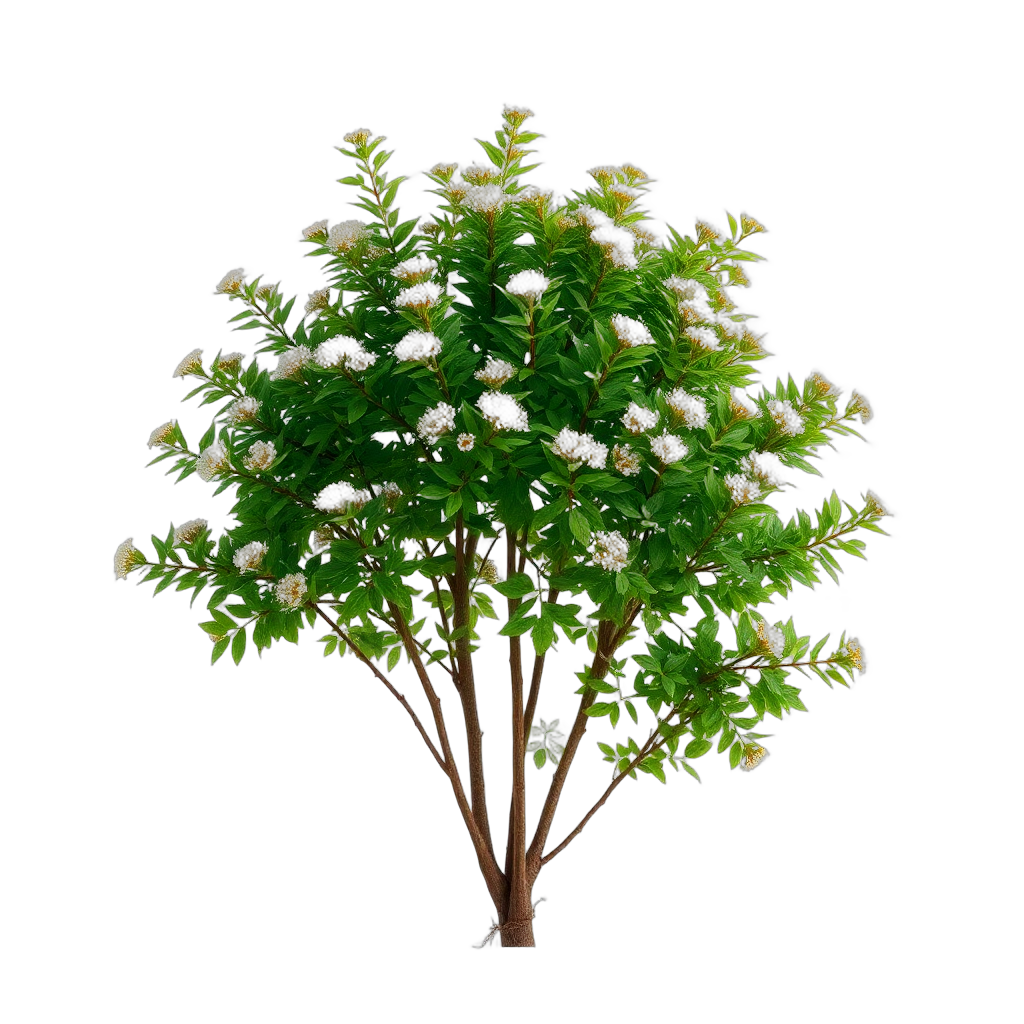
Pacific Ninebark
Physocarpus capitatus
medium-sized at 8 feet, white blooms in spring. Attracts butterflies.
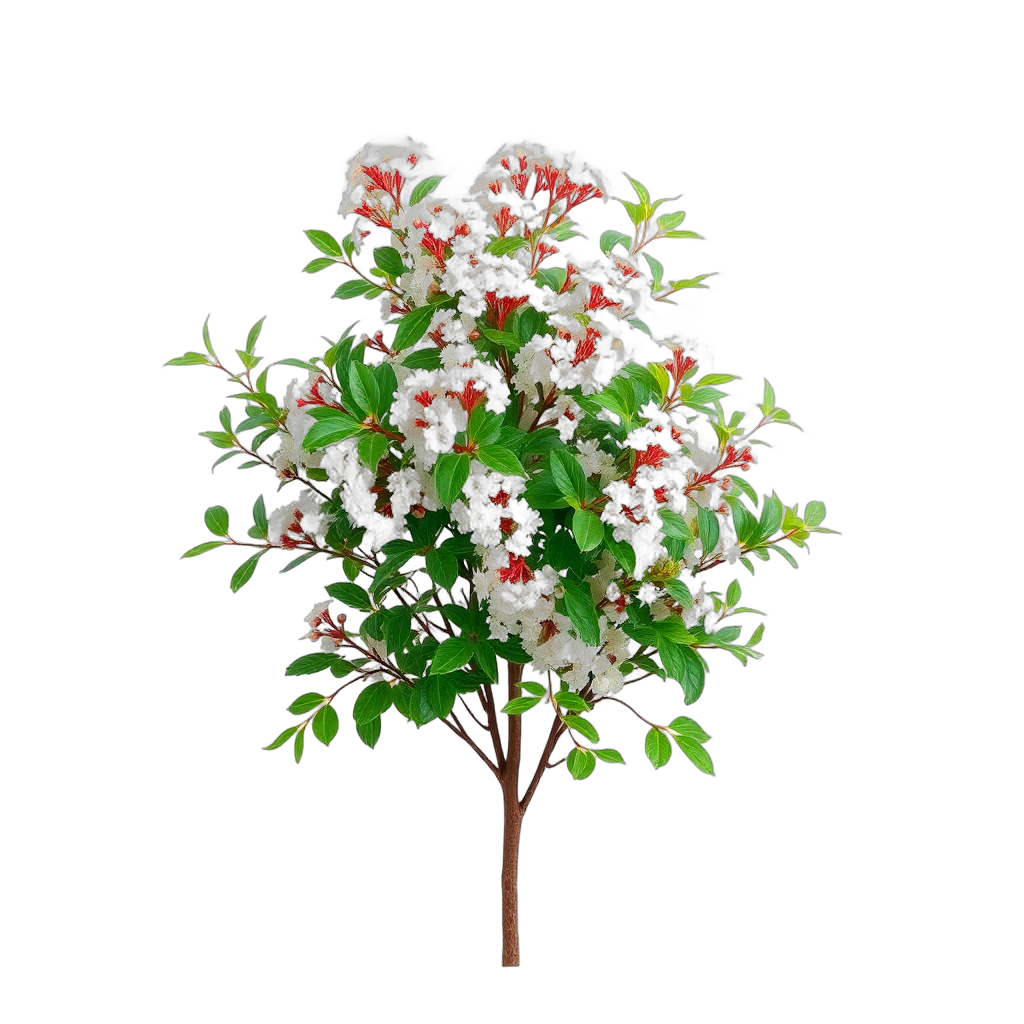
Snowberry
Symphoricarpos albus
grows to 4 feet, pink blooms in summer.
Featured Grasses & Groundcovers for Modern/Minimalist Gardens
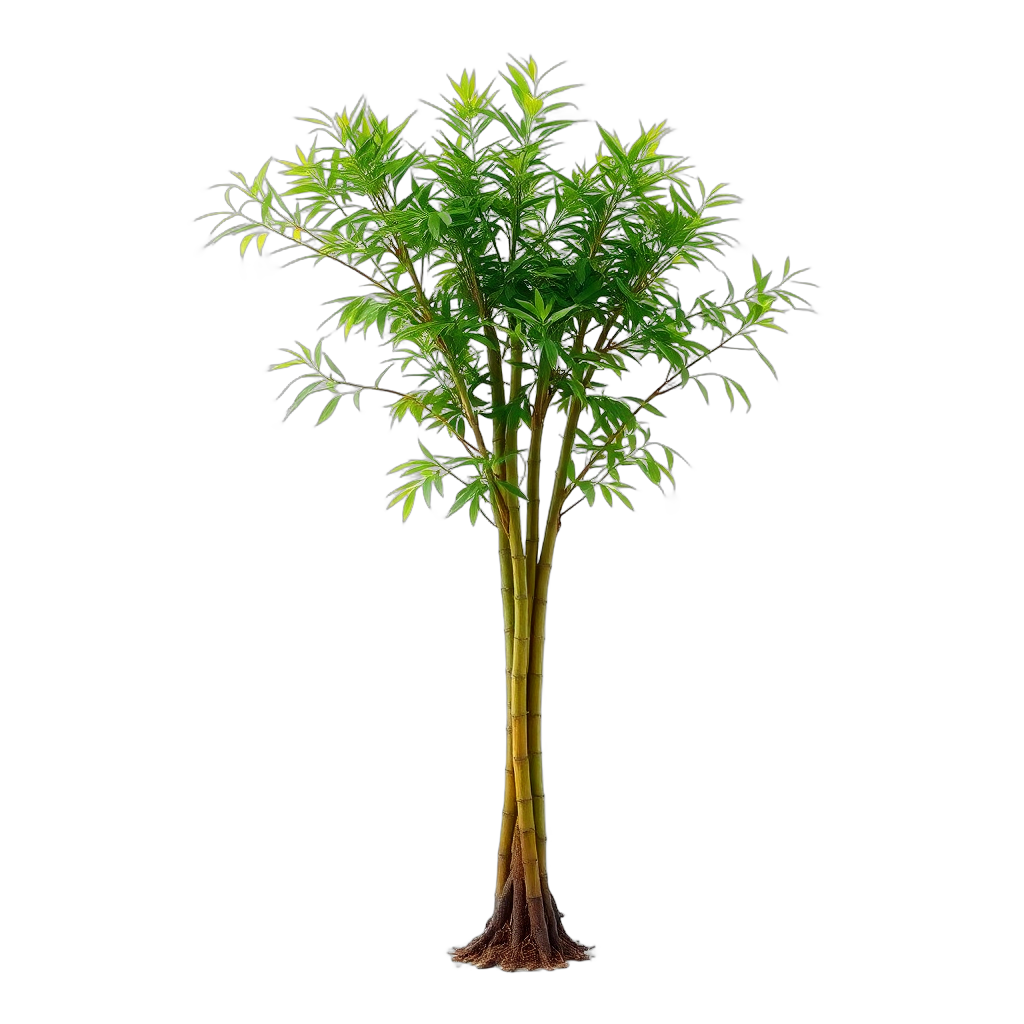
Anceps Bamboo
Yushania anceps
medium-sized at 12 feet, blooms in none. Evergreen year-round.
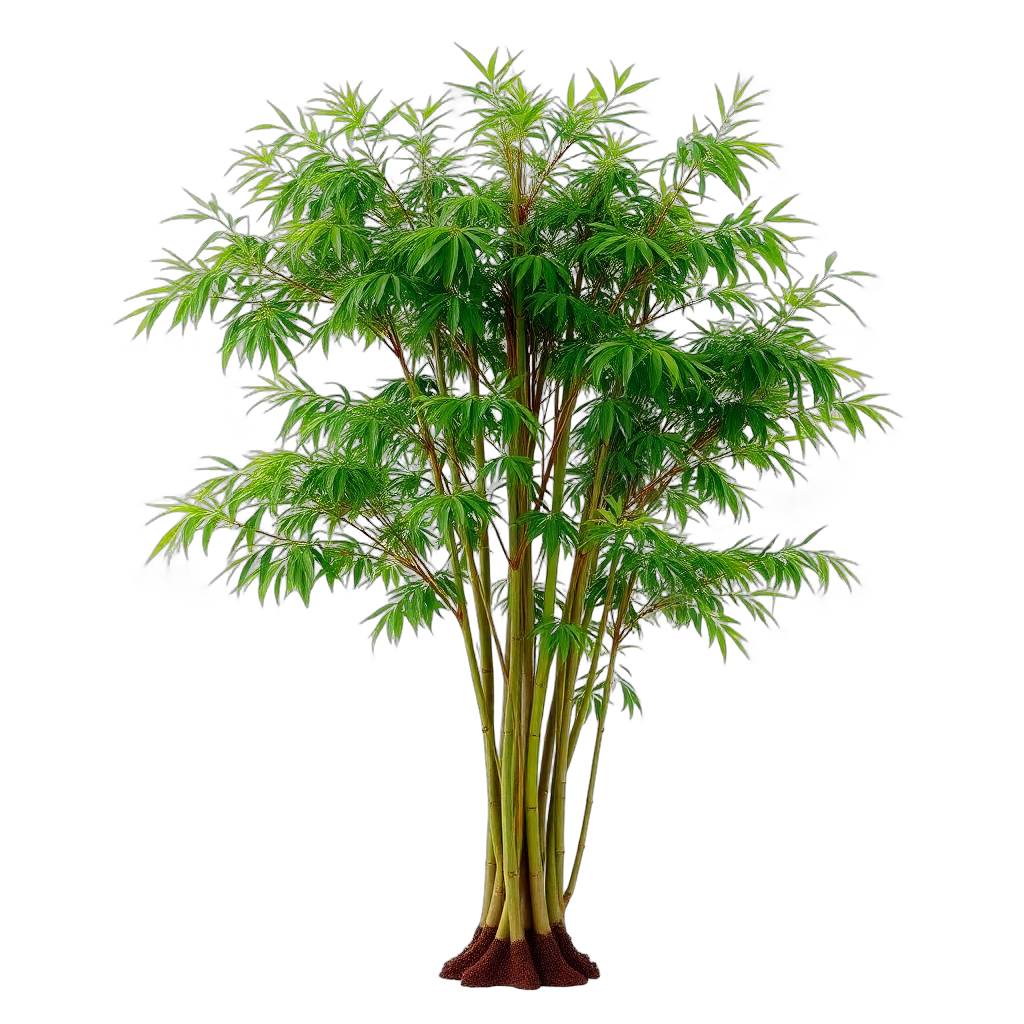
Arrow Bamboo
Pseudosasa japonica
medium-sized at 15 feet, blooms in none. Evergreen year-round.
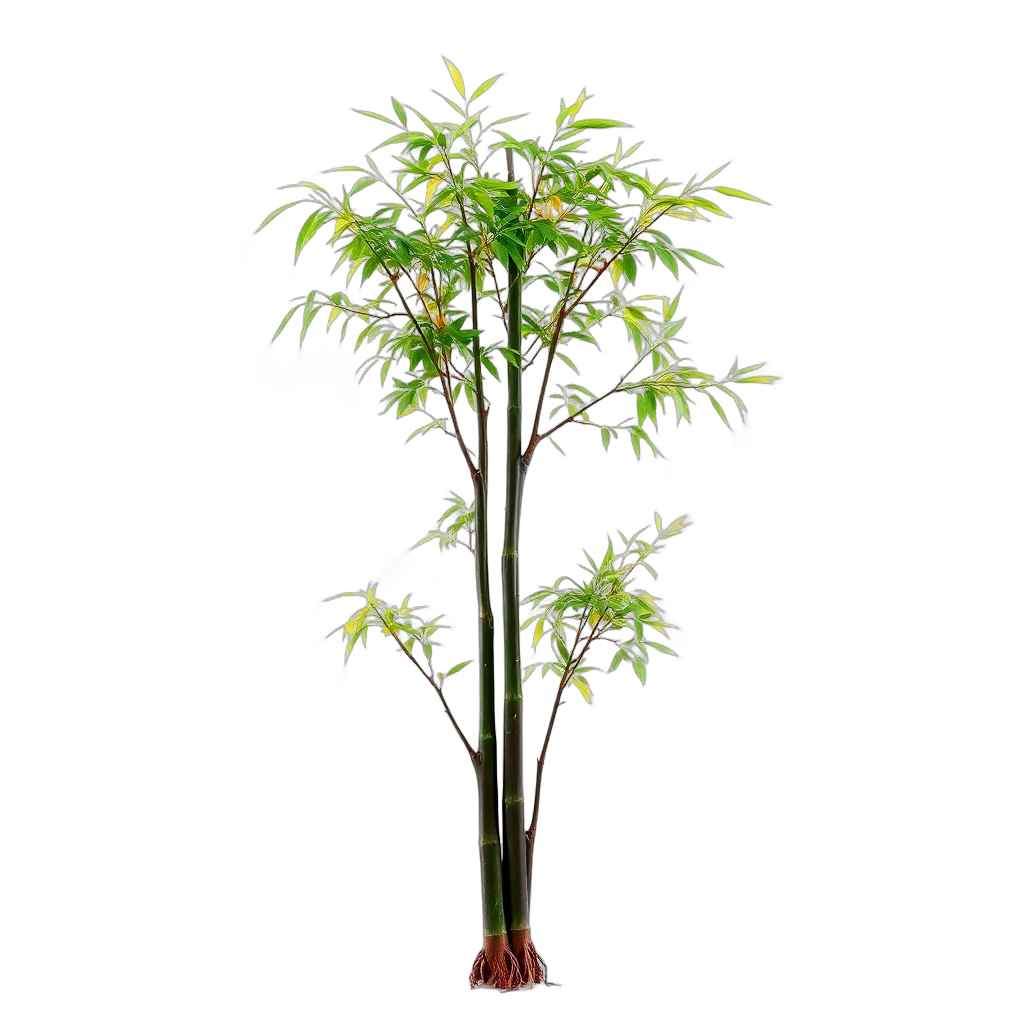
Black Bamboo
Phyllostachys nigra
reaches 25 feet tall, blooms in none. Evergreen year-round.
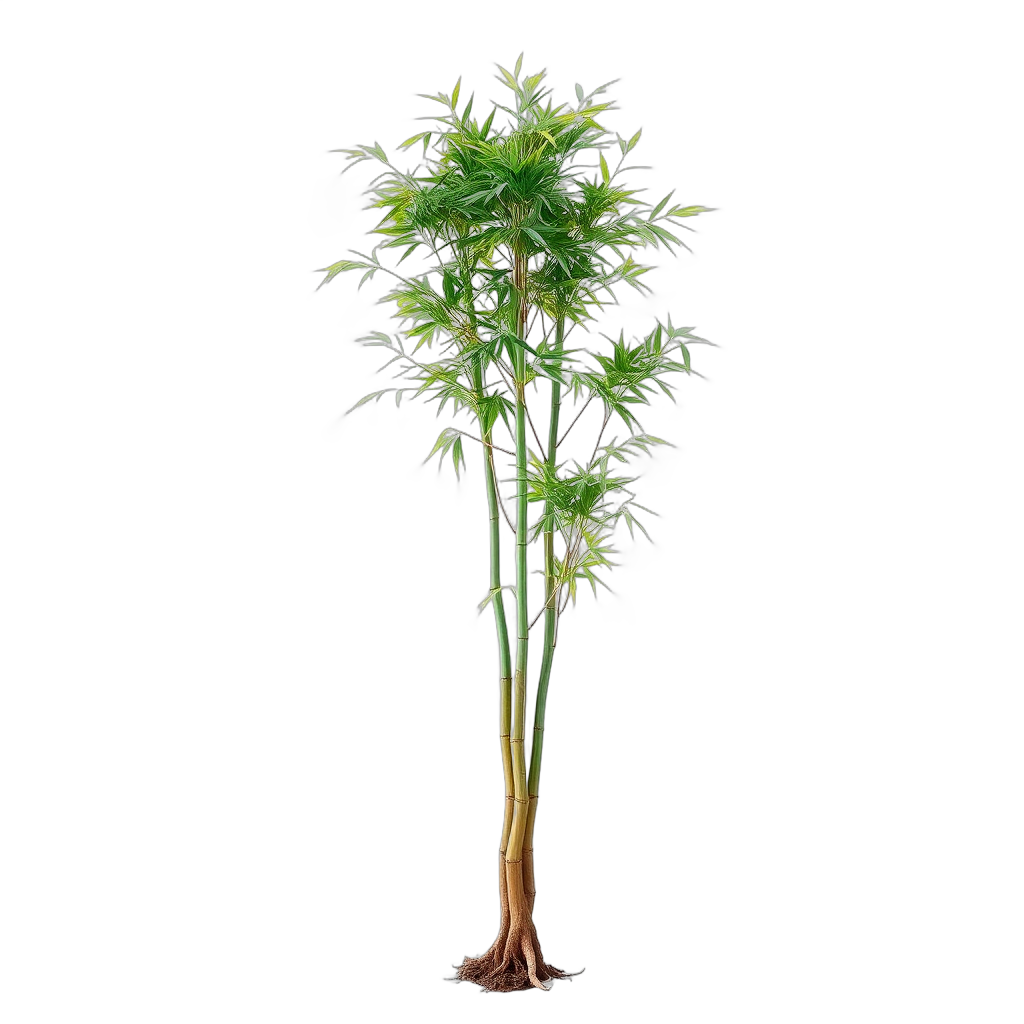
Blue Bamboo
Borinda papyrifera
reaches 20 feet tall, blooms in none. Evergreen year-round.
Featured Flowers & Perennials for Modern/Minimalist Gardens
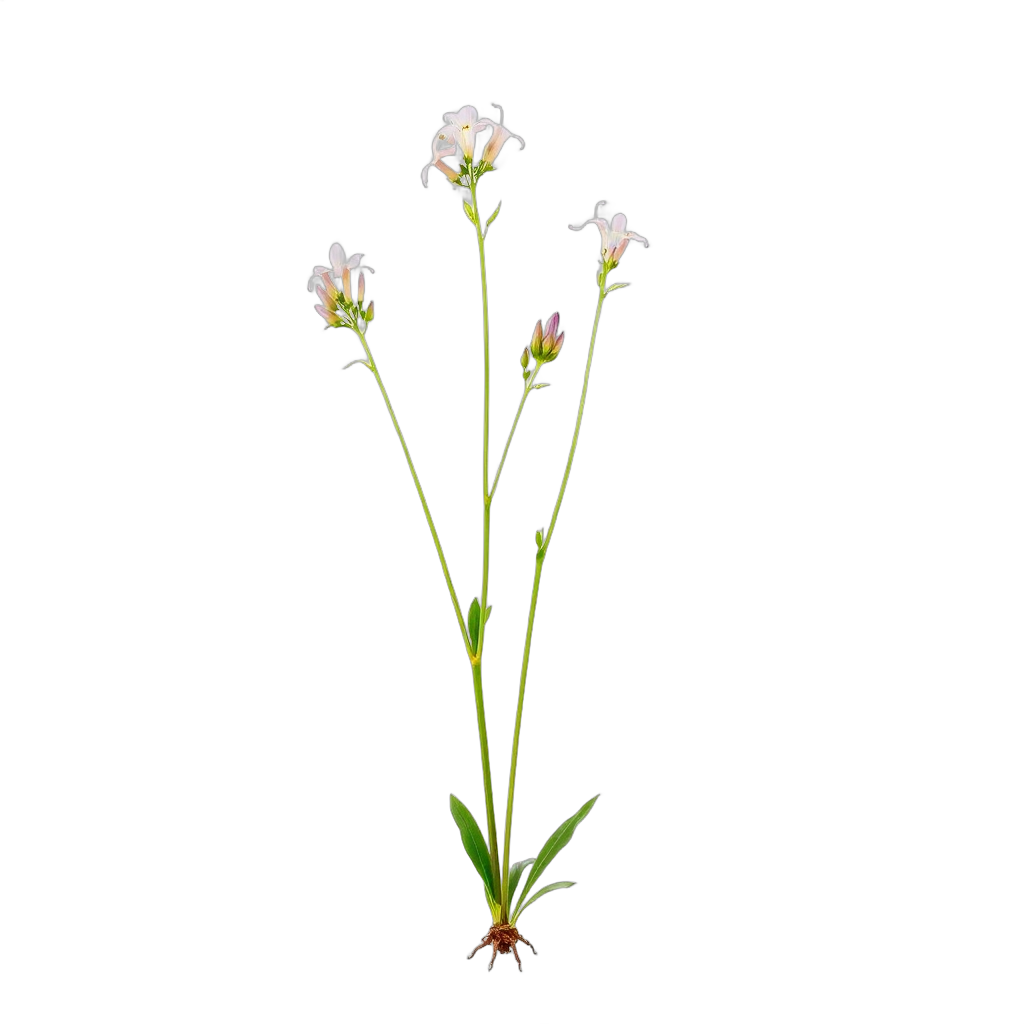
Common Camas
Camassia quamash
low-growing ground cover, blue blooms in spring. Pollinator-friendly.
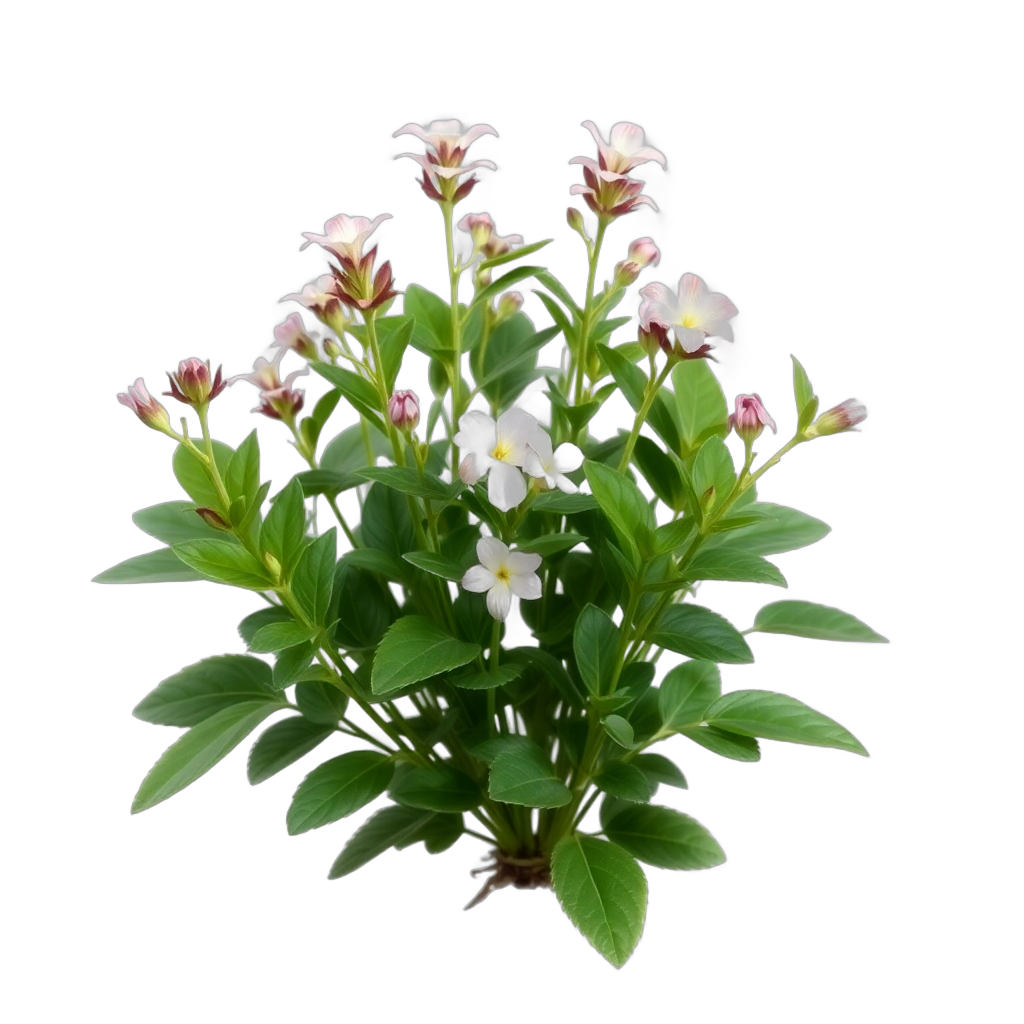
Inside-Out Flower
Vancouveria hexandra
low-growing ground cover, white blooms in spring.
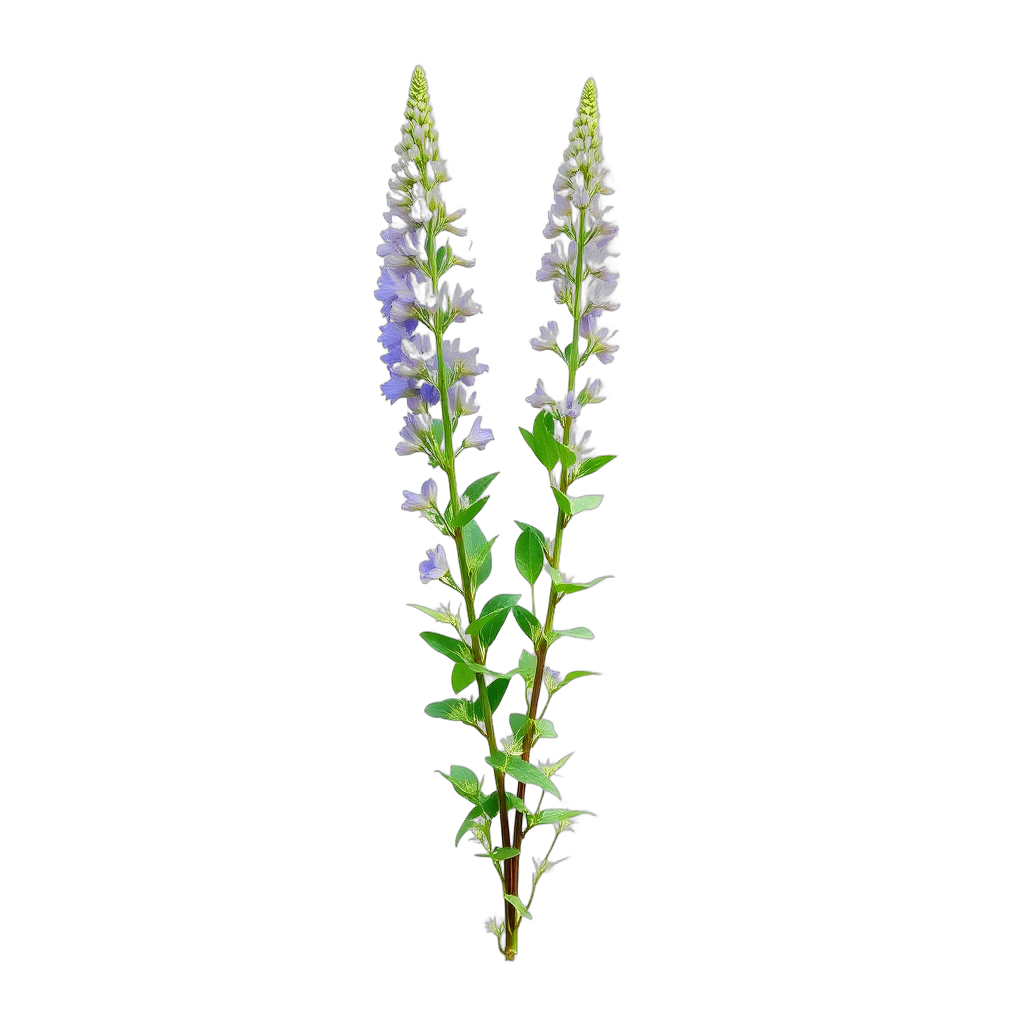
Large-Leaved Lupine
Lupinus polyphyllus
grows to 4 feet, multi blooms in spring. Attracts butterflies.
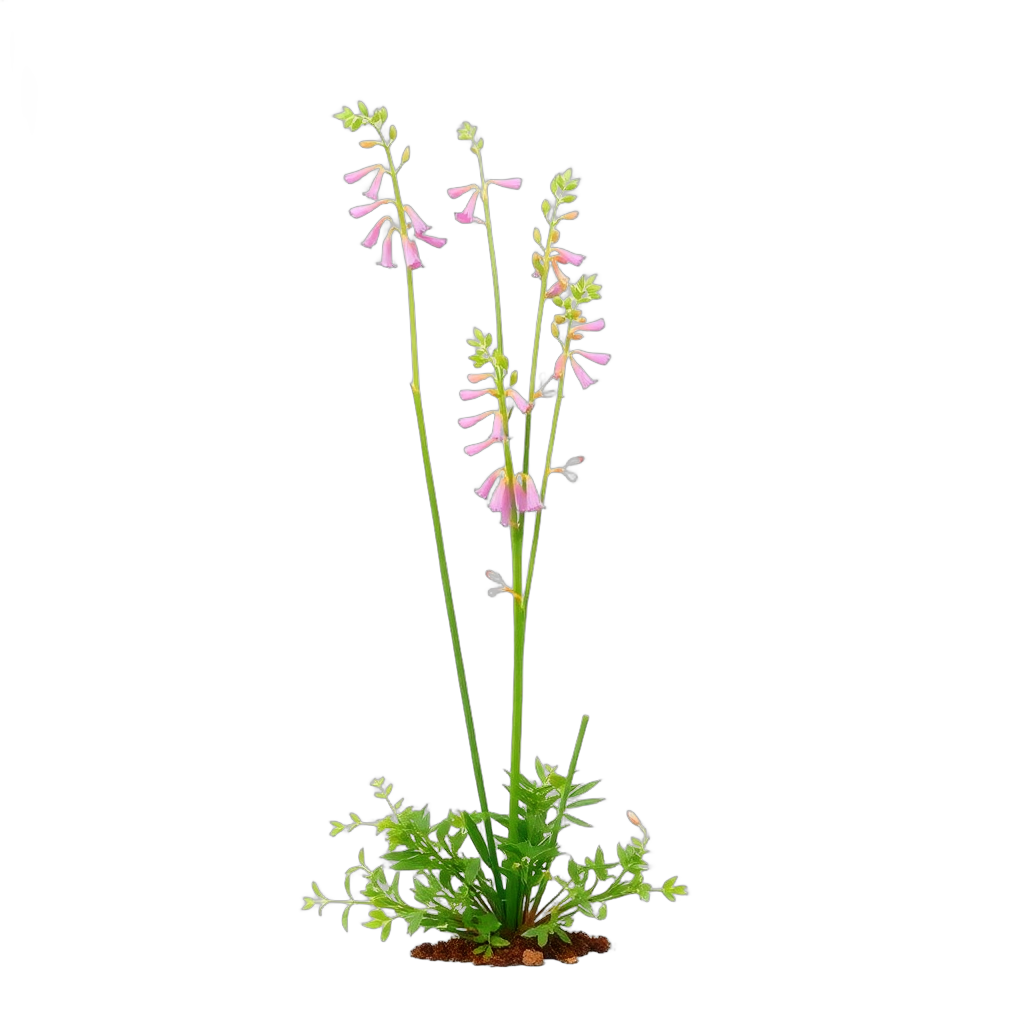
Scouler's Corydalis
Corydalis scouleri
grows to 3 feet, pink blooms in spring. Pollinator-friendly.
Bloom Calendar for Tacoma
spring
Common Camas, Inside-Out Flower, Large-Leaved Lupinesummer
Tiger Lily, Orange Honeysuckle, Snowberryfall
Limited bloomswinter
Limited bloomsDesign Tips for Tacoma (Zone 8b)
- Raise every succulent and silver-leafed plant above grade in steel or masonry planters with gravel mulch — in Tacoma the enemy is 40 inches of winter rain, not Zone 8b cold, and drainage is the entire game
- Design for darkness first: with winter sunsets before 4:30 pm, uplit grasses, string lights, and a fire feature are what make a Tacoma modern landscape usable more than half the year
- Keep and limb up the conifers — a Douglas fir trunk rising behind a flat-roofed house is the strongest modern statement available in the Northwest, and it is free
- Schedule hardscape for the June–September dry season and planting for October — Tacoma's climate hands you a perfect construction calendar if you sequence the project in that order
- Test-hole before you pour: most Tacoma lots drain beautifully on glacial gravel, but a hidden till lens turns a patio base into a bathtub, and one overnight percolation check costs nothing
- Choose grasses over flowers for the main structure — feather reed, blue oat, and switchgrass stand through Puget Sound wind and rain and give the year-round architecture that perennial color cannot
Where to Source Plants in Tacoma
Skip the big-box stores. These independent Tacoma nurseries specialize in the plants that make modern/minimalist gardens thrive in Zone 8b.
GardenSphere
Proctor
Full-service garden center offering quality plants, houseplants, lawn care products, and expert advice since 2004.
Wild Thyme Nursery and Landscaping
South End
Locally sourced plants from Washington and Oregon, pre-acclimated to the Pacific Northwest environment.
Portland Avenue Nursery
East Tacoma
Specializes in unique Japanese maples, conifers, and specimen-sized trees with 40+ years of expertise.
Calendula Farm & Nursery
East Tacoma
Landscape contractor and nursery specializing in native plants, edible plants, and dried floral arrangements.
Modern/Minimalist Landscaping Costs in Tacoma
| Project Scope | Estimated Cost |
|---|---|
| Front-yard modern conversion (turf removal + gravel + steel planters) | $8,000 – $18,000 |
| Concrete pad terrace (200–400 sqft) | $10,000 – $25,000 |
| Backyard fire-bowl room with lighting + seating | $18,000 – $45,000 |
| Heated pool + deck + full backyard landscape | $90,000 – $200,000 |
| Steel raised planter beds (fabricated + filled) | $600 – $1,500 each |
| AI visualization with ProScapeAI | Free to start |
Estimates based on Tacoma, WA-area contractor rates as of 2026. Actual costs vary by site conditions, materials, and contractor.
Tacoma Climate & Growing Zone
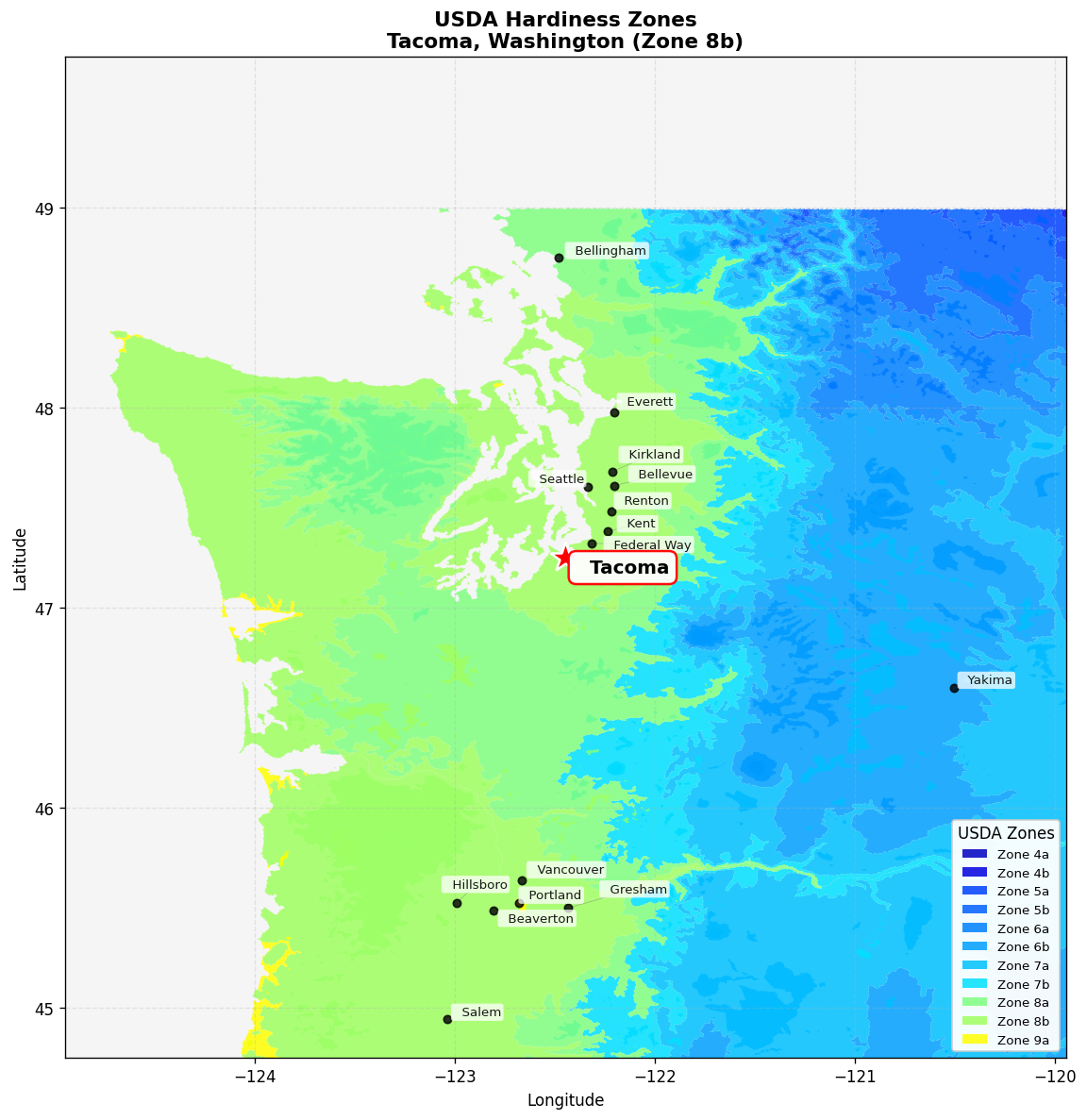
USDA Zone 8b
Hardiness zone for Tacoma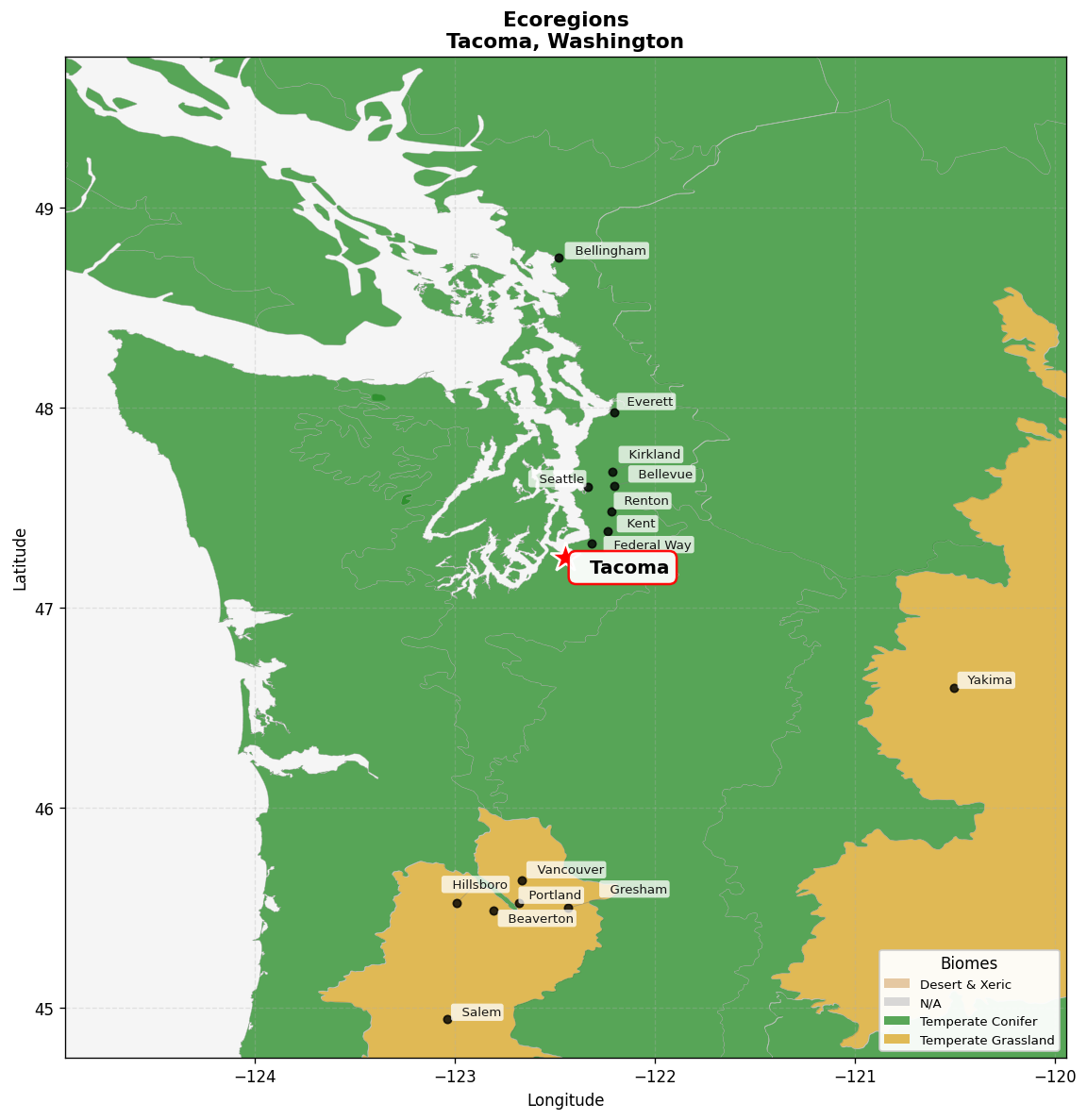
Puget lowland forests
Native ecoregionFrequently Asked Questions
How much does modern landscaping cost in Tacoma?
Puget Sound labor runs 10–20% above the national average, so budget accordingly. A front-yard modern conversion — turf removal, gravel, steel edging, architectural plants — for a typical 500 sqft Tacoma front yard runs $8,000–18,000 installed. A concrete pad terrace with fire bowl and lighting lands between $18,000 and $45,000. Pools are the big-ticket item in the Northwest: expect $90,000–200,000 for a heated in-ground pool with deck and landscape, since heating and covers are non-negotiable here. DIY gravel-and-planter conversions can come in under $6/sqft.
Can agaves and succulents really survive Tacoma winters?
Cold is not the problem — winter wet is. Zone 8b lows of 15–20°F are well within range for Agave parryi, Yucca filamentosa, Yucca rostrata, and most sempervivums. What kills them is sitting in saturated soil through Tacoma's 40-inch October-to-May rain season. The fix is absolute: raised steel or masonry planters filled with half crushed rock, gravel mulch over the crown, and ideally a spot under an eave or with a winter rain shadow. Planted at grade in native soil, even 'hardy' agaves rot by February. Raised and drained, they shrug off Tacoma winters for decades.
Is Tacoma soil good for concrete patios and hardscape?
Mostly, yes — better than almost any comparable metro. The gravelly glacial outwash under much of Tacoma drains well and resists the freeze-heave and clay-swell that crack patios elsewhere; a 4–6 inch compacted crushed-rock base is sufficient for most pads and paver work. Two cautions: pockets of compacted glacial till (hardpan) can perch water and turn an excavation into a bathtub, so dig a test hole and check overnight drainage before pouring; and sloped lots in the North End and Northeast Tacoma should route downspout and patio runoff deliberately — the City of Tacoma enforces stormwater rules on larger new impervious areas.
Which ornamental grasses perform best in Tacoma?
Karl Foerster feather reed grass is the workhorse — bolt upright, evergreen-adjacent, and happy in wet winters and dry summers alike. Blue oat grass and blue fescue bring the silver-blue tones that read best against dark modern siding. Mexican feather grass thrives in Tacoma's dry summers but needs sharp drainage and can self-seed; switchgrass and dwarf fountain grass round out the palette. Skip pink muhly grass — it sulks in cool Puget Sound summers and rarely delivers its famous bloom here. Cut everything back once in late February; that is the entire maintenance calendar.
When is the best time to install a landscape in Tacoma?
For planting, fall (late September–November) is unbeatable: the wet season establishes roots for free and plants hit spring already settled. March–April is the second window. For hardscape, the calculus flips — the dry June-to-September stretch is prime concrete and excavation season, and contractors book it out by early spring, so get on schedules in winter. A smart sequencing for a full project: hardscape in summer, planting in fall, lighting anytime. Avoid pouring concrete in the November–February rain without weather protection, and avoid new planting in July–August unless you commit to hand-watering.
Do I need a permit for landscaping work in Tacoma?
Planting, gravel conversions, raised planters, and fences up to 6 feet need no permit in the City of Tacoma. Permits from Planning and Development Services kick in for retaining walls over 4 feet, structures over 200 sqft, decks more than 30 inches above grade, and all pools, hot tubs over 5,000 gallons, and gas fire features (mechanical/gas permit for plumbed lines; portable propane bowls are exempt). Large new impervious surfaces can trigger stormwater review. Fircrest, University Place, and Ruston permit separately, and view-sensitive areas in Northeast Tacoma may have tree and height considerations — check before removing or topping conifers.