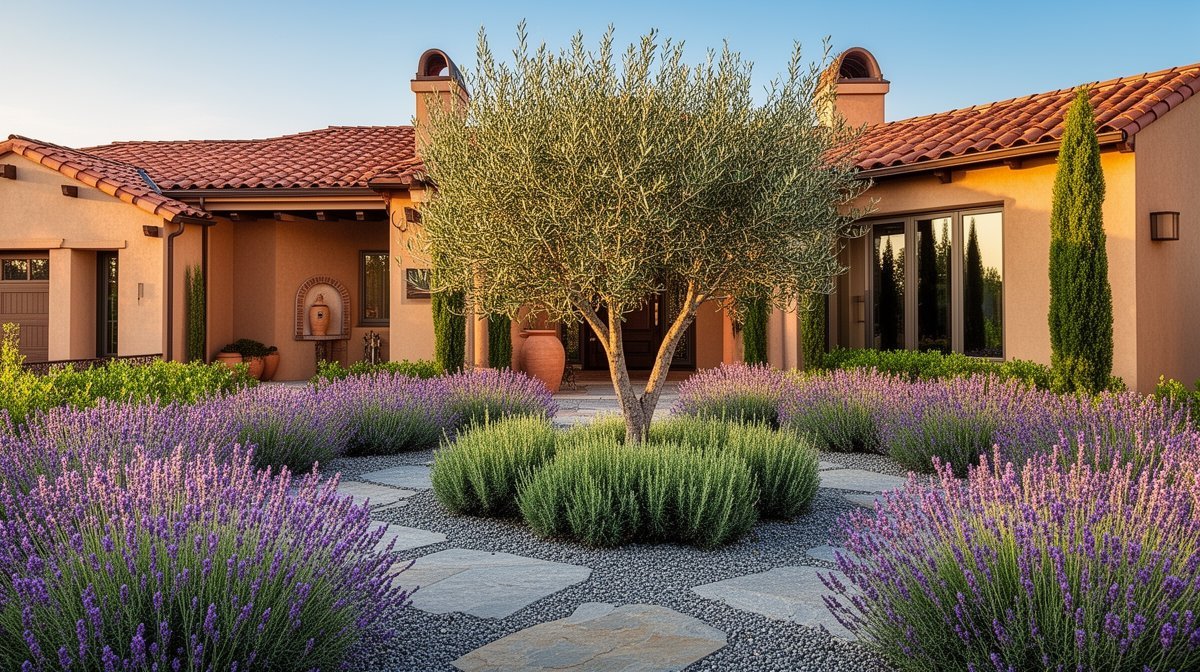
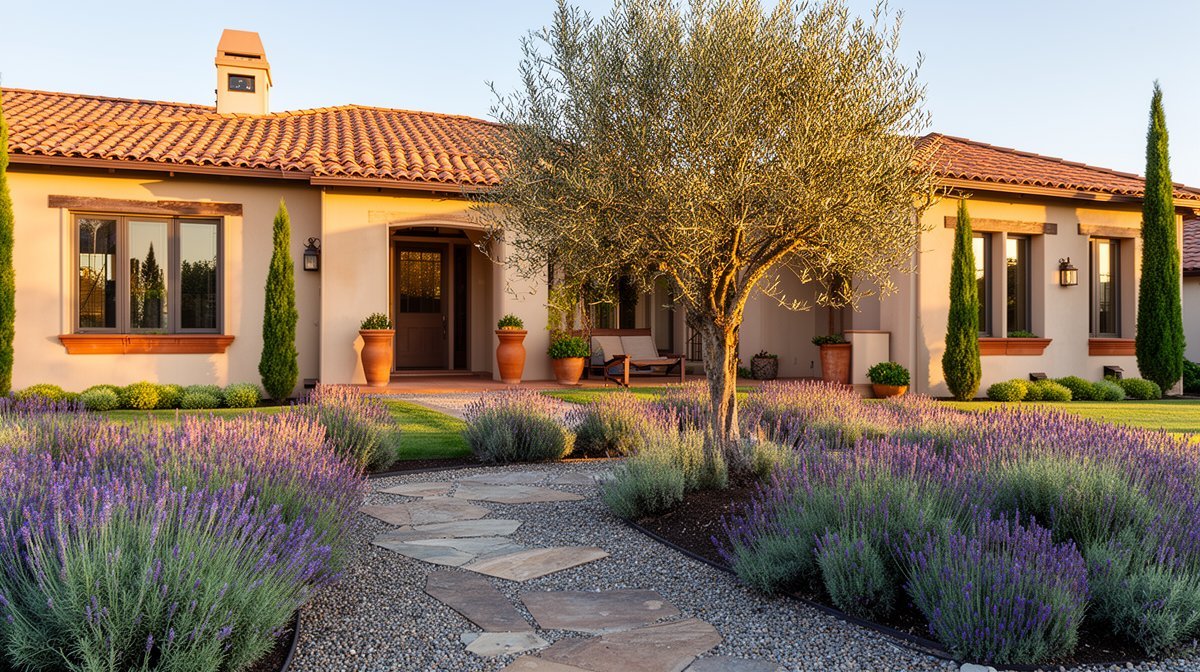
4 Mediterranean Garden Ideas for Vancouver, WA | Olive, Lavender & Gravel Design for Zone 8b
Native plants from the Willamette Valley oak savanna (Zone 8b) — Mediterranean (warm summer) climate
Why Mediterranean Gardens in Vancouver?
Vancouver has a genuine Mediterranean climate on paper — Köppen classifies it Csb, the same cool-summer Mediterranean type as coastal Portugal and northern Italy, with dry summers and everything falling in winter — and that is why olive trees, lavender fields and gravel courtyards look so unexpectedly right on a Clark County lot. The style suits the housing too: the stucco-and-tile-roof builds around Camas, Fisher's Landing and Columbia Tech Center already have the arches and warm walls the look depends on, and the older bungalows Downtown can carry a courtyard version of it in a small side yard. Lavandula x intermedia 'Grosso', Salvia rosmarinus 'Arp', Cistus x hybridus, Phlomis fruticosa, Euphorbia characias subsp. wulfenii and Stipa gigantea all thrive here, and Ficus carica 'Desert King' is the fig that reliably ripens in a Vancouver summer.
The catch is the rainfall volume. Southern France gets its dry summer on top of roughly 25 inches of rain a year; Vancouver gets roughly 42, and Clark County's Cascade and Odne silt loams sit over a fragipan that perches winter water two feet down. That combination is why so many Mediterranean plantings here look glorious in year one and die in year three. Lavender, rosemary, santolina and cistus are not killed by Zone 8b cold — they are killed by six months of saturated roots. Every one of them needs to sit on a berm raised 12 to 18 inches, in native soil cut roughly half-and-half with quarter-minus crushed basalt or Bend pumice, mulched with gravel rather than bark so the crown stays dry all winter. Get that detail right and the palette is close to indestructible; skip it and no amount of sun exposure will save it.
Some things simply will not overwinter, and honest substitution is the difference between a garden and a replanting habit. Bougainvillea is a Zone 9b-10 plant and will not survive a Vancouver January — swap it for Clematis 'Étoile Violette' or 'Polish Spirit' on the pergola for the same saturated magenta-purple. Citrus goes in frost-proof pots that move into the garage, except for Poncirus trifoliata 'Flying Dragon' and yuzu, which are hardy outdoors here. Olea europaea 'Arbequina' and 'Frantoio' do survive in warm, sheltered south-facing spots, but a Columbia River Gorge arctic outflow event can top-kill them, so site them out of that easterly wind. Cupressus sempervirens sulks in wet ground; Juniperus scopulorum 'Blue Arrow' gives you the same exclamation mark with none of the risk.
4 Mediterranean Design Ideas for Vancouver
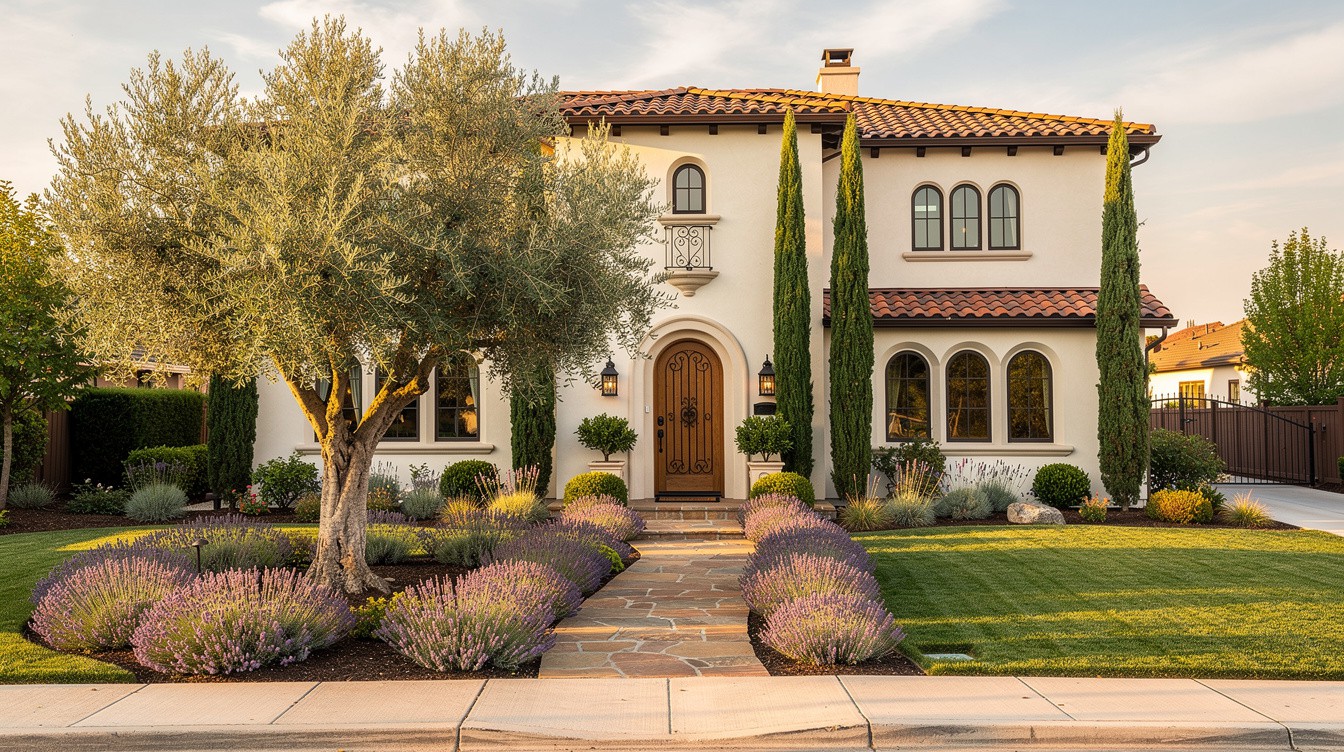
The Olive and Cypress Entry
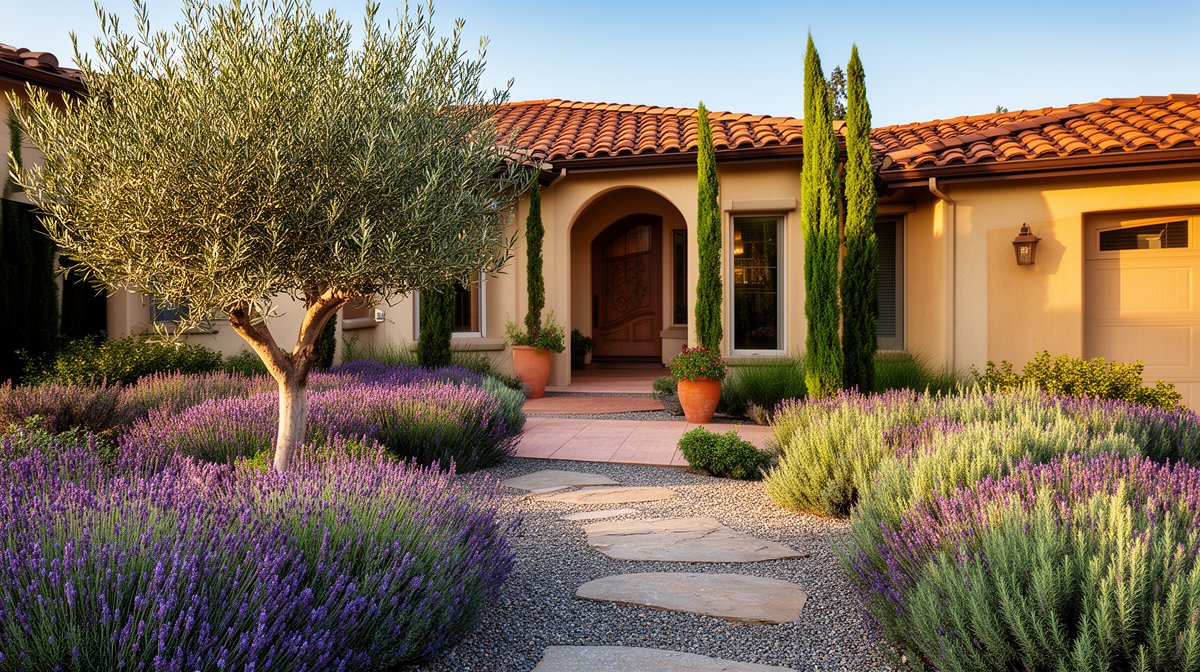
$16–30/sqftA two-story cream stucco house under a clay barrel-tile roof, with a mature multi-trunk olive spreading across the left half of the facade and narrow columnar evergreens punctuating the wall between arched windows. A flagstone path runs straight to an arched wood door between clipped topiary standards, and generous drifts of lavender flank both sides against panels of green lawn. The composition is almost entirely about silver-grey foliage against warm stucco, which is exactly the palette that holds up under Vancouver's soft overcast light for eight months of the year.
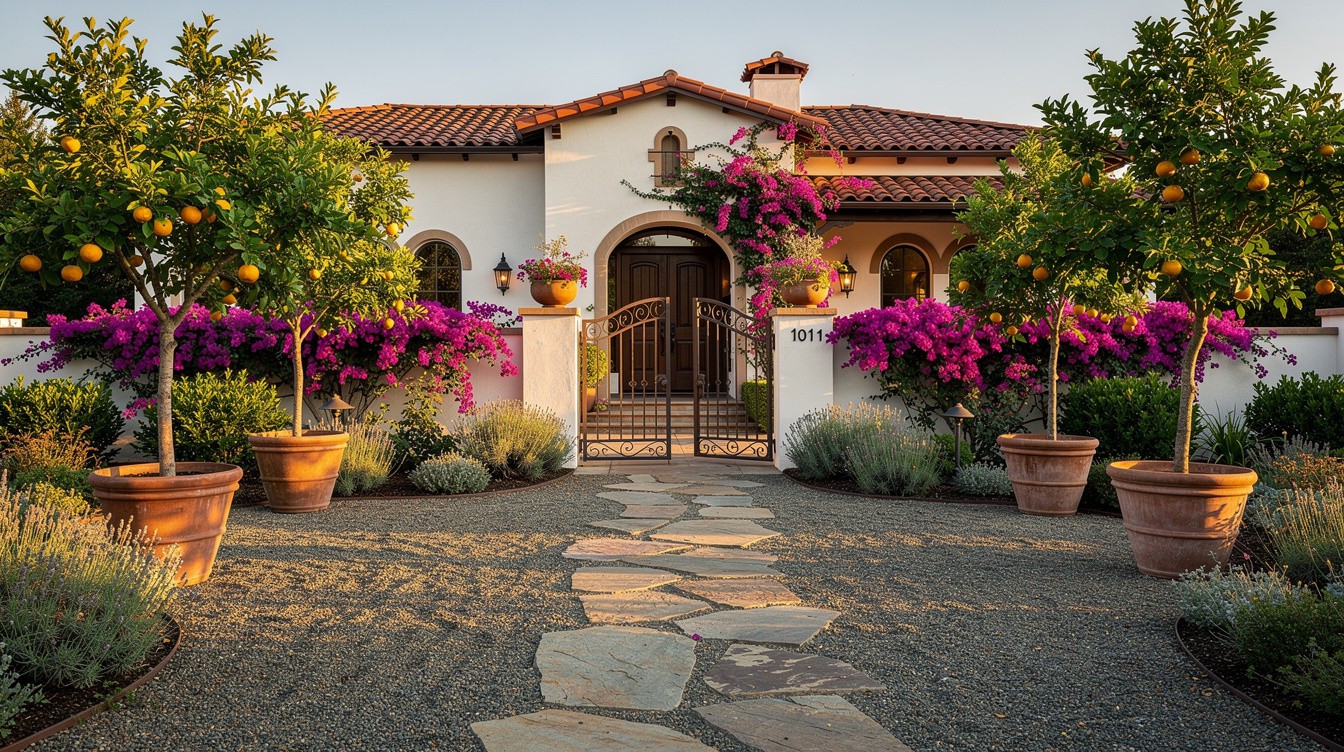
The Gravel Forecourt with Potted Citrus
$12–24/sqftThe front lawn is gone entirely, replaced by a wide crushed-gravel forecourt with irregular flagstone stepping stones tracing a loose route to an iron gate. Four large terracotta pots hold standard-trained citrus at the corners, flowering vines climb the courtyard walls, and low drifts of lavender and silver sub-shrubs edge the gravel. This is the most climate-honest of the four ideas for Vancouver: gravel is perfect drainage, the pots let tender citrus move into shelter in November, and there is nothing left to mow or irrigate.
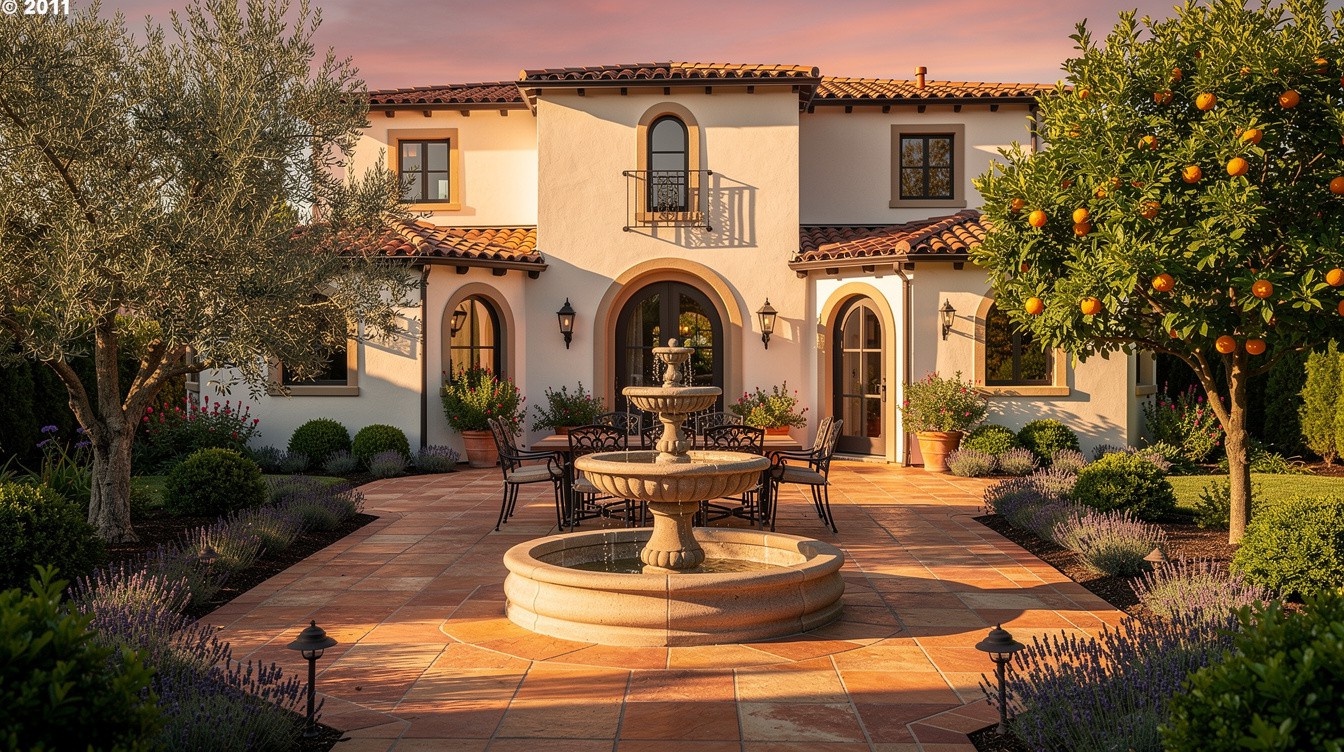
The Terracotta Fountain Courtyard
$28–50/sqftA rear courtyard paved wall to wall in warm terracotta tile, with a tiered cast-stone fountain as the centerpiece and a wrought-iron café set tucked to one side under the arches. An old olive anchors one corner and a fruiting citrus the other, with lavender borders and clipped evergreen spheres softening the paving edge on all sides. Because the paving is sealed and pitched to a perimeter drain, this design handles Vancouver's winter rain far better than a courtyard sitting in soil, and the fountain gives the space life in the months nobody is sitting outside.
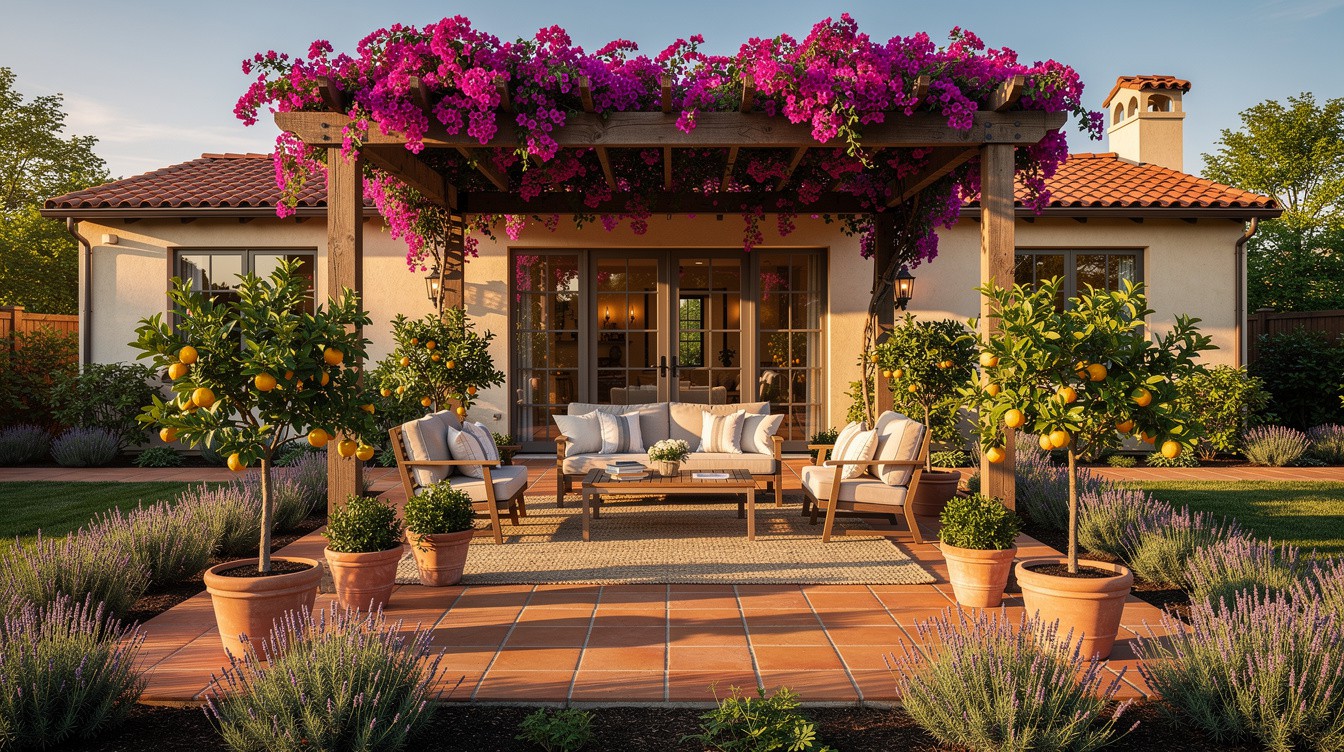
The Vine-Draped Pergola Lounge
$26–48/sqftA heavy timber pergola smothered in magenta flowering vine shades a teak lounge set on a terracotta tile terrace, with a jute rug underfoot and matched terracotta pots of standard citrus marking the four corners. Lavender and rosemary wrap the whole terrace so the seating is surrounded by scent, and the tile runs right up to a lawn edge. In Vancouver the vine should be a hardy clematis rather than bougainvillea, and the pergola beams deserve a hidden gutter or polycarbonate panel over the seating so the terrace is usable in the shoulder-season drizzle.
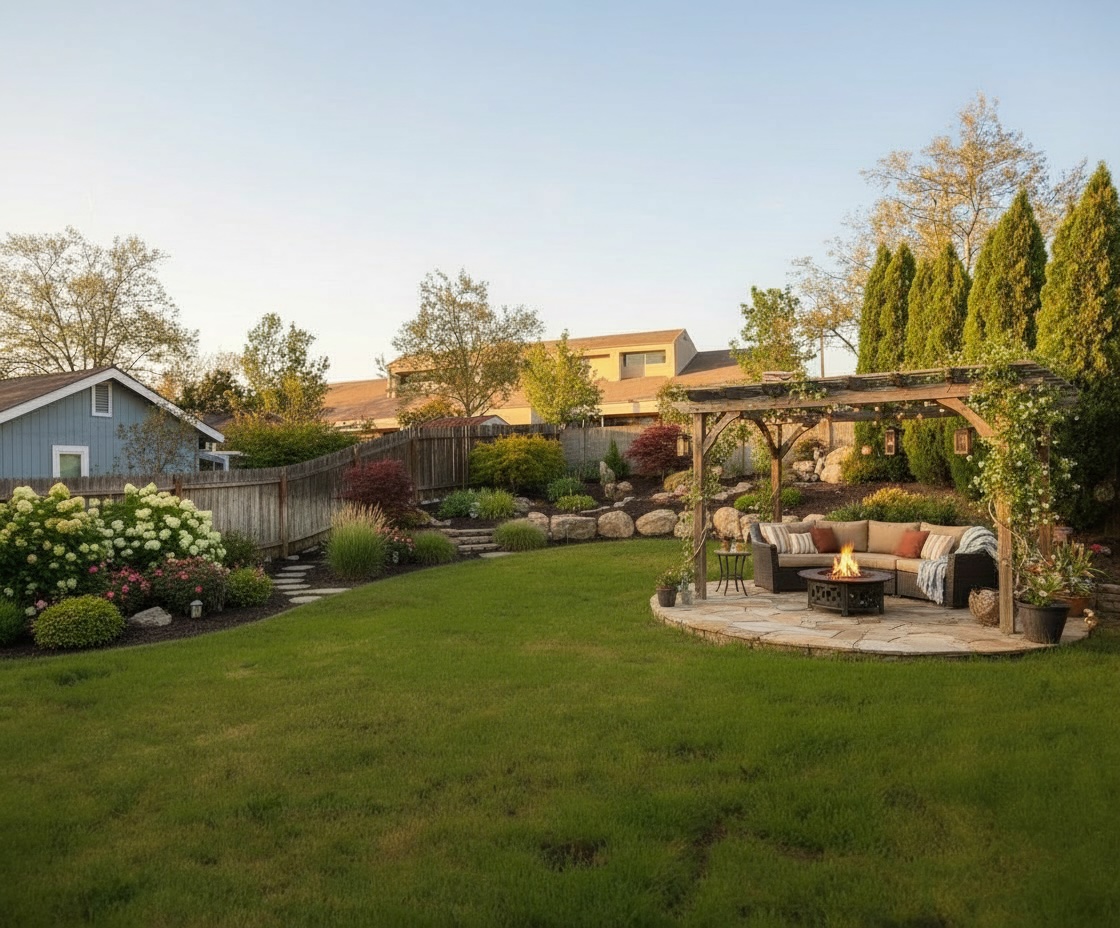
See how a mediterranean garden looks on YOUR property
Upload a photo of your Vancouver yard and visualize your dream garden in seconds.
Try ProScapeAI Free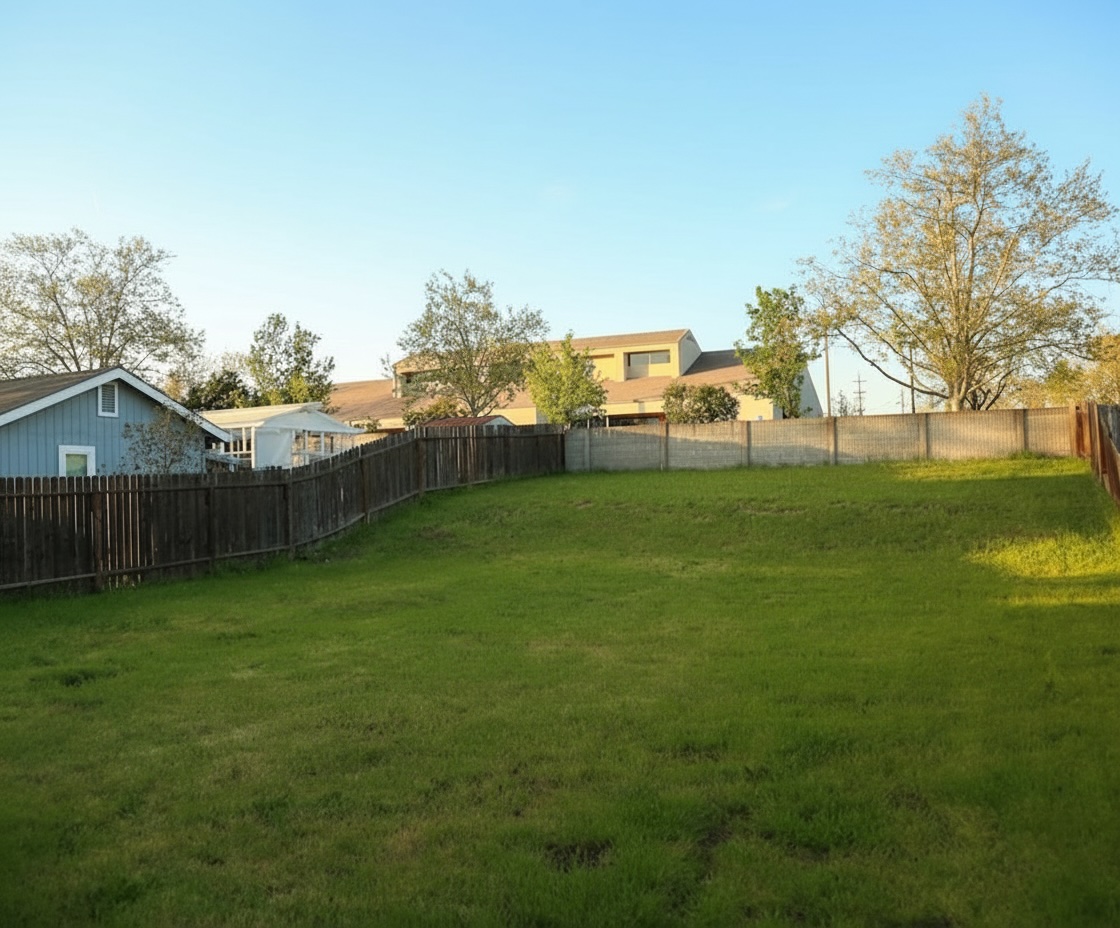
Featured Trees & Shrubs for Mediterranean Gardens
Browse all 151 plants for Vancouver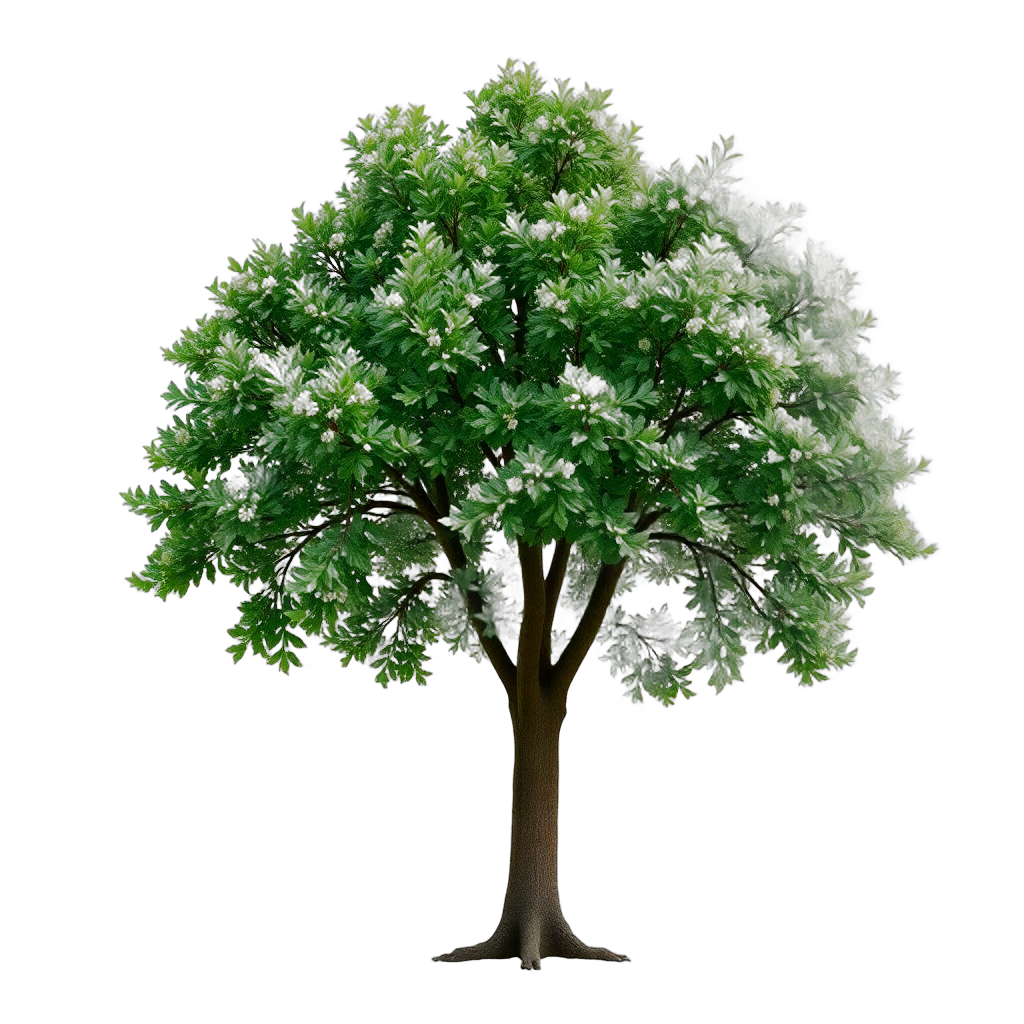
Oregon White Oak
Quercus garryana
large shade tree reaching 65+ feet, blooms in spring. Yellow fall color.

Cabbage Palm
Sabal palmetto
reaches 40 feet tall, white,yellow blooms in spring. Pollinator-friendly.

California Fan Palm
Washingtonia filifera
reaches 40 feet tall, white blooms in spring. Pollinator-friendly.

Chilean Wine Palm
Jubaea chilensis
large shade tree reaching 60+ feet, purple,yellow blooms in summer. Pollinator-friendly.
Featured Grasses & Groundcovers for Mediterranean Gardens
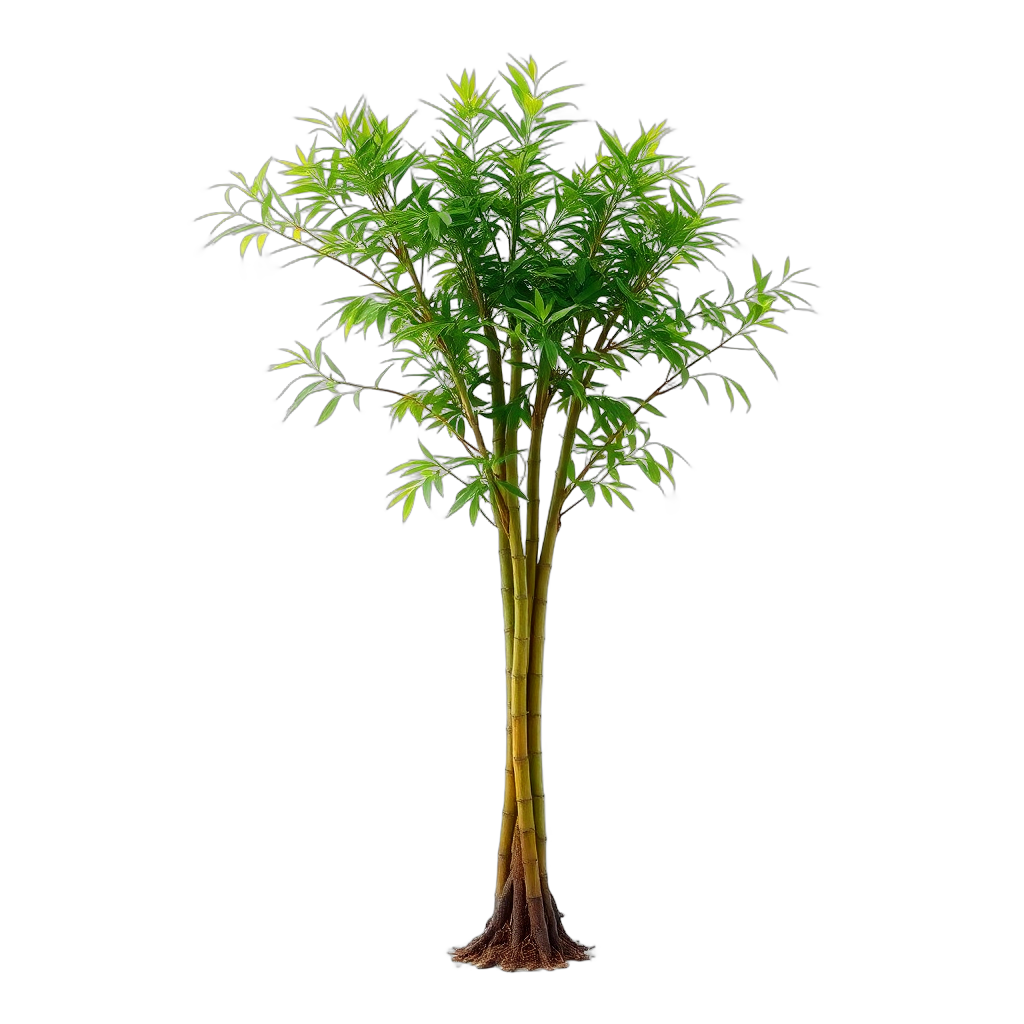
Anceps Bamboo
Yushania anceps
medium-sized at 12 feet, blooms in none. Evergreen year-round.
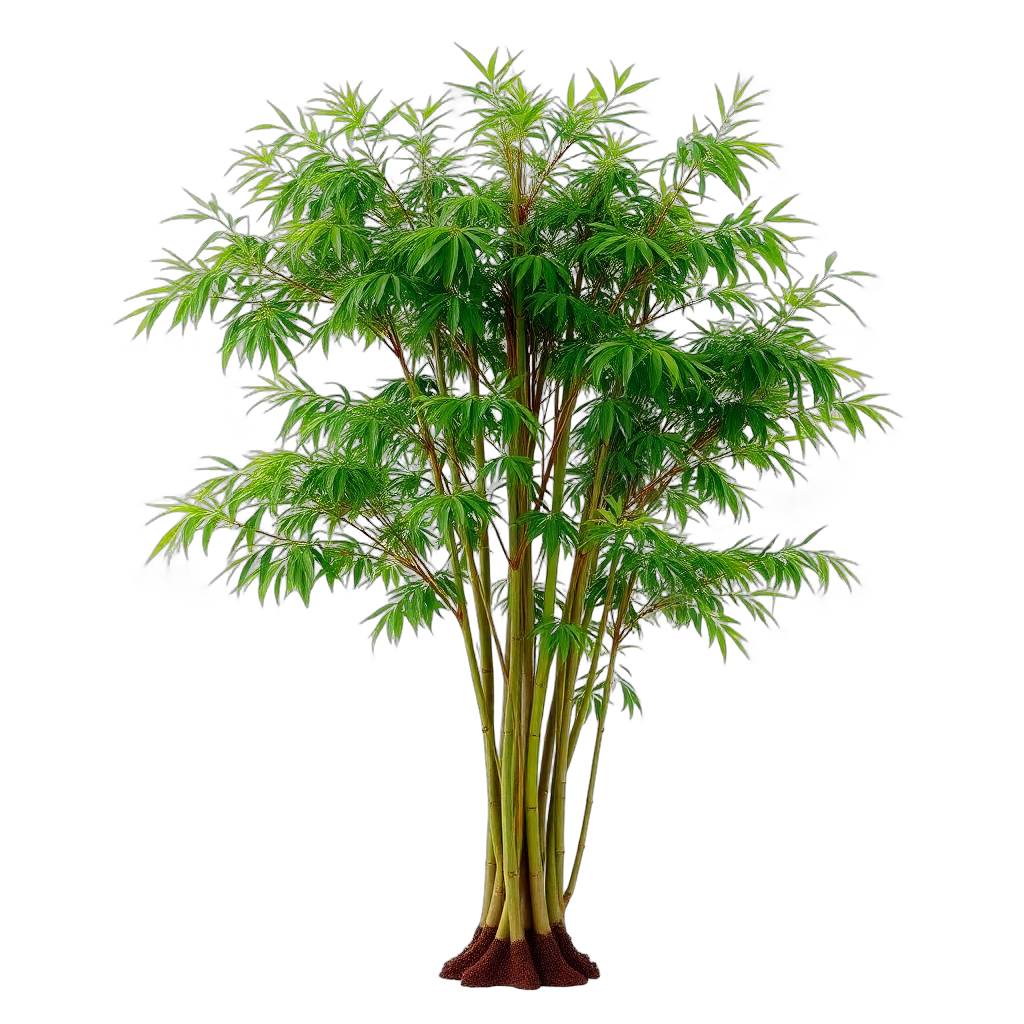
Arrow Bamboo
Pseudosasa japonica
medium-sized at 15 feet, blooms in none. Evergreen year-round.
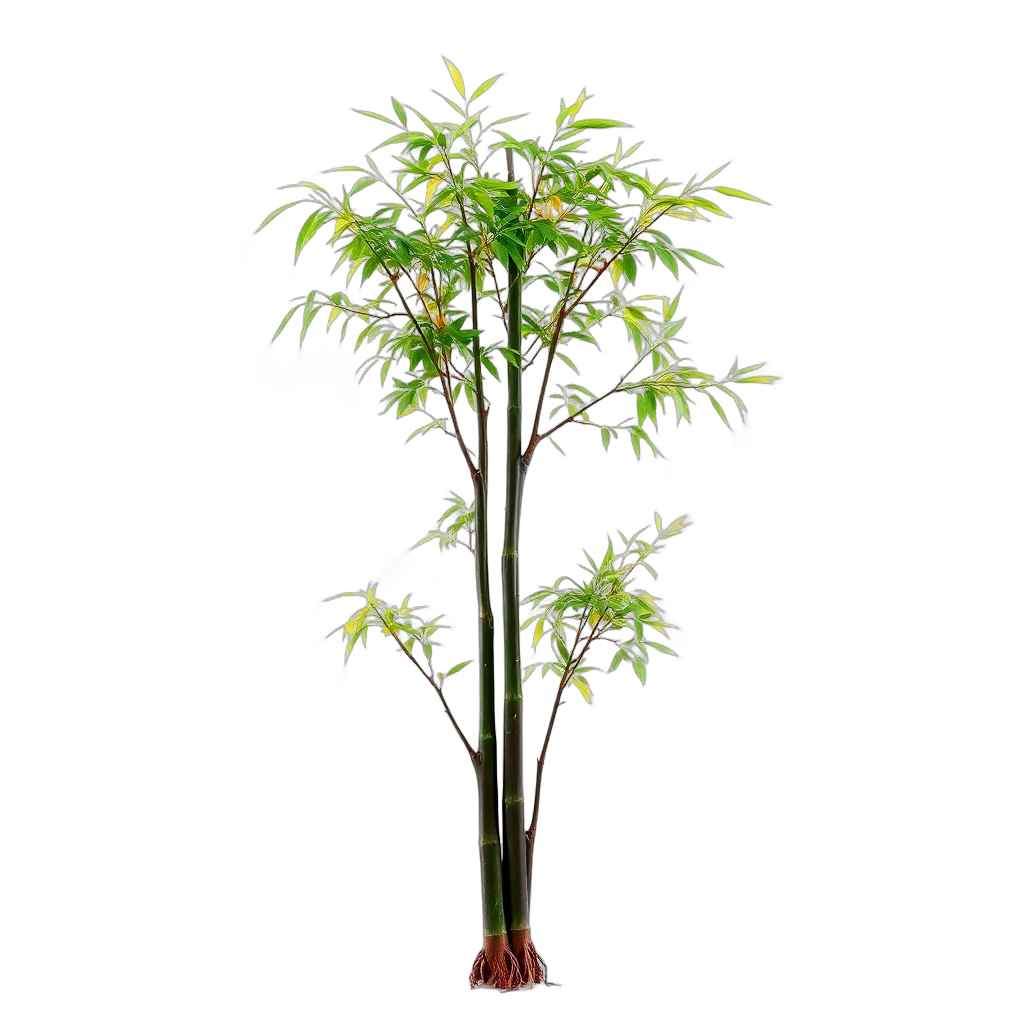
Black Bamboo
Phyllostachys nigra
reaches 25 feet tall, blooms in none. Evergreen year-round.
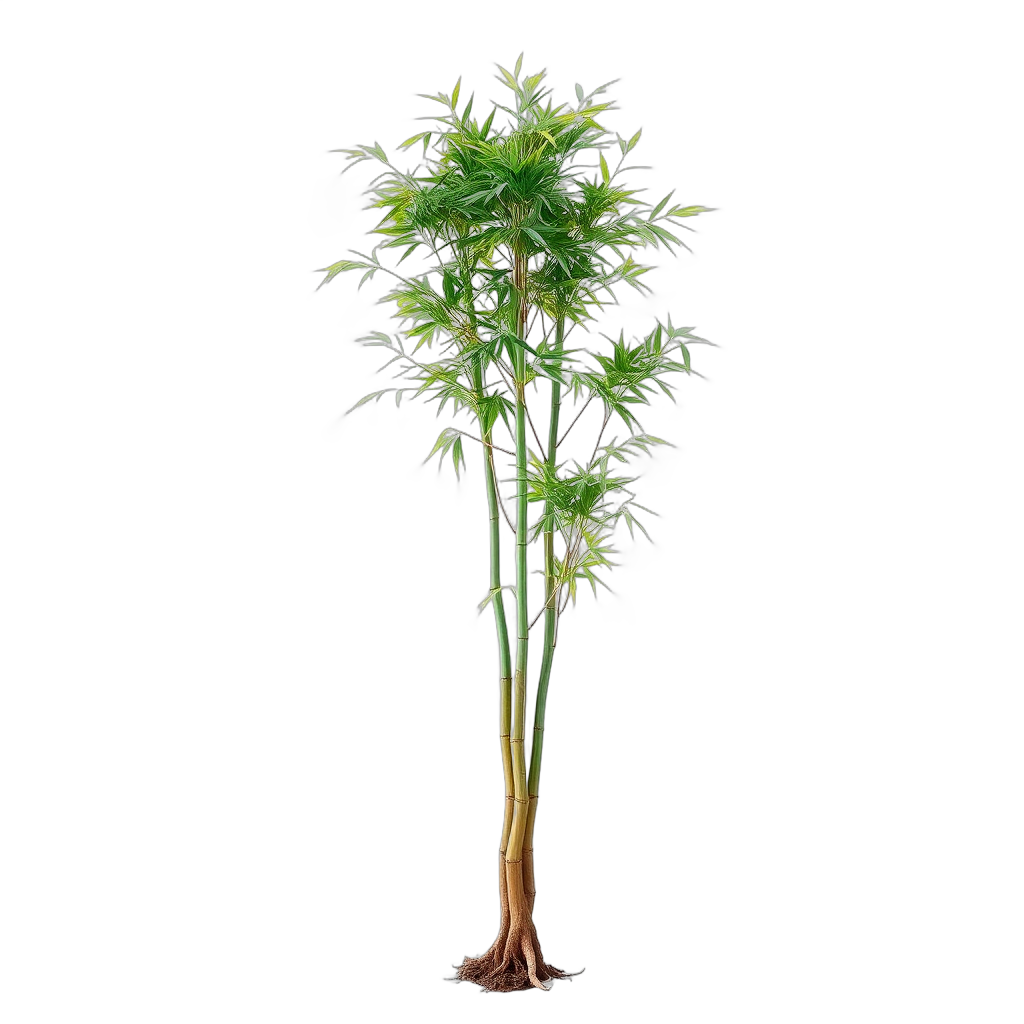
Blue Bamboo
Borinda papyrifera
reaches 20 feet tall, blooms in none. Evergreen year-round.
Featured Flowers & Perennials for Mediterranean Gardens

Tussock Sedge
Carex stricta
low-growing ground cover, blooms in spring. Brown fall color.

Umbrella Sedge
Cyperus alternifolius
grows to 4 feet, blooms in summer. Evergreen year-round.
Bloom Calendar for Vancouver
spring
Oregon White Oak, Tussock Sedgesummer
Umbrella Sedgefall
Limited bloomswinter
Limited bloomsDesign Tips for Vancouver (Zone 8b)
- Berm everything silver — Lavandula x intermedia 'Grosso', Santolina chamaecyparissus, Teucrium fruticans, Helichrysum italicum and Cistus x hybridus all need to sit 12 to 18 inches above Clark County grade in a 50/50 mix of native soil and quarter-minus basalt or Bend pumice
- Gravel mulch only, never bark, across the whole Mediterranean palette: bark holds six months of rain against the crown and is the most common single cause of dead lavender in Vancouver front yards
- Substitute honestly instead of replanting annually — Clematis 'Polish Spirit' for bougainvillea, Juniperus scopulorum 'Blue Arrow' for Cupressus sempervirens, Pyrus salicifolia 'Pendula' for olive in exposed sites, and the garden still reads Mediterranean in February
- Plant this palette in April or May, not October, so it gets a full dry summer to root before its first saturated Clark County winter — reversing the usual Pacific Northwest fall-planting advice is the highest-impact scheduling decision on the whole project
- Use frost-proof Impruneta terracotta and raise every pot on feet: cheap terracotta spalls in a Vancouver freeze-thaw cycle, and a pot sitting flat on wet paving from November to March will rot the roots inside it even if the plant is hardy
- Keep olives, rosemary and citrus off the east-facing exposures — Columbia River Gorge outflow events blast Vancouver with dry arctic wind in January, and desiccation kills marginal Mediterranean evergreens long before the recorded low temperature would
Where to Source Plants in Vancouver
Skip the big-box stores. These independent Vancouver nurseries specialize in the plants that make mediterranean gardens thrive in Zone 8b.
Dennis' 7 Dees Garden Center
Southeast Vancouver
Family-owned garden center offering plants, bulk soil, pottery, gifts, and landscaping services.
Cascade Greenhouse
Northeast Vancouver
Family-run greenhouse established 1982, growing plants suited to the Pacific Northwest climate.
Yard 'N Garden Land
Northeast Vancouver
Independent nursery offering trees, fruit trees, shrubs, roses, perennials, berries, and herbs.
Chapman's Greenhouse and Nursery
Northeast Vancouver
Locally-owned family greenhouse and nursery with a diverse plant selection.
Mediterranean Landscaping Costs in Vancouver
| Project Scope | Estimated Cost |
|---|---|
| Gravel forecourt conversion with flagstone stepping stones and planting | $8,000 – $16,000 |
| Olive-and-lavender front entry with flagstone walk | $10,000 – $20,000 |
| Raised free-draining planting berms (soil, pumice, gravel mulch, per 100 sqft) | $700 – $1,500 |
| Terracotta or porcelain tile courtyard with cast-stone fountain | $22,000 – $45,000 |
| Timber pergola lounge with tile terrace and lighting | $20,000 – $42,000 |
| AI visualization with ProScapeAI | Free to start |
Estimates based on Vancouver, WA-area contractor rates as of 2026. Actual costs vary by site conditions, materials, and contractor.
Vancouver Climate & Growing Zone
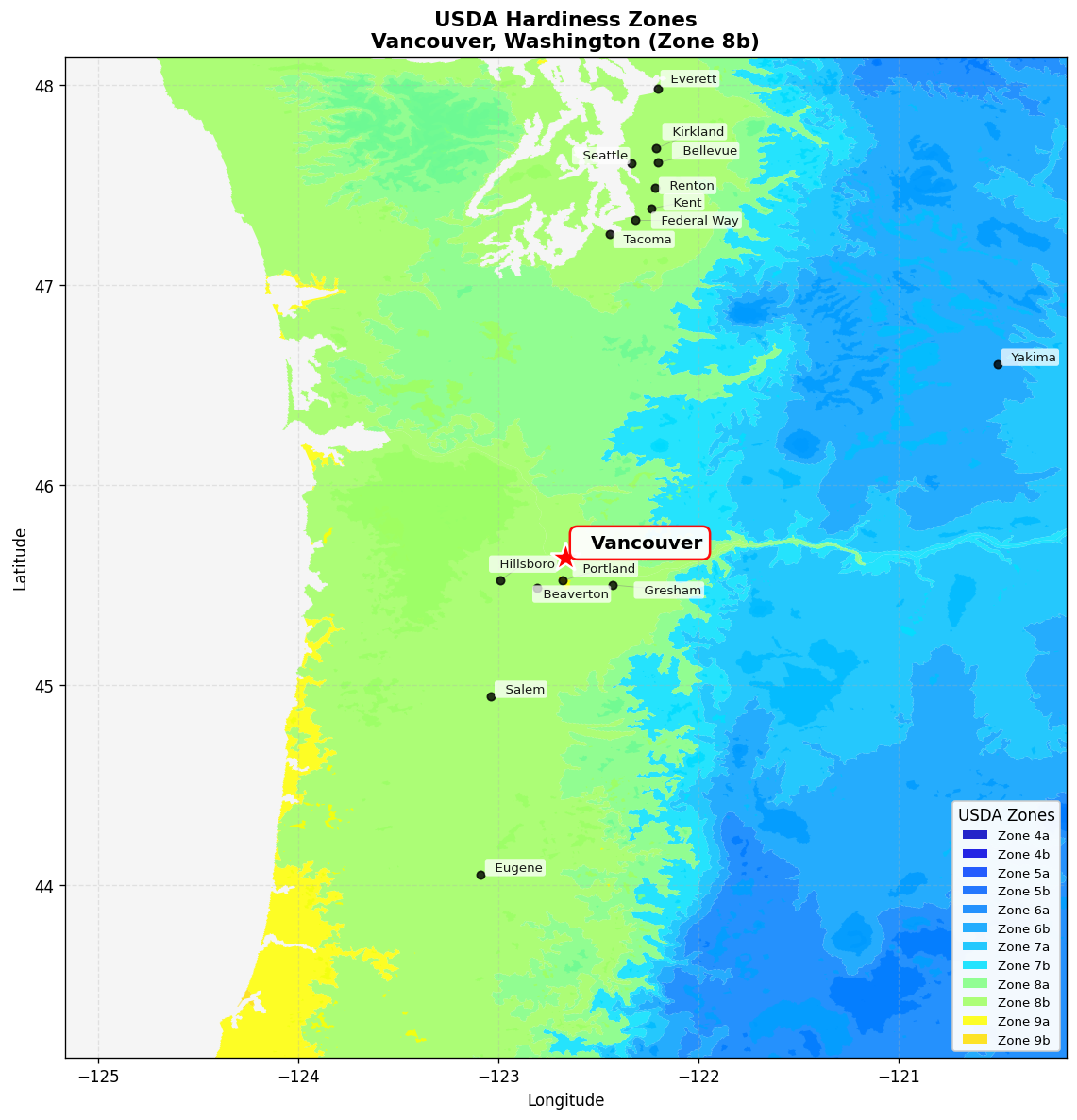
USDA Zone 8b
Hardiness zone for Vancouver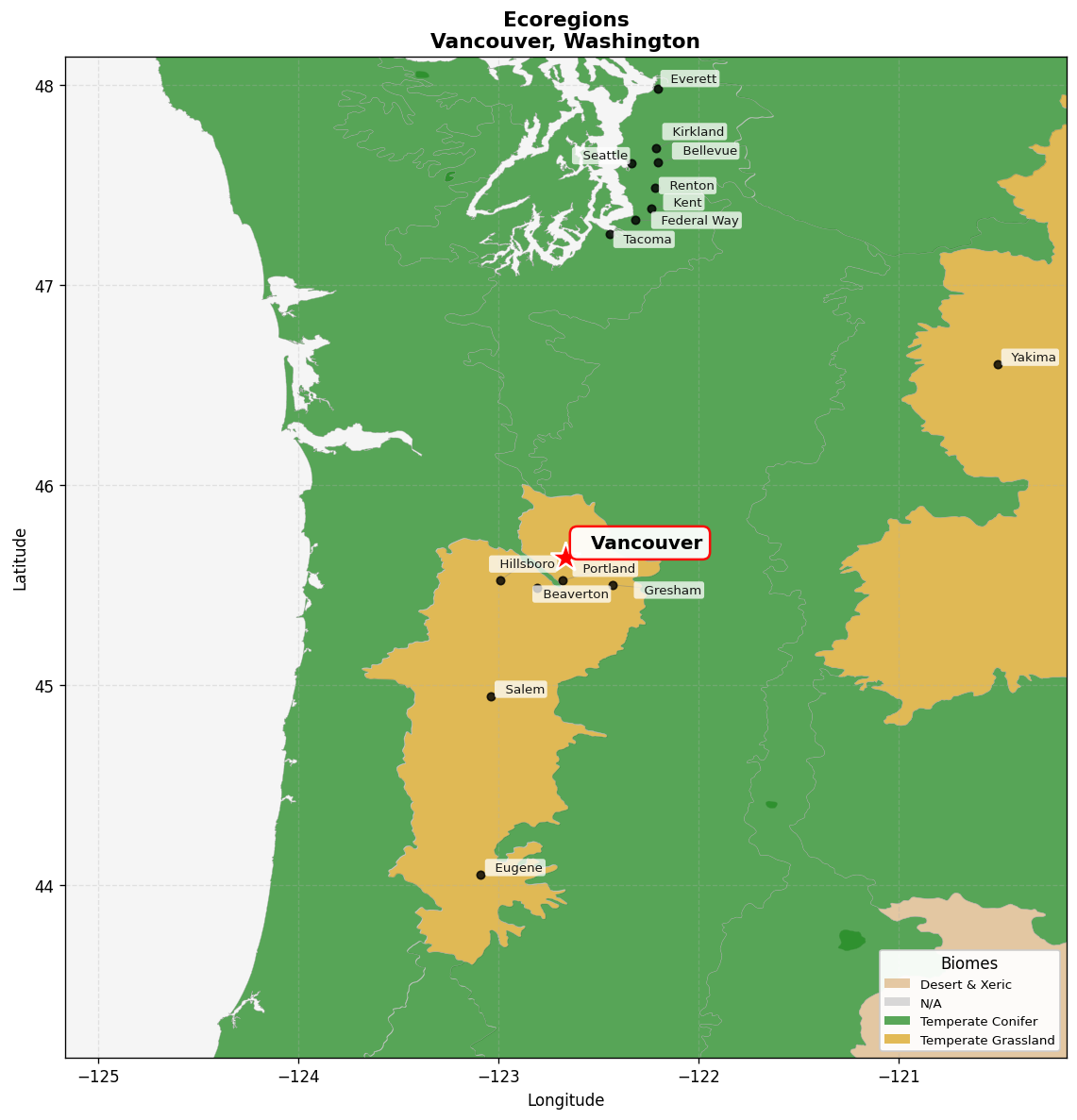
Willamette Valley oak savanna
Native ecoregionFrequently Asked Questions
How much does a Mediterranean garden cost in Vancouver, WA?
Expect Portland-metro pricing, which runs about 10-15% above national averages, plus Washington's 8.7% retail sales tax on landscaping services in Vancouver — Oregon homeowners crossing the river routinely forget that second line. A gravel forecourt with flagstone stepping stones, potted citrus and lavender drifts runs $8,000-16,000 for a typical 600 sqft front yard. An olive-and-lavender entry with a flagstone walk lands at $10,000-20,000. A terracotta courtyard with a cast-stone fountain runs $22,000-45,000. A pergola lounge with tile terrace runs $20,000-42,000. Buying quarter-minus and pumice by the yard and doing your own planting cuts roughly a third off.
Will an olive tree survive in Vancouver, WA?
Usually, with the right cultivar and the right spot. Olea europaea 'Arbequina', 'Frantoio' and 'Mission' are the hardiest widely available selections and handle typical Zone 8b lows, and there are mature specimens fruiting around the Portland-Vancouver metro. Two things kill them here: standing winter water at the root, and Columbia River Gorge arctic outflow events where sustained east wind at 10-15°F desiccates the canopy and can top-kill a young tree. Plant on a raised, sharply drained mound against a south or west wall, out of the easterly wind, skip fertilizer and summer irrigation after the first two years, and give it a decade before expecting a real crop. Pyrus salicifolia 'Pendula' and Elaeagnus 'Quicksilver' give the same silver canopy with zero risk.
Why do lavender and rosemary die in my Vancouver garden?
Winter rot, essentially every time. Lavandula x intermedia 'Grosso' and Salvia rosmarinus 'Arp' are hardy far below Vancouver's winter lows, but Clark County's Cascade and Odne silt loams perch water above a fragipan and roughly 42 inches of rain falls between October and May. Roots sit saturated for half the year and the plant collapses in its second or third spring. The fix: berm the bed 12-18 inches above grade, cut the native soil roughly half-and-half with quarter-minus crushed basalt or pumice, mulch with 2-3 inches of gravel instead of bark, plant in April or May rather than autumn, and never run drip on them after August. Lavandula x intermedia 'Phenomenal' and Rosmarinus 'Madeline Hill' are the most forgiving choices.
Can I grow citrus and bougainvillea outdoors here?
Bougainvillea, no — it needs Zone 9b or warmer and will not survive a Vancouver January in the ground. Use Clematis viticella 'Étoile Violette' or Clematis 'Polish Spirit' for the same magenta-purple on a pergola or wall, or treat bougainvillea as a summer container plant you discard. Citrus is different: grow Citrus x meyeri 'Improved Meyer', 'Bearss' lime and Fortunella 'Nagami' kumquat in frost-proof pots raised on feet, and roll them into an unheated garage or bright porch from November to March. If you want fruit outdoors year-round, Poncirus trifoliata 'Flying Dragon' and yuzu are genuinely hardy here, and Ficus carica 'Desert King' is the fig that ripens dependably in a Vancouver summer.
When should I plant a Mediterranean garden in Vancouver?
April and May, which is the opposite of the usual Pacific Northwest advice. Most plants here go in during October so the winter rains establish them for free, but drought-adapted Mediterranean species need one full dry summer to build roots before facing six months of saturated soil. Fall-planted lavender, cistus and rosemary fail at a much higher rate in Clark County. Water new spring plantings deeply every week or two through their first July and August, then taper off. Hardscape is easier to schedule in summer as well, since Clark County's stricter wet-season erosion control rules run October through June and push most excavation work into the dry months.
Do gravel gardens need weeding, and what gravel should I use locally?
A properly built gravel garden weeds far less than a bark bed, but it is not zero. Use 2-3 inches of quarter-minus crushed basalt or a similar angular local aggregate over a compacted base for paths and forecourts, and a clean washed 3/8-inch gravel as mulch in planting beds. Skip landscape fabric under planting beds — it clogs, prevents self-sowing, and makes the bed harder to renovate in five years; compact the base and use depth instead. Expect a couple of hours of hand-weeding a few times a year, mostly in spring. Bend pumice, sold widely through Portland-area landscape suppliers, is the cheapest and best amendment for building the free-draining beds underneath.