4 Modern Garden Ideas for Vancouver, WA | Clean-Line Landscape Design for Zone 8b
Native plants from the Willamette Valley oak savanna (Zone 8b) — Mediterranean (warm summer) climate
Why Modern/Minimalist Gardens in Vancouver?
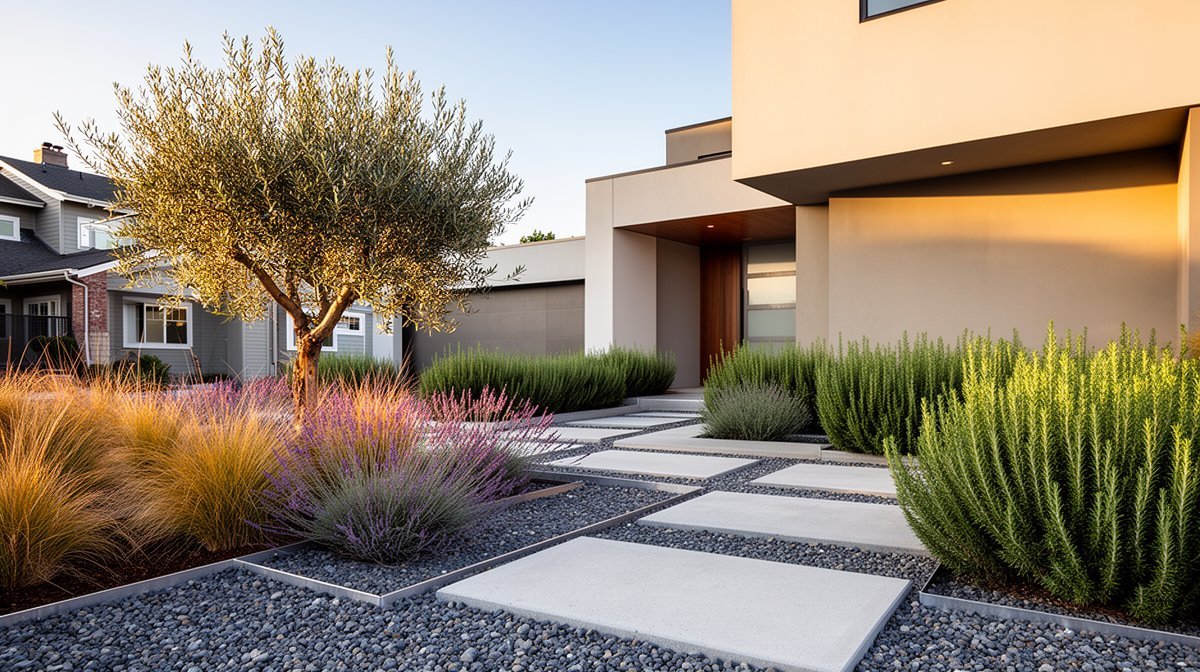
Modern landscaping and the Pacific Northwest are a natural pairing, and Vancouver has the housing stock to prove it. The mid-century ranches spread across Hazel Dell and Minnehaha, the contemporary infill going up in Felida and Fisher's Landing, and the new builds filling Columbia Tech Center and Camas all offer the long horizontal rooflines that a clean-line landscape is built to extend. A Zone 8b winter also keeps the structural plants standing year-round: Trachycarpus fortunei, Fatsia japonica 'Spider's Web', Arbutus unedo 'Compacta' and Pittosporum tenuifolium 'Golf Ball' hold their form through January, while Calamagrostis x acutiflora 'Karl Foerster' and Panicum virgatum 'Northwind' keep their bleached winter silhouettes until you cut them down in February. Even the exotics work — Musa basjoo and Cordyline australis 'Red Star' overwinter reliably in sheltered Vancouver front yards, which is why so much local modern design carries a subtropical edge you would never see in a Denver or Chicago version of the same style.
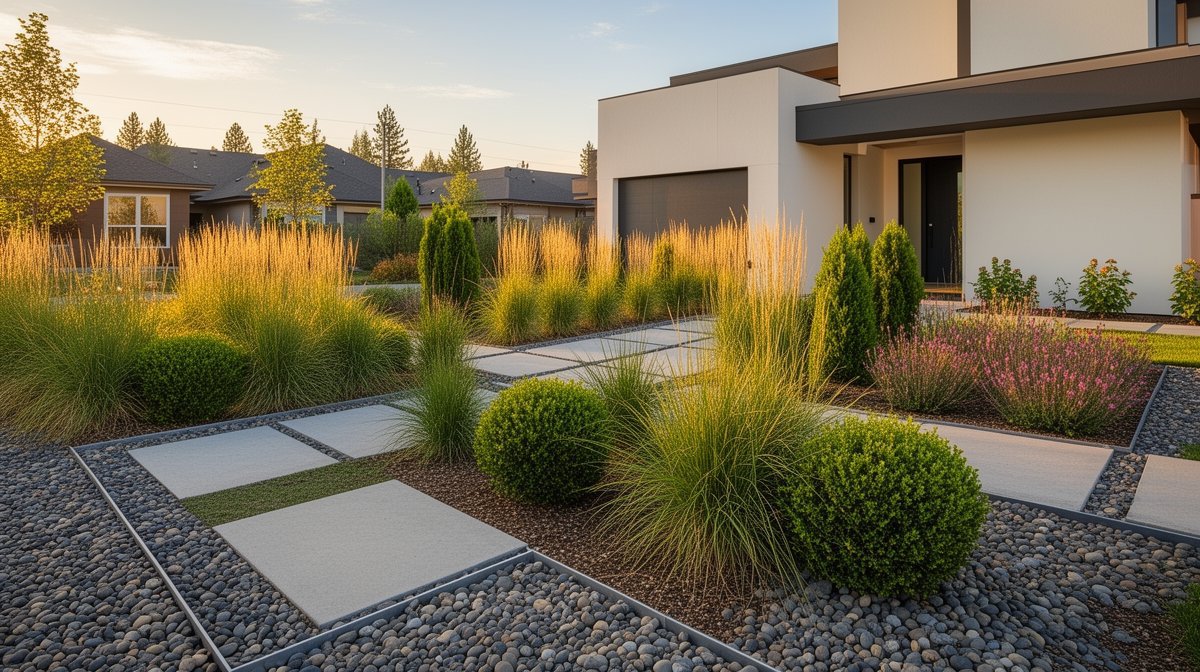
The constraint that decides whether a modern Vancouver garden succeeds is drainage, not cold. Roughly 42 inches of rain falls here between October and May, and Clark County's Cascade and Odne silt loams sit on a fragipan that perches water two feet down all winter — which is exactly how Agave, Yucca rostrata, Festuca glauca and Arctostaphylos die in this town. They do not freeze; they rot. The gravel-and-steel-edge look that defines contemporary front yards is therefore not just an aesthetic choice here, it is the engineering: build the beds up 12 to 18 inches as free-draining scree, cut the native soil roughly half-and-half with quarter-minus crushed basalt or Bend pumice, top with 2 to 3 inches of gravel rather than bark, and the same palette that reads as desert-modern in Phoenix will sail through a Vancouver winter.
Hardscape has its own local rules. Frost depth is shallow, so poured concrete and large-format pavers can be installed almost year-round, but Clark County enforces stricter wet-season erosion control from October through June, which pushes most excavation into summer and books good crews out months ahead. Portland-metro labor runs 10 to 15 percent above the national average, and Washington charges 8.7 percent retail sales tax on landscaping services — a line item Oregon homeowners moving across the river routinely forget to budget. Plan the base course properly, keep water moving away from the beds, and a modern Vancouver landscape is close to maintenance-free.
4 Modern/Minimalist Design Ideas for Vancouver
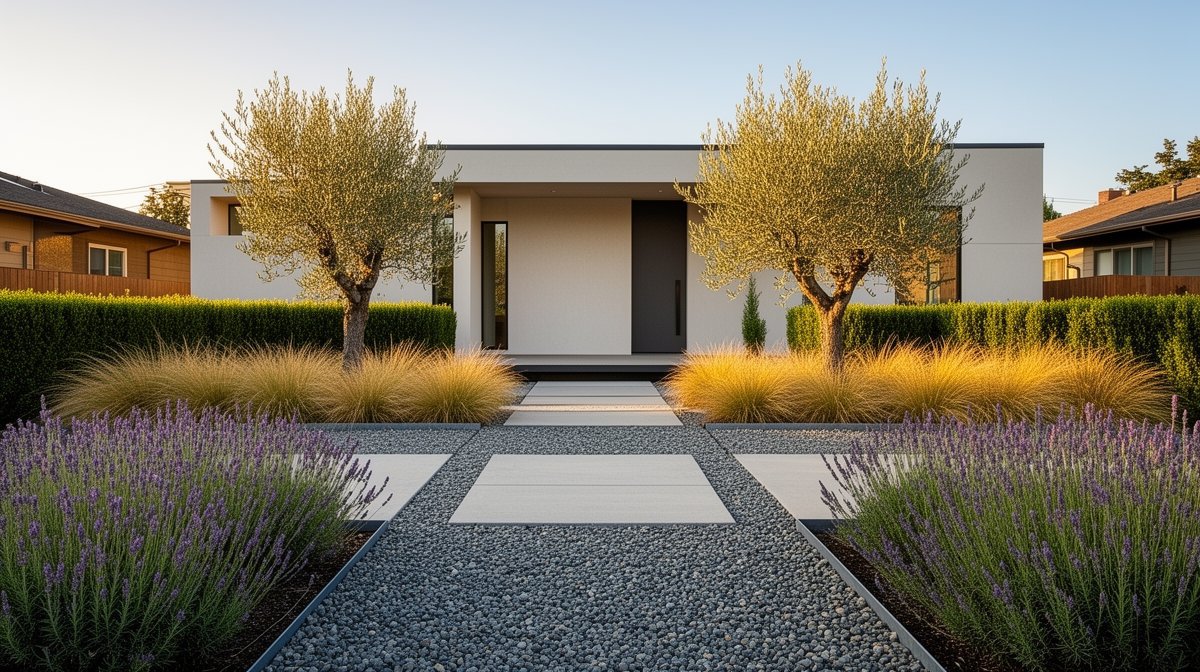
The Warm-Modern Entry Walk
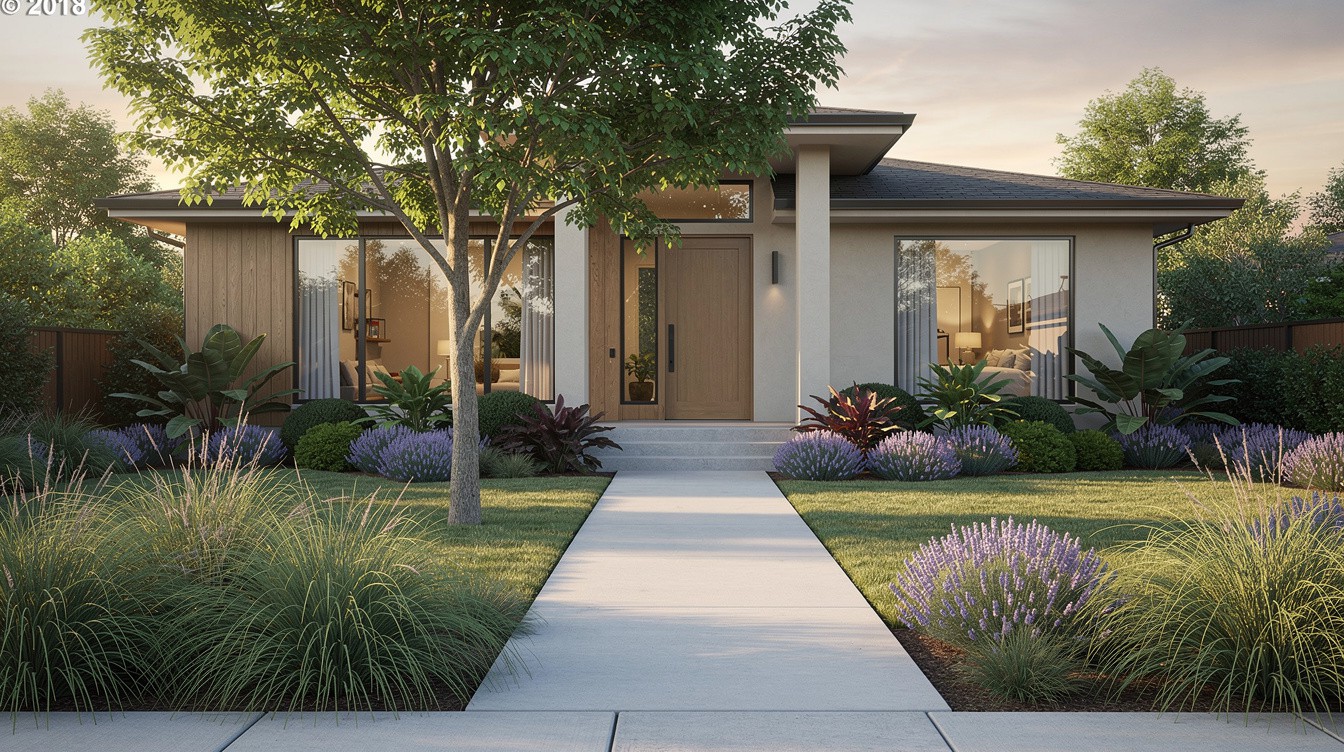
$14–26/sqftA low-slung contemporary home in stucco and vertical cedar, approached by a wide broom-finished concrete walk that runs dead straight from the sidewalk to a full-height wood door. Crisp lawn panels sit either side, and the planting does all the work: massed lavender pooling against the foundation, big soft grasses breaking the street edge, clipped evergreen mounds for winter structure, and a few bold tropical leaves and a red-bladed cordyline for the subtropical note that reads unmistakably Pacific Northwest. A single deciduous shade tree throws afternoon light across the facade.
The Terraced Gravel Front Yard
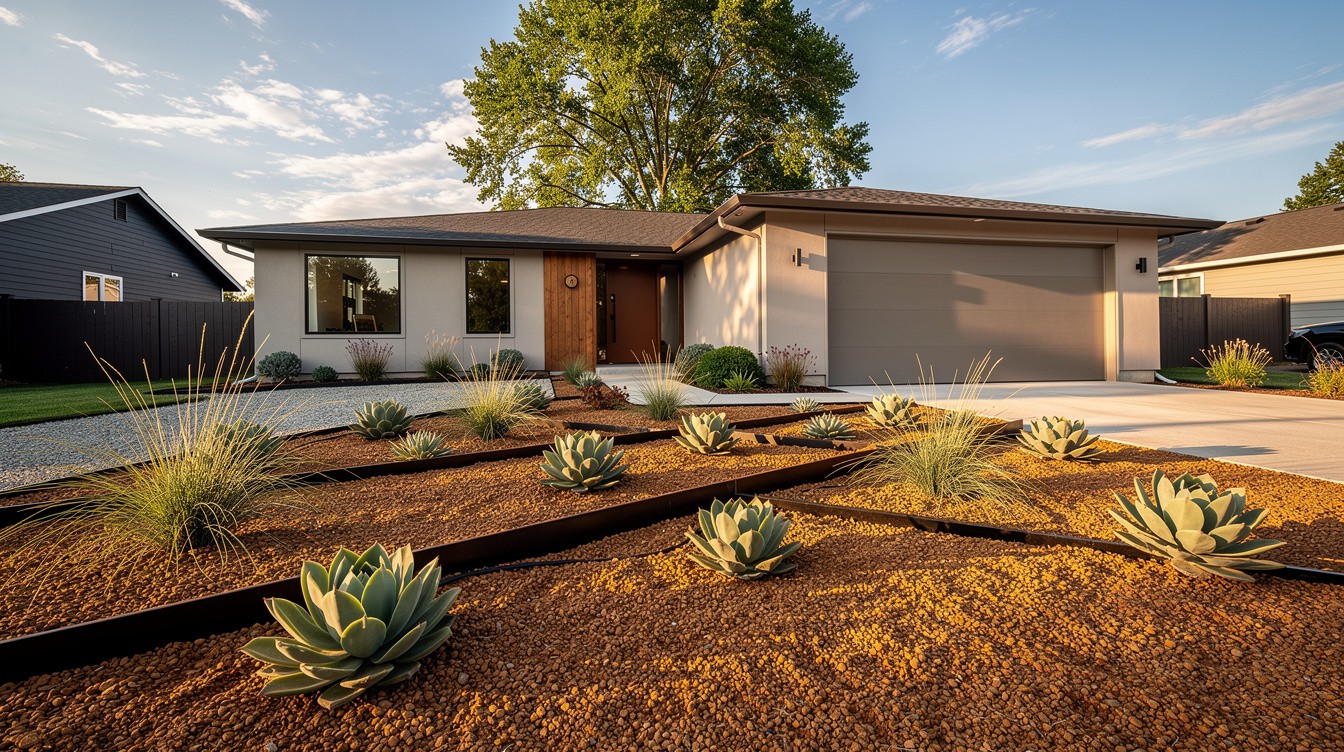
$10–20/sqftA mid-century ranch with the entire front lawn removed and replaced by shallow terraces of gravel divided by low steel retaining bands — red lava rock in some bays, gold crushed gravel in others, so the ground plane reads as a graphic composition rather than a mulch bed. Big blue-green rosettes anchor each terrace with tufts of blue fescue between them, and the whole thing meets a wide concrete driveway with a clean line. The terracing is the point in Vancouver: every rosette sits a foot above the water table, which is the only reason succulents survive here.
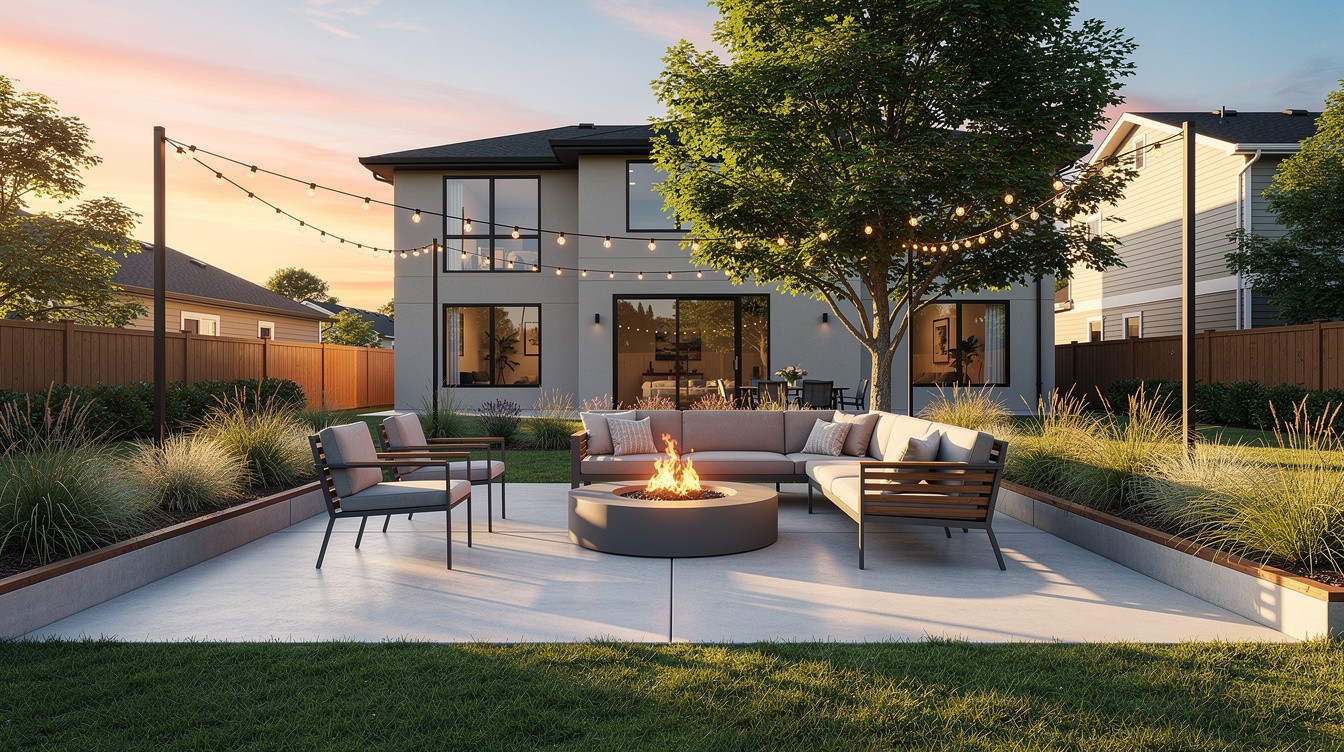
The Raised-Planter Fire Terrace
$22–40/sqftA large poured concrete slab off the back of a two-story contemporary, furnished with a low sectional and a round gas fire table, with café string lights strung between two slim steel posts overhead. Raised planters with wood-capped concrete walls wrap two sides of the terrace and are packed solid with ornamental grasses, so the seating area feels enclosed without a single fence board in the sightline. The raised planters double as the drainage solution and as backrest-height seating edge, and the string lighting is what makes the space usable through Vancouver's long grey shoulder seasons.
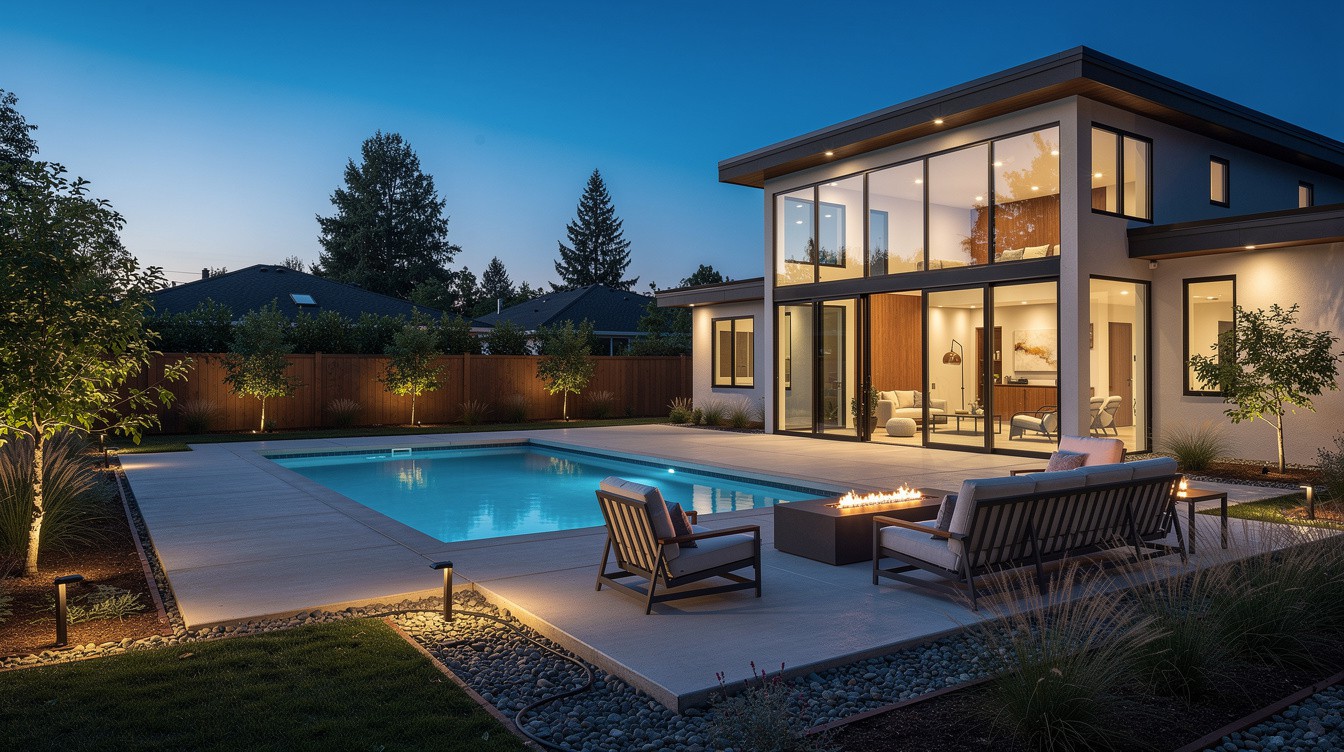
The Glass-Wall Pool Garden
$45–90/sqft (pool area inclusive)Shot at dusk, a glass-fronted modern house opens onto a rectangular pool set in large-format pale concrete pavers, with a linear gas fire trough separating the lounge seating from the water. A river-rock drainage strip runs the full perimeter of the paving, in-grade bollard lights mark the edges, and slim multi-stem trees repeat along a cedar fence with grasses at their feet. The perimeter rock strip is doing real work here — in a 42-inch rain year it collects roof and paving runoff and keeps it moving away from the slab instead of under it.
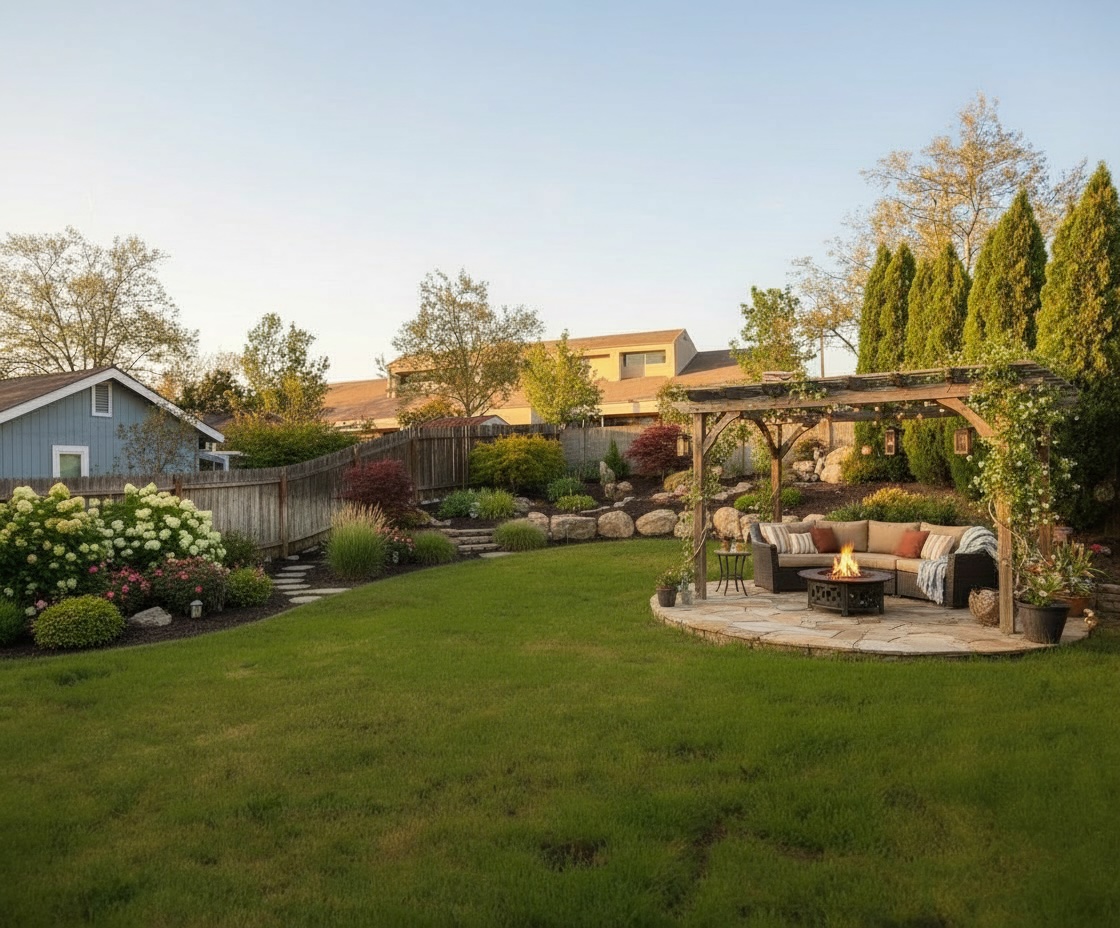
See how a modern/minimalist garden looks on YOUR property
Upload a photo of your Vancouver yard and visualize your dream garden in seconds.
Try ProScapeAI Free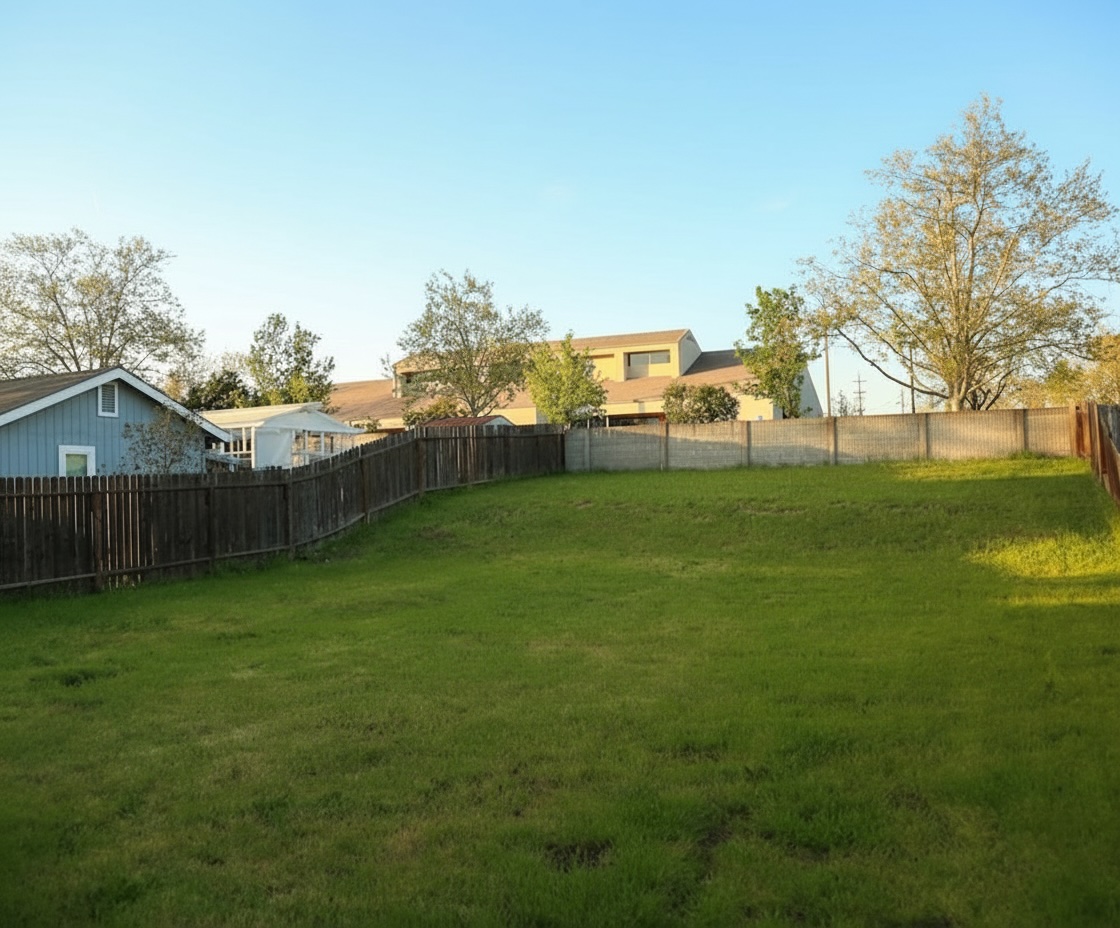
Featured Trees & Shrubs for Modern/Minimalist Gardens
Browse all 151 plants for Vancouver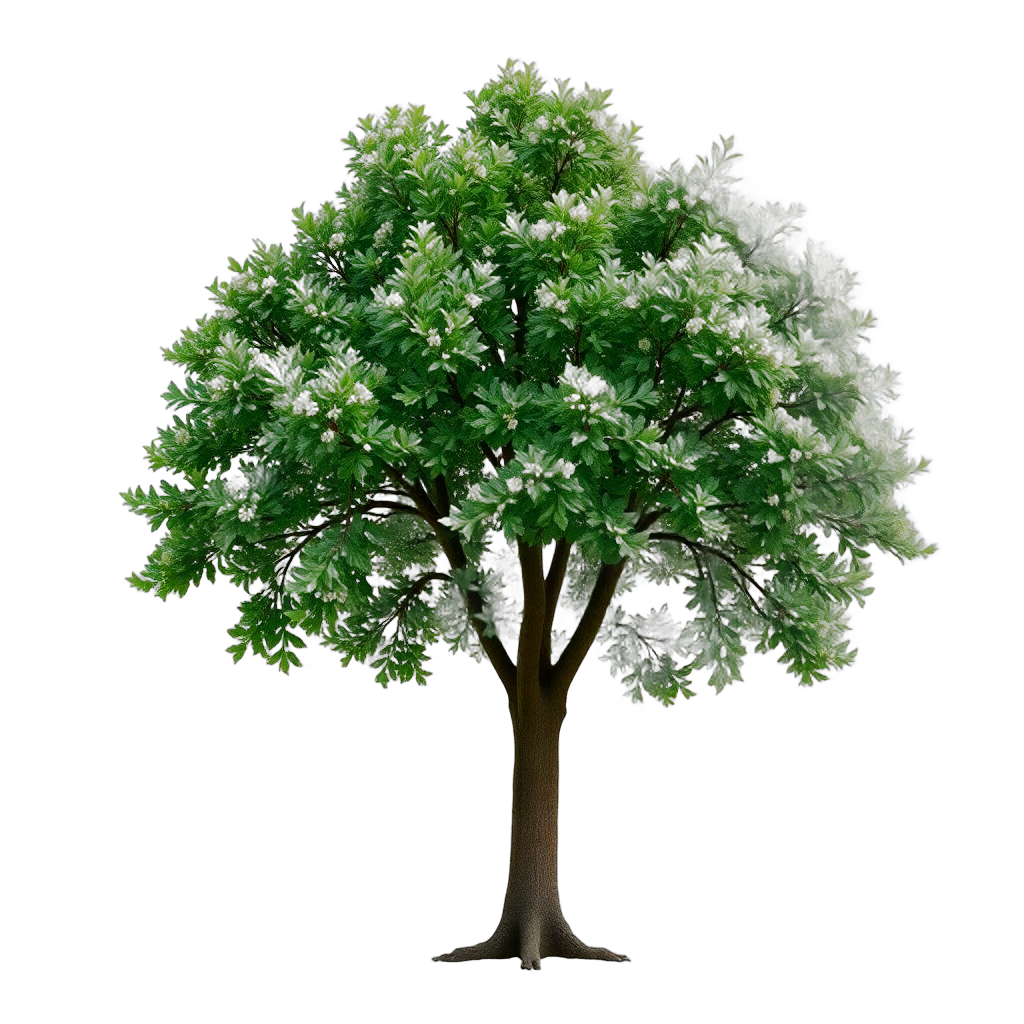
Oregon White Oak
Quercus garryana
large shade tree reaching 65+ feet, blooms in spring. Yellow fall color.

Cabbage Palm
Sabal palmetto
reaches 40 feet tall, white,yellow blooms in spring. Pollinator-friendly.

California Fan Palm
Washingtonia filifera
reaches 40 feet tall, white blooms in spring. Pollinator-friendly.

Chilean Wine Palm
Jubaea chilensis
large shade tree reaching 60+ feet, purple,yellow blooms in summer. Pollinator-friendly.
Featured Grasses & Groundcovers for Modern/Minimalist Gardens
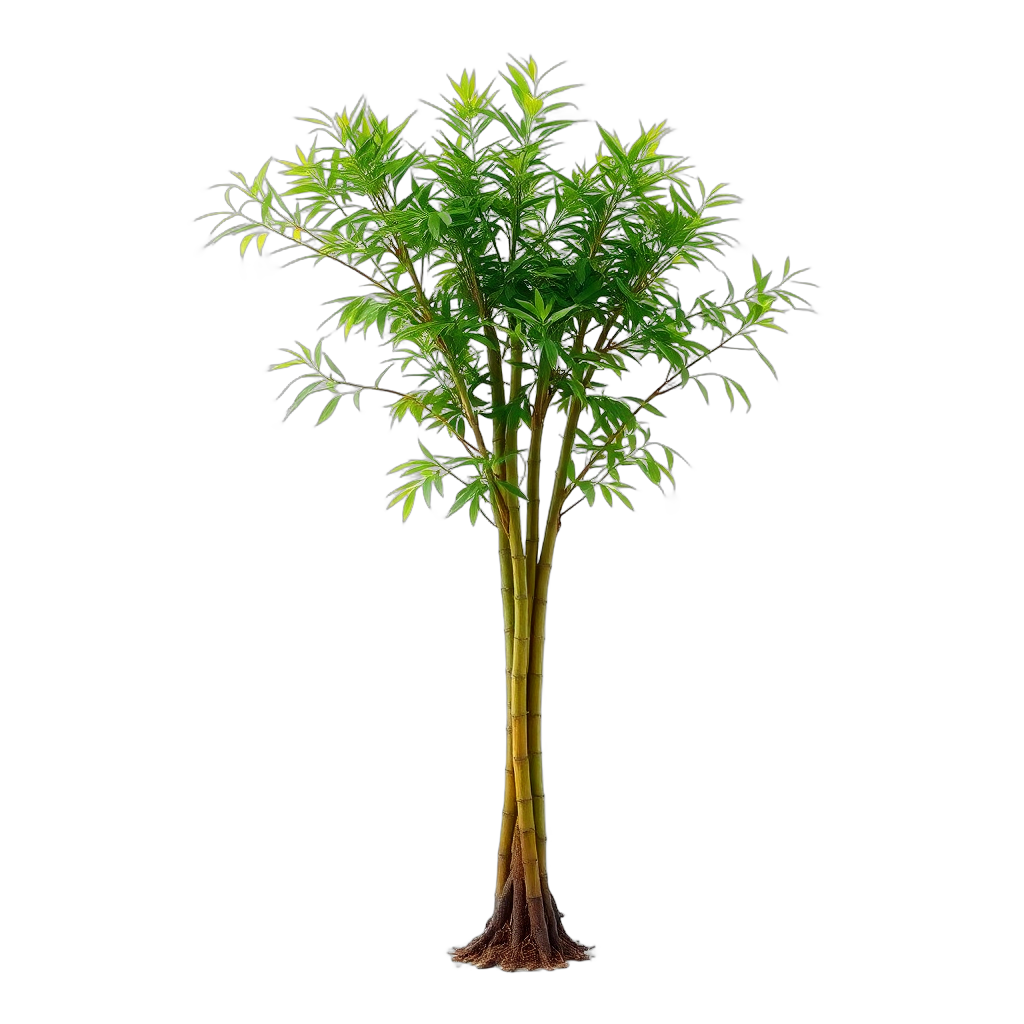
Anceps Bamboo
Yushania anceps
medium-sized at 12 feet, blooms in none. Evergreen year-round.
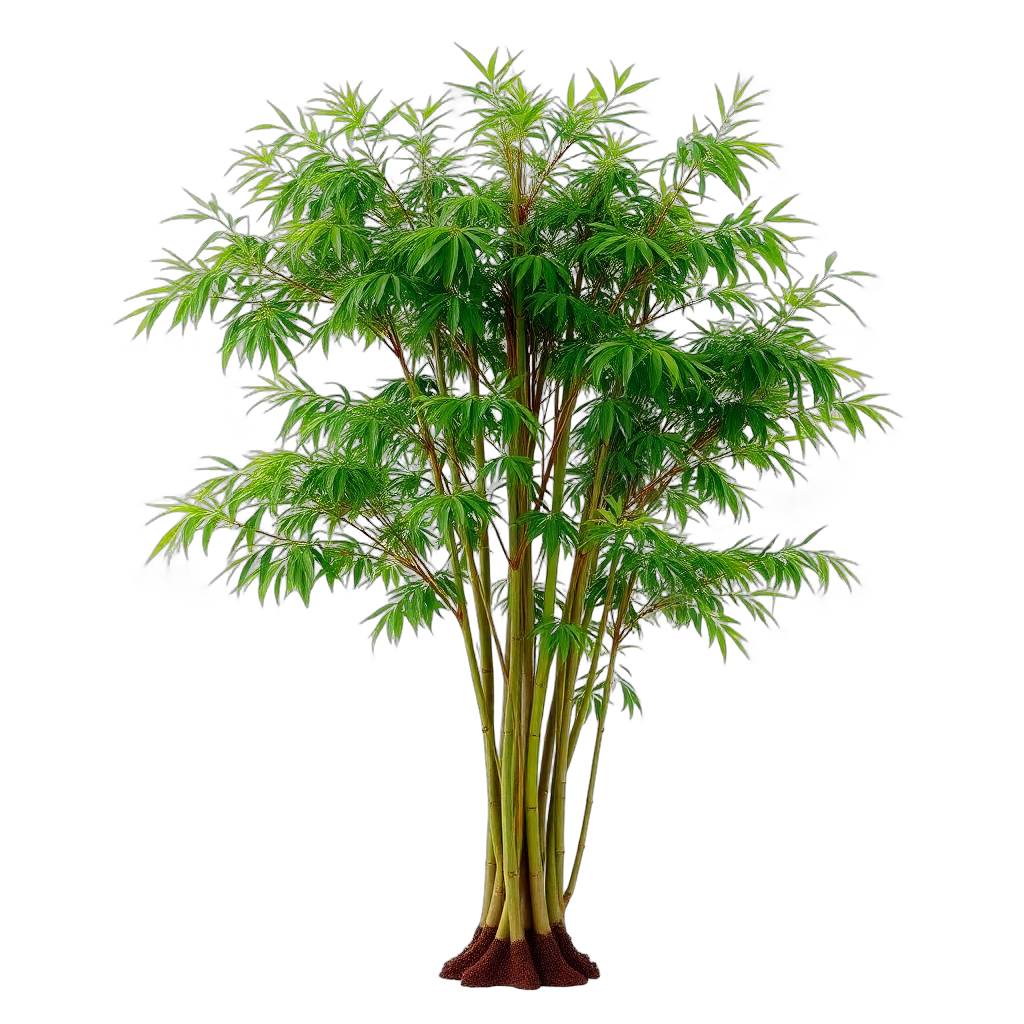
Arrow Bamboo
Pseudosasa japonica
medium-sized at 15 feet, blooms in none. Evergreen year-round.
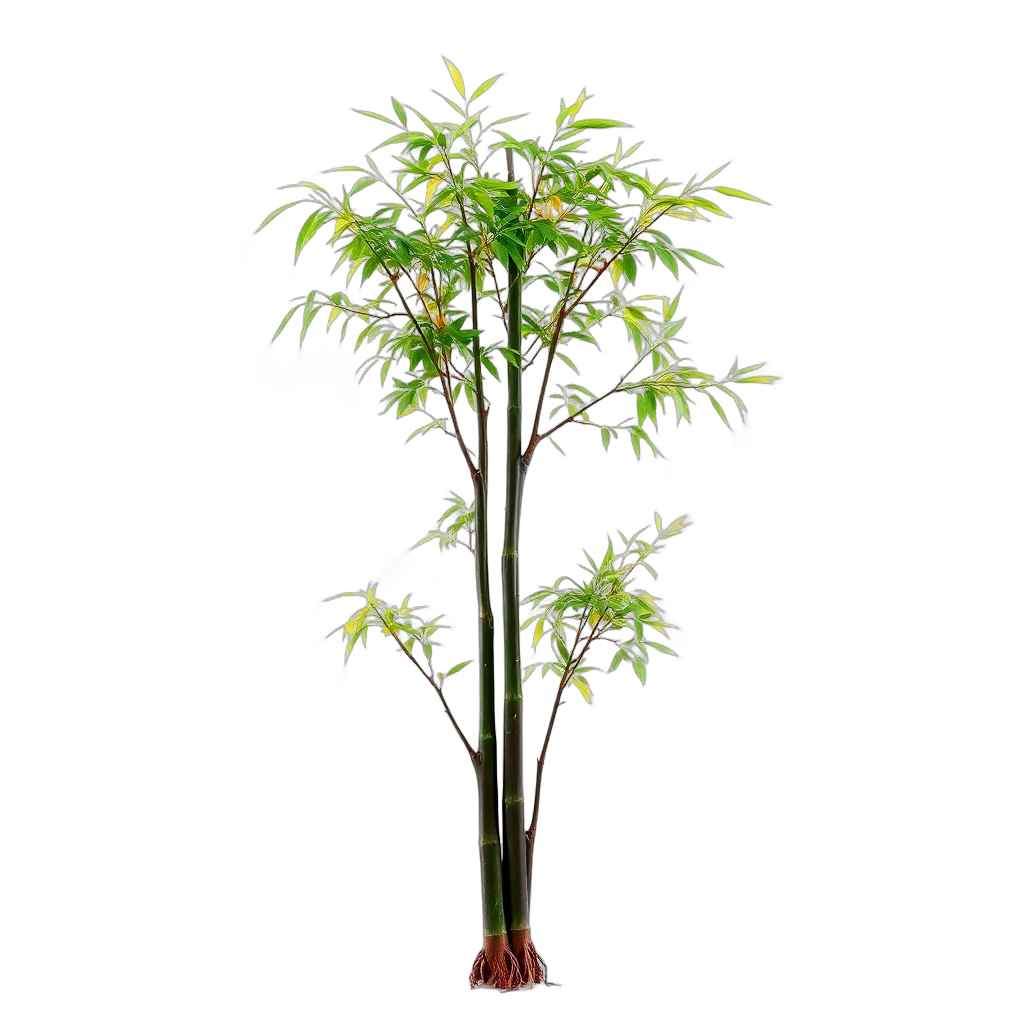
Black Bamboo
Phyllostachys nigra
reaches 25 feet tall, blooms in none. Evergreen year-round.
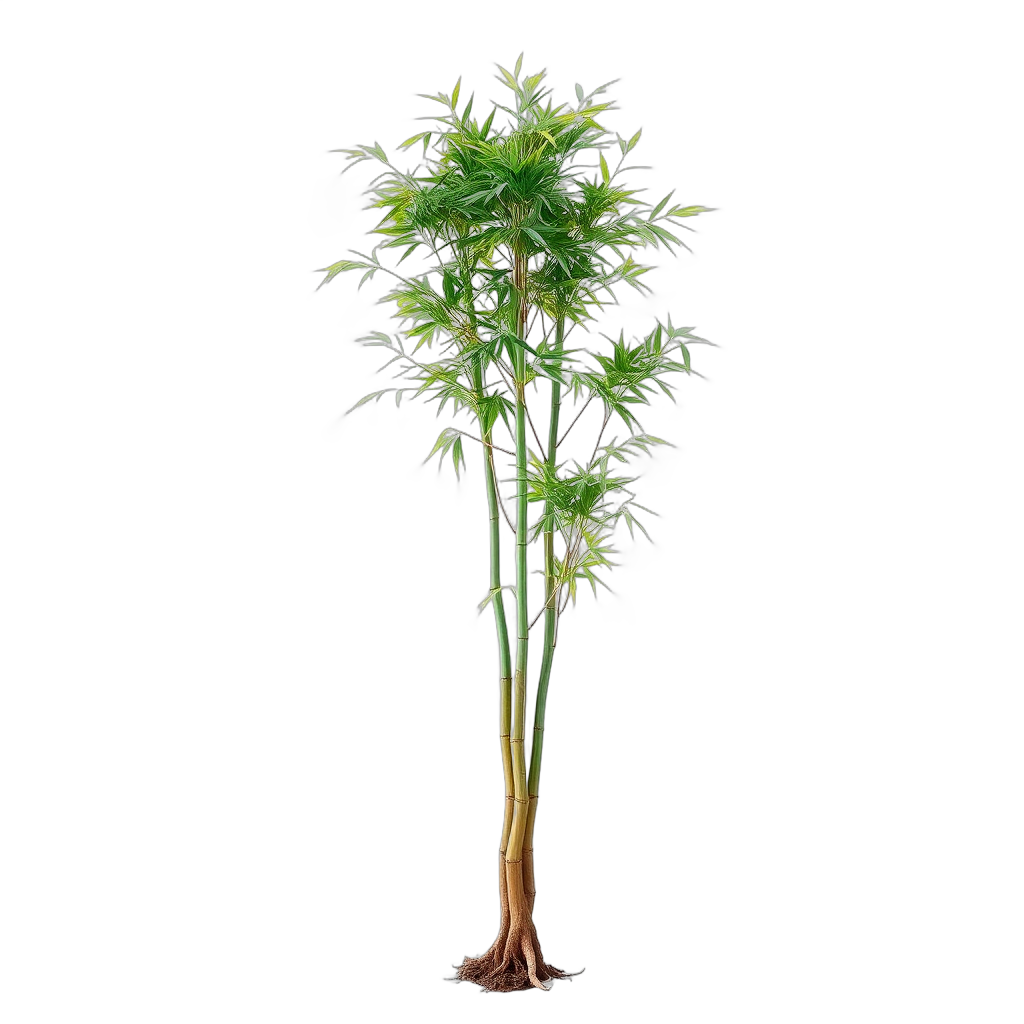
Blue Bamboo
Borinda papyrifera
reaches 20 feet tall, blooms in none. Evergreen year-round.
Featured Flowers & Perennials for Modern/Minimalist Gardens

Tussock Sedge
Carex stricta
low-growing ground cover, blooms in spring. Brown fall color.

Umbrella Sedge
Cyperus alternifolius
grows to 4 feet, blooms in summer. Evergreen year-round.
Bloom Calendar for Vancouver
spring
Oregon White Oak, Tussock Sedgesummer
Umbrella Sedgefall
Limited bloomswinter
Limited bloomsDesign Tips for Vancouver (Zone 8b)
- Build every dry-garden bed UP as free-draining scree — 12 to 18 inches of 50/50 native silt loam and quarter-minus crushed basalt or Bend pumice is the single detail that decides whether your Agave ovatifolia and Arctostaphylos live past their second Vancouver winter
- Use gravel mulch, never bark, on the architectural plantings: bark holds water against the crown of Yucca rostrata 'Sapphire Skies', Festuca glauca 'Elijah Blue' and Ceanothus 'Victoria' through six months of rain and rots them from the neck down
- Lean into the subtropical edge Zone 8b gives you — Trachycarpus fortunei, Musa basjoo, Fatsia japonica 'Spider's Web' and Cordyline australis 'Red Star' deliver the bold architectural leaf that reads as expensive modern design and costs a fraction of a specimen agave
- Choose Calamagrostis x acutiflora 'Karl Foerster' and Panicum virgatum 'Northwind' over softer grasses for anything you want standing in February — Vancouver's wet winters flatten floppy grasses by December and take your winter structure with them
- Run a river-rock or slotted-drain strip along the low edge of every slab and raised planter; in a 42-inch rain year, keeping runoff moving is what protects your base course from heaving and your planters from turning into bathtubs
- Light low and warm rather than bright — in-grade uplights behind grasses and bollards along the paving edge earn their keep here because Vancouver is dark by 4:30pm from November through January and the garden is seen at night for half the year
Where to Source Plants in Vancouver
Skip the big-box stores. These independent Vancouver nurseries specialize in the plants that make modern/minimalist gardens thrive in Zone 8b.
Dennis' 7 Dees Garden Center
Southeast Vancouver
Family-owned garden center offering plants, bulk soil, pottery, gifts, and landscaping services.
Cascade Greenhouse
Northeast Vancouver
Family-run greenhouse established 1982, growing plants suited to the Pacific Northwest climate.
Yard 'N Garden Land
Northeast Vancouver
Independent nursery offering trees, fruit trees, shrubs, roses, perennials, berries, and herbs.
Chapman's Greenhouse and Nursery
Northeast Vancouver
Locally-owned family greenhouse and nursery with a diverse plant selection.
Modern/Minimalist Landscaping Costs in Vancouver
| Project Scope | Estimated Cost |
|---|---|
| Front yard modern conversion (turf removal + gravel + architectural plants) | $6,000 – $13,000 |
| Poured concrete terrace or large-format paver patio (300–500 sqft) | $9,000 – $24,000 |
| Board-formed concrete raised planters with cedar caps (per linear foot) | $180 – $340/lf |
| Backyard fire terrace with seating, gas fire table and lighting | $18,000 – $45,000 |
| Pool, paving and full backyard landscape | $75,000 – $140,000 |
| AI visualization with ProScapeAI | Free to start |
Estimates based on Vancouver, WA-area contractor rates as of 2026. Actual costs vary by site conditions, materials, and contractor.
Vancouver Climate & Growing Zone
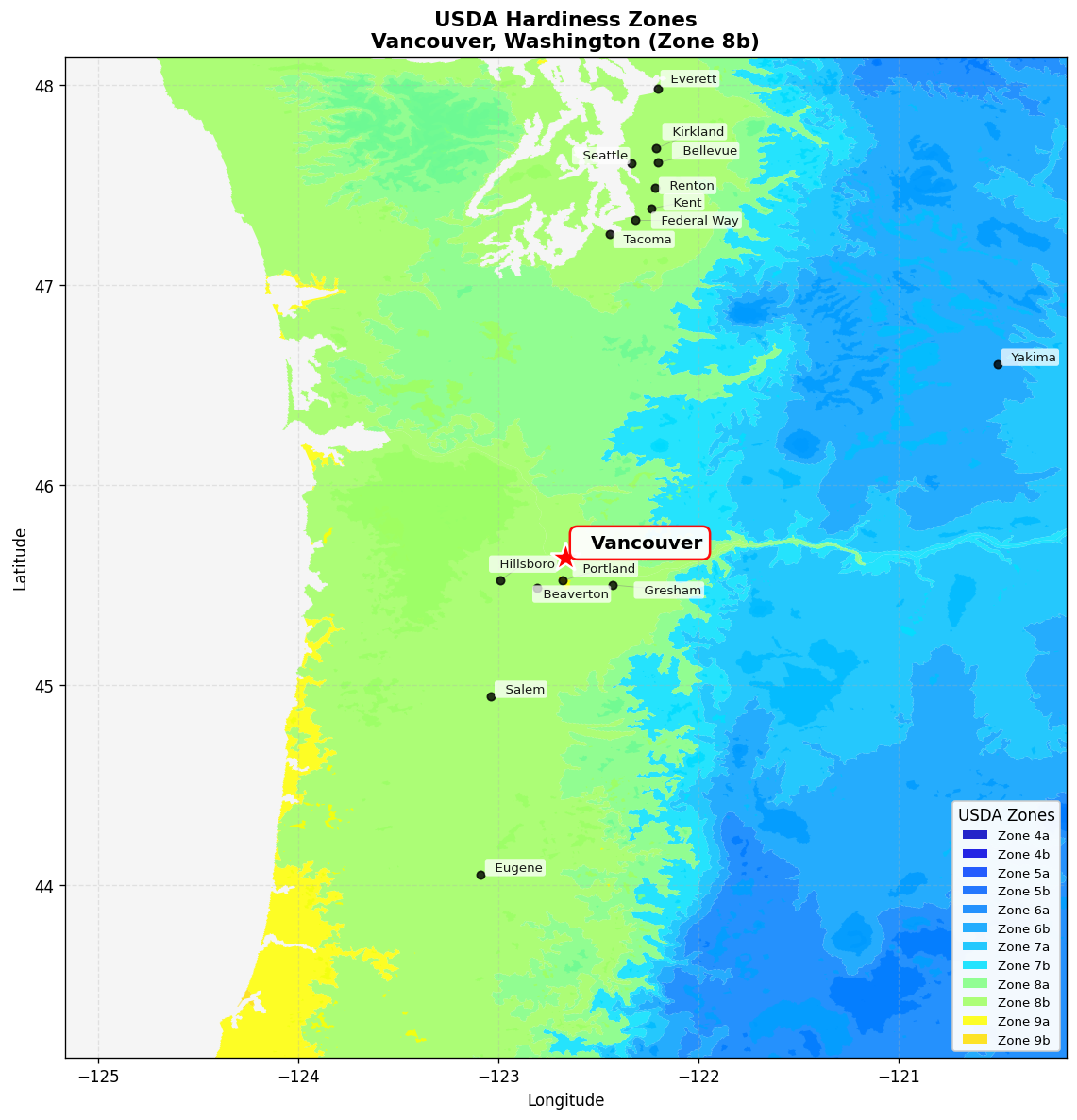
USDA Zone 8b
Hardiness zone for Vancouver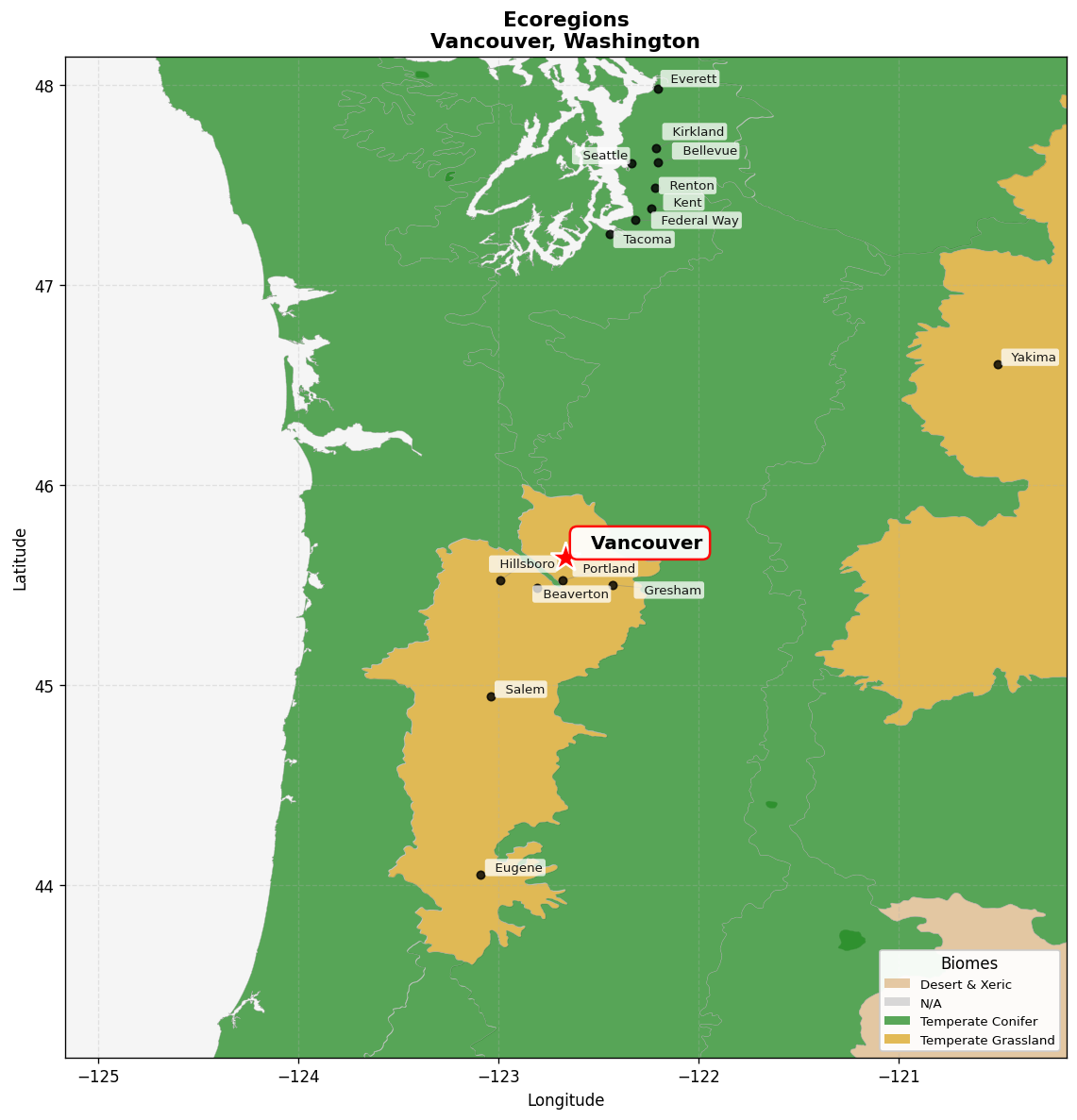
Willamette Valley oak savanna
Native ecoregionFrequently Asked Questions
How much does modern landscaping cost in Vancouver, WA?
Portland-metro labor runs roughly 10-15% above national averages, and Washington applies 8.7% retail sales tax to landscaping services in Vancouver — budget for both. A front-yard modern conversion with turf removal, gravel field, steel edging and architectural plants runs $6,000-13,000 for a typical 600 sqft front yard. A poured concrete back terrace with raised planters and a fire feature runs $18,000-45,000. Pools are uncommon here and expensive: $75,000-140,000 for a gunite pool with surrounding paving and planting. DIY gravel conversions where you buy your own quarter-minus and pumice by the yard land around $5-8/sqft.
Can I actually grow agaves and succulents in Vancouver's rain?
Yes, and plenty of people do — the whole Portland-Vancouver dry-garden movement runs on it. The rule is that drainage, not hardiness, is what you are solving. Agave parryi var. truncata, Agave ovatifolia, Yucca rostrata 'Sapphire Skies' and Hesperaloe parviflora 'Brakelights' are all hardy well past Zone 8b lows, but they cannot sit in Clark County silt loam over a fragipan with 42 inches of winter rain draining through them. Build raised scree beds 12-18 inches above grade, mix the native soil roughly half-and-half with quarter-minus crushed basalt or pumice, top with gravel rather than bark, and tuck each rosette so its crown sheds water sideways. Avoid Echeveria and Aeonium entirely — those are true tender succulents here.
Which ornamental grasses look best through a Vancouver winter?
Calamagrostis x acutiflora 'Karl Foerster' is the local backbone — it is sterile so it will not seed around, it stands bolt upright through winter rain, and it takes heavier soil than most. Panicum virgatum 'Northwind' and 'Shenandoah' hold structure equally well. Molinia caerulea 'Skyracer' gives you height with transparency, and Deschampsia cespitosa 'Goldtau' is the one to use in a soggy low corner where everything else sulks. For shade, nothing beats Hakonechloa macra 'Aureola'. Cut all of them back in late February, just before new growth. Be cautious with Miscanthus sinensis in unmanaged settings; choose sterile or late-flowering selections like 'Morning Light'.
When is the best time to install a modern landscape here?
Hardscape can go in nearly year-round because frost depth is shallow, but Clark County's wet-season erosion control rules run October through June and make large excavation messy and more expensive, so most contractors schedule earthwork for July through September and book out months ahead. For planting, split the calendar: put woody evergreens, grasses and trees in during October so the winter rain establishes them free of charge, but plant the drought-adapted half of the palette — agaves, Arctostaphylos, Ceanothus, Festuca glauca — in April or May so they get one full dry summer to root before their first wet winter.
Do I need irrigation for a gravel garden in Vancouver?
For the first two summers, yes; after that, mostly no. Vancouver's summers are genuinely dry — July and August combined often total less than an inch and a half of rain, and the June 2021 heat dome pushed the metro past 110°F. New plantings need a deep soak every week or two through that window. Once established, a properly built scree bed of Agave, Arctostaphylos, Yucca and Festuca needs nothing at all, and overwatering is far more likely to kill it than drought. Put the gravel beds on their own valve so you can shut them off independently from any lawn or perennial zone.
Do I need a permit for landscaping in Vancouver, WA?
Planting, gravel conversions, patios at grade and bed construction generally need no permit. You will need one for retaining walls over 4 feet, for pools and spas, for decks above a certain height, and for any structure with a roof. The one that catches people out is stormwater: adding or replacing impervious surface past the city's threshold triggers a stormwater review, and on the sloped lots common around Salmon Creek, Felida and the Columbia bluff, drainage design gets scrutinized. Check with the City of Vancouver Community Development or Clark County Public Works before you pour a large slab, and confirm any tree-removal rules for significant trees on your lot.