4 Modern Landscape Ideas for Waterbury, CT | Hardy Designs for Zone 6b Hills
Native plants from the Northeast US Coastal forests (Zone 6b) — Humid continental (hot summer) climate
For a modern garden in Waterbury, CT, a zone 6b city with a humid continental (hot summer) climate, start with Calamagrostis × acutiflora 'Karl Foerster', Panicum virgatum 'Northwind' and Schizachyrium scoparium 'Standing Ovation', the plants this guide's first design is built on.
Why Modern/Minimalist Gardens in Waterbury?
Waterbury's housing stock is more varied than most people assume. Mid-century ranches and splits in Town Plot, Bunker Hill and Waterville, newer builds on the hillsides of Overlook, and the old triple-deckers near downtown all suit a modern landscape that is clean, disciplined and low on ornament. A modern design here depends on three things: one paving material, a few strong lines, and four or five plants repeated in masses. The city's hills help, because a terraced bed or a stepped walk gives a modern layout the clear geometry it wants.
Zone 6b means designing for winter lows of roughly -5 to 0°F, January nights in the low 20s, July highs in the low 80s, and about 52 inches of precipitation a year with around 35–40 inches of snow (figures vary by source). The agave-and-gravel look from California will not live at grade here. The cold-hardy substitutions do the same job: Yucca filamentosa 'Color Guard' for the rosette, Juniperus scopulorum 'Skyrocket' and Ilex crenata 'Sky Pencil' for the vertical accent. Horizontal layers come easily: Calamagrostis × acutiflora 'Karl Foerster', Panicum virgatum 'Northwind', Schizachyrium scoparium 'Standing Ovation' and Sporobolus heterolepis all hold their shape through snow, which matters in a garden that has no flowers for five months.
Freeze-thaw movement is the main engineering problem, because clean lines show every bit of it. Build every hard surface on 6–8 inches of compacted processed stone, set post footings below the 42-inch frost depth, and use permeable pavers or gravel where you can. Waterbury soil is mostly stony glacial till over bedrock, with heavier clay and fill near the river and in older neighborhoods, and it usually tests acidic, around pH 5.0–6.0. That suits Hydrangea paniculata 'Bobo' and Cornus sericea 'Arctic Fire', and the grasses above tolerate it without trouble.
Check the rules early. A fence needs a zoning permit and then a building permit from the City, with a six-foot maximum and a three-foot limit for solid fencing within 25 feet of an intersection or a driveway. Connecticut's state building code exempts retaining walls up to 3 feet measured from finished grade to finished grade; taller walls need a building permit, and a hill lot can easily need one. Two 30-inch walls stepped back usually look better than one tall wall and often avoid the permit.
4 Modern/Minimalist Design Ideas for Waterbury
AI-generated image
The Steel-Edged Grass Front
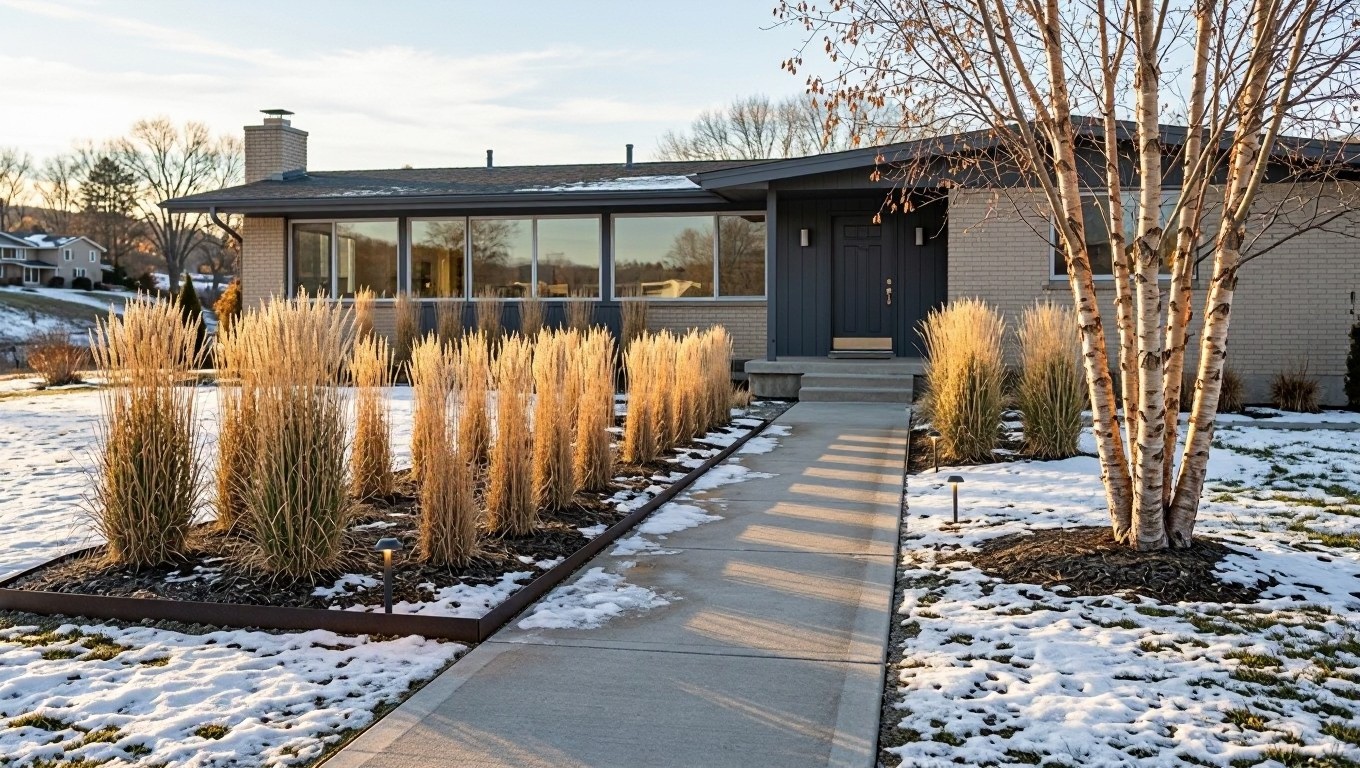
$16–34/sqftA mid-century ranch has its front lawn replaced by a flat, steel-edged bed of grasses in blocks, with a broad poured-concrete walk running straight to the door. Calamagrostis 'Karl Foerster' sits in rows along the window wall, Panicum 'Northwind' marks the corners, and a single multi-stem river birch stands off to one side. Morning sun lights the grasses from the east, and the clean edge to the concrete makes it read as deliberate even in February under snow.
AI-generated image
The Terraced Corten Hillside
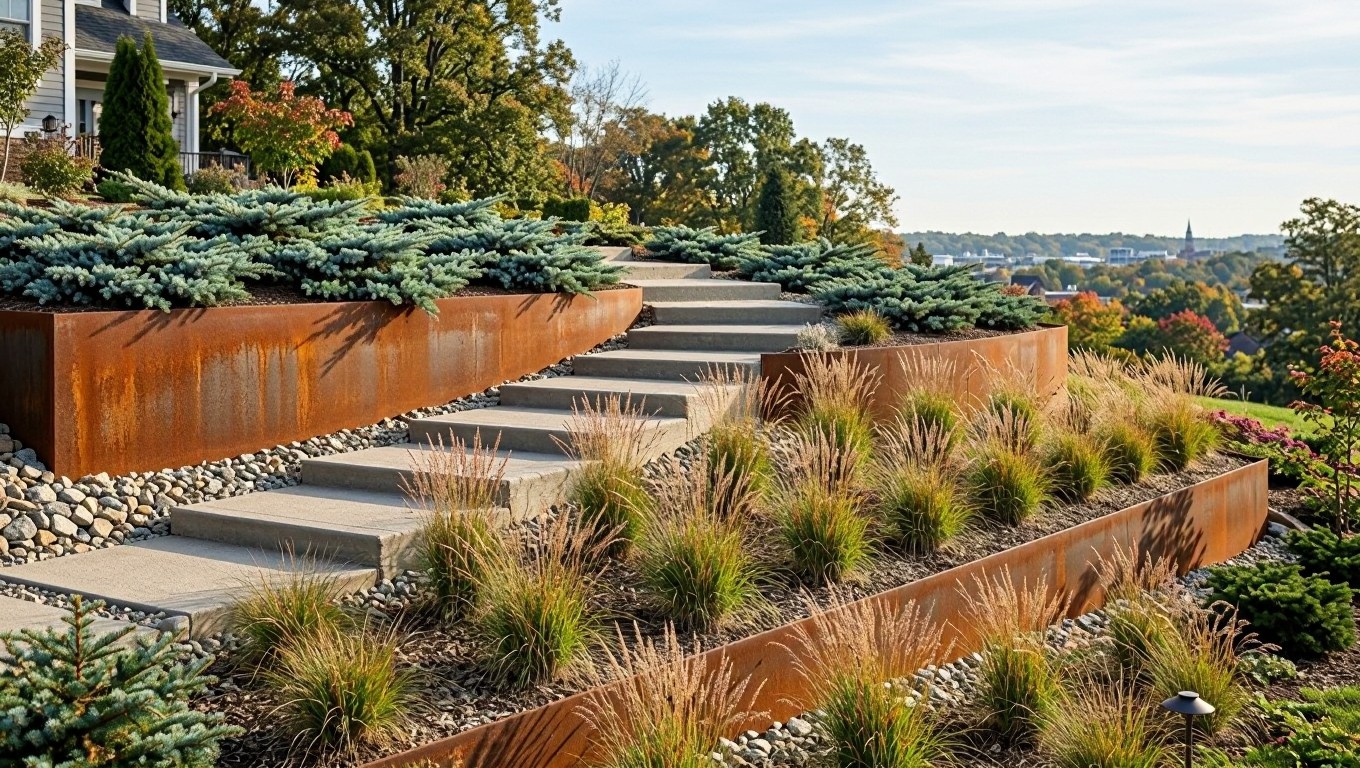
$38–78/sqftA sloped lot is cut into two terraces with 30-inch Corten steel retaining walls, each short enough to stay under the 3-foot permit line. A set of wide concrete steps runs between them, and each terrace carries a single repeated planting: Juniperus horizontalis 'Blue Chip' on top and Sporobolus heterolepis below. Sun hits both levels from the south, so the grasses color up fast and the steel develops its rust patina in a season or two.
AI-generated image
The Triple-Decker Gravel Court
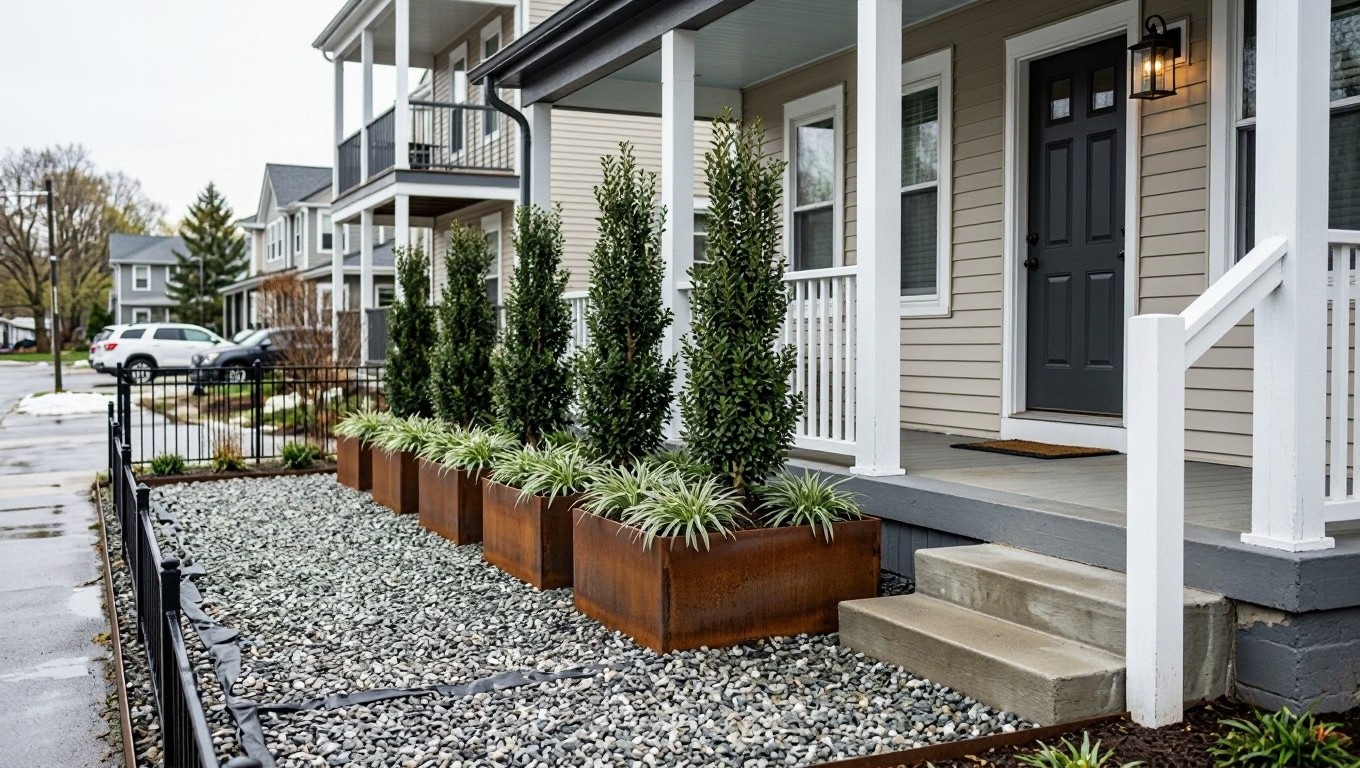
$14–30/sqftA narrow front strip behind a triple-decker becomes a tidy gravel court with a row of Corten planters along the porch and a clean concrete step to the door. Ilex crenata 'Sky Pencil' stands in the planters as vertical accents, with Carex 'Ice Dance' as an evergreen ground cover below. Gravel takes salt splash and plow slush, and the narrow space looks intentional rather than leftover.
AI-generated image
The Concrete Terrace and Fire Table
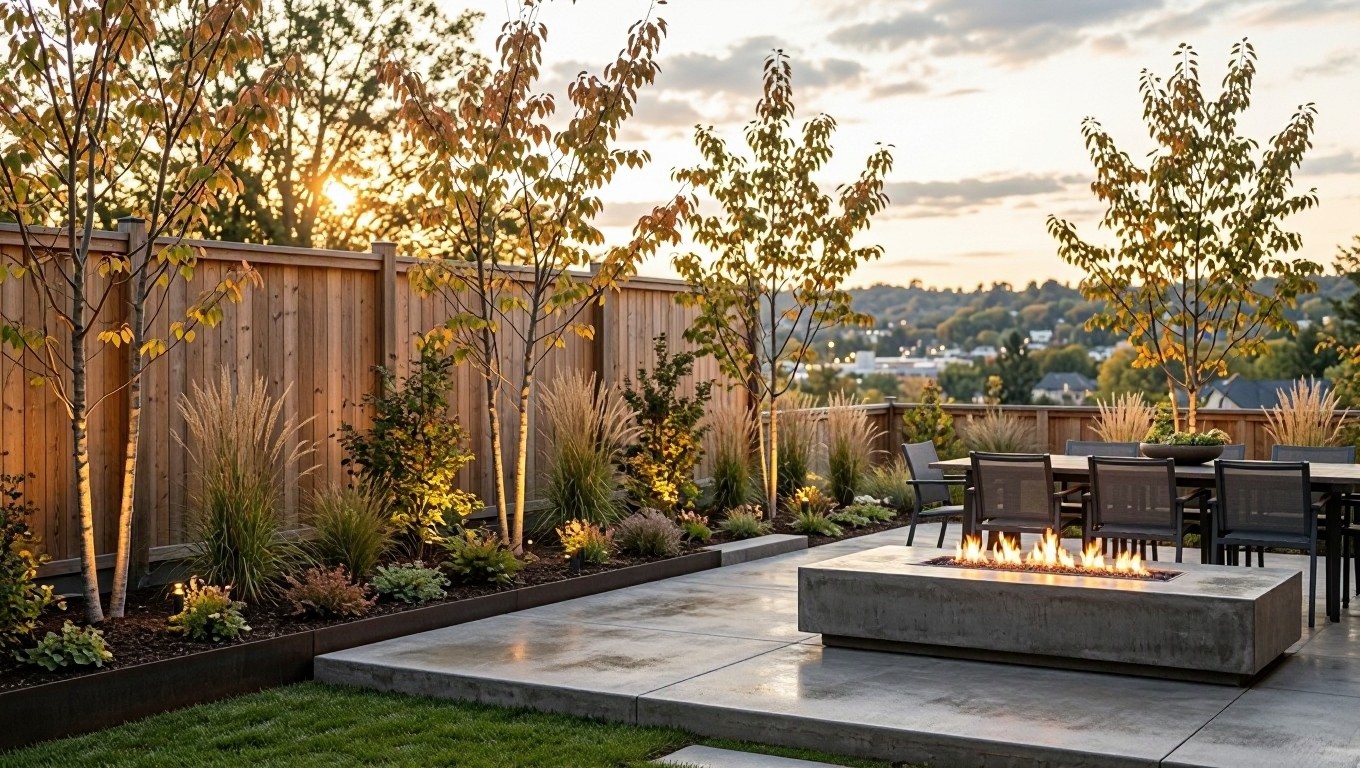
$32–68/sqftBehind a contemporary home, a poured-concrete terrace holds a long dining table and a low gas fire table, with a stepped bed of grasses and Amelanchier trees wrapped along one edge. A cedar privacy screen blocks the neighbor and filters afternoon sun. The shapes stay minimal: one material underfoot, one tree species in repeat, and grasses that glow at dusk.
See how a modern/minimalist garden looks on YOUR property
Upload a photo of your Waterbury yard and visualize your dream garden in seconds.
Try ProScapeAI Free

AI-generated image
Featured Trees & Shrubs for Modern/Minimalist Gardens
Browse all 181 plants for Waterbury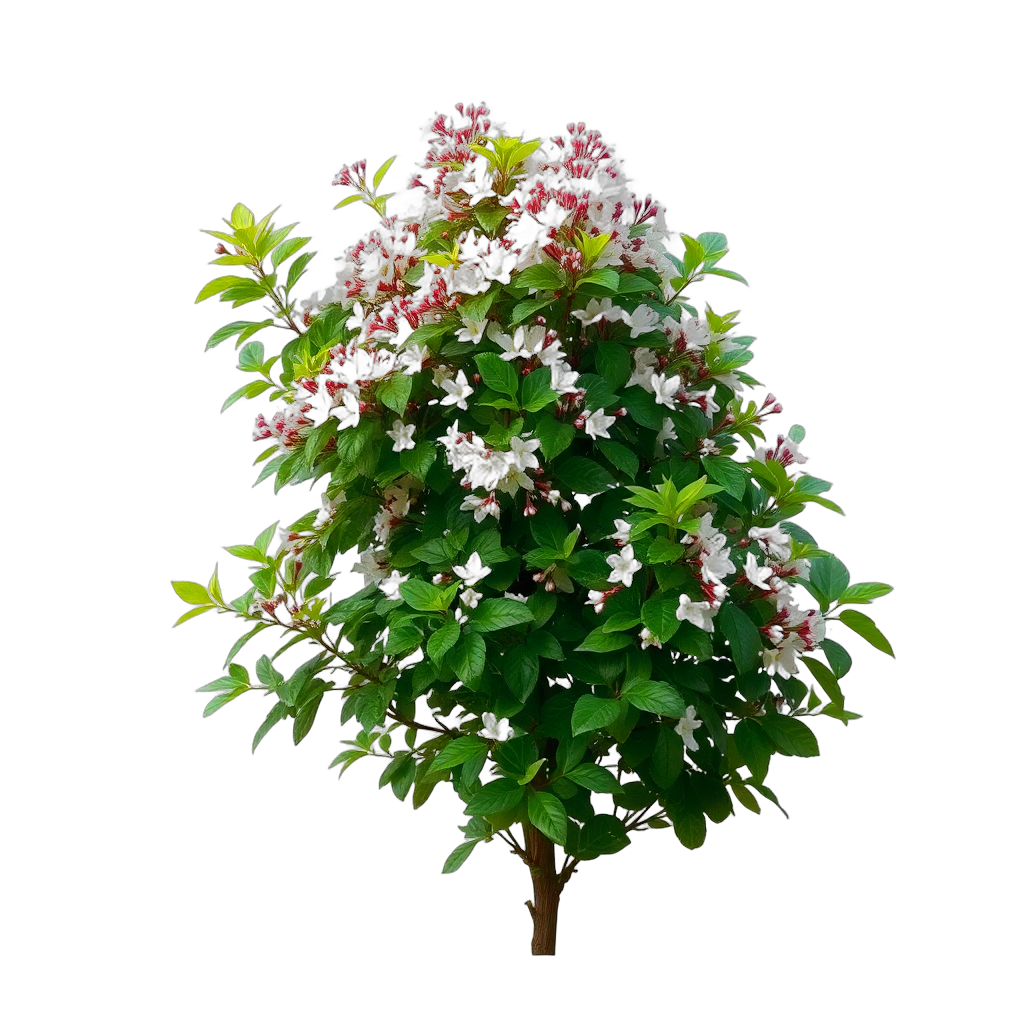
Arrowwood Viburnum
Viburnum dentatum
medium-sized at 10 feet, white blooms in spring. Pollinator-friendly.
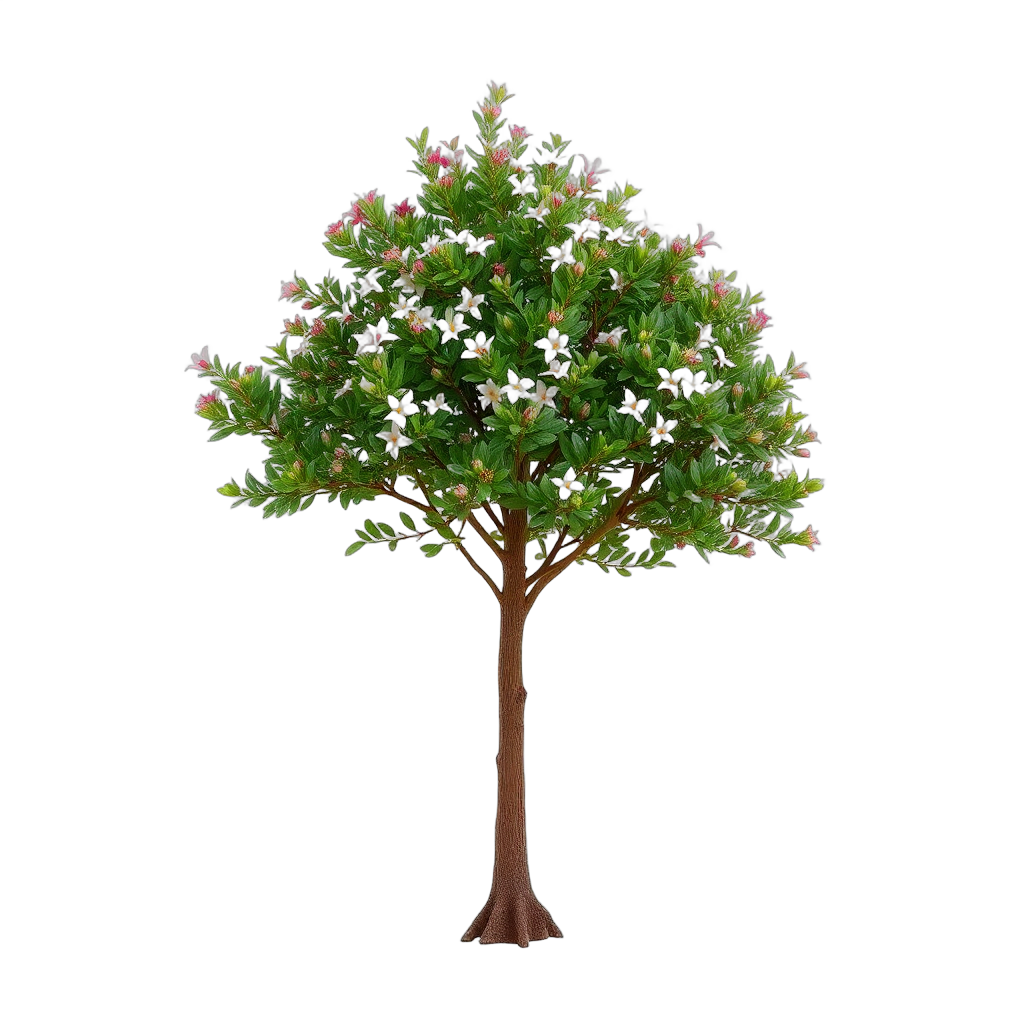
Coastal Leucothoe
Leucothoe axillaris
grows to 3 feet, white blooms in spring. Evergreen year-round.

Highbush Blueberry
Vaccinium corymbosum
medium-sized at 7 feet, white blooms in spring. Attracts butterflies.

Inkberry
Ilex glabra
medium-sized at 8 feet, white blooms in spring. Pollinator-friendly.
Featured Grasses & Groundcovers for Modern/Minimalist Gardens
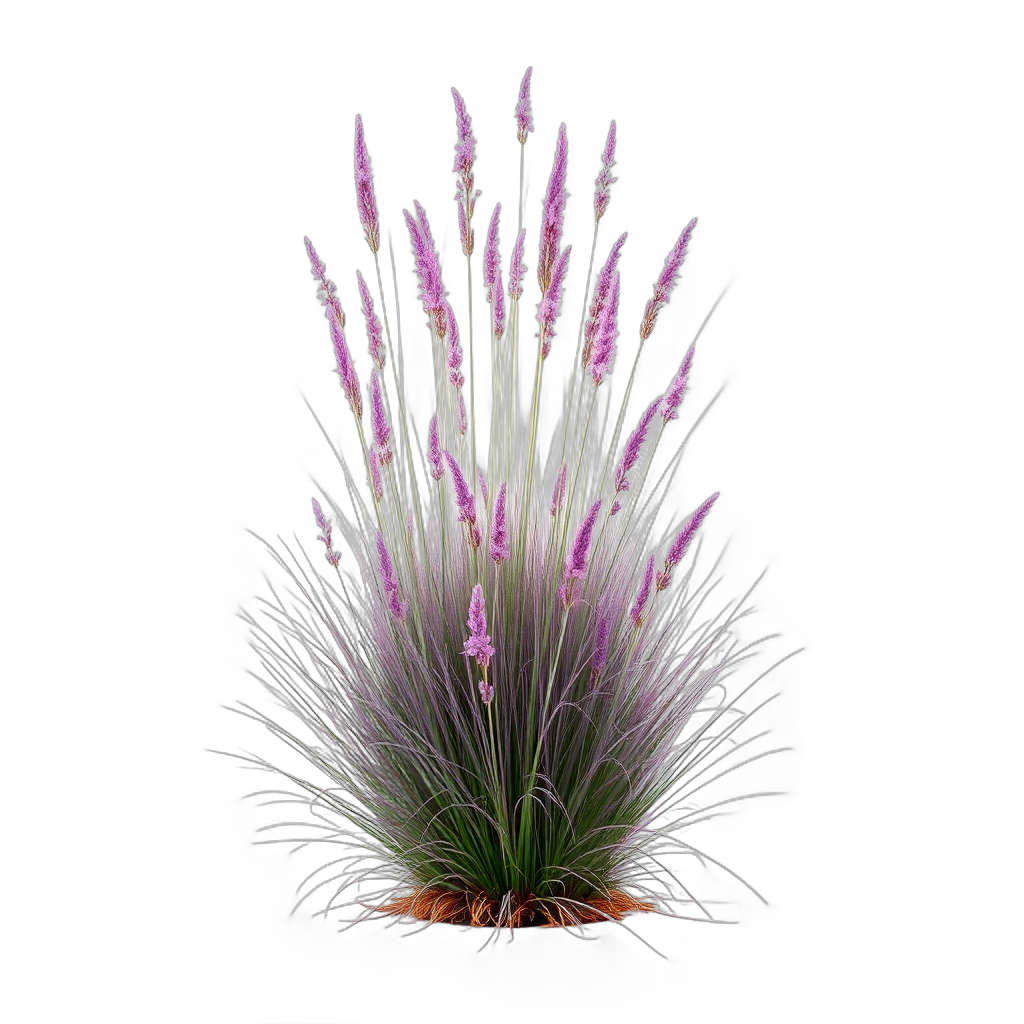
Purple Love Grass
Eragrostis spectabilis
low-growing ground cover, purple blooms in fall. Orange fall color.

Broad-leaf Bamboo
Sasa palmata
medium-sized at 7 feet, blooms in none. Evergreen year-round.
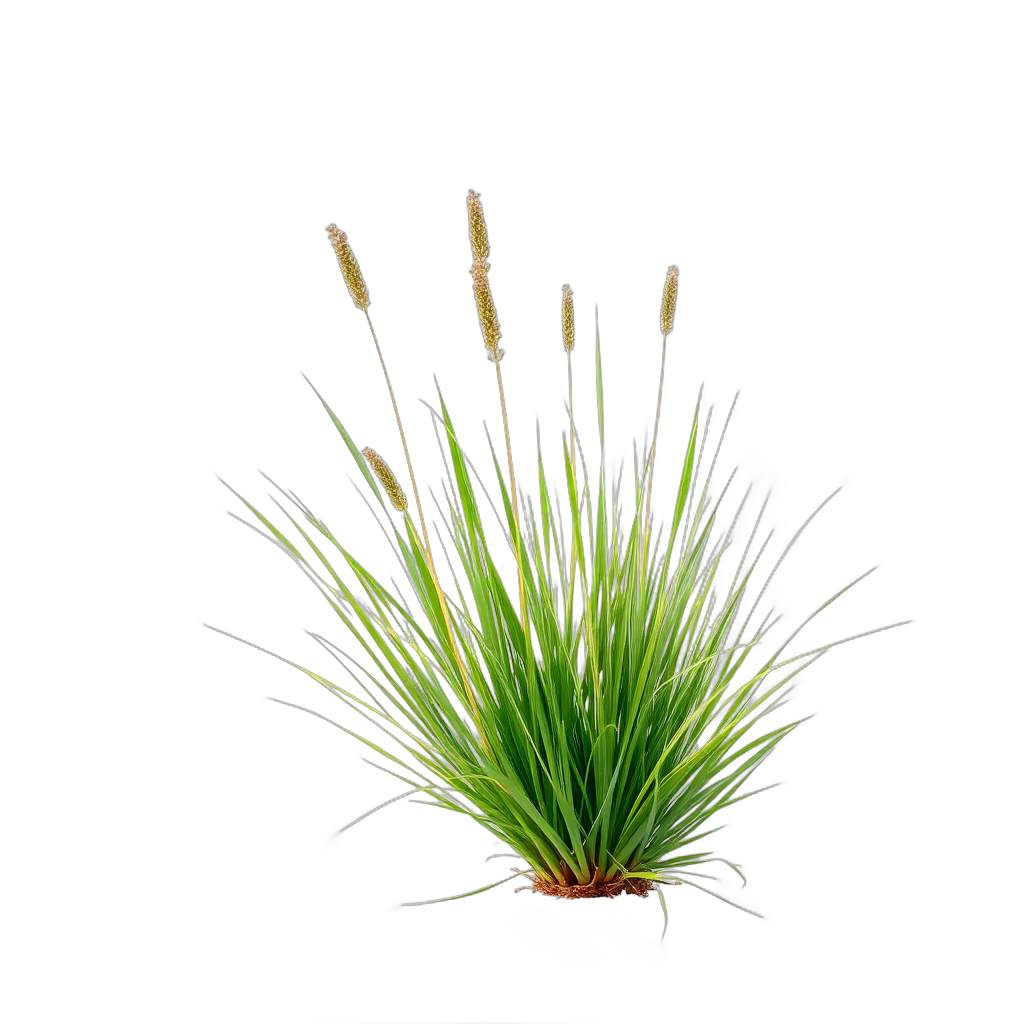
Deer Grass
Muhlenbergia rigens
grows to 3 feet, yellow blooms in fall. Evergreen year-round.
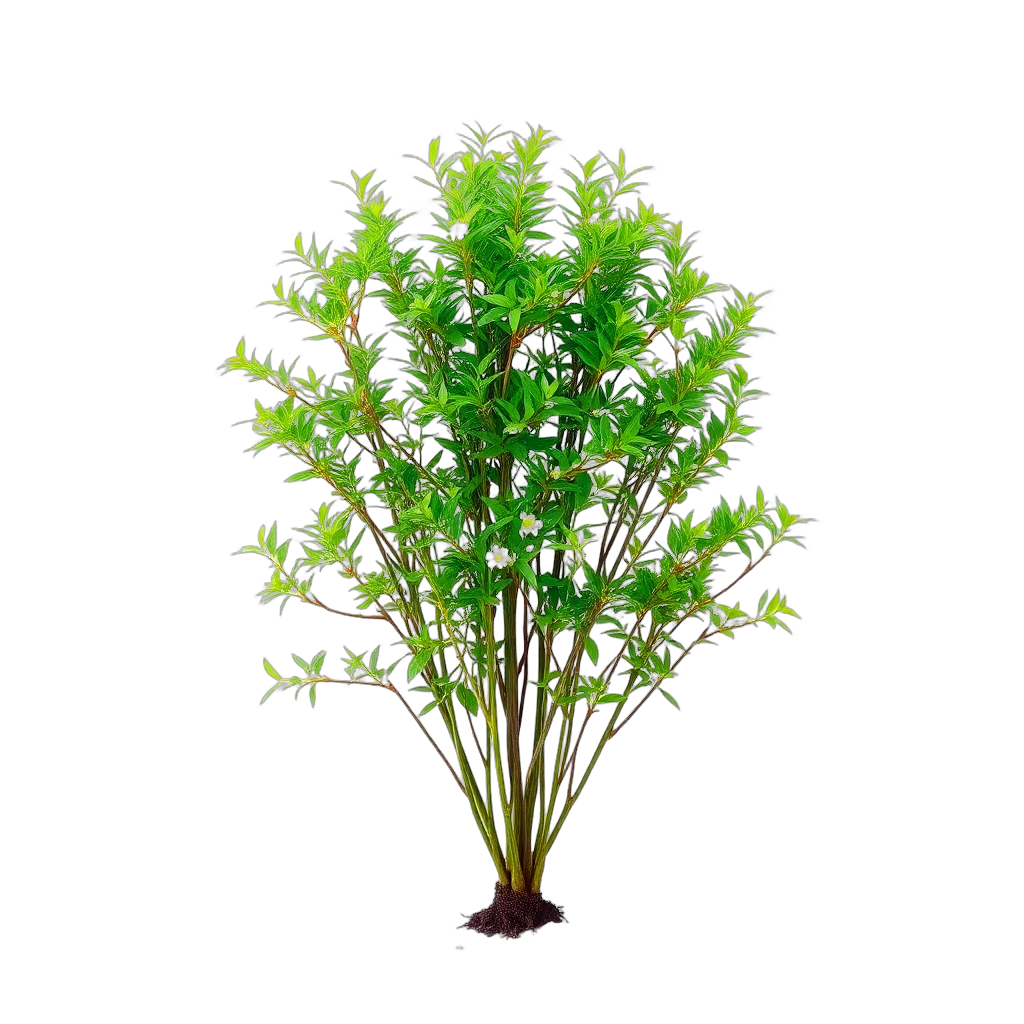
Dwarf Fernleaf Bamboo
Pleioblastus distichus
low-growing ground cover, blooms in none. Evergreen year-round.
Featured Flowers & Perennials for Modern/Minimalist Gardens
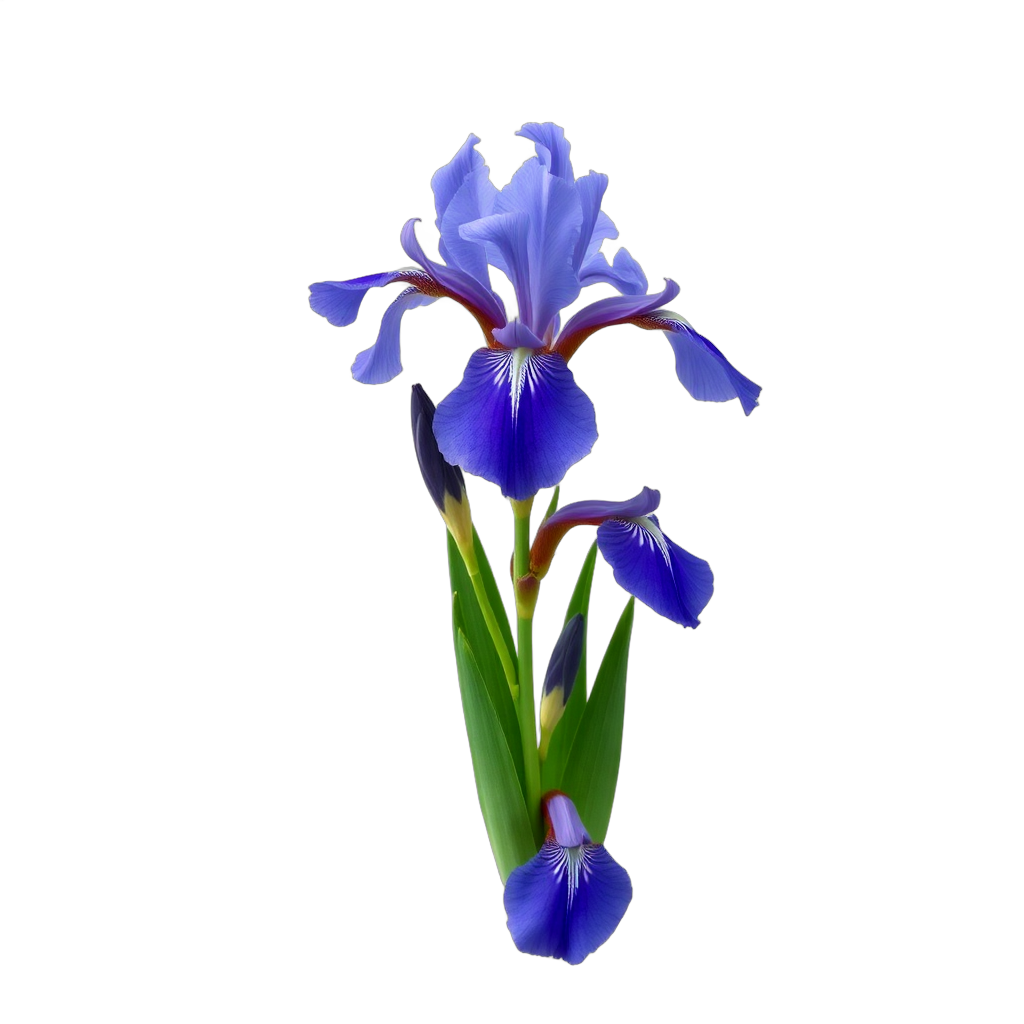
Blue Flag Iris
Iris versicolor
low-growing ground cover, purple blooms in spring. Attracts butterflies.

New York Ironweed
Vernonia noveboracensis
grows to 6 feet, purple blooms in fall. Attracts butterflies.
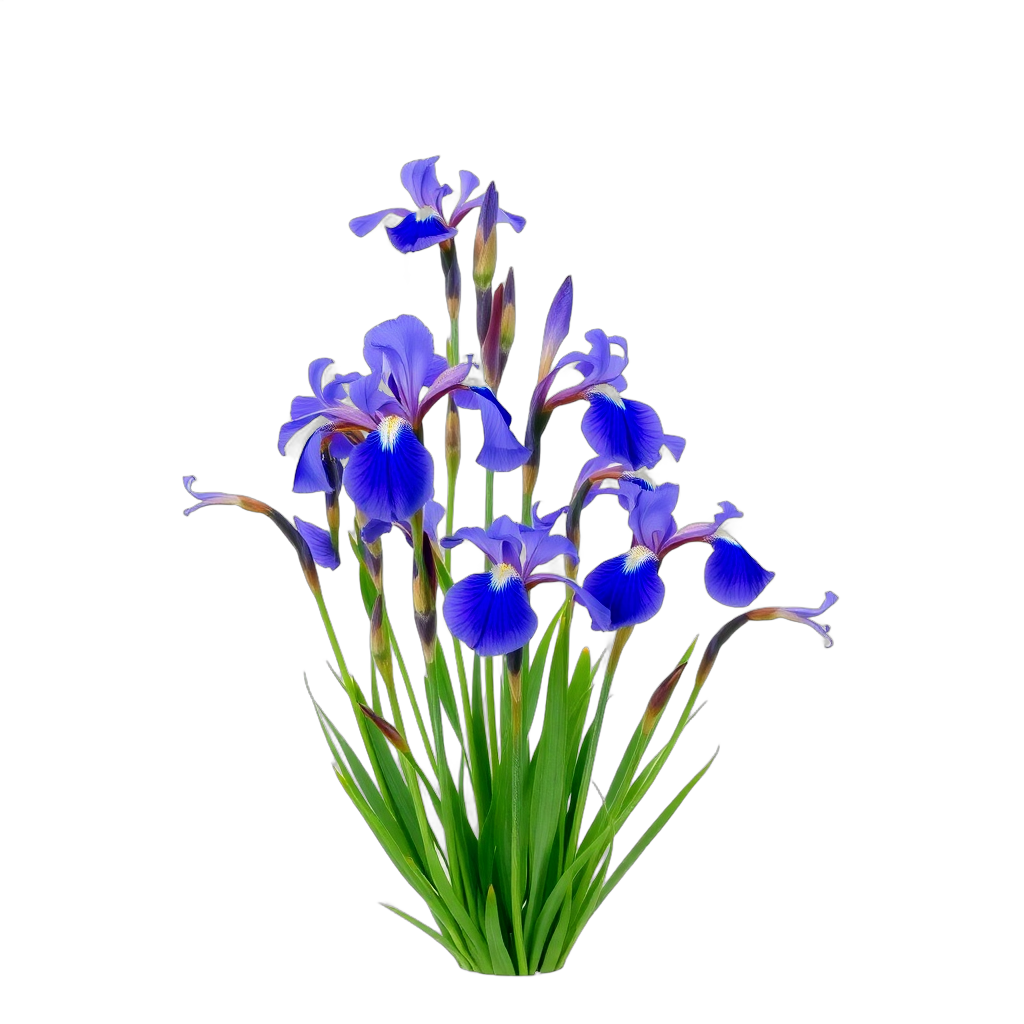
Southern Blue Flag
Iris virginica
low-growing ground cover, blue blooms in spring. Attracts butterflies.

Eastern Prickly Pear
Opuntia humifusa
low-growing ground cover, yellow blooms in summer. Attracts butterflies.
Zone and sun checks come from our database — confirm with your local nursery before you buy.
Bloom Calendar for Waterbury
spring
Blue Flag Iris, Southern Blue Flag, Arrowwood Viburnumsummer
Ruby Spice Summersweet, Summersweet, Eastern Prickly Pearfall
New York Ironweed, Purple Love Grasswinter
Limited bloomsDesign Tips for Waterbury (Zone 6b)
- Substitute for the desert palette: Yucca filamentosa 'Color Guard' replaces the agave rosette and Juniperus scopulorum 'Skyrocket' replaces Italian cypress, both hardy to Zone 6b's -5 to 0°F winter lows
- Build the base for freeze-thaw: 6–8 inches of compacted processed stone under every paved surface and 42-inch footings under every post, because a heaved joint ruins a clean line permanently
- Keep retaining walls at or under 3 feet: that is the state building code line for needing a permit, and two stepped 30-inch walls usually look better than one tall one on a hill lot
- Choose grasses that stand through snow: Calamagrostis 'Karl Foerster', Panicum 'Northwind' and Sporobolus heterolepis hold their form through January, and cut back in late March before new growth starts
- Decide where the snow goes before you plant: mark the plow route and the pile zone, and keep Ilex crenata 'Sky Pencil' and young Amelanchier trees out of the line of a heavy pile
- Use gravel and tough plants at the street edge: Nepeta 'Walker's Low' and Sedum 'Angelina' handle salt splash and slush better than a lawn, and washed gravel drains well on glacial till
- Test the soil before choosing acid lovers: Waterbury ground often reads pH 5.0–6.0, which suits Hydrangea paniculata 'Bobo' and Cornus sericea 'Arctic Fire' but is too sour for lavender-type plantings
Where to Source Plants in Waterbury
Skip the big-box stores. These independent Waterbury nurseries specialize in the plants that make modern/minimalist gardens thrive in Zone 6b.
Cheshire Nursery Garden Center & Florist
Cheshire (Route 10)
Garden center and florist established in 1906, stocking trees, shrubs, perennials, annuals, herbs, mulches and soil amendments, about 10 miles east of Waterbury
Bethany Farm and Nursery
Woodbridge (Seymour Road)
Retail and wholesale nursery with annuals, perennials, shrubs and trees plus bulk mulch, topsoil and decorative stone, with design and landscape services
Broken Arrow Nursery
Hamden
Plant nursery with mail-order shipping and expert help; the retail nursery closes for winter and reopens in spring, so check before driving over
Modern/Minimalist Landscaping Cost Ranges
| Project Scope | Estimated Cost |
|---|---|
| Low-voltage LED uplighting (12–16 fixtures, installed) | $2,500–$5,200 |
| Concrete patio, broom finish (200 sqft) | $2,100–$2,500 |
| Composite decking boards, surface only on existing framing (200 sqft) | $4,700–$5,800 |
| AI visualization (ProScapeAI) | Free to start |
National average installed ranges for 2026 from our landscaping price list (Homewyse and other published sources). Prices in Waterbury, CT vary with site, materials and contractor, so get two or three local quotes.
Waterbury Climate & Growing Zone
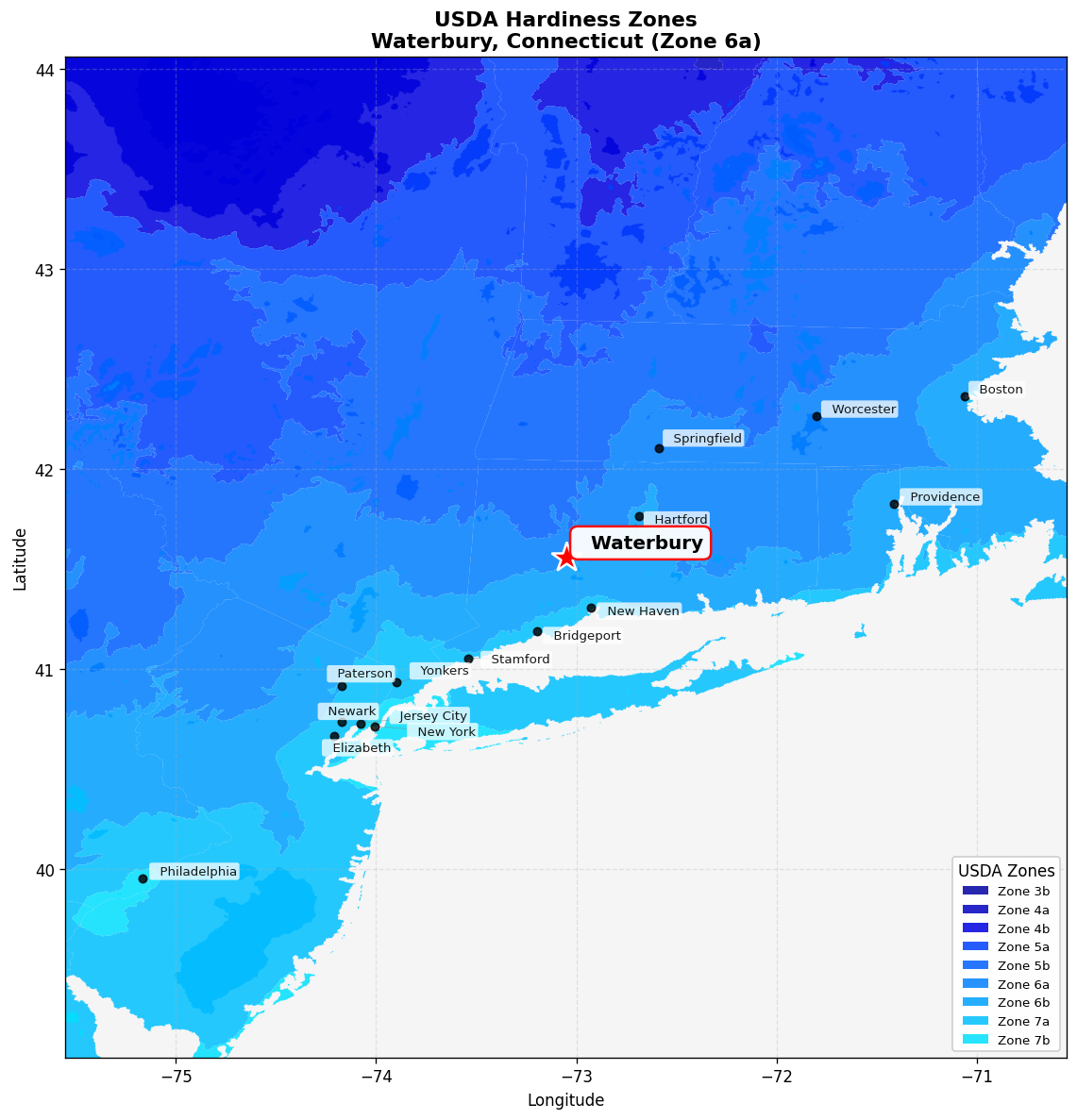
USDA Zone 6b
Hardiness zone for Waterbury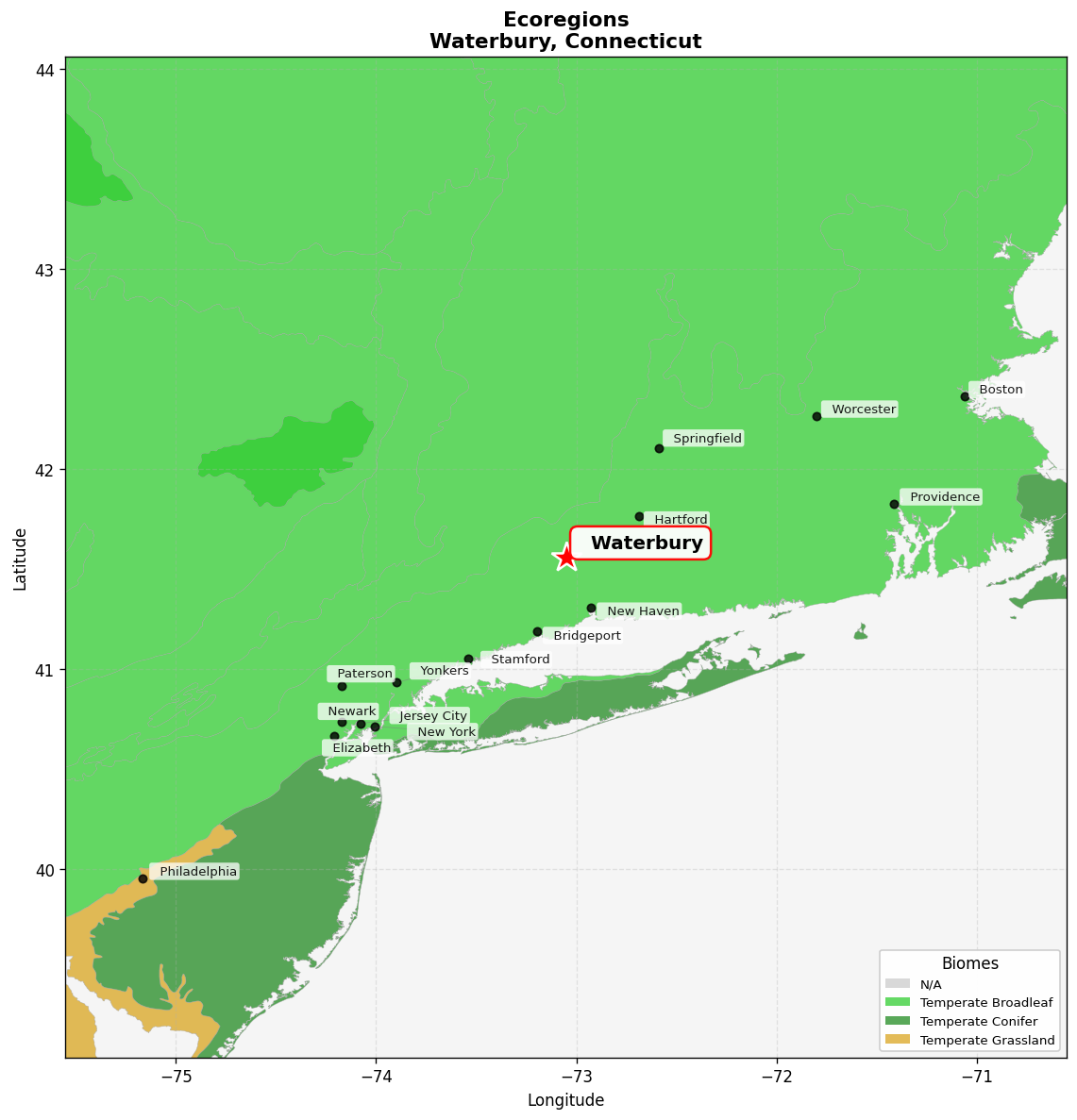
Northeast US Coastal forests
Native ecoregionFrequently Asked Questions
How much does modern landscaping cost in Waterbury, CT?
Hill access can add cost. Prices vary with site, size and finishes, so get two or three local quotes.
Is a modern landscape low maintenance in Waterbury's climate?
Mostly yes. Grasses such as Calamagrostis × acutiflora 'Karl Foerster' and Sporobolus heterolepis need one cutback in late March and nothing else. Steel edging and gravel hold their lines for years. The ongoing chores are clearing snow and leaf litter from gravel courts, topping up gravel every few years, and checking walls after a freeze-thaw winter. Skip lawn on slopes and you avoid the most labor-intensive piece of a Waterbury yard.
When is the best time to plant in Waterbury?
Mid-September through mid-October is the best window, because roots establish before the ground freezes. Late April through May works for the second window. Ornamental grasses prefer spring, since they like warm soil to get going. Avoid planting in July heat. Zone 6b can still see a frost in early May, so hold tender annuals until Mother's Day weekend.
Do I need a permit for a fence or retaining wall in Waterbury?
The City of Waterbury requires a zoning permit and then a building permit for any fence, with a six-foot limit; solid fencing within 25 feet of an intersection or where a driveway meets the street is held to three feet. Connecticut's state building code exempts retaining walls up to 3 feet measured from finished grade at the bottom to finished grade at the top, and taller walls need a building permit. Verify current rules with the City's Planning and Building Departments before you build.
What plants survive a Zone 6b winter in a modern garden?
The sculptural plants that hold up here are Calamagrostis × acutiflora 'Karl Foerster', Panicum virgatum 'Northwind', Schizachyrium scoparium 'Standing Ovation', Sporobolus heterolepis, Yucca filamentosa 'Color Guard', Juniperus scopulorum 'Skyrocket' and Ilex crenata 'Sky Pencil'. Skip Cupressus sempervirens and most agaves, which fail at the lows of -5 to 0°F. Agave parryi var. neomexicana can survive in a raised, sharply drained gravel bed with a winter rain cover, but not at grade.
What is the best modern design for a hill lot in Waterbury?
Terraced beds with short retaining walls. Keep each wall at or under 3 feet to stay on the right side of the permit line, set a drainage stone layer behind it, and step between levels with concrete or bluestone. Plant each terrace in a single repeated species, such as Juniperus horizontalis 'Blue Chip' on top and Sporobolus heterolepis below, so the slope reads as one design. Avoid lawn on the slope, since mowing it is hard and it sheds water fast.
How do I handle snow and salt in a modern Waterbury garden?
Mark the plow route and the snow-pile zone before you place anything. Roughly 35–40 inches of snow falls in a typical year, and a heavy pile on Ilex crenata 'Sky Pencil' or a young Amelanchier snaps limbs. Keep plant structure back from the street edge, and use gravel and tough plants like Calamagrostis 'Karl Foerster' and Nepeta 'Walker's Low' next to the pavement where salt splash lands.



